Write your answer on paper. Then open the answer to check it.
Section A
(a) Simplify k^(1/2) × 3k^(−1/3). (b) Show that 5^(x+1) − 5^(x−1) + 5^x is divisible by 29 for all positive integers x.
Easy4 marks- (a)
Simplify k^(1/2) × 3k^(−1/3).
[2] - (b)
Show that 5^(x+1) − 5^(x−1) + 5^x is divisible by 29 for all positive integers x.
[2]
Diagram 1 shows a 20 cm pendulum hanging at O with initial position L. It is pulled to position A, whose vertical height difference h from L is 4 cm, and released; it oscillates between A and B. Find the distance travelled by the pendulum from A to B. [Use π = 3.142]
Easy4 marks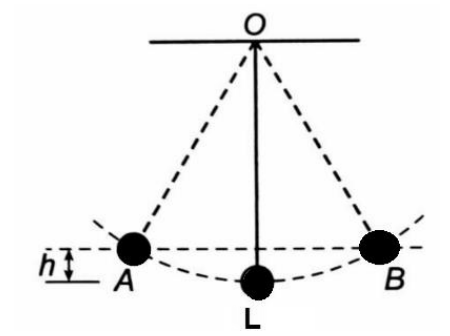
Find the distance travelled by the pendulum from A to B. [Use π = 3.142]
[4]
Diagram 2 shows a straight-line graph of xy against x. The line passes through (0, a) and (b, 3). Given that y = 7/x − 1, calculate the value of a and of b.
Easy4 marks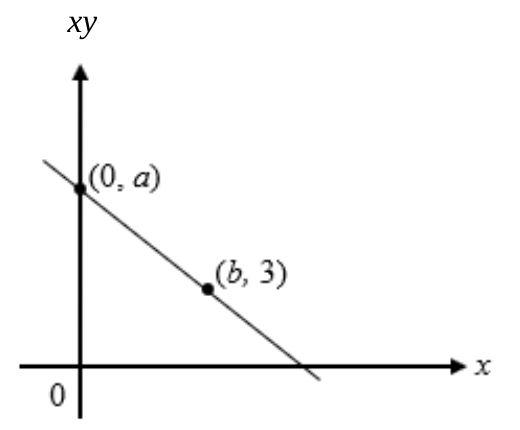
Given that y = 7/x − 1, calculate the value of a and of b.
[4]
Diagram 3 shows a pole held up by two ropes of equal length fixed to the ground 180 cm apart; each rope makes angle x with the ground. Given that sin(x/2) = 2t, express (a) the length, L, of each rope in terms of t, (b) tan(x/2) in terms of t.
Medium5 marks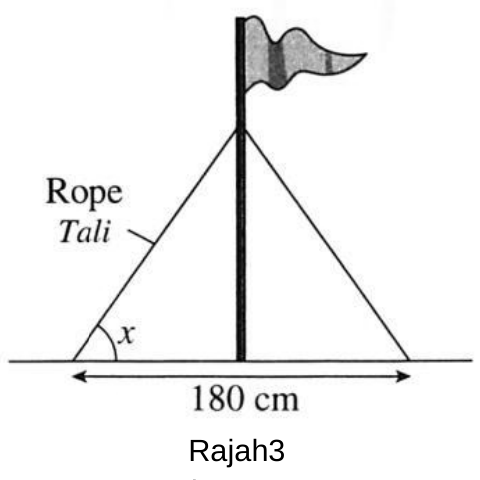
- (a)
Express the length, L, of each rope in terms of t.
[3] - (b)
Express tan(x/2) in terms of t.
[2]
(a) Convert the recurring decimal 0.545454… to a fraction without using the progression method. (b) The length and width of the rectangle in Diagram 4 are 2√5 − √2 and √5 + √2 respectively. Determine the area of the coloured region and state the answer in the form a + b√10, where a and b are rational numbers.
Easy5 marks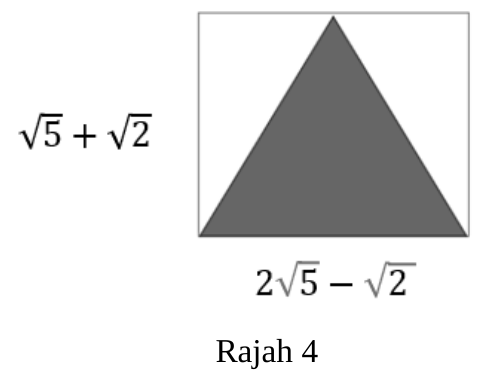
- (a)
Convert the recurring decimal 0.545454… to a fraction without using the progression method.
[2] - (b)
The length and width of the rectangle in Diagram 4 are 2√5 − √2 and √5 + √2. Determine the area of the coloured region (the triangle, whose base is the rectangle's length and height its width), in the form a + b√10, a and b rational.
[3]
Diagram 5 shows a trapezium ABCD. Given AB→ = (h + 2)**i** − 3**j**, CD→ = 2**i** + 3k**j** and 2AB→ = DC→, find (a) the values of h and of k, (b) the unit vector in the direction AB→.
Easy5 marks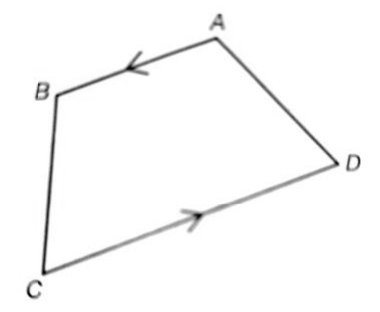
- (a)
Find the values of h and of k.
[3] - (b)
Find the unit vector in the direction AB→.
[2]
Given f(x) = 4/(1 − 2x)³ and f′(x) = m(1 − 2x)ⁿ. (a) Find the value of m + n. (b) Hence, find the value of p given (1/p)∫f′(x) dx = −1/81 and x = 2.
Medium5 marks- (a)
Find the value of m + n.
[2] - (b)
Hence, find the value of p given (1/p)∫f′(x) dx = −1/81 and x = 2.
[3]
(a)(i) C is a point on the line segment joining A(−12, 1) and B(3, 7) such that AC = ⅓AB. Find the coordinates of C. (ii) Hence, find the equation of the straight line AC. (b) Point P moves such that its distance from B is always 6 units. Find the equation of the locus of P.
Medium6 marks- (a)(i)
C is a point on the line segment joining A(−12, 1) and B(3, 7) such that AC = ⅓AB. Find the coordinates of C.
[2] - (a)(ii)
Hence, find the equation of the straight line AC.
[2] - (b)
Point P moves such that its distance from B is always 6 units. Find the equation of the locus of P.
[2]
(a) X is a discrete random variable such that X ~ B(25, p) with p < ½ and σ² = 50/9. Find the mean of X. (b) Diagram 6 shows a standard normal distribution graph. The probability represented by the shaded region (between z = h and z = 0) is 0.2881. (i) Find P(z ≥ h). (ii) X is a continuous random variable normally distributed with mean 84 and standard deviation 5. Find the value of X when the z-score is h.
Medium6 marks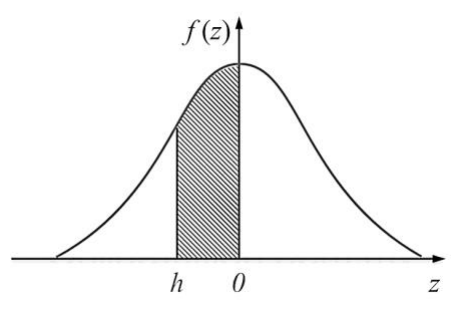
- (a)
X ~ B(25, p) with p < ½ and σ² = 50/9. Find the mean of X.
[3] - (b)(i)
Find P(z ≥ h).
[1] - (b)(ii)
Find the value of X when the z-score is h (mean 84, standard deviation 5).
[2]
(a) A numerical palindrome is an integer that has symmetric digits, e.g. 55, 1001, 24142. Find the number of five-digit palindromes. (b) Diagram 7 shows two types of beads Husna uses to make a bracelet (8 flower beads and 6 butterfly beads). How many ways can Husna choose the beads so that each bracelet contains 6 flower beads and 3 butterfly beads?
Medium6 marks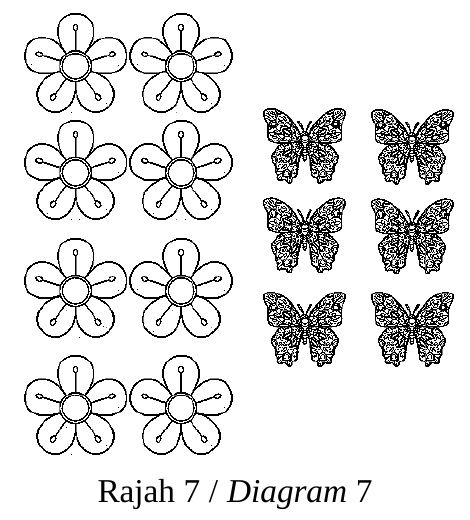
- (a)
Find the number of five-digit palindromes.
[4] - (b)
How many ways can Husna choose 6 flower beads and 3 butterfly beads (from 8 flower beads and 6 butterfly beads)?
[2]
Balqis bought 3 packets of dodol, 2 packets of chicken floss and a box of candy for RM90.00. Hanim bought 4 packets of dodol, 3 packets of chicken floss and a box of candy for RM122.00. Nurul bought 6 packets of dodol, a packet of chicken floss and 4 boxes of candy for RM148.00. Let x, y, z represent the price of a packet of dodol, a packet of chicken floss and a box of candy. (a) Construct a system of linear equations. (b) Find the unit price of each type of item.
Medium7 marks- (a)
Construct a system of linear equations.
[2] - (b)
Find the unit price of each type of item.
[5]
Diagram 8 shows the graph of f(x) = −(x − 2)² + 8 with maximum point (2, 8). (a)(i) State whether the function in Diagram 8 is discrete or continuous. (ii) Determine the domain, codomain and range of f(x). (b) Given g(x) = (px − q)/(rx), where p, q and r are constants, (i) express g⁻¹(x) in terms of p, q and r, (ii) hence, determine g⁻¹(x) of g(x) = (2x + 1)/(3x), x ≠ 0.
Medium7 marks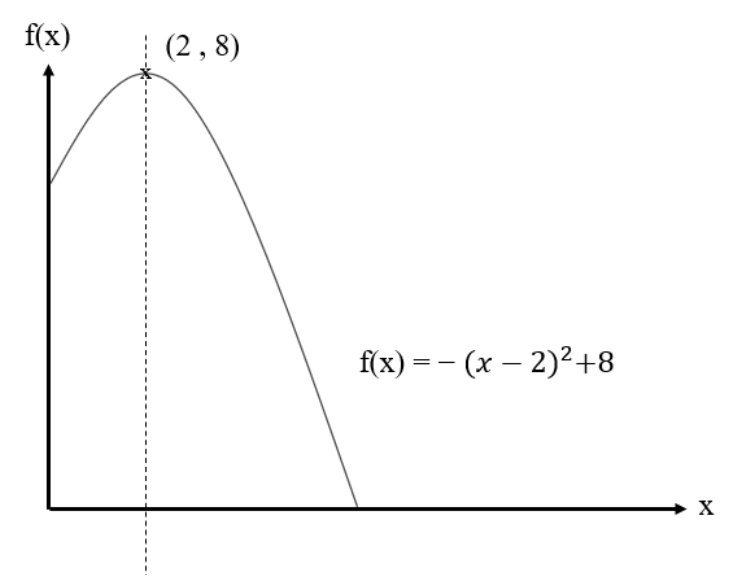
- (a)(i)
State whether the function in Diagram 8 is discrete or continuous.
[1] - (a)(ii)
Determine the domain, codomain and range of f(x).
[3] - (b)(i)
Given g(x) = (px − q)/(rx), express g⁻¹(x) in terms of p, q and r.
[2] - (b)(ii)
Hence, determine g⁻¹(x) of g(x) = (2x + 1)/(3x), x ≠ 0.
[1]
Section B
Hanif hits a golf ball from A and it drops into the first hole B, 10 m away (Diagram 9; C and D are 1 m and 2 m further). The function h(x) = −x² + 10x represents the height of the ball, in metres. The height of the hall roof is 50 m. (a) Express h(x) in the form h(x) = a(x + p)² + q, where a, p and q are constants. (b) State the maximum height reached by the ball. (c) If Hanif wants the ball to drop into the third hole D, the path passes through point E, 4 m to the right of A and 32 m vertically above the ground. Determine whether the ball can reach the roof of the hall and give your reason.
Medium8 marks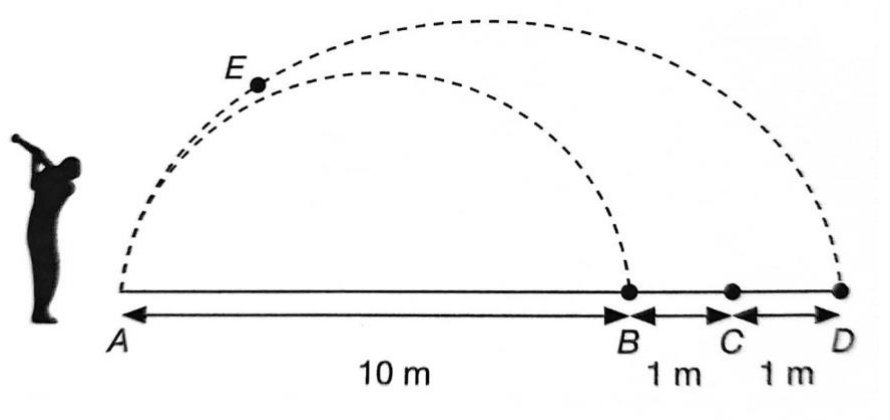
- (a)
Express h(x) in the form h(x) = a(x + p)² + q.
[3] - (b)
State the maximum height reached by the ball, in metres.
[1] - (c)
Path to third hole D (12 m from A) through E (4 m right of A, 32 m high). Can the ball reach the roof (50 m)? Give a reason.
[4]
(a)(i) If a is the first term and d is the common difference of an arithmetic progression, show that the sum of the first n terms is Sₙ = (n/2)[2a + (n − 1)d]. (ii) Given the arithmetic progression 3, 7, 11, 15, …, find the sum of the first n terms. (b) Solve the equation 3 + 7 + 11 + 15 + … + x = 1275.
Medium8 marks- (a)(i)
Show that Sₙ = (n/2)[2a + (n − 1)d].
[3] - (a)(ii)
Given 3, 7, 11, 15, …, find the sum of the first n terms.
[2] - (b)
Solve 3 + 7 + 11 + 15 + … + x = 1275.
[3]
Pak Samad owns rectangular land in which a semicircle is a pond (Diagram 10) and the rest is used to rear ducks. The area is fenced with wire of 120 m length. The width of the land is 2x m. (a) Show that the area to keep the ducks, in m², is L = 120x − 2x² − (3/2)πx². (b) Find the value of x, when L is maximum, in terms of π. (c) During drought, the surface of the pond reduces at the rate of 0.02 m² s⁻¹ due to evaporation. Find the rate of change of the radius at the instant when the radius is 8 m, in terms of π.
Medium8 marks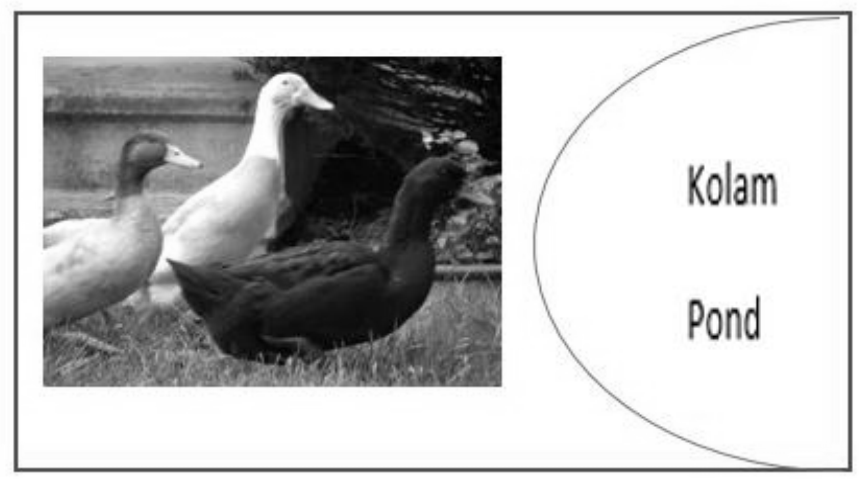
- (a)
Show that the area to keep the ducks is L = 120x − 2x² − (3/2)πx².
[3] - (b)
Find the value of x, when L is maximum, in terms of π.
[2] - (c)
The pond surface reduces at 0.02 m² s⁻¹. Find the rate of change of the radius when the radius is 8 m, in terms of π.
[3]