Write your answer on paper. Then open the answer to check it.
Section A
(a) It is given that log_m k + log_m (1/k) = t. Find the value of t. (b) Simplify log₂ (2x + 1) − 5 log₄ x² + 4 log₂ x.
Medium7 marks- (a)
It is given that log_m k + log_m (1/k) = t. Find the value of t.
[3] - (b)
Simplify log₂ (2x + 1) − 5 log₄ x² + 4 log₂ x.
[4]
(a) Diagram 2 shows part of the curve x = f(y). Given that the area of the shaded region is 5 unit², find the value of ∫₃¹ 2f(y) dy. (b) The gradient function of a curve is px² − 2x, where p is a constant. Given that the curve passes through points S(1, 6) and T(−2, −15). Find the equation of the curve.
Easy7 marks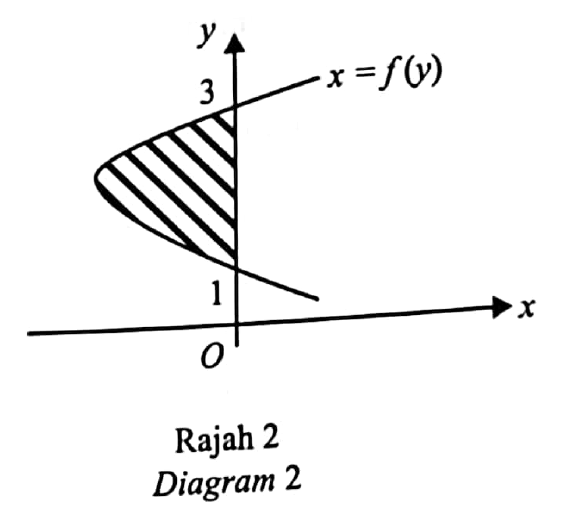
- (a)
Given that the area of the shaded region is 5 unit², find the value of ∫₃¹ 2f(y) dy.
[2] - (b)
The gradient function of a curve is px² − 2x, where p is a constant. Given that the curve passes through points S(1, 6) and T(−2, −15). Find the equation of the curve.
[5]
The first four terms of a geometric progression are 27, 18, 12 and 8 with the first term, a, and the common ratio, r. By using the given geometric progression, (a) derive a formula of the nth term, (b) find the sum to infinity of the progression.
Medium6 marks- (a)
Derive a formula of the nth term.
[4] - (b)
Find the sum to infinity of the progression.
[2]
It is given that f : x → px + q and f² : x → 4x − 3, such that p > 0, (a) find the value of p and of q, (b) determine f³(x), (c) by studying the pattern of f(x), f²(x) and f³(x), determine the general rule fⁿ(x) where n is the number of times.
Medium7 marks- (a)
Find the value of p and of q.
[4] - (b)
Determine f³(x).
[2] - (c)
By studying the pattern of f(x), f²(x) and f³(x), determine the general rule fⁿ(x) where n is the number of times.
[1]
(a) It is given that sin²x = 4cos²y, find the acute angle for x and y that satisfied the equation 2cos²x + sin²y = 1. (b) Use the graph paper to solve this question. By using a scale of 2 cm to π/8 radian on the x-axis and 2 cm to 0.5 unit on the y-axis, draw the graph of y = sin 2x for 0 ≤ x ≤ π.
Medium9 marks- (a)
Find the acute angle for x and y that satisfied the equation 2cos²x + sin²y = 1, given sin²x = 4cos²y.
[5] - (b)
Using the given scales, draw the graph of y = sin 2x for 0 ≤ x ≤ π.
[4]
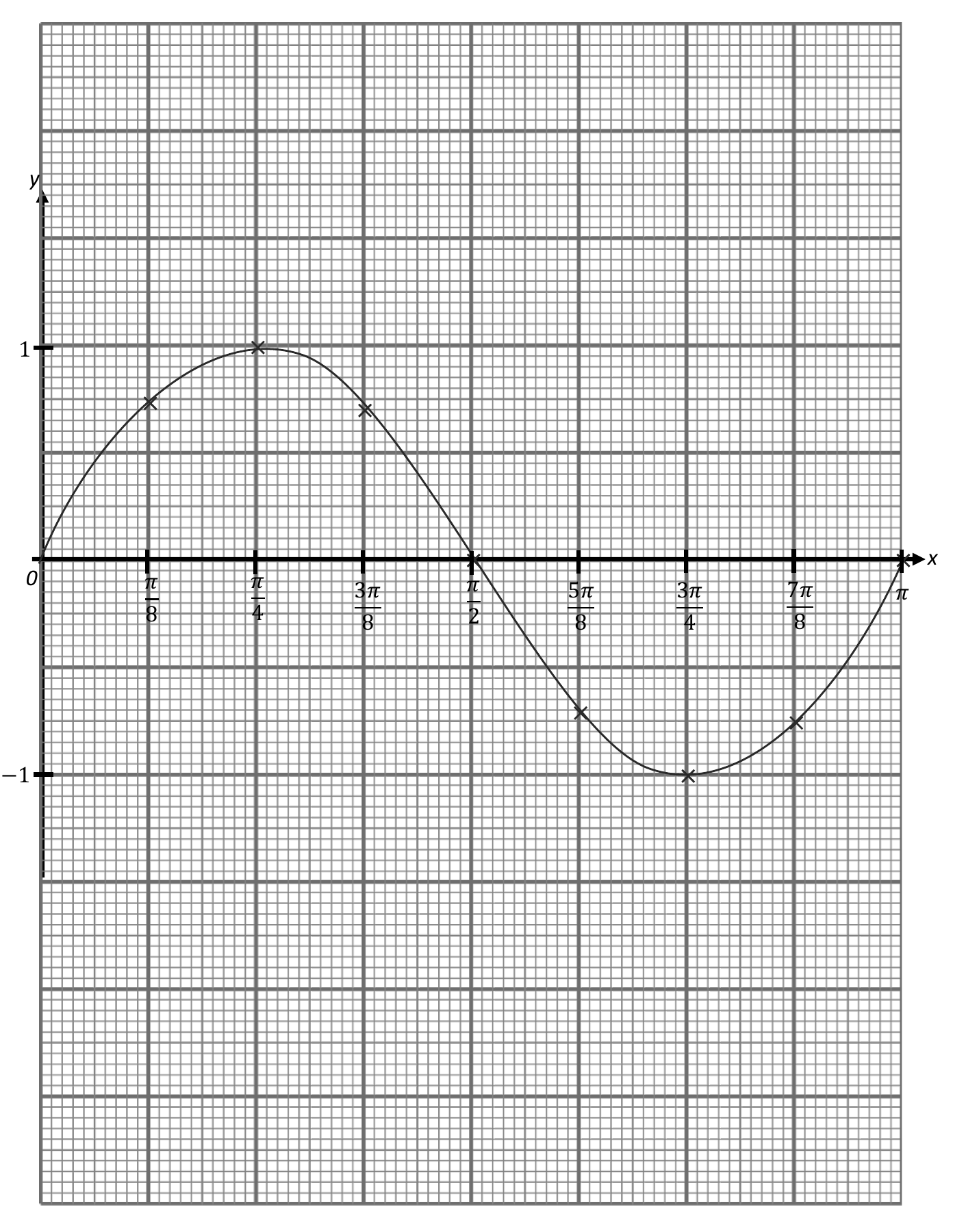
Diagram 6 shows a triangle ABC. Point N lies on the straight line CB such that CB = 3CN. It is given that AC→ = 8**x**, AM→ = 6**y**, MB→ = 4**y** and AQ→ = nAN→. (a) Express in terms of **x** and **y** of (i) CM→, (ii) CN→. (b) (i) Express CQ→ in terms of n, **x** and **y**. (ii) Hence, find the value of n if points C, Q and M are collinear.
Medium9 marks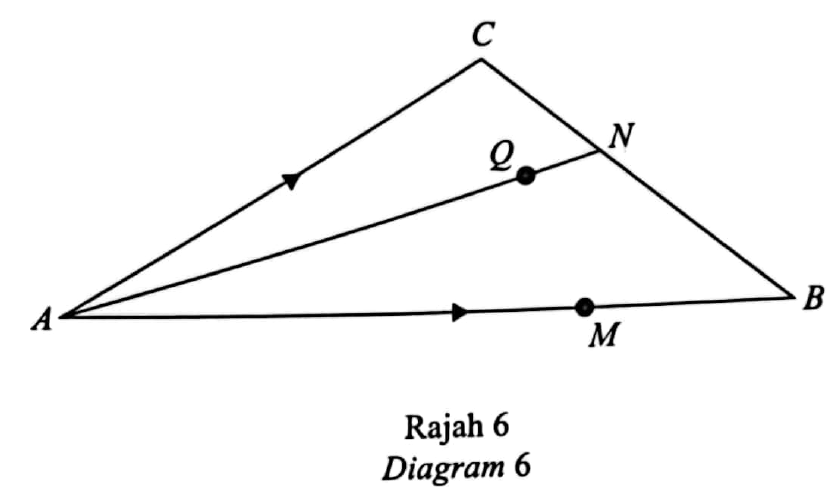
- (a)(i)
Express CM→ in terms of **x** and **y**.
[2] - (a)(ii)
Express CN→ in terms of **x** and **y**.
[2] - (b)(i)
Express CQ→ in terms of n, **x** and **y**.
[2] - (b)(ii)
Hence, find the value of n if points C, Q and M are collinear.
[3]
The straight line x + 2y − 10 = 0 cuts through the curve 5x² − 2xy = 24 at two different points. Find the coordinates of the intersection points.
Easy5 marksFind the coordinates of the intersection points.
[5]
Section B
Diagram 8 shows a solid cylinder with volume 256π cm³. Two identical hemispheres with radius r cm are removed from each end. (a) Show that the total surface area, A cm², of the remaining solid is given by A = 4πr² + 512π/r. [Surface area of sphere = 4πr²] (b) Calculate the minimum total surface area, in term of π, of the remaining solid. (c) The remaining solid is heated and the rate of change of its total surface area of the solid is 84π cm² s⁻¹. Calculate the rate of change of the radius of the solid when its radius is 8 cm.
Medium10 marks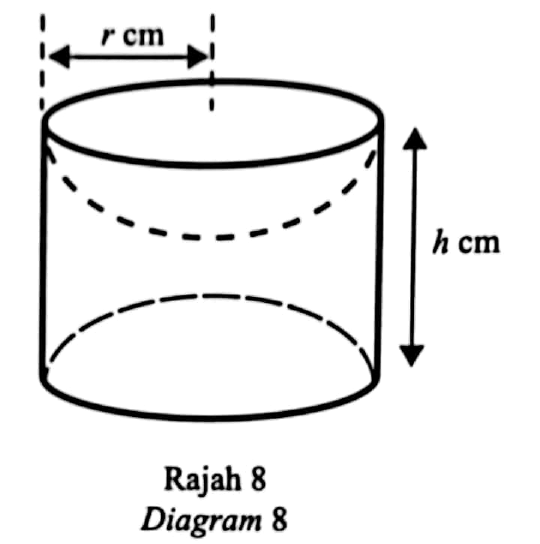
- (a)
Show that the total surface area, A cm², of the remaining solid is given by A = 4πr² + 512π/r. [Surface area of sphere = 4πr²]
[3] - (b)
Calculate the minimum total surface area, in term of π, of the remaining solid.
[4] - (c)
The remaining solid is heated and the rate of change of its total surface area is 84π cm² s⁻¹. Calculate the rate of change of the radius when its radius is 8 cm.
[3]
Solution by scale drawing is not accepted. Diagram 9 shows a triangle ABC. The points P(3, 8), Q(9, 6) and R(6, 4) are midpoints of the straight lines AB, BC and AC respectively. APQR forms a parallelogram. The straight line AB intersect the y-axis at point A and the equation of straight line AB is 3y = 2x + 18. Straight line AB is extended until it intersects with the perpendicular bisector of straight line AC at point M. (a) Find (i) the equation of the perpendicular bisector of straight line AC, (ii) coordinates of M. (b) If the straight line AQ is extended to a point G such that AQ : QG = 2 : 3, find the coordinates of G. (c) Calculate the area of triangle AGC.
Medium10 marks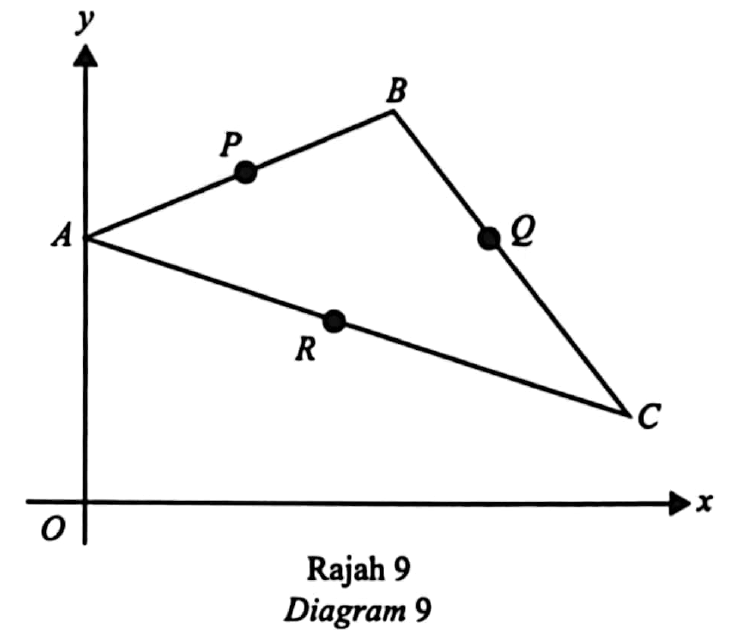
- (a)(i)
Find the equation of the perpendicular bisector of straight line AC.
[3] - (a)(ii)
Find the coordinates of M.
[2] - (b)
If the straight line AQ is extended to a point G such that AQ : QG = 2 : 3, find the coordinates of G.
[2] - (c)
Calculate the area of triangle AGC.
[3]
(a) X is a continuous random variable which normally distributed with mean 12 and standard deviation σ. It is given that z-score is 2.25 when X = 16.5. Find (i) value of σ, (ii) value of k when P(X > k) = 0.7145. (b) The probability of class 5 Khaldun win a futsal match between classes is 3/7. If class 5 Khaldun participates in 6 matches, find the probability that (i) class 5 Khaldun lose all matches, (ii) class 5 Khaldun win more than 2 matches.
Medium10 marks- (a)(i)
Find the value of σ.
[2] - (a)(ii)
Find the value of k when P(X > k) = 0.7145.
[3] - (b)(i)
Find the probability that class 5 Khaldun lose all matches.
[2] - (b)(ii)
Find the probability that class 5 Khaldun win more than 2 matches.
[3]
Use the graph paper to solve this question. Table 11 shows the values of two variables, x and y, obtained from an experiment. The variables x and y are related by the equation 2y + 6q/x = p, where p and q are constants. x: 1, 3, 4, 5, 6, 8; y: 6.0, 3.3, 3.0, 2.8, 2.7, 2.5. (a) Based on table above, construct a table for the values of xy. (b) Plot xy against x, using a scale of 2 cm to 1 unit on the x-axis and 2 cm to 2 units on the xy-axis. Hence, draw the line of best fit. (c) Use the graph in 11(b) to find the value of (i) y when x = 7, (ii) p, (iii) q.
Medium10 marks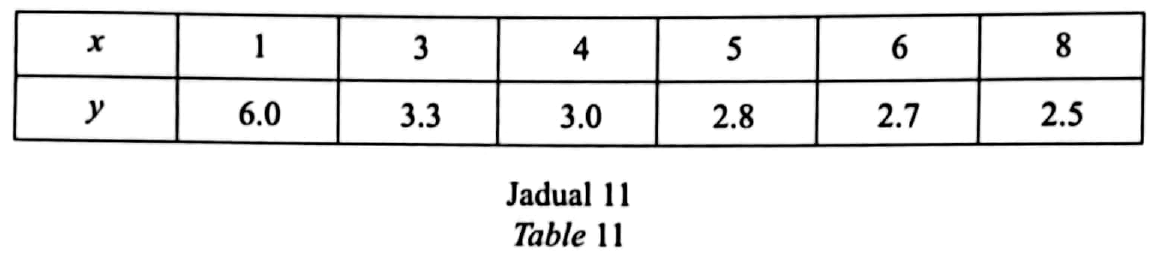
- (a)
Based on Table 11, construct a table for the values of xy.
[1] - (b)
Plot xy against x, using a scale of 2 cm to 1 unit on the x-axis and 2 cm to 2 units on the xy-axis. Hence, draw the line of best fit.
[3]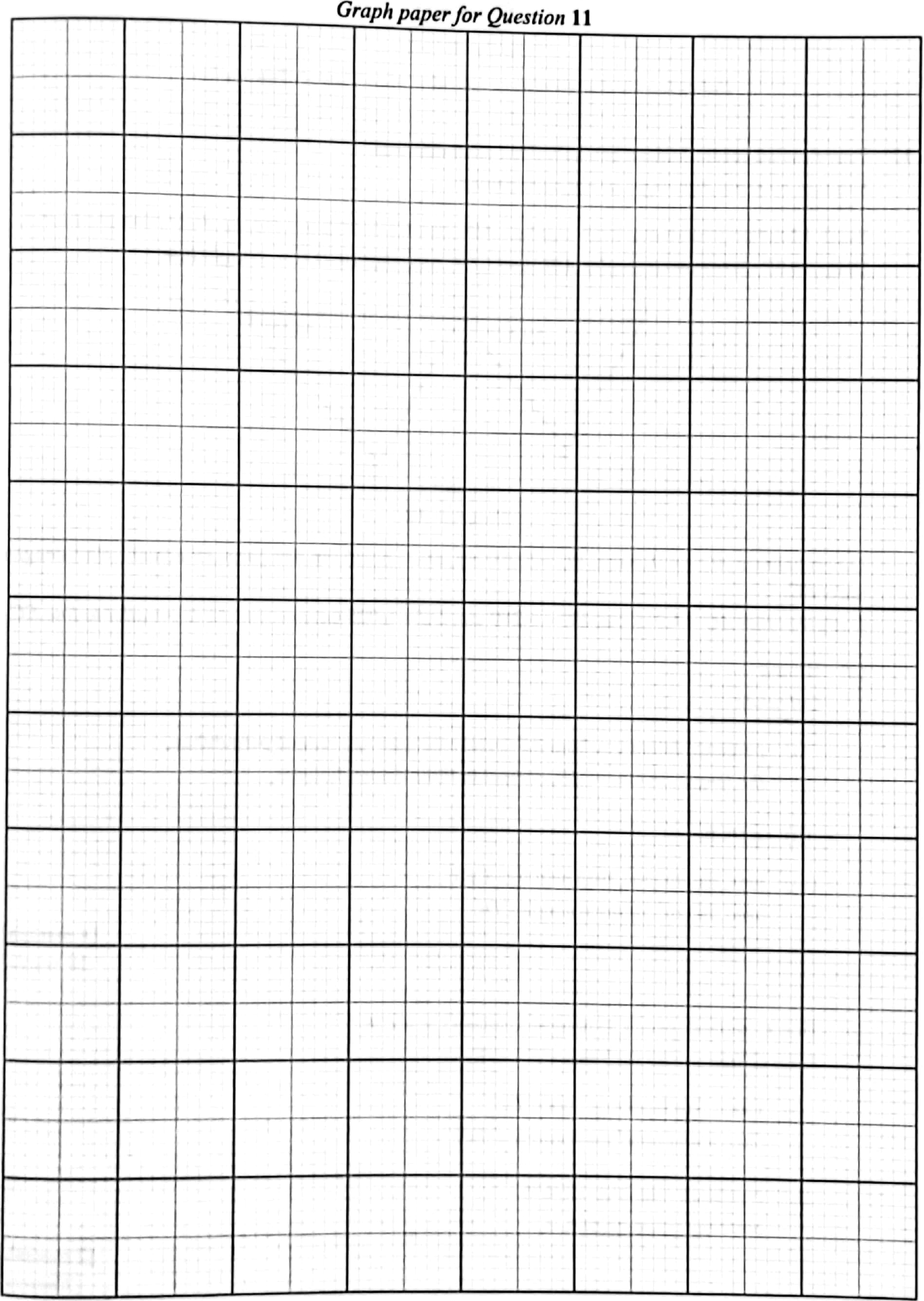
- (c)(i)
Use the graph to find the value of y when x = 7.
[2] - (c)(ii)
Use the graph to find the value of p.
[2] - (c)(iii)
Use the graph to find the value of q.
[2]
Section C
Solution by scale drawing will not be accepted. Diagram 12 shows two triangles ABC and CDE such that BCD is a straight line. ∠ACB = 50.52° and ∠CDE = 44.89°. It is given that AC = 4.916 cm, BC = 5.280 cm, DE = 6.025 cm and line AB is parallel to line EC. (a) Calculate (i) the length, in cm, of AB, correct to three decimal places, (ii) ∠DCE, (iii) area, in cm², of the triangle CDE. (b) Point C′ lies on CD such that CE = C′E. (i) Sketch and label the triangle C′DE. (ii) State the value of ∠DC′E.
Medium10 marks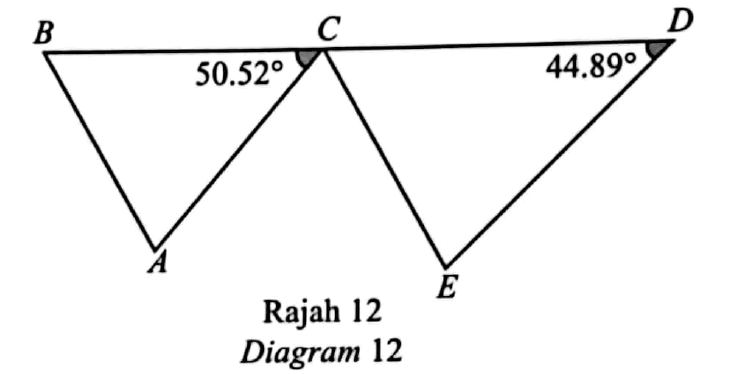
- (a)(i)
Calculate the length, in cm, of AB, correct to three decimal places.
[2] - (a)(ii)
Calculate ∠DCE.
[2] - (a)(iii)
Calculate the area, in cm², of the triangle CDE.
[4] - (b)(i)
Sketch and label the triangle C′DE.
[1] - (b)(ii)
State the value of ∠DC′E.
[1]
(a) The price index for the year 2023 based on the year 2022 and year 2021 are 120 and 135 respectively. Given the price item is RM45 for the year 2022, find the price item for the year 2021. (b) Table 13 shows the prices for three items in the production of a fan, P, Q and R, for the year 2022 and year 2023, together with the weightages respectively. P: RM70.00 (2022), RM105.00 (2023), weightage y %; Q: RM80.00, RM100.00, x %; R: RM60.00, RM67.50, 2x %. (i) By using year 2022 as the base year, calculate the price index for item P, Q and R. (ii) Given the composite index of the fan for the year 2023 based on the year 2022 is 140, find the value of x and y.
Medium10 marks- (a)
Given the price item is RM45 for the year 2022, find the price item for the year 2021.
[3] - (b)(i)
By using year 2022 as the base year, calculate the price index for item P, Q and R.
[3]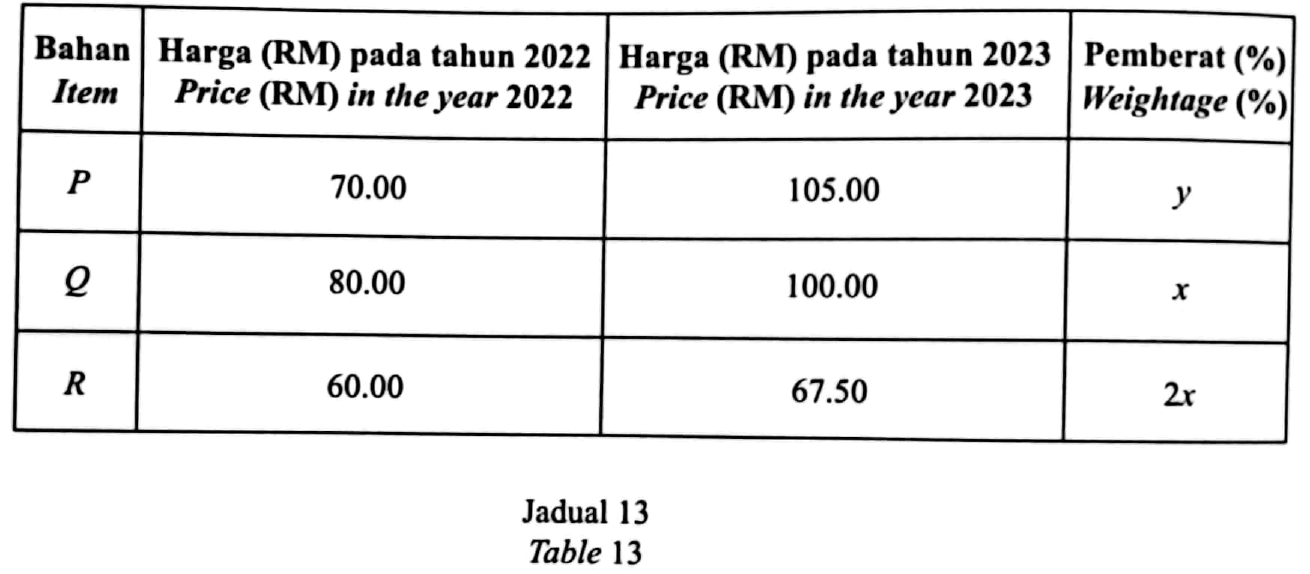
- (b)(ii)
Given the composite index of the fan for the year 2023 based on the year 2022 is 140, find the value of x and y.
[4]
Use graph paper to answer this question. A whole sale company plans to sell chocolate biscuits and cheese biscuits that will be packed in two types of tins, Tin A and Tin B. Each Tin A contains 100 pieces of chocolate biscuits and 80 pieces of cheese biscuits whereas each Tin B contains 60 pieces of chocolate biscuits and 120 pieces of cheese biscuits. The company will use x units of Tin A and y units of Tin B, based on the following conditions: I The number of chocolate biscuits being sold must not exceed 6 600. II The minimum number of cheese biscuit being sold is 4 800. III The total number of Tin B must be at least 2 times the total number of Tin A. (a) Write three inequalities, other than x ≥ 0 and y ≥ 0, which satisfy all of the above conditions. (b) Using a scale of 2 cm to 10 units on the both axes, construct and shade the region R that satisfies all the above conditions. (c) Use the graph in 14(b) to answer the following questions: (i) If the company decided to sell 15 Tin A, find the range of number of Tin B to be sold. (ii) Calculate the maximum profit that the company will gain if the profit per Tin A and the profit per Tin B are RM50 and RM25 respectively.
Medium10 marks- (a)
Write three inequalities, other than x ≥ 0 and y ≥ 0, which satisfy all of the above conditions.
[3] - (b)
Using a scale of 2 cm to 10 units on the both axes, construct and shade the region R that satisfies all the above conditions.
[3]
- (c)(i)
If the company decided to sell 15 Tin A, find the range of number of Tin B to be sold.
[1] - (c)(ii)
Calculate the maximum profit that the company will gain if the profit per Tin A and the profit per Tin B are RM50 and RM25 respectively.
[3]
A particle moves along a straight line and passes through a fixed point O. Its velocity, v m s⁻¹, is given by v = −12t² + 24t + 15, where t is the time, in seconds, after passing through O. The particle reaches its maximum velocity at point P, changes its direction at point Q and passes through point R after 4 seconds. [Assume motion to the right is positive] Find (a) the distance, in m, of OP, (b) the range of time, in seconds, when the particle moves towards Q, (c) the total distance, in m, travelled by the particle from the moment it leaves P until it passes through R.
Medium10 marks- (a)
Find the distance, in m, of OP.
[4] - (b)
Find the range of time, in seconds, when the particle moves towards Q.
[3] - (c)
Find the total distance, in m, travelled by the particle from the moment it leaves P until it passes through R.
[3]