Write your answer on paper. Then open the answer to check it.
Section A
Diagram 1 shows a water tank frame built using steel. The total length of the steel frame is 120 m. The frame is a cuboid x m by y m by 10 m. When the wall of the tank is installed, it can hold a maximum of 960 m³ of water. Find the values of x and y where x > y.
Medium6 marks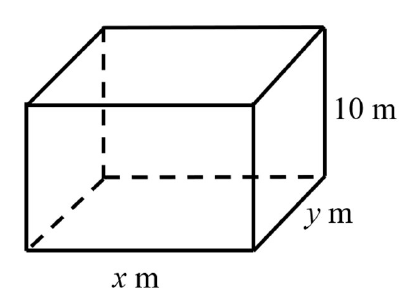
Find the values of x and y where x > y.
[6]
(a) Prove that (tan 2A)(2 cos A − sec A) = 2 sin A. (b) Sketch the graph of y = −|(tan 2A)(2 cos A − sec A)| for 0° ≤ A ≤ 270°. Hence, draw a straight line y = m such that m < 0 which gives two solutions in the domain 0° ≤ A ≤ 270°. State the value of m.
Medium7 marks- (a)
Prove that (tan 2A)(2 cos A − sec A) = 2 sin A.
[2] - (b)
Sketch the graph of y = −|(tan 2A)(2 cos A − sec A)| for 0° ≤ A ≤ 270°. Hence draw the straight line y = m, m < 0, which gives two solutions, and state m.
[5]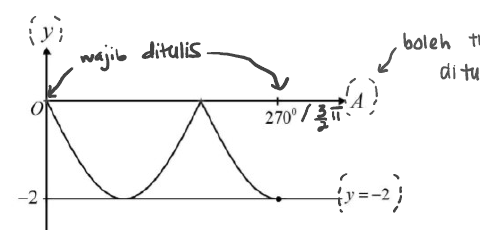
Diagram 3 shows a circle centred at O with radius 4 cm. Triangles OAB and OEF are congruent. ∠JOK = β where β is in degrees. Points C and D are the midpoints of OB and OF respectively. (a) Show that the area of the major segment JK is 16π − 8(πβ/180° − sin β) cm². (b) Find the perimeter, in cm, of the shaded region in terms of π.
Medium7 marks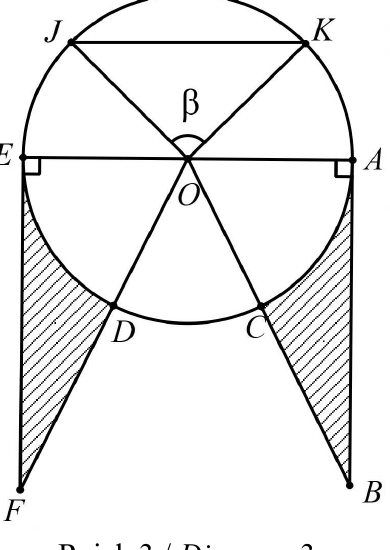
- (a)
Show that the area of the major segment JK is 16π − 8(πβ/180° − sin β) cm².
[4] - (b)
Find the perimeter, in cm, of the shaded region in terms of π.
[3]
Diagram 4 shows the route of a cycling track represented by the curve y = x²(3x/2 − 2) + 5/2. At point P(1, 2), Hazim uses the path PQ, which is tangent to the cycling track. (a) Using calculus, find the equation of PQ. (b) A canal perpendicular to path PQ, passing through point P, is represented by the equation y + 2x = q² + 3. Find the value of q, if q > 0.
Medium7 marks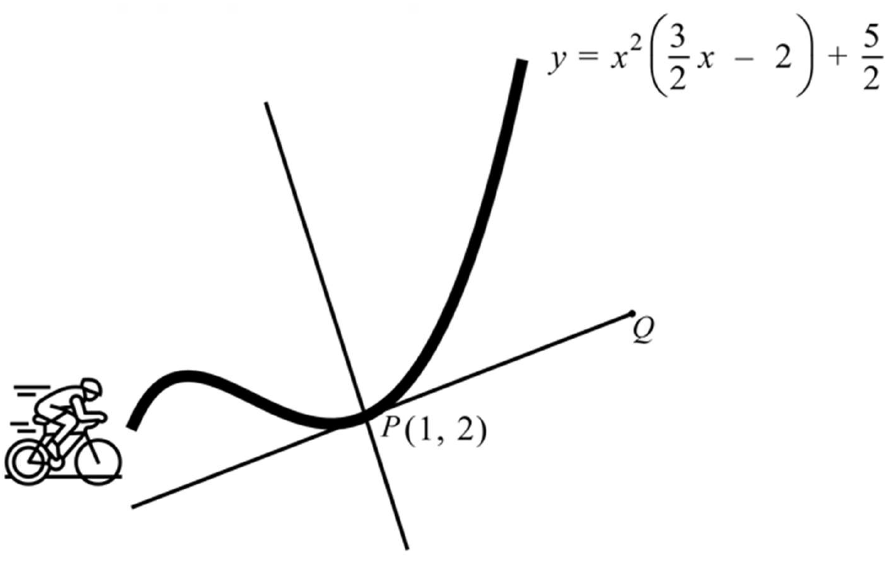
- (a)
Using calculus, find the equation of PQ.
[4] - (b)
Find the value of q, if q > 0.
[3]
Diagram 5 shows a quadrilateral OABC such that the straight line OB intersects the straight line AD at E. Given OA : CB = 1 : 2, OC : OD = 3 : 1, OD→ = d, OA→ = a, AE→ = m AD→ and OE→ = n OB→. (a) Show that OE→ = (1 − m)a + m d. (b) Find (i) the value of m and of n, (ii) DE : EA.
Medium7 marks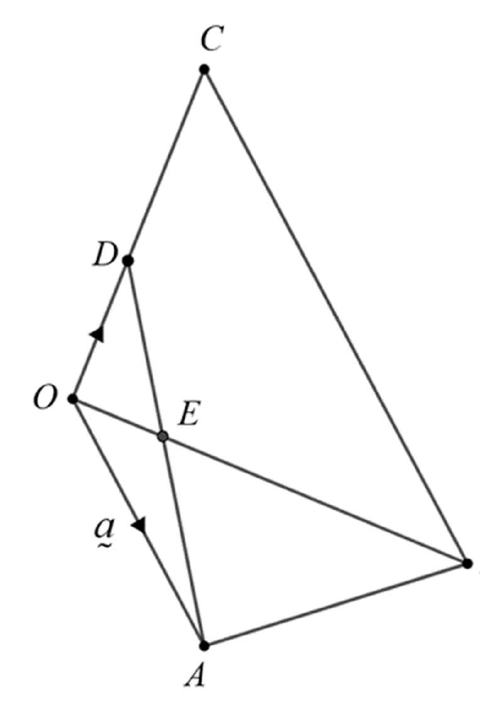
- (a)
Show that OE→ = (1 − m)a + m d.
[2] - (b)(i)
Find the value of m and of n.
[4] - (b)(ii)
Find DE : EA.
[1]
Diagram 6 shows the parabolic locus of two frogs of different species, starting at (0, 0). The maximum height of the leap of both frogs is 25 cm and the horizontal leap distance of frog P is 50 cm. (a) Write a quadratic function f(x), representing the locus of frog P, in general form. (b) The locus of frog Q is g(x) = −x²/64 + 5x/4. Express g(x) in vertex form, hence state the horizontal leaping distance of frog Q, in cm. (c) If a₁ and a₂ are the coefficients of x² for f(x) and g(x) respectively, state the relation between the coefficients of x² of both functions and the horizontal distance of the frogs. Give your justification.
Medium8 marks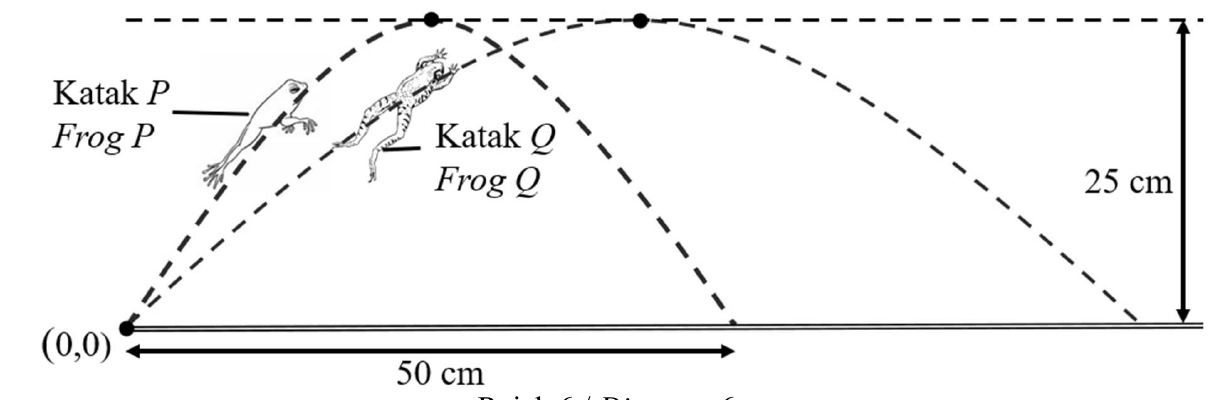
- (a)
Write a quadratic function f(x) for frog P in general form.
[3] - (b)(i)
Express g(x) in vertex form.
[2] - (b)(ii)
State the horizontal leaping distance of frog Q, in cm.
[1] - (c)
State the relation between the coefficients of x² and the horizontal distance of the frogs. Give your justification.
[2]
Diagram 7 shows a rhombus ABCD on a Cartesian plane with A(−2, 1), B(2, 2), C(1, −2) and D(−3, −3). (a) Determine the pair of perpendicular lines just by using the vertices of the rhombus. Prove with calculations. (b) Find the area of rhombus ABCD. (c) (i) Point P moves along a circle such that PA : PB = 1 : 2. Find the equation of the locus of P. (ii) Hence, find the coordinates of the points of intersection of the locus of P with the x-axis.
Medium8 marks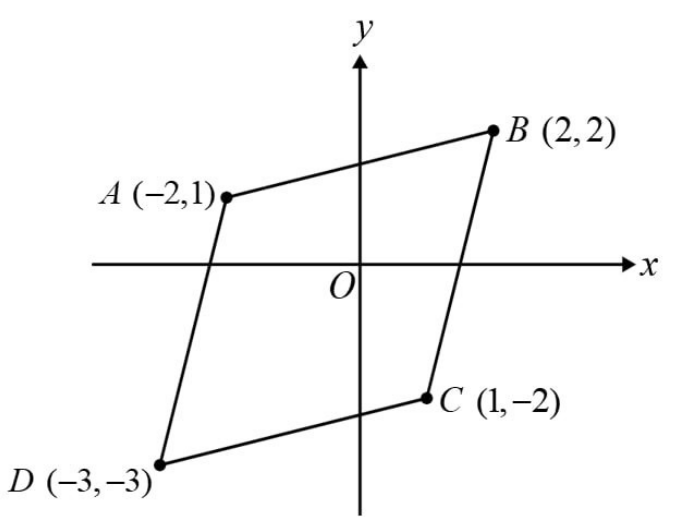
- (a)
Determine the pair of perpendicular lines using the vertices of the rhombus. Prove with calculations.
[2] - (b)
Find the area of rhombus ABCD.
[2] - (c)(i)
Find the equation of the locus of P where PA : PB = 1 : 2.
[2] - (c)(ii)
Find the coordinates of the points where the locus of P cuts the x-axis.
[2]
Section B
Diagram 8(a) shows a plastic water container and Diagram 8(b) shows its cross section. The equation of the side of the container is y = x²/8 − 32. (The cross section STUV has height 66 cm and base UV = 32 cm on the x-axis.) Find (a) the area of the cross section STUV, in cm². (b) the volume, in cm³, of the container in Diagram 8(a) in terms of π. Hence, find the cost of the liquid needed if the price for each 80π cm³ of the liquid is RM 1.20.
Medium10 marks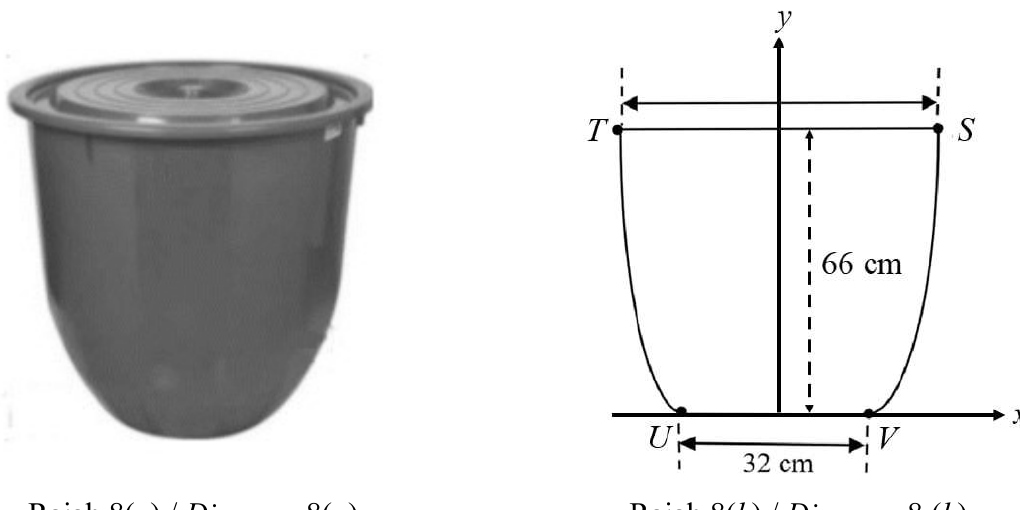
- (a)
Find the area of the cross section STUV, in cm².
[5] - (b)
Find the volume of the container in terms of π, and the cost of the liquid needed.
[5]
Table 9 shows the values of two variables x and y obtained from an experiment, where x = 4, 6, 8, 10, 12, 14 and y = 0.35, 0.81, 1.06, 1.36, 1.63, 1.76. The variables are related by y = 1/(k√x) + h√x, where h and k are constants. (a) Based on Table 9, construct a table for the values of y√x. (b) Plot y√x against x, using a scale of 2 cm to 2 units on the x-axis and 2 cm to 1 unit on the y-axis. Hence, draw the line of best fit. (c) Using the graph in (b), find the value of (i) k and h, (ii) y when x = 9.
Medium10 marks- (a)
Construct a table for the values of y√x.
[1]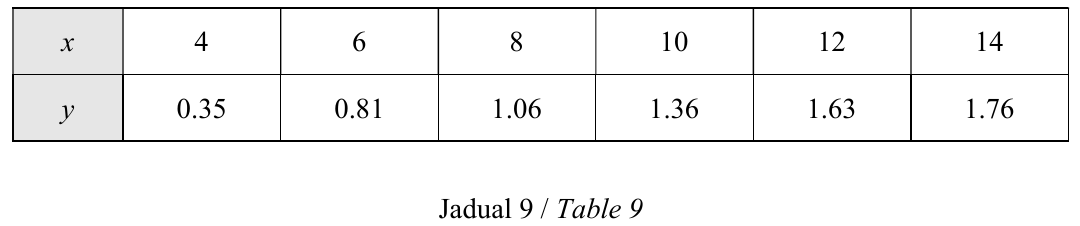
- (b)
Plot y√x against x using the given scale and draw the line of best fit.
[3]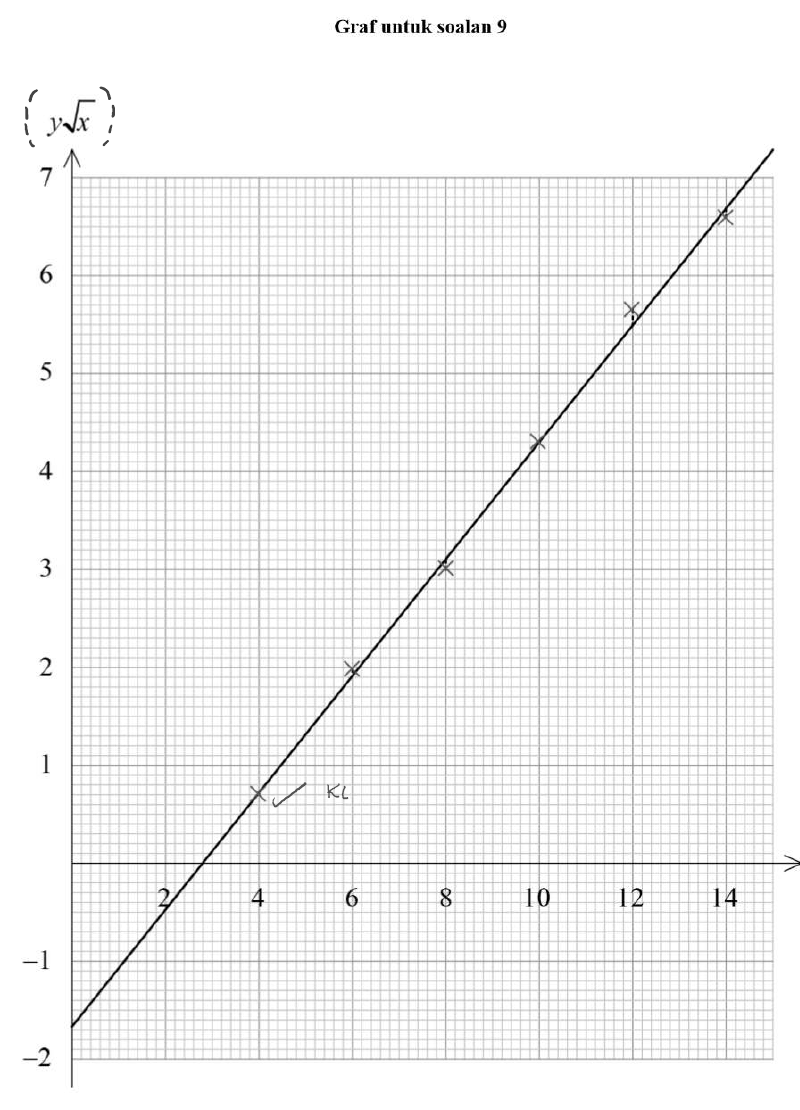
- (c)(i)
Find the values of k and h.
[5] - (c)(ii)
Find y when x = 9.
[1]
Diagram 10 shows four cylinders of different sizes. Each cylinder has radius x m and the height of each successive cylinder is half the height of the previous one. The height of the first cylinder is h m. (a) Express x in terms of h if the sum of the volumes of the first four cylinders is 480π m³. (b) Hence, find the value of h if the ratio of the radius to the height of the first cylinder is 1 : 4. (c) (i) Find the number of cylinders that can be completely filled with water to hold 1600 m³ of water. (ii) Hence, find the volume of the remaining water, in m³. [Use π = 3.142]
Medium10 marks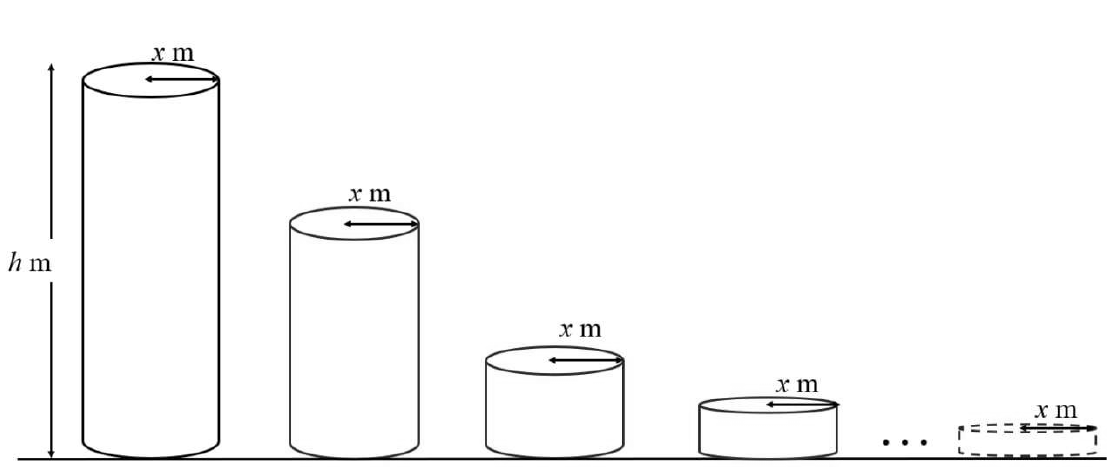
- (a)
Express x in terms of h if the sum of the first four volumes is 480π m³.
[3] - (b)
Find the value of h if the ratio of the radius to the height of the first cylinder is 1 : 4.
[3] - (c)(i)
Find the number of cylinders completely filled by 1600 m³ of water.
[2] - (c)(ii)
Find the volume of the remaining water, in m³.
[2]
(a) A sample of 4 dry cells is randomly selected. Diagram 11 shows the survey results, where X is the number of dry cells with a lifespan of less than 2 months: P(X = 0) = 0.03m, P(X = 1) = m/25, P(X = 2) = 0.20, P(X = 3) = 0.35, P(X = 4) = 0.08m. (i) Find the value of m. (ii) Find the probability that more than 3 batteries have a lifespan of less than 2 months. (iii) Find the probability that at most 2 batteries have a lifespan of less than 2 months. (b) The marks of 120 students in a Mathematics test are normally distributed with a mean of 86 and a standard deviation of 10. (i) Represent the probability that a randomly selected student scores between 80 and 90 by sketching a standard normal distribution graph. (ii) If students with marks not less than 80 are selected for a quiz, calculate the number of students selected.
Medium10 marks- (a)(i)
Find the value of m.
[2]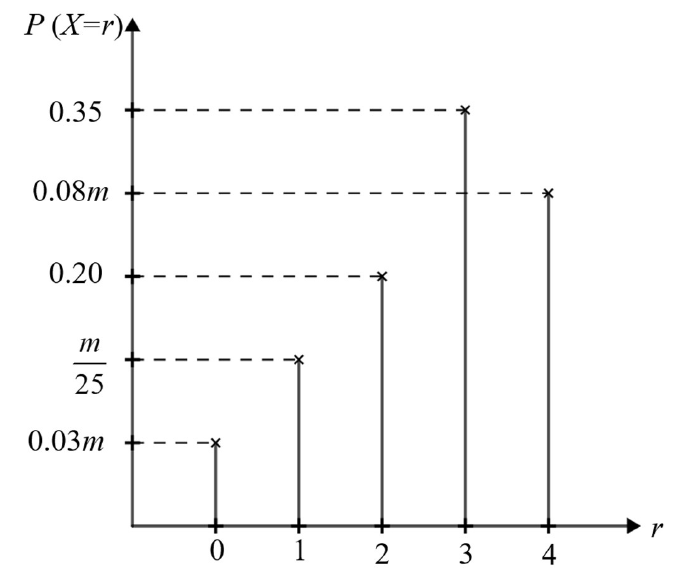
- (a)(ii)
Find P(X > 3).
[1] - (a)(iii)
Find P(X ≤ 2).
[2] - (b)(i)
Sketch the standard normal graph representing the probability that a student scores between 80 and 90.
[2]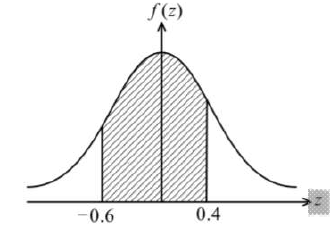
- (b)(ii)
Calculate the number of students selected (marks not less than 80).
[3]
Section C
Diagram 12 shows a circle of radius 7 cm centred at O. Angle ABC is obtuse. ∠BAC = 25° is marked and chord AB = 8.14 cm. (a) (i) Find the length, in cm, of chord BC. (ii) Hence, find the area of triangle OBC using Heron's formula. (b) Given the area of triangle ABC is 20.98 cm², calculate ∠ABC. (c) Sketch a triangle A′B′C′ which has a different shape from triangle ABC such that C′B′ = CB, A′B′ = AB and ∠C′A′B′ = ∠CAB. Hence, find the value of ∠B′C′A′.
Hard10 marks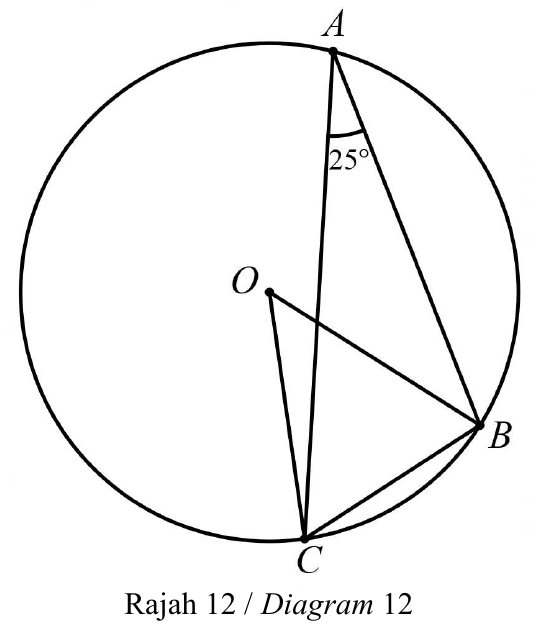
- (a)(i)
Find the length, in cm, of chord BC.
[2] - (a)(ii)
Hence, find the area of triangle OBC using Heron's formula.
[3] - (b)
Given that the area of triangle ABC is 20.98 cm², calculate ∠ABC.
[2] - (c)
Sketch triangle A′B′C′ with C′B′ = CB, A′B′ = AB and ∠C′A′B′ = ∠CAB but a different shape. Hence find ∠B′C′A′.
[3]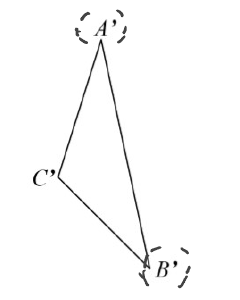
Diagram 13 shows a bar chart of the selling price of three types of cakes A, B and C at Kedai Kek Sarah in 2020 and 2021 (2020: A RM24, B RM28, C RM24; 2021: A RM26, B RM28, C RM28). (a) Using 2020 as the base year, calculate (i) the price index for each type of cake, (ii) the composite index of the selling price of all types of cakes in 2021. (b) Given that the total sales of all types of cakes increase by 5% from 2021 to 2022, find the composite index of the selling price of cakes in 2022 based on 2020. (c) The sales of all types of cakes decrease by m% from 2022 to 2023. Given that the sales of all cakes in 2020 was RM58 000 and in 2023 is RM49 300, determine the value of m.
Easy10 marks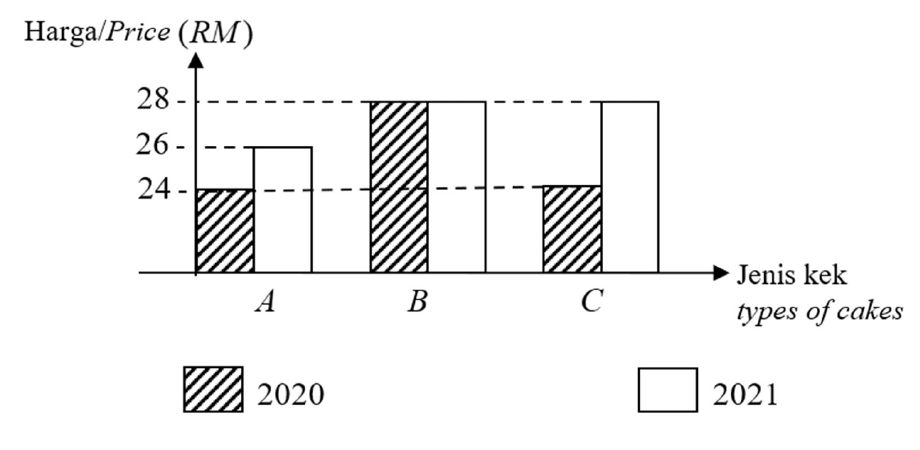
- (a)(i)
Calculate the price index for each type of cake (base year 2020).
[3] - (a)(ii)
Calculate the composite index of the selling price in 2021.
[2] - (b)
Find the composite index of the selling price of cakes in 2022 based on 2020.
[2] - (c)
Determine the value of m.
[3]
Azri has x car workshops in Sungai Petani and y car workshops in Gurun. Table 14: each Sungai Petani workshop has 9 mechanics and 3 staff; each Gurun workshop has 5 mechanics and 3 staff. Constraints: I The total number of mechanics is at least 90. II The maximum number of staff is 51. III The ratio of the number of workshops in Gurun to the number in Sungai Petani is not less than 1 : 2. (a) Write three inequalities, other than x ≥ 0 and y ≥ 0, that satisfy all the constraints. (b) Using a scale of 2 cm to 2 workshops on both axes, construct and shade the region R that satisfies all the constraints. Use the graph in (b) to answer: (c) (i) State the range of the number of workshops in Sungai Petani if the number of workshops in Gurun is 7. (ii) By drawing the objective function, find the minimum profit if the profit of each workshop in Sungai Petani and Gurun is RM50 000 and RM10 000 respectively.
Medium10 marks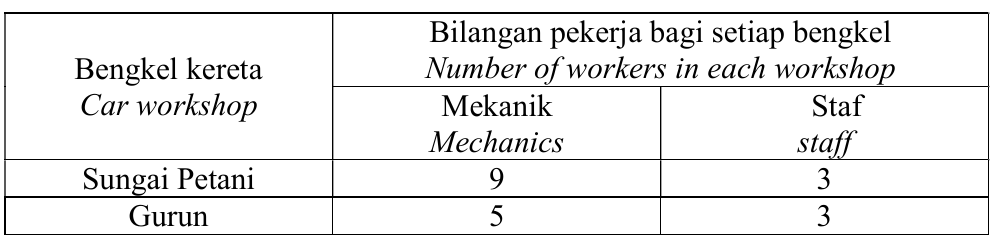
- (a)
Write three inequalities, other than x ≥ 0 and y ≥ 0, that satisfy all the constraints.
[3] - (b)
Using a scale of 2 cm to 2 workshops on both axes, construct and shade the region R.
[3]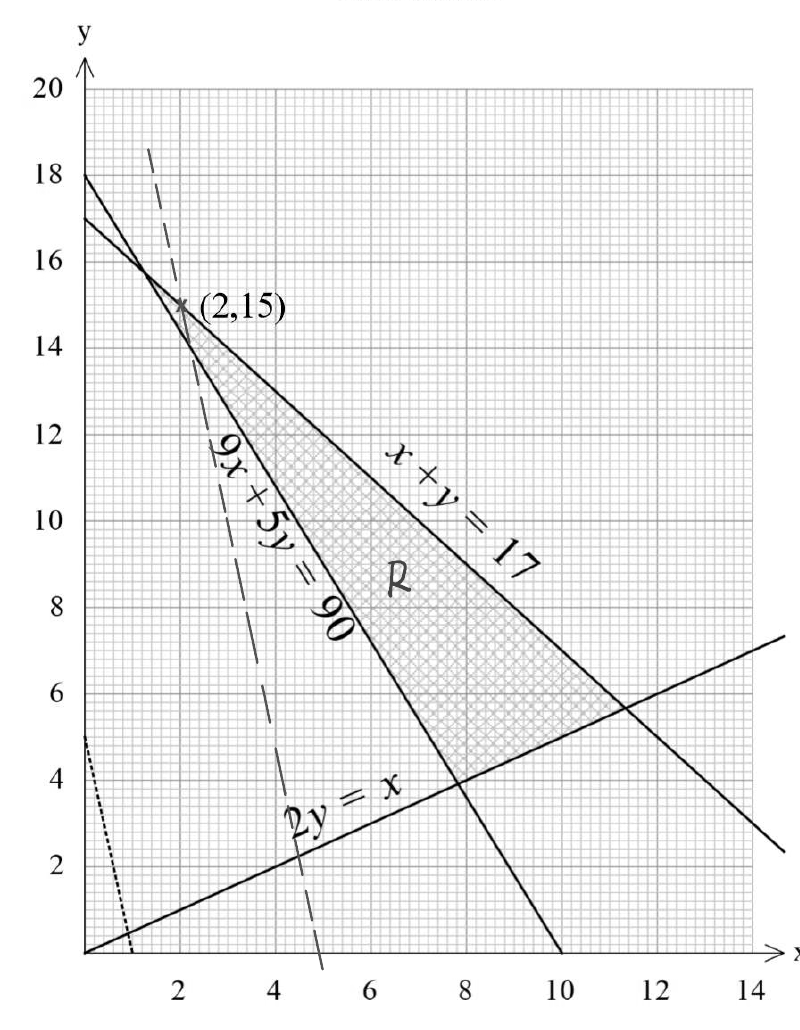
- (c)(i)
State the range of the number of workshops in Sungai Petani if Gurun has 7 workshops.
[1] - (c)(ii)
By drawing the objective function, find the minimum profit.
[3]
Two particles P and Q move along a straight line through a fixed point O. The velocity of P, V_P m s⁻¹, is V_P = ½t² + 2t + 6 and the acceleration of Q, a_Q m s⁻², is a = t, where t is the time in seconds after passing O. The initial velocity of Q is 14 m s⁻¹. [Assume movement to the right is positive.] Find (a) the initial velocity, in m s⁻¹, of P. (b) the time, in seconds, when the acceleration of P is 5 m s⁻². (c) the time, in seconds, when the velocities of P and Q are equal. (d) the total distance, in m, travelled by Q in the first 8 seconds.
Medium10 marks- (a)
Find the initial velocity of particle P.
[1] - (b)
Find the time when the acceleration of P is 5 m s⁻².
[2] - (c)
Find the time when the velocities of P and Q are equal.
[5] - (d)
Find the total distance travelled by particle Q in the first 8 seconds.
[2]