Write your answer on paper. Then open the answer to check it.
Section A
A 100 cm long wire is cut once to produce two pieces. Both pieces are bent to form two squares. If the sum of the areas of the two squares is 425 cm², find the lengths of the two pieces of wire.
Medium7 marksFind the lengths of the two pieces of wire.
[7]
Solve the following equations. (a) 1 + log₃ (x − 3) = log₃ x. (b) √(2s + 5) − √(s − 1) = 2.
Medium6 marks- (a)
Solve 1 + log₃ (x − 3) = log₃ x.
[2] - (b)
Solve √(2s + 5) − √(s − 1) = 2.
[4]
In the diagram, ABCD is a quadrilateral. AFE and BFD are straight lines. It is given that AB→ = 2x, AD→ = y, CD→ = −3x − ½y, 2BC→ = AE→. (a) Express in terms of x and/or y (i) BD→, (ii) AE→. (b) Using AF→ = hAE→ and BF→ = kBD→, where h and k are constants, find the values of h and k.
Medium8 marks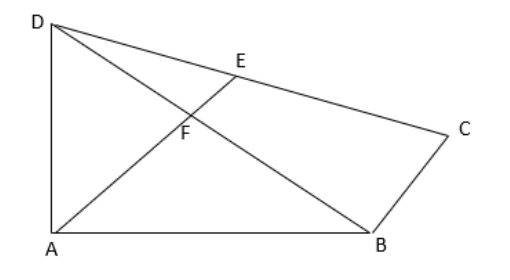
- (a)
Express in terms of x and/or y: (i) BD→, (ii) AE→.
[3] - (b)
Using AF→ = hAE→ and BF→ = kBD→, find h and k.
[5]
The quadratic equation 9tx − x² = 80 has roots α and β which follow the ratio 4 : 5. (a) Find the values of t. (b) Hence, form a new quadratic equation if the new roots are α² and β², where t > 0.
Medium8 marks- (a)
Find the values of t.
[4] - (b)
Form a new quadratic equation with roots α² and β², where t > 0.
[4]
(a) Prove that (2 − sec² x)(1 − sin² x) = |cos 2x|. (b) (i) Sketch the graph y = 2|cos 2x| − 2 for 0 ≤ x ≤ π. (ii) Hence, using the same axes, sketch a suitable line to find the number of solutions for the equation 6π|(2 − sec² x)(1 − sin² x)| = 3x + 2π for 0 ≤ x ≤ π.
Medium7 marks- (a)
Prove that (2 − sec² x)(1 − sin² x) = |cos 2x|.
[2] - (b)(i)
Sketch the graph y = 2|cos 2x| − 2 for 0 ≤ x ≤ π.
[2]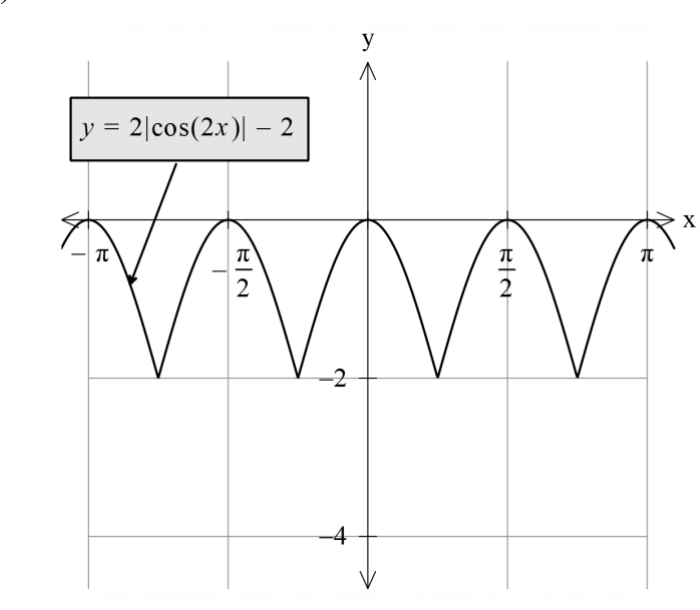
- (b)(ii)
Hence sketch a suitable straight line and find the number of solutions of 6π|(2 − sec² x)(1 − sin² x)| = 3x + 2π for 0 ≤ x ≤ π.
[3]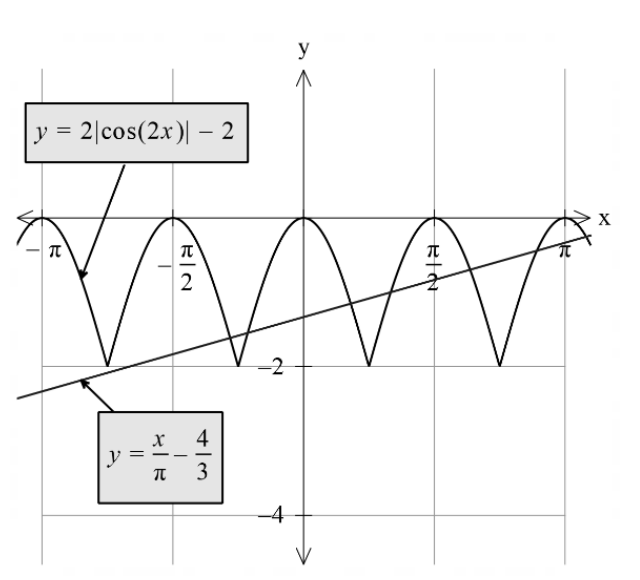
Diagram 6 shows an example of a birthday cake that has been ordered. The bottom layer has a radius of 80 cm and the radius of each subsequent layer is reduced by 4 cm. (a) Find the number of layers that make up the cake. (b) Given also that the height of the bottom cylinder is 30 cm and the height of each subsequent cylinder is reduced by 1 cm, find (i) the volume of the bottom cylinder, (ii) the height of the cake.
Medium7 marks
- (a)
Find the number of layers that make up the cake.
[3] - (b)(i)
The volume of the bottom cylinder.
[2] - (b)(ii)
The height of the cake.
[2]
(a) Diagram 7 shows part of the curve x = f(y). The area of the shaded region (to the left of the y-axis, between y = 1 and y = 3) is 5 unit². Find the value of ∫ from 1 to 3 of 2f(y) dy. (b) The gradient function of a curve is px² − 2x, where p is a constant. Given that the curve passes through the points S(1, 6) and T(−2, −15), find the equation of the curve.
Medium7 marks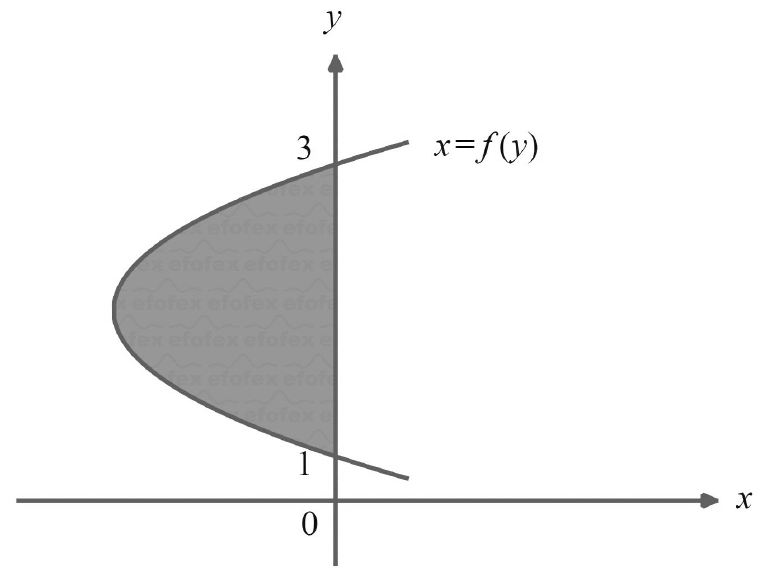
- (a)
Find the value of ∫ from 1 to 3 of 2f(y) dy.
[2] - (b)
Find the equation of the curve.
[5]
Section B
Diagram 8 shows the quadrilateral PQRS with P(0, 2), Q(2k, 4k), R(7k, k) and S(4k, L − 2). Point M(9, h + k) lies on the straight line QR. The distance from M to Q is the same as the distance from M to R. The distance ratio QM : MR is m : n. (a) State the smallest values of m and n. (b) Express h in terms of k. (c) Find the possible values of L when the area of quadrilateral PQRS is 105 unit², hence state the coordinates of point S.
Medium10 marks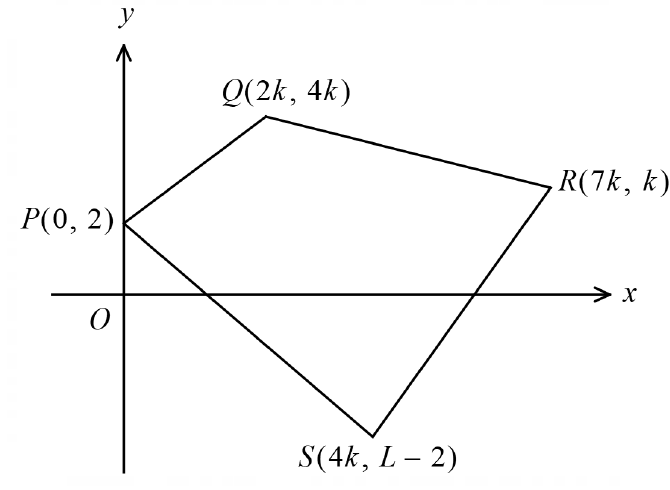
- (a)
State the smallest values of m and n.
[2] - (b)
Express h in terms of k.
[4] - (c)
Find the possible values of L when the area of PQRS is 105 unit², hence state the coordinates of S.
[4]
Table 1 shows the values of two variables, x and y, obtained from an experiment. x and y are related by the equation √y/x = a + 1/(bx), where a and b are constants. x: 1, 2, 3, 4, 5, 6; y: 0.15, 0.5, 1, 1.7, 2.5, 3.6. (a) Based on Table 1, construct a table for the values of √y. (b) Plot the graph of √y against x using a scale of 2 cm to 1 unit on the x-axis and 2 cm to 0.2 unit on the √y-axis. Hence, draw the line of best fit. (c) Use the graph in (b) to find (i) the value of x when y = 0.67, (ii) the values of a and of b.
Medium10 marks
- (a)
Construct a table for the values of √y.
[1] - (b)
Plot √y against x (2 cm to 1 unit on x-axis, 2 cm to 0.2 unit on √y-axis) and draw the line of best fit.
[3]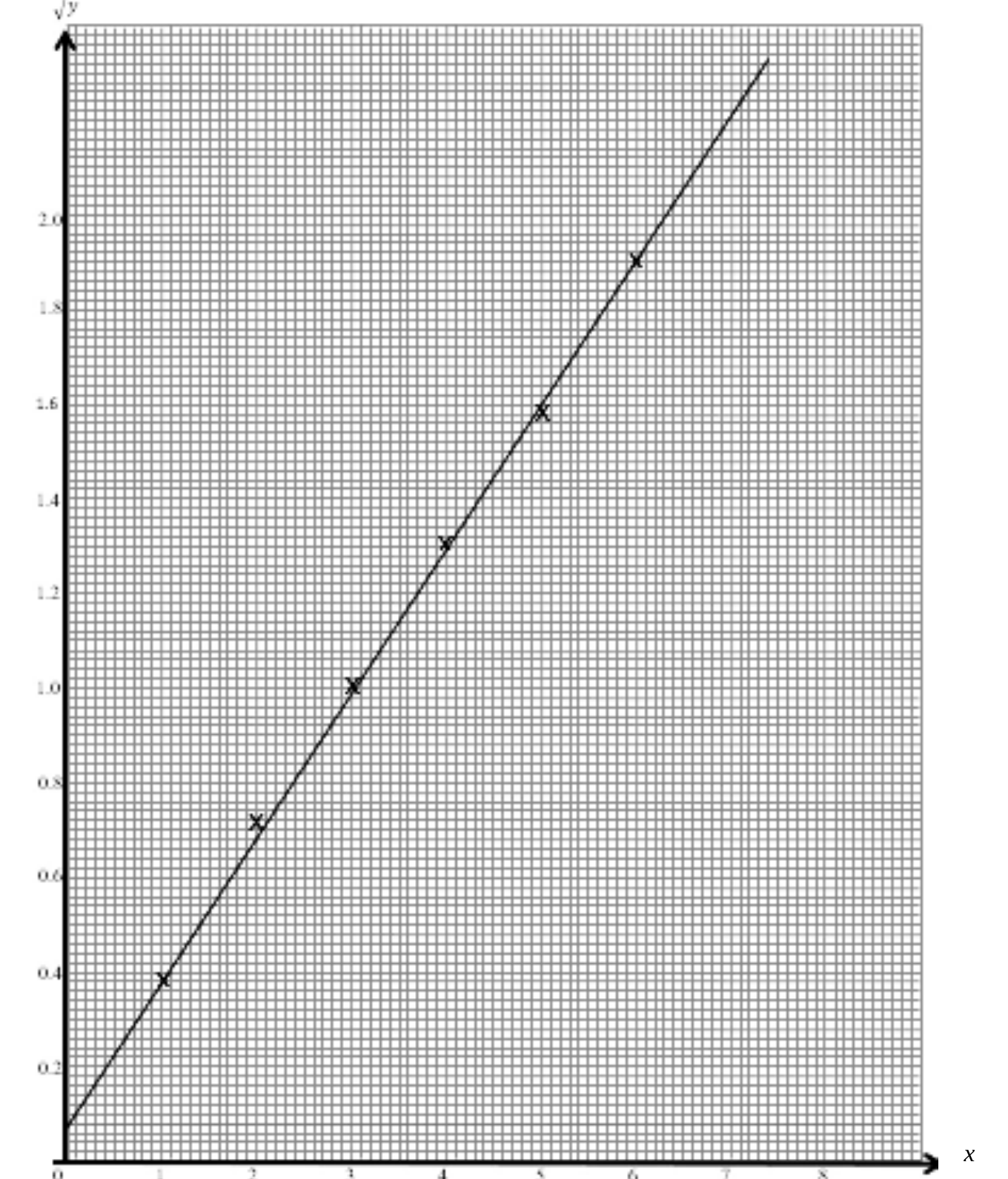
- (c)(i)
Find the value of x when y = 0.67.
[2] - (c)(ii)
Find the values of a and of b.
[4]
Given the equation of a curve is y = x²(3 − (2/3)x) + 1/2. (a) Find the coordinates of the stationary points. (b) Hence, determine whether each of the stationary points is a maximum or a minimum. (c) If x increases from 2 to 2.01, find the approximate value in y.
Medium10 marks- (a)
Find the coordinates of the stationary points.
[4] - (b)
Determine whether each stationary point is a maximum or a minimum.
[3] - (c)
If x increases from 2 to 2.01, find the approximate value in y.
[3]
(a) The masses of mangoes produced from an orchard are normally distributed with a mean of 420 g and a standard deviation of 50 g. Find (i) the probability that a mango chosen randomly from the orchard has a mass not more than 400 g, (ii) the value of m if 70% of the mangoes from the orchard have a mass of more than m g. (b) In a Mathematics quiz, students answer 40 multiple choice questions. Each question has 4 possible choices, where only one is correct. A student must obtain at least 15 correct answers to pass. (i) Student A guesses the answers to all questions. Find the probability that he gets the minimum mark to pass the quiz. (ii) If Student B answered 15 questions correctly and guesses the answers to the other questions, find the probability that he will get 60% marks.
Medium10 marks- (a)(i)
P(mass ≤ 400 g).
[2] - (a)(ii)
Find m if 70% of the mangoes have a mass of more than m g.
[3] - (b)(i)
Probability that Student A gets the minimum mark to pass.
[2] - (b)(ii)
Probability that Student B gets 60% marks.
[3]
Section C
Table 12 shows information of four ingredients used in the production of a type of food. Ingredient, price (RM) per kg in 2022, price (RM) per kg in 2024, price index: P, 8.00, 8.80, 110; Q, 15, 16.20, p; R, q, 34.00, 136; S, 6.50, 7.80, 120. (a) Find the value of p and of q. (b) The cost of producing a box of the food increases by 17% from 2022 to 2024 and by 40% from 2024 to 2026. The ratio of ingredients P, Q, R and S used is 6 : 4 : 3 : r. (i) Find the value of r. (ii) Calculate the composite index for the cost of producing the food in 2026 based on 2022. (iii) If the price of a box of the food in 2022 is RM35.00, state the corresponding price in 2026. (iv) Find the percentage increase of the price of ingredient P from 2022 to 2026 if the prices of the other ingredients remain unchanged from 2024 to 2026.
Medium10 marks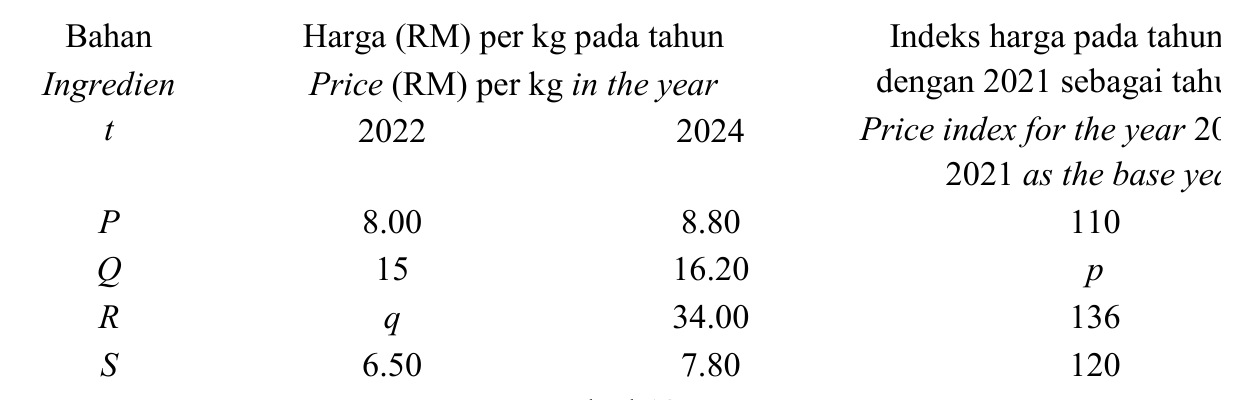
- (a)
Find the value of p and of q.
[3] - (b)(i)
Find the value of r.
[2] - (b)(ii)
Calculate the composite index for 2026 based on 2022.
[2] - (b)(iii)
If the price of a box in 2022 is RM35.00, state the corresponding price in 2026.
[1] - (b)(iv)
Find the percentage increase of ingredient P from 2022 to 2026 if the other ingredients stay unchanged from 2024 to 2026.
[2]
Solution by scale drawing is not accepted. Diagram 11 shows a transparent prism with a rectangular base ABCD. The inclined surface ABFE is a square with sides 12 cm and the inclined surface CDEF is a rectangle. AED is a uniform cross-section of the prism. BDE is a shaded plane in the prism. It is given that ∠ADE = 37° and ∠EAD = 45°. Find (a) the length, in cm, of DE, (b) the area, in cm², of the shaded plane, (c) the shortest length, in cm, from the point E to the straight line BD.
Medium10 marks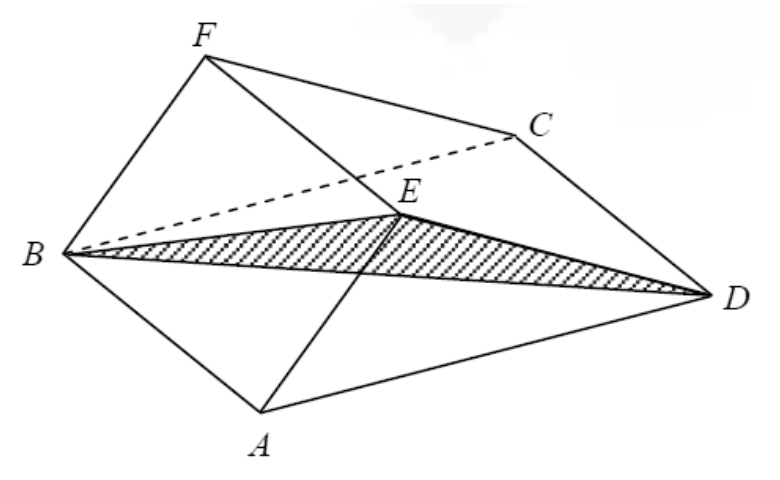
- (a)
Find the length, in cm, of DE.
[2] - (b)
Find the area, in cm², of the shaded plane.
[6] - (c)
Find the shortest length, in cm, from the point E to the straight line BD.
[2]
Solutions by graph sketching are not accepted. A particle moves along a straight line from a fixed point O. Diagram 14 shows the velocity-time graph of the particle's motion (v in m s⁻¹, t in s; the graph is a curve starting at O, dipping below the t-axis, crossing it at t = 6 and reaching v = 16 at t = 8). [Assume motion to the right is positive.] (a) State (i) the time, in seconds, when the particle stops instantaneously, (ii) the range of times, in seconds, when the particle moves towards the left. (b) It is given that the velocity-time graph is a quadratic function. (i) Show that v = t² − 6t. (ii) Find the acceleration, in m s⁻², when t = 2 seconds. (iii) Find the distance, in m, travelled by the particle from q seconds until the 8th second, where q is the time when the maximum velocity is achieved before it changes direction.
Medium10 marks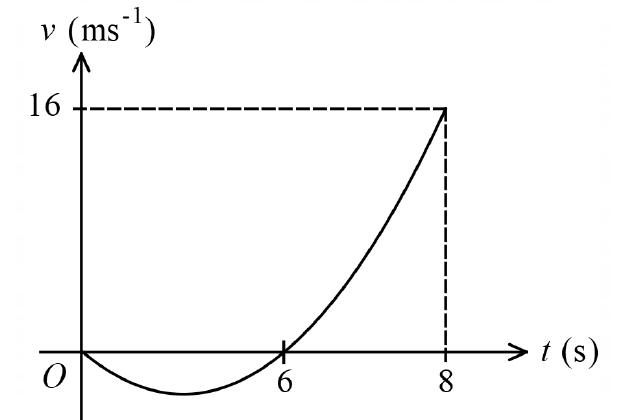
- (a)(i)
State the time, in seconds, when the particle stops instantaneously.
[1] - (a)(ii)
State the range of times when the particle moves towards the left.
[1] - (b)(i)
Show that v = t² − 6t.
[2] - (b)(ii)
Find the acceleration, in m s⁻², when t = 2 s.
[2] - (b)(iii)
Find the distance travelled from q seconds until the 8th second.
[4]