Write your answer on paper. Then open the answer to check it.
Section A
Diagram 1 shows the structure of an animal cell with components X, Y and Z labelled.
Medium6 marks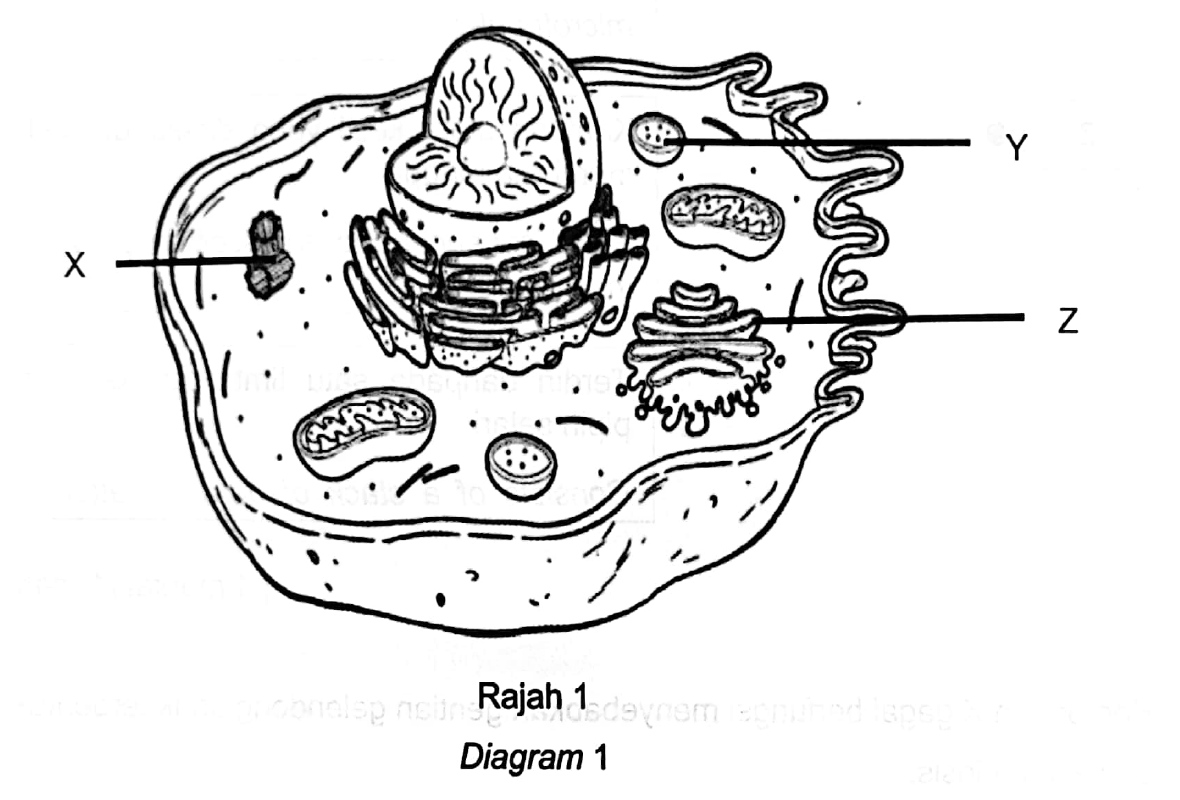
- (a)(i)
Name components X and Y.
[2] - (a)(ii)
Match component Z to the suitable characteristic: made up of complex arrangement of microtubules / small spherical sac enclosed in a single membrane / consists of a stack of parallel flattened sacs.
[1]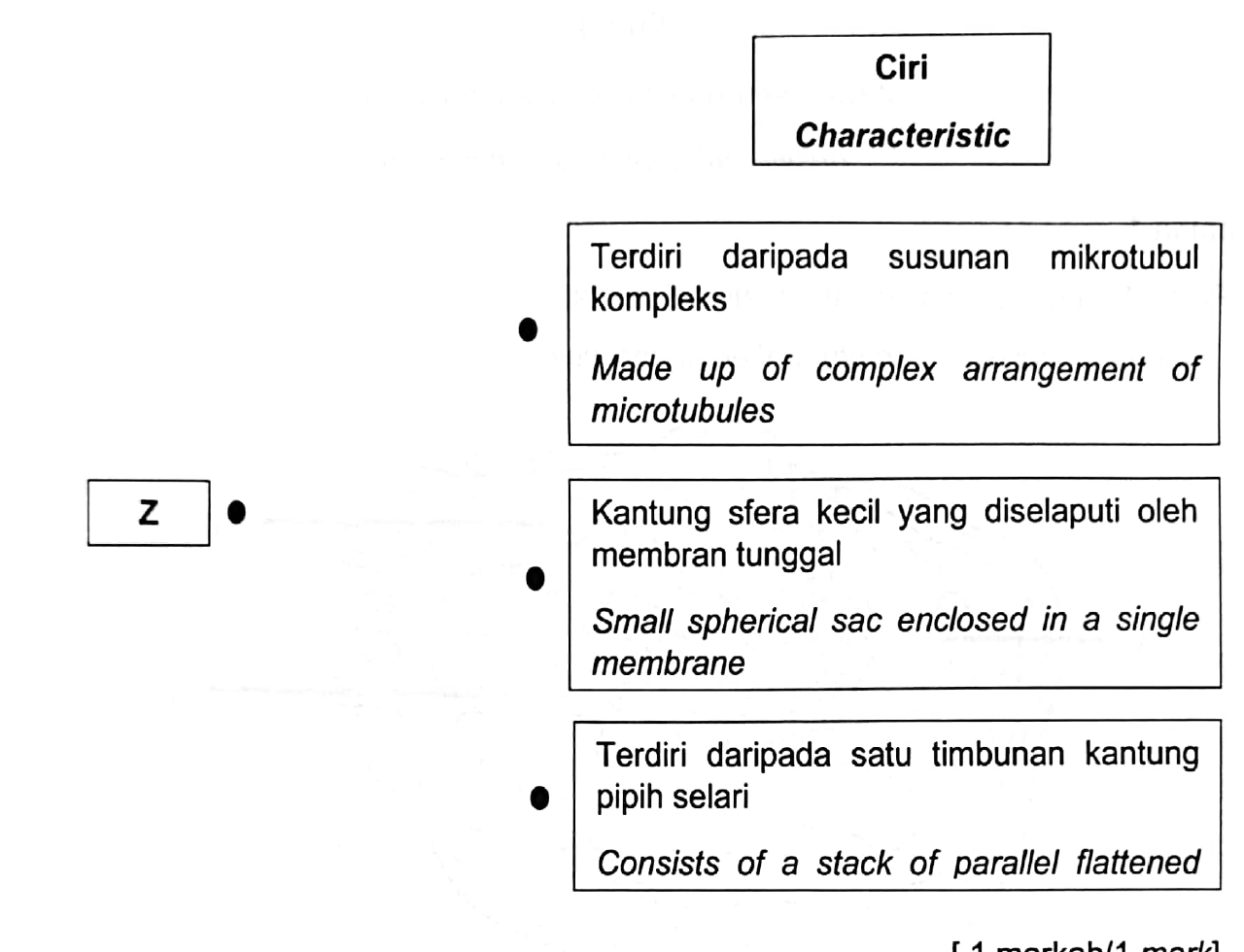
- (b)
Component X fails to function causing spindle fibres not to form during meiosis. State the effect on the behaviour of chromosomes during anaphase I.
[1] - (c)
Component Y is usually found in leucocyte cell. Explain how Y assists the leucocyte to perform its function in phagocytosis.
[2]
Diagram 2.1 shows a mechanism of an enzyme (sucrase) reaction assisted by the presence of P to function more effectively. Diagram 2.2 shows an experiment to study the effect of pH on the hydrolysis of boiled egg white suspension (contains protein) by pepsin enzyme. Egg white suspensions were filled in each of five 50 mm long glass tubes (A-E) at the start. Table 2.1 gives length after 24 hours (mm): A 36, B 34, C 20, D 45, E 50.
Medium6 marks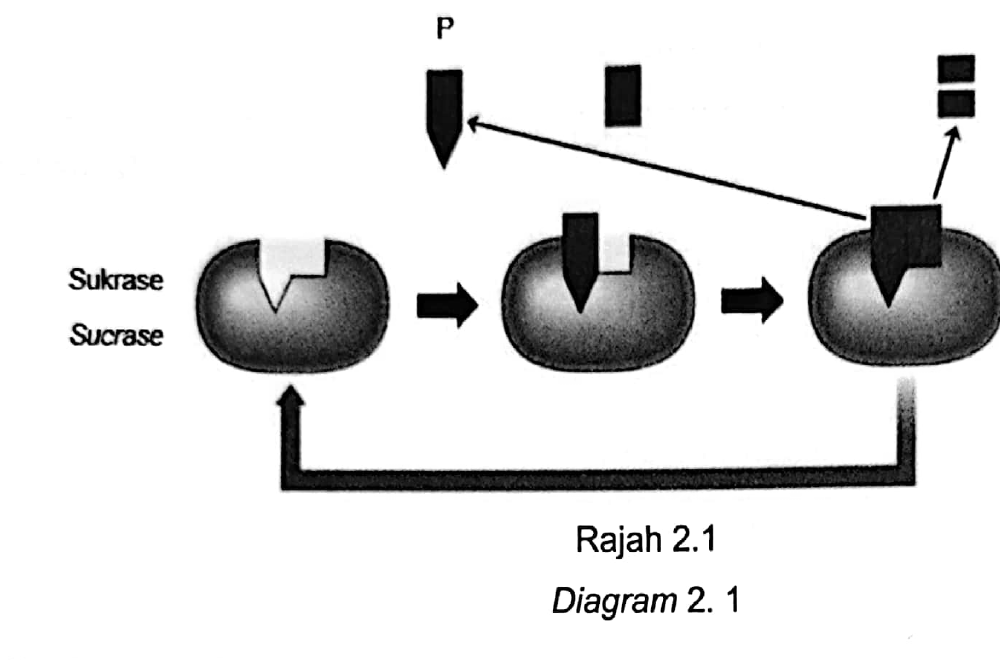
- (a)(i)
Name P.
[1] - (a)(ii)
Give one example for P.
[1] - (b)(i)
On which glass tube does the pepsin enzyme act efficiently?
[1]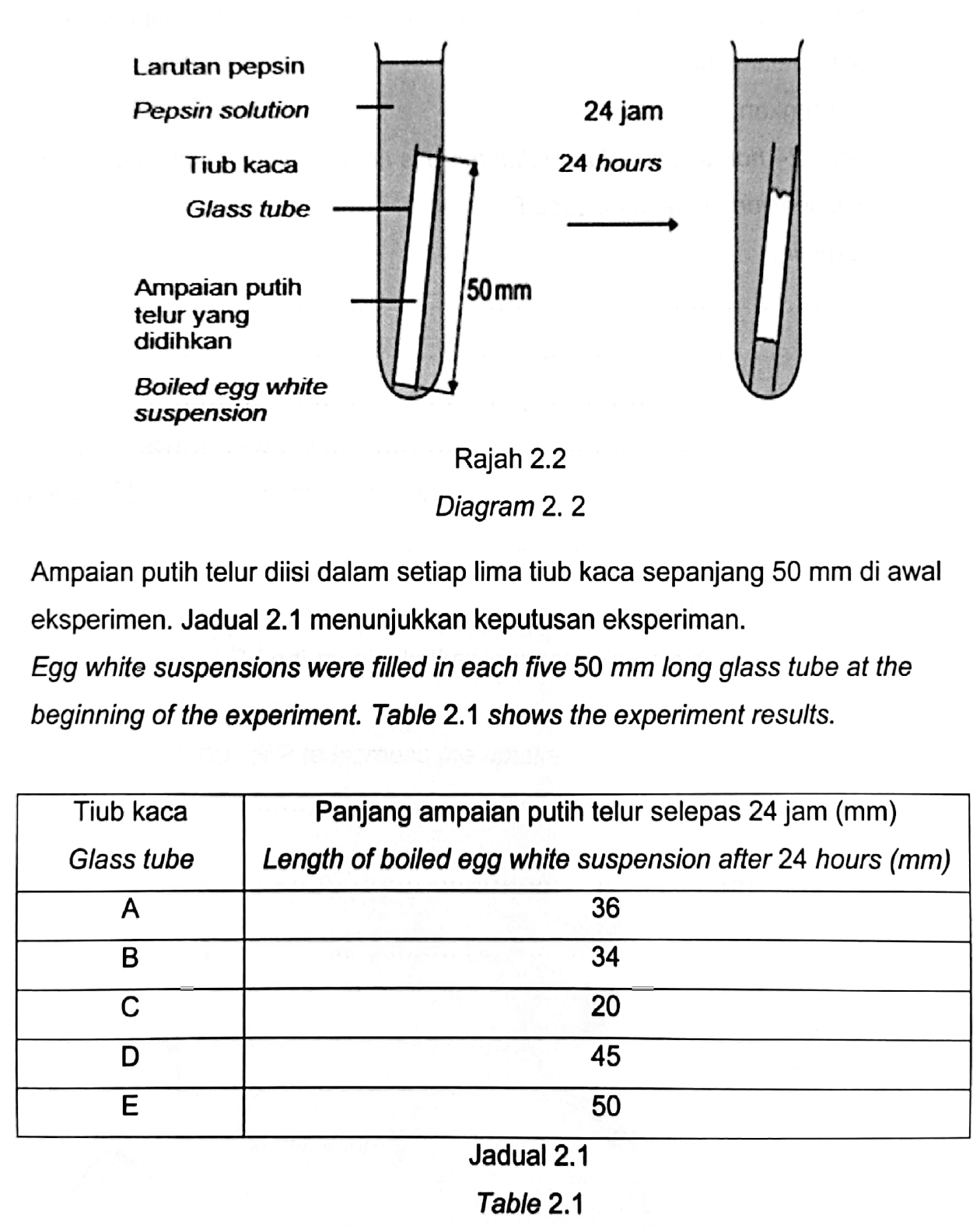
- (b)(ii)
After 24 hours, there is no change in length of the egg white suspension in glass tube E. Explain.
[3]
Diagram 3.1 shows a terrestrial plant with a cross section of the root (X) showing tissues P, Q and R. Diagram 3.2 shows how a plant species (a pitcher plant) in a forest gets nutrients.
Medium7 marks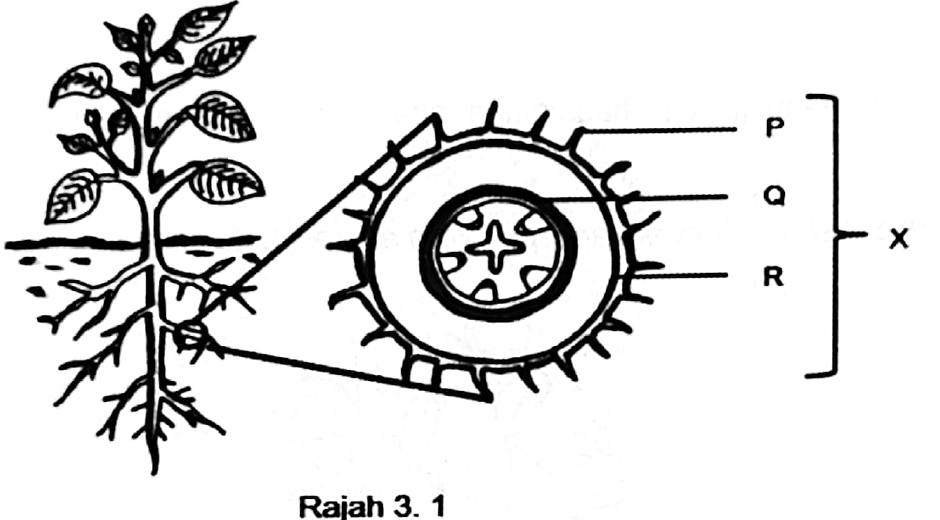
- (a)(i)
Name the level of organisation of X.
[1] - (a)(ii)
Explain the adaptation of P to increase the uptake of water and mineral salts from the soil.
[2] - (a)(iii)
State one difference between tissue Q and R in X.
[1] - (b)
Describe the nutritional adaptations of the plant in Diagram 3.2.
[3]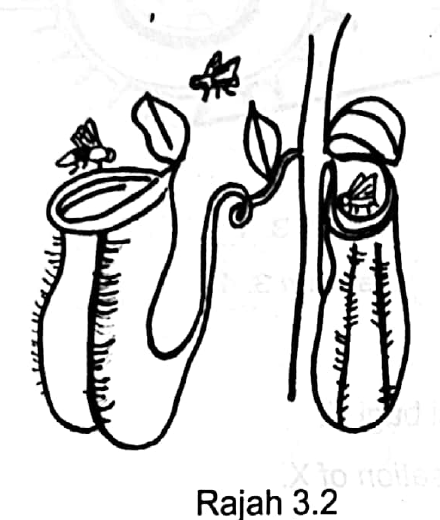
Diagram 4.1 shows a paddy plant growing in waterlogged soil, with structure X (leaf) above water and structure Y (roots) in the waterlogged soil. Diagram 4.2 shows a housewife preparing dough to make bread. Material used: 350 g flour, 125 ml water, 1 tablespoon sugar, 6 g yeast, 3 eggs.
Medium7 marks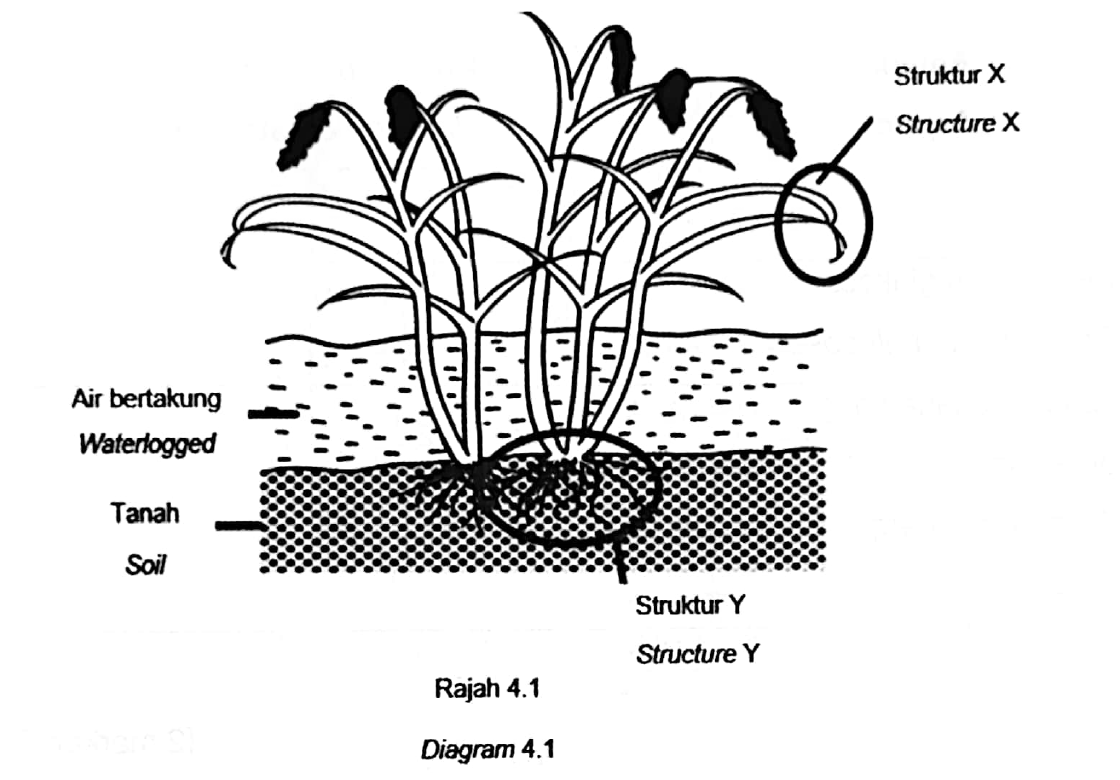
- (a)(i)
Name the type of cellular respiration that occurs in structure X.
[1] - (a)(ii)
Explain the importance of the process.
[2] - (b)
State two differences of the process that occurs in structure X and Y based on: breakdown of glucose; amount of energy produced.
[2]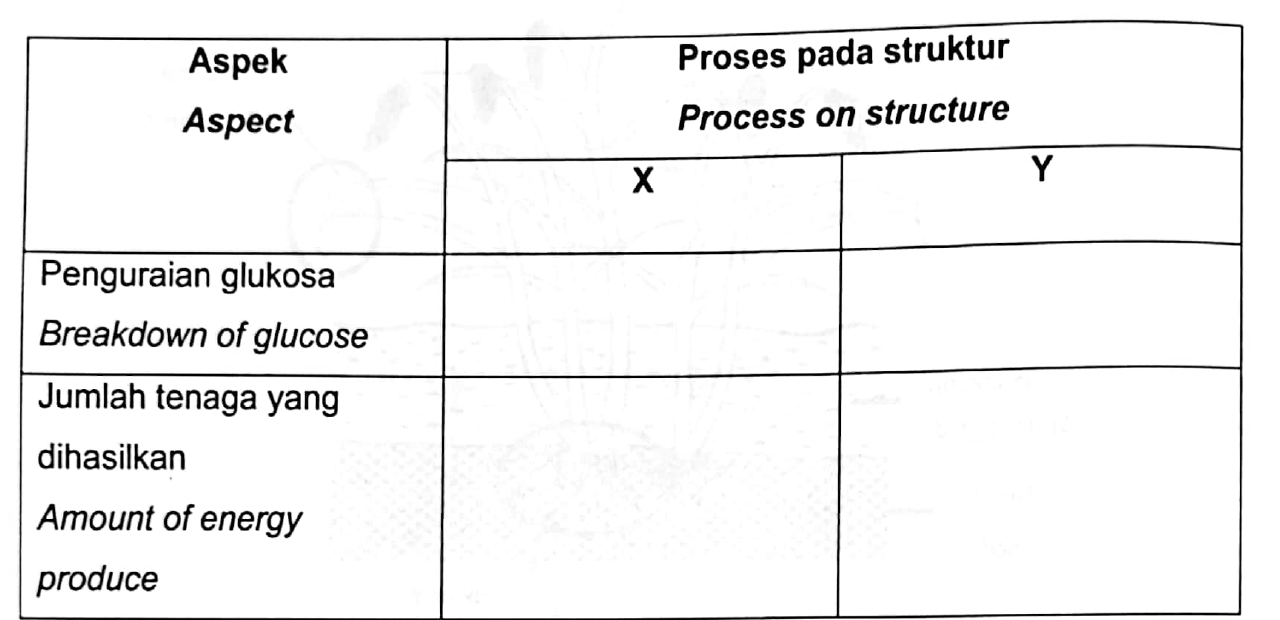
- (c)
Suggest ways that can be done to produce more fluffy and soft bread through the fermentation process.
[2]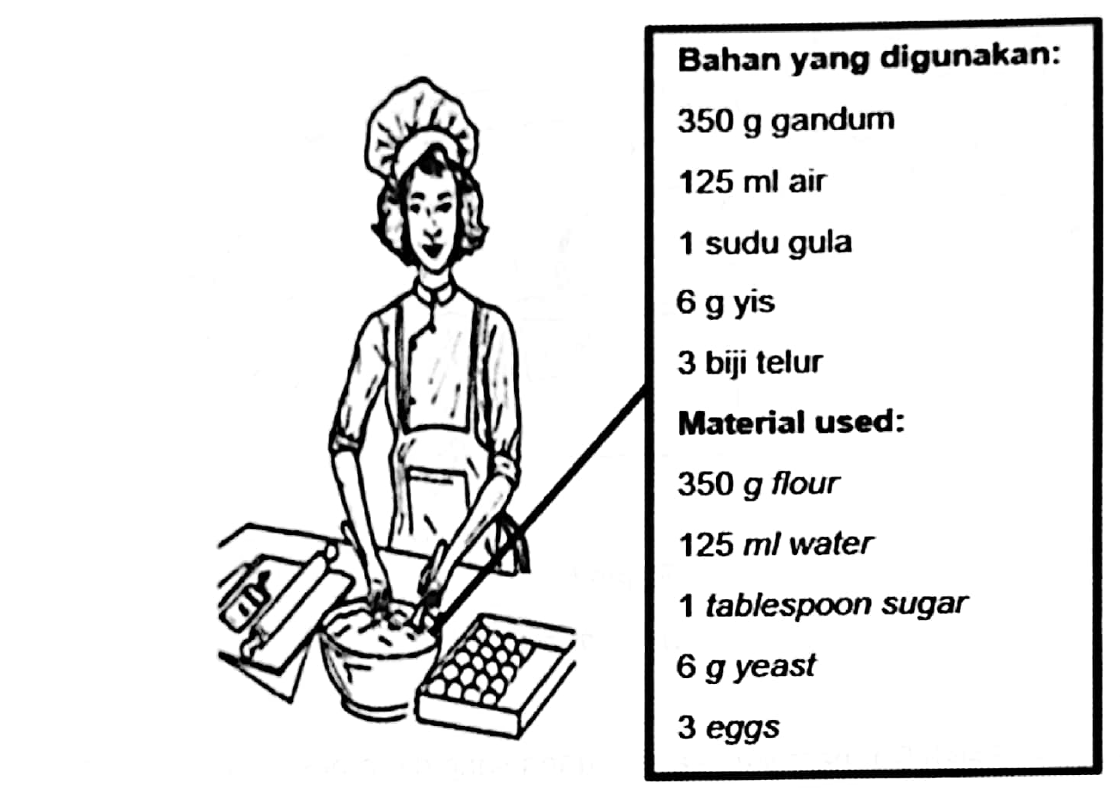
Diagram 5.1 shows part of the human endocrine system with structure S (pituitary gland) labelled.
Medium8 marks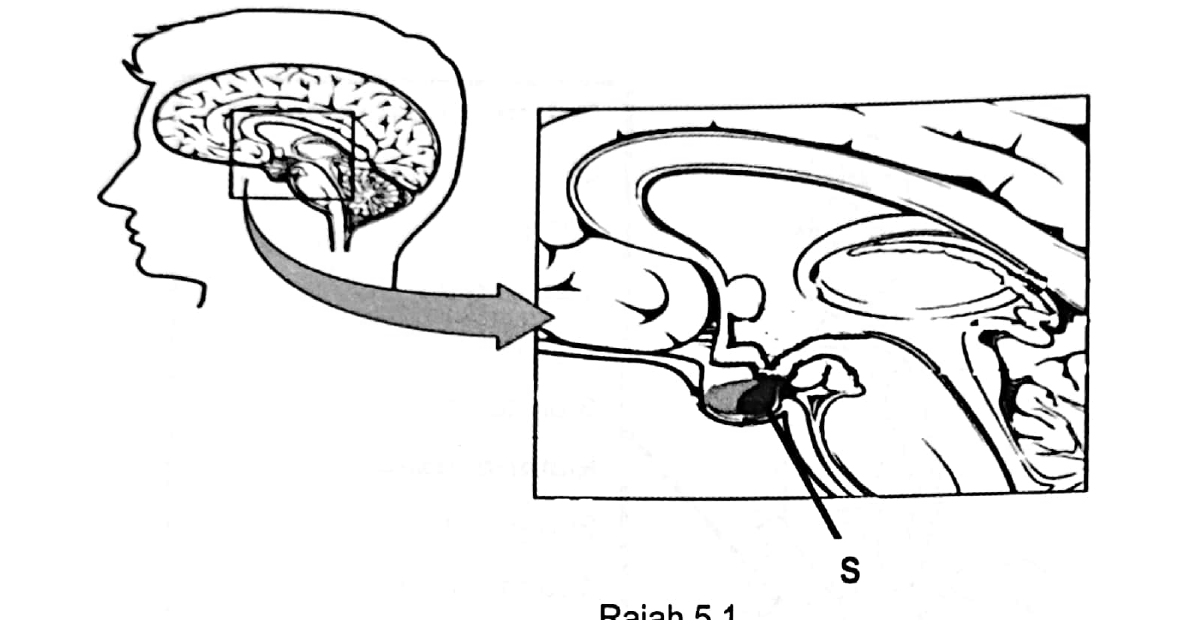
- (a)
Based on Diagram 5.1, name one hormone secreted by structure S.
[1] - (b)
Explain how structure S reacts to regulate the blood osmotic pressure of an individual who undergoes sauna at 50 °C.
[3] - (c)
Text: A goiter is an abnormal enlargement of the thyroid gland, located at the base of the neck. Symptoms include excessive sweating and weight loss. Based on the above statement, explain how this condition could happen.
[2]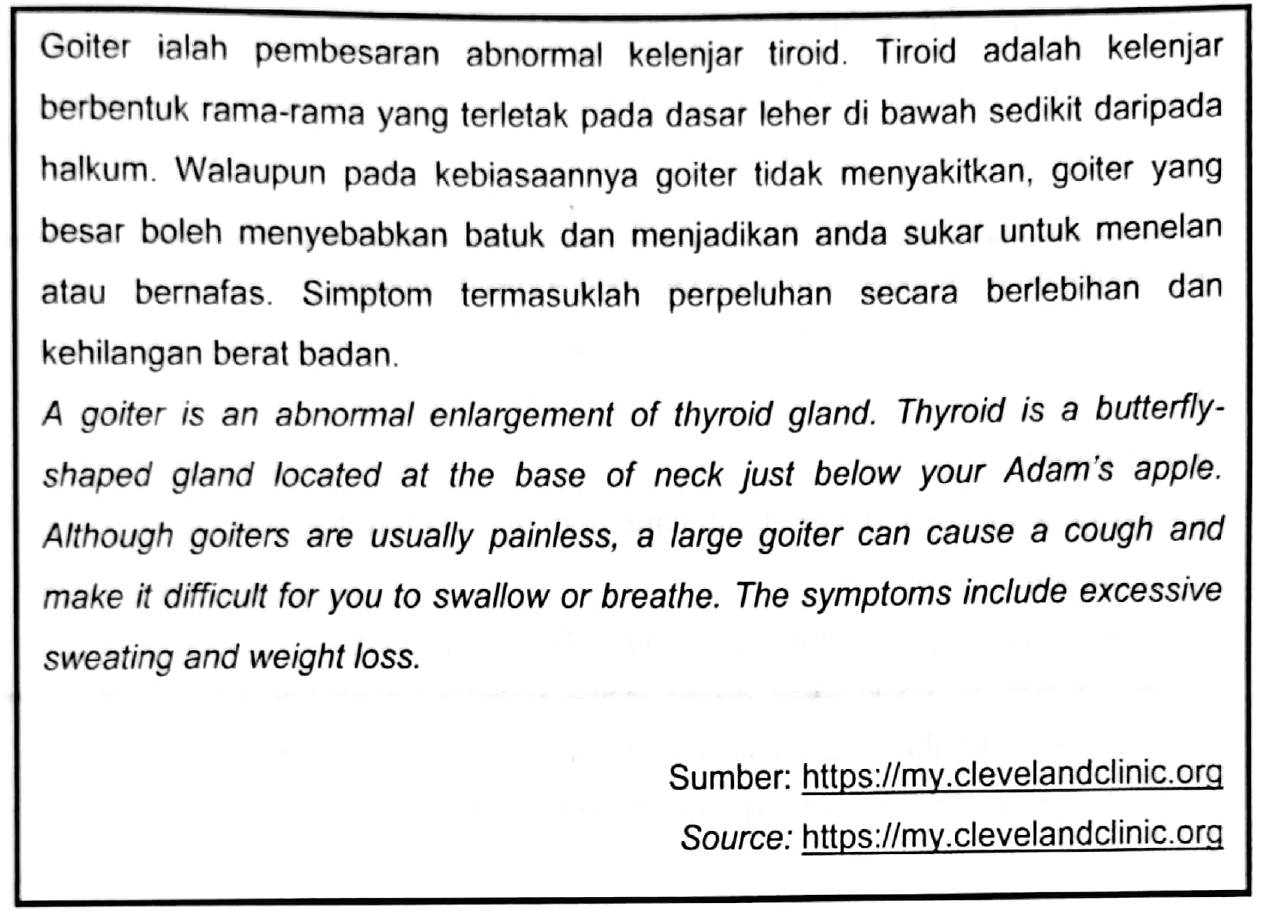
- (d)
Mr Z always experiences fatigue and excessive thirst, especially at night. His blood test result: glucose = 250 mg/100 ml. Guidance: normal blood glucose level 75-110 mg/100 ml. Based on the blood test results, explain the health condition of Mr Z.
[2]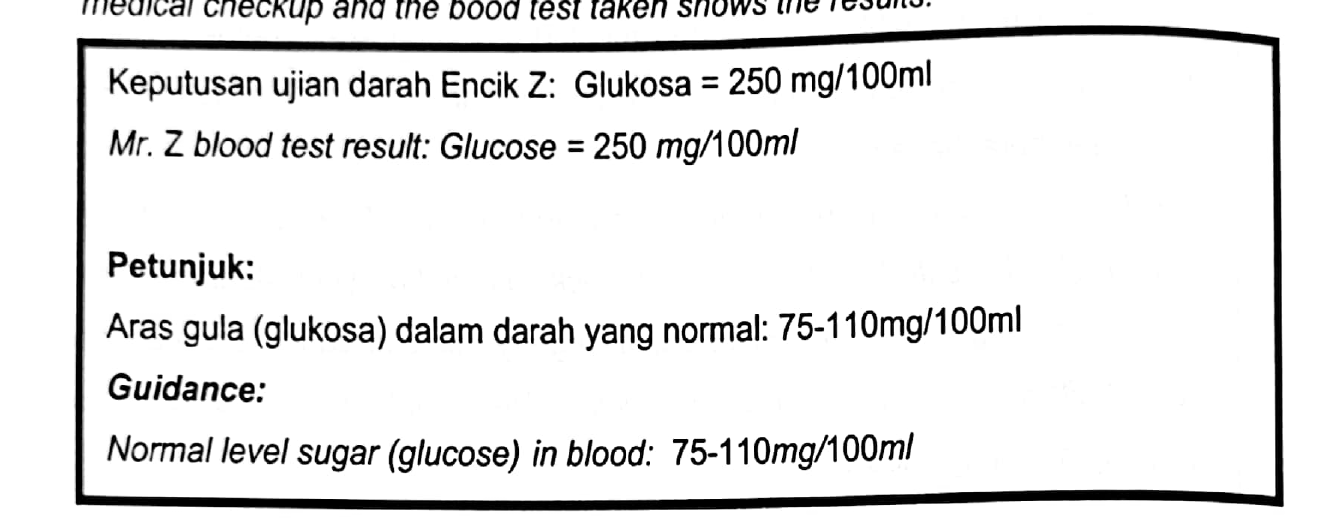
Diagram 6.1 shows locomotion (jumping) in a grasshopper, with muscles S and T on the hind leg labelled. Diagram 6.2 shows the vertebral columns of two individuals X and Y of the same sex (X normal spine; Y spine curved sideways).
Medium8 marks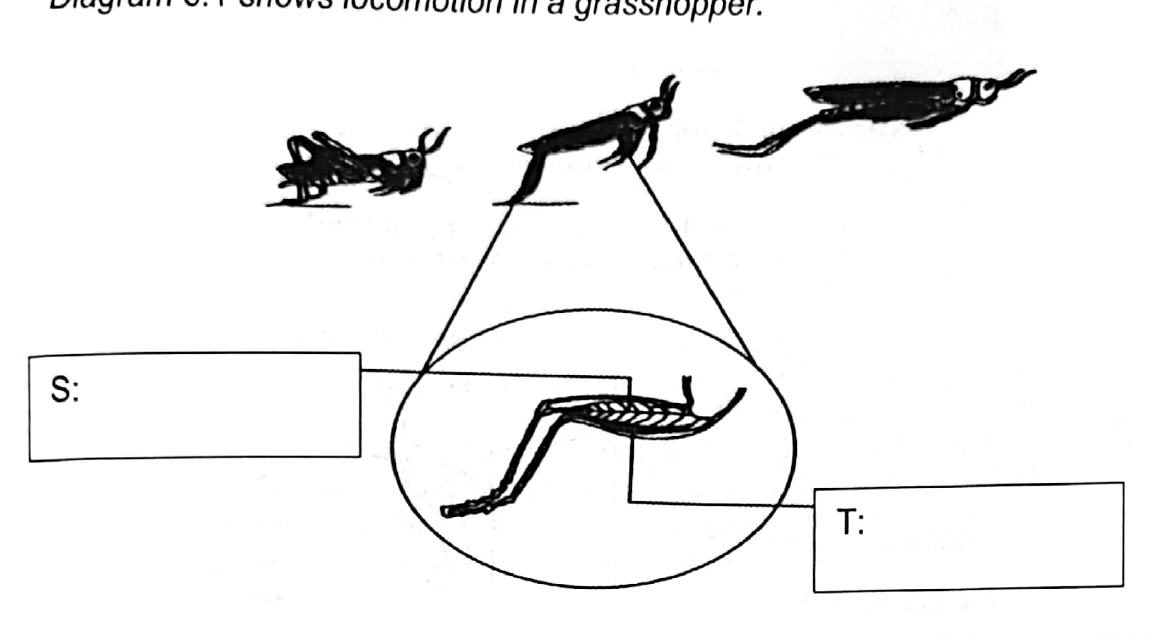
- (a)
On Diagram 6.1, name the muscle S and muscle T.
[2] - (b)
The S muscle on both legs of the grasshopper were injured. Explain the effect of this injury on the jumping movement of the grasshopper.
[3] - (c)(i)
Explain the differences between the vertebral columns of individual X and individual Y.
[2]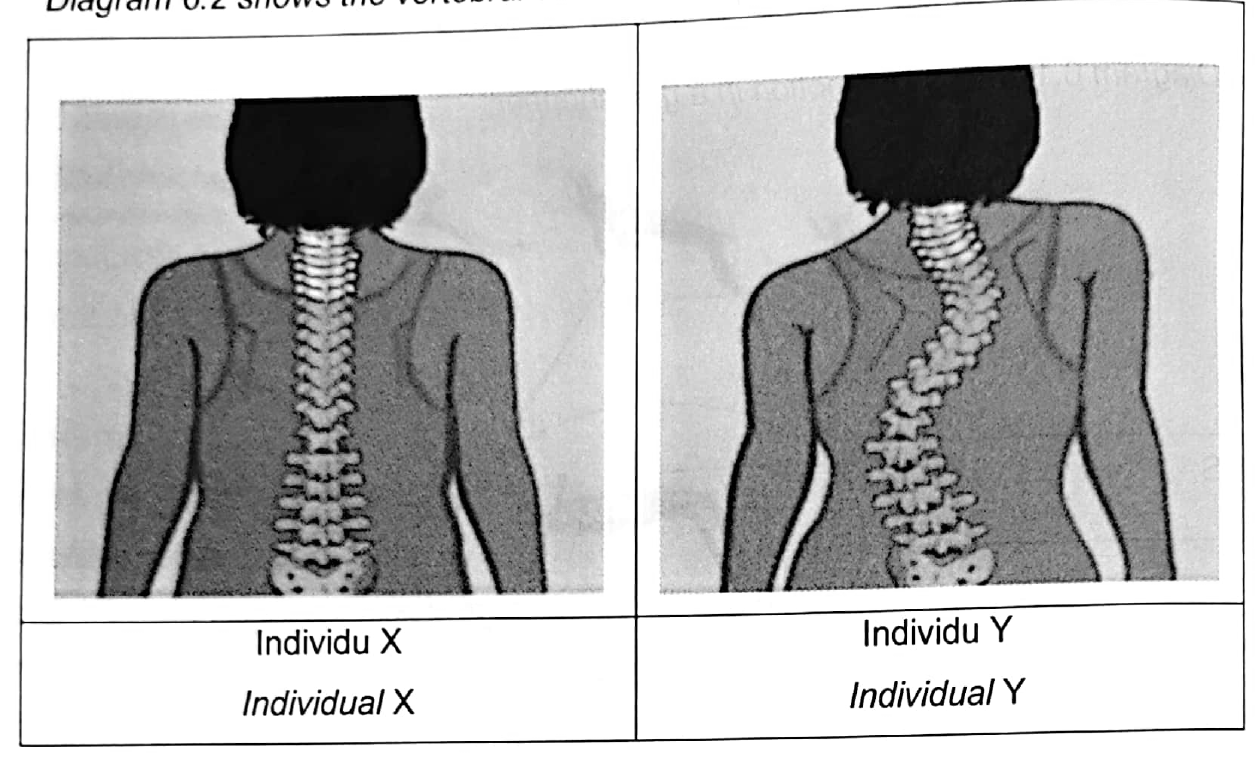
- (c)(ii)
Suggest one appropriate treatment for individual Y.
[1]
Diagram 7.1 shows the cross section of the stem of the eudicotyledonous plant with structures P (xylem vessel, arrows upwards) and Q (sieve tube, arrows downwards, next to a companion cell). Diagram 7.2 shows the movement of substance X without involving energy from the soil into P (apoplast and simplast pathways, Casparian strip). Diagram 7.3 shows plant X (under a shelter) and plant Y (in the open, in sunlight) at two different locations.
Medium9 marks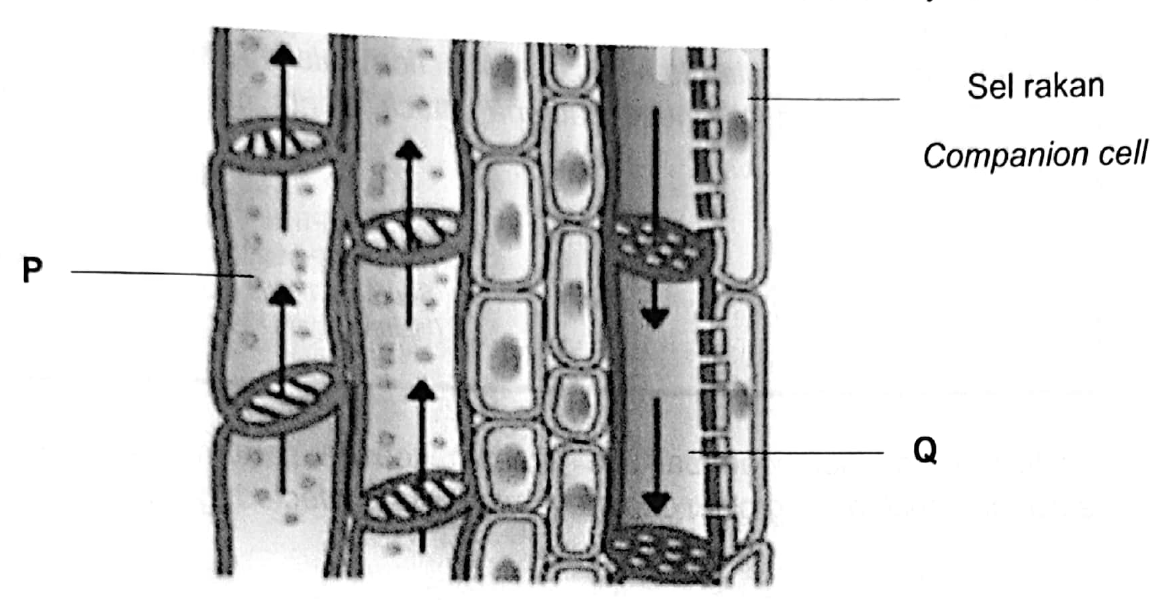
- (a)(i)
Based on Diagram 7.1, explain how structures P and Q are adapted to their function.
[2] - (a)(ii)
Banana trees are infected by the bacterium Ralstonia solanacearum that causes Moko disease. The bacteria attack plants by making colonies inside P. Predict the effect on the growth of the banana plant when infected by the bacteria.
[2] - (b)
Diagram 7.2 shows the process of movement of substance X without involving the use of energy from the soil into P. Describe the process of movement of substance X.
[3]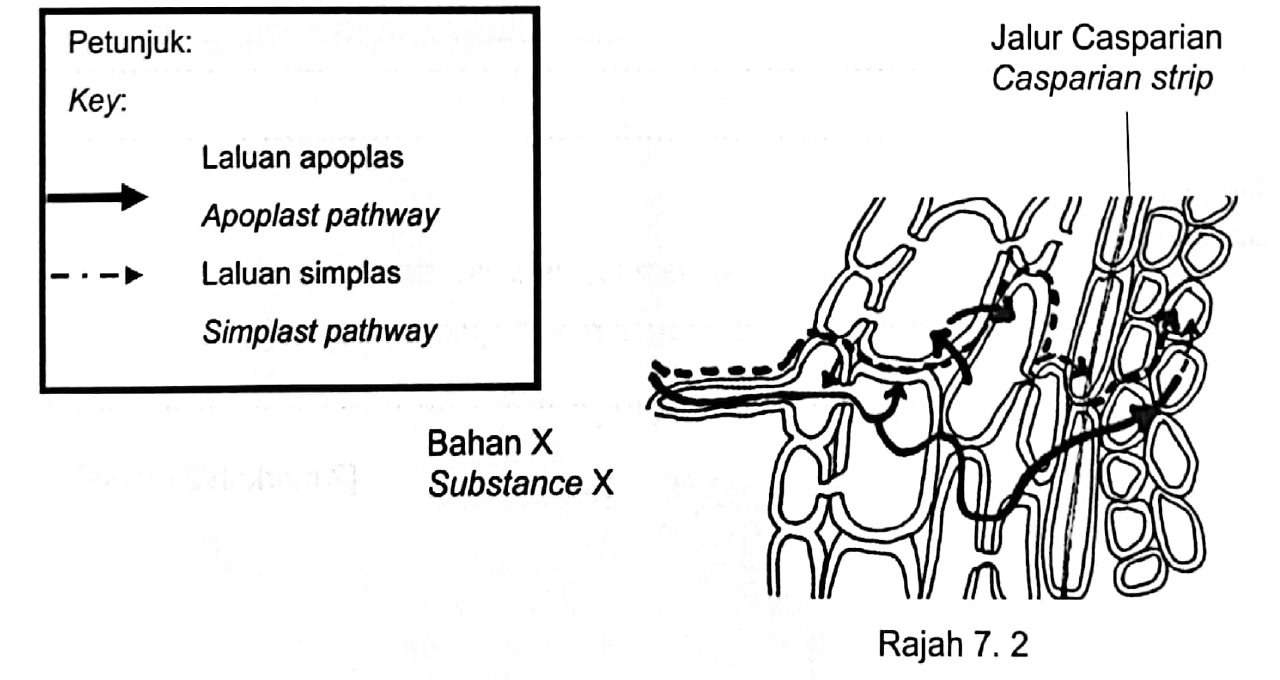
- (c)
Diagram 7.3 shows plant X and Y at two different locations. Explain the differences between the transpiration rate in plant X and Y.
[2]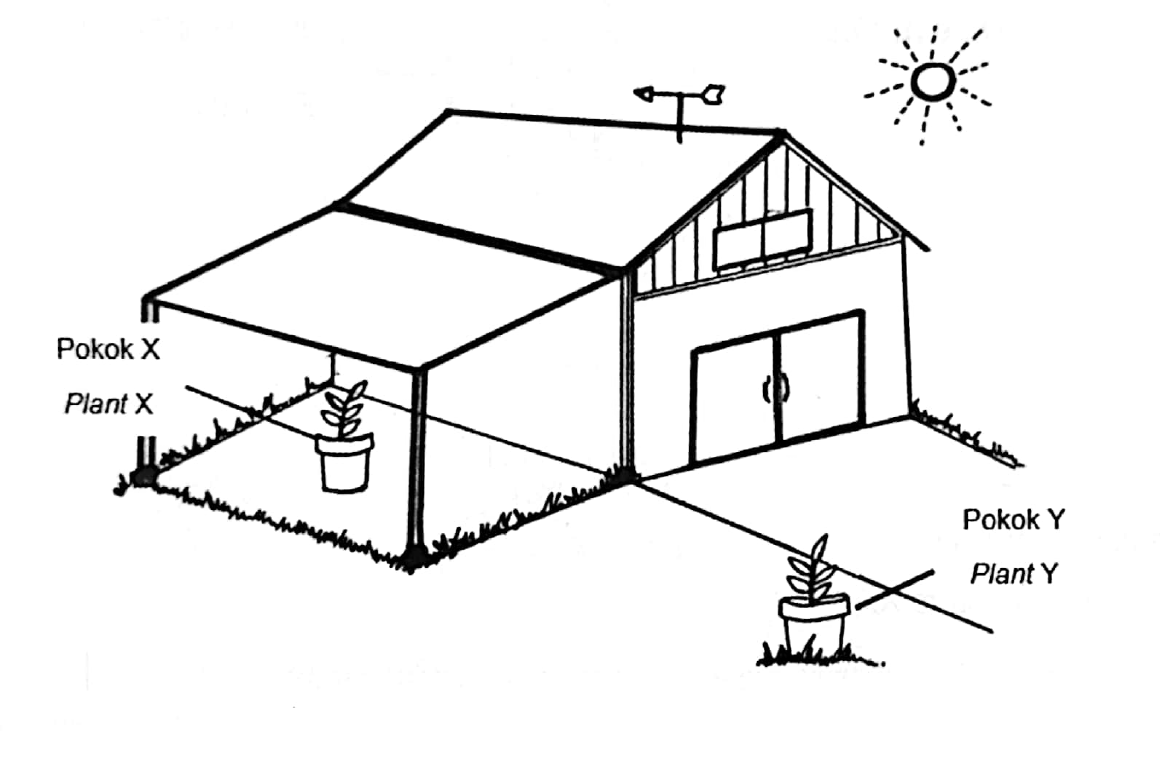
Diagram 8.1 shows the longitudinal section of a reproductive organ of a plant (stigma, generative nucleus, tube nucleus, embryo sac, and structure X). Diagram 8.2 shows one seed of an angiosperm plant (testa, microphyle, cotyledon).
Medium9 marks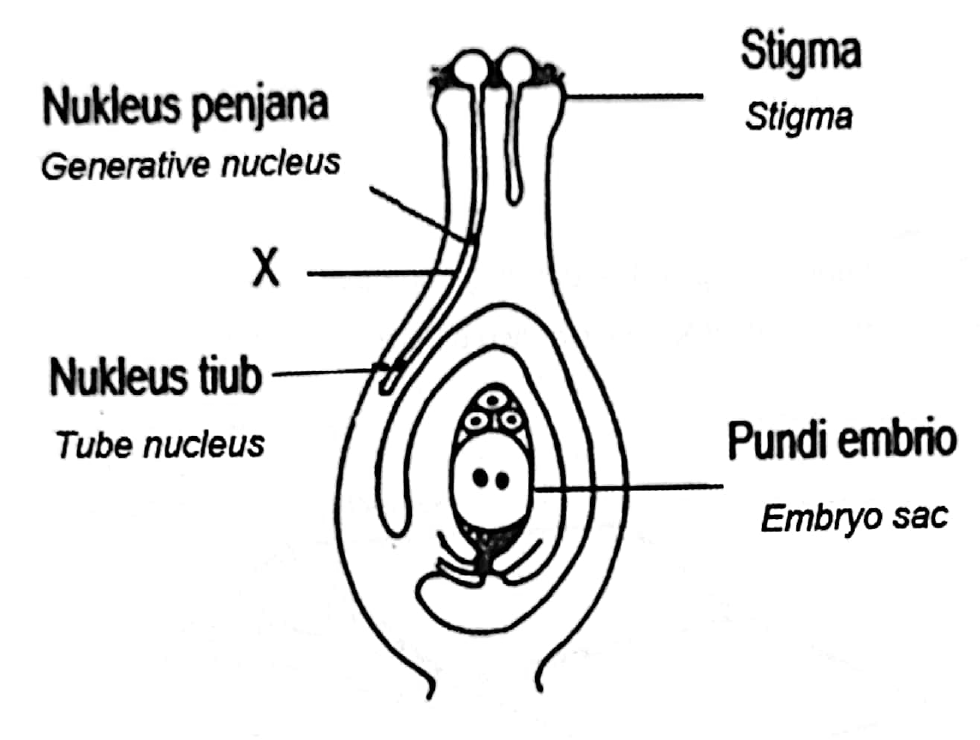
- (a)
Name the structure X.
[1] - (b)
Explain the role of structure X in double fertilisation.
[2] - (c)
Explain the importance of cell division in the generative nucleus to form the embryo.
[2] - (d)(i)
Diagram 8.2 shows one seed of an angiosperm plant. Suggest one way that can be taken to keep the seed in a state of dormancy. Explain your answer.
[2]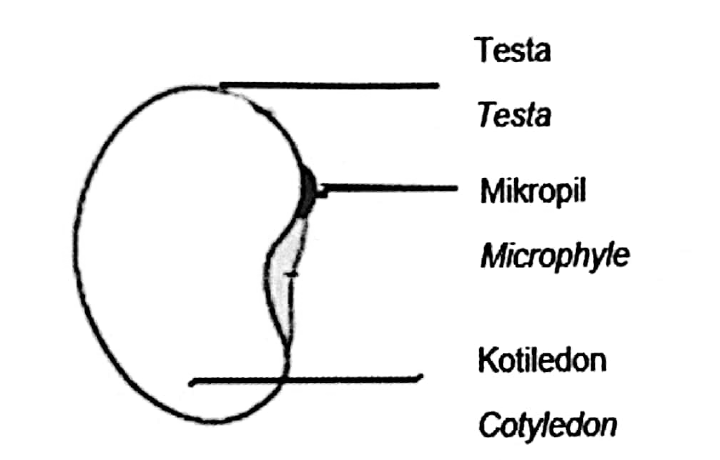
- (d)(ii)
Describe the features of seeds to ensure the survival of seedlings.
[2]
Section B
Diagram 9.1 shows male Drosophila melanogaster with purebreed long wings crossed with female Drosophila melanogaster with purebreed short wings. Long wing (L) is dominant while (l) is the recessive allele for the short wing. Diagram 9.2 shows a karyotype of an individual X (a male, with three chromosomes numbered 21).
Medium20 marks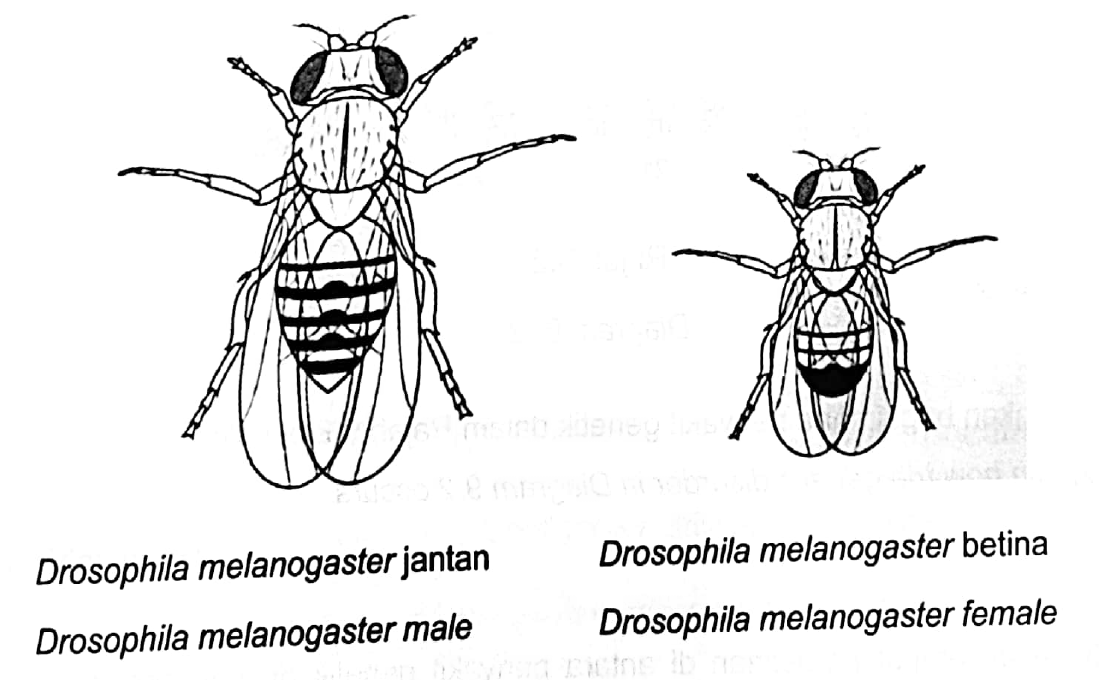
- (a)(i)
What is meant by purebreed?
[2] - (a)(ii)
Draw a schematic diagram to show the possible F1 generation for the cross.
[8] - (b)(i)
Explain how the genetic disorder in Diagram 9.2 occurs.
[6]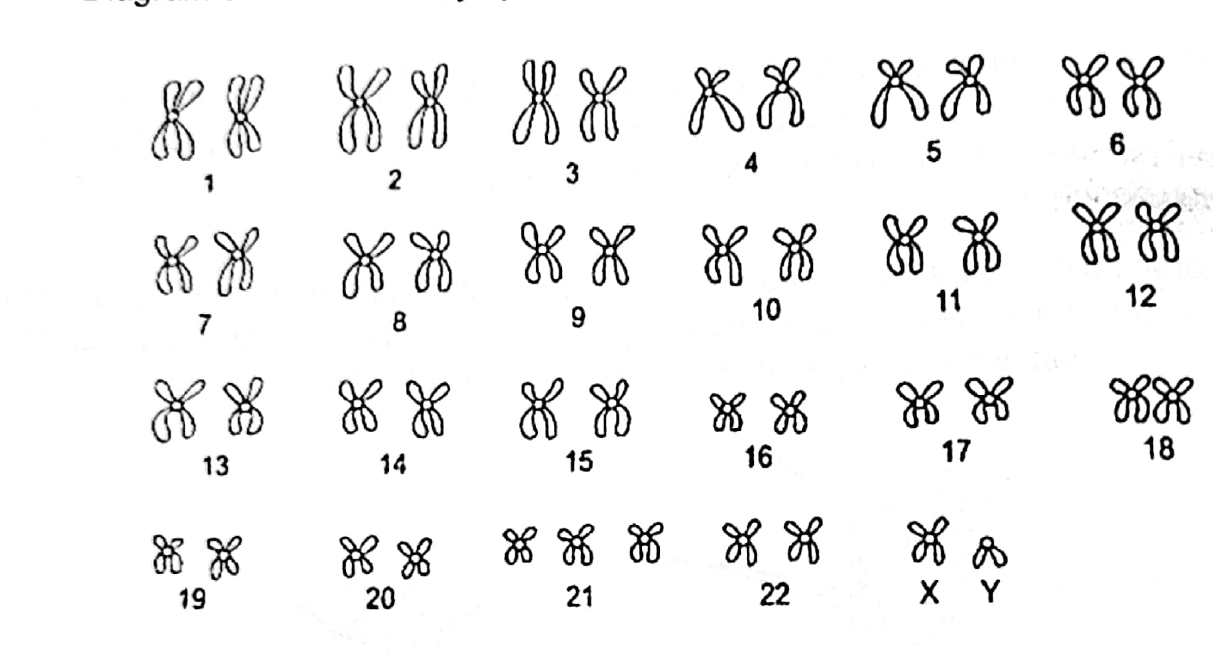
- (b)(ii)
State four differences between the genetic disorder in 9(b)(i) with colour blindness based on causes and characteristics.
[4]
Diagram 10.1 shows a type of interaction between a buffalo and a myna (bird) with lice on the buffalo.
Medium20 marks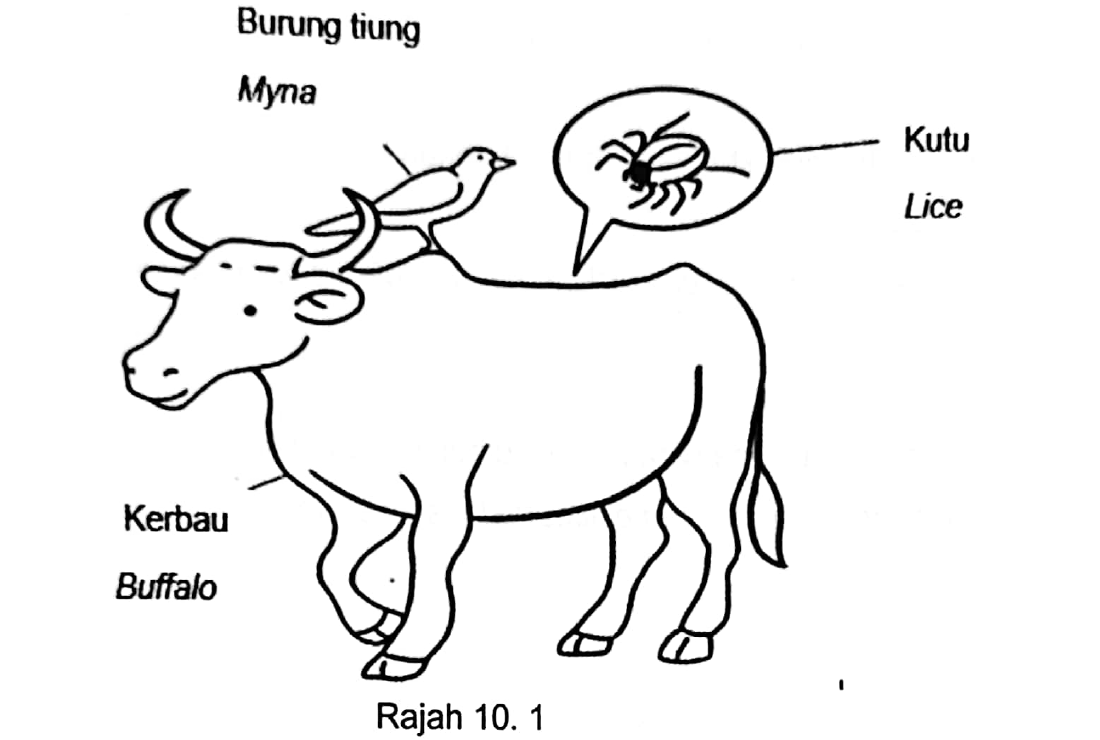
- (a)(i)
Explain the interaction.
[4] - (a)(ii)
Discuss the similarities and differences in nutrition between lice and myna.
[6] - (b)(i)
A farmer found that the yield of oil palm on his farm was declining. After a field study, he found that the number of rats in his farm was very large. Explain the factors that caused the number of rats to increase in his farm.
[5] - (b)(ii)
Explain how the farmer can estimate the size of a rat population.
[5]
Section C
Diagram 11.1 shows examples of products in a 'Green Technology Based Product Production' exhibition: hybrid car, foliar fertiliser, and food container made from rice straw.
Medium20 marks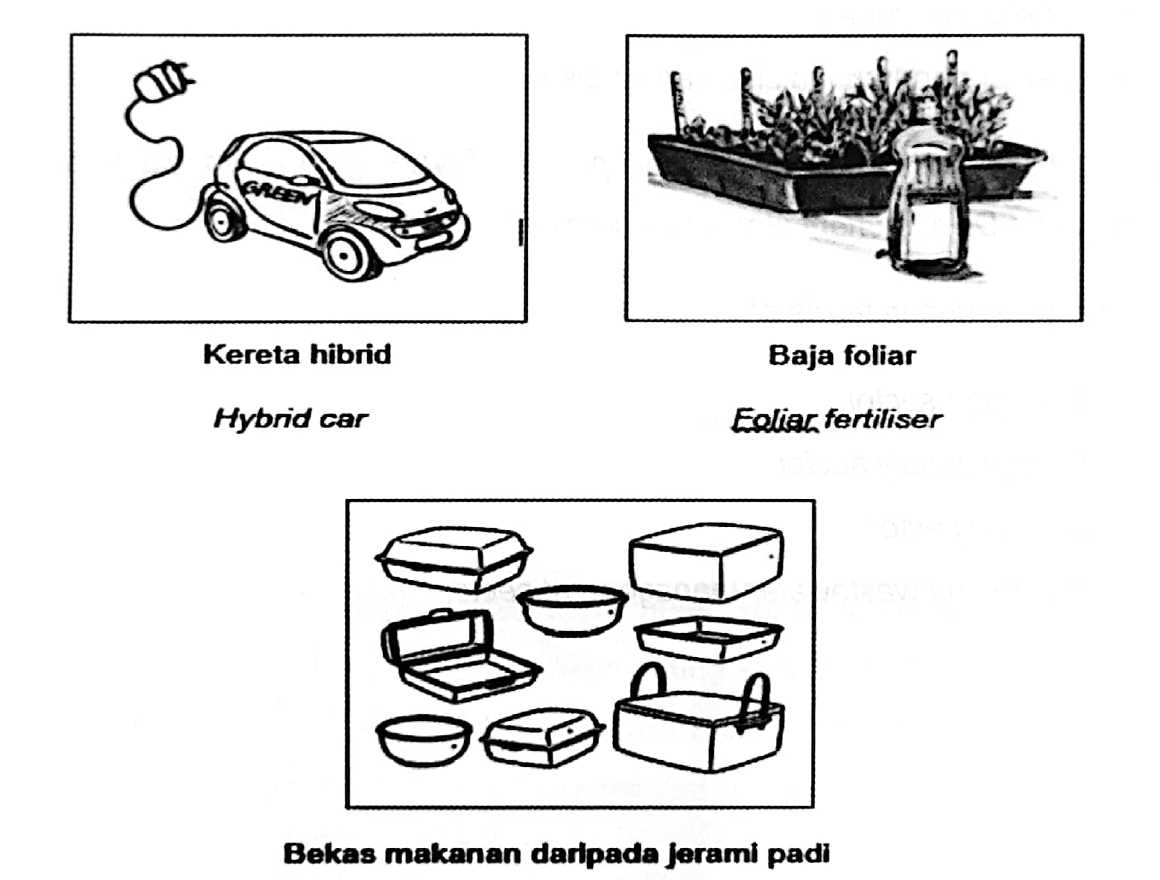
- (a)
As an organiser of this exhibition, explain the selection criteria of products categorised as green technology.
[5] - (b)
You are assigned to present the concept idea of building a modern city based on Sustainable Development Goals in a seminar. Discuss your idea in terms of: transport sector; energy supply sector; building sector; waste and wastewater management sector.
[7] - (c)(i)
Newspaper excerpt: The Department of Fisheries has delivered the Fisheries Act that bans any individual to import, sell, preserve or keep the fish genus alive because it is too harmful to river and lake ecosystems. The ministry reminds ornamental fish owners that releasing pet fish into rivers or big drains would disrupt the balance of biodiversity, habitat and native fish species. Based on the information, give suggestions on preservation, conservation and restoration measures towards river P ecosystem that is affected by the increase of prohibited fish, Hemibagrus wyckioides sp. (Asian redtail catfish).
[3]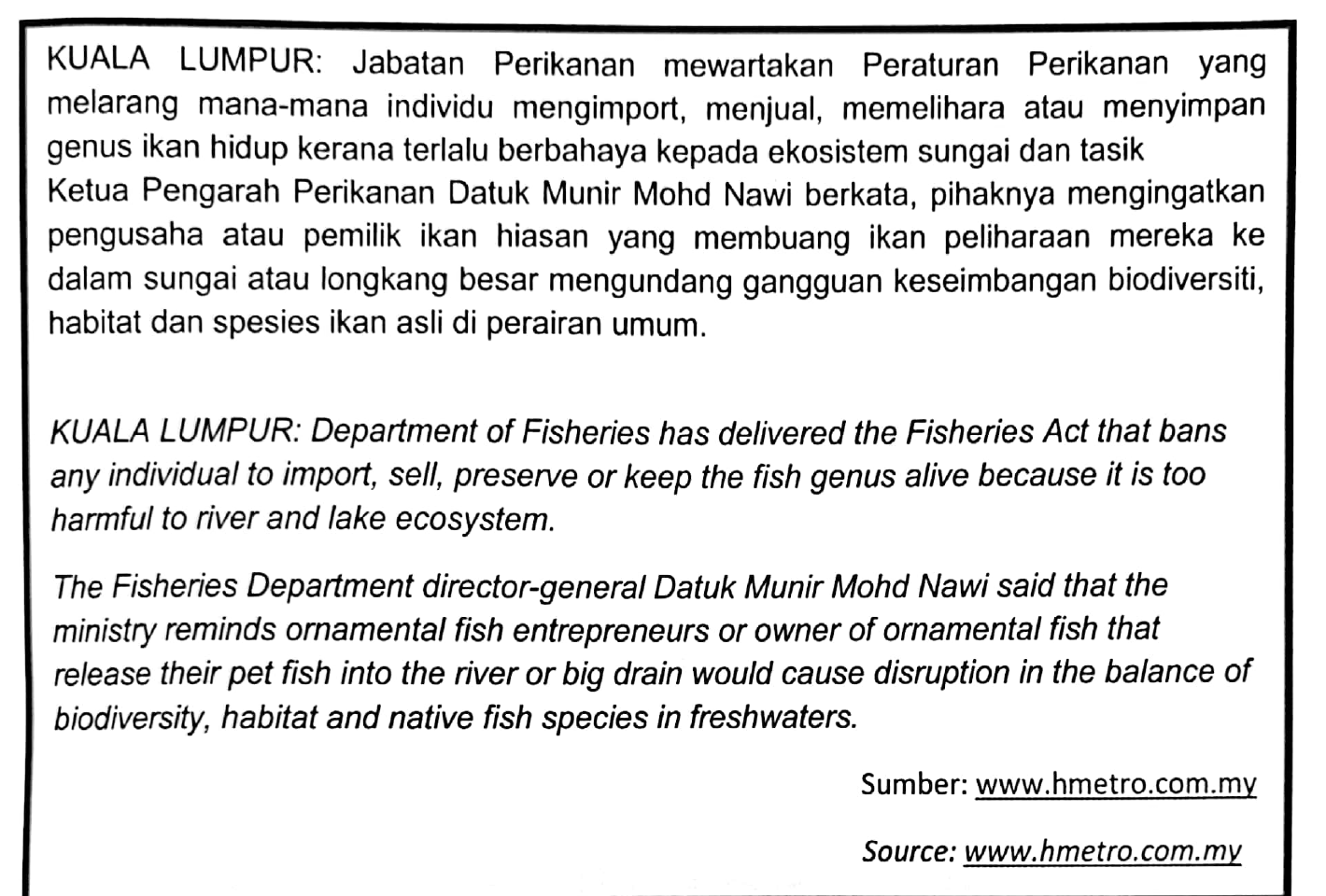
- (c)(ii)
Discuss the effect towards river P if this issue is left continuously.
[5]