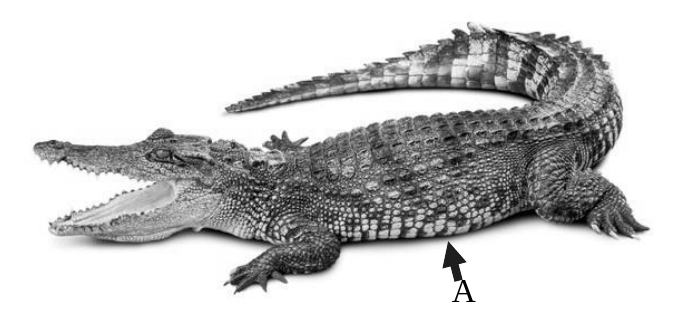
Diagram 1 shows an animal whose scientific name is Crocodylus niloticus. Name the direction A as shown in Diagram 1.
Easy
Which of the following structure can be observed in both animal and plant cells using a light microscope? (Options A to D are drawings of cell structures.)
Medium
In an experiment conducted on the sap content of a seaweed's vacuole, it was found that the calcium ion concentration in the vacuole was 330 mg dm⁻³, while the calcium ion concentration in sea water was 13 mg dm⁻³. What is the process contributing to the changes in the calcium ion content of the seaweed's vacuole?
Medium
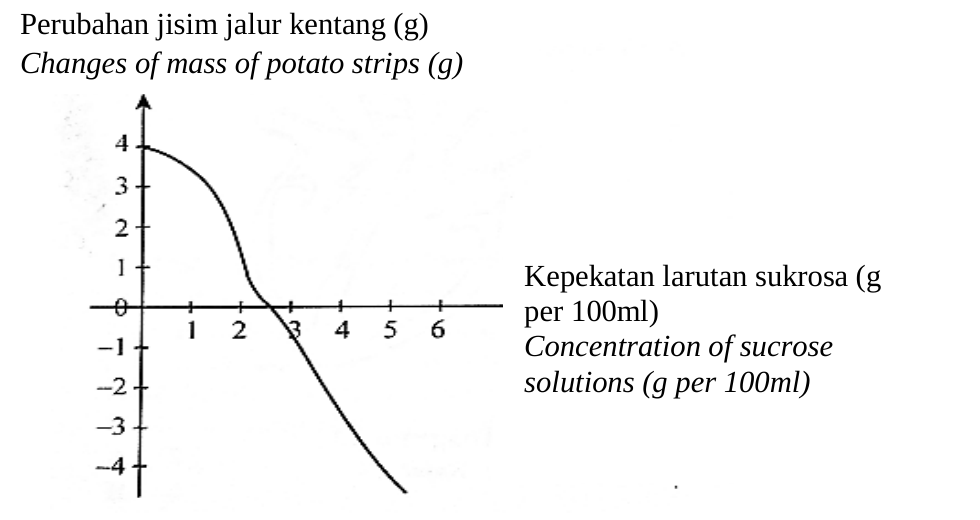
The graph in Diagram 2 shows the changes in the mass of potato strips when it is immersed in different concentrations of sucrose solution. Based on the graph, which of the following concentrations of sucrose solution should be used so that a flaccid potato strip regains its turgidity?
Medium
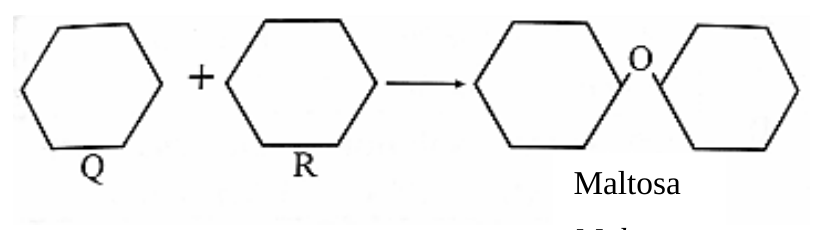
Diagram 3 shows the formation of maltose from molecules Q and R. What are Q and R?
Easy
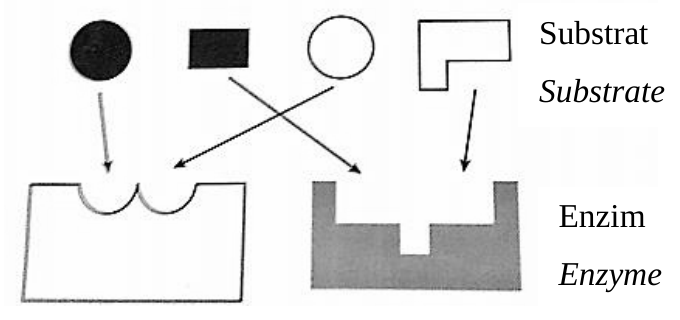
Diagram 4 shows the "lock and key" hypothesis of enzyme action. Based on the diagram, what characteristic does this enzyme show?
Medium
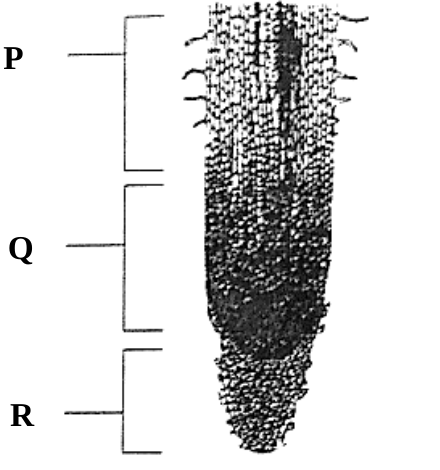
Diagram 5 shows the longitudinal section of a plant root. Which part of the root system carry out mitosis?
Medium
Fermentation of glucose by yeast can be shown by the equation: Glucose → P + Q + Energy. What are substances P and Q?
Easy
Diagram 6 shows a part of the human respiratory system. Which of the following are the adaptations of the structure for gaseous exchange? I Has a small surface area; II Has a thin wall; III Has a moist surface; IV Covered with many blood capillaries.
Medium
Which of the following occurs during exhalation process in a fish?
Medium
Diagram 7 shows a part of the human digestive system where the digestion of food starts. Which of the following statements correctly describes what happens in the mouth? I Saliva emulsifies fats into smaller droplets; II Chewing increases the surface area of food for digestion; III Teeth break up smaller soluble molecules into large insoluble molecules; IV Salivary amylase breaks down large starch molecules into smaller maltose molecules.
Medium
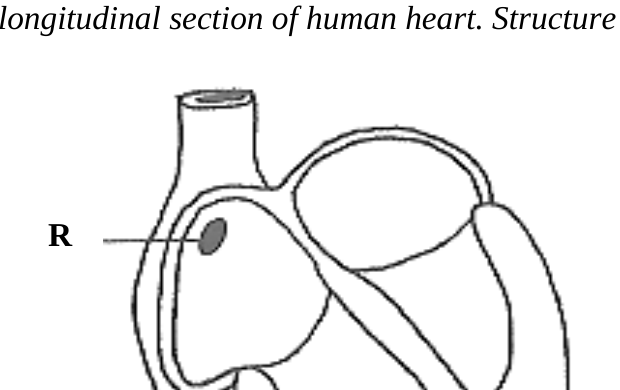
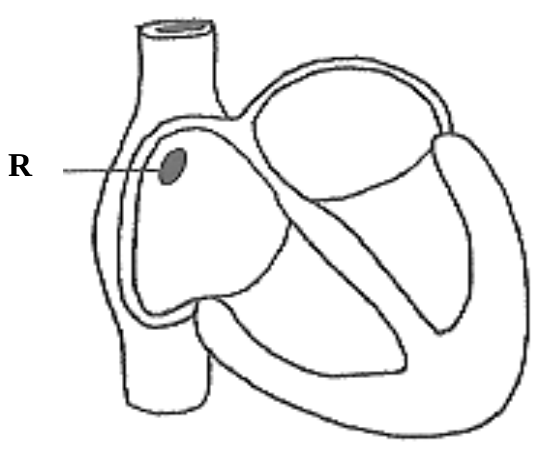
Diagram 8 shows a longitudinal section of human heart. Structure R is a pacemaker. What is the function of R?
Easy
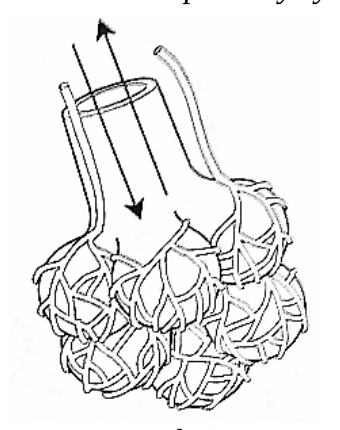
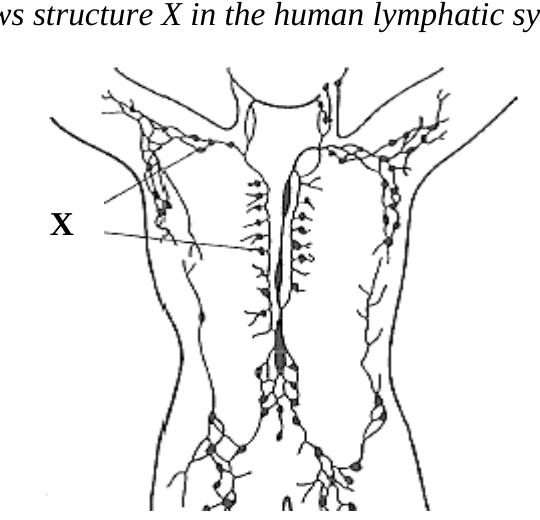
Diagram 9 shows structure X in the human lymphatic system. Which of the following is the function of structure X?
Easy
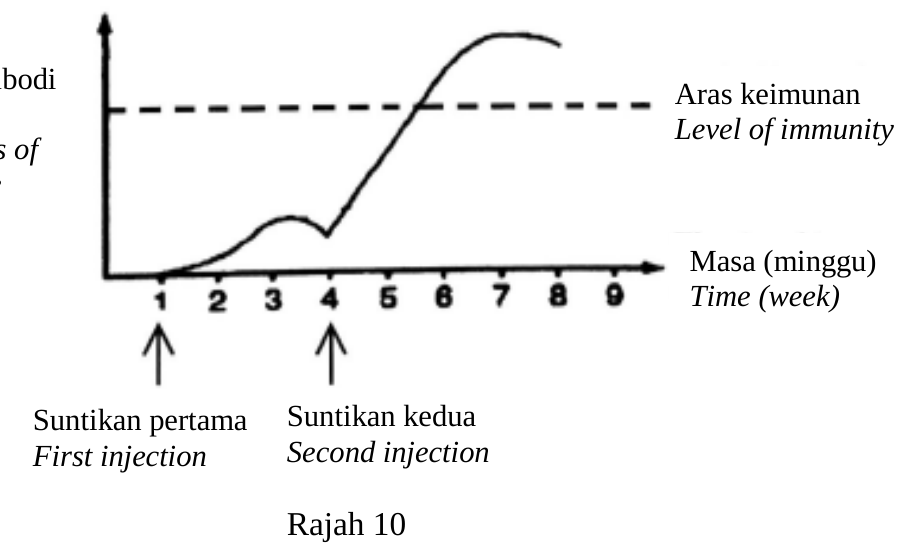
Diagram 10 shows the concentration of antibody in the blood after two injections. Which of the following statements is true about the graph?
Medium
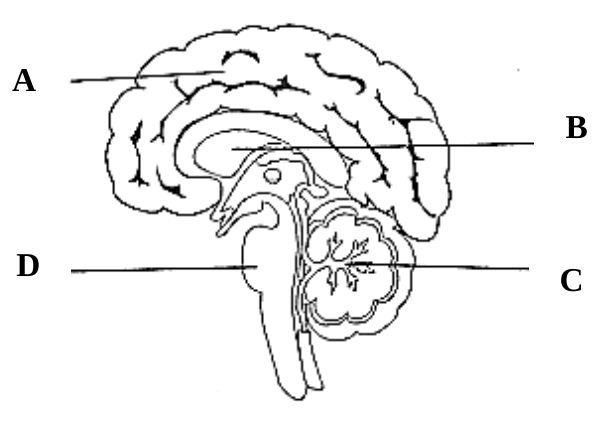
The information describes the functions of a part of the human brain: controls voluntary movement like walking and jumping; intelligence and learning; sensing the environment. The description refers to the structure labelled A, B, C or D in the diagram.
Easy
Which hormone is correctly matched to its function?
Medium
Which of the following is part of the homeostasis process?
Medium
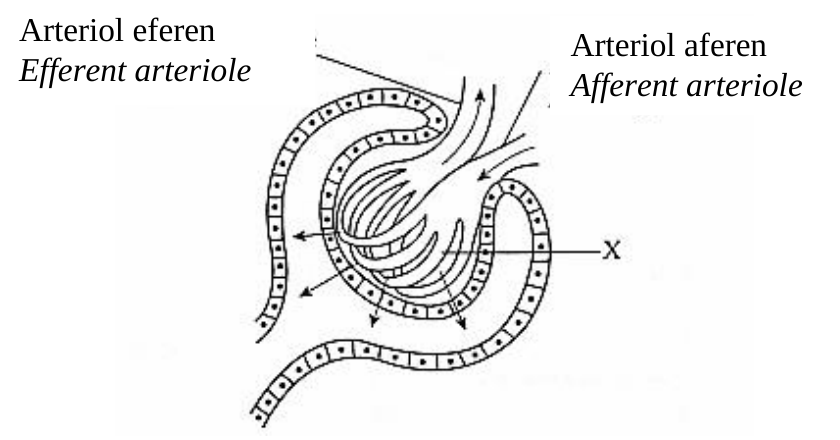
Diagram 11 shows ultrafiltration that occurs in the kidney. Why there are no erythrocytes found in X?
Easy
Which of the following animals has a hydrostatic skeleton and an exoskeleton at different stages of its life cycle in a complete metamorphosis?
Medium
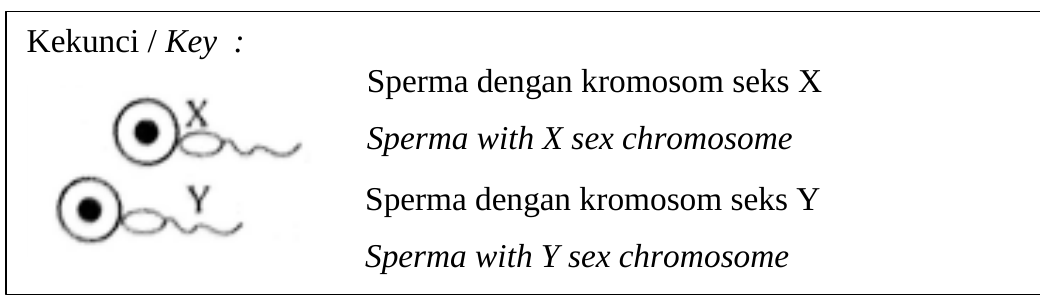
Which of the following figures shows how fraternal male twins are formed after fertilisation? (Key: sperm with X chromosome, sperm with Y chromosome. Options A to D are diagrams of fertilisation.)
Medium
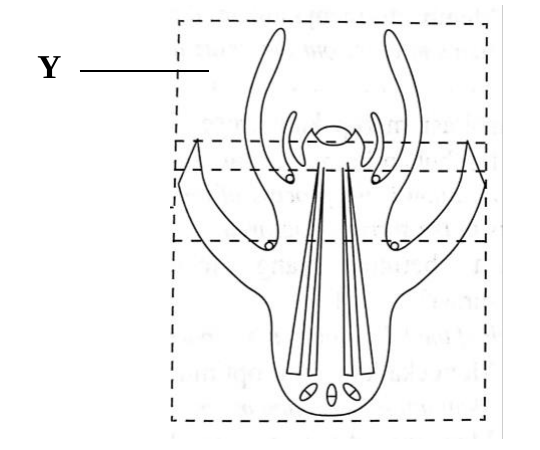
Diagram 12 shows growth zone in plant shoot. What is zone Y?
Medium
Which of the following pairs of tissue and function is true? I Vascular tissue: transport water and nutrient; II Meristem tissue: controls the loss of mineral; III Mesophyll tissue: provide support; IV Epidermal tissue: protects the tissues beneath it.
Medium
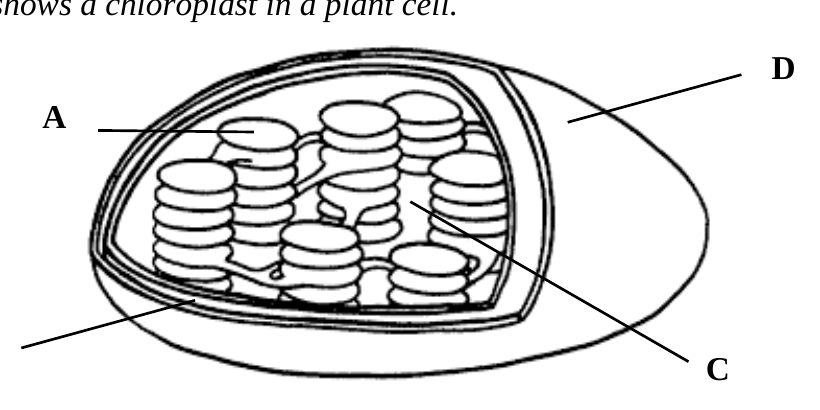
Diagram 13 shows a chloroplast in a plant cell. Which of the structure A, B, C and D, is the site for light dependent reaction for photosynthesis to take place?
Easy
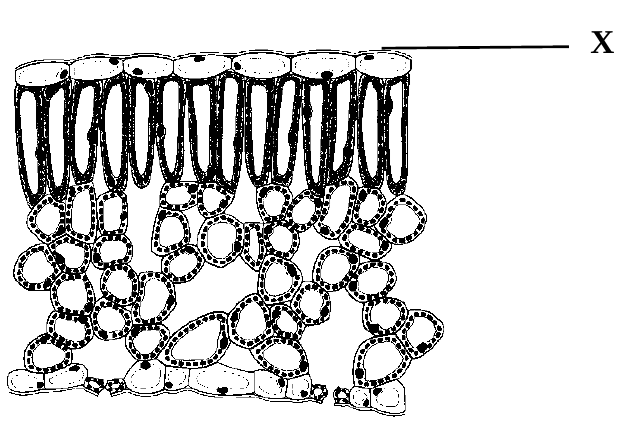
Diagram 14 shows a cross section of a leaf. This plant is exposed to dust from a nearby housing construction site. What is the effect on photosynthesis if structure X is covered with dust from the construction site?
Medium
Which of the following is the problem faced by plant caused by lack of nitrogen?
Medium
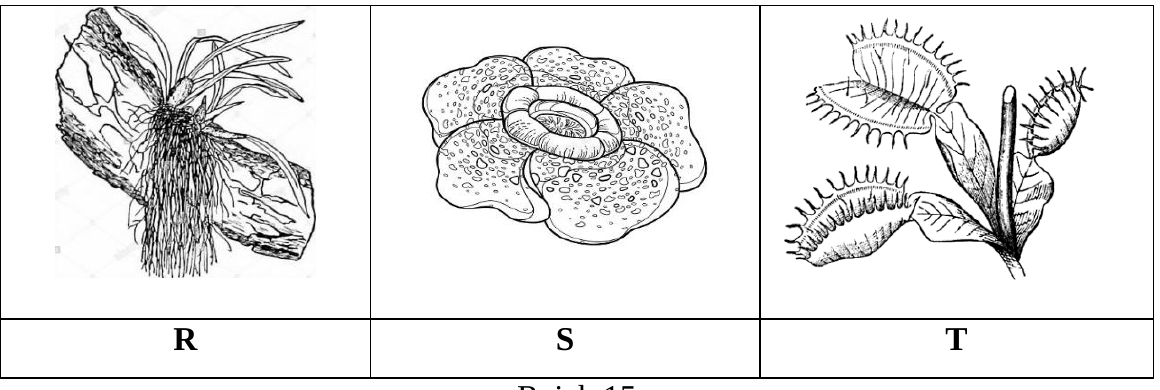
Diagram 15 shows three types of plant. What is nutrient adaptation in plant R, S and T?
Medium
The following information describes root pressure which involved in the passage of water and mineral salts from soil to leaves: root pressure moves water from the soil into the xylem vessels of the root via osmosis. What factors affect root pressure?
Medium
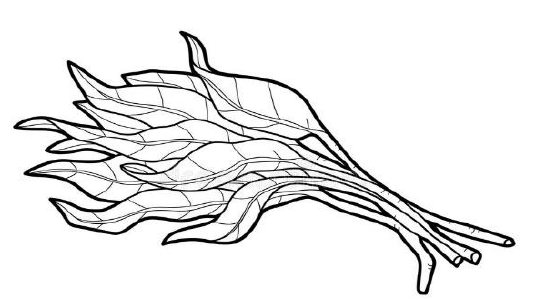
Diagram 16 shows a water spinach used for phytoremediation, a method of treatment for the purpose of degradation, extraction or elimination of pollute substances from soil and water. What is other example of phytoremediation plants that is correctly matched to their function?
Medium
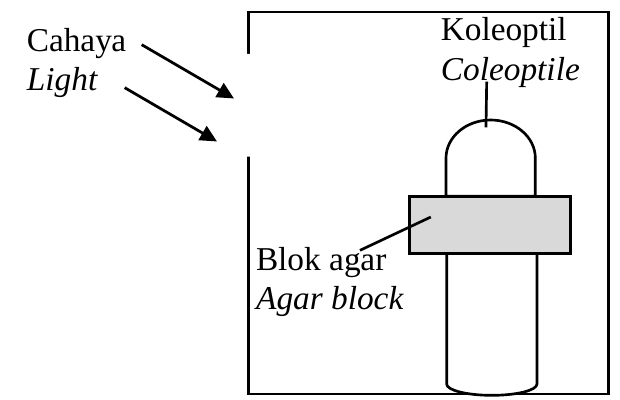
Diagram 17 shows a coleoptile tip is cut and placed on agar block. Then, it is placed inside a box with a hole and exposed to the light source. What is the observation of this experiment after a week? (Options A to D are drawings of the coleoptile.)
Medium
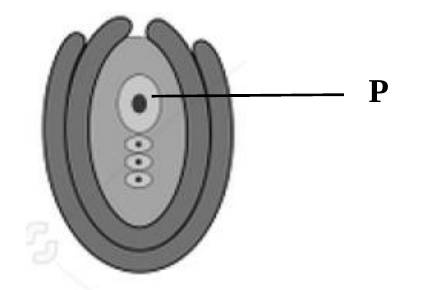
Diagram 18 shows embryo sac of a flowering plant. What will happen to the cell P?
Medium
Which statements are true about formation of male gamete? I The generative nucleus will divide mitotically to form two haploid male gametes; II The tube nucleus will degenerate and both male gametes enter the embryonic sac; III The end of the pollen tube will secrete hormones to digest the tissues of the style; IV Pollen on the stigma will germinate and form a generative tube.
Medium
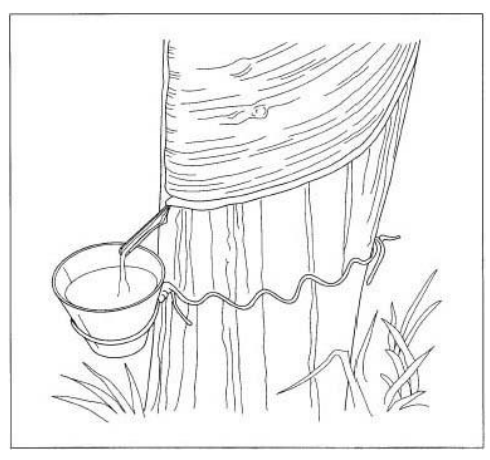
Diagram 19 shows a type of plant (a rubber tree being tapped). Which of the following explains about the habitat of the plant?
Medium
The following statements describe the main characteristics of a microorganism: no obvious nucleus because there is no nuclear membrane; sizes range from 1 to 10 µm long; exists in single cells, pairs, filaments, chains or groups. What are these microorganisms?
Easy
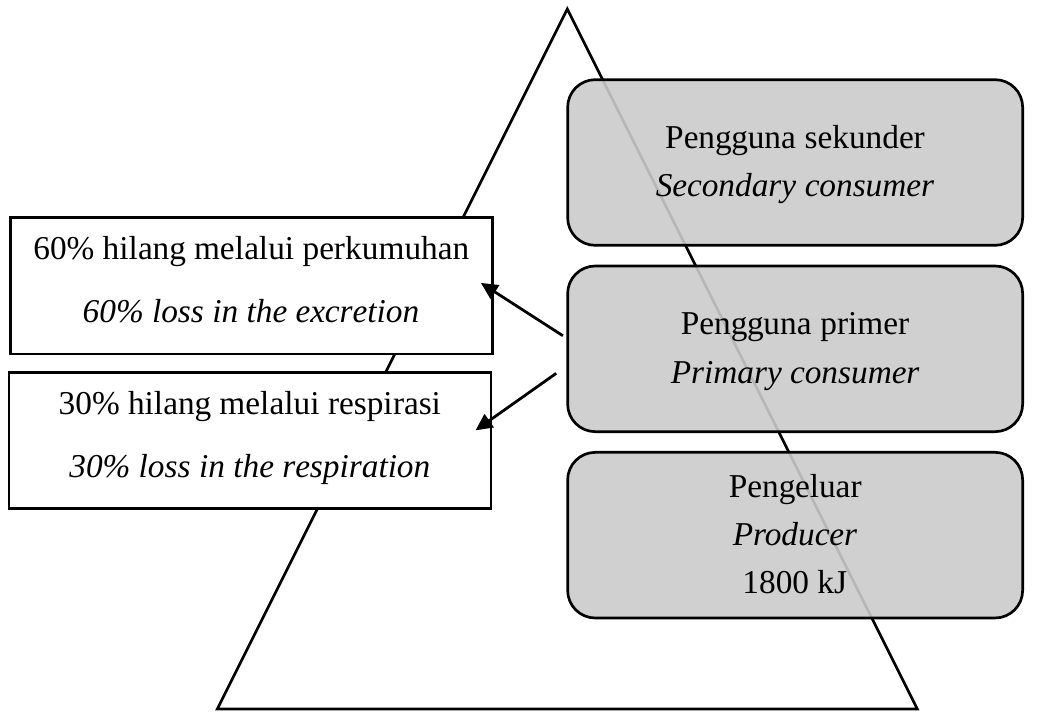
Diagram 20 shows the energy flow from producer (1800 kJ) to secondary consumer: 60% lost in excretion and 30% lost in respiration. What is the total energy passed down to the primary consumer?
Medium
The Movement Control Order resulted in more time at home and increased electricity consumption. A practice to reduce electricity use is to turn off the switches of electrical equipment when not in use. How can this practice contribute to environmental sustainability?
Medium
A student wants to estimate the population of snails in a garden. He catches 65 snails and marks them before releasing them. After 3 days he catches 40 snails and finds that 5 of them are marked. What is the estimated population of snails in the garden?
Medium
A married couple has a different rhesus Rh factor. Their first child is Rh+. All the subsequent pregnancies end with miscarriage. Determine the rhesus factors for the parents and the miscarriage foetus.
Medium
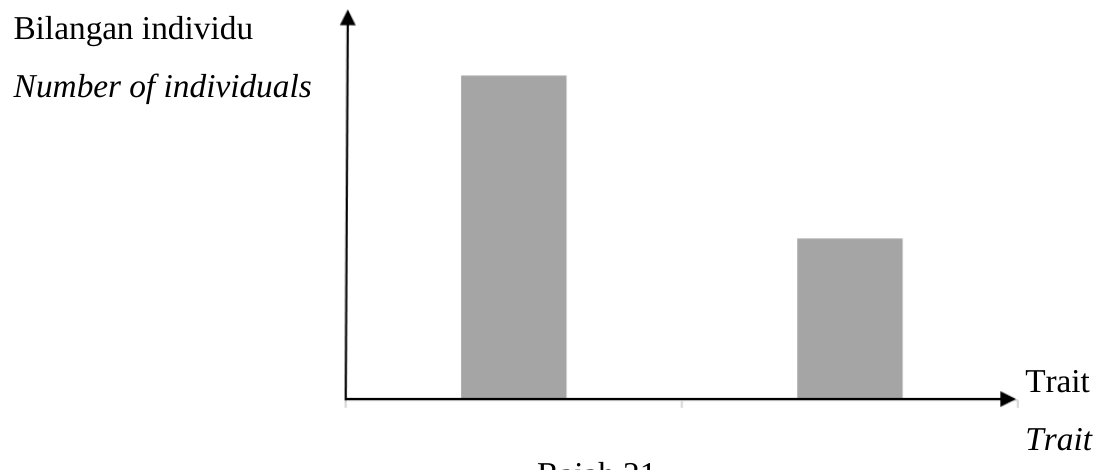
Diagram 21 shows the variation of a trait in humans (a bar chart with two distinct categories). Which characteristic shows the variation?
Medium
How does the Turner Syndrome occur?
Medium
Recombinant DNA technology has produced many beneficial varieties of crops and livestock. Genetically modified food (GMF) possesses DNA from other species of plant or animal. Which of the following is the possible disadvantage of the genetic engineering?