Write your answer on paper. Then open the answer to check it.
Section A
Diagram 1 shows a structure of an animal cell (X is an organelle labelled in a box; Y is a small structure next to the rough endoplasmic reticulum; the secretory vesicle is also labelled).
Medium6 marks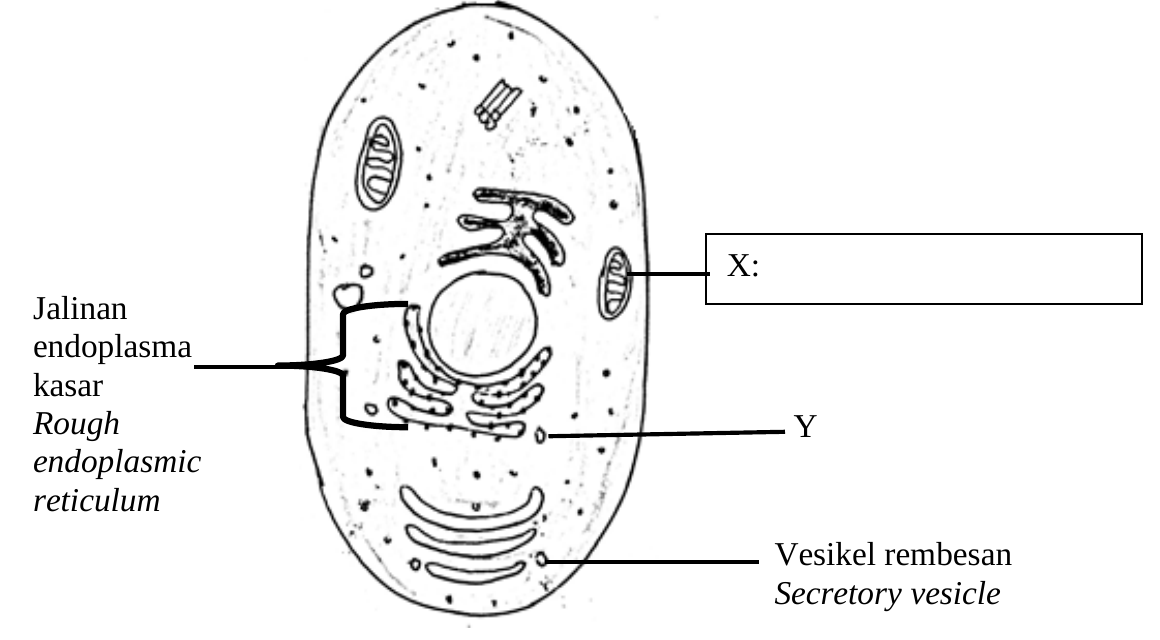
- (a)
On Diagram 1, label X in the space provided.
[1] - (b)
Draw an arrow to match component Y to its function. Functions: transports synthesized proteins by ribosomes; transports modified protein; synthesises proteins.
[1] - (c)
Explain one characteristic of X.
[2] - (d)
Justify why ribosome is attached to rough endoplasmic reticulum.
[2]
Diagram 2.1 shows the growth curve of a plant that lives in temperate climates (height in cm against time in years, with step-like growth: summer growth, winter pause). Diagram 2.2 shows a cross section of a tree from the temperate area with annual rings.
Medium6 marks- (a)(i)
Identify the types of plants that show the growth curve as shown in Diagram 2.1.
[1]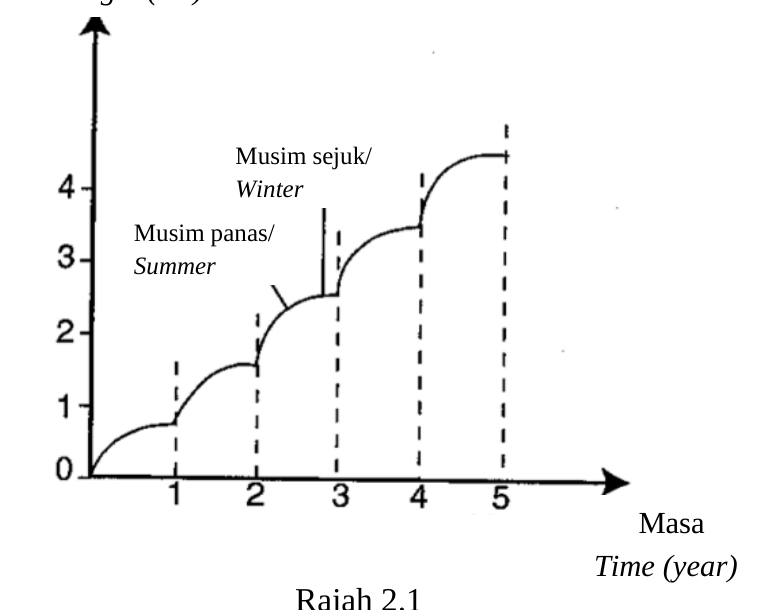
- (a)(ii)
Give two examples of plants that have a growth curve as shown in Diagram 2.1.
[2] - (b)(i)
Based on Diagram 2.2, estimate the age of the tree.
[1]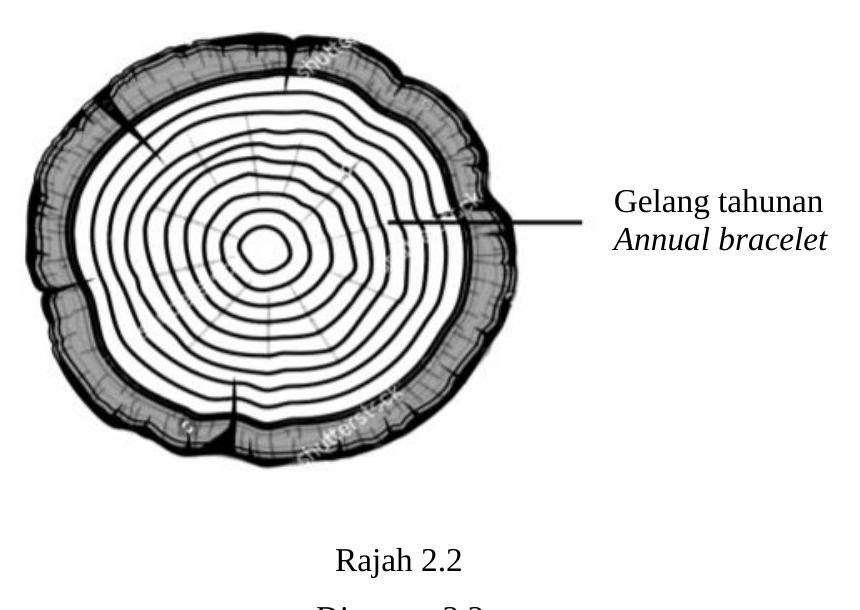
- (b)(ii)
Describe the formation of its annual rings.
[2]
Diagram 3 shows three groups of carbohydrates: X (one unit), Y (two units joined) and Z (many units in a branched chain).
Medium7 marks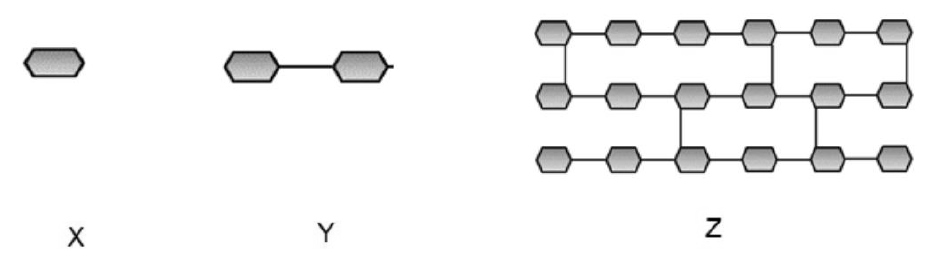
- (a)(i)
Name the group of carbohydrates labelled X, Y and Z.
[3] - (a)(ii)
Y is made of two monomer units. Give one example of carbohydrates labelled Y and name the monomers that make them.
[2] - (b)
Z is a polymer formed through the condensation process. Hundreds of monomers X bind together to form long molecular chains. Explain one importance of Z in multicellular organisms.
[2]
Diagram 4.1 shows a cross section of the stem of a eudicot plant with tissues Y and Z (Z is xylem). Diagram 4.2 shows part of a tree stem where a ring of bark was removed; R is above and S is below the ring.
Medium7 marks- (a)
Tissue Z is involved in water and mineral salts transportation. Explain one adaptation of tissue Z to perform its function efficiently.
[2]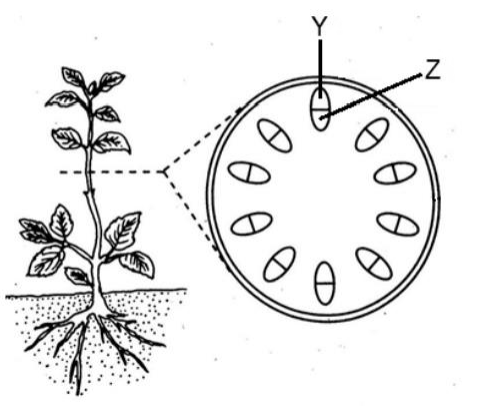
- (b)(i)
Draw the condition of R and S after one month in Diagram 4.2.
[1]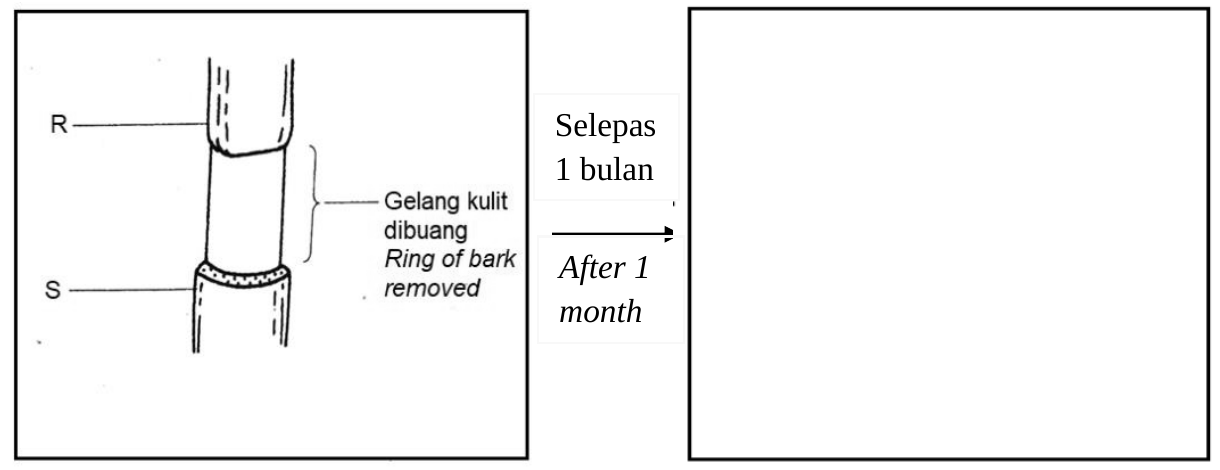
- (b)(ii)
Explain the condition of R and S.
[4]
Diagram 5.1 shows a stage in cell division with homologous chromosomes pulled by spindle fibres. Diagram 5.2 shows the complete set of chromosomes (karyotype) of an individual with a genetic disease (three copies of chromosome 21).
Medium8 marks- (a)(i)
Name the type of cell division shown in Diagram 5.1.
[1]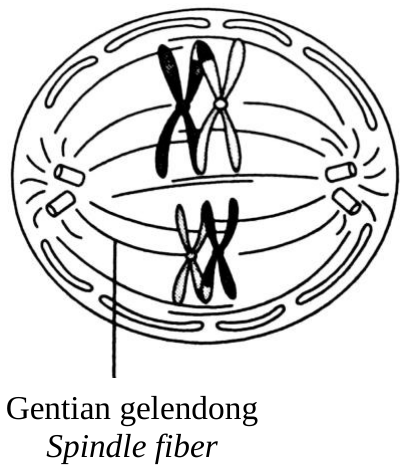
- (a)(ii)
State the definition of the cell division named in (a)(i).
[2] - (b)
Explain the events during metaphase I which contribute to variation in organisms.
[2] - (c)(i)
State the genetic disorder experienced by this individual.
[1]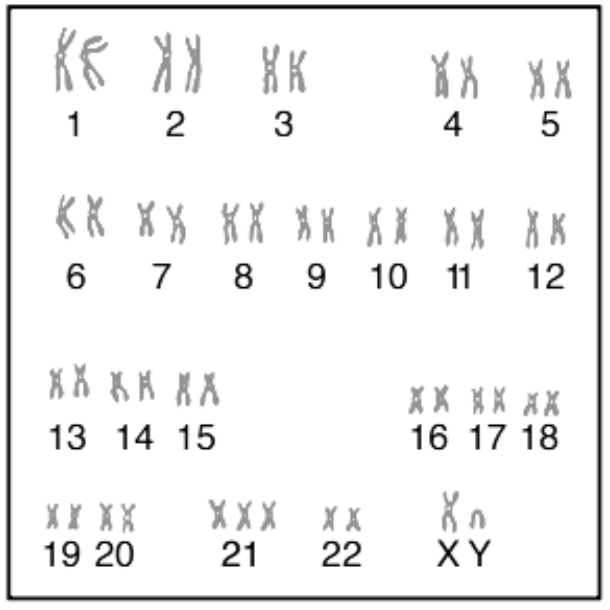
- (c)(ii)
Explain how this individual is born with this genetic disorder.
[2]
Diagram 6.1 shows a cell component commonly found in human cells. Diagram 6.2 shows paddy growing in a watery (waterlogged) field, which undergoes a different process from human cells.
Medium8 marks- (a)
Identify the cell component shown by Diagram 6.1.
[1]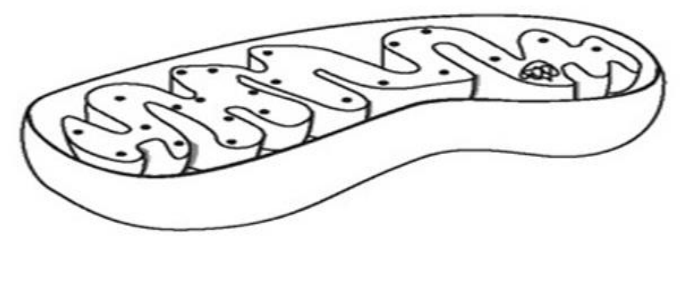
- (b)(i)
State the process that takes place in this cell component.
[1] - (b)(ii)
Write the word equation for the process stated in 6(b)(i).
[1] - (b)(iii)
Explain how the substrate used in 6(b)(ii) is obtained.
[2] - (c)(i)
The paddy in the watery field in Diagram 6.2 undergoes a different process from human cells. Name the process.
[1]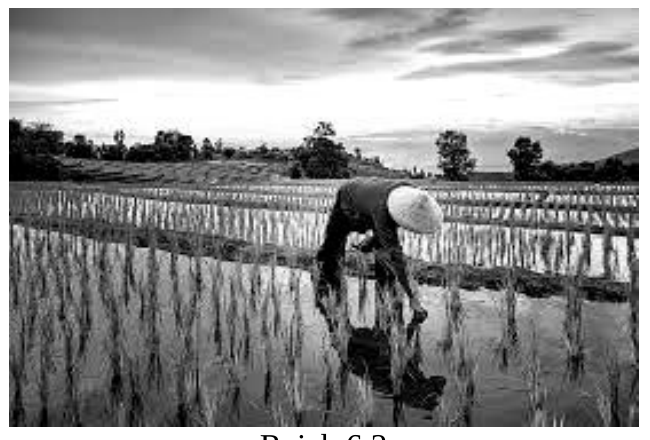
- (c)(ii)
Give one example of another microorganism that carries out the same process as the plant in Diagram 6.2.
[1] - (c)(iii)
State one difference between the processes carried out in a human cell and the plant in Diagram 6.2.
[1]
Diagram 7.1 shows human muscles involved in bending the arm: X (biceps), Y (triceps), tissue P (joins muscle to bone), tissue Q (joins bone to bone at the elbow) and bone Z (radius). Diagram 7.2 shows bone Z affected by a disease (porous bone tissue).
Medium9 marks- (a)(i)
In Diagram 7.1, name tissue P and Q.
[2]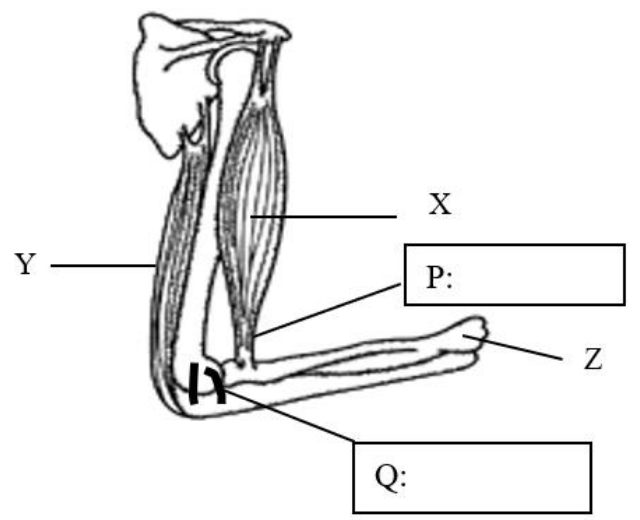
- (a)(ii)
Explain the different characteristic between P and Q.
[1] - (a)(iii)
If tissue P is torn because of an accident, what problems will be faced by this patient?
[2] - (b)
Based on Diagram 7.1, explain how bending of the forearm takes place, involving muscle X, muscle Y, tissue P and bone Z.
[2] - (c)
Bone Z is affected by a type of disease shown in Diagram 7.2. In your opinion, suggest a food that is suitable for this patient.
[2]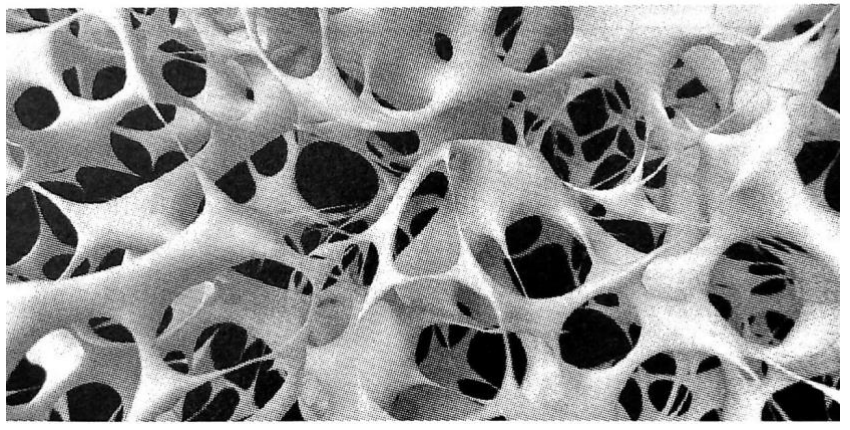
Diagram 8.1 shows the action of antibody and antigen in an immune response (antibodies bind to antigens on bacteria). Diagram 8.2 shows the graph of changes in antibody concentration in the blood of individual A over time (months), with the first injection at month 0, the second injection at month 4 and a dashed line for the level of immunity.
Medium9 marks- (a)(i)
Based on Diagram 8.1, explain the interaction between the antigen of the bacterium and antibody.
[2]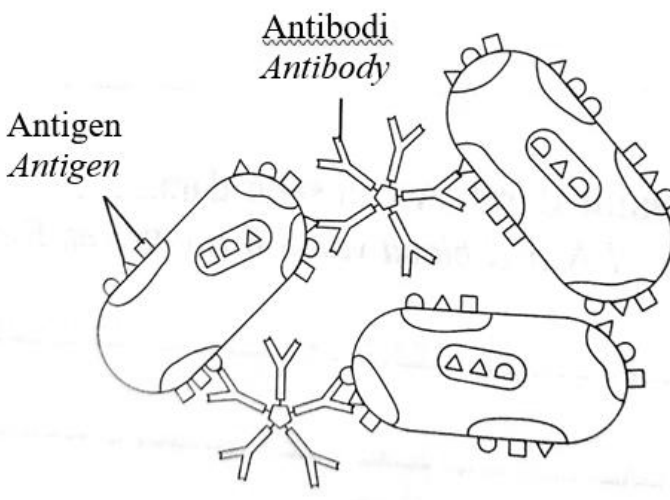
- (a)(ii)
Explain how the binding of antigen and antibody will overcome the bacterium attack.
[2] - (b)(i)
Based on Diagram 8.2, describe the differences in the response to the first and second injection.
[2]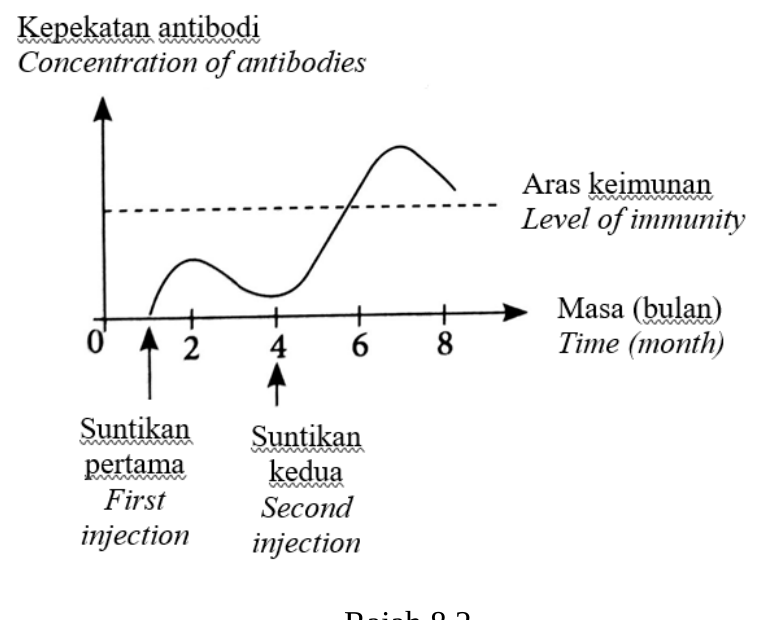
- (b)(ii)
The process of creating a vaccine against viruses and bacteria takes several steps. The step begins with the genetic code of the virus being determined. In your opinion, why is this step important and must be taken in producing a vaccine against a specific disease?
[3]
Section B
Section B (answer any ONE of Q9 or Q10). Diagram 9.1 shows a food chain in a paddy field: grass -> grasshopper -> frog -> snake.
Hard20 marks- (a)
State the definition of food chain.
[2]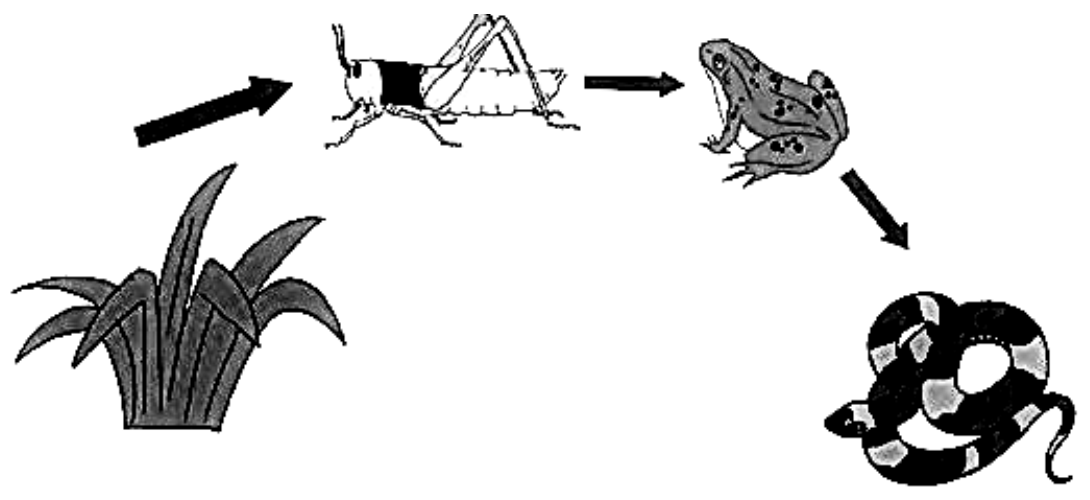
- (b)
Diagram 9.2 shows a method to estimate the population size of snails in a farm by marking on the shell. Explain the technique.
[4]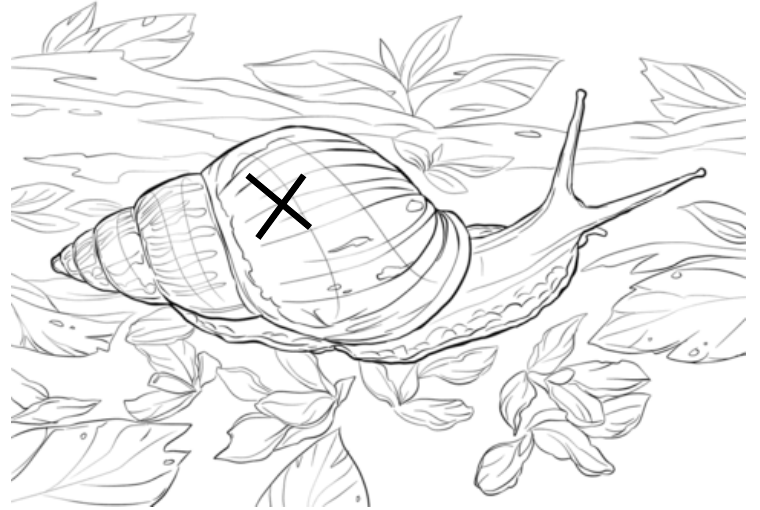
- (c)
The graph in Diagram 9.3 shows the prey-predator interaction (rabbit and fox population size against time). Describe the interaction between the prey and predator.
[4]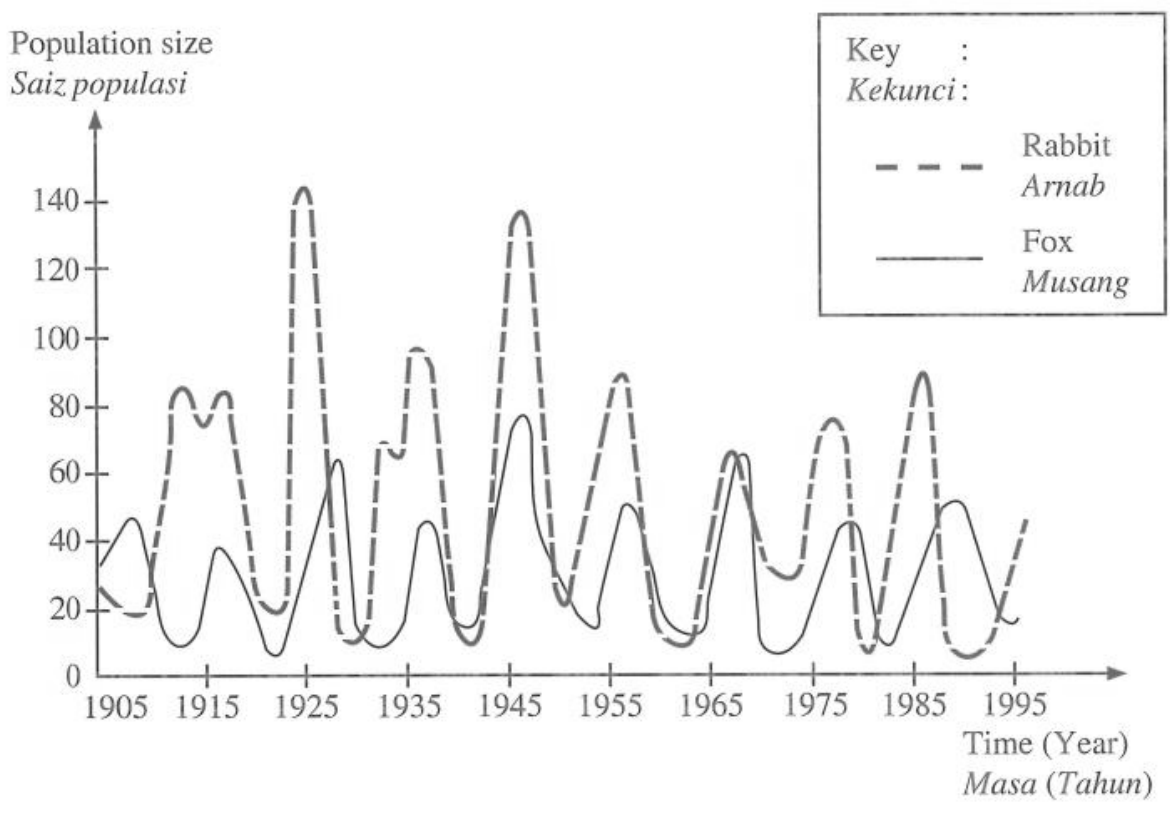
- (d)
Diagram 9.4 shows three recycle bins for used paper (P), used glass (Q) and used plastic (R). Justify how the practice of recycling the used materials in Diagram 9.4 can contribute to maintaining the balance of nature.
[10]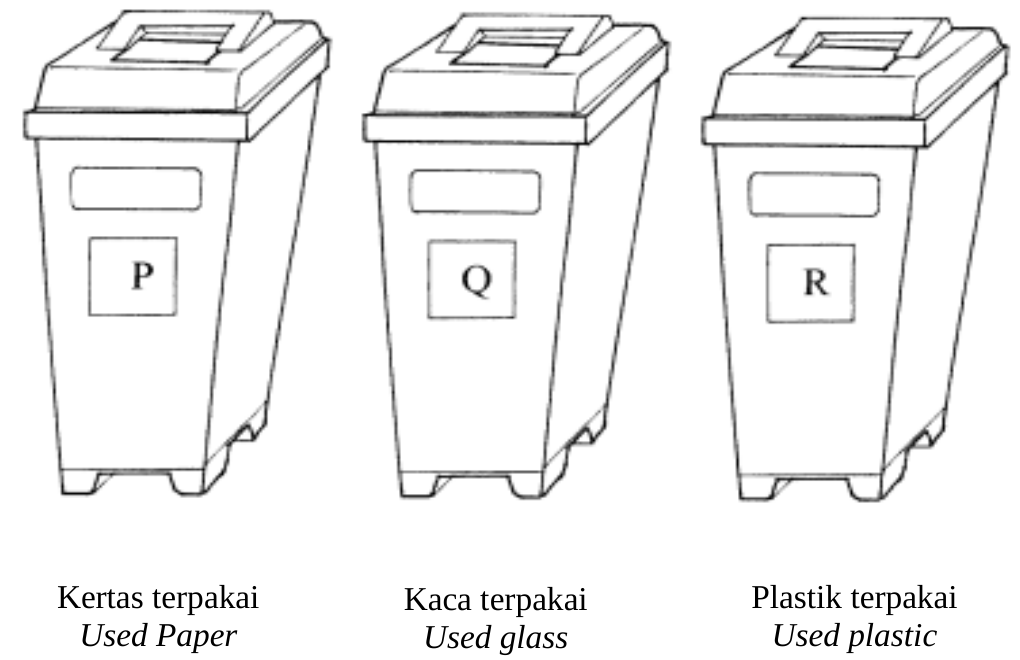
Section B (answer any ONE of Q9 or Q10). The following information shows the cause of genetic disorders: frequent and excessive exposure to ultraviolet radiation can lead to mutation. Down's syndrome and haemophilia are examples of genetic diseases caused by mutation.
Medium20 marks- (a)(i)
How is haemophilia inherited?
[2] - (a)(ii)
State the risk faced by a haemophiliac and explain how this affects her quality of life.
[2] - (b)
State four differences between haemophilia and Down's syndrome based on these criteria: causes; number of chromosomes; characteristics; inheritance.
[4] - (c)
Diagram 10.1 shows the D antigen, the Rhesus factor (Rh), on the surface of human red blood cells. Red blood cells containing the Rhesus factor are Rhesus positive (Rh+), which is dominant, while individuals without the Rhesus factor are Rhesus negative (Rh-), which is recessive. A husband has heterozygous dominant Rhesus-positive blood, while his wife has Rhesus-negative blood. Using a genetic cross diagram, explain the probability that their children have a Rhesus-positive blood type.
[6]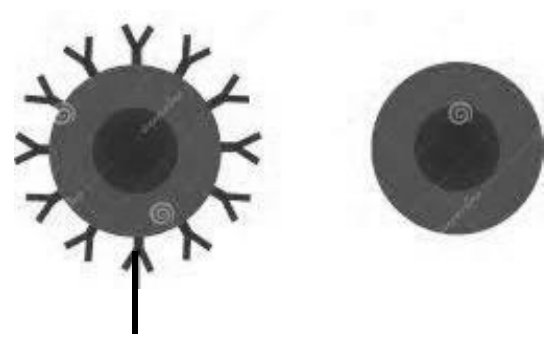
- (d)
Variation is the differences among organisms of the same species in terms of phenotype and genotype. Variation allows us to identify individuals in a population. Diagram 10.2 shows a picture of the fur patterns of kittens that look different from their mother. Describe how this situation can occur.
[6]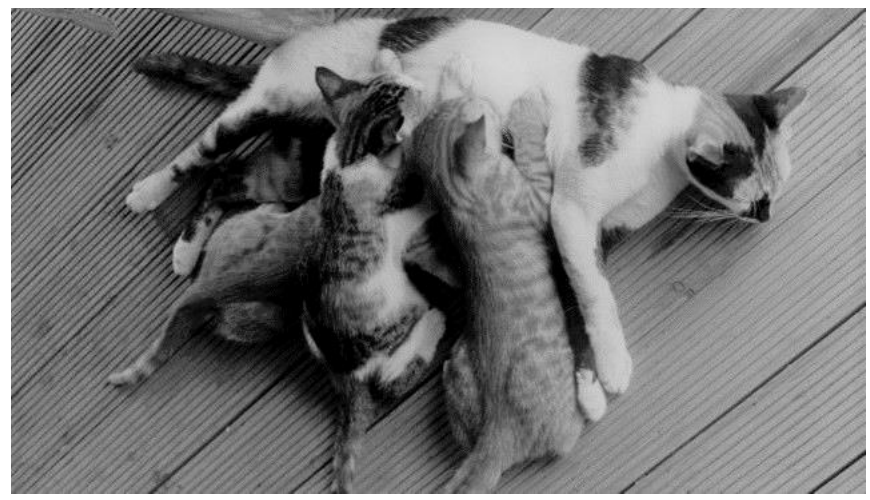
Section C
Diagram 11.1 shows some organs in the human digestive system, with organ Z (pancreas) labelled.
Medium20 marks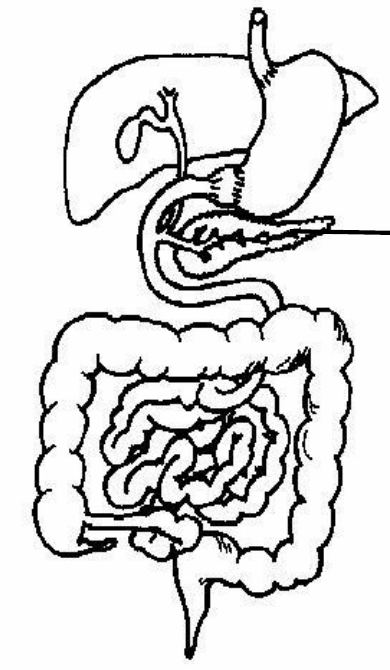
- (a)
Based on Diagram 11.1 above, discuss the digestion of glucose that takes place in the duodenum.
[3] - (b)(i)
A man with cancer needs to have organ Z removed from his body. Predict the effects he may face after the organ is removed.
[2] - (b)(ii)
Suggest actions that the man needs to take to control health problems that may arise after organ Z is removed.
[3] - (c)(i)
Diagram 11.2 shows a wild orchid on a big tree. Describe how the orchid is adapted to continue the survival of its species.
[4]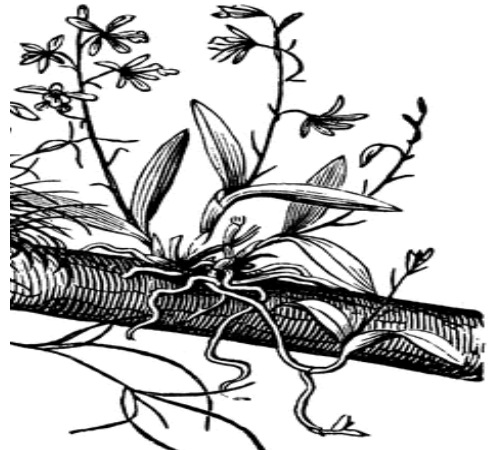
- (c)(ii)
A man moves the orchid to the ground under the big tree so that it can absorb water from the ground. Justify his action.
[4] - (d)
A farmer found that the pepper crops he cultivated were infertile. The leaves of the pepper plants turned yellowish. Based on the statement, suggest a step that should be taken to solve the problem so that his pepper crop becomes fertile again. Explain your suggestion.
[4]