Write your answer on paper. Then open the answer to check it.
Section A
Diagram 1 shows a cross section of a green leaf (cell P in the upper epidermis, cell Q in the lower epidermis, structures R and S in the vascular bundle).
Medium6 marks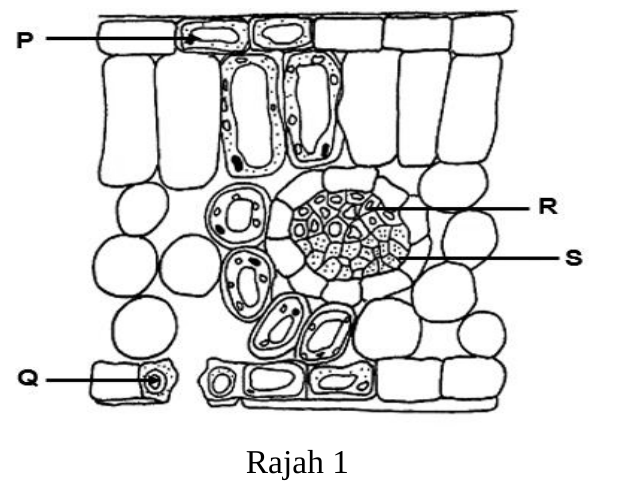
- (a)(i)
Name cell P and cell Q.
[2] - (a)(ii)
State one difference in structure between cell P and cell Q.
[1] - (b)
Structures R and S are categorised as vascular tissues. Name tissue S and explain its function.
[2] - (c)
In your opinion, why are stomata found more in the lower epidermis than in the upper epidermis of a leaf?
[1]
Diagram 2 shows the mechanism of action of the enzyme lactase (a substrate fitting into an enzyme's active site, with labelled boxes X, Y and Z for the substrate and products, and an empty box for the middle stage).
Medium6 marks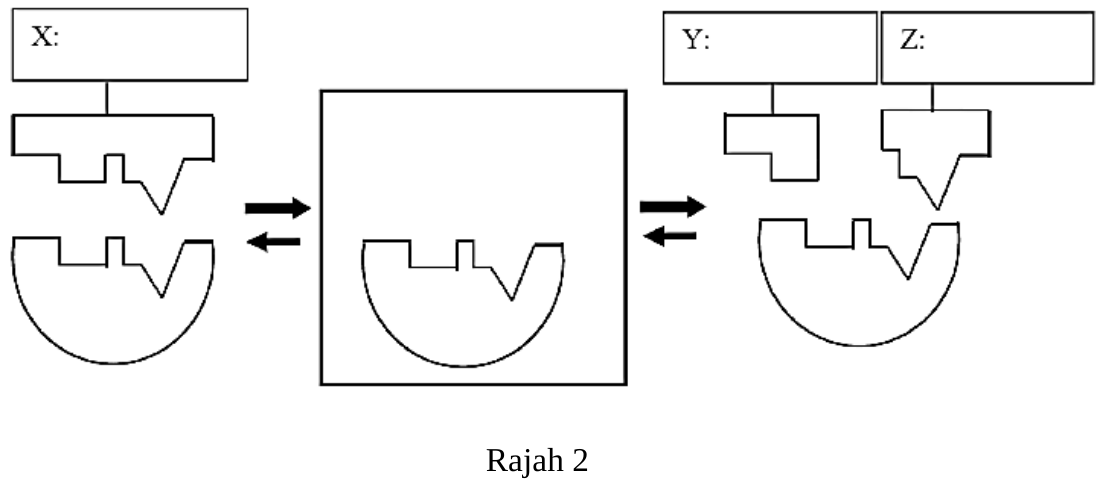
- (a)(i)
Label X, Y and Z in Diagram 2.
[2] - (a)(ii)
Complete the diagram in the box provided in Diagram 2.
[1] - (b)
Based on Diagram 2, state two characteristics of enzymes.
[2] - (c)
Predict the effect on the action of lactase if the reaction temperature is raised to 60 degrees C.
[1]
Diagram 3.1 shows the respiratory system of an insect (labels P, R, S). Diagram 3.2 shows the human respiratory system (labels P, Q, bronchus). The organs in both systems are modified for effective gaseous exchange.
Medium7 marks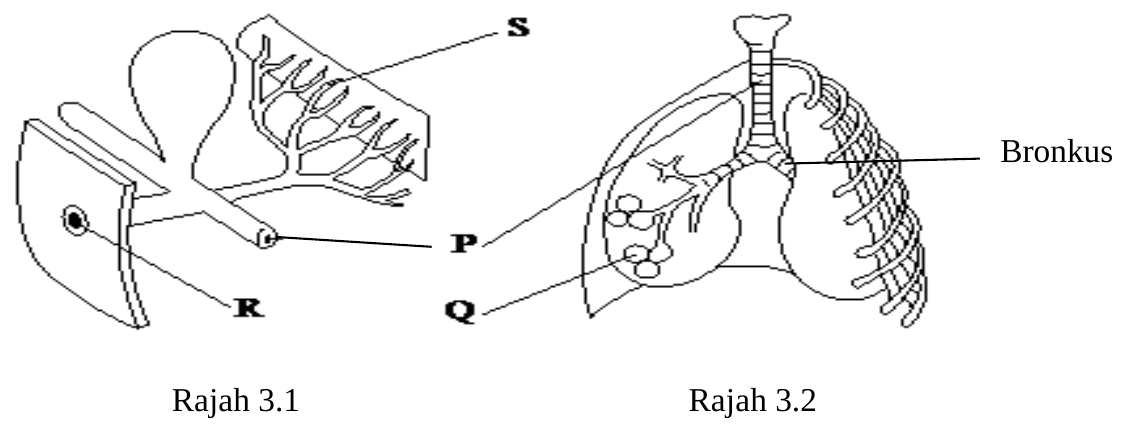
- (a)(i)
Name the part labelled P.
[1] - (a)(ii)
State one similarity and one difference in the structure of P in Diagram 3.1 and Diagram 3.2.
[2] - (b)
Explain how structures Q and S can increase the effectiveness of gaseous exchange in each organism.
[2] - (c)
Madam Z is the wife of a heavy smoker. Recently she has had a cough problem. Suggest two steps to help Madam Z reduce her cough problem.
[2]
Diagram 4 shows a body defence mechanism carried out by blood cell X in the human body (bacteria engulfed, phagosome and lysosome fuse, digested material).
Medium7 marks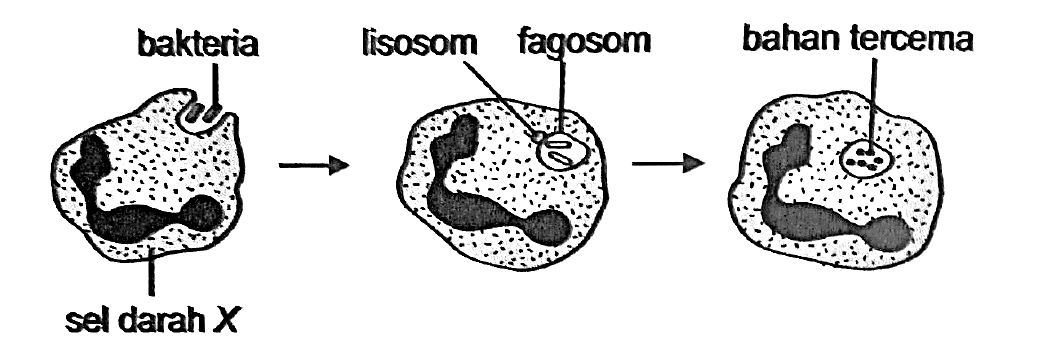
- (a)(i)
Name the process shown in Diagram 4.
[1] - (a)(ii)
Explain briefly how the process you named in (a)(i) acts to digest the bacteria.
[2] - (b)(i)
Breast milk given to a baby helps maintain the baby's health by supplying essential nutrients and giving protection against allergies, infections or other diseases. Mothers are also advised to complete their babies' immunisation schedule as additional protection. State the type of immunity obtained by the baby given the breast milk.
[1] - (b)(ii)
Explain why babies still need to be vaccinated.
[2] - (c)
A boy accidentally stepped on a rusty nail which caused him to be infected by Clostridium tetani bacteria. He then went to see a doctor for treatment. The doctor gave the boy an injection. Explain how this injection can help the boy.
[1]
Diagram 5 shows the structure of a nephron and blood vessels in the kidney (R, S and T labelled).
Medium8 marks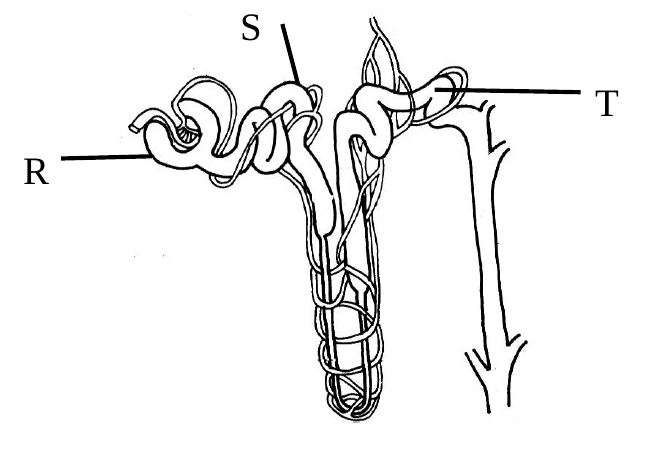
- (a)(i)
Based on Diagram 5, name R.
[1] - (a)(ii)
Some substances such as plasma proteins and erythrocytes are not found in R. Explain why.
[1] - (b)
Table 1 shows the content of the filtrate between S and T. Filtrate content, concentration (%) at S and T: glucose 0.1 and 0.0; amino acids 0.05 and 0.0; water 90.0 and 95.0; urea 0.03 and 2.00. Referring to Table 1, explain why there is a difference in the concentration of urea between S and T.
[2]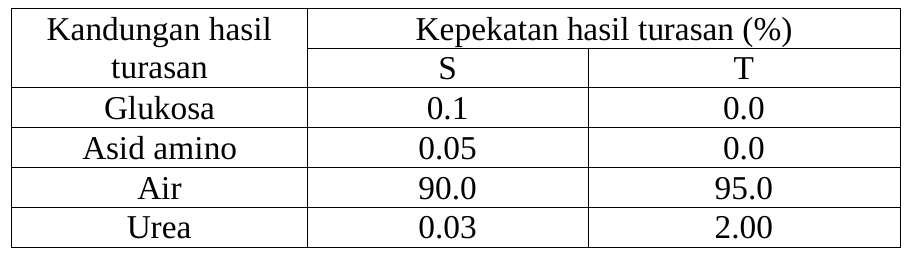
- (c)
Syaza likes to drink coffee at tea time. Coffee contains caffeine which inhibits the secretion of antidiuretic hormone (ADH). Describe briefly the effect of drinking coffee on the volume and concentration of urine produced.
[2] - (d)
One way to overcome kidney failure is through a kidney transplant. Discuss the advantages of a kidney transplant compared to using a dialysis machine.
[2]
The Ministry of Health Malaysia FAQ on Coronavirus disease (COVID-19) states: Question 1: What is Coronavirus? Coronavirus (CoV) is a type of virus that can cause respiratory tract infection. There are several types such as severe acute respiratory syndrome coronavirus (SARS) and Middle East Respiratory syndrome-related coronavirus (MERS-CoV). The newest coronavirus discovered in China is Coronavirus 2019 (COVID-19).
Medium8 marks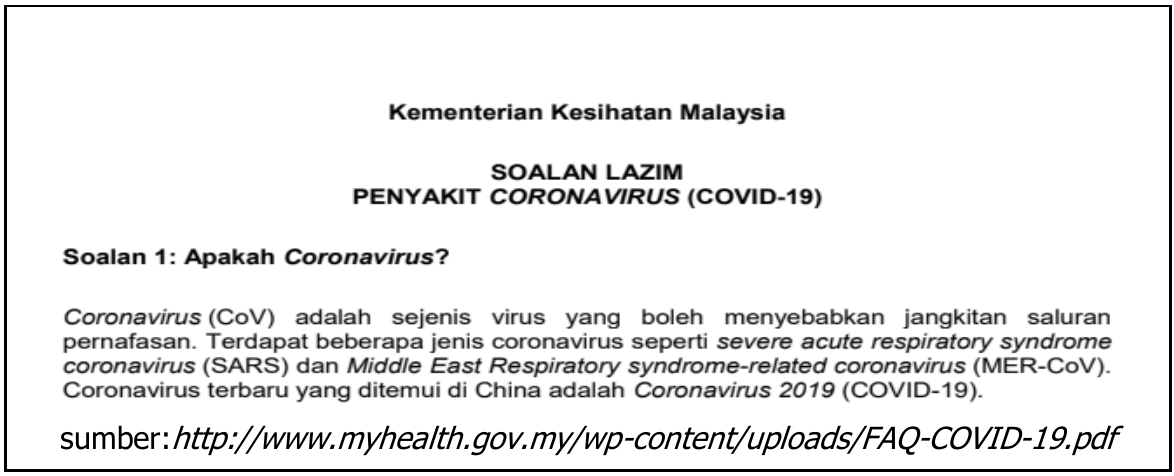
- (a)(i)
Based on the statement above, state one main characteristic of CoV.
[1] - (a)(ii)
What are the symptoms shown by a person infected with CoV?
[2] - (b)
Explain why CoV is parasitic to the human body.
[3] - (c)
Salmonella sp. and Plasmodium sp. are microorganisms that have bad effects on the human body. Compare the effects of these microorganisms on human health.
[2]
Thalassaemia is an inherited disease caused by gene mutation. It is caused by a recessive allele (t) that results in the formation of imperfect haemoglobin. Diagram 7 shows the inheritance of thalassaemia (father and mother are thalassaemia carriers; children: one thalassaemia patient, P and Q shaded half, R unshaded).
Medium9 marks- (a)(i)
State the genotype of both parents.
[1] - (a)(ii)
State the genotype of child R.
[1] - (b)
Explain the phenotype ratio of the children.
[2]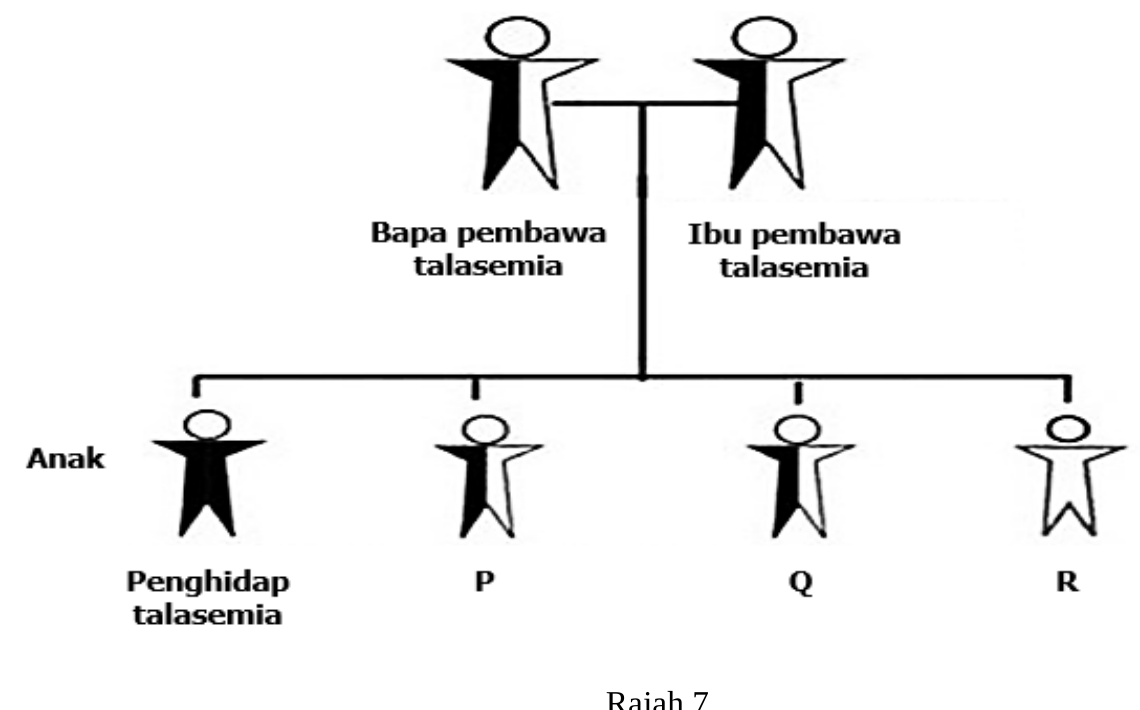
- (c)(i)
Give two differences between thalassaemia major and thalassaemia minor.
[2] - (c)(ii)
Arif has thalassaemia minor. Arif wants to get married. He has two choices, P and Q (P: thalassaemia minor; Q: thalassaemia major). As a genetic counsellor, who is the best choice for Arif and give the reason.
[3]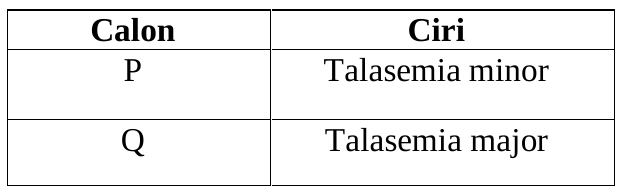
A group of students carried out an experiment to estimate the distribution of three plant species in a dried pond using a 1 m x 1 m quadrat. Table 2 shows the number of plants in each quadrat (1 to 6): species K: 6, 0, 7, 3, 0, 8; species L: 4, 8, 6, 12, 5, 8; species M: 3, 5, 0, 2, 0, 4.
Medium9 marks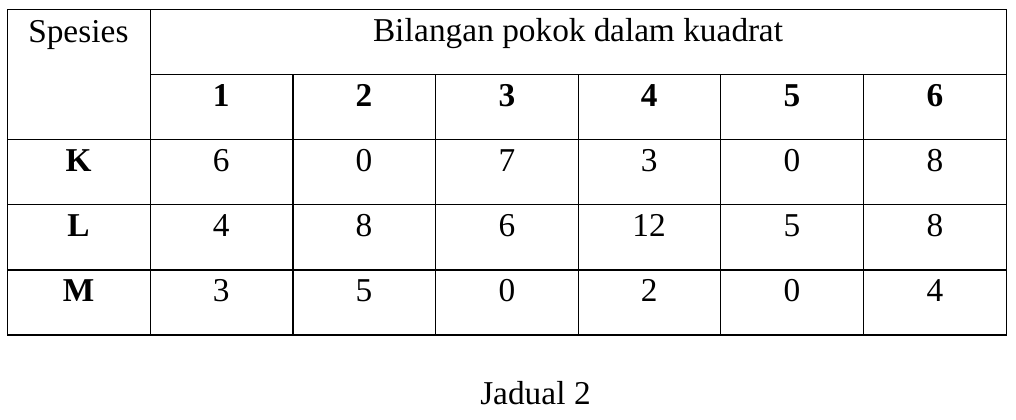
- (a)(i)
Which species is the dominant species in the pond?
[1] - (a)(ii)
Explain one abiotic factor that influences the distribution of the population of the species you stated in (a)(i).
[2] - (b)(i)
Calculate the frequency of species L.
[1] - (b)(ii)
Calculate the density of species M.
[1] - (c)(i)
Ali finds that the vegetables in his garden are often eaten by grasshoppers. How can Ali determine the grasshopper population in his vegetable garden so that he can think of a technique to control the pests? Explain.
[2] - (c)(ii)
Suggest a suitable technique for Ali to use to overcome the grasshopper attack without disturbing the balance of nature.
[2]
Section B
Diagram 9.1 shows a physiological process in humans (spermatogonium 2n, primary spermatocyte 2n, secondary spermatocyte n, spermatid n, sperm).
Hard20 marks- (a)(i)
Describe the process shown in Diagram 9.1 until the haploid gametes are produced.
[4]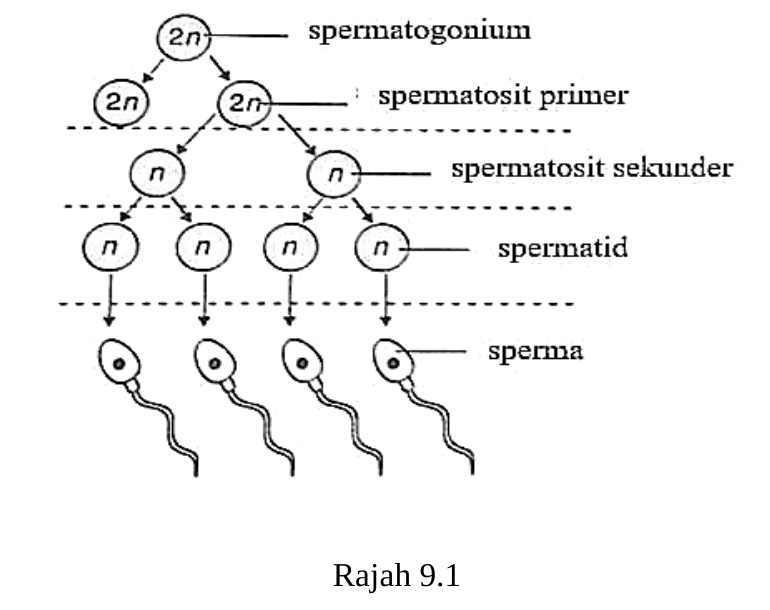
- (a)(ii)
Diagram 9.2 shows the formation of two pairs of twins (twins A: one sperm fertilises one ovum, the embryo splits into two; twins B: two sperms fertilise two ova forming two zygotes and two embryos). Based on Diagram 9.2, compare the formation of twins A and twins B.
[6]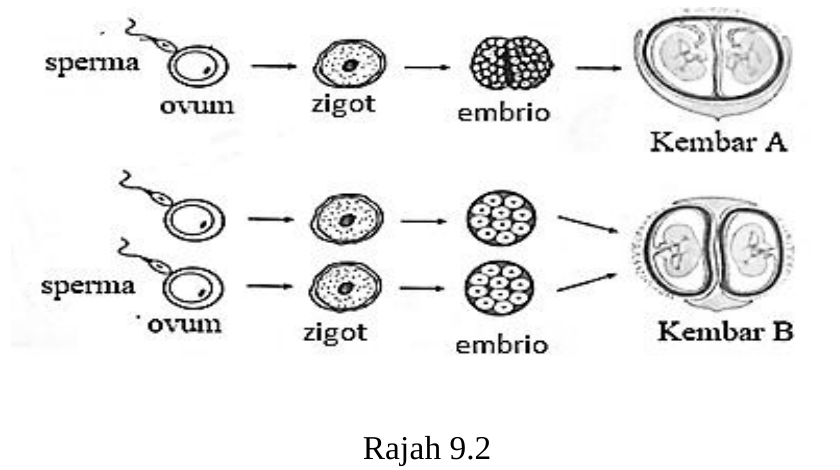
- (b)
In vitro fertilisation (IVF) is an alternative method used to help couples who have infertility problems. Explain the advantages and disadvantages of IVF treatment to the couple.
[4] - (c)
Diagram 9.3 shows the growth curve of animal X (body length in cm against time in days; egg, instar I to V, adult, with ecdysis between instars). Explain the growth curve of the animal.
[6]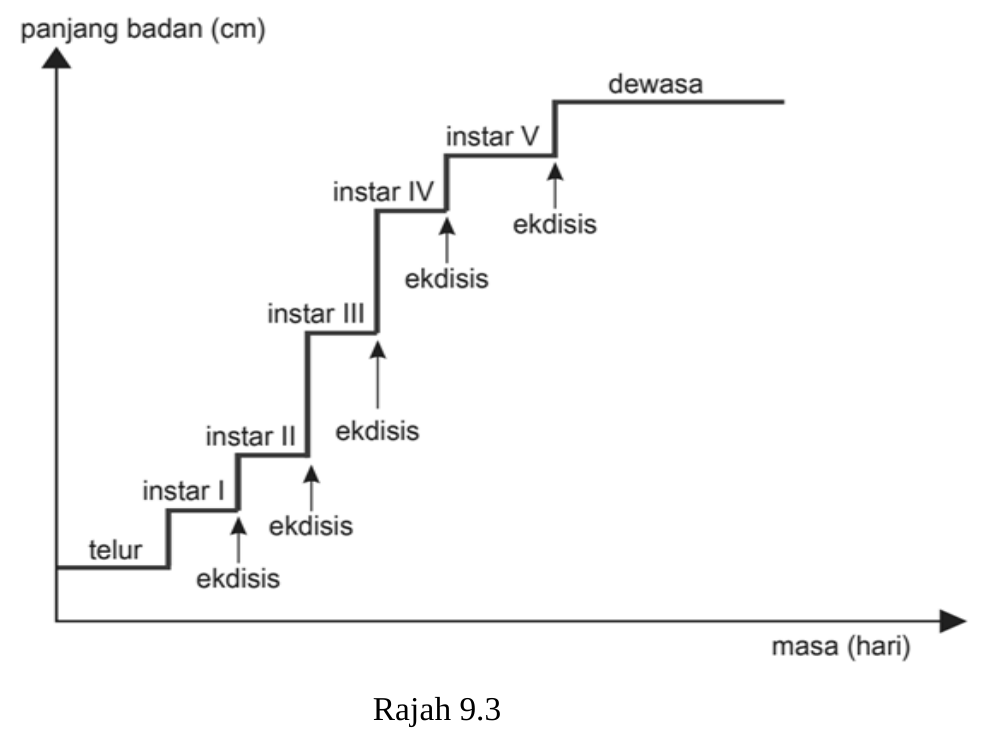
Diagram 10.1 shows the human digestive system (S, T, X and Y labelled; a piece of corn is the food eaten).
Medium20 marks- (a)
Explain the involvement of structures X and Y in the digestion of the food above.
[4]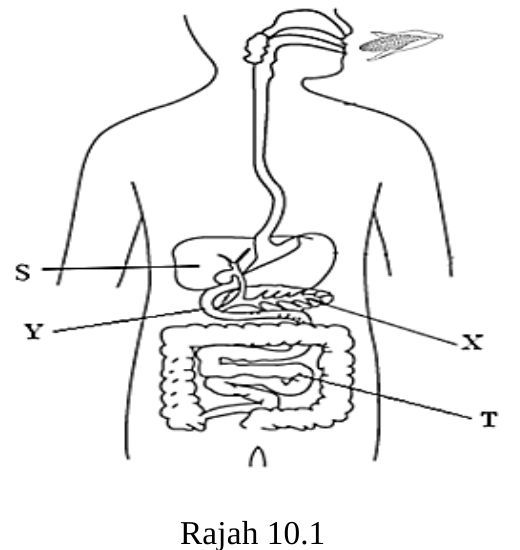
- (b)
Organ S is a control centre that controls the quantity of nutrients entering the blood circulatory system. Explain the role of organ S in the assimilation of the food above.
[6] - (c)
Diagrams 10.2, 10.3 and 10.4 show the physical condition of three individuals related to their eating habits (10.2: an active, healthy runner; 10.3: an obese person; 10.4: a very thin person). Explain the relationship between eating habits and the physical condition of each individual.
[10]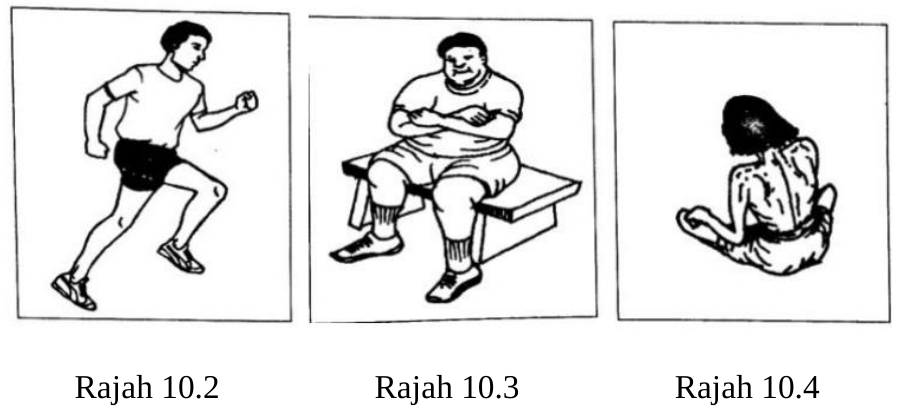
Section C
Diagram 11.1 shows the star-based energy rating label for electrical appliances introduced by the Energy Commission (Suruhanjaya Tenaga). Diagram 11.2 shows the Diamond Building, the headquarters of the Energy Commission in Putrajaya, which applies the green building concept.
Hard20 marks- (a)
Discuss how the efforts carried out by the Energy Commission as displayed in Diagrams 11.1 and 11.2 play a role in maintaining environmental sustainability.
[10]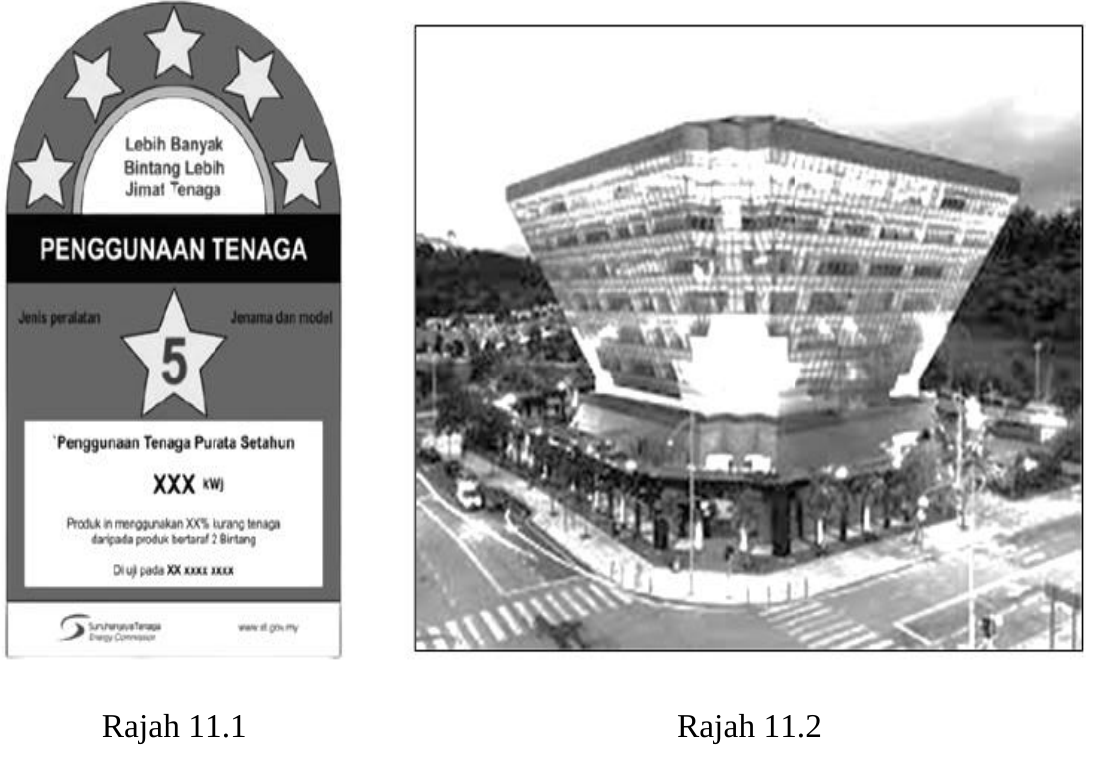
- (b)(i)
Bt corn is an example of a crop injected with a gene from the bacterium Bacillus thuringiensis. It has clearly given good returns from the sale of fresh corn to the plantation operators. You wish to promote the production of Bt corn to help increase the income of farmers in a rural area. Explain the technique used in the production of Bt corn. Suggest ways to diversify the corn products.
[5] - (b)(ii)
Discuss other benefits that can also be enjoyed by corn plantation operators in the rural area.
[5]