Which of the following substances can be poured into the sink after an experiment?
Easy
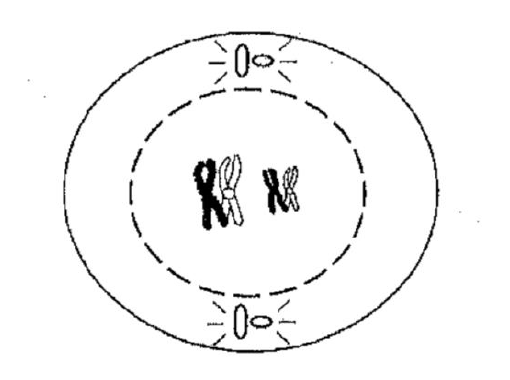
The following information is about the characteristics of a structure in a cell.
- Small cylinders that exist in pairs
- Made up of a complex arrangement of microtubules
Which of the following structures has the characteristics above?
Easy
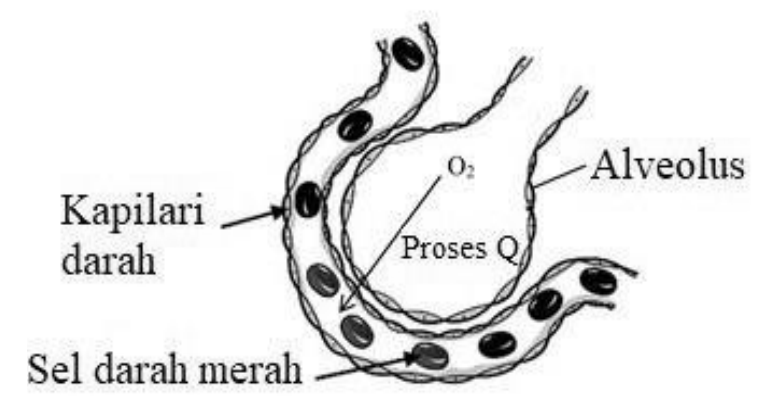
Diagram 1 shows the movement of oxygen from the alveolus into the blood capillary. What is process Q?
Easy
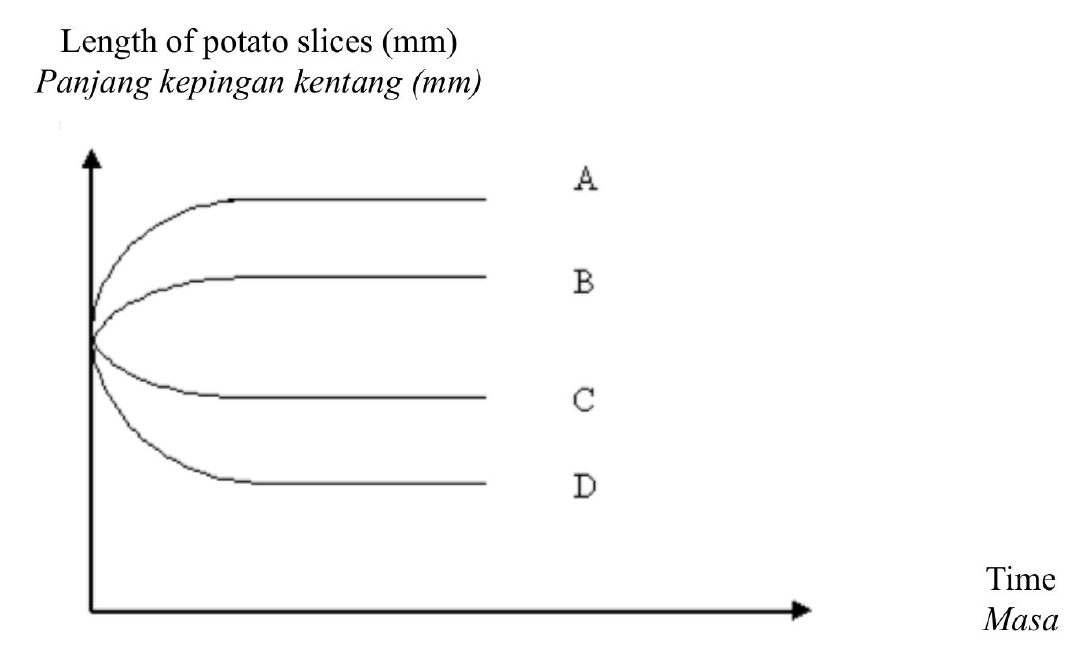
Four potato slices, each 50 mm long, are put into four solutions: distilled water, 0.2 M sucrose solution, 0.4 M sucrose solution and 0.6 M sucrose solution. The length of each slice is measured at fixed time intervals and the results are plotted on a graph as in Diagram 2. Which graph line A, B, C or D shows the potato slice immersed in 0.6 M sucrose solution?
Medium
The main components of the plasma membrane of an onion epidermal cell are
Easy
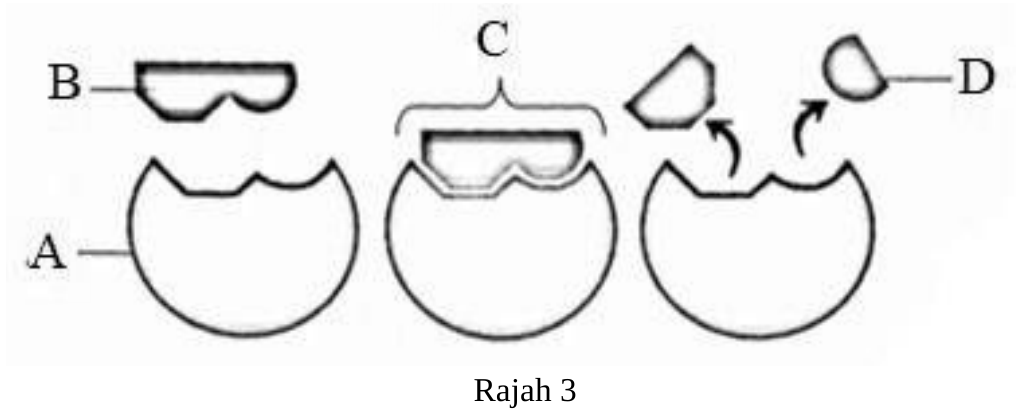
Diagram 3 shows the mechanism of enzyme action. Which of the parts labelled A, B, C or D represents the substrate?
Easy
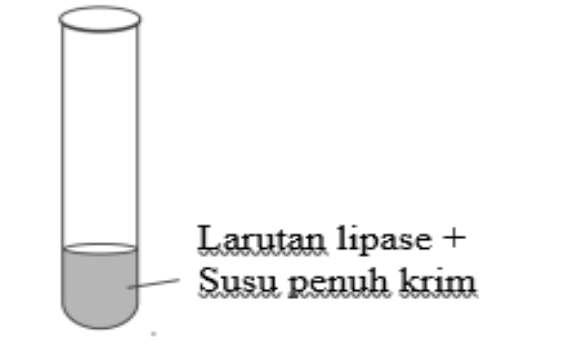
Diagram 4 shows an experiment to study an enzyme reaction at 37 °C. The test tube contains lipase solution + full cream milk. What are the product and the pH after 15 minutes?
Medium
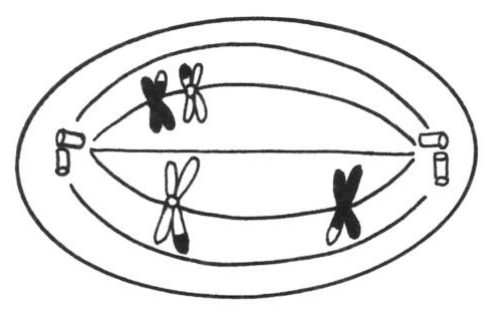
Diagram 5 shows an animal cell undergoing meiosis. What is the number of chromosomes in the somatic cell of this animal?
Medium
Diagram 6 shows one stage in meiosis. Which of the following diseases can be associated with the condition that occurs during this stage?
Medium
The equation below shows a process.
Glucose + oxygen → carbon dioxide + water + energy
Easy
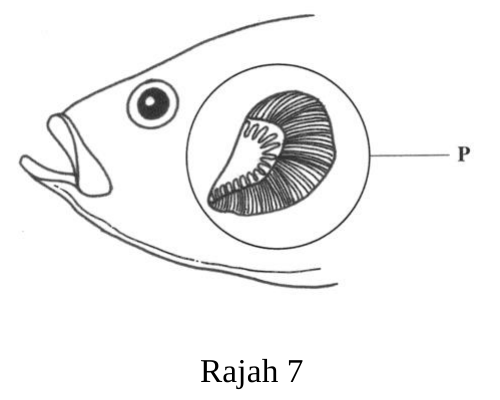
Diagram 7 shows the respiratory system of a fish. What is the adaptation of structure P for optimum gaseous exchange?
Medium
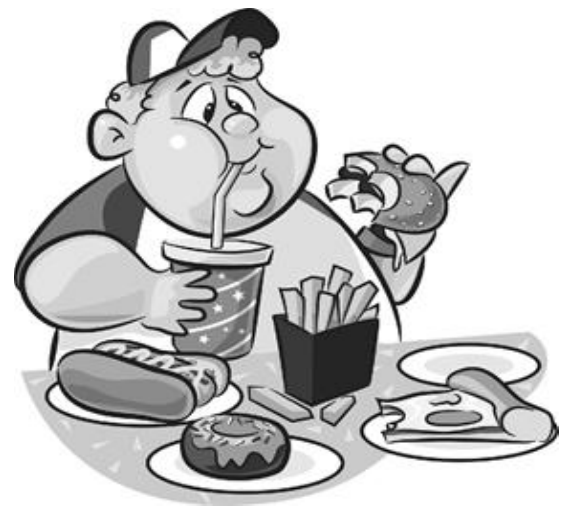
Diagram 8 shows a boy with an unhealthy eating habit. What is the long-term effect of this habit on the boy?
Easy
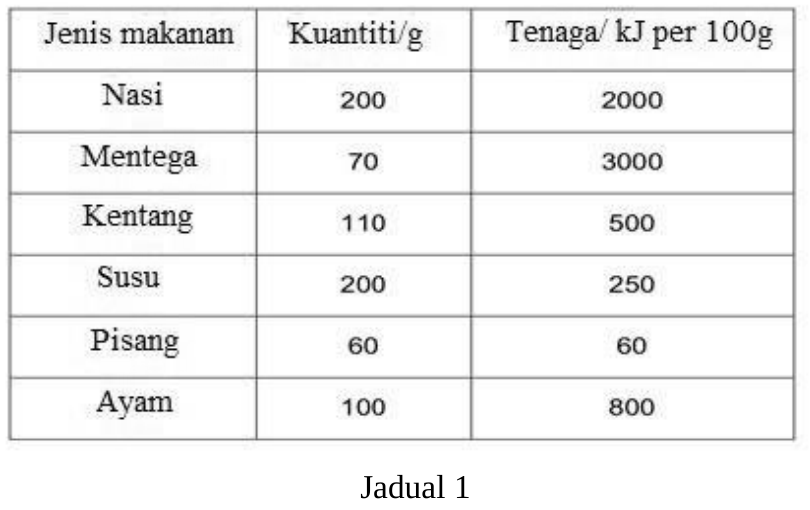
Table 1 shows the types and quantities of food taken by a student in a day.
Food | Quantity/g | Energy/kJ per 100 g
Rice | 200 | 2000
Butter | 70 | 3000
Potato | 110 | 500
Milk | 200 | 250
Banana | 60 | 60
Chicken | 100 | 800
What is the total energy obtained by the student in a day?
Medium
Thrombin, fibrin, prothrombin and fibrinogen are four types of protein. Which of the following sequences is correct for the involvement of these proteins during blood clotting?
Medium
A married couple has different rhesus (Rh) factors. Their first child is Rh-positive. A subsequent pregnancy ended in a miscarriage. Determine the rhesus factor of the parents and the aborted foetus.
Medium
The statements below show the characteristics of the blood in blood vessel X in humans.
- High pressure
- Low oxygen concentration
- High carbon dioxide concentration
What is blood vessel X?
Medium
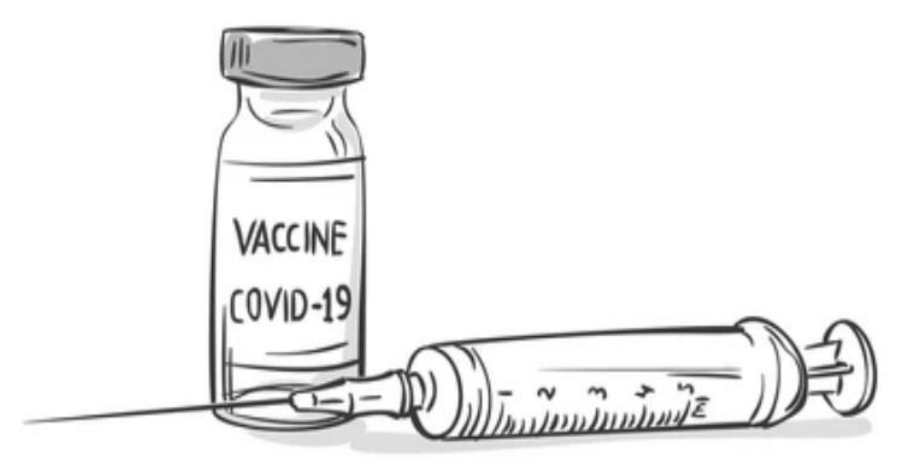
Diagram 9 shows Covid-19 immunisation. What is a characteristic of this immunisation?
Medium
The following are symptoms of a disease caused by a damaged and poorly functioning nervous system.
- Hyperactive
- Easily bored
- Difficulty concentrating
What is the disease?
Medium
Individual X likes to eat salty food in his daily menu. What is the effect of eating such food on his urine production?
Medium
Which part of the human elbow joint functions to reduce friction between bones?
Medium
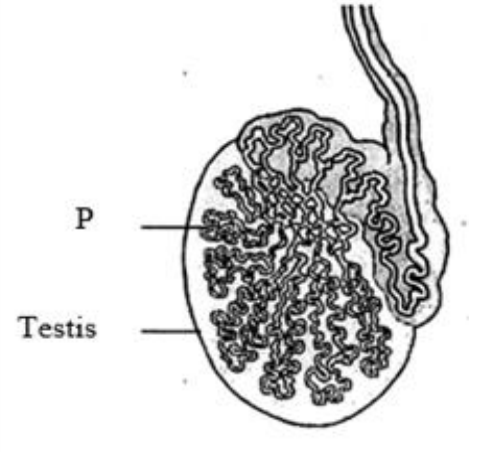
Diagram 10 shows a cross section of a human testis. What is P?
Easy
Which of the following is a biennial plant?
Medium
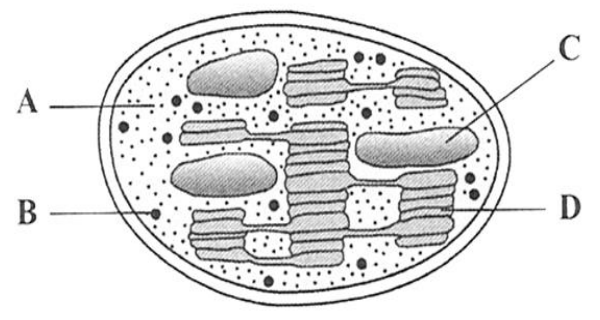
Diagram 11 shows the structure of a chloroplast. Which part labelled A, B, C or D is involved in the light-independent reaction?
Easy
The following statements describe the effect of a lack of a type of mineral in plants.
- The areas between mature leaf veins turn yellow
- Red spots on the leaf surface
- Lobed leaves
The mineral is
Medium
The following statements are characteristics of a plant.
- Synthesises its own food by photosynthesis
- Traps insects
What is the plant?
Easy
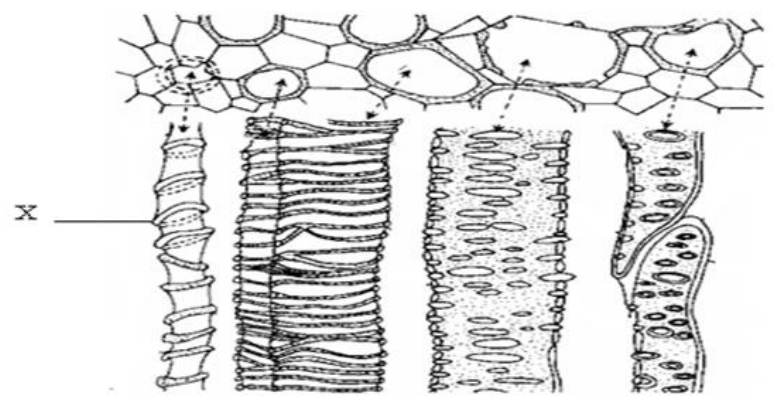
Diagram 12 shows a type of plant tissue. What is the importance of the thickening of substance X on this tissue?
Easy
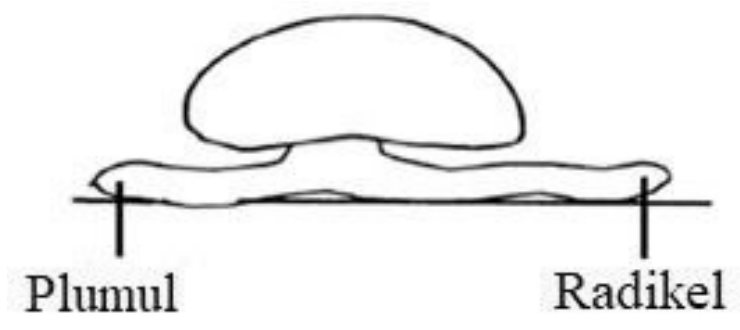
Diagram 13 shows a seedling placed horizontally to study growth response (plumule and radicle labelled). Which of the following shows the correct response?
Medium
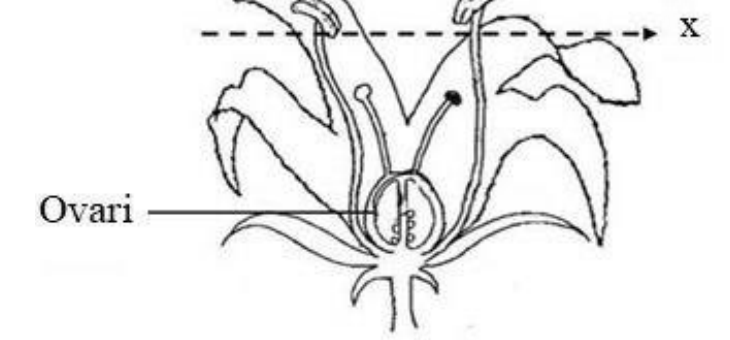
Diagram 14 shows a longitudinal section of a flower. What will happen if part X of the flower is cut?
Medium
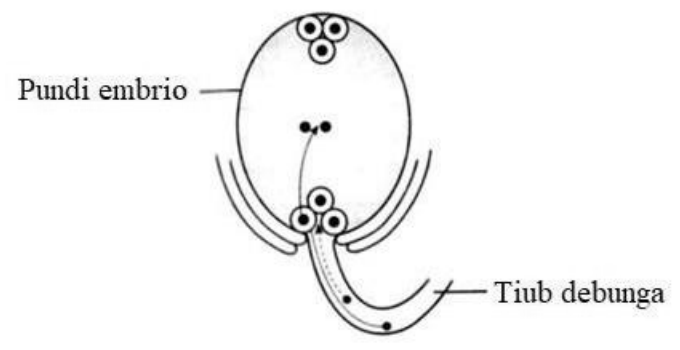
Diagram 15 shows a double fertilisation process in plant reproduction. What are the products of this process?
Medium
How do halophytes adapt to live in a habitat with a high concentration of salt?
Medium
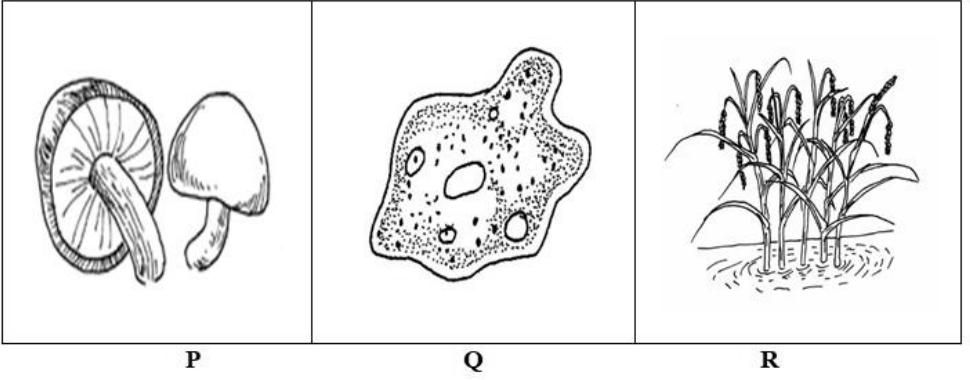
Diagram 16 shows three organisms (P: mushrooms, Q: amoeba, R: paddy plant) that belong to different kingdoms. Which is the correct kingdom for P, Q and R?
Medium
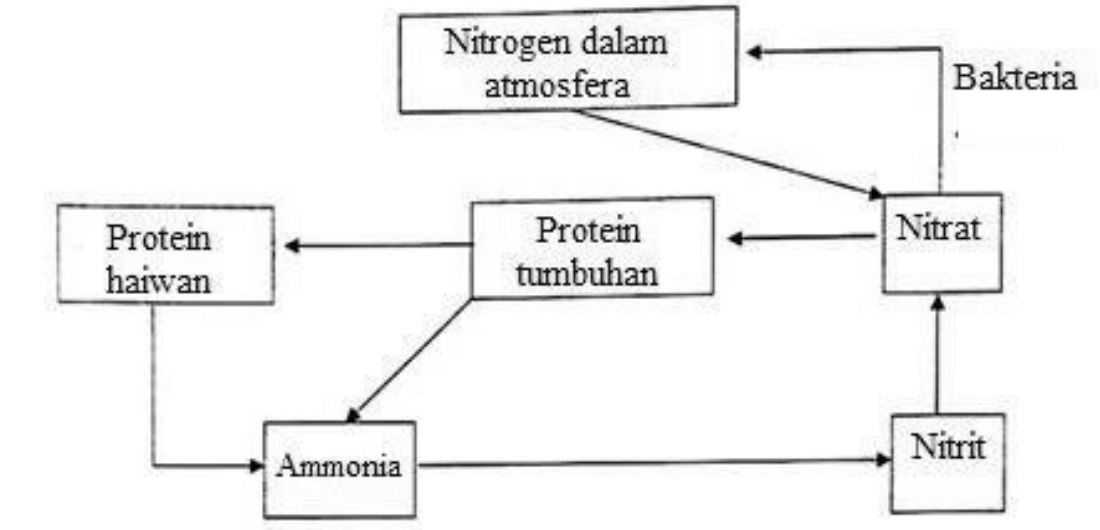
Diagram 17 shows the nitrogen cycle. What will happen if bacteria M did not exist in the cycle?
Medium
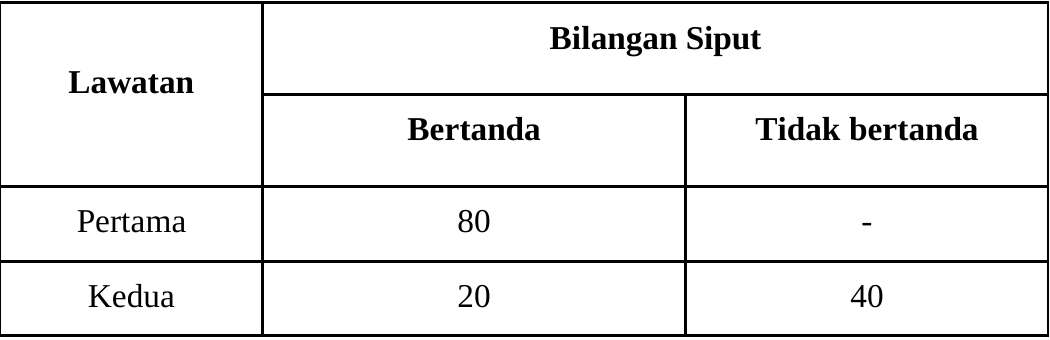
Table 2 shows the results of a study of the snail population in an orchard.
Visit | Marked | Unmarked
First | 80 | -
Second | 20 | 40
What is the estimated size of the snail population?
Medium
Table 3 shows the results of an experiment to compare the quality of water from sources Y and Z.
Water sample | Time taken to decolourise methylene blue (minutes)
Y | 46
Z | 25
Which statements explain the results of this experiment?
I Water sample from Y has a lower BOD value than Z
II Water sample from Y is more polluted than Z
III Water sample from Y has fewer microorganisms than Z
IV A water sample with a higher BOD value causes slower decolourisation of methylene blue
Medium
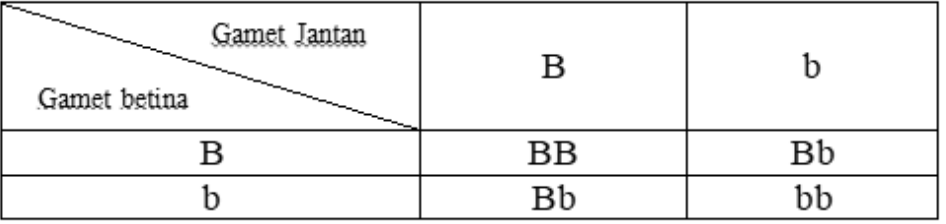
Diagram 18 shows a Punnett square used to determine the F1 generation when two blue-flowered plants are crossed (female gametes B, b; male gametes B, b; offspring BB, Bb, Bb, bb). Blue flower is the dominant trait and white flower is the recessive trait. What is the probability of obtaining a white-flowered plant?
Medium
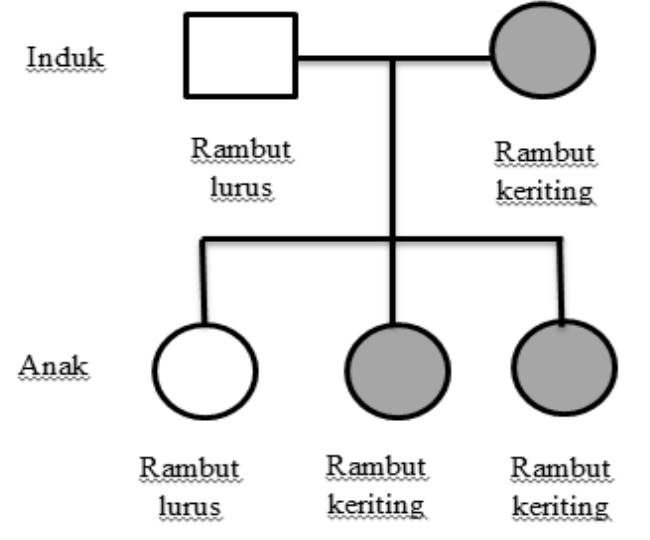
Diagram 19 shows the inheritance of hair type in the family of Mr Arjun. The allele for curly hair is dominant to straight hair. (Parents: father straight hair, mother curly hair; children: one straight-haired, two curly-haired.) What is the probability that the next child of these parents has straight hair?
Medium
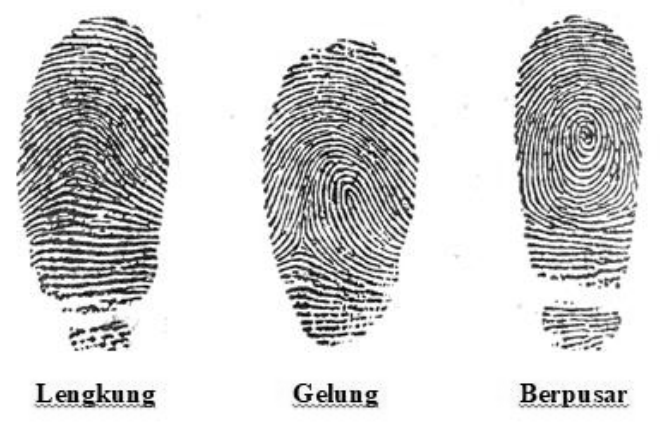
Diagram 20 shows human fingerprint patterns (arch, loop, whorl). Which of the following is the same type of variation as shown above?
Medium
Which of the following disorders are caused by chromosomal mutation?
I Cri du Chat syndrome
II Jacob syndrome
III Cystic fibrosis
IV Thalassaemia
Medium
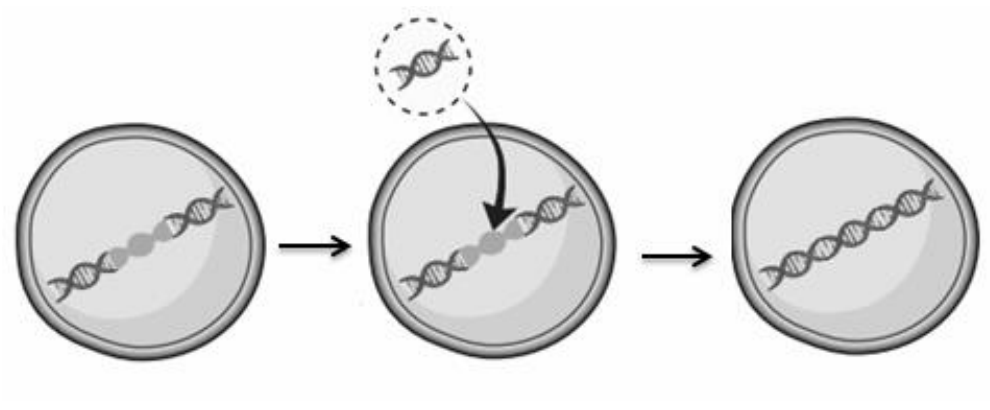
Diagram 21 shows an application involving biotechnology (a normal gene is inserted into a cell's DNA). Which of the following represents the application above?
Medium
What is the correct sequence of steps in DNA profiling?
P - DNA fragments of different sizes are transferred from the gel to a nylon membrane
Q - A radioactive probe is added to the nylon membrane. X-ray film is then placed on the nylon membrane
R - The X-ray film is processed and the positions of the DNA bands that form the DNA profile appear
S - Restriction enzymes cut the DNA into DNA fragments of different sizes
T - DNA fragments of different sizes are separated by gel electrophoresis