Write your answer on paper. Then open the answer to check it.
Section A
Diagram 1.1 shows the zones of cell growth at the tips of a shoot (apical meristem, zones 1, 2 and 3).
Medium6 marks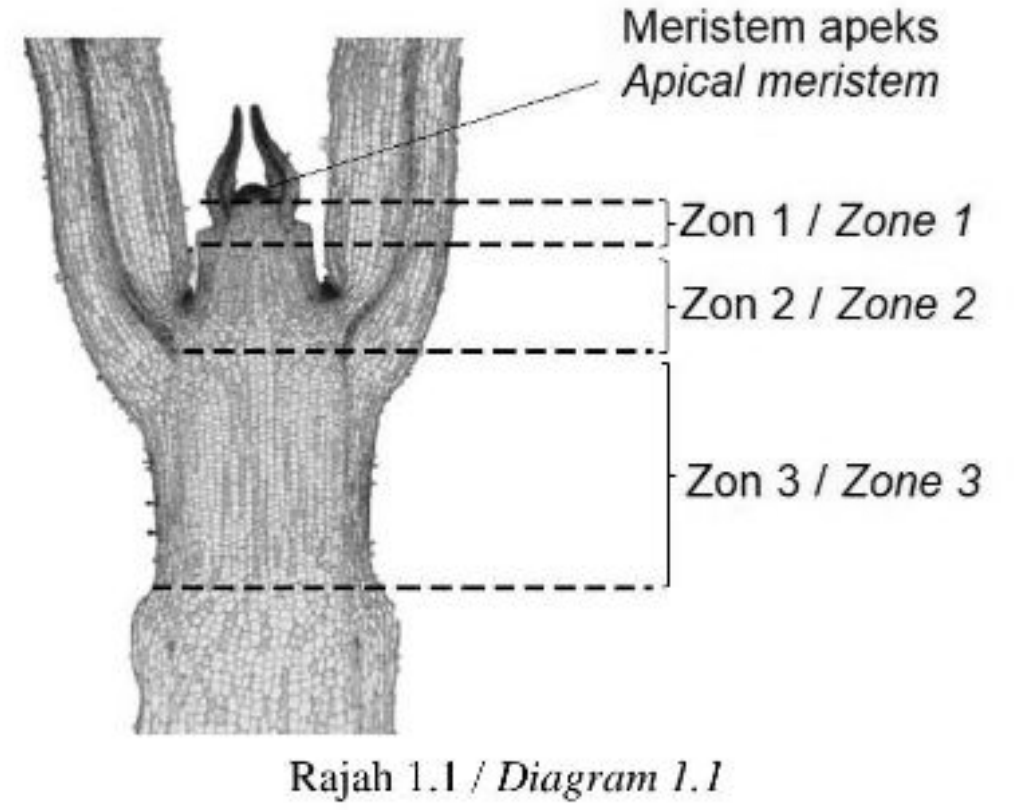
- (a)(i)
Identify zone 1.
[1] - (a)(ii)
Name the process that occurs actively at zone 1.
[1] - (b)
Diagram 1.2 shows a type of cell that can be found at the shoot of a plant (a long cell with perforated ends). Which of the growth zone 1, 2 or 3 does the cell in Diagram 1.2 can be found? Explain your answer.
[2]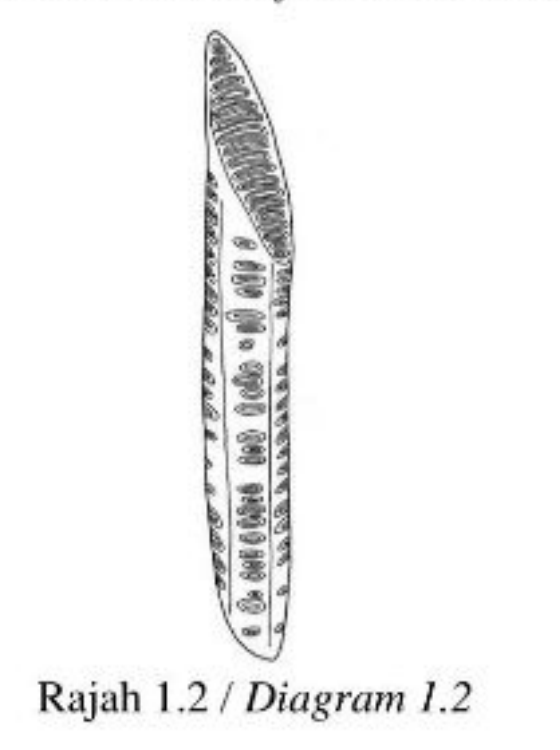
- (c)
Diagram 1.3 shows the structure of a leaf. Based on Diagram 1.3, what is the cell organisation level for a leaf? Explain your answer.
[2]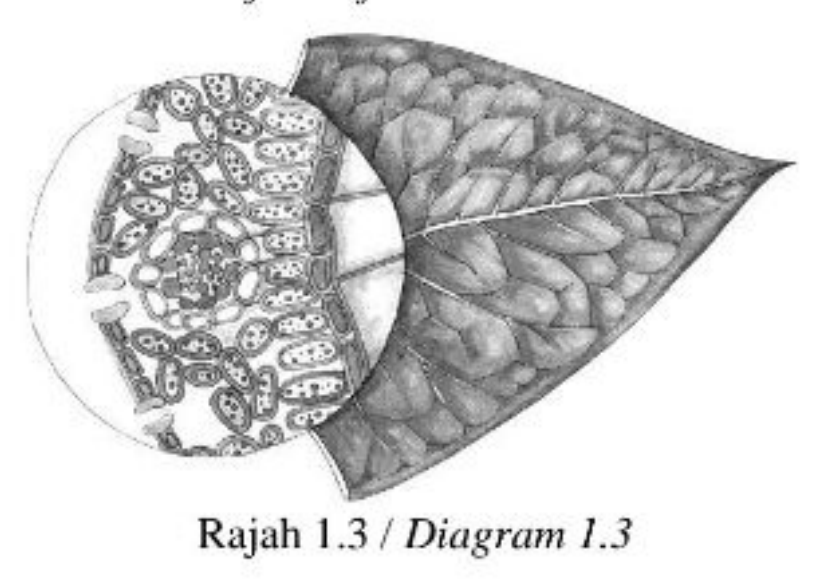
Diagram 2 shows two examples of food (eggs and fish) that belong to a type of food class.
Medium6 marks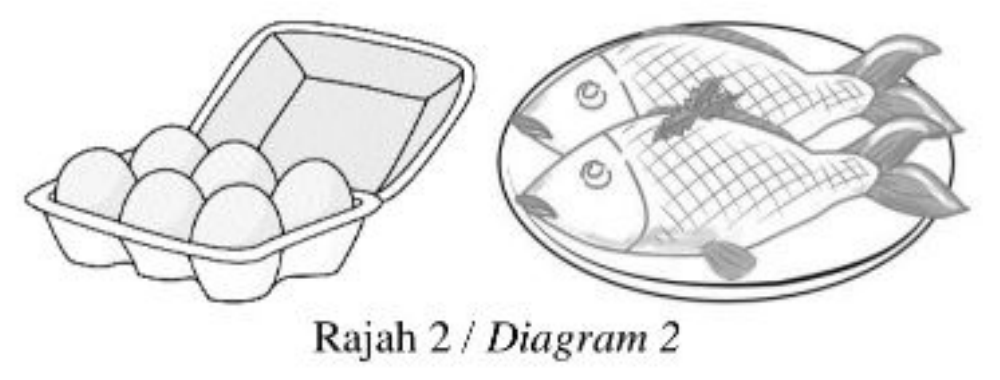
- (a)(i)
Name the food class shown in Diagram 2.
[1] - (a)(ii)
State the monomers of the food class named in 2(a)(i).
[1] - (b)
State two importance of the food class named in 2(a)(i).
[2] - (c)
Explain the deficiency effect of the food class stated in 2(a)(i) in a diet of an individual.
[2]
Diagram 3 shows the structure of a joint (knee) with the patella and fluid S labelled.
Medium7 marks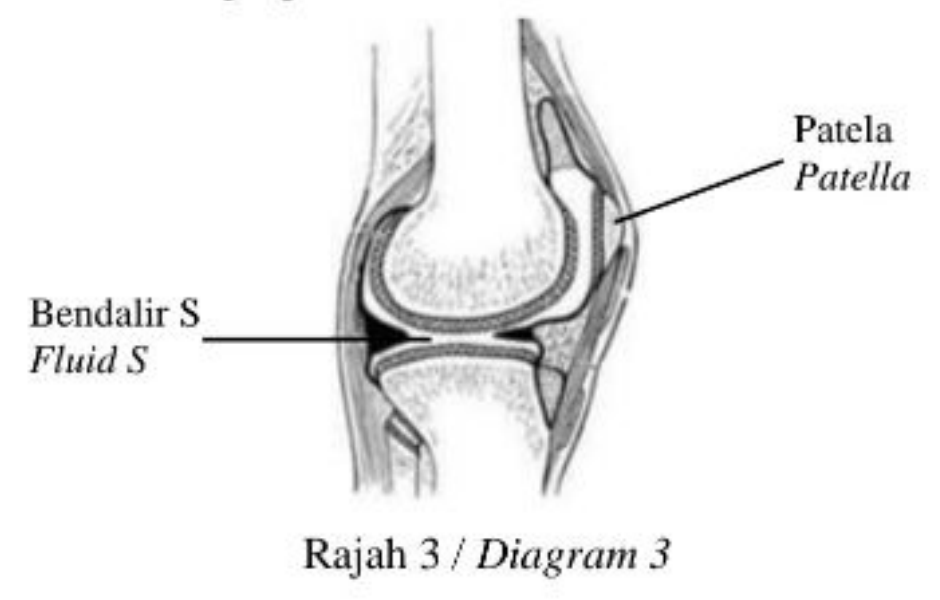
- (a)
Name the type of the joint and state the function.
[2] - (b)
If the production of fluid S is decreasing, explain what will happen to the movement.
[2] - (c)
Explain why muscle contraction requires sufficient blood supply.
[3]
Diagram 4.1 shows the cross-section of a leaf with cell L (palisade mesophyll) and a spongy mesophyll cell labelled.
Medium7 marks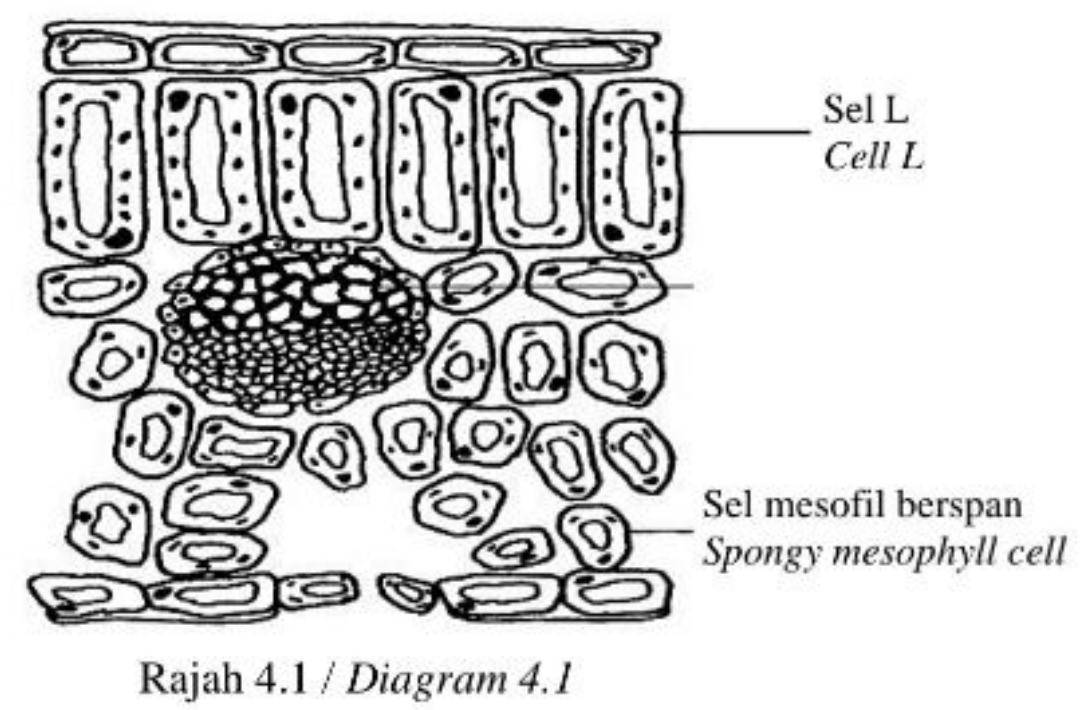
- (a)(i)
State one difference in structure between cell L and spongy mesophyll cell. (Answer in a two-column table: Cell L | Spongy mesophyll cell.)
[1] - (a)(ii)
Diagram 4.2 shows a component (chloroplast) in cell L and spongy mesophyll cell, with X (granum / thylakoid) and Y (stroma) labelled. Differentiate chemical reactions that take place in X and Y. (Two-row table: Chemical reaction in X | Chemical reaction in Y.)
[2]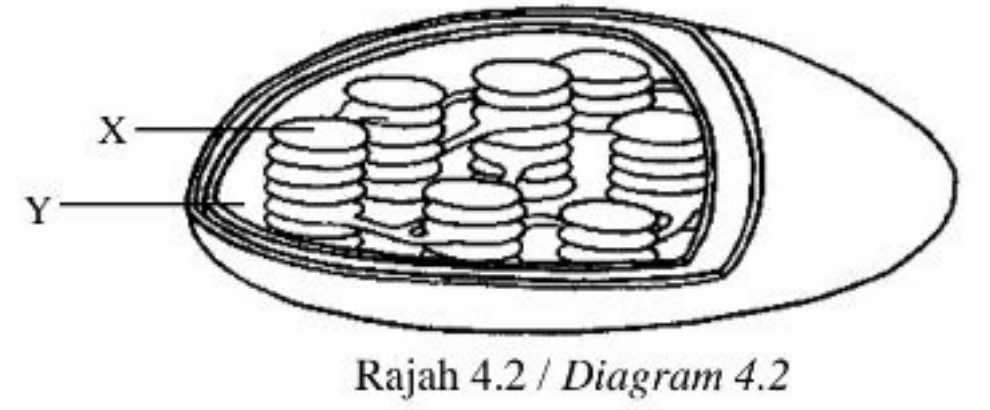
- (b)
Diagram 4.3 shows the movement of water in a plant (process K at the leaves). Explain the importance of process K to the plant.
[2]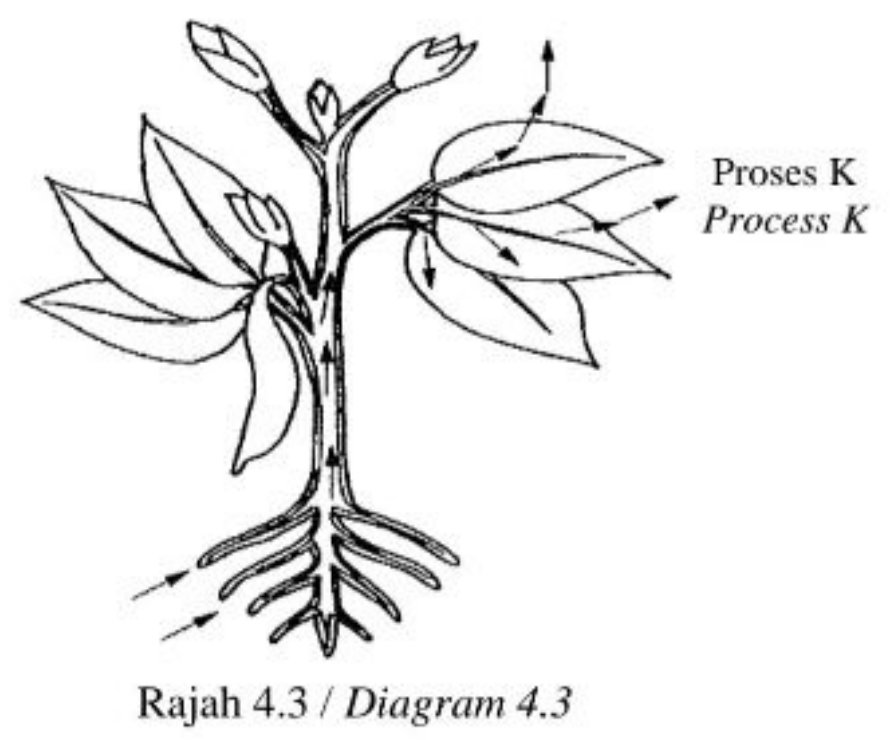
- (c)
Diagram 4.4 shows a vertical garden built in one of the most famous hotels in Penang. A vertical garden like this can be built in various sizes attached to the wall either inside or outside of the building. Explain the advantages of having a vertical garden built in this hotel.
[2]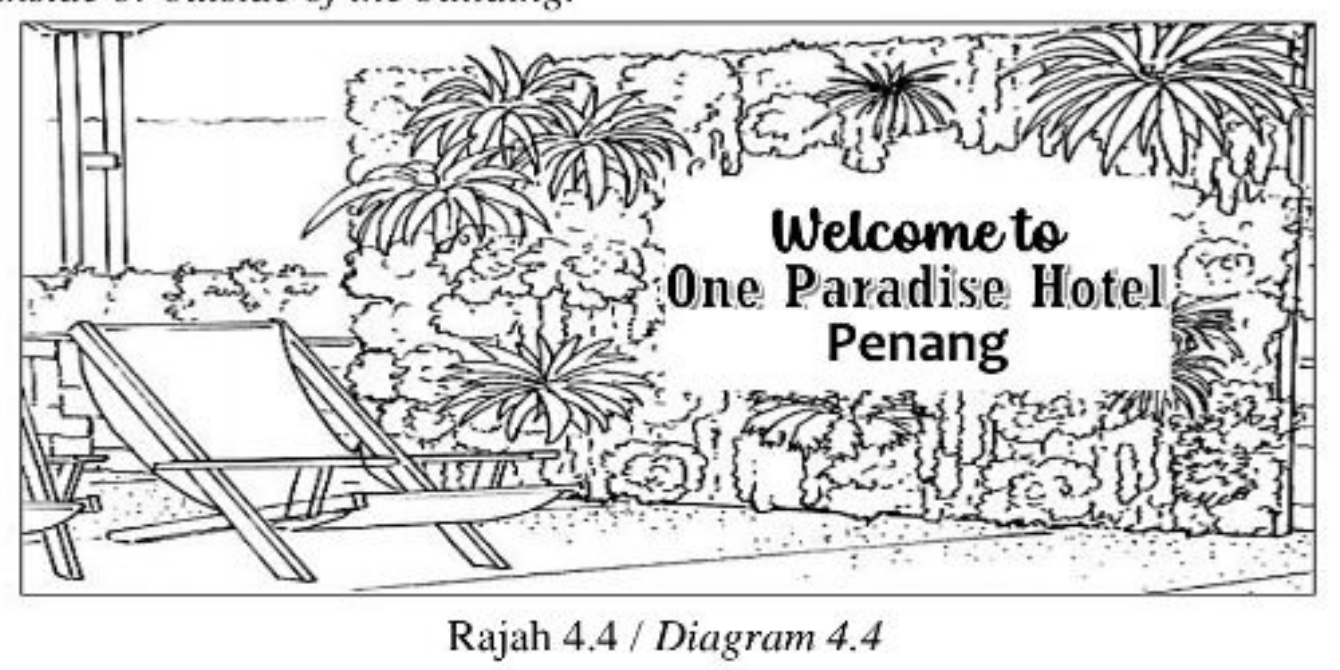
Diagram 5.1 shows a reflex arc in human: a pin pricks the receptor; neurones R and S, the spinal cord, a skeletal muscle and the ventral root X are labelled.
Medium8 marks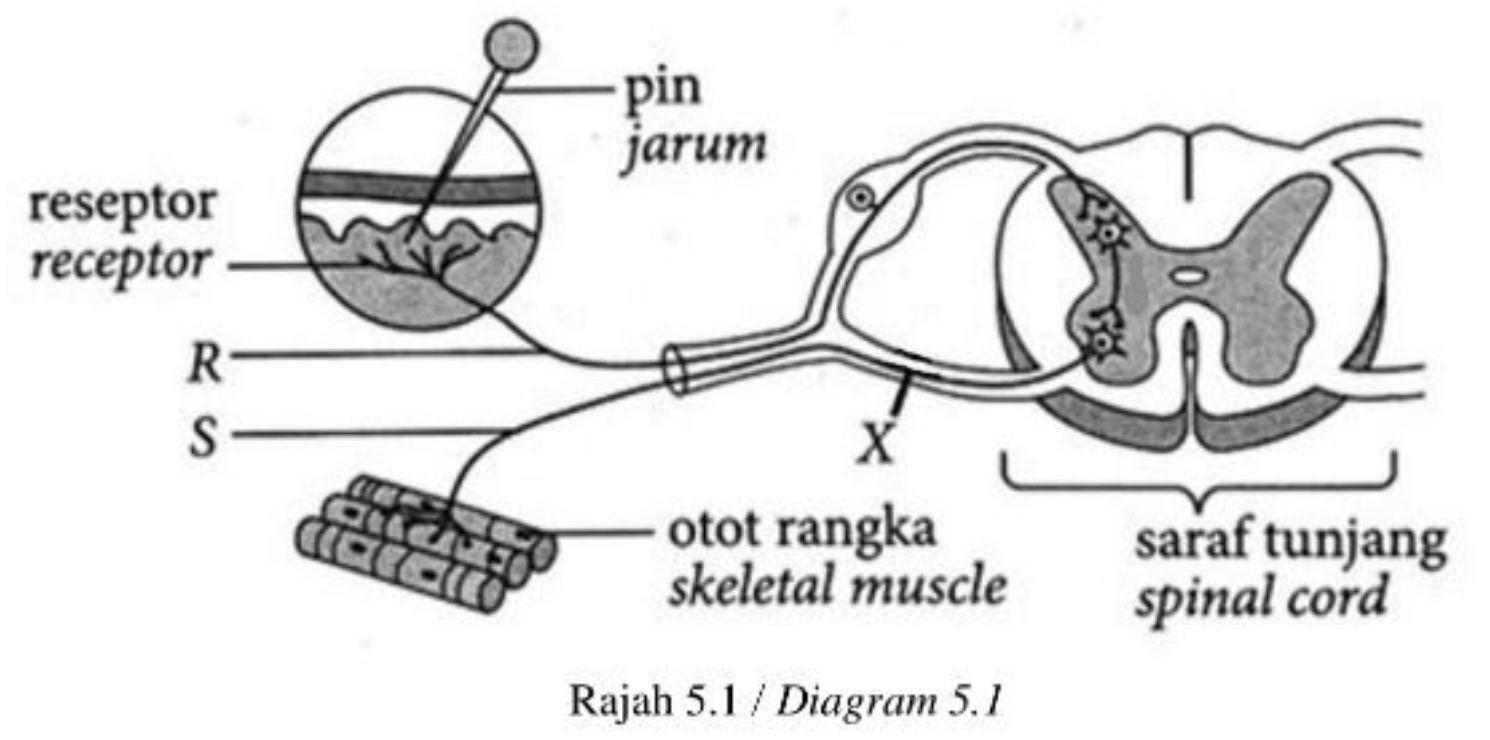
- (a)
State the function of neurones R and S.
[2] - (b)
Draw the direction of nerve impulse in Diagram 5.1.
[2] - (c)
Explain one advantage of the reflex action.
[2] - (d)
A man involved in an accident, his ventral root at X was injured. Explain how the injury affects his action when he accidentally pricked by a sharp pin.
[2]
Organisms interact with one another in various ways. Diagram 6.1 shows three different types of interactions: P (shark X with remora fish), Q (owl eating a rat), R (fungus Y on a dead trunk).
Medium8 marks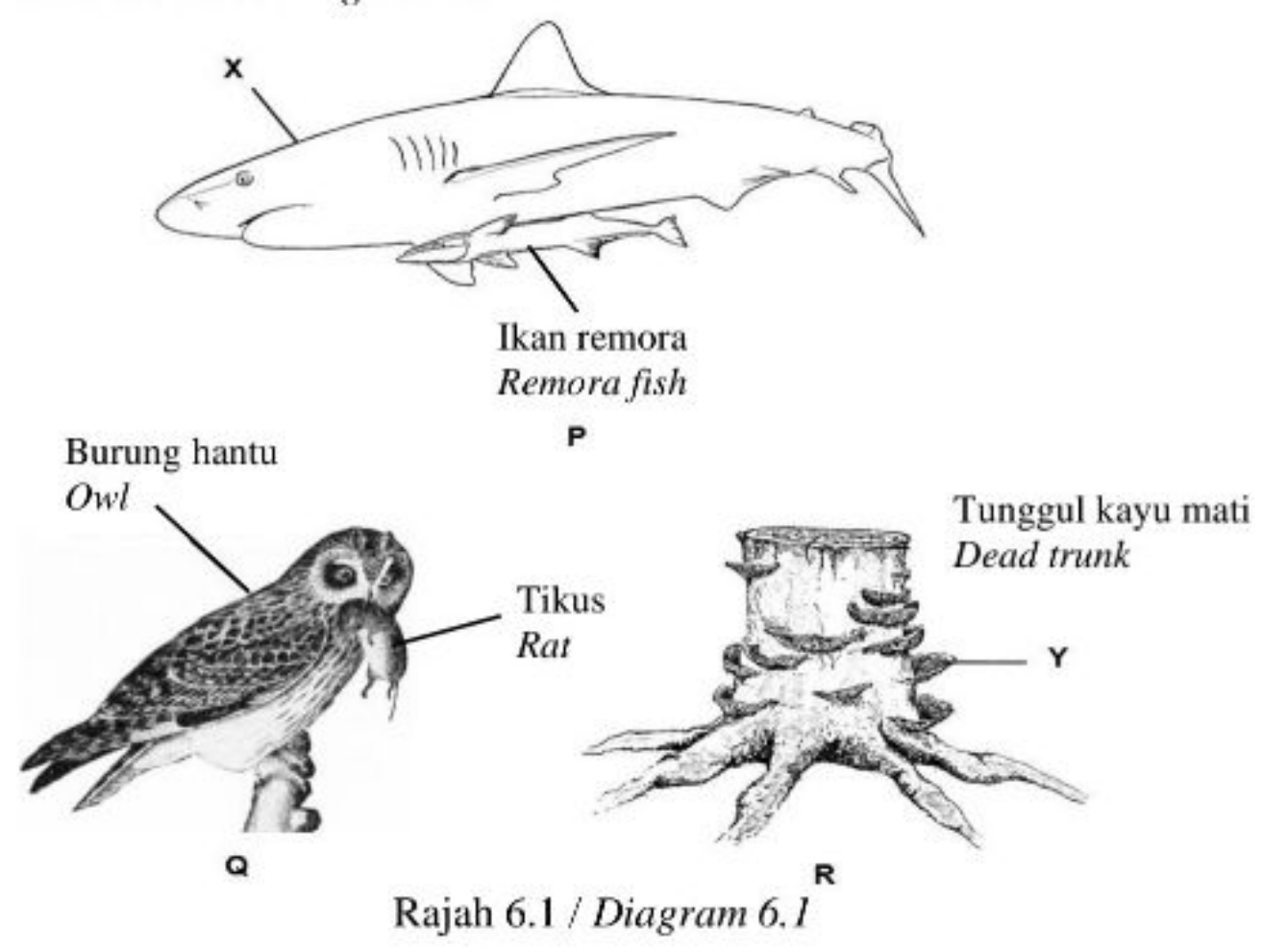
- (a)
Name the type of interaction represented by P, Q and R.
[3] - (b)
Saw dust can be used in the interaction R for the commercial cultivation of mushrooms. Explain how mushrooms can grow on the saw dust.
[3] - (c)
Diagram 6.2 shows a food chain (paddy plant, rat, snake, eagle). The number of organisms at the second trophic level of the food chain has increased. Suggest one way to decrease the number of the organisms again. Explain your suggestion.
[2]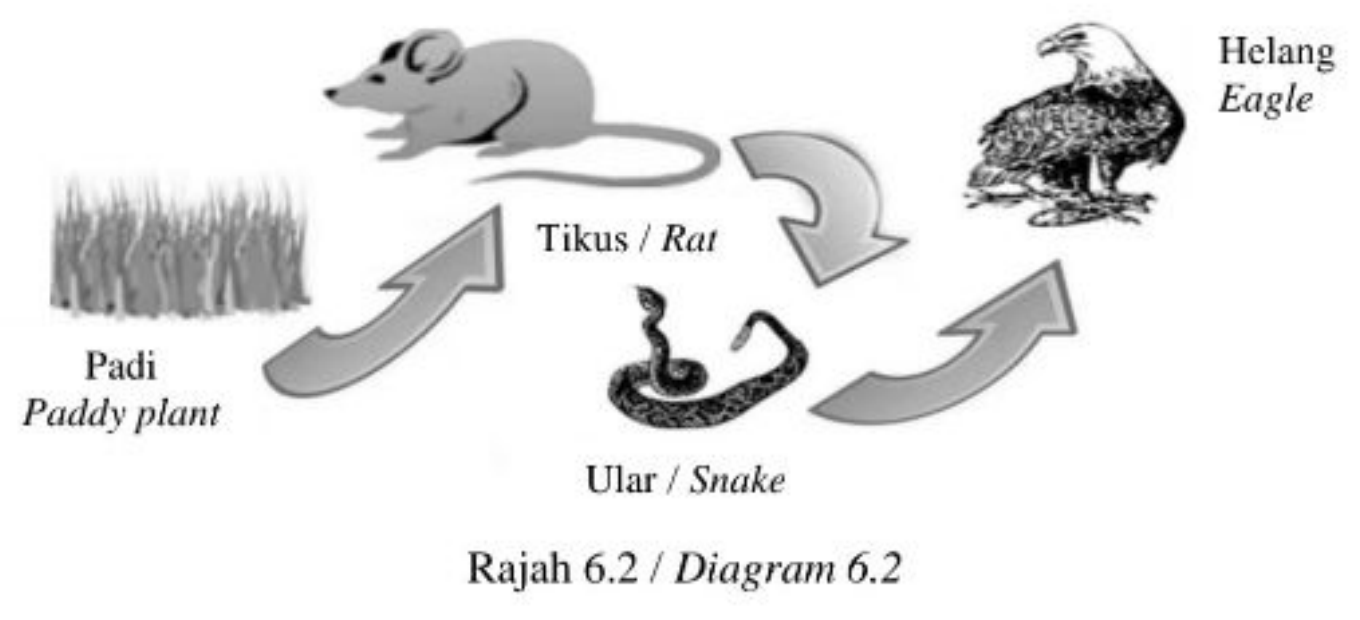
Diagram 7.1 shows the longitudinal section of the reproductive organs of a plant (pollen grain, stigma, embryo sac, structure X).
Medium9 marks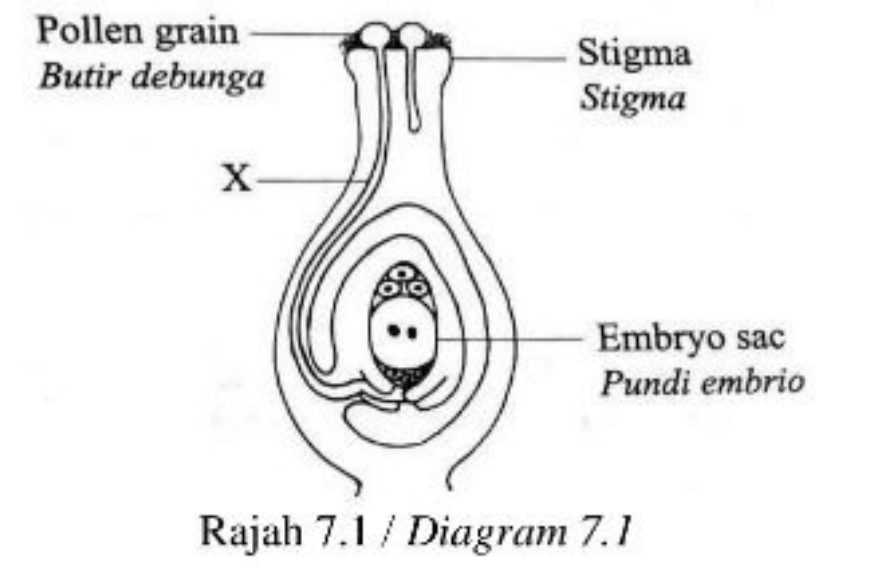
- (a)(i)
Based on Diagram 7.1, explain how X is formed.
[2] - (a)(ii)
State what will happen to the plant if structure X fails to form.
[1] - (b)
Diagram 7.2 shows two types of local fruits (mango and watermelon). The fruits have a different number of seeds. Explain why.
[2]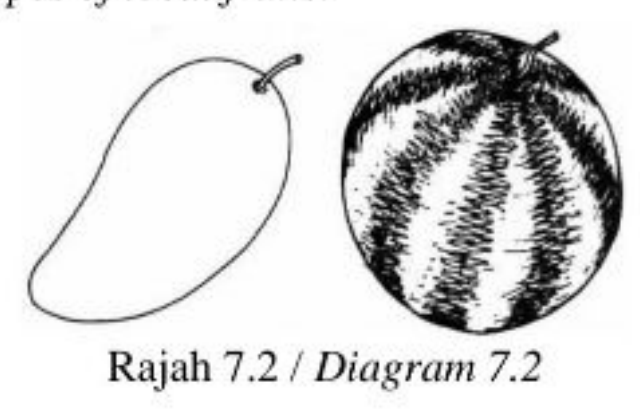
- (c)(i)
Diagram 7.3 shows a durian tree that produces durian fruits of different sizes. Explain one factor that affects the size of the durian fruit.
[3]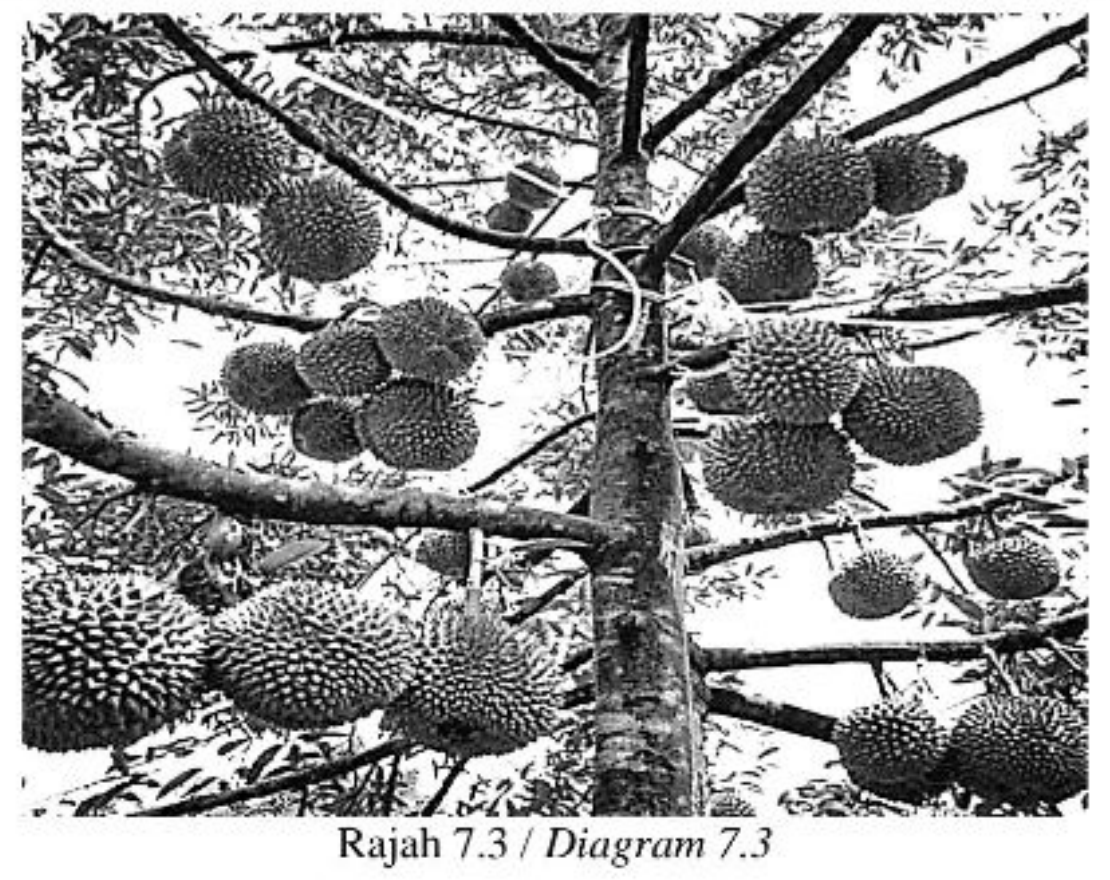
- (c)(ii)
K technology will produce durian trees that produce abundant and high quality durian fruit. Name the technology K.
[1]
Diagram 8 shows a human digestive system: P (mouth), gland X, Q (stomach), R (liver / bile duct region) and S (duodenum) with a gallstone in the bile duct.
Medium9 marks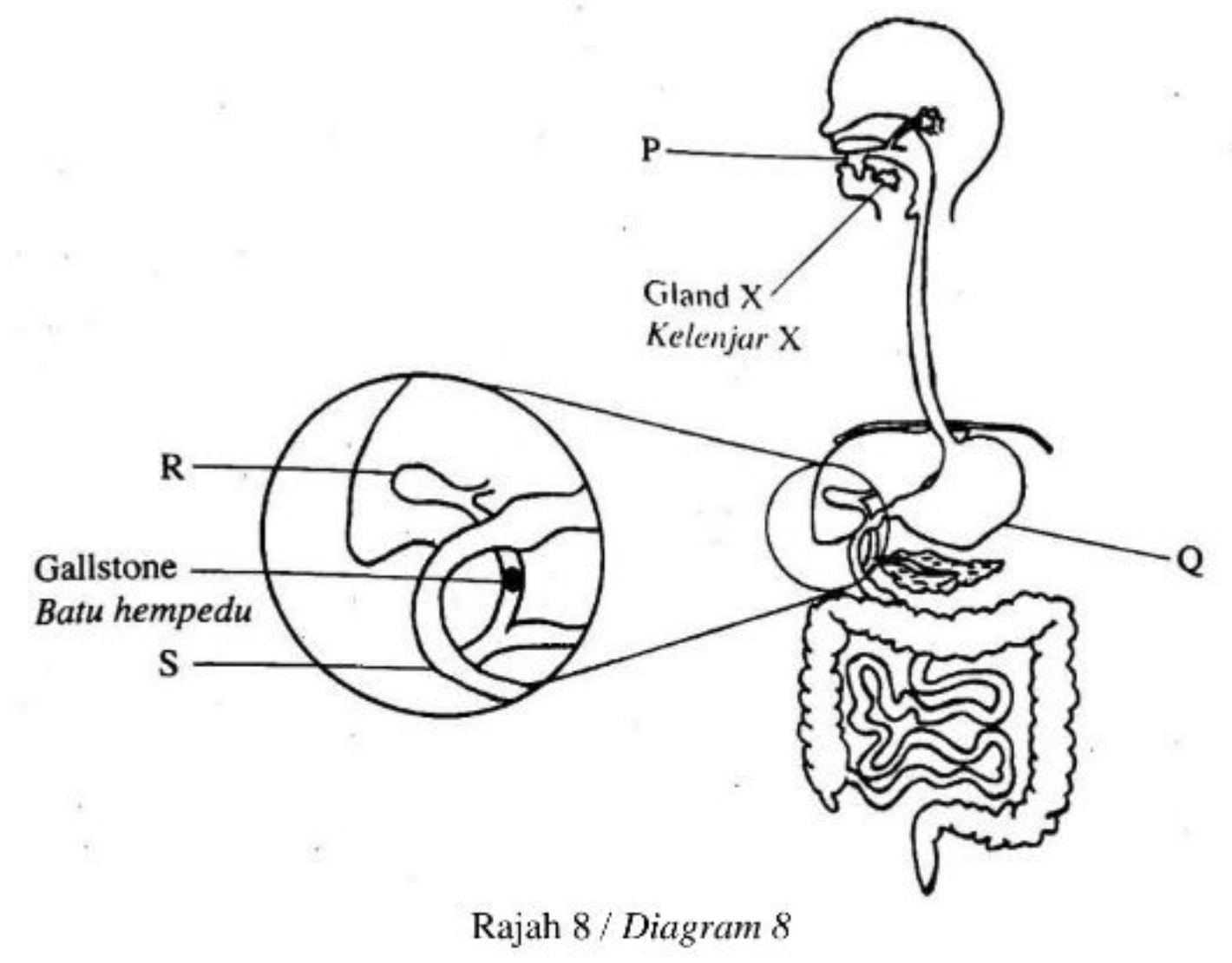
- (a)(i)
Name gland X.
[1] - (a)(ii)
Bread contains starch. Explain the role of gland X in the digestion of bread in P.
[2] - (a)(iii)
Explain why the process of digestion of bread does not occur in Q.
[3] - (b)
A person has a gallstone as in Diagram 8. Explain the effect of this condition to the digestion of lipid in S.
[2] - (c)
State one difference in the digestion of protein that occurs in Q and S.
[1]
Section B
Table 1 shows the breathing rate of a student during resting (16 breaths per minute) and during vigorous activity (30 breaths per minute). Section B: answer one question.
Medium20 marks- (a)(i)
Name the process of respiration that happens during resting and during vigorous activity.
[2] - (a)(ii)
Explain why the breathing rate of the student is different during resting and during vigorous activity.
[6]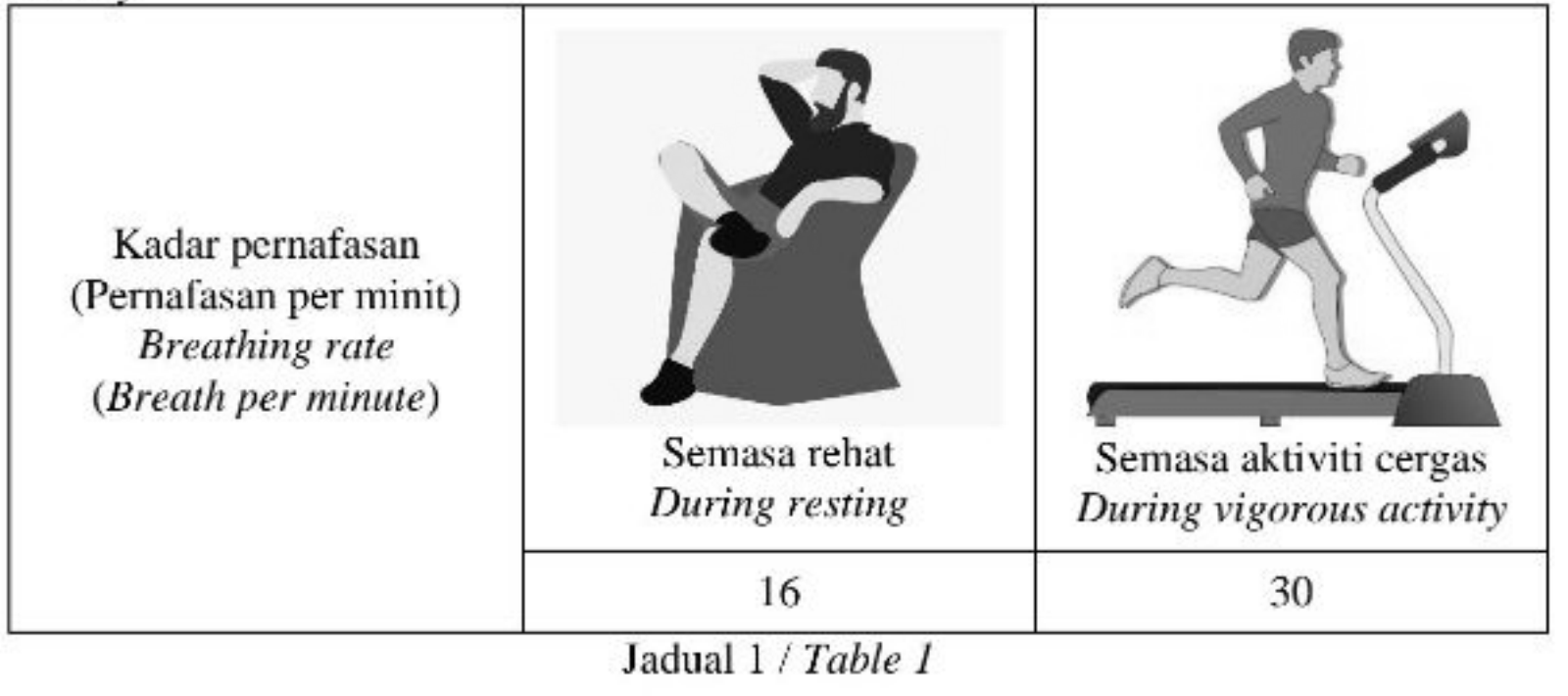
- (b)(i)
Diagram 9.1 shows two plants in waterlogged paddy field (cogon grass and paddy). Paddy plant can survive better compared to cogon grass in waterlogged area. Explain why.
[6]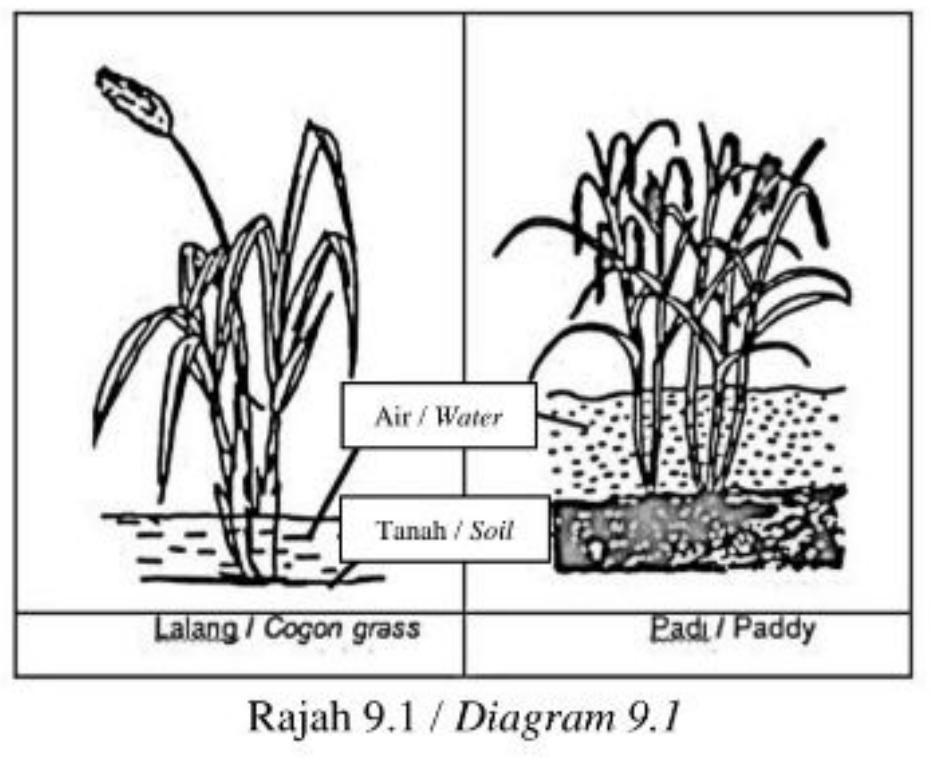
- (b)(ii)
Diagram 9.2 shows one type of Chronic Obstructive Pulmonary Disease (COPD) disease. Explain why the gaseous exchange becomes less efficient for an emphysema patient.
[6]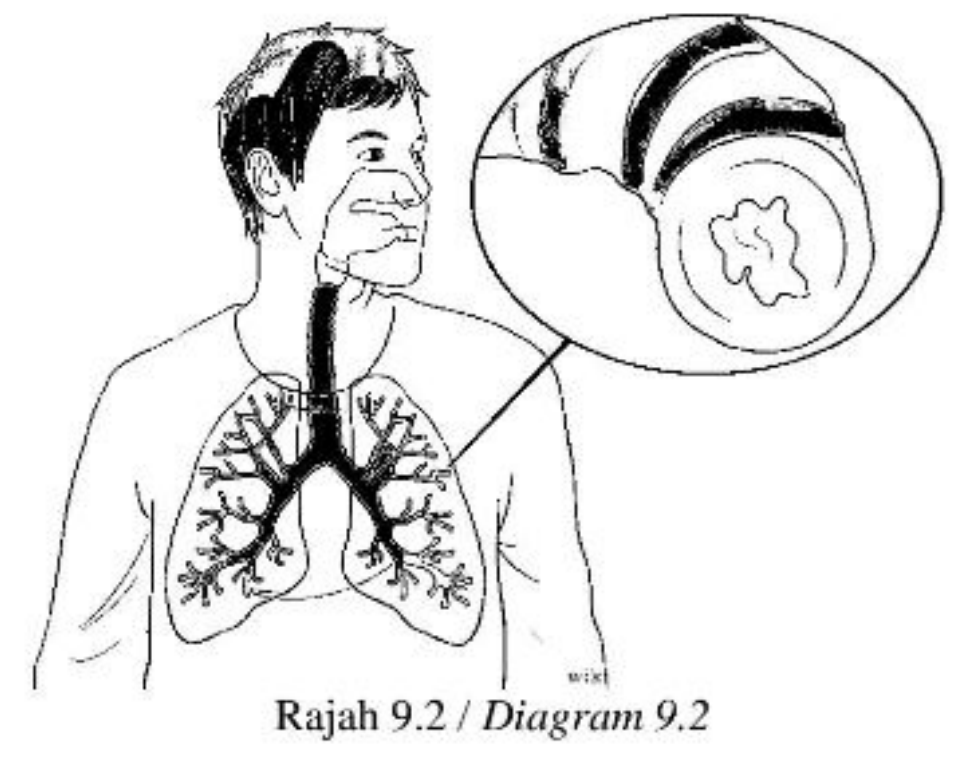
Rhesus Factor refers to the presence of Rhesus antigen on the surface of erythrocytes. An individual with Rhesus antigen is Rhesus positive; without is Rhesus negative. Diagram 10.1 shows the Rhesus factor of Mr. Ahmad (Rhesus positive), Mrs. Aina (Rhesus negative) and their three children Khairul, Aiman and Maisarah (all Rhesus positive).
Medium20 marks- (a)(i)
Diagram 10.1 shows the inheritance of Rhesus factor for Mr. Ahmad and Mrs. Aina family. They have 3 children. The Obstetrics and Gynecology Specialist doctor predicts that all the next births of their child will have the same Rhesus factor characteristic as the previous child. Based on your knowledge, what is the genetic composition of Mr. Ahmad for the Rhesus factor? Explain why all their children have the characteristic of Rhesus factor such as in Diagram 10.1.
[6]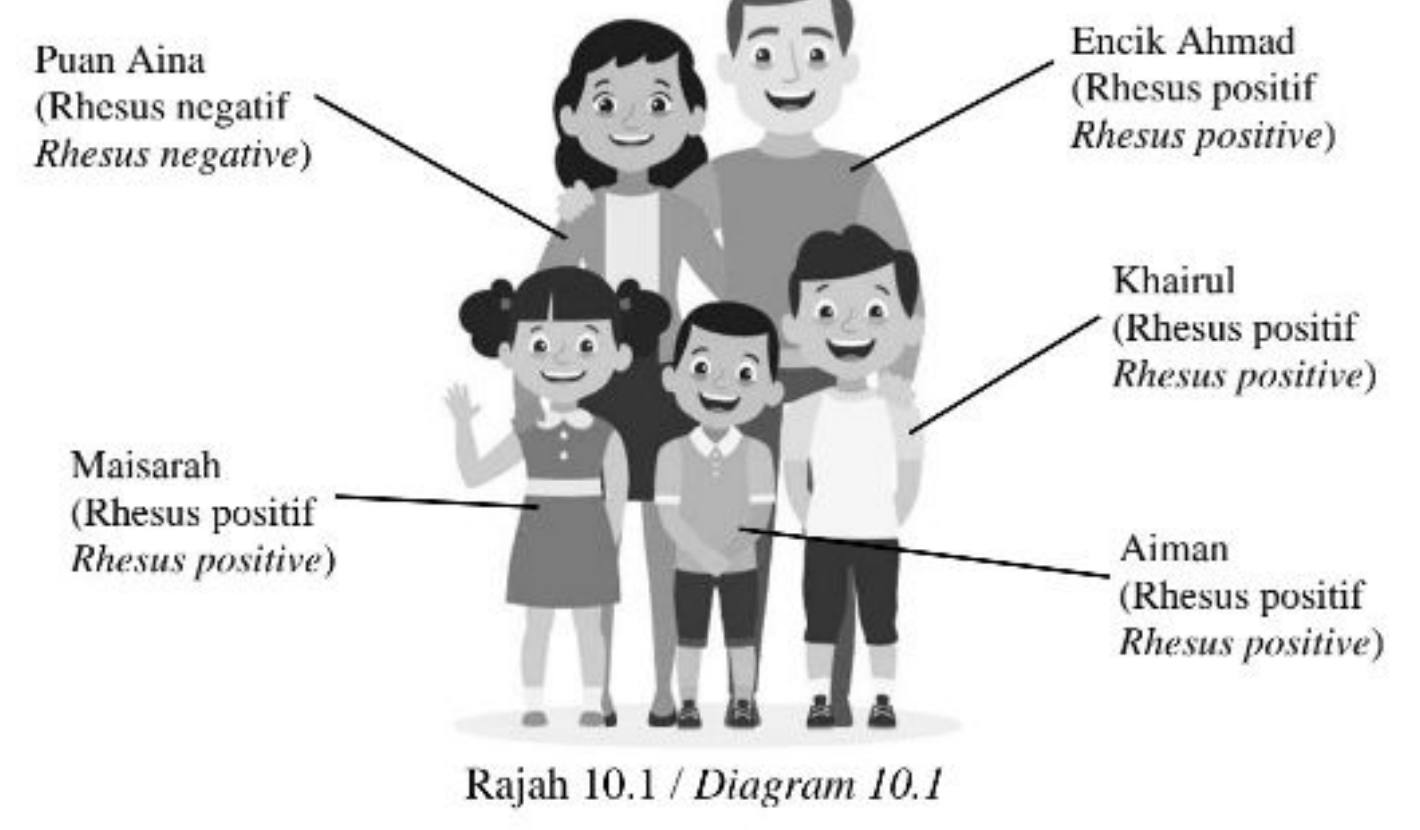
- (a)(ii)
The first child of Mr. Ahmad, Khairul, is a healthy individual without any disease. The second and third child, Aiman and Maisarah, suffer from health problems such as anaemia and jaundice since their birth. Explain why Aiman and Maisarah suffer from the disease.
[4] - (b)
Haliza has two cats from the same breed. Both cats have different pattern and body size. What is the type of variation shown by the fur pattern of the cats? Explain the factors that contribute to the variation of the fur pattern.
[10]
Section C
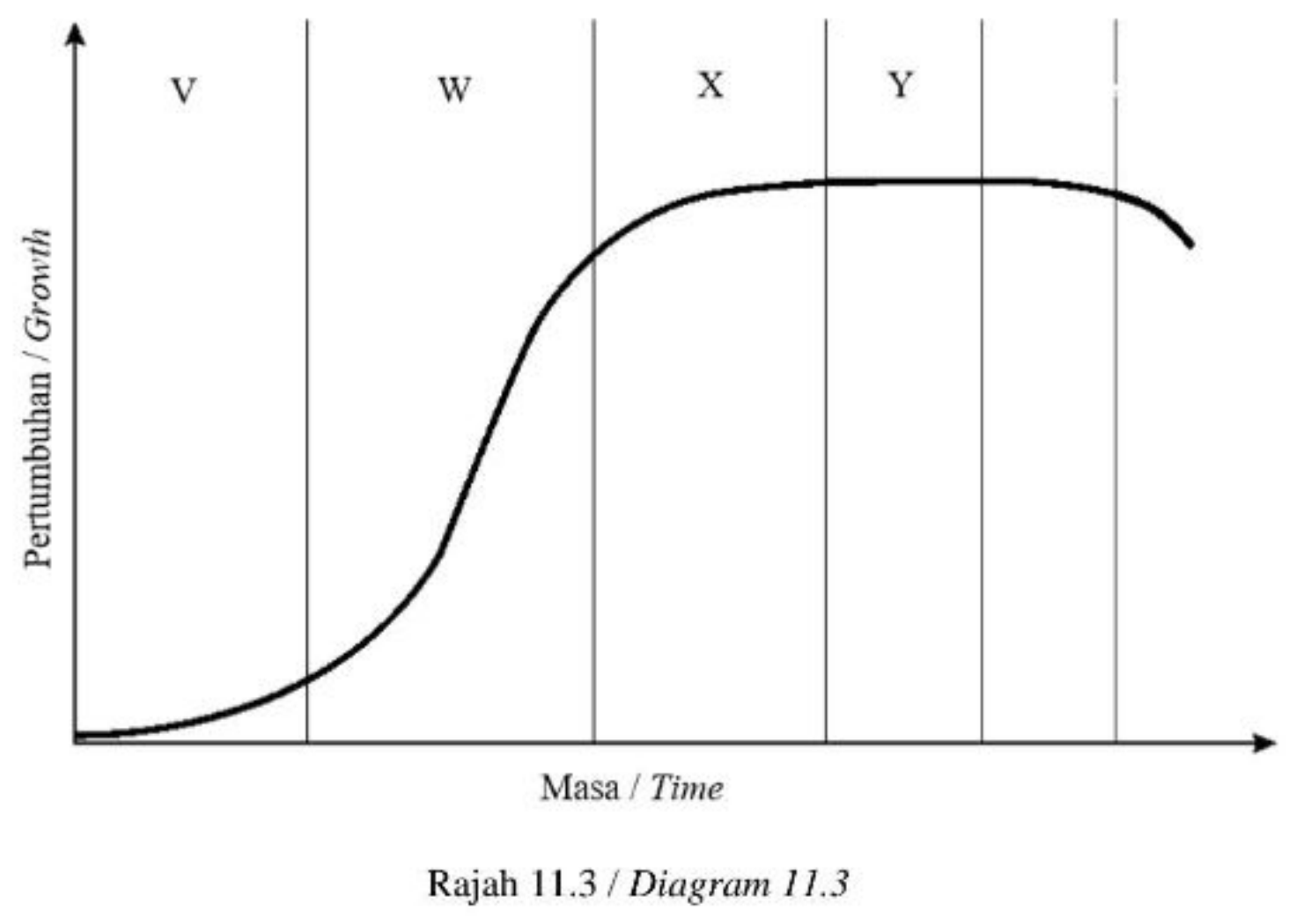
Section C (compulsory). Diagram 11.1 shows the development of a human zygote along the Fallopian tube (R to S). Diagram 11.2 shows a menstrual cycle. Diagram 11.3 shows a growth curve of human with phases V, W, X and Y.
Medium20 marks- (a)
Describe the processes which occur from R to S.
[5]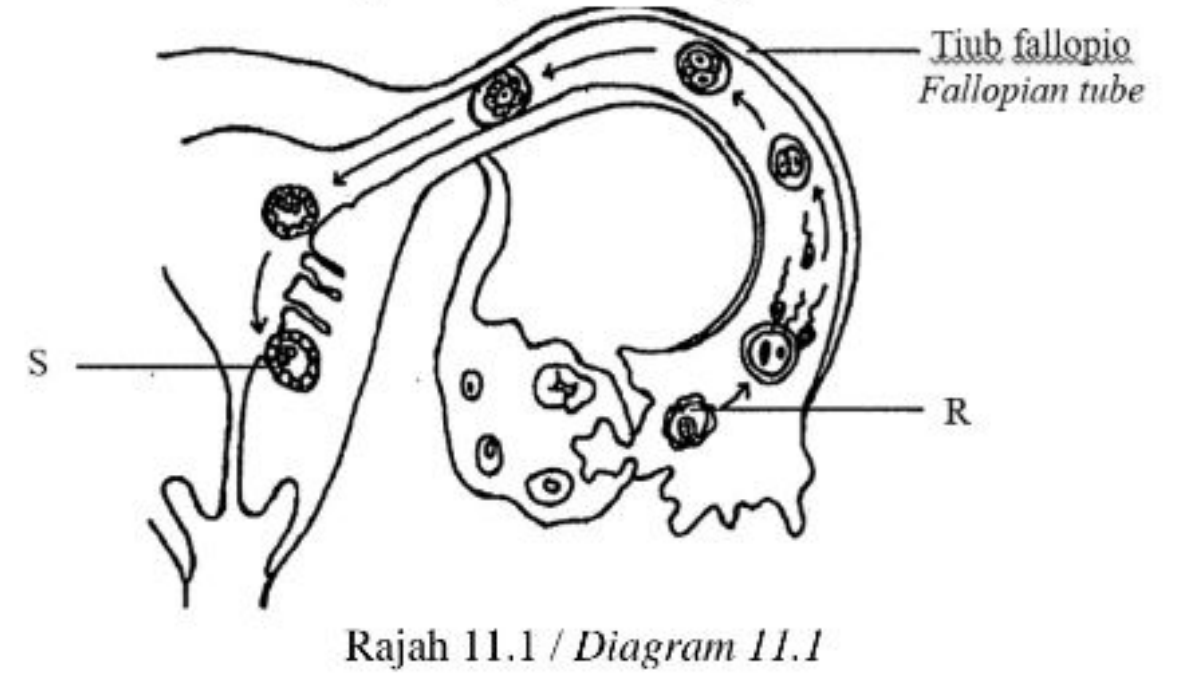
- (b)
Diagram 11.2 shows a menstrual cycle of a woman. Explain the possible changes in ovaries and uterus if secondary oocytes fertilised.
[5]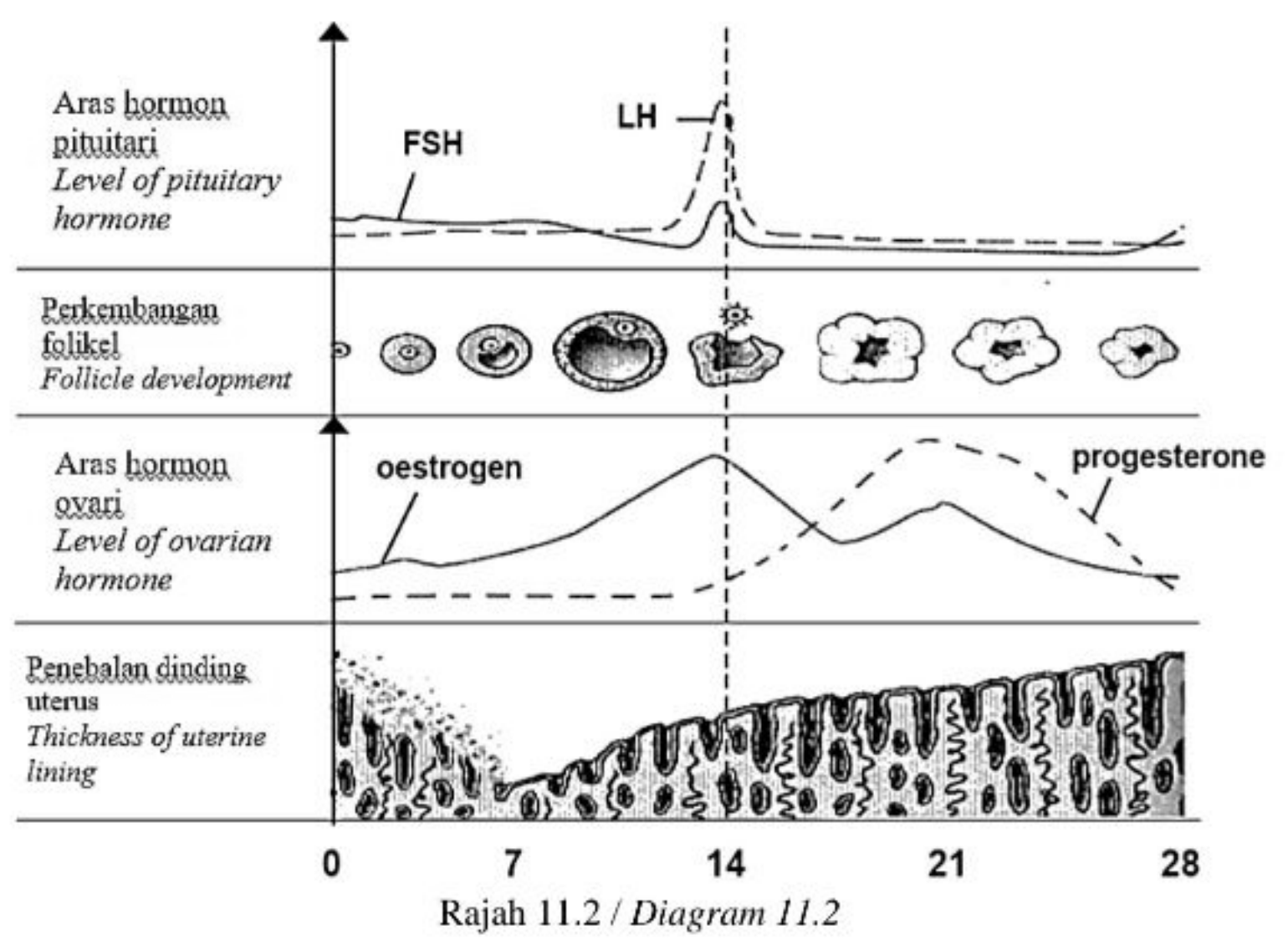
- (c)
Diagram 11.3 shows a growth curve of human. V, W, X and Y are phases of the growth curve. Explain the changes that occur in each phase.
[10]