Write your answer on paper. Then open the answer to check it.
Section A
You are required to conduct an experiment to study the effect of pH on the reaction of the pepsin enzyme. Apparatus: 1% albumen suspension, solutions X and Y, 2% pepsin solution, blue litmus paper, test tubes, rack, forceps, stopwatch, syringes, labels, stoppers. Steps: (1) Label two test tubes P and Q and place them on the rack. (2) Put 2 ml of 1% albumen suspension in P and Q. (3) Add to P: 2 ml solution X + 2 ml of 2% pepsin solution; to Q: 2 ml solution Y + 2 ml of 2% pepsin solution. (4) Cover both tubes with stoppers, shake, start the stopwatch immediately. Record the state of the mixture (clear or turbid) at the beginning and after 20 minutes. (5) Dip a piece of blue litmus paper into each test tube and record the colour change in Table 1 to determine the pH of the reaction medium (Diagram 1).
Medium15 marks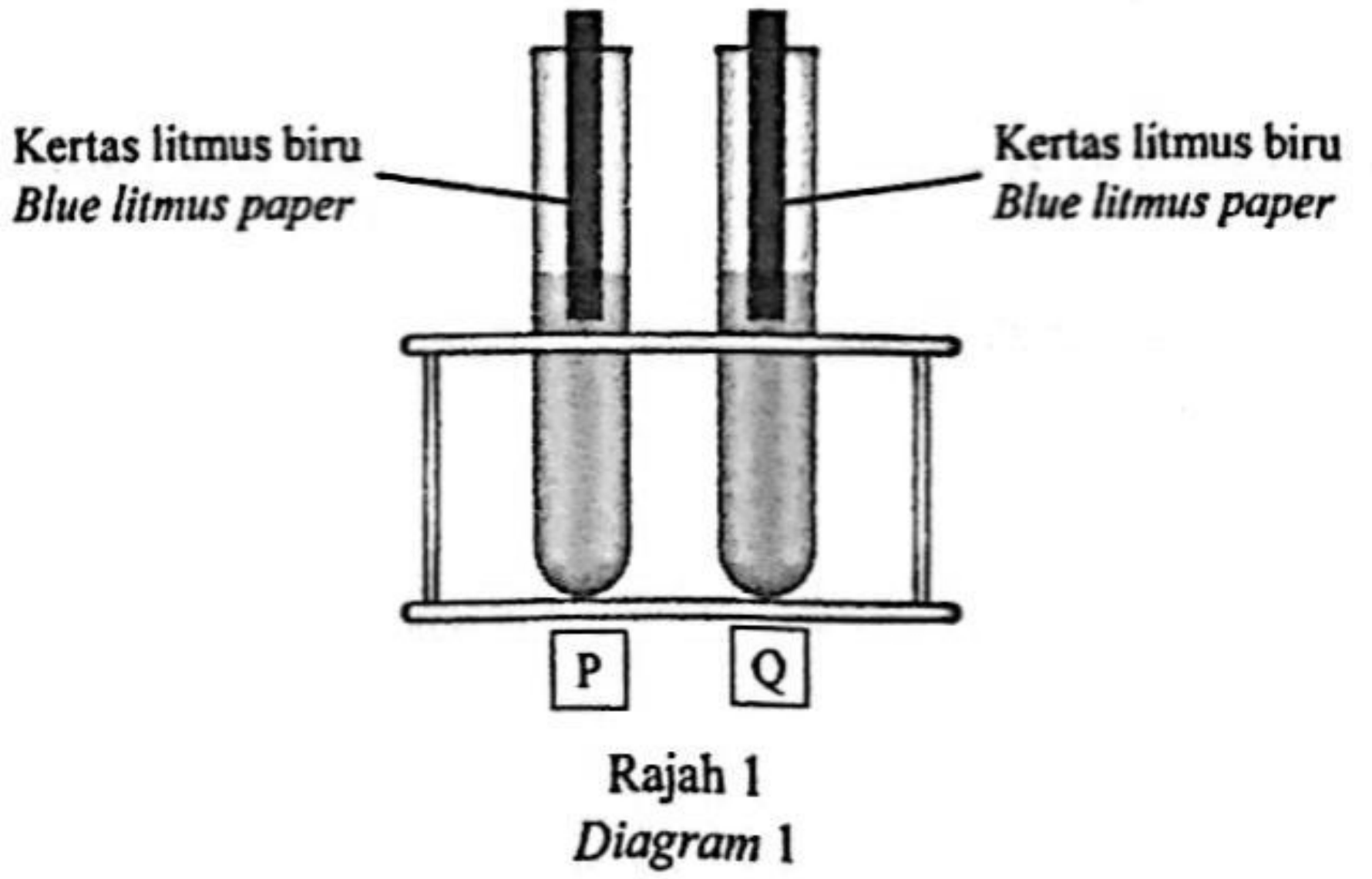
- (a)
Record the observations in Table 1: for test tubes P and Q, the colour change of the blue litmus paper, and the clarity or turbidity of the mixture at the beginning of the experiment and after 20 minutes.
[3]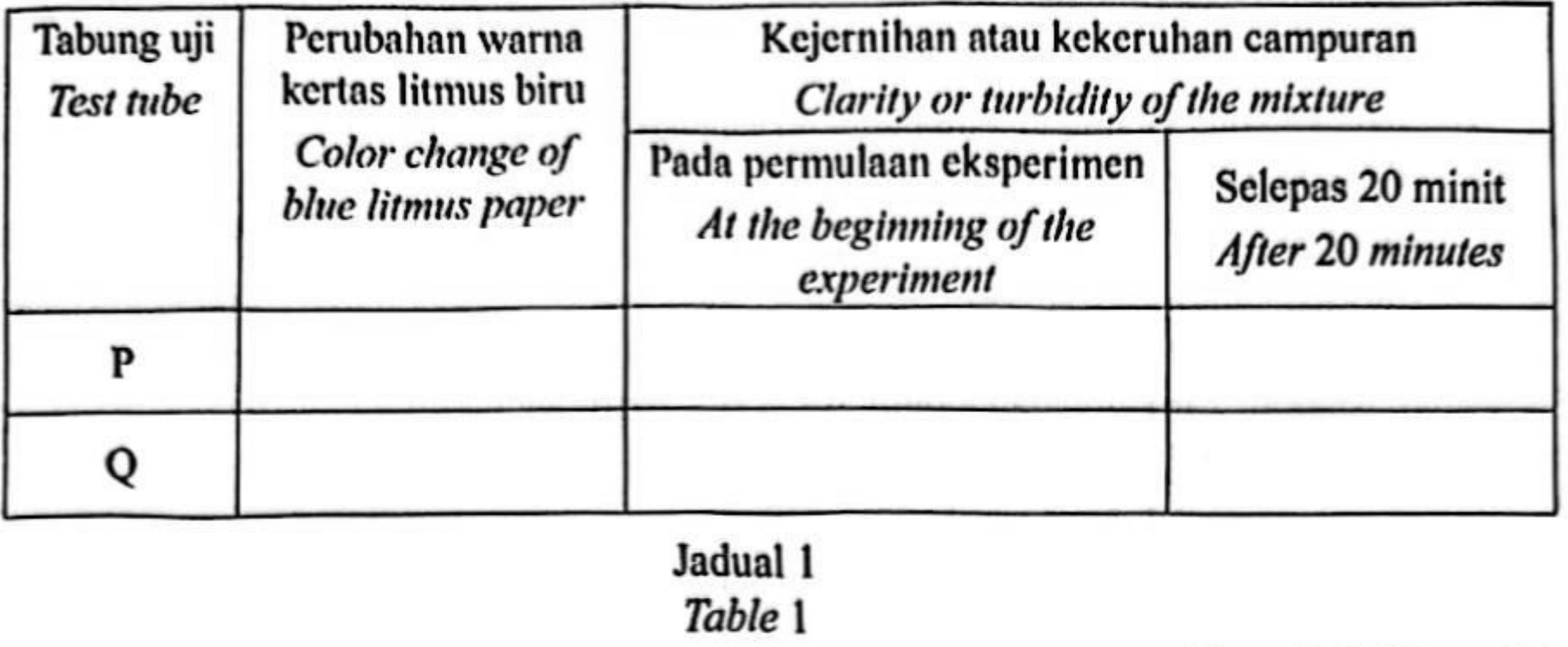
- (b)
State one inference for the observation in question (a), for test tube P and for test tube Q.
[2] - (c)(i)
State the constant variable in this experiment.
[1] - (c)(ii)
State the responding variable in this experiment.
[1] - (d)
Based on the results of the experiment, what relationship can be made about the pepsin enzyme reaction on the different pH medium? Explain.
[3] - (e)(i)
Suggest a procedure that can be carried out to ensure that the reaction of the pepsin enzyme occurs more effectively.
[1] - (e)(ii)
Explain your answer.
[2] - (f)
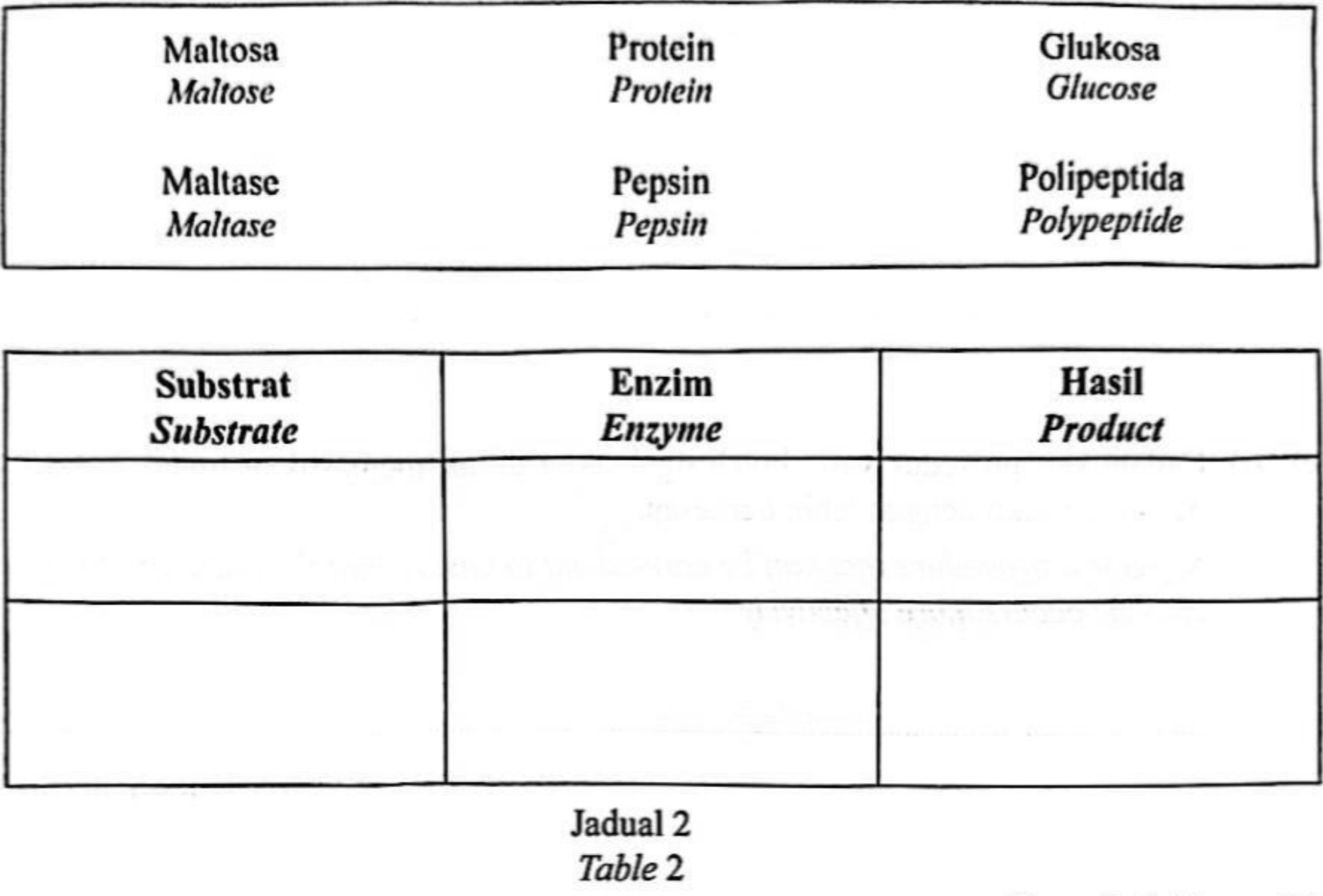
Classify the following materials with the correct match based on the categories in Table 2 (Substrate, Enzyme, Product). Materials: Maltose, Protein, Glucose, Maltase, Pepsin, Polypeptide.
[2]