MRSM 2021 P2 Q10
HardWrite your answer on paper. Then open the answer to check it.
Section B (answer one of Q9 and Q10). Diagram 10.1 shows a human leg movement from position X (leg bent) to position Y (leg straight); labelled: joint T, muscles S and R, calf muscle and tibialis muscle.
Hard20 marks- (a)(i)
Explain the function of joint T.
[2]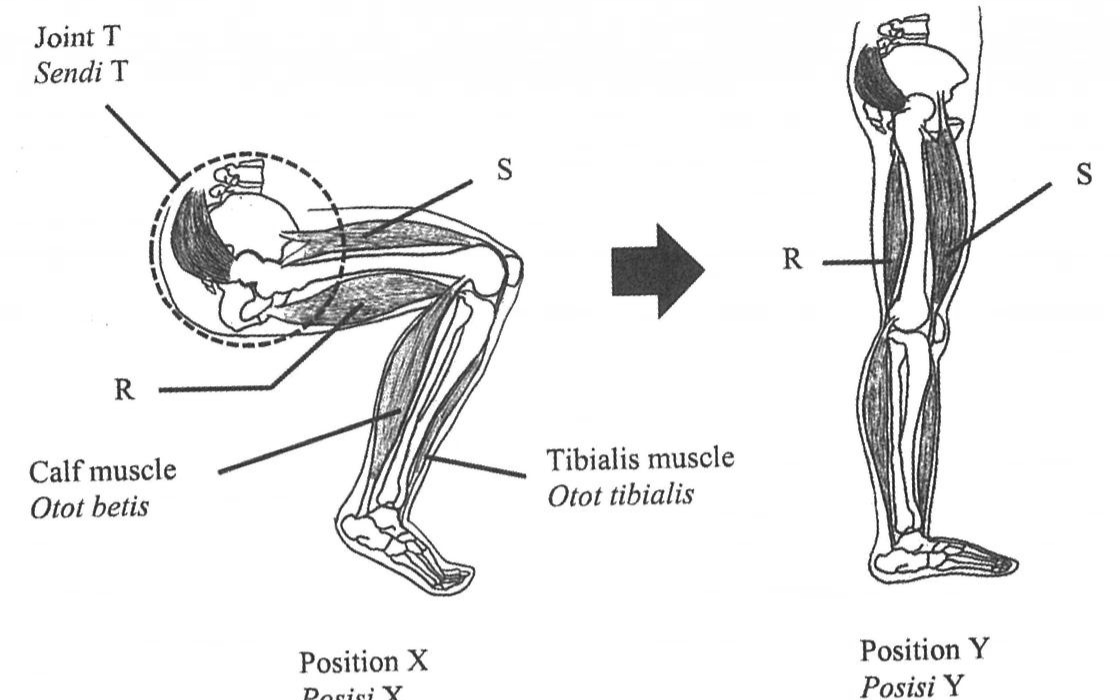
- (a)(ii)
Describe the action of the muscles, bones and tendons during Y position.
[4] - (b)
Diagram 10.2 shows the skeletal system of a pigeon nestling. Muscle Q in this nestling is not fully developed in the growth process. Identify muscle P and muscle Q. Explain how the abnormal condition shown affects its movement.
[4]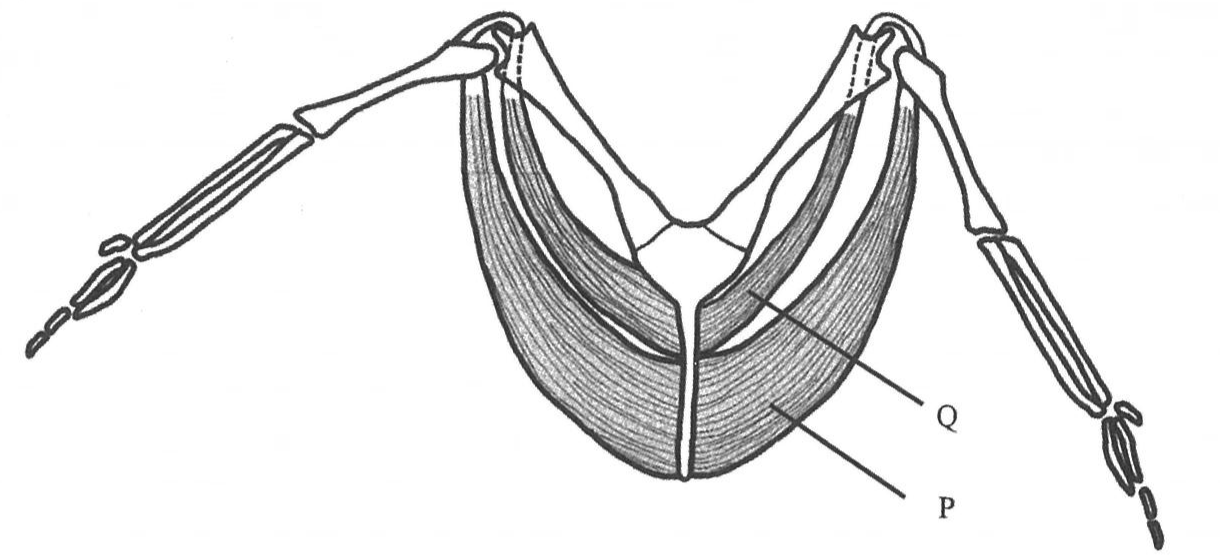
- (c)
Diagram 10.3 shows the movements of a grasshopper (exoskeleton, jumping) and an earthworm (chaetae, peristalsis wave). Explain one similarity and two differences between skeletal systems in both organisms.
[5]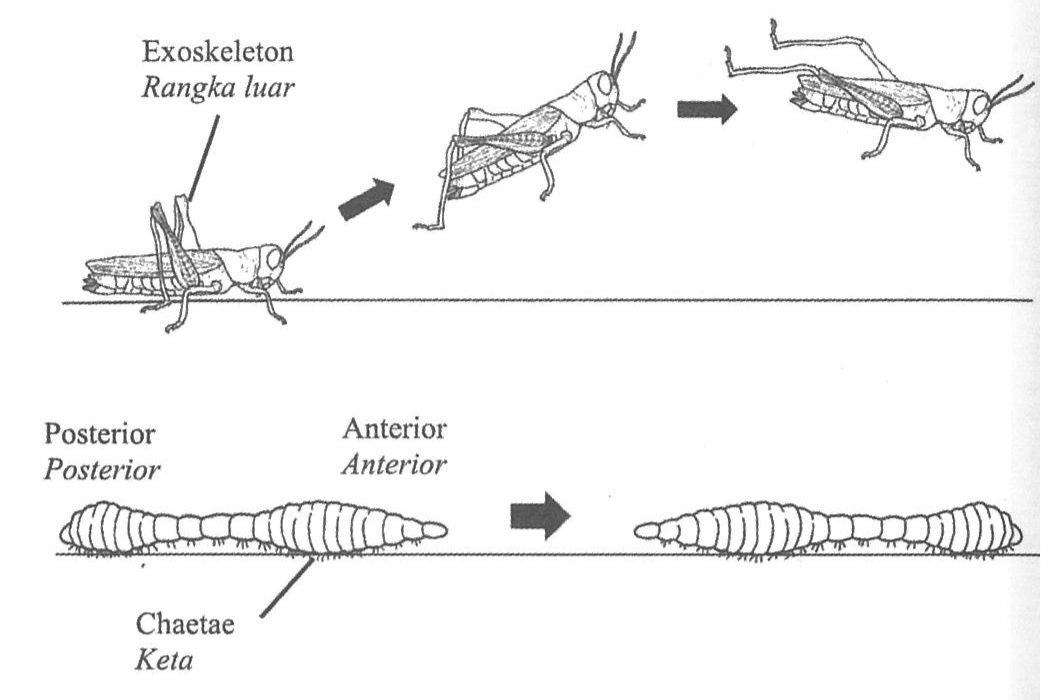
- (d)
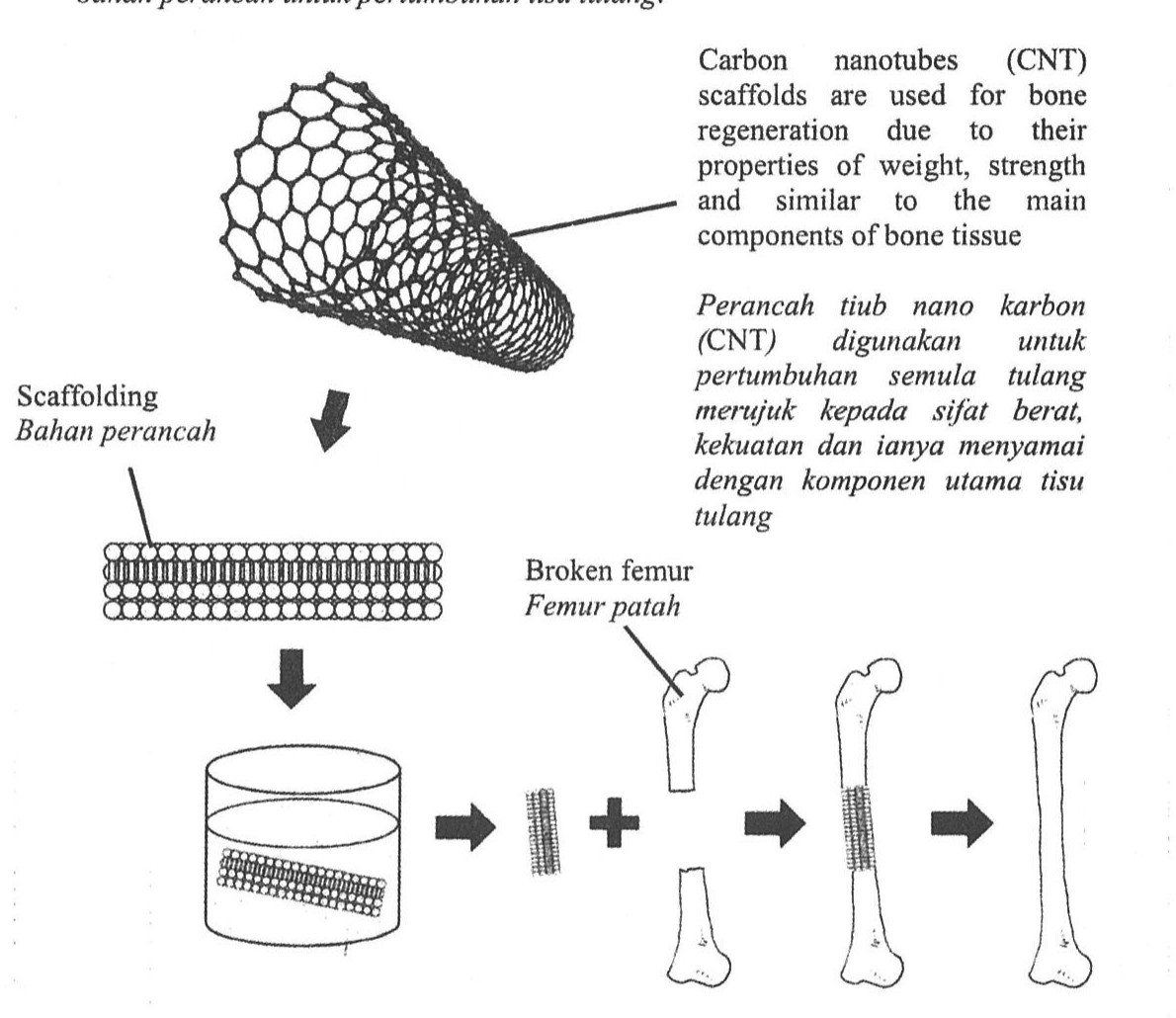
A student's femur was fractured in a car accident. The orthopaedic specialist treated him by injecting a solution of carbon nanotubes (CNT) that serves as a scaffolding for bone tissue growth (Diagram 10.4). Discuss four advantages and one disadvantage of the technique.
[5]