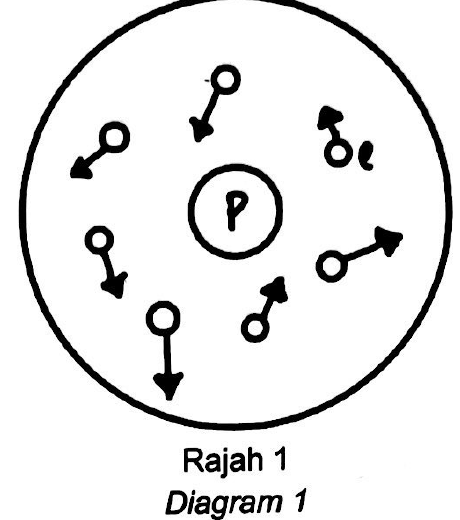
Diagram 1 shows a model of an atom.
Which of the following scientist introduced this model?
Easy
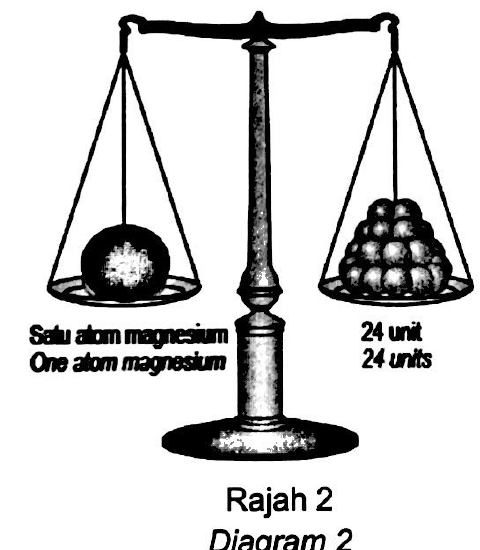
Diagram 2 shows a magnesium atom compared to standard atom of carbon-12.
What is the relative atomic mass of magnesium?
Medium
An element has the following properties:
• High melting point
• More than one oxidation numbers
• Good electrical conductivity
• Forms coloured compounds
What element could display the properties above?
Medium
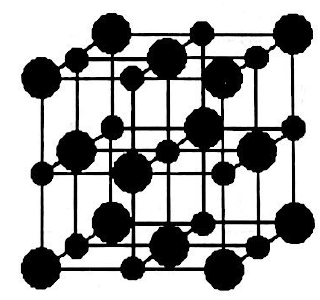
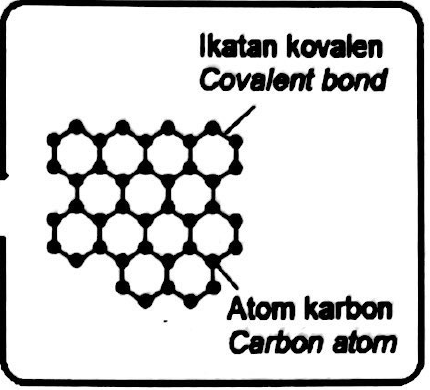
Diagram 3 shows the lattice structure of an ionic compound.
Which substance is likely to have such structure?
Medium
Which of the following is a weak acid?
Easy
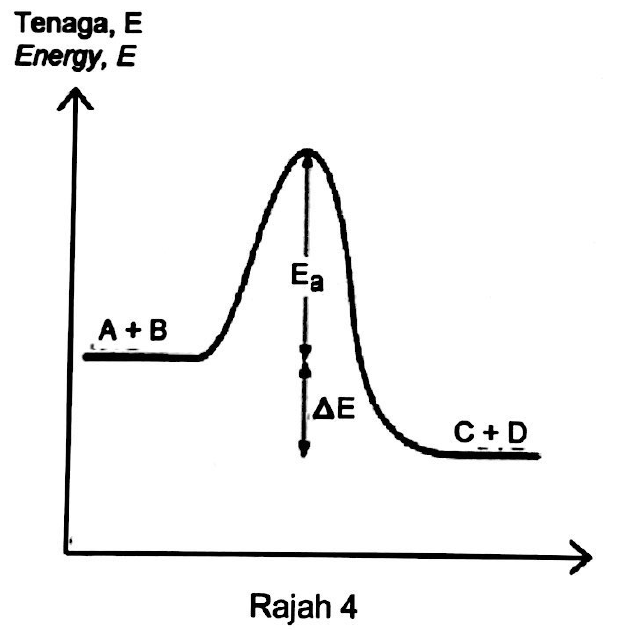
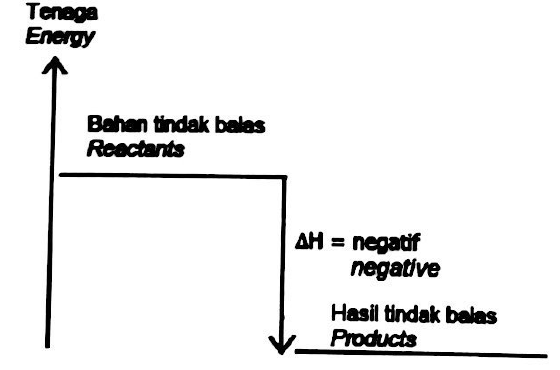
Diagram 4 shows an energy profile diagram of an exothermic reaction.
Which of the following is true about the diagram?
Medium
Which of the following diagram shows the arrangement of particles in bronze?
Medium
What has happened to magnesium when burnt in the air?
Medium
Which of the following statements is true about alkyne?
I Dissolve in organic solvent
II Saturated hydrocarbon
III Cannot conduct electricity
IV Has lower boiling point than alkene
Medium
Diagram 5 shows an energy level diagram for a reaction.
What is the reaction?
Medium
Which of the following is the side effect of mercury in the treatment of skin product?
Easy
Which of the following substances is a polymer?
Easy
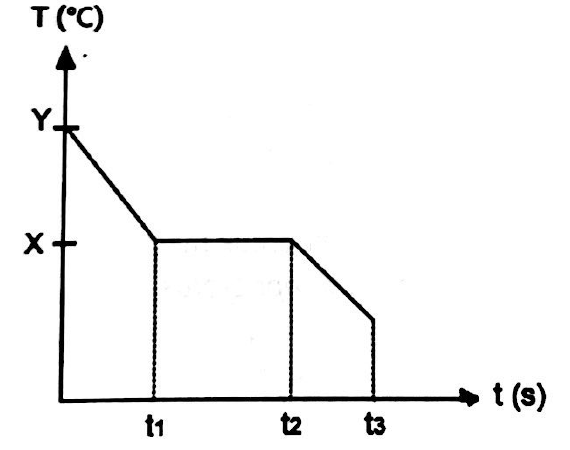
Diagram 6 shows the cooling curve of liquid X.
Which of the following statements is correct?
Medium
Which of the following compounds hydrogen bond does not exist?
Easy
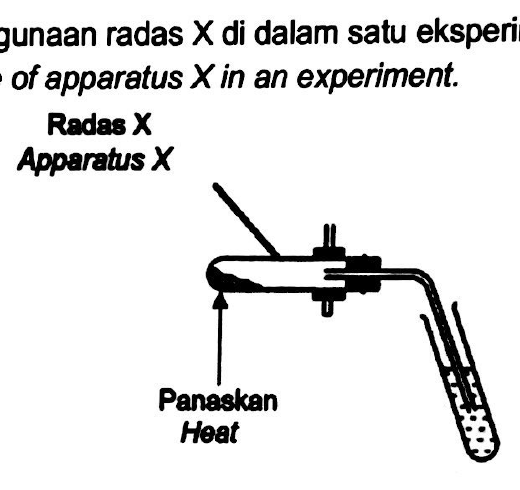
Diagram 7 shows the use of apparatus X in an experiment.
What is the suitable type of glass to make apparatus X?
Easy
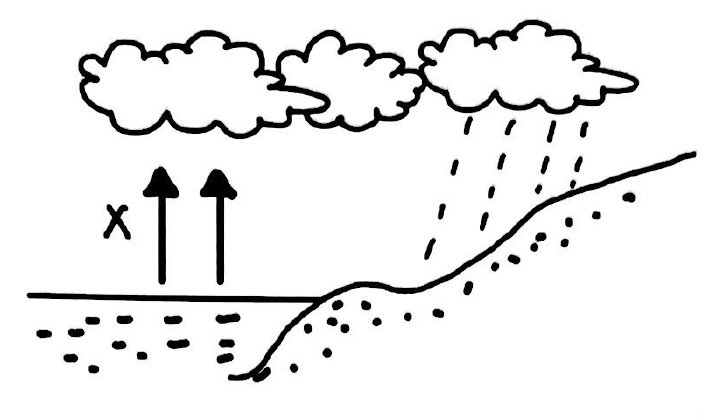
Diagram 8 shows a natural water cycle.
What is process X and the energy change involved?
Easy
Element Y is located on the right of the Periodic Table of Elements. Which of the following combinations shows the correct type and property of the oxide of Y?
Medium
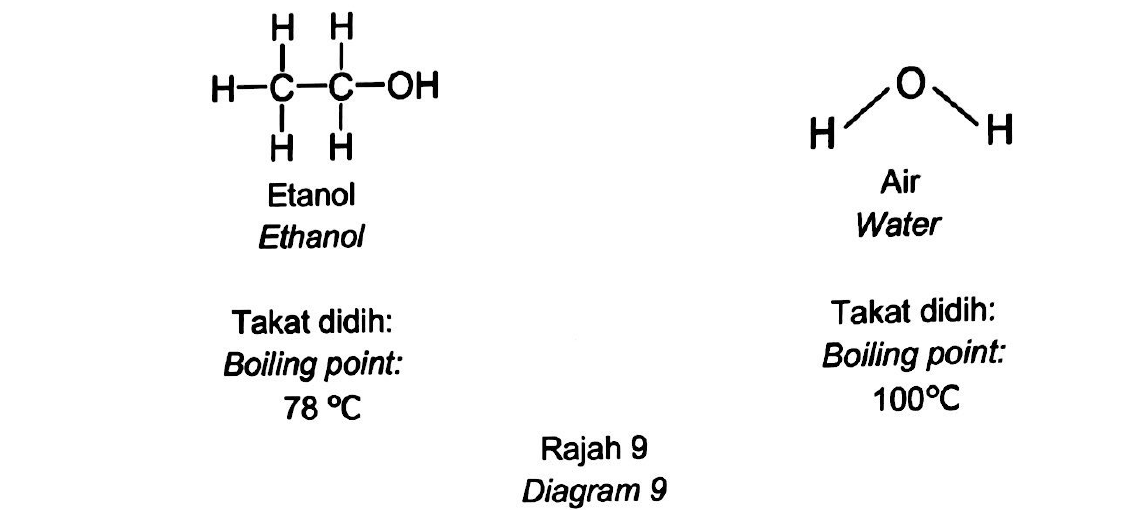
Diagram 9 shows the structure and boiling points of ethanol and water which are commonly used as solvent.
Which of the following statements is the most accurately explain the difference in boiling points of water and ethanol?
Medium
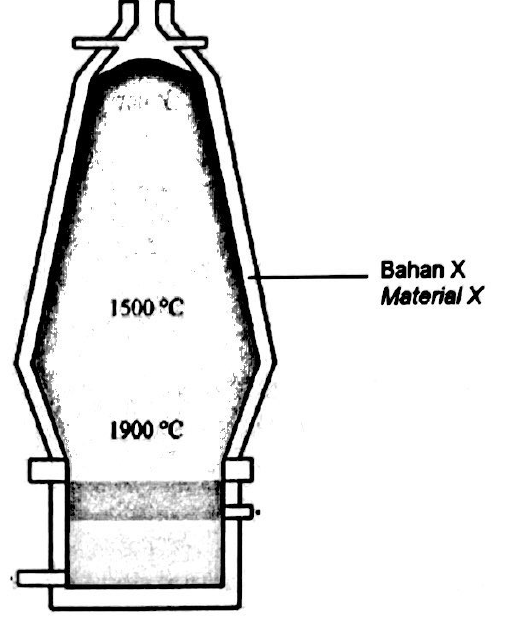
Diagram 10 shows a blast furnace and its temperature during extraction of iron ore.
What is the property of material X that make it suitable to be used in the lining of blast furnace?
Medium
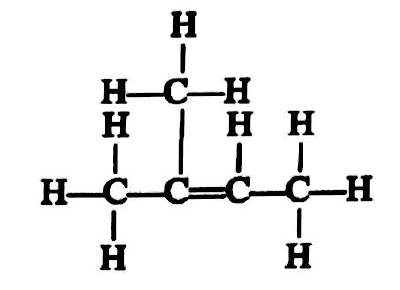
Diagram 11 shows the structural formula for a carbon compound.
Which of the following is the IUPAC nomenclature for the compound?
Medium
Which of the following statements is true about endothermic reaction?
Medium
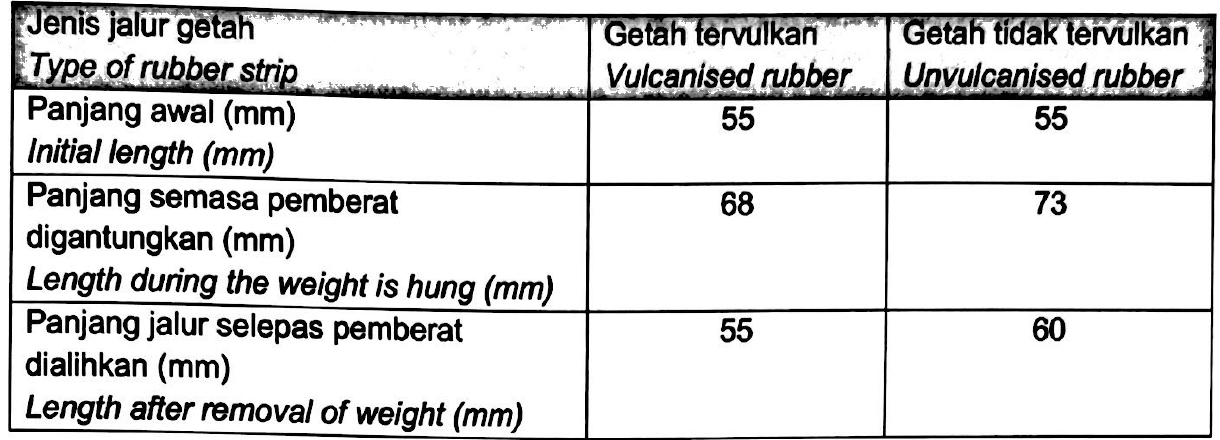
Table 1 shows results of an experiment to investigate the property of rubber.
Type of rubber strip: Vulcanised rubber / Unvulcanised rubber
Initial length (mm): 55 / 55
Length during the weight is hung (mm): 68 / 73
Length after removal of weight (mm): 55 / 60
Which of the following statement is true?
Medium
Diagram 12 shows a smartphone battery which is made from material Q.
Which of the following is material Q?
Easy
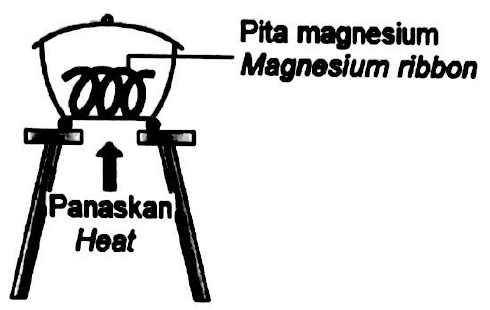
Diagram 13 shows the apparatus set-up to determine the empirical formula of magnesium oxide.
Which of the following steps is correct to ensure the magnesium ribbon reacts with oxygen and burnt completely?
I Repeat the process of heating, cooling and weighing until a constant mass is obtained.
II Heat the magnesium ribbon strongly in the crucible without its lid.
III Cover the crucible with its lid as soon as the magnesium ribbon starts burning.
IV Open and close the crucible lid once in a while during heating
Medium
Which of the following materials produce from condensation polymerisation?
Easy
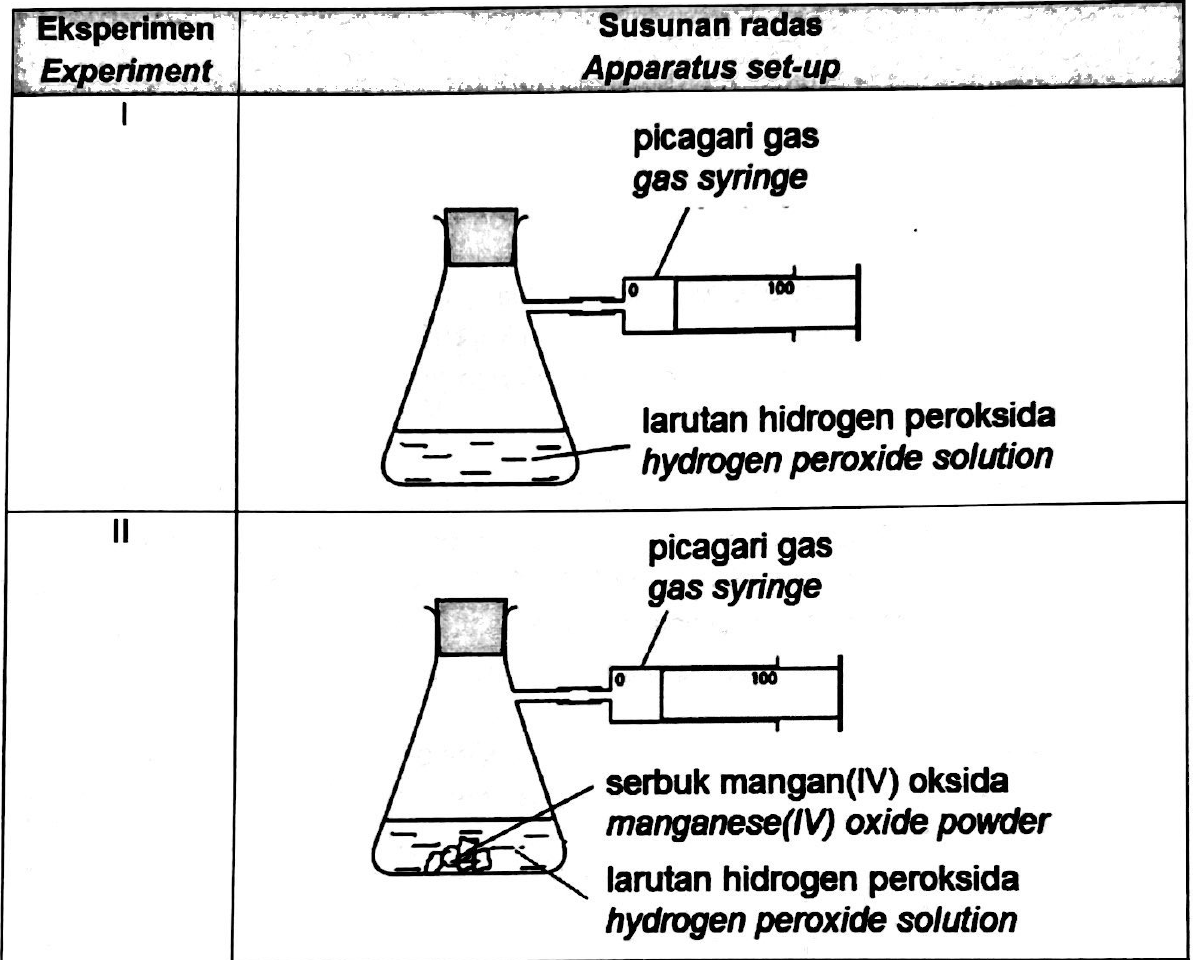
A student carried out two experiments to investigate the rate of decomposition of 0.1 mol dm⁻³ hydrogen peroxide solution. Table 2 shows the apparatus set up (Experiment I: hydrogen peroxide solution only; Experiment II: hydrogen peroxide solution with manganese(IV) oxide powder).
The time taken for experiment II is shorter than experiment I. What is the function of manganese(IV) oxide in experiment II?
Medium
The following ionic equation represents a redox reaction.
Zn + Cu²⁺ → Zn²⁺ + Cu
Which reaction can be represented using the given ionic equation?
Medium
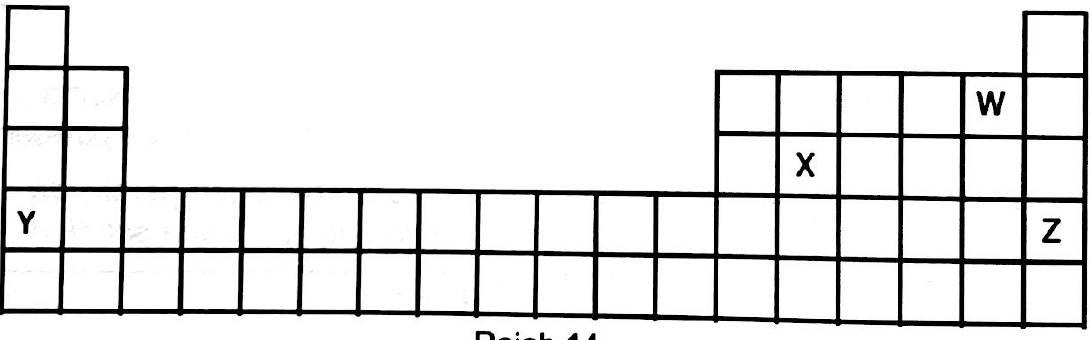
Diagram 14 shows the elements of W, X, Y and Z in a Periodic Table of Elements. The letters in the periodic table are not the actual symbols of the elements.
Which of the following statements is correct?
Medium
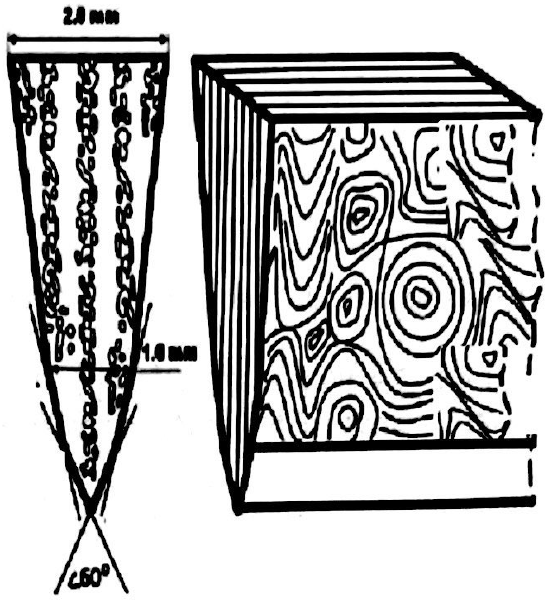
Diagram 15 shows the cross section and pattern of Damascus steel sword which hardness is famously known.
Which of the following is correct about its hardness property?
Medium
Rudi has washed his clothes using water from the well but the dirt is still there. Which of the following statements is the most accurately describe the situation?
Medium
X consists of two isotopes, ³⁵₁₇X and ³⁷₁₇X. The natural abundance of ³⁵₁₇X is 75% and ³⁷₁₇X is 25%. Calculate the relative atomic mass of X.
Medium
What is the percentage composition of water by mass in hydrated iron(II) sulphate, FeSO₄.7H₂O?
[Relative atomic mass: H = 1, O = 16, S = 32, Fe = 56]
Medium
A student is required to prepare barium sulfate salt in the laboratory. Which of the following chemical equations are suitable to prepare the salt?
I Ba(NO₃)₂ + ZnSO₄ → BaSO₄ + Zn(NO₃)₂
II BaCO₃ + Na₂SO₄ → BaSO₄ + Na₂CO₃
III BaCl₂ + K₂SO₄ → BaSO₄ + 2KCl
IV Ba(OH)₂ + H₂SO₄ → BaSO₄ + 2H₂O
Medium
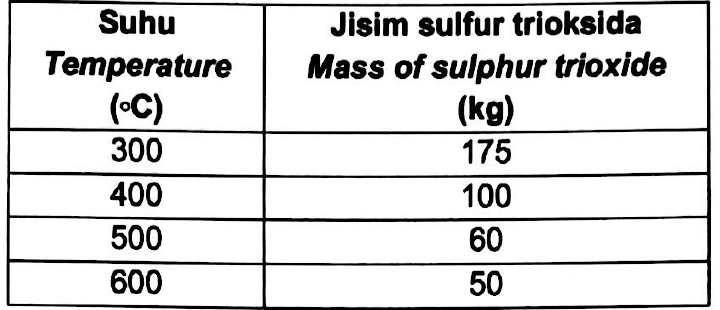
Table 3 shows the mass of sulphur trioxide formed at different temperatures during the Contact Process within 150 minutes.
Temperature (°C): 300 / 400 / 500 / 600
Mass of sulphur trioxide (kg): 175 / 100 / 60 / 50
Which of the following temperature produce the highest rate of reaction?
Medium
Which of the following equation represents a redox reaction?
Medium
When 50 cm³ of 2.0 mol dm⁻³ lead(II) nitrate was added to 50 cm³ of 2.0 mol dm⁻³ sodium sulphate, the temperature increased by 10 °C. What is the value of heat of precipitation?
[Specific heat capacity of solution = 4.2 J g⁻¹ °C⁻¹; Density of solution = 1.0 g cm⁻³]
Medium
Vehicle tyres are among the products of synthetic rubber that need to be disposed of in large quantities. Unsustainable disposal of tyres results in environmental pollution. Which of the following is the best method to reduce the issue of environmental pollution?
Easy
The following equation shows the complete combustion of propene gas.
2C₃H₆ (g) + 9O₂ (g) → 6CO₂ (g) + 6H₂O (g)
What is the mass of water produced when 2.1 g of propene gas is burnt completely?
[Relative atomic mass: H = 1; C = 12; O = 16]
Medium
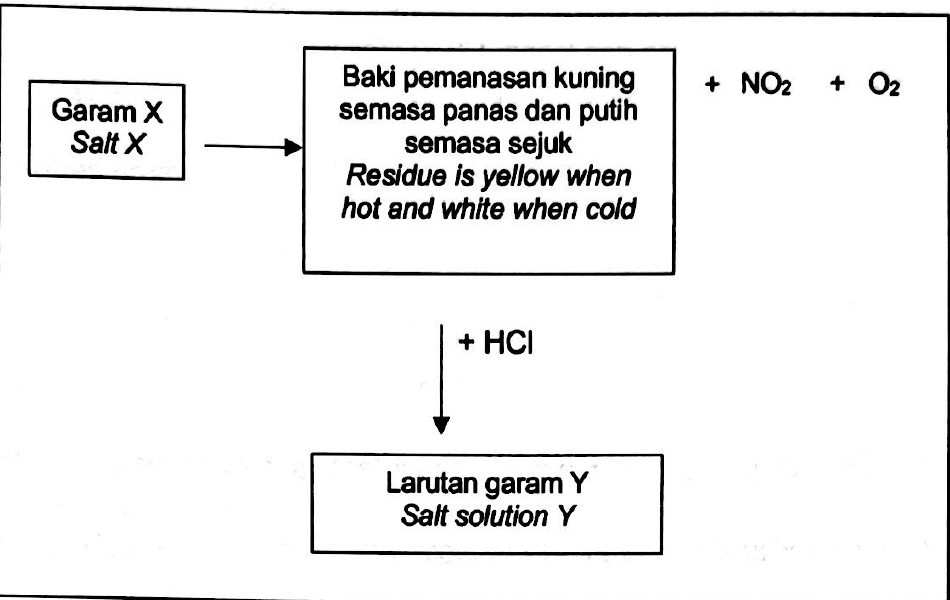
Qualitative analysis of salt is a technique used to identify the cation and anion present in a salt. Diagram 16 shows a flow chart of qualitative analysis on salt X.
What are the reagents can used to test the presence of cation and anion in salt solution Y?
Medium
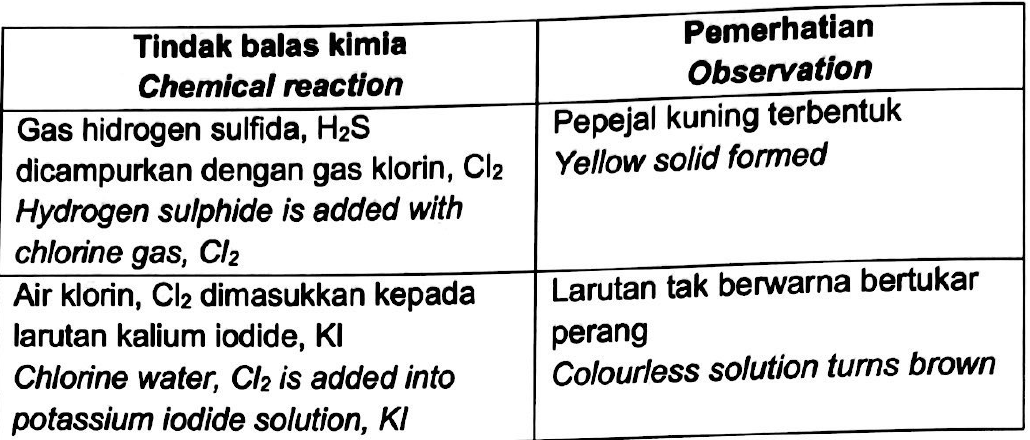
Table 4 shows chemical reactions and its observation.
Hydrogen sulphide, H₂S is added with chlorine gas, Cl₂: Yellow solid formed
Chlorine water, Cl₂ is added into potassium iodide solution, KI: Colourless solution turns brown
Which of the following statements is true about hydrogen sulphide and chlorine water?