Which of the following elements are Transition Elements in the Periodic Table of Elements?
Easy
What is the meaning of dative bond?
Easy
When silica is heated together with other chemicals, various glasses with different properties are produced yet have the same basic properties. Which of the following is a basic property of glass?
Easy
Which of the following substance is a natural polymer?
Easy
Which of the following shows the correct classification of treatment cosmetics?
I Mascara
II Cream
III Deodorant
IV Skin moisturiser
Easy
The diagram shows the standard representation of a sodium atom: 23/11 Na (nucleon number 23, proton number 11). What is the number of valence electrons of the atom?
Easy
The diagram shows the structural formula of propene: CH3-CH=CH2 drawn with all bonds (H H H above/below the chain: H-C(H)(H)... C=C-H). What is the empirical formula of propene?
Medium
H2SO4 + 2NaOH → Na2SO4 + 2H2O. What is the volume of 0.5 mol dm⁻³ sulphuric acid required to neutralise 25 cm³ of 0.1 mol dm⁻³ sodium hydroxide?
Medium
The table shows solutions P, Q, R and S with their pH values: P = 3, Q = 7, R = 9, S = 11. Which of the following solution reacts with magnesium to produce hydrogen gas?
Medium
Rate of reaction measures the change in the quantity of reactants or products per unit time. What is the correct unit of rate of reaction?
Easy
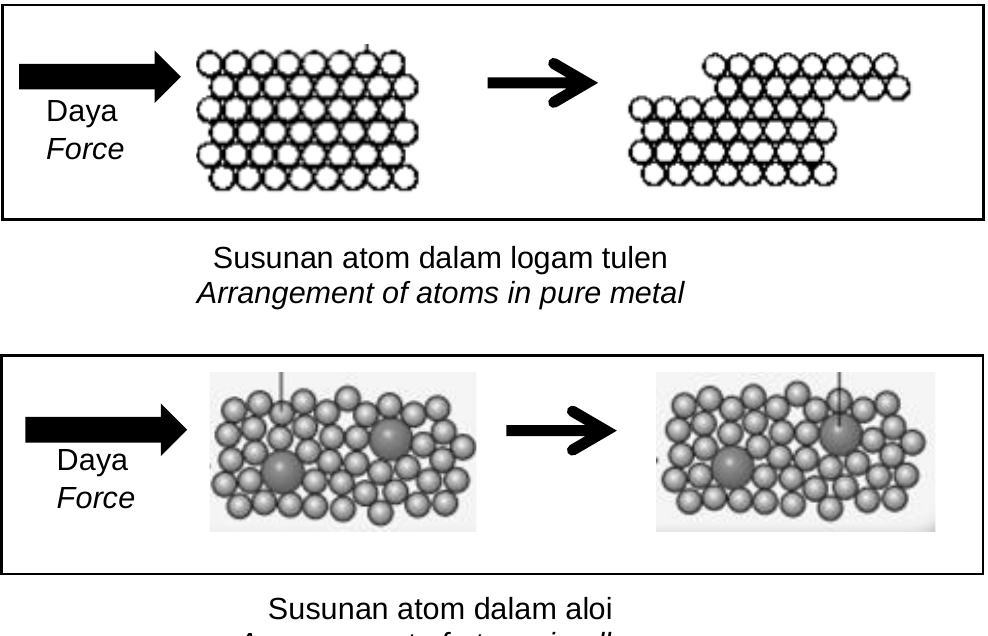
The diagram shows the arrangement of atoms in pure metal and alloy when a force is applied. Which of the following most accurately describes the properties of pure metal and alloy?
Medium
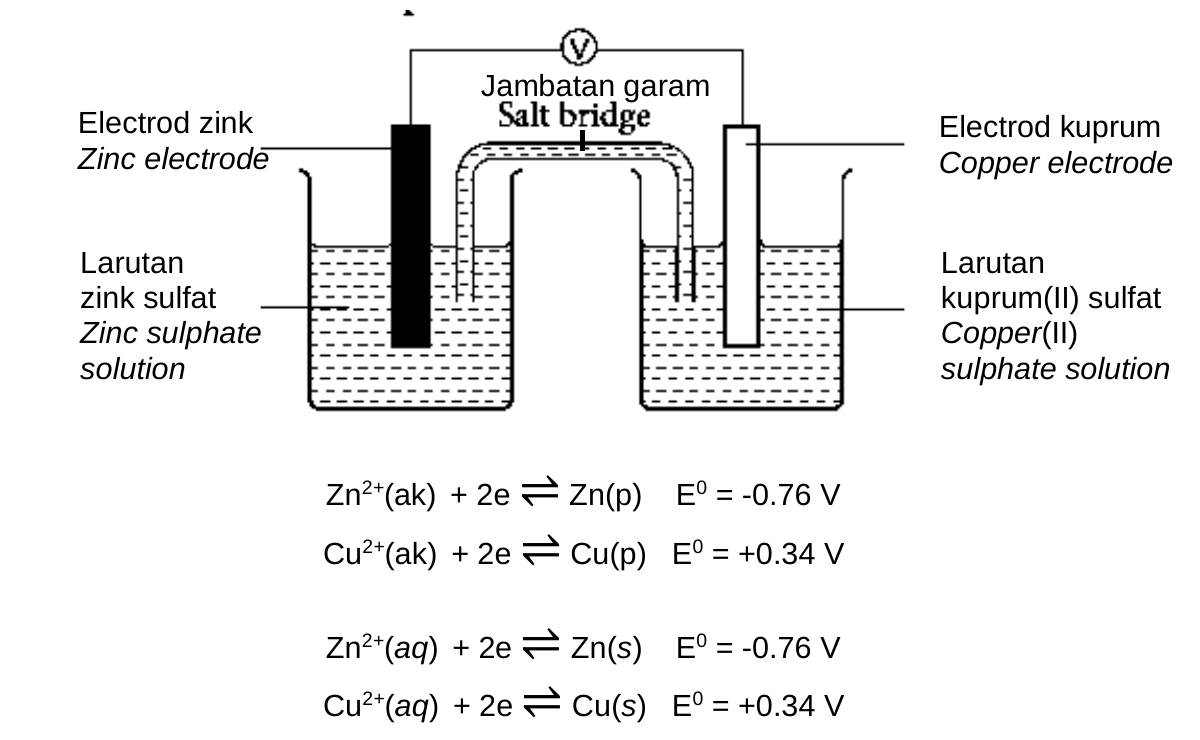
The diagram shows the apparatus set-up of a Daniell cell and E° values for two half-cells: Zn²⁺(aq) + 2e ⇌ Zn(s) E° = -0.76 V; Cu²⁺(aq) + 2e ⇌ Cu(s) E° = +0.34 V. Which of the following is the cell notation of the chemical cell?
Medium
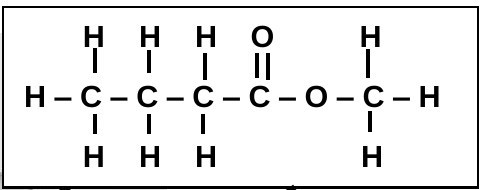
The diagram shows the structural formula of the ester that produces the fragrant smell found in green apple: CH3CH2CH2COOCH3 (H-C-C-C-C(=O)-O-C-H, all carbons with H atoms). Alia wants to prepare the ester in the laboratory. Which of the following can be used to prepare the ester?
Medium
Zara adds a spatula of ammonium nitrate powder into a beaker filled with 100 cm³ of distilled water. When the ammonium nitrate powder dissolves in water, the beaker becomes cold. Which of the following explains the observation?
Medium
Photochromic glass is produced when glass is combined with silver chloride and copper(I) chloride. When exposed to sunlight, the photochromic glass darkens. Which of the following is the half equation that describes the phenomenon?
Medium
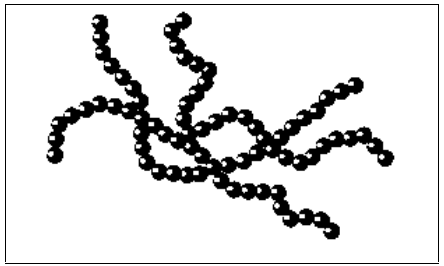
The diagram shows the structure of polymer Q (long separate chains, not cross-linked). Which of the following is a property of polymer Q?
Medium
Which of the following solutions have the same number of hydrogen ions, H⁺, as in 50 cm³ of 0.1 mol dm⁻³ sulphuric acid, H2SO4?
I 100 cm³ of 0.1 mol dm⁻³ ethanoic acid, CH3COOH
II 50 cm³ of 0.1 mol dm⁻³ phosphoric acid, H3PO4
III 100 cm³ of 0.1 mol dm⁻³ hydrochloric acid, HCl
IV 50 cm³ of 0.2 mol dm⁻³ nitric acid, HNO3
Medium
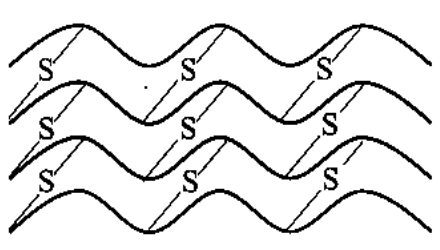
The diagram shows the structure of rubber T (polymer chains linked by sulphur atoms, S). Which of the following is the property of rubber T?
Easy
Which of the following are the similarities of isotopes of elements?
I Number of neutrons
II Number of protons
III Physical properties
IV Chemical properties
Medium
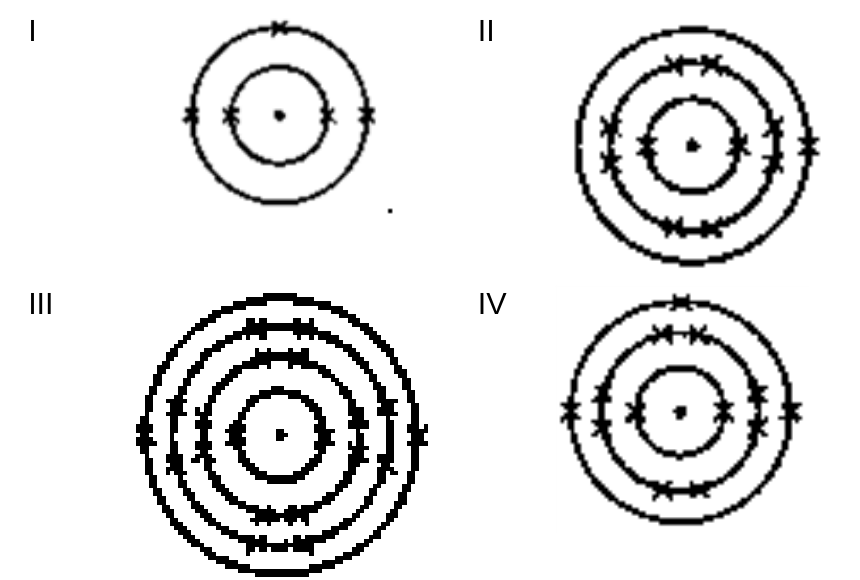
Which of the following electron arrangements represent element of Group 13 in the Periodic Table of Elements? (Four electron-arrangement diagrams I, II, III and IV are shown.)
Medium
Which of the following pairs of physical properties is correct about magnesium chloride? (Solubility in water; electrical conductivity in molten state)
Medium
Which of the following occurs in a reduction reaction?
Easy
Anas opened a freezer in a shop to buy an ice-cream. He can see the dry ice in the freezer changed into smoke. What are the process and energy change that occur to the dry ice?
Medium
Which of the following reactants can have the rate of reaction determined by measuring the change in volume of gas per unit time?
Easy
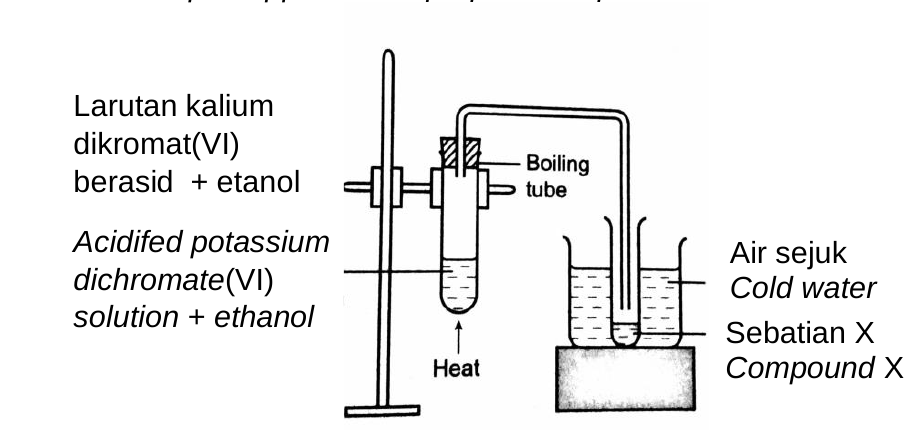
The diagram shows the set-up of apparatus to prepare compound X (acidified potassium dichromate(VI) solution + ethanol, heated; compound X collected in cold water). Which of the following statements is true about compound X?
I Has general formula CnH2n
II Has functional group of –COOH
III Reacts with magnesium to produce hydrogen gas
IV Reacts with hydrogen at 180 °C in the presence of nickel to produce alkane
Medium
Which of the following is correct about soap?
I The hydrophobic part of soap dissolves in grease
II Soap forms scum in soft water
III Soap is prepared through the hydrolysis of fats in alkaline conditions
IV Soap reduces the ability of water to wet the surface of cloth
Medium
1.2 g of element X reacts with 0.8 g of element Y to form a compound with the formula XY. What is the relative atomic mass of X? [Relative atomic mass of Y is 16]
Medium
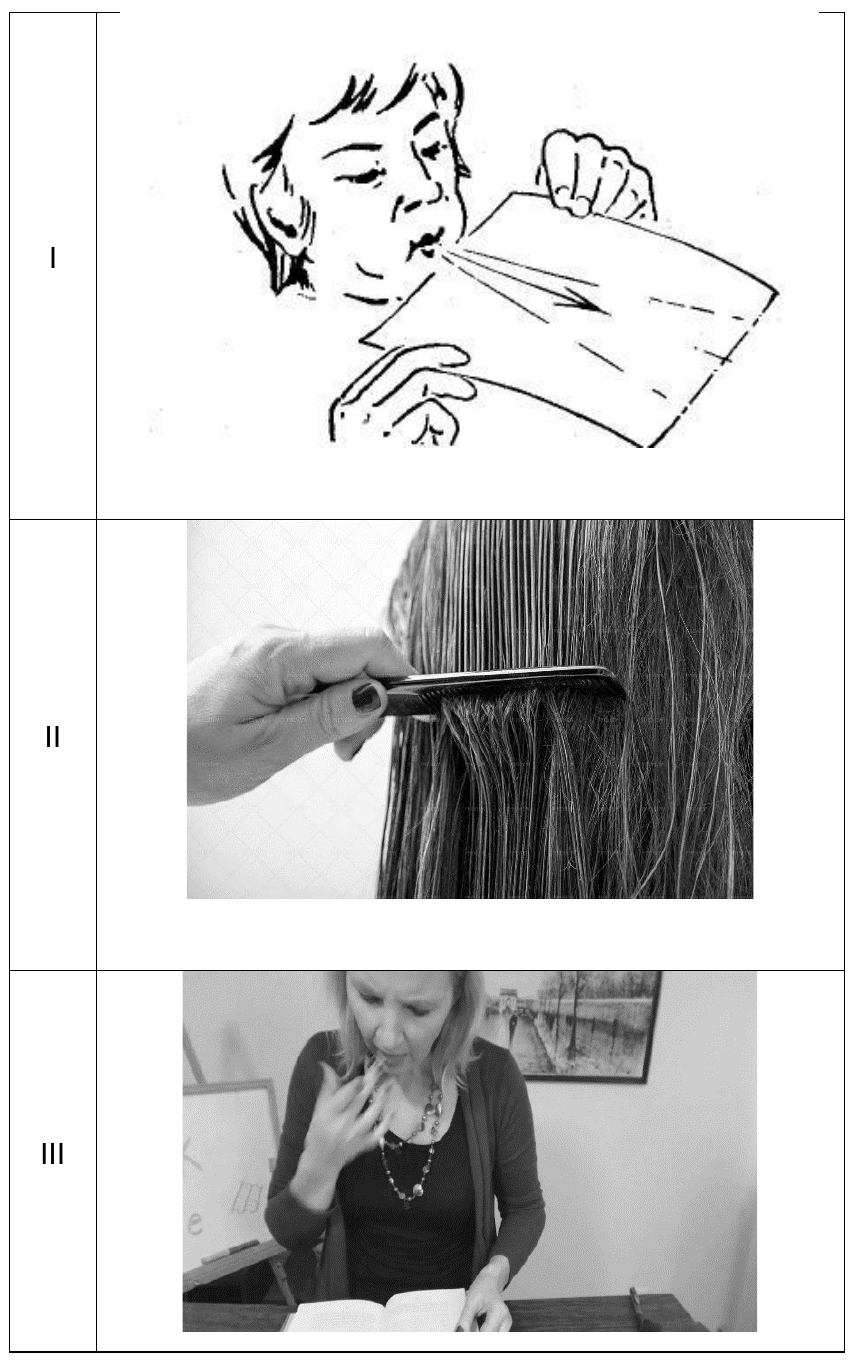
Which of the following activities involve formation of hydrogen bond?
I Blowing air onto a sheet of paper
II Combing hair
III A woman wetting her finger with saliva to turn a book page (picture)
Medium
Ba(OH)2 → Ba²⁺ + 2OH⁻. What is the number of moles of hydroxide ion in 250 cm³ of 0.2 mol dm⁻³ barium hydroxide?
Medium
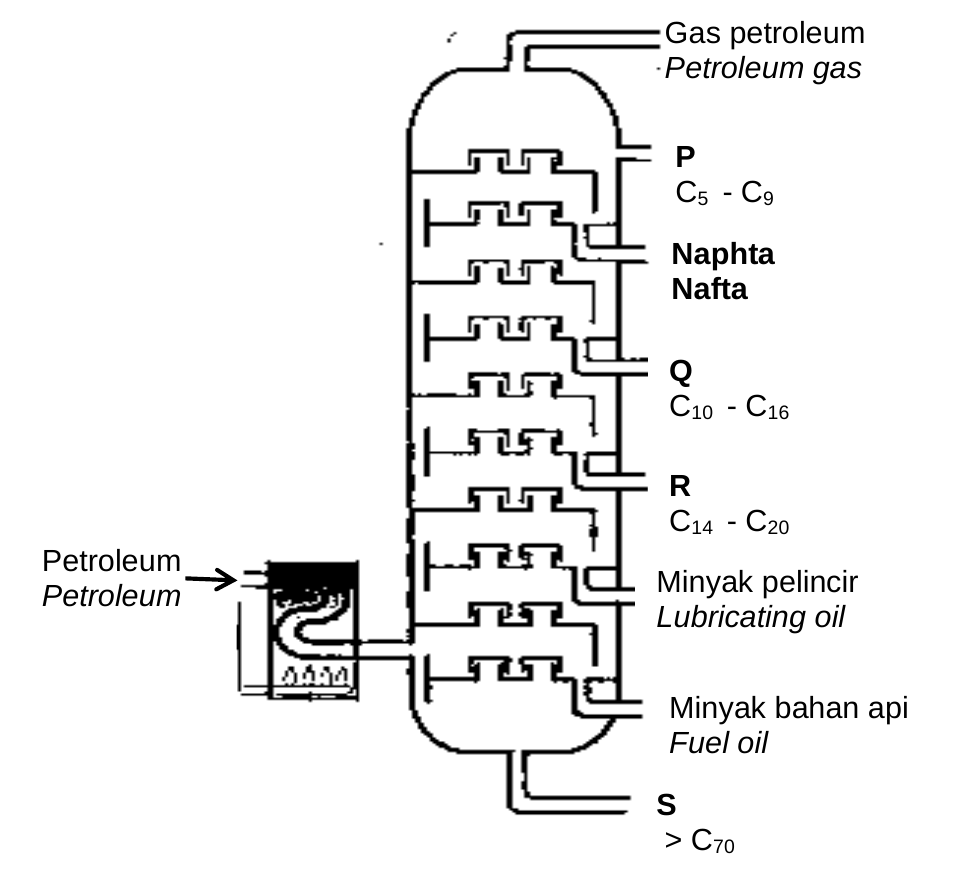
The diagram shows the fractional distillation of petroleum. Which of the following is used as fuel for heavy vehicles such as buses and lorries?
Medium
Which of the following is true about the meaning of relative atomic mass?
Medium
Which of the following explains the meaning of effective collision?
Easy
The thermochemical equation Ba²⁺(aq) + SO4²⁻(aq) → BaSO4(s), ΔH = -x kJ mol⁻¹ represents the precipitation reaction between barium ion and sulphate ion. Which of the following statements is true about the equation?
Medium
Which of the following are correct about polymer and its uses?
Easy
The table shows the observation when oxides of elements in Period 3 are added into water: W2O3 - no changes; XO - no changes; Y2O - dissolves to form a colourless solution. Which of the following is the correct arrangement in increasing proton number of the elements?
Medium
The table shows standard electrode potentials: P⁺/P +0.80 V; Q²⁺/Q -0.76 V; R²⁺/R -0.14 V; S²⁺/S -0.25 V. (P, Q, R and S are not the actual symbols of elements.) Which of the following is the correct order of increasing strength of oxidising agent?
Medium
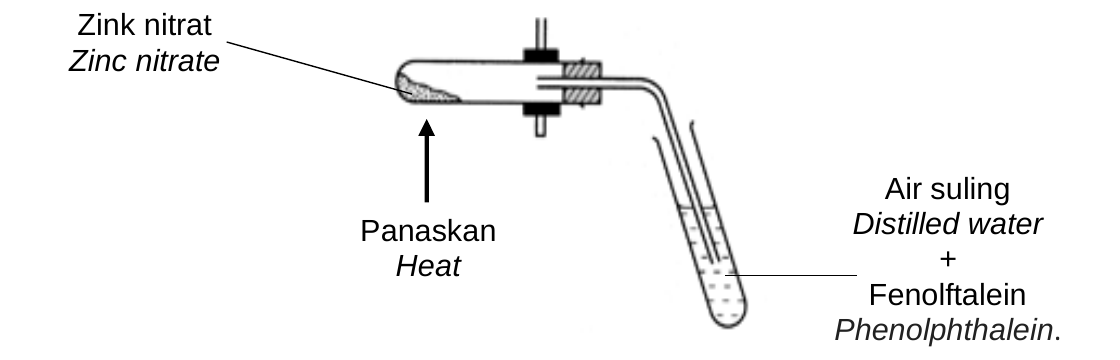
The diagram shows the flow of gas liberated by heating zinc nitrate into distilled water which contains a few drops of phenolphthalein. Which of the following is the correct observation?
Medium
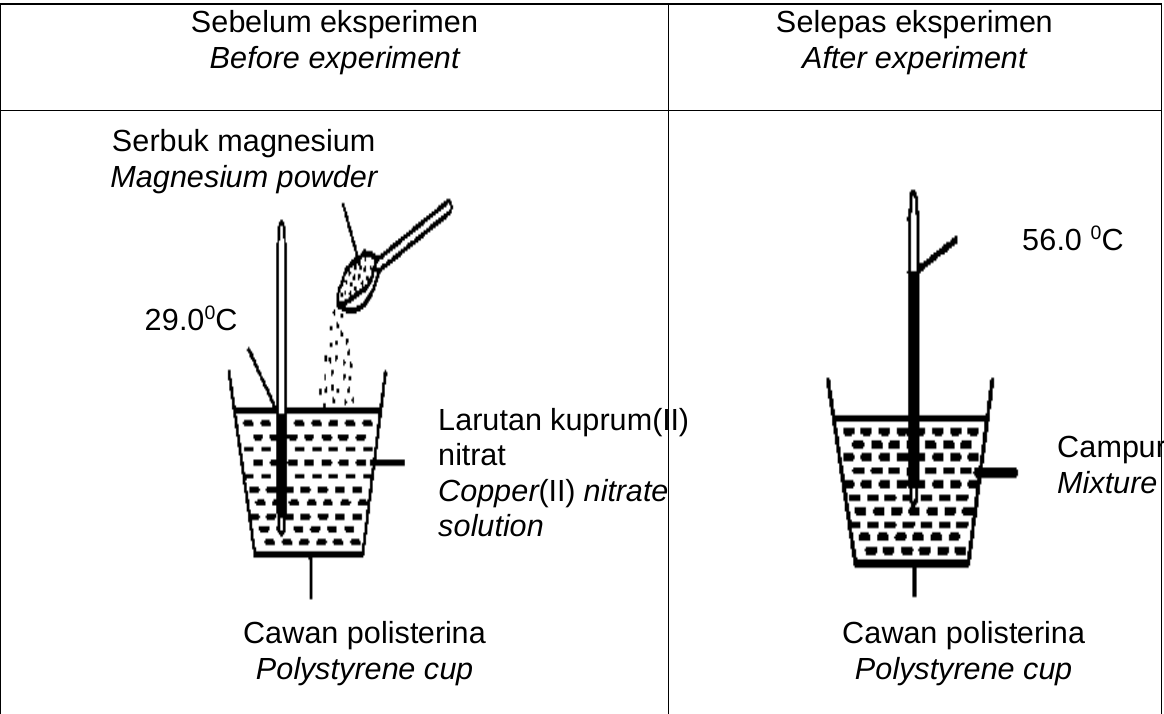
The diagram shows thermometer readings when excess magnesium powder is added to 50 cm³ of 0.5 mol dm⁻³ copper(II) nitrate solution in a polystyrene cup. Before: 29.0 °C; after: 56.0 °C. What is the heat of displacement for the reaction? [Specific heat capacity of water = 4.2 J g⁻¹ °C⁻¹; density of water = 1.0 g cm⁻³]