Write your answer on paper. Then open the answer to check it.
Section A
Diagram 1 shows the state of three matters, A, B and C of a same substance (A: ice cubes, B: liquid water in a glass, C: steam from a kettle).
Medium5 marks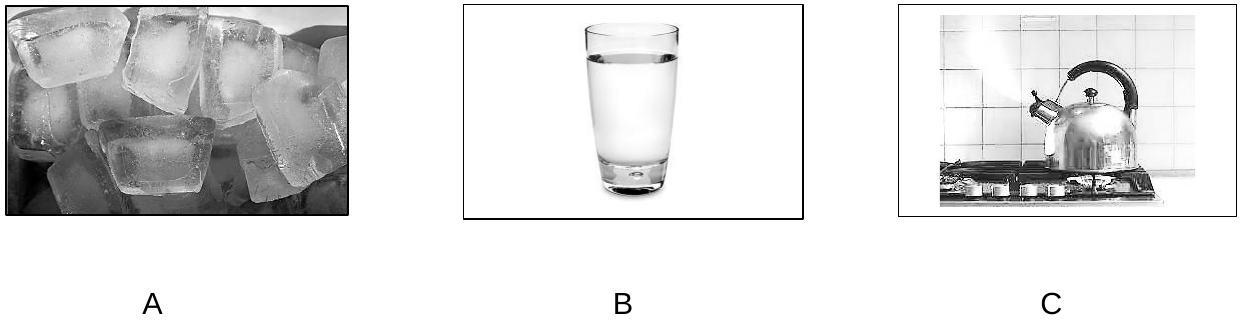
- (a)
What type of particle is found in B?
[1] - (b)
Name the process when physical state C changes to A.
[1] - (c)
State the physical state of C.
[1] - (d)
When B changes to C, state the changes of: (i) heat energy; (ii) the force of attraction between the particles.
[2]
Diagram 2 shows a few samples of cosmetics (lipstick, eye pencil, powder compacts).
Medium5 marks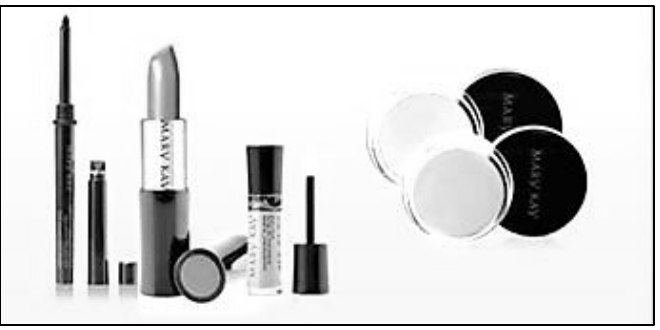
- (a)(i)
State the meaning of cosmetics.
[1] - (a)(ii)
State two basic ingredients of cosmetic production.
[2] - (b)
Plastic bottles and nylon are examples of products made from polymer. State two types of polymer.
[2]
Benzene is a hydrocarbon found in crude oil. It is used as raw material to make plastics, dyes and pesticides. The structural formula of benzene is shown in Diagram 3 (a ring of six carbon atoms with alternating double bonds, each carbon bonded to one hydrogen atom).
Medium6 marks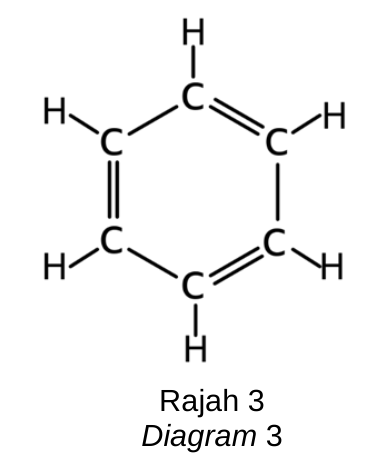
- (a)(i)
State the meaning of empirical formula.
[1] - (a)(ii)
Write the empirical formula of benzene.
[1] - (b)(i)
Benzene undergoes a chlorination reaction to produce chlorobenzene, which is used in pesticide manufacturing: C6H6 + Cl2 → C6H5Cl + HCl. If 1.5 mol of hydrochloric acid is produced in this reaction, calculate the volume of benzene needed at room conditions. [Molar volume of gas at room conditions = 24 dm³ mol⁻¹]
[2] - (b)(ii)
If chlorine is replaced with bromine, write the chemical equation for the reaction.
[2]
Diagram 4.1 shows the electron arrangement of a compound formed between elements X and Y (one X²⁺ ion with electron arrangement 2.8 between two Y⁻ ions with electron arrangement 2.8.8 shown).
Medium7 marks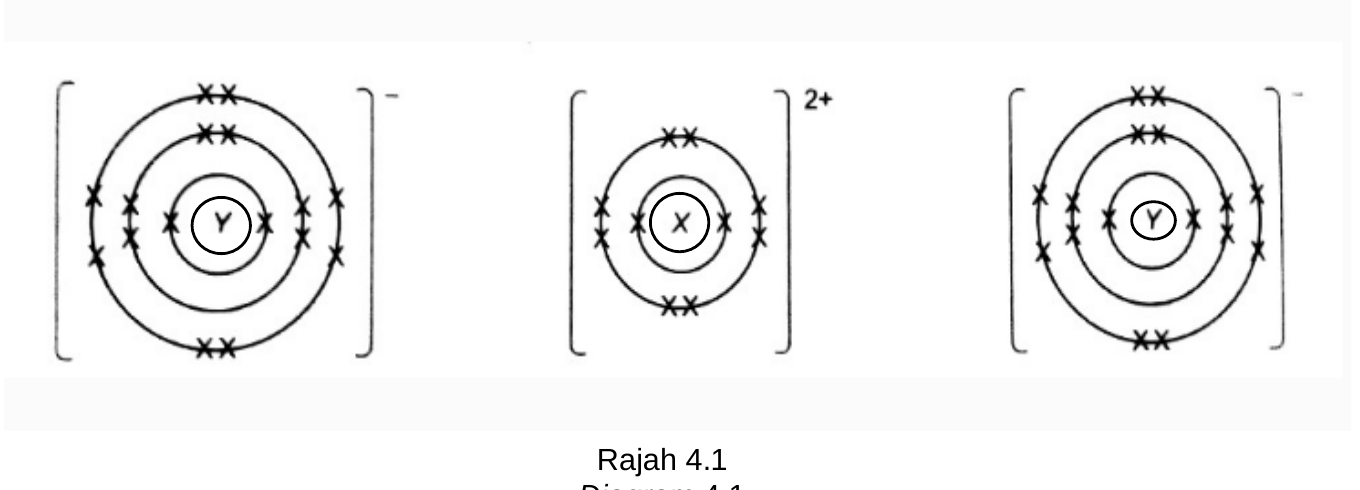
- (a)
How is the chemical bond formed?
[1] - (b)(i)
Based on Diagram 4.1, state the type of compound.
[1] - (b)(ii)
Based on Diagram 4.1, write the formula of the compound.
[1] - (c)(i)
Diagram 4.2 shows the arrangement of water molecules in liquid water and ice. State the type of bond that exists between water molecules.
[1]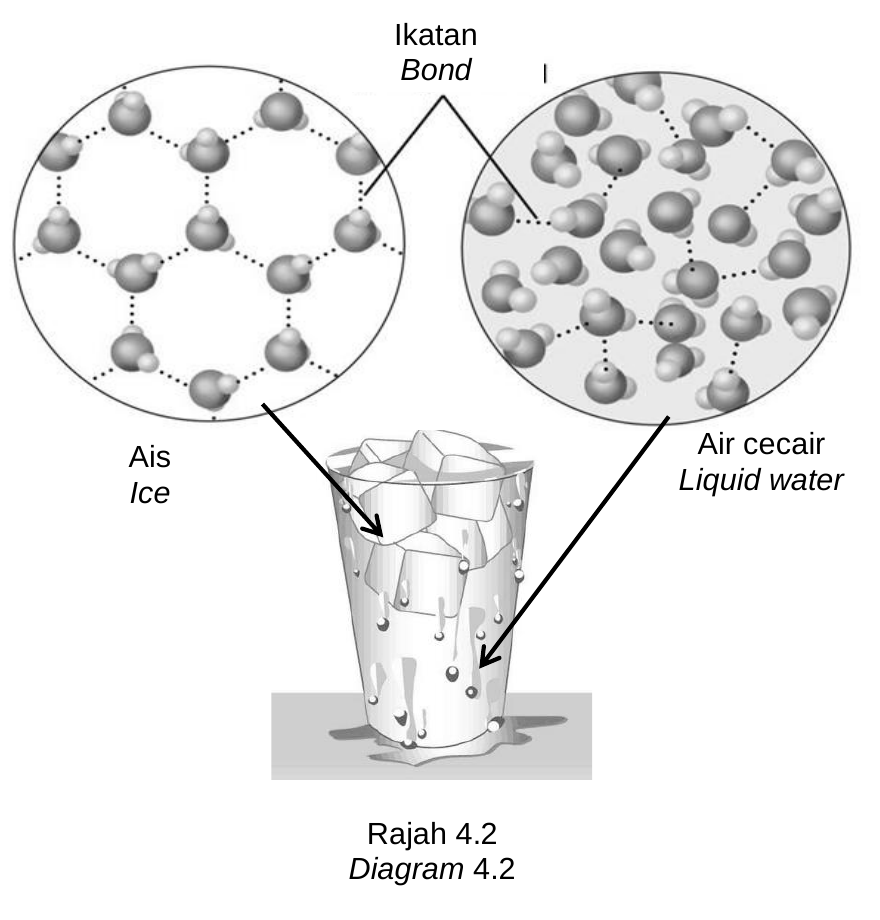
- (c)(ii)
Water is added into a glass containing ice cubes. What can be observed? Explain the observation in terms of bond formation.
[3]
Diagram 5 shows part of the Periodic Table of Elements. The letters A, B, K, L, M and N do not represent the actual symbols of the elements. Their positions are shown in the figure.
Medium8 marks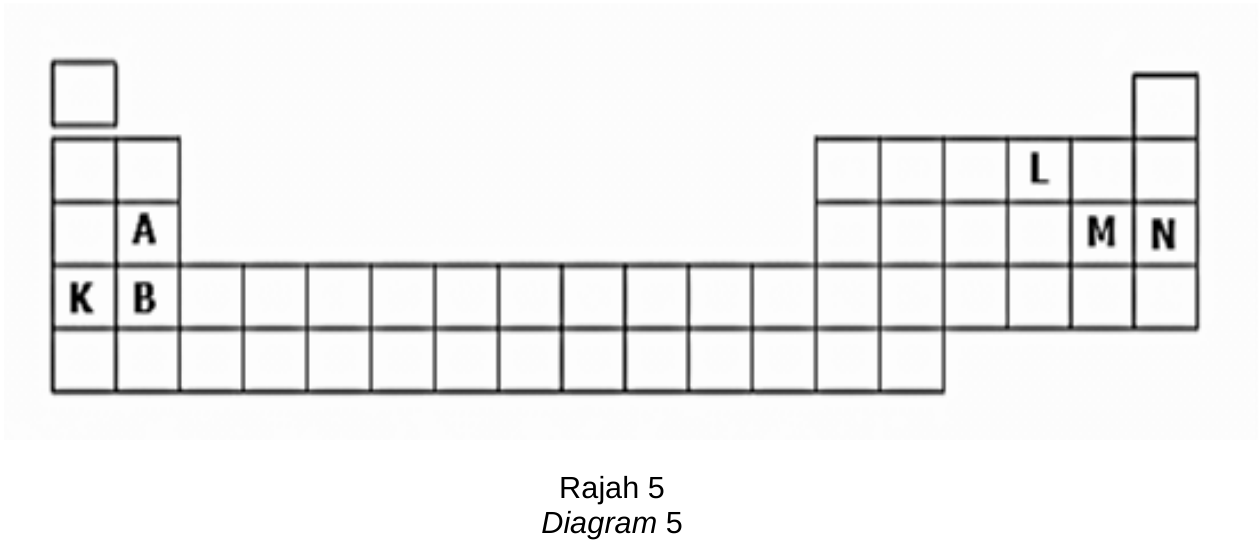
- (a)
State the position of element L in the Periodic Table of the Elements.
[1] - (b)
Which element exists as diatomic molecule?
[1] - (c)(i)
9.4 g of oxide of element K reacts with 250 cm³ of distilled water to produce an alkaline solution. [Relative atomic mass: K = 39; O = 16; H = 1] Write a balanced chemical equation for the reaction.
[2] - (c)(ii)
Calculate the molarity of the solution formed.
[2] - (d)
Elements A and B are in the same group but have different reactivity when they react with oxygen. Explain why there is a difference in reactivity between the two elements.
[2]
A student carried out an experiment to determine the value of heat of displacement. Diagram 6 shows the set-up of the apparatus (a plastic cup containing 50 cm³ of 0.2 mol dm⁻³ copper(II) sulphate solution; excess magnesium powder is added). Initial temperature of copper(II) sulphate solution, θ1 = 28 °C. Highest temperature of mixture, θ2 = 48 °C.
Medium9 marks- (a)(i)
Based on the experiment, what is meant by the heat of displacement?
[1]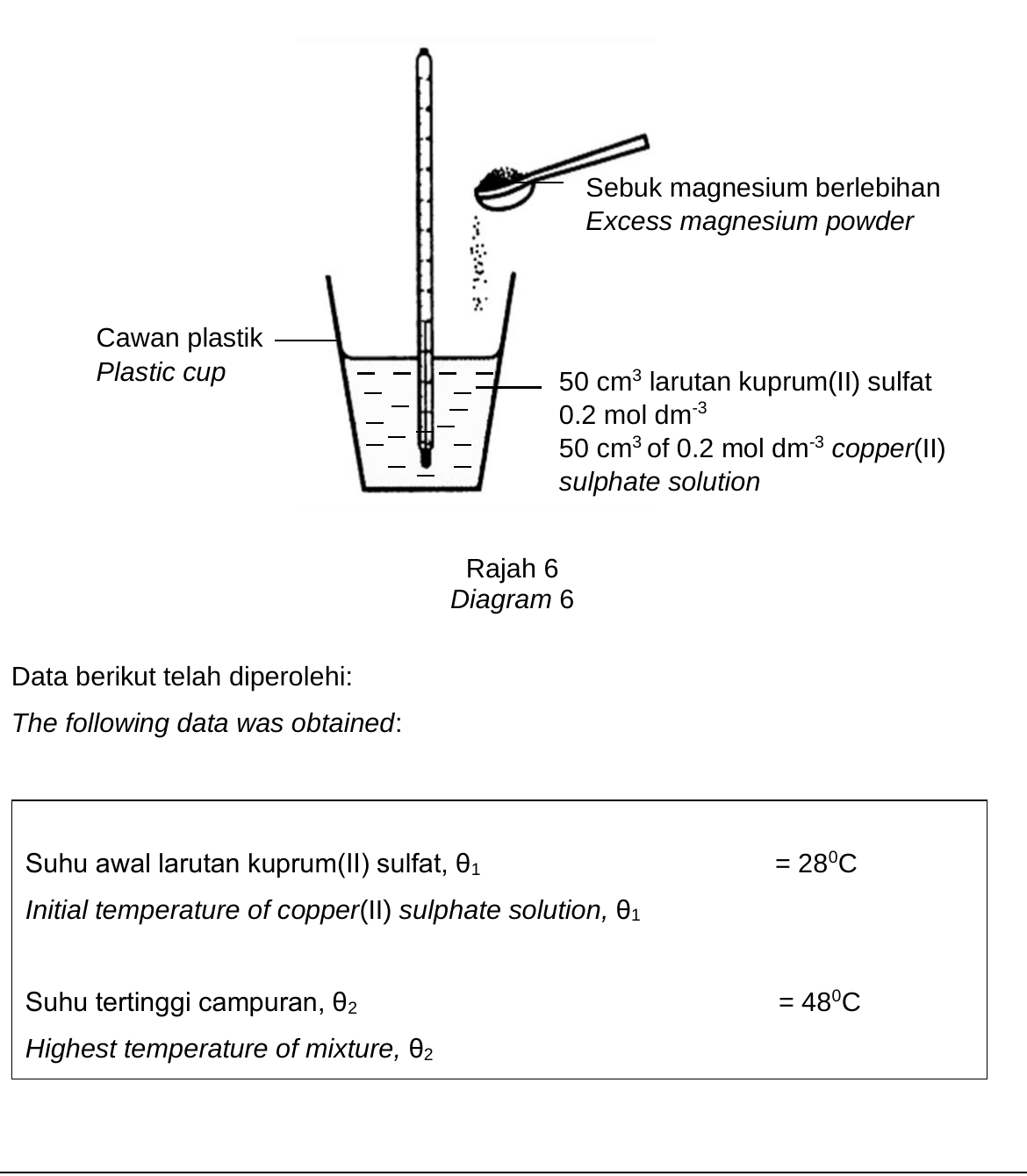
- (a)(ii)
Why is a polystyrene cup used in this experiment?
[1] - (a)(iii)
Complete the ionic equation for the reaction that occurred. Mg + Cu²⁺ → ……
[1] - (a)(iv)
Calculate the heat of displacement in the experiment. Given that the specific heat capacity of the solution is 4.2 J g⁻¹ °C⁻¹ and the density of the solution is 1.0 g cm⁻³.
[3] - (b)
Table 6 shows the heat of neutralisation for two sets of experiments using different acids reacting with potassium hydroxide solution: Set I: Acid J + potassium hydroxide solution, -55 kJ mol⁻¹; Set II: Acid K + potassium hydroxide solution, -57 kJ mol⁻¹. Explain the difference in the values of heat of neutralisation between set I and set II.
[3]
Diagram 7 shows apparatus set-up to determine the rate of reaction between hydrochloric acid and zinc metal (conical flask with hydrochloric acid and excess zinc chips, connected to a gas syringe collecting hydrogen gas).
Medium10 marks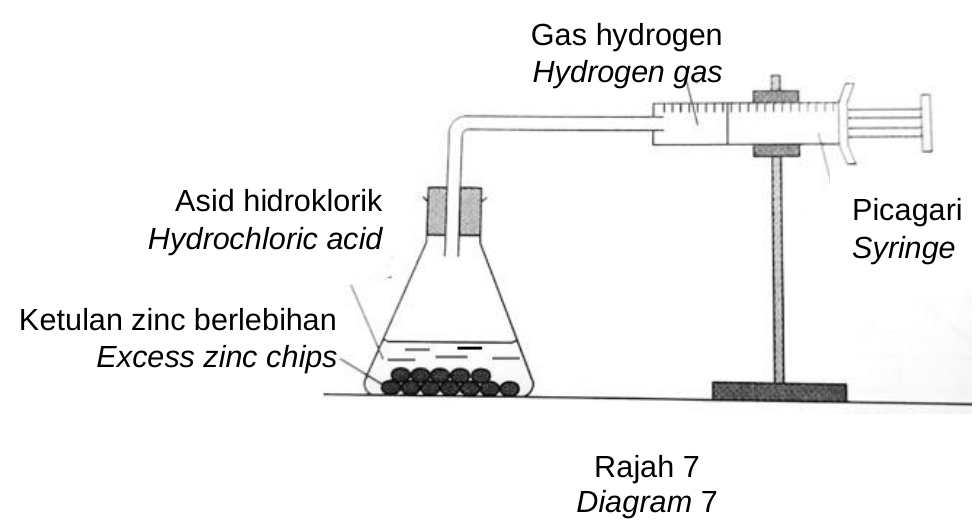
- (a)
What is the meaning of rate of reaction?
[1] - (b)
State an observation in the experiment.
[1] - (c)
Write a balanced chemical equation for the reaction.
[2] - (d)
If the experiment is repeated by using sulphuric acid to replace hydrochloric acid, predict the rate of reaction.
[1] - (e)(i)
The following is part of the results of the experiment. Table 7: Time (s) 0, 60, 120, 180, 240, 300; Total volume of hydrogen gas (cm³) 0.00, 17.20, 30.90, 40.10, 45.30, 45.30. Calculate the overall average rate of reaction in the experiment.
[1] - (e)(ii)
Calculate the average rate of reaction in the third minute.
[2] - (f)
In a community cooking event for a food carnival, Rizal is assigned to add potatoes as one of the main ingredients in the food. Explain how he can cook the potatoes quickly and state the factor involved.
[2]
Diagram 8 shows two types of bicycles, A (a racing bicycle) and B (an old bicycle). One bicycle is made of pure metal and the other is made of alloy.
Medium10 marks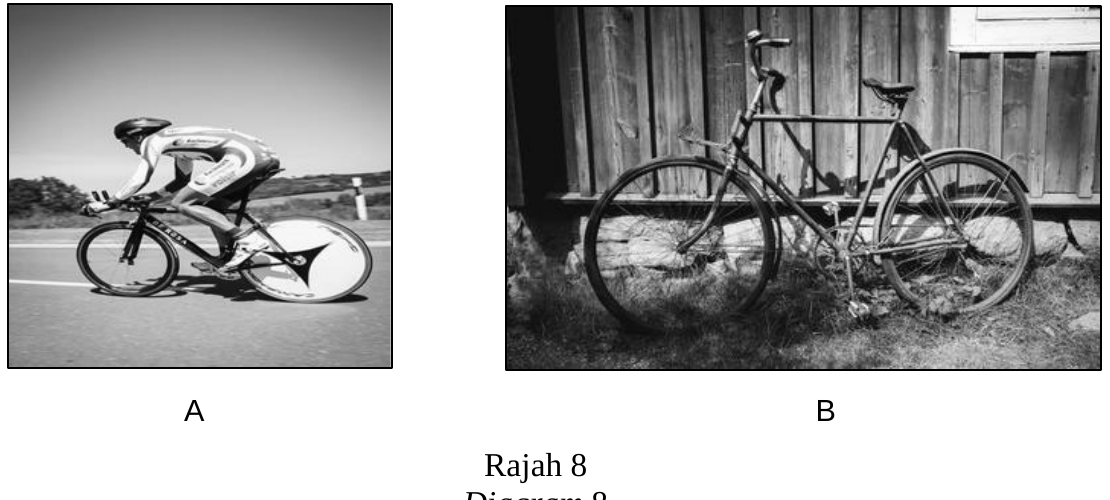
- (a)(i)
State the meaning of alloy.
[1] - (a)(ii)
Based on the diagram, choose which bicycle has a lighter frame.
[1] - (a)(iii)
Draw and label the arrangement of particles of the material used in 8(a)(ii).
[2] - (a)(iv)
Uwais wants to build a rack to keep dictionaries in the library in his school. Justify the use of alloy to build the book rack. Suggest an alloy that Uwais can use.
[3] - (b)
Describe briefly how Uwais tests the hardness of the alloy that he has chosen.
[3]
Section B
Answer any one question in Section B.
Medium20 marks- (a)(i)
Table 9 shows observations when a dry red litmus paper is dipped into two beakers containing sodium hydroxide pellets in solvent P and solvent Q respectively to study the properties of alkali. Beaker A (solvent P): the colour of red litmus paper does not change. Beaker B (solvent Q): red litmus paper turns blue. Based on Table 9, state the chemical formula of sodium hydroxide. Identify solvent P and solvent Q. Explain why there are differences in the observations.
[5]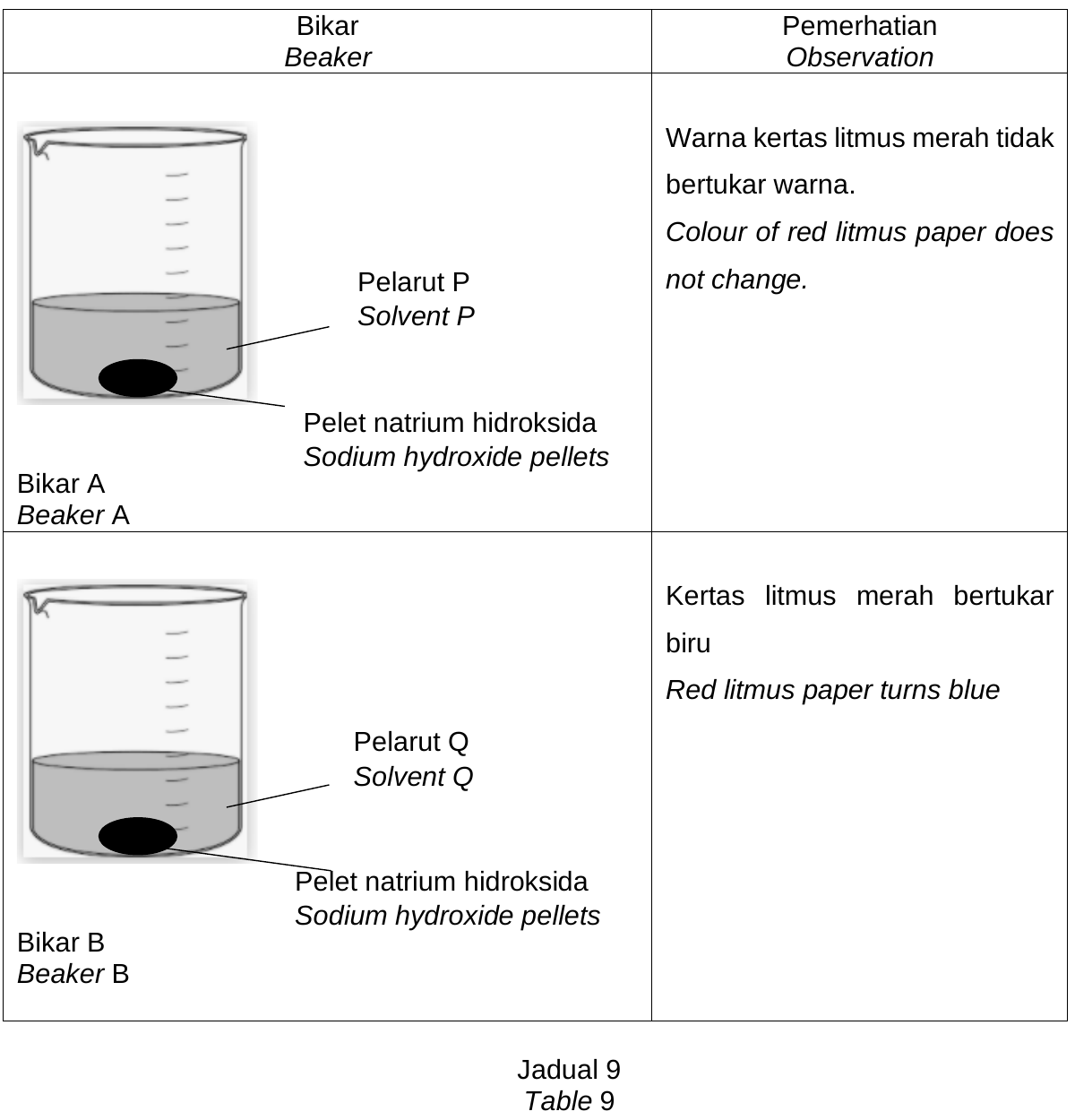
- (a)(ii)
A student adds 25 cm³ of 0.01 mol dm⁻³ hydrochloric acid into 20 cm³ of sodium hydroxide solution. Calculate the concentration of the sodium hydroxide solution. Determine the pH value of the sodium hydroxide solution.
[6] - (b)(i)
Diagram 9 shows a flowchart of salt T: salt T + Na2CO3 → PbCO3; PbCO3 heated → solid P + colourless gas S; salt T heated → solid P + brown gas Q + colourless gas R. Identify substances P, Q, R, S and T.
[5]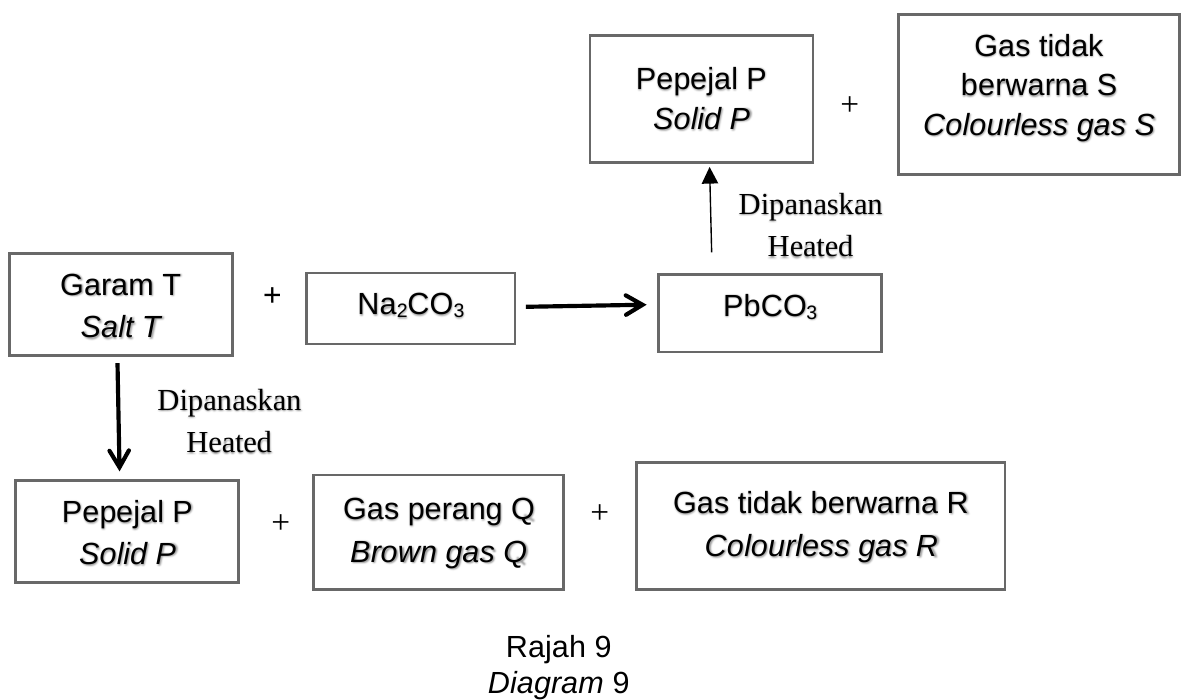
- (b)(ii)
Salt T is a white solid. Describe a chemical test to verify the anion present in the salt.
[4]
Answer any one question in Section B.
Medium20 marks- (a)(i)
Diagram 10 shows the apparatus set-up for the electrolysis of 1.0 mol dm⁻³ sodium chloride solution using carbon electrodes (electrode X gives a colourless gas; electrode Y gives a greenish yellow gas). State the factors that determine the products formed at electrode X and electrode Y.
[2]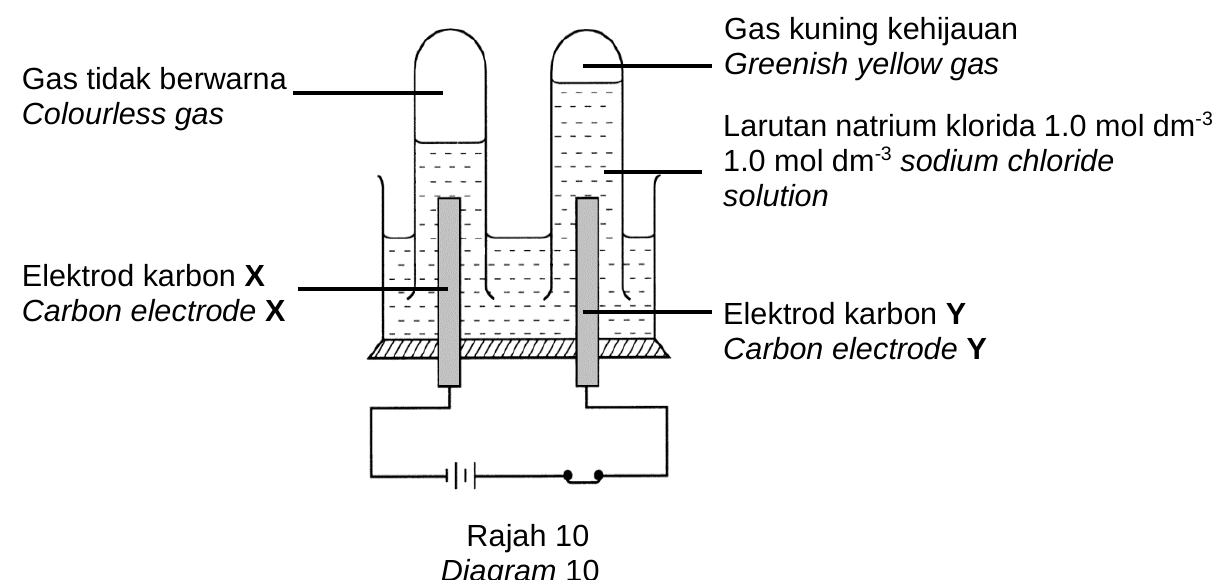
- (a)(ii)
Explain the reactions at electrodes X and Y. Include: list of ions attracted to each electrode; names of the ions selectively discharged at each electrode; the reason why the ions are selectively discharged; half equation for each reaction.
[8] - (b)(i)
Table 10.1 shows the standard electrode potential values of half cells for some metals: P²⁺ + 2e⁻ ⇌ P, E° = +0.34 V; Mg²⁺ + 2e⁻ ⇌ Mg, E° = -2.38 V; Q⁺ + e⁻ ⇌ Q, E° = +0.80 V; Zn²⁺ + 2e⁻ ⇌ Zn, E° = -0.76 V. Arrange the atoms and ions in Table 10.1 in an ascending order of the strength of oxidising agents and of reducing agents. Suggest metal P and Q.
[4]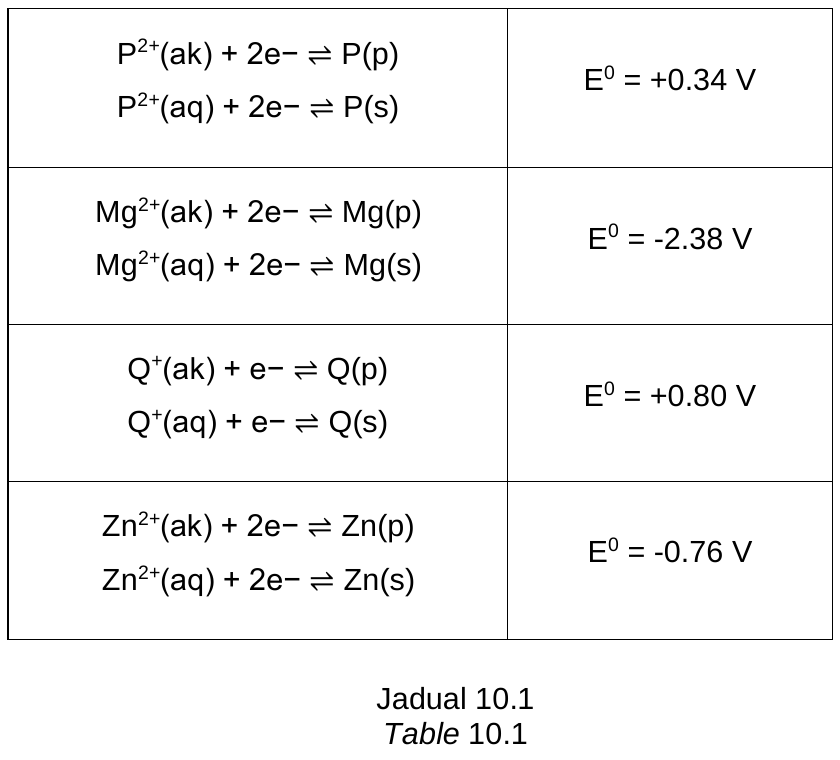
- (b)(ii)
Table 10.2 shows reactants of two sets of displacement reactions of metal: Set I: Mg(s) + Zn²⁺(aq); Set II: P(s) + Zn²⁺(aq). Based on your answer in 10(b)(i), identify whether the reaction will occur or not for Set I and Set II. Explain your answer.
[6]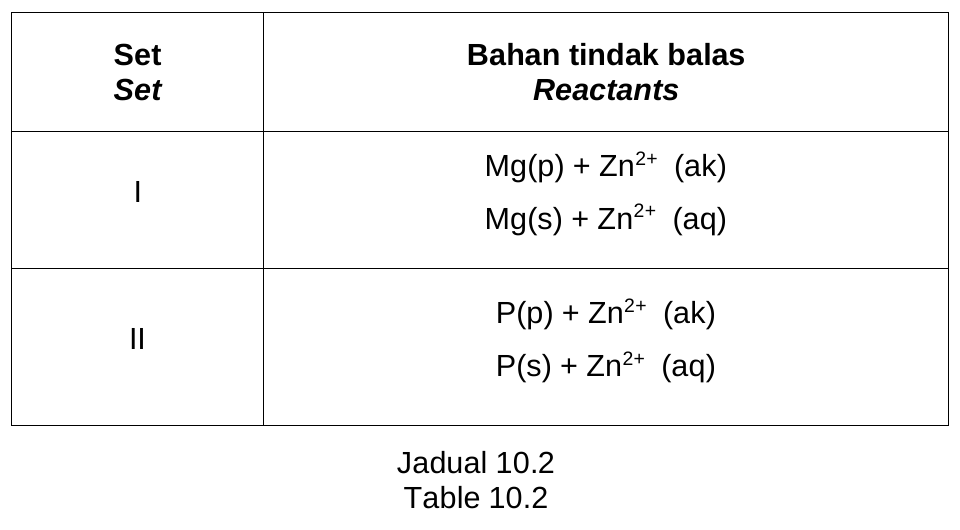
Section C
Answer all questions in Section C.
Medium20 marks- (a)(i)
Table 11 shows information of three types of carbon compounds P, Q and R. P: has less than four carbon atoms per molecule; reacts with acidified potassium manganate(VII) to produce a compound with a sour smell; pH = 7. Q: has less than three carbon atoms per molecule; reacts with potassium carbonate solution to produce a colourless gas; conducts electricity in solution form. R: fruity smell; formed from the reaction between P and Q. State the homologous series of compound R and the general formula of compounds P and Q.
[3]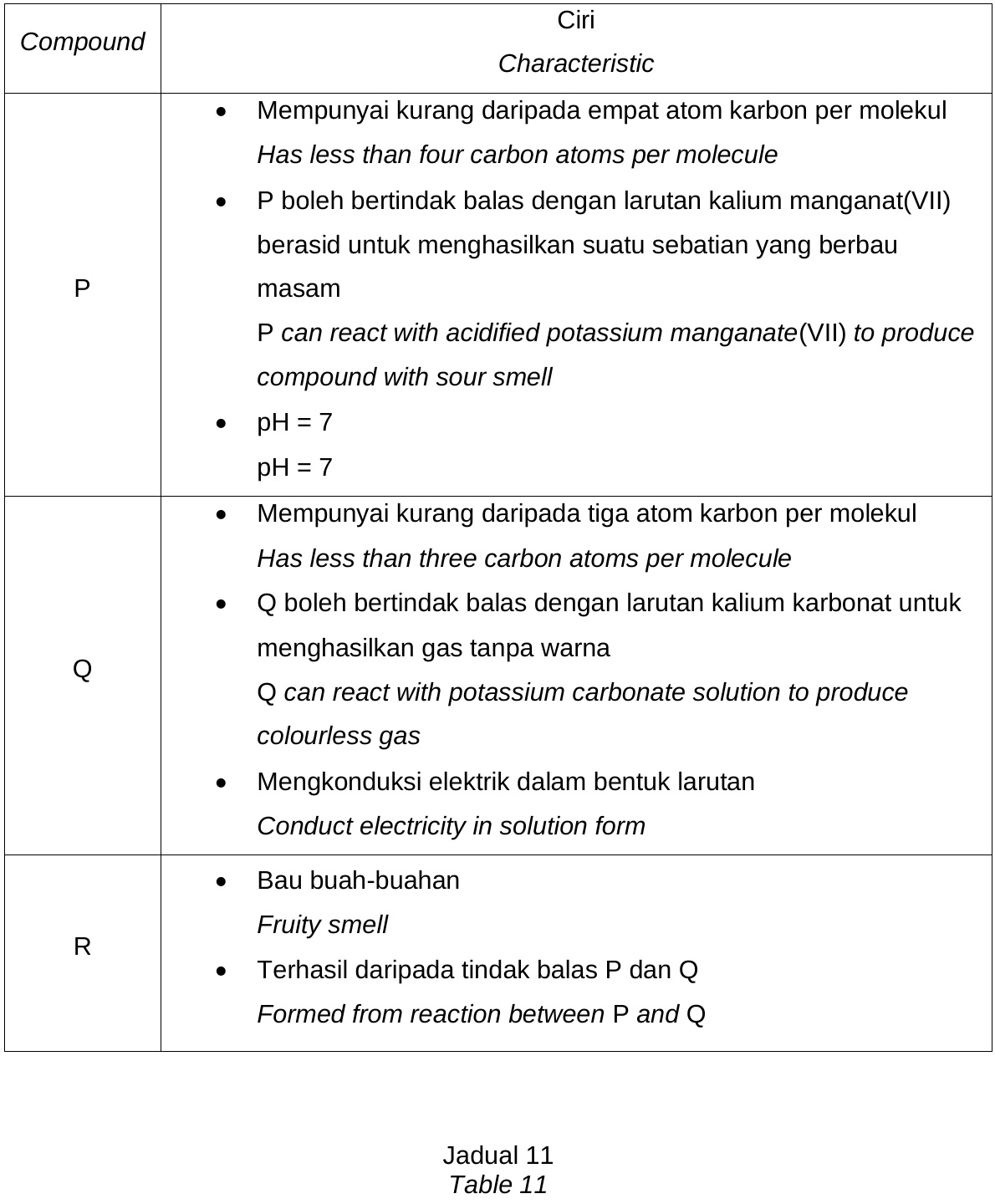
- (a)(ii)
By naming compounds P, Q and R, describe briefly how you can prepare compound R in the school laboratory. In your description, include the chemical equation for the reaction.
[8] - (b)(i)
Diagram 11 shows two types of fuel A and B according to the composition commonly used in Malaysia (Fuel A: mostly CH4 with some C4H10; Fuel B: mostly C4H10 with some C3H8). Both fuels are mixtures of hydrocarbons that burn completely in oxygen to produce carbon dioxide gas and water. Write a chemical equation when the major component of fuel A and of fuel B burns completely in oxygen.
[4]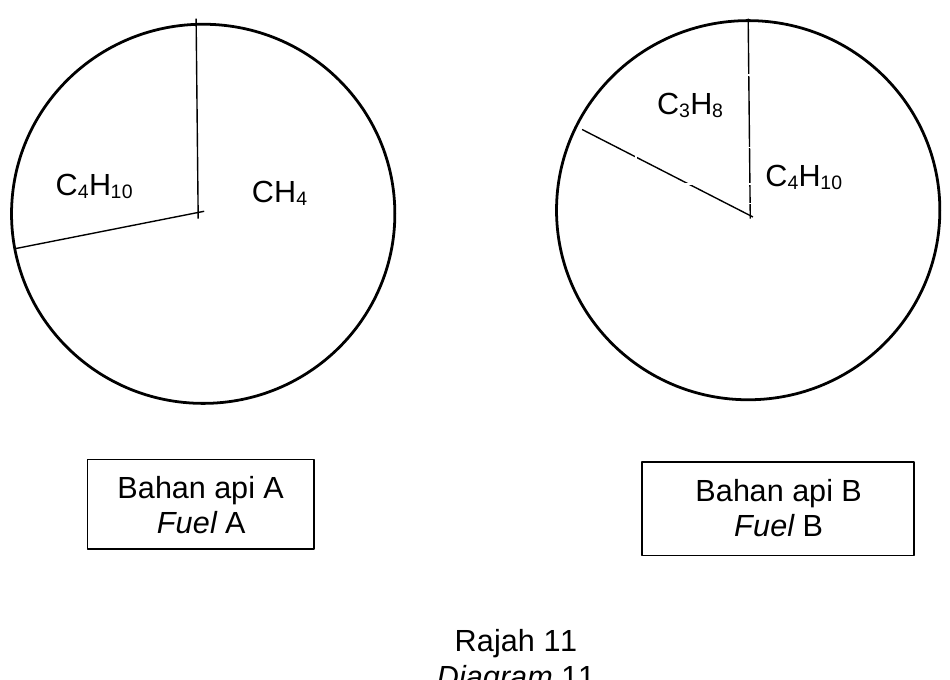
- (b)(ii)
Madam Marissa wants to buy cooking gas for the kitchen in her house. Between fuels A and B, which one should she buy? Justify your answer from the aspects of energy release and environmental issues.
[5]