Write your answer on paper. Then open the answer to check it.
Section A
Table 1 shows three substances and their chemical formulae: helium, He; naphthalene, C10H8; sodium chloride, NaCl.
Medium5 marks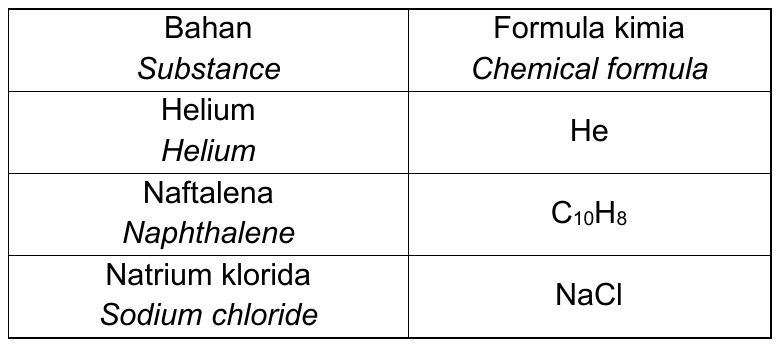
- (a)
State the type of particles in helium.
[1] - (b)
What is the physical state of sodium chloride at room conditions?
[1] - (c)(i)
Diagram 1 shows the heating curve for solid naphthalene (A rising to B at 80 °C, flat from B to C, then rising to D). The melting point of naphthalene is 80 °C. What is meant by melting point?
[1]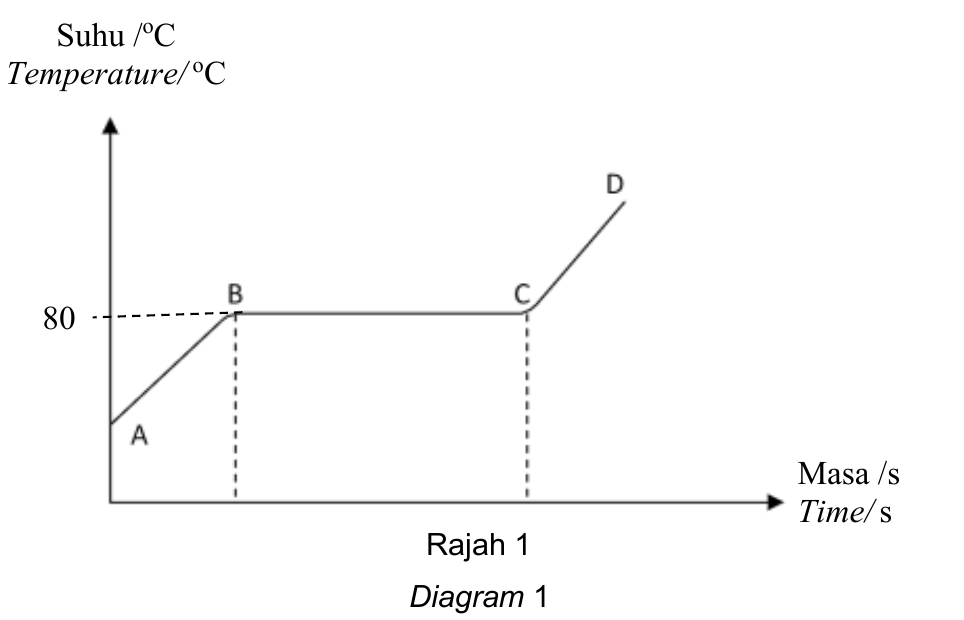
- (c)(ii)
Explain why the temperature remains constant from B to C.
[2]
Diagram 2.1 shows two pairs of spectacles made from two different types of lenses. The lens of spectacle A is made from fused silica glass while the lens of spectacle B is made from photochromic glass which turns dark when exposed to sunlight. Diagram 2.2 shows a Maglev train that can reach speeds of up to 581 km/h.
Medium5 marks- (a)(i)
State two photochromic materials used in spectacle lenses B.
[2]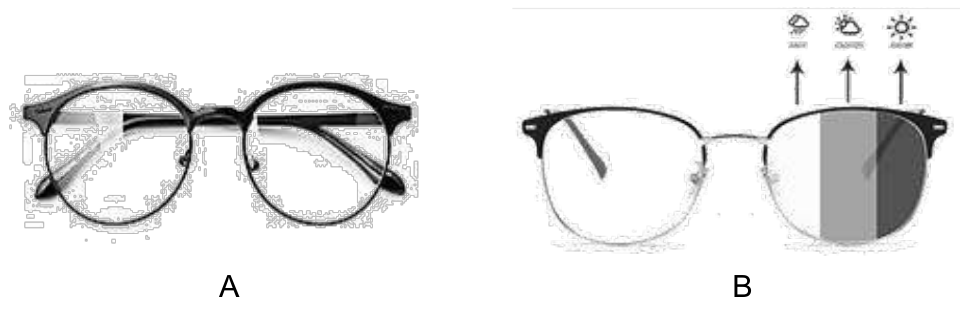
- (a)(ii)
State the advantage of the photochromic glass.
[1] - (b)(i)
State the appropriate alloy used in this transport (Diagram 2.2, Maglev train).
[1]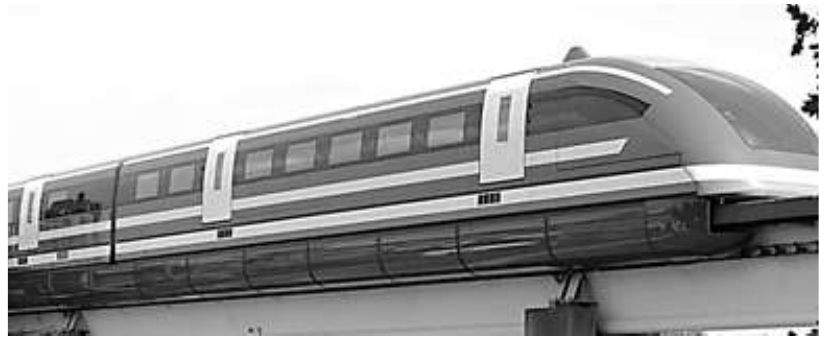
- (b)(ii)
Why is the alloy in (b)(i) suitable to use?
[1]
Diagram 3 shows the apparatus set-up for an experiment to investigate electron transfer at a distance in a redox reaction (iron(II) sulphate solution with dilute sulphuric acid at X; acidified potassium dichromate(VI) solution at Y; carbon electrodes connected to a galvanometer G). When the circuit is completed, the galvanometer shows a deflection.
Medium6 marks- (a)
State the colour of iron(II) sulphate solution.
[1]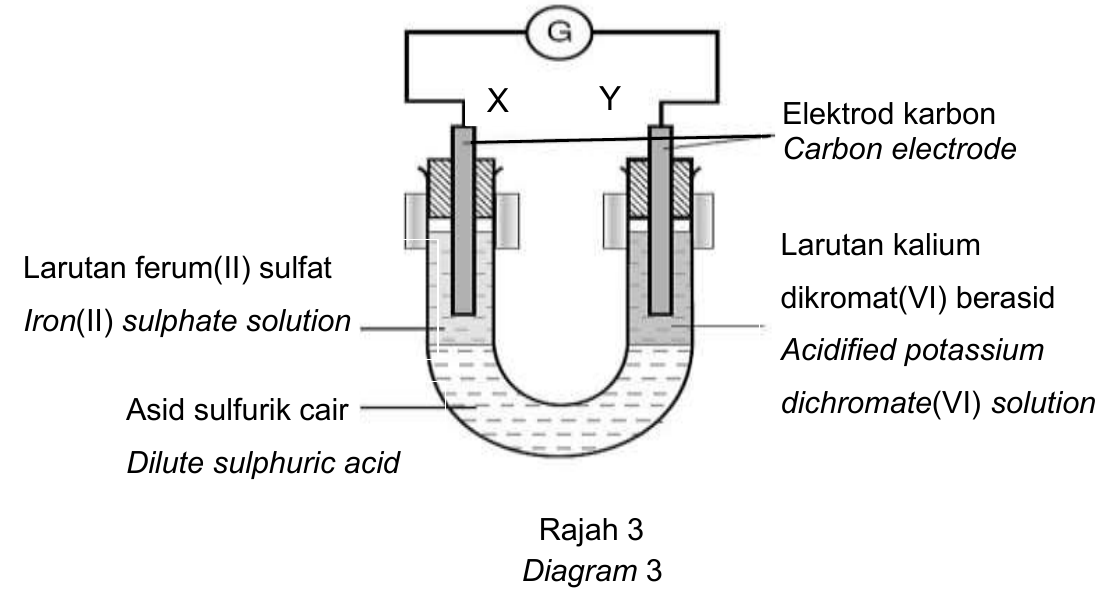
- (b)(i)
Write the half equation for the reaction at X.
[1] - (b)(ii)
State the type of reaction in (b)(i).
[1] - (c)(i)
State the observation for acidified potassium dichromate(VI) solution.
[1] - (c)(ii)
State the change in oxidation number of chromium in (c)(i).
[1] - (c)(iii)
Based on the answers in (b)(i) and (c)(i), on Diagram 3, draw the arrows to show the direction of electron flow.
[1]
Diagram 4 shows three elements in the Periodic Table of Elements: sodium (23, proton number 11), chlorine (35, proton number 17) and argon (40, proton number 18).
Medium7 marks- (a)
State one use of the element argon.
[1] - (b)(i)
State one similarity between the elements in Diagram 4.
[1] - (b)(ii)
Why does argon not react with chlorine?
[1] - (b)(iii)
Sodium burns vigorously with chlorine gas to form a white compound, sodium chloride. Write the chemical equation for this reaction. Explain how this compound is formed.
[4]
Pipes and raincoats are made from polymer X, whose structural formula is shown in Diagram 5.1 (repeating unit -CHCl-CH2-). Diagram 5.2 shows that latex obtained from rubber trees can be stored in liquid as well as solid form. Diagram 5.3 shows rubber gloves and car tyres.
Medium8 marks- (a)(i)
What is the meaning of polymer?
[1]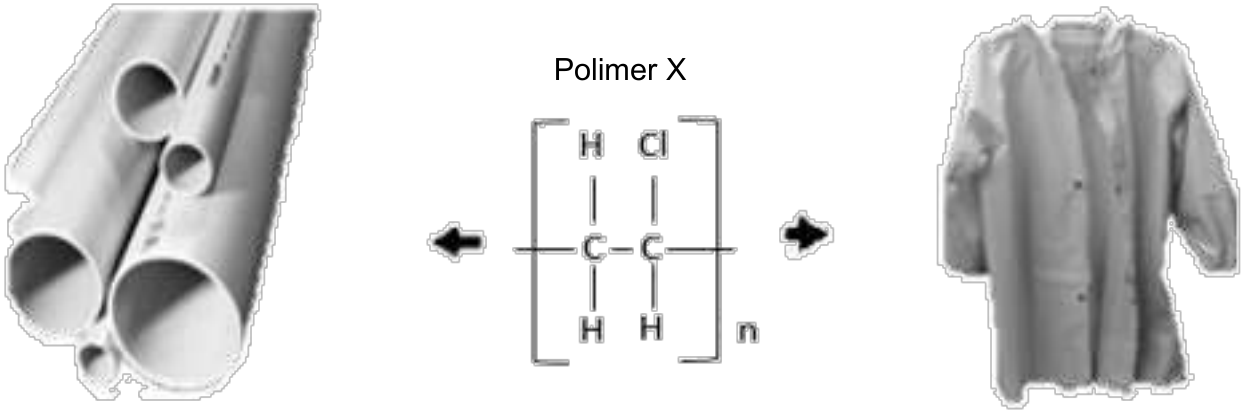
- (a)(ii)
State the name of the monomer that makes up polymer X.
[1] - (b)(i)
Explain how latex obtained from rubber trees can retain its liquid properties.
[4]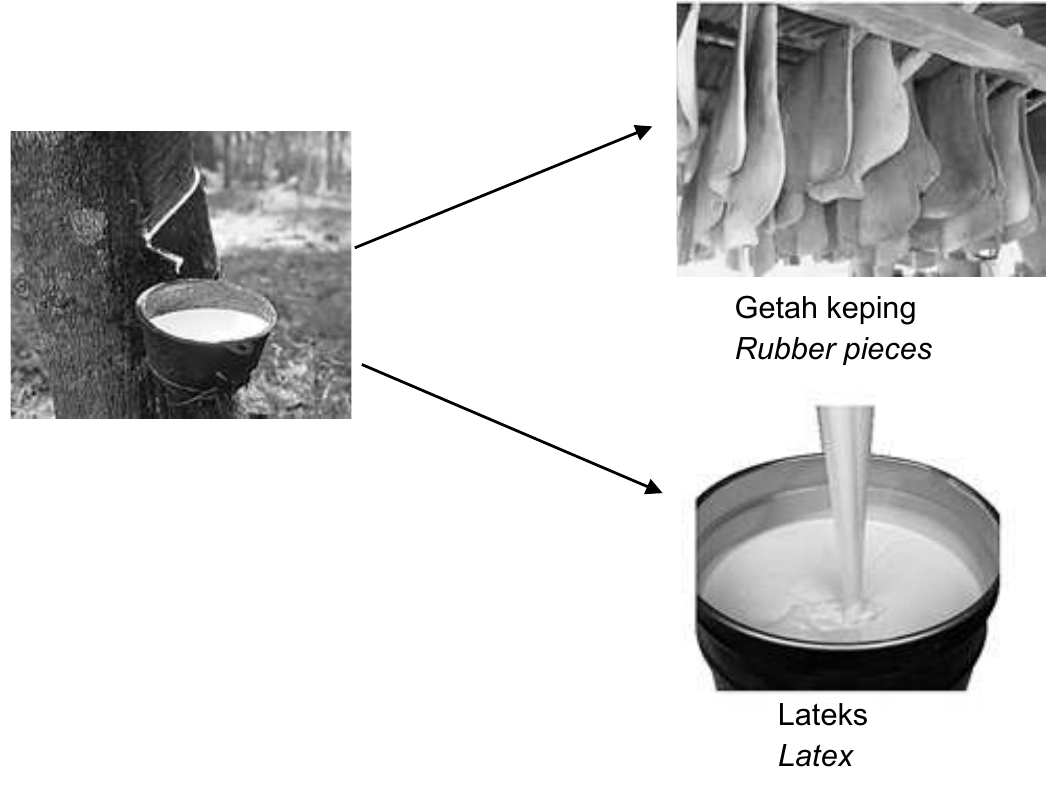
- (b)(ii)
Compare the differences between these two types of rubber (rubber gloves and car tyres, Diagram 5.3).
[2]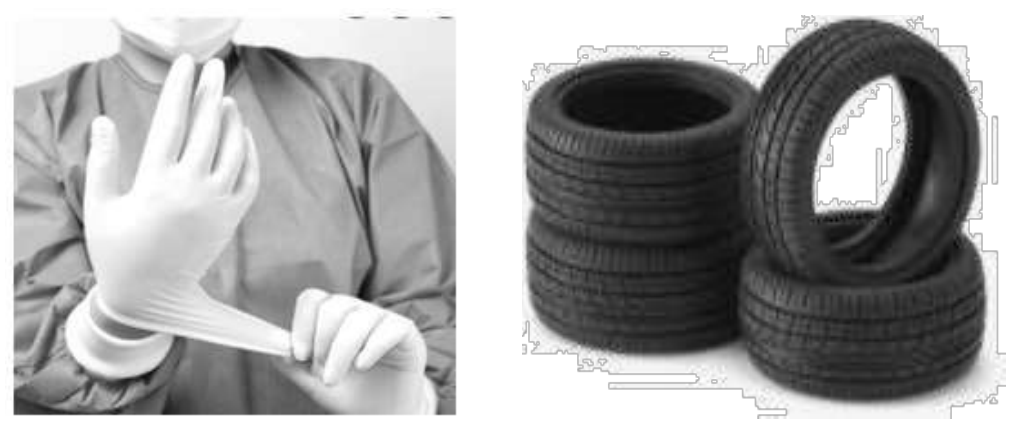
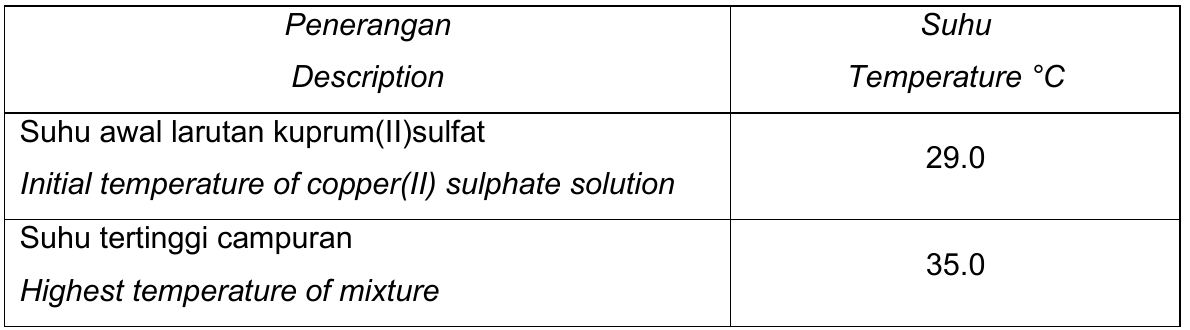
Diagram 6 shows the apparatus set-up used in an experiment to determine the heat of displacement of copper by zinc (zinc powder added to 50 cm3 of 1.0 mol dm-3 copper(II) sulphate solution, CuSO4). Table 6 shows the results: initial temperature of copper(II) sulphate solution 29.0 °C; highest temperature of mixture 35.0 °C.
Medium9 marks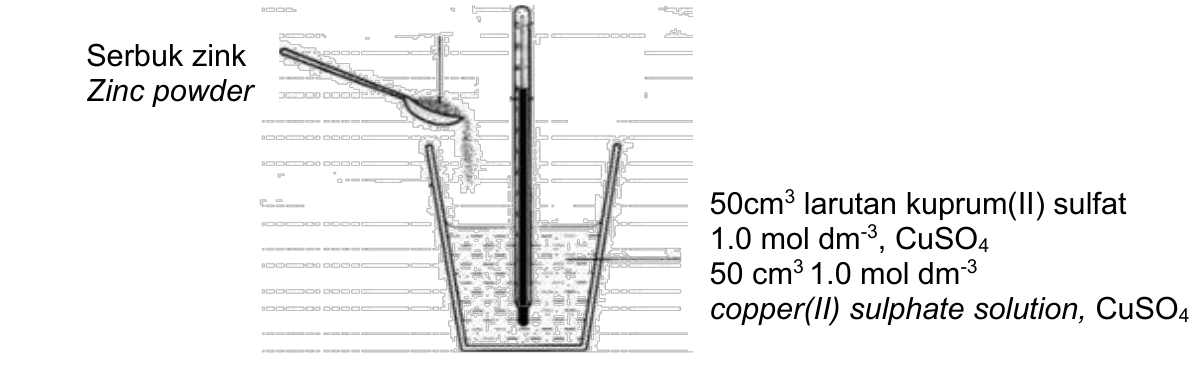
- (a)
What is the meaning of heat of displacement?
[1] - (b)
What is the colour change of copper(II) sulphate solution in this reaction?
[1] - (c)(i)
Calculate the heat released during the reaction. [Specific heat capacity of solution, c = 4.2 J g-1 °C-1; density of solution = 1 g cm-3]
[1] - (c)(ii)
Calculate the heat of displacement of copper by zinc.
[2] - (c)(iii)
Write the chemical equation for the displacement reaction in this experiment.
[1] - (d)
The calculated value of the heat of displacement for this reaction is less than the actual value. Give a reason.
[1] - (e)
The experiment is repeated by using magnesium powder to replace zinc powder. Compare the heat of displacement that will be obtained and explain your answer.
[2]
Question on traditional medicine (ginseng, Diagram 7.1), banned chemicals in cosmetics, salt and formaldehyde (Diagram 7.2) and healthier food alternatives.
Medium10 marks- (a)(i)
Diagram 7.1 shows the ginseng plant, used in traditional medicine since ancient times. State one disease that can be cured with ginseng.
[1]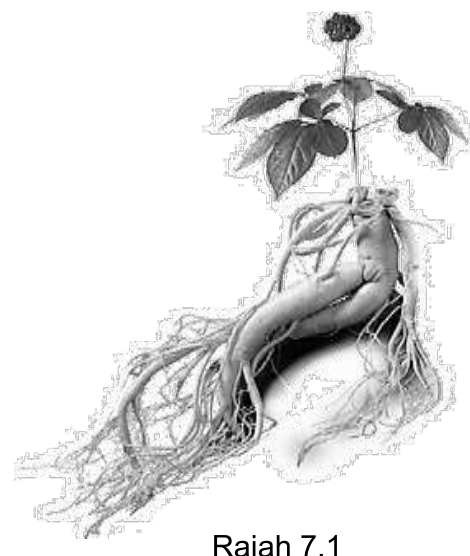
- (a)(ii)
How is ginseng used to treat disease?
[1] - (b)(i)
Some commercialised cosmetics contain banned chemicals that can cause harm to consumers. State two effects of banned chemicals on consumers.
[2] - (b)(ii)
Give one solution to prevent the situation in (b)(i) from happening.
[1] - (c)
Diagram 7.2 shows table salt used in the food industry and formaldehyde used in the cosmetics industry. What is the functional similarity of the two substances? How do these substances perform their function?
[3]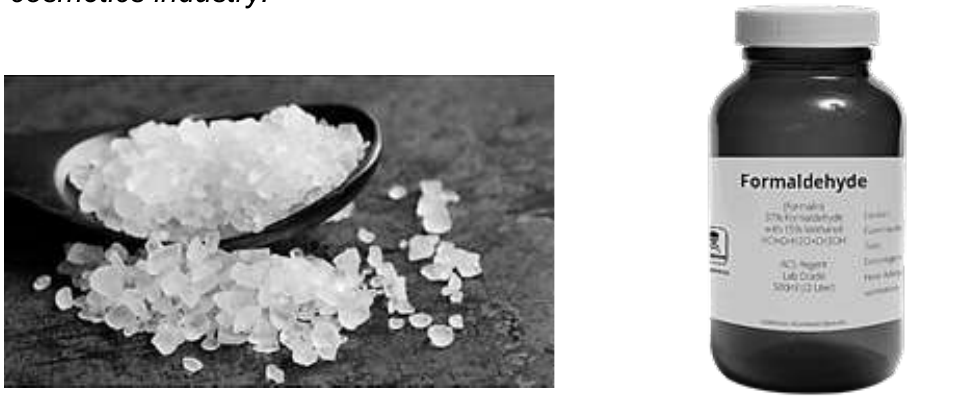
- (d)
Excessive consumption of salt and sugar will cause adverse effects on people with diabetes and high blood pressure. Suggest other alternatives for them to enjoy tastier food without further endangering their health.
[2]
Diagram 8 shows the conversion of W to X. W is a member of the homologous series of alkenes having 2 carbon atoms. W + H2O gives X (reaction I); X is converted to CH3COOH (reaction II); X and CH3COOH react to form Y.
Medium10 marks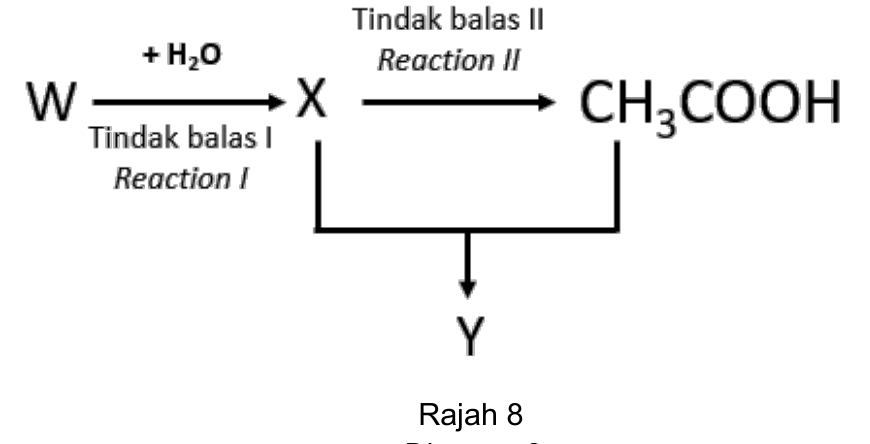
- (a)(i)
Name W.
[1] - (a)(ii)
Write the chemical equation for reaction I.
[2] - (b)
X can be converted to ethanoic acid, CH3COOH via reaction II. Explain how this conversion occurs.
[2] - (c)
Table 8.1 shows the observations for the reaction between ethanoic acid and compound Y with calcium carbonate chips (ethanoic acid: gas bubbles released that turn lime water cloudy; Y: observation blank). Suggest an observation when Y is added to the chips of calcium carbonate. Explain.
[2]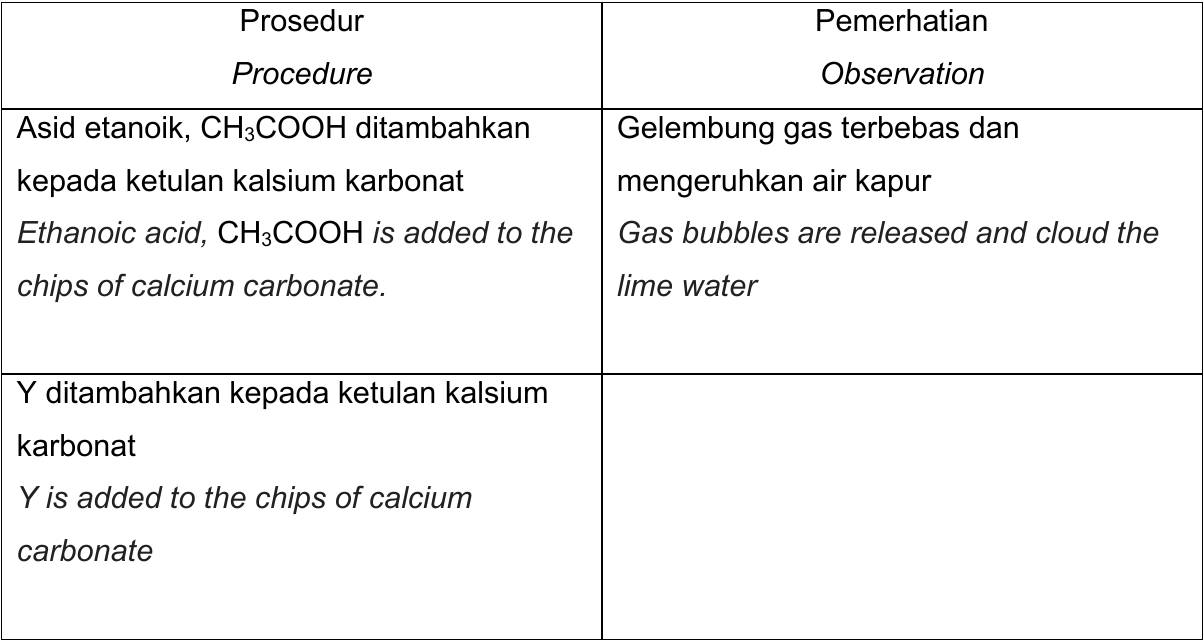
- (d)
Compounds W and X have the same number of carbon atoms. Table 8.2 shows the boiling points: W -42 °C, X 78 °C. State the physical state of compounds W and X at room temperature. Explain.
[3]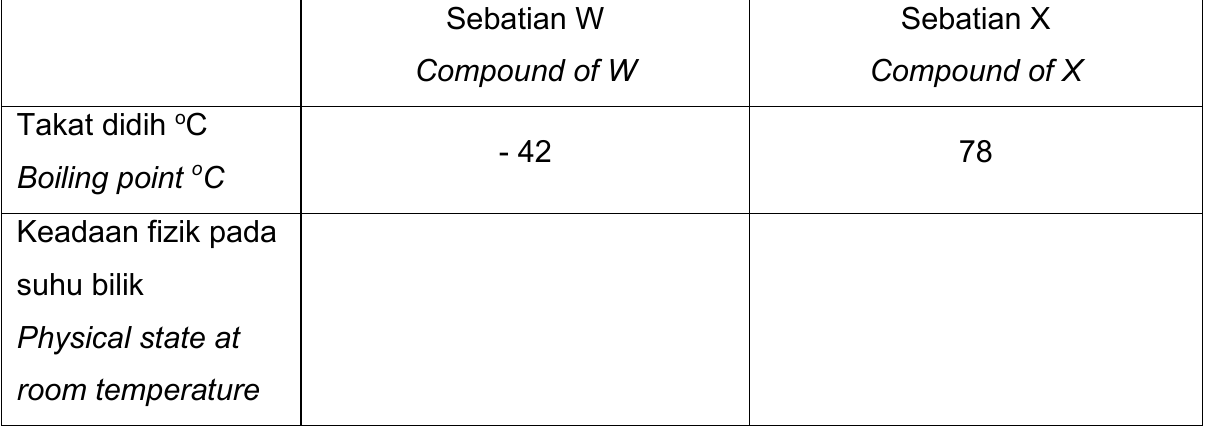
Section B
Section B, answer any one question. Rate of reaction is affected by several factors. Diagram 9.1 shows Wani asking her mother why meat is cut small to cook; her mother says meat cut into small pieces takes a shorter time to cook than big pieces.
Hard20 marks- (a)(i)
State the meaning of rate of reaction.
[1]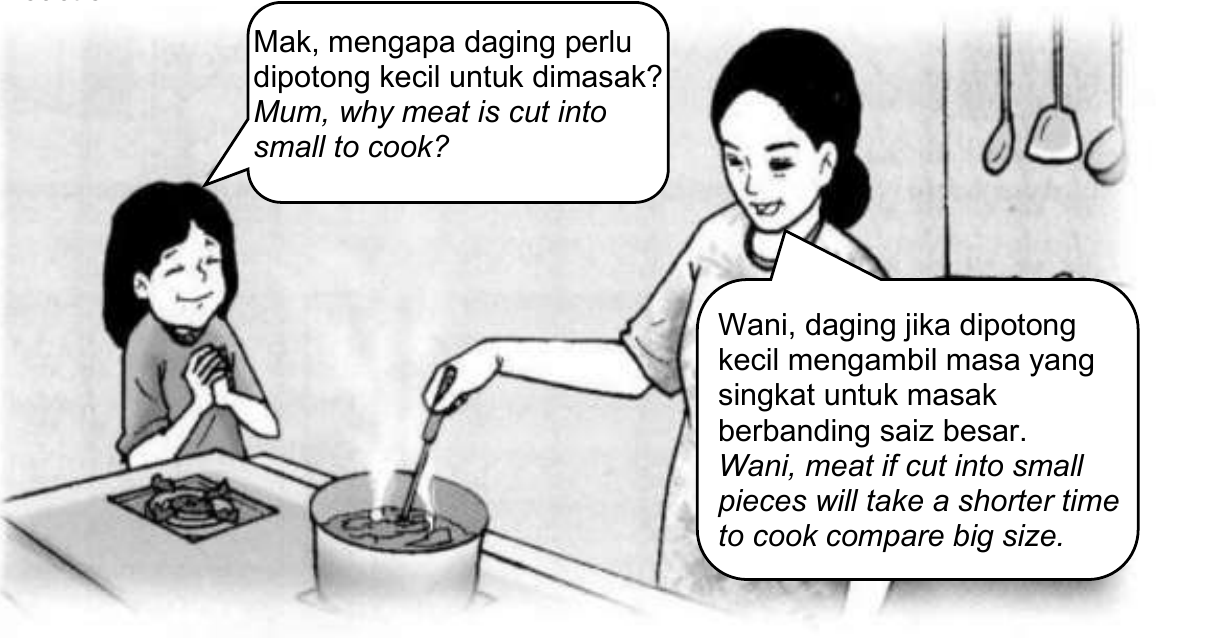
- (a)(ii)
Based on the conversation above, state one factor that affects the time taken for the meat to cook. Explain your answer.
[3] - (b)(i)
Table 9 shows three experiments with 5 cm3 of 2.0 mol dm-3 hydrochloric acid and zinc: Experiment I at 30 °C (50 s); Experiment II at 40 °C (30 s); Experiment III at 40 °C with copper(II) sulphate solution added (10 s). The equation is Zn(s) + 2HCl(aq) → ZnCl2(aq) + H2(g). Calculate the maximum volume of hydrogen gas produced. [Molar gas volume: 24 dm3 mol-1 at room conditions]
[3]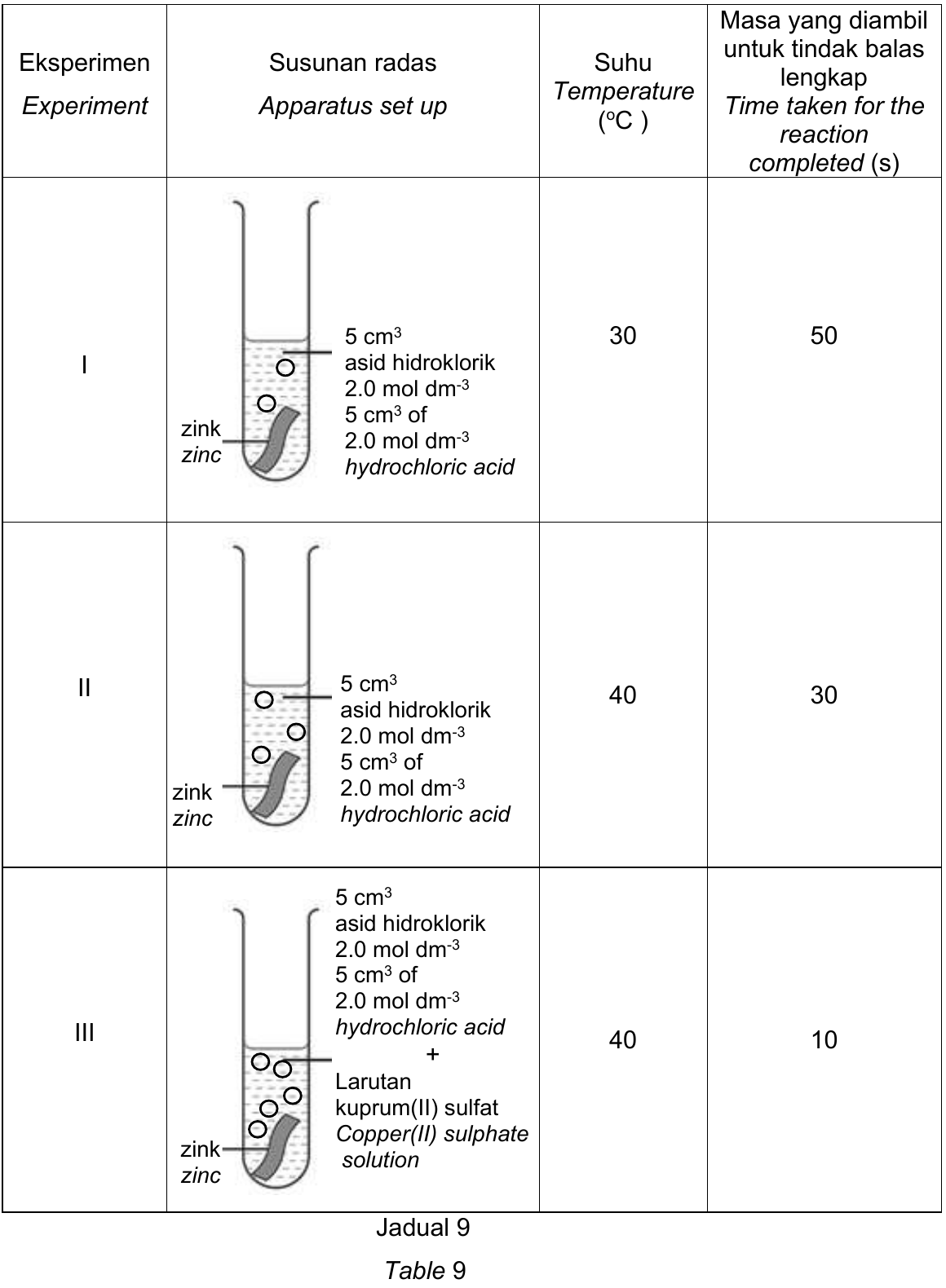
- (b)(ii)
Sketch the graphs of the volume of hydrogen gas against time for Experiment I, II and III on the same axes.
[3] - (b)(iii)
Compare the rates of reaction between Experiment I and II, and between Experiment II and Experiment III. Explain with reference to collision theory why there are differences in the rates of reaction.
[10]
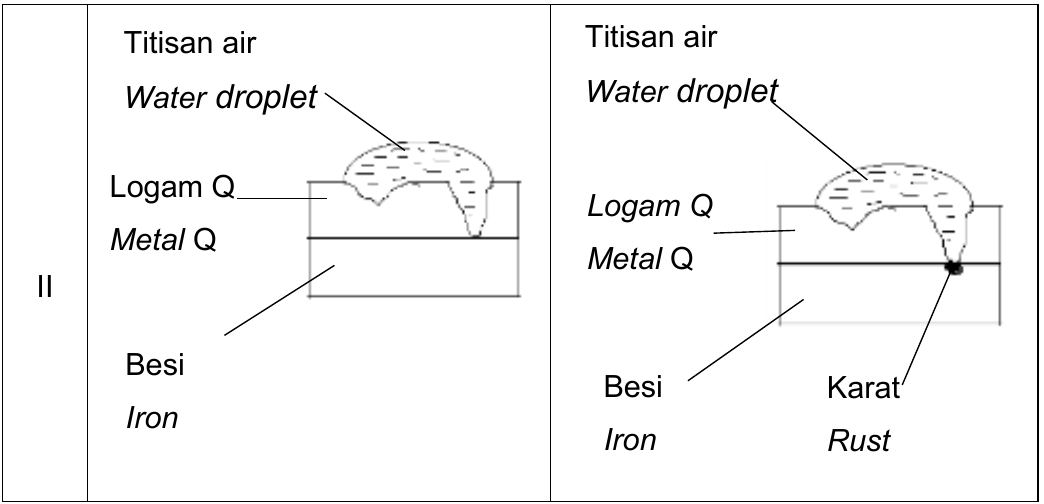
Section B, answer any one question. (a) The formulae of two compounds are MgO and Cu2O. (b) Diagram 10.1 shows two sets in which iron is in contact with metal P (Set I) and metal Q (Set II); after 2 weeks Set I shows no rusting while Set II shows rust when the layer is scratched. (c) Diagram 10.2 shows a redox reaction between yellow iron(III) chloride solution and a metal that gives a green solution after 30 minutes.
Hard20 marks- (a)(i)
State the oxidation numbers for magnesium and copper.
[2] - (a)(ii)
State the name of the compounds.
[2] - (b)
Based on Diagram 10.1, suggest metal P and metal Q. Then explain the differences in the observations in Set I and Set II.
[6]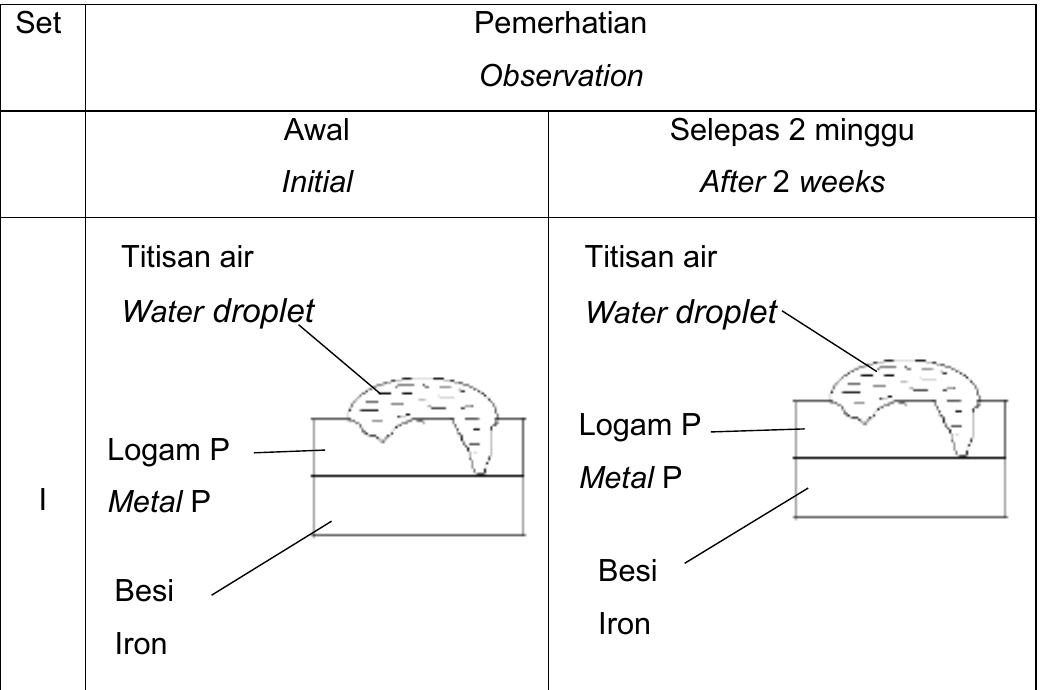
- (c)(i)
Based on the observations in Diagram 10.2, suggest a suitable metal. Predict the anion present in the green solution. Explain with (i) the change in oxidation number for both reactants.
[4]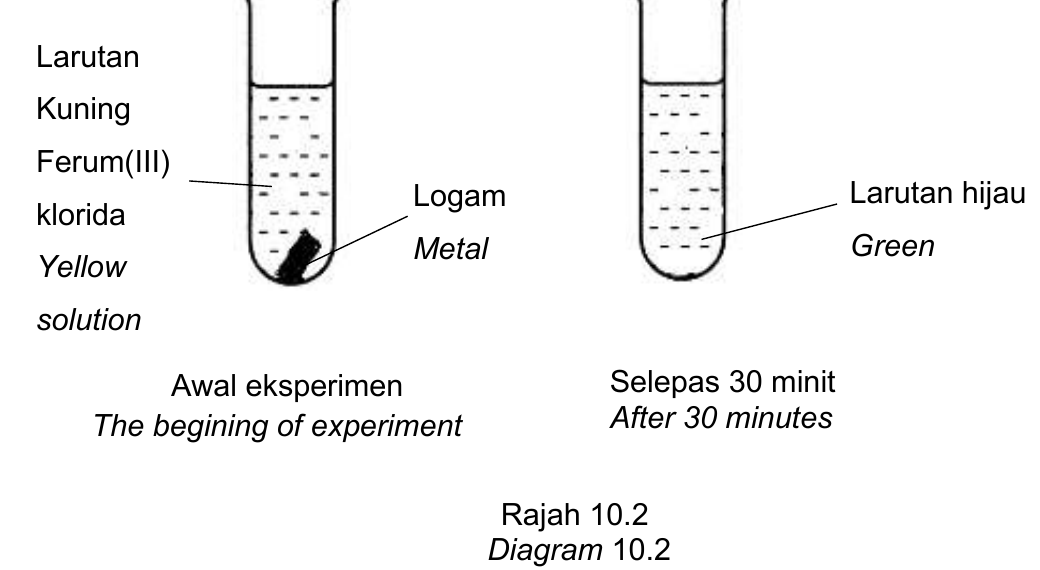
- (c)(ii)
The type of reaction that occurs to each reactant.
[2] - (c)(iii)
The role of each reactant in the redox reaction.
[2] - (c)(iv)
The half equations involved in the redox reaction.
[2]
Section C
Section C, compulsory. Ali is a gastric patient. Diagram 11.1 shows the antacid medication (aluminium hydroxide and magnesium hydroxide) that Ali takes.
Hard20 marks- (a)(i)
What is the meaning of base?
[1]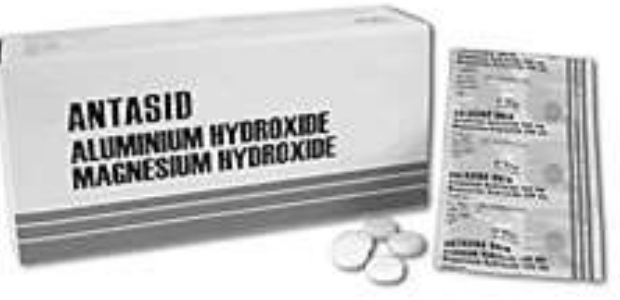
- (a)(ii)
How can the medicine in Diagram 11.1 help Ali to treat his gastric pain?
[2] - (a)(iii)
The mass of medicine taken by Ali is 1000 mg where the ratio of aluminium hydroxide to magnesium hydroxide is 1 : 0.6. The concentration of hydrochloric acid in Ali's stomach is 1.0 mol dm-3. Determine the number of moles of acid that have reacted with one of the substances in the medicine. [Molar mass: Al(OH)3 = 78 g mol-1, Mg(OH)2 = 58 g mol-1; 1 g = 1000 mg]
[4] - (b)
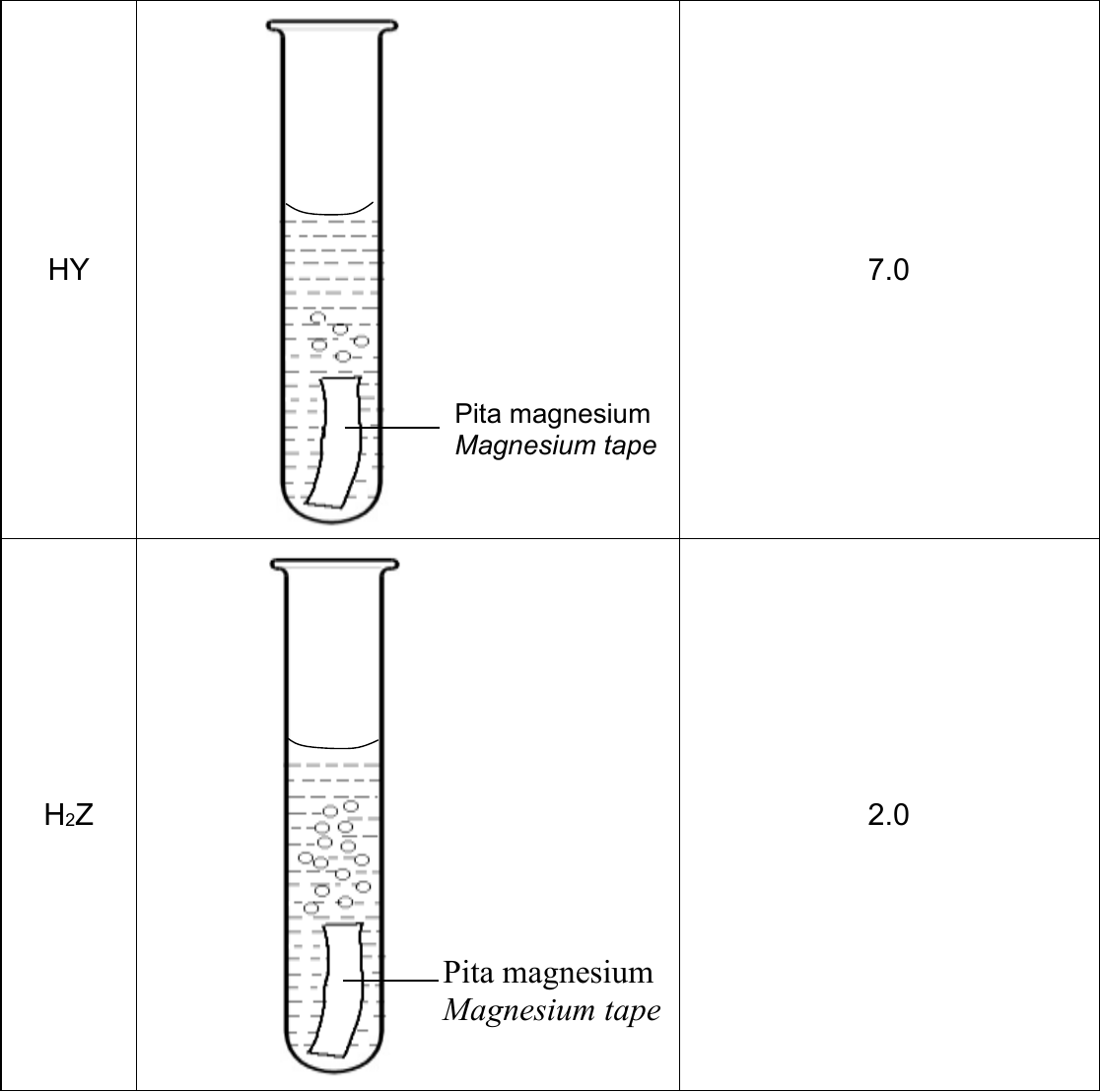
Three pieces of magnesium tape of equal length were inserted into three different acids of concentration 1.0 mol dm-3. Table 11 shows the observations (HX: 4.5 min; HY: 7.0 min; H2Z: 2.0 min). In your opinion, why are there differences in the above observations for the reactions? Give suitable examples of acids HY and H2Z.
[5]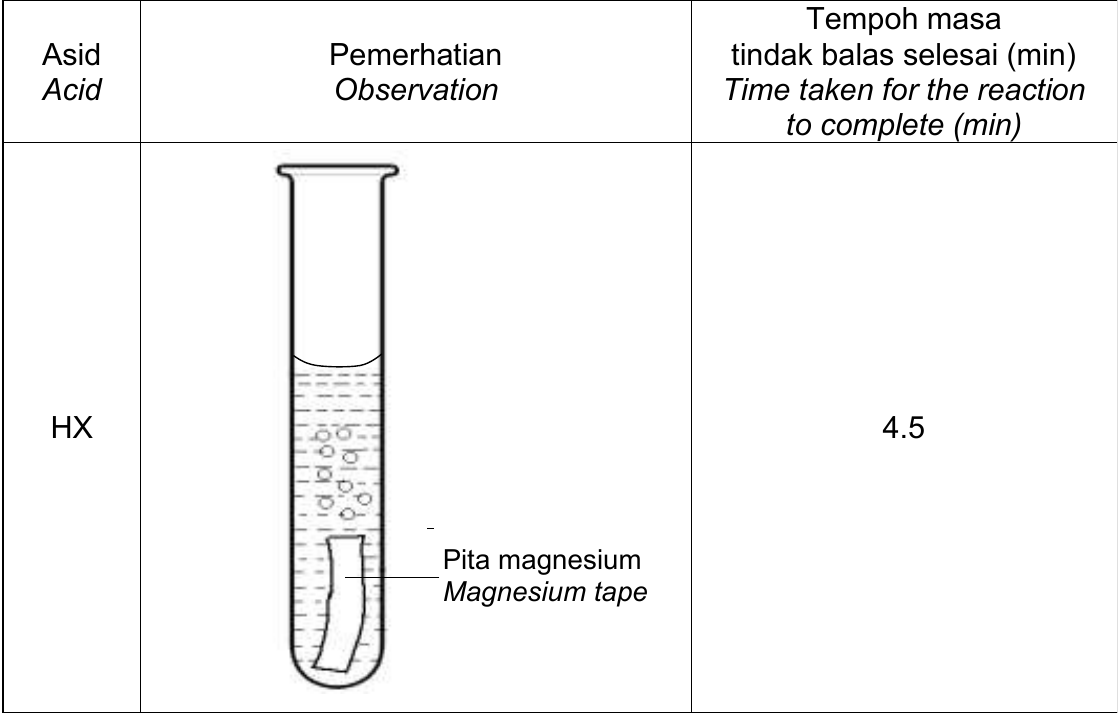
- (c)
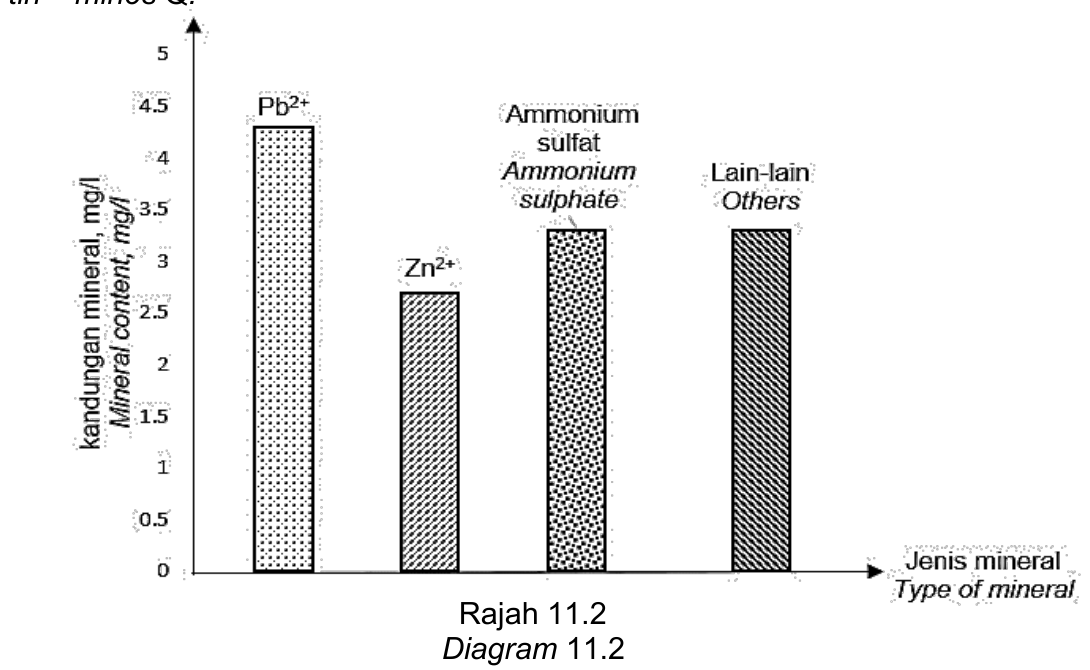
Diagram 11.2 shows a graph of the type of mineral and its content in the water of tin mine Q (Pb2+ about 4.3 mg/l, Zn2+ about 2.7, ammonium sulphate about 3.4, others about 3.3). Q is a tin mine that has ceased operating, located near an agricultural area. The water is unsafe to drink and smells bad because it contains heavy metals and fertiliser from agricultural areas as a result of leaching, and sediment is formed. In your opinion, why does the water smell bad and what is the name of the substance in the sediment? How would you prove that the water contains the ions of the compound you specify in the sediment, and verify the substance that causes the water to smell?
[8]