Which diagram shows the correct storage method for hydrogen peroxide solution?
Easy
What are the symbols for the element chromium, copper, manganese and potassium?
Easy
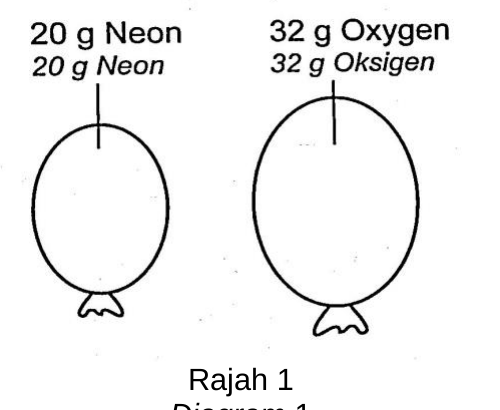
Diagram 1 shows two types of gases filled in two balloons: 20 g Neon and 32 g Oxygen. Which statement is correct about the number of atoms on neon gas? [Relative atomic mass: Ne = 20; O = 16]
Medium
Which of the following statements is correct about the changes in properties of elements across Period 3 in the Periodic Table of Element?
Medium
Hydrogen bond can be formed between hydrogen atom and atom of
Easy
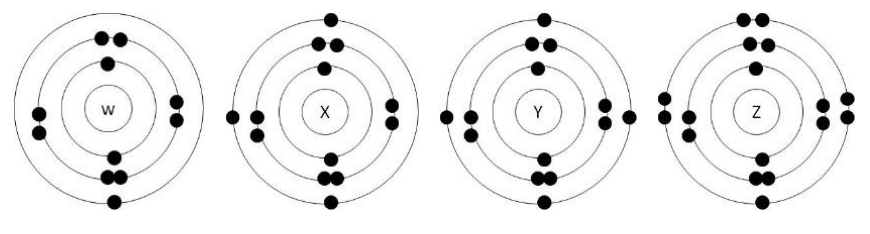
Diagram 2 shows the electrons arrangements of atoms W, X, Y and Z. W, X, Y, and Z are not the actual symbols of the elements. Which pair of elements forms a compound that is insoluble in water?
Medium
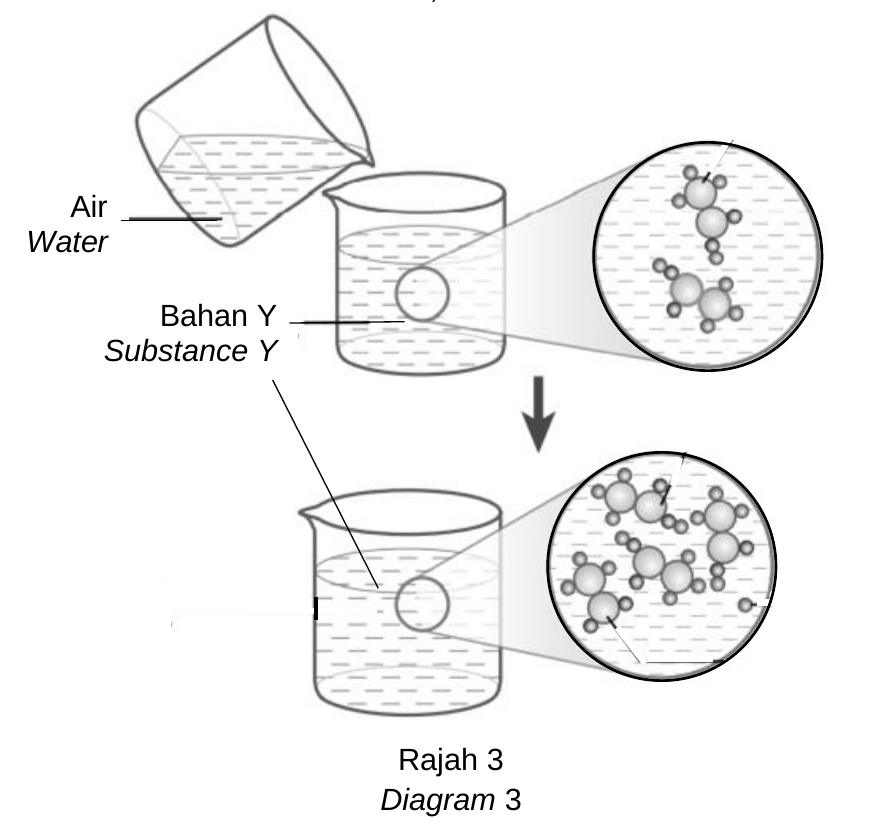
Diagram 3 shows a chemical substance, Y (substance Y is added to water; the enlarged view shows the particles before and after dissolving). What is the most suitable definition for substance Y?
Medium
Which of the following statements is true about an acid? I An acid turns red litmus paper blue. II An acid contains hydrogen ion in aqueous solution. III An acid has a pH more than 7. IV An acid reacts with metal to give off hydrogen gas.
Easy
What is the molarity of sodium hydroxide solution, NaOH with pH value is 12.0?
Medium
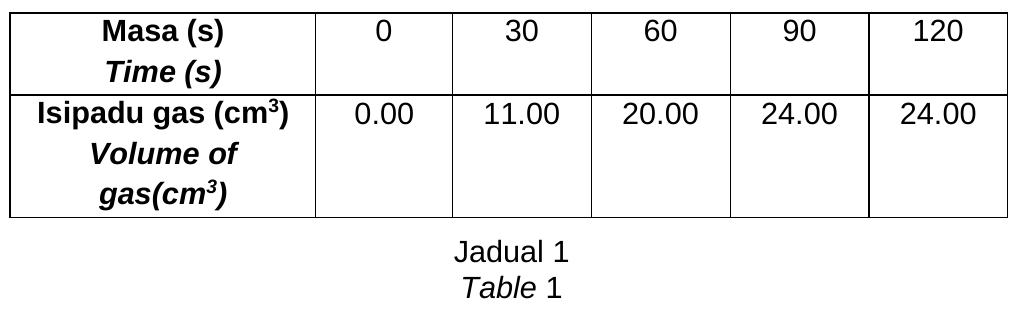
Table 1 shows the total volume of oxygen gas collected at 30 second intervals during the decomposition of hydrogen peroxide. Time (s): 0, 30, 60, 90, 120; Volume of gas (cm³): 0.00, 11.00, 20.00, 24.00, 24.00. Calculate the average rate of reaction for the reaction.
Medium
The main element present in glass is
Easy
Fe³⁺ ion in solution can be converted to Fe²⁺ ions by adding zinc powder. Which of the following can replace zinc powder in this reaction?
Medium
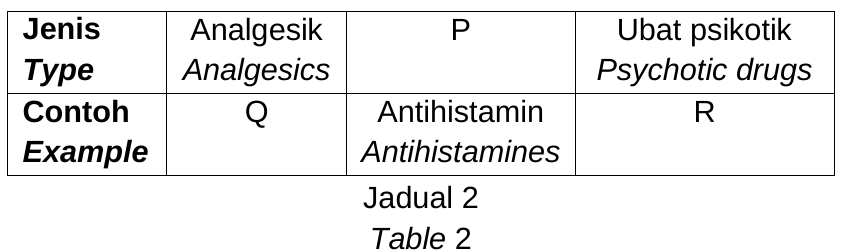
Table 2 shows types of modern medicines and their example. Type: Analgesics, P, Psychotic drugs; Example: Q, Antihistamines, R. Which of the following represent P, Q and R?
Medium
What are the products formed when ethanol burns completely in excess air?
Easy
Which of the following is a saturated hydrocarbon?
Easy
Which of the following neutralization reactions releases the least heat?
Medium
Iodine is a Group 17 element. Which statement regarding iodine is true?
Medium
Atom X has four shells with its last shell occupied by a single electron. Which statement describes the chemical properties of atom X?
Medium
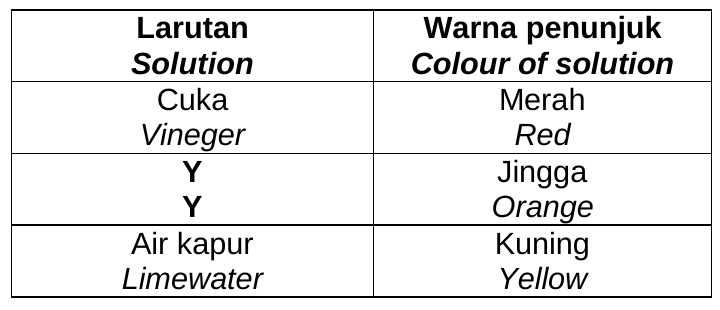
Table 3 shows the results of a test using methyl orange indicator. Vinegar: Red; Y: Orange; Limewater: Yellow. What is solution Y?
Medium
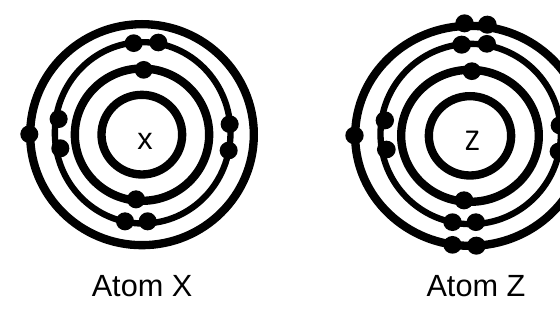
Diagram 4 shows the electron arrangement of two atoms X and Z respectively. Which diagram shows bond formed between atom X and atom Z?
Medium
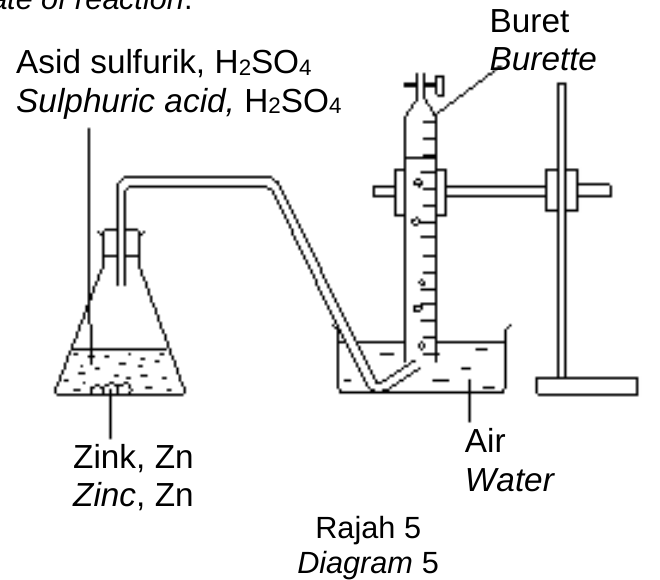
Diagram 5 shows the reaction between zinc, Zn and sulphuric acid, H2SO4 to determine the rate of reaction (hydrogen gas is collected in a burette by displacement of water). Which of the following changes is most suitable to measure to determine the rate of reaction?
Medium
Which of the following reactions shows that copper is oxidised?
Medium
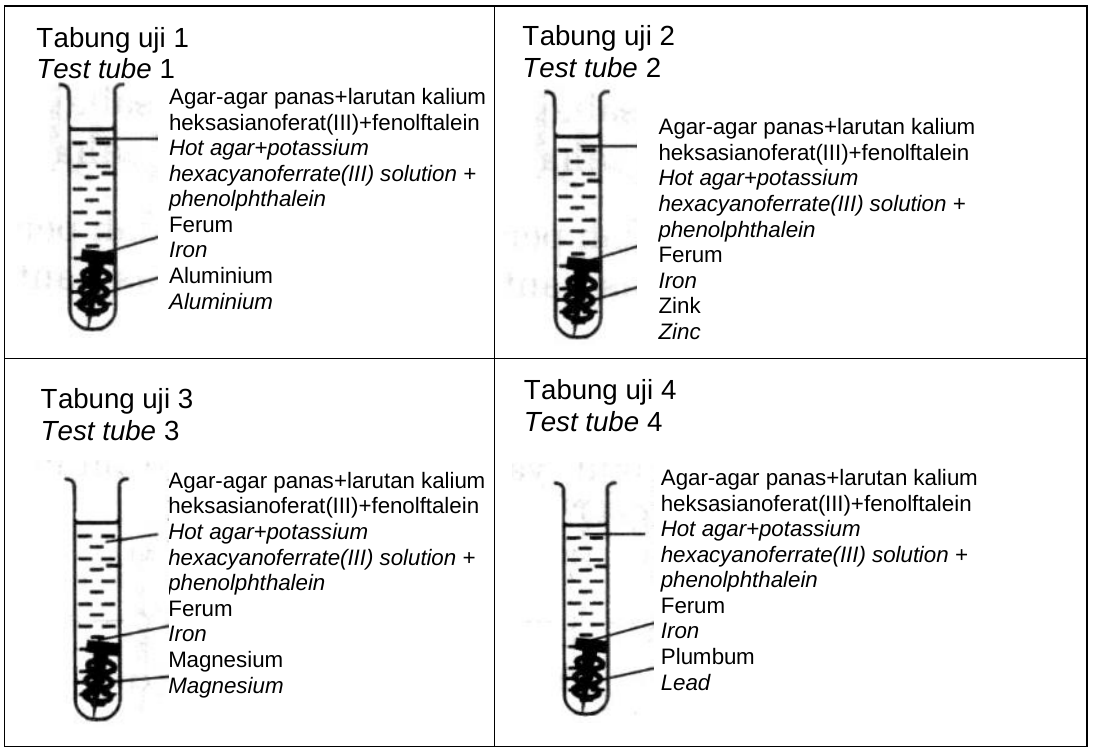
Diagram 6 shows four pairs of metals in different test tubes (each test tube contains hot agar + potassium hexacyanoferrate(III) solution + phenolphthalein with iron nail paired with: 1 aluminium, 2 zinc, 3 magnesium, 4 lead). After one day, in which test tube is the solution blue?
Medium
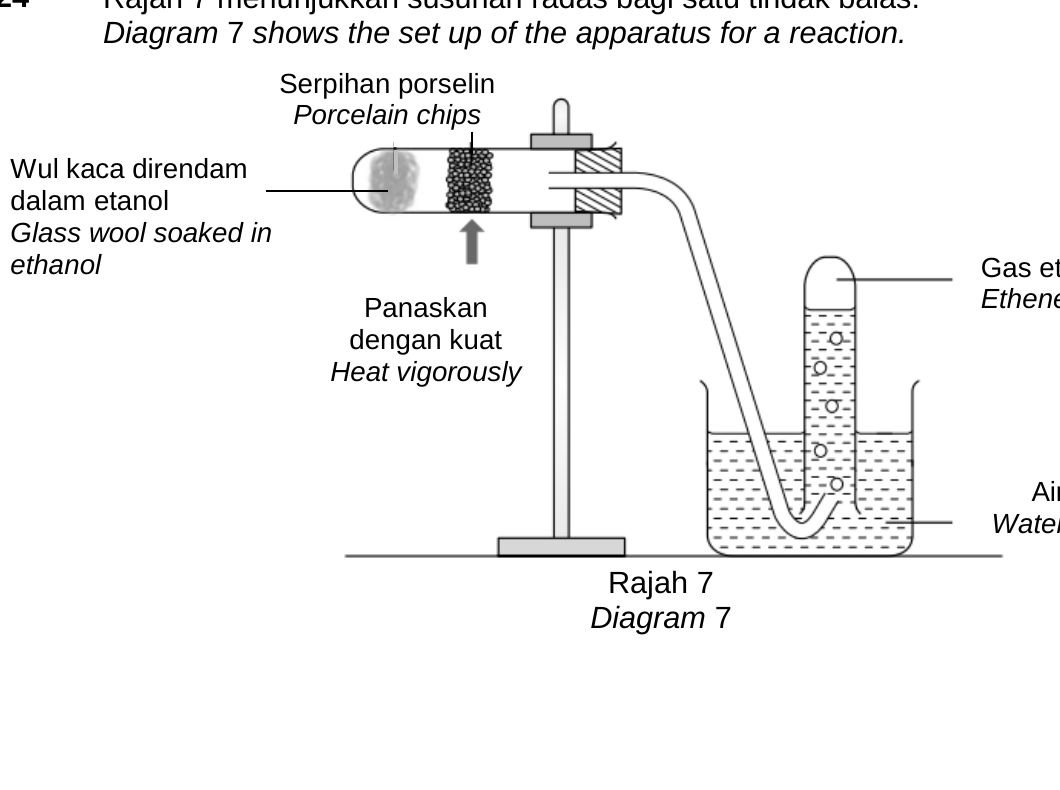
Diagram 7 shows the set up of the apparatus for a reaction (glass wool soaked in ethanol, porcelain chips heated vigorously, ethene gas collected over water). What is the reaction?
Medium
Which of the following is the structural formula of an unsaturated hydrocarbon?
Medium
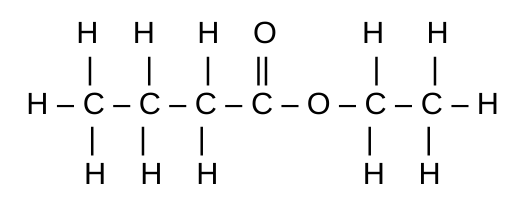
Diagram 8 shows the structural formula of a carbon compound (CH3CH2CH2COOCH2CH3, an ester). The compound is produced by the reaction between
Medium
The following ionic equation shows the reaction between Ag⁺ and Cl⁻ ions. Ag⁺(aq) + Cl⁻(aq) → AgCl(s), ΔH = -65 kJ mol⁻¹. Which of the following is the correct statement?
Medium
Amsyar is taking a medicine given by a doctor when he has gastric pain. Which of the following substance is contained in the medicine?
Easy
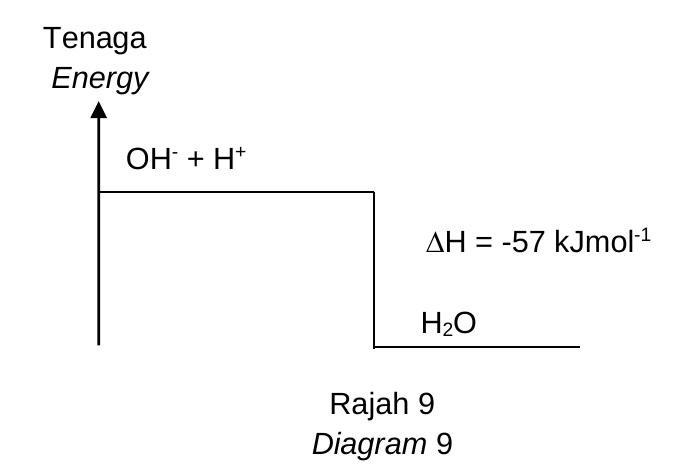
Diagram 9 shows an energy level diagram (OH⁻ + H⁺ at the higher level, H2O at the lower level, ΔH = -57 kJ mol⁻¹). Based on Diagram 9, it can be concluded that
Easy
Plaster of paris or gypsum plaster is often used to treat patients with bone injuries. It consists of a fine white powder of calcium sulphate hemihydrate, (CaSO₄)₂.H₂O. What is the molar mass of calcium sulphate hemihydrate? [Relative atomic mass: Ca = 40; S = 32; O = 16; H = 1]
Medium
The equation below represents the reaction to extract aluminium from aluminium oxide. 2Al₂O₃ → 4Al + 3O₂. What is the mass of aluminium that can be extracted from 102 g of aluminium oxide? [Relative atomic mass: O = 16; Al = 27]
Medium
A restaurant owner uses colourful electric lights to attract his customers. Which statement explains the properties of the substance used for making such lights?
Medium
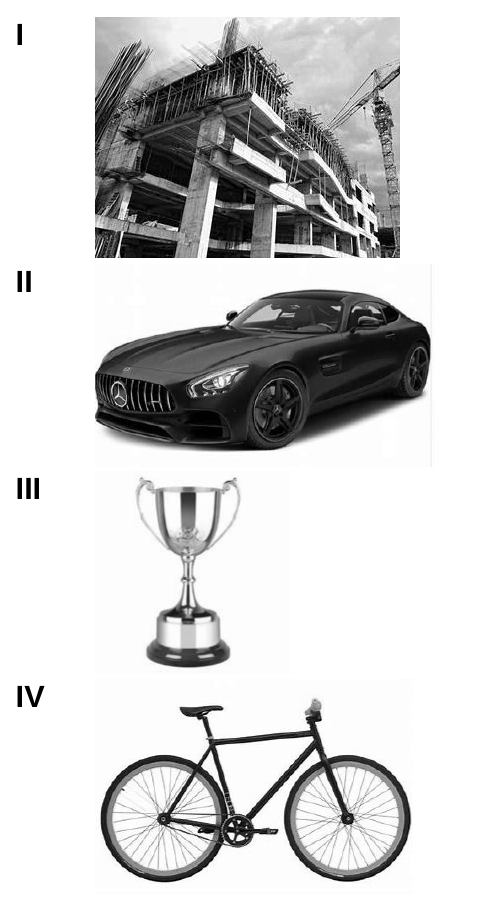
Steel is used in manufacture of: I building under construction; II car; III trophy; IV bicycle.
Easy
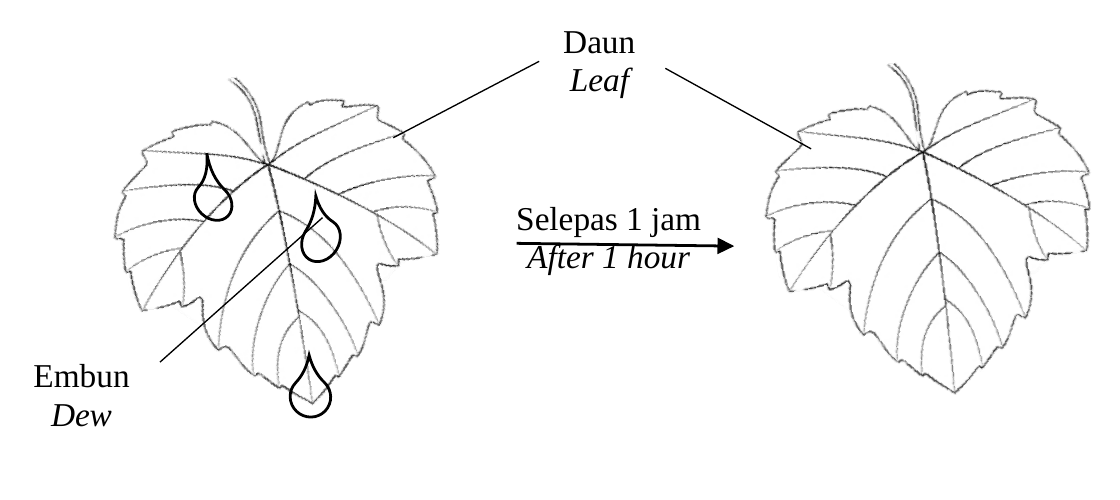
Diagram 10 shows the change of state of matter (dew on a leaf disappears after 1 hour). Which of the following statement explain the kinetic theory of matter shown on Diagram 10?
Medium
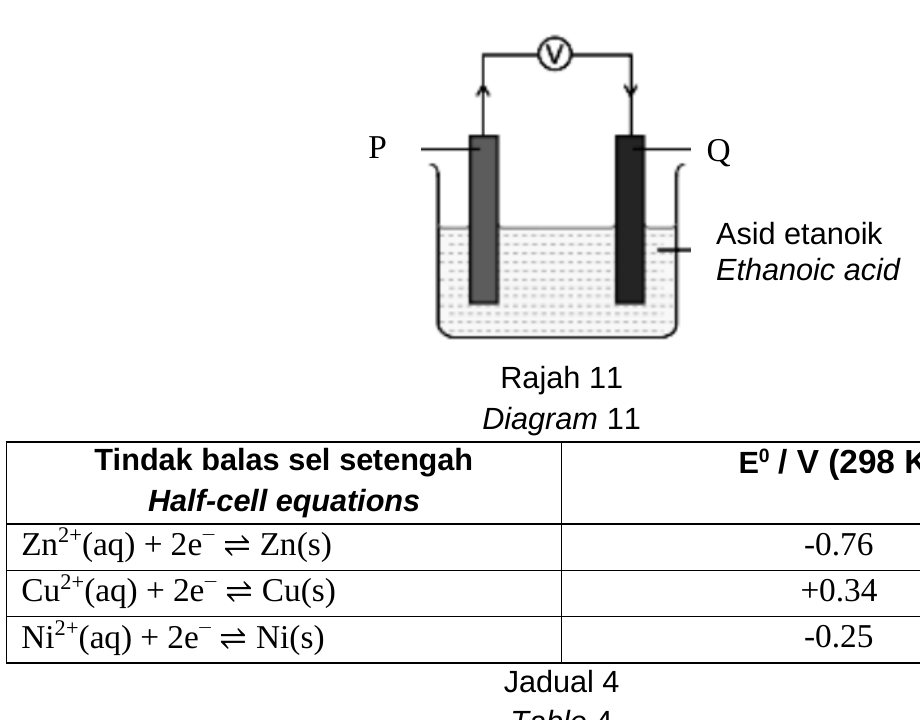
Diagram 11 shows a chemical cell (electrodes P and Q in ethanoic acid joined to a voltmeter) and Table 4 shows standard electrode potential values: Zn²⁺ + 2e⁻ ⇌ Zn, -0.76 V; Cu²⁺ + 2e⁻ ⇌ Cu, +0.34 V; Ni²⁺ + 2e⁻ ⇌ Ni, -0.25 V. Based on the Diagram 11 and E° values in Table 4, which pair is matched correctly?
Medium
Yogurt is prepared by adding 20.0 cm³ of lime juice into 200.0 cm³ of fresh milk. It is found that the temperature of the yogurt increases by 2.0 °C. What is the total amount of heat released? Use the information that the specific heat capacity of yogurt = X J g⁻¹ °C⁻¹. Assume that 1 cm³ of solution is equal to 1 gram of solution.
Medium
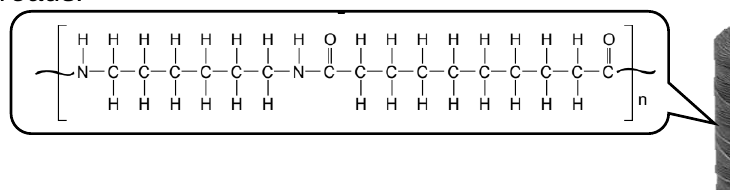
Diagram 12 shows the structural formula of compound Z which is used to produce threads (a polyamide chain with -CONH- links). What is the advantage of this type of thread?
Medium
Wet hair stick together has been linked to the concept and role of hydrogen bonding in daily life. Which statement can explain the formation of hydrogen bonds?
Medium
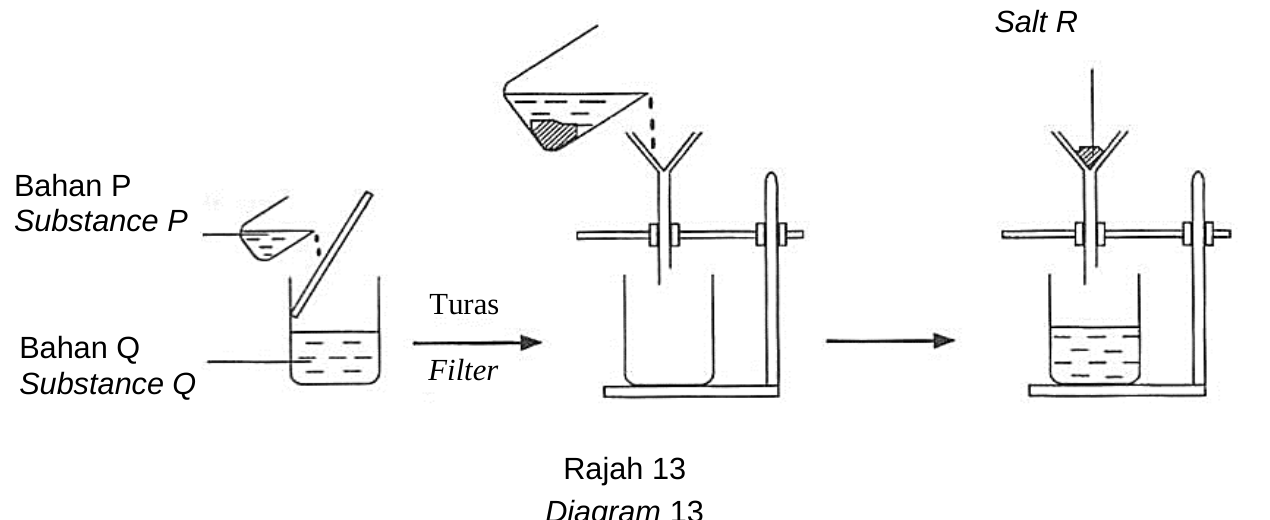
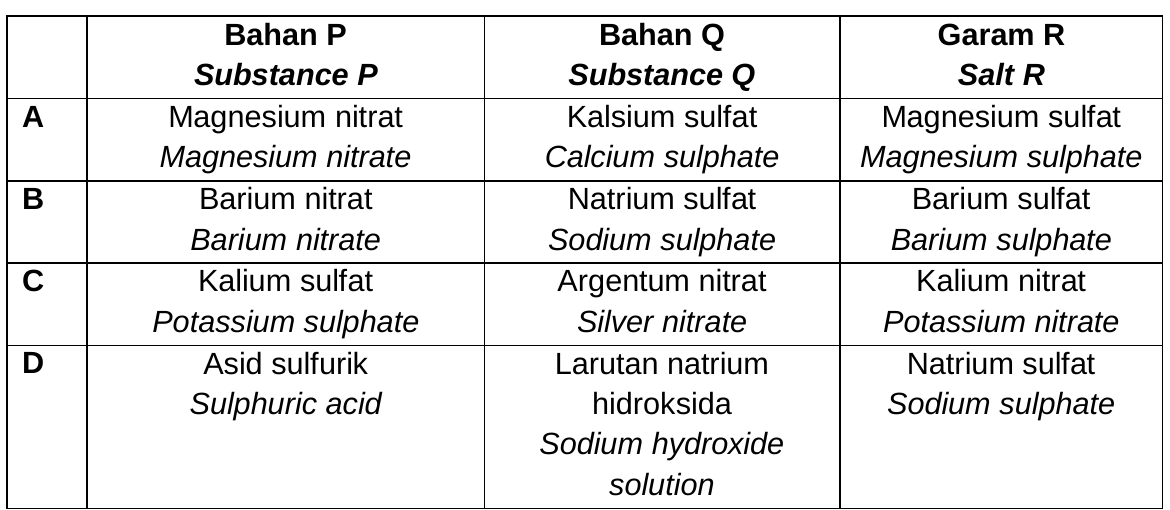
Diagram 13 shows the apparatus set-up to prepare a salt (substance P is added to substance Q, the mixture is filtered and salt R is the residue). Which of the following is correct? A: P magnesium nitrate, Q calcium sulphate, R magnesium sulphate; B: P barium nitrate, Q sodium sulphate, R barium sulphate; C: P potassium sulphate, Q silver nitrate, R potassium nitrate; D: P sulphuric acid, Q sodium hydroxide solution, R sodium sulphate.
Medium
A student wants to identify cation that present in a salt solution. When sodium hydroxide solution is added into the salt solution, brown precipitate is formed. What is the method that need to be done next and the observation expected to confirm the presence of the cation?