Which of the following substances is made up of ions?
Easy
The following equation represents a reaction.
Na₂S₂O₃ + H₂SO₄ → Na₂SO₄ + H₂O + S + SO₂
What are the reactants in this equation?
Easy
The following statements refer to the contributions of a scientist in the development of the Periodic Table of Elements.
• Elements with similar chemical properties were placed in the same vertical column called a group.
• Gaps were left in the Periodic Table of Elements for undiscovered elements.
Who was the scientist?
Easy
How a dative bond can be formed?
Easy
A student added 2 cm³ of 0.1 mol dm⁻³ nitric acid into a test tube containing 2 cm³ of 0.1 mol dm⁻³ potassium hydroxide solution.
Identify the salt produced and its solubility in water.
(Options give: chemical formula of product formed — solubility in water.)
Easy
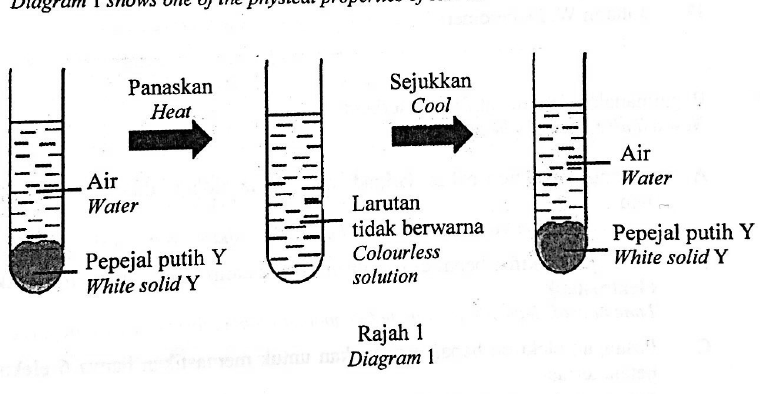
Diagram 1 shows one of the physical properties of salt Y. White solid Y in water is heated to give a colourless solution; on cooling, white solid Y reappears.
What is salt Y?
Medium
Which of the following pair is correct about the rate of reaction?
(Table: Low rate of reaction | High rate of reaction.)
Medium
Alloy Z has the following composition: 74% Iron, 18% Chromium, 8% Nickel.
What is alloy Z?
Easy
What is a standard electrode potential?
Medium
In a redox reaction, oxidation and reduction occur simultaneously.
Which of the following involves a reduction?
Medium
The following equation represents addition reaction of an alkene.
C₂H₄ + H₂ → C₂H₆
What is the catalyst used in the reaction?
Easy
Which of the following pair of compounds is classified in the same homologous series?
(Table: Compound I | Compound II.)
Medium
Which of the following chemicals will lower the temperature when dissolved in water?
Easy
The following are the characteristics of neoprene.
• Does not conduct electricity
• Resistant to solvents and oils
• Heat-resistance
Which of the following product is suitable to be made by using neoprene?
Medium
Graphene has an enormous potential in biomedical industries, especially as sensor in a device to measure blood glucose level with a small quantity of sample.
Which statement best explains the use of graphene in making biosensor?
Medium
Which element has an isotope that can detect the leakage of underground pipe?
Medium
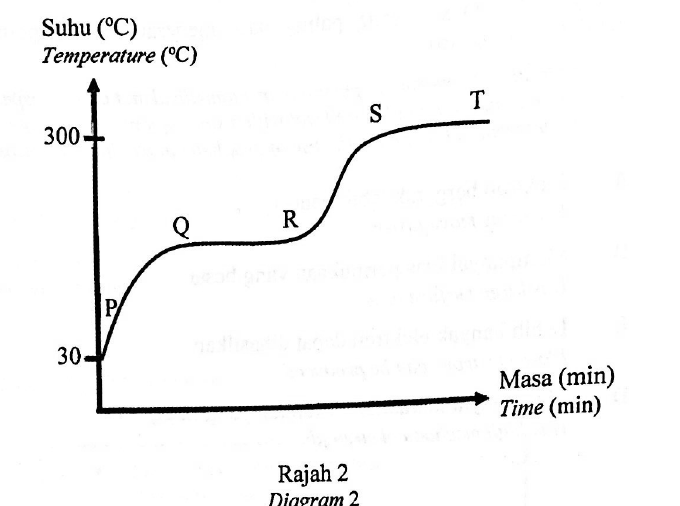
Diagram 2 shows the heating curve of substance M (temperature 30 °C to 300 °C against time; sections P, Q, R, S, T).
Based on Diagram 2, at which section does substance M exist as a mixture of solid and liquid?
Medium
Chlorine-35 and chlorine-37 are isotopes of chlorine. Which of the following statement is correct?
[Proton number of chlorine = 17]
Medium
Element X is located below bromine in the same group in the Periodic Table of Elements.
If element X reacts with iron, how does the reactivity of X compared to bromine and what is the chemical formula of the product formed?
(Options give: reactivity with iron; formula of the product.)
Medium
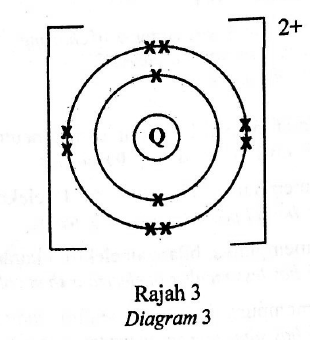
Diagram 3 shows the electron arrangement for Q ion (Q²⁺, with three shells).
Which of the following statements is true about Q atom?
Medium
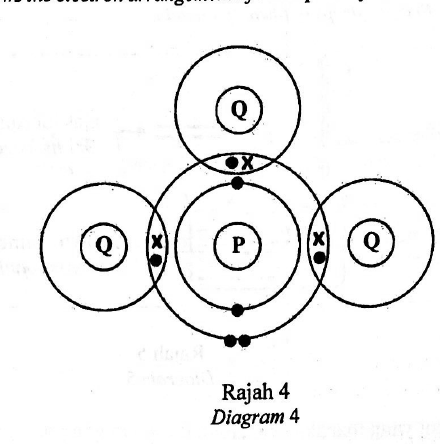
Diagram 4 shows the electron arrangement of a compound formed between atom P and atom Q.
Which of the following statements is true about the compound?
Medium
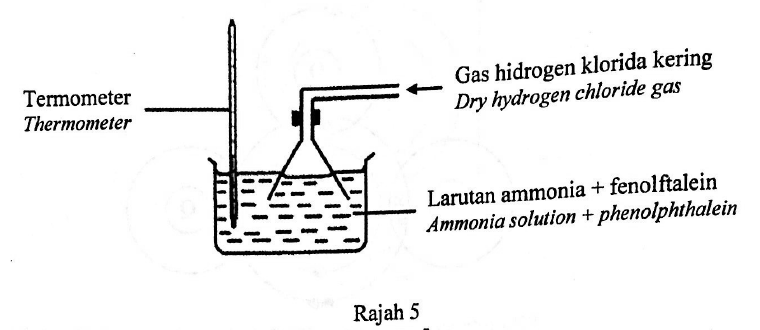
Diagram 5 shows dry hydrogen chloride gas is passed through an ammonia solution which was added with a few drops of phenolphthalein.
Which of the following is true?
Medium
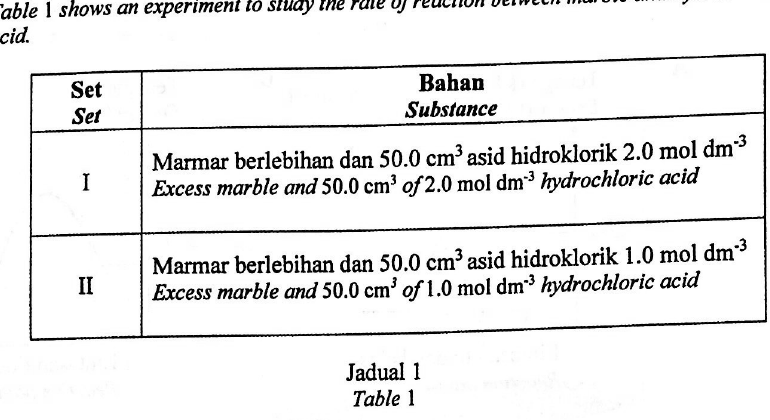
Table 1 shows an experiment to study the rate of reaction between marble and hydrochloric acid.
Set I: Excess marble and 50.0 cm³ of 2.0 mol dm⁻³ hydrochloric acid.
Set II: Excess marble and 50.0 cm³ of 1.0 mol dm⁻³ hydrochloric acid.
Which of the following graph represents the experiments? (Volume of carbon dioxide / cm³ against time / s)
Medium
Which of the following energy profile diagrams shows the highest activation energy?
Medium
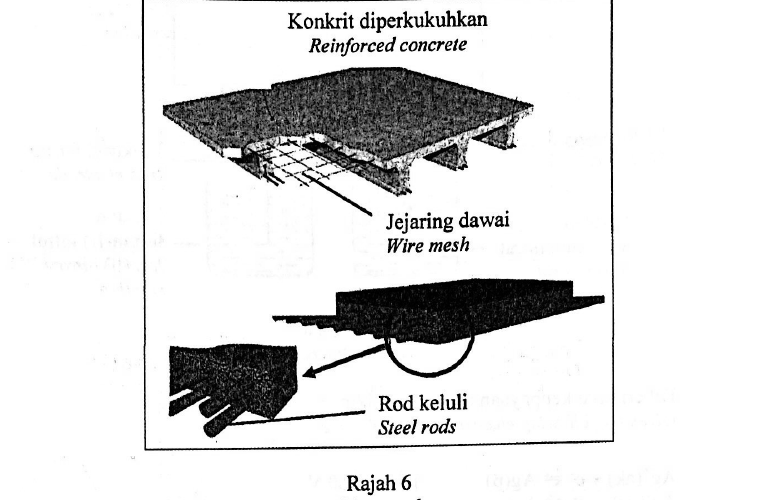
Diagram 6 shows reinforced concrete. Adding steel rods or wire mesh will improve the properties of the concrete.
Which of the following properties will be improved?
Medium
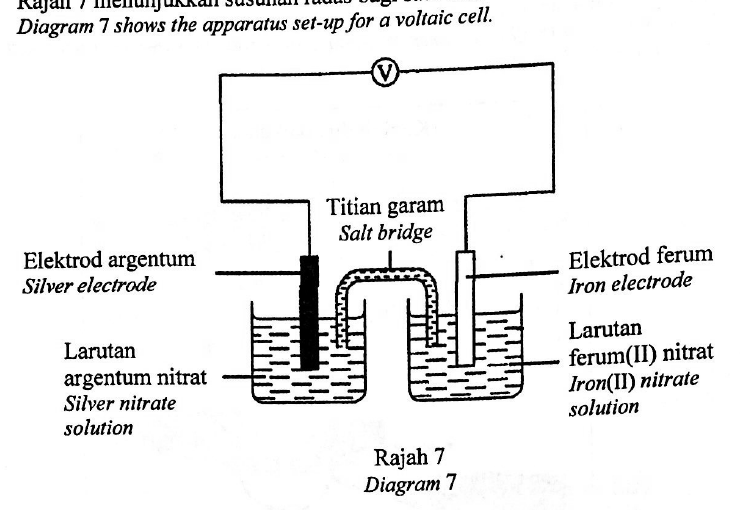
Diagram 7 shows the apparatus set-up for a voltaic cell (silver electrode in silver nitrate solution; iron electrode in iron(II) nitrate solution; salt bridge).
Given the following electrode potential values:
Ag⁺(aq) + e⁻ ⇌ Ag(s) E° = +0.80 V
Fe²⁺(aq) + 2e⁻ ⇌ Fe(s) E° = −0.40 V
What is the cell notation of the voltaic cell?
Medium
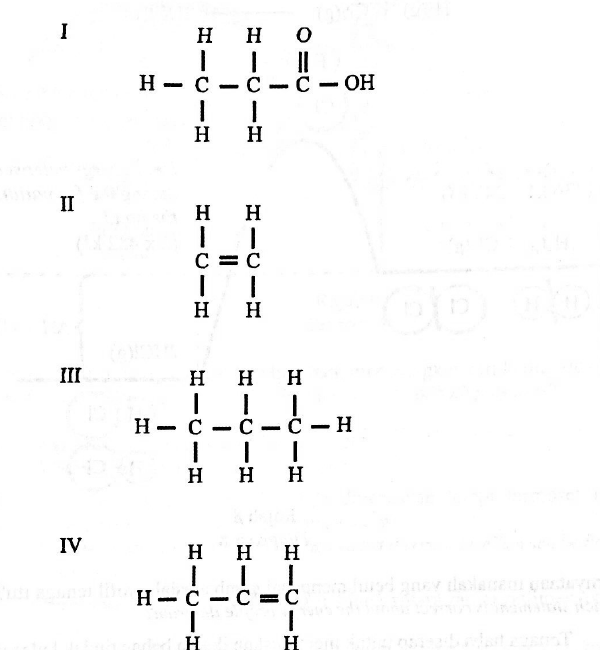
Which of the following compounds will decolourise bromine water?
I: CH₃CH₂COOH (propanoic acid, structural formula shown)
II: CH₂=CH₂ (ethene)
III: CH₃CH₂CH₃ (propane)
IV: CH₃CH=CH₂ (propene)
Medium
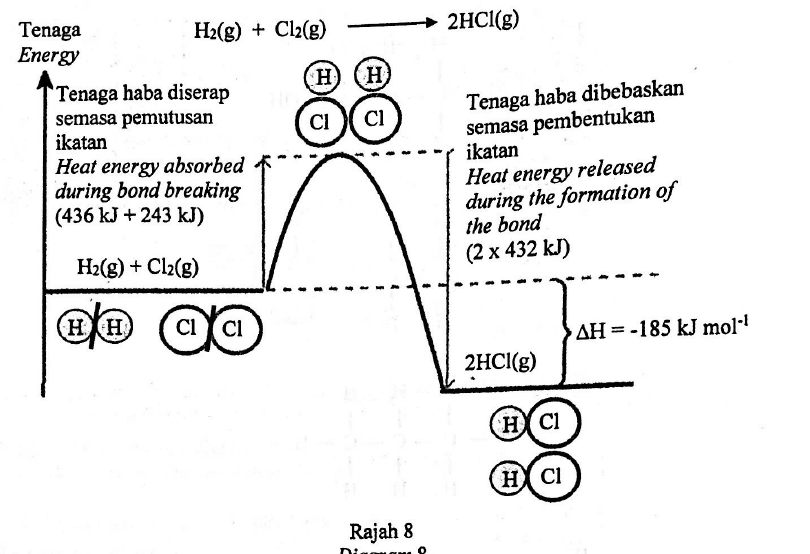
Diagram 8 shows the energy profile diagram of a reaction: H₂(g) + Cl₂(g) → 2HCl(g), ΔH = −185 kJ mol⁻¹; heat energy absorbed during bond breaking (436 kJ + 243 kJ); heat energy released during formation of the bond (2 × 432 kJ).
Which statement is correct about the energy profile diagram?
Medium
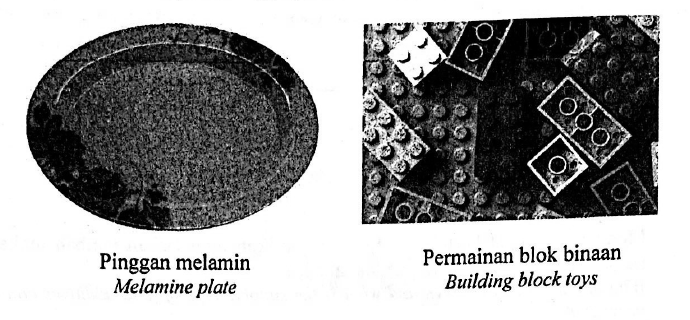
Diagram 9 shows two products of polymers with different characteristics (melamine plate; building block toys).
Which of the following best explains the characteristic of both polymers?
Medium
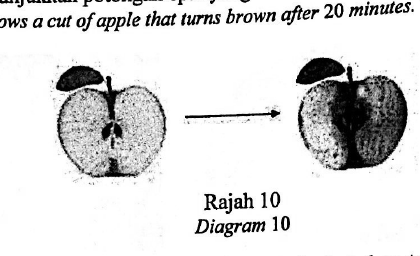
Diagram 10 shows a cut of apple that turns brown after 20 minutes.
Why the apple turns brown and what is the suitable type of food additives can be used to prevent it?
(Table: Reason | Food additives.)
Medium
The following chemical equation represents the reaction to extract aluminium from aluminium oxide.
2Al₂O₃ → 4Al + 3O₂
Calculate the maximum mass of aluminium that can be extracted from 10.20 g of aluminium oxide?
[Relative atomic mass: O = 16, Al = 27]
Medium
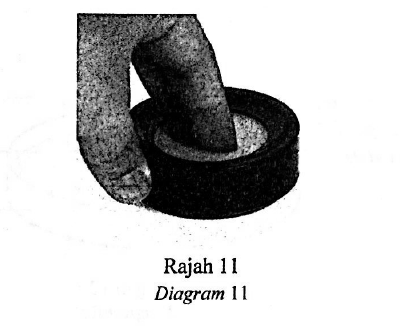
Diagram 11 shows the uses of wet sponge to overcome the problem of turning the pieces of papers sticking together.
Which of the following is best explained this situation?
Medium
A solution of sodium hydroxide has a concentration of 4 g dm⁻³.
What is the pH of the solution?
[Molar mass of NaOH = 40 g mol⁻¹]
Medium
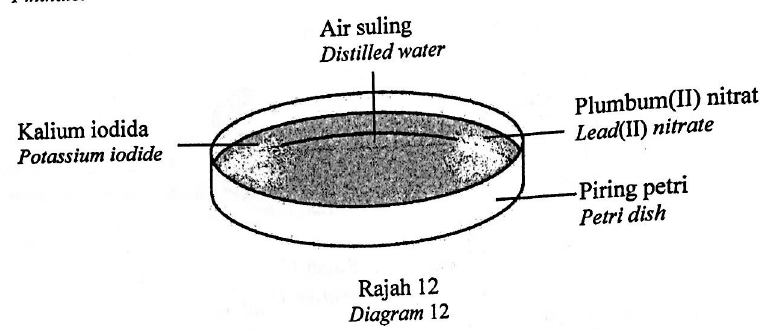
Diagram 12 shows the reaction between 5 g of potassium iodide powder and 5 g of lead(II) nitrate powder to form a yellow precipitate. Time for the reaction to complete is 1 minute.
What is the rate of formation of the yellow precipitate?
[Relative formula mass: KI = 166, Pb(NO₃)₂ = 331, PbI₂ = 461]
Medium
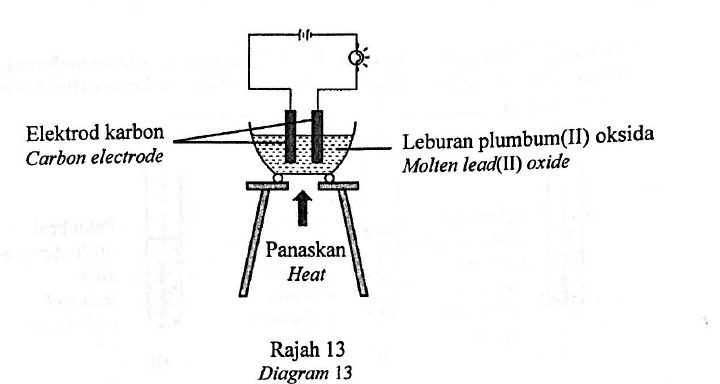
Diagram 13 shows the apparatus set-up for electrolysis of molten lead(II) oxide, PbO (carbon electrodes).
Which of the following half equations take place at anode and cathode?
Medium
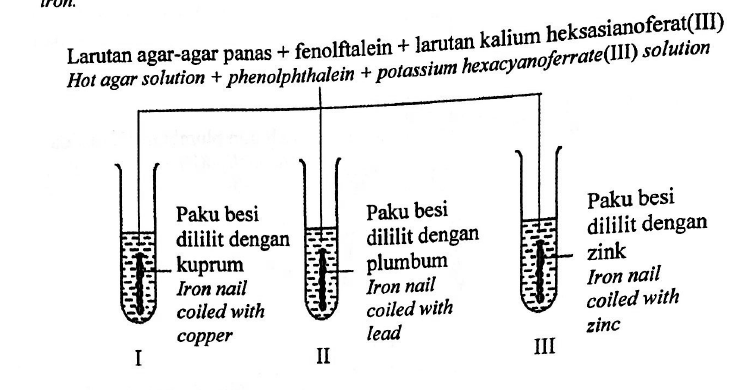
Diagram 14 shows the apparatus set-up to study the effect of other metals on the rusting of iron. Iron nails are coiled with copper (I), lead (II) and zinc (III) in hot agar-agar solution + phenolphthalein + potassium hexacyanoferrate(III) solution.
Given the following electrode potential value:
Zn²⁺(aq) + 2e⁻ ⇌ Zn(s) E° = −0.76 V
Fe²⁺(aq) + 2e⁻ ⇌ Fe(s) E° = −0.44 V
Pb²⁺(aq) + 2e⁻ ⇌ Pb(s) E° = −0.13 V
Cu²⁺(aq) + 2e⁻ ⇌ Cu(s) E° = +0.34 V
In which test tubes the blue spots can be observed?
Medium
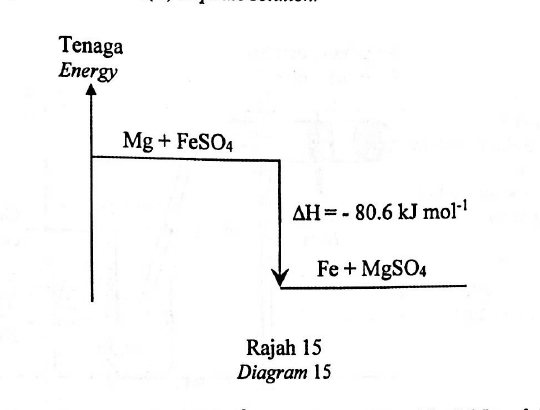
Diagram 15 shows the energy level diagram of the displacement reaction between magnesium powder and iron(II) sulphate solution: Mg + FeSO₄ → Fe + MgSO₄, ΔH = −80.6 kJ mol⁻¹.
What is the increase in temperature if 50 cm³ of 0.25 mol dm⁻³ iron(II) sulphate solution is reacted with excess magnesium?
[Specific heat capacity of the solution = 4.2 J g⁻¹ °C⁻¹]
Medium
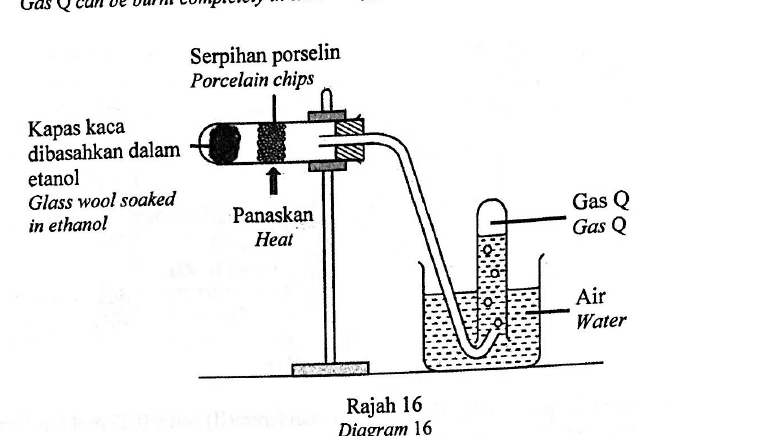
Diagram 16 shows the apparatus set-up for the reaction to produce gas Q (glass wool soaked in ethanol, porcelain chips heated, gas collected over water). Gas Q can be burnt completely in excess oxygen.
What is gas Q and the chemical equation for the complete combustion?
Medium
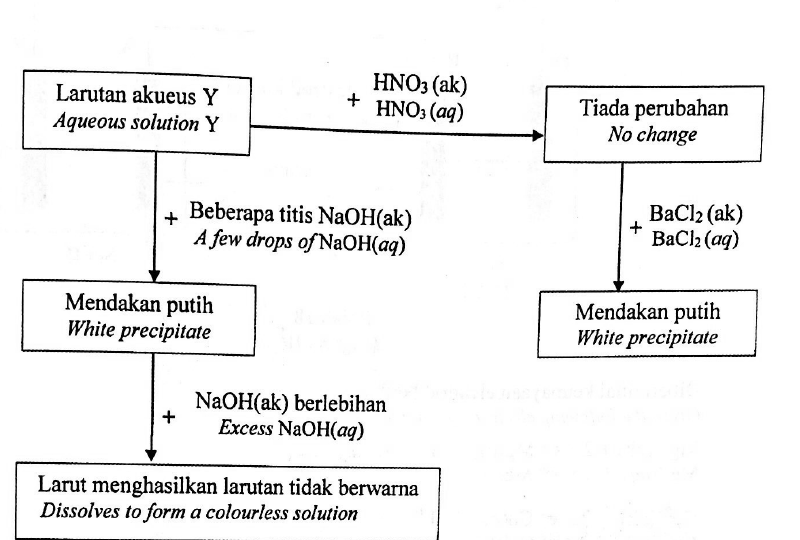
Diagram 17 shows the observations obtained when aqueous solution Y reacts with a few reagents: + HNO₃(aq): no change; + a few drops of NaOH(aq): white precipitate, which dissolves in excess NaOH(aq) to form a colourless solution; + BaCl₂(aq): white precipitate.
What is salt Y?
Medium
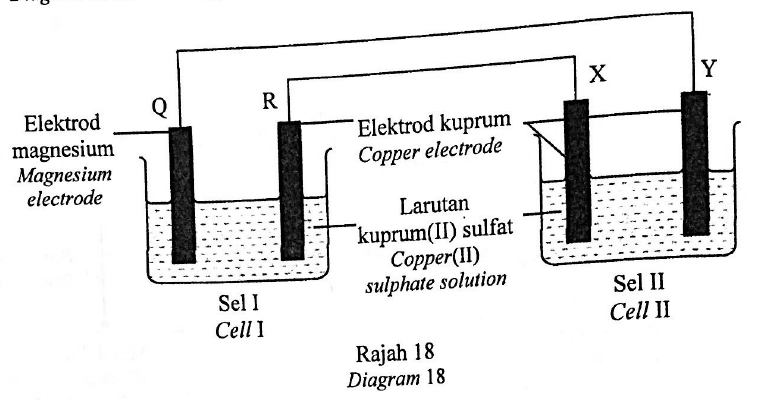
Diagram 18 shows the apparatus set-up for a combination of two cells. Cell I: magnesium electrode (Q) and copper electrode (R) in copper(II) sulphate solution; Cell II: electrodes X (copper) and Y in copper(II) sulphate solution.
Given: Mg²⁺(aq) + 2e⁻ ⇌ Mg(s) E° = −2.38 V; Cu²⁺(aq) + 2e⁻ ⇌ Cu(s) E° = +0.34 V.
Which of the following statements are true?
I: Bubbles of colourless gas is produced at electrode X
II: Electrode R and electrode Y become thinner
III: Electrode X and electrode Q are anode
IV: Blue colour of copper(II) sulphate solution in Cell II remains unchanged