Write your answer on paper. Then open the answer to check it.
Section A
Diagram 1 shows the atomic structure of carbon-12 atom.
Medium5 marks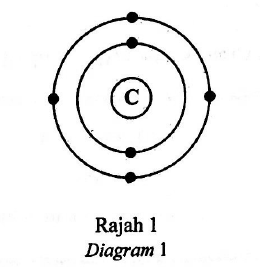
- (a)(i)
Name the positively charged subatomic particle in the atom.
[1] - (a)(ii)
State the number of neutrons found in the nucleus of carbon-12 atom.
[1] - (a)(iii)
Another isotope of carbon is carbon-14. What is the difference between carbon-14 and carbon-12 atoms?
[1] - (b)(i)
Z atom has 4 protons and 5 neutrons. Write the standard representation of Z atom.
[1] - (b)(ii)
Z atom can form an ion. Write the electron arrangement of Z ion.
[1]
Table 2 shows manufactured substances in industry A and B and their respective uses. Substance A: to make bricks and potteries. Substance B: to make brake disc and cutting disc.
Easy5 marks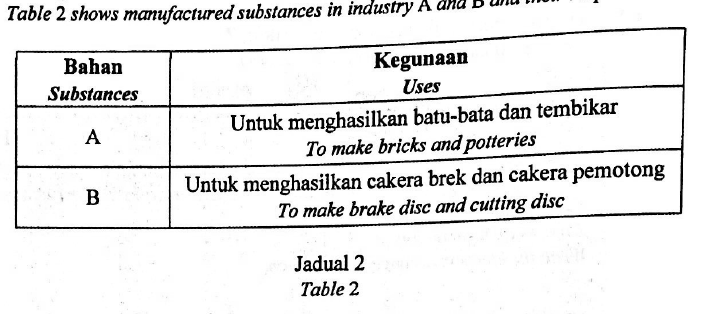
- (a)
Main component in substance A and B are the same. Name the component.
[1] - (b)
State two basic properties of A and B.
[2] - (c)
State one difference for both substances A and B.
[1] - (d)
State another usage of substance A.
[1]
Diagram 3.1 shows various types of cosmetics found in the market.
Medium6 marks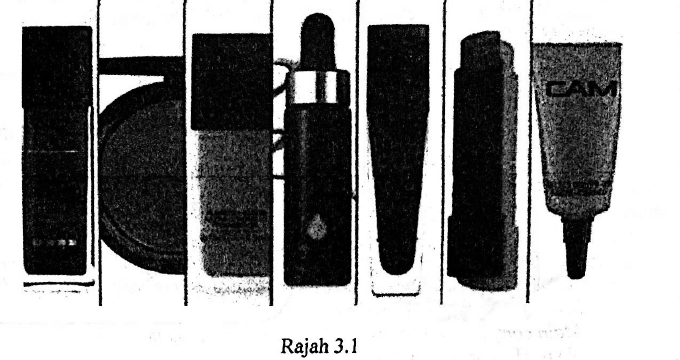
- (a)
What is meant by cosmetics?
[1] - (b)
State one example of the harmful chemicals in cosmetics that can cause redness and peeling skin.
[1] - (c)(i)
Itchiness of skin can be treated by taking certain medicine. Diagram 3.2 shows a conversation between Emelda and Maryam: Emelda says the doctor advised her to take corticosteroids, but the medicine causes high blood pressure if taken in a long time. Maryam asks why she doesn't use traditional medicine. Give one example of traditional medicine that can be used by Emelda and describe briefly how it is used.
[2]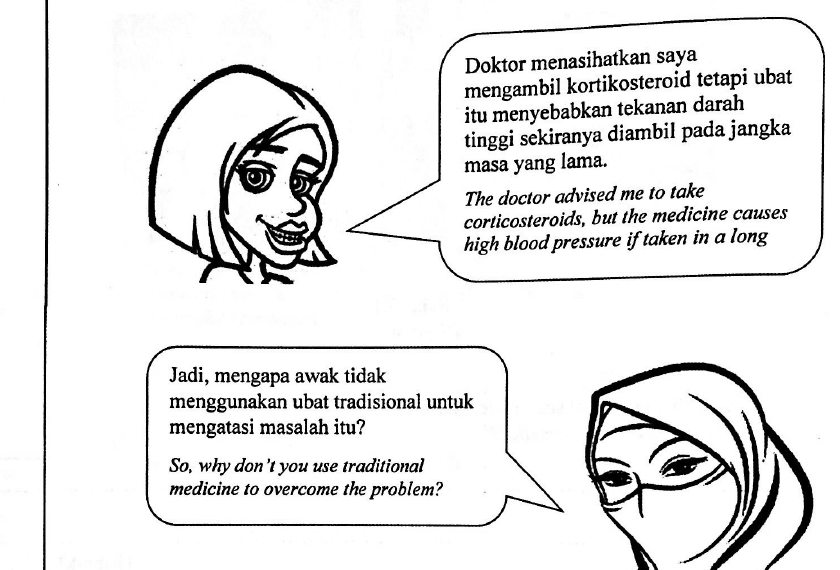
- (c)(ii)
Modern and traditional medicines can both treat the same illnesses although the efficacy level may differ. Why?
[2]
Diagram 4 shows the apparatus set-up to investigate the reactivity of halogens towards hot iron wool (chlorine gas passed over heated iron wool; soda lime at the exit).
Medium7 marks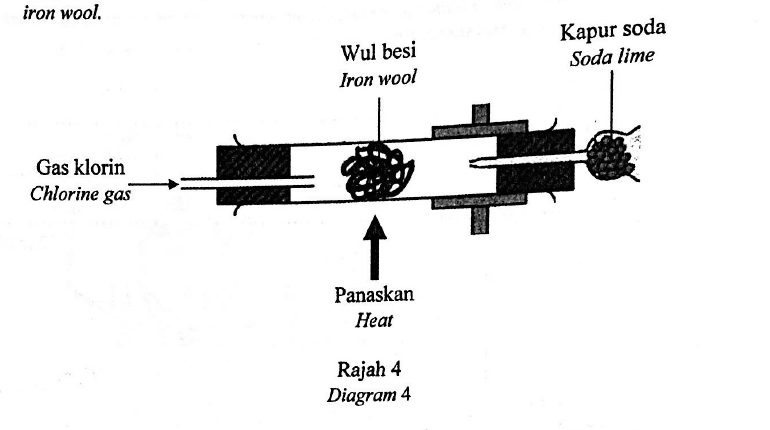
- (a)(i)
What is the colour of chlorine gas?
[1] - (a)(ii)
Write a chemical equation for the reaction between chlorine gas and iron wool.
[2] - (a)(iii)
0.1 mol of iron wool reacts with excess chlorine gas. Calculate the mass of the product formed. [Relative atomic mass: Cl = 35.5, Fe = 56]
[2] - (b)
Bromine also reacts with hot iron wool but less reactive than chlorine. Explain.
[2]
Diagram 5 shows a part of the structure of cellulose found in cotton fibre.
Medium8 marks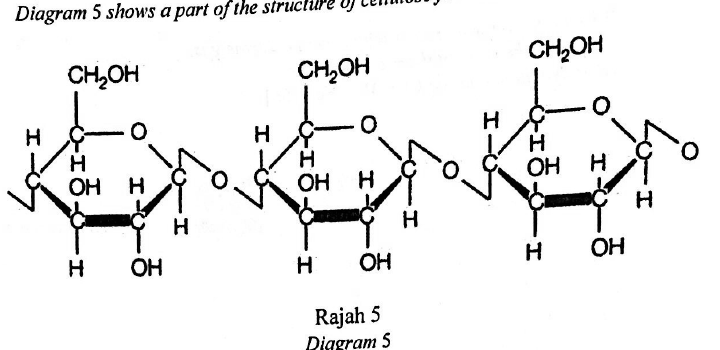
- (a)(i)
Cellulose can form hydrogen bond with water molecules. What is meant by hydrogen bond?
[1] - (a)(ii)
Name one element in cellulose that can form hydrogen bond with water molecules.
[1] - (b)
Cotton clothes take longer time to dry compared to synthetic fibre. Explain why?
[2] - (c)
Table 5 shows the boiling point for ethanol, C₂H₅OH (78 °C) and ethane, C₂H₆ (−89 °C). Ethanol and ethane are covalent compounds. Explain the difference in their boiling point.
[2]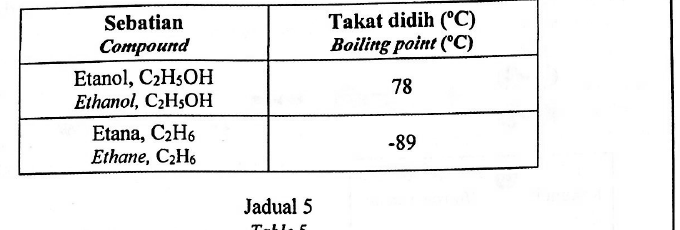
- (d)
Ammonium chloride, NH₄Cl consists of ammonium ion, NH₄⁺ and chloride ion, Cl⁻. Ammonium ion consists of a dative bond. Based on the statements above, draw the dative bond in the ammonium ion, NH₄⁺. [Proton number: H = 1; N = 7]
[2]
Diagram 6.1 shows the molecular model for the reaction between hydrogen gas and oxygen gas to produce water molecule.
Medium9 marks- (a)
Water molecules are produced when effective collision occurred between the reactant particles. State the conditions for the effective collision to take place.
[2]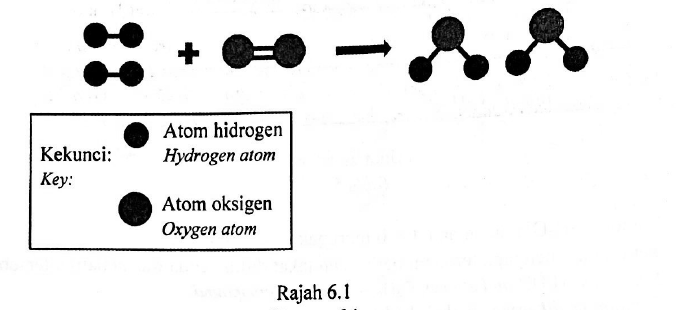
- (b)(i)
Three sets of experiment were carried out to study the effect of concentration of hydrochloric acid on the rate of reaction between hydrochloric acid with excess magnesium carbonate powder. Diagram 6.2 shows the curves of the graph of volume of carbon dioxide gas against time for Set I, Set II and Set III (Set I steepest, then Set II, then Set III). Write a chemical equation for the reaction between magnesium carbonate and hydrochloric acid.
[2]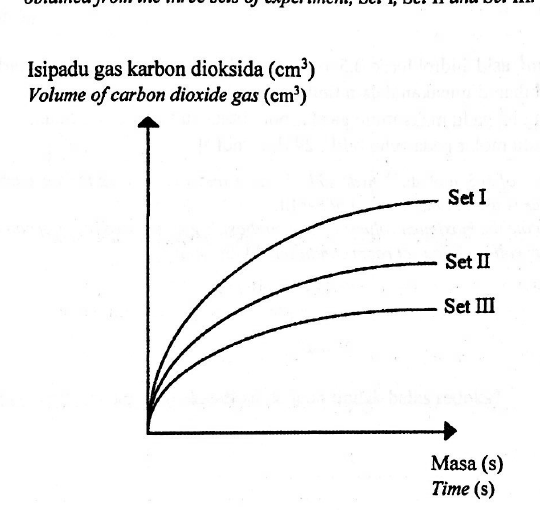
- (b)(ii)
Which set of experiment used the highest concentration of hydrochloric acid? Explain your answer.
[2] - (b)(iii)
50 cm³ of 0.5 mol dm⁻³ hydrochloric acid and excess magnesium carbonate powder is used in the reaction of Set III. Calculate the maximum volume of carbon dioxide gas released at room condition. [Molar volume of gas at room condition: 24 dm³ mol⁻¹]
[3]
Table 7 shows values of standard electrode potential, E° for several half-cells that can be used to answer the following questions: Mg²⁺ + 2e ⇌ Mg −2.38 V; Sn²⁺ + 2e ⇌ Sn −0.14 V; Pb²⁺ + 2e ⇌ Pb −0.13 V; Cu²⁺ + 2e ⇌ Cu +0.34 V; Ag⁺ + e ⇌ Ag +0.80 V.
Medium10 marks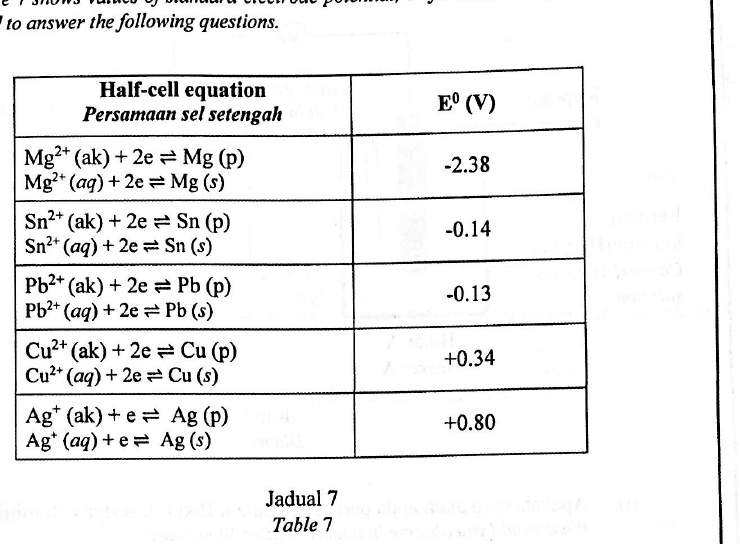
- (a)
What is meant by redox reaction?
[1] - (b)(i)
Based on standard electrode potential in Table 7, state the strongest reducing agent.
[1] - (b)(ii)
Calculate the oxidation number of chromium in Cr₂O₇²⁻.
[1] - (c)(i)
Diagram 7 shows a chemical cell constructed by combining two half-cells (Beaker A: copper in copper(II) nitrate solution; Beaker B: tin in tin(II) nitrate solution; salt bridge; voltmeter). What would you observe in Beaker A after 30 minutes?
[1]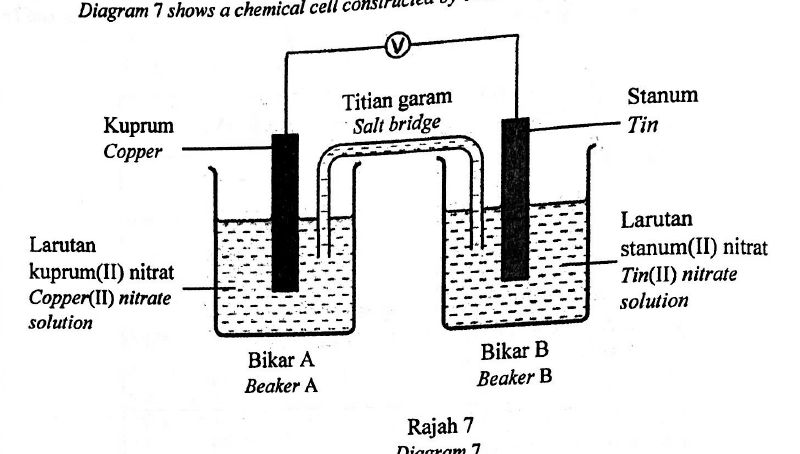
- (c)(ii)
Which electrode will undergo oxidation? Explain your answer in terms of standard electrode potential.
[2] - (c)(iii)
Write the cell notation for the voltaic cell in Diagram 7 and calculate the voltage of the cell, E°cell.
[2] - (c)(iv)
Based on your answer in 7(c)(iii), describe how can you increase the voltage of the cell?
[2]
The following chemical equation represents a displacement reaction between metal Q and lead(II) nitrate solution. Q + Pb(NO₃)₂ → Q(NO₃)₂ + Pb Given the following electrode potential values: Zn²⁺(aq) + 2e ⇌ Zn(s) E° = −0.76 V Pb²⁺(aq) + 2e ⇌ Pb(s) E° = −0.13 V Cu²⁺(aq) + 2e ⇌ Cu(s) E° = +0.34 V
Medium10 marks- (a)(i)
Suggest metal Q.
[1] - (a)(ii)
The heat of displacement for the reaction is −112 kJ mol⁻¹. Calculate the change in temperature when excess Q powder is added to 100 cm³ of 0.5 mol dm⁻³ lead(II) nitrate solution. [Specific heat capacity of a solution = 4.2 J g⁻¹ °C⁻¹; Density of solution = 1.0 g cm⁻³]
[3] - (b)(i)
Table 8 shows the heat of neutralisation for the reaction between potassium hydroxide solution with two different types of acids: Acid R + potassium hydroxide solution: −55 kJ mol⁻¹; Acid S + potassium hydroxide solution: −57 kJ mol⁻¹. Suggest acid R and acid S.
[2]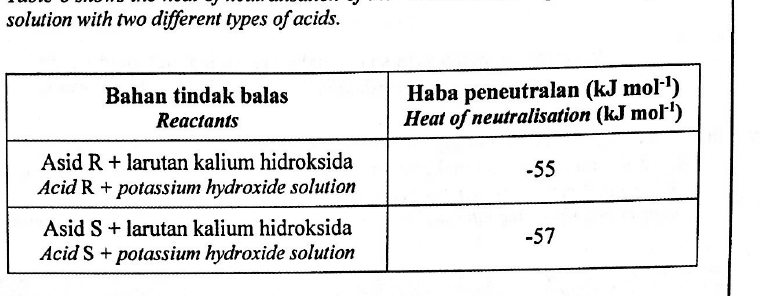
- (b)(ii)
Based on your answer in 8(b)(i), write the thermochemical equation of the reaction between acid R and potassium hydroxide solution.
[2] - (b)(iii)
The value of heat of neutralisation for both reactions are different. Explain why.
[2]
Section B
Answer any one question in Section B.
Medium20 marks- (a)
Akif was assigned by his teacher to prepare a salt crystal. Diagram 9.1 shows the assignment: prepare salt Y with the properties — white crystals; soluble in water; decomposes when heated to produce brown solids when hot and yellow when cold. Suggest suitable substances that can be used to prepare salt Y. Write the chemical equation for the decomposition of the salt when heated.
[4]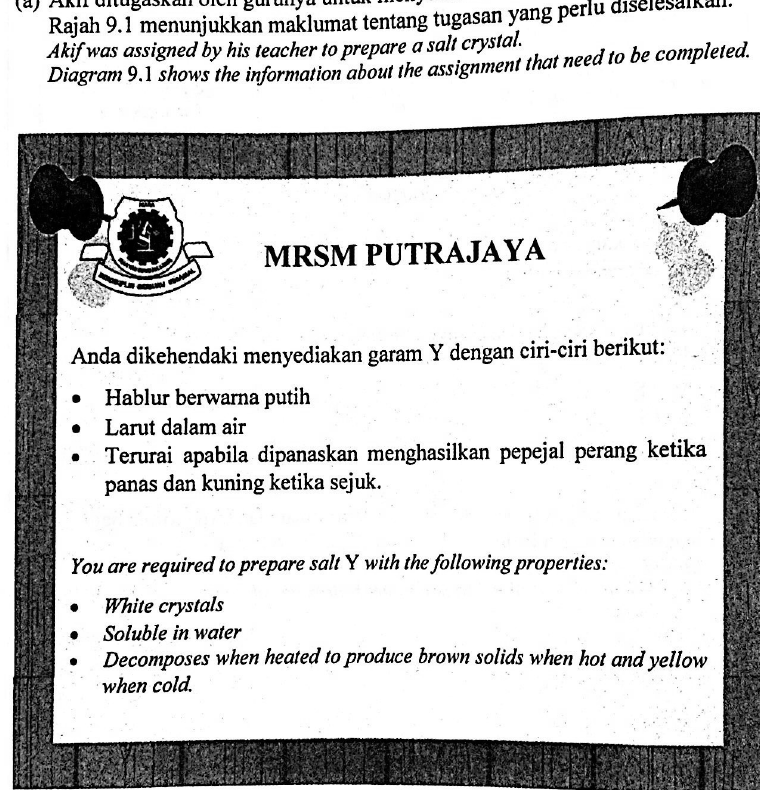
- (b)
Diagram 9.2 shows a series of reactions involving salt P: green solid P → (Reaction I) black solid Q + colourless gas; black solid Q + hydrogen chloride gas dissolved in water → (Reaction II) blue aqueous solution R; R + a few drops of sodium hydroxide solution until excess → (Reaction III) blue precipitate. Based on Diagram 9.2, state the name of solid P and aqueous solution R. Describe briefly how to confirm the presence of anion in aqueous solution R.
[5]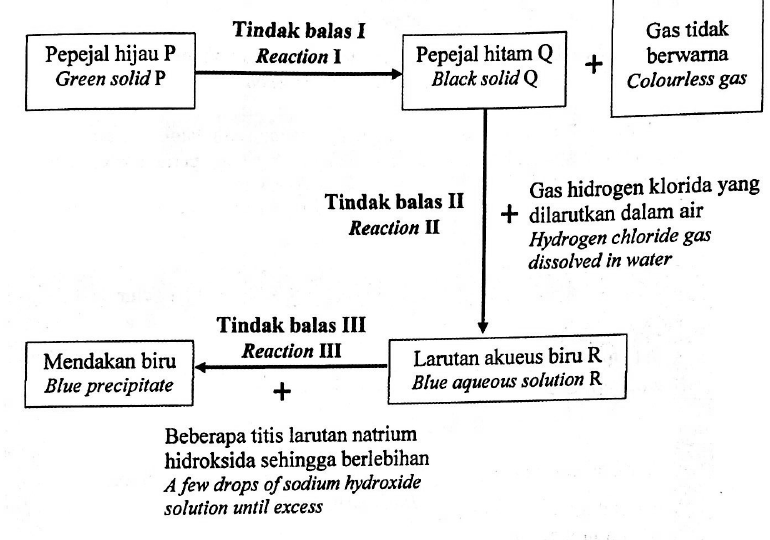
- (c)
Diagram 9.3 shows an egg that has been put into a container containing hydrochloric acid. J is the main compound in the eggshell which reacts with hydrochloric acid to produce water, compound L and gas M. Name the chemical reaction for the formation of compound J. Identify compound L and gas M.
[3]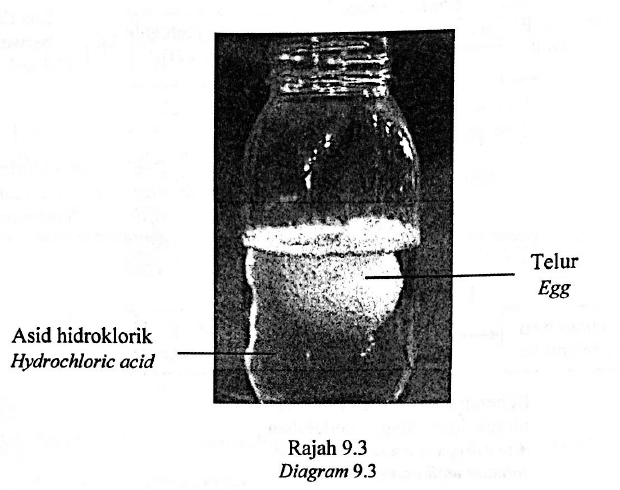
- (d)
Diagram 9.4 shows sodium hydroxide, NaOH pellet. X g of solid sodium hydroxide, NaOH is dissolved in distilled water to prepare 50 cm³ of 0.5 mol dm⁻³ solution with the pH value of 13.7. Calculate the value of X and the volume of distilled water need to be added into the solution to form a new solution with the concentration of 0.1 mol dm⁻³. What is the pH value of the diluted sodium hydroxide, NaOH solution and explain the difference in the pH value for both solutions? [Molar mass of NaOH = 40 g mol⁻¹]
[8]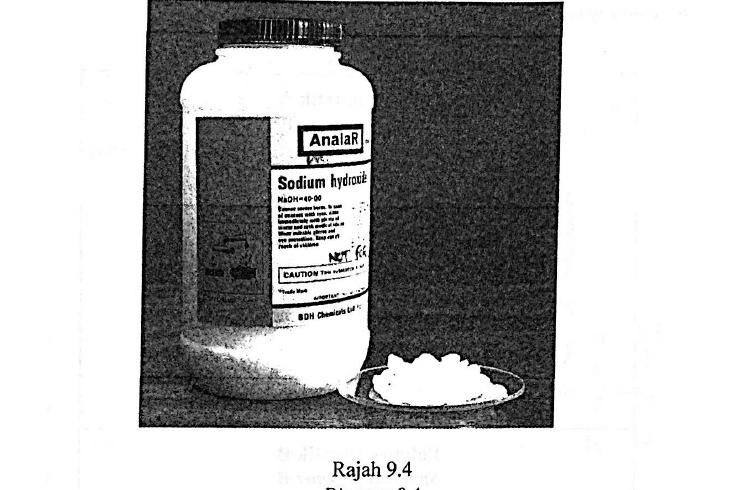
Diagram 10.1 shows two types of synthetic polymer that undergo heating process to study the ability of the respective polymer to be recycled (Synthetic polymer A: plastic bottle before heating, reshaped bottle after; Synthetic polymer B: bowl before heating, black powder after).
Medium20 marks- (a)
Based on Diagram 10.1, compare the observation for synthetic polymer A and synthetic polymer B after heating. Explain your answer.
[5]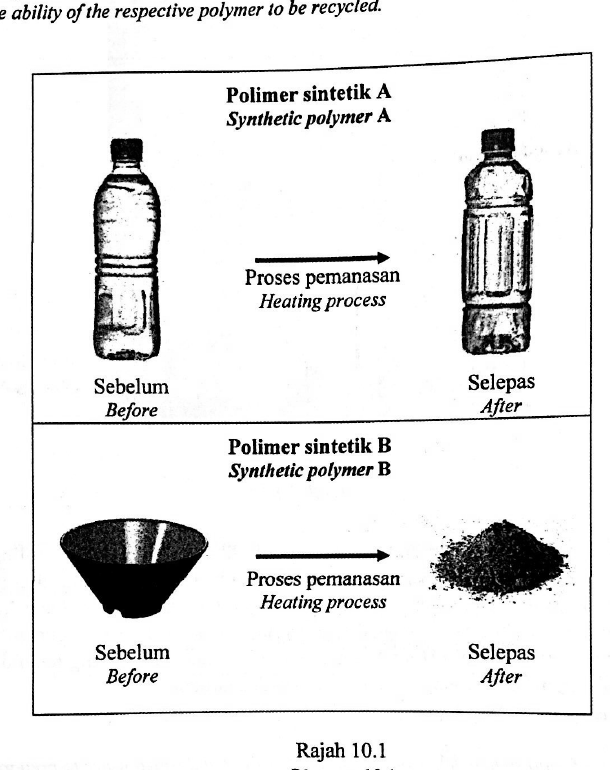
- (b)
Diagram 10.2 shows information about two polymers, terylene (monomers: terephthalic acid and 1,2-ethanediol) and polyvinyl chloride (monomer: vinyl chloride). Terylene and polyvinyl chloride are polymers produced through different polymerisation reactions. State the meaning of polymer and compare the polymerisation reaction of terylene and polyvinyl chloride. Suggest another polymer that can be produced for each polymerisation reaction involved.
[5]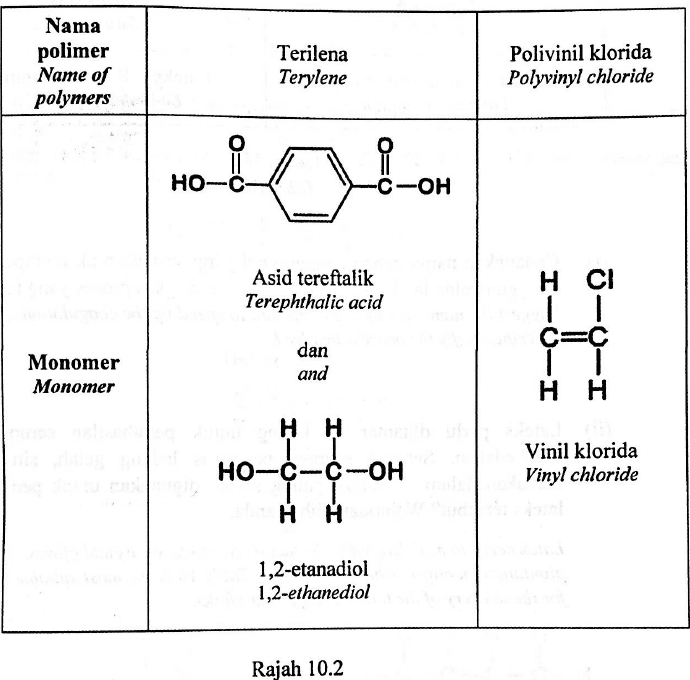
- (c)(i)
Table 10 shows two situations involving latex: Situation A: latex + coagulant; Situation B: latex + anticoagulant. Suggest the name of suitable coagulant to speed up the coagulation of latex and describe briefly the process involved.
[4]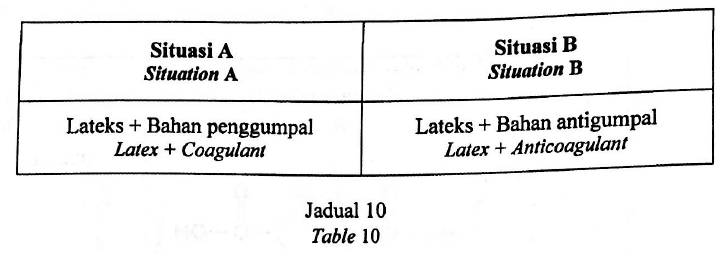
- (c)(ii)
Latex needs to be delivered to the factory to produce surgical gloves. As a rubber plantation manager, which situation in Table 10 is the most suitable to be used for the delivery of the latex? Justify your choice.
[6]
Section C
Answer all questions in Section C.
Medium20 marks- (a)(i)
Diagram 11.1 shows a cracking process of hydrocarbon A (a straight chain C₆H₁₄) that produces ethene and butane. State the homologous series of hydrocarbon A. Draw two isomers of butane and name each of the isomers.
[5]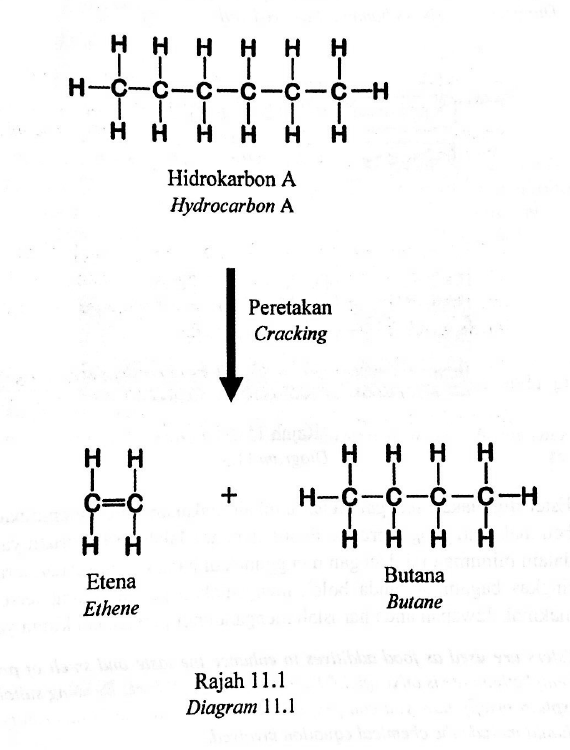
- (a)(ii)
When hot steam is passed through ethene at 300 °C, 60 atm and phosphoric acid, H₃PO₄ as the catalyst, compound B will be produced. Compound B can be oxidised to form compound C. Compare and contrast compound B and compound C.
[5] - (b)
Diagram 11.3 shows banana flavoured milk. Esters are used as food additives to enhance the taste and smell of processed foods. Pentyl ethanoate is an artificial flavour used in this drink. By using suitable substances, explain briefly how you can prepare the banana flavour in laboratory. Your answer should include the chemical equation involved.
[7]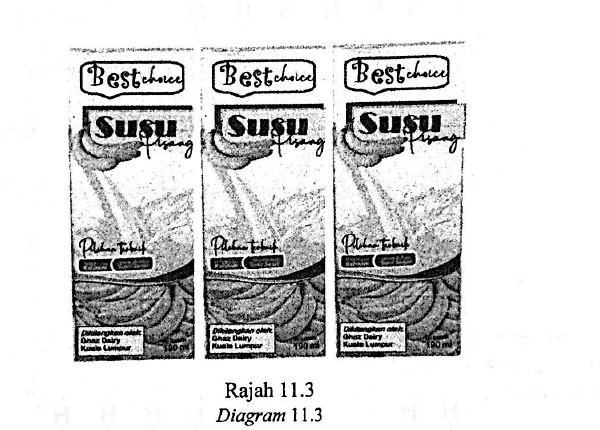
- (c)
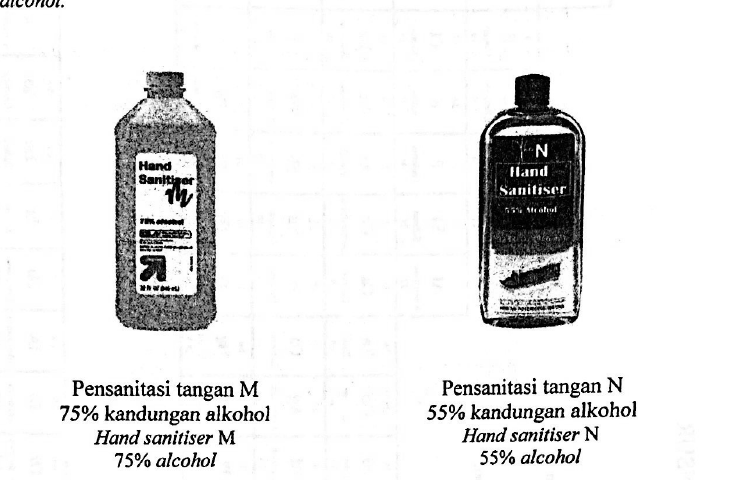
Diagram 11.2 shows two types of hand sanitisers that contains different percentage of alcohol: hand sanitiser M (75% alcohol) and hand sanitiser N (55% alcohol). Based on Diagram 11.2, choose which hand sanitiser will you use. Justify your choice.
[3]