Different types of chemicals should be stored and disposed by using different methods. Which of the following is the way to dispose substances with pH value less than 5 and more than 9?
Easy
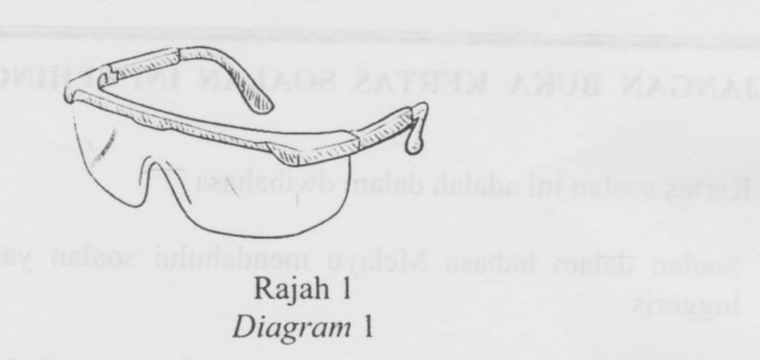
Diagram 1 shows an example of personal protective equipment. What is the function of this personal protective equipment?
Easy
Who discovered electron in atomic model?
Easy
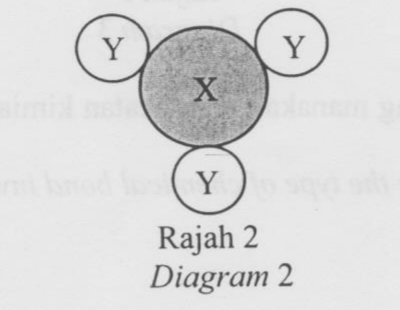
Diagram 2 shows the structure of a compound (one atom X bonded to three atoms Y). Which of the following could be the compound?
Medium
The following shows the uses for gas X. Used in flashlight of cameras; Used in lasers for eye retina treatment. What is gas X?
Easy
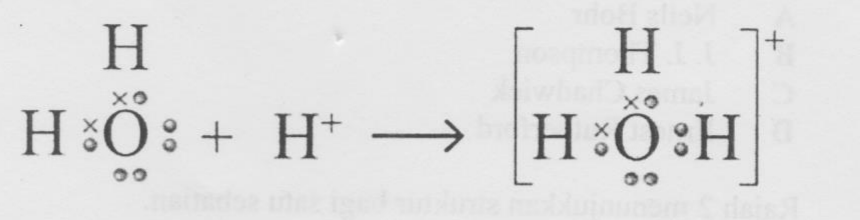
Diagram 3 shows the formation of bond to form hydroxonium ion (H2O + H+ → H3O+). Which of the following is the type of chemical bond involved in this compound?
Easy
Which of the following ion shows alkaline properties?
Easy
Which of the following process has the highest rate of reaction?
Easy
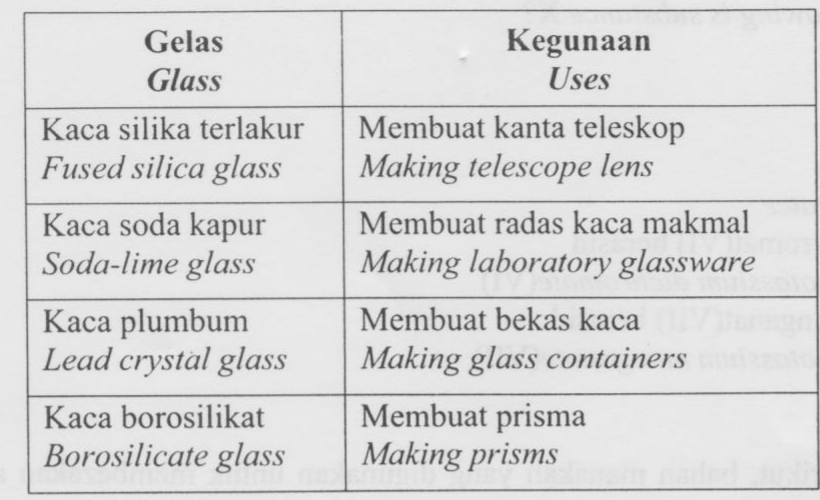
Which glass is correctly matched to its uses? (Table: A Fused silica glass - Making telescope lens; B Soda-lime glass - Making laboratory glassware; C Lead crystal glass - Making glass containers; D Borosilicate glass - Making prisms)
Medium
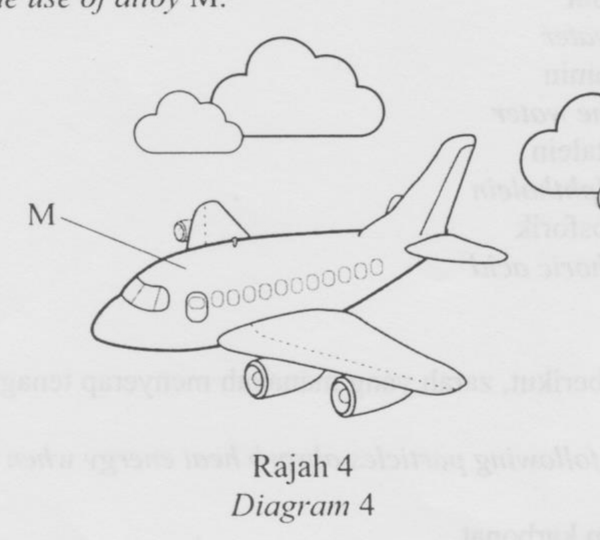
Diagram 4 shows one use of alloy M (an aeroplane). What is alloy M?
Easy
Iron(III) ions can be reduced to iron(II) ions by substance X. Which of the following is substance X?
Medium
Which substance is used to differentiate between hexane and hexene?
Easy
Which of the following particles absorb heat energy when dissolves in water?
Medium
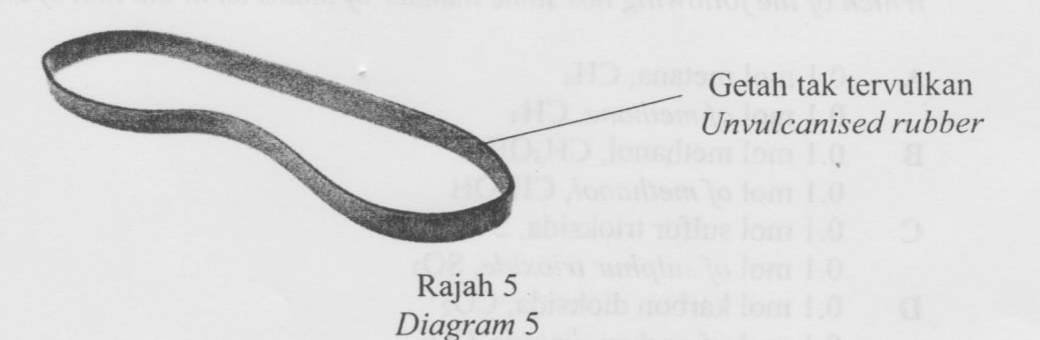
Diagram 5 shows a rubber band (unvulcanised rubber). Which of the following is not the property of the rubber band?
Medium
Which of the following food additives is added to thicken jam?
Easy
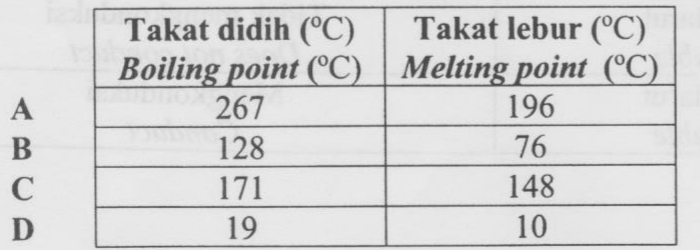
Substance R exists as liquid at 100 °C. Which of the following is the boiling point and melting point of substance R? (Boiling point/Melting point in °C: A 267/196; B 128/76; C 171/148; D 19/10)
Medium
Which of the following has same number of atoms as in 0.5 mol of argon?
Medium
The reaction of fluorine with other elements is more vigorous compared to iodine. Which of the following is the best to explain the above statement?
Medium
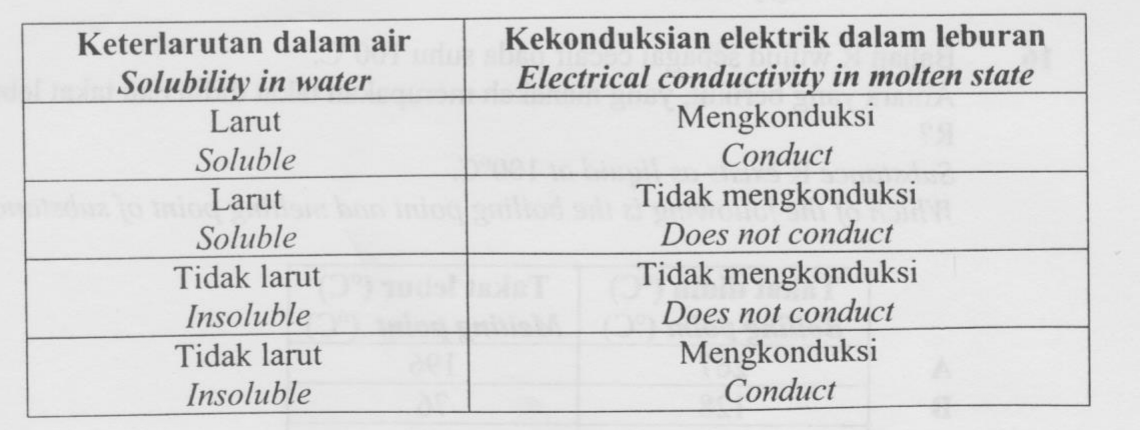
Which of the following pairs of physical properties of lead(II) bromide is true? (Solubility in water / Electrical conductivity in molten state: A Soluble / Conduct; B Soluble / Does not conduct; C Insoluble / Does not conduct; D Insoluble / Conduct)
Easy
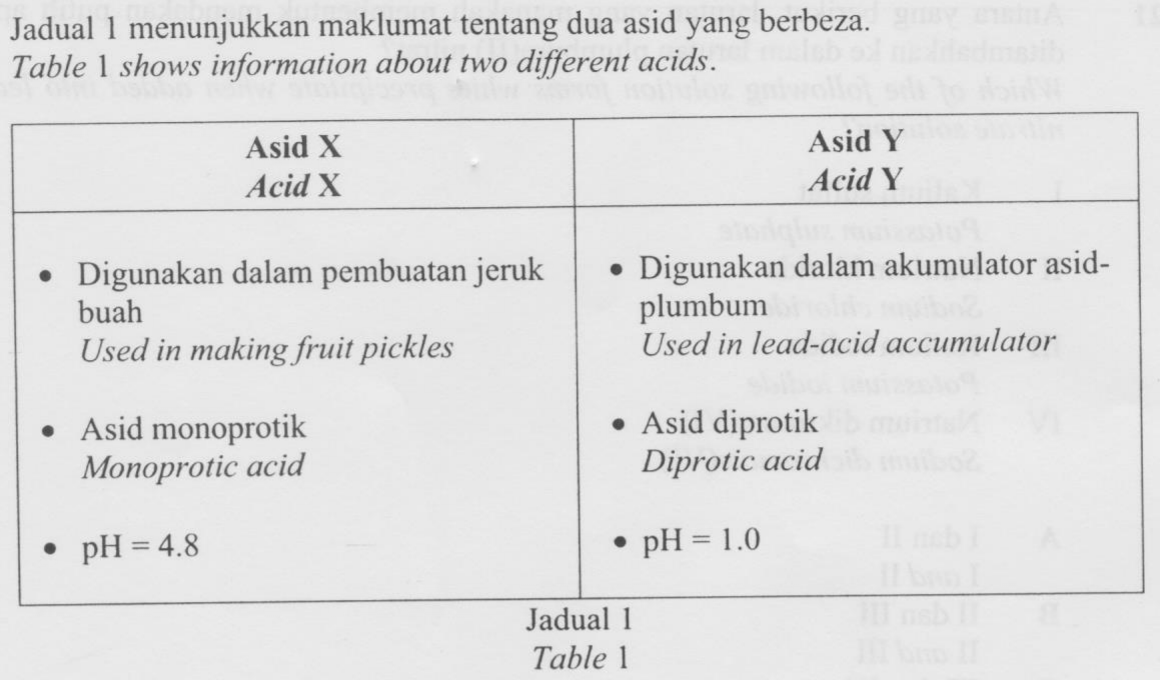
Table 1 shows information about two different acids. Acid X: used in making fruit pickles; monoprotic acid; pH = 4.8. Acid Y: used in lead-acid accumulator; diprotic acid; pH = 1.0. Which of the following statement is true about acid X and acid Y?
Medium
Which of the following solution forms white precipitate when added into lead(II) nitrate solution? I Potassium sulphate; II Sodium chloride; III Potassium iodide; IV Sodium dichromate(VI)
Medium
Which of the following salts can be prepared through reaction between acid and metal?
Medium
Hydrogen peroxide will decompose naturally into water and oxygen gas after a period of time. What should be done to slow this process?
Medium
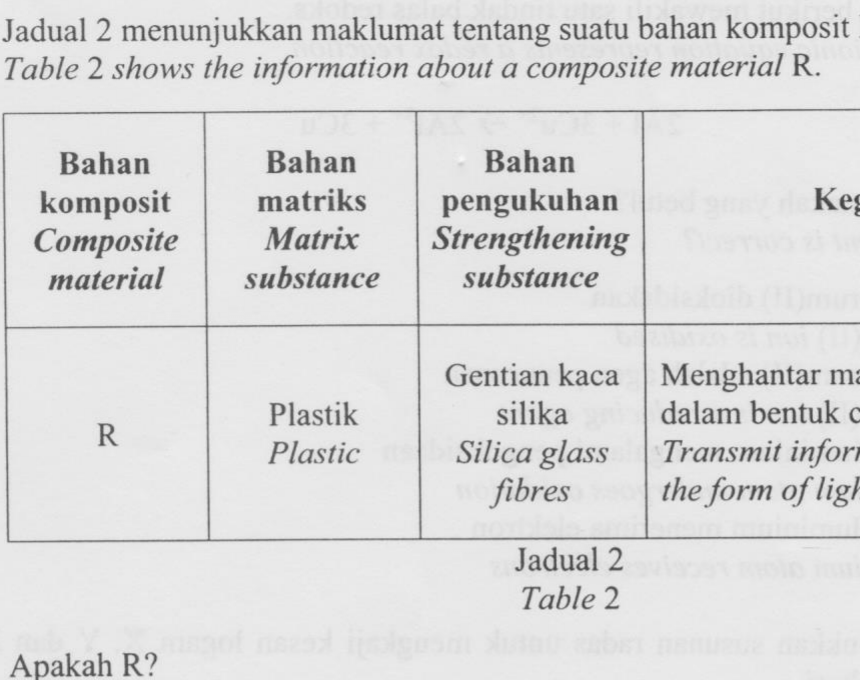
Table 2 shows the information about a composite material R: matrix substance plastic; strengthening substance silica glass fibres; use: transmit information and data in the form of light. What is R?
Easy
The following ionic equation represents a redox reaction: 2Al + 3Cu2+ → 2Al3+ + 3Cu. Which statement is correct?
Medium
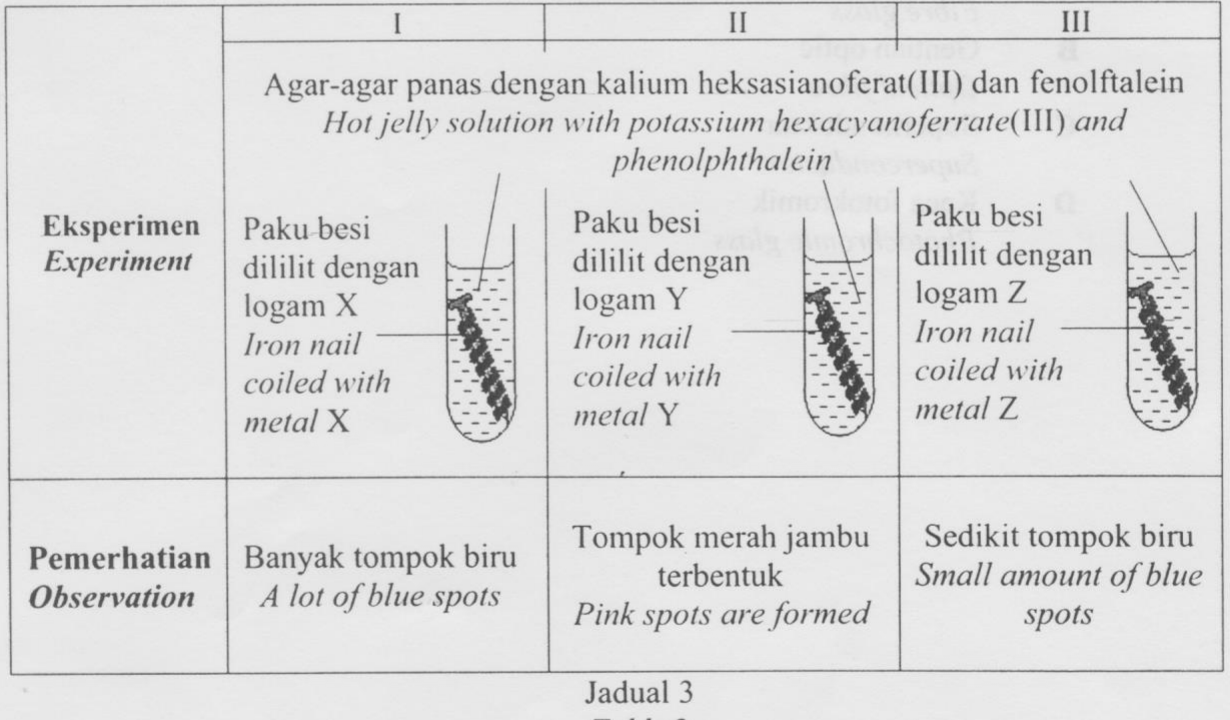
Table 3 shows the apparatus set-up to investigate the effect of metals X, Y and Z on the rusting of iron. Iron nail coiled with metal X: a lot of blue spots; with metal Y: pink spots are formed; with metal Z: small amount of blue spots (hot jelly solution with potassium hexacyanoferrate(III) and phenolphthalein). Based on the experiment, which arrangement of metals is in descending order of electropositivity?
Medium
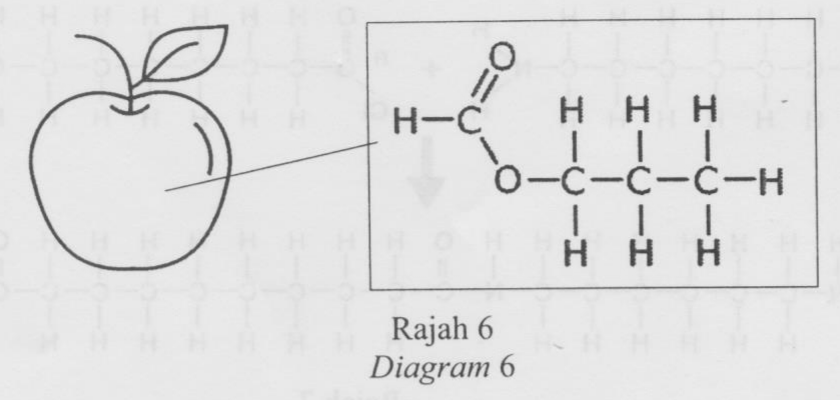
Diagram 6 shows the structural formula of an ester contained in an apple (HCOO-CH2CH2CH3). What is the name of the ester based on IUPAC system nomenclature?
Medium
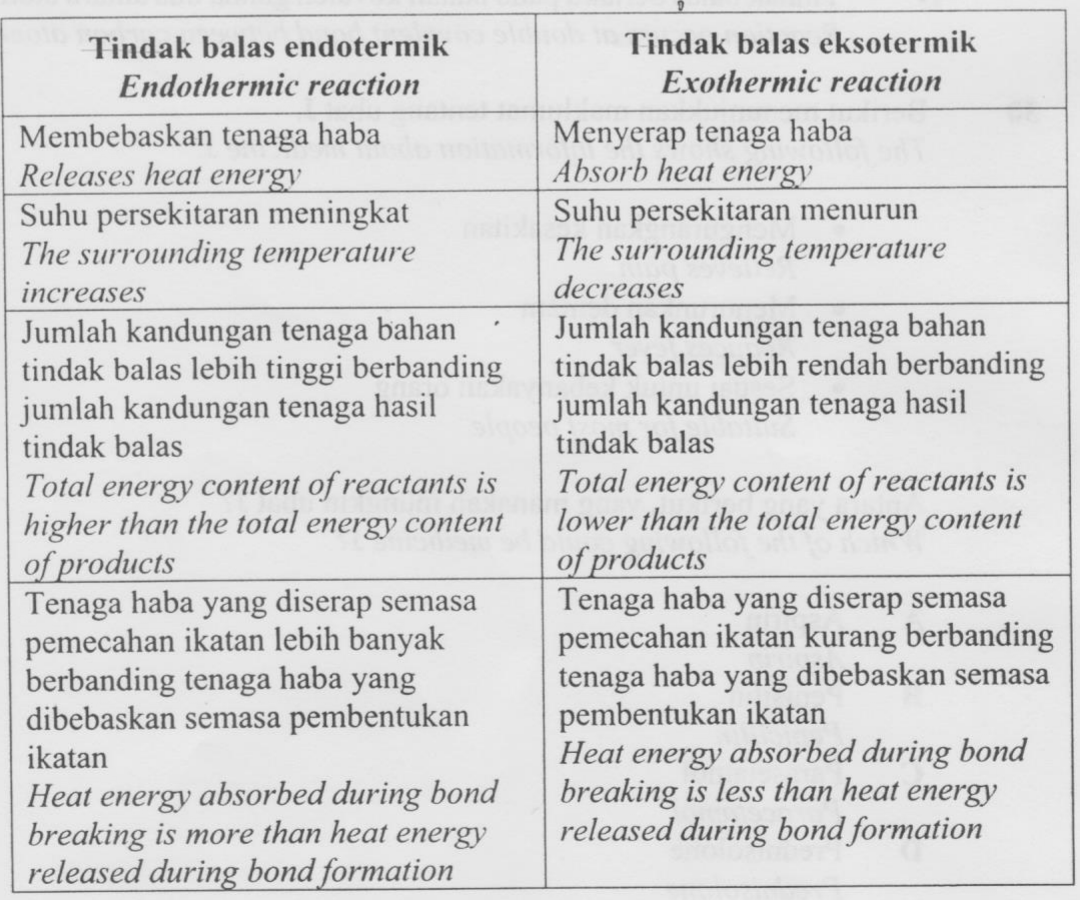
Which of the following is true about endothermic reaction and exothermic reaction? (Table comparing heat release/absorption, surrounding temperature, energy content and bond breaking/formation.)
Medium
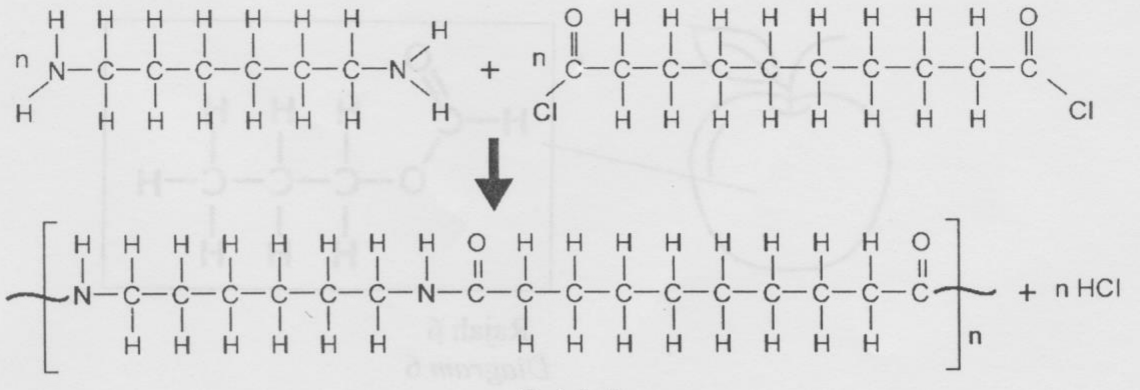
Diagram 7 shows a polymerisation reaction to produce nylon (diamine + diacyl chloride → nylon + nHCl). Which of the following is true?
Medium
The following shows the information about medicine J: relieves pain; reduces fever; suitable for most people. Which of the following could be medicine J?
Easy
Formula of oxide P is P2O. 21.6 g of oxide P react completely with carbon powder to form 19.2 g of metal P. Which of the following is the relative atomic mass of P? [Relative atomic mass: O = 16]
Medium
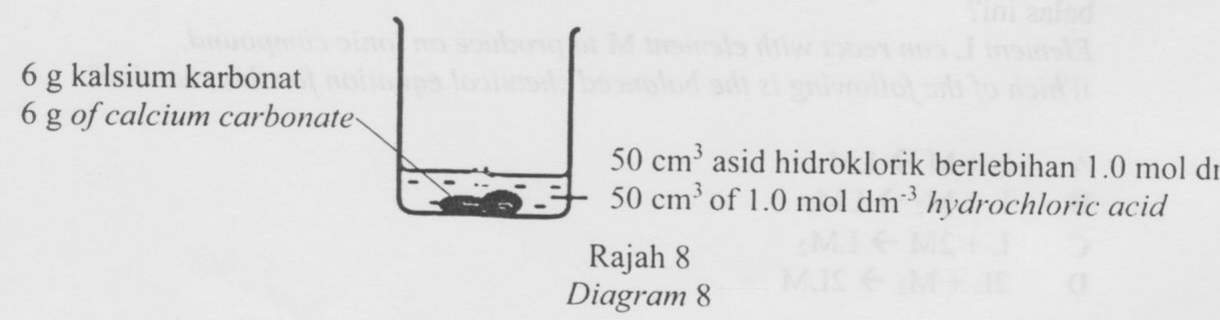
Diagram 8 shows 6 g of calcium carbonate reacting with 50 cm3 of excess 1.0 mol dm-3 hydrochloric acid. Equation: CaCO3 + 2HCl → CaCl2 + H2O + CO2. What is the maximum volume of carbon dioxide gas produced in the experiment? [Relative atomic mass: Ca = 40, C = 12, O = 16; 1 mol of gas = 24 dm3 at room condition]
Medium
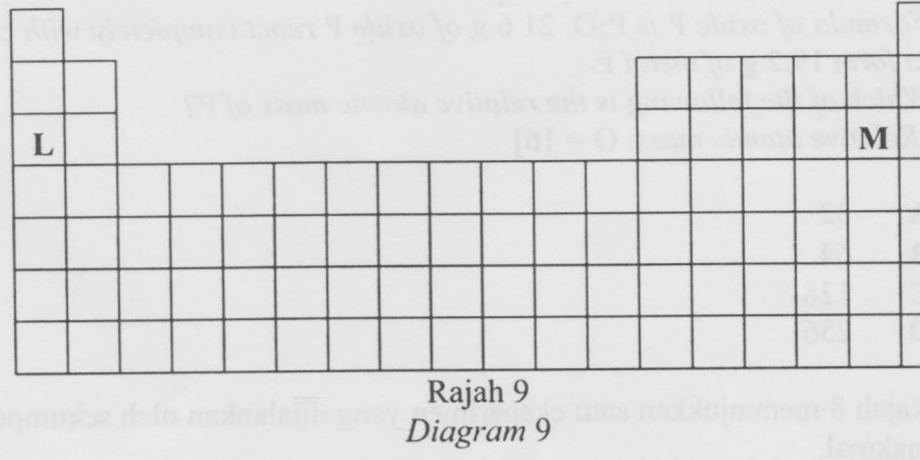
Diagram 9 shows an incomplete Periodic Table of Element (L is in Group 1, M is in Group 17). L and M are not the actual symbol for element. Element L can react with element M to produce an ionic compound. Which of the following is the balanced chemical equation for this reaction?
Medium
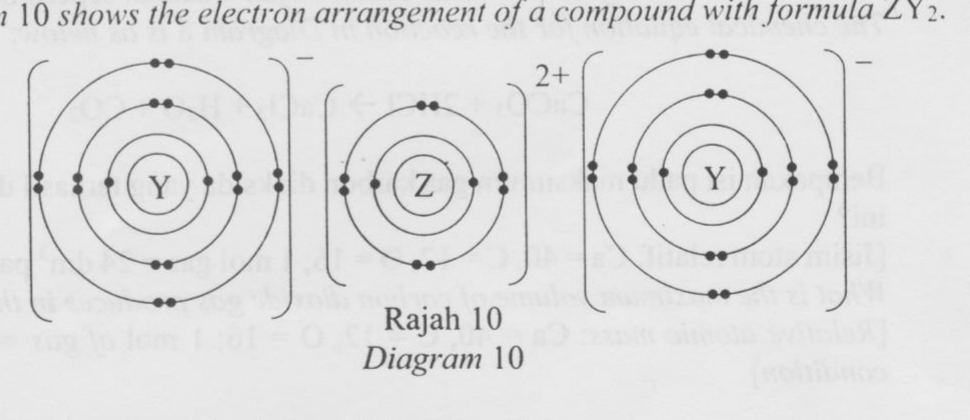
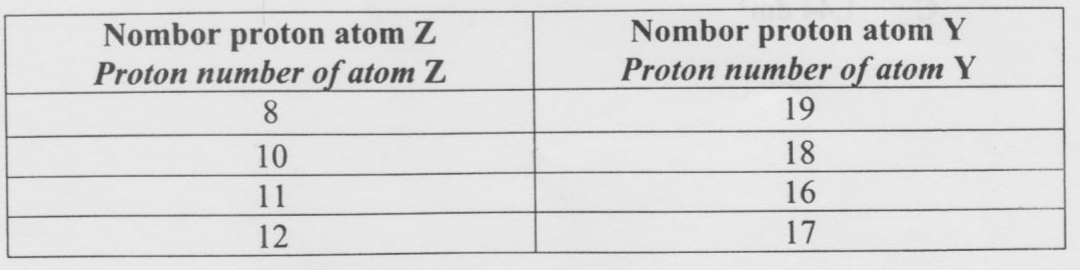
Diagram 10 shows the electron arrangement of a compound with formula ZY2 (Y- ion, Z2+ ion, Y- ion). What are the proton number of atom Z and atom Y? (Z/Y: A 8/19; B 10/18; C 11/16; D 12/17)
Medium
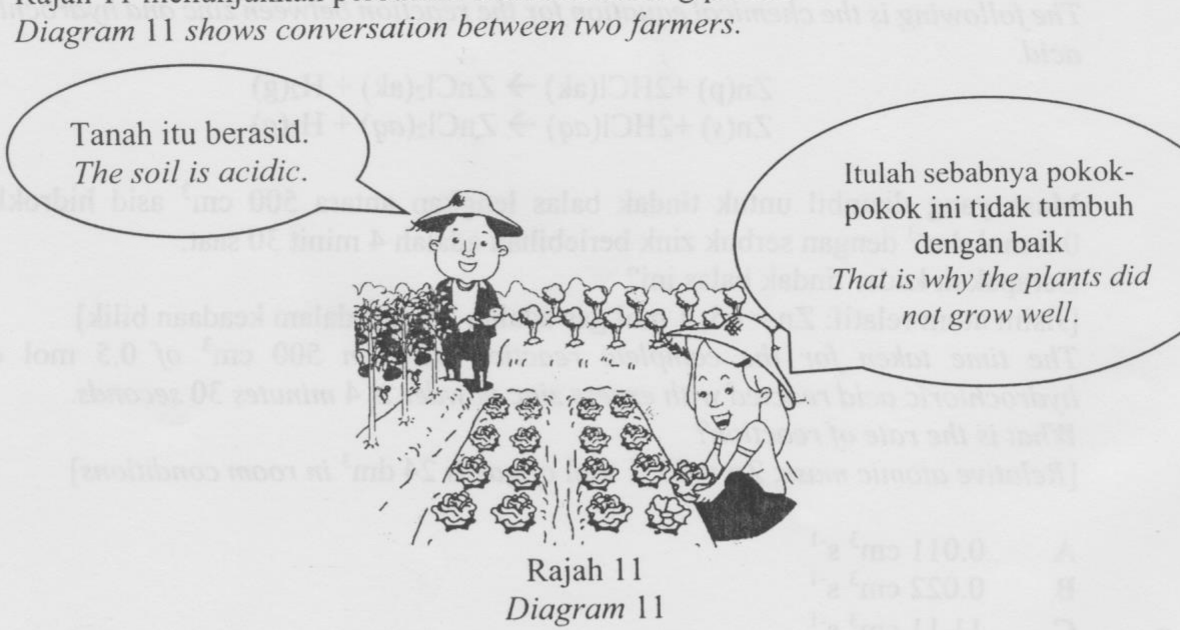
Diagram 11 shows conversation between two farmers: 'The soil is acidic.' 'That is why the plants did not grow well.' Which of the following substance is suitable to overcome the problem faced by the farmer?
Easy
Zn(s) + 2HCl(aq) → ZnCl2(aq) + H2(g). The time taken for the complete reaction between 500 cm3 of 0.5 mol dm-3 hydrochloric acid reacted with excess zinc powder is 4 minutes 30 seconds. What is the rate of reaction? [Relative atomic mass: Zn = 65, 1 mol of gas is 24 dm3 in room conditions]
Medium
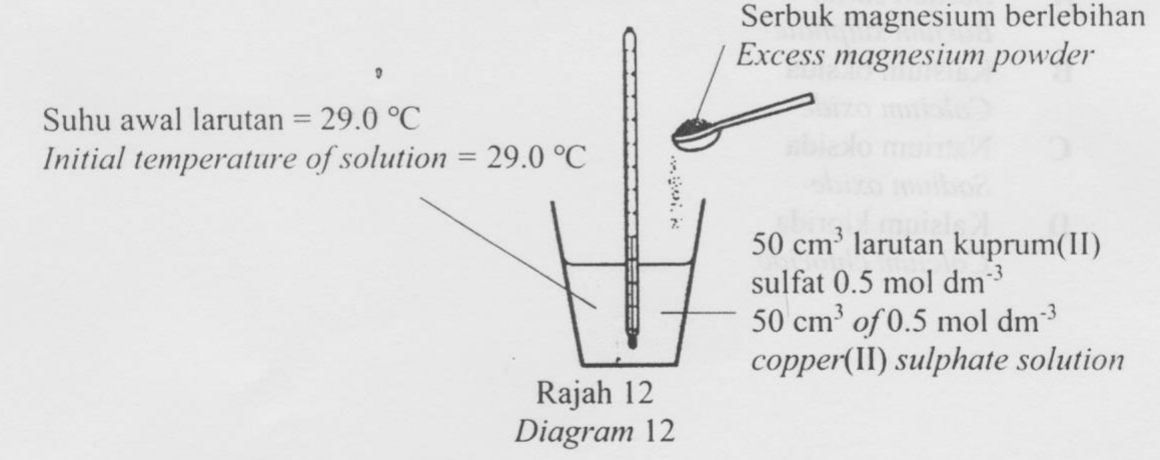
Diagram 12 shows an experiment to determine the heat of displacement of copper by magnesium: excess magnesium powder added to 50 cm3 of 0.5 mol dm-3 copper(II) sulphate solution; initial temperature 29.0 °C; highest temperature recorded 70.0 °C. What is the heat of displacement for copper? [Specific heat capacity of water = 4.2 J g-1 °C-1, density of water = 1.0 g cm-3]
Medium
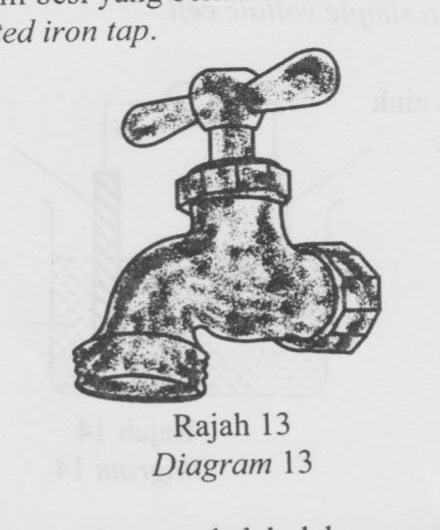
Diagram 13 shows a rusted iron tap. Which of the following polymers can replace iron so that the water tap will not corrode?
Medium
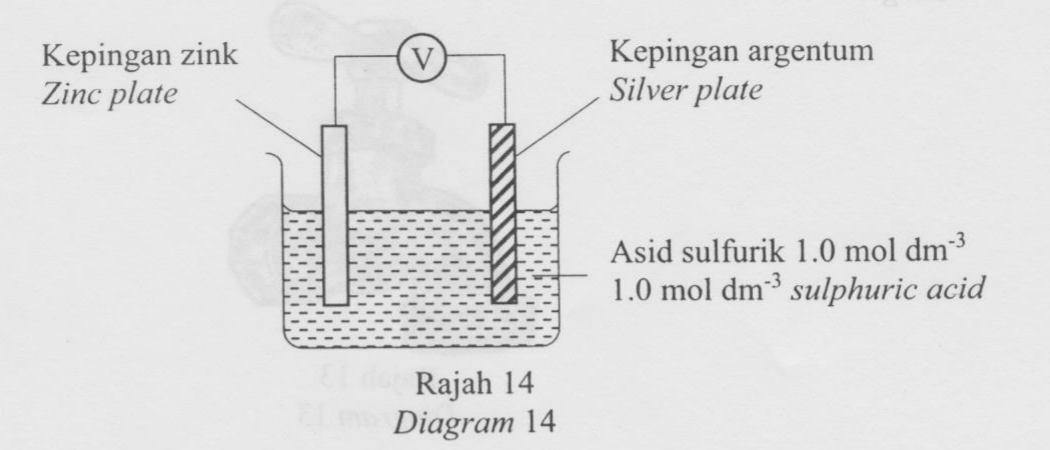
Diagram 14 shows a simple voltaic cell (zinc plate and silver plate in 1.0 mol dm-3 sulphuric acid). Given standard electrode potential: Zn2+ + 2e ⇌ Zn, E0 = -0.76 V; Ag+ + e ⇌ Ag, E0 = +0.80 V. What is the voltage value for the cell?
Medium
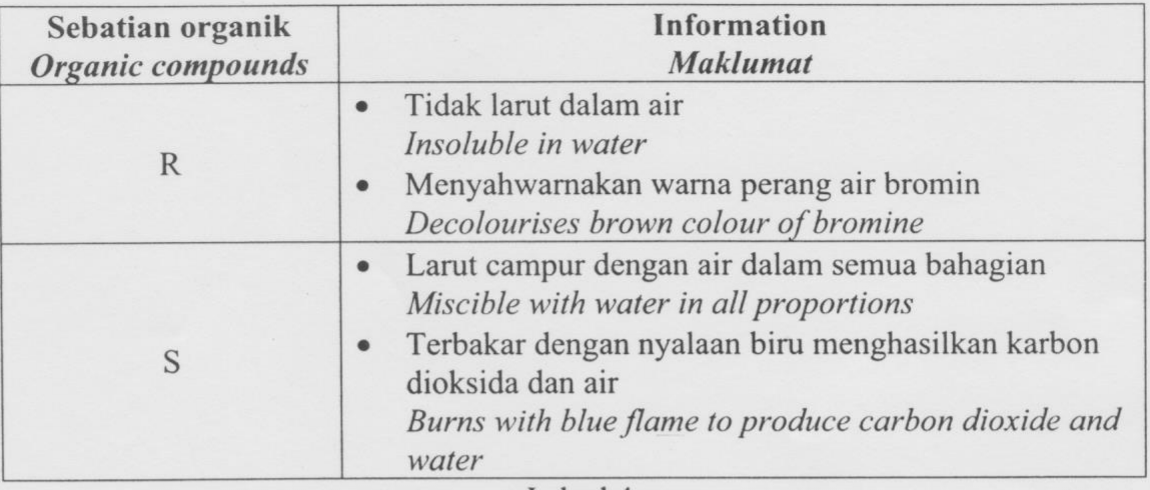
Table 4 shows the information of two organic compounds R and S. R: insoluble in water; decolourises brown colour of bromine. S: miscible with water in all proportions; burns with blue flame to produce carbon dioxide and water. Based on the information given, which structural formula has the same characteristics as above?