Write your answer on paper. Then open the answer to check it.
Section A
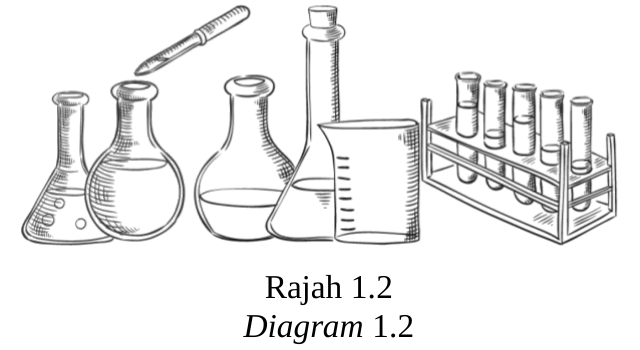
Diagram 1.1 shows the arrangement of atoms in pure copper and alloy Y. Y is an alloy of copper. Diagram 1.2 shows laboratory glassware made of glass.
Medium5 marks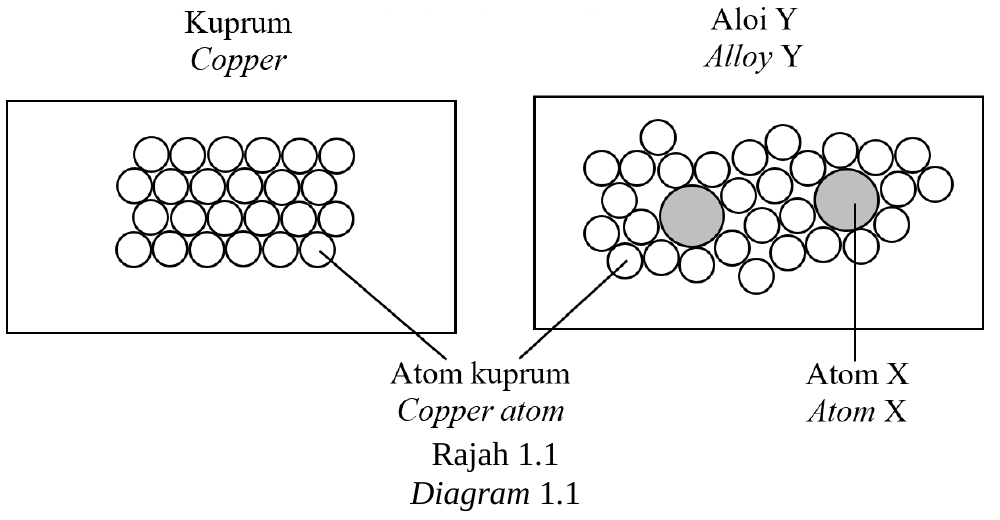
- (a)(i)
State the name of atom X.
[1] - (a)(ii)
Explain why alloy Y is harder than its pure metal?
[2] - (b)(i)
State the main component of glass.
[1] - (b)(ii)
State one reason why borosilicate glass is most suitable to use to make laboratory glassware?
[1]
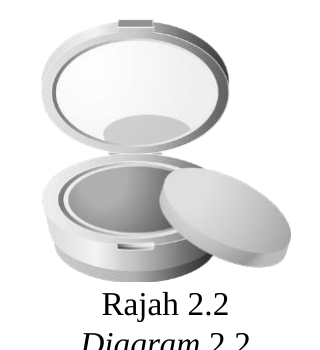
Diagram 2.1 shows the structural formula of a soap anion: CH3 – (CH2)14 – C(=O) – O⁻. Diagram 2.2 shows a type of cosmetic (a compact powder) that utilises nanotechnology.
Medium5 marks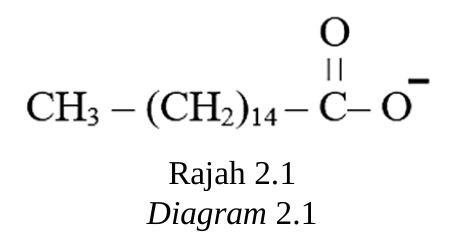
- (a)(i)
Circle the part of the soap anion that is soluble in water in the Diagram 2.1.
[1] - (a)(ii)
Name the part of the soap anion that is soluble in grease.
[1] - (b)(i)
State one advantage of nanotechnology application in the cosmetic in Diagram 2.2.
[1] - (b)(ii)
Mercury is widely used in cosmetic products. State one side effect of mercury in cosmetic products.
[1] - (c)
State one application of nanotechnology in daily life other than in cosmetics.
[1]
Table 1 shows the number of protons and the number of neutrons in atoms R, S and T: R has 11 protons and 12 neutrons; S has 11 protons and 13 neutrons; T has 12 protons and 12 neutrons.
Medium6 marks- (a)
State three subatomic particles of an atom.
[1] - (b)(i)
What is meant by isotope?
[1] - (b)(ii)
Which atoms are isotopes?
[1] - (b)(iii)
State the isotope that is used to treat cancer diseases.
[1] - (c)(i)
Write the electron arrangement of atom T.
[1] - (c)(ii)
What is the valence electron of atom R?
[1]
Diagram 3 shows the apparatus set-up to determine the empirical formula of copper(II) oxide (hydrogen from zinc and hydrochloric acid passed over heated copper(II) oxide). Table 2 shows the results: glass tube 32.25 g; glass tube + copper(II) oxide 42.25 g; glass tube + copper 40.25 g.
Medium7 marks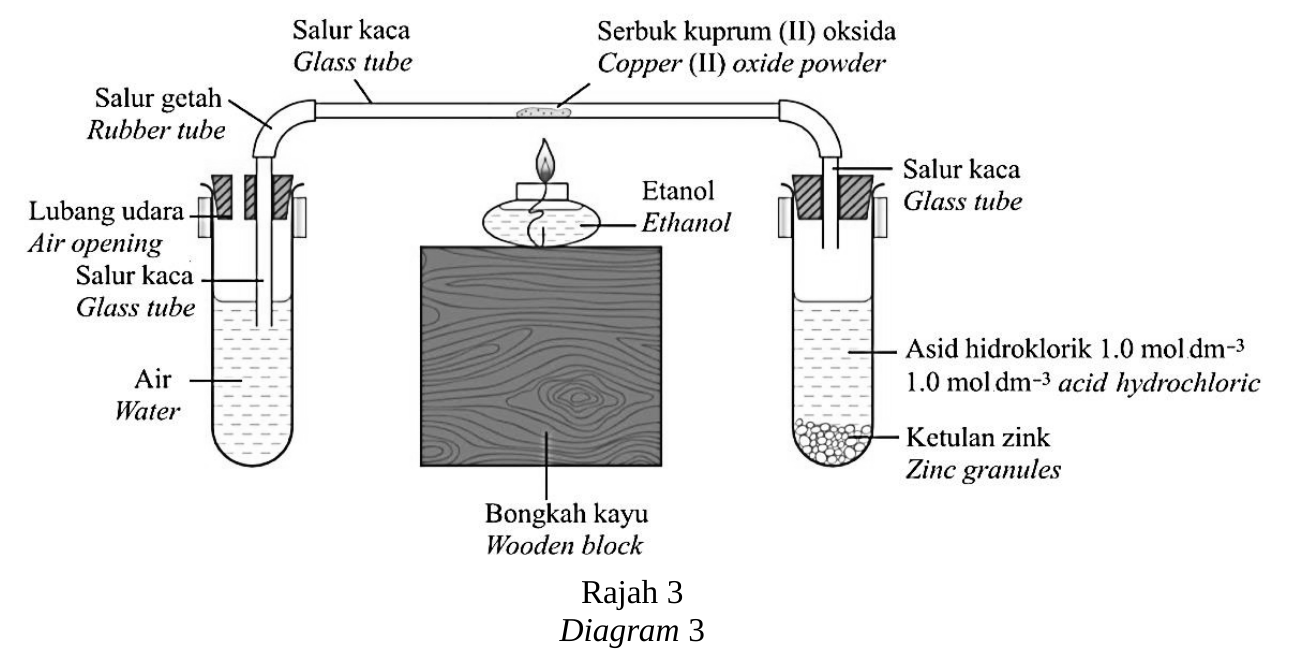
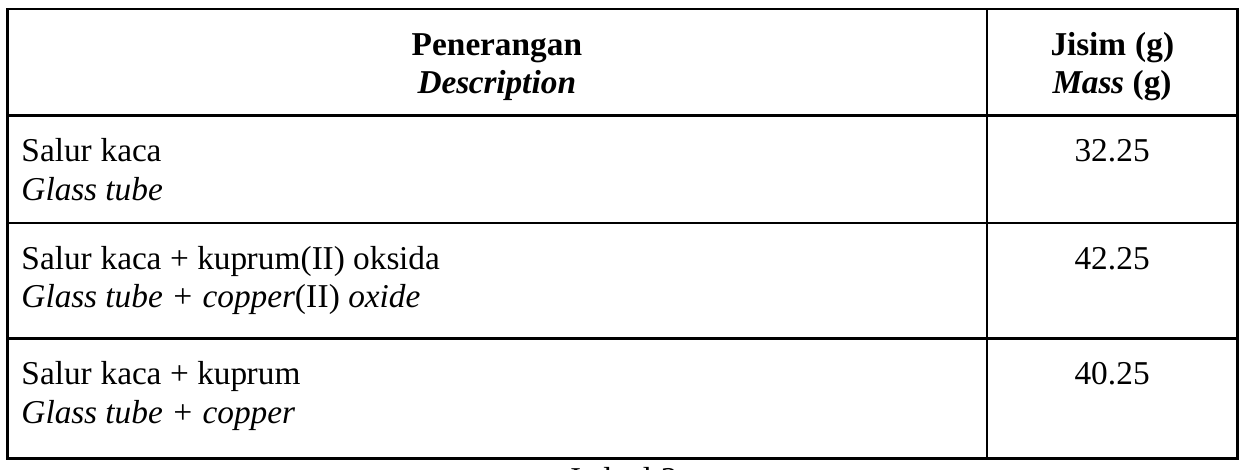
- (a)
What is the meaning of empirical formula?
[1] - (b)(i)
Based on the table above, calculate the mass of: copper, oxygen.
[2] - (b)(ii)
Calculate the ratio of moles of copper atoms to oxygen atoms. [Relative atomic mass: O = 16, Cu = 64]
[2] - (b)(iii)
Determine the empirical formula of copper(II) oxide.
[1] - (c)
State how to determine that the reaction between copper oxide with hydrogen has completed.
[1]
Diagram 4 shows a flow chart of conversion of compound P (C2H5OH): P heated over porcelain chips gives compound R; P with reagent X and sulphuric acid gives compound Q; R undergoes polymerisation to give compound S. When bromine water is added to R, the brown bromine water is decolourised. Compound Q turns blue litmus paper red. Table 3: oil Y has 12.0% saturated fat and 88.0% unsaturated fat; oil Z has 14.4% saturated fat and 85.6% unsaturated fat.
Medium8 marks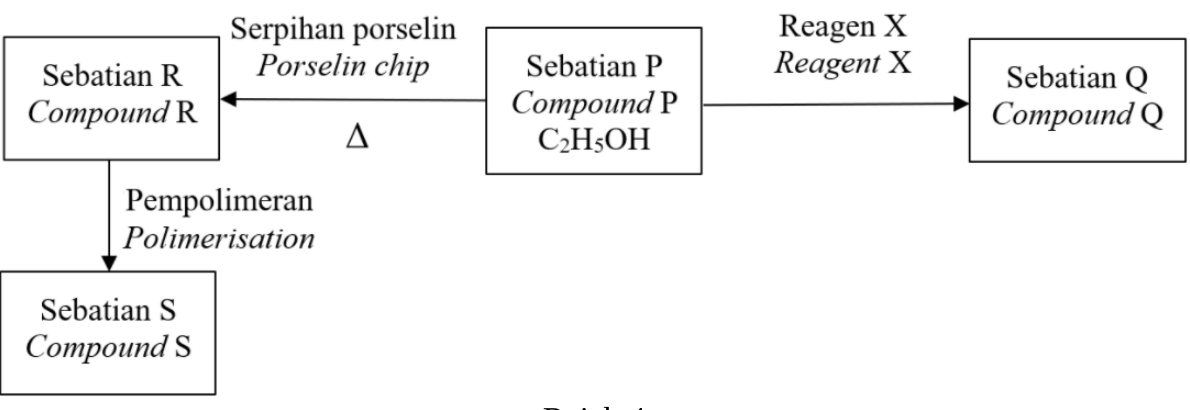
- (a)(i)
Name a compound R.
[1] - (a)(ii)
Draw a structural formula for compound R.
[1] - (b)(i)
When the mixture of compound P, reagent X and sulphuric acid is gently heated it will produce compound Q. Name the reagent X.
[1] - (b)(ii)
State the colour change of the reagent at 5(b)(i) during the reaction.
[1] - (c)(i)
Compound R undergoes a polymerisation reaction to produce compound S. State the name of compound S.
[1] - (c)(ii)
Draw the structural formula for S.
[1] - (d)
Mr. Hamid suffered from a stroke. His wife, Madam Rokiah must ensure that the food prepared does not affect her husband's health. Table 3 shows information about oils Y and Z (Y: 12.0% saturated, 88.0% unsaturated; Z: 14.4% saturated, 85.6% unsaturated). Which oil is more suitable to be used by Madam Rokiah? Explain your answer.
[2]
Table 4 shows the pH values for solutions of acid A (pH 1) and acid B (pH 4) which have the same concentration. Both acids are monoprotic acids.
Medium9 marks- (a)(i)
Suggest the names of acid A and acid B.
[2] - (a)(ii)
Explain why these two acid solutions have different pH values.
[3] - (a)(iii)
Calculate the molarity of acid A.
[1] - (b)
25 cm³ of acid A completely neutralises 50 cm³ of sodium hydroxide solution, NaOH. By using the named acid A at 6(a)(i), write a balanced chemical equation for the neutralisation reaction.
[1] - (c)
Diagram 5 shows a student adding sulphuric acid with the same concentration as acid A to the sodium hydroxide solution as in 6(b). The student says: 'I need to add 12.50 cm³ of sulphuric acid to neutralise the sodium hydroxide solution.' Does the student add the correct volume of the sulphuric acid? Give the reason.
[2]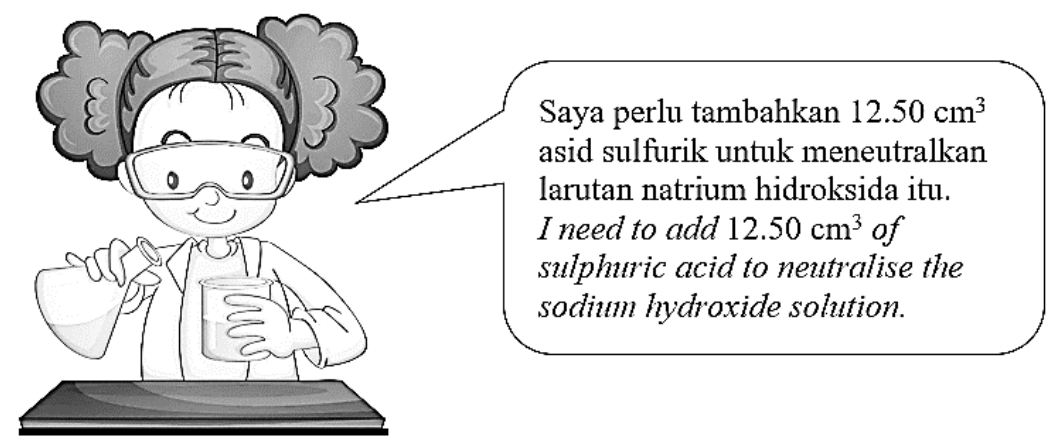
Diagram 6 shows the energy level diagram for the combustion of methanol: CH3OH + 3/2 O2 at the higher level, CO2 + 2H2O at the lower level, ΔH = –728 kJ mol⁻¹. Table 5: propanol C3H7OH heat of combustion –2016 kJ mol⁻¹; butanol C4H9OH –2678 kJ mol⁻¹.
Medium10 marks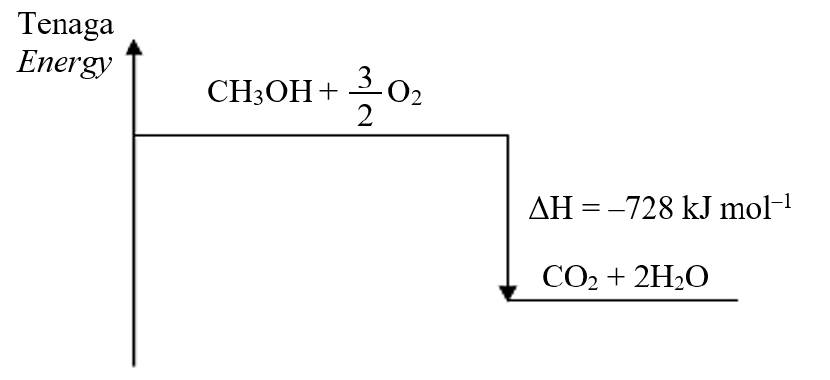
- (a)
State one information that can be obtained from the energy level diagram in Diagram 6.
[1] - (b)
Draw a labelled diagram of the setup of apparatus to determine the heat of combustion of methanol.
[2] - (c)(i)
Heat energy released from the complete combustion of 1.6 g methanol is used to heat 200 cm³ of water. Calculate the heat energy released in the reaction. [Molar mass of methanol, CH3OH = 32]
[2] - (c)(ii)
Calculate the temperature change in the reaction. [Specific heat capacity of water: 4.2 J g⁻¹ °C⁻¹]
[1] - (d)
The value of the heat of combustion of methanol obtained from the experiment is always less than the theoretical value. Suggest one precaution step that should be taken in order to get a more accurate result.
[1] - (e)
Based on the information in Table 5, explain why there is a difference in the value of heat of combustion between propanol and butanol.
[3]
Diagram 7 shows two experiments to investigate one factor that affects the rate of reaction between zinc and hydrochloric acid. Experiment I: 50 cm³ of 0.5 mol dm⁻³ hydrochloric acid with excess zinc granules. Experiment II: 25 cm³ of 1.0 mol dm⁻³ hydrochloric acid with excess zinc granules. Hydrogen gas is collected over water in a burette.
Medium10 marks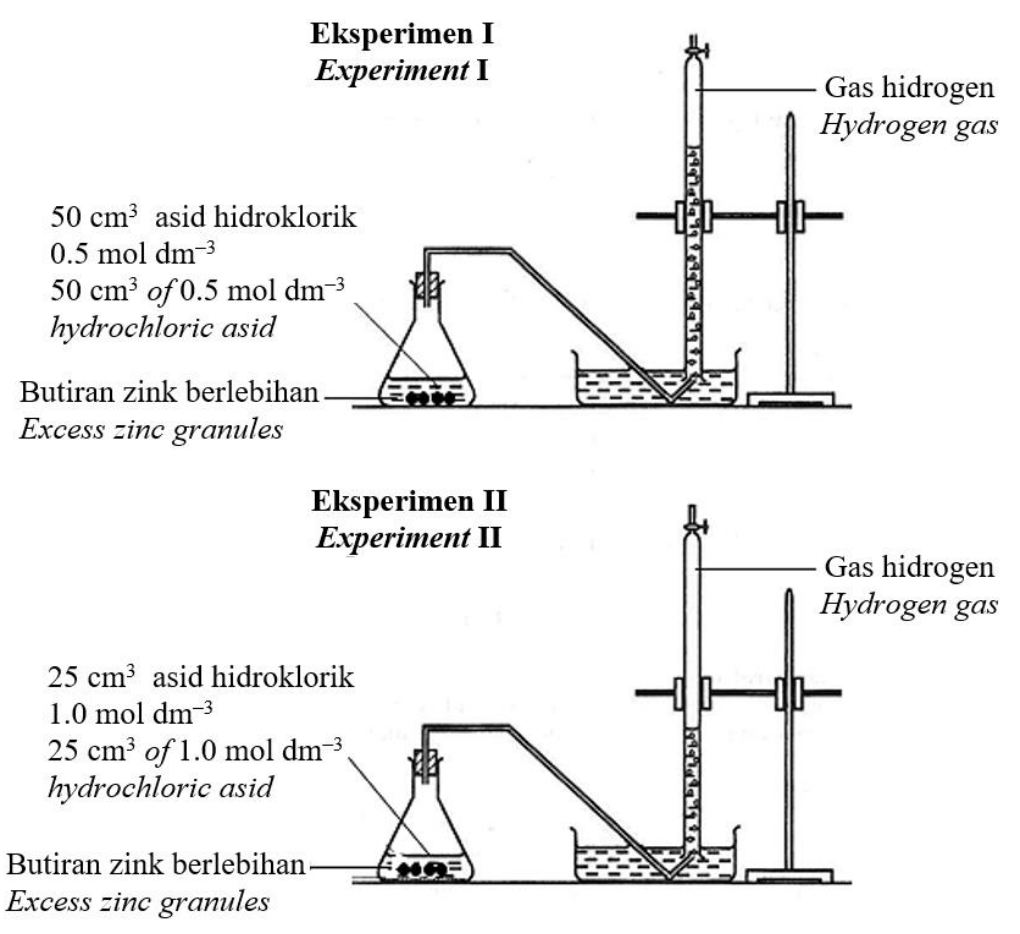
- (a)
How to determine the rate of reaction in this experiment?
[1] - (b)(i)
The maximum volume of hydrogen gas released in Experiment I is V cm³. What is the volume of hydrogen gas released in Experiment II compared to Experiment I? Explain.
[2] - (b)(ii)
The graph of volume of gas against time for Experiment I is sketched in Graph 1.1. Sketch the curve for Experiment II on the same axes in Graph 1.1.
[1]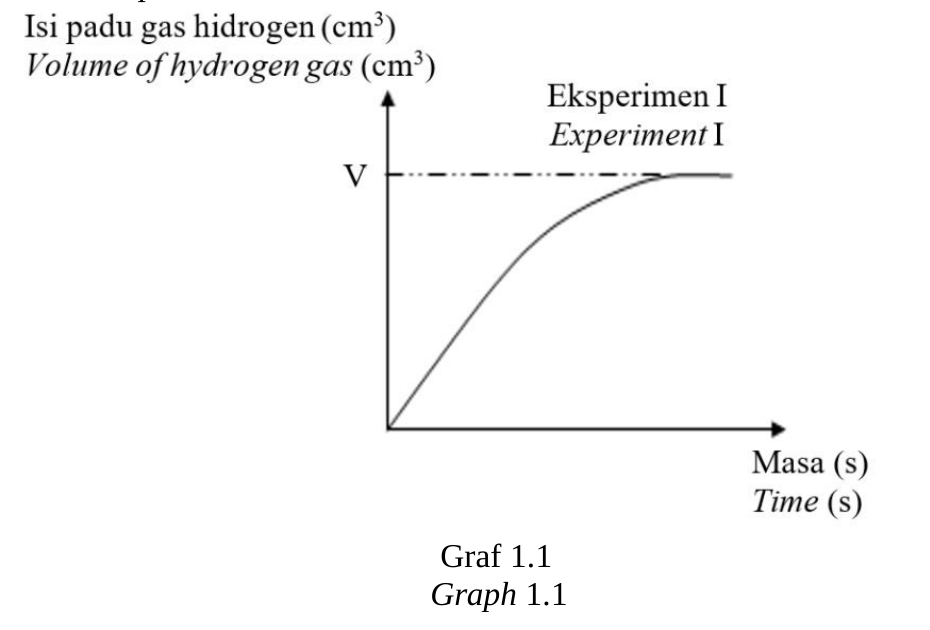
- (c)(i)
Based on Diagram 7, which experiment has a higher rate of reaction?
[1] - (c)(ii)
Referring to the collision theory, explain how the rate of reaction in Experiment I and Experiment II are different.
[3] - (d)
Table 6 shows three experiments: A: excess calcium carbonate chips and 25 cm³ of 1.0 mol dm⁻³ hydrochloric acid; B: excess calcium carbonate chips and 25 cm³ of 0.5 mol dm⁻³ hydrochloric acid; C: excess calcium carbonate chips and 100 cm³ of 0.5 mol dm⁻³ hydrochloric acid. Determine which curves represent Experiment B and C in Graph 1.2. Write your answers in the boxes provided.
[2]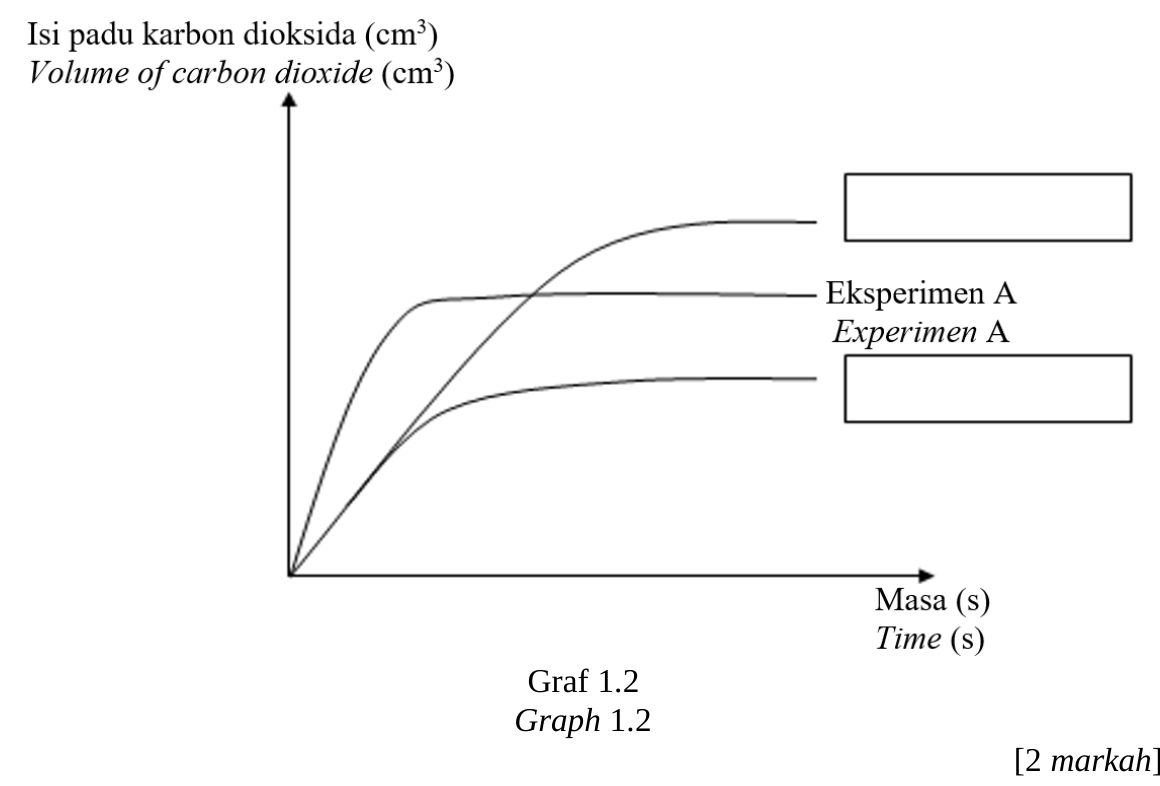
Section B
Diagram 8.1 shows the electron arrangement of elements P (2.7) and Q (2.8.7). Diagram 8.2 shows the electron arrangement of magnesium oxide, [Mg]²⁺ [O]²⁻.
Medium20 marks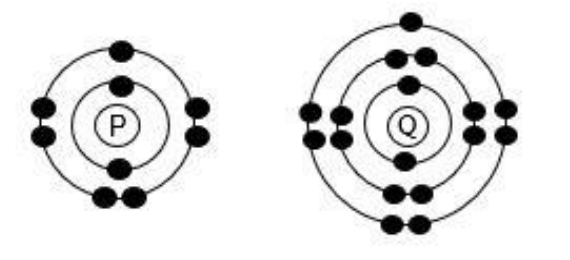
- (a)(i)
State the position of element P in the Periodic Table of Elements. Give reason for your answer.
[4] - (a)(ii)
Element Q reacts with hot iron wool to form brown solid. Write the chemical equation to show the reaction occurred.
[2] - (a)(iii)
Elements P and Q have the same chemical properties but show different reactivity in chemical reactions. Compare the reactivity of element P and Q. Explain your answer.
[4] - (b)(i)
Describe the formation of the chemical bond between elements of magnesium and oxygen in the magnesium oxide.
[6]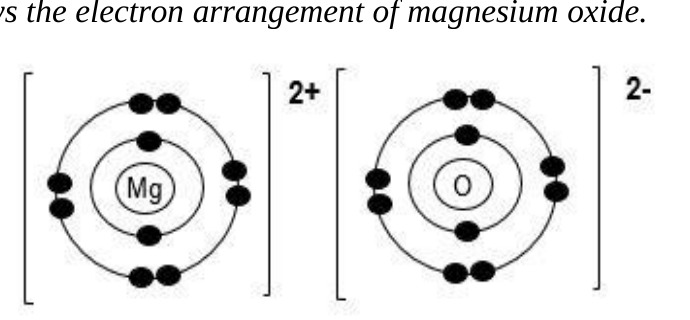
- (b)(ii)
Magnesium oxide exists as solid at room temperature. Explain why?
[4]
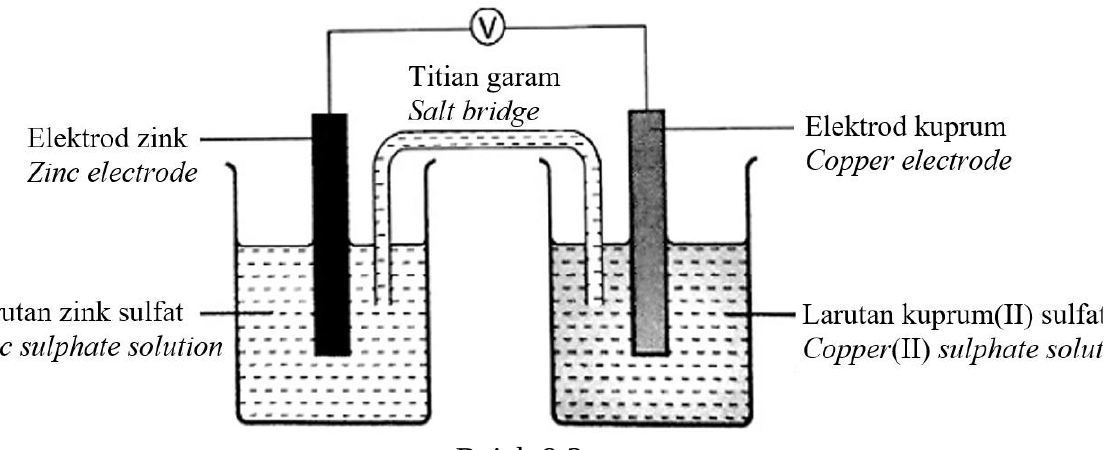
Diagram 9.1 shows a redox reaction in daily life (pear flesh turns brown after 20 minutes). Iodine can be extracted from seaweed: 2I⁻ + H2O2 + 2H⁺ → I2 + 2H2O. Diagram 9.2 shows a chemical cell with zinc electrode in zinc sulphate solution and copper electrode in copper(II) sulphate solution joined by a salt bridge.
Hard20 marks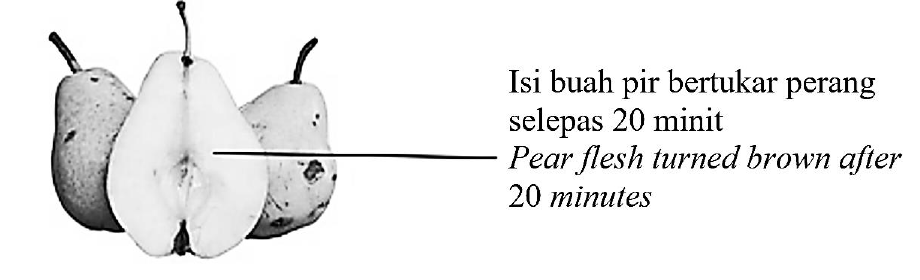
- (a)
Based on the changes shown in Diagram 9.1, state the type of reaction and the condition caused the changes. Suggest one method to slow down the changes.
[3] - (b)(i)
Based on the equation given, determine: the oxidation number of oxygen in hydrogen peroxide, H2O2; the oxidising agent and reducing agent. Explain your answer in terms of transfer of electrons.
[5] - (b)(ii)
Write the half equations for the oxidation reaction and reduction reaction.
[2] - (c)(i)
With reference to the standard electrode potentials, E°: Zn²⁺ + 2e ⇌ Zn E° = –0.76 V; Cu²⁺ + 2e ⇌ Cu E° = +0.34 V, identify the negative and positive terminals of the chemical cell. Explain your answer.
[4] - (c)(ii)
Write the cell notation and calculate the voltage of the chemical cell.
[2] - (d)(i)
Table 7 shows results of two experiments on displacement of a metal. Set I: a strip of Y metal in 2.0 cm³ of 0.1 mol dm⁻³ X nitrate solution: colourless solution turns blue, Y strip becomes thinner, shiny grey solid deposited. Set II: a strip of Y metal in 2.0 cm³ of 0.1 mol dm⁻³ magnesium nitrate solution: no changes. Based on Table 7, name the ion that formed the blue solution and suggest a suitable Y metal and X nitrate solution.
[3] - (d)(ii)
Write the ionic equation for the redox reaction that takes place.
[1]
Section C
Table 8 shows the observations when magnesium reacts with hydrogen chloride in solvent X (bubbles of gas) and in solvent Y (no bubbles of gas). You are also given sodium carbonate solution, dilute sulphuric acid and zinc chloride solution.
Medium20 marks- (a)(i)
Based on Table 8, suggest the name of solvent X and solvent Y. Explain the observations.
[7] - (a)(ii)
Reaction between magnesium and hydrogen chloride in solvent X produces a salt solution containing chloride ions. Describe one confirmatory test for chloride ion.
[3] - (b)
You are given three chemicals: sodium carbonate solution, dilute sulphuric acid, zinc chloride solution. By using all the three chemicals, describe how to prepare zinc sulphate salt in the laboratory. In your description, include the procedure and chemical equations of the reactions involved.
[10]