Chemical wastes in the laboratory have a specific method of disposal according to the type of material. Which of the following methods is correct to dispose the chemical waste?
Medium
Which of the following is the correct sequence of scientific method in chemistry?
Easy
Which of the following substances is an element?
Easy
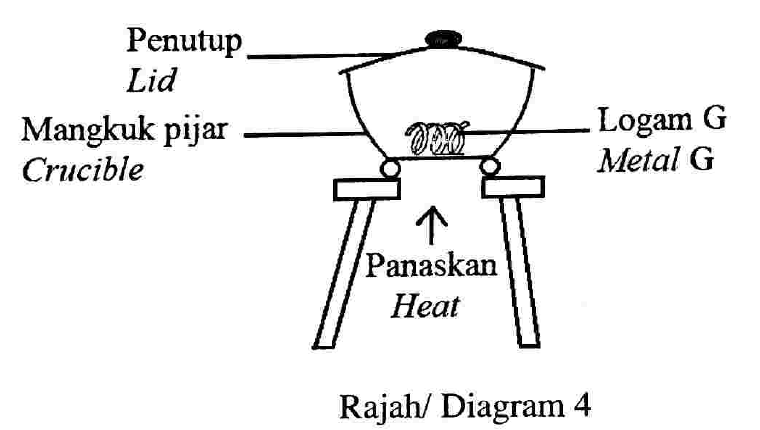
Diagram 4 shows the set-up of apparatus to determine the empirical formula of oxide of metal G. [Diagram: crucible with lid containing metal G, heated.] What is metal G?
Medium
Which of the following are the special characteristics of transition metals? I Conduct electricity II Act as catalyst III Has low melting point IV Form coloured compound
Medium
Which of the following is the property of ionic compound?
Easy
Salt X decomposed to another salt and a gas when it is heated strongly. What is salt X?
Medium
Which of the following methods cannot determine the rate of reaction?
Medium
Which of the following metals is extracted from its ore through reduction reaction by carbon?
Medium
Duralumin is used in manufacturing of the body of aeroplane. Which of the following elements contains in duralumin? I Zinc II Carbon III Magnesium IV Aluminium
Easy
The discovery of graphene has opened a new chapter in the field of nanotechnology. Various existing applications can be improved or replaced with graphene that has superior and distinctive characteristics. Which of the following is correct about the physical property of graphene?
Easy
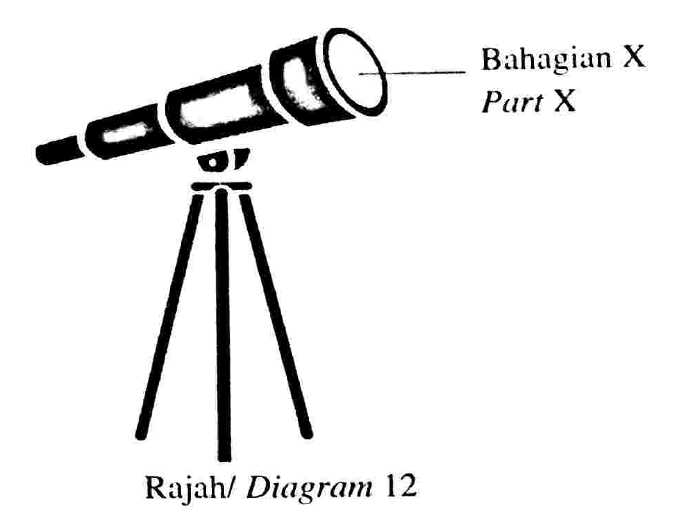
Diagram 12 shows a telescope. Which of the following is used to make part X? [Part X is the lens at the front end of the telescope.]
Medium
Which of the following substances is an organic compound?
Easy
Which of the following processes absorbs heat from surroundings?
Easy
What is the advantage of natural rubber compared to synthetic rubber?
Medium
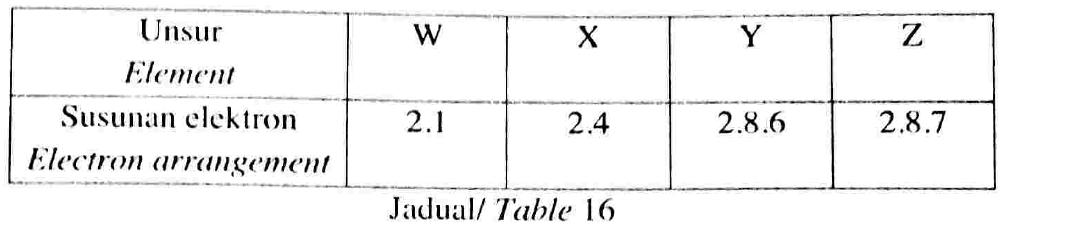
Table 16 shows the electron arrangement for atom of the elements W, X, Y and Z: W 2.1, X 2.4, Y 2.8.6, Z 2.8.7. Which element is located in Period 3, Group 16 in the Periodic Table of Elements?
Medium
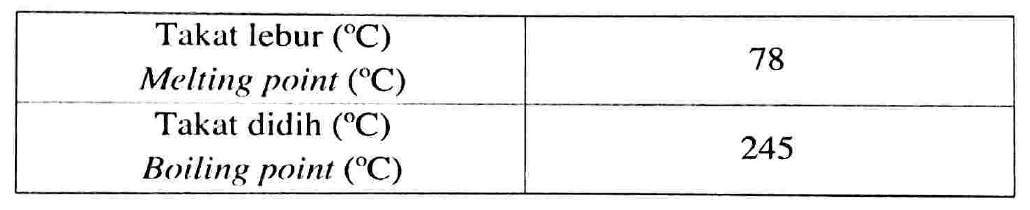
Table 17 shows the melting point and boiling point of substance P: melting point 78 °C, boiling point 245 °C. What is the physical state of substance P at 100 °C?
Medium
What is the number of atoms in 1 mol of sulphur dioxide gas? [Avogadro constant, N_A = 6.02 × 10²³ mol⁻¹]
Medium
Which of the following substances forms hydrogen bond with water?
Medium
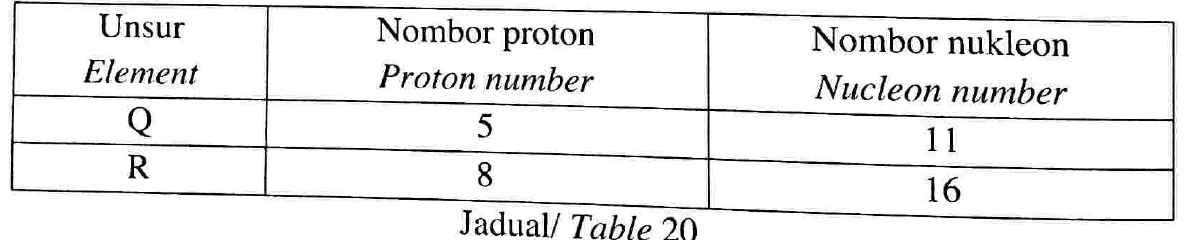
Table 20 shows the information of atom of elements Q and R: Q proton number 5, nucleon number 11; R proton number 8, nucleon number 16. What is the formula of the compound formed between elements Q and R?
Medium
In an experiment, damp universal indicator paper changes from green to purple when gas X is delivered to it. Which of the following statements is correct about X?
Medium
Barium chloride solution is mixed with ammonium sulphate solution in a beaker. Which of the following ions present in the salt precipitate formed? I Sulphate ion II Barium ion III Chloride ion IV Ammonium ion
Medium
Substance S is used to make a brake disc and a cutting disc. Which of the following statements explains why substance S is suitable for the uses?
Medium
The following ionic equation represents the reaction between sodium thiosulphate solution and sulphuric acid: 2H⁺ + S₂O₃²⁻ → S + SO₂ + H₂O. Which of the following statements explains the effect of the increasing of the temperature of sodium thiosulphate solution on the rate of reaction?
Medium
Puan Linda applied cosmetic X on her face that had rashes and irritation. She also suffered kidney damage after using cosmetic X for a long time. Which of the following chemicals in cosmetic X causes the effect experienced by Puan Linda?
Easy
Which of the following chemical equations represents a reaction that produces the highest heat of neutralisation?
Medium
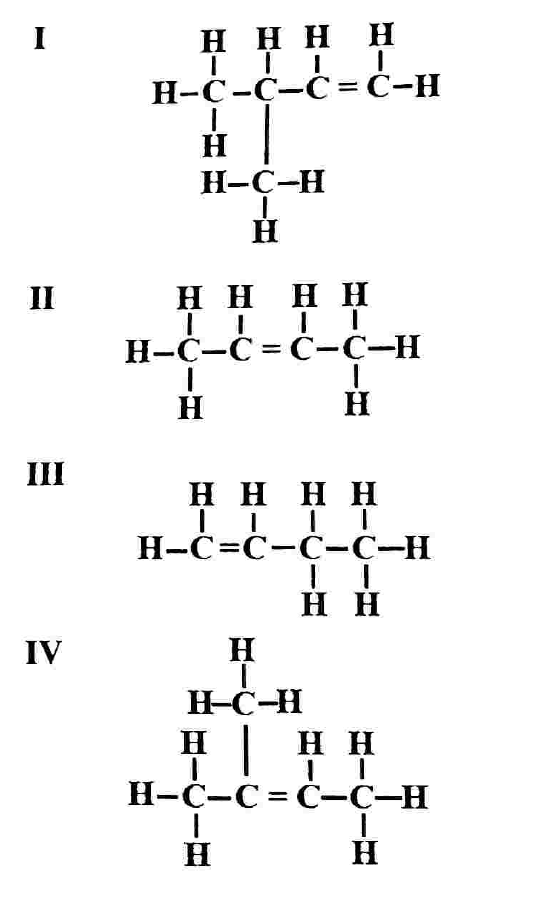
Which of the following are isomers for butene? I, II, III and IV are the structural formulae shown in the figure.
Medium
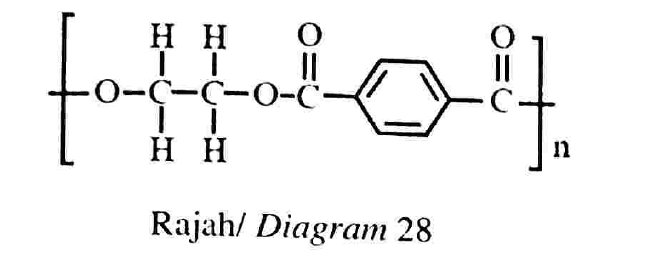
Diagram 28 shows the structural formula of polymer P. Which of the following statements are correct about polymer P? I Polymer P is produced through condensation polymerisation reaction II Monomer of polymer P consists of different homologous series III Polyvinyl chloride is produced through the same type of reaction as polymer P IV The functional group of the monomer of polymer P is double bond between carbon atoms
Medium
What is the oxidation number of X in X₂O₈²⁻ ion?
Medium
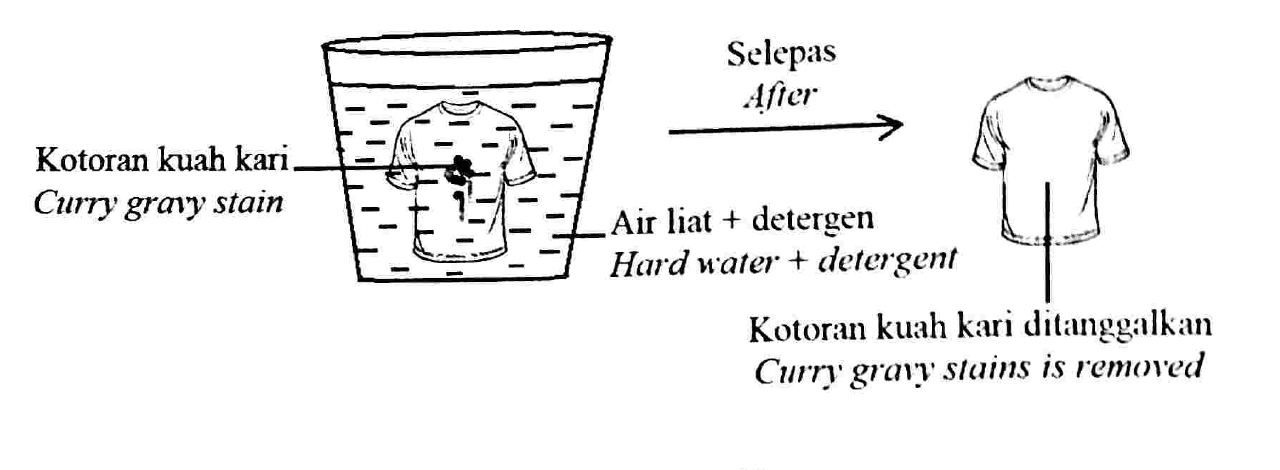
Diagram 30 shows the cleansing action of detergent: a curry gravy stain on a shirt in hard water + detergent is removed after washing. Which of the following additives in detergent causes the changes?
Medium
Diagram 31 shows the standard representation of atom of element X: ¹²₆X. Which of the following shows the structure of atom X?
Medium
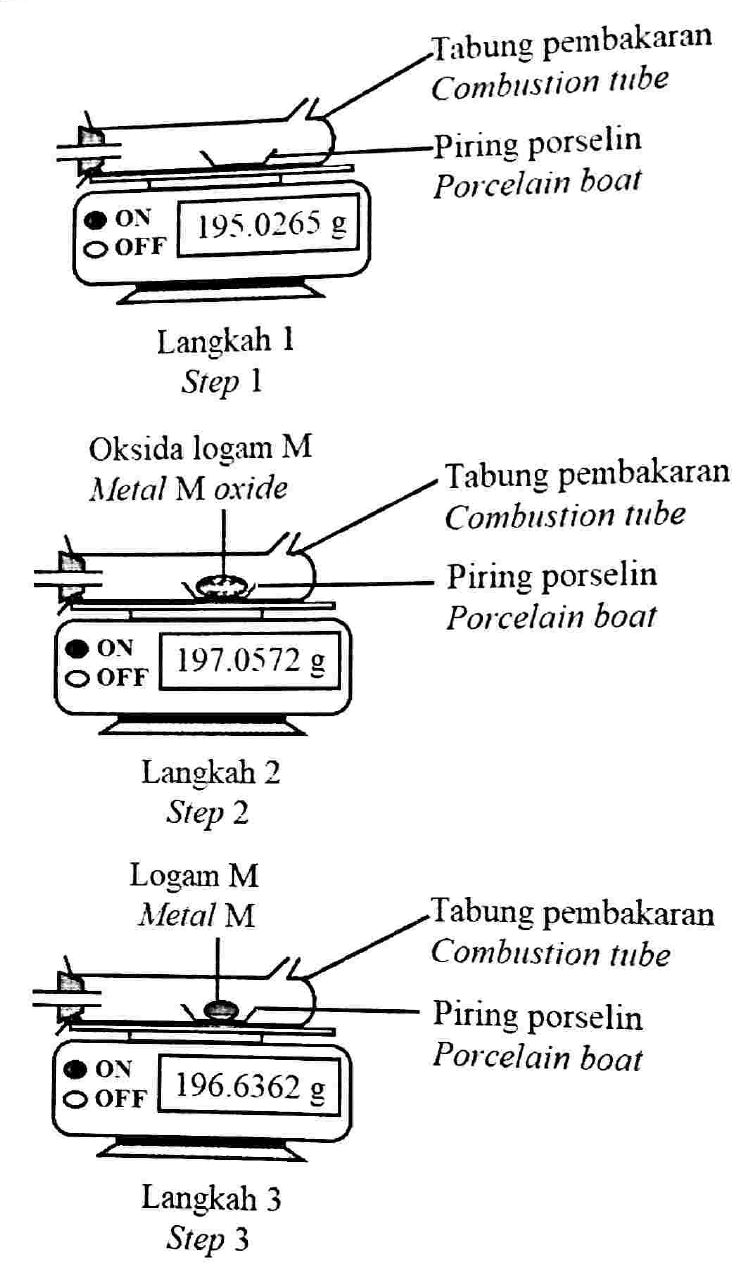
Diagram 32 shows the weighing steps taken to determine the empirical formula of the oxide of metal M. Step 1: combustion tube + porcelain boat = 195.0265 g; Step 2: with metal M oxide = 197.0572 g; Step 3: with metal M (after reduction) = 196.6362 g. What is the empirical formula of metal M oxide? [Relative atomic mass: O = 16, M = 64]
Medium
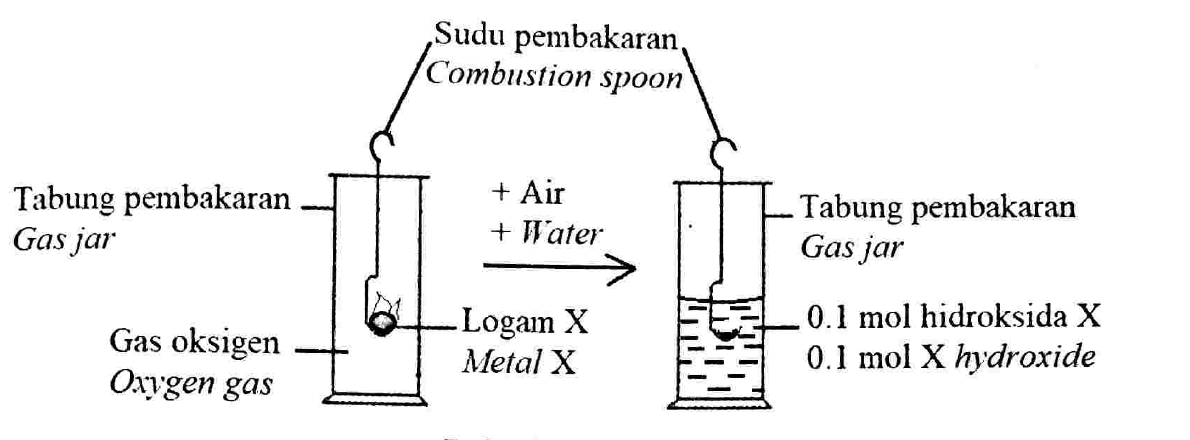
Diagram 33 shows the steps carried out to investigate the chemical properties of Group 1 element: metal X burns in oxygen gas, then water is added to give 0.1 mol of X hydroxide. What is the volume of oxygen gas needed to react completely in this reaction? [Molar volume of gas at room conditions = 24 dm³ mol⁻¹]
Medium
66.0 g of propane, C₃H₈ gas undergoes complete combustion in oxygen. What is the volume of carbon dioxide gas produced at room conditions? [Relative atomic mass: H = 1, C = 12, O = 16; Molar volume at room conditions = 24 dm³ mol⁻¹]
Medium
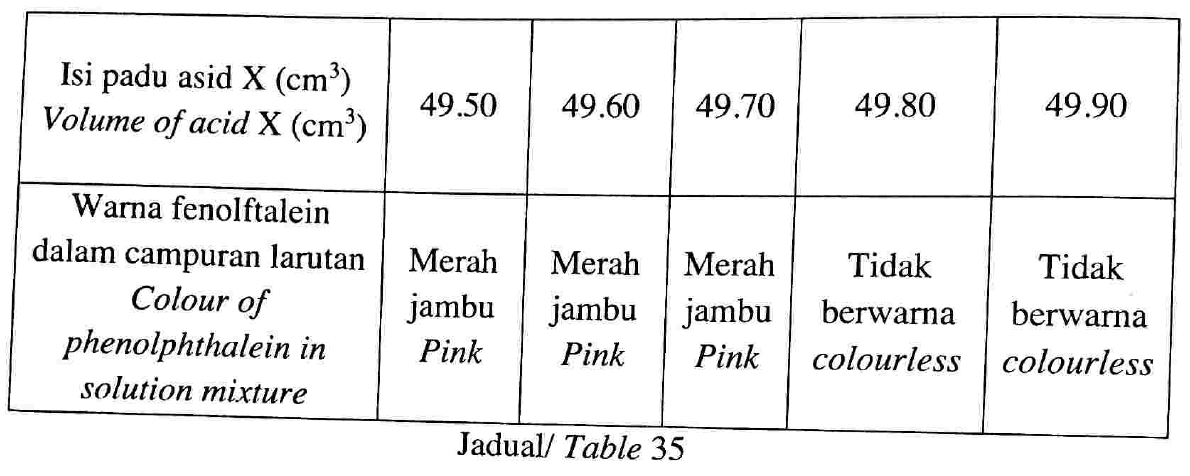
The soil is polluted by monoprotic acid X. The acid is titrated with 25 cm³ of 0.001 mol dm⁻³ calcium hydroxide solution that is added with three drops of phenolphthalein. Table 35 (volume of acid X in cm³ / colour of phenolphthalein): 49.50 pink; 49.60 pink; 49.70 pink; 49.80 colourless; 49.90 colourless. What is the pH value of acid X?
Hard
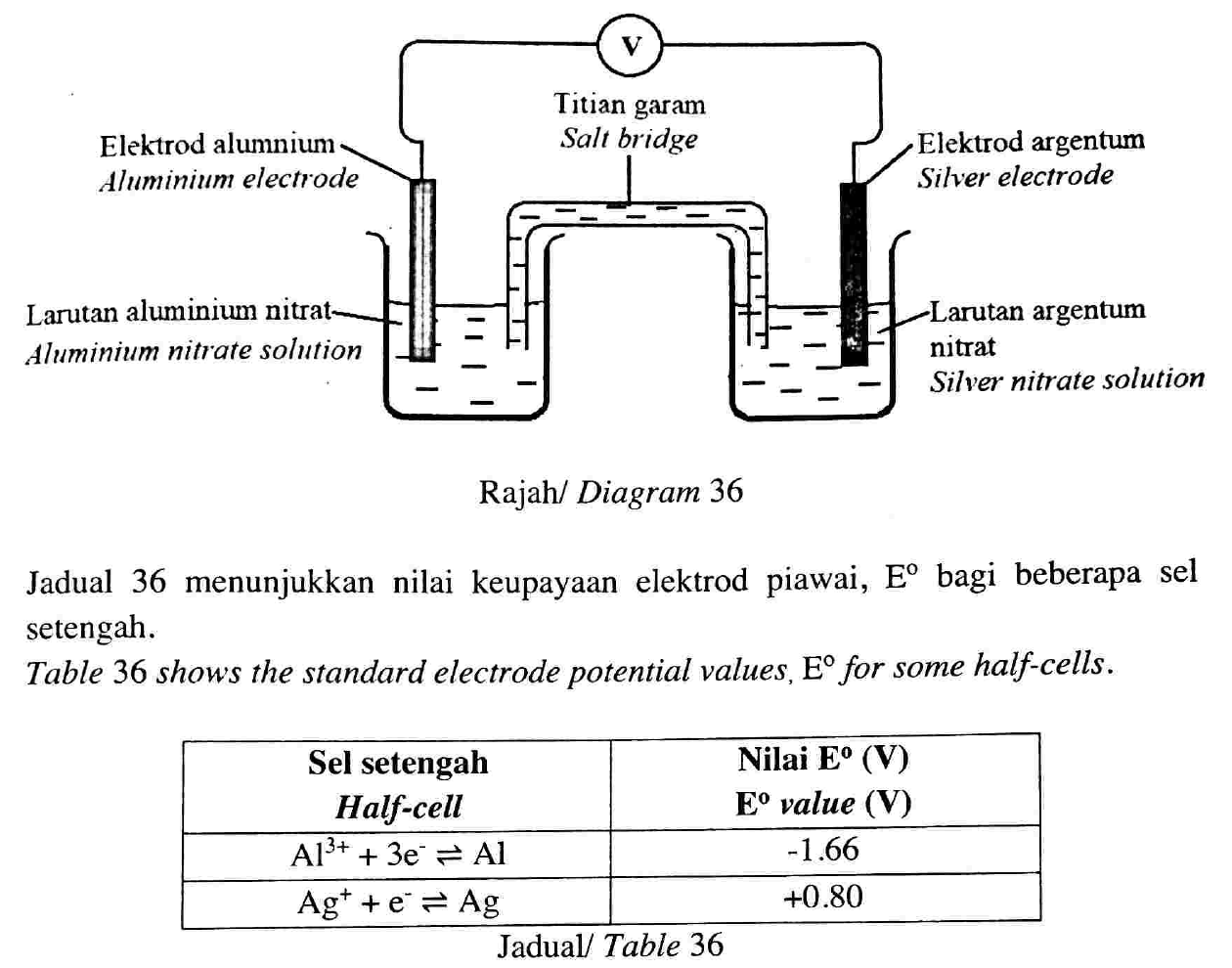
Diagram 36 shows an apparatus set-up of a voltaic cell (aluminium electrode in aluminium nitrate solution, silver electrode in silver nitrate solution, salt bridge). Table 36: Al³⁺ + 3e⁻ ⇌ Al, E° = −1.66 V; Ag⁺ + e⁻ ⇌ Ag, E° = +0.80 V. What is the cell notation for the cell?
Medium
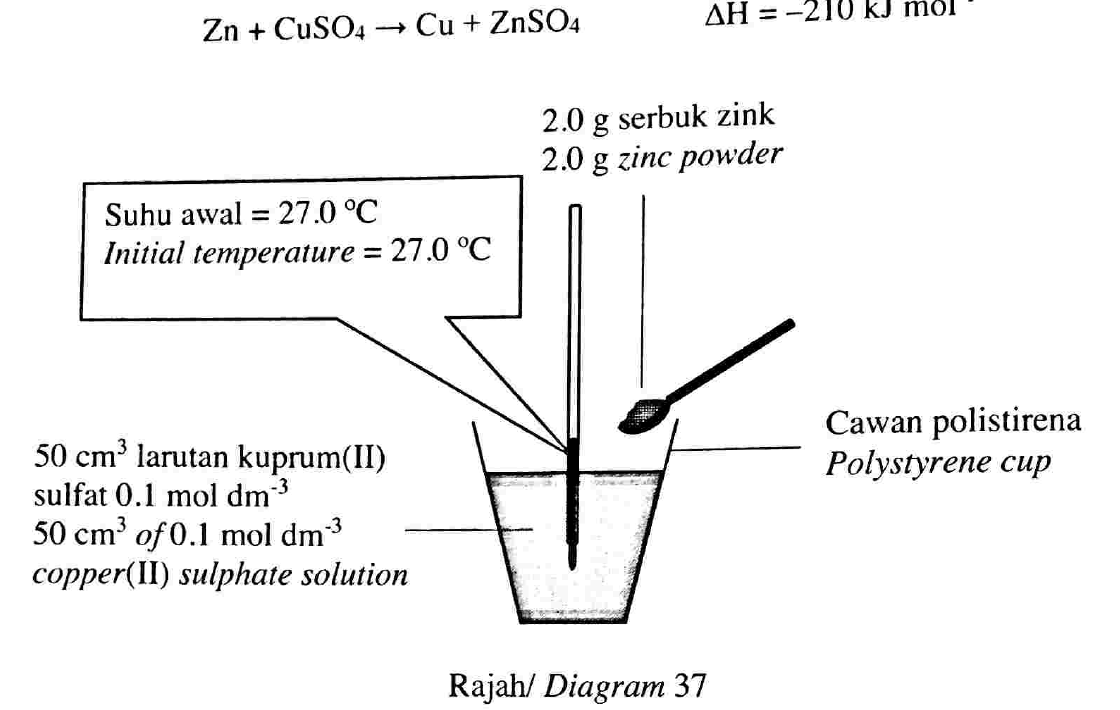
Diagram 37 shows the apparatus set-up to determine the heat of displacement of copper: 2.0 g zinc powder added to 50 cm³ of 0.1 mol dm⁻³ copper(II) sulphate solution in a polystyrene cup, initial temperature 27.0 °C. Zn + CuSO₄ → Cu + ZnSO₄, ΔH = −210 kJ mol⁻¹. What is the highest temperature reached in the reaction? [Relative atomic mass: Zn = 65; Specific heat capacity of solution = 4.2 J g⁻¹ °C⁻¹; Density of solution = 1.0 g cm⁻³]
Medium
A factory worker's hands are itchy due to over exposure to sulphur during the production of rubber-based products. The manager asks what alternative method can overcome this problem. What can the researcher do to overcome the problem?
Medium
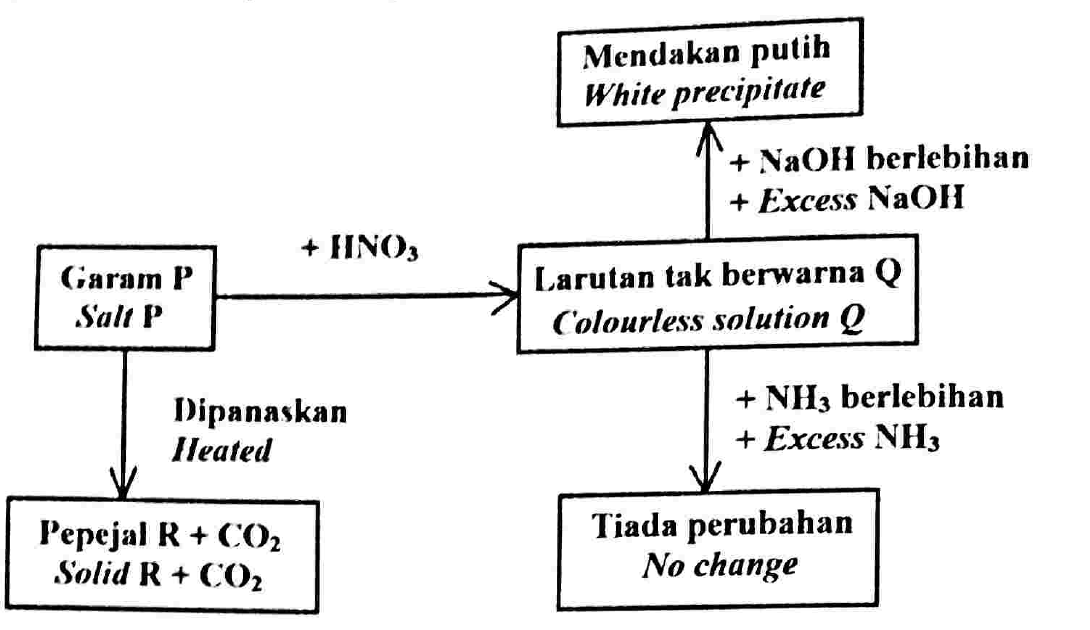
Diagram 39 shows a flow chart for a series of reactions on salt P: salt P + HNO₃ → colourless solution Q; Q + excess NaOH → white precipitate; Q + excess NH₃ → no change; salt P heated → solid R + CO₂. What are the reactants used to prepare salt P?
Medium
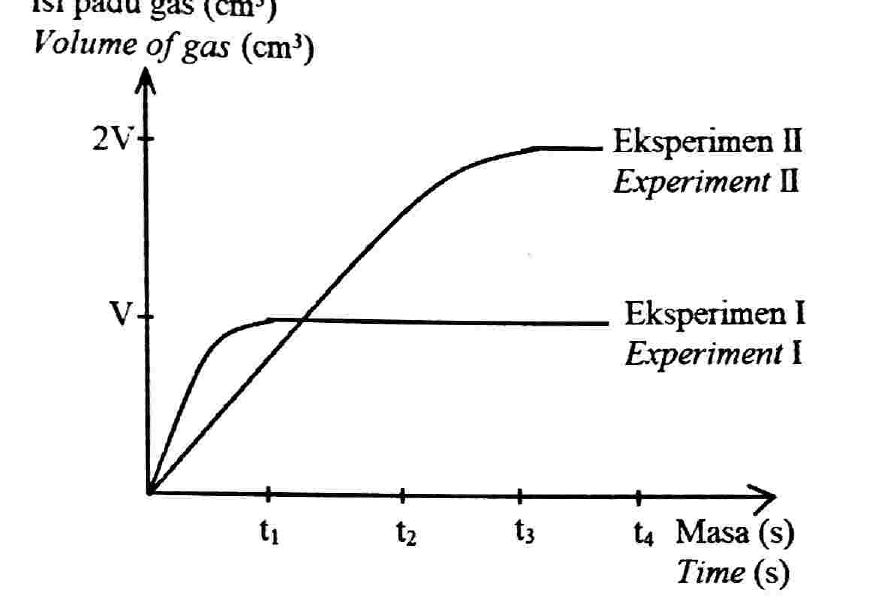
Diagram 40 shows a graph of volume of gas against time for two sets of experiments. Curve I represents the reaction between 40 cm³ of 0.05 mol dm⁻³ nitric acid and excess tin powder; curve II has twice the final volume (2V) and a lower initial rate. If the experiment is repeated using another solution of nitric acid, which conditions produce curve II? Options (concentration of nitric acid mol dm⁻³ / volume of acid cm³): A 0.03 / 200; B 0.04 / 100; C 0.05 / 80; D 0.10 / 40