Which of the following is a statement of Dalton's Atomic Model?
Easy
The diagram shows the relationship between number of moles and number of particles: Number of moles = Number of particles / Z. What is Z?
Easy
The following statements refer to the contributions of a scientist in the development of the Periodic Table of Elements. Explored the study of the frequency of X-ray released by various elements and eventually found a relationship between the X-ray spectrum and proton numbers. Arranged the elements in the Periodic Table of Elements according to their increasing proton numbers. Who was the scientist?
Easy
Which of the following pairs of physical properties is correct about copper(II) sulphate? (Solubility in water; Electrical conductivity in aqueous) A: Soluble, Conducting. B: Soluble, Not conducting. C: Insoluble, Conducting. D: Insoluble, Not conducting.
Easy
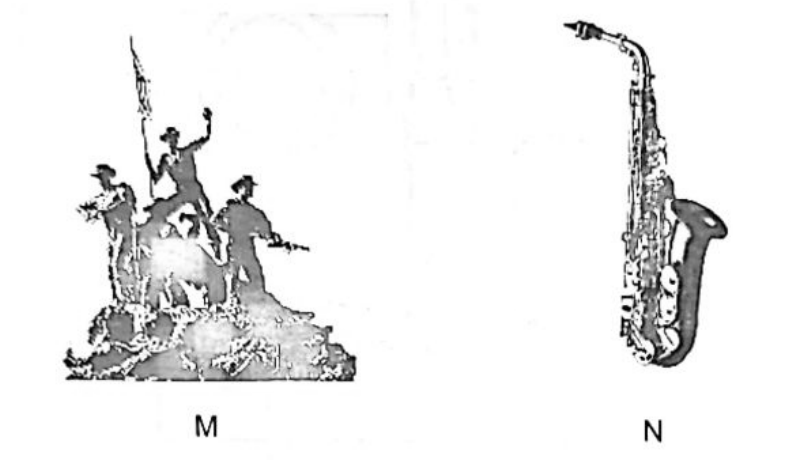
The diagram shows two examples of uses of alloy M (a monument) and N (a saxophone) that contain copper as their main component. Which of the following are the added elements in alloy M and N? (M, N) A: Zinc, Magnesium. B: Tin, Zinc. C: Tin, Antimony. D: Zinc, Aluminium.
Medium
What is the characteristic of thermoplastic polymer?
Easy
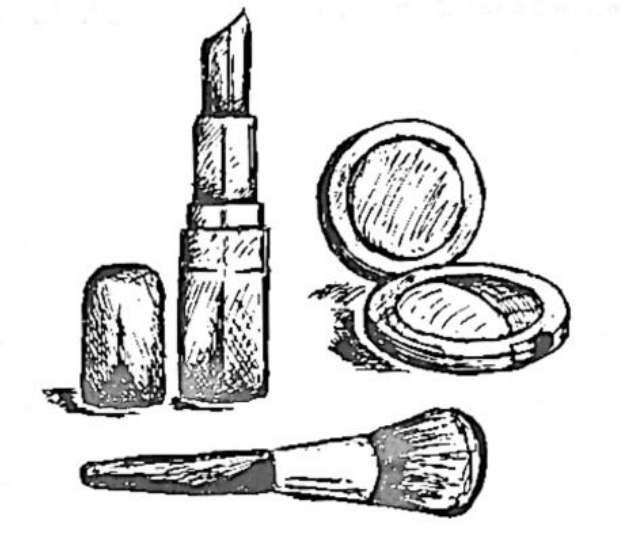
The diagram shows a type of cosmetic for women (lipstick, face powder and brush). What is the type of this cosmetic?
Easy
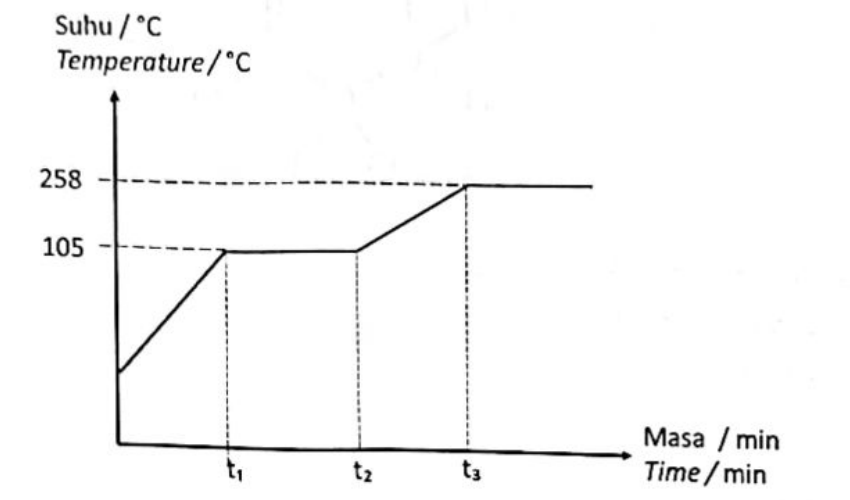
The diagram shows the heating curve of solid Q when heated from room temperature until 258 °C (plateaus at 105 °C from t₁ to t₂ and at 258 °C after t₃). Which statement is correct?
Medium
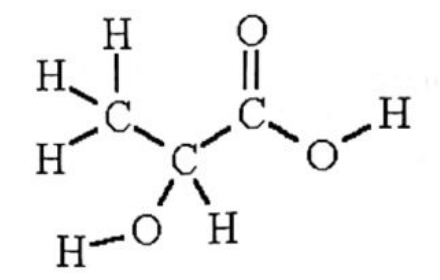
The diagram shows the structural formula of lactic acid. What is the molecular formula of lactic acid?
Medium
Chlorine and fluorine are halogen gases. Chlorine and fluorine exhibit the same chemical properties because
Medium
Which of the following statements explains why 0.1 mol dm⁻³ of potassium hydroxide solution has high pH value?
Medium
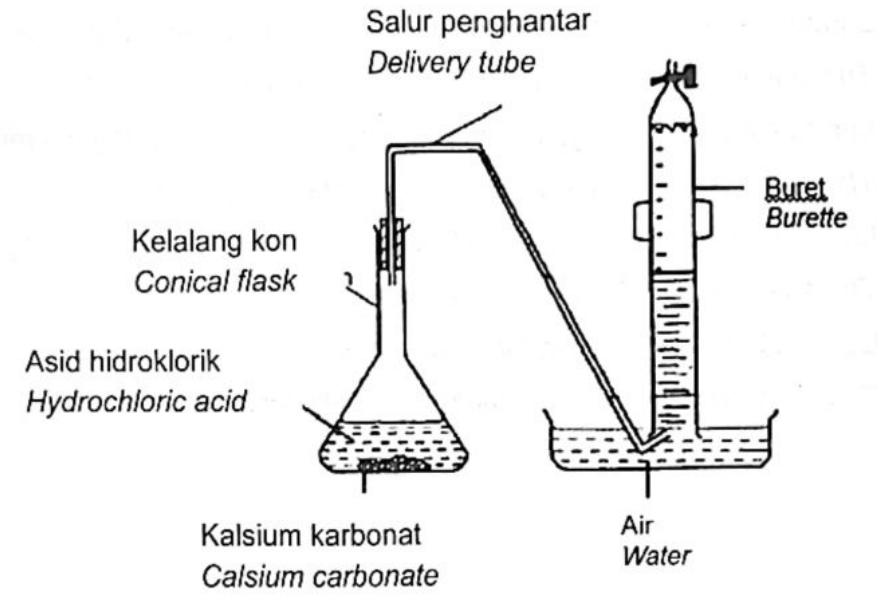
The diagram shows the apparatus set up of an experiment to determine the rate of reaction between calcium carbonate and hydrochloric acid (gas collected over water in a burette). Which of the following units is suitable to measure the rate of reaction of this experiment?
Medium
Which of the following is the correct pair of the ceramic material and its use? A: Tungsten carbide, Brake plate. B: Zirconia, Dental implant. C: Alumina, Magnetic Resonance Imaging (MRI) machine.
Easy
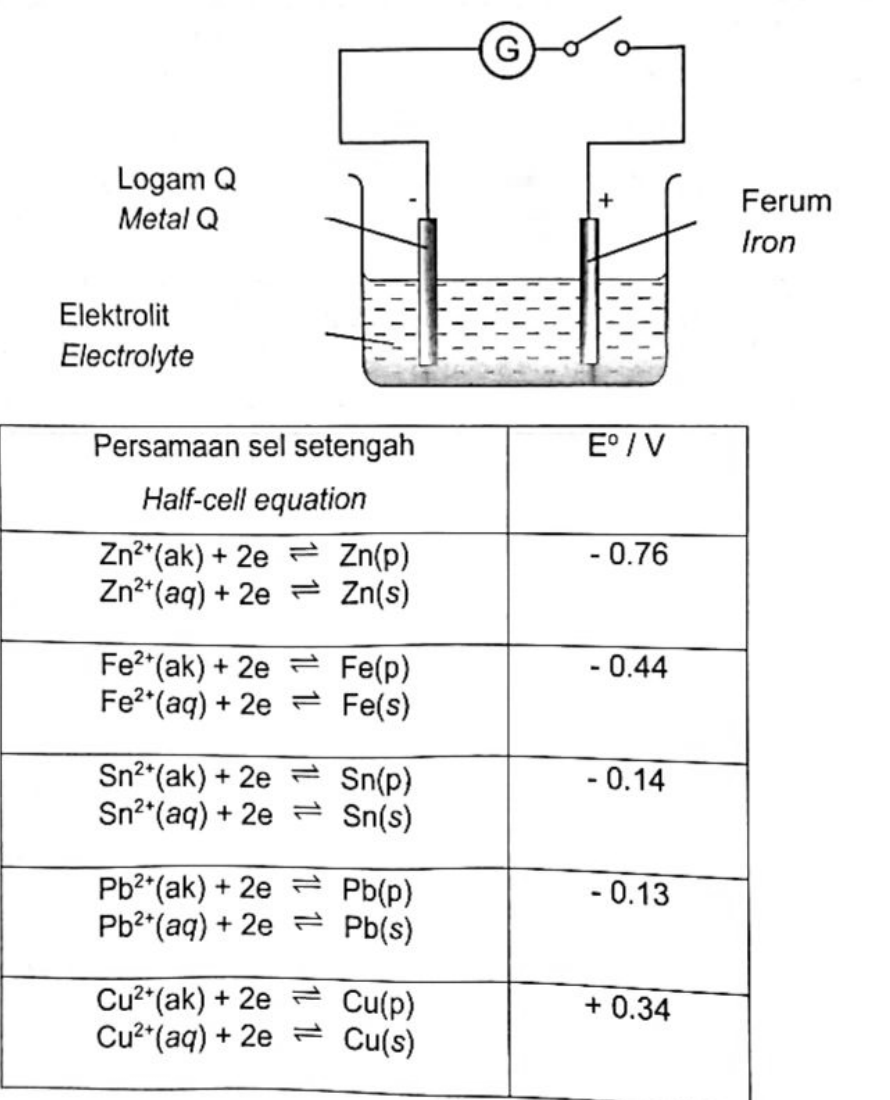
The diagram shows the apparatus set-up of a chemical cell (metal Q is the negative terminal, iron is the positive terminal) and the standard electrode potential values of half-cells: Zn²⁺/Zn −0.76 V; Fe²⁺/Fe −0.44 V; Sn²⁺/Sn −0.14 V; Pb²⁺/Pb −0.13 V; Cu²⁺/Cu +0.34 V. What is metal Q?
Medium
The following equation represents the reaction between butene and steam to produce compound M: Butene + H₂O → Compound M (H₃PO₄, 300 °C, 60 atm). What is M?
Medium
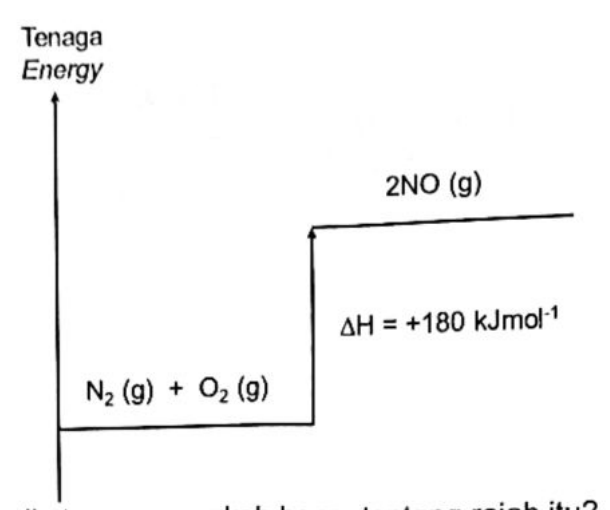
The diagram shows an energy level of a reaction: N₂(g) + O₂(g) → 2NO(g), ΔH = +180 kJ mol⁻¹. Which of the following statements is correct about the diagram?
Medium
Which of the following industrial materials is matched correctly with its property? A: Fibre glass, Electric and heat insulator. B: Duralumin, High density. C: Pottery, Resistant to thermal shock. D: Lead glass, Low refractive index.
Medium
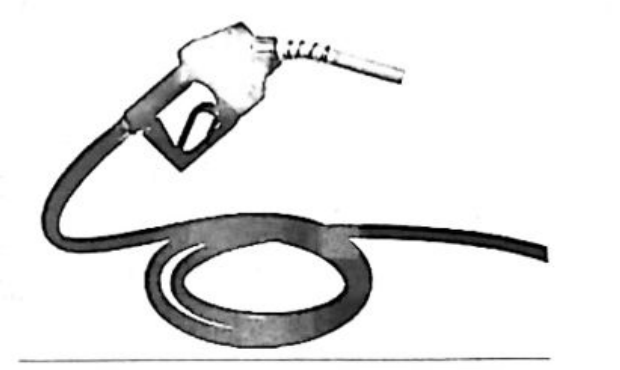
The diagram shows one of the uses of synthetic rubber (a fuel pump hose). What is the type of synthetic rubber used in this diagram?
Easy
Which of the following pairs of substances form a precipitate when mixed?
Easy
The table shows results of an experiment using rubber strip X and rubber strip Y. Initial length (mm): X 55, Y 55. Length during the weight is hung (mm): X 70, Y 75. Length after the weight is removed (mm): X 55, Y 60. Which of the following statements is true?
Medium
Ion W²⁺ has an electron arrangement of 2.8 and nucleon number is 24. What is the number of neutron of atom W?
Medium
An element X forms two coloured chloride salts, XCl₂ and XCl₃. What is X?
Medium
Which of the following shows the correct hydrogen bonding between ammonia molecules?
Medium
Which of the following statements is true about electrolyte?
Easy
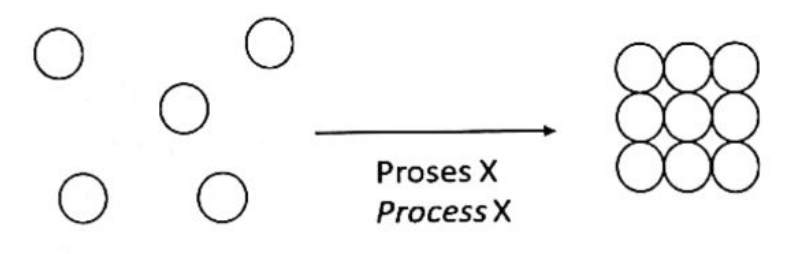
The diagram shows the arrangement of particles which undergoes Process X (scattered particles become closely packed in a regular arrangement). Which of the statements is correct about Process X?
Medium
The following equation represents a reaction between hydrochloric acid and zinc: 2HCl(aq) + Zn(s) → ZnCl₂(aq) + H₂(g). Which of the following will increase the rate of reaction?
Medium
Which statement shows the difference between hexene and hexane?
Medium
One of the many beneficial nanotechnologies today is graphene. Which of the following shows the correct physical properties of graphene? I Transparent II Strong and hard III Permeable IV Very high electrical resistance
Medium
The burning of hydrogen is represented by 2H₂(g) + O₂(g) → 2H₂O(g). If 1 mole of hydrogen gas and 1 mole of oxygen gas are mixed and burnt, what are the substances present when the reaction is completed? I 1 mole of steam II 2 moles of steam III 0.5 mole of oxygen IV 0.5 mole of hydrogen
Medium
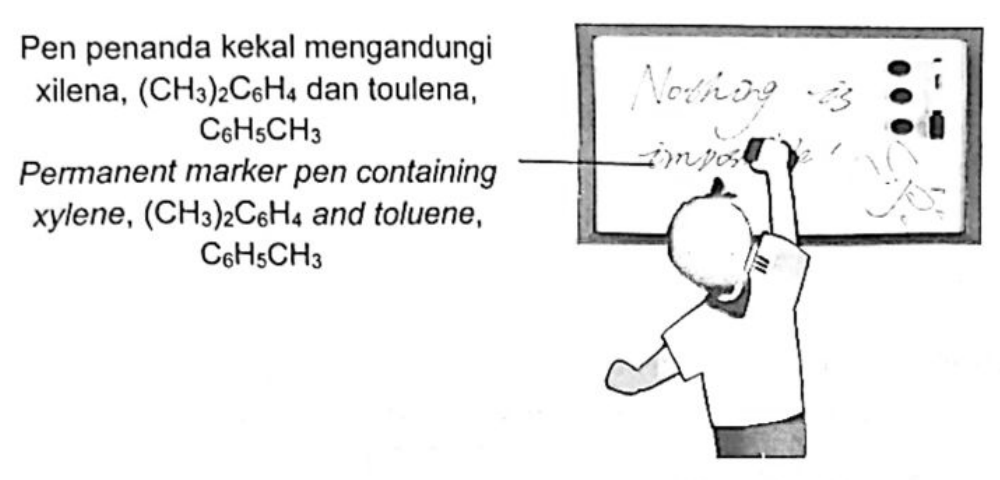
The diagram shows Ahmad cleaning a whiteboard that has been written with a permanent marker pen (containing xylene, (CH₃)₂C₆H₄ and toluene, C₆H₅CH₃). Which of the following materials can be used by Ahmad to clean the whiteboard?
Medium
What is the volume of distilled water to be added into 100 cm³ of 2.0 mol dm⁻³ of nitric acid to produce 0.5 mol dm⁻³ of nitric acid?
Medium
The following are characteristics of substance M: organic compound; soluble in water; used as food flavouring. Which of the following equations can produce substance M? I C₂H₅OH + 2[O] → CH₃COOH + H₂O II HCOOH + C₂H₅OH → HCOOC₂H₅ + H₂O III C₂H₅COOH + KOH → C₂H₅COOK + H₂O IV C₄H₉OH + CH₃COOH → CH₃COOC₄H₉ + H₂O
Medium
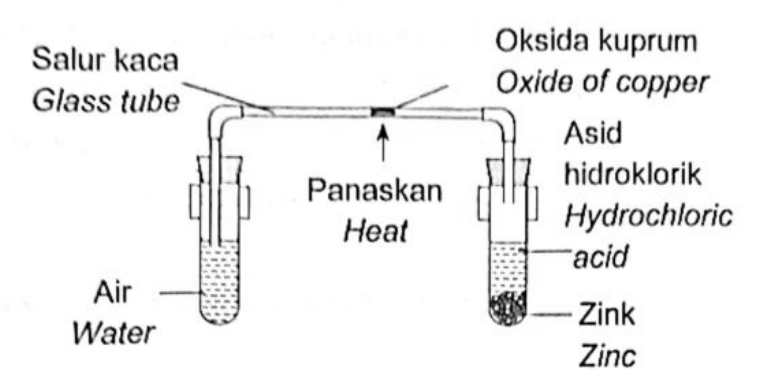
The diagram shows the apparatus set up to determine the empirical formula of oxide of copper (hydrogen from zinc and hydrochloric acid passed over heated copper oxide). Ali found the calculated empirical formula was not accurate by using the above method. What is the possible reason?
Medium
How does a temperature increase the rate of reaction?
Medium
Which of the following is correct when water is added to solid ammonium nitrate?
Medium
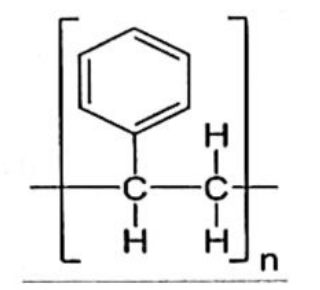
The diagram shows the structural formula of a polymer (repeating unit with a benzene ring on one carbon). Which of the following is a monomer of the polymer?
Medium
Element Y is located in the same group as potassium in the Periodic Table of Elements. Which of the following statements are chemical properties of element Y? I Reacts with water to produce an alkaline solution. II Reacts with chlorine gas to produce a white solid. III Reacts with oxygen to produce a black solid. IV Reacts with sodium hydroxide solution to produce an acidic solution.
Medium
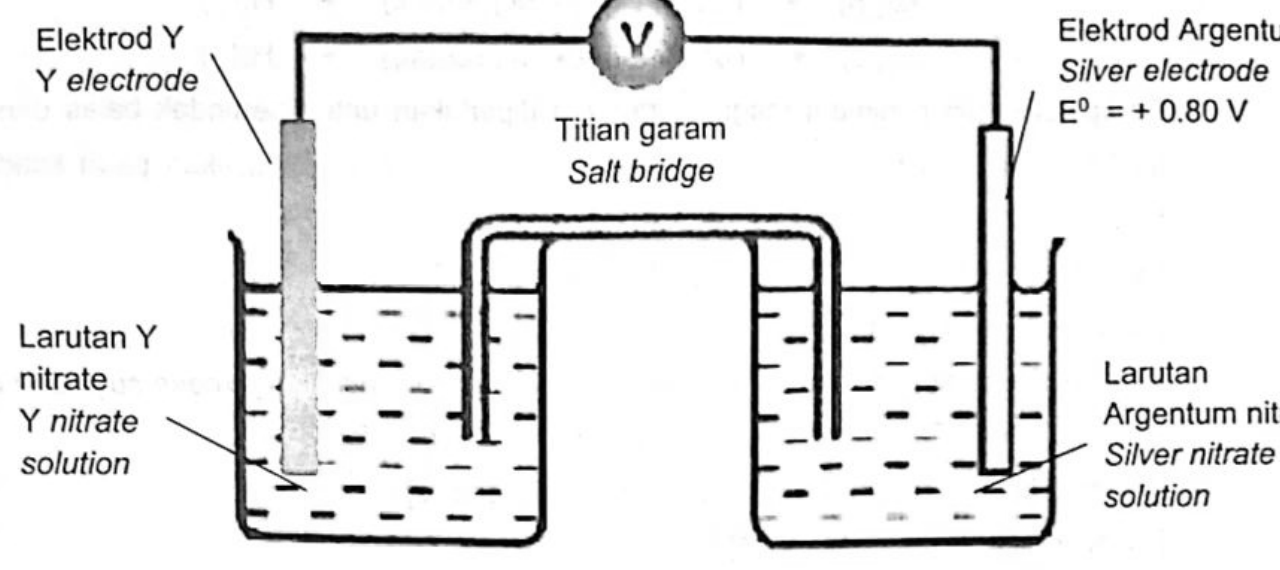
The diagram shows the apparatus set-up of a voltaic cell (Y electrode in Y nitrate solution; silver electrode, E° = +0.80 V, in silver nitrate solution; salt bridge). Electrons flow from Y electrode to silver electrode through the connecting wire. If the voltage reading E° for the voltaic cell is +0.93 V, what is the E° value for Y electrode?
Medium
The following chemical equation represents the reaction between magnesium and sulphuric acid: Mg(s) + H₂SO₄(aq) → MgSO₄(aq) + H₂(g). What is the minimum mass of magnesium required to react with excess sulphuric acid when 480 cm³ of hydrogen gas is produced at room conditions? [Molar volume of gas = 24 dm³ mol⁻¹ at room conditions] [Relative atomic mass: Mg = 24]
Medium
The following information shows the data of an experiment to determine the heat of combustion of hexane, C₆H₁₄: mass of hexane = 15.48 g; volume of water = 2 kg; initial temperature of water = 25 °C; highest temperature of water = 100 °C. What is the value of heat of combustion of hexane? [Relative atomic mass: C = 12, H = 1; specific heat capacity of water = 4.2 J g⁻¹ °C⁻¹]