Elements are arranged in the Periodic Table of Elements based on
Easy
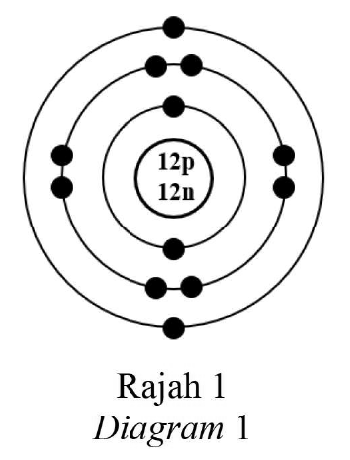
Diagram 1 shows the atomic structure of W. Which of the following is the standard representation of the atom W?
Medium
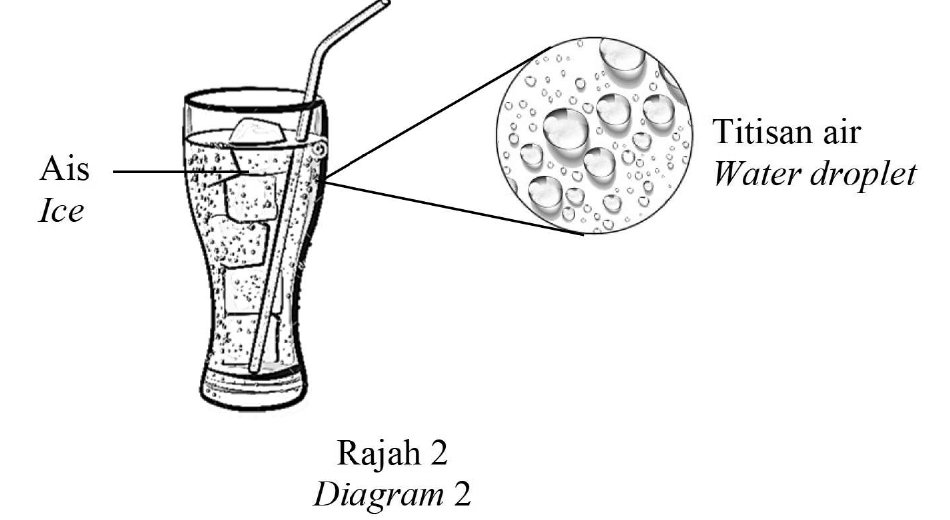
Diagram 2 shows the formation of water droplets on the outer wall of a glass containing a cold drink. What are the process and energy changes involved during the formation of water droplets in Diagram 2?
Medium
Which of the following chemical formulae is correct?
Medium
A student adds substance X into a beaker containing latex. After a few hours, it was found that latex was coagulated. State the function of substance X in the coagulation process of latex?
Medium
The following is information on how the elements are arranged at the beginning of the construction of the Periodic Table of Elements: Elements are arranged in order of increasing atomic mass; the 7 elements are arranged in a row based on repeated chemical and physical properties; known as the Law of Octaves. Who is the scientist who arranged the elements based on the above information?
Easy
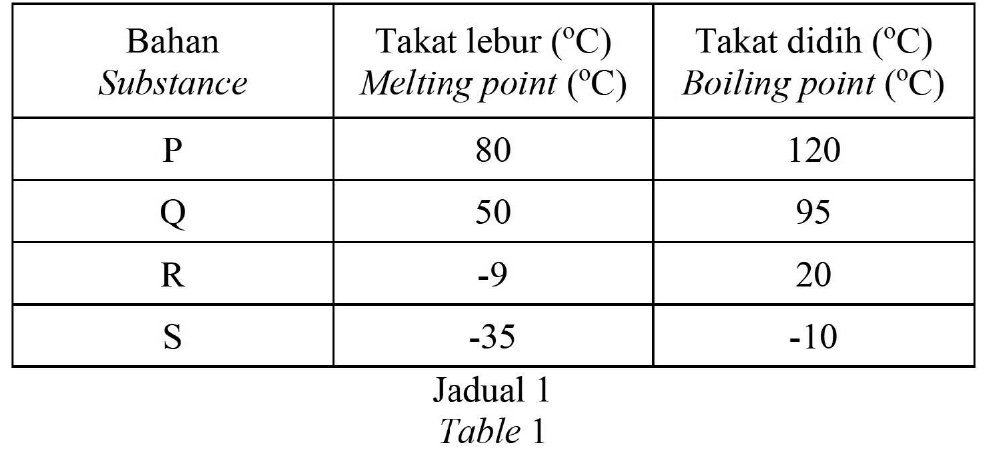
Table 1 shows the melting point and boiling point of some substances: P (80 °C, 120 °C); Q (50 °C, 95 °C); R (-9 °C, 20 °C); S (-35 °C, -10 °C) [melting point, boiling point]. Which substance is a gas at room temperature? I. P II. Q III. R IV. S
Medium
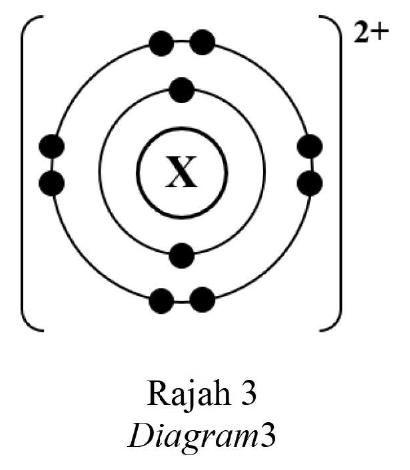
Diagram 3 shows electron arrangement for ion of X (ion X²⁺ with electron arrangement 2.8, shown in brackets). Which of the following is correct about atom X? I. Atom X has 12 protons II. Atom X has 10 electrons III. Number of valence electron of atom X is 2 IV. Number of valence electron of atom X is 8
Medium
Diagram 4 shows some cosmetic tools used on the face. What type of cosmetics is shown in Diagram 4?
Easy
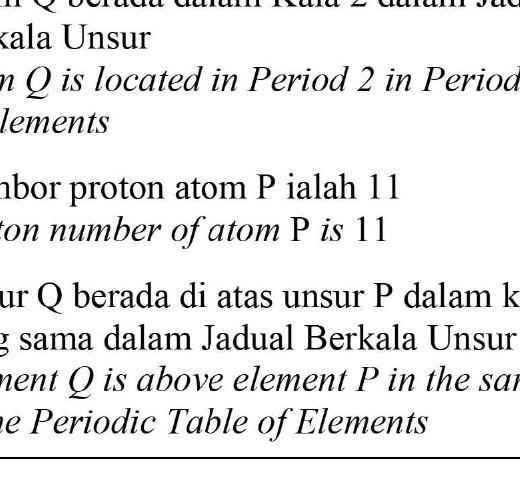
Information about atom Q and atom P: Atom Q is located in Period 2 in the Periodic Table of Elements; proton number of atom P is 11; element Q is above element P in the same group. Which of the following shows the electron arrangement of the Q atom?
Medium
Name a synthetic rubber that can be used to manufacture shoe soles.
Easy
Information about substance Q: the main component is silicon; hard but fragile; transparent. What is substance Q?
Easy
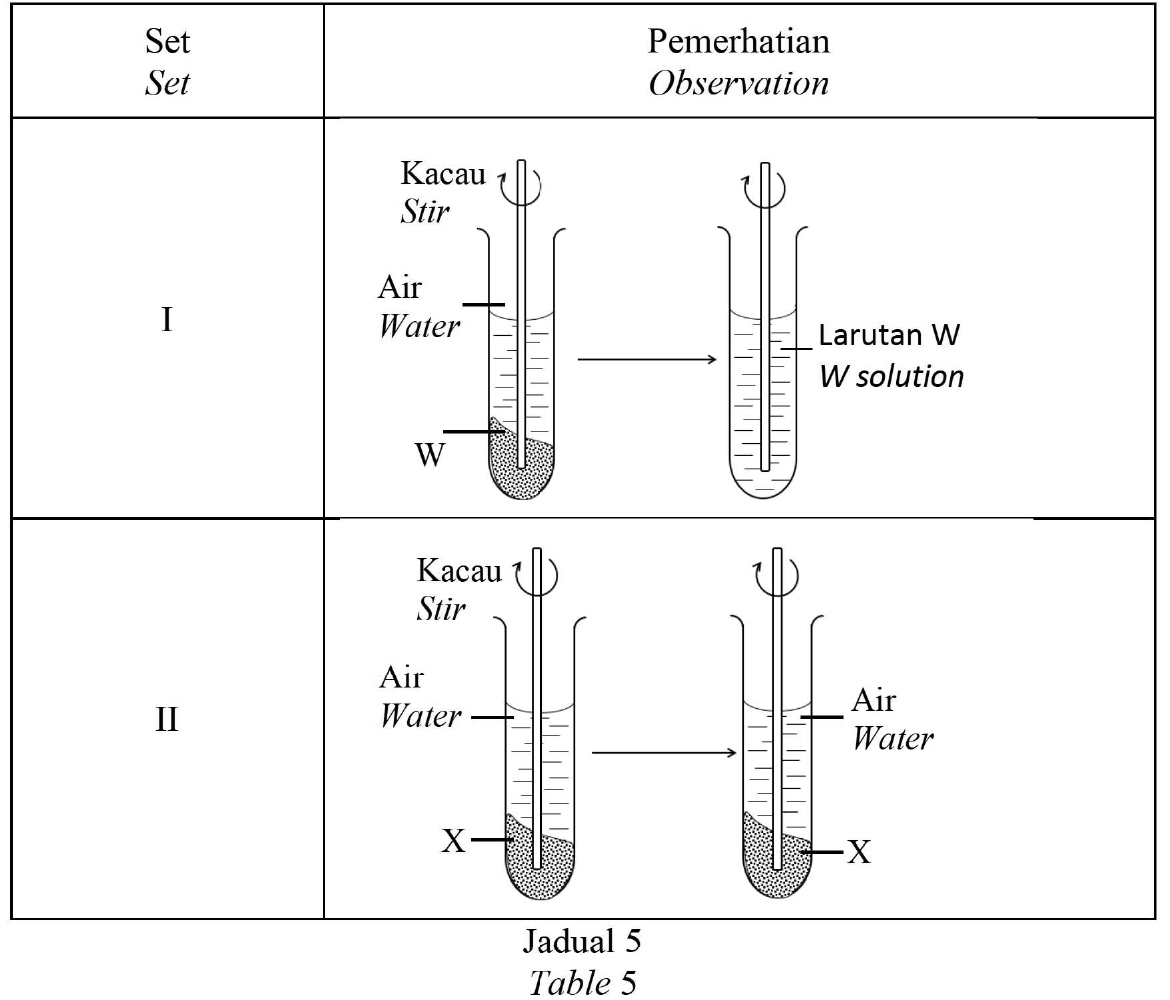
Table 2 shows the observations for the solubility test of compounds W and X in water: Set I, W dissolves in water to form W solution; Set II, X does not dissolve in water. What is compound W and X?
Medium
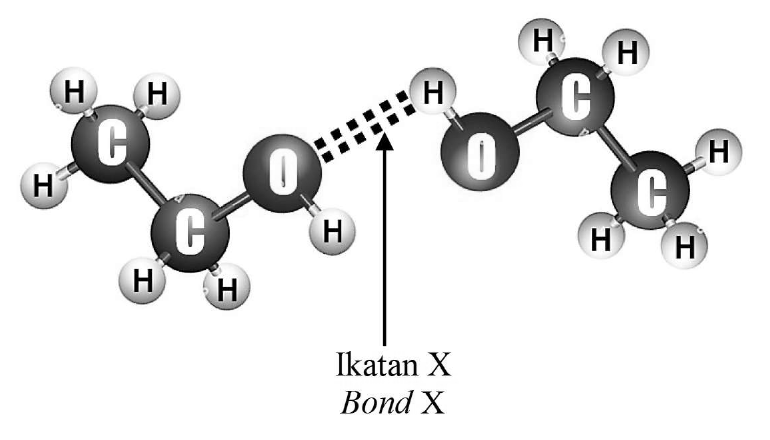
Diagram 5 shows the attractive force formed in one molecule of a carbon compound (a dotted bond X between O of one ethanol molecule and H of the next). What is bond X?
Easy
Reduction reaction is a part of redox reaction. Which of the following involves a reduction reaction?
Medium
Which of the following is a homologous series for hydrocarbons?
Easy
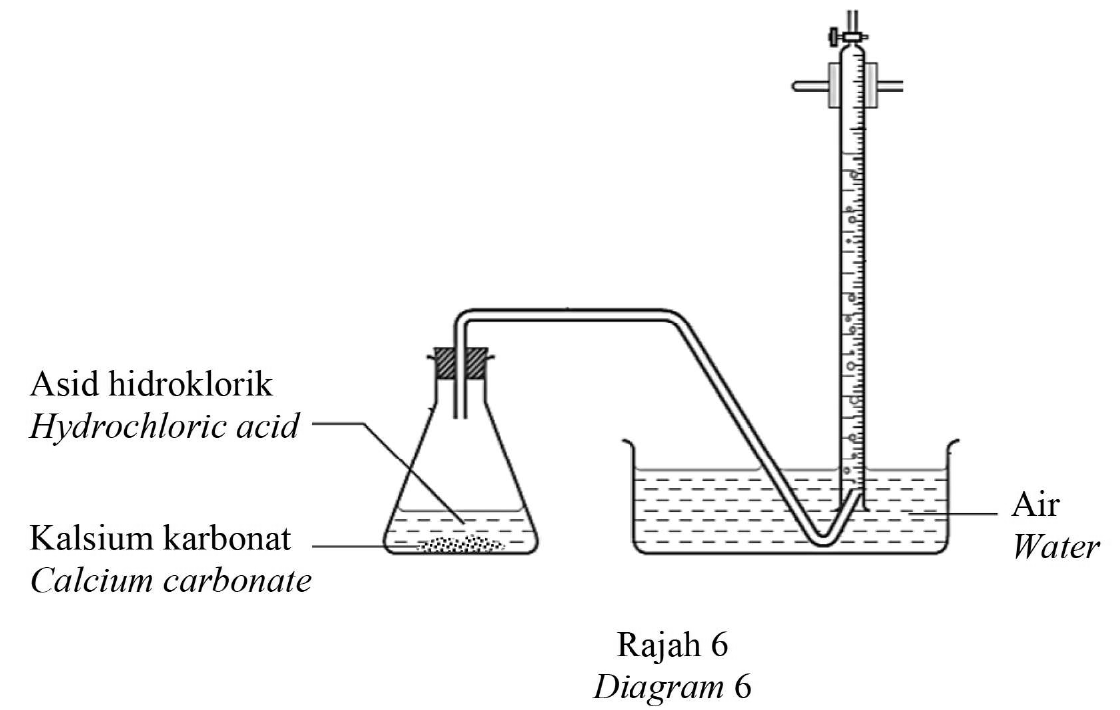
Diagram 6 shows the apparatus set up of an experiment to study the effect of size of reactant on the rate of reaction (calcium carbonate and hydrochloric acid in a conical flask, gas collected by water displacement in a burette). State the observable and measurable change in this experiment.
Medium
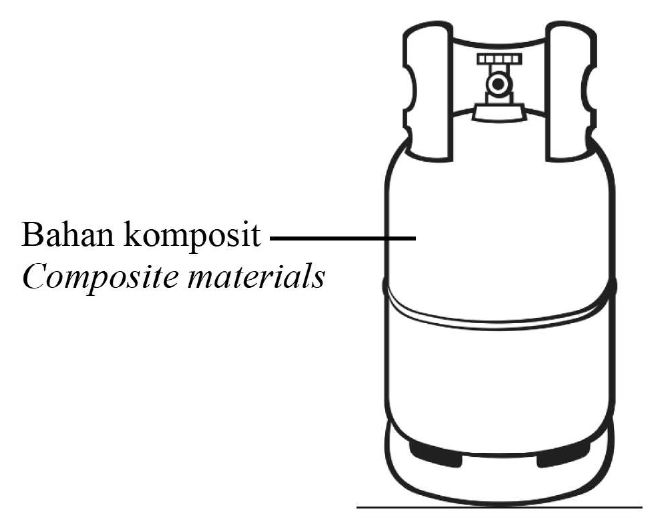
Diagram 7 shows a gas cylinder made from composite material. Which of the following is true about composite materials?
Medium
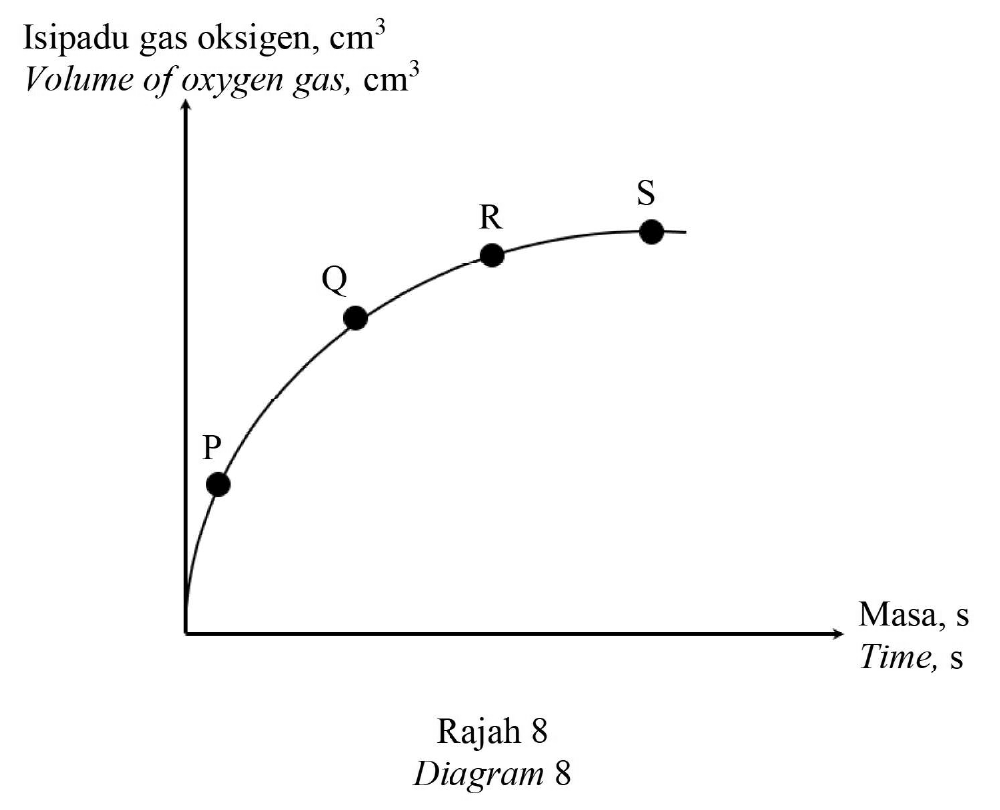
Diagram 8 shows a graph of volume of oxygen gas collected against time in the decomposition reaction of hydrogen peroxide when using manganese(IV) dioxide as catalyst (curve through points P, Q, R, S, levelling off at S). Which point shows the highest rate of reaction?
Medium
Which carbon compounds are soluble in water?
Medium
Bronze is widely used in the manufacture of memorials such as the National Monument. Which of the following elements is found in bronze? I. Zinc II. Copper III. Iron IV. Stanum (tin)
Easy
Which of the following structural formulas is a saturated hydrocarbon?
Medium
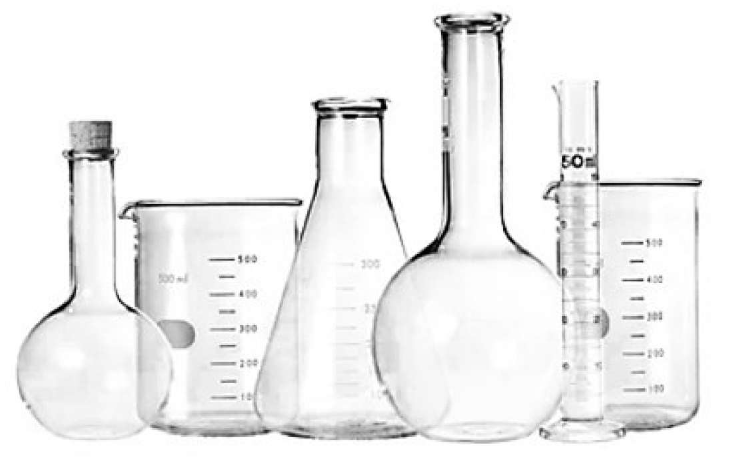
Diagram 9 shows part of a laboratory apparatus made of borosilicate glass. What are the special properties of borosilicate glass that allow it to be used in the manufacture of these apparatus?
Easy
Which of the following results in the reaction if butene burns with a lack of oxygen?
Medium
X g of sodium chloride powder is dissolved in 300 cm³ of distilled water to produce a solution with a concentration of 0.005 mol dm⁻³. What is the value of X? [Molar mass of sodium chloride = 58.5 g mol⁻¹]
Medium
Which reaction produces the highest heat change?
Medium
Which of the following is the result of the reaction between sodium hydroxide and iodine? I. H₂ II. NaI III. Na₂O IV. H₂O
Medium
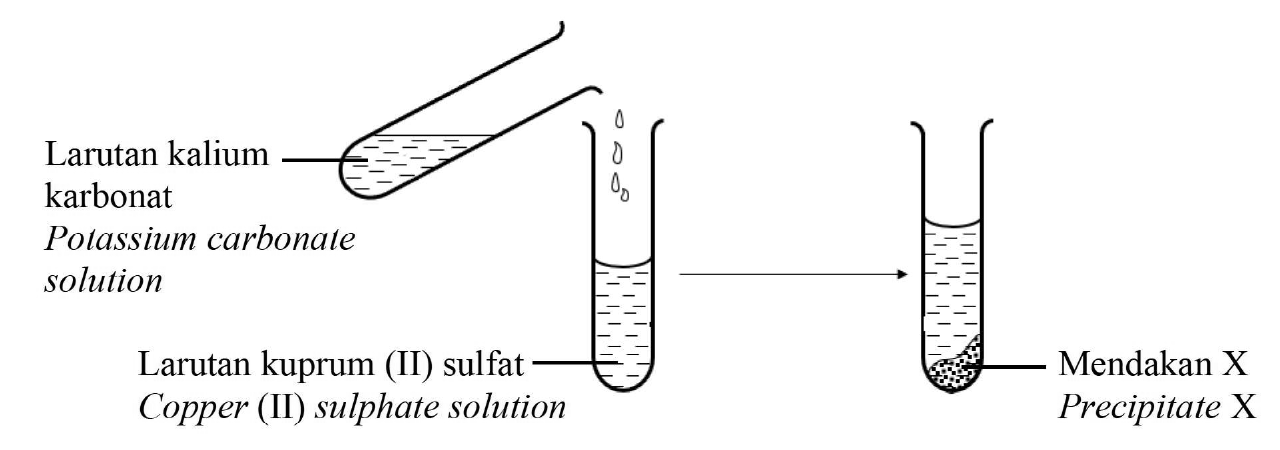
Diagram 10 shows a precipitation reaction: potassium carbonate solution is added to copper(II) sulphate solution and precipitate X forms. What is the colour of precipitate X?
Easy
Which statement is correct about cleansing action of soap?
Medium
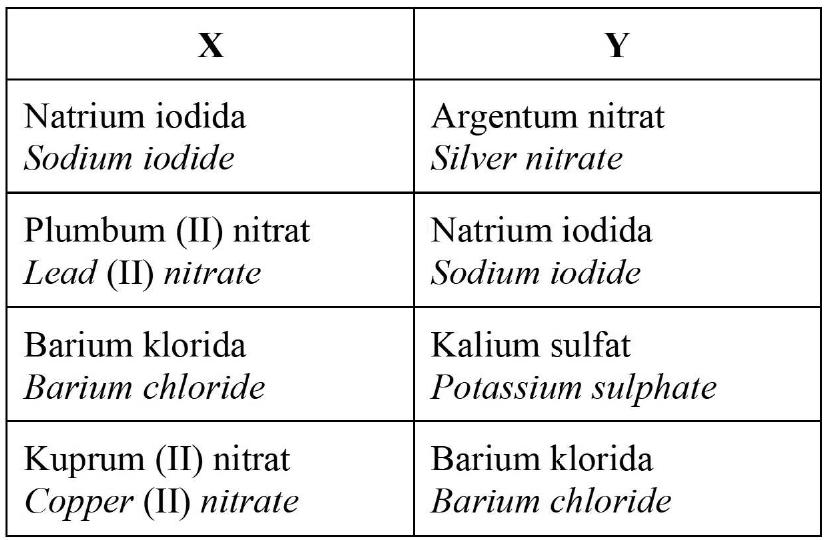
Sarah immersed a piece of filter paper into a beaker containing solution X, then used solution Y to write 'CHEMISTRY' on the filter paper after the filter paper was dried. The wording on the filter paper is yellow in colour. Which of the following pairs is solution X and solution Y?
Medium
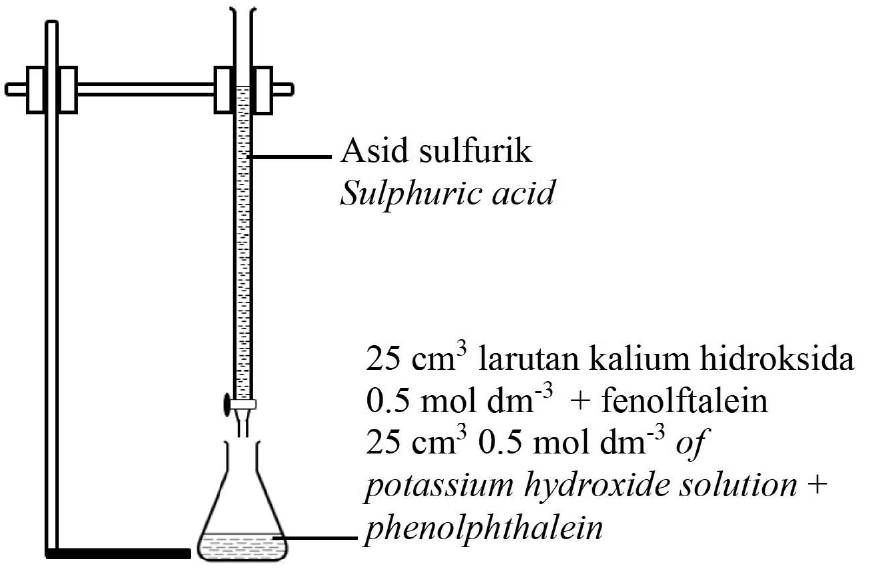
Diagram 11 shows a set-up apparatus used for neutralisation reaction (burette of sulphuric acid, conical flask with 25 cm³ of 0.5 mol dm⁻³ potassium hydroxide solution + phenolphthalein). In the neutralisation process, the initial burette reading is 5.0 cm³ and the final burette reading is 30.0 cm³. Which of the following statements is true?
Medium
Which substances should be added to latex to keep it in a liquid state?
Easy
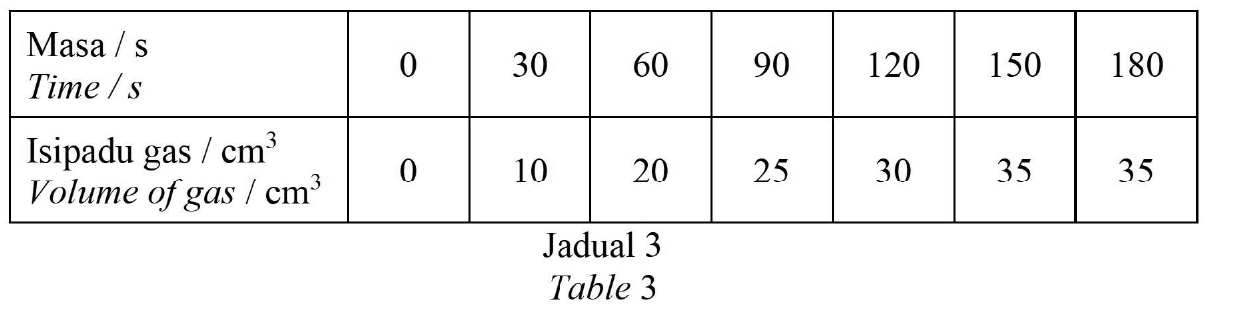
Table 3 shows the volume of gas released from the reaction between nitric acid and zinc powder: time / s: 0, 30, 60, 90, 120, 150, 180; volume of gas / cm³: 0, 10, 20, 25, 30, 35, 35. What is the average rate of reaction of the entire reaction?
Medium
Which of the following energy level diagrams represents the reaction between copper(II) sulphate solution and zinc?
Medium
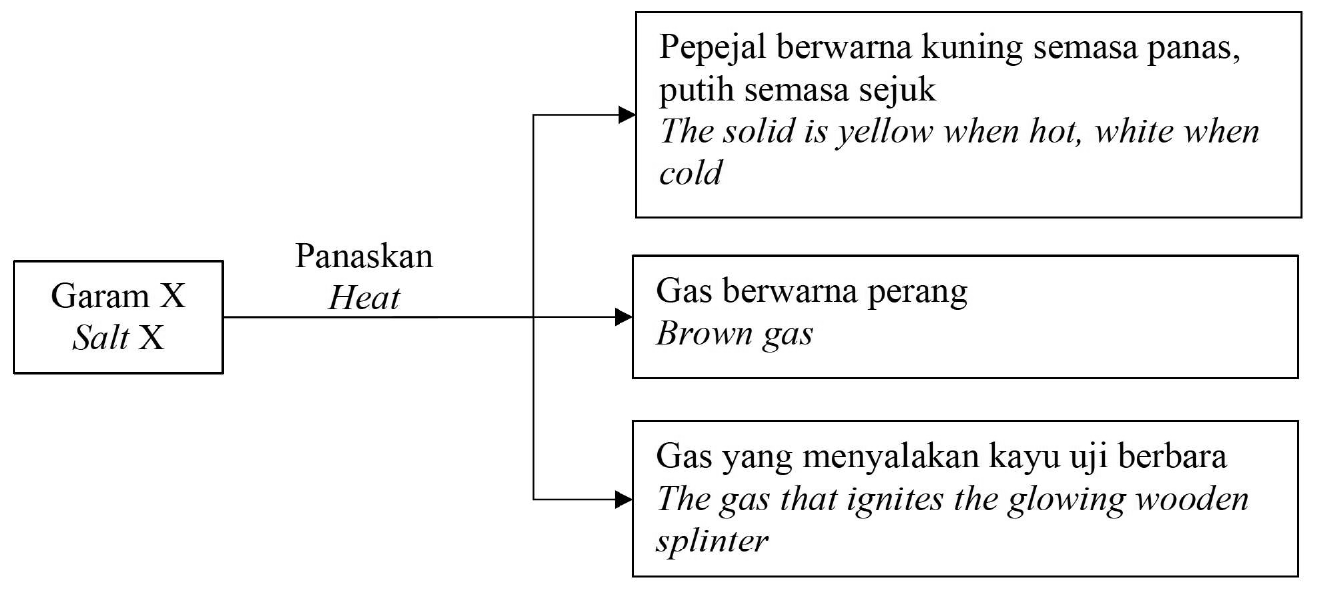
The flow chart in Diagram 12 shows the effect of heat on salt X: the solid is yellow when hot, white when cold; brown gas; the gas that ignites the glowing wooden splinter. What cations and anions may be present in salt X?
Medium
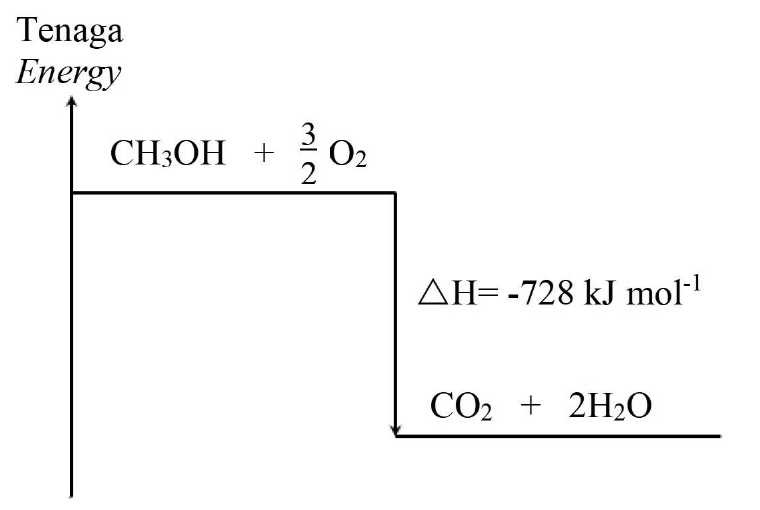
Diagram 13 shows the energy level diagram for the combustion of methanol, CH₃OH (CH₃OH + 3/2 O₂ → CO₂ + 2H₂O, ΔH = -728 kJ mol⁻¹). What is the mass of methanol needed to raise the temperature of 200 cm³ of water by 30.5 °C? [Molar mass of methanol, CH₃OH = 32, specific heat capacity of water = 4.2 J g⁻¹ °C⁻¹; density of water = 1 g cm⁻³]
Medium
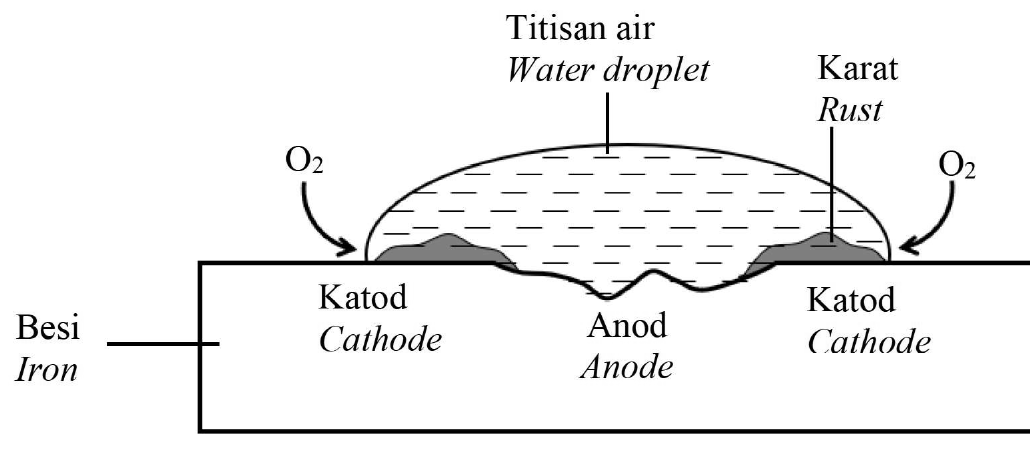
Diagram 14 shows the mechanism of iron rusting (water droplet on iron; anode at the centre of the droplet, cathode at the edges where O₂ enters). Which of the following half equations occurs at the anode and cathode?
Medium
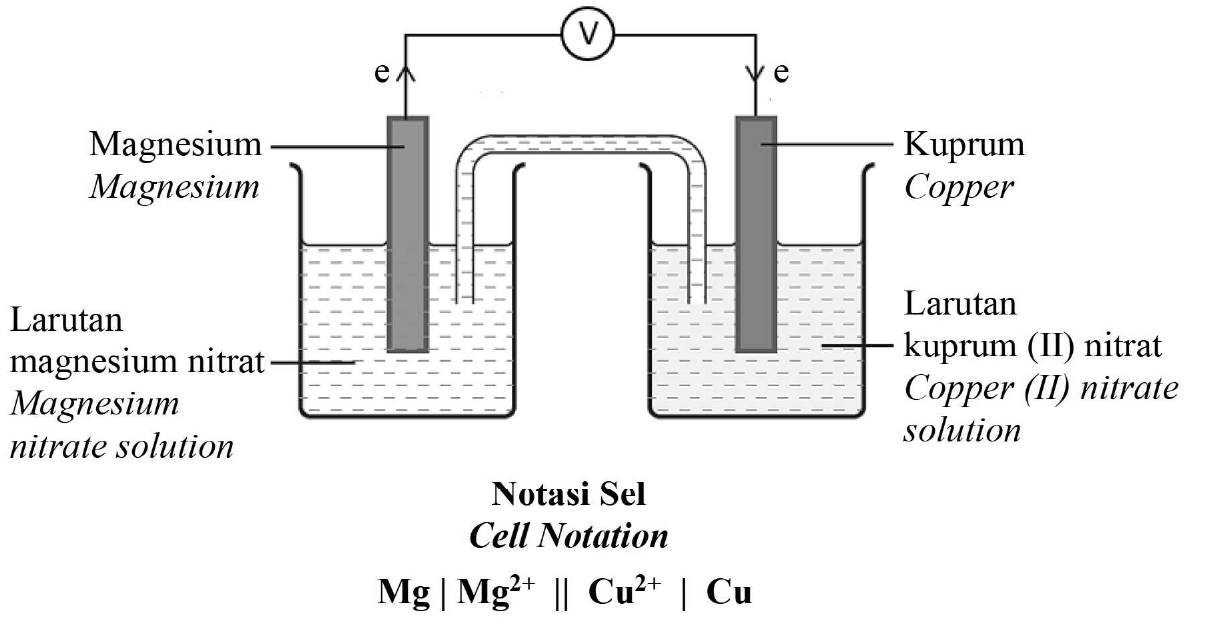
Diagram 15 shows a chemical cell and cell notation: Mg | Mg²⁺ || Cu²⁺ | Cu (magnesium electrode in magnesium nitrate solution, copper electrode in copper(II) nitrate solution, electrons flow from Mg to Cu). Which of the following is true?
Medium
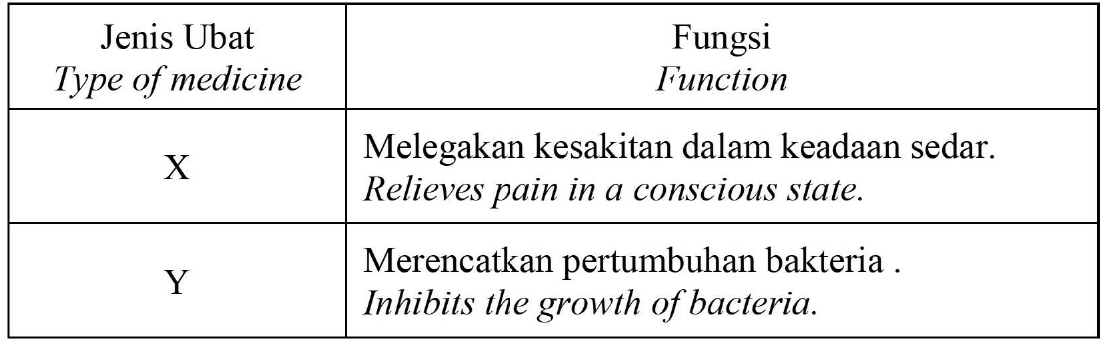
Table 4 shows the types of medicine and their function: X relieves pain in a conscious state; Y inhibits the growth of bacteria. What are X and Y?
Easy
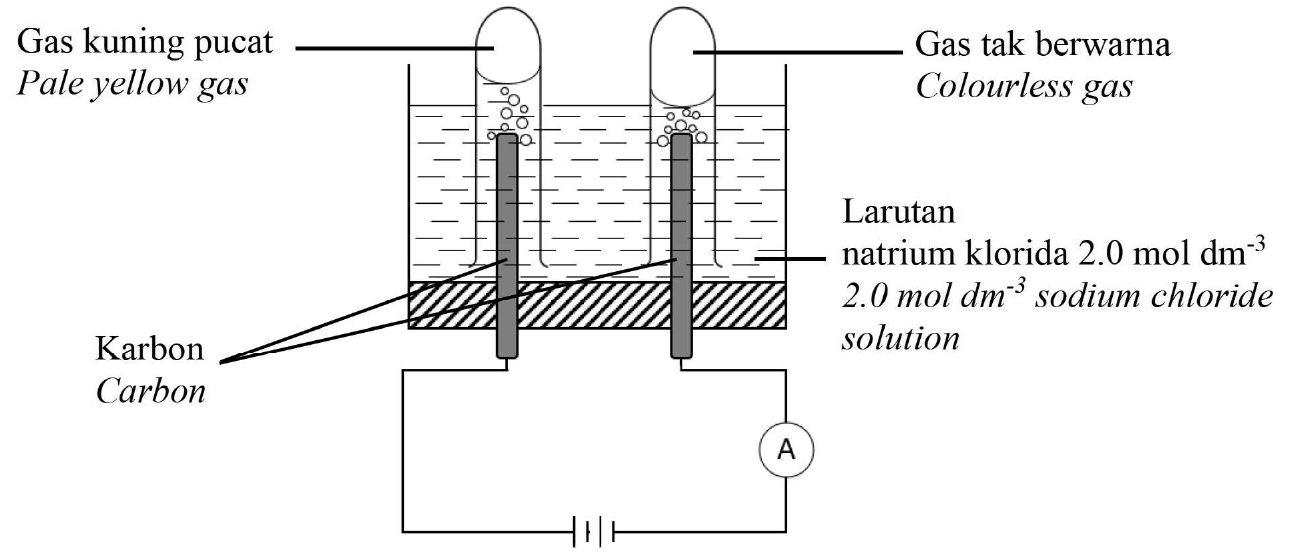
A student performs electrolysis on sodium chloride solution. The arrangement of the apparatus used and observation is shown in Diagram 16 (carbon electrodes in 2.0 mol dm⁻³ sodium chloride solution; pale yellow gas at one electrode, colourless gas at the other). What factors are involved in determining the results formed at the anode and cathode?