Write your answer on paper. Then open the answer to check it.
Section A
Table 1 shows the number of protons and the number of neutrons in atom P, Q and R. Atom P: 11 protons, 12 neutrons; Atom Q: 11 protons, 13 neutrons; Atom R: 17 protons, 18 neutrons.
Medium5 marks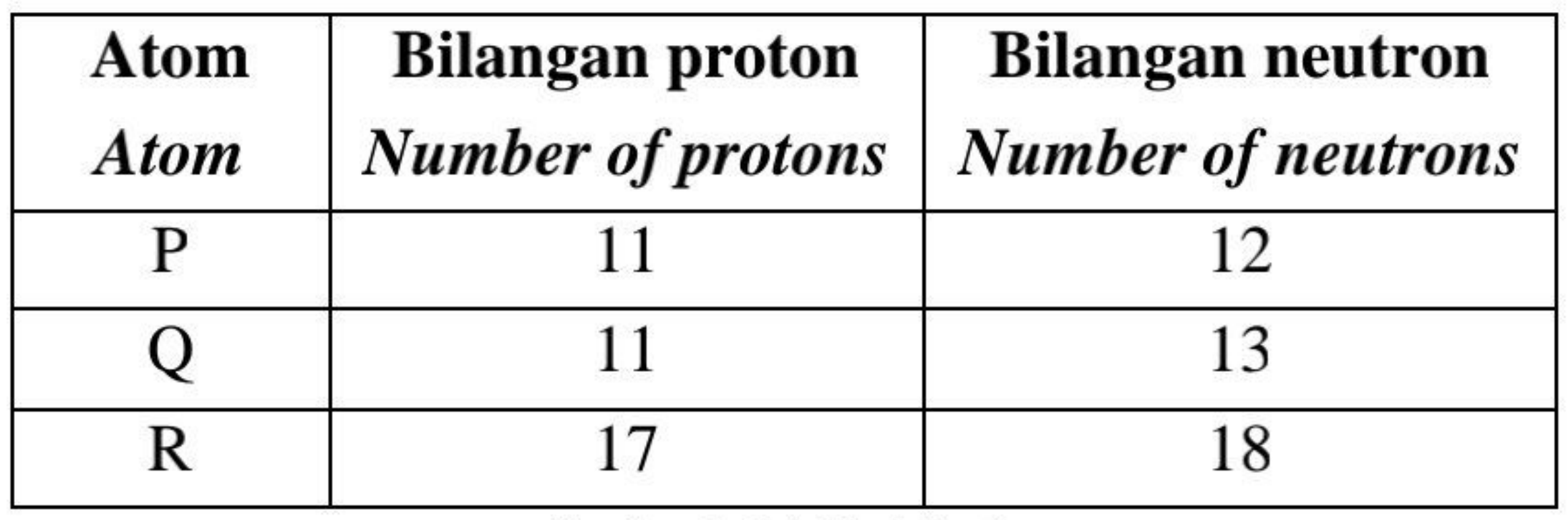
- (a)(i)
State one subatomic particle present in the nucleus of an atom.
[1] - (a)(ii)
Which atoms are isotopes? Give a reason for your answer.
[2] - (b)(i)
State the valence electron of atom R.
[1] - (b)(ii)
Draw the electron arrangement of atom R.
[1]
Diagram 1 shows an advertisement selling a type of cooking gas cylinder: 'The First Composite Cylinder In Malaysia' - rust free, does not explode, absorbs shocks.
Medium5 marks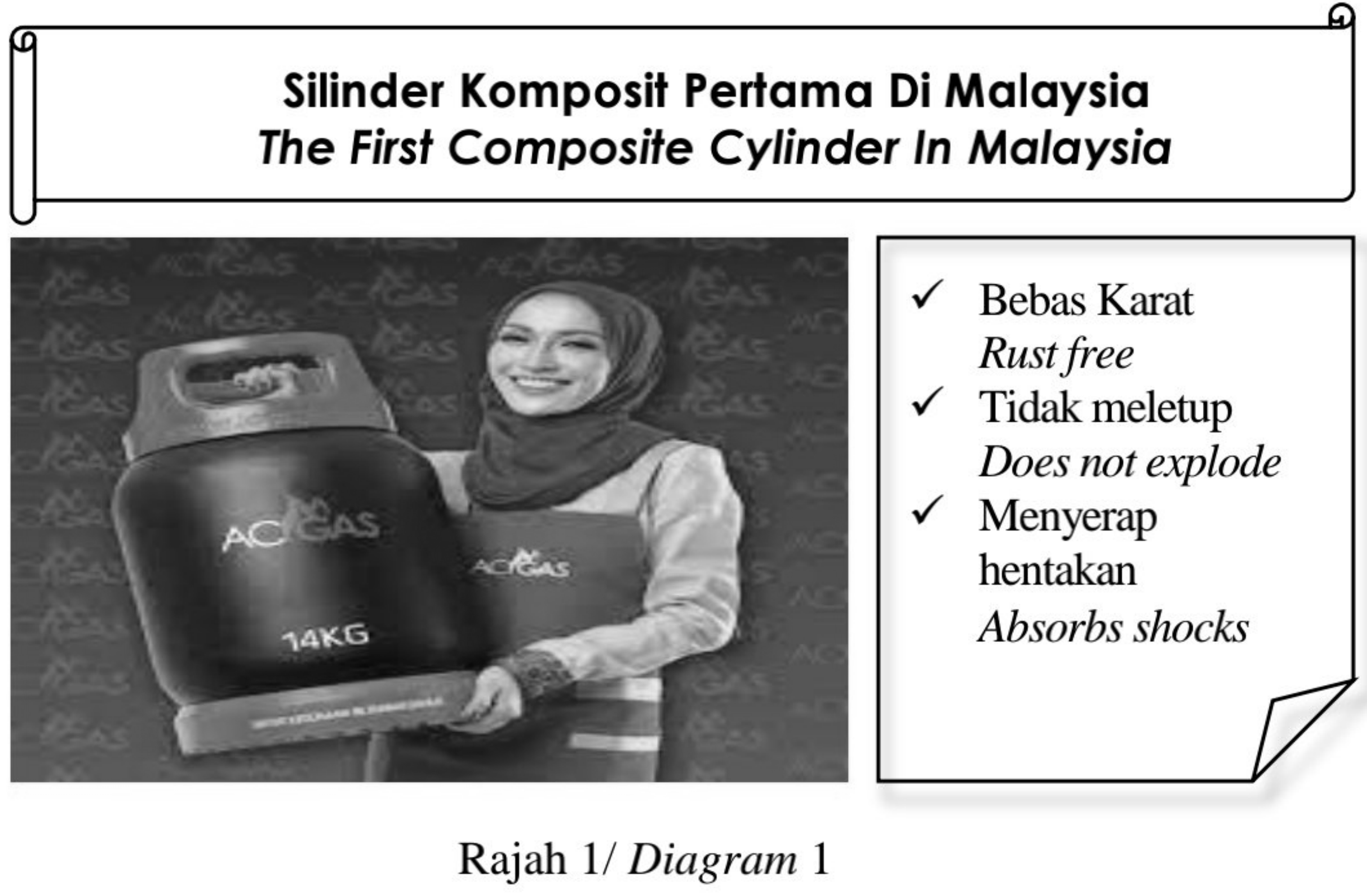
- (a)(i)
State the meaning of composite materials?
[1] - (a)(ii)
State another advantage of the composite materials used in Diagram 1.
[1] - (a)(iii)
Give one example of composite material.
[1] - (b)(i)
High-speed train that uses the concept of magnetic levitation can achieve a maximum speed up to 600 km/h. State the type of alloy used that enables the concept to be used on high-speed train.
[1] - (b)(ii)
Give a reason for your answer in (b)(i).
[1]
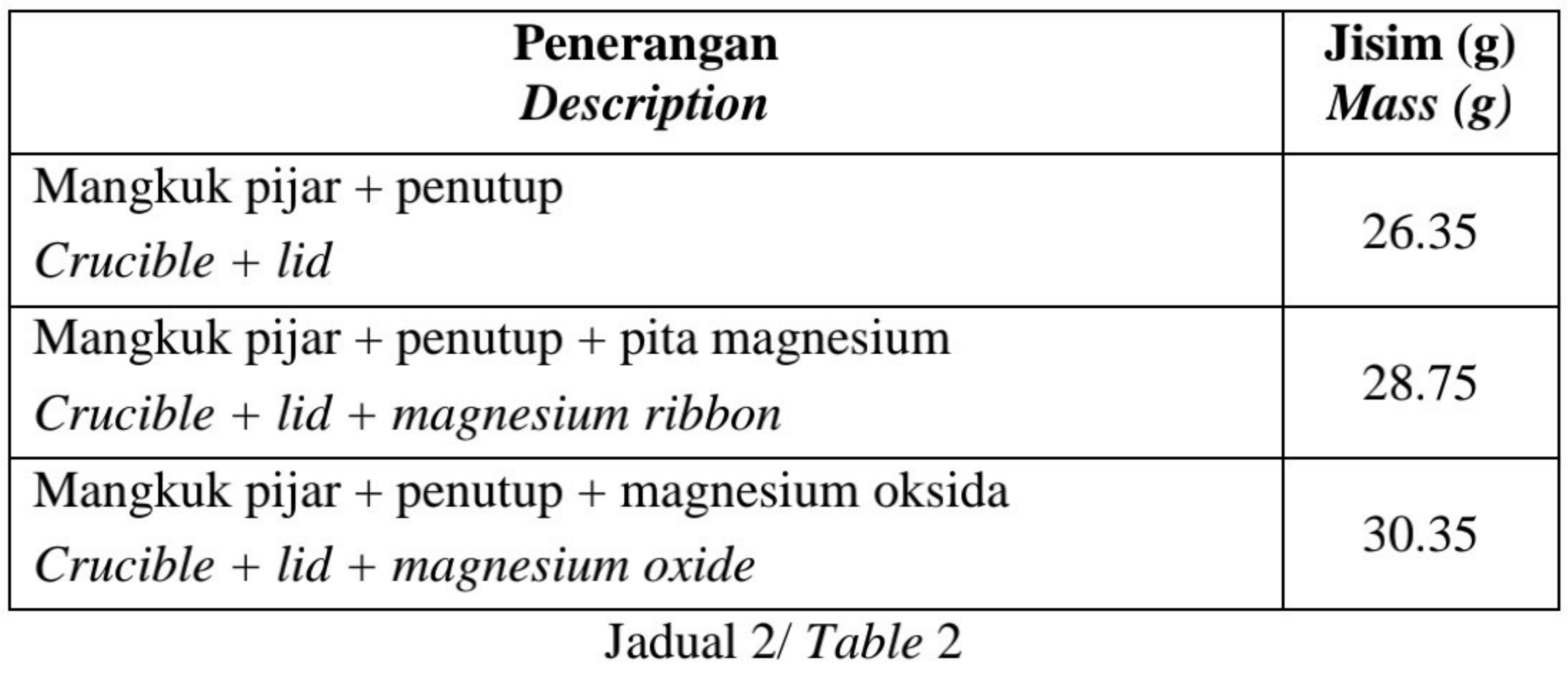
Diagram 2 shows the apparatus set-up to determine the empirical formula of magnesium oxide (crucible with lid, magnesium ribbon, heated). Table 2: Crucible + lid = 26.35 g; Crucible + lid + magnesium ribbon = 28.75 g; Crucible + lid + magnesium oxide = 30.35 g. [Relative atomic mass: Mg = 24, O = 16]
Medium6 marks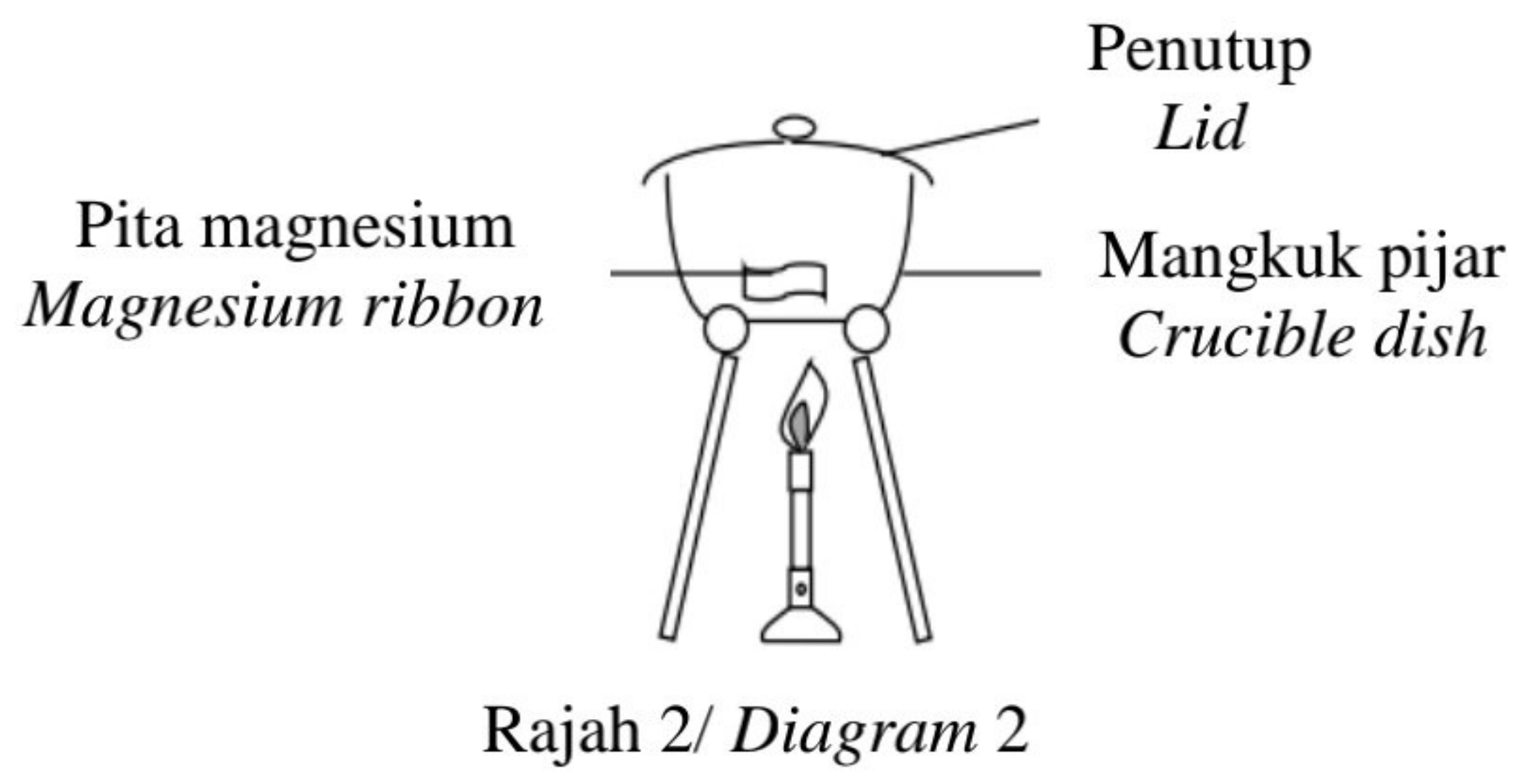
- (a)
When carrying out this experiment, why does the crucible lid need to be opened once a while?
[1] - (b)(i)
Based on the results in Table 2, calculate the mass of magnesium and oxygen.
[2] - (b)(ii)
Calculate the number of moles of magnesium and oxygen.
[2] - (b)(iii)
Determine the empirical formula for the magnesium oxide in the experiment.
[1]
Diagram 3 shows part of the Periodic Table of Elements (H, He, O, Mg, Al and Fe are marked).
Medium7 marks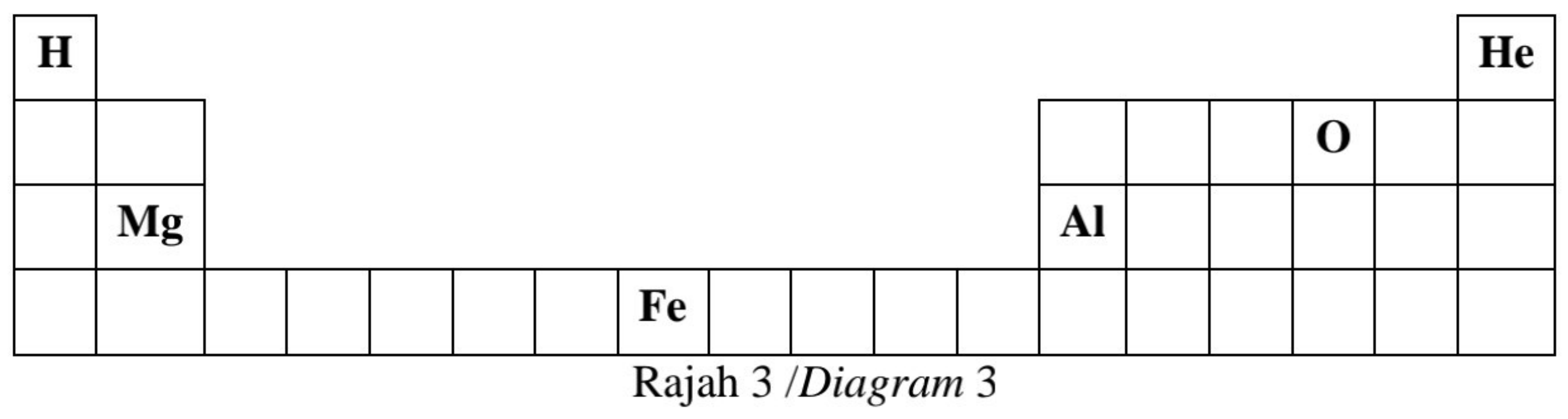
- (a)
What is the element represented by the symbol Fe?
[1] - (b)
Write the electron arrangement for the Mg atom.
[1] - (c)
Statement below shows properties of two types of gas. Helium gas: light, not reactive, colourless. Hydrogen gas: light, flammable, colourless. Based on the above information, which gas is suitable to be used in meteorological balloons? Give one reason.
[2]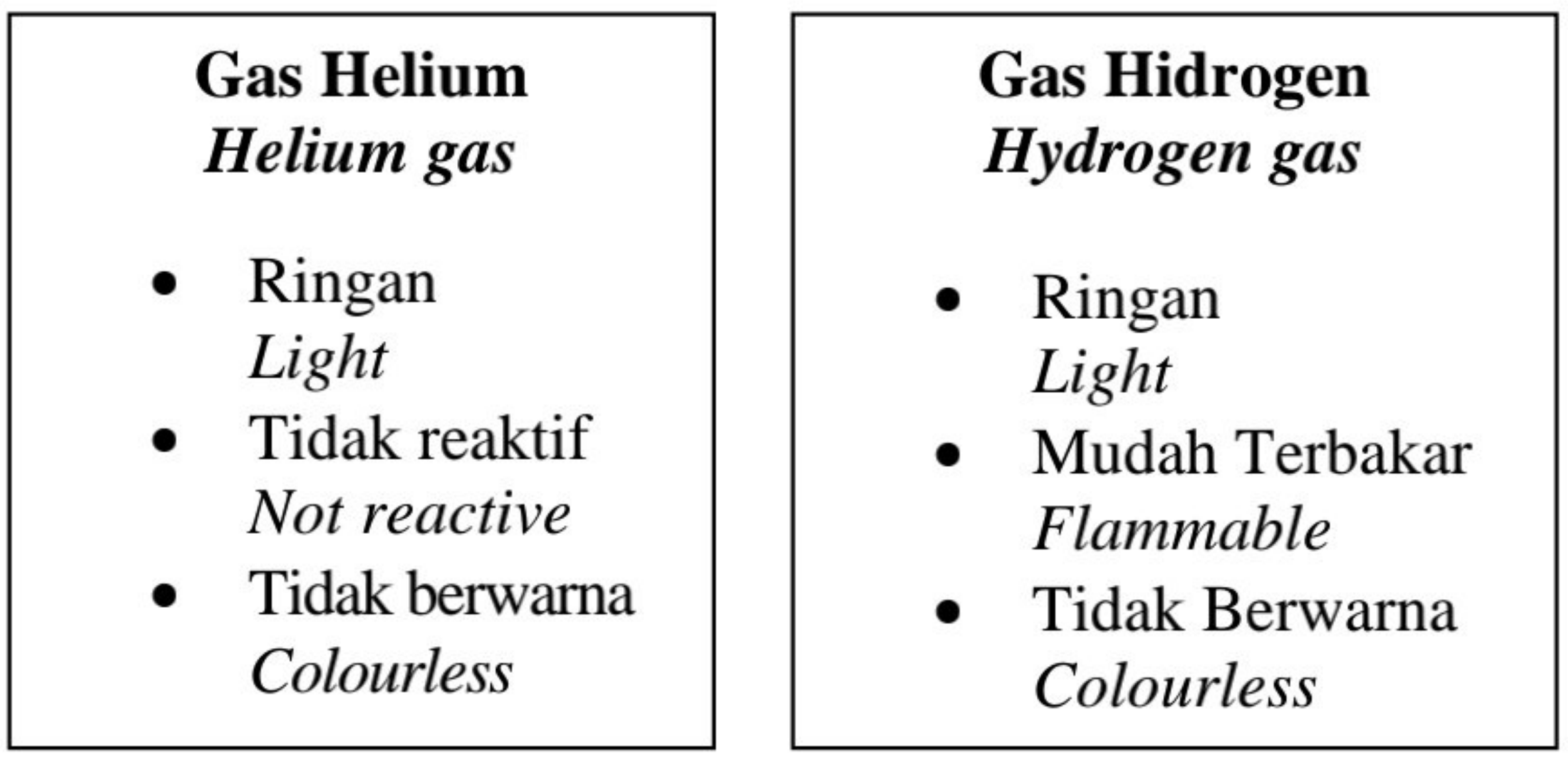
- (d)
Mrs. Chin is a hairdresser in a salon. Mrs. Chin found that after her client's hair was washed, the hair was sticky and difficult to comb. State the name of the bond formed. Explain the effect of the bond on Mrs. Chin's client's hair.
[3]
Diagram 4 shows a series of reaction that occurred on Compound X. Compound X + hydrogen gas (180 °C, Ni) gives Compound Y. Reaction I: Compound X (300 °C, 60 atm, H₃PO₄) gives Compound Z. Reaction II: Compound X gives polypropene (plastic bottle), [-CH₂-CH(CH₃)-]n.
Medium8 marks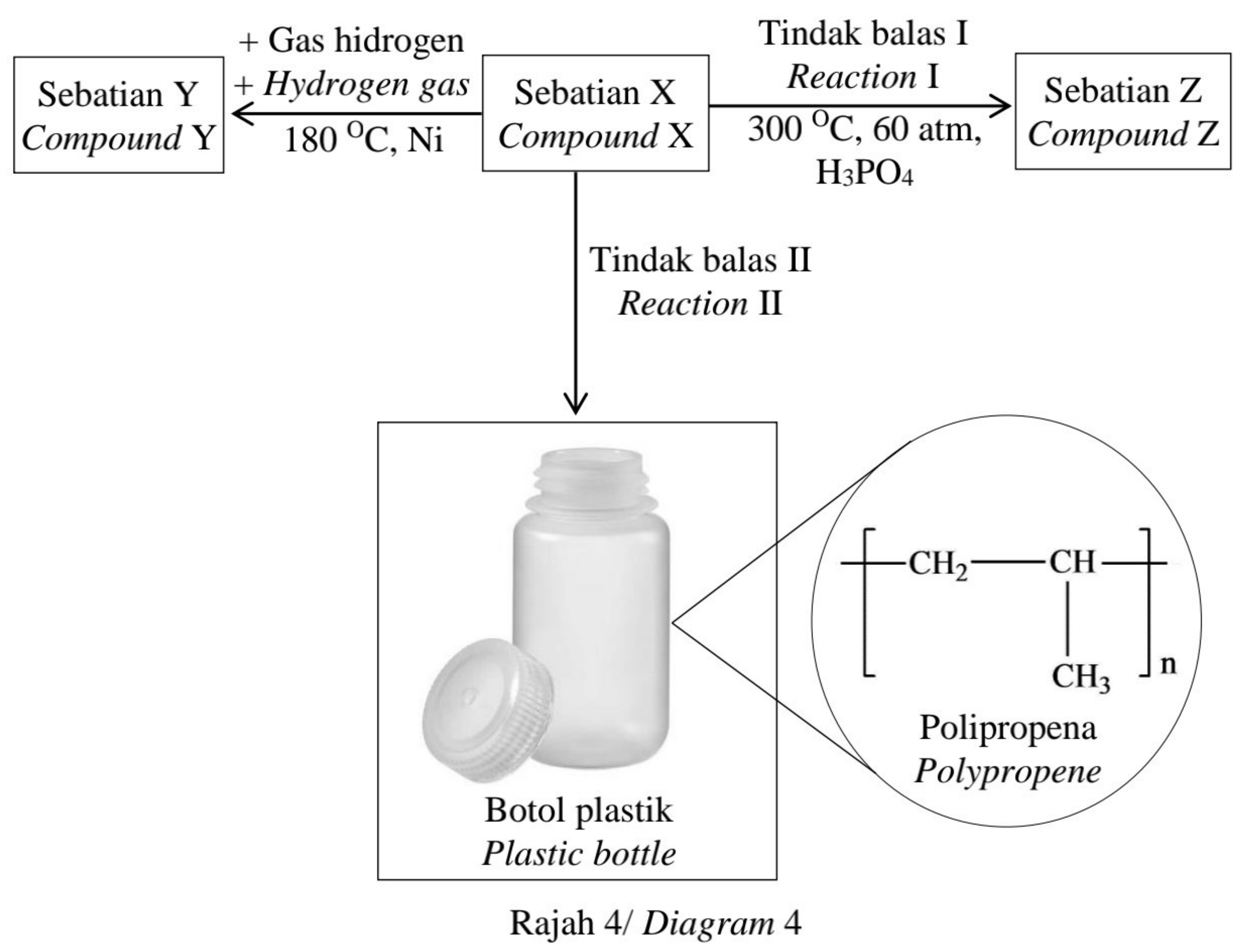
- (a)
Compound X and Compound Y is a hydrocarbon. What is meant by hydrocarbon?
[1] - (b)(i)
Both Compound X and Compound Y are suitable to be used as fuel and can produce a sooty flame. Which compound will produce more soot? Explain why.
[2] - (b)(ii)
Write the chemical equation for the complete combustion of the compound in (b)(i).
[2] - (c)(i)
Based on Diagram 4, identify Compound Y and Compound Z.
[2] - (c)(ii)
Draw the structural formula for the monomer of the plastic bottle.
[1]
Diagram 5 shows the information for two products using two types of acids, Acid X and Acid Y. Fruit pickles: pickled using Acid X, a monoprotic acid, pH 4.8. Lead acid accumulator: uses Acid Y, a diprotic acid, pH 1.0.
Medium9 marks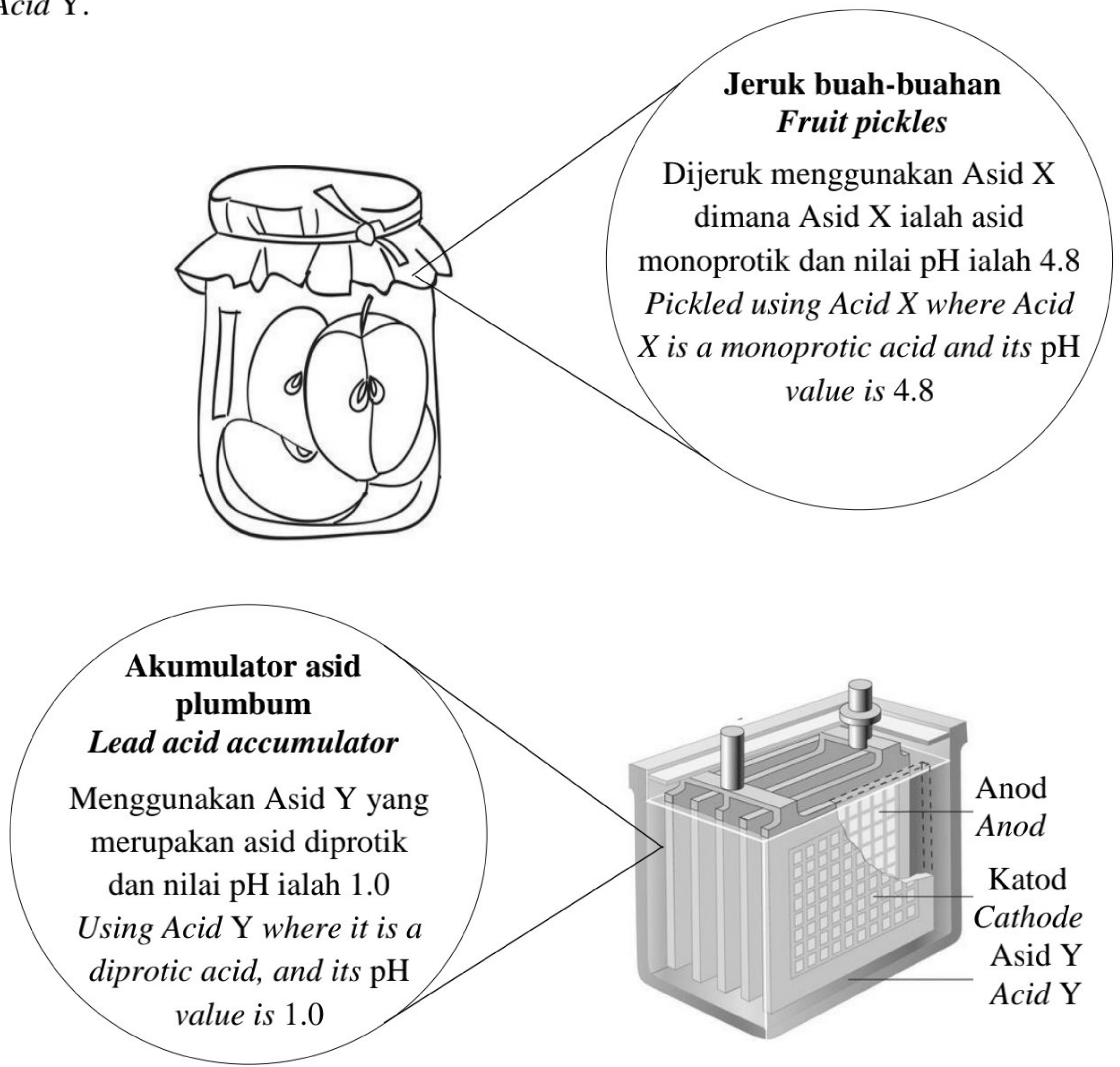
- (a)
State the meaning of acid.
[1] - (b)
Identify Acid Y.
[1] - (c)
Both Acids X and Y have the same concentration. Explain why the pH values for both acids in Diagram 5 are different.
[3] - (d)(i)
When 0.5 mol zinc carbonate is added into excess Acid Y, effervescence occurs. By using Acid Y stated in 6(b), write a chemical equation for the reaction.
[2] - (d)(ii)
Calculate the volume of gas produced at room condition. [Molar volume of gas at room conditions = 24 dm³ mol⁻¹]
[2]
Diagram 6 shows a flow chart for the reactions undergone by zinc chloride. Step 1: ZnCl₂ + Solution P gives ZnCO₃ + Solution Q. Step 2: ZnCO₃ + HNO₃ gives Solution R + colourless gas S + H₂O.
Medium10 marks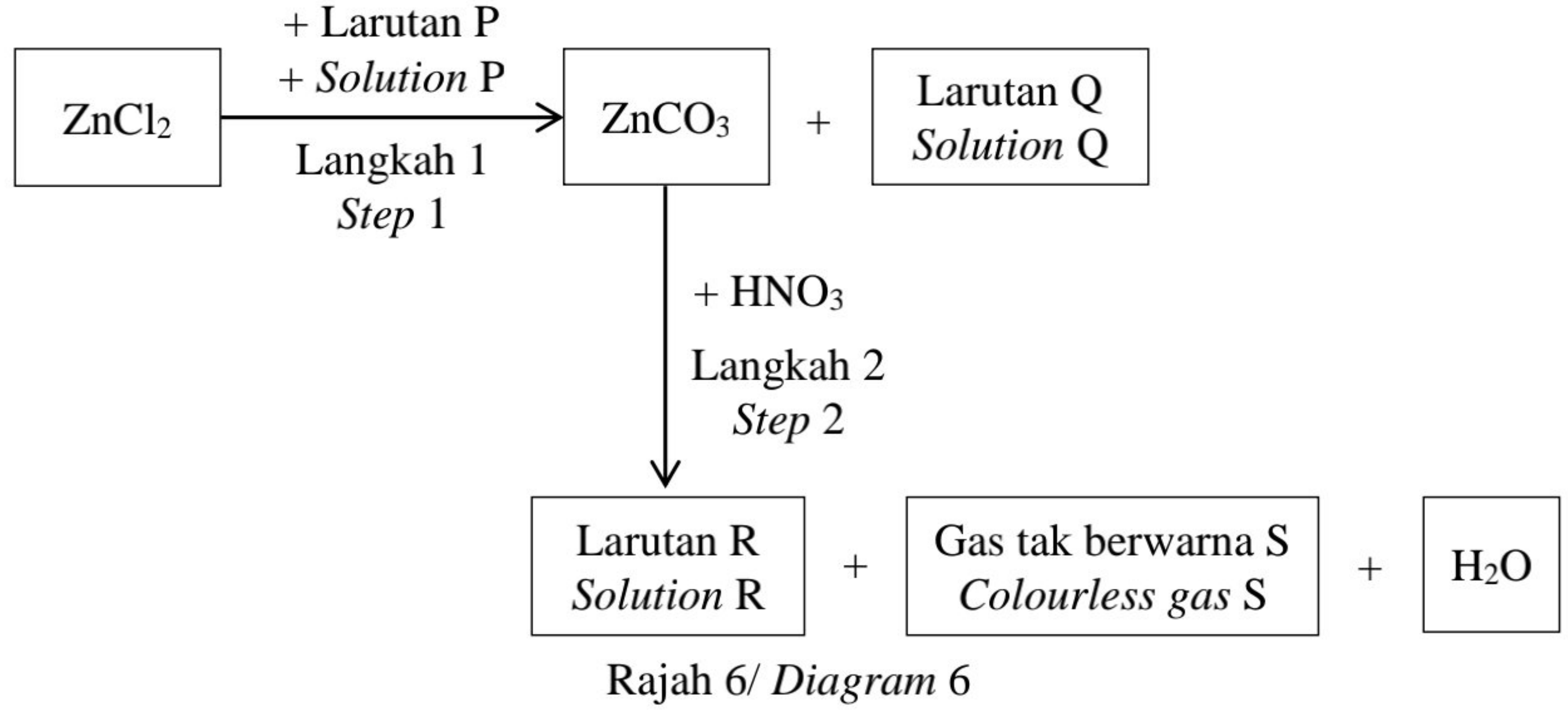
- (a)
State the solubility zinc chloride.
[1] - (b)(i)
Based on Diagram 6, identify solutions P, Q, and R.
[3] - (b)(ii)
State the type of reaction for Step 1.
[1] - (b)(iii)
Write a chemical equation for the reaction that occurs in Step 1.
[2] - (b)(iv)
Calculate the mass of ZnCO₃ produced when 0.1 mol ZnCl₂ reacts with Solution P. [Molar mass of ZnCO₃ = 125 g mol⁻¹]
[1] - (b)(v)
Draw a labelled diagram of apparatus set up to carry out experiment in Step 2 and show how colourless gas S is tested.
[2]
Diagram 7 shows a plant (aloe vera) that is widely used in traditional medicine.
Medium10 marks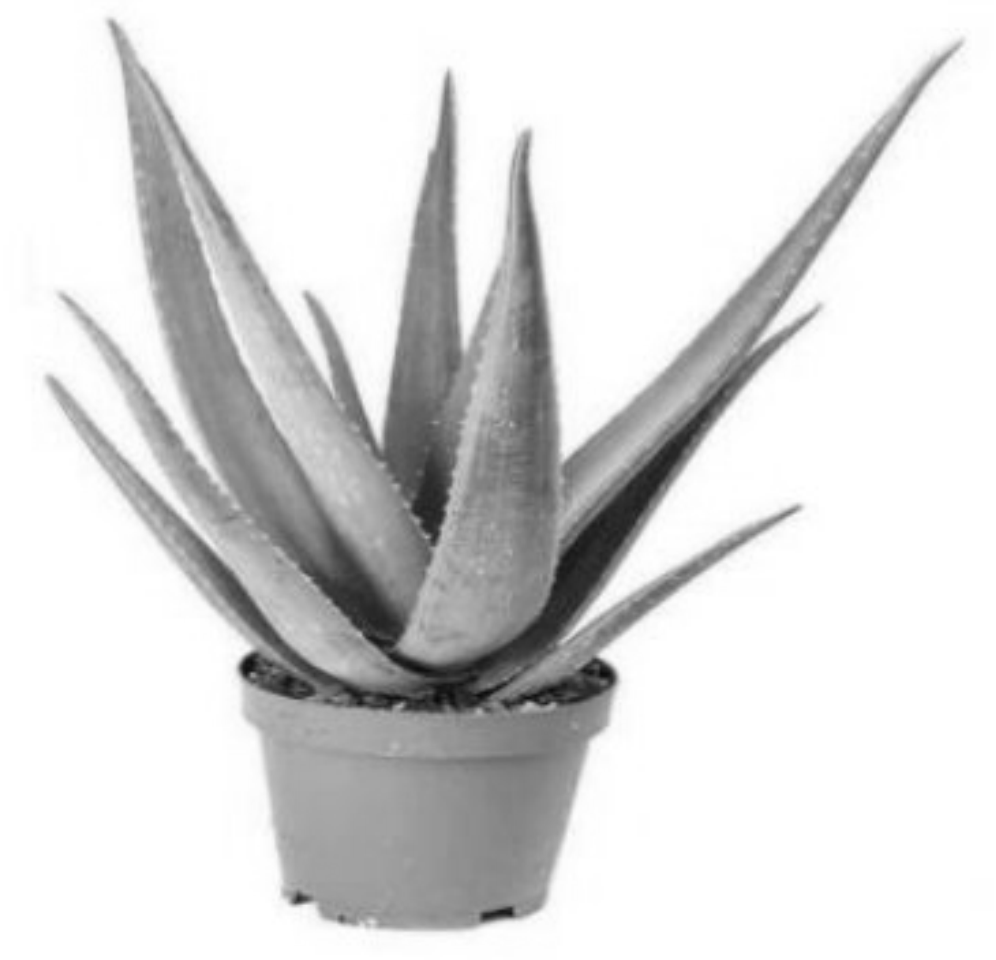
- (a)(i)
State the use of the plant in traditional medicine.
[1] - (a)(ii)
How can the plant be used for (a)(i)?
[1] - (b)(i)
Various types of affordable cosmetic materials are available in the market. But there are some commercialized cosmetics that contain harmful chemicals which can cause harm to consumers. State one effect of harmful chemicals substance to consumers.
[1] - (b)(ii)
The Ministry of Health Malaysia and National Pharmaceutical Regulatory Agency are responsible to supervise and approve the use of ingredients in commercialized cosmetics. As a consumer, justify the uses of approved commercialized cosmetics in daily life.
[2] - (c)
Table 3 shows three types of cosmetics P, Q and R with its uses: P to beautify the face; Q to treat the body; R to provide fragrances. Based on Table 3, give an example of P, Q and R.
[3]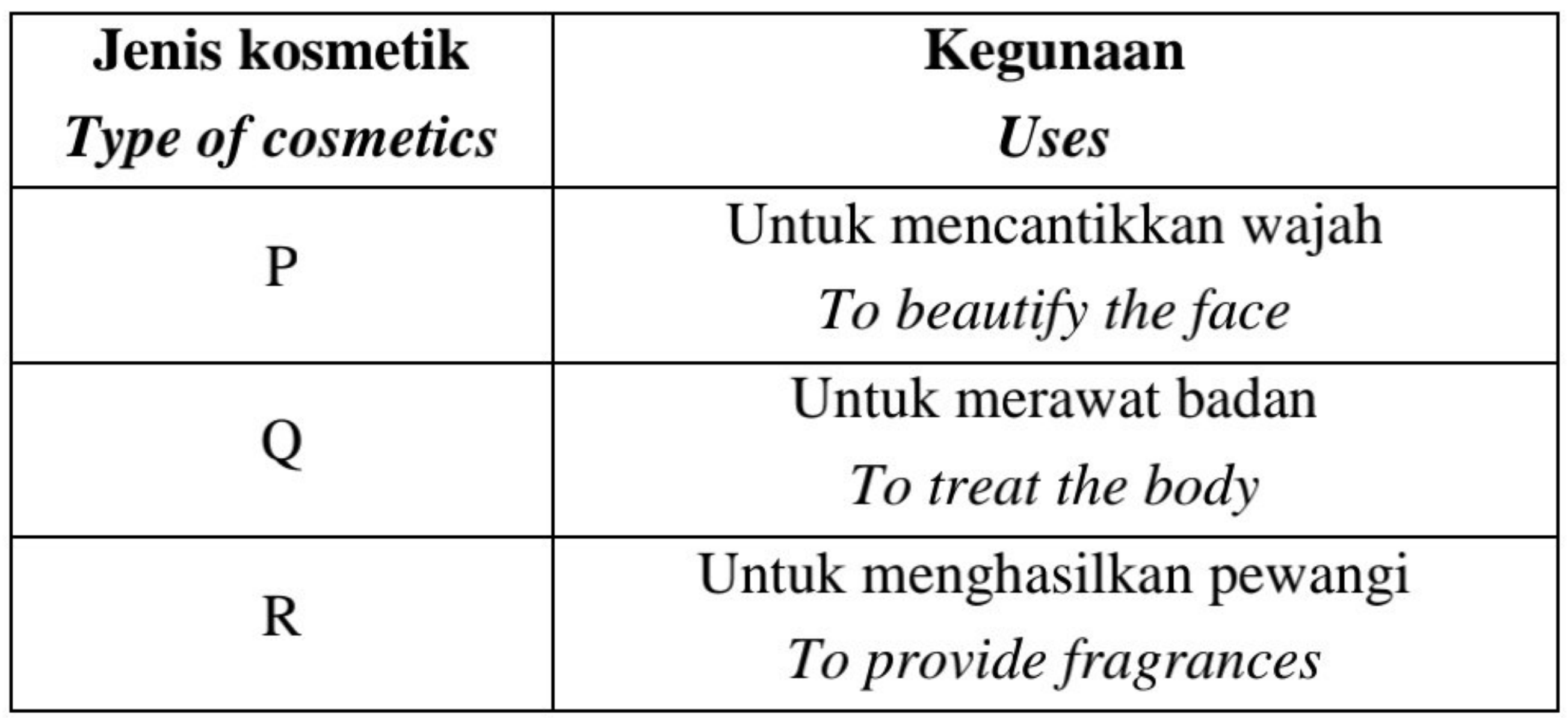
- (d)
Mei Ling notices sudden acne breakouts on her face. She is attracted to an advertisement for an anti-acne product that claims the acne could disappear within 5 days. What steps should Mei Ling take before purchasing the anti-acne product?
[2]
Section B
Answer any one question in Section B. Diagram 8.1 shows the apparatus setup for two cells, Cell I (zinc in 1.0 mol dm⁻³ zinc sulphate solution, copper electrode, salt bridge) and Cell II (carbon electrodes W and X in 1.0 mol dm⁻³ copper(II) chloride solution) connected together. Table 4 gives standard electrode potentials: Zn²⁺/Zn -0.76 V; Cl₂/Cl⁻ +1.36 V; O₂/OH⁻ +0.40 V; Cu²⁺/Cu +0.34 V; 2H⁺/H₂ 0.00 V; S₂O₈²⁻/SO₄²⁻ +2.01 V.
Medium20 marks- (a)(i)
Based on Diagram 8.1 and Table 4, state the function of the salt bridge in Cell I. Identify the negative terminal in Cell I and explain why.
[3]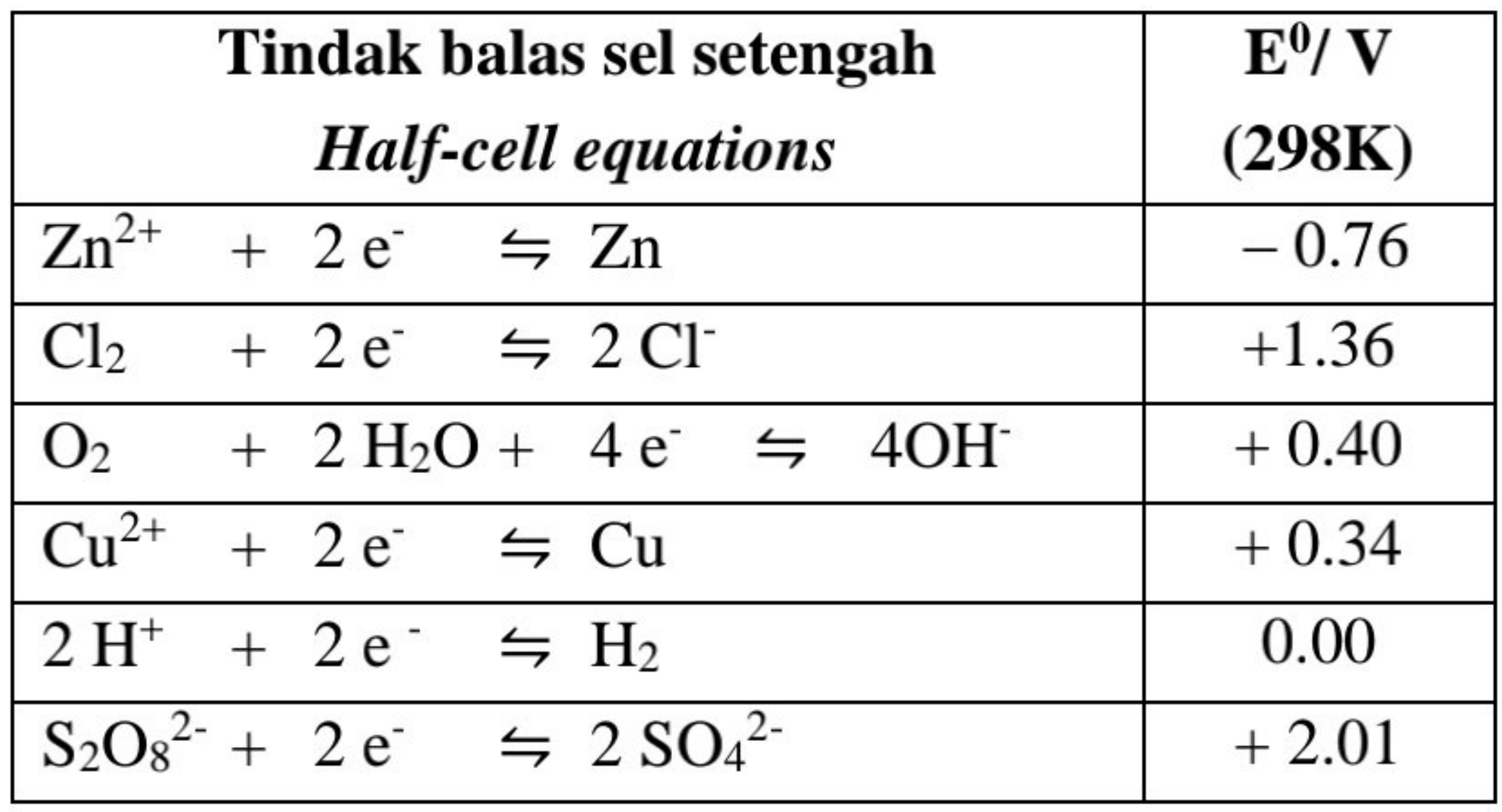
- (a)(ii)
Explain the reaction that occurs on carbon electrodes W and X in Cell II based on: movement of ions to each electrode; choice of ions to be oxidised and reduced and the reason why the ions were chosen; half-equation at each electrode; observations at each electrode.
[10]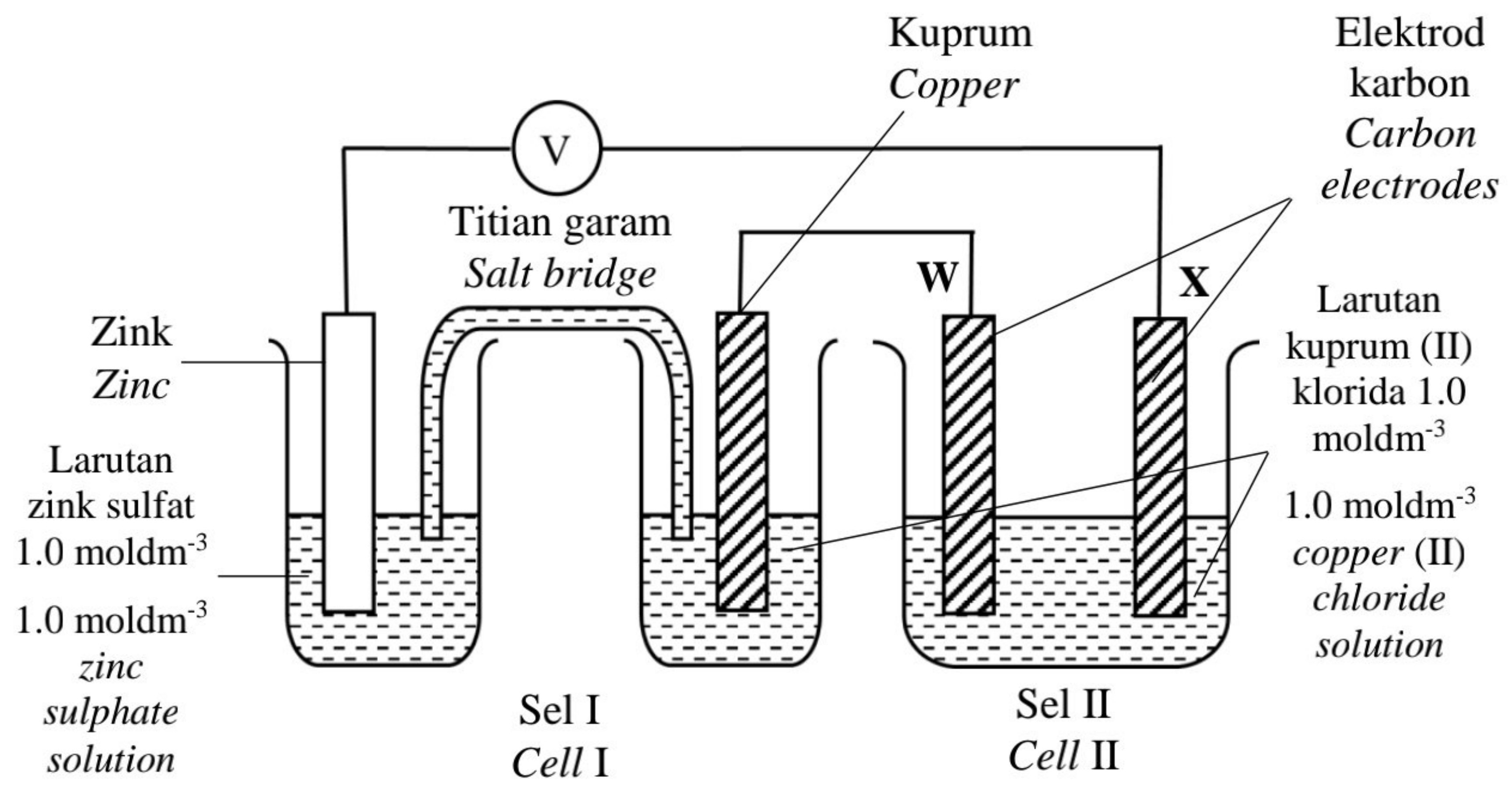
- (b)
Diagram 8.2 shows the apparatus setup used in the lab to investigate the reactivity of metals towards oxygen to form metal oxide (potassium manganate(VII) powder heated, glass wool, metal powder heated). When iron is heated using the apparatus in Diagram 8.2, iron(III) oxide is formed. State the colour of iron(III) oxide formed and write a chemical equation for the reaction. Calculate the mass of metal oxide formed when 14 g of iron is heated. [Relative atomic mass: O = 16; Fe = 56]
[7]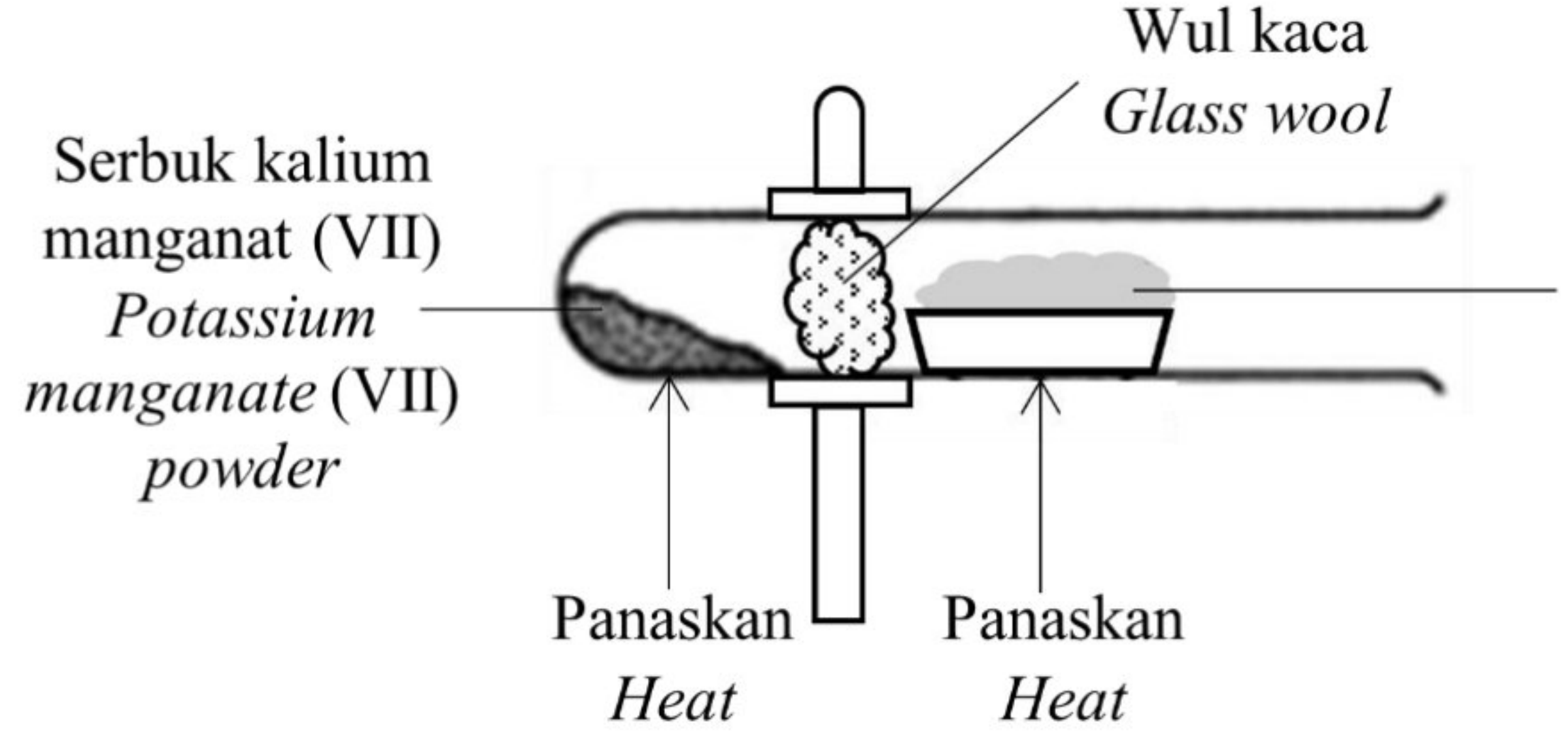
Three sets of experiment are carried out to determine the factors that affect the rate of reaction. Table 5 shows the reactants and the time taken to collect 40 cm³ of gas for Set I, Set II and Set III. Set I: excess calcium carbonate powder + 25 cm³ of 0.4 mol dm⁻³ hydrochloric acid, 30 s. Set II: excess calcium carbonate powder + 25 cm³ of 0.2 mol dm⁻³ hydrochloric acid, 50 s. Set III: excess calcium carbonate granules + 25 cm³ of 0.2 mol dm⁻³ hydrochloric acid, 90 s.
Medium20 marks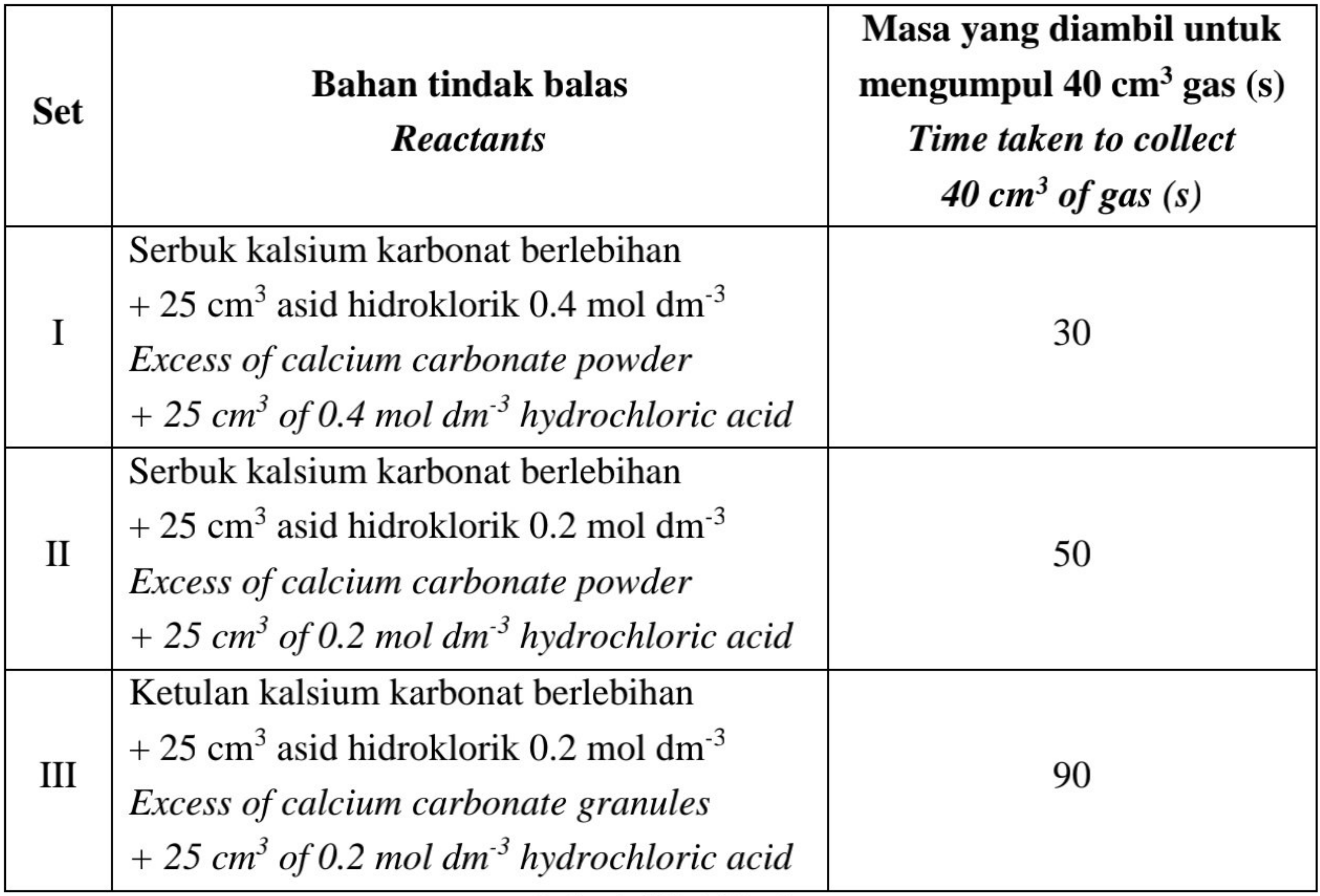
- (a)
What is meant by rate of reaction and state two factors that affect the rate of reaction.
[3] - (b)
Based on Table 5, draw an apparatus set-up for Set I.
[2] - (c)
Write a chemical equation for the reaction and calculate the actual volume of gas released in Set I. [Molar volume of any gas = 24 dm³ at room condition]
[5] - (d)(i)
Compare the rate of reaction between Set I and Set II and explain your answer based on collision theory.
[5] - (d)(ii)
Compare the rate of reaction between Set II and Set III and explain your answer based on collision theory.
[5]
Section C
Table 6.1 shows the equations and heat of neutralisation for two sets of experiment. Set I: NaOH + HCl → NaCl + H₂O, -57.3 kJ mol⁻¹. Set II: NaOH + CH₃COOH → CH₃COONa + H₂O, -54.5 kJ mol⁻¹.
Hard20 marks- (a)(i)
What is meant by heat of neutralisation and state the type of acid used in Set I and Set II.
[3]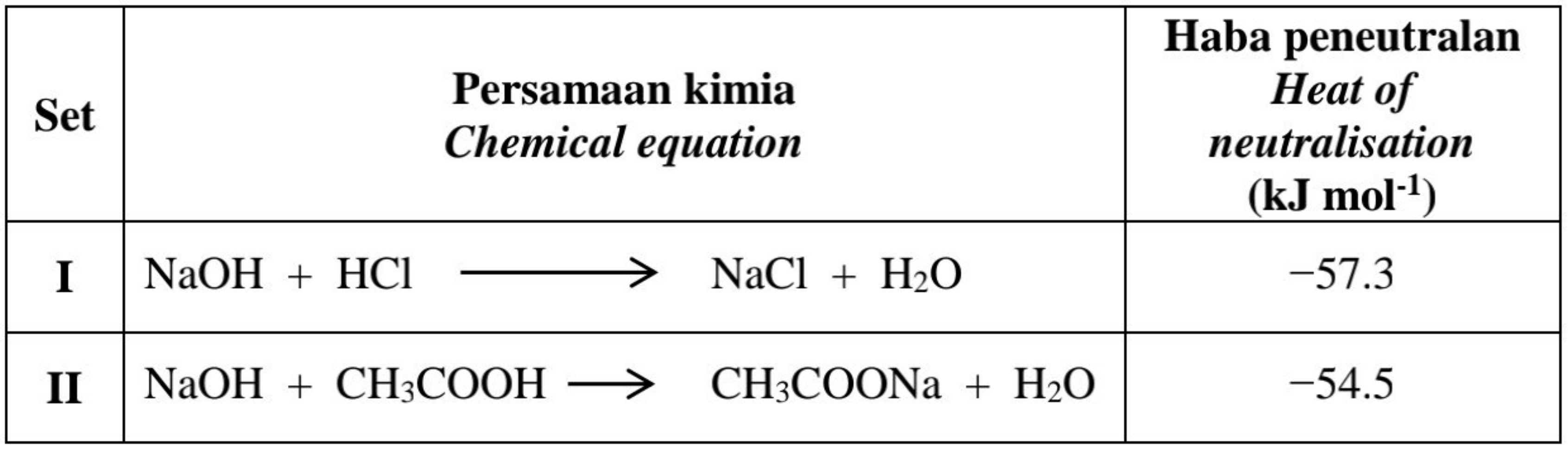
- (a)(ii)
In Set I, 50 cm³ of 1.0 mol dm⁻³ sodium hydroxide solution reacted with 50 cm³ of 1.0 mol dm⁻³ hydrochloric acid. Calculate the highest temperature reached if the average initial temperature is 28.5 °C. [Specific heat capacity: 4.2 J g⁻¹ °C⁻¹; density of solution = 1.0 g cm⁻³]
[4] - (b)
Table 6.2 shows the energy profile diagram for Reaction I (AgNO₃(aq) + NaCl(aq) → AgCl(s) + NaNO₃(aq), ΔH = -65.5 kJ mol⁻¹) and Reaction II (N₂(g) + O₂(g) → 2NO(g), ΔH = +180 kJ mol⁻¹). Compare Reactions I and II based on the type of reactions, heat change during reactions, temperature change during reactions, total energy content of reactants and products, and change of heat energy during the breaking and formation of bonds.
[5]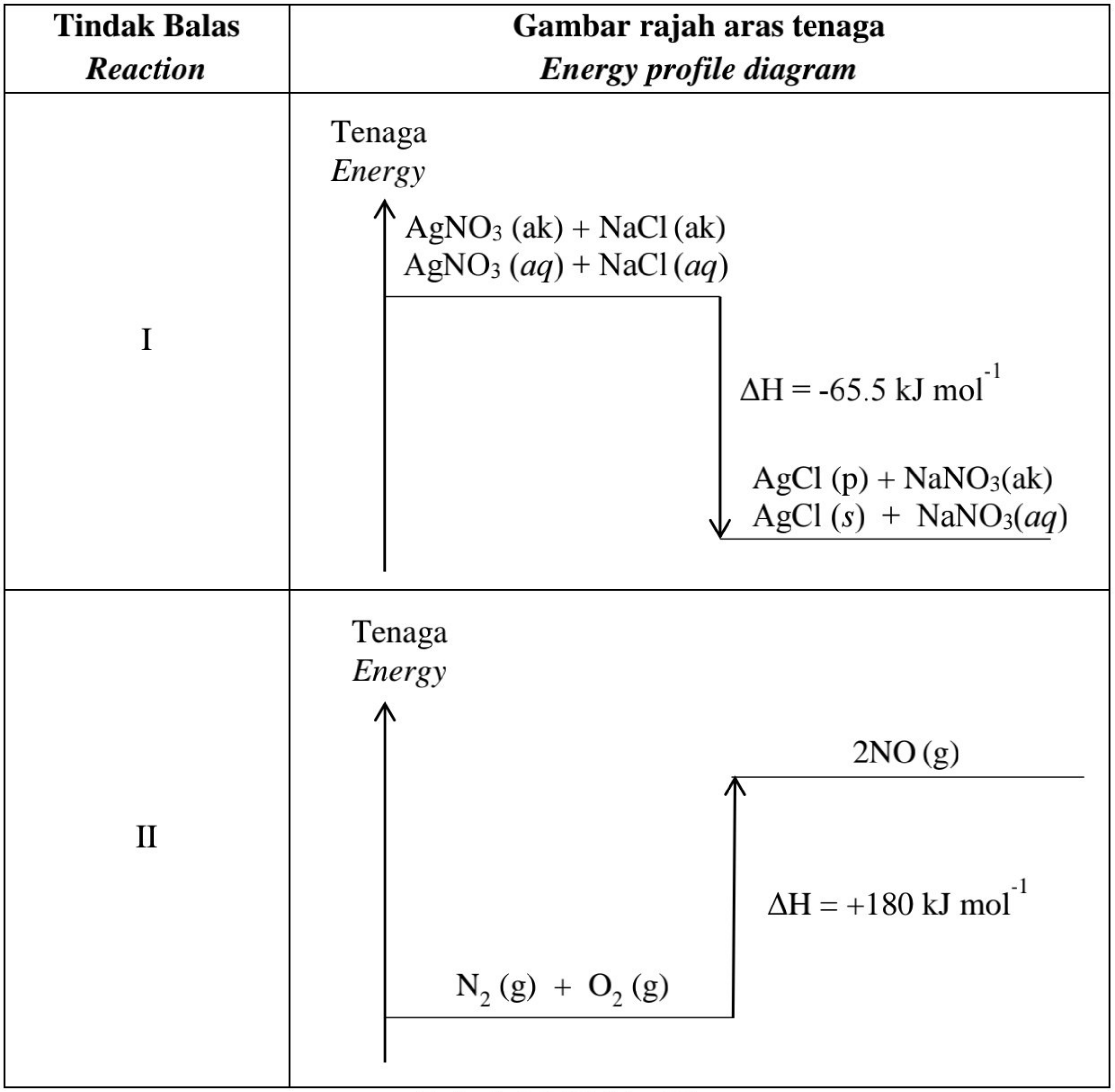
- (c)
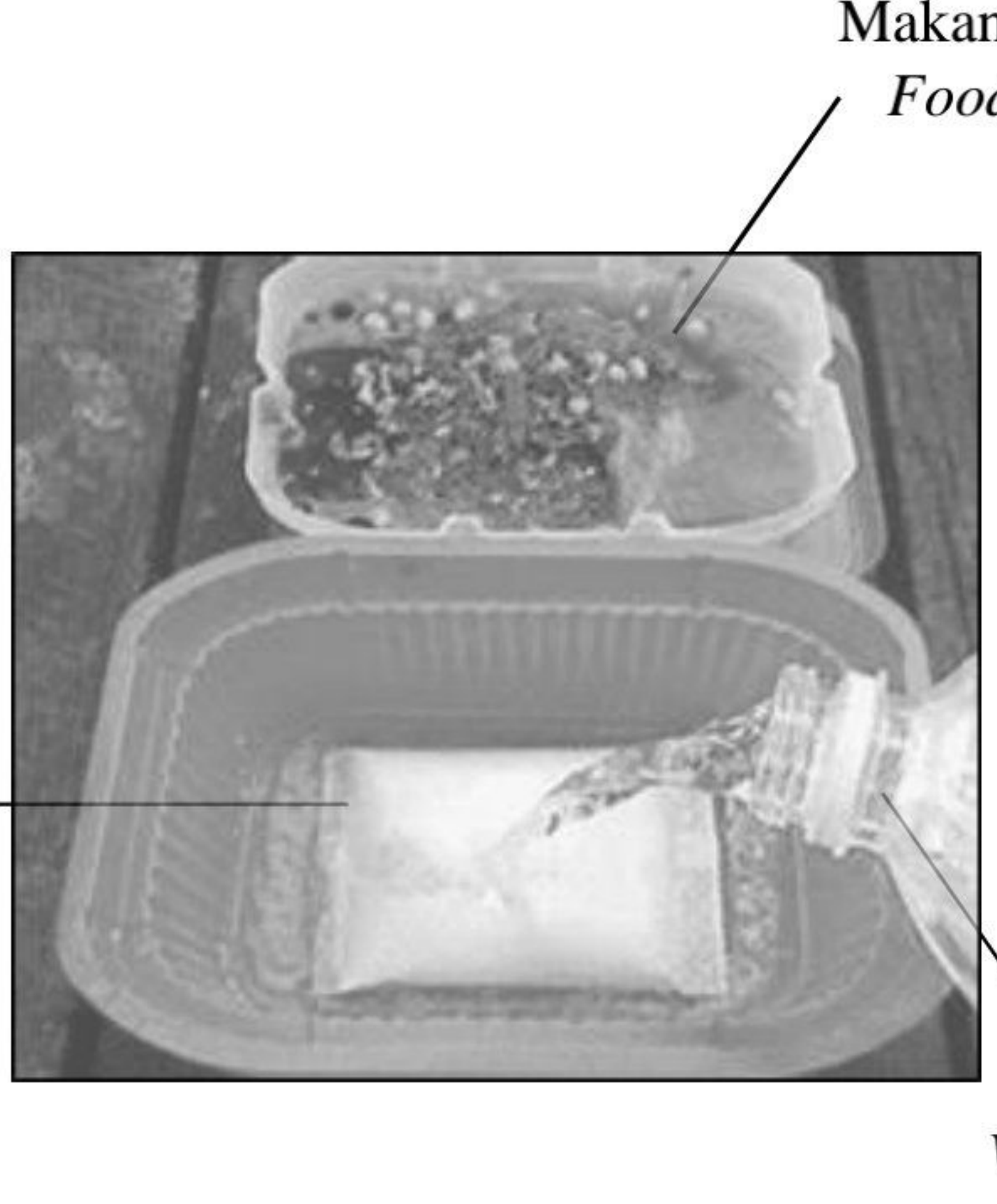
Diagram 9 shows a self-heating container to heat food. The pack is filled with calcium chloride powder, CaCl₂ and packed together with water. You are supplied with a few chemical substances like magnesium nitrate, calcium oxide and ammonium nitrate that may be used to replace the calcium chloride powder. Plan a method that could be done in the lab to choose which substance can be used to replace the calcium chloride powder. State how you choose which substance is suitable to replace the calcium chloride powder.
[8]