Protium, deuterium and tritium are the isotopes of hydrogen. Which of the following is the similarity of the isotopes?
Medium
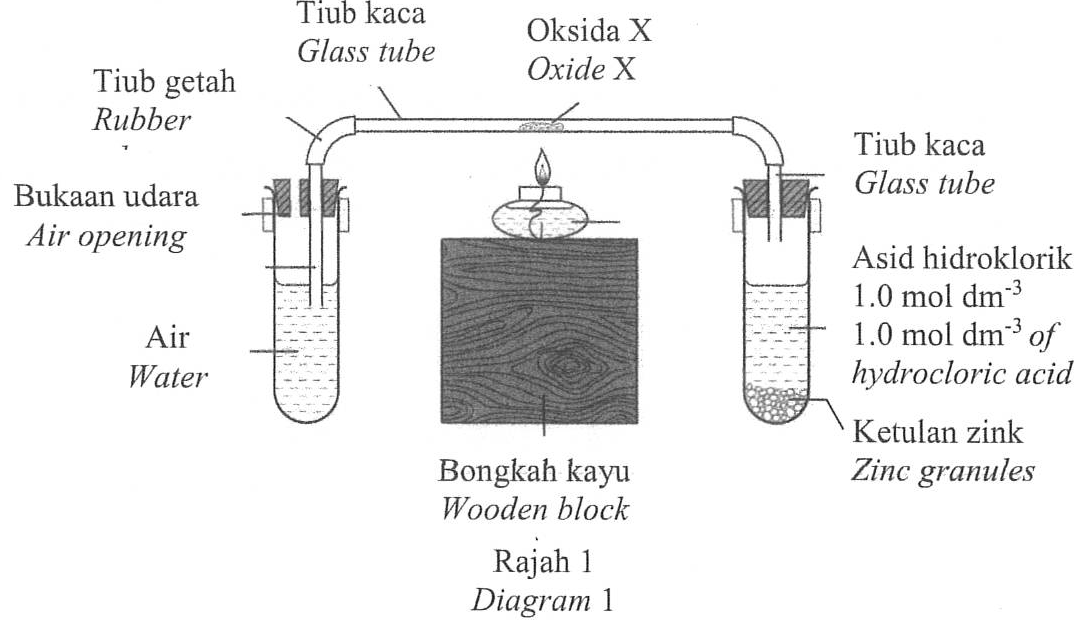
Diagram 1 shows the apparatus set-up to determine the empirical formula of oxide X. Which of the following is metal X?
Medium
Element Z is located in the same group as neon, Ne and krypton, Kr in the Periodic Table of Elements. Which of the following is the property of Z?
Easy
Ionisation of acid in water affects the pH value. Which of the following gives the highest pH value? (Each option is a particle diagram, A to D.)
Medium
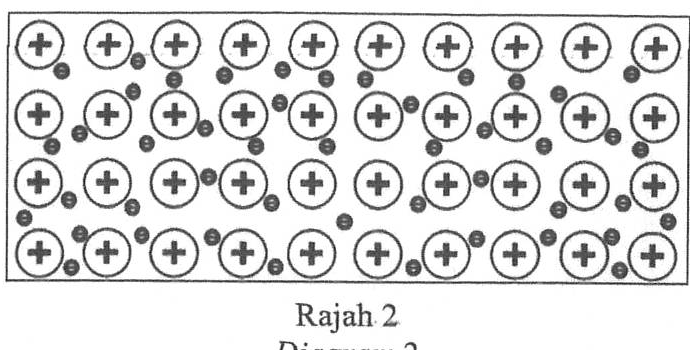
Diagram 2 shows a type of bond. Which of the following is correct about the bond?
Medium
How does temperature increase the rate of reaction?
Easy
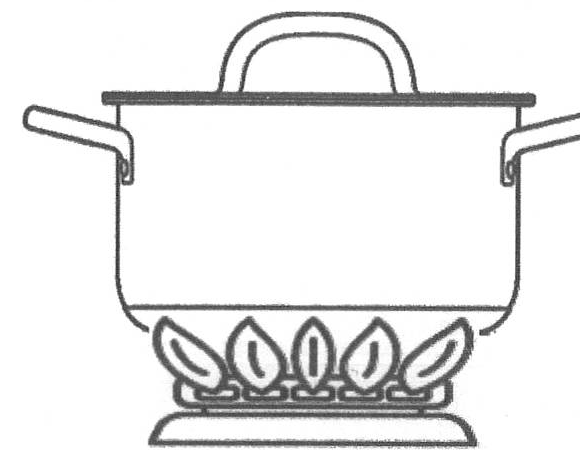
Glass is made up of silicon dioxide and calcium carbonate. Diagram 3 shows a cookware made from glass. What is the substance added and the new property of the glass?
Medium
The following equation represents the reaction between iron and chlorine gas: 2Fe + 3Cl₂ → 2FeCl₃. What is the change in oxidation number of chlorine?
Medium
Substance W has the following properties: (1) Gives off carbon dioxide gas and water when burnt in oxygen; (2) Dissolves in water. What is substance W?
Medium
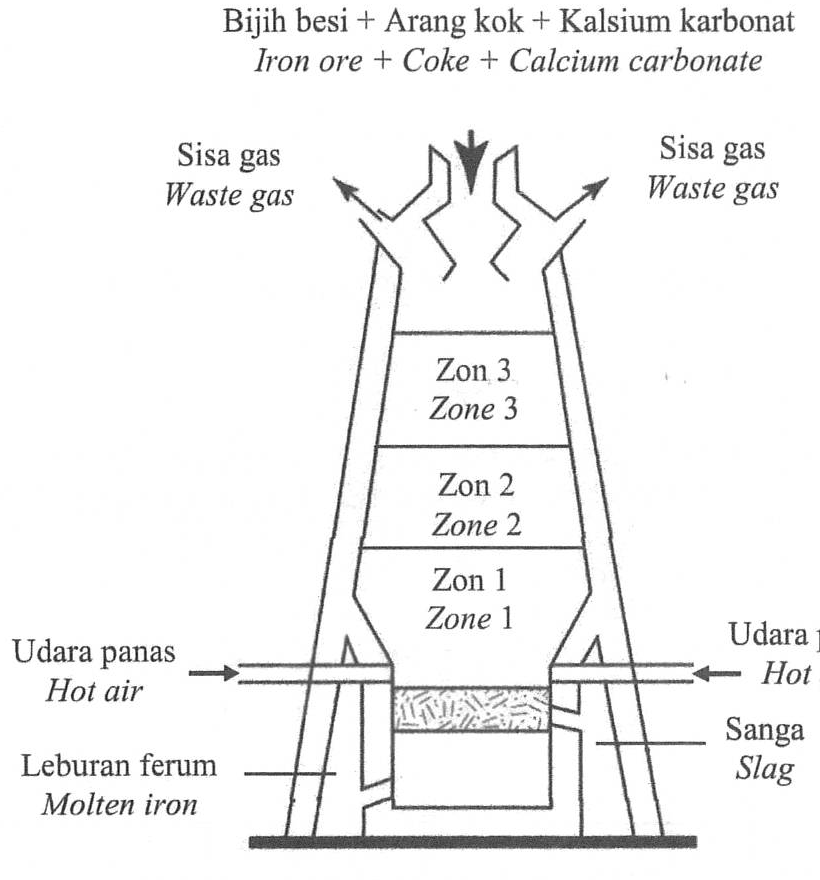
Diagram 4 shows the blast furnace used to extract iron from its ore. Which of the following chemical equation represents the reaction in Zone 2?
Medium
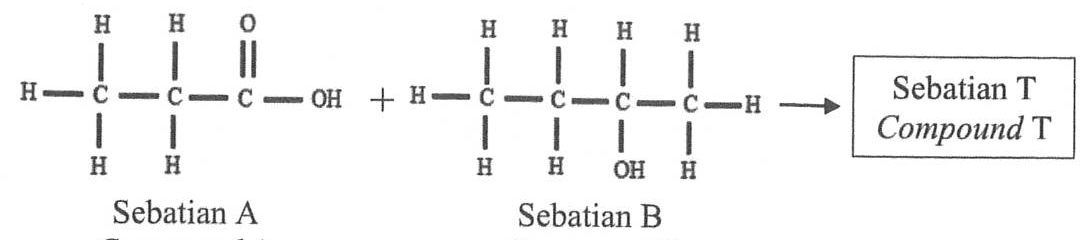
Diagram 5 shows a reaction to produce compound T with the presence of concentrated sulphuric acid as a catalyst. Compound A is propanoic acid and compound B is an alcohol (butan-2-ol). Which of the following is the structural formula of compound T?
Medium
Which of the following neutralisation reactions release a lower amount of heat?
Medium
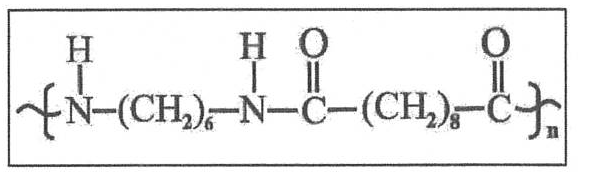
Diagram 6 shows polymer W that is widely used in the textile industry. What is the example of W?
Easy
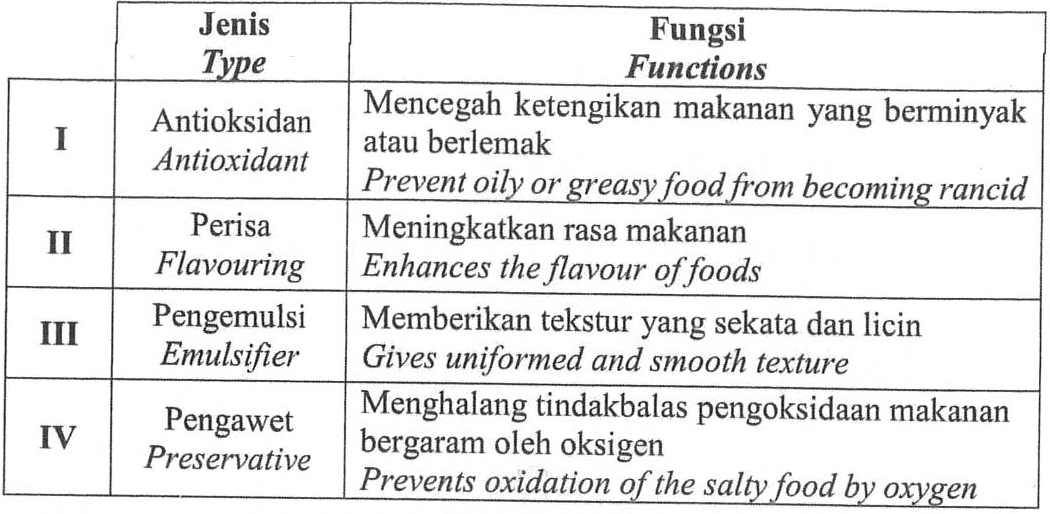
Table 1 shows the types and functions of food additives (I Antioxidant: prevents oily or greasy food from becoming rancid; II Flavouring: enhances the flavour of foods; III Emulsifier: gives uniformed and smooth texture; IV Preservative: prevents oxidation of the salty food by oxygen). Which of the following are correctly matched?
Medium
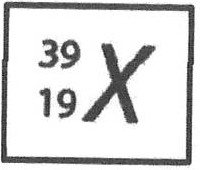
Diagram 7 shows the atomic symbol of element X (nucleon number 39, proton number 19). Which of the following is true about the atom of element X? (Number of neutrons; electron arrangement)
Medium
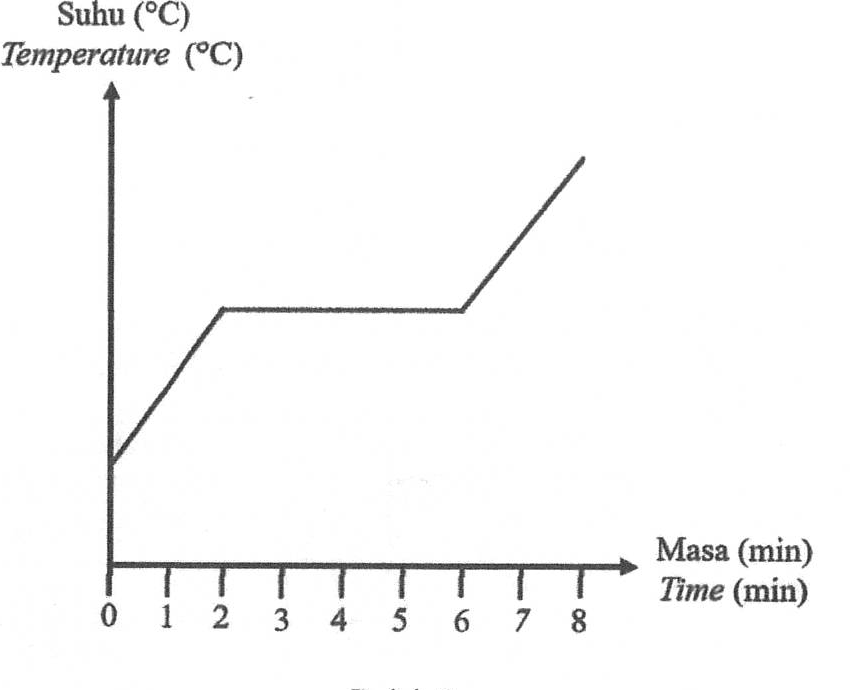
Diagram 8 shows the heating curve of solid acetic acid (temperature rises 0 to 2 min, constant 2 to 6 min, rises after 6 min). Which statement can be deduced from Diagram 8?
Medium
The chemical formulae of calcium nitrate and potassium phosphate are Ca(NO₃)₂ and K₃PO₄ respectively. What is the chemical formula of calcium phosphate?
Medium
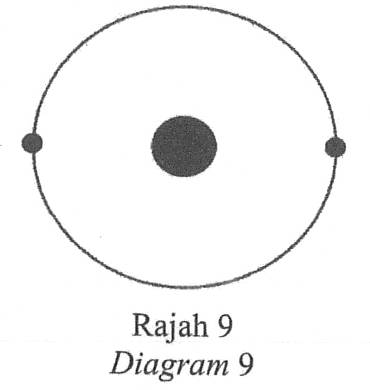
Diagram 9 shows the electron arrangement for an atom in the Periodic Table of Elements (one shell with 2 electrons). Which of the following statements is correct about the atom?
Medium
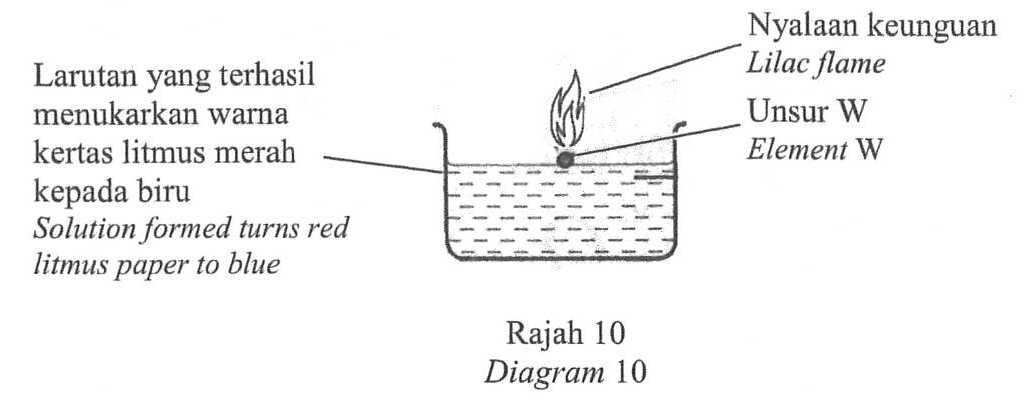
Diagram 10 shows the reaction of an element W and water, H₂O. The solution formed turns red litmus paper to blue and a lilac flame is seen. What is element W?
Medium
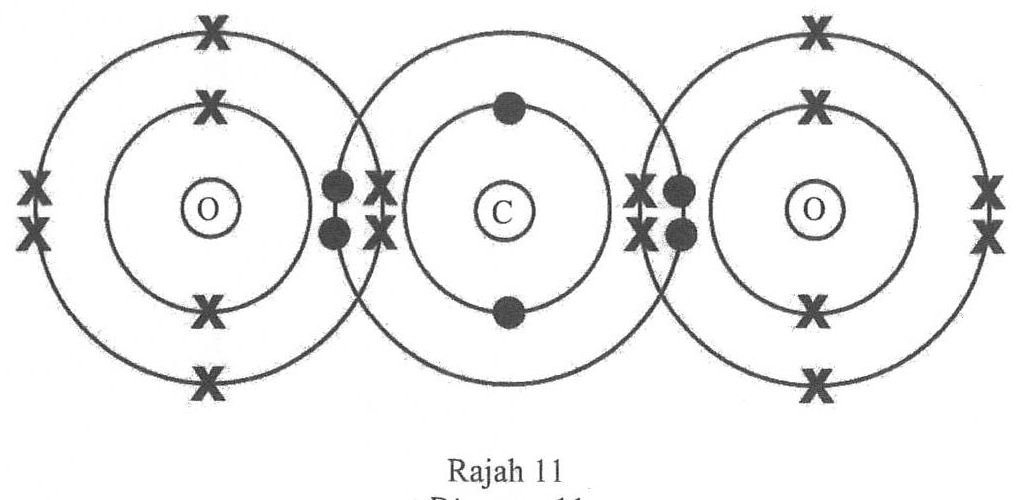
Diagram 11 shows the electron arrangement of a carbon dioxide molecule. Which of the following is true?
Medium
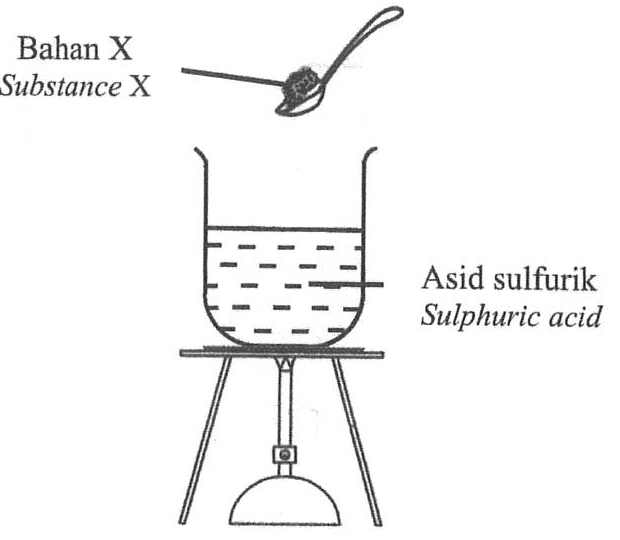
Diagram 12 shows a step in the preparation of a soluble sulphate salt (substance X added to heated sulphuric acid). What is substance X?
Medium
The following equation shows the reaction between magnesium powder and 50.0 cm³ of 1.0 mol dm⁻³ of hydrochloric acid, HCl: Mg + 2HCl → MgCl₂ + H₂. How can the rate of production of hydrogen gas be increased?
Medium
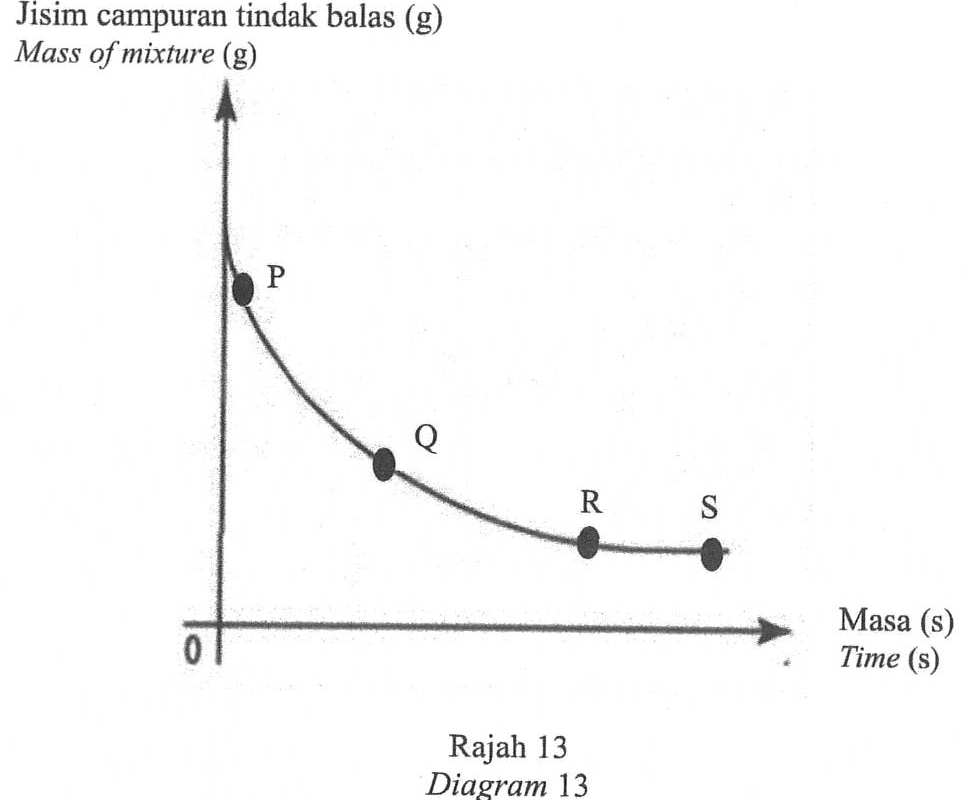
Diagram 13 shows a graph of mass of a reaction mixture against time for the reaction between zinc carbonate and nitric acid. Which point shows the highest rate of reaction?
Medium
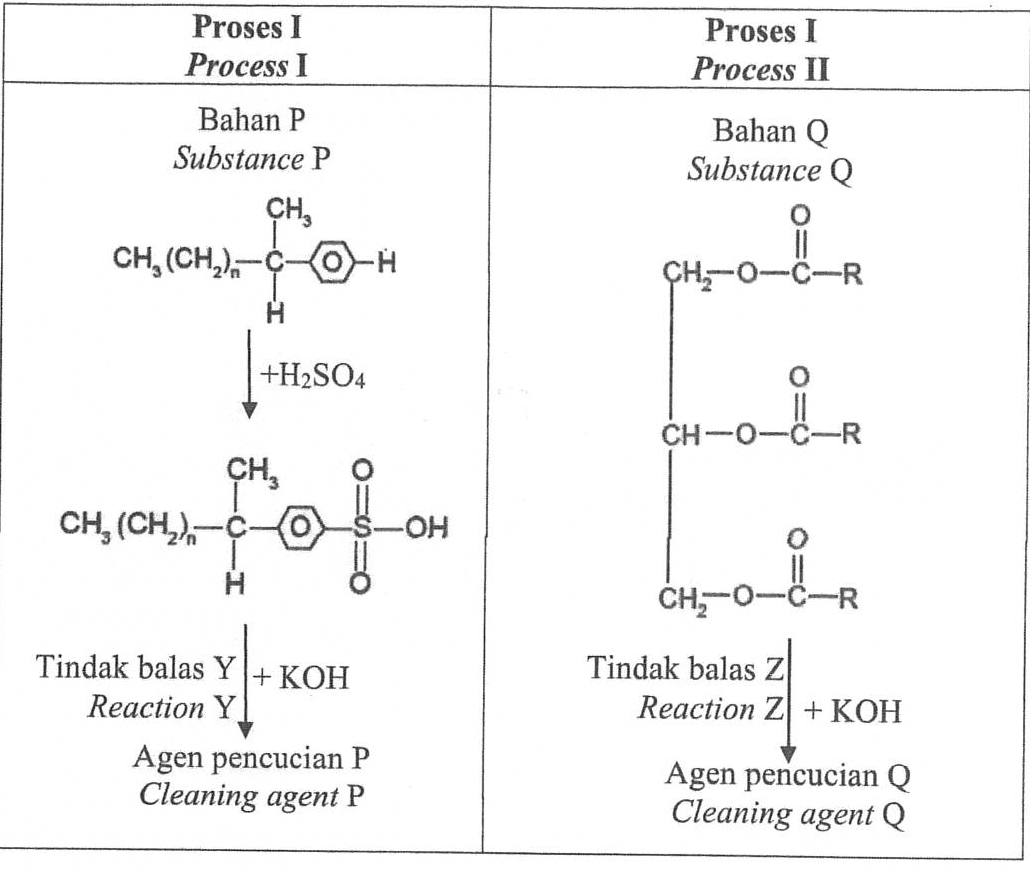
Diagram 14 shows processes in the preparation of two different types of cleaning agents (Process I: substance P, an alkyl benzene, reacts with H₂SO₄ in reaction Y then KOH to give cleaning agent P; Process II: substance Q, a fat/oil, reacts with KOH in reaction Z to give cleaning agent Q). What are substance P, substance Q, reaction Y and reaction Z? (Options list P; Q; Y; Z)
Medium
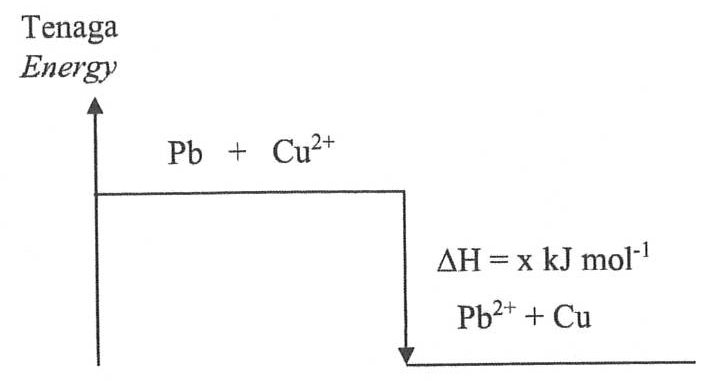
Diagram 15 shows the energy level diagram for a reaction (Pb + Cu²⁺ at a higher energy level than Pb²⁺ + Cu, ΔH = x kJ mol⁻¹). Which of the following is correct? (Explanation; heat change)
Medium
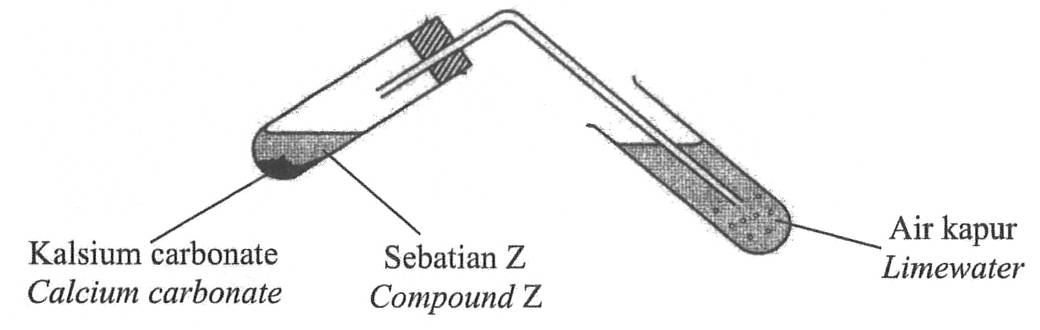
Diagram 16 shows the apparatus set-up for the reaction between compound Z and calcium carbonate. At the end of the experiment, limewater turns cloudy. What is the chemical formula for compound Z?
Medium
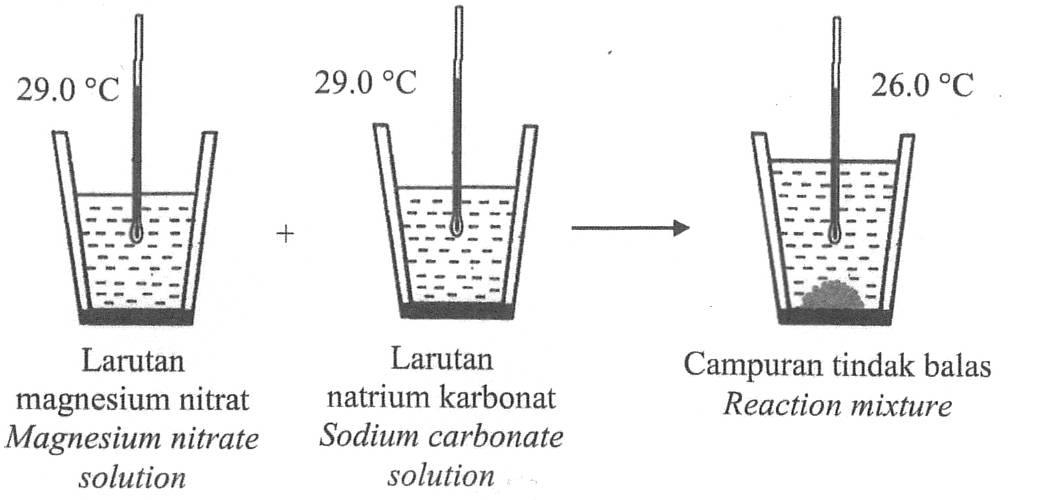
Diagram 17 shows the apparatus set-up to determine the heat of reaction (magnesium nitrate solution 29.0 °C + sodium carbonate solution 29.0 °C → reaction mixture 26.0 °C). Which of the following statement is true? I Bond formation occurs. II The temperature decreases during the reaction. III The value of ΔH for the reaction is negative. IV The total energy content of the products is higher than the total energy content of the reactants.
Medium
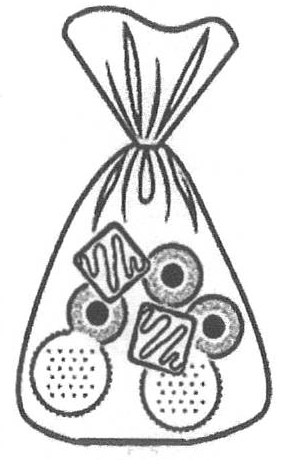
Diagram 18 shows the types of polymers that is used as a packaging material. Which of the following explains why the packaging material pollutes the environment? I Biodegradable II Cause the formation of algae III Emitted toxic gases when burnt IV Cause blockage of drainage systems and flash flood
Medium
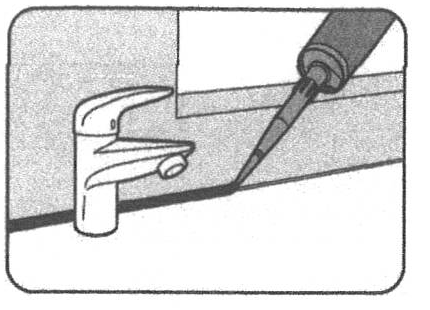
Diagram 19 shows one of the uses of synthetic rubber (a sealant applied around a tap). Which of the following is true about the synthetic rubber? (Synthetic rubber; characteristics)
Easy
Which of the following has the largest volume of gas at room condition? [Relative atomic mass: H=1, C=12, N=14, O=16, 1 mol of any gas occupied 24 dm³ at room condition]
Medium
Diagram 20 shows the position of X and Y atoms in the Periodic Table of Elements (X in Group 1, Y in Group 16). Which of the following diagrams represent the compound formed when X reacts with Y?
Medium
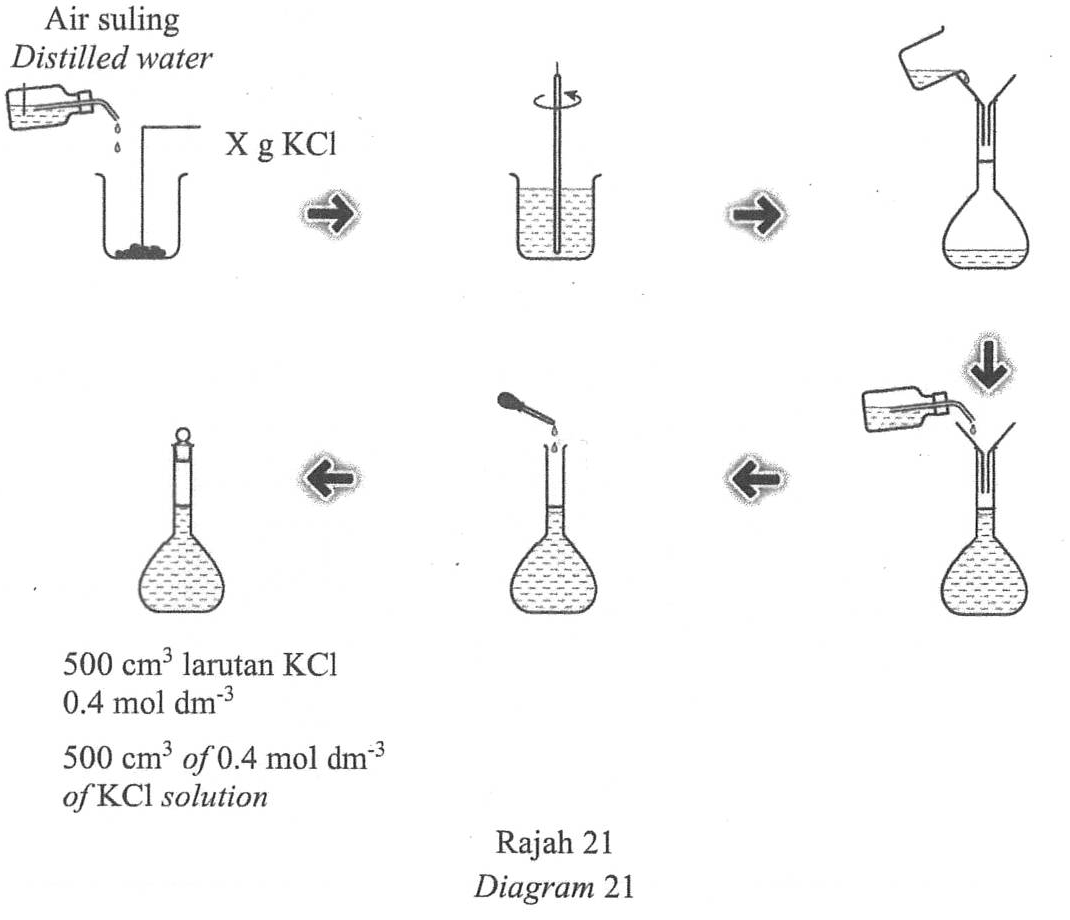
Diagram 21 shows the preparation of potassium chloride solution (X g of KCl dissolved to make 500 cm³ of 0.4 mol dm⁻³ KCl solution). What is the value of X? [Relative atomic mass: K=39, Cl=35.5]
Medium
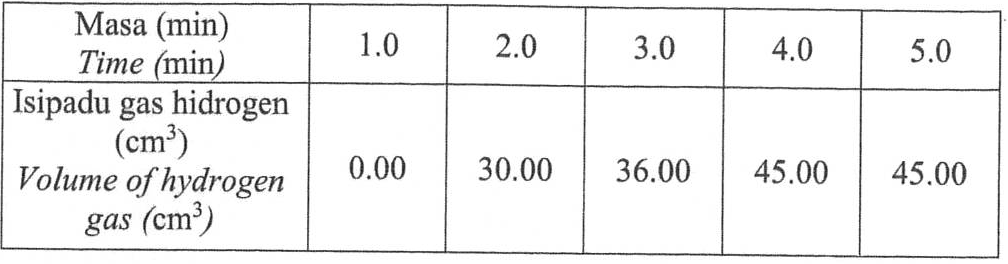
Table 2 shows the volume of hydrogen gas collected in an experiment when magnesium powder reacts with excess dilute nitric acid. Time (min): 1.0, 2.0, 3.0, 4.0, 5.0; Volume of hydrogen gas (cm³): 0.00, 30.00, 36.00, 45.00, 45.00. What is the average rate of reaction?
Medium
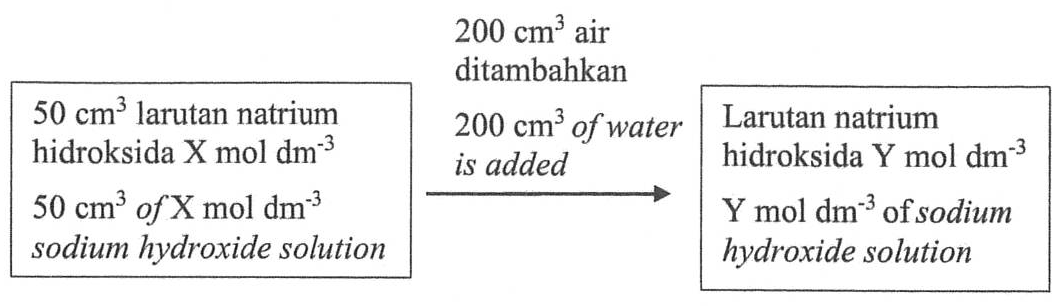
Diagram 22 shows a preparation of Y mol dm⁻³ of sodium hydroxide solution with a pH value of 13 (50 cm³ of X mol dm⁻³ sodium hydroxide solution, 200 cm³ of water is added). What is the value of X?
Medium
The extracted copper from copper pyrite has low degree of purity and needs to be purified through electrolysis. Which of the following apparatus set-up can be used to purify the copper?
Medium
The fuel value of charcoal is 34 kJ g⁻¹. Calculate the mass of charcoal needed to boil 2.0 dm³ of water. [Heat capacity of water = 4.2 J g⁻¹ °C⁻¹, Density of water = 1 g cm⁻³, Temperature of water at room temperature = 27.0 °C]
Medium
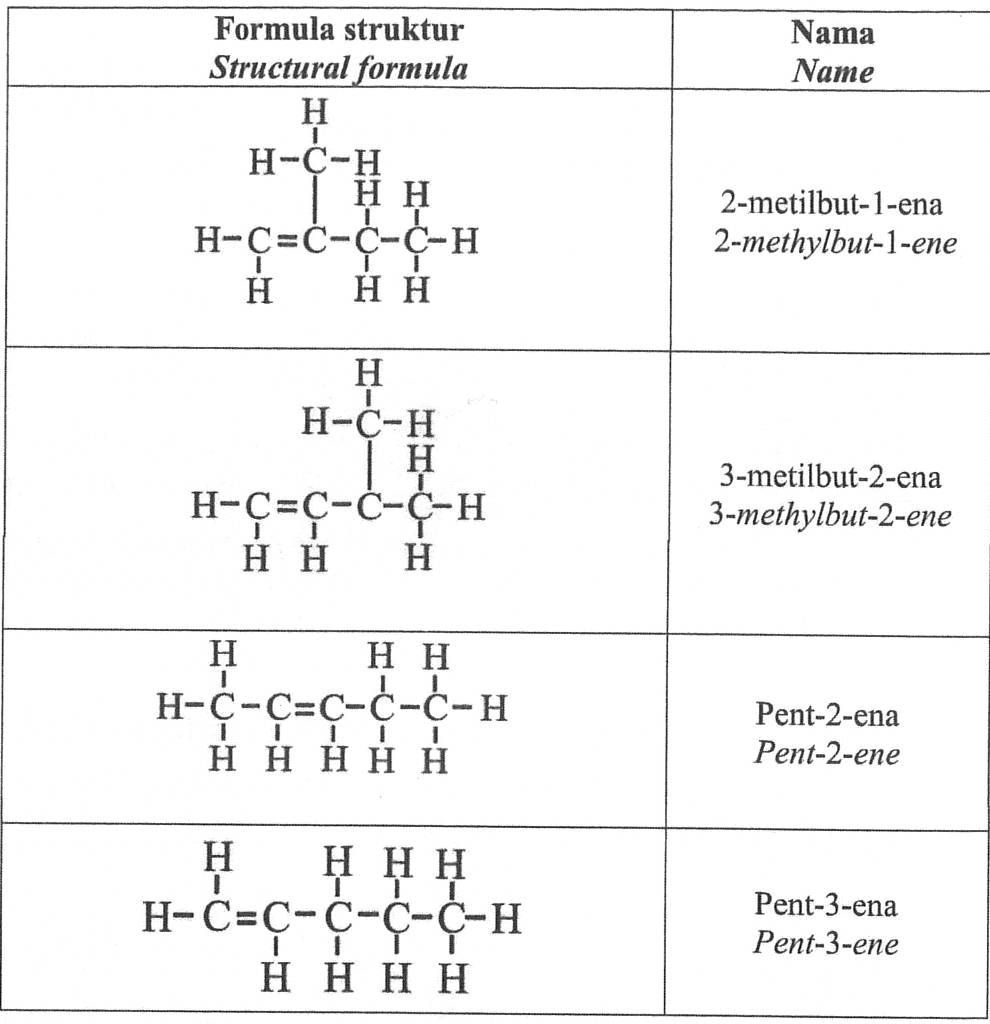
Which of the following is the correct structural formulae and its name for the isomer of C₅H₁₀? (I 2-methylbut-1-ene, II 3-methylbut-2-ene, III Pent-2-ene, IV Pent-3-ene; structures in Table)
Medium
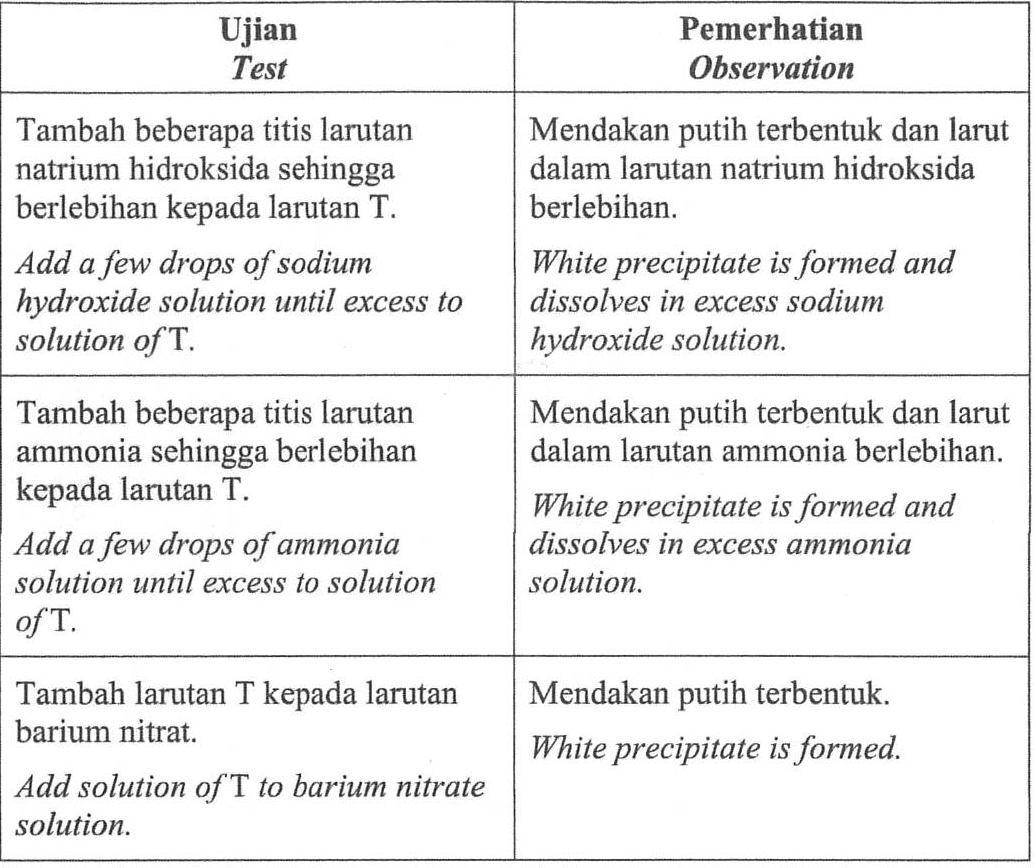
Table 3 shows the observations recorded when a series of tests were conducted to verify the cation and anion of compound T: excess NaOH gives white precipitate that dissolves; excess ammonia solution gives white precipitate that dissolves; adding T to barium nitrate solution gives white precipitate. What are the cation and anion present in compound T?
Medium
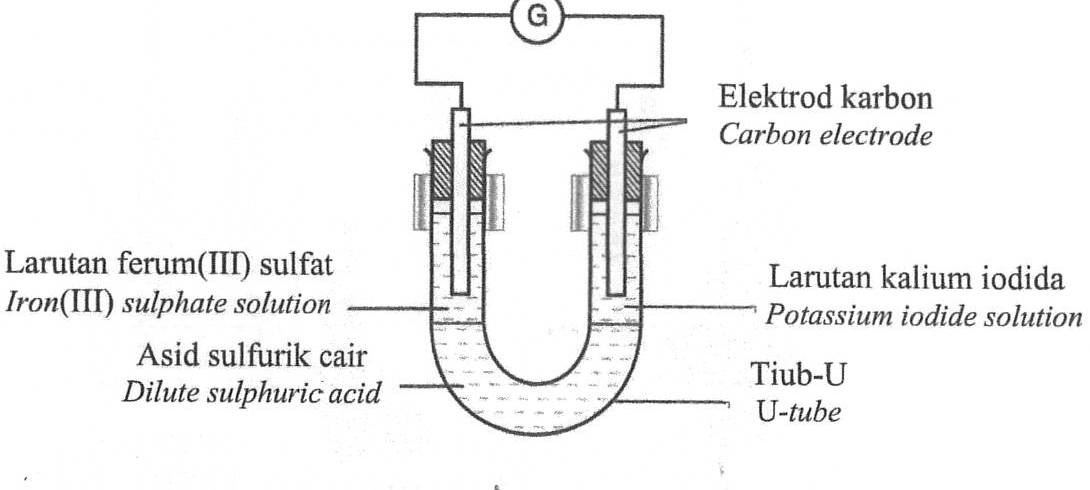
Diagram 23 shows the apparatus set-up to investigate the reaction between iron(III) sulphate solution with potassium iodide solution. Given the standard electrode potentials Fe³⁺ + e⁻ ⇌ Fe²⁺, E° = +0.77 V and I₂ + 2e⁻ ⇌ 2I⁻, E° = +0.54 V. Which of the following is the colour change of the two solutions? (Iron(III) sulphate solution; potassium iodide solution)
Medium
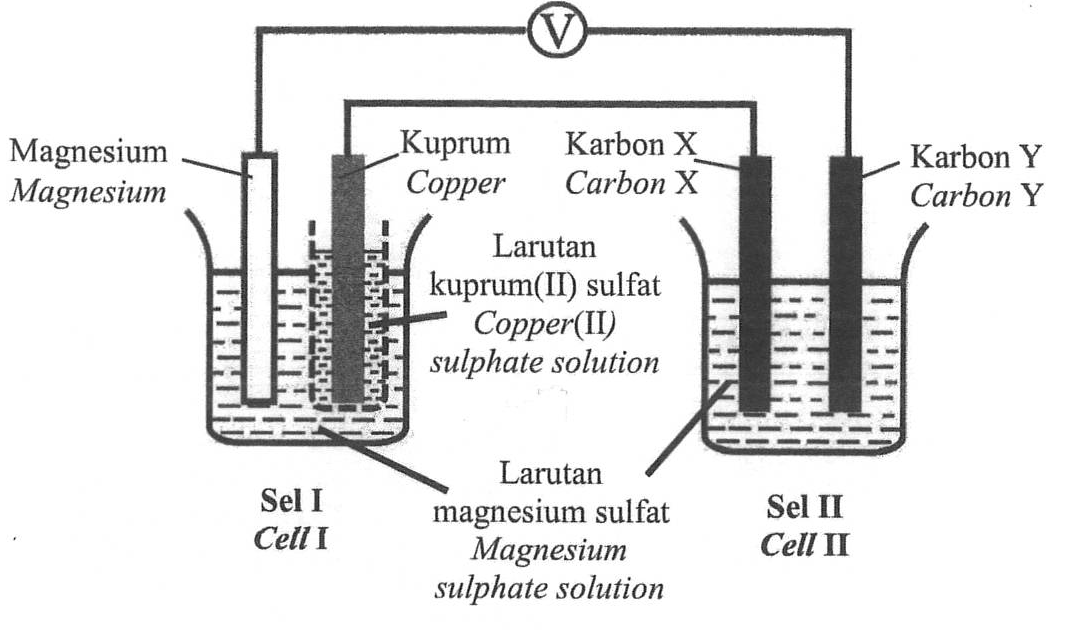
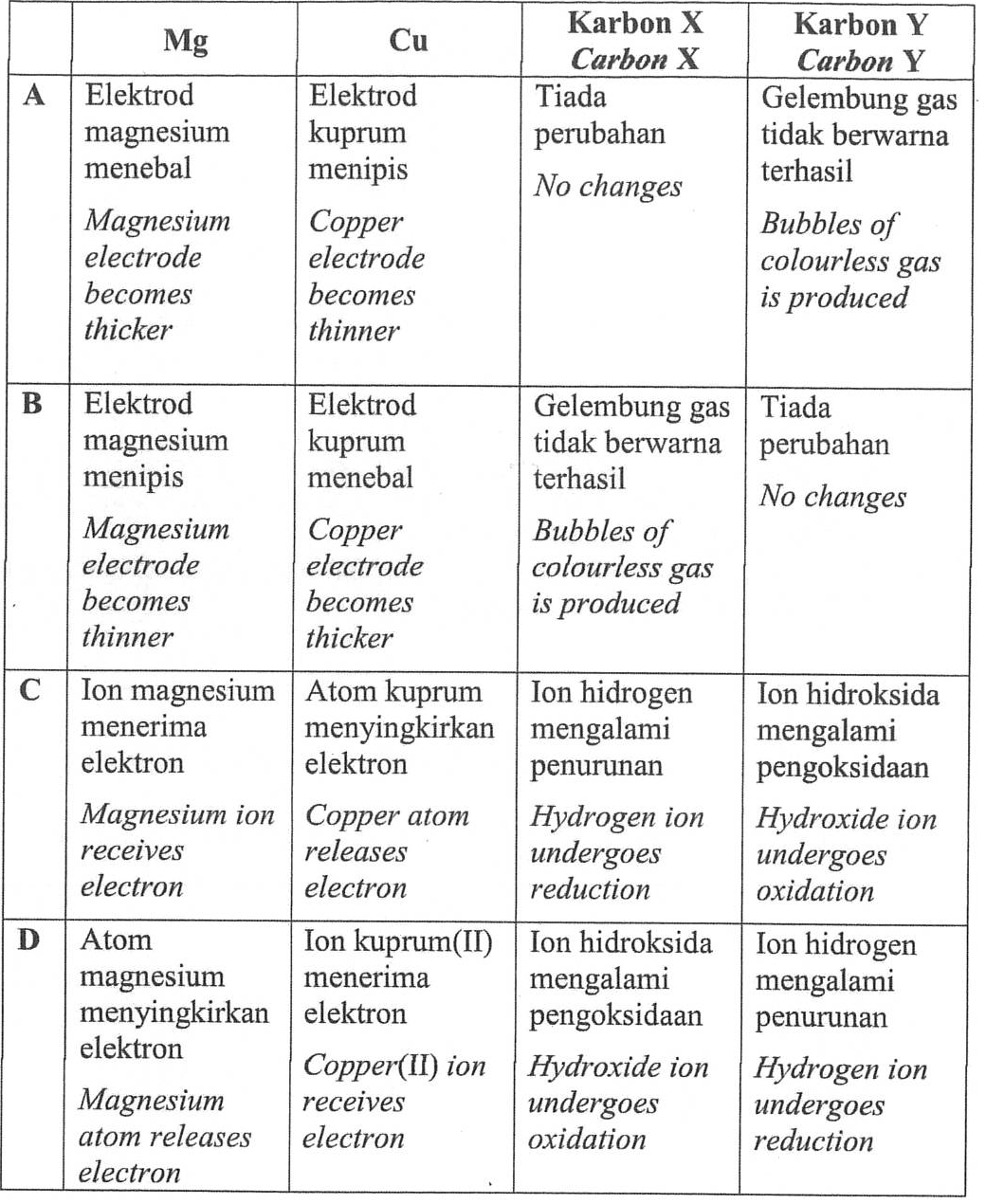
Diagram 24 shows two types of cells (Cell I: Mg in magnesium sulphate solution and Cu in copper(II) sulphate solution; Cell II: Carbon X and Carbon Y in an electrolyte). Given standard electrode potentials: Mg²⁺ + 2e⁻ ⇌ Mg E° = -2.38 V; 2H⁺ + 2e⁻ ⇌ H₂ E° = 0.00 V; Cu²⁺ + 2e⁻ ⇌ Cu E° = +0.34 V; O₂ + 2H₂O + 4e⁻ ⇌ 4OH⁻ E° = +0.40 V; S₂O₈²⁻ + 2e⁻ ⇌ 2SO₄²⁻ E° = +2.01 V. Which of the following is correct? (Mg; Cu; Carbon X; Carbon Y)