Write your answer on paper. Then open the answer to check it.
Section A
Diagram 1 shows the heating curve on ice. (Temperature against time: A at -20 °C rising to B at 0 °C, constant from B to C, then rising to D at 70 °C.)
Medium5 marks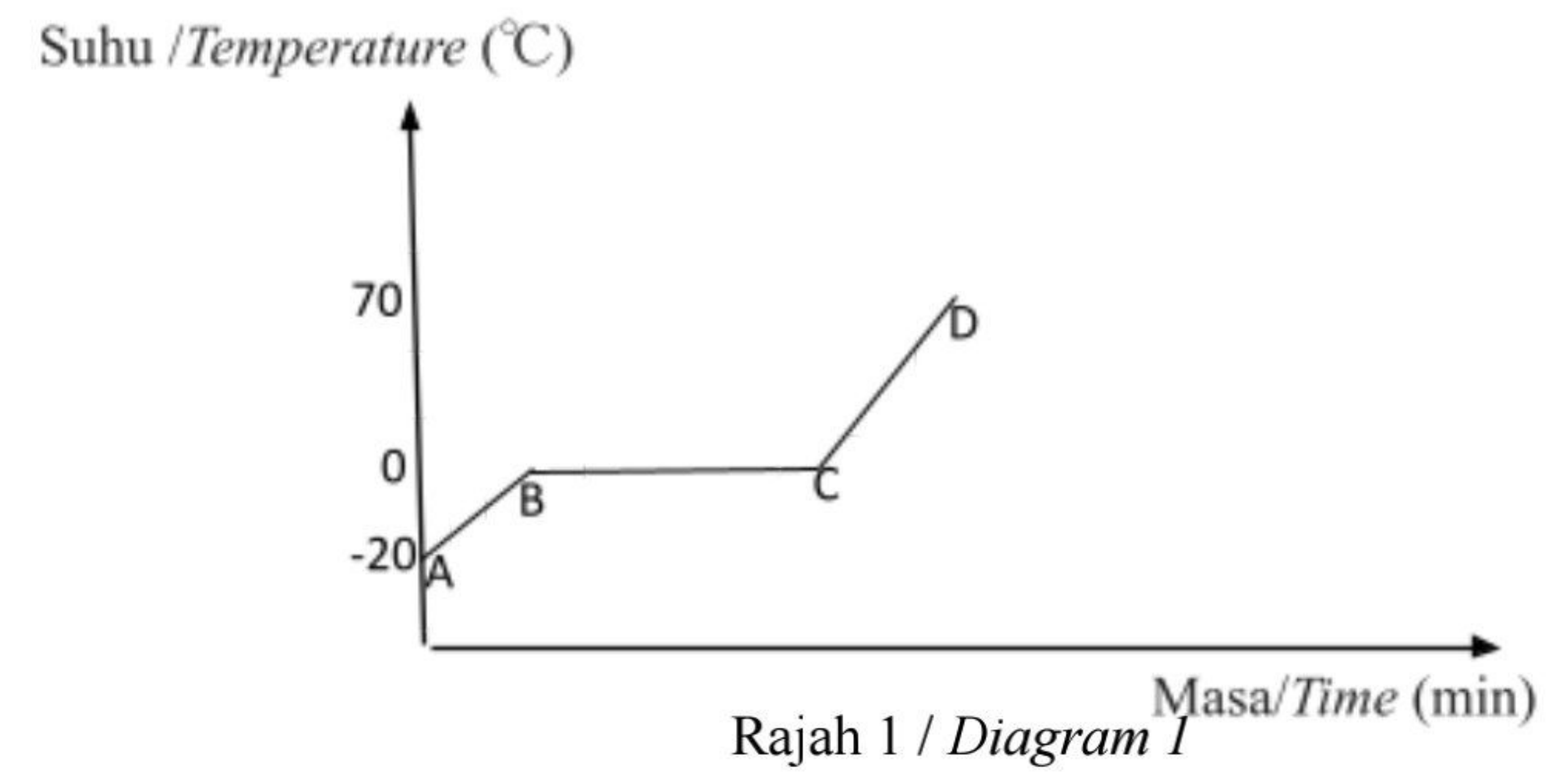
- (a)
State the type of particles in ice.
[1] - (b)
What is the meaning of melting point?
[1] - (c)
State the physical state of ice during the melting process.
[1] - (d)
Why does the temperature remain constant between B and C even as heating continues?
[2]
Table 1 shows some physical properties of group 17 elements. Element: melting point (°C), boiling point (°C), atomic radius (nm): Chlorine Cl2: -101, -34, 0.099; Bromine Br2: -7, 59, 0.114; Iodine I2: 114, 184, 0.133.
Medium5 marks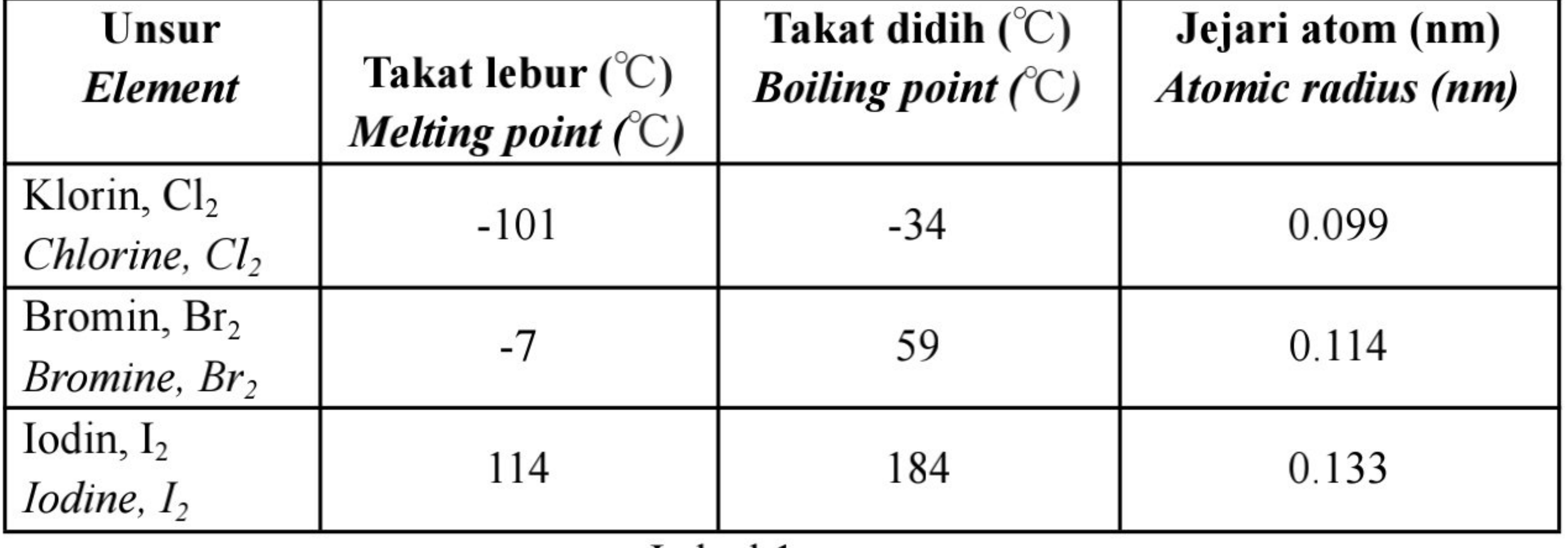
- (a)
State the other name for group 17 elements.
[1] - (b)
State the change in atomic radius when going down group 17 from chlorine, bromine to iodine. Explain your answer.
[2] - (c)
Draw the arrangement of particles for bromine at room temperature.
[1] - (d)
State one safety step that should be practiced when handling chlorine and bromine in the laboratory.
[1]
Diagram 3 shows green plant undergoes photosynthesis to produce compound X with the molecular formula of C6H12O6 and oxygen gas. Equation shown: 6H2O + 6CO2 -> C6H12O6 + 6O2.
Medium6 marks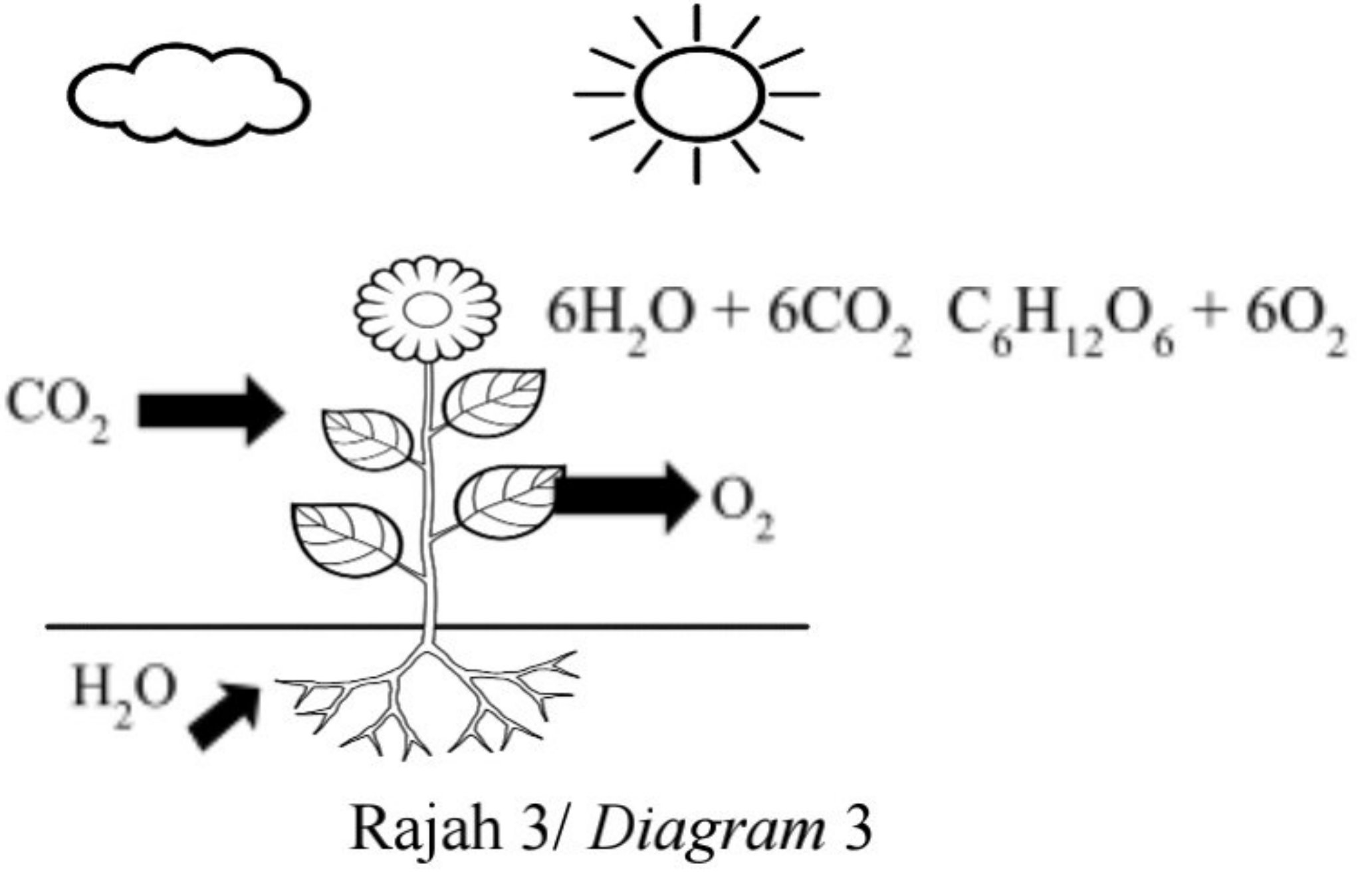
- (a)
What is the meaning of molecular formula?
[1] - (b)
Name compound X.
[1] - (c)(i)
Describe the qualitative and quantitative information that can be obtained from the chemical equation in Diagram 3.
[2] - (c)(ii)
Calculate the volume of carbon dioxide gas required to produce 1 mole of compound X. [Molar volume: 24 dm3 mol-1]
[2]
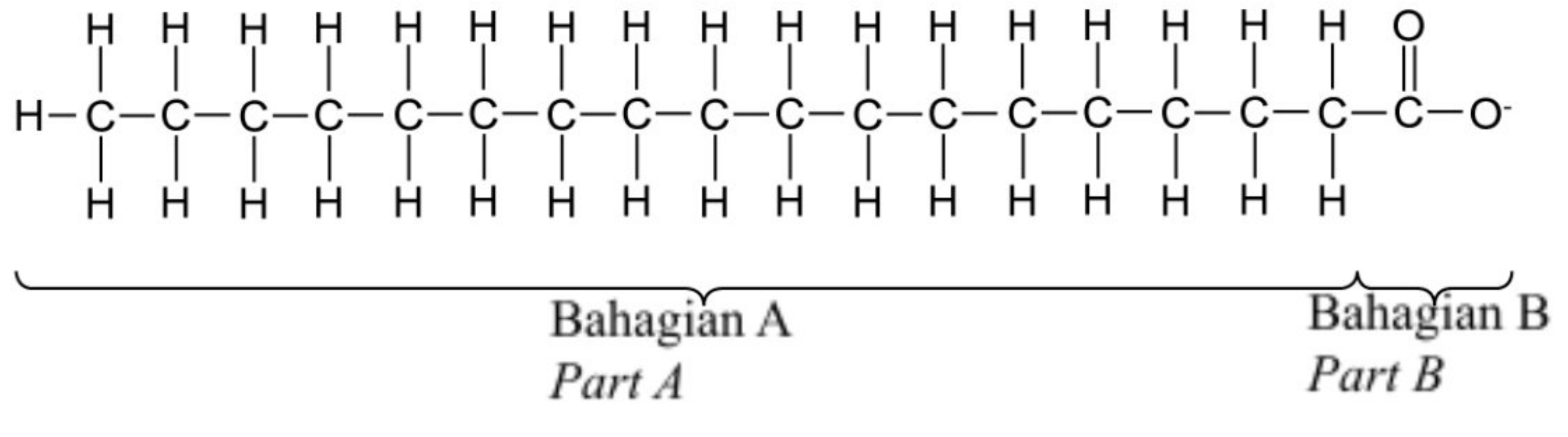
Diagram 4.1 shows pickled chillies with ingredients: chillies, vinegar, salt and sugar. Diagram 4.2 shows the structural formula of soap anion: a long hydrocarbon chain (Part A) ending in -COO- (Part B).
Medium7 marks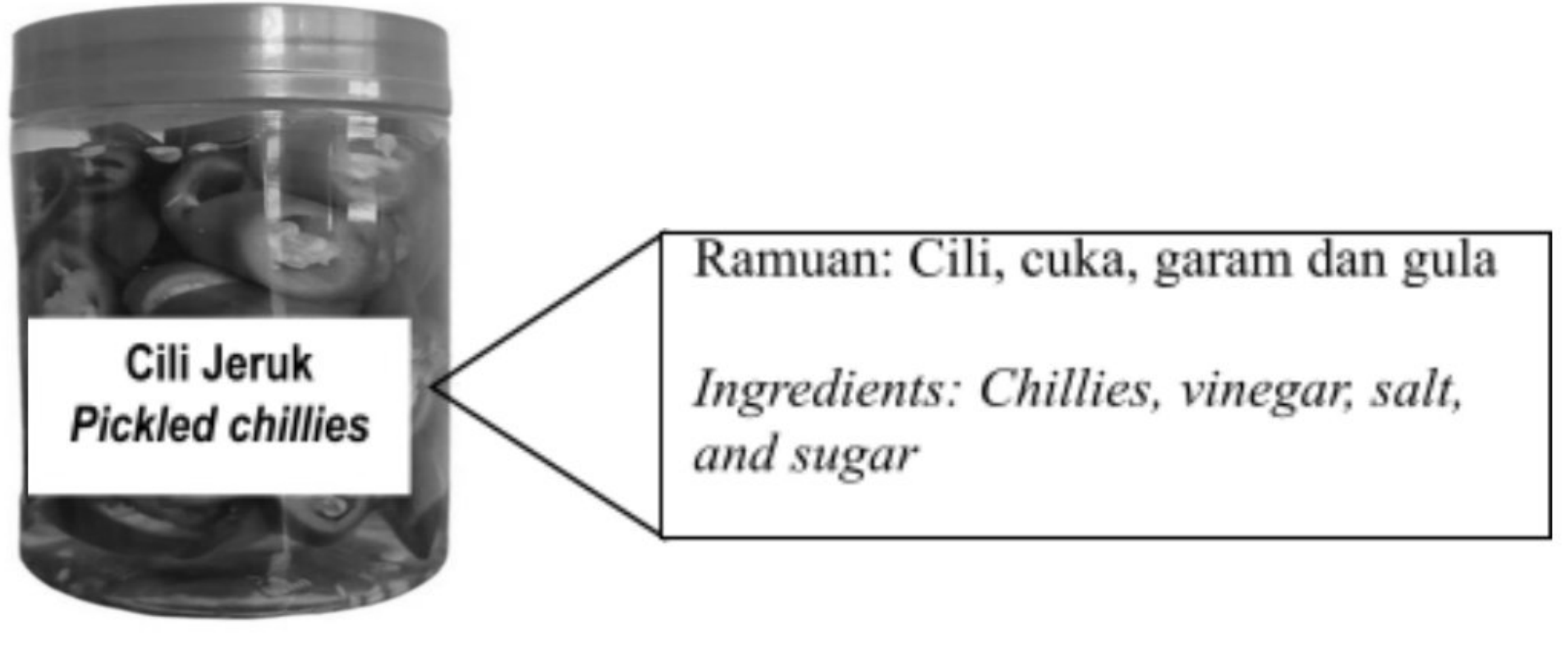
- (a)(i)
Based on Diagram 4.1, name the types of food additive in pickled chillies.
[1] - (a)(ii)
Why the types of food additives in 4(a)(i) is added to the pickled chillies? Give a reason.
[1] - (b)(i)
Diagram 4.2 shows the structural formula of soap anion. Name the process to produce soap.
[1] - (b)(ii)
Based on Diagram 4.2, identify the part that dissolves in water.
[1] - (c)(i)
Maziah uses brand Y whitening cream bought online. After a week her skin is brighter but irritated and peeled. The cream was withdrawn because it contained harmful chemical Z. Suggest the name of harmful chemical Z.
[1] - (c)(ii)
Explain the effects Maziah will experience if she continues to use whitening cream containing harmful chemical Z in a long period of time.
[2]
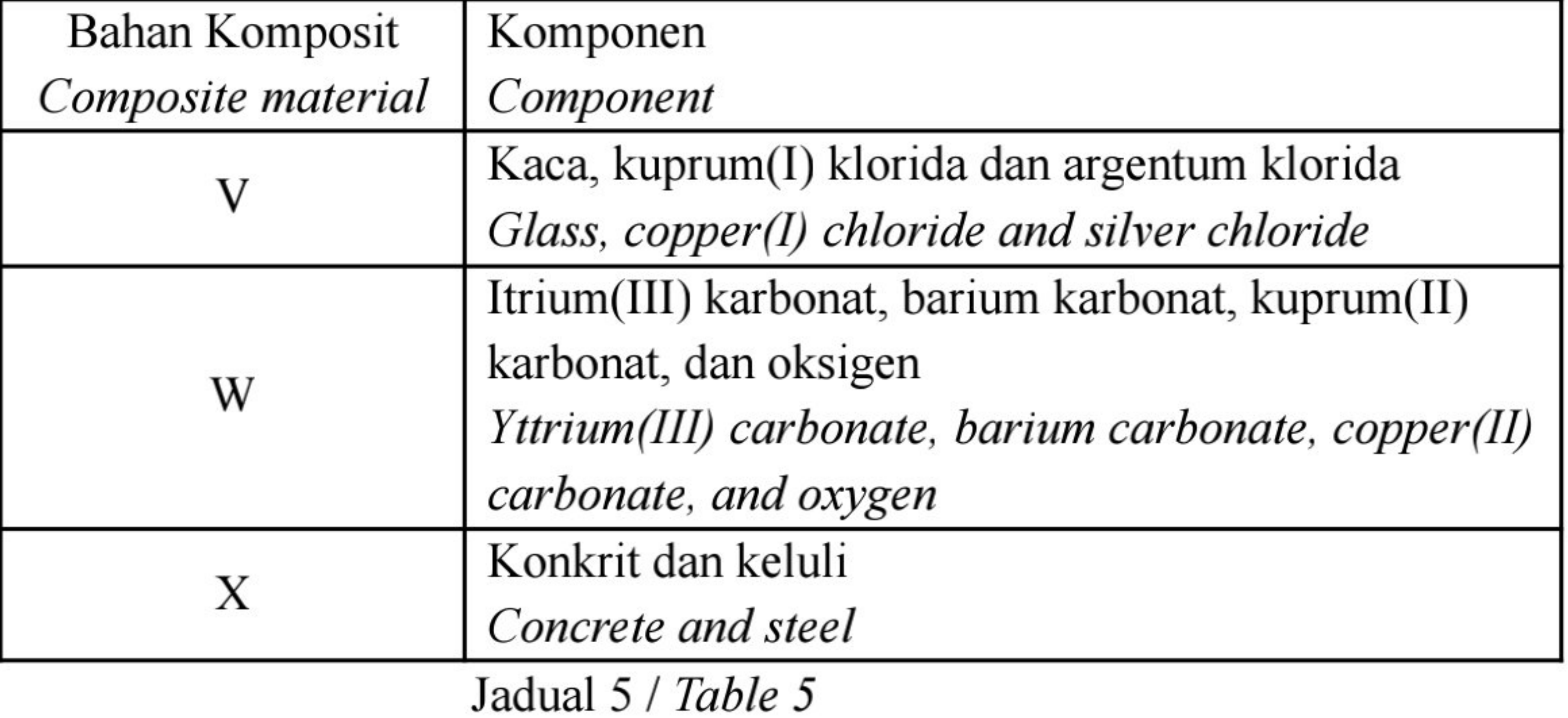
Diagram 5 shows the Great Pyramid of Giza which is made up from ceramics, built between 2560 and 2580 before century. Table 5 shows composite materials V, W and X and their components: V: glass, copper(I) chloride and silver chloride; W: yttrium(III) carbonate, barium carbonate, copper(II) carbonate and oxygen; X: concrete and steel.
Medium8 marks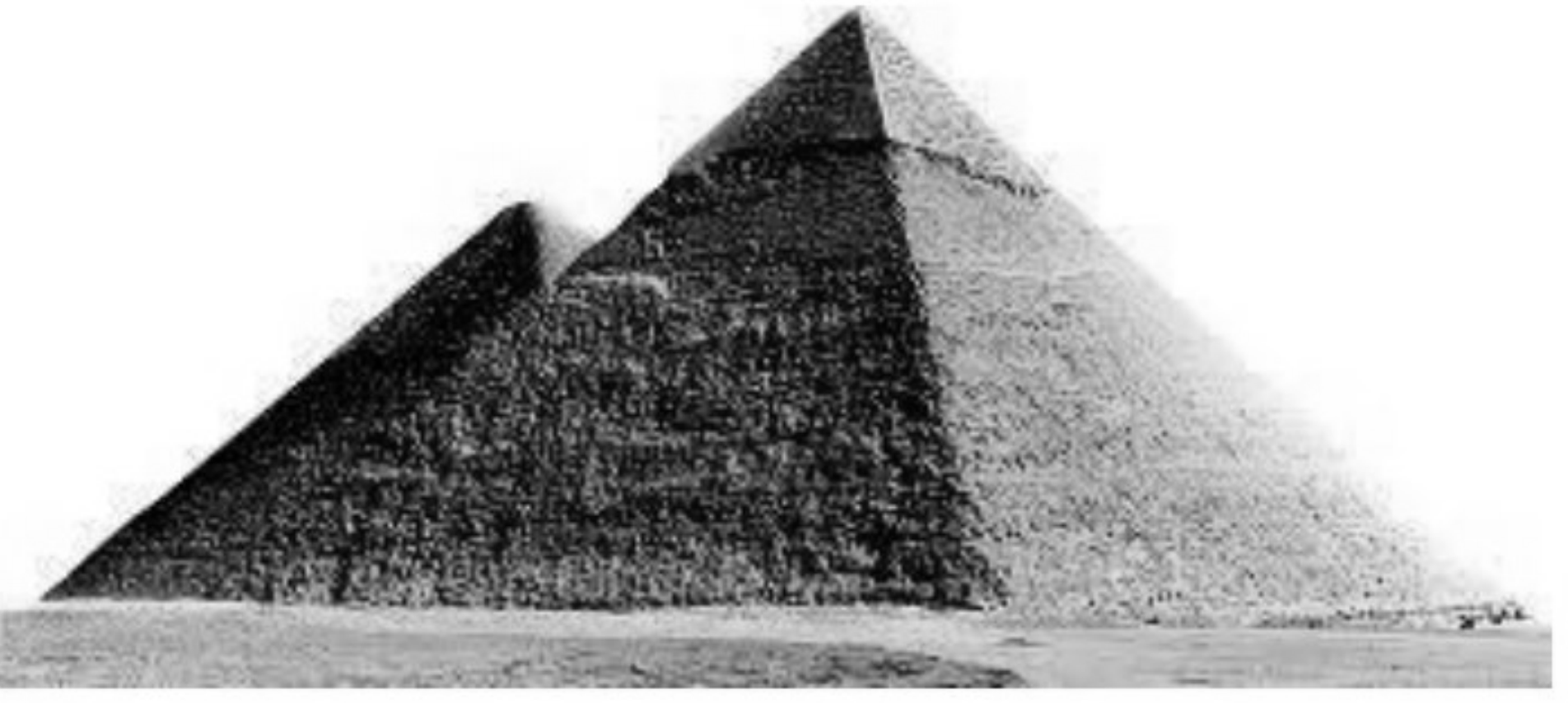
- (a)(i)
State the meaning of ceramic.
[1] - (a)(ii)
State one characteristic of ceramics that allowed the Great Pyramid of Giza sturdy until now.
[1] - (b)(i)
Based on Table 5, identify the composite materials V, W and X.
[3] - (b)(ii)
Composite material W is used to make supermagnet. State the two characteristics that make composite material W suitable to make electromagnet. Based on the characteristics, give an example of the use of composite material W in medical field. (As corrected by the erratum.)
[3]
Diagram 6 shows series of reactions for propene: propene + H2 (Ni, 180 °C) gives compound P; propene + water (hydration, 300 °C, 60 atm, H3PO4) gives compound R; compound R + compound S (concentrated H2SO4) gives propyl ethanoate.
Medium9 marks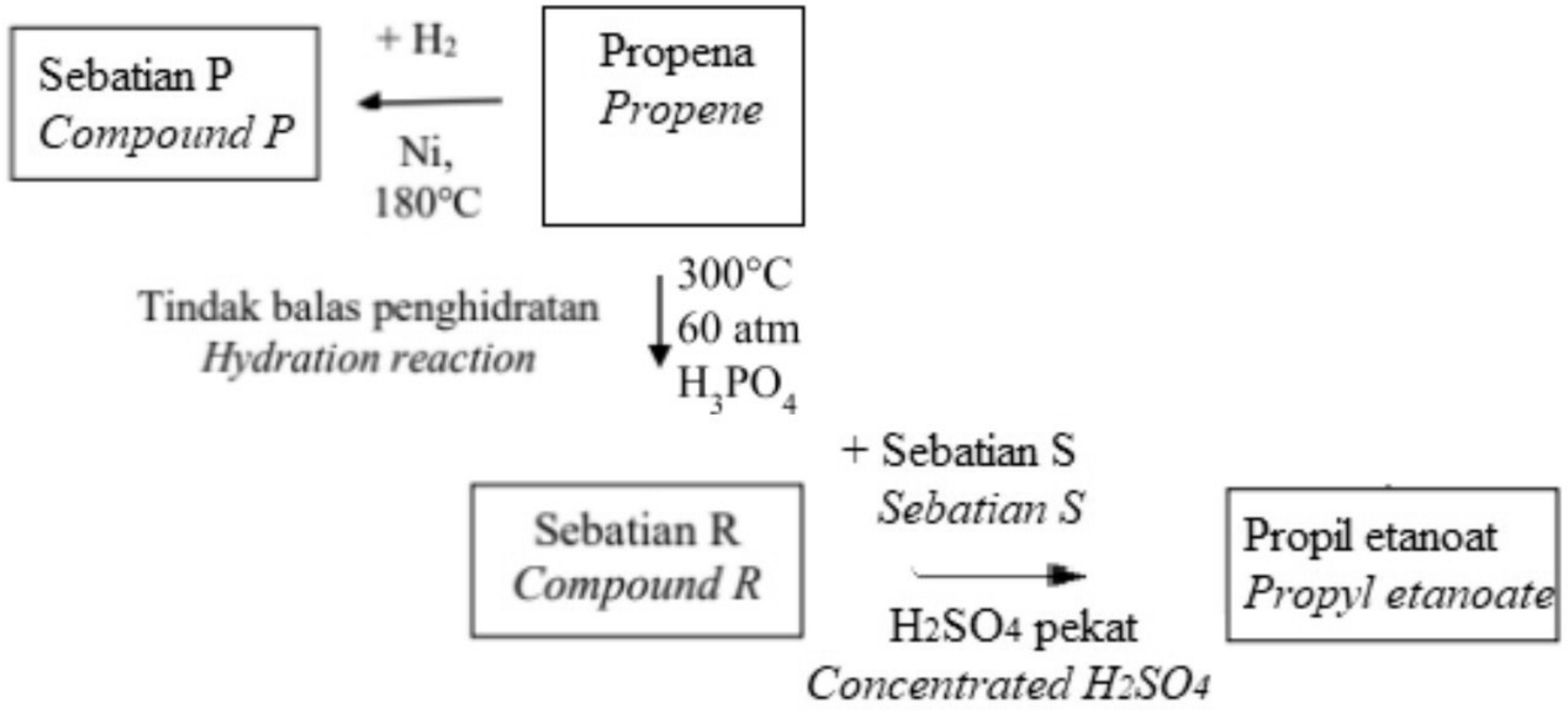
- (a)(i)
State the homologous series for propene.
[1] - (a)(ii)
State the molecular formula for propene.
[1] - (a)(iii)
Combustion of propene produces more soot than compound P. Calculate the percentage of carbon by mass for propene. [C = 12, H = 1]
[1] - (a)(iv)
Polypropene is a polymer of propene. Open burning of polypropene can pollute the environment. Explain.
[2] - (b)
Write the general formula for compound P.
[1] - (c)
Draw two isomers of compound R.
[2] - (d)
Name the compound S to produce propyl ethanoate.
[1]
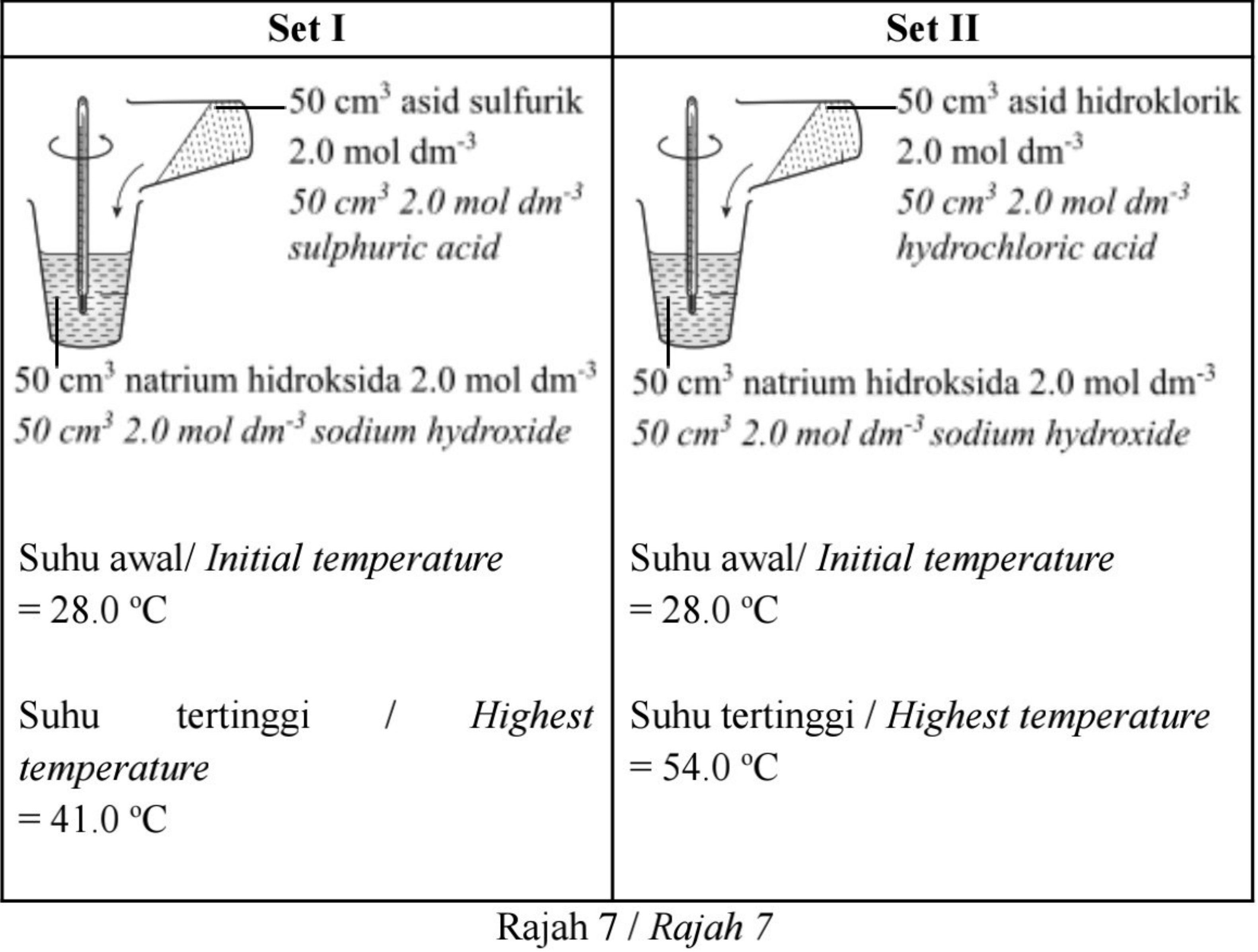
Table 7 shows the heat of combustion for fuel A (C8H18, -5013 kJ mol-1) and fuel B (C12H23, -10124 kJ mol-1). Diagram 7 shows temperature readings for two sets of experiments: Set I: 50 cm3 of 2.0 mol dm-3 sulphuric acid added to 50 cm3 of 2.0 mol dm-3 sodium hydroxide, initial 28.0 °C, highest 54.0 °C (as corrected). Set II: 50 cm3 of 2.0 mol dm-3 hydrochloric acid with 50 cm3 of 2.0 mol dm-3 sodium hydroxide, initial 28.0 °C, highest 41.0 °C (as corrected).
Medium10 marks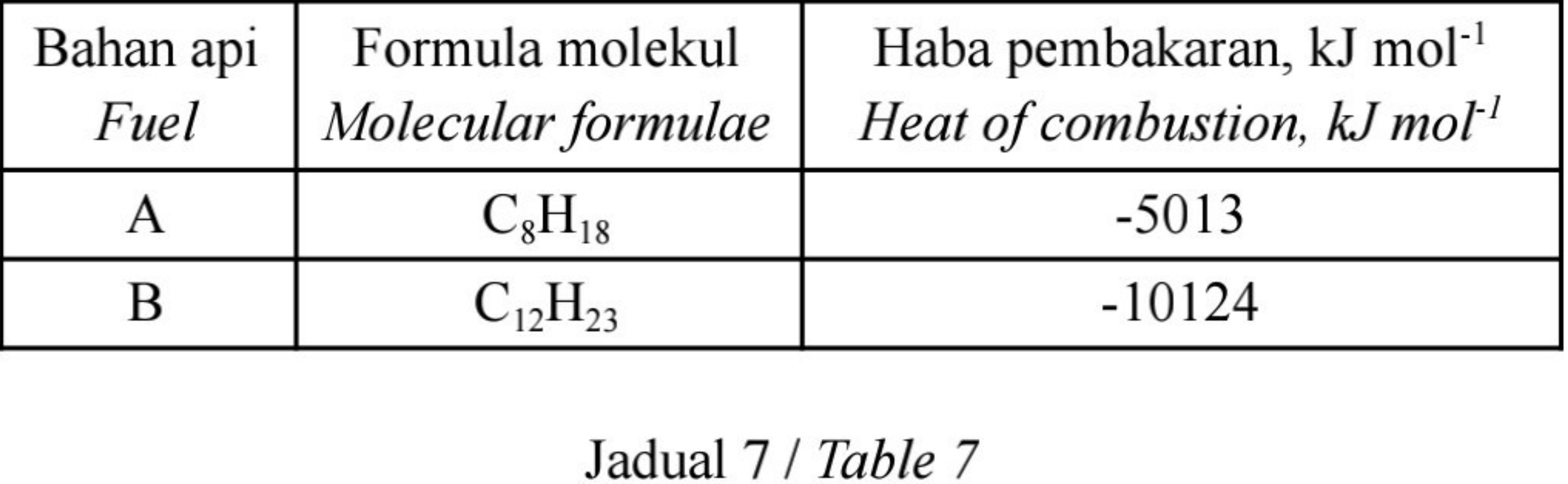
- (a)
What is meant by heat of combustion?
[1] - (b)(i)
Calculate the fuel value for fuel A and fuel B. [C = 12, H = 1]
[2] - (b)(ii)
Ahmad is a lorry driver. Choose fuel A or fuel B which is more suitable to be used as fuel for his lorry. Justify your answer.
[2] - (b)(iii)
Calculate the heat released if 0.5 mol of fuel A burnt completely in excess oxygen.
[1] - (c)(i)
Compare the changes in temperature and explain your answer (Set I and Set II, Diagram 7).
[3] - (c)(ii)
Predict the change in temperature if hydrochloric acid in Set II is replaced by ethanoic acid of the same volume and concentration.
[1]
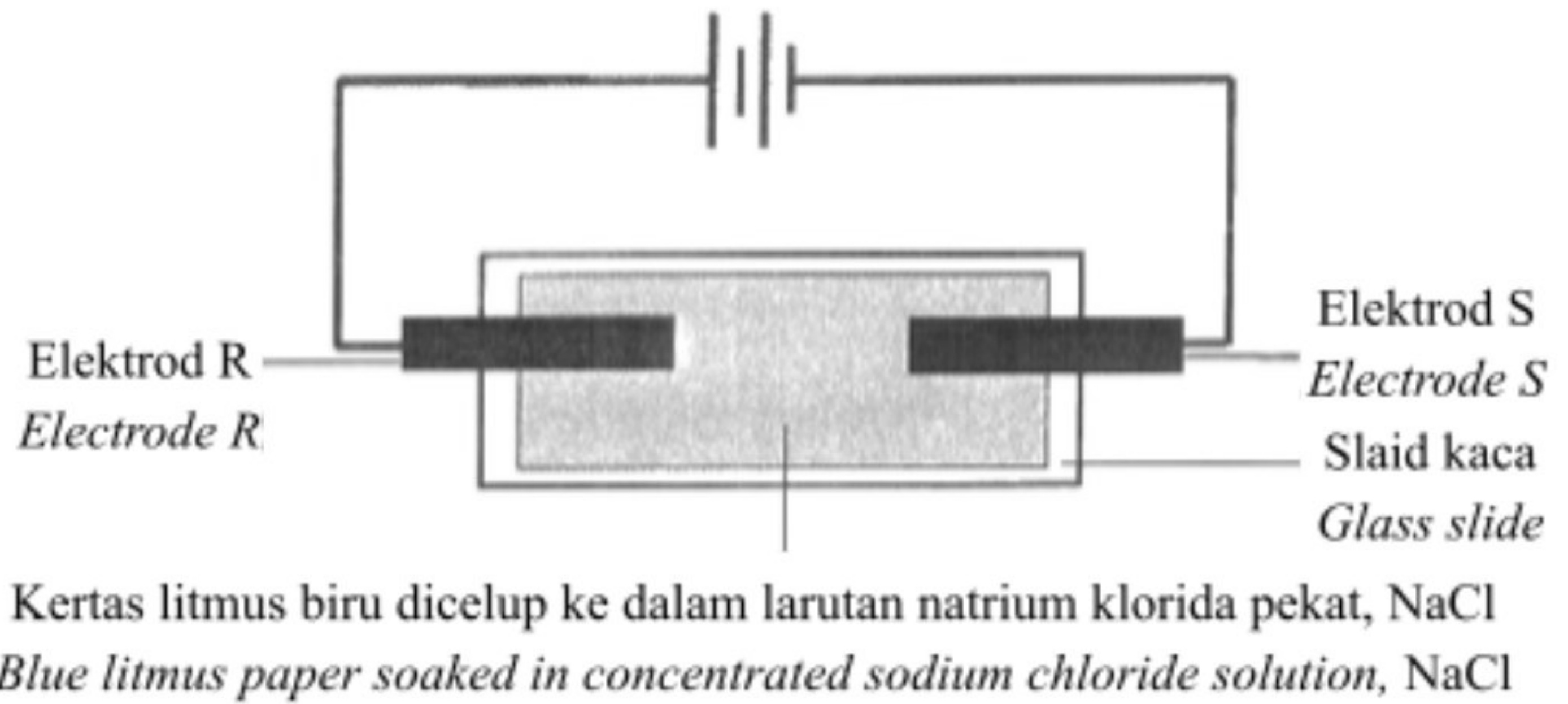
Diagram 8.1 shows the apparatus set-up to investigate electron transfer at a distance in redox reactions (U-tube with sulphuric acid; iron(II) sulphate solution with carbon electrode X on the left, bromine water with carbon electrode Y on the right, galvanometer G). Diagram 8.2: blue litmus paper soaked in concentrated NaCl on a glass slide with carbon electrodes R and S connected to a battery.
Medium10 marks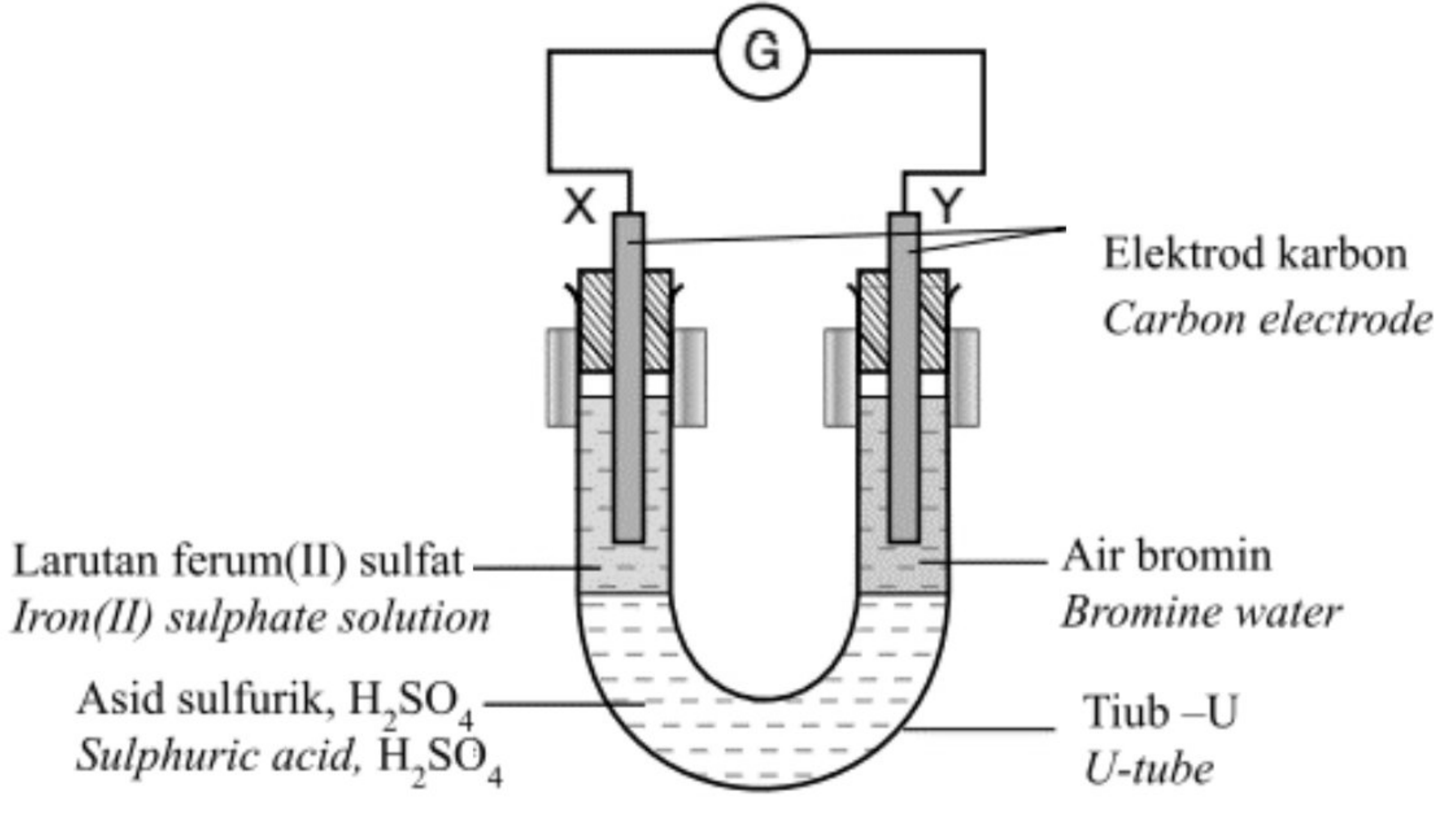
- (a)(i)
Based on Diagram 8.1, what is the function of sulphuric acid, H2SO4?
[1] - (a)(ii)
Write the half equations for electrode X and electrode Y.
[2] - (a)(iii)
State the change in oxidation number for bromine water.
[1] - (b)
Draw labelled set-up of apparatus for an experiment to investigate the transfer of electrons at a distance using all materials and apparatus in Diagram 8.1 except the U-tube and the retort stand. Use potassium iodide solution and acidified potassium manganate(VII) solution instead of iron(II) sulphate solution and bromine water. Show the direction of electron flow.
[3] - (c)
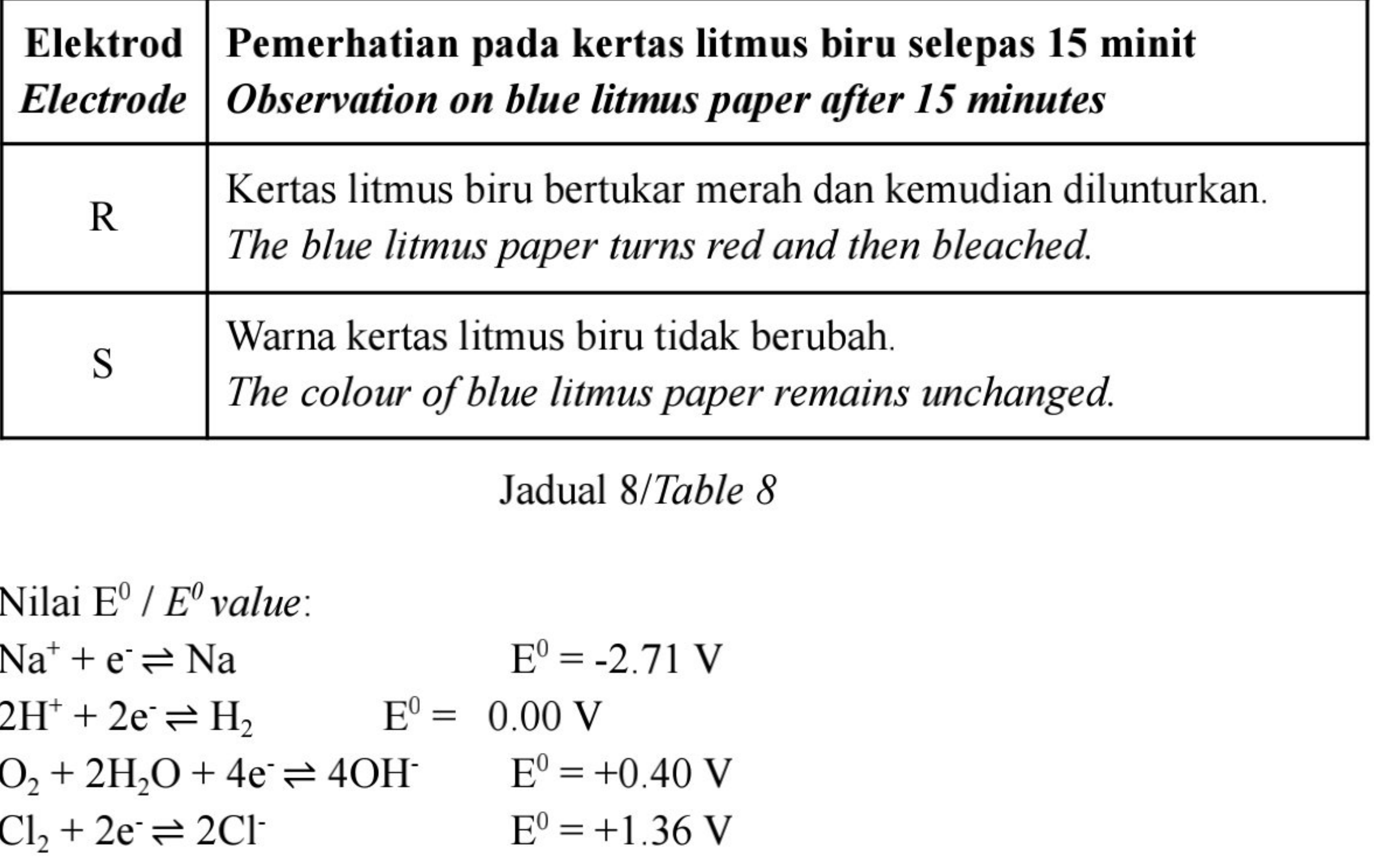
Based on Table 8, explain the differences in the observation of the blue litmus paper at electrode R and electrode S after 15 minutes. (E0 values: Na+/Na -2.71 V; 2H+/H2 0.00 V; O2/OH- +0.40 V; Cl2/Cl- +1.36 V)
[3]
Section B
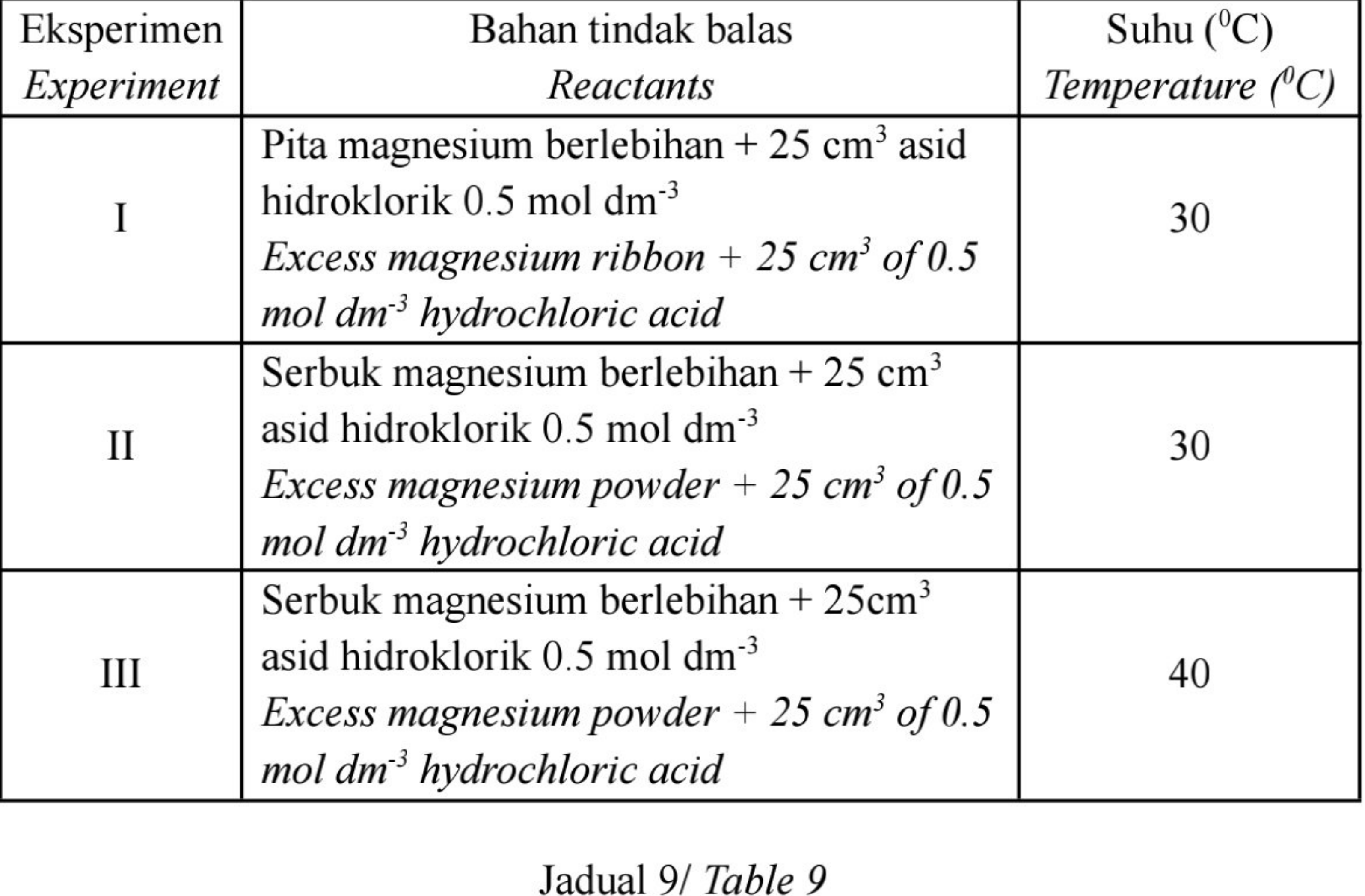
Answer any one question from Section B. Diagram 9 shows a pressure cooker and an aluminium pot. Table 9: Experiment I: excess magnesium ribbon + 25 cm3 of 0.5 mol dm-3 hydrochloric acid, 30 °C; Experiment II: excess magnesium powder + 25 cm3 of 0.5 mol dm-3 hydrochloric acid, 30 °C; Experiment III: excess magnesium powder + 25 cm3 of 0.5 mol dm-3 hydrochloric acid, 40 °C.
Medium20 marks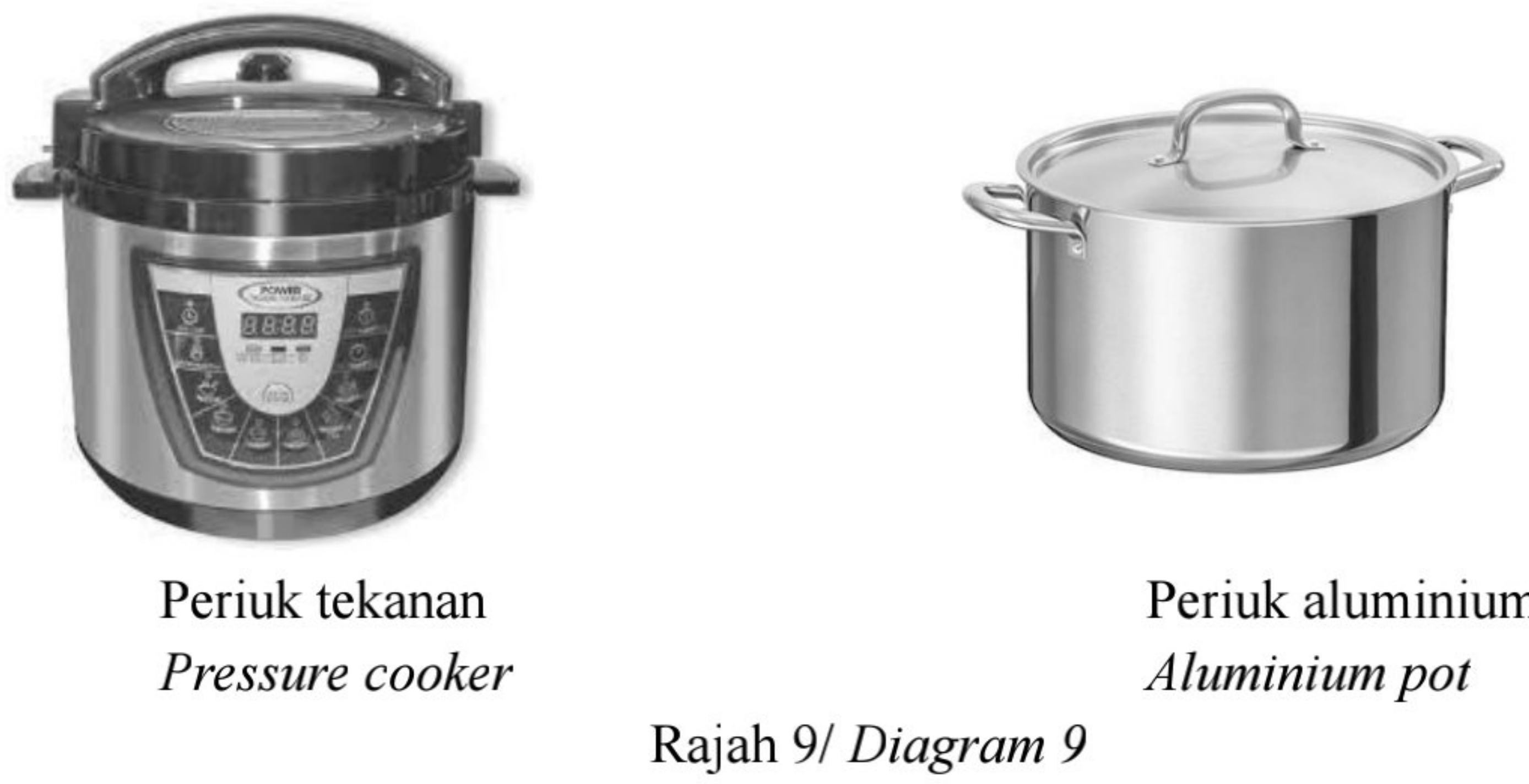
- (a)
Hidayu wants to cook bone soup for dinner. Based on Diagram 9, which pot of bone soup will cook faster? Explain.
[3] - (b)(i)
State the definition for rate of reaction in experiment I. If copper(II) sulphate solution is added to experiment I, predict the rate of reaction for the experiment.
[2] - (b)(ii)
Write the chemical equation for the reaction between magnesium and hydrochloric acid in Experiment III. Calculate the volume of gas released for the experiment. [One mole of gas occupies 24.0 dm3 at room condition]
[5] - (b)(iii)
Compare the rate of reaction between Experiment I and Experiment II, and between Experiment II and Experiment III. Explain your answer based on the Collision Theory.
[10]
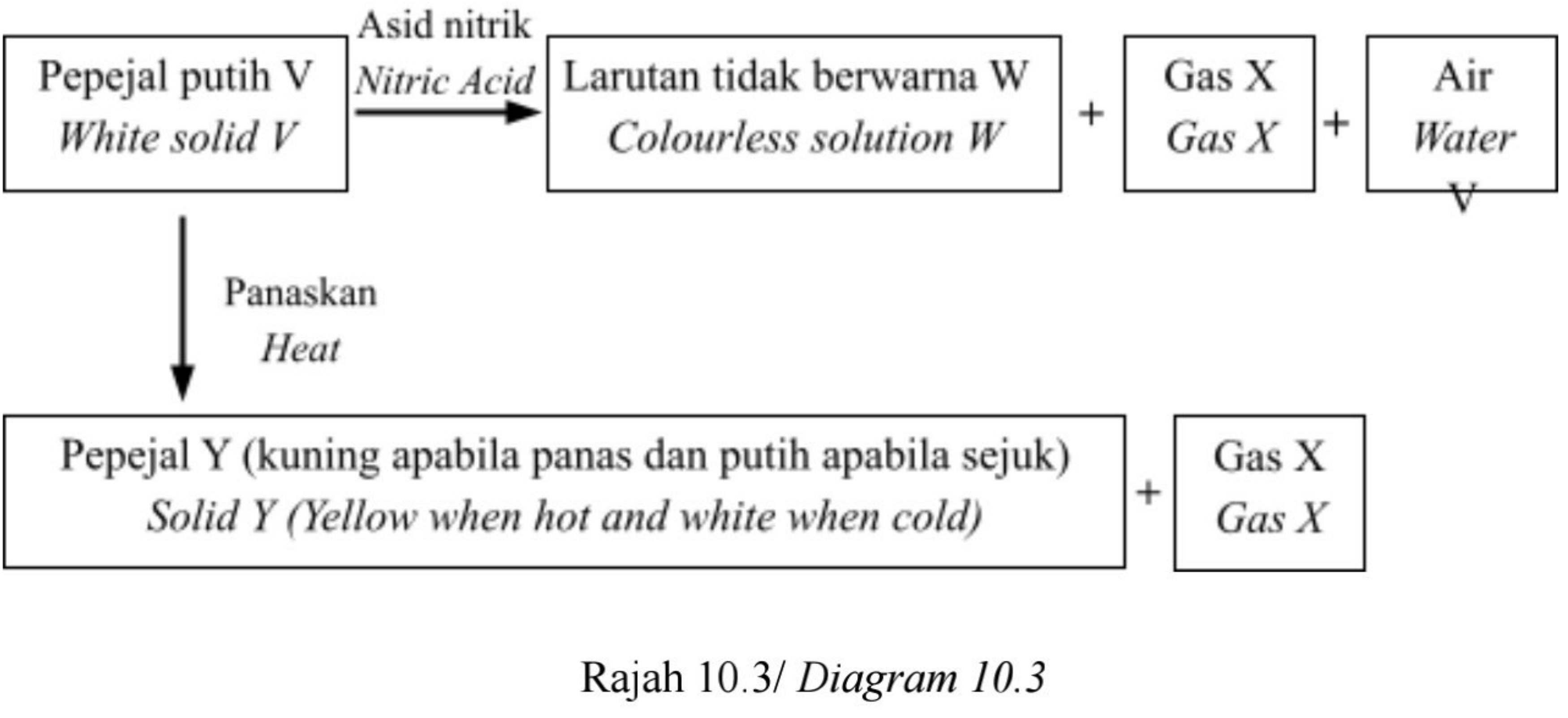
Diagram 10.1 shows coral formed from salt R. Diagram 10.2: 200 cm3 of 2.0 mol dm-3 solution HX (corrosive, sour smell like vinegar) spilled on an iron table; on the table are sodium hydroxide solution and calcium carbonate. Diagram 10.3: white solid V + nitric acid gives colourless solution W + gas X + water; heating V gives solid Y (yellow when hot, white when cold) + gas X.
Hard20 marks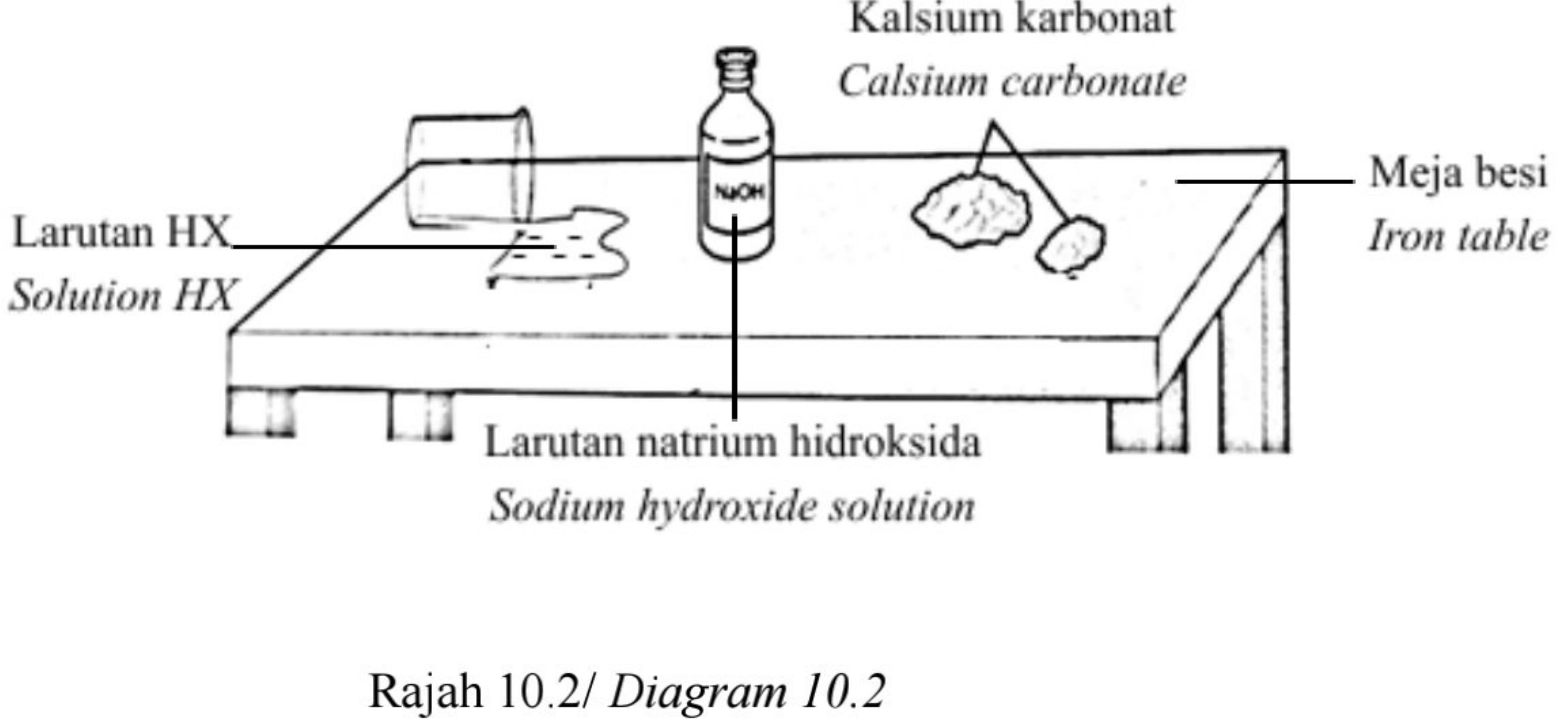
- (a)
State the meaning of salt and state the solubility of salt R.
[2] - (b)(i)
Suggest a suitable HX solution. Select the suitable chemical found on the iron table to clean up the spilled HX solution and give your reason. Write a chemical equation to represent the reaction between your suggested chemical and HX solution. (As corrected by the erratum.)
[5] - (b)(ii)
Based on your suggestion in b(i), calculate the mass of chemicals selected to clean up all HX solution spills. [H = 1, C = 12, O = 16, Na = 23, Ca = 40]
[3] - (c)(i)
Based on Diagram 10.3, identify substance V, W, X and Y.
[4] - (c)(ii)
Describe a chemical test to confirm the presence of cations and anions in solution W.
[6]
Section C
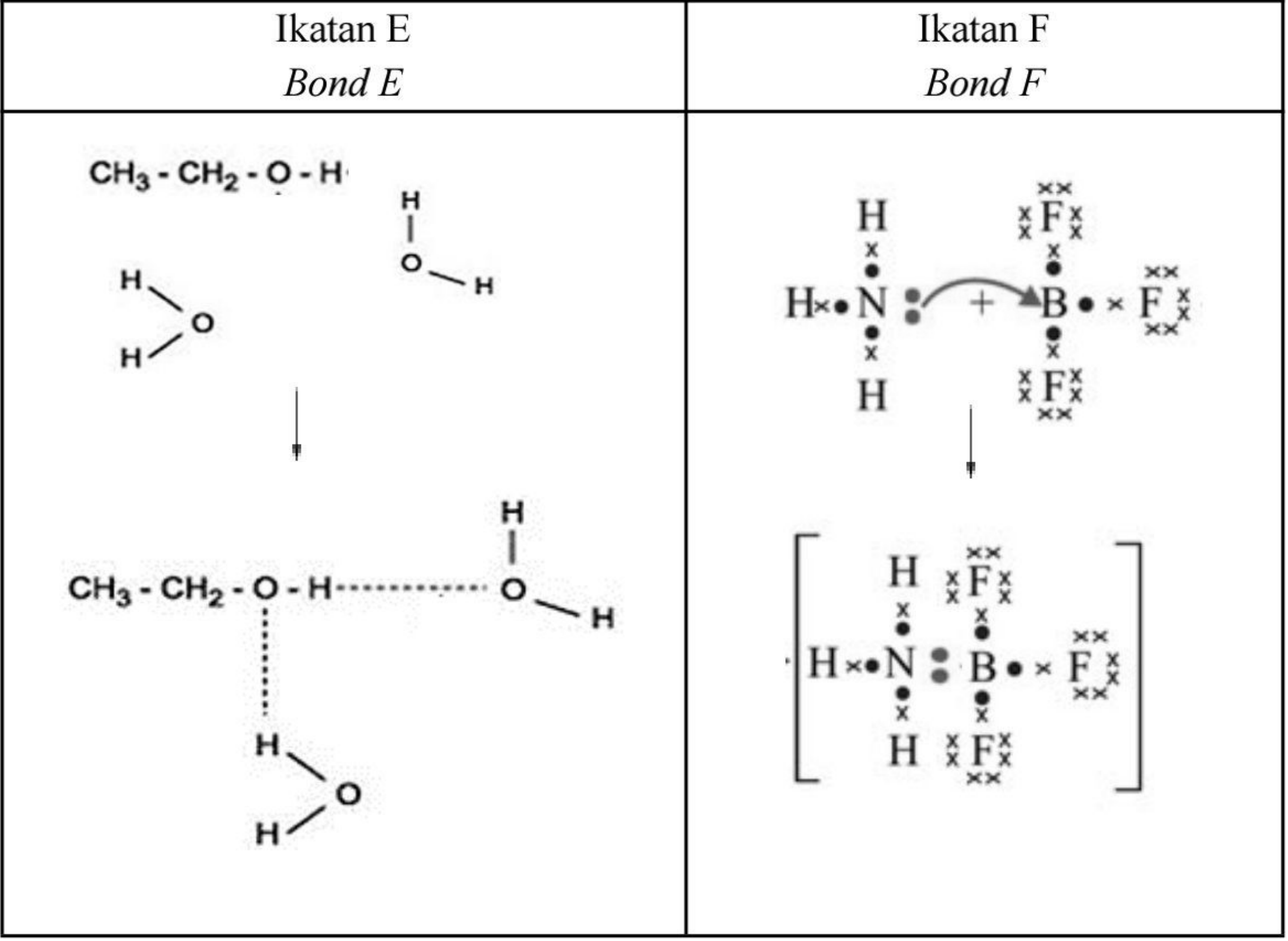
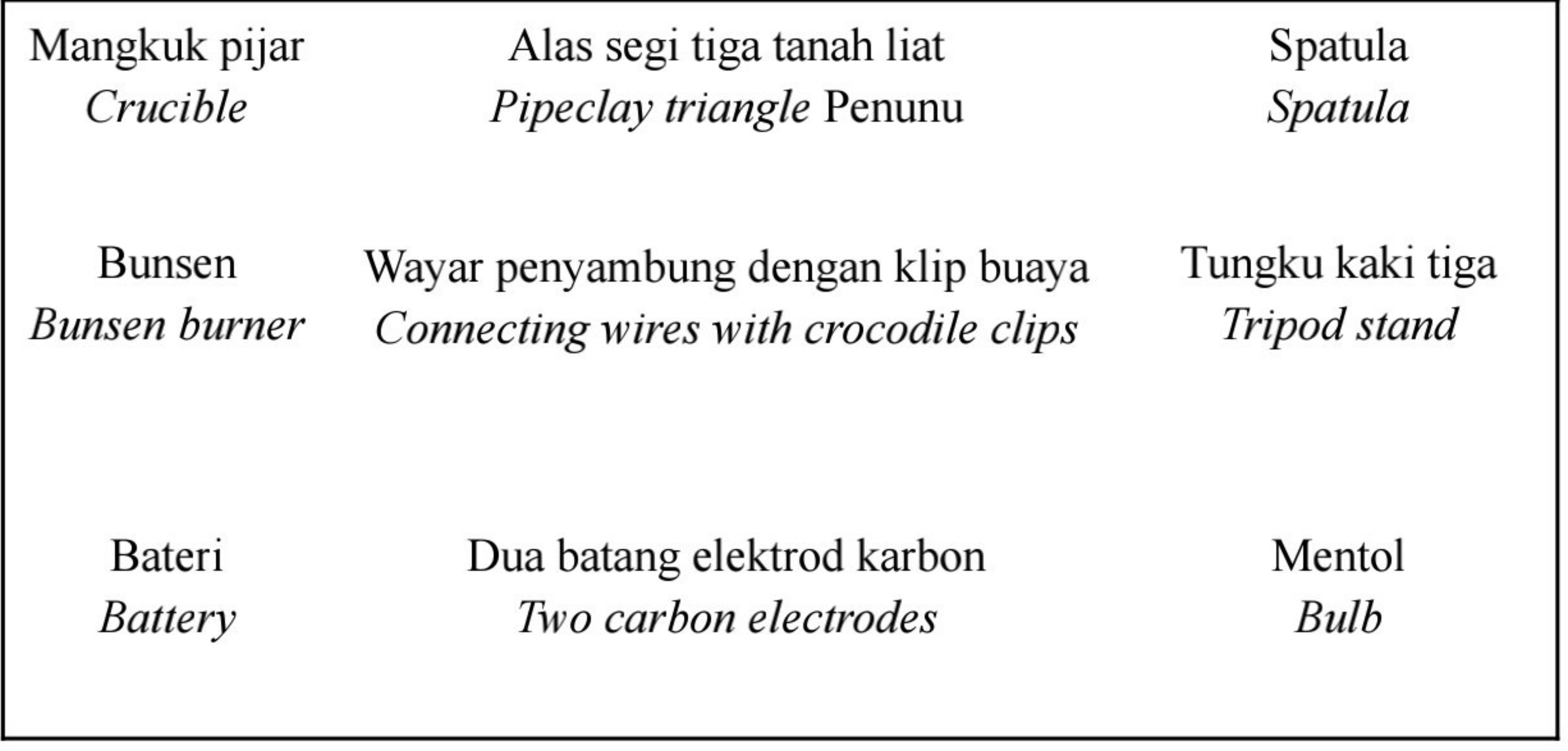
Table 11 shows the proton numbers of elements X (12), Y (8) and Z (6). Diagram 11.1 shows the formation of Bond E (ethanol with water molecules) and Bond F (NH3 and BF3 forming H3N-BF3). Diagram 11.2 lists apparatus: crucible, pipeclay triangle, spatula, Bunsen burner, connecting wires with crocodile clips, tripod stand, battery, two carbon electrodes, bulb.
Medium20 marks
- (a)
Element X can form cation to achieve a stable octet electron arrangement. Define cation and write the formula for the ion. (As corrected by the erratum.)
[2] - (b)(i)
Element Y can form two different types of compounds with element X and with element Z. Draw the electron arrangement for each type of compound formed.
[4] - (b)(ii)
0.05 mol of element Z reacts with excess element Y to form one of the compounds mentioned above. Write the chemical equation for the formation of the compound and calculate the mass of the compound formed. [Molar mass of compound = 44 g mol-1]
[4] - (c)
Diagram 11.1 shows the formation of two types of bonds, Bond E and bond F. Based on Diagram 11.1, identify bond E and bond F. (Question added by the erratum.)
[2] - (d)
Using the list of apparatus given (Diagram 11.2), describe an experiment to study the difference in the physical properties of Powder A and Powder B (two white powders). Include observation and conclusion.
[8]