Which of the following is the use of phosphorus-32?
Easy
The relative molecular mass of M2(SO4)3 is 342. What is the relative atomic mass of element M? [Relative atomic mass: O = 16; S = 32]
Medium
The boiling point of chlorine is lower than bromine. Which statement best explains this phenomena?
Medium
Element P is located in the same group with iron in the Periodic Table of elements. Which of the following are the characteristics of P?
I Low melting point
II Poor heat conductor
III Act as a catalyst
IV Has more than one oxidation number
Medium
Which of the following substances is a diprotic acid?
Easy
Which of the following substances consist of ionic bond?
Easy
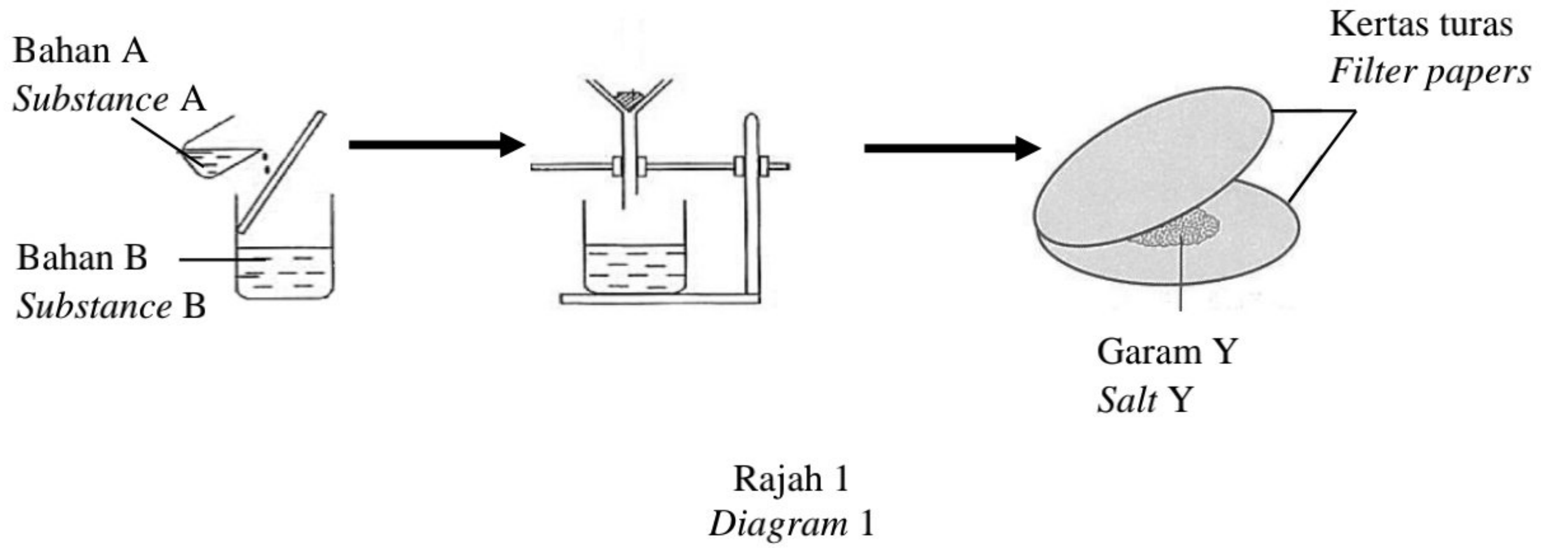
Diagram 1 shows the apparatus set-up to prepare salt Y through reaction X. What is the reaction of X, substance A, substance B and salt Y?
Medium
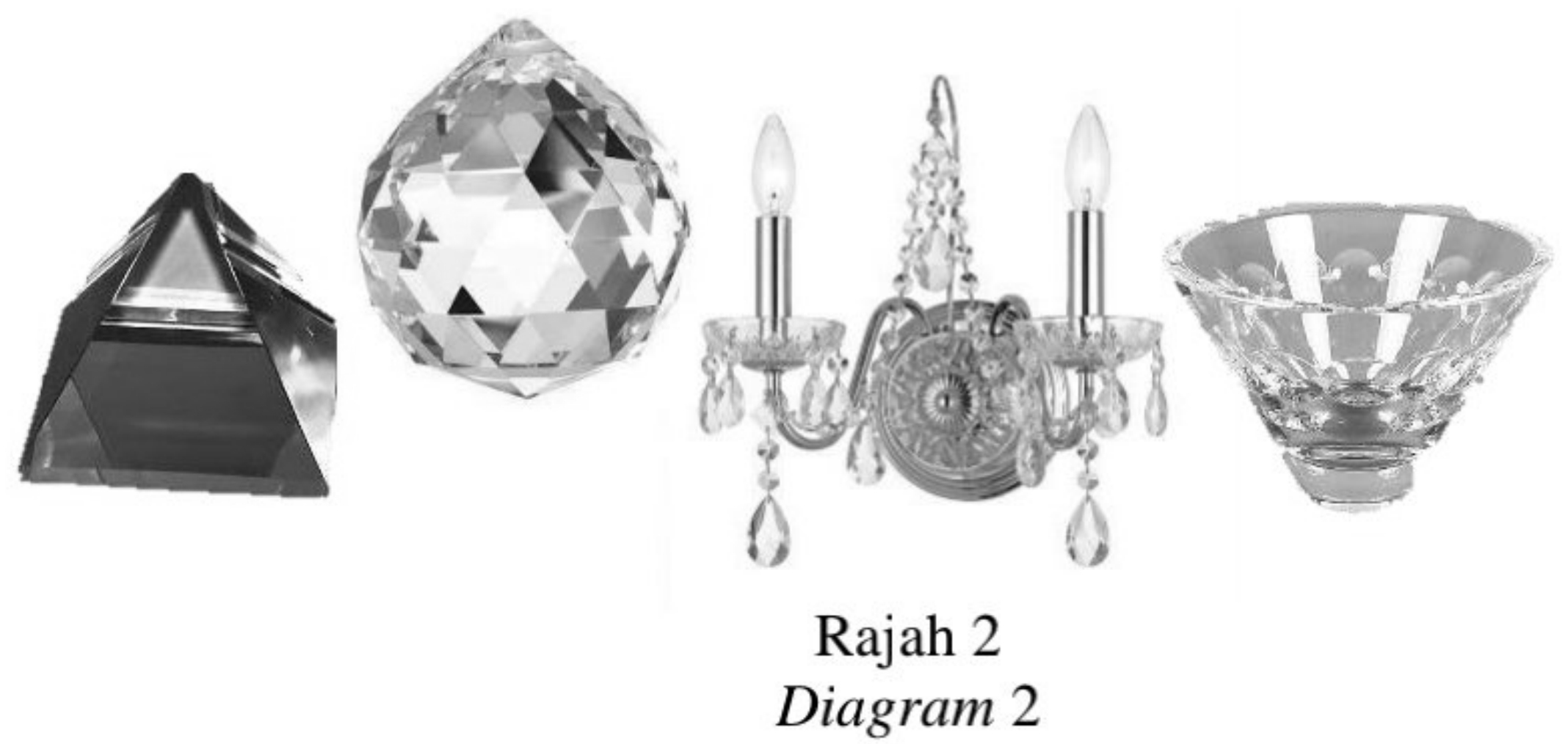
Diagram 2 shows some items made from a type of glass. What is the type of glass used in making the items?
Easy
Which of the following is the properties of reinforced concrete?
I Resistant to heat
II Resistant to abrasion
III Resistant to corrosion
IV High compression and stretching strength
Medium
A reactive metal Y burnt in the air. What happened to the reactive metal Y?
Medium
Which of the following is correct? (Electrolyte / Non-electrolyte)
Medium
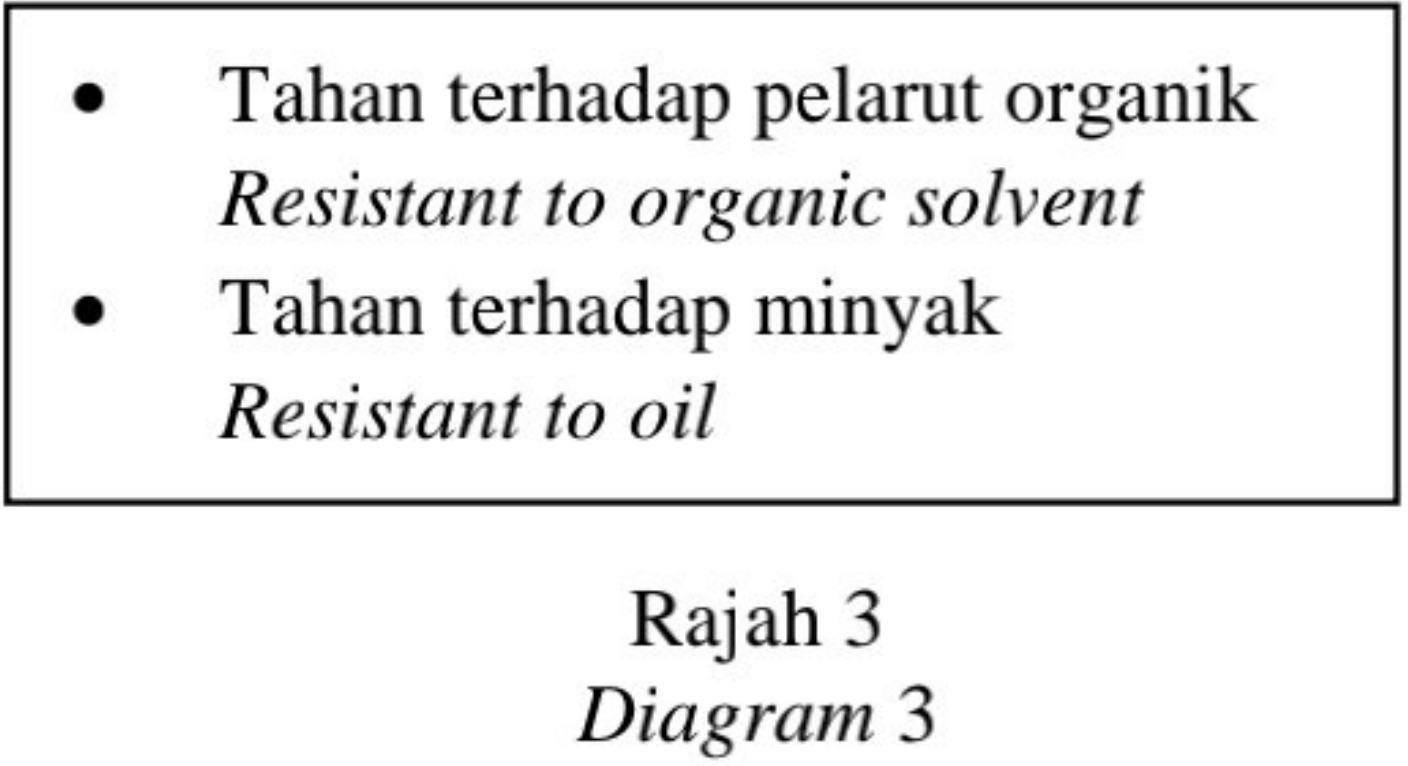
Mr. Hassan is the owner of a factory that produces sealants. Diagram 3 shows the characteristics of the sealants that Mr. Hassan wants to manufacture: resistant to organic solvent; resistant to oil. Which of the following synthetic rubbers is most suitable to produce sealants?
Medium
The discovery of graphene has opened a new chapter in the field of nanotechnology. Various existing applications can be improved or replaced with graphene that has superior and distinctive characteristics. Which of the following is correct about the physical properties of graphene?
Easy
Which of the following statements are correct about fats and oils?
I Fats and oils are esters.
II Fats and oils are obtained from animal sources.
III Fats exist in solid form while oils exist in liquid form at room temperature.
IV Unsaturated fats can be converted to saturated fats through the process of oxidation.
Medium
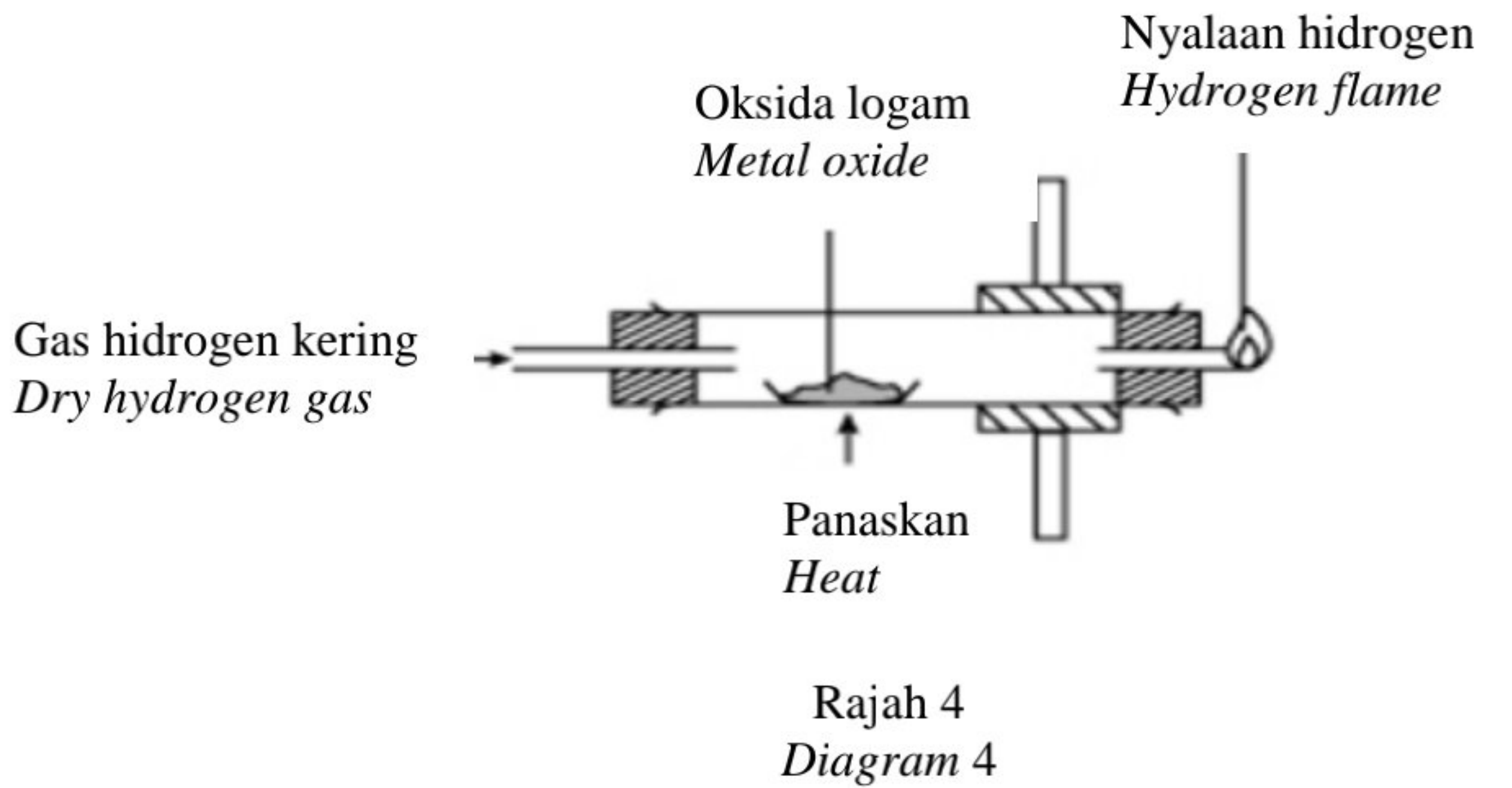
Diagram 4 shows the set-up of the apparatus used to determine the empirical formula of a metal oxide (dry hydrogen gas passed over heated metal oxide, hydrogen flame at the outlet). Which of the following metal oxides is suitable to be used in the experiment?
Medium
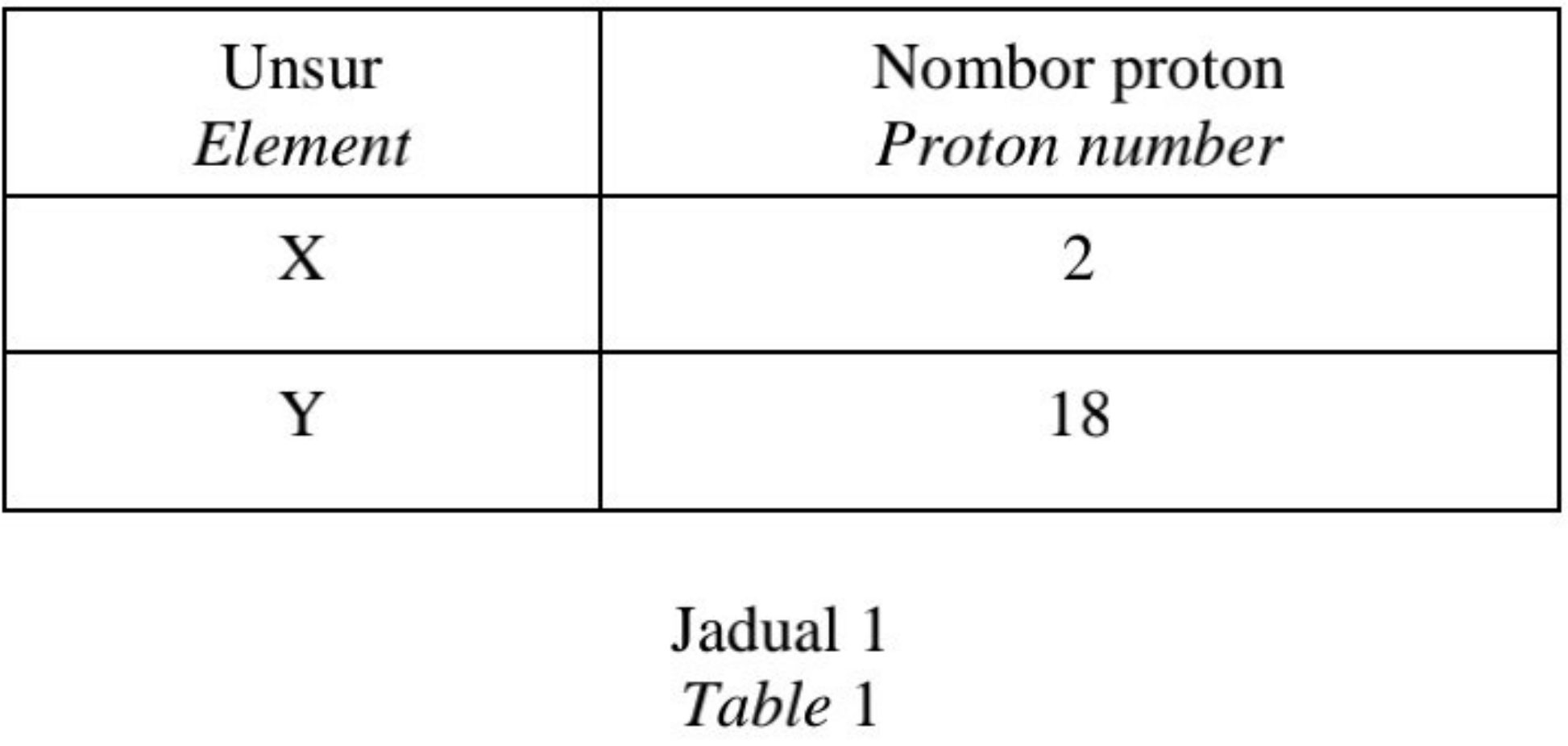
Table 1 shows the proton number of two elements X and Y: X = 2, Y = 18. Which of the following statements is correct about X and Y?
Medium
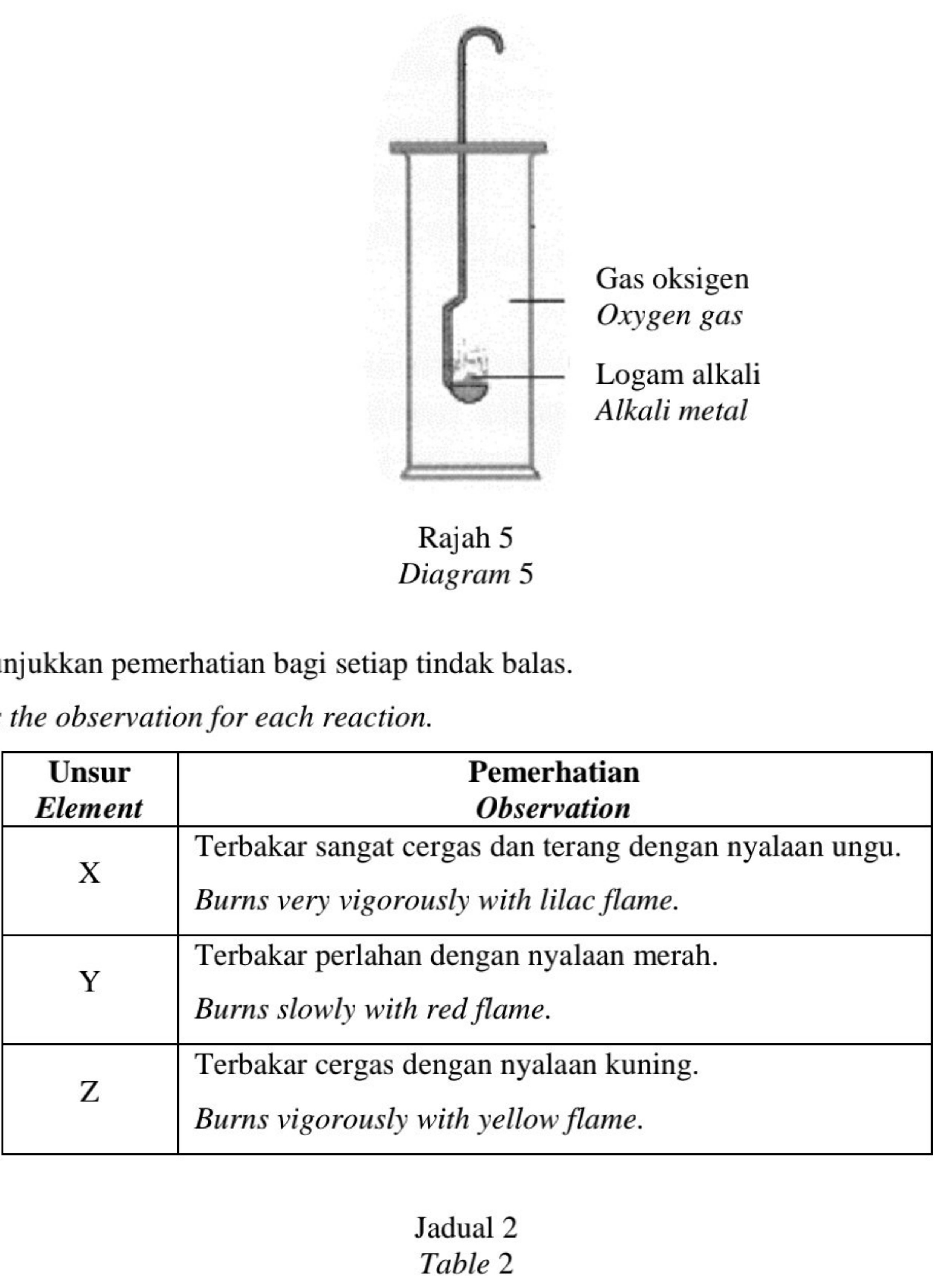
Diagram 5 shows the apparatus set-up to study the reactivity of alkali metals towards oxygen. Table 2 shows the observation for each reaction: X burns very vigorously with lilac flame; Y burns slowly with red flame; Z burns vigorously with yellow flame. What is the correct arrangement of reactivity of the elements towards oxygen in descending order?
Medium
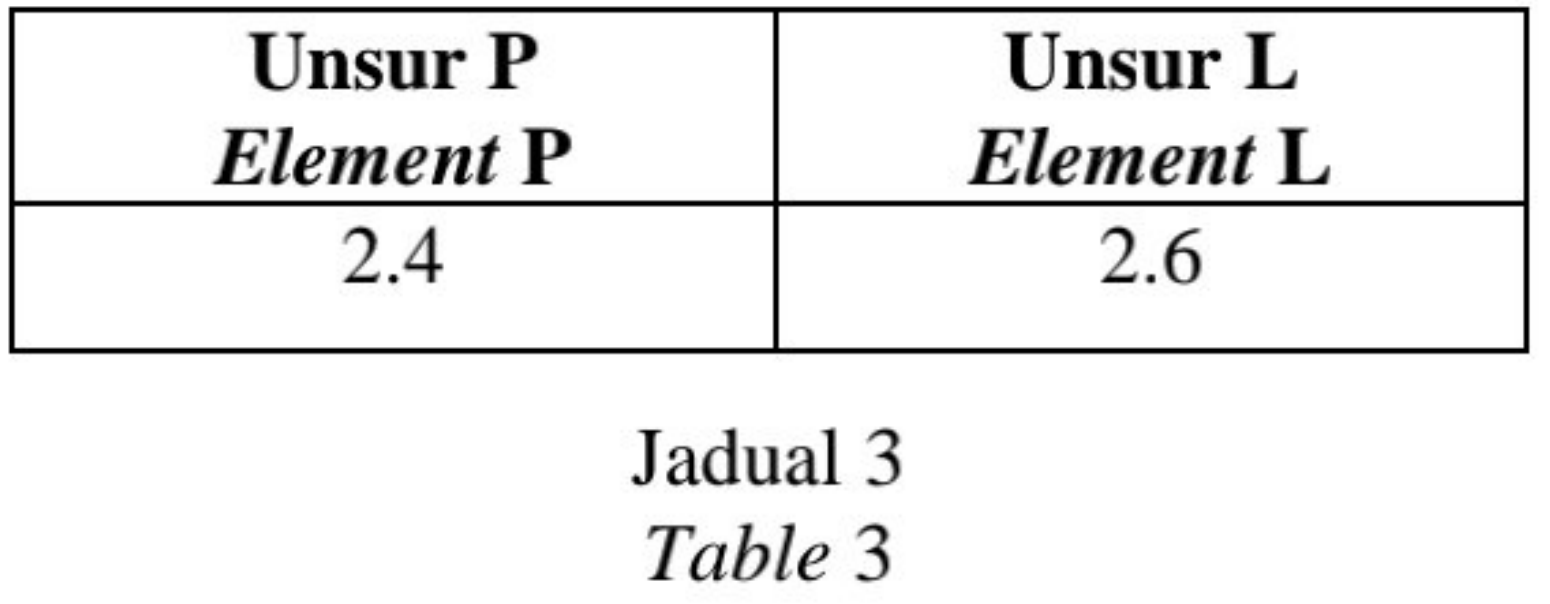
Table 3 shows the electron arrangement of element P (2.4) and L (2.6). What is the chemical formula and the type of bond of the compound formed from the reaction between P and L?
Medium
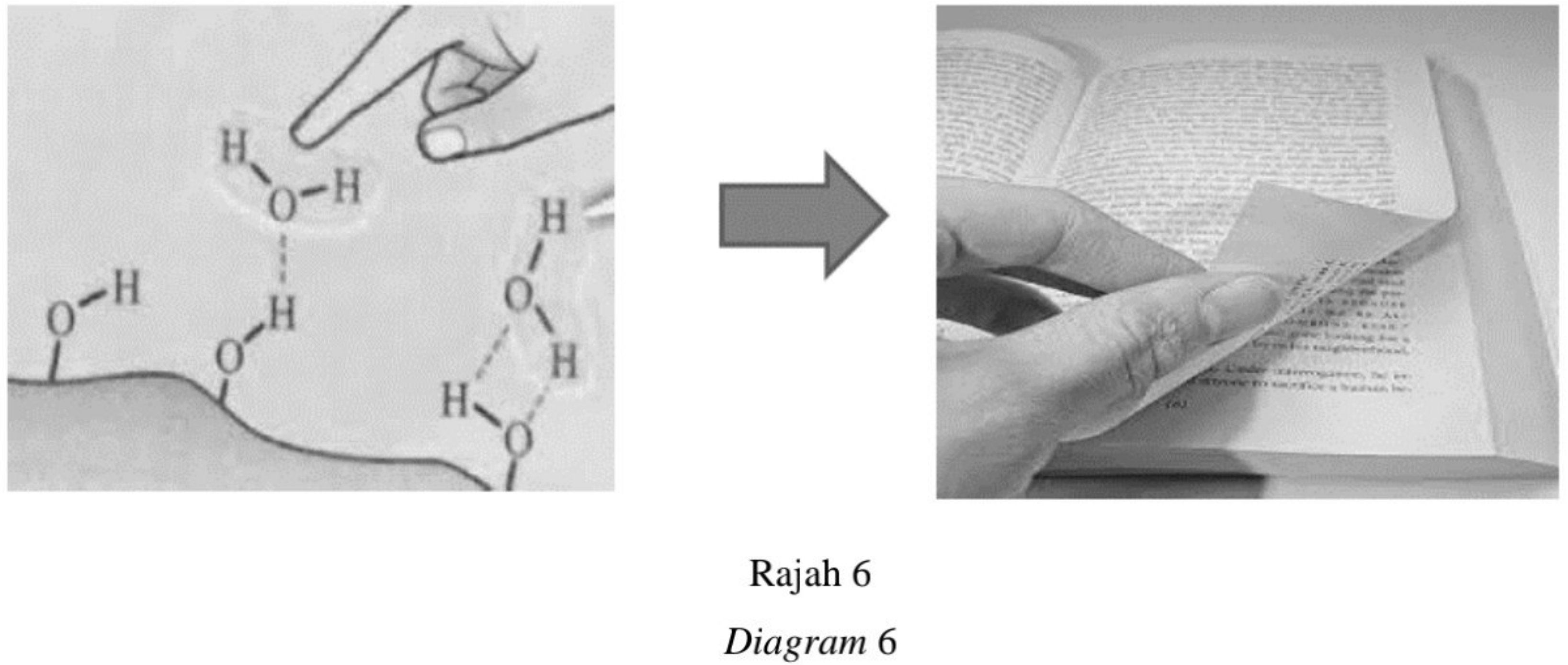
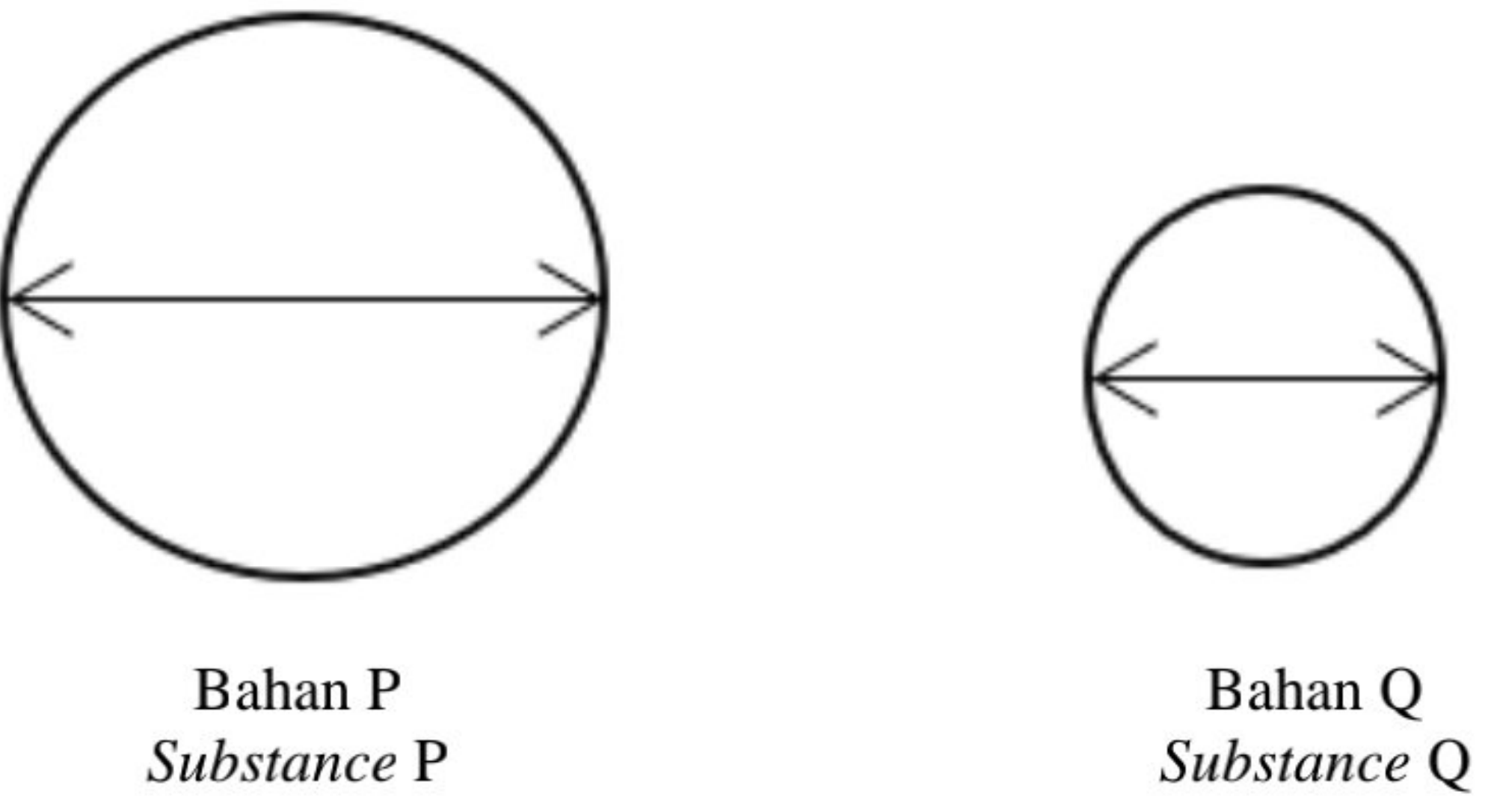
Diagram 6 shows Danish flipping a page in the book by wetting the finger (water molecules at the fingertip and the paper surface). Which of the following statements explains the situation?
Medium
Compound Y consists of oppositely-charged particles. Which of the following are not true about the properties of compound Y?
I Has high melting and boiling points.
II Exists in liquid form at room temperature.
III Soluble in water.
IV Conduct electricity in solid state.
Medium
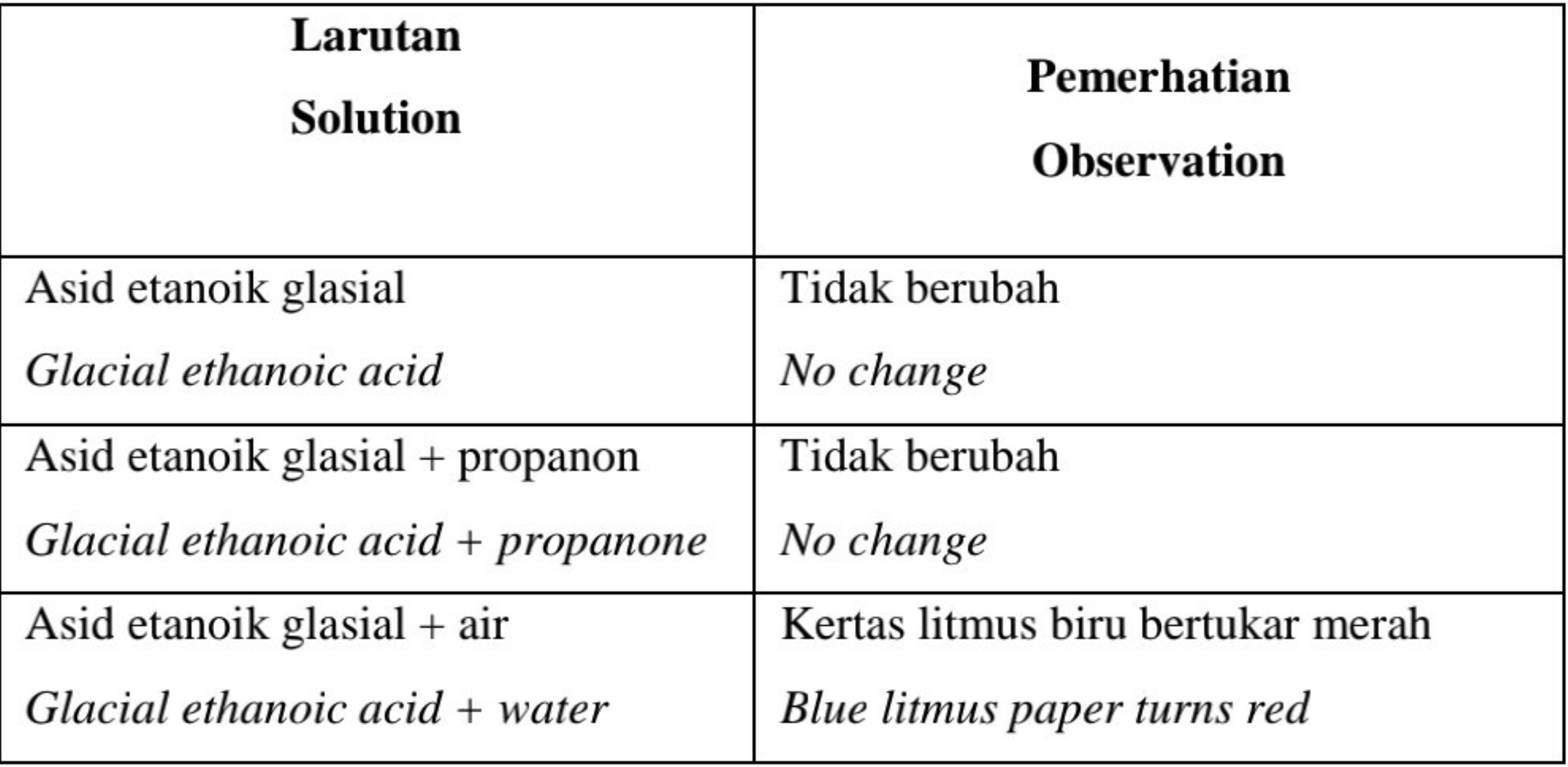
Table 4 shows the observation when blue litmus paper is dipped into three substances: glacial ethanoic acid - no change; glacial ethanoic acid + propanone - no change; glacial ethanoic acid + water - blue litmus paper turns red. Which of the following statements explain the observations?
Medium
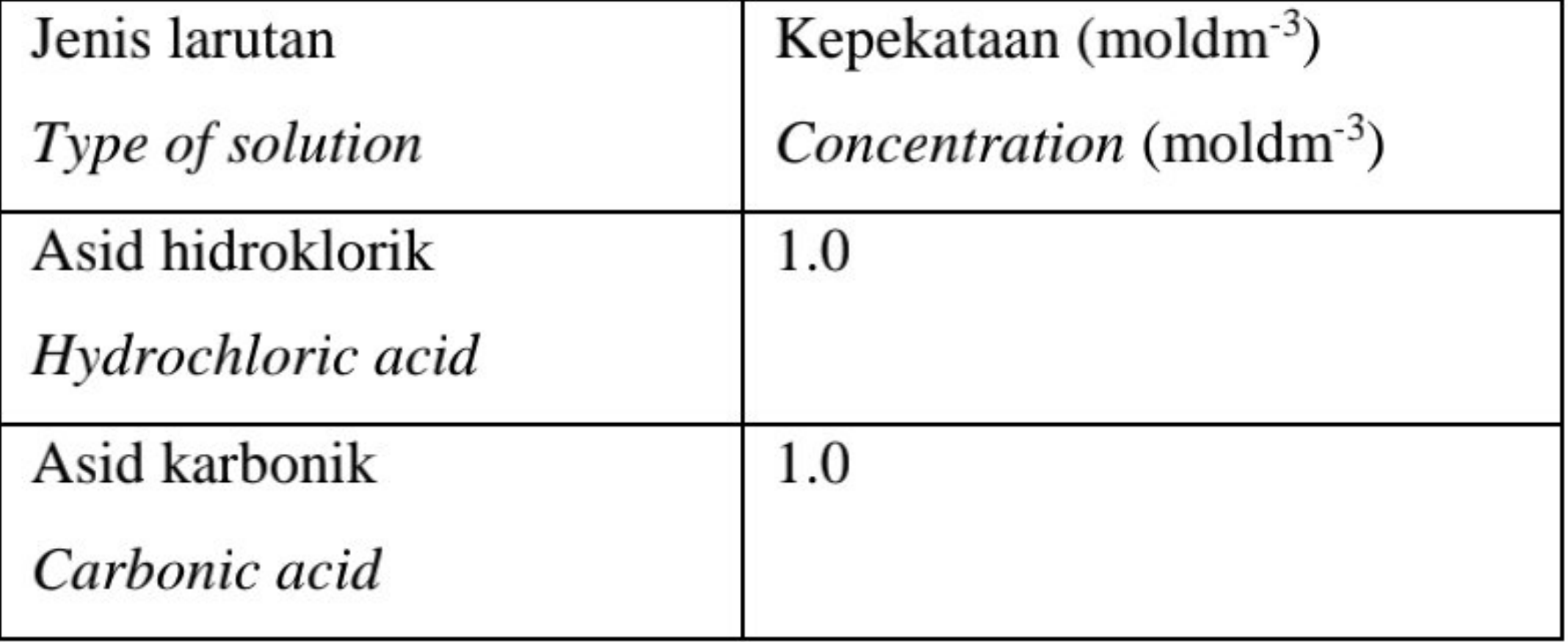
Table 5 shows information about two different solutions: hydrochloric acid 1.0 mol dm-3; carbonic acid 1.0 mol dm-3. Which of the following is not true about the two solutions?
Medium
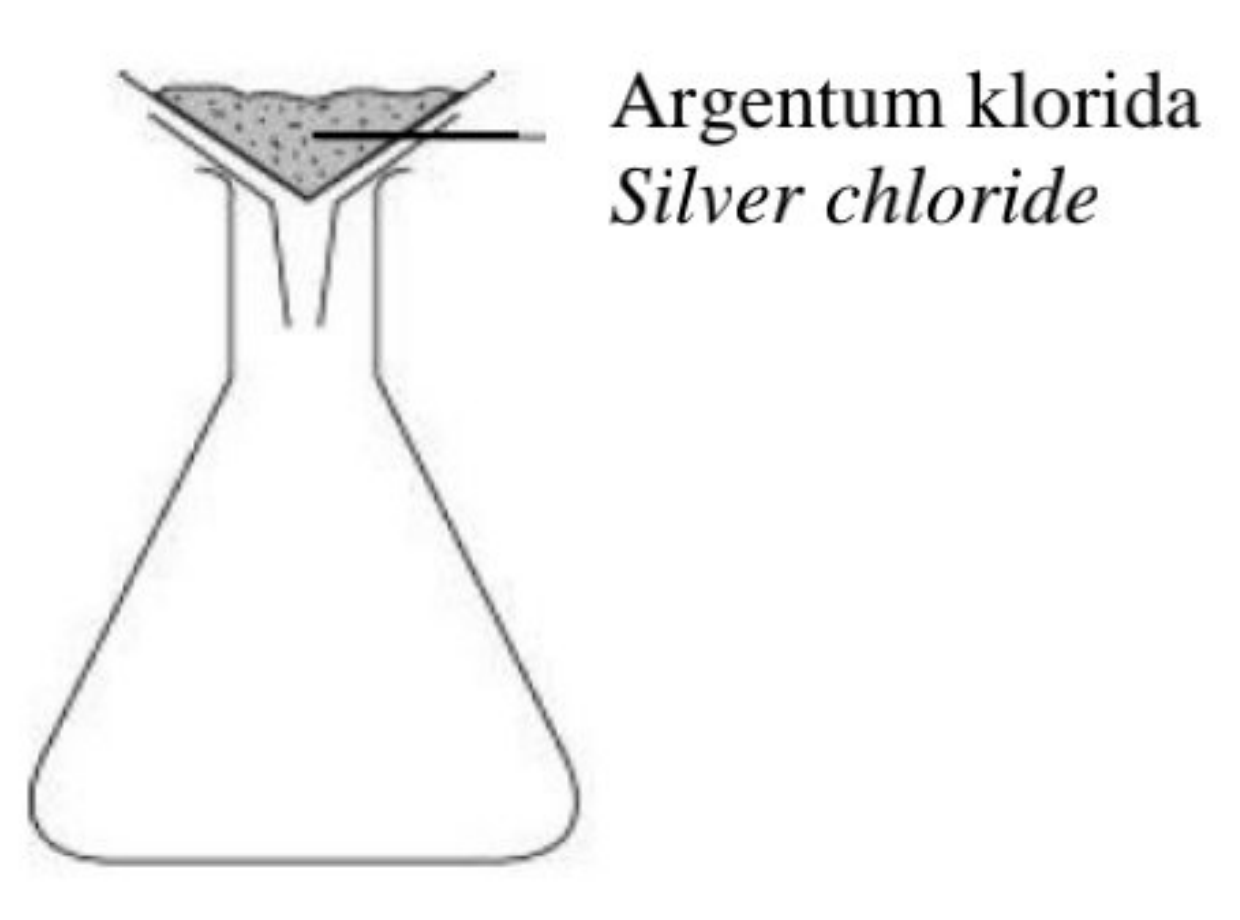
Diagram 7 shows the apparatus set-up to prepare silver chloride (filtering silver chloride). Which of the following materials is the most suitable to react with hydrochloric acid to prepare silver chloride?
Medium
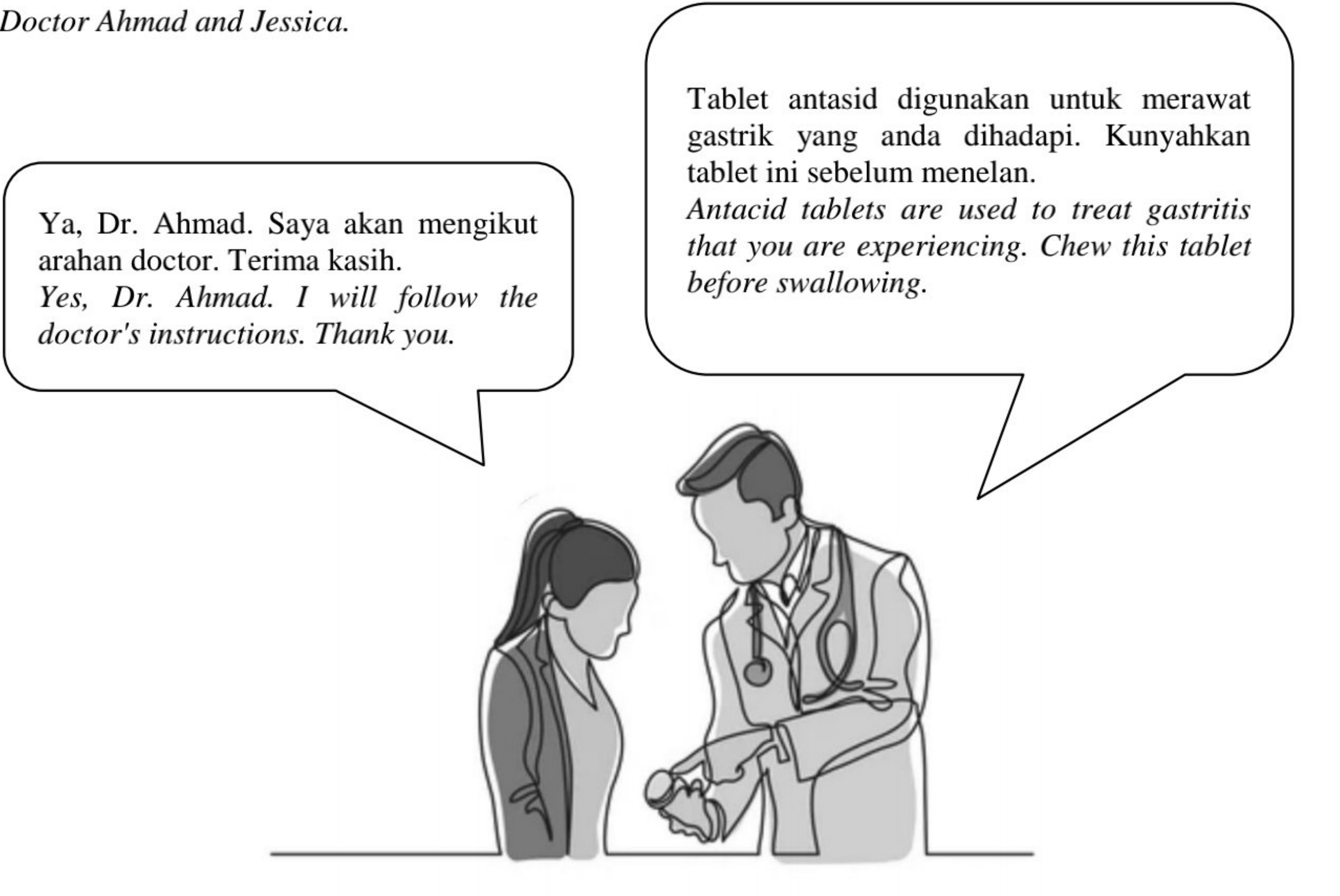
Jessica went to see Dr. Ahmad because she had gastric. Diagram 8 shows the conversation: Dr. Ahmad says 'Antacid tablets are used to treat gastritis that you are experiencing. Chew this tablet before swallowing.' Jessica replies 'Yes, Dr. Ahmad. I will follow the doctor's instructions. Thank you.' Why does Dr. Ahmad give these instructions to Jessica?
Easy
A student carried out an experiment to investigate the hardness of an alloy with its pure metal. Diagram 9 shows the diameter of the dents produced: substance P has a large dent, substance Q a smaller dent. Which of the following statements is the correct about substance P and Q?
I Substance P is resistant to corrosion.
II Atom of substance Q is arranged in an orderly manner.
III Substance P is made up of one type of atom that is of the same size.
IV The layers of atoms in substance Q is difficult to slide over each other when force is applied.
Medium
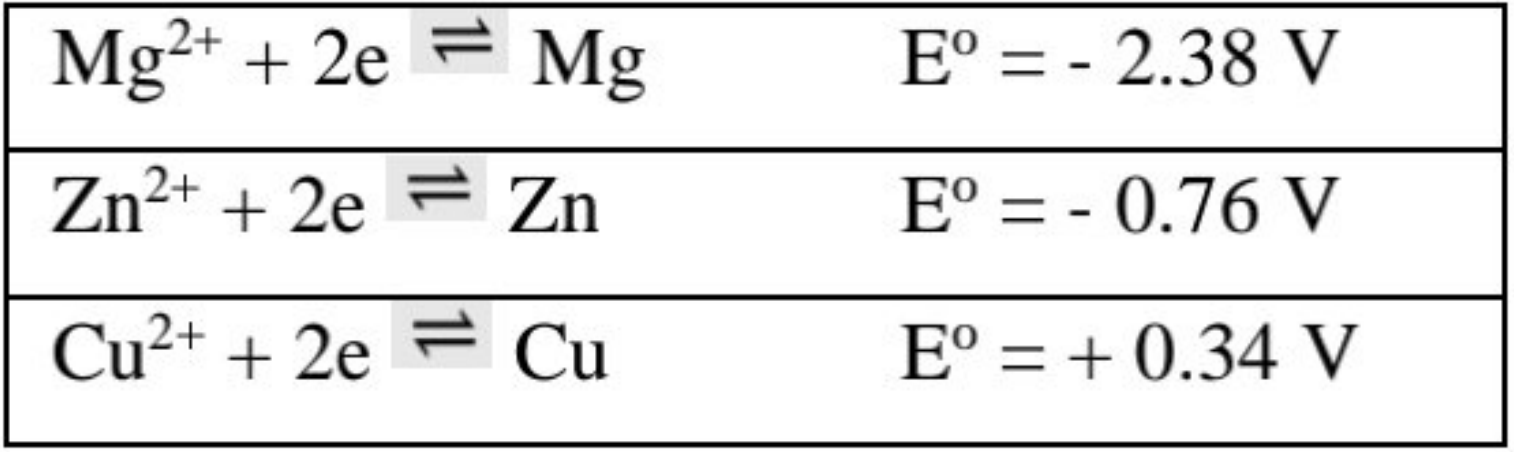
Table 6 shows the standard electrode potential values of half-cells: Mg2+ + 2e ⇌ Mg, E° = -2.38 V; Zn2+ + 2e ⇌ Zn, E° = -0.76 V; Cu2+ + 2e ⇌ Cu, E° = +0.34 V. Which of the following is the arrangement of the atoms or ions in an ascending order of the strength of reducing agents?
Medium
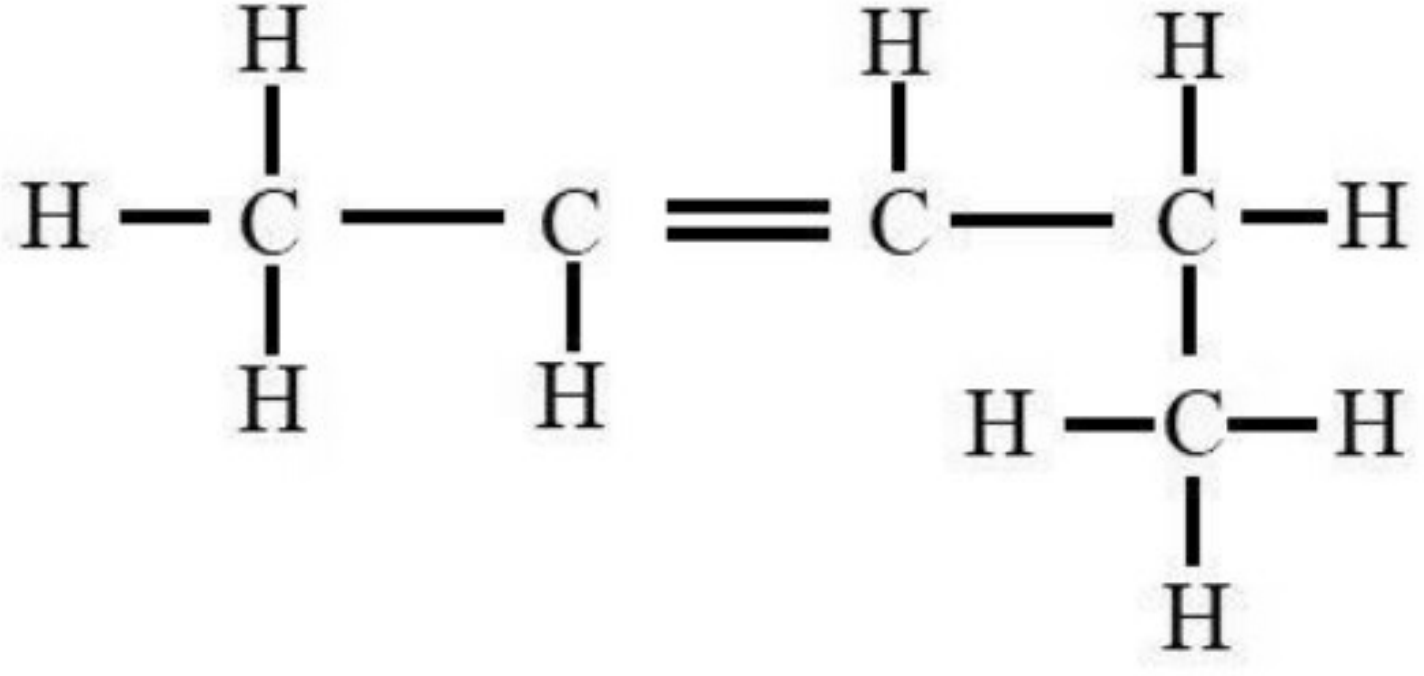
Diagram 10 shows the structural formula of an organic compound (CH3-CH=CH-CH2-CH3, five carbon atoms with one C=C bond between carbon 2 and 3). What is the name of the organic compound?
Medium
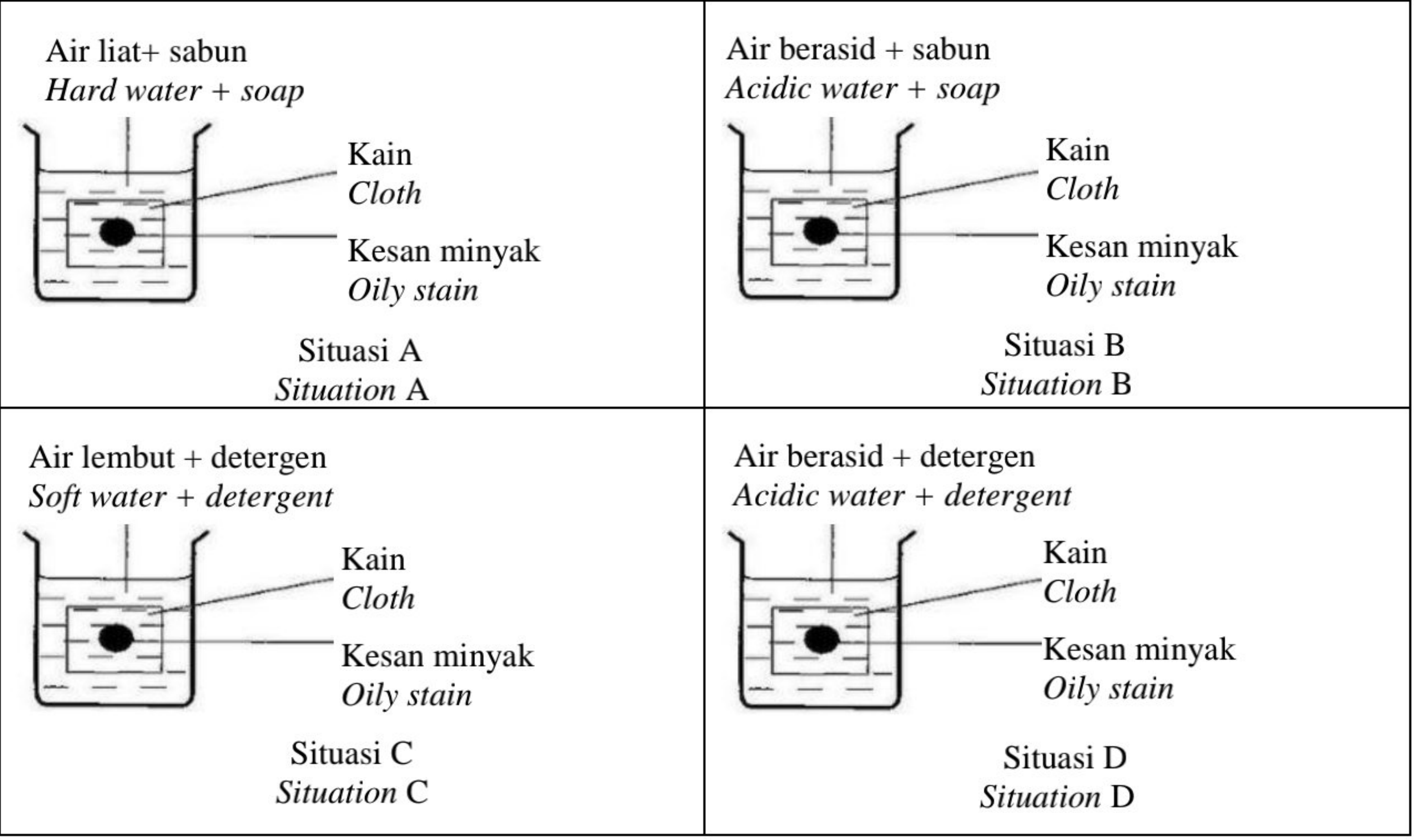
Diagram 11 shows the materials used to remove an oily stain at a piece of cloth: Situation A hard water + soap; B acidic water + soap; C soft water + detergent; D acidic water + detergent. Which situation can remove the oily stain? (I Situation A, II Situation B, III Situation C, IV Situation D)
Medium
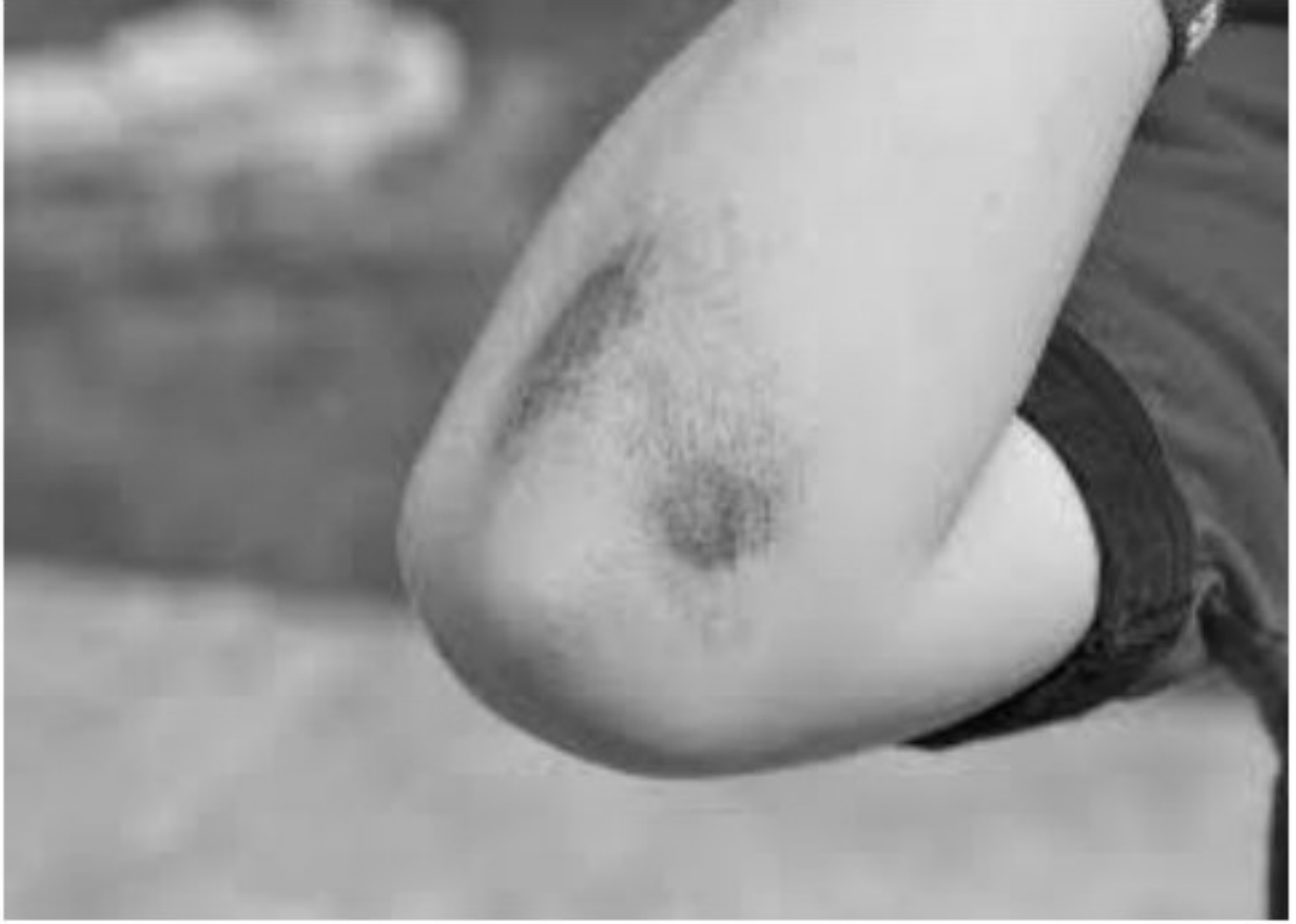
Diagram 12 shows an injury of a student during sports day (a scraped, reddened elbow). What is the type of medicine should be taken by the student?
Medium
The following equation represents the decomposition reaction of solid copper(II) nitrate: 2Cu(NO3)2 → 2CuO + 4NO2 + O2. What is the volume of oxygen gas produce at room condition when 1.88 g of solid copper(II) nitrate is decomposed? [Relative atomic mass: Cu = 64, N = 14, O = 16; Molar volume of gas at room conditions = 24 dm3 mol-1]
Medium
When copper(II) carbonate is heated, lime water turns cloudy and a black solid is formed. Which of the following equations represents the reaction correctly?
Medium
In which of the following test tubes does a reaction occur?
Medium
14.9 g of potassium chloride, KCl is dissolved in distilled water to produce 0.4 mol dm-3 potassium chloride solution. What is the volume of distilled water needed to dissolved the potassium chloride? [Molar mass KCl = 74.5 g mol-1]
Medium
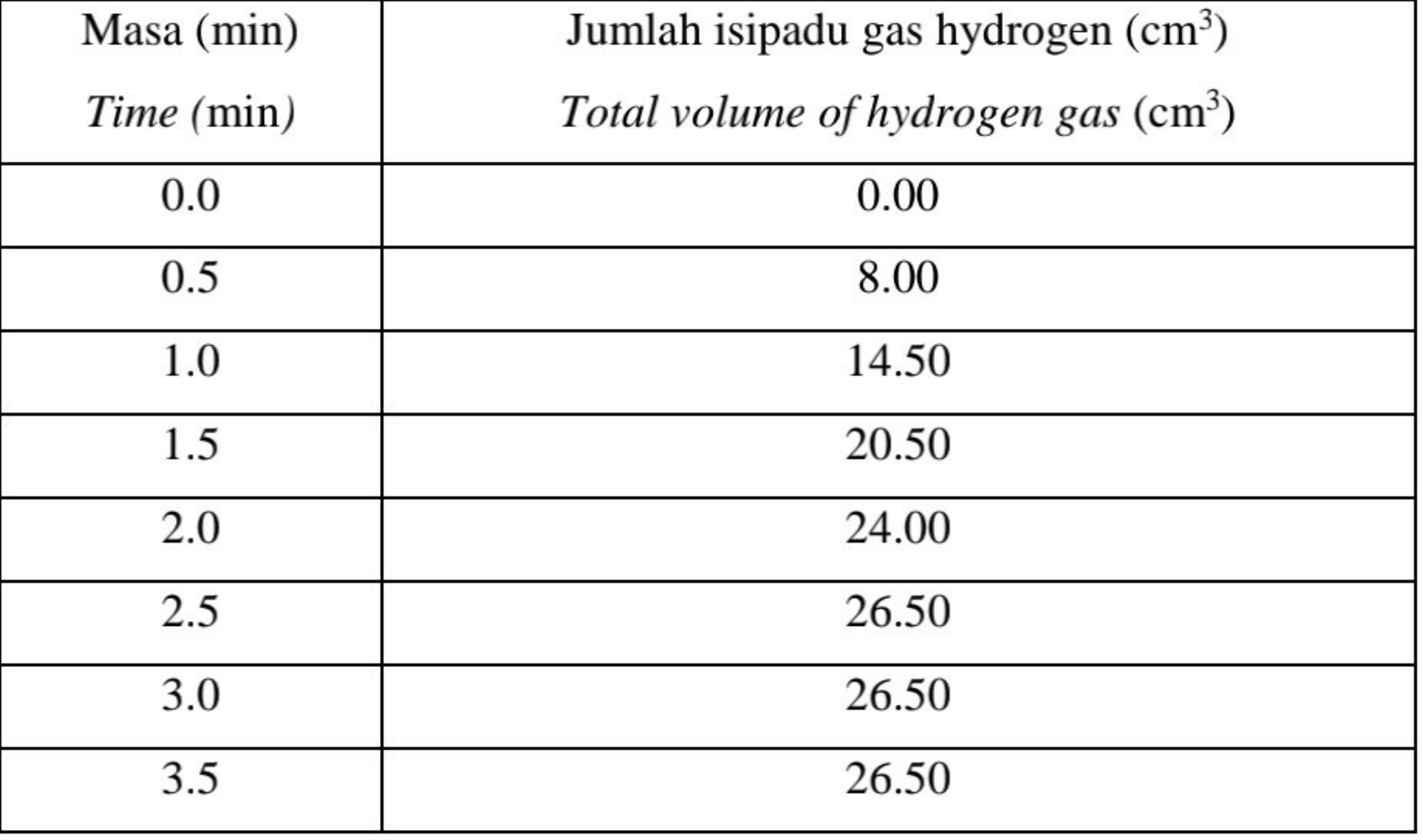
Table 7 shows the total volume of hydrogen gas collected at regular intervals for the reaction between zinc and dilute hydrochloric acid (time 0.0, 0.5, 1.0, 1.5, 2.0, 2.5, 3.0, 3.5 min; volume 0.00, 8.00, 14.50, 20.50, 24.00, 26.50, 26.50, 26.50 cm3). What is the average rate of the reaction?
Medium
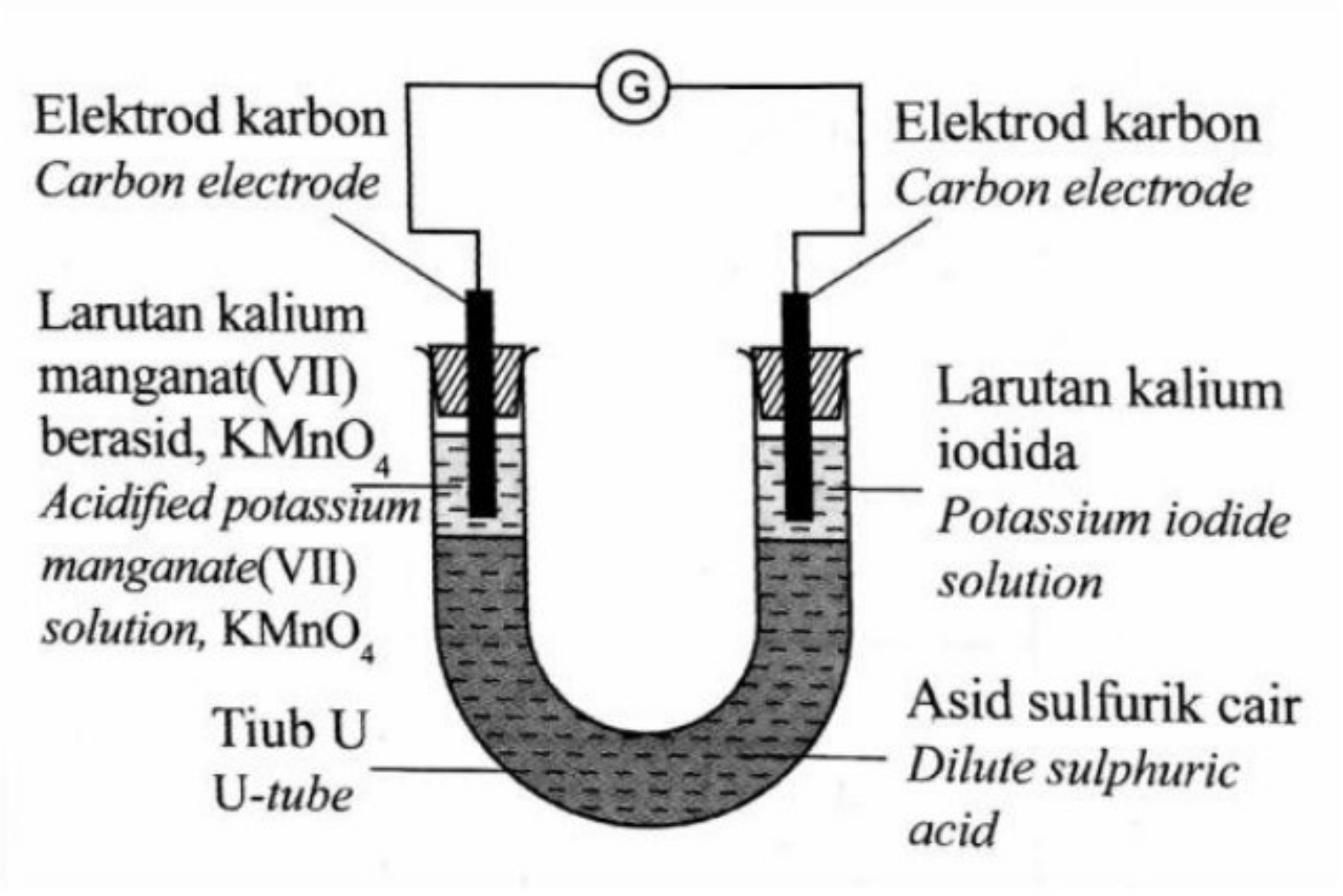
Diagram 13 shows the apparatus set up to investigate the reaction between potassium iodide solution and iron(II) sulphate solution (acidified potassium manganate(VII) solution at one carbon electrode, potassium iodide solution at the other, dilute sulphuric acid in the U-tube, galvanometer G). Which of the following statements is correct about the reaction?
Medium
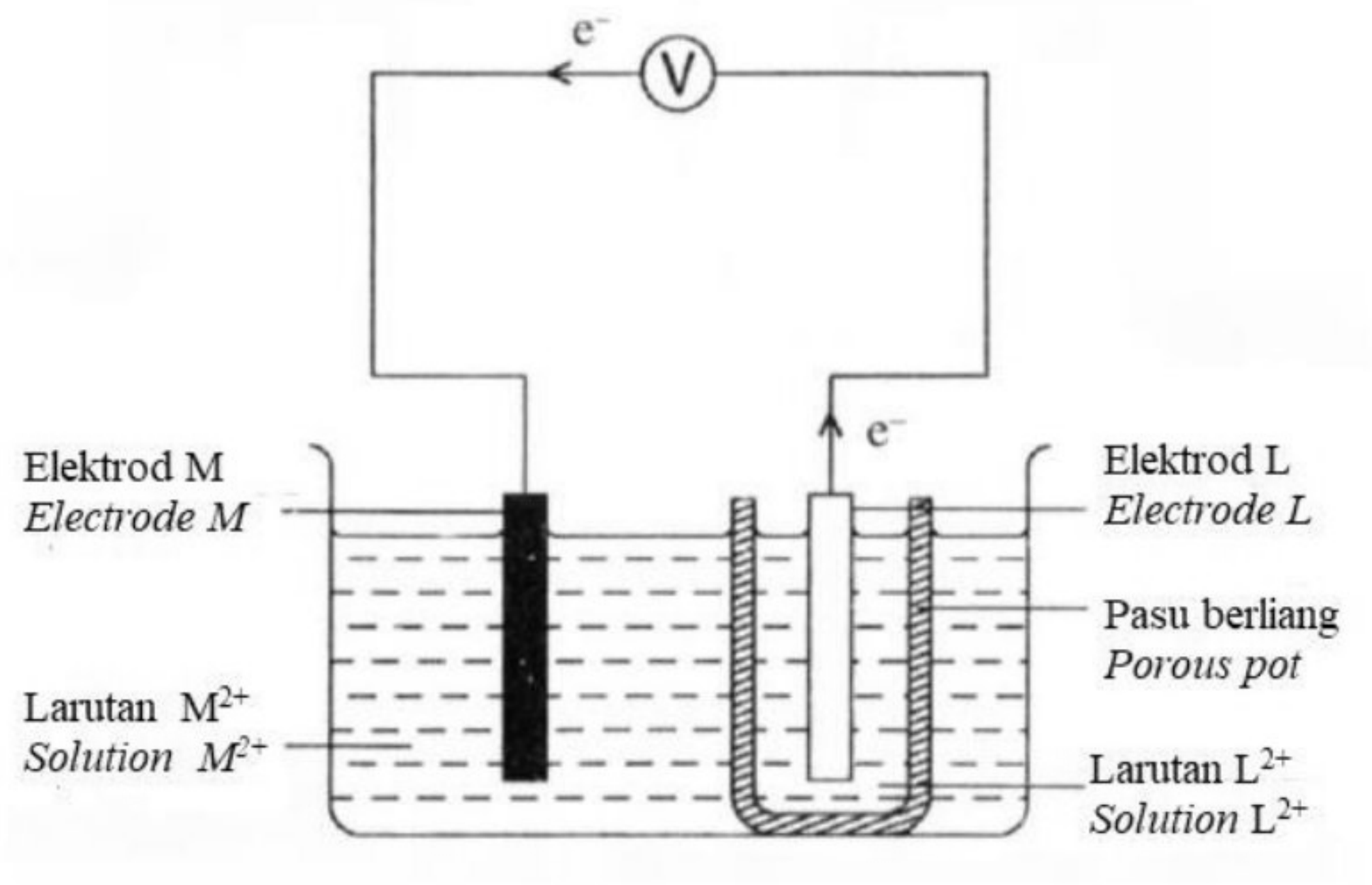
Diagram 14 shows a chemical cell (electrode M in solution M2+, electrode L in solution L2+ inside a porous pot, voltmeter V). The electrons move from electrode L to electrode M through the external circuit. Which statement is correct about the reaction in the chemical cell?
Medium
Which of the following are the isomers of C4H9OH?
I Propan-2-ol
II Butan-1-ol
III 2-methylpropan-2-ol
IV 2-methylbutan-2-ol
Medium
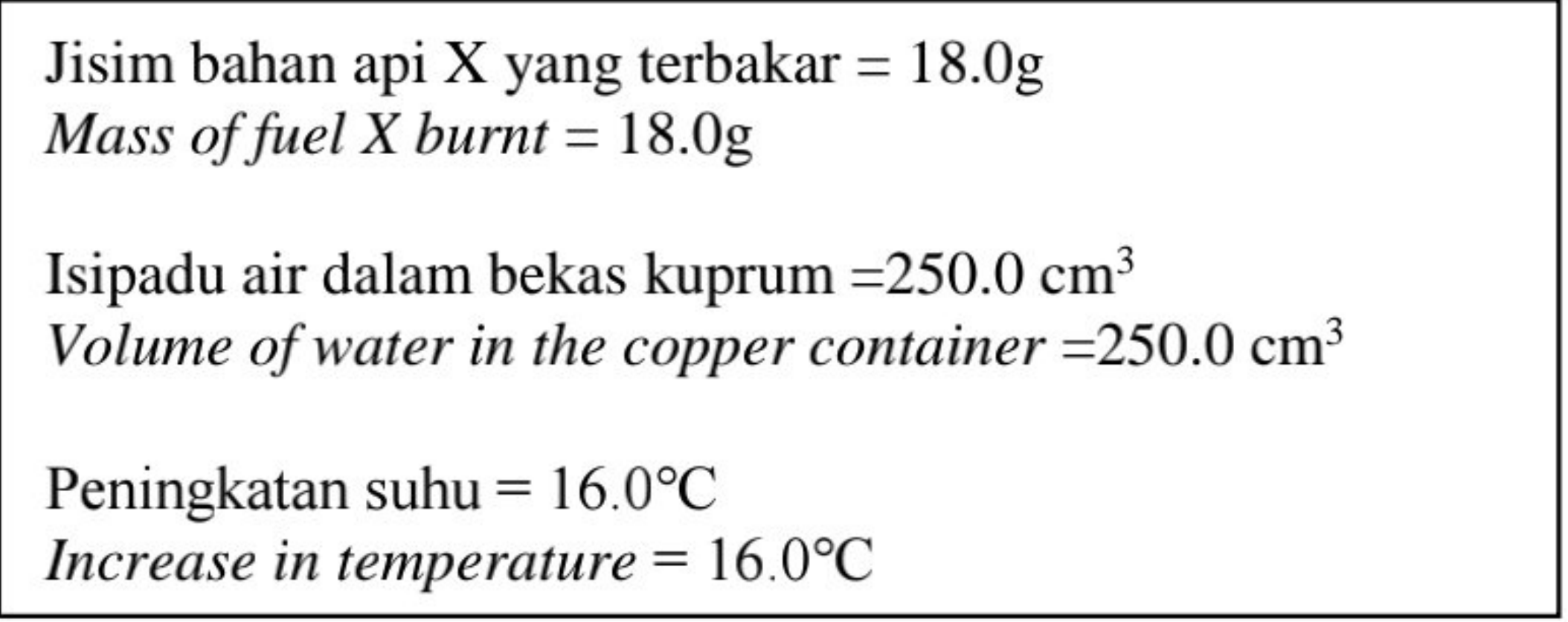
The following information shows the results of an experiment to determine the heat of combustion of fuel X: mass of fuel X burnt = 18.0 g; volume of water in the copper container = 250.0 cm3; increase in temperature = 16.0°C. What is the heat of combustion of fuel X? [Molar mass of fuel X = 180 g mol-1; Specific heat capacity of water = 4.2 J g-1 °C-1; density of water = 1.0 g cm-3]
Medium
The equation below represents a neutralisation reaction: 2HNO3 + Ba(OH)2 → Ba(NO3)2 + 2H2O. 10.0 cm3 0.1 mol dm-3 of barium hydroxide solution is titrated with 0.1 mol dm-3 nitric acid. If the initial reading of the burette is 20.00 cm3, what is the final reading of the burette?