Which of the following processes physical change from liquid to gas?
I Boiling
II Condensation
III Evaporation
IV Sublimation
Medium
Which of the following is the use of the isotope iodine-131?
Easy
Which of the following is the correct pair of compounds and its chemical formula?
A Sodium oxide: NaO
B Potassium chloride: KCl₂
C Copper(II) nitrate: CuNO₃
D Lead(II) chloride: PbCl₂
Medium
Which of the following gasses is used in a weather balloon?
Easy
What type of chemical bond in water molecules?
Easy
Which statement is correct about the metallic bond?
Easy
Which of the following particles in solution of ammonia is responsible for its alkaline properties?
Easy
Which of the following is not a chemical property of acids?
Easy
Name the gas that turns lime water to cloudy?
Easy
Which of the following is not the unit for the rate of reaction?
Easy
Which of the following substances is the main component for glass?
Easy
The following equation shows the reaction between copper(II) oxide and hydrogen gas.
CuO + H₂ → Cu + H₂O
What is the type of reaction that takes place for copper(II) oxide?
Medium
Which of the following is non hydrocarbon?
Easy
Which of the following is not an endothermic reaction?
Easy
Which of the following describes a monomer?
Easy
Which of the following are basic ingredients of cosmetics?
I Moisturiser
II Emulsifier
III Stabiliser
IV Bleaching agent
Easy
Which of the following substances is made up of one type of atom only?
Easy
Which of the following particles equals to 1 mole?
Medium
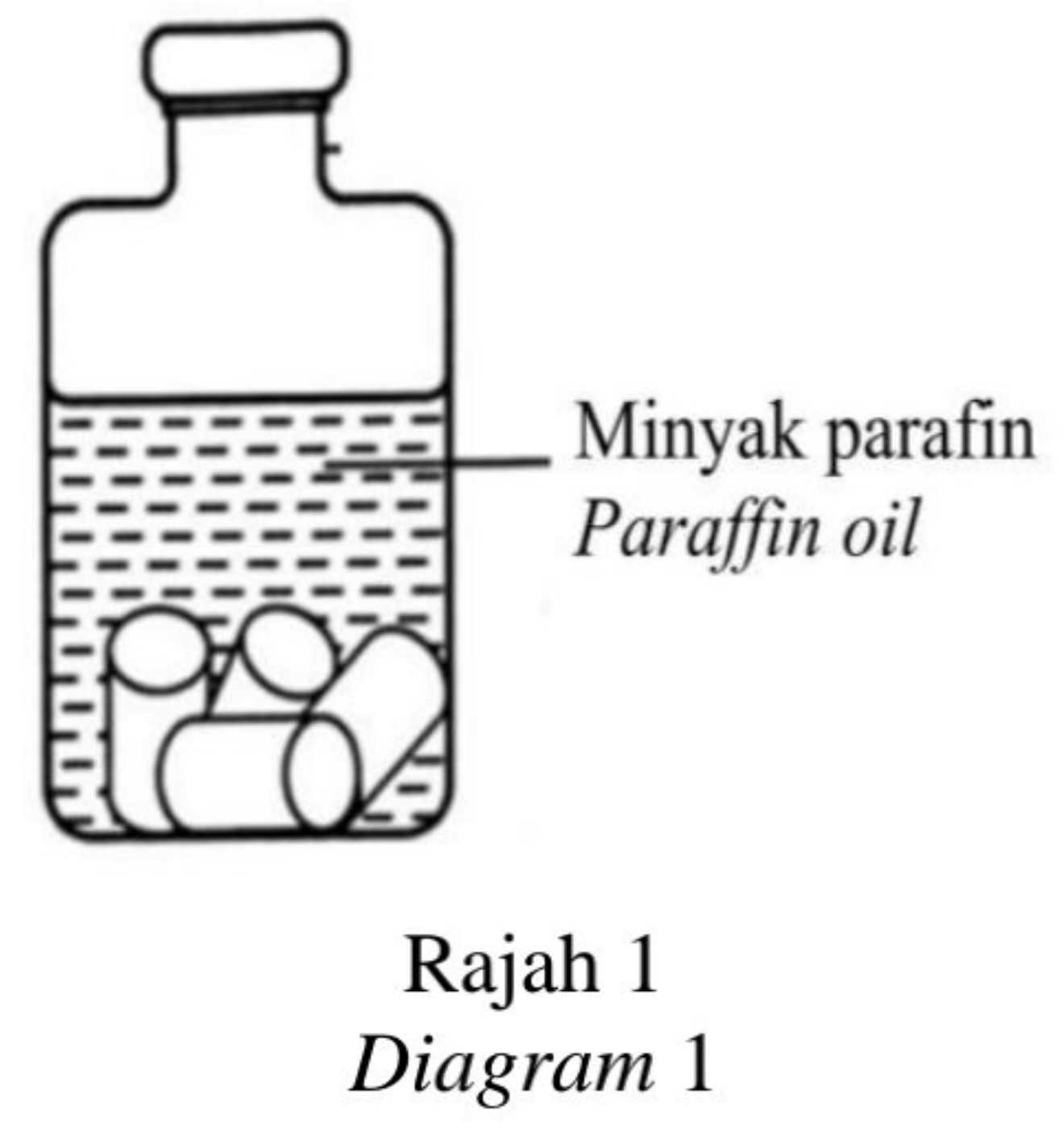
Diagram 1 shows the method used to store an element (a bottle with pieces of the element under paraffin oil). Which of the following is the explanation of why this method was used?
Medium
In the Periodic Table of the Element, X element has 11 proton number, while Y element has 17 proton number.
Which of the following is not true about element X and Y?
Medium
Which of the following molecules share three pairs of electrons between two atoms?
Medium
Which of the following substances dissolve in water to produce a solution with pH value more than 7?
Medium
The following equation represents a reaction between zinc metal and hydrochloric acid.
Zn + 2HCl → ZnCl₂ + H₂
Determine maximum volume of hydrogen gas released when 50 cm³ of 1.0 mol dm⁻³ hydrochloric acid reacts with excess zinc at room condition.
[1 mole of any gas occupies 24 dm³ mol⁻¹ at room conditions]
Medium
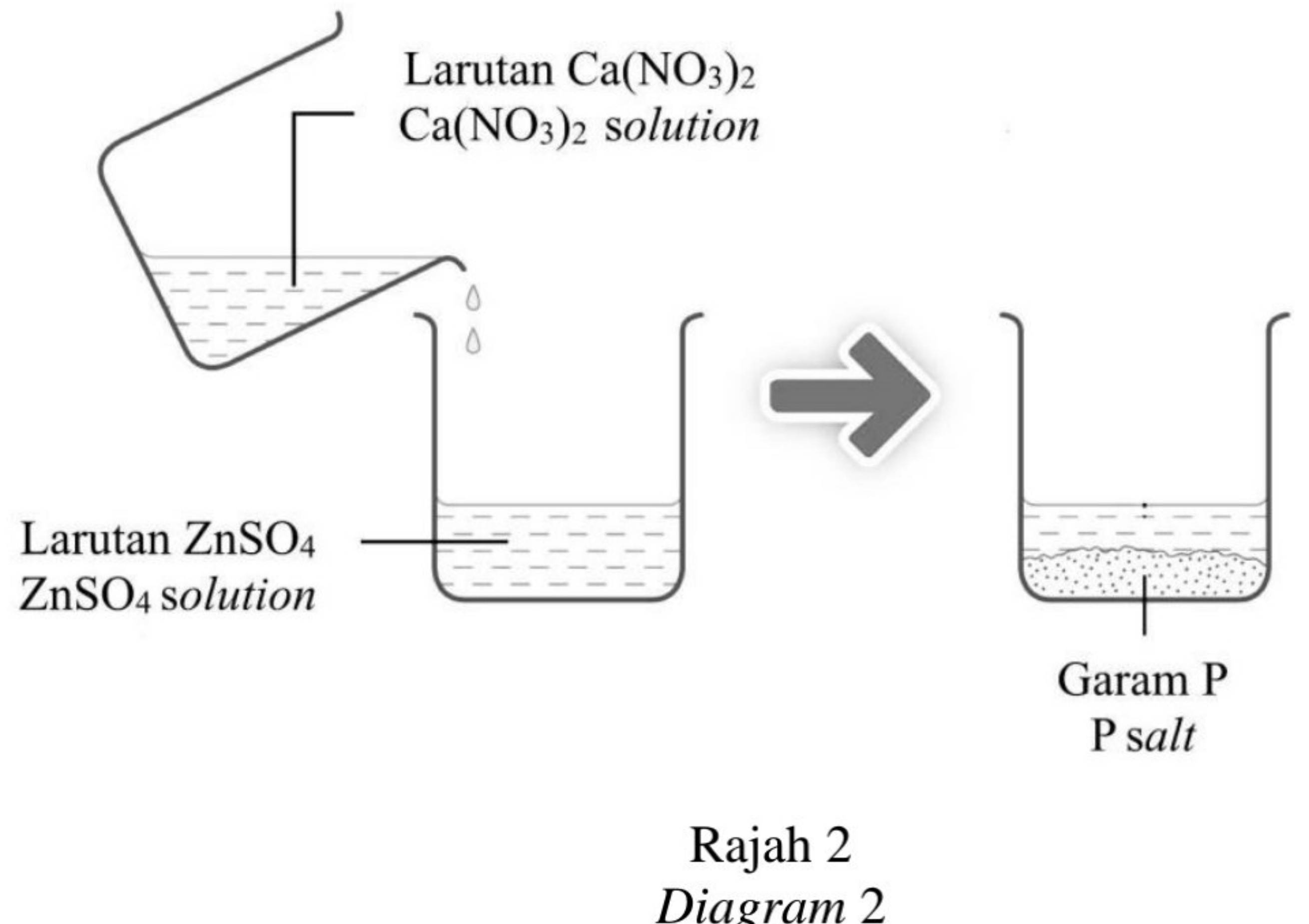
Diagram 2 shows an experiment to produce salt P: Ca(NO₃)₂ solution is poured into ZnSO₄ solution and salt P forms as a precipitate.
What salt solution can be used to replace Ca(NO₃)₂ solution to produce salt that has the same solubility as salt P?
Medium
When 2 cm³ of copper(II) sulphate solution is added to the mixture of dilute sulfuric acid and zinc granules, the rate of reaction increases.
Which statement best explains why the rate of reaction increases?
Medium
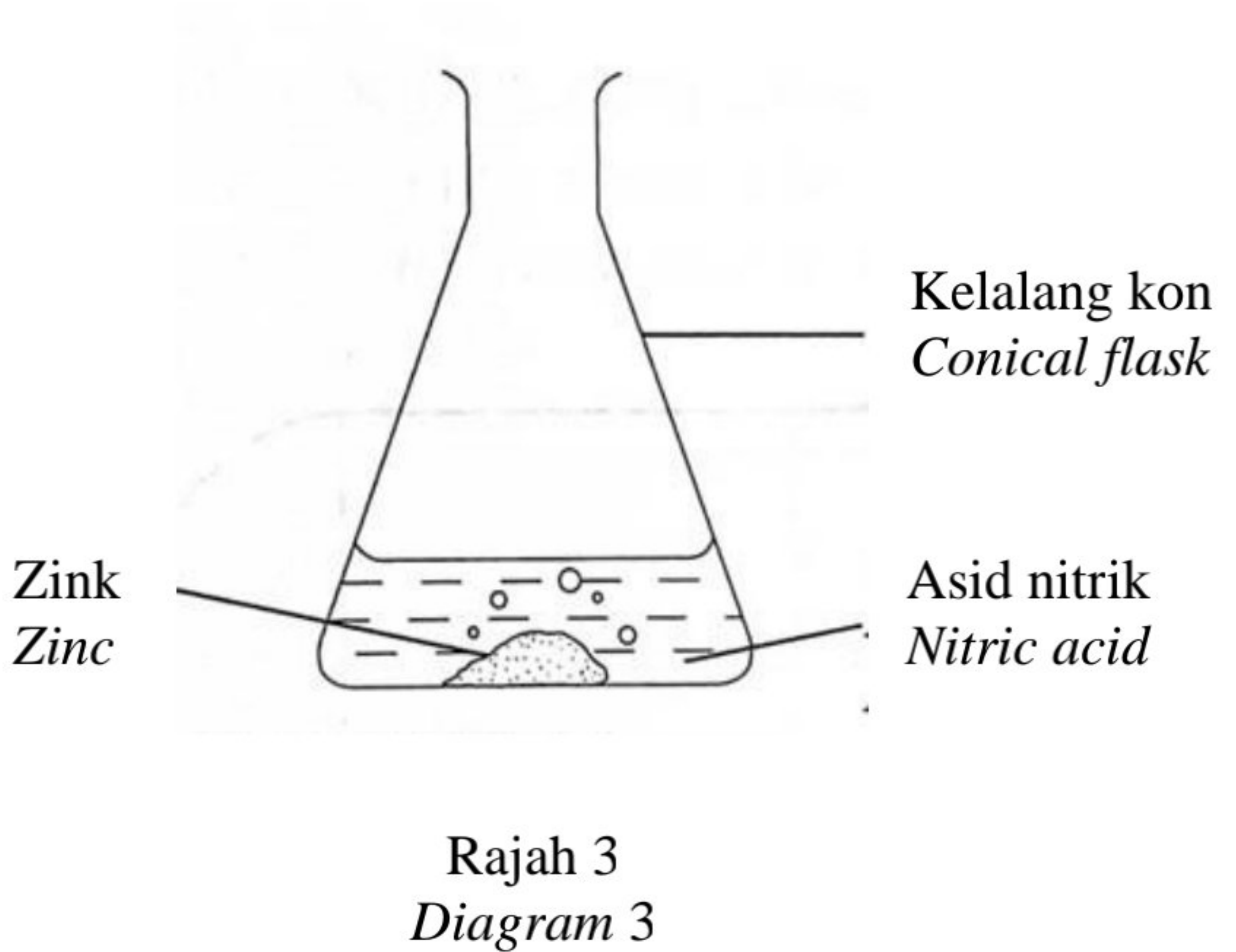
Diagram 3 shows the reaction between zinc and nitric acid in a conical flask.
Which of the following is the measurable change in this reaction?
Medium
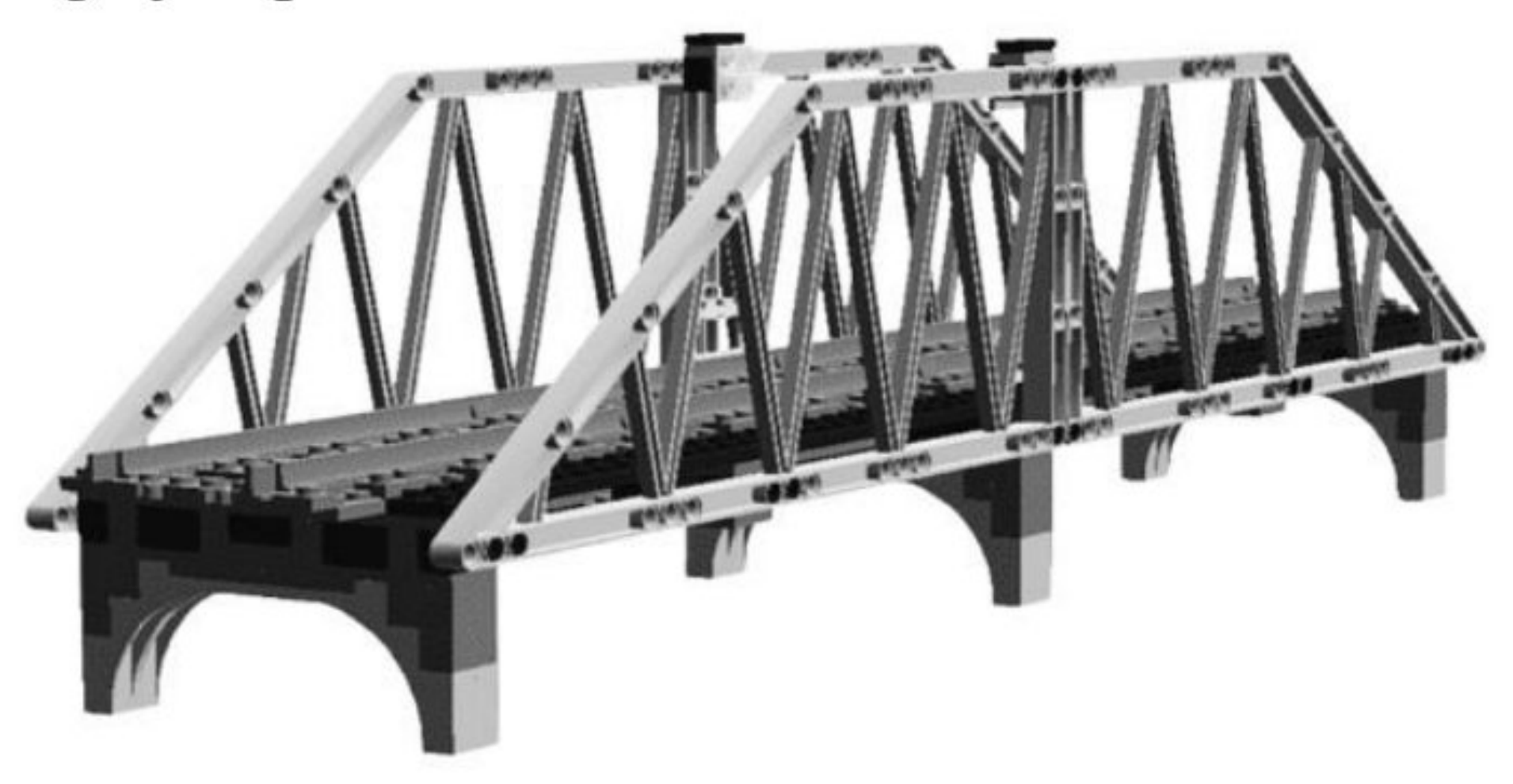
Diagram 4 shows a bridge for pedestrians. One company in China used steel to construct the bridge. Which of the following is the arrangement of the atoms in steel?
Medium
Which of the following solutions should not be stored in a tin-plated container?
I NaNO₃
II KCl
III AgNO₃
IV CuSO₄
Medium
The natural smell of a pineapple is due to the presence of an ester. Which of the following is the name of the ester?
Medium
The following equation represents the formation of magnesium sulphate, MgSO₄.
Mg + H₂SO₄ → MgSO₄ + H₂
Heat released when 1 mol of MgSO₄ is 467 kJ mol⁻¹.
Which energy level diagram is correct for the reaction?
Medium
Which chemical reaction produces the highest heat of neutralisation?
A CH₃COOH + NaOH → CH₃COONa + H₂O
B HNO₃ + NH₄OH → NH₄NO₃ + H₂O
C H₂SO₄ + 2NaOH → Na₂SO₄ + 2H₂O
D H₂SO₄ + 2NH₄OH → (NH₄)SO₄ + 2H₂O
Medium
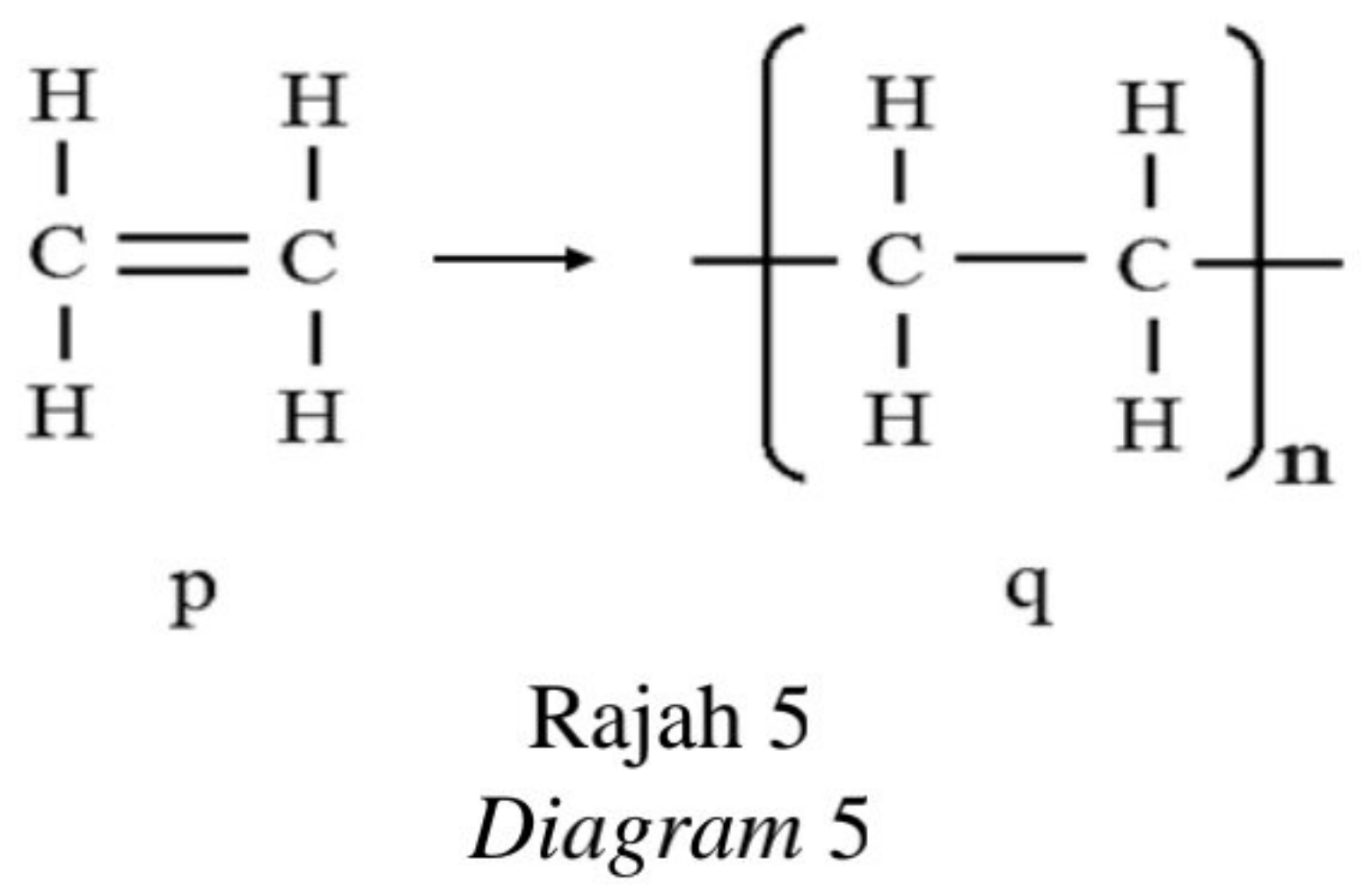
Diagram 5 shows the polymerization reaction of substance p to formed substance q (ethene polymerising to poly(ethene)).
p and q are similar in terms of
Medium
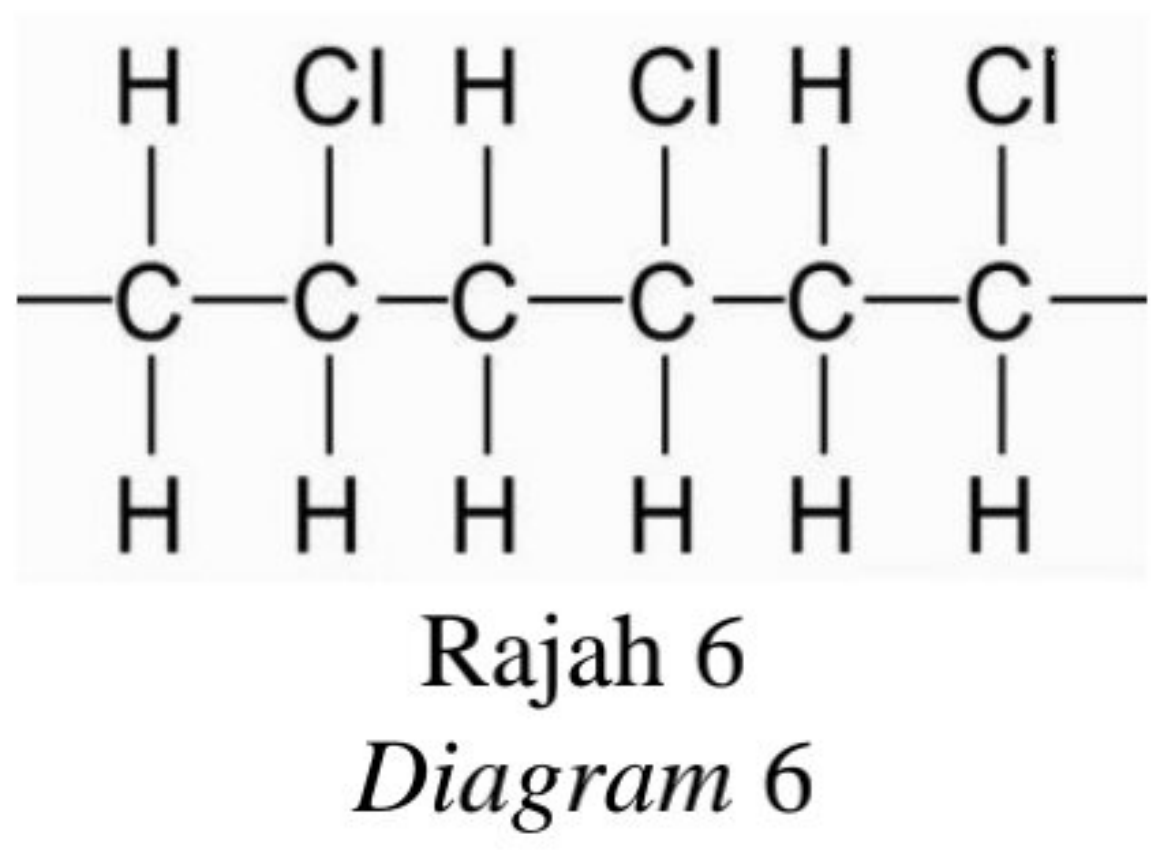
Diagram 6 showing structural formulae of a polymer (repeating chain of –CH₂–CHCl–).
What is the relative molecular mass monomer of this polymer?
[Relative atomic mass: H = 1; C = 12; Cl = 35.5]
Medium
Raju: Farhan, my clothes still have blood stains although they have been washed twice with this seawater.
Farhan: Try washing them with my cleaning agent. Blood stains could be removed.
Which of the following cleaning agents can be used by Raju?
Medium
Diagram 7 shows reactions of acid X: acid X + iron powder gives iron(II) nitrate; acid X + zinc carbonate gives salt Y.
Salt Y could be
Medium
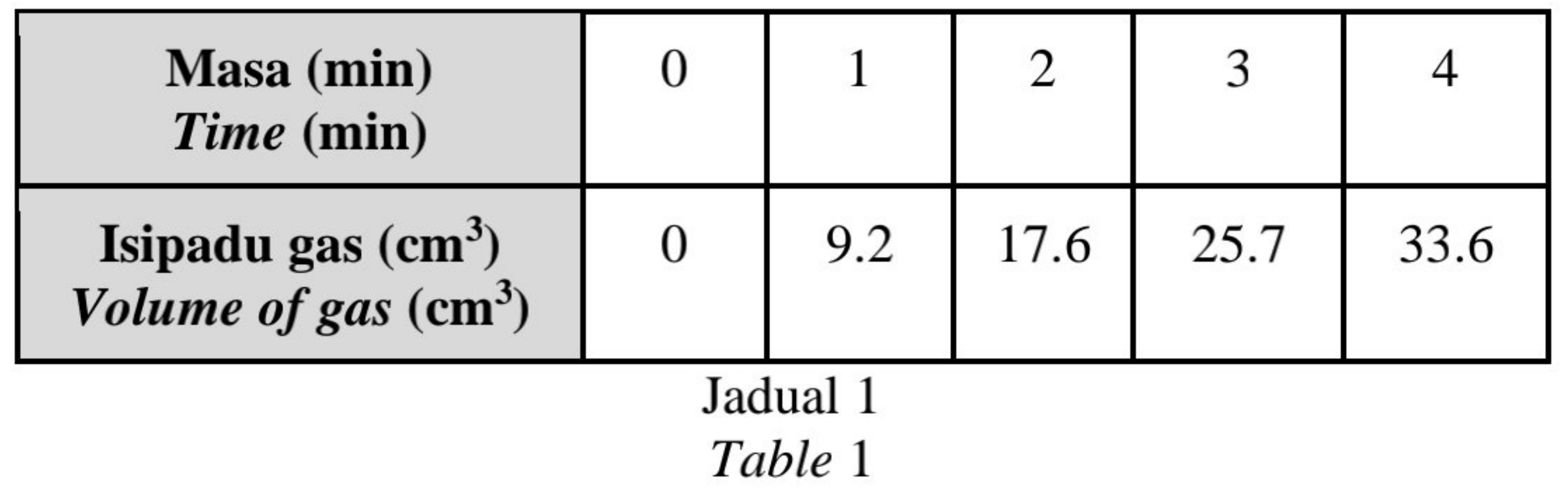
Table 1 shows the total volume of oxygen liberated at regular time intervals for the decomposition of hydrogen peroxide, H₂O₂ at room temperature catalysed by manganese(IV) oxide.
Time (min): 0, 1, 2, 3, 4
Volume of gas (cm³): 0, 9.2, 17.6, 25.7, 33.6
What is the average rate of reaction in the third minutes?
Medium
The following equation represents the oxidation of iron by steam.
3H₂O + 2Fe → Fe₂O₃ + 3H₂
What is the maximum mass of iron(III) oxide produced when 50 g of steam reacts with 100 g of iron?
[Relative atomic mass: H = 1; O = 16; Fe = 56]
Medium
110.0 g of propane, C₃H₈ gas undergoes complete combustion in excess oxygen.
What is the volume of carbon dioxide gas produced at room condition?
[Relative atomic mass: H = 1; C = 12; O = 16, Molar volume at room conditions = 24 dm³ mol⁻¹]
Medium
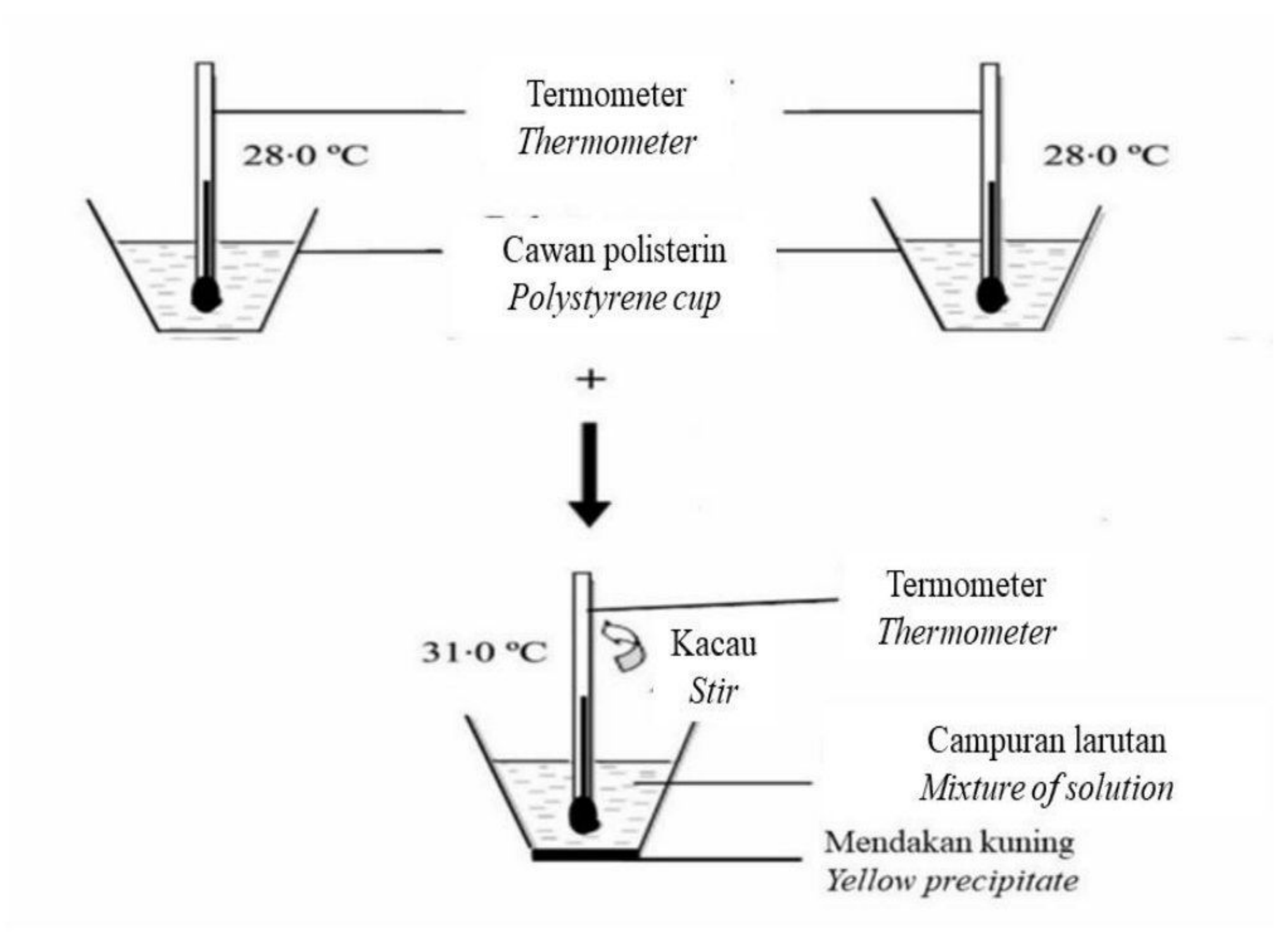
Diagram 8 shows an experiment to determine the heat of precipitation: two solutions at 28.0 °C are mixed in a polystyrene cup; the temperature rises to 31.0 °C and a yellow precipitate forms.
Which of the following mixtures to obtain the result shown?
Medium
Diagram 9 shows the structure of a polymer (alternating two different units in a chain).
What is this polymer and the polymerisation process that produces it?
A Carbohydrate: Addition polymerisation
B Carbohydrate: Condensation polymerisation
C Polyester: Addition polymerisation
D Polyester: Condensation polymerisation