Which of the following is not a hydrocarbon compound?
Easy
Which of the following is not the component of soda lime glass?
Easy
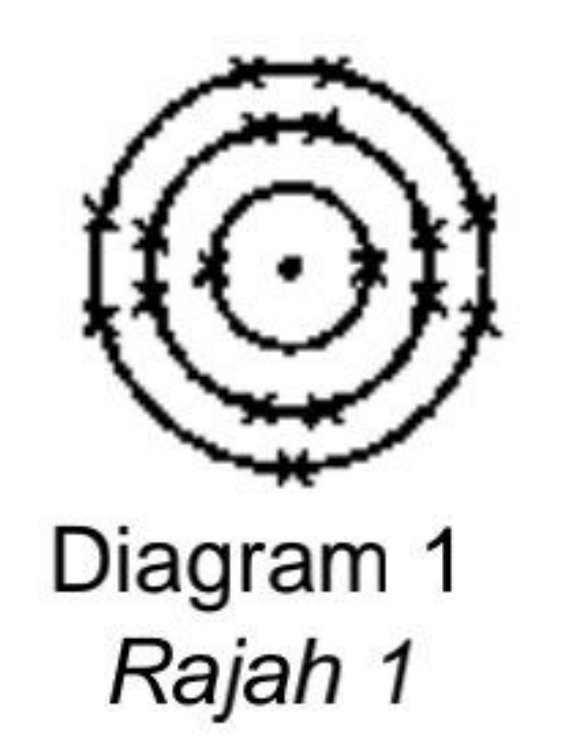
Diagram 1 shows the electron arrangement of an atom of element Q.
What is the number of valence electrons in atom Q?
Medium
Which of the following uses of carbon-14 isotope?
Easy
Chemical formula of copper(I) oxide is
Easy
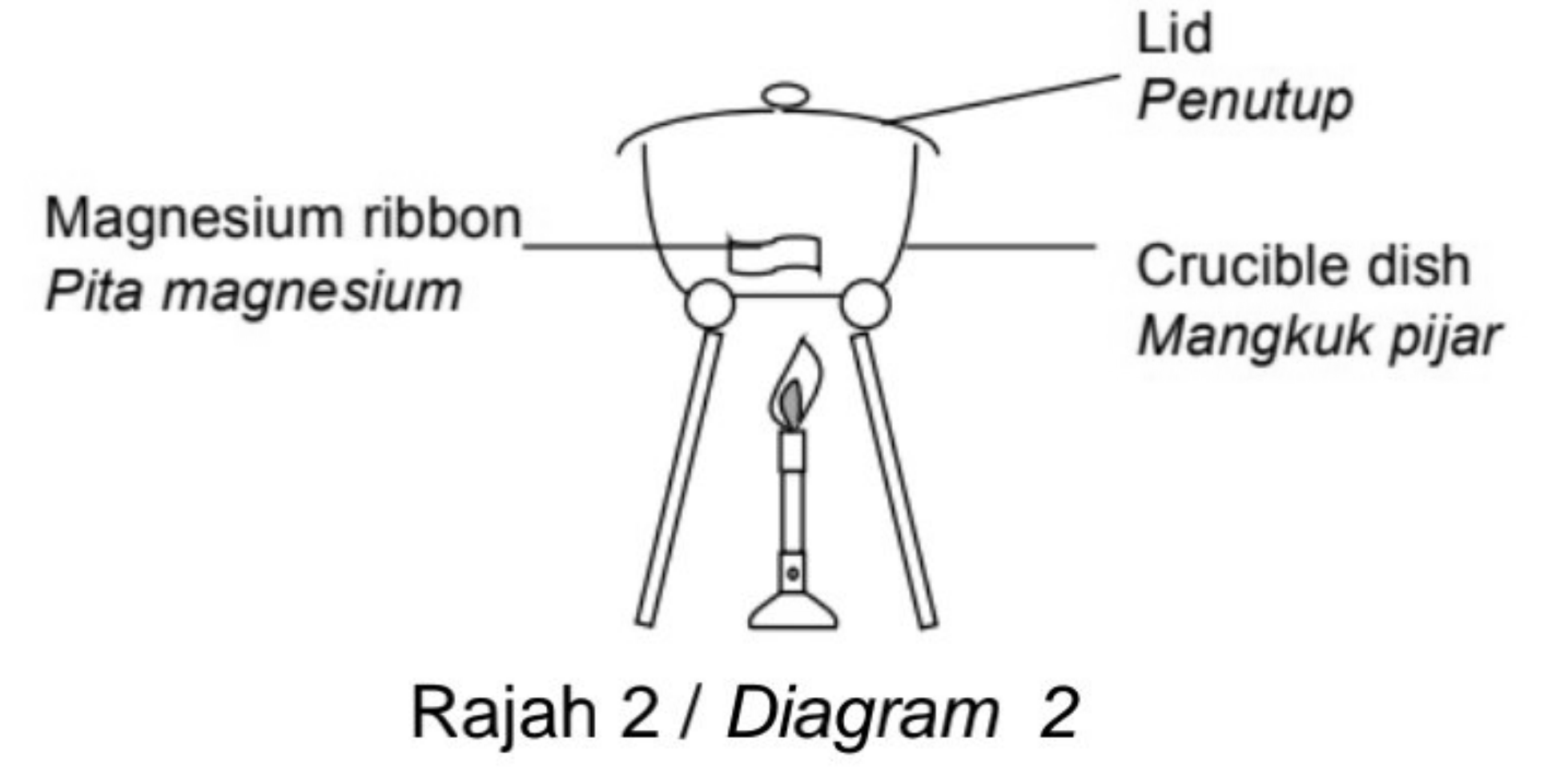
Diagram 2 shows the apparatus set-up to determine the empirical formula of magnesium oxide. (Crucible dish with lid, magnesium ribbon, heated by Bunsen burner.)
Which of the following is the step that should be taken to ensure that all magnesium are react with oxygen and burnt completely?
I Open and close the lid quickly occasionally during heating.
II Heat the magnesium ribbon strongly in the crucible without its lid.
III Observe the white solid produced
IV Repeat heating, cooling and weighing until a constant mass is obtained.
Medium
What is the basic principle used to arrange the elements in the modern Periodic Table of Elements?
Easy
Which characteristic is correct about elements in Group 17 in the Periodic Table as going down the group?
Medium
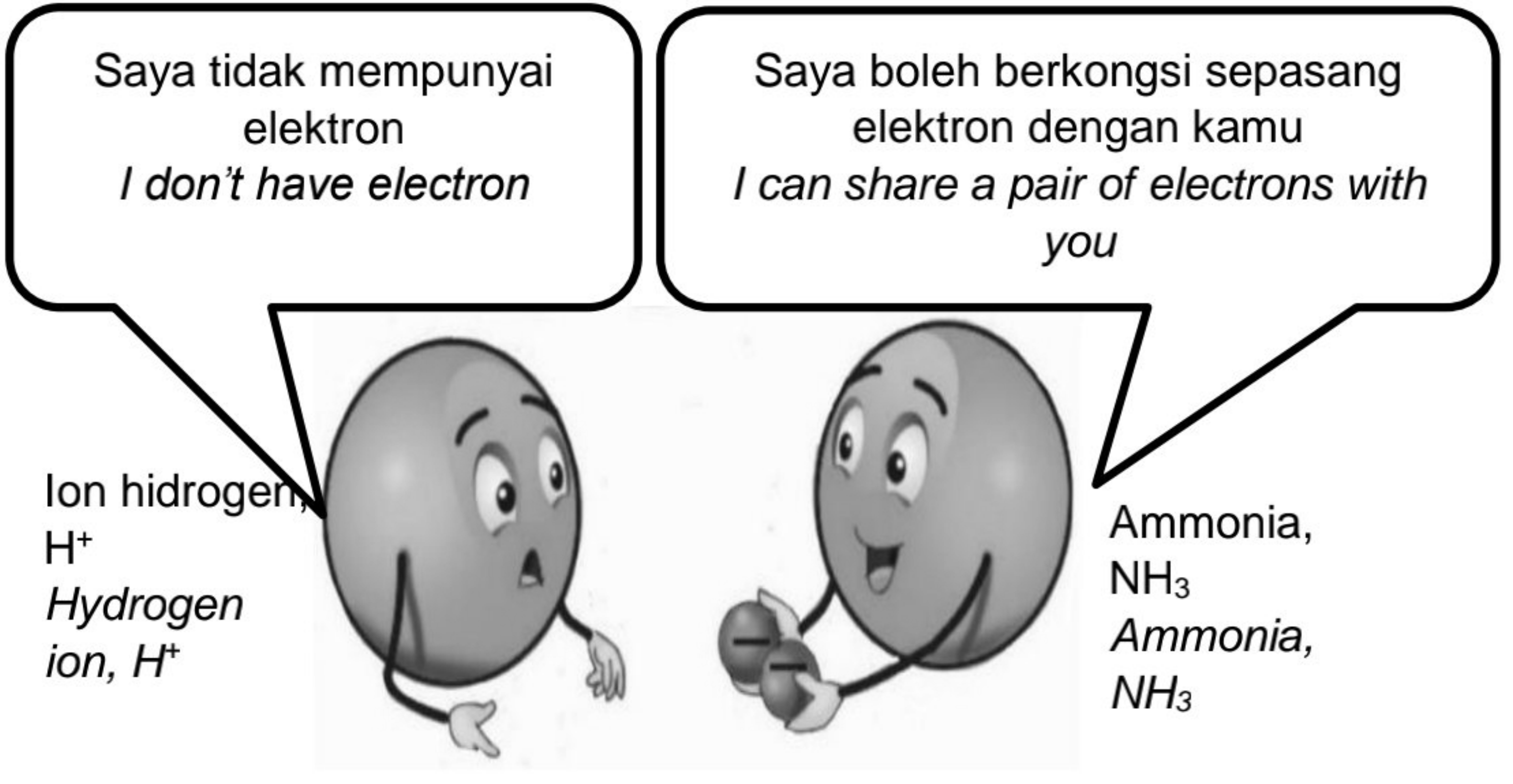
Diagram 3 shows the bond formation of two types of particles. Hydrogen ion, H⁺ says: "I don't have electron". Ammonia, NH₃ says: "I can share a pair of electrons with you".
What is the type of chemical bond formed?
Medium
Which of the following is the property of covalent compound?
Medium
Which of the following is a base?
Easy
Which of the following is true about weak acid?
I The pH is less than 7
II Turn red litmus paper to blue
III Has low concentration of hydrogen ions
IV Completely ionises in the water to produce hydrogen ions, H⁺
Medium
The following equation represent the reaction between zinc strip and hydrochloric acid.
Zn + 2HCl → ZnCl₂ + H₂
Which method is most suitable to increase the rate of reaction?
Easy
Substance R is used to manufacture the body frame of a racing bike. Substance R has the following properties: Resistant to corrosion, Strong, Light.
What is substance R?
Easy
Diagram 4 shows a telescope used to see distance objects.
Which of the following glass is suitable to be used in making telescope lens?
Easy
Which of the following is a synthetic rubber?
Easy
Which of the following is true to explain the coagulation of latex?
Medium
Which reaction is the fastest?
Medium
Diagram 5 shows inland lake known as dead sea. In dry season, solid X formed. During raining season all the solid X disappear. What are the properties of the solid X?
I Can be purified using recrystallization
II Can conduct electricity in molten state
III Consist of chloride and sulphate
IV Low melting and boiling point
Medium
The following chemical equation represents the reaction of ethane with chlorine gas.
CH₄(g) + Cl₂(g) → CH₃Cl(g) + HCl(g)
What is the name of the reaction?
Easy
Diagram 6 shows a production of potassium palmitate through process X. (Palm oil --Process X--> Potassium palmitate)
What is process X?
Easy
Which of the following does not happen when the temperature is increased?
Medium
The proton number of atom R is 14 and its relative atomic mass is 28. Which statements is correct about R?
Medium
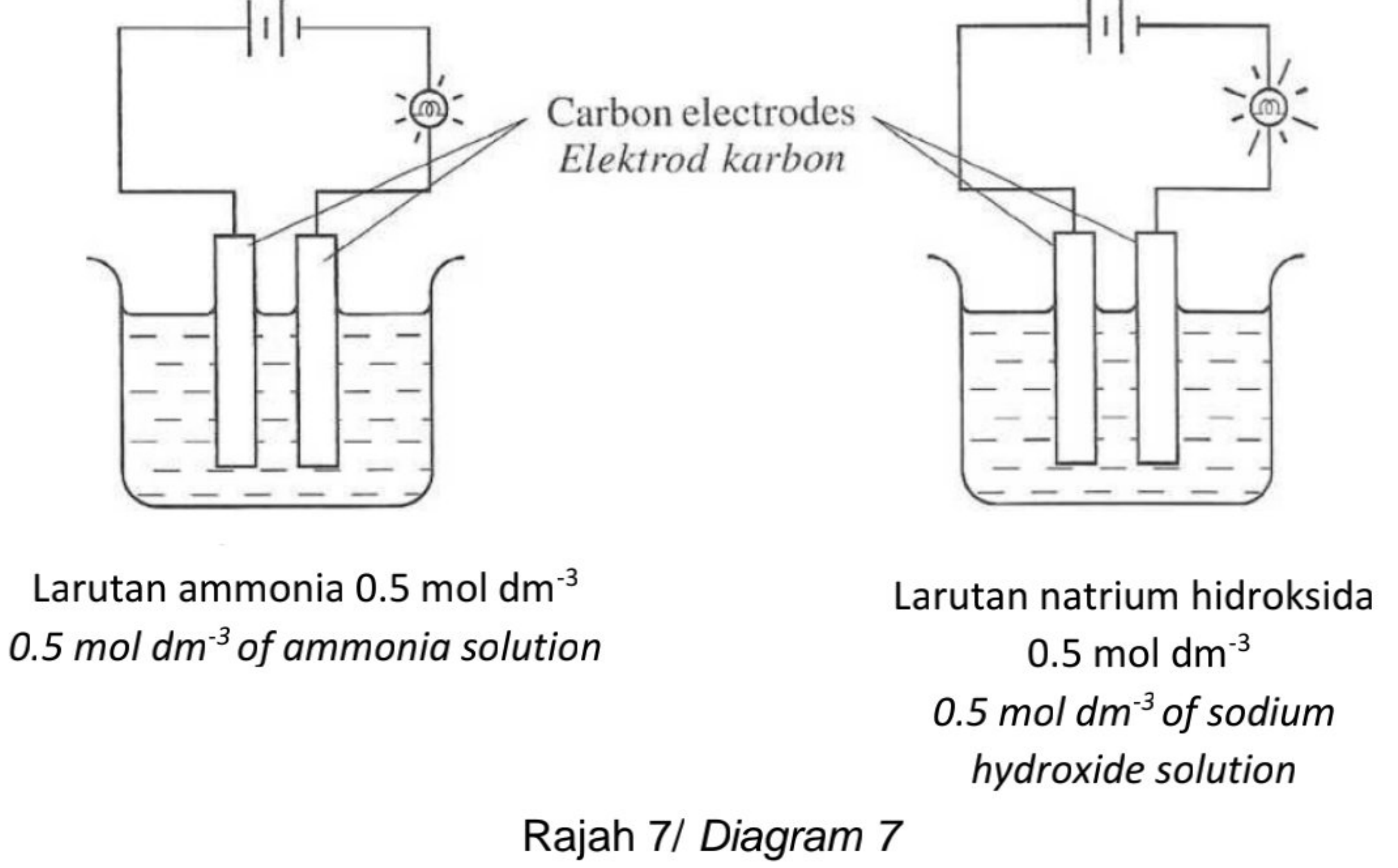
Diagram 7 shows the apparatus set-up for electrolysis of ammonia solution and sodium hydroxide solution (0.5 mol dm⁻³ of each, carbon electrodes). The bulb in the sodium hydroxide circuit is brighter.
Which statement explains the difference in the brightness of the bulb?
Medium
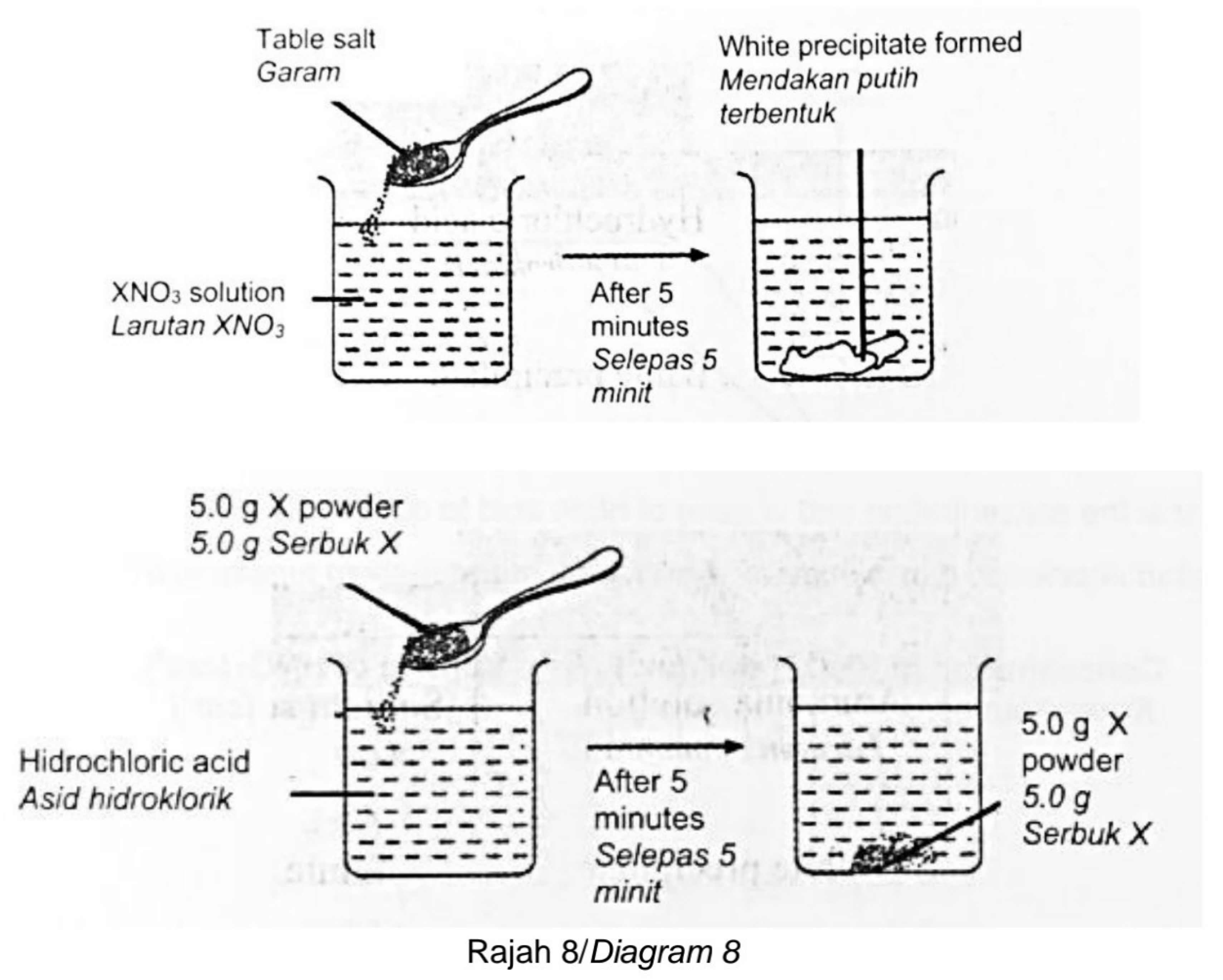
Diagram 8 shows two chemical reactions. Reaction 1: table salt is added to XNO₃ solution; after 5 minutes a white precipitate forms. Reaction 2: 5.0 g X powder is added to hydrochloric acid; after 5 minutes 5.0 g X powder remains.
What is X?
Medium
Which of the following is the electron arrangement diagram for the formation of ionic compound?
Medium
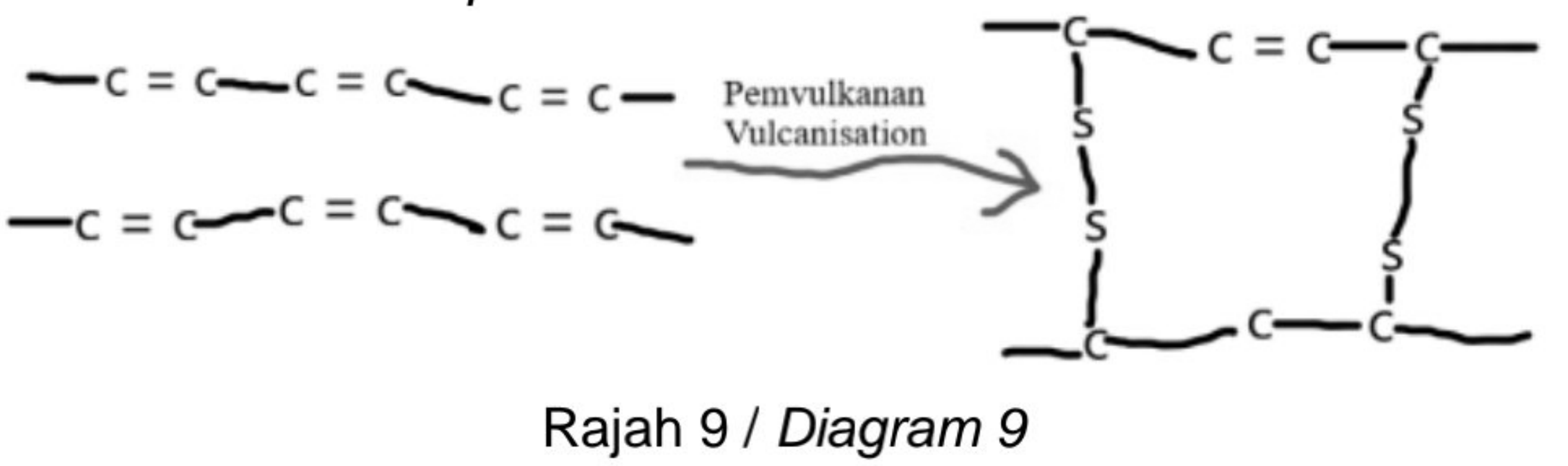
Diagram 9 shows the vulcanisation process of rubber (sulphur cross-links form between rubber chains).
Which of the following are true about vulcanised rubber?
Easy
Diagram 10 shows the structure of a polymer.
Which of the following is the monomer of the polymer?
Medium
What is the oxidation number of chlorine in KClO₃?
Medium
In an experiment, 0.24 g of magnesium powder is added to 50 cm³ of 0.2 mol dm⁻³ zinc sulphate solution. The temperature of the mixture increases by 12 °C. What is the heat of displacement in the experiment?
[Specific heat capacity of a solution = 4.2 J g⁻¹ °C⁻¹; Relative atomic mass of Mg = 24]
Medium
CaCO₃(s) + 2HCl(aq) → CaCl₂(aq) + CO₂(g) + H₂O(l)
Based on the chemical equation, what is the change can be observed to determine the rate of reaction?
Easy
The following equation represents a reaction.
3H₂(g) + N₂(g) → 2NH₃(g)
What is the relative molecular mass of the product?
[Relative atomic mass of H=1; N=14]
Medium
The following information is about organic compound P.
• Has 3 carbon atoms
• Soluble in water
• Reacts with zinc to produce hydrogen gas
What is the name of the organic compound P?
Medium
Which substance is used to differentiate between hexane and hexene?
Easy
Which substance can be used to convert Fe²⁺ to Fe³⁺
Medium
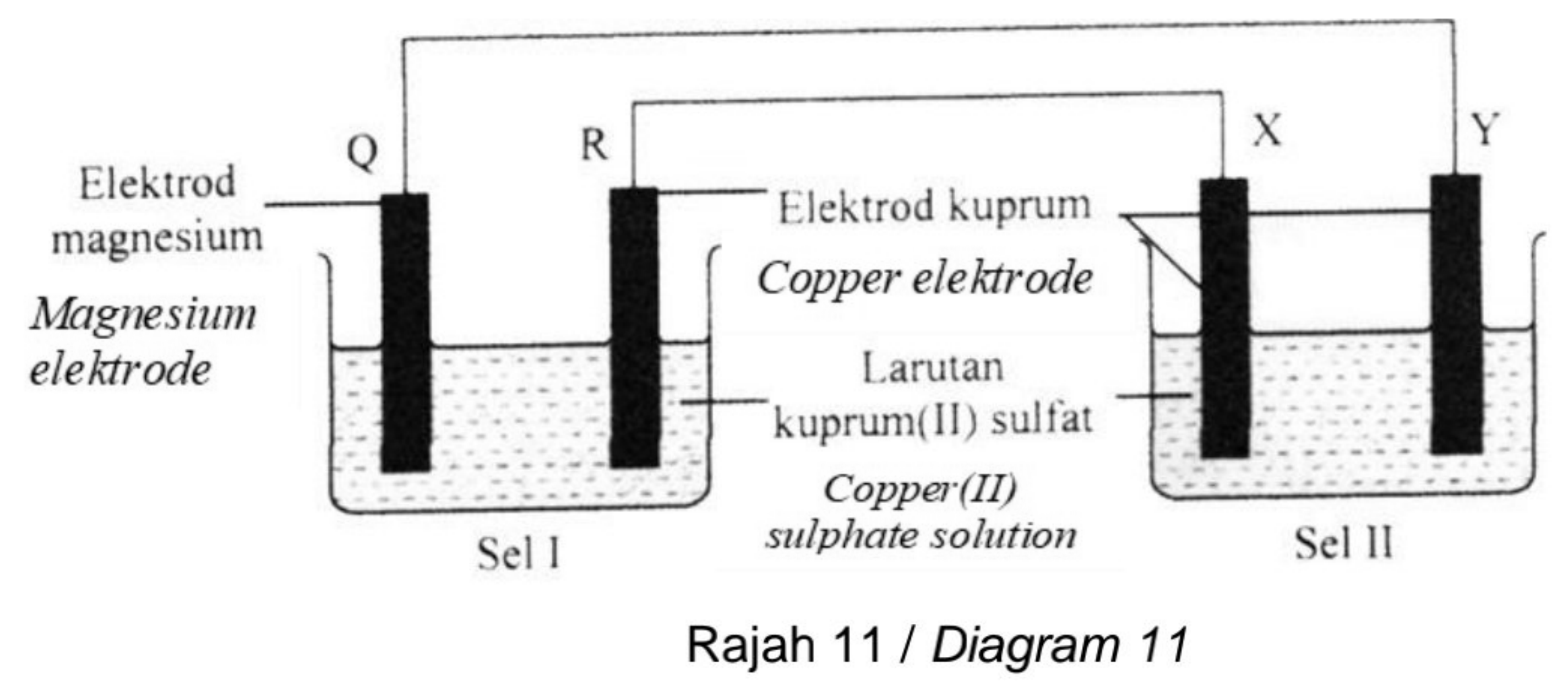
Diagram 11 shows the arrangement of the apparatus for the combination of two cells. Cell I: magnesium electrode Q and copper electrode R. Cell II: copper electrodes X and Y in copper(II) sulphate solution. Q is connected to Y and R is connected to X.
Given the value of the standard electrode potential as follows.
Cu²⁺ + 2e ⇌ Cu +0.34 V
Mg²⁺ + 2e ⇌ Mg +0.40 V
Which of the following statements is correct?
I A colorless gas bubble is produced at the X electrode
II The R electrode and the Y electrode are thin
III Electrode X and electrode Q are anodes
IV The blue color of the copper(II) sulfate solution in Cell II does not change
Medium
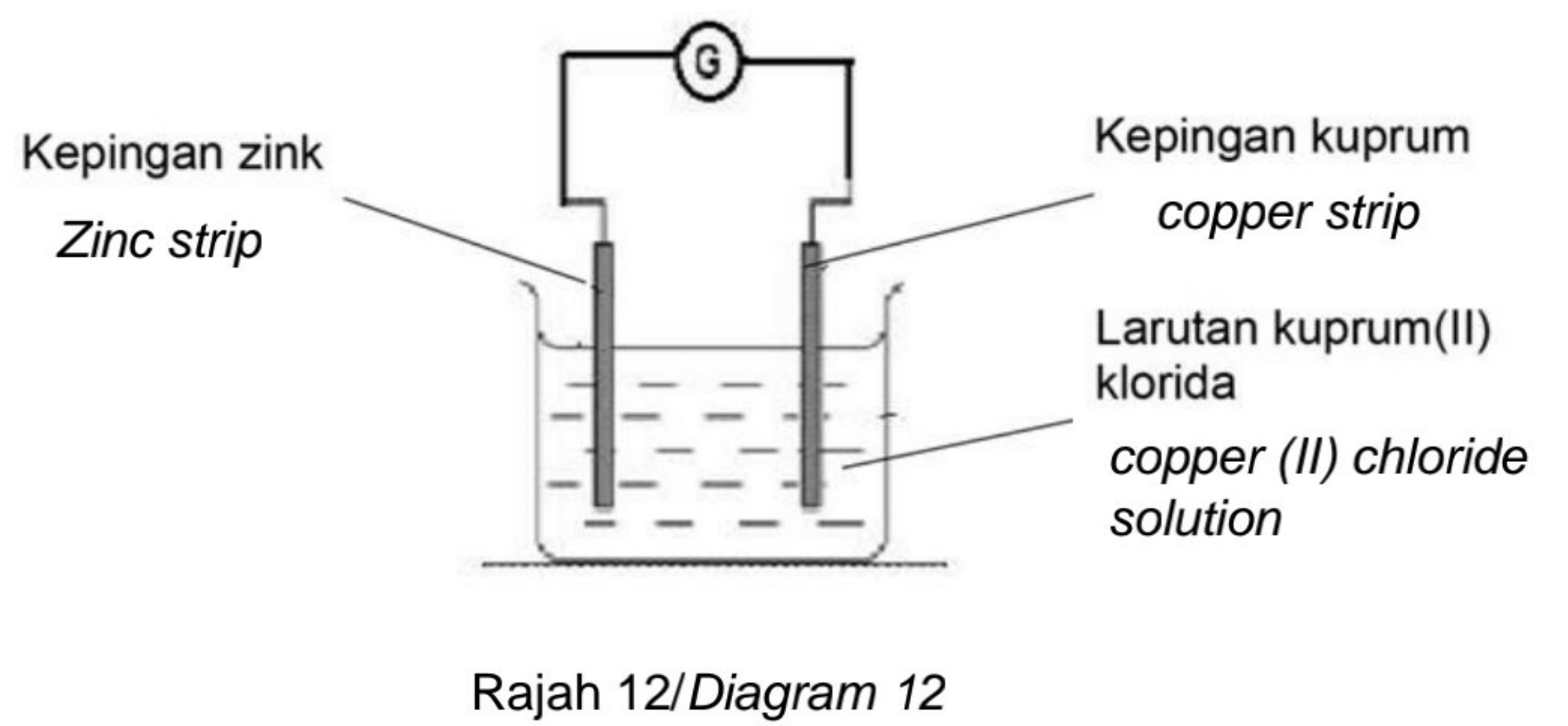
Diagram 12 shows a chemical cell (zinc strip and copper strip in copper(II) chloride solution, connected through a galvanometer).
Which substance undergoes oxidation and reduction?
[E° for half cell; Zn²⁺(aq) + 2e ⇌ Zn(s) E° = -0.76 V]
(Options are in a table: Oxidation / Reduction.)
Medium
The following equation shows the complete combustion of propene gas.
C₃H₆(g) + 9/2 O₂(g) → 3CO₂(g) + 3H₂O(g)
Which of the following statements are true when 1 mol of propene gas is burnt completely?
[Relative molecular mass: C₃H₆ = 42, O₂ = 32, CO₂ = 44, H₂O = 18; Molar volume of gas is 22.4 dm³ mol⁻¹ at S.T.P.]
I Complete combustion of 0.1 mol of propene produces 5.4 g of water
II Complete combustion of 1 mol of propene gas produces 2 mol of water
III Complete combustion of 4.2 g of propene requires 14.4 g of oxygen.
IV Complete combustion of 0.1 mol of propene produces 6.72 dm³ carbon dioxide gas at s.t.p.
Medium
The following equation shows the combustion of heptane, C₇H₁₆ in excess oxygen.
C₇H₁₆ + 11O₂ → 7CO₂ + 8H₂O ΔH = -5512 kJ mol⁻¹
In an experiment the combustion of heptane in excess oxygen releases 1378 kJ energy. What is the mass of heptane used?
[Relative atomic mass: H = 1; C = 12]
Medium
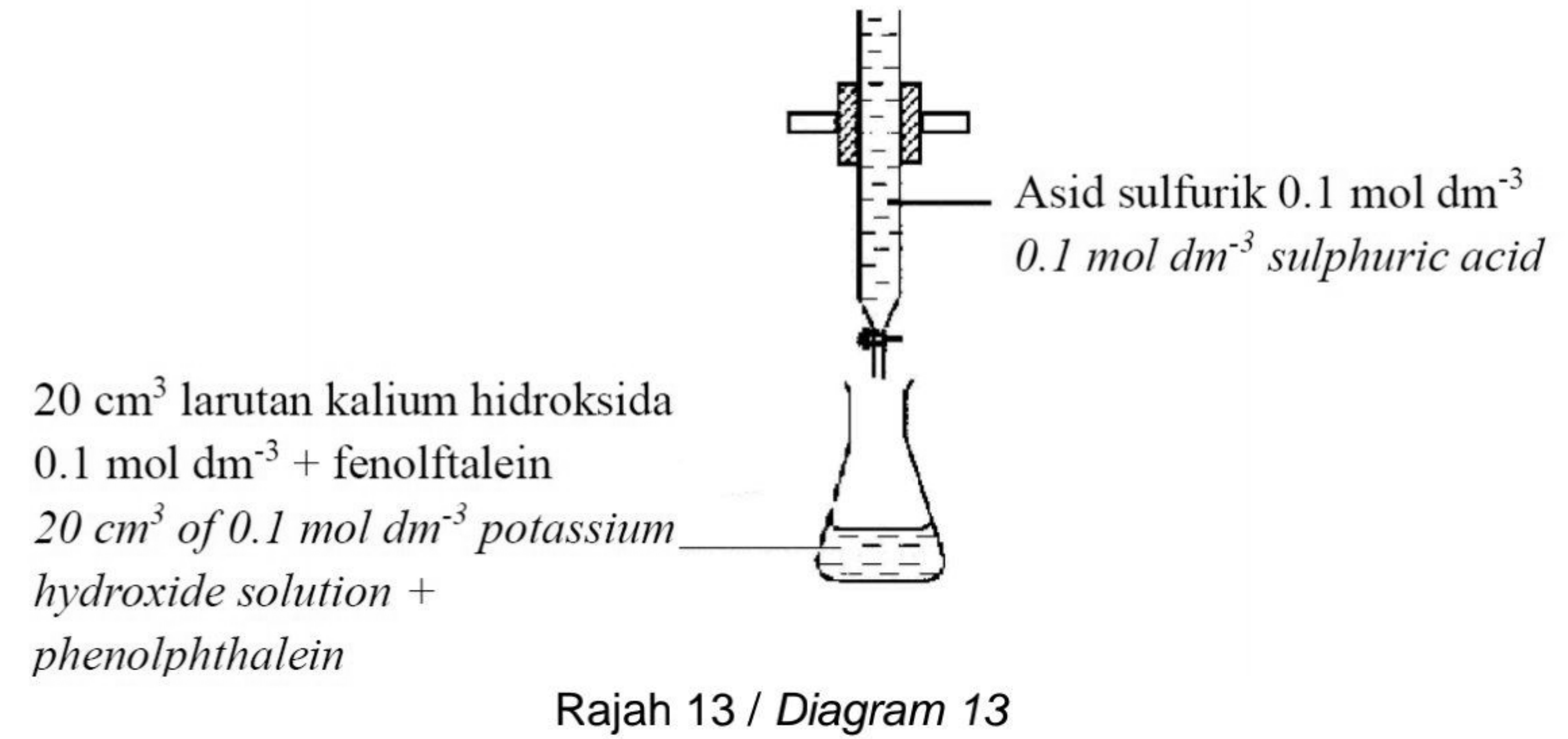
Diagram 13 shows set up apparatus for titration of potassium hydroxide with sulphuric acid (burette: 0.1 mol dm⁻³ sulphuric acid; flask: 20 cm³ of 0.1 mol dm⁻³ potassium hydroxide solution + phenolphthalein).
What is total volume of the mixed solution in the conical flask at the end point of titration in Diagram 13?