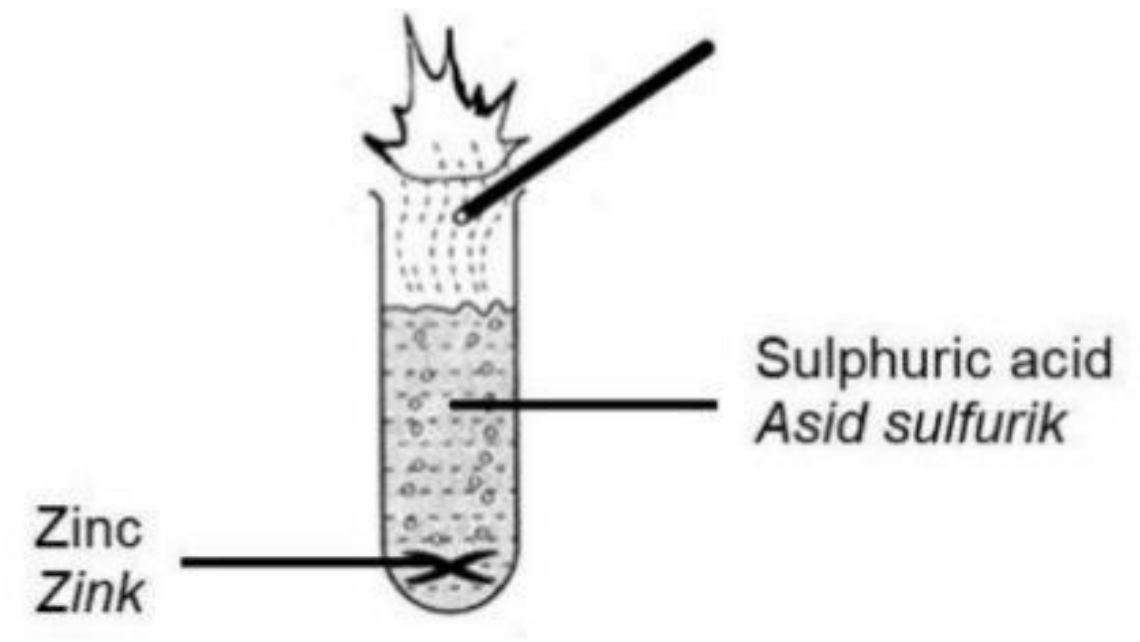
Diagram 1 shows zinc granules which is put into a conical flask containing sulphuric acid to produce gas A. What is gas A?
Easy
Which substance is electrolyte?
Easy
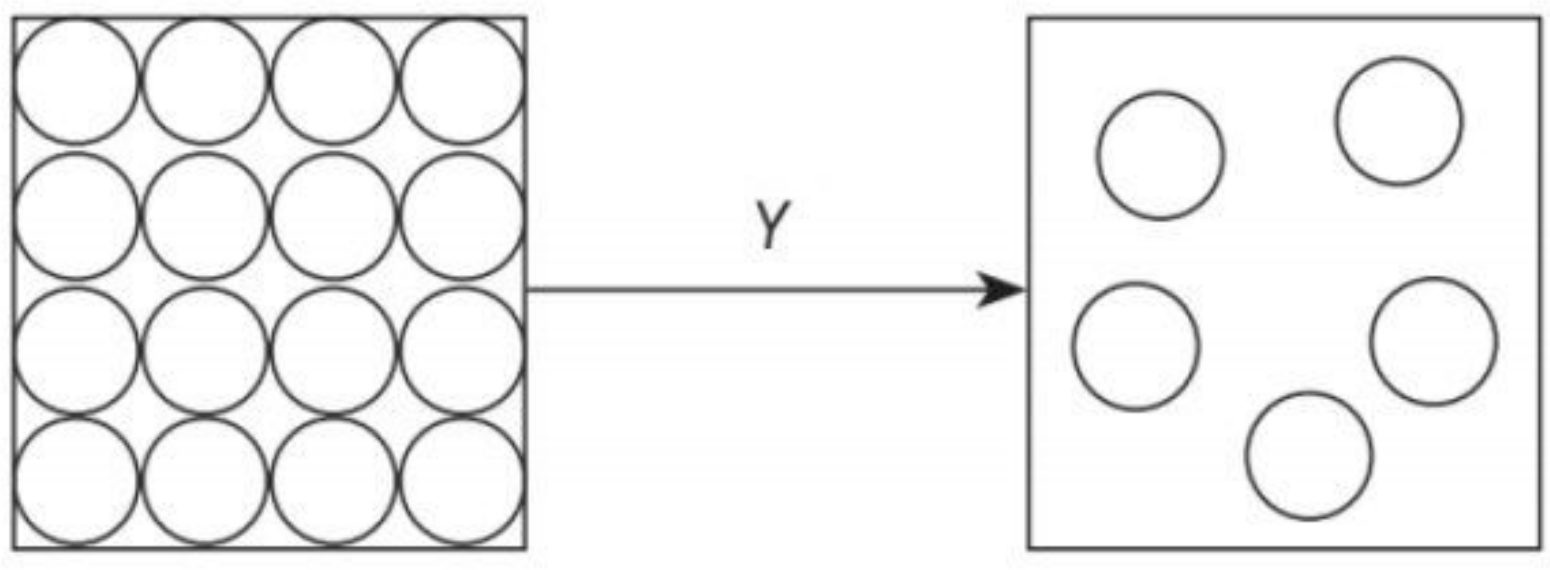
Diagram 2 shows the arrangement of particles of a substance that undergo change in the physical state through process Y (solid to gas). Which of the following substances undergo process Y? I Bromine II Iodine III Chlorine IV Naphthalene
Medium
Which of the following substance is an element?
Easy
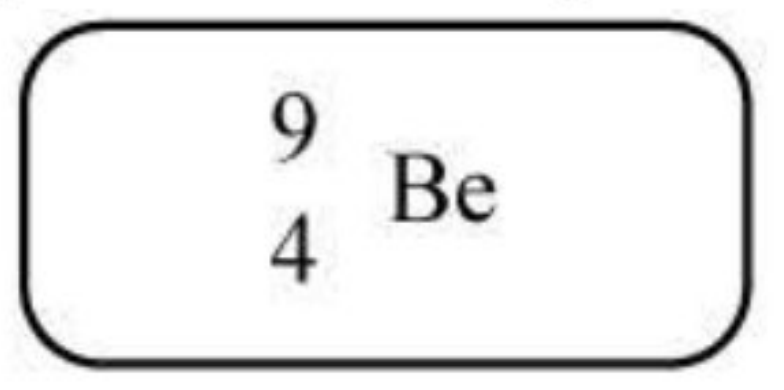
Diagram 3 shows the standard representation symbol of beryllium atom (nucleon number 9, proton number 4, symbol Be). What is the number of valence electron for beryllium atom?
Medium
Which of the following Group 1 elements has the smallest atomic size?
Easy
Which of the following elements could form coloured compounds and aqueous solutions?
Easy
The scuba tank used by deep sea divers contains 79% nitrogen and 21% a mixture of oxygen and unknown elements. Which of the following could be the element?
Medium
Which substance is a covalent compound?
Easy
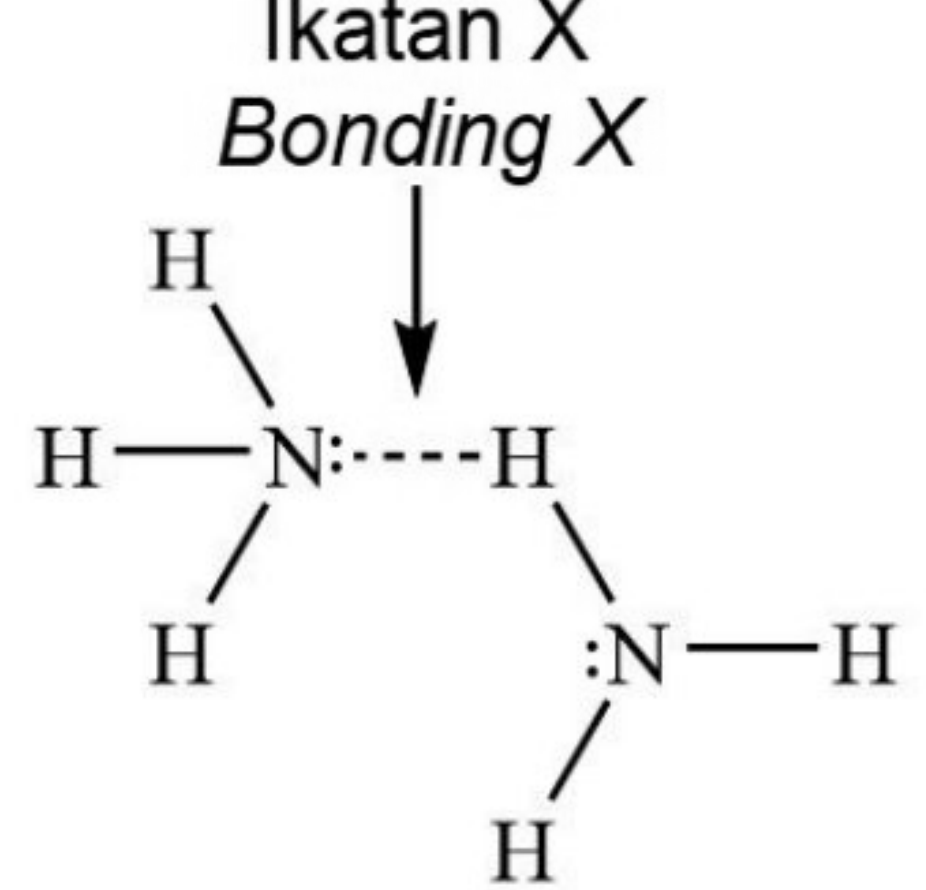
Diagram 4 shows the formation of bonding X (a dotted line from the N atom of one NH3 molecule to an H atom of another NH3 molecule). What is bonding X?
Medium
Which of the following is an example of makeup cosmetic?
Easy
When glass X is heated to high temperature and quickly plunged into cold water, X does not crack. What is the possible glass that represent X?
Easy
Which of the following does not happen when the temperature is increased?
Medium
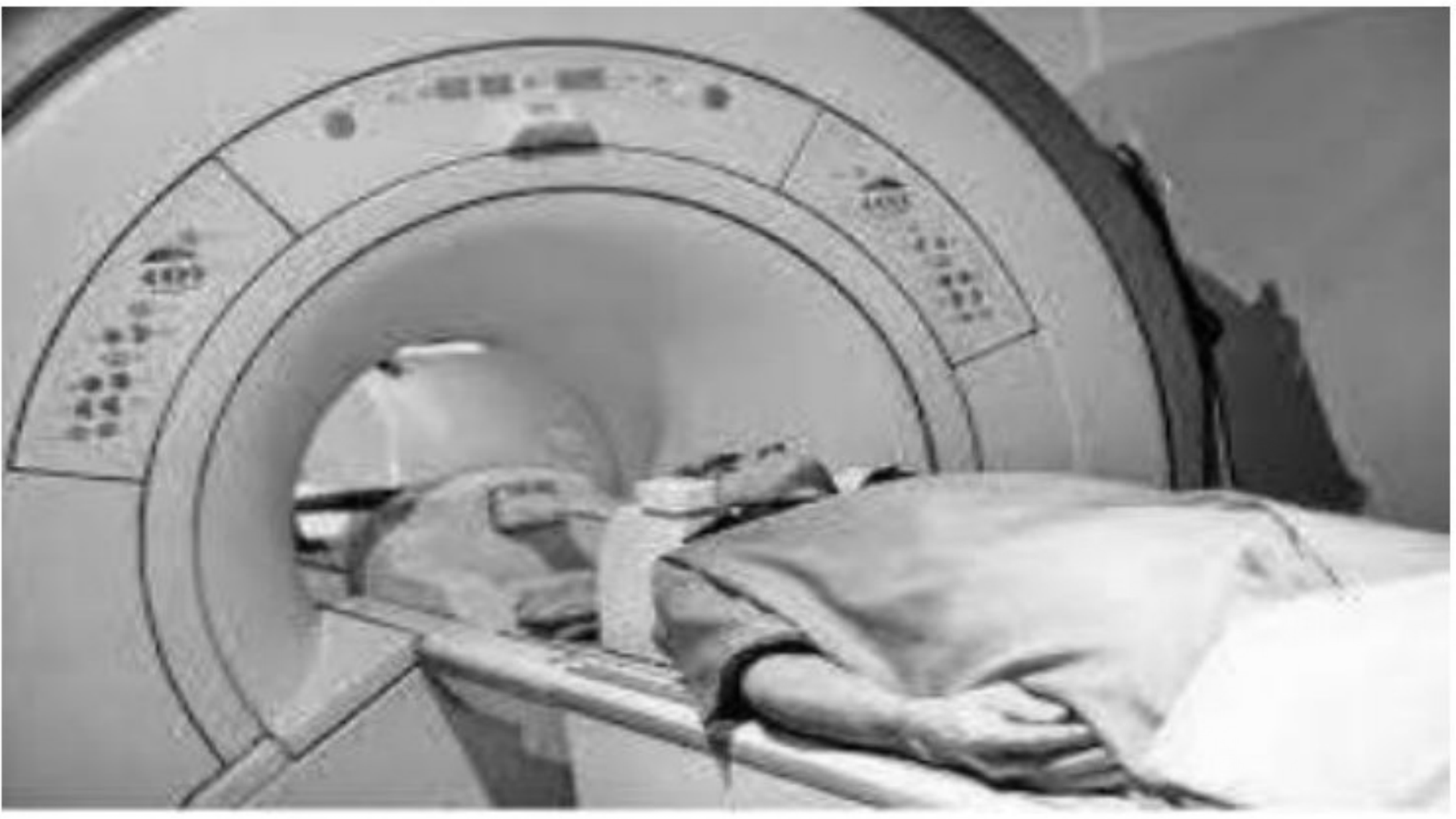
Diagram 5 shows magnetic resonance imaging where material X is used in particle acceleration. What is material X?
Easy
Petroleum consists of hydrocarbons. How are these hydrocarbons separated?
Easy
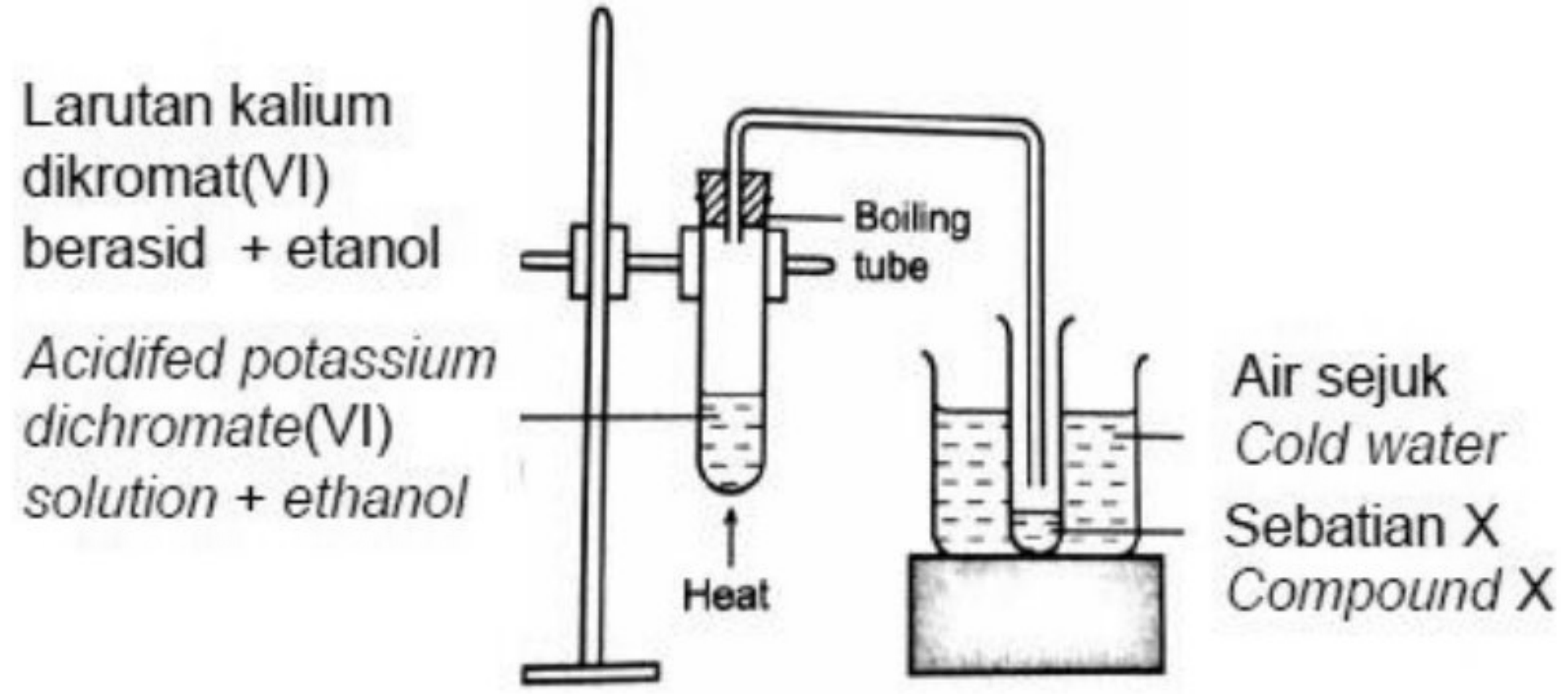
Diagram 6 shows set-up of apparatus to prepare compound X (heating acidified potassium dichromate(VI) solution + ethanol in a boiling tube, product collected in a test tube in cold water). Which of the following statement is true about compound X? I Has general formula CnH2n II Has functional group of -COOH III Reacts with magnesium to produce hydrogen gas IV Reacts with hydrogen at 180 °C in the presence of nickel to produce alkane
Medium
Why the boiling point of water is higher than methane?
Medium
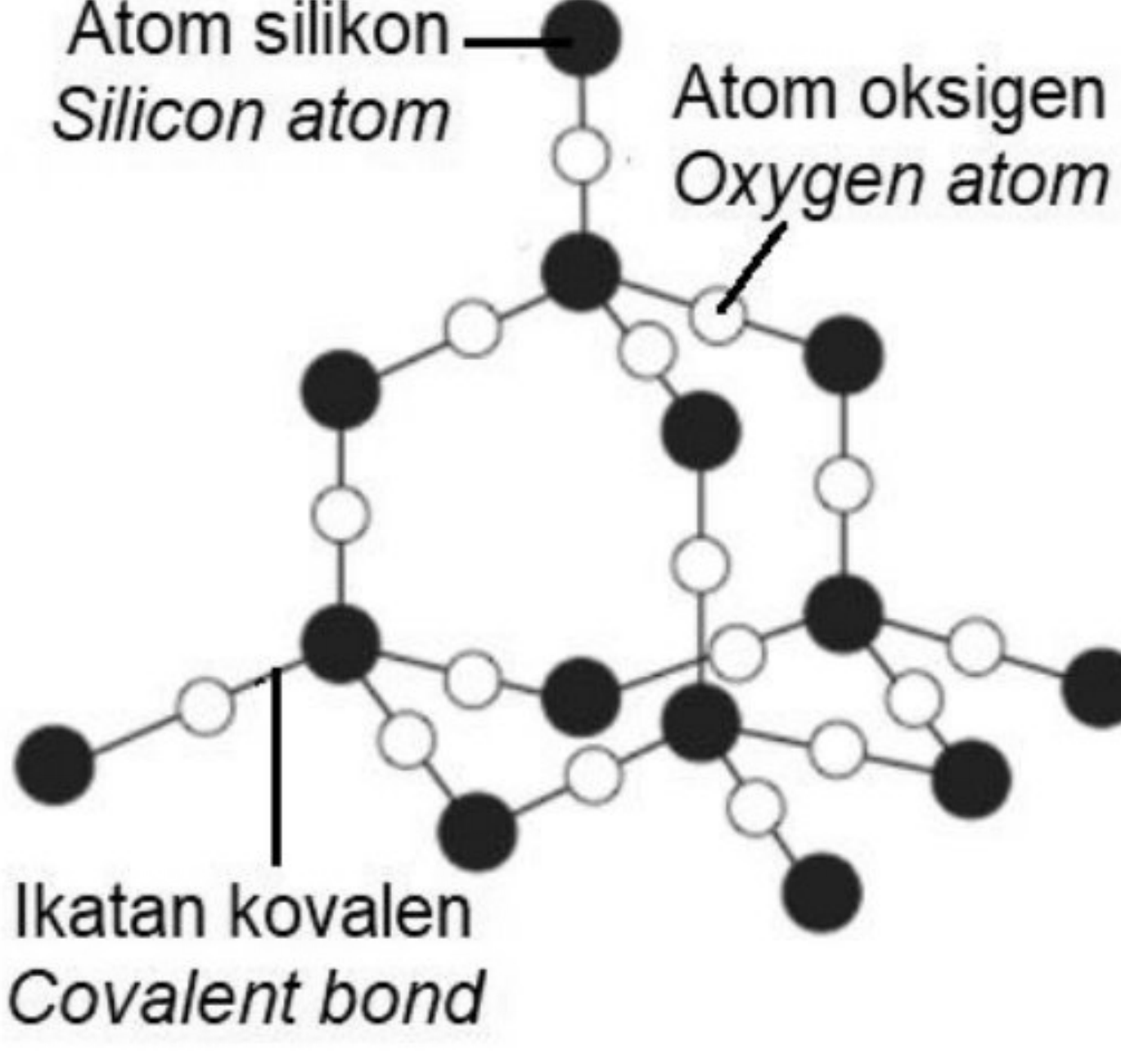
Diagram 7 shows the atom model of a compound (silicon atoms and oxygen atoms joined by covalent bonds in a giant network). Which of the following is correct about the compound?
Medium
Which of the following is the importance of Green Technology?
Easy
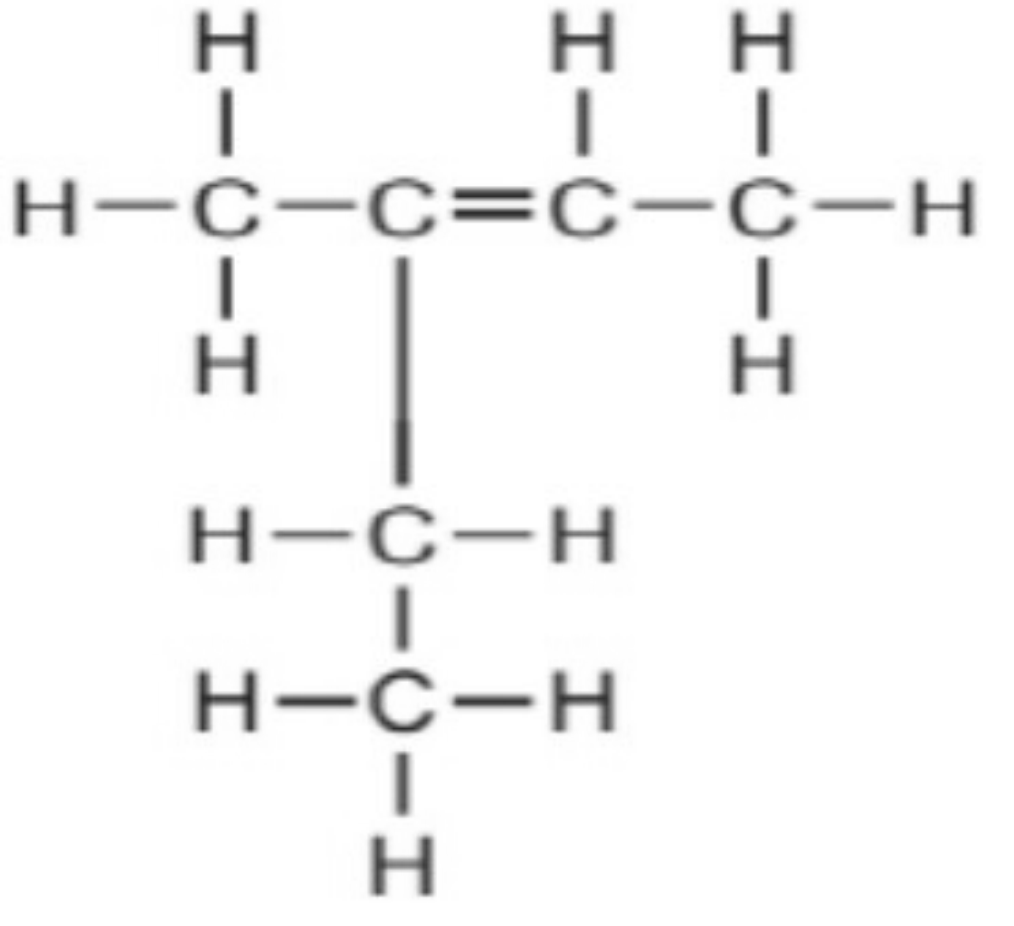
Diagram 8 shows the structural formula of an isomer for an alkene (CH3-C(C2H5)=CH-CH3 drawn with an ethyl branch on the second carbon). Name the isomer according to the IUPAC nomenclature system.
Medium
The following ionic equation shows the reaction between zinc and acid. Zn + 2H+ → Zn2+ + H2. What is the oxidation number change for hydrogen?
Easy
Which of the following equations represents a redox reaction?
Medium
What is the mass of phosphorus that contains twice the number of atoms found in 14 g of iron? [Relative atomic mass: P = 31; Fe = 56]
Medium
Which of the following statements is correct about one mole of ethane gas, C2H4 and one mole of carbon dioxide, CO2 gas? [Relative atomic mass: H, 1; C, 12; O, 16] I Both have the same number of atoms. II Both have the same number of molecules. III Both have the same relative molecular mass. IV Both have the same volume at the same temperature and pressure.
Medium
Marble chips react with hydrochloric acid to produce carbon dioxide: CaCO3 + 2HCl → CaCl2 + H2O + CO2. Which of the following will lower the rate of the reaction?
Medium
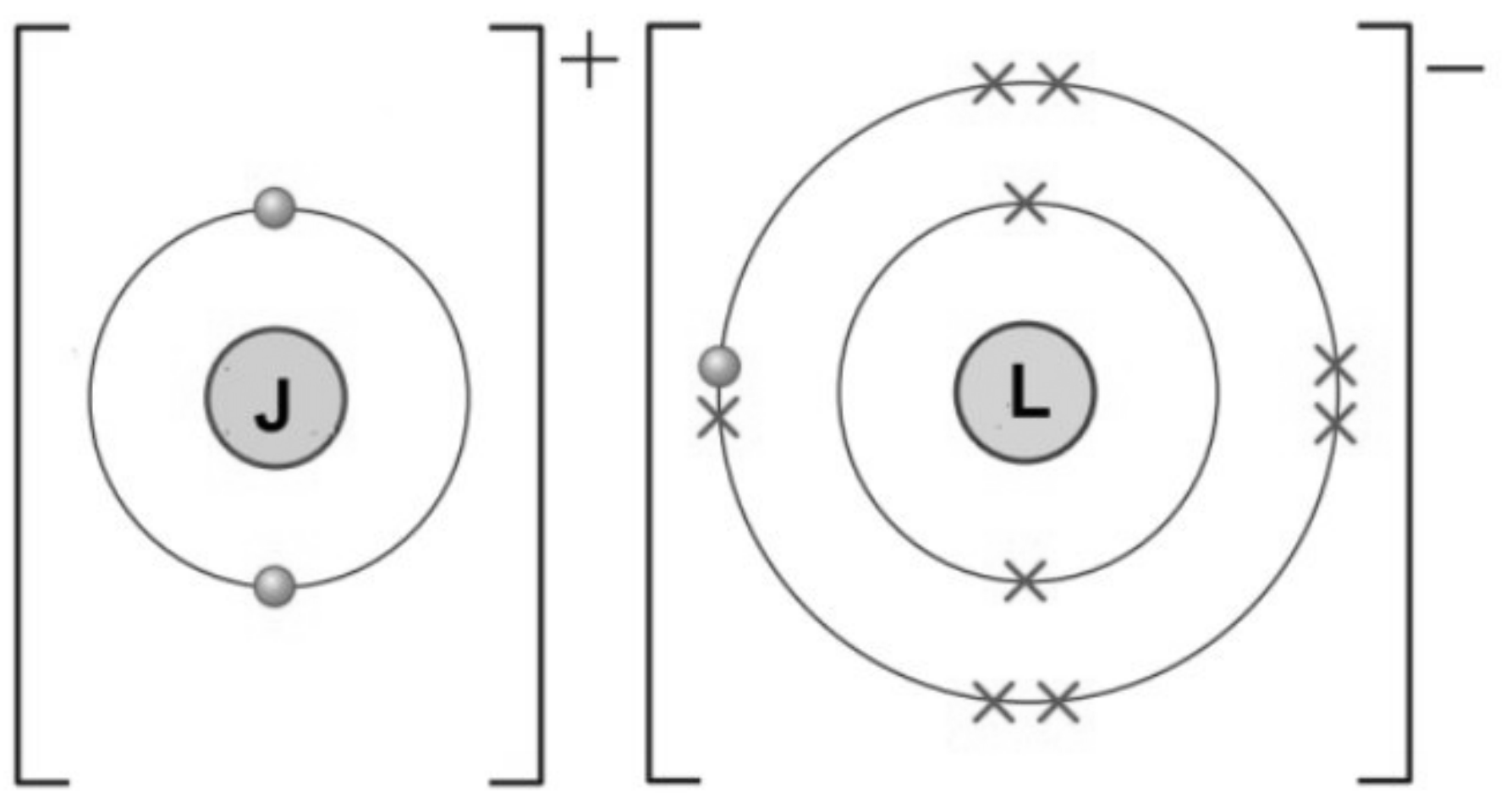
Diagram 9 shows the electron arrangement in compound JL (J+ with 2 electrons in one shell; L- with 2.8.8... shown as electron arrangement of the anion with 8 outer electrons). Which elements is represented by J and L?
Medium
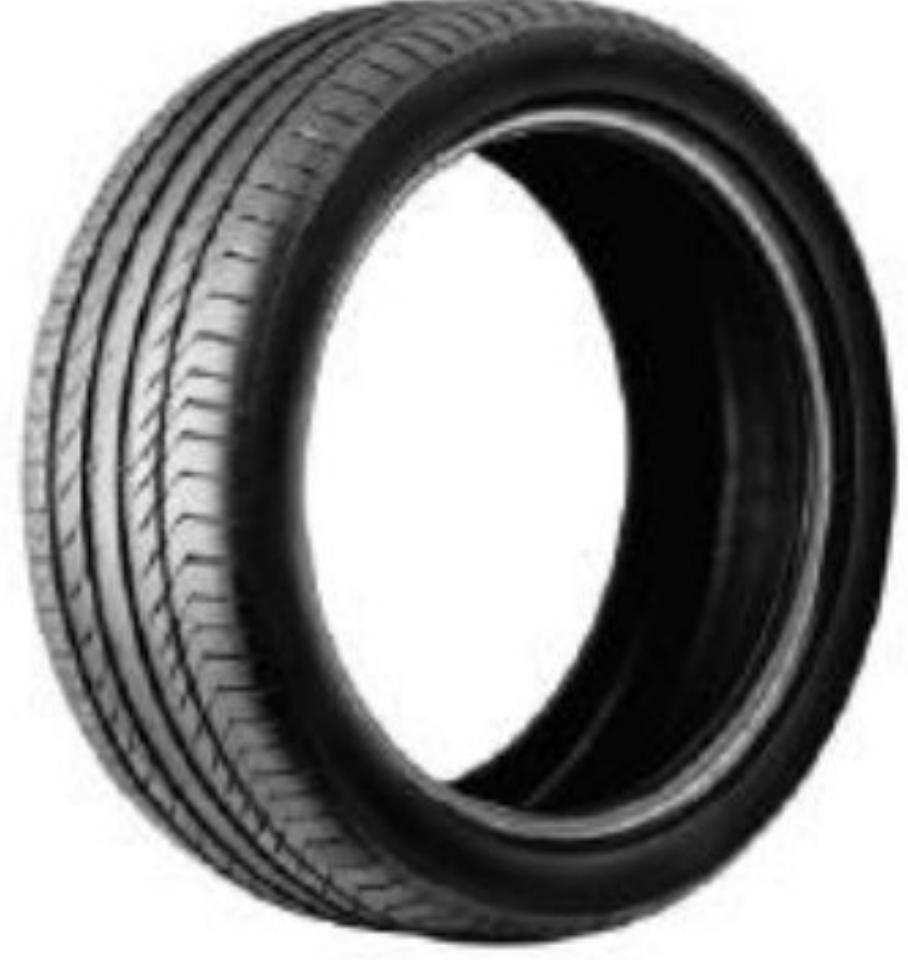
Diagram 10 shows a tyre. The material used to make tyres is vulcanised rubber, which is natural rubber added with sulphur. What happens when sulphur is added into natural rubber?
Medium
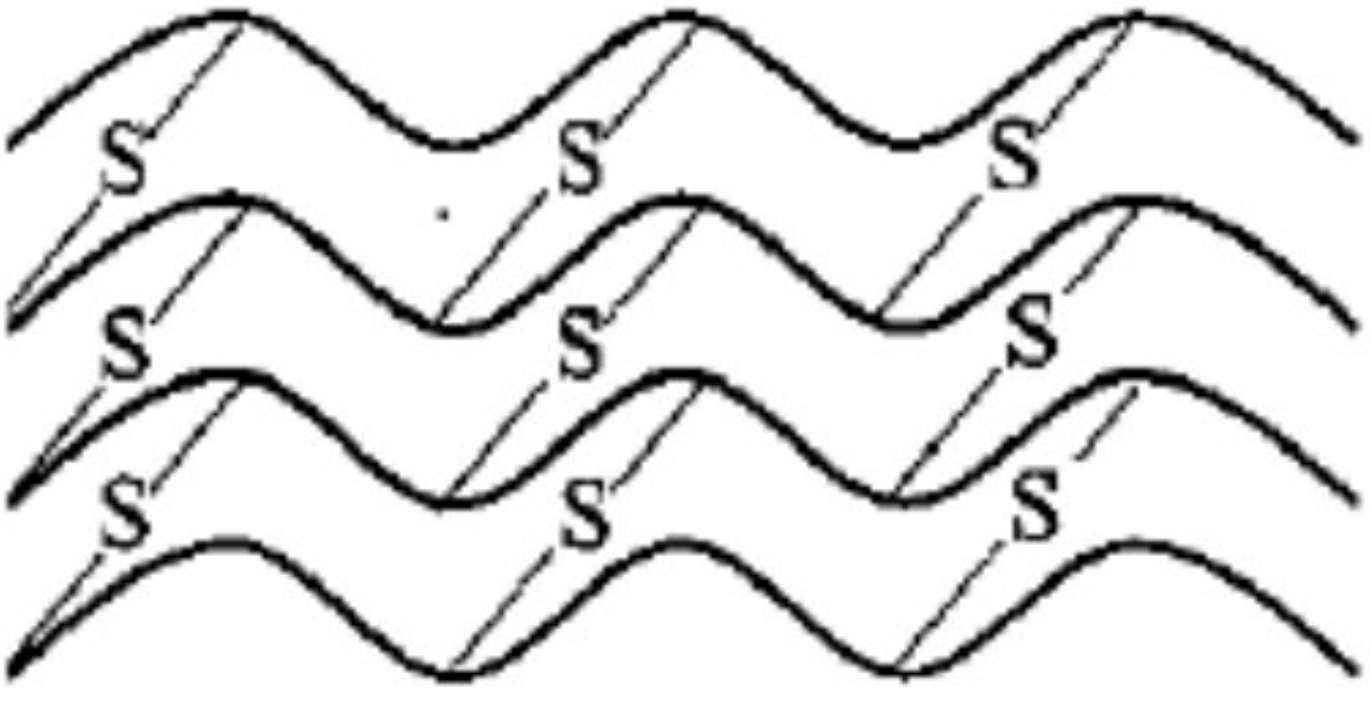
Diagram 11 shows structure of rubber T. Which of the following is the property of rubber T?
Easy
A student carries out an experiment. He wants to produce a rubber strip that is more resistant to heat and more elastic. He dips the rubber strip in a beaker containing disulphur dichloride and substance X. What is substance X?
Easy
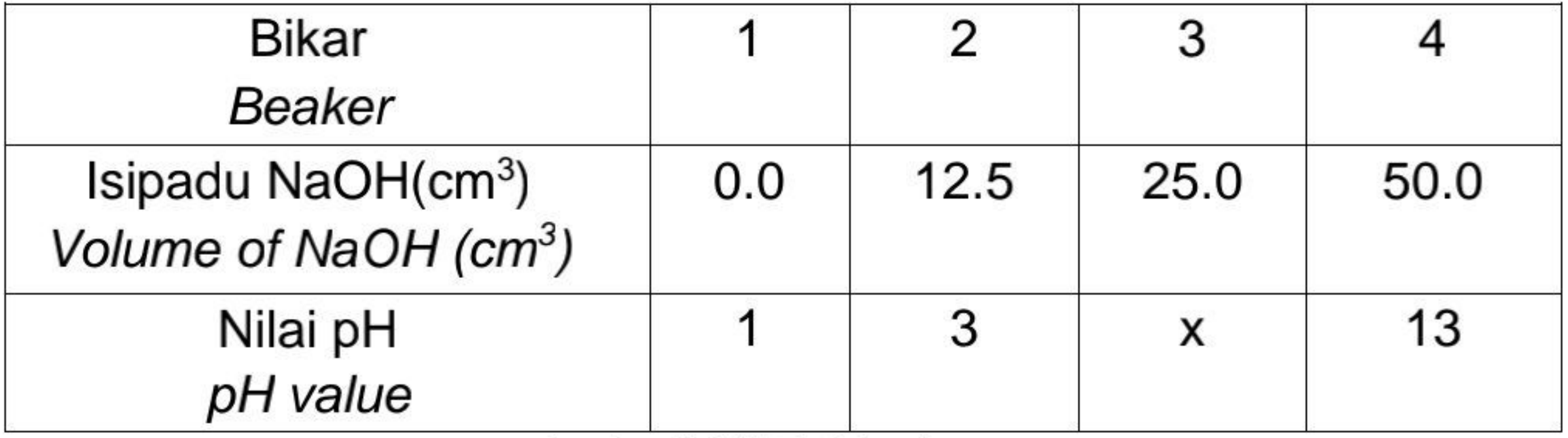
Sodium hydroxide solution 0.10 mol dm-3 was added to the beakers which containing 25 cm3 of 0.1 mol dm-3 of hydrochloric acid. The changes of pH value of the solutions in the beaker was measured with pH meter. The result was recorded in Table 1: beaker 1: 0.0 cm3 NaOH, pH 1; beaker 2: 12.5 cm3, pH 3; beaker 3: 25.0 cm3, pH x; beaker 4: 50.0 cm3, pH 13. What is the pH value of third beaker?
Medium
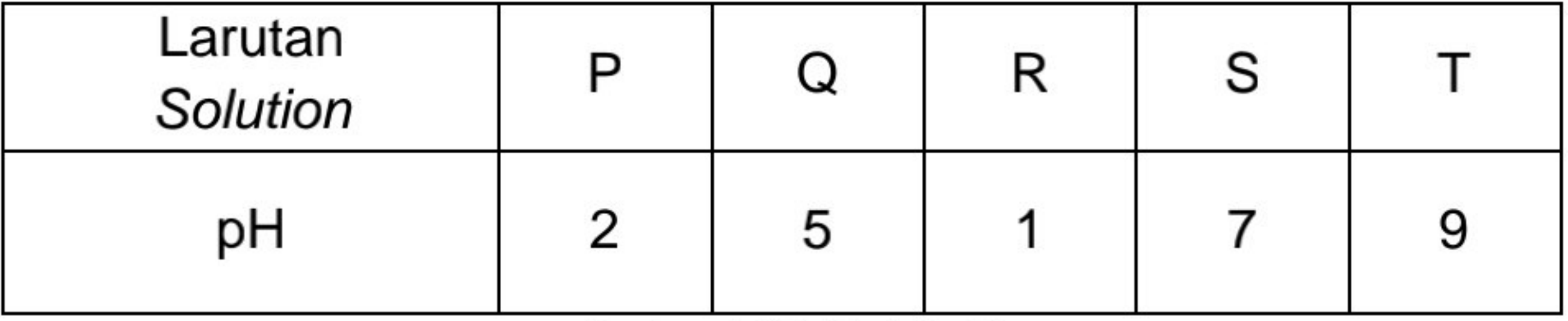
Table 2 shows the pH values of various solutions: P pH 2; Q pH 5; R pH 1; S pH 7; T pH 9. Which pair of solutions can react with sodium carbonate to produce carbon dioxide gas?
Medium
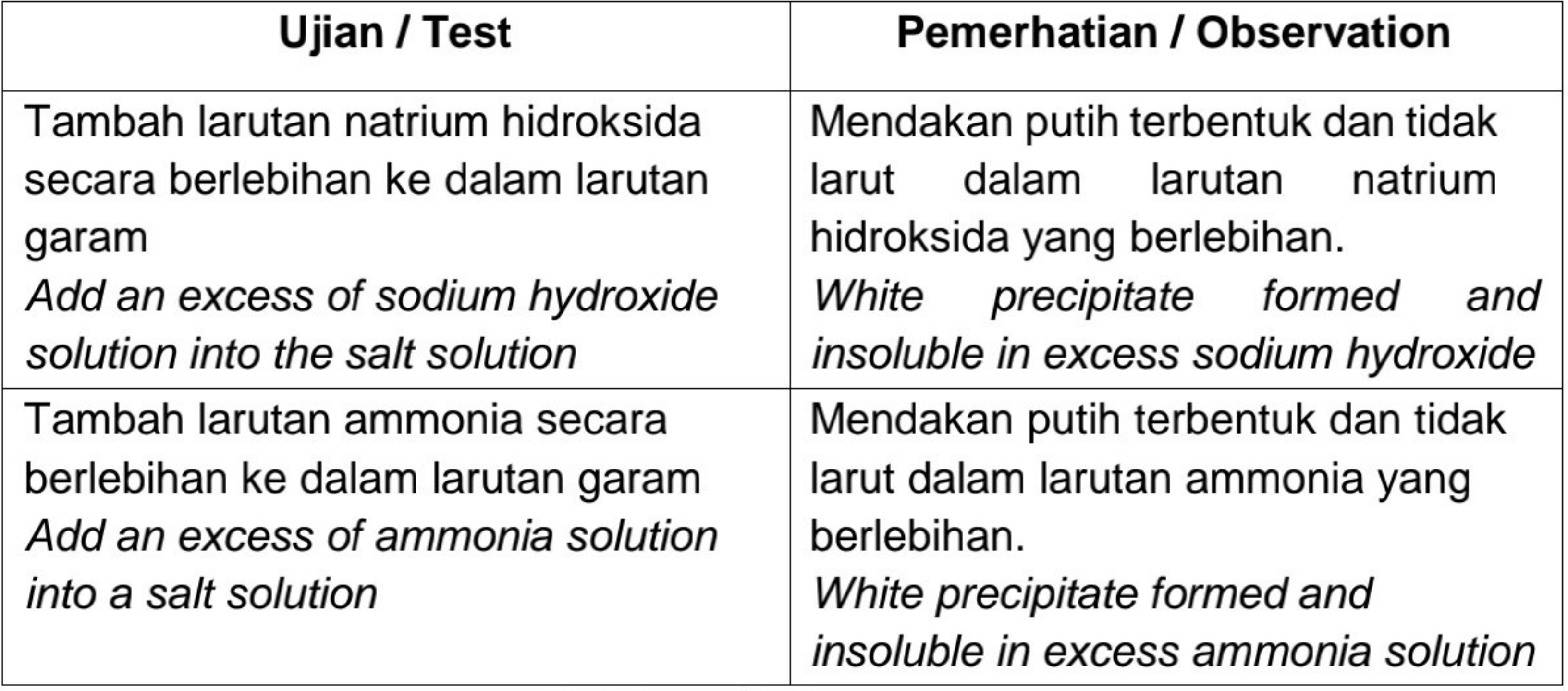
A series of tests are conducted to verify the cation and anion that is present in a salt solution. Table shows the observation for each test. Add an excess of sodium hydroxide solution into the salt solution: white precipitate formed and insoluble in excess sodium hydroxide. Add an excess of ammonia solution into a salt solution: white precipitate formed and insoluble in excess ammonia solution. Which of the following is the cation present in the salt solution?
Medium
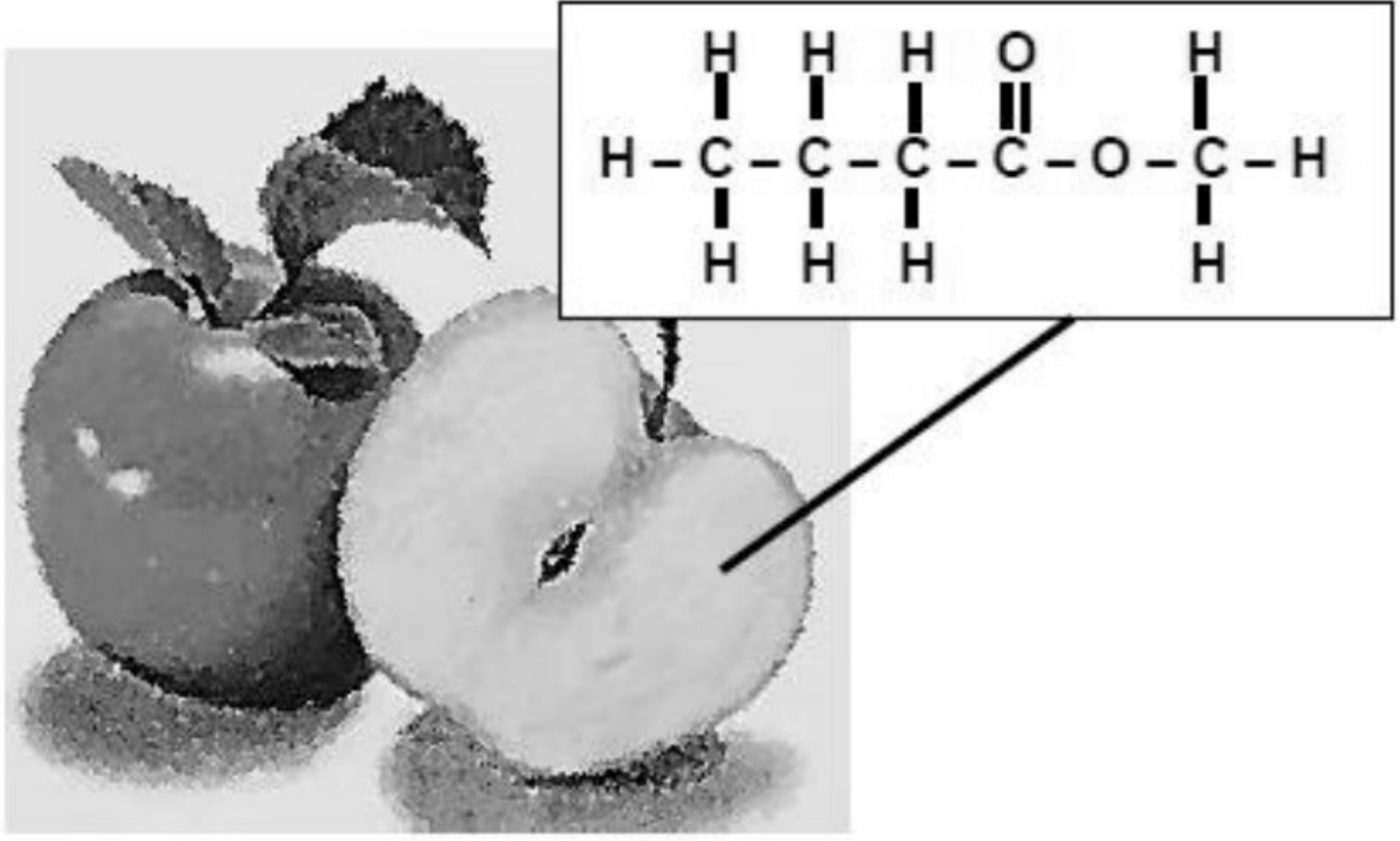
Diagram 12 shows the structural formula of ester that produces the fragrant smell found in green apple (CH3CH2CH2COOCH3). Alia wants to prepare the ester in laboratory. Which of the following can be used to prepare the ester?
Medium
Ethene can be differentiate from ethane because ethene can
Medium
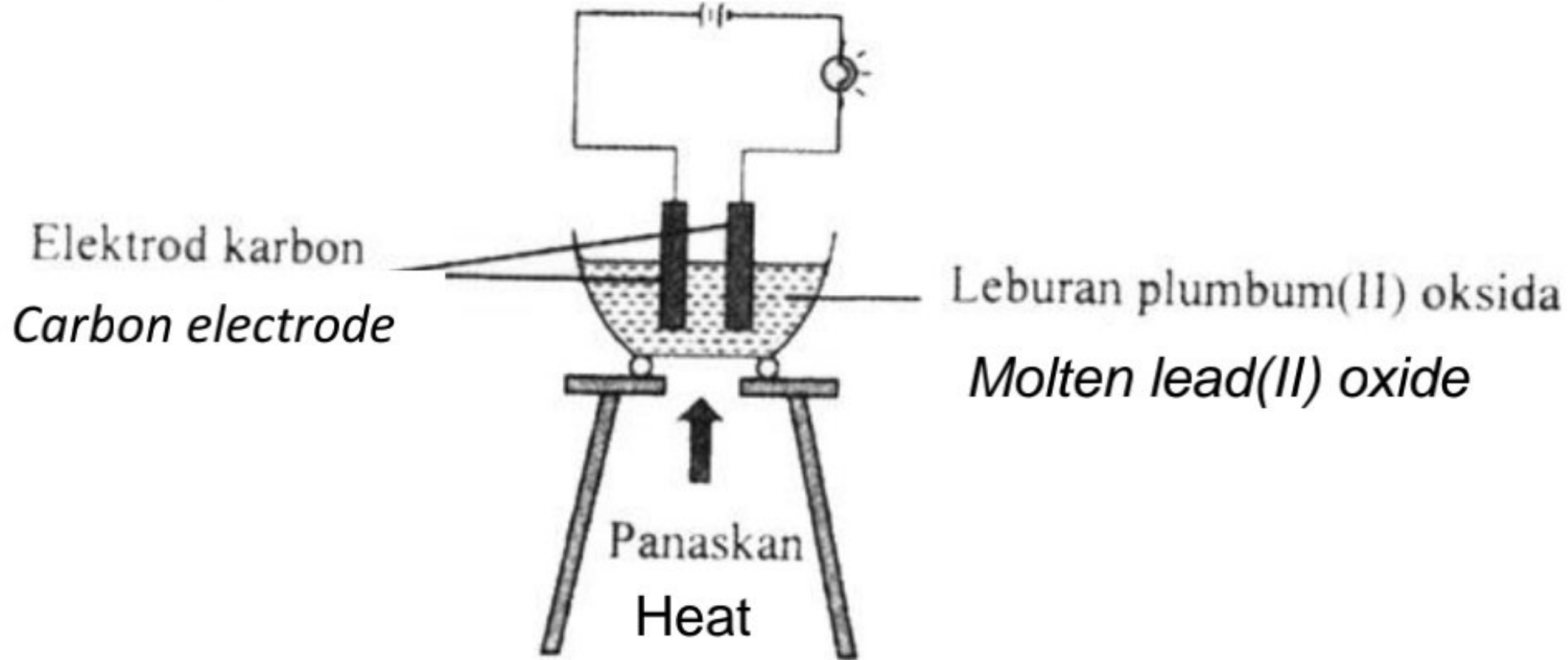
Diagram 13 shows the arrangement of apparatus for the electrolysis of molten lead(II) oxide, PbO (carbon electrodes). Which of the following half-equations occurs at the anode and cathode?
Medium
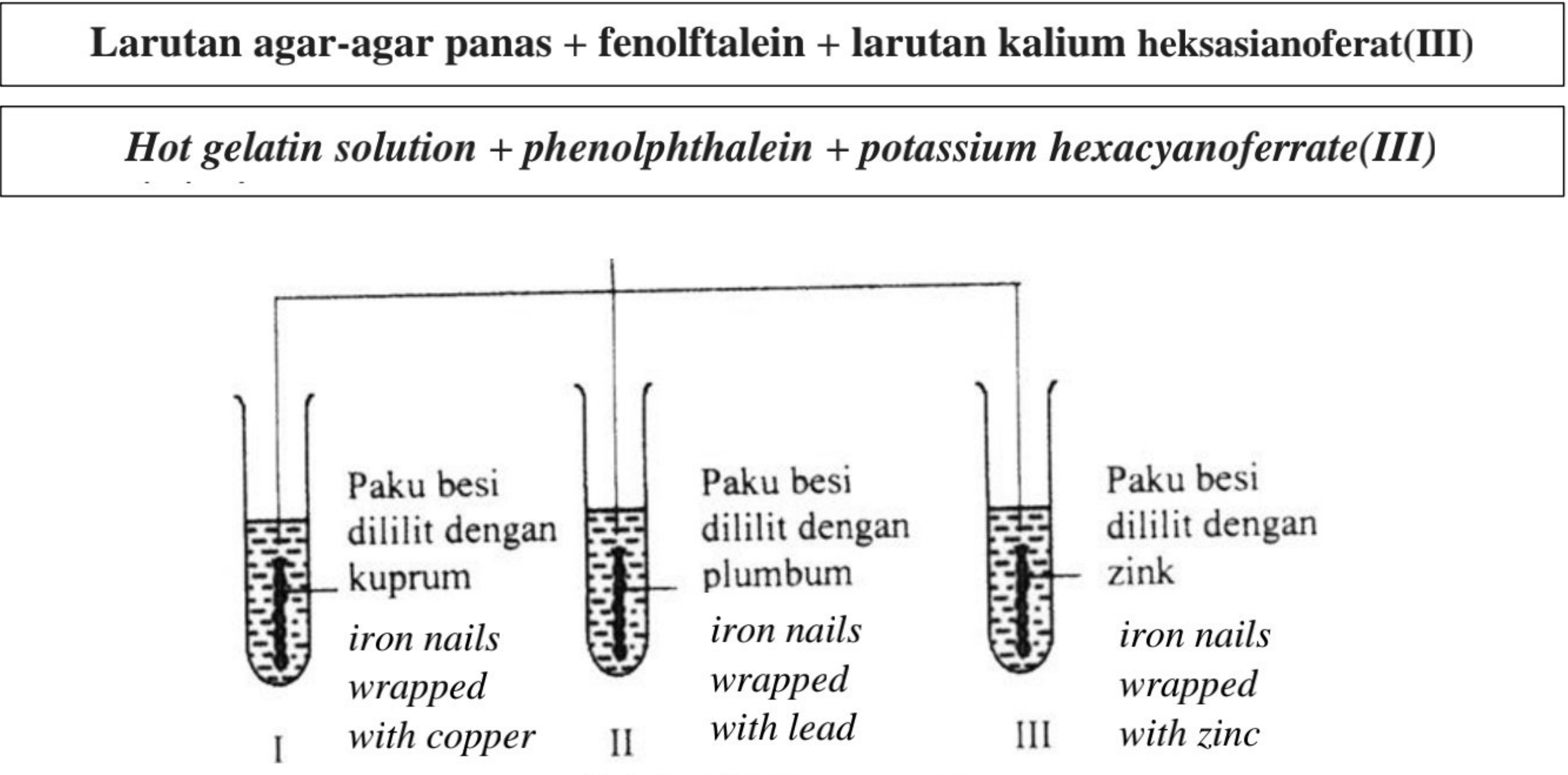
Diagram 14 shows the arrangement of the apparatus to study the effect of other metals on the corrosion of iron (hot gelatin solution + phenolphthalein + potassium hexacyanoferrate(III); I iron nails wrapped with copper, II iron nails wrapped with lead, III iron nails wrapped with zinc). Given the standard electrode potentials: Zn2+ + 2e ⇌ Zn -0.76 V; Fe2+ + 2e ⇌ Fe -0.44 V; Cu2+ + 2e ⇌ Cu +0.34 V; Pb2+ + 2e ⇌ Pb -0.13 V. In which test tube can the blue spot be observed?
Medium
When 50 cm3 of 2.0 mol dm-3 lead(II) nitrate was added to 50 cm3 of 2.0 mol dm-3 of sodium sulphate, the temperature increased by 10 °C. What is the value of heat of precipitation? [Specific heat capacity of solution = 4.2 J g-1 °C-1; Density of solution = 1.0 g cm-3]
Medium
Digital communication plays a very important role in modern living. Effective transmission of data, voices and images in a digital format requires a suitable material. What is the material?
Easy
The thermochemical equation represents the combustion of heptane in excess oxygen: C7H16(l) + 11O2(g) → 7CO2(g) + 8H2(l); ΔH = -7521 kJ mol-1. The combustion of heptane in excess oxygen releases 526.47 kJ of energy. What is the mass of heptane used? [Relative atomic mass: H = 1, C = 12]
Medium
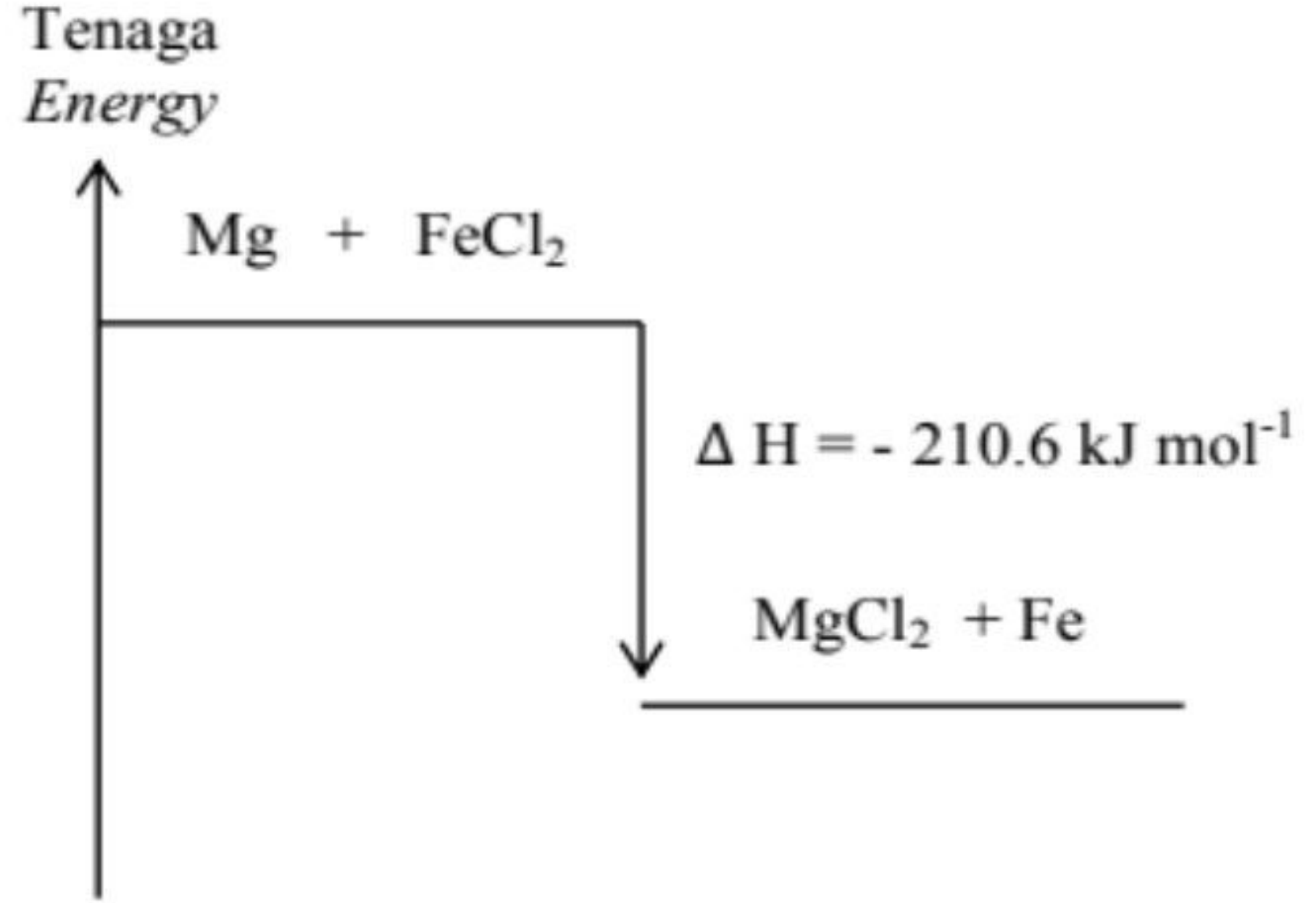
Diagram 15 shows the energy level diagram of the displacement reaction between magnesium and iron(II) chloride solution (Mg + FeCl2 → MgCl2 + Fe; ΔH = -210.6 kJ mol-1). What is the increase in temperature if 50 cm3 of 0.20 mol dm-3 iron(II) chloride solution is reacted with excess magnesium? [Specific heat capacity of the solution = 4.2 J g-1 °C-1; Density of solution = 1.0 g cm-3]