Which of the following isotopes is used to detect the leakage of underground pipe?
Easy
Which of the following is the correct formula of an ion?
Easy
What is the meaning of Avogadro constant?
Easy
Which of the following elements form acidic oxides when react with oxygen?
I Sulphur
II Sodium
III Phosphorus
IV Magnesium
Easy
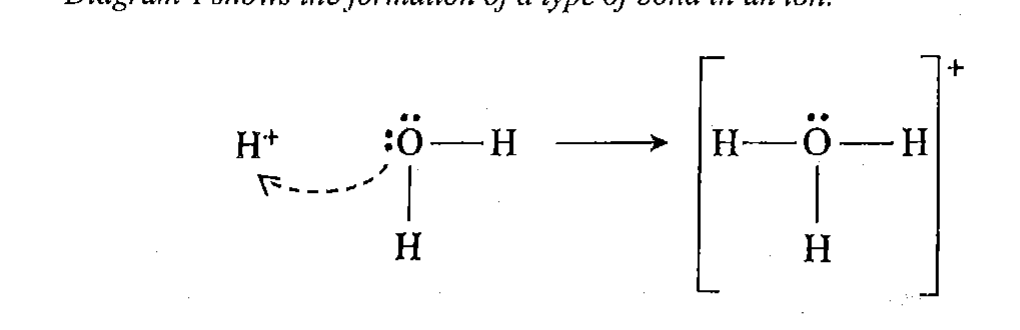
Diagram 1 shows the formation of a type of bond in an ion (H⁺ + H₂O → H₃O⁺, with an arrow from the lone pair of oxygen to H⁺). What is the type of the bond?
Medium
Which of the following salts is prepared through double decomposition reaction?
Medium
What is the catalyst used to increase the rate of reaction between zinc and hydrochloric acid?
Medium
Photochromic glass is a composite material that is used in manufacture of car windows and building windows.
Which of the following are the strengthening substances in photochromic glass?
I Copper(I) chloride
II Iron(II) chloride
III Silver chloride
IV Barium chloride
Medium
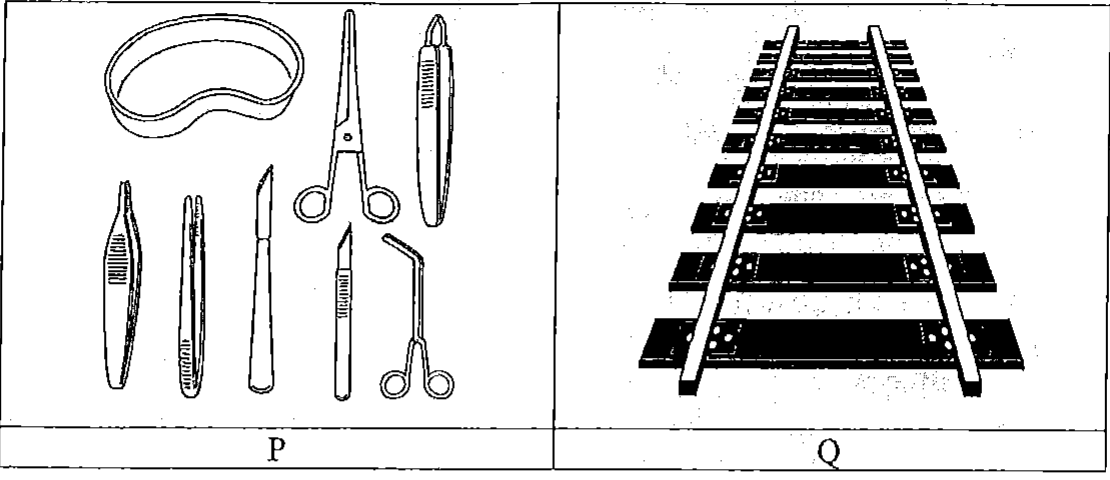
Diagram 2 shows uses of two different materials, P (surgical instruments) and Q (railway track). What is the main element in materials P and Q?
Easy
Which of the following is a reducing agent?
Medium
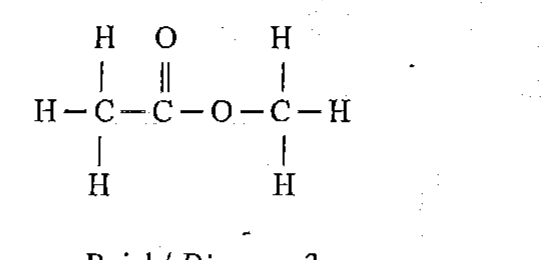
Diagram 3 shows the structural formula of a carbon compound (CH₃-CO-O-CH₃). What is the homologous series of the carbon compound?
Medium
Which of the following reactions releases heat energy to the surroundings?
Easy
Which of the following is the type of polymer for melamine?
Easy
Which of the following is the correct sequence in wastewater treatment using Green Technology?
Medium
M and N are two different elements.
Which of the following statements is correct about the atoms of elements?
Medium
What is the number of hydrogen atoms in 0.2 mol of propanol?
Medium
Element T is located below chlorine in the Periodic Table of Elements.
Which of the following statements explains why element T is less reactive than chlorine?
Medium
Table 1 shows the electron arrangement of elements Y and Z.
Element Y: 2.4; Element Z: 2.6.
What is the formula and the type of bond in the compound formed from the reaction between elements Y and Z?
Medium
Which of the following compounds has an ionic bond?
Easy
Sodium chloride powder mixed with lead(II) iodide powder.
Which of the following is the correct sequence to obtain the sodium chloride crystal from the mixture?
Medium
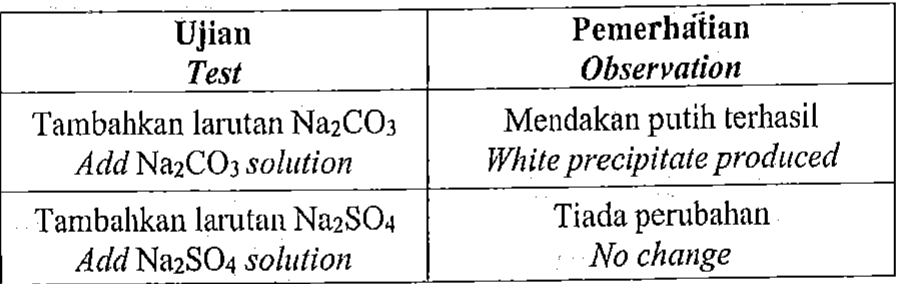
Table 2 shows the observations for two tests conducted to confirm the cation present in salt W solution.
Add Na₂CO₃ solution: white precipitate produced.
Add Na₂SO₄ solution: no change.
What is the cation present in salt W?
Medium
Which of the following statements is correct when a reactant is heated in a reaction?
Medium
Engine component in jet planes are made from ceramics.
Which of the following properties makes ceramics suitable for the usage?
Easy
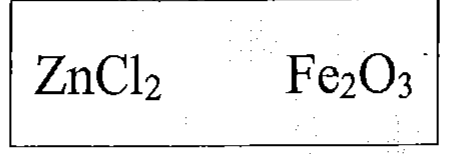
Diagram 4 shows the chemical formulae of two compounds: ZnCl₂ and Fe₂O₃.
Which of the following are the oxidation numbers of zinc and iron in the compounds?
Medium
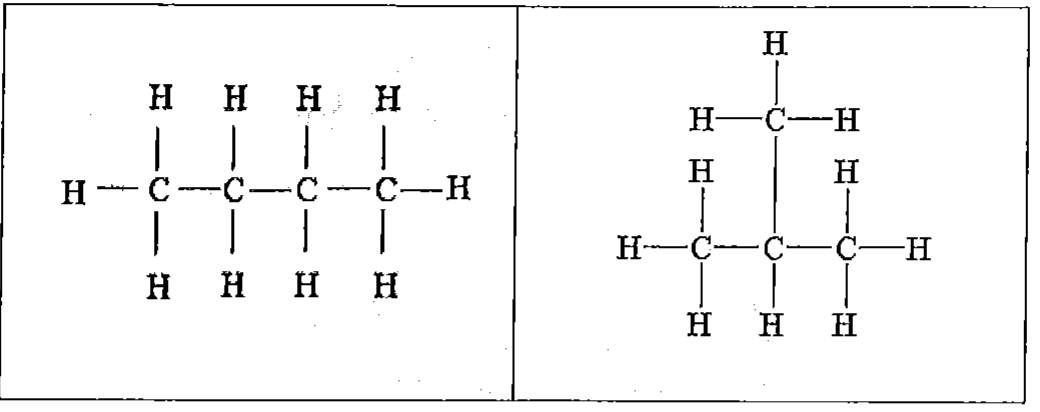
Diagram 5 shows the structural formulae of two organic compounds (butane and 2-methylpropane).
Which of the following characteristics is different for both compounds?
Medium
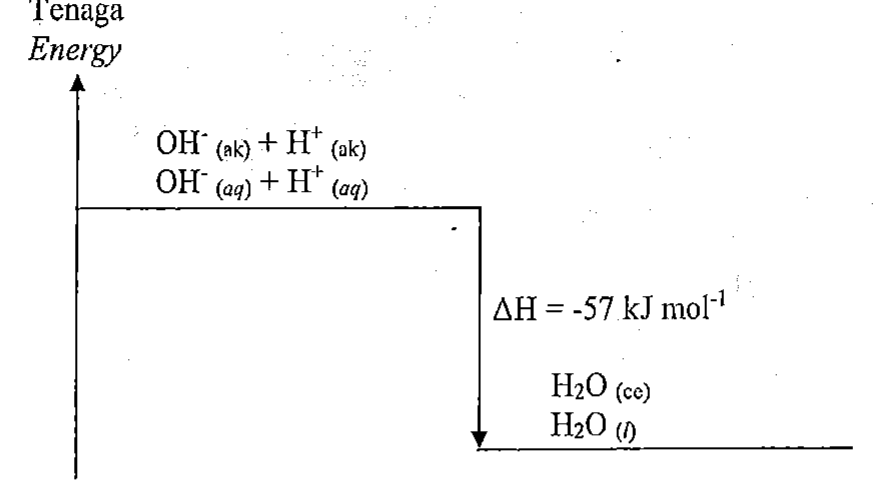
Diagram 6 shows the energy level diagram: OH⁻(aq) + H⁺(aq) at a higher level, H₂O(l) at a lower level, ΔH = -57 kJ mol⁻¹.
Which of the following statements is correct about the energy level diagram?
Medium
Natural rubber is a natural polymer known as polyisoprene.
Which of the following is the structural formula for the monomer of natural rubber?
Medium
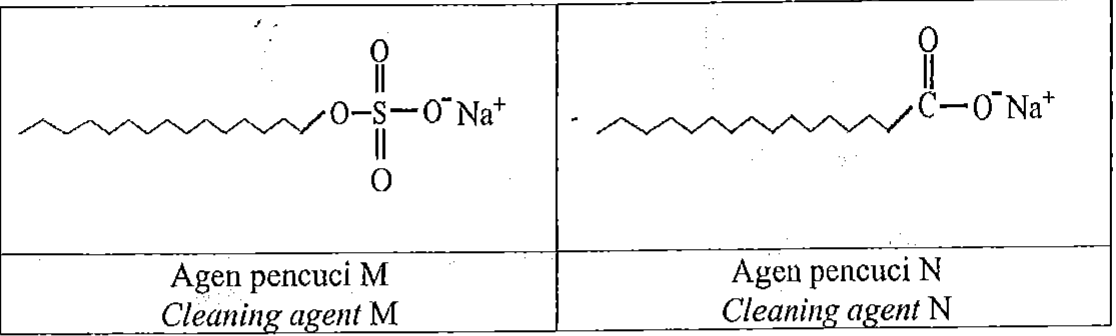
Diagram 7 shows the structural formulae of two cleaning agents (M: sulphate group, R-O-SO₃⁻Na⁺; N: carboxylate group, R-COO⁻Na⁺).
Which of the following statements is correct about cleaning agents M and N?
Medium
Anisah experiences a runny nose and she feels uncomfortable with the situation.
Which of the following medicines should be prescribed by the doctor to overcome her problem?
Easy
Mr. Aaron found that the dry ice in the box of ice cream cake change into fumes.
What is the process and heat energy change occurred to the dry ice?
Medium
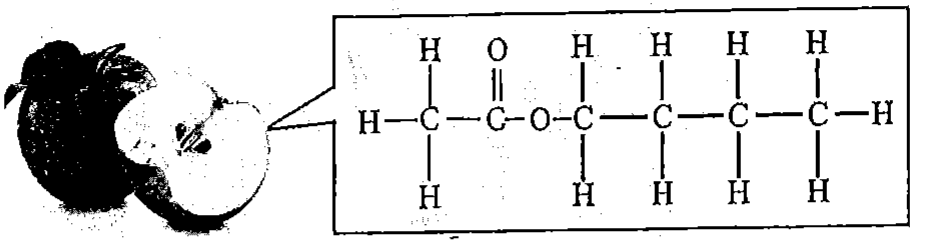
Diagram 8 shows a structural formula of butyl ethanoate which is found in an apple.
Which of the following is correct for butyl ethanoate?
[Relative atomic mass: H = 1, C = 12, O = 16]
Medium
Electron arrangement of atom X is 2.1. Element X reacts with oxygen when heated.
Which of the following chemical equations represents the reaction?
Medium
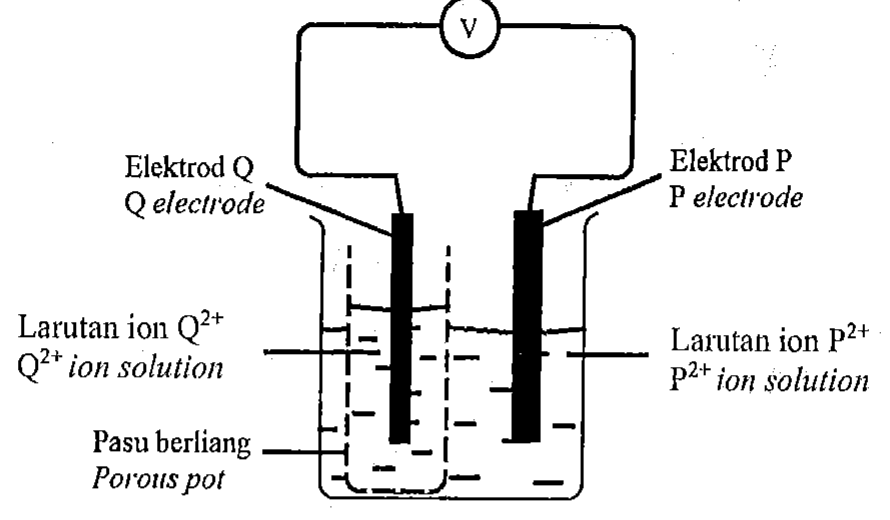
Diagram 9 shows the apparatus set-up to investigate a redox reaction in a chemical cell (electrode Q in Q²⁺ ion solution, electrode P in P²⁺ ion solution, porous pot, voltmeter).
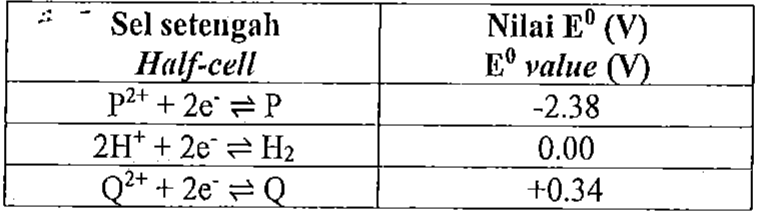
Table 3 shows the standard electrode potential values for some half-cells: P²⁺ + 2e⁻ ⇌ P, E° = -2.38 V; 2H⁺ + 2e⁻ ⇌ H₂, E° = 0.00 V; Q²⁺ + 2e⁻ ⇌ Q, E° = +0.34 V.
Which of the following statements is correct about the chemical cell?
Medium
What is the pH value of lithium hydroxide solution with the concentration of 0.2 mol dm⁻³?
Medium
Alkane X with three carbon atoms undergoes complete combustion to produce carbon dioxide and water.
What is the volume of carbon dioxide gas released when 0.5 mol alkane X is burnt completely at room conditions?
[Molar volume of gas = 24 dm³ mol⁻¹ at room conditions]
Medium
A manufacturer needs to produce cooking utensils which are ladles that withstand high temperature and inert towards chemical.
Which of the following materials is suitable to produce the cooking utensils?
Medium
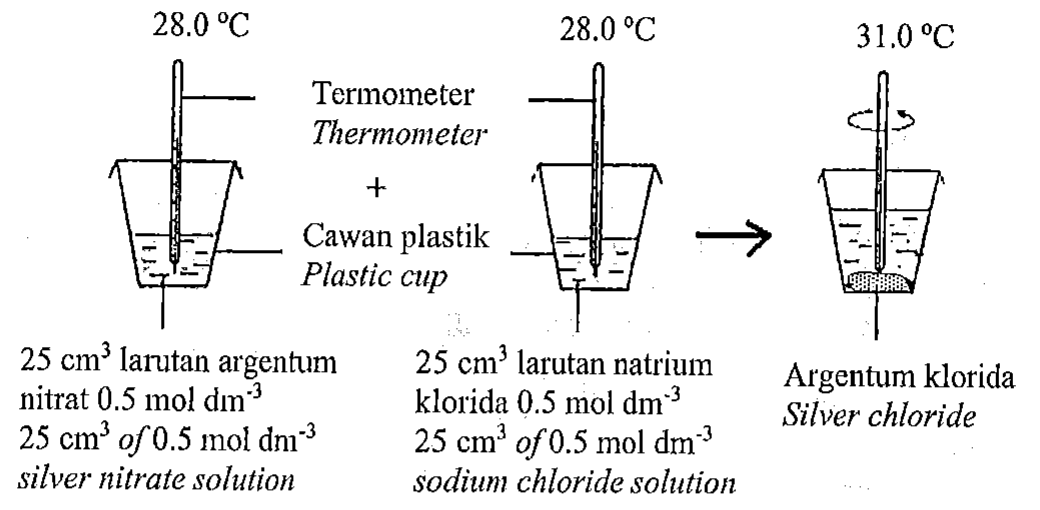
Diagram 10 shows the apparatus set-up to determine the heat of precipitation of silver chloride: 25 cm³ of 0.5 mol dm⁻³ silver nitrate solution (28.0 °C) mixed with 25 cm³ of 0.5 mol dm⁻³ sodium chloride solution (28.0 °C); highest temperature 31.0 °C.
What is the heat of precipitation of silver chloride?
[Specific heat capacity of solution = 4.2 J g⁻¹ °C⁻¹; Density of solution = 1 g cm⁻³]
Medium
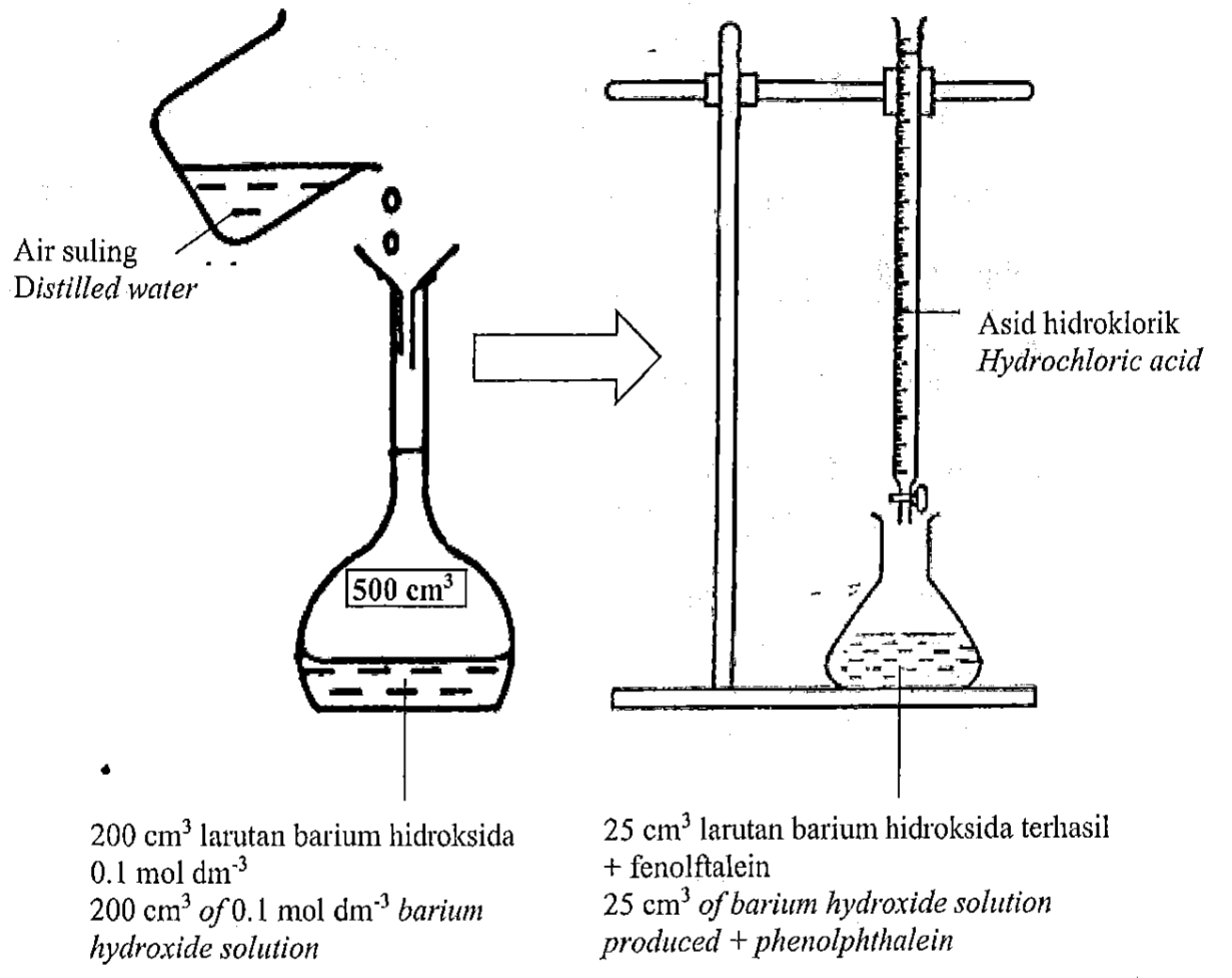
Diagram 11 shows the apparatus set-up to prepare barium hydroxide solution from a standard solution: 200 cm³ of 0.1 mol dm⁻³ barium hydroxide solution is diluted with distilled water in a 500 cm³ volumetric flask. 25 cm³ of the barium hydroxide solution produced + phenolphthalein is titrated with hydrochloric acid of pH 1.
What is the volume of hydrochloric acid needed to achieve the end point of titration?
Medium
Excess of magnesium carbonate granules was added to 40 cm³ of 0.1 mol dm⁻³ of nitric acid in a conical flask. The gas released is collected in a burette.
If the experiment is repeated with different acids, which conditions of acids will increase the rate of reaction and doubled the volume of the gas released?
[Molar volume of gas = 24 dm³ mol⁻¹ at room conditions]