Write your answer on paper. Then open the answer to check it.
Section A
Diagram 1 shows a bubble map for the examples of manufactured substances in industry: stainless steel, ceramic and photochromic glass.
Medium5 marks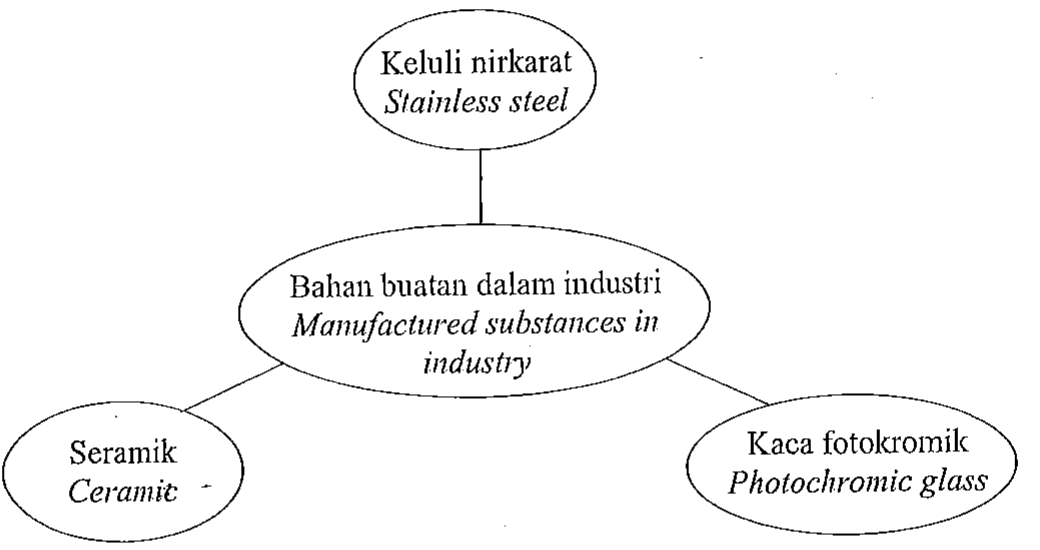
- (a)(i)
What is the main element in stainless steel?
[1] - (a)(ii)
Stainless steel is harder than its pure metal. Explain why.
[2] - (b)
State one special property of photochromic glass.
[1] - (c)
Besides making vase, what is the other use of ceramic in daily life?
[1]
Table 2 shows two types of products made up from two different types of rubber: A, rubber bands (unvulcanised rubber) and B, shoe sole (vulcanised rubber).
Medium5 marks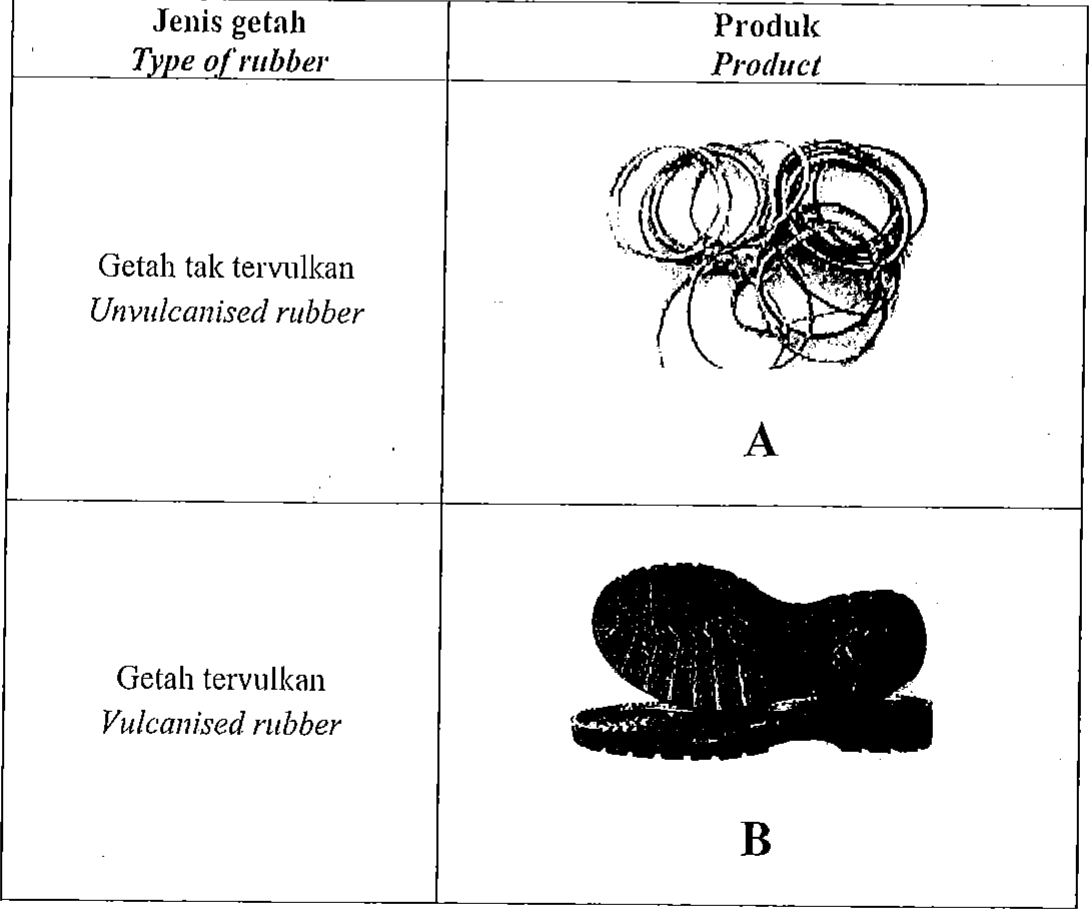
- (a)
Rubber is a type of polymer. What is meant by polymer?
[1] - (b)
State the name of the monomer for natural rubber.
[1] - (c)(i)
Product B is stronger than product A. Explain your answer.
[2] - (c)(ii)
State one other characteristic of product B other than that in 2c(i).
[1]
Diagram 3 shows the equation for cellular respiration reaction that occurs in human body: Glucose + Oxygen → Carbon dioxide + Water.
Medium6 marks
- (a)
The molecular formula of glucose is C₆H₁₂O₆. Write the empirical formula of glucose.
[1] - (b)(i)
Based on Diagram 3, write the chemical equation to represent the cellular respiration reaction.
[2] - (b)(ii)
Calculate the volume of carbon dioxide gas produced at room conditions if 360 g of glucose is used in the reaction. [Molar mass glucose = 180 g mol⁻¹; Molar volume of gas at room conditions = 24 dm³ mol⁻¹]
[3]
(a) Diagram 4 shows a statement related to garlic and ginseng that can be used as traditional medicine: "Scientific study has found that garlic can be used as an effective treatment against bacteria and ginseng can be used to build immunity against infection". (b) Ali is a gastric patient and he is having headache. In order to relieve his headache, he took aspirin. Unfortunately, he got pain in his stomach.
Medium7 marks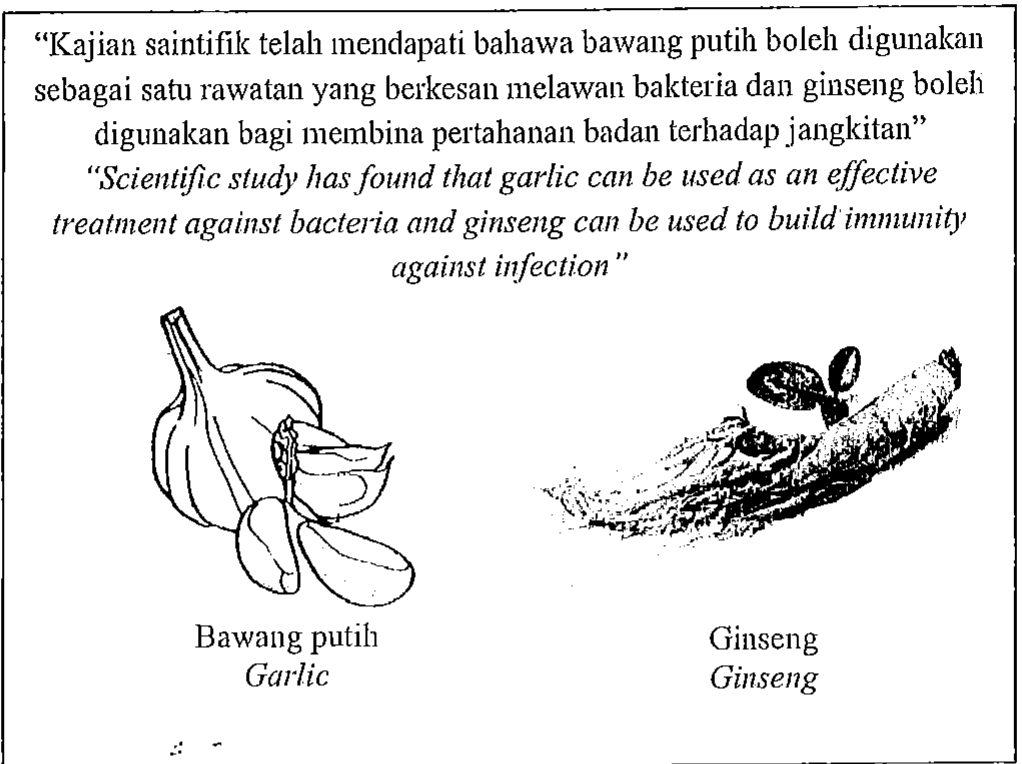
- (a)(i)
Based on Diagram 4, how garlic or ginseng is used to treat illness?
[1] - (a)(ii)
Give two advantages of using the medicines stated in Diagram 4.
[2] - (b)(i)
Explain why he experiences that situation.
[2] - (b)(ii)
Suggest the name of the medicine that can replace aspirin.
[1] - (b)(iii)
State the side effect if the medicine suggested in 4(b)(ii) is taken excessively.
[1]
Table 5 shows the proton number and nucleon number of atoms V, W and X: V (proton number 6, nucleon number 12); W (11, 23); X (17, 35).
Medium8 marks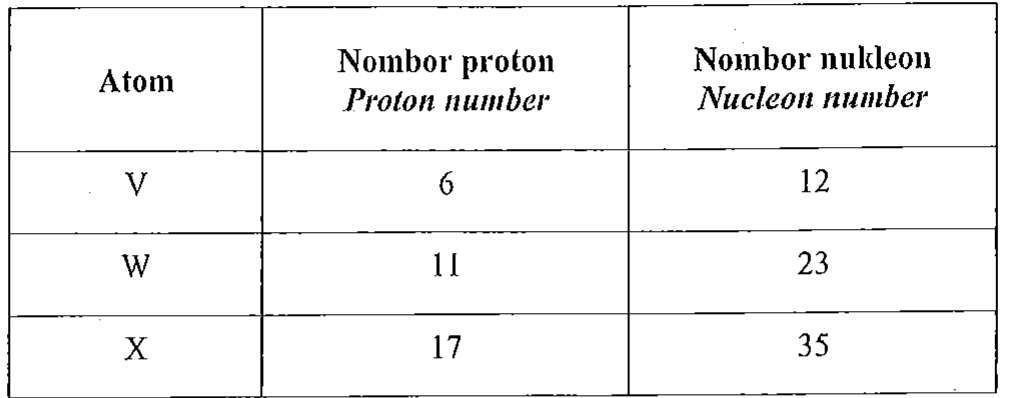
- (a)
What is meant by nucleon number?
[1] - (b)
Atom Z-14 is an isotope of atom V. Determine the number of neutrons in atom Z.
[1] - (c)(i)
Element W and X can react to produce a white solid that has high melting point. Write the chemical equation for the reaction.
[2] - (c)(ii)
Calculate the mass of solid produced if 0.05 mol of W involves in the reaction.
[2] - (d)
Element V and X react to produce compound VX₄ which has low melting point. Explain the difference in the melting point of compound VX₄ with the white solid produced in 5(c).
[2]
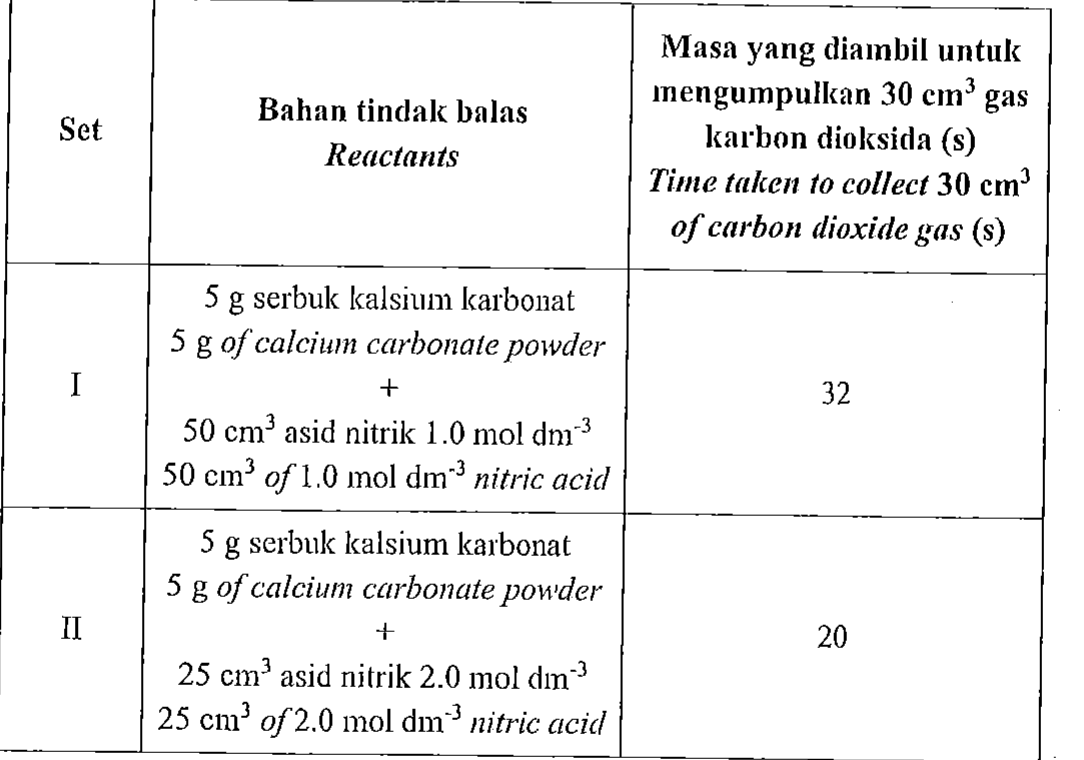
Diagram 6 shows a graph of volume of carbon dioxide gas (cm³) against time (min) for a reaction between excess magnesium carbonate powder and 50 cm³ of 1.0 mol dm⁻³ sulphuric acid. The curve rises steeply from 0, reaching about 40 cm³ at 2 min and about 68 cm³ at 7 min, then stays horizontal. Table 6 shows the information for two sets of experiment to investigate factor affecting the rate of reaction between calcium carbonate and nitric acid: Set I: 5 g calcium carbonate powder + 50 cm³ of 1.0 mol dm⁻³ nitric acid, time to collect 30 cm³ of CO₂ = 32 s; Set II: 5 g calcium carbonate powder + 25 cm³ of 2.0 mol dm⁻³ nitric acid, time = 20 s.
Medium9 marks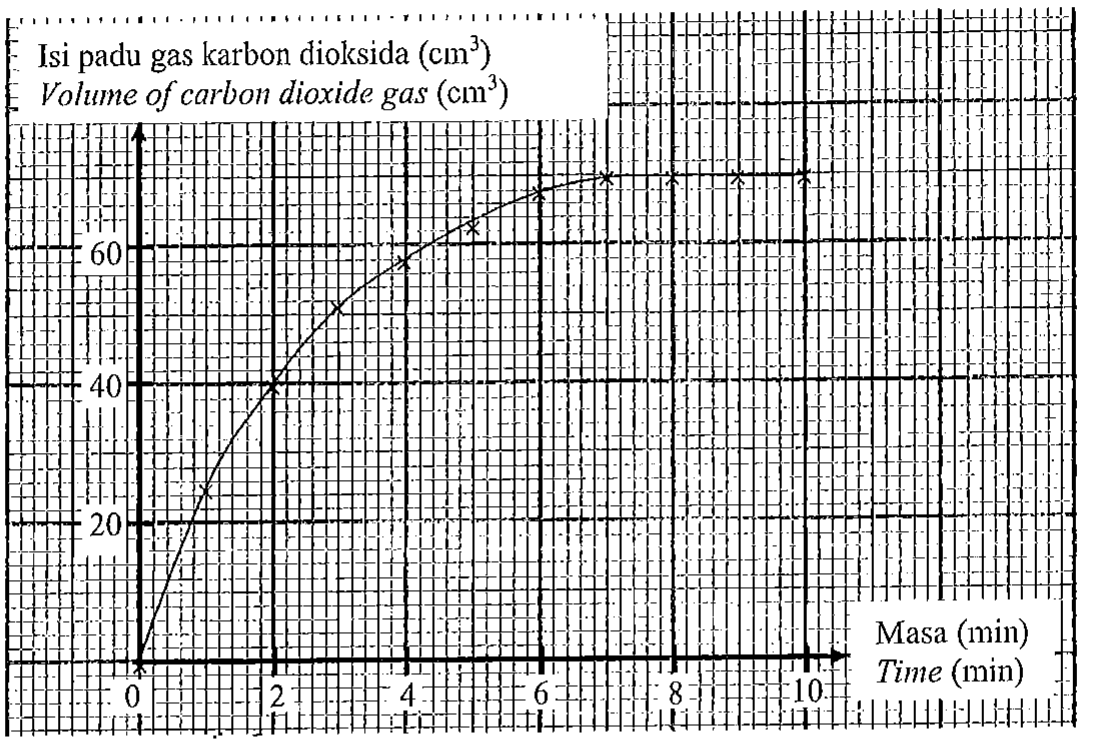
- (a)
State the type of particle in magnesium carbonate.
[1] - (b)
Write the chemical equation for the reaction.
[2] - (c)(i)
Based on Diagram 6, why is the curve in the graph becomes horizontal after 7 minutes?
[1] - (c)(ii)
Calculate the rate of reaction at the second minute.
[2] - (d)
Based on Table 6, compare the rate of reaction between Set I and Set II. Explain your answer by using the collision theory.
[3]
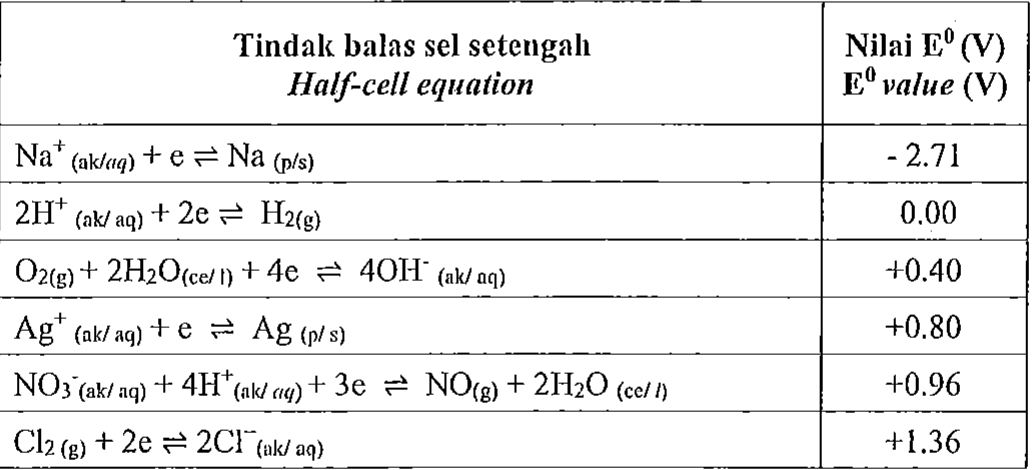
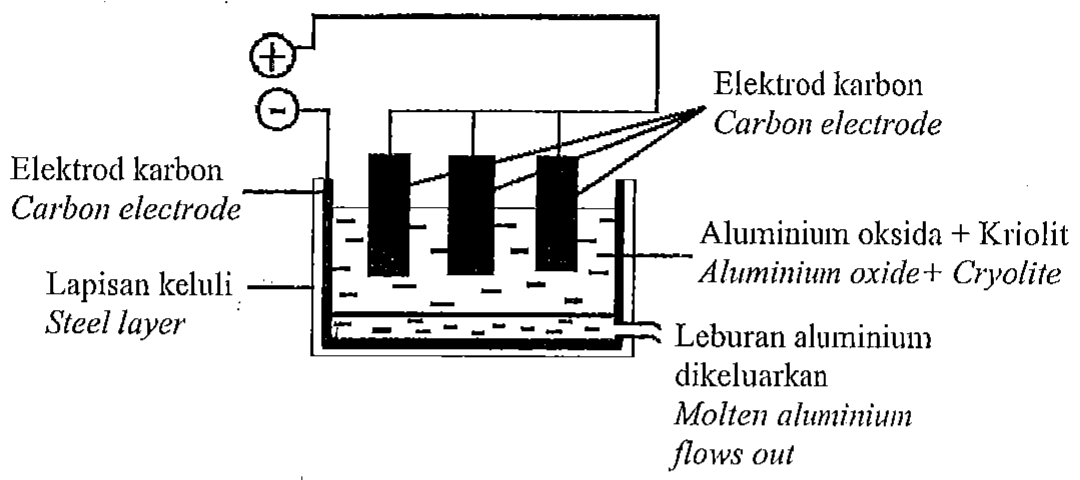
(a) Table 7.1 shows the apparatus set-up (two electrodes X in an electrolyte connected to a battery and ammeter) and observation for the electrolysis process: at the anode the electrode becomes thinner; at the cathode a shiny grey solid is deposited. Table 7.2 shows the E° value for a few half-cells: Na⁺ + e ⇌ Na, -2.71 V; 2H⁺ + 2e ⇌ H₂, 0.00 V; O₂ + 2H₂O + 4e ⇌ 4OH⁻, +0.40 V; Ag⁺ + e ⇌ Ag, +0.80 V; NO₃⁻ + 4H⁺ + 3e ⇌ NO + 2H₂O, +0.96 V; Cl₂ + 2e ⇌ 2Cl⁻, +1.36 V. (b) Diagram 7.2 shows the extraction process of aluminium from aluminium oxide (carbon electrodes, aluminium oxide + cryolite, steel layer, molten aluminium flows out).
Medium10 marks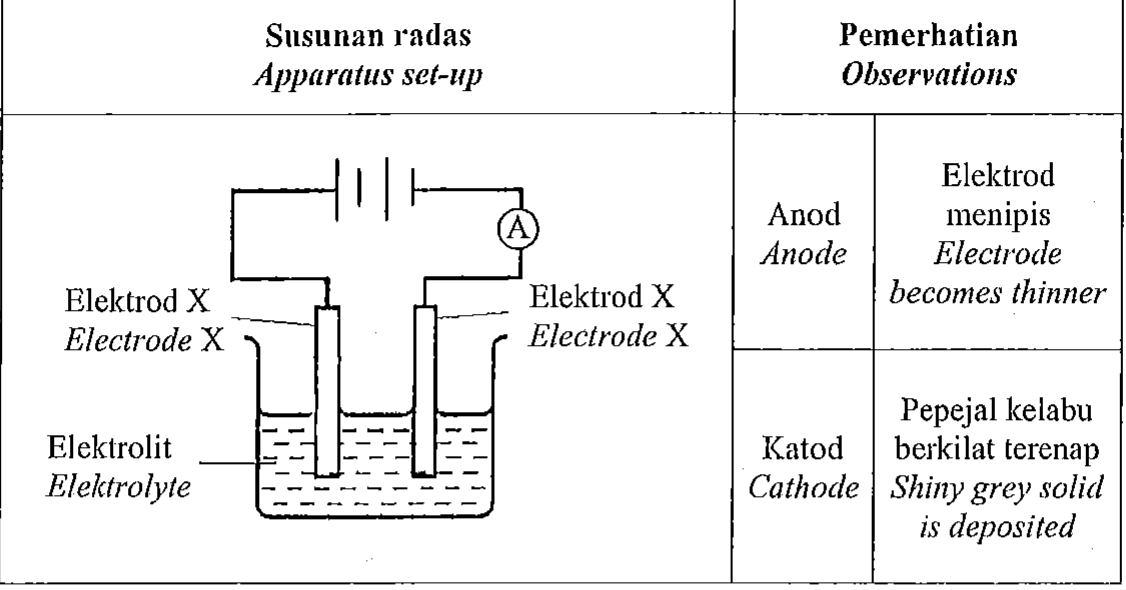
- (a)(i)
The value of standard electrode potential, E° of an electrode can be measured by pairing up the electrode to the standard hydrogen electrode under standard conditions. State one of the conditions.
[1] - (a)(ii)
Based on the observation in Table 7.1 and E° value given in Table 7.2, what is the electrolyte used?
[1] - (a)(iii)
Experiment in Table 7.1 is repeated by modifying the apparatus set-up and the gas collected at anode is tested as shown in Diagram 7.1 (colourless gas relights a glowing wooden splinter). As a chemistry student, what modification has been done to the apparatus set-up in Table 7.1? Explain how the gas is produced.
[3]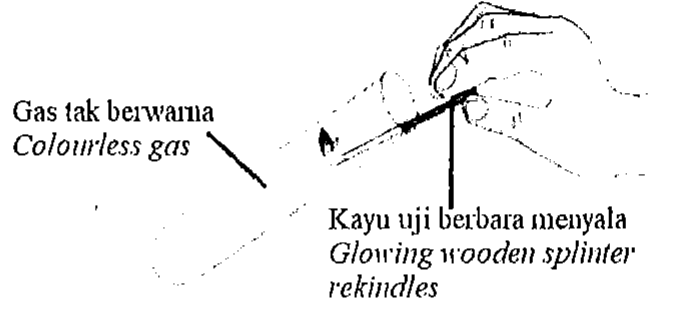
- (b)
Diagram 7.2 shows the extraction process of aluminium from aluminium oxide. Is the extraction process suitable to be run in industry? Justify.
[2] - (c)
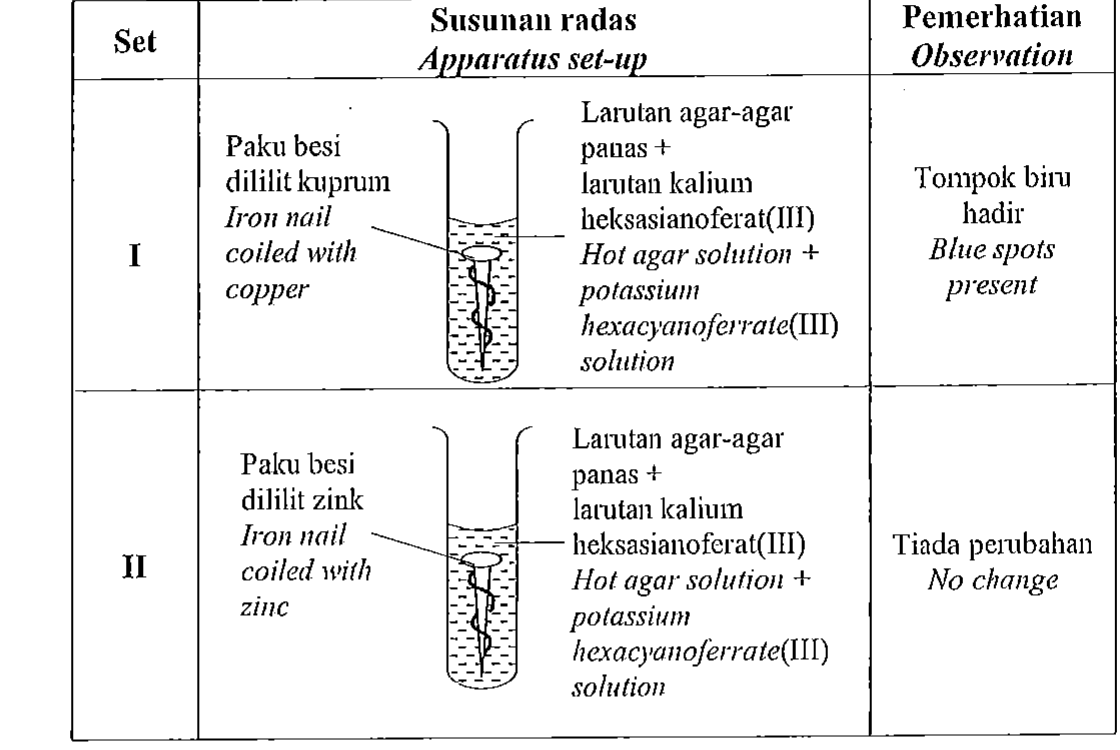
Table 7.3 shows the apparatus set-up in an experiment to investigate the effect of different metals on the rusting of iron nail: Set I iron nail coiled with copper in hot agar solution + potassium hexacyanoferrate(III) solution, blue spots present; Set II iron nail coiled with zinc in the same solution, no change. Explain the differences of observation in the test tubes for both sets of experiment in Table 7.3.
[3]
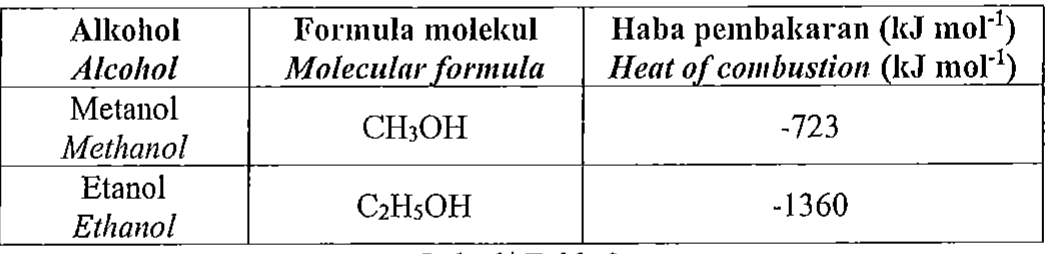
(a) Diagram 8 shows the apparatus set-up of an experiment carried out to study the heat of combustion of propanol, C₃H₇OH (thermometer, copper can with water, spirit lamp with propanol, wooden block, windshield). In this experiment, 200 cm³ of water in the copper can experienced an increase in temperature by 30.0 °C. The mass of propanol, C₃H₇OH in the spirit lamp decreased by 3.0 g. (b) Table 8 shows the molecular formula and the heat of combustion for methanol and ethanol: methanol CH₃OH -723 kJ mol⁻¹; ethanol C₂H₅OH -1360 kJ mol⁻¹. (c) Alex went for a camping in the jungle. Besides food and canned beverage, the following materials and equipment are brought together: water, small basin, ammonium nitrate powder, calcium oxide powder.
Medium10 marks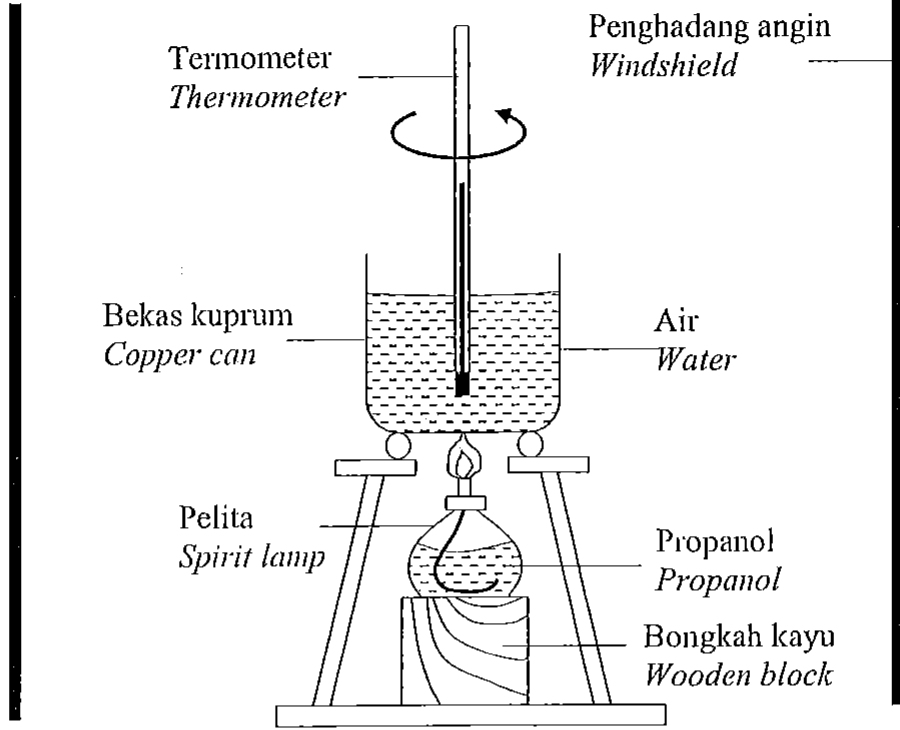
- (a)(i)
Why is copper can used in this experiment?
[1] - (a)(ii)
Give a reason why does the bottom of the copper can turn black after being heated.
[1] - (a)(iii)
Calculate the heat of combustion of propanol, C₃H₇OH. [Relative atomic mass: H = 1, C = 12, O = 16; Specific heat capacity of water, c = 4.2 J g⁻¹ °C⁻¹; Density of water = 1.0 g cm⁻³]
[3] - (b)
Based on the information in Table 8, compare the heat of combustion between methanol and ethanol. Explain why there is a difference in the values of the heat of combustion between the alcohols.
[2] - (c)
Alex wants to cool the beverage in the can. By choosing suitable materials, describe how Alex can cool the beverage?
[3]
Section B
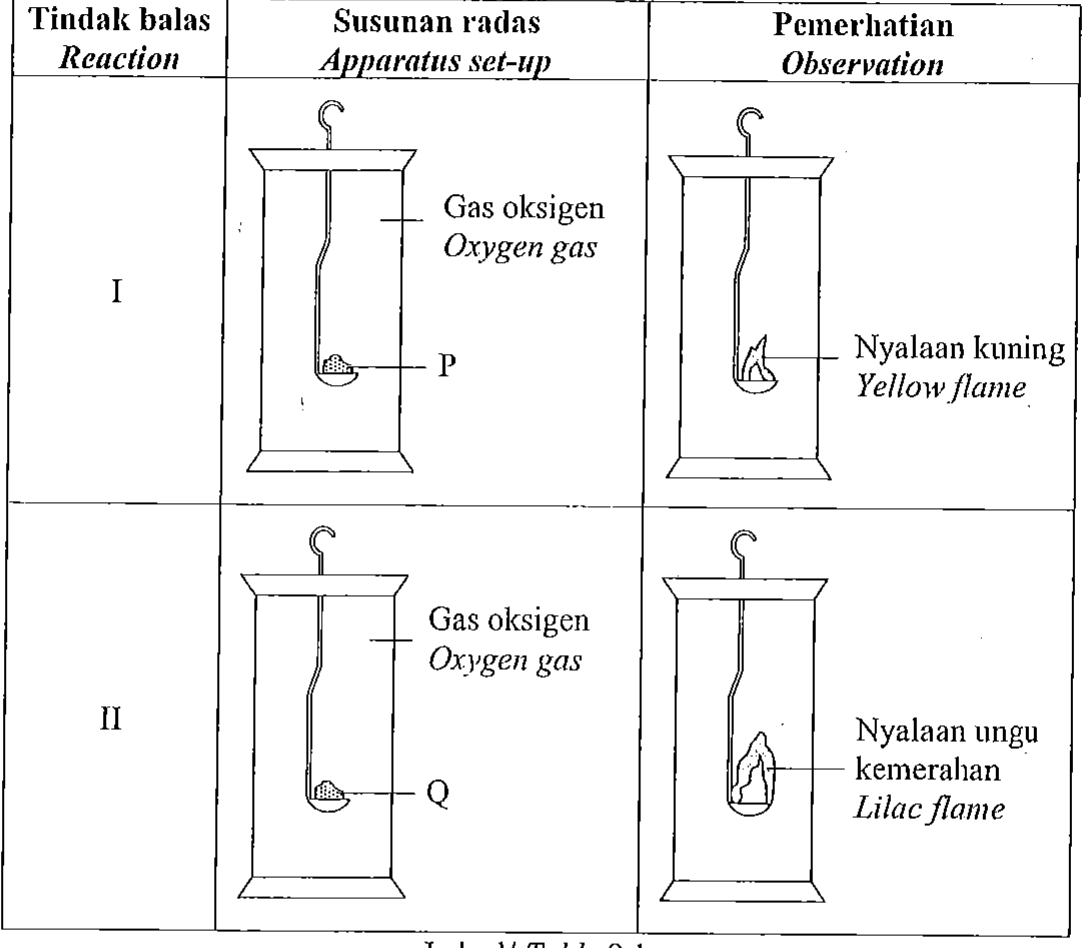
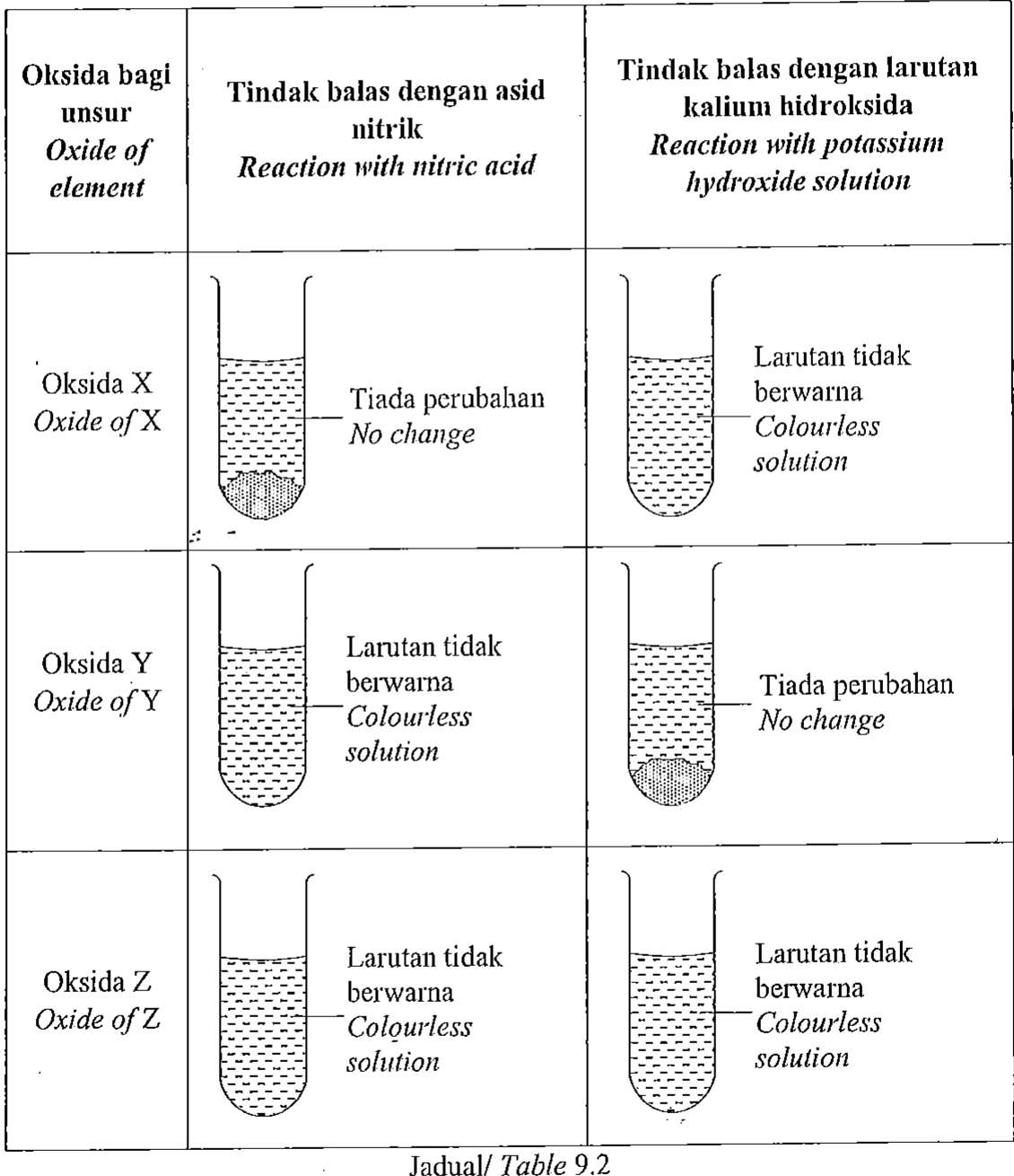
(a) Diagram 9.1 shows the pie chart of percentage uses of chlorine in daily lives: Organic chemicals 17%, Inorganic chemicals 12%, Pulp & paper 12%, Soaps/Detergent 6%, Water treatment 5%, Alumina 14%, Textiles 9%, Other 25%. (b) Table 9.1 shows the observations when elements P and Q react with oxygen gas to form different compounds: Reaction I, element P burns with a yellow flame; Reaction II, element Q burns with a lilac flame. (c) Table 9.2 shows the result of an experiment to investigate the properties of oxide of elements X, Y and Z that are located in Period 3 of the Periodic Table of Elements. The solid oxide of the elements is added into nitric acid and potassium hydroxide solution separately: oxide of X: no change with nitric acid, colourless solution with potassium hydroxide; oxide of Y: colourless solution with nitric acid, no change with potassium hydroxide; oxide of Z: colourless solution with both nitric acid and potassium hydroxide.
Medium20 marks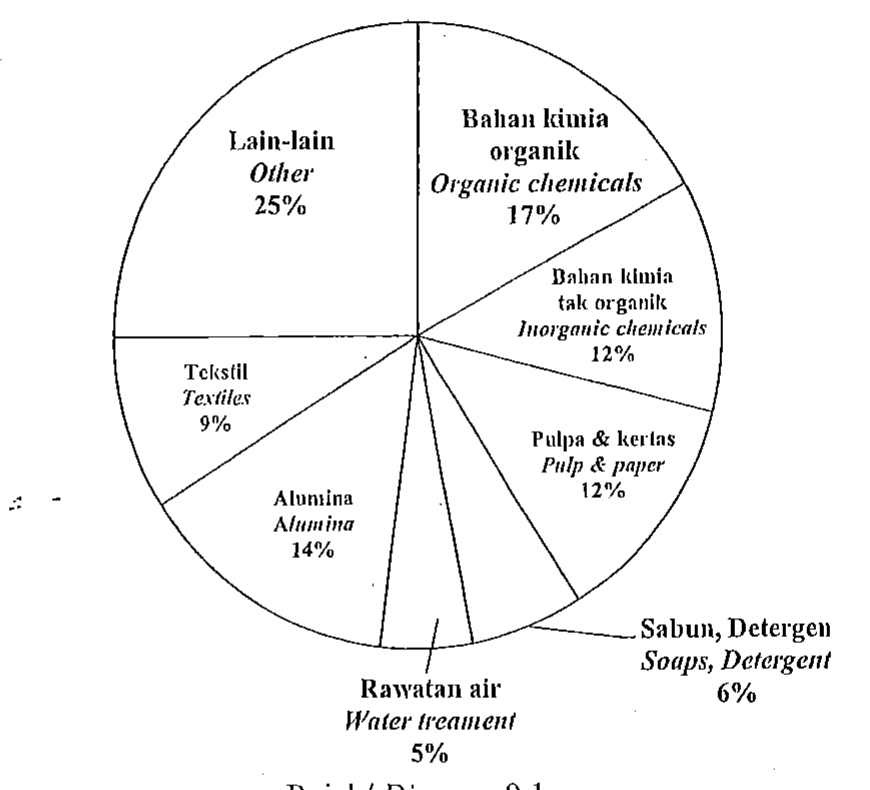
- (a)(i)
State the colour and physical state of chlorine element at room temperature.
[2] - (a)(ii)
Based on Diagram 9.1, 5% of chlorine is used in water treatment to disinfect bacteria. When chlorine reacts with water, colourless solution is produced. State the observation when a blue litmus paper is dipped into the solution. Give reason for your answer. Write a chemical equation of the reaction.
[4] - (b)(i)
Write a chemical equation for reaction II. Calculate the mass of compound formed when 3.12 g of element Q reacts completely with oxygen. [Relative atomic mass: O = 16, Q = 39]
[5] - (b)(ii)
Based on the observation in Table 9.1, compare the reactivity of element P and Q towards oxygen. Explain your answer.
[5] - (c)
Suggest oxide of elements X, Y and Z. Arrange elements X, Y and Z in descending order of electronegativity.
[4]
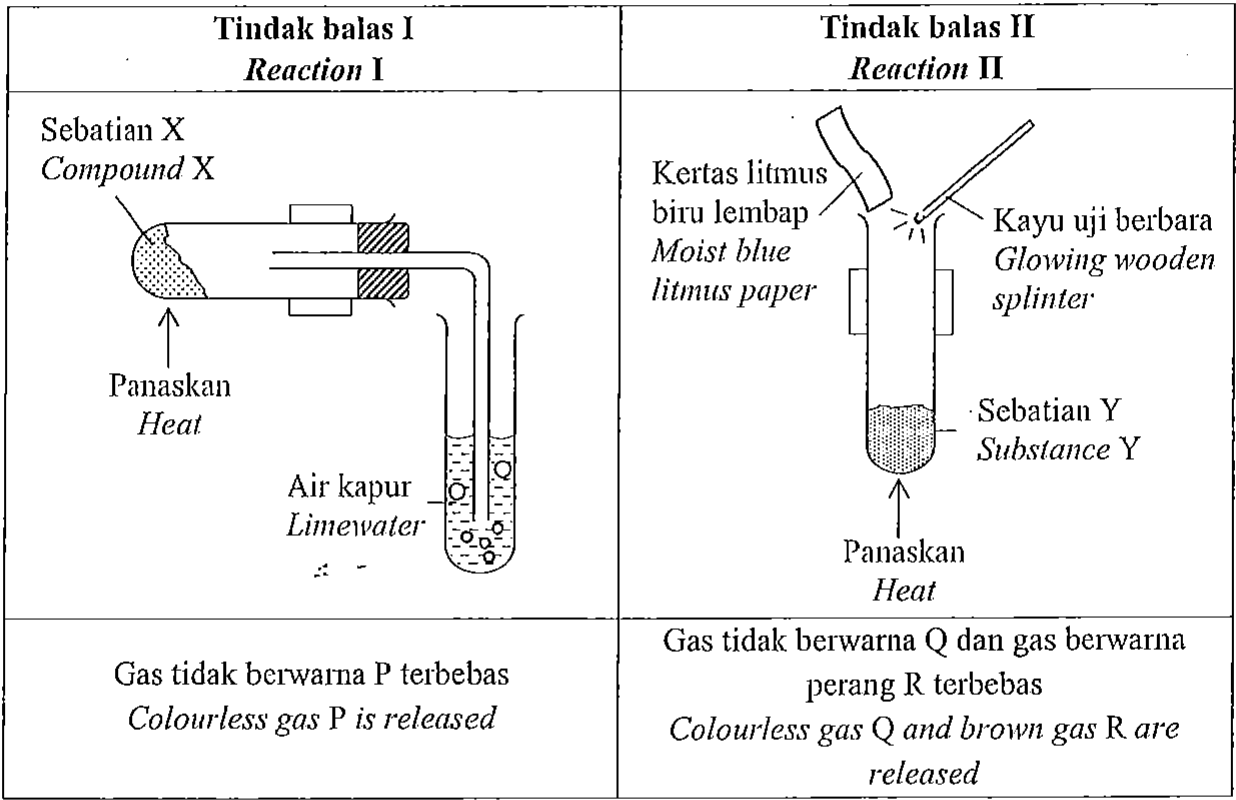
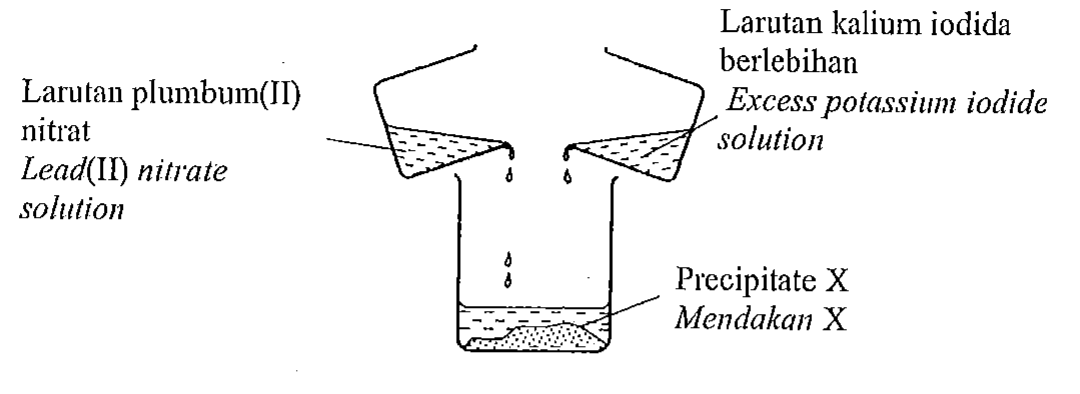
(a) Table 10.1 shows the concentration and pH value for two types of acid with the same basicity: Acid A 1.0 mol dm⁻³, pH value between 3 to 7; Acid B 1.0 mol dm⁻³, pH value less than 3. (b) Table 10.2 shows the effect of heat on two different ionic compounds which are compound X and Y. The compounds consist of the same cation. Heating of the compounds produces yellow solid when hot and white solid when cold. Reaction I: compound X is heated and colourless gas P is released into limewater. Reaction II: substance Y is heated; colourless gas Q and brown gas R are released (moist blue litmus paper and glowing wooden splinter are used to test the gases). (c) Diagram 10 shows the apparatus set-up to produce an insoluble salt: lead(II) nitrate solution is mixed with excess potassium iodide solution to give precipitate X.
Medium20 marks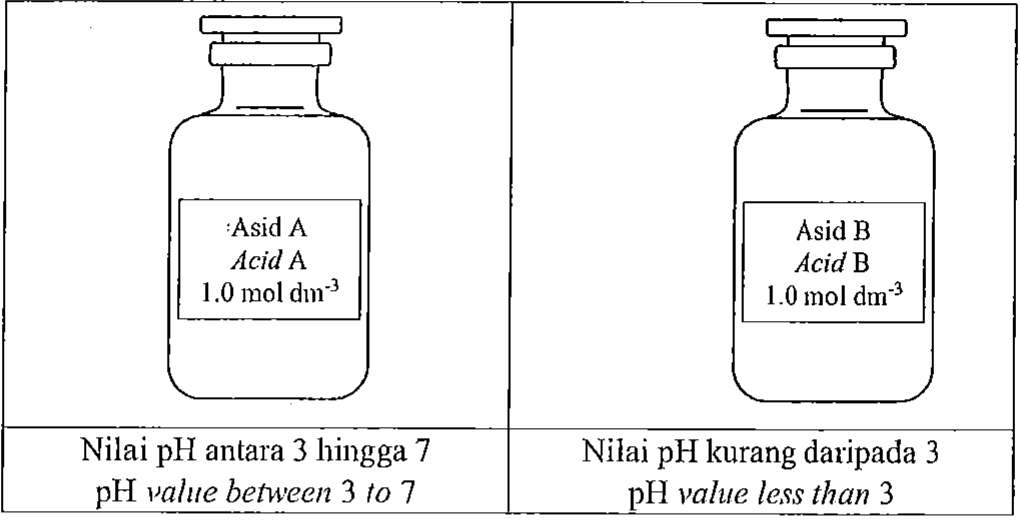
- (a)
What is meant by acid? Based on Table 10.1, suggest acid A and acid B and explain the difference in pH values of these two acids.
[6] - (b)
Write chemical formula for compound X and Y. State the name of gas P, Q and R released in Reaction I and II. Suggest reactants to produce compound X. Write a chemical equation for Reaction II.
[9] - (c)
Name the reaction to produce insoluble salt. Based on Diagram 10, write an ionic equation to show the formation of precipitate X. If 0.05 mol of lead(II) nitrate reacts with excess potassium iodide solution, calculate the mass of precipitate X. [Relative atomic mass: I = 127, Pb = 207]
[5]
Section C
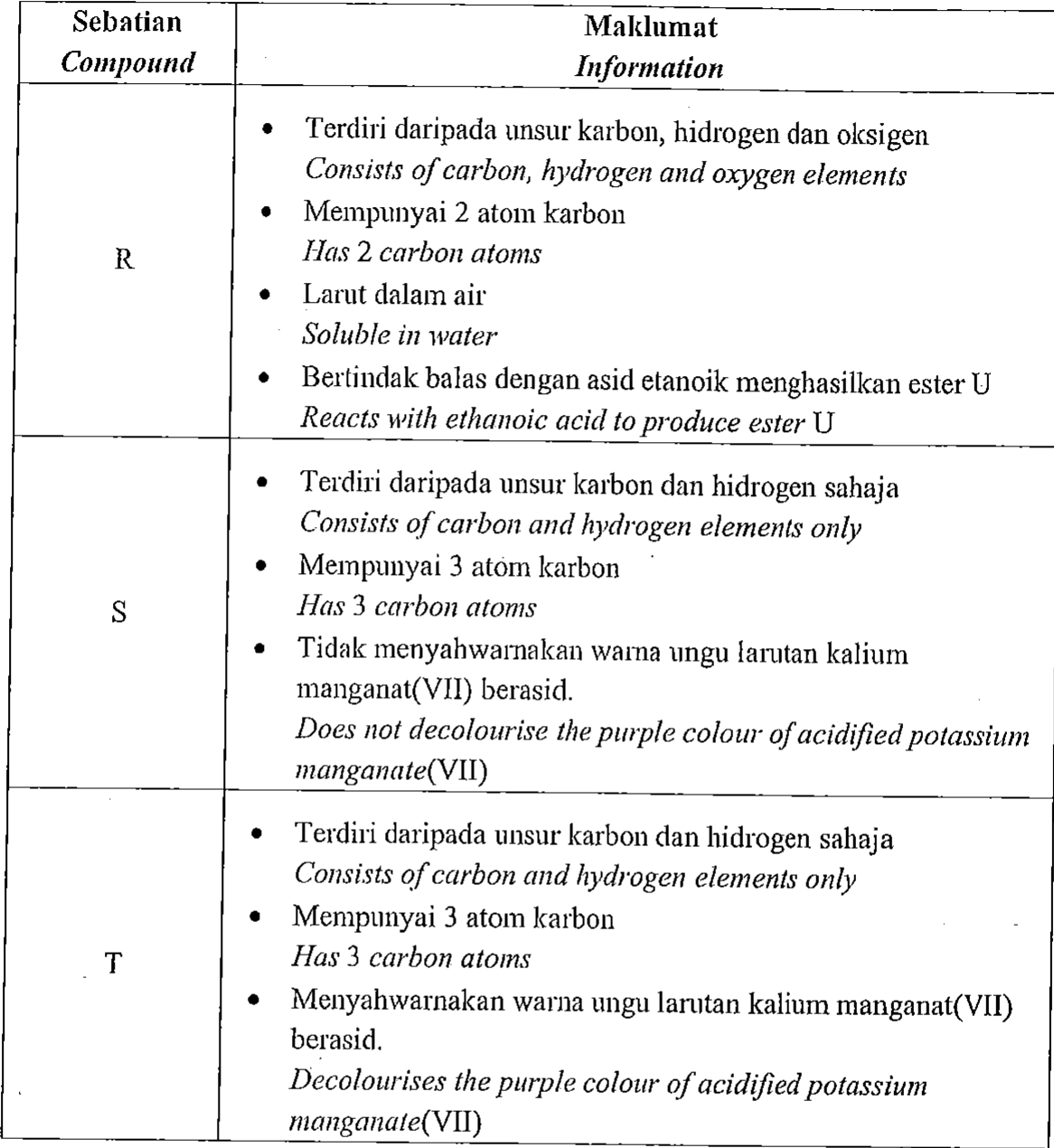
Diagram 11 shows two isomers for compound V: CH₂=CH-CH₂-CH₃ (but-1-ene) and CH₃-CH=CH-CH₃ (but-2-ene). Table 11 shows the information of compounds R, S and T. R: consists of carbon, hydrogen and oxygen elements; has 2 carbon atoms; soluble in water; reacts with ethanoic acid to produce ester U. S: consists of carbon and hydrogen elements only; has 3 carbon atoms; does not decolourise the purple colour of acidified potassium manganate(VII). T: consists of carbon and hydrogen elements only; has 3 carbon atoms; decolourises the purple colour of acidified potassium manganate(VII).
Medium20 marks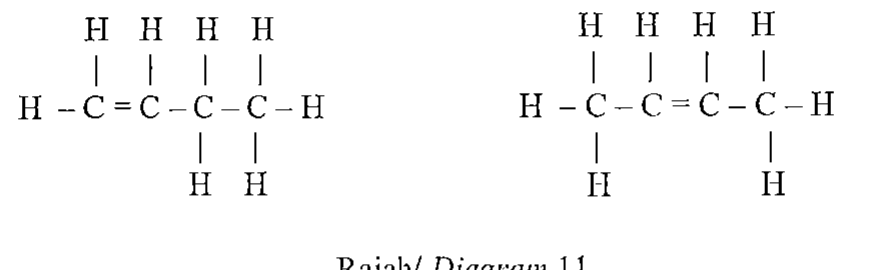
- (a)(i)
What is meant by structural isomerism?
[1] - (a)(ii)
Compound V has three isomers. Draw another structural formula for isomer compound V and state the name of the isomer by using IUPAC nomenclature system.
[2] - (a)(iii)
Compound W is produced through hydration reaction from compound V. Write the chemical equation for the reaction that occurs and determine the mass of compound W produced when 0.125 mol of compound V is used in the reaction. [Relative atomic mass: H = 1, C = 12, O = 16]
[4] - (b)(i)
Based on the information in Table 11: Identify compounds R, S and T and then explain the difference in the observations for compounds S and T when react with acidified potassium manganate(VII) solution.
[5] - (b)(ii)
Compound R can be prepared by a chemical reaction through a fermentation process of glucose. By using suitable materials found in your home, explain how you can prepare compound R at the school laboratory. In your description, explain how pure compound R can be collected.
[8]