Write your answer on paper. Then open the answer to check it.
Section A
Diagram 1 shows the standard representation of two isotopes of sodium atoms: ²³₁₁Na and ²⁴₁₁Na.
Medium5 marks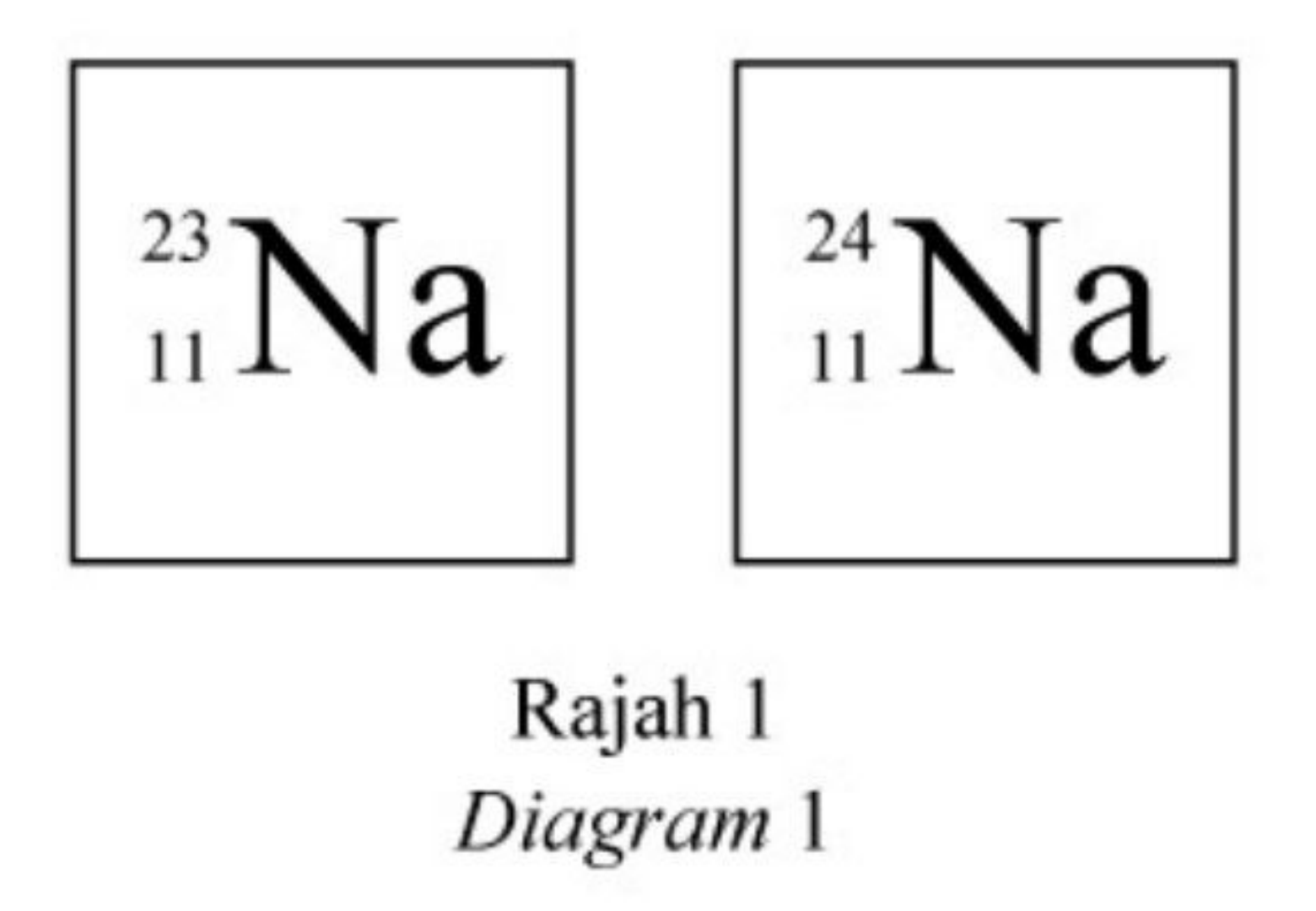
- (a)
State the meaning of isotopes.
[1] - (b)
Determine the number of protons of sodium-23 atom.
[1] - (c)
State one use of ²⁴₁₁Na in daily life.
[1] - (d)
Draw the atomic structure of ²⁴₁₁Na.
[2]
Table 2 shows two types of manufactured substances in industry: Steel = Iron + W; Lead crystal glass = X + Lead(II) oxide.
Medium5 marks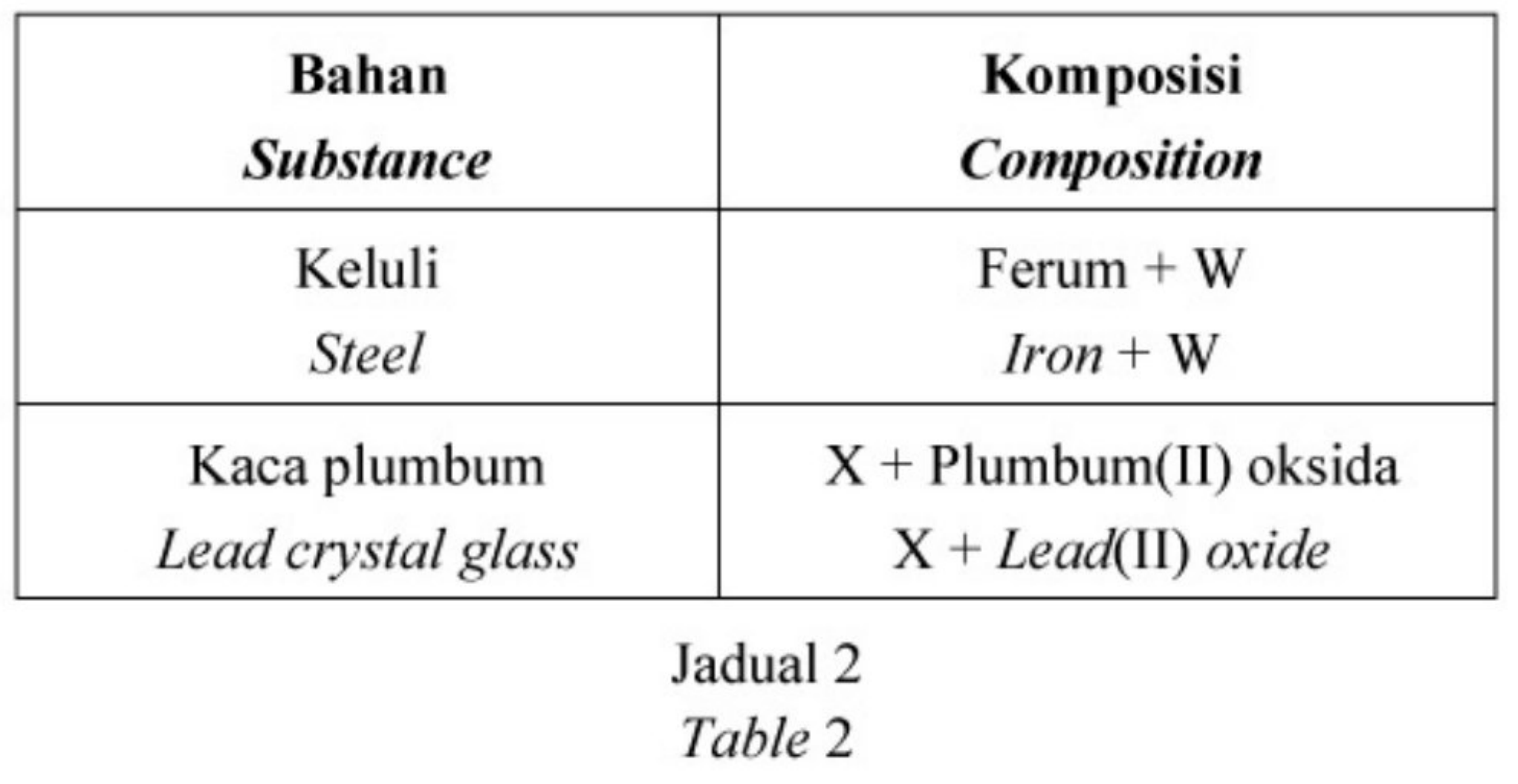
- (a)
Identify W and X.
[2] - (b)
Steel is harder than iron. Explain how the presence of element W affects the properties of steel.
[2] - (c)
State one property of lead crystal glass.
[1]
Diagram 3 shows the photosynthesis process for the formation of glucose in green plants (sunlight; carbon dioxide gas and water enter; glucose and oxygen gas leave).
Medium6 marks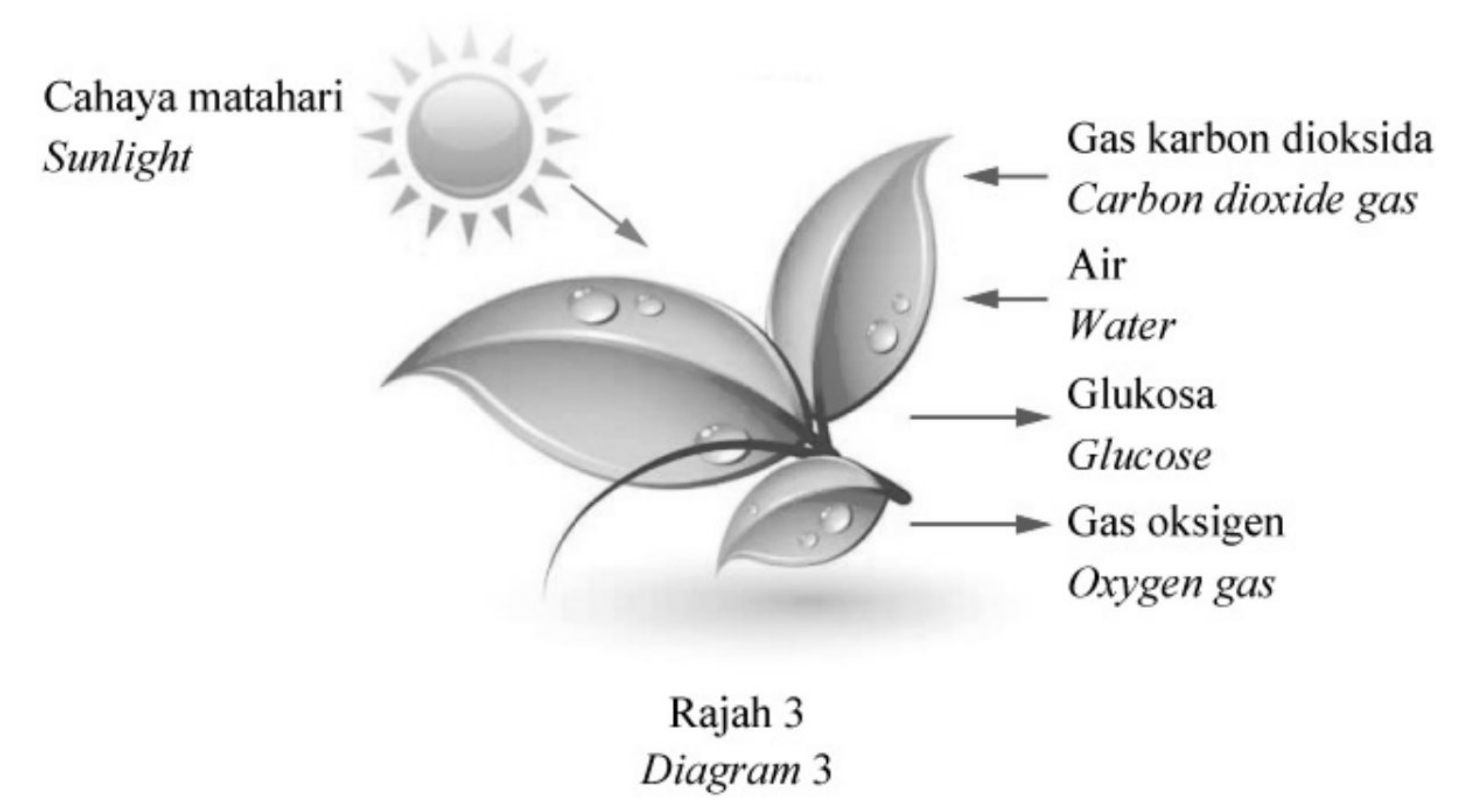
- (a)
Write the empirical formula of glucose.
[1] - (b)
State one difference between empirical formula and molecular formula.
[1] - (c)
Write a balanced chemical equation of photosynthesis process.
[2] - (d)
What is the percentage of mass of carbon in glucose? [Relative atomic mass: H = 1, C = 12, O = 16]
[2]
Table 4 shows the number of protons of atoms of elements T, U, V and W. The letters used are not the actual symbols of the elements. T = 1 proton; U = 8; V = 11; W = 18.
Medium7 marks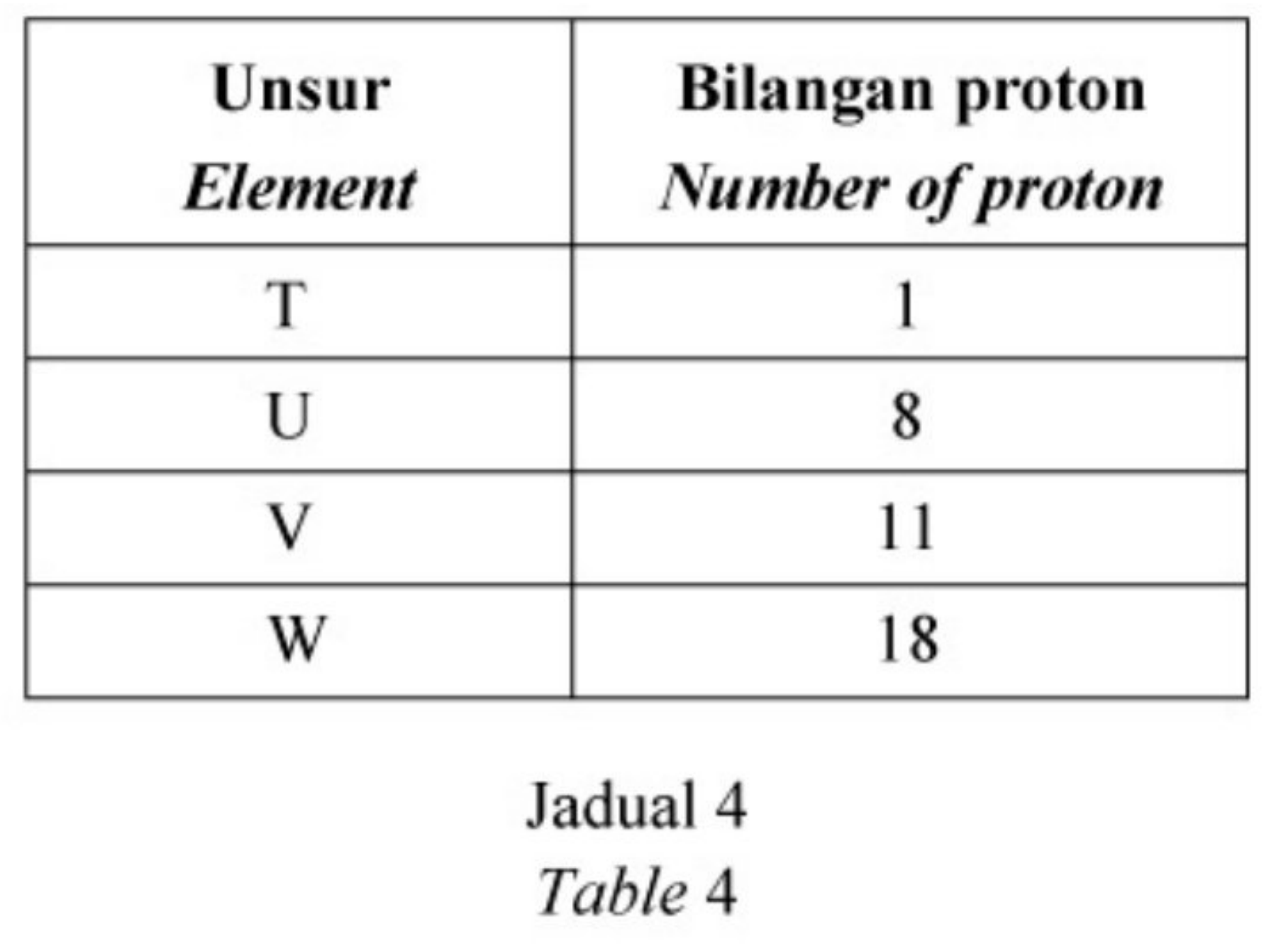
- (a)(i)
Which element is an alkali metal?
[1] - (a)(ii)
Write a chemical equation when element in 4(a)(i) reacts with water.
[2] - (b)
Element T reacts with element U to form a compound. What is the formula of the compound formed?
[1] - (c)(i)
Element U reacts with element V to form a compound. Draw the electron arrangement of the compound formed.
[2] - (c)(ii)
State one property of the compound.
[1]
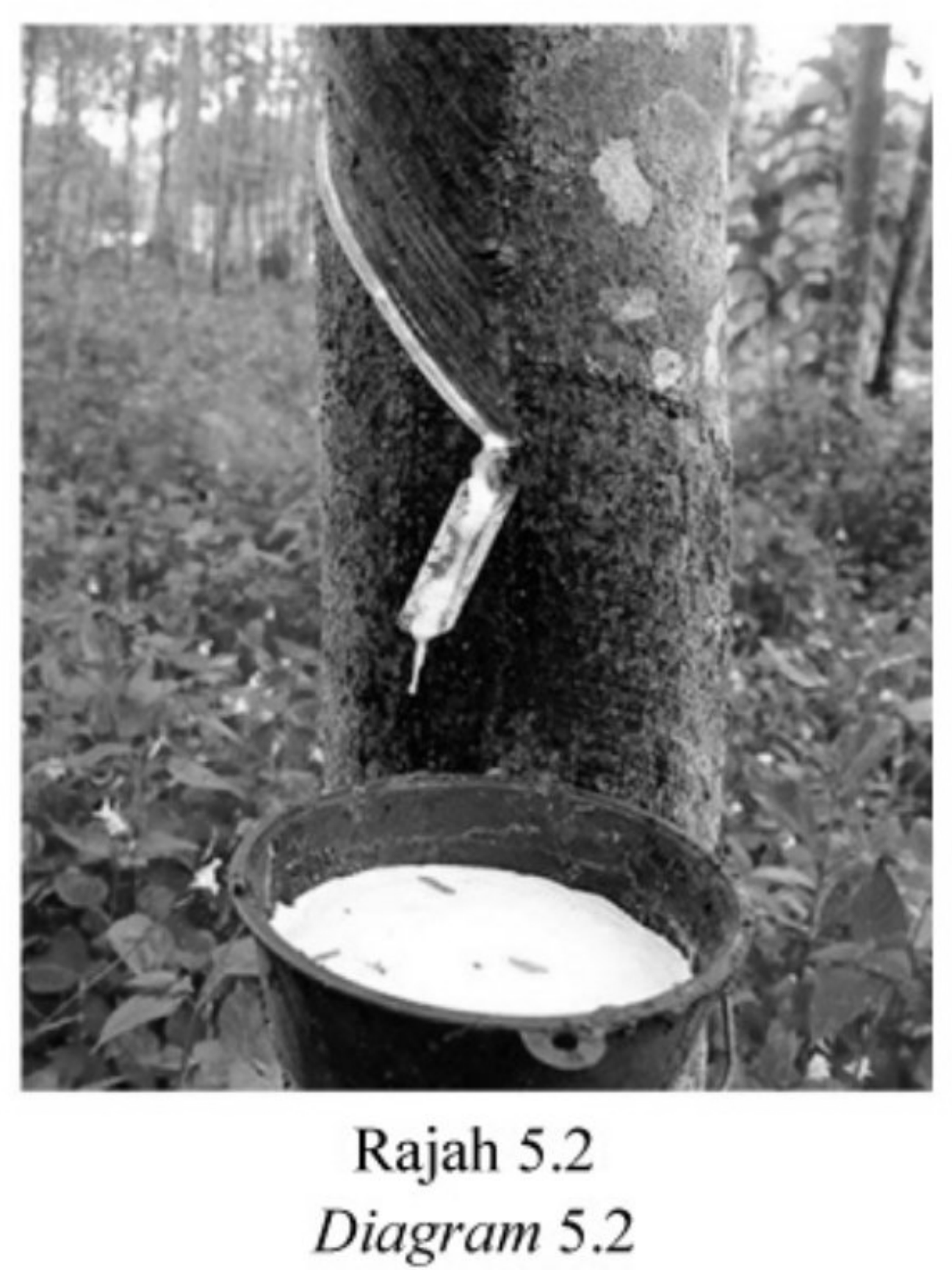
Diagram 5.1 shows a product made of polymer X and its structural formula (repeating unit: C with H and Cl on one carbon, two H on the other, n). Diagram 5.2 shows latex is exposed in air for a long period of time.
Medium8 marks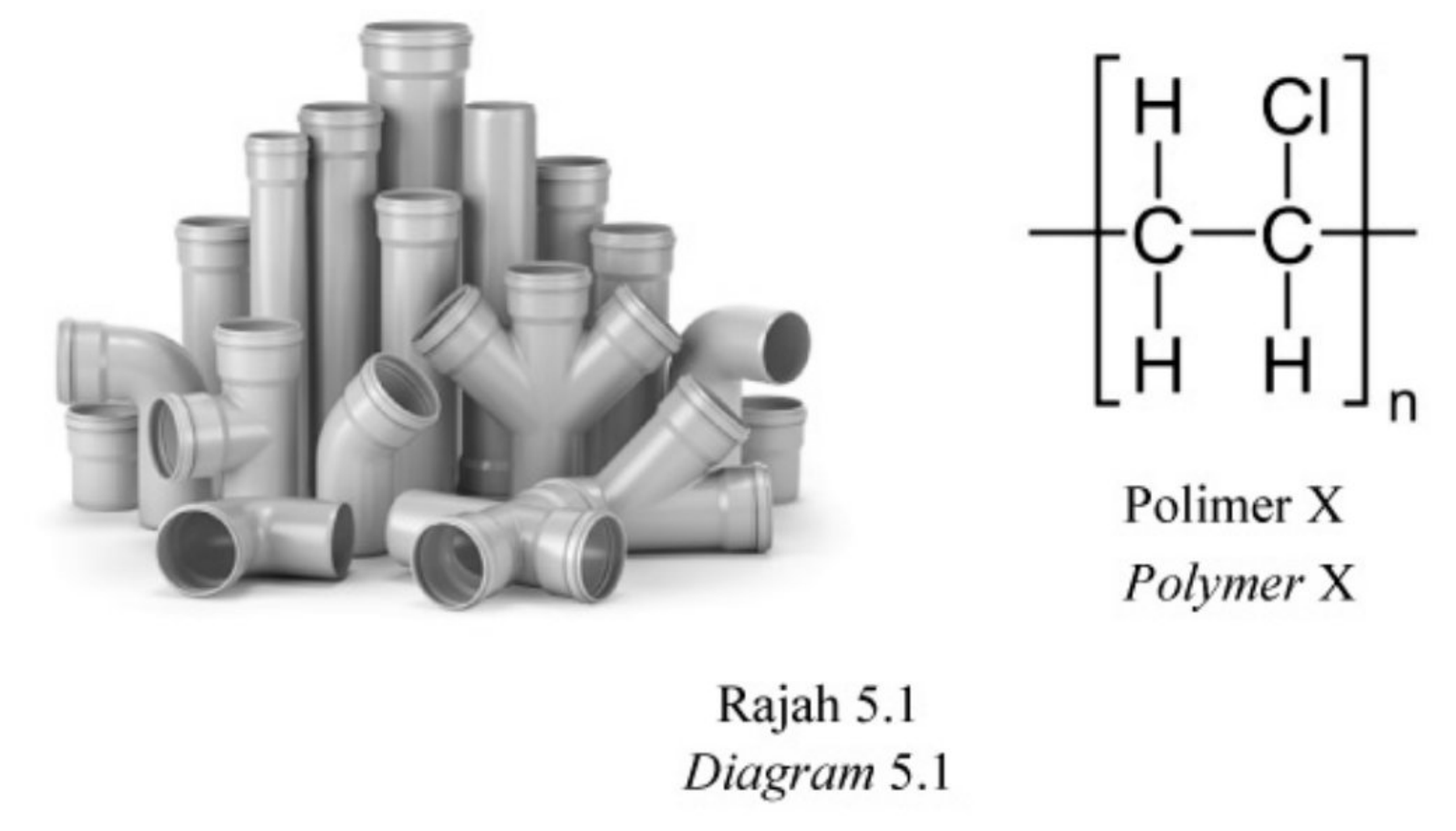
- (a)
What is the meaning of polymer?
[1] - (b)
Draw the structural formula of the monomer that forms polymer X.
[1] - (c)
State one way polymer X causes environmental pollution.
[1] - (d)(i)
Diagram 5.2 shows latex is exposed in air for a long period of time. What will happen to latex? Explain your answer.
[4] - (d)(ii)
Name the chemical used to prevent the process in 5(d)(i).
[1]
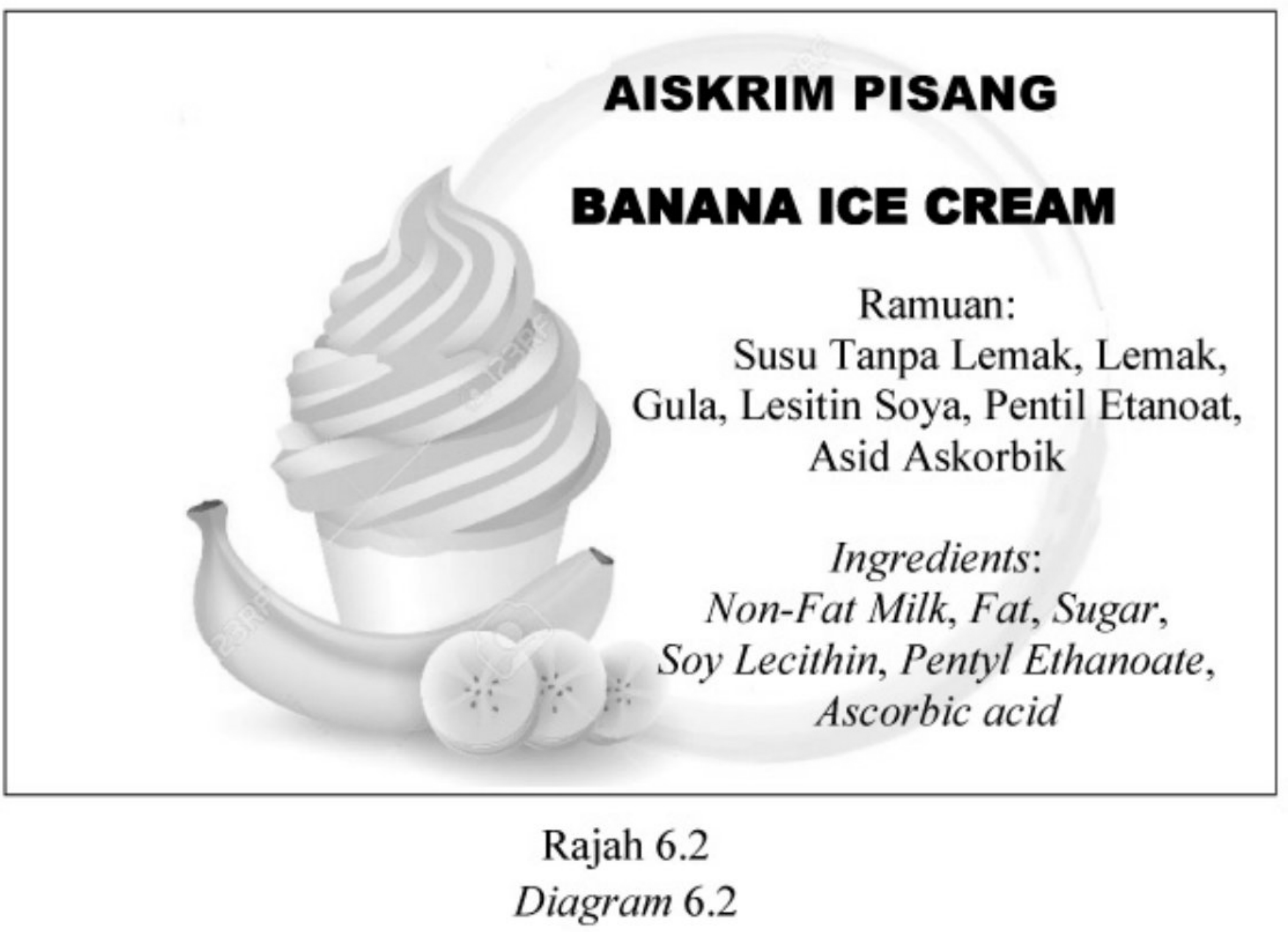
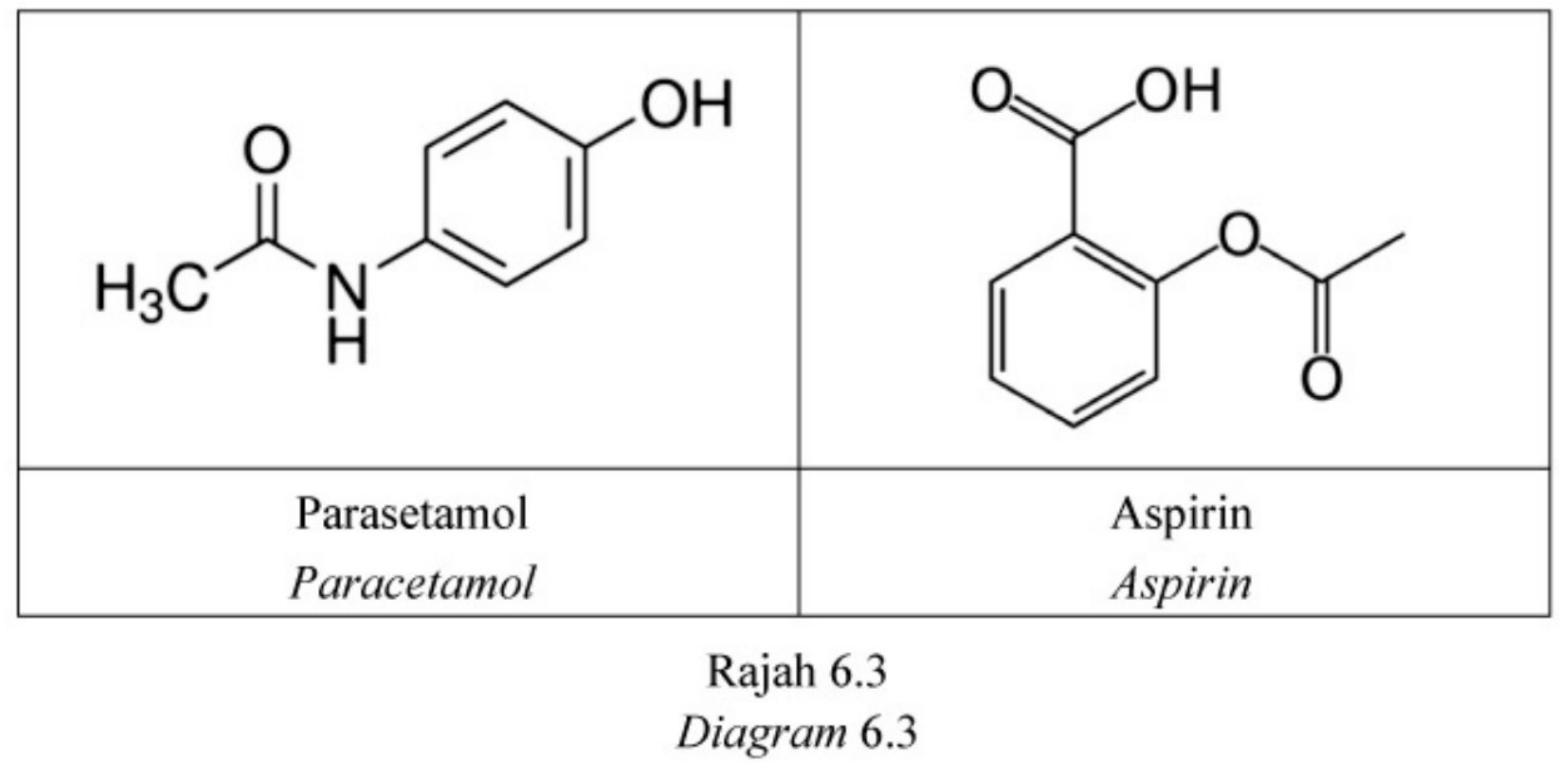
Diagram 6.1 shows the structural formula of a soap anion (long hydrocarbon chain ending in COO⁻). Diagram 6.2 shows a label of a pack of food: banana ice cream; ingredients: non-fat milk, fat, sugar, soy lecithin, pentyl ethanoate, ascorbic acid. Diagram 6.3 shows the structural formulae of two examples of analgesic: paracetamol and aspirin.
Medium9 marks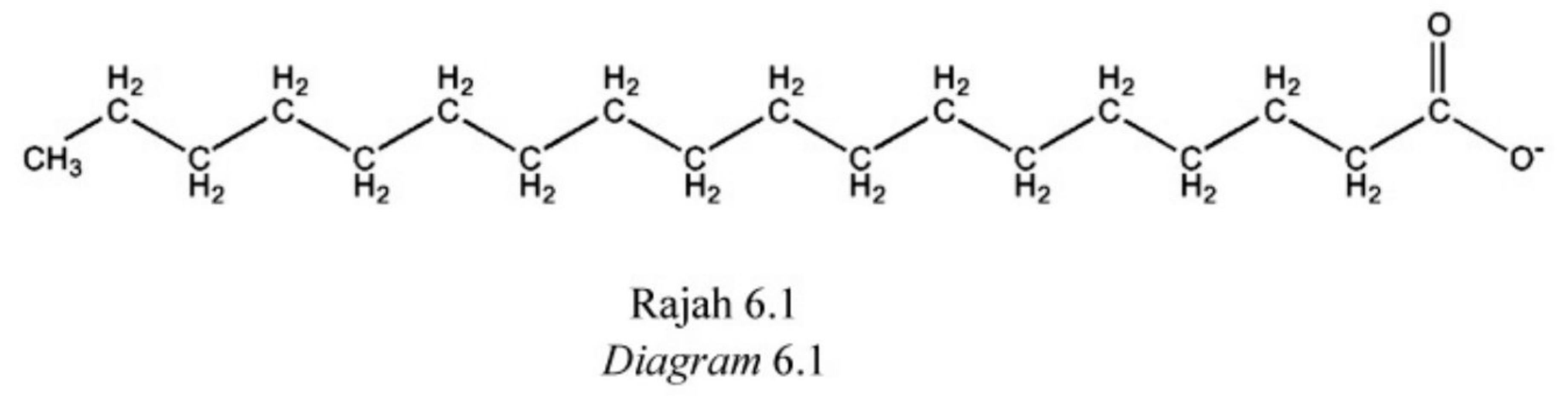
- (a)(i)
Circle the part of the soap anion that is soluble in water on Diagram 6.1.
[1] - (a)(ii)
Soap is not effective as a cleaning agent in hard water. Explain.
[2] - (a)(iii)
Soap can form foam with water. What is the function of foam?
[1] - (b)(i)
Based on the information, name the compound which is used as a stabiliser.
[1] - (b)(ii)
Based on the information, what will happen to ice cream when the compound in 6(b)(i) is not added?
[1] - (c)(i)
A patient who is suffering from fever informs the doctor that she also has gastric. Based on Diagram 6.3, if you are the doctor, which medicine will you prescribe? Explain your answer.
[2] - (c)(ii)
Sometimes the doctor also prescribes this patient with streptomycin. The patient has to finish up the medicine accordingly to the prescription. Explain why.
[1]
Table 7 shows the thermochemical equations of Experiment I and Experiment II: Experiment I: NaOH + X → NaX + H₂O, ΔH = −57.3 kJ mol⁻¹; Experiment II: NaOH + Y → NaY + H₂O, ΔH = −51.5 kJ mol⁻¹.
Medium10 marks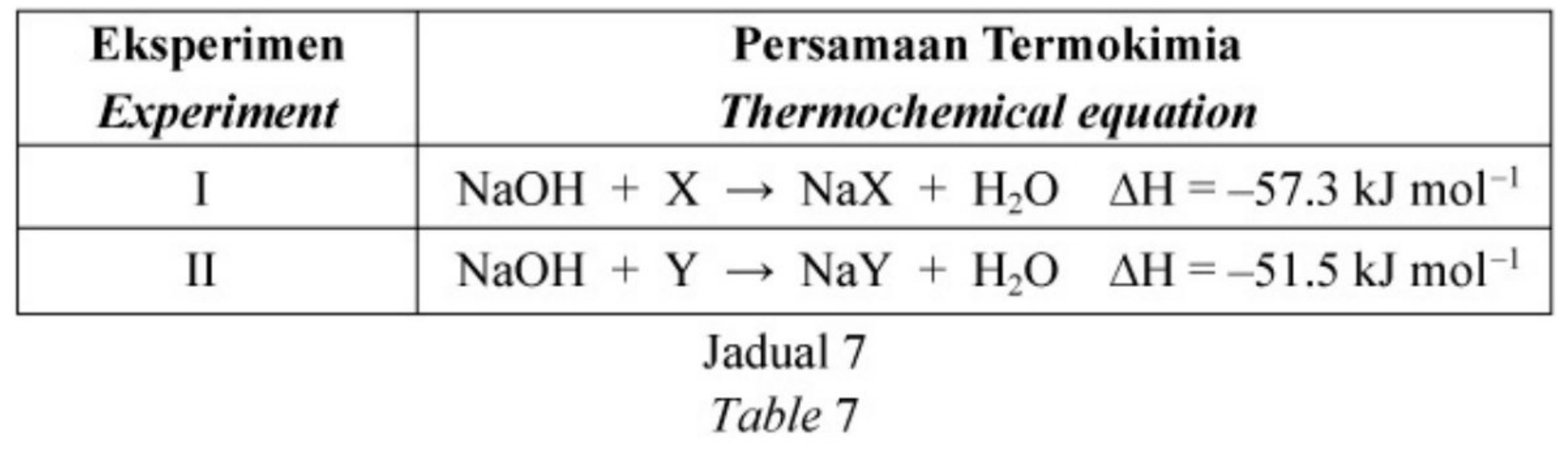
- (a)
Based on Table 7, suggest acid X and acid Y.
[2] - (b)
Heat of neutralisation of Experiment I is higher than Experiment II, explain the difference in the value of heat of neutralisation of these two experiments.
[2] - (c)(i)
In Experiment I, 50 cm³ of 1.0 mol dm⁻³ sodium hydroxide solution is added into 50 cm³ of 1.0 mol dm⁻³ acid X. Calculate the heat released in the reaction.
[2] - (c)(ii)
Calculate the temperature change of the reaction. [Specific heat capacity of solution = 4.2 J g⁻¹ °C⁻¹, density of solution = 1 g cm⁻³]
[1] - (c)(iii)
Experiment I is repeated by adding 100 cm³ of 1.0 mol dm⁻³ sodium hydroxide solution to 100 cm³ of 1.0 mol dm⁻³ acid X. What is the temperature change of the reaction?
[1] - (d)
Draw an energy level diagram for the reaction in Experiment II.
[2]
Table 8 shows the preparation of sodium chloride and copper(II) sulphate through Experiment I and Experiment II. Experiment I (titration apparatus): 40 cm³ of 0.5 mol dm⁻³ hydrochloric acid + 40 cm³ of 0.5 mol dm⁻³ sodium hydroxide solution + phenolphthalein. Experiment II (heating in a beaker): excess copper(II) oxide + 40 cm³ of 0.5 mol dm⁻³ sulphuric acid.
Medium10 marks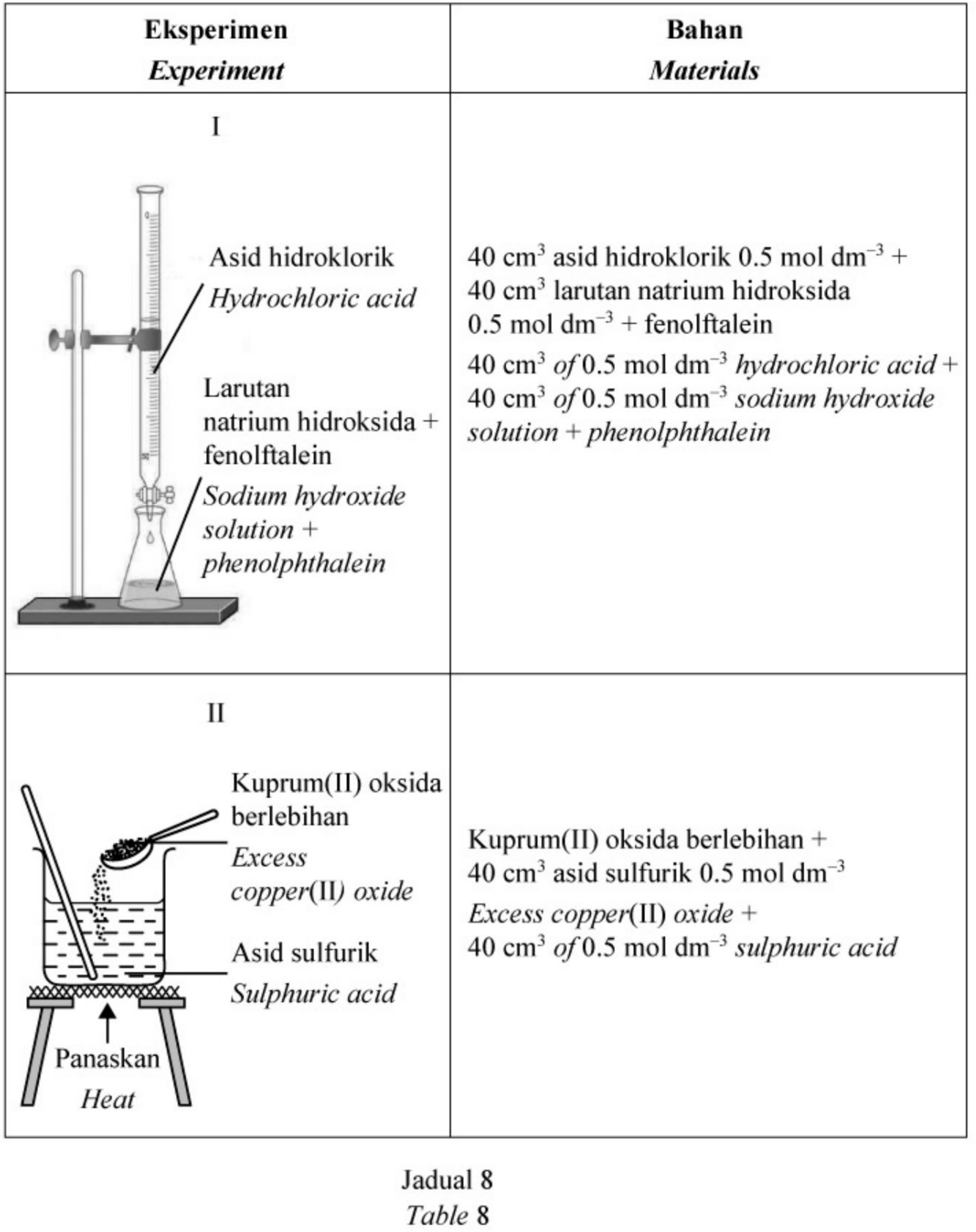
- (a)
What is the reaction that take place in Experiment I?
[1] - (b)(i)
Based on Experiment I, state one observation.
[1] - (b)(ii)
Hydrochloric acid in Experiment I is replaced with sulphuric acid of the same concentration. Predict the volume of sulphuric acid required for a complete reaction.
[1] - (c)(i)
Based on Experiment II, explain why excess copper(II) oxide is added.
[1] - (c)(ii)
Write a chemical equation of this reaction.
[2] - (c)(iii)
Calculate the maximum mass of salt obtained. [Relative atomic mass: Cu = 64, S = 32, O = 16]
[2] - (d)
Amin wishes to repeat Experiment II by replacing copper(II) oxide powder with copper powder. In your opinion, do Amin makes a correct decision? Explain your answer.
[2]
Section B
Table 9 shows the information for Experiment I and Experiment II to study the rate of reaction of zinc carbonate with two acids, P and Q. Experiment I: 0.625 g of zinc carbonate and 50 cm³ of 2.0 mol dm⁻³ acid P; products: zinc nitrate, water and gas S. Experiment II: 0.625 g of zinc carbonate and 50 cm³ of 2.0 mol dm⁻³ acid Q; products: zinc sulphate, water and gas S.
Hard20 marks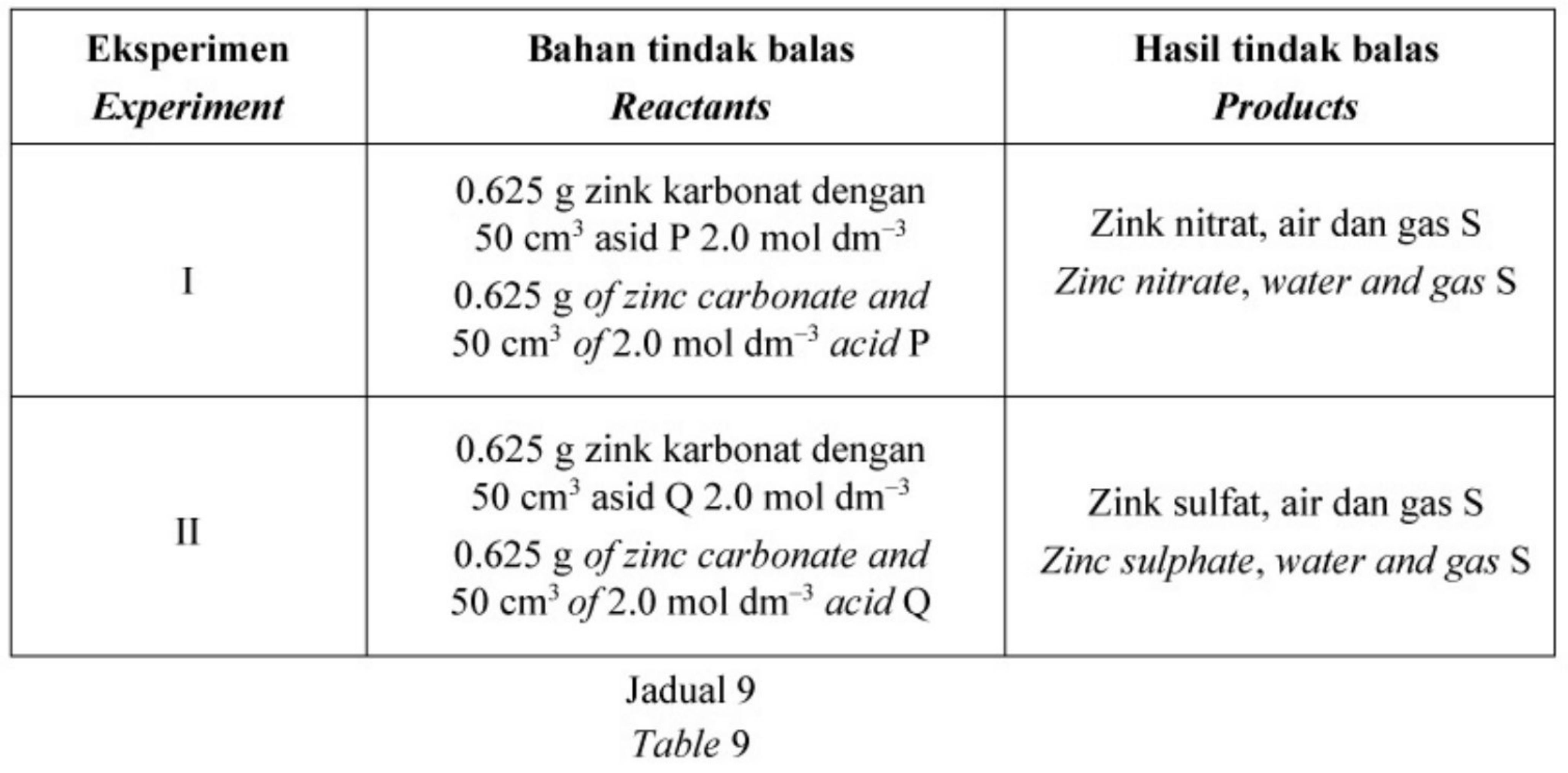
- (a)(i)
Referring to Experiment I and Experiment II, state: the meaning of rate of reaction; factor that affects the rate of reaction; name the acid P and acid Q.
[4] - (a)(ii)
Identify gas S. Describe the chemical test to verify gas S.
[3] - (a)(iii)
Write the chemical equation for the reaction of acid Q with zinc carbonate and calculate the maximum volume of gas S produced in Experiment II. [Relative atomic mass: Zn = 65, O = 16, C = 12 and 1 mol of any gas occupies 24 dm³ at room conditions]
[5] - (b)(i)
Sketch a graph of the maximum volume of gas S against time for Experiment I and Experiment II on the same axis.
[3] - (b)(ii)
Based on the graph in 9(b)(i), compare the rate of reaction between Experiment I and Experiment II. Explain your answer using collision theory.
[5]
Diagram 10.1 shows a structural formula of butene (but-1-ene: CH₂=CH–CH₂–CH₃). Diagram 10.2 shows the conversions of several organic compounds: Compound X → (Reaction I) → ethanoic acid → (Reaction III) → ethyl ethanoate; Compound X → (Reaction II) → ethene.
Medium20 marks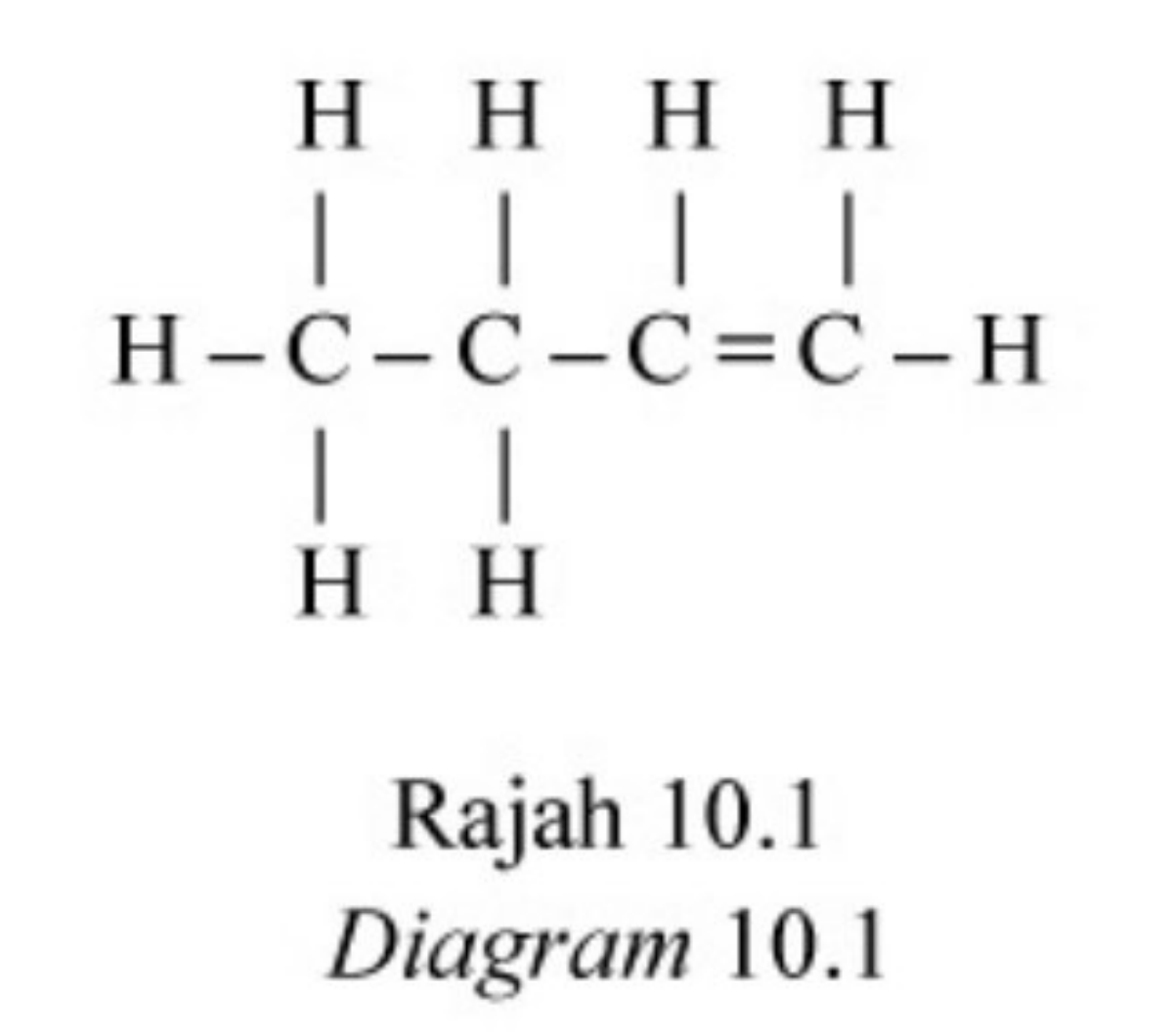
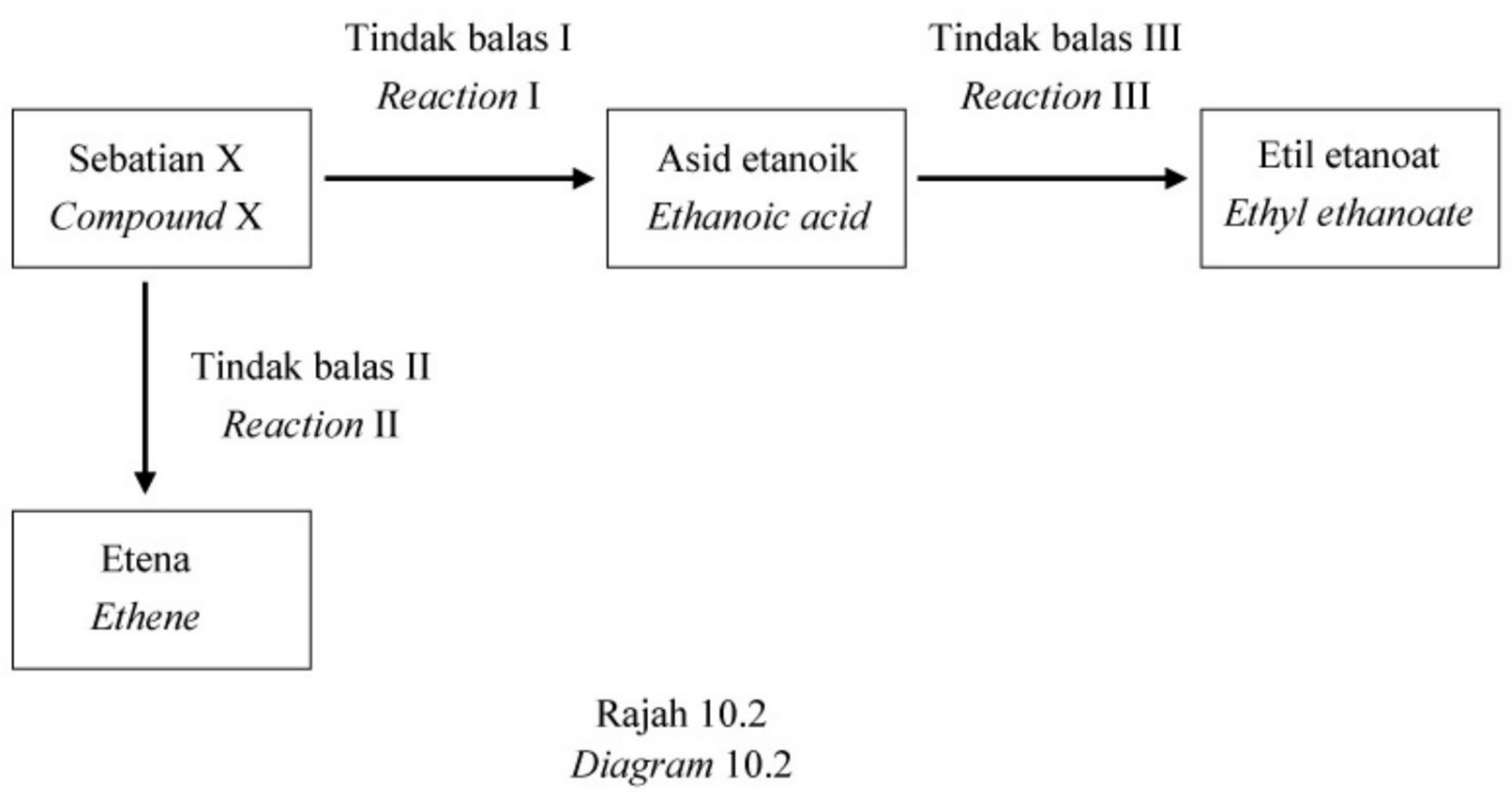
- (a)
Draw the structural formulae for another two isomers of butene and name each isomer according to the IUPAC nomenclature.
[4] - (b)(i)
State the name, homologous series, molecular formula and functional group of compound X.
[4] - (b)(ii)
State the name for Reaction I, Reaction II and Reaction III.
[3] - (b)(iii)
Write chemical equation for Reaction I and Reaction II.
[4] - (c)
Butene burnt completely in oxygen to produce water and carbon dioxide gas. Write a balanced chemical equation and calculate the volume of carbon dioxide gas produced when 1.12 g of butene is completely burnt. [Relative atomic mass: C = 12, H = 1 and 1 mol of any gas occupies 24 dm³ at room conditions]
[5]
Section C
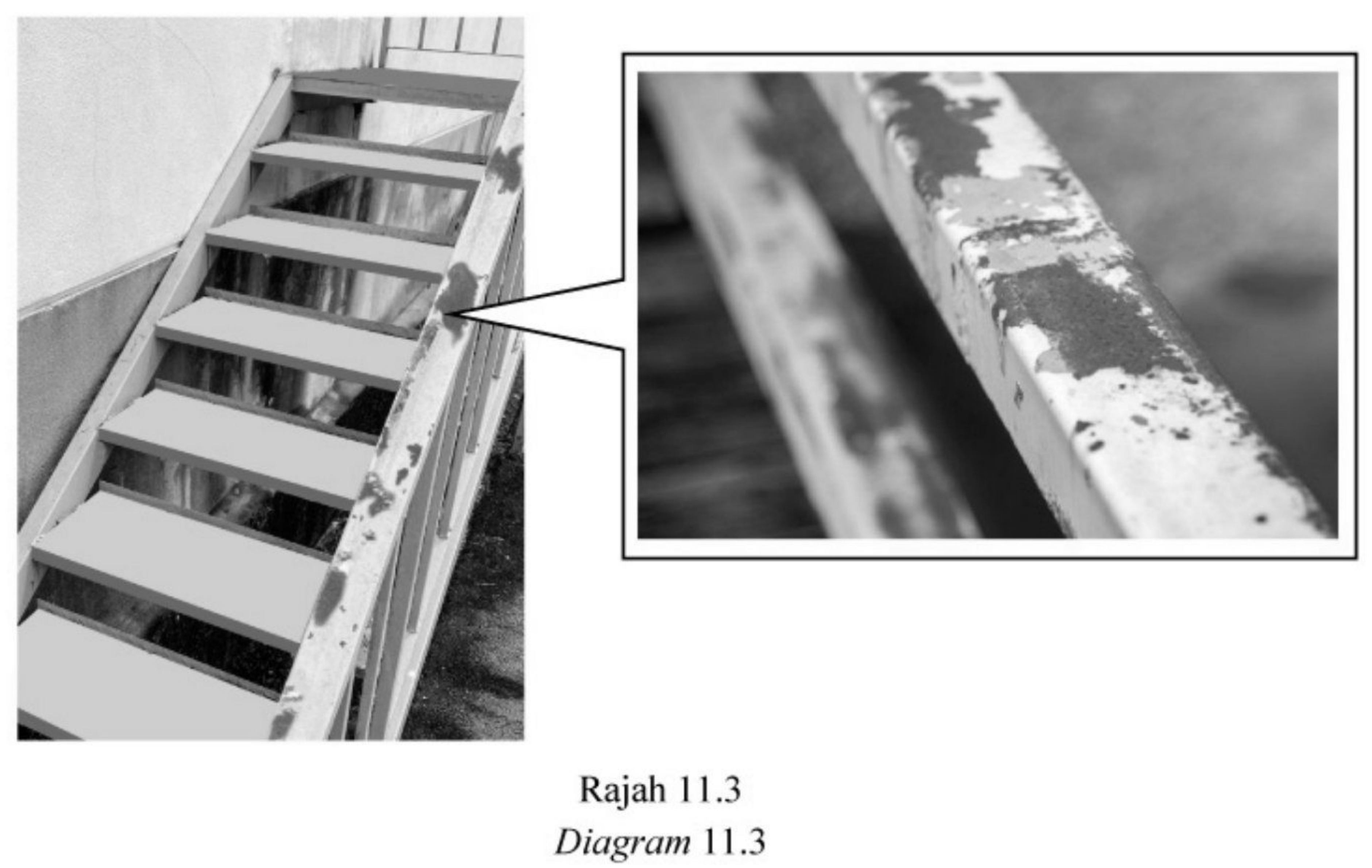
Diagram 11.1 shows the set-up of apparatus (U-tube with carbon electrode X in iron(II) sulphate solution, carbon electrode Y in acidified potassium manganate(VII) solution, dilute sulphuric acid, connected through a galvanometer G) to investigate the redox reaction between iron(II) sulphate solution and acidified potassium manganate(VII) solution through the transfer of electrons at a distance. Diagram 11.2 shows the apparatus set-up for the electrolysis of 1.0 mol dm⁻³ sodium chloride solution using carbon electrodes X and Y (colourless gas at X, greenish yellow gas at Y). Diagram 11.3 shows the stair handrail made from iron in school that look rusty.
Hard20 marks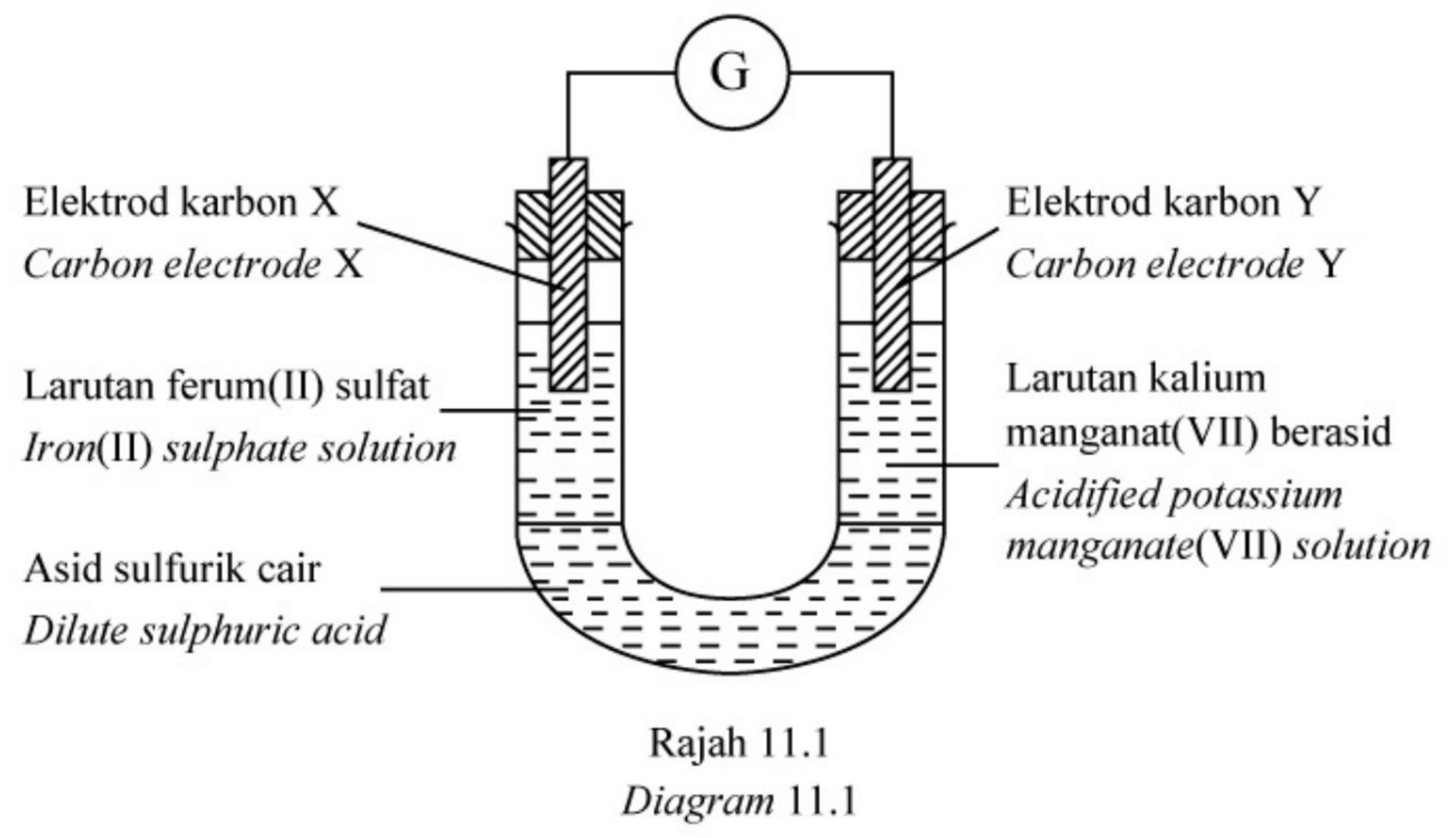
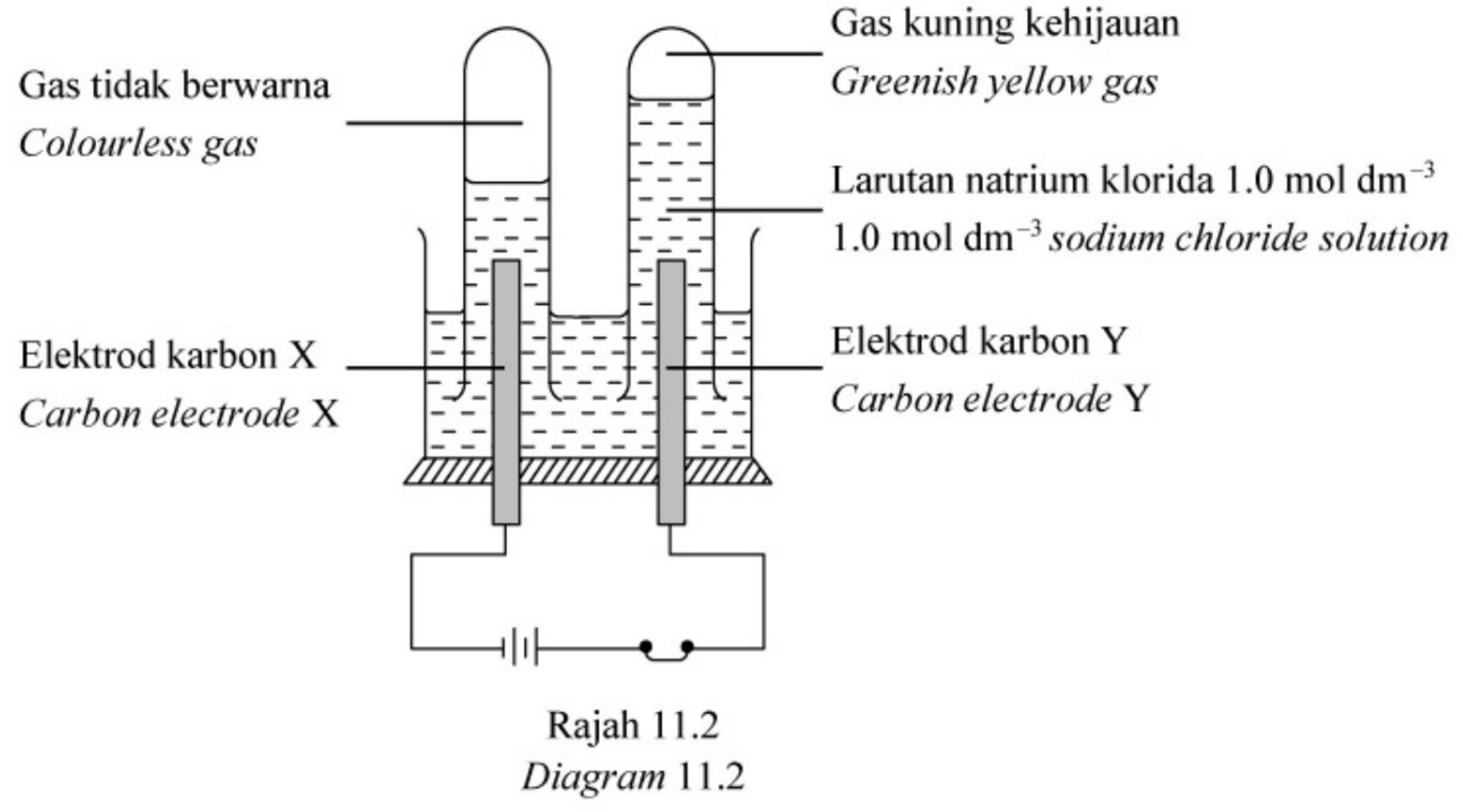
- (a)(i)
Based on Diagram 11.1, state the meaning of redox reaction.
[1] - (a)(ii)
Based on Diagram 11.1, state the function of iron(II) sulphate solution and acidified potassium manganate(VII) solution. Write the half equation for the reaction occurs at carbon electrode Y.
[4] - (b)
Based on Diagram 11.2, state the factor that affect the products formed at carbon electrode X and carbon electrode Y. Explain the reactions occur at carbon electrode X and carbon electrode Y. Your explanation must include: ions that attracted to electrodes; ions that are selectively discharged and the reason ions are selectively discharged at electrodes; half equations for the reaction occurs at electrodes.
[10] - (c)
In conjunction of Co-curricular Week, Chemistry Society members have been assigned to improve the condition of the stair holder. Suggest and explain way to solve the task so that the stair holder looks like new again.
[5]