Write your answer on paper. Then open the answer to check it.
Section A
Table 1 shows the proton number and nucleon number of three atoms: T (proton number 11, nucleon number 23), U (11, 24), V (12, 24). The letters used are not the actual symbols of the atoms. Use the letters to answer the following questions.
Medium5 marks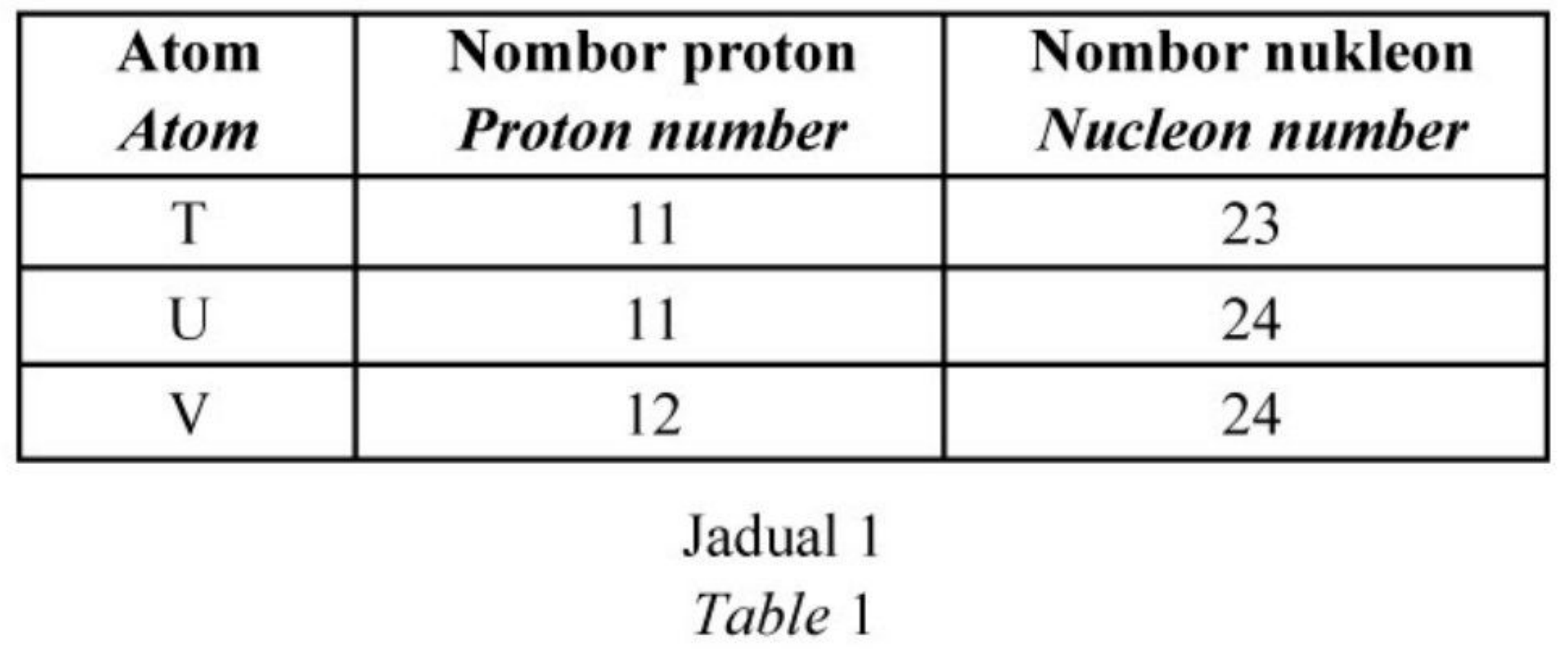
- (a)
What is meant by the nucleon number?
[1] - (b)
State the number of neutrons for atom V.
[1] - (c)
State a pair of isotopes. Explain your answer.
[2] - (d)
State one use of atom U in daily life.
[1]
Table 2 shows two types of manufactured substances in industry: Alloy X (composition: copper, tin) and Composite Y (composition: concrete, alloy Z).
Medium5 marks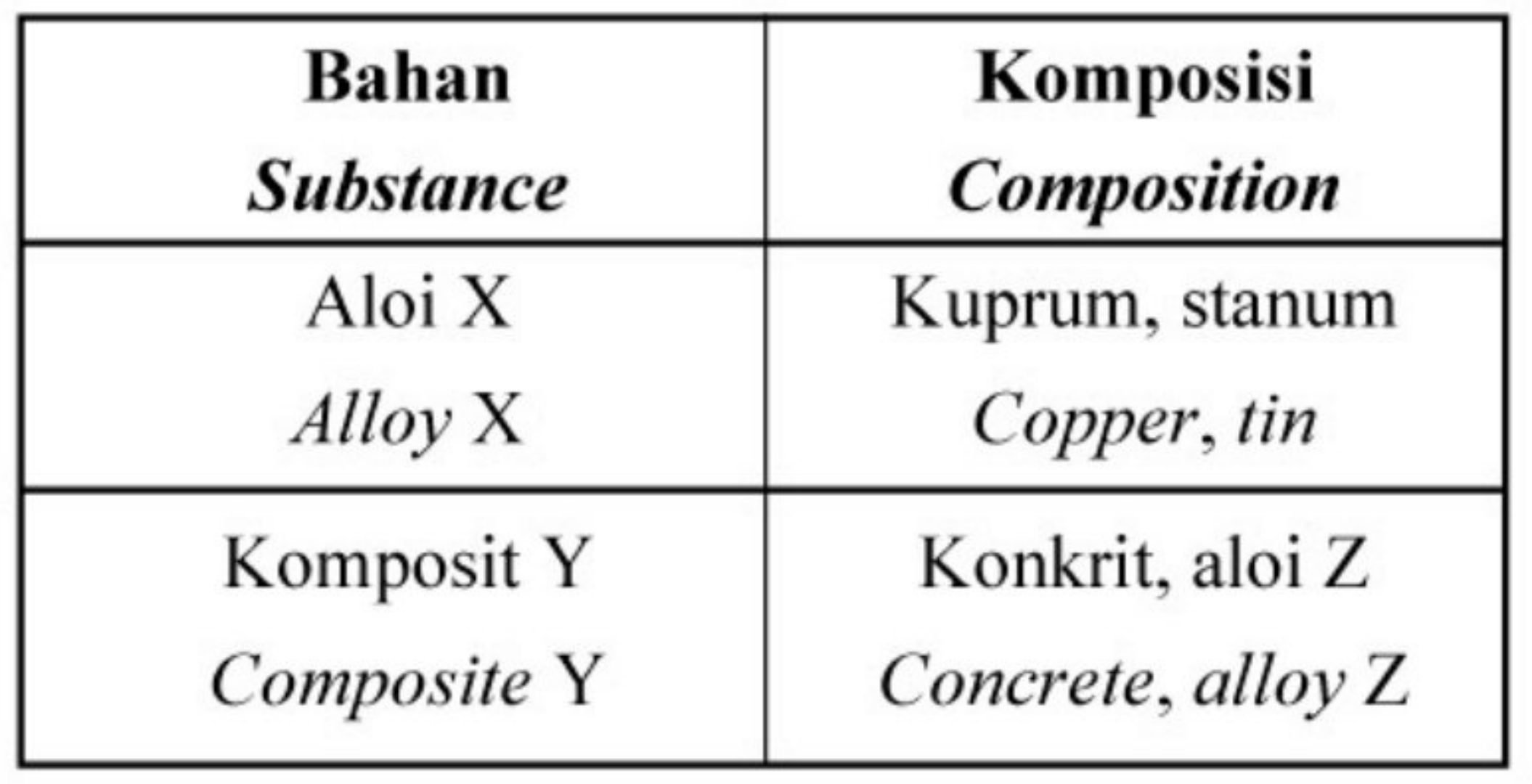
- (a)(i)
Name the alloy X.
[1] - (a)(ii)
Explain why alloy X is harder than pure metal.
[2] - (b)
Name the composite material Y and alloy Z. Y: ... Z: ...
[2]
Carbon compound P contains 6.67% hydrogen, 40.00% carbon and 53.33% oxygen.
Medium6 marks- (a)(i)
What is the meaning of empirical formula?
[1] - (a)(ii)
Calculate the empirical formula of compound P. [Relative atomic mass: C = 12, H = 1, O = 16]
[3] - (b)
The relative molecular mass of compound P is 180. Calculate the molecular formula of compound P.
[2]
Table 4 shows a Period of elements in the Periodic Table of Elements: ₁₁Na, ₁₂Mg, ₁₃Al, ₁₄Si, ₁₅P, ₁₆S, ₁₇Cl, ₁₈Ar.
Medium7 marks
- (a)
In which Period are these elements placed in the Periodic Table of Elements?
[1] - (b)
Write the electron arrangement of magnesium ion, Mg²⁺.
[1] - (c)(i)
Sodium and sulphur form their own oxides. Write the formula of sodium oxide and sulphur dioxide.
[2] - (c)(ii)
State the difference in chemical property between these two oxides.
[1] - (d)
Draw the electron arrangement of the compound formed from magnesium atom and chlorine atom.
[2]
Diagram 5.1 shows the structural formula of two different types of rubber: Rubber X (long polyisoprene chains without links) changes through Process Z to Rubber Y (chains joined by S–S cross-links).
Medium8 marks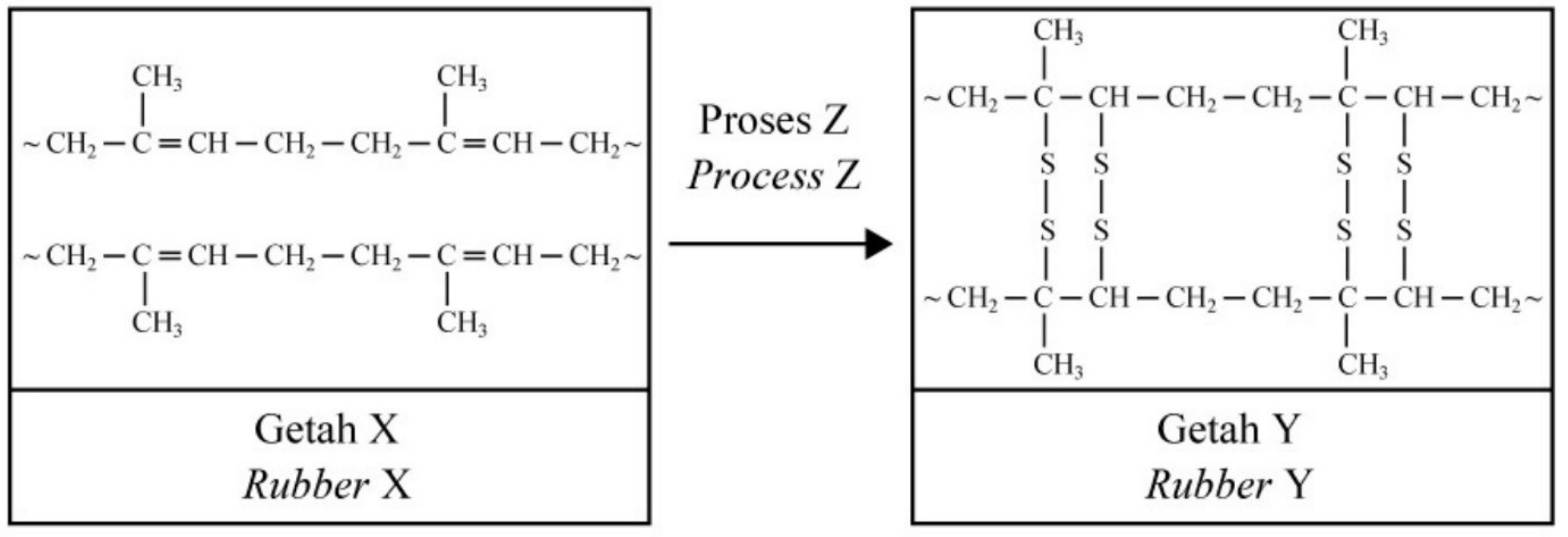
- (a)(i)
State the types of Rubber X and Rubber Y. X: ... Y: ...
[2] - (a)(ii)
Rubber Y can be produced from Rubber X through Process Z. Name the Process Z and describe briefly how Process Z is carried out.
[2] - (a)(iii)
State one different characteristic between Rubber X and Rubber Y.
[1] - (b)(i)
Diagram 5.2 shows the monomers for terylene (ethane-1,2-diol and benzene-1,4-dicarboxylic acid). What is the type of polymerisation for terylene?
[1]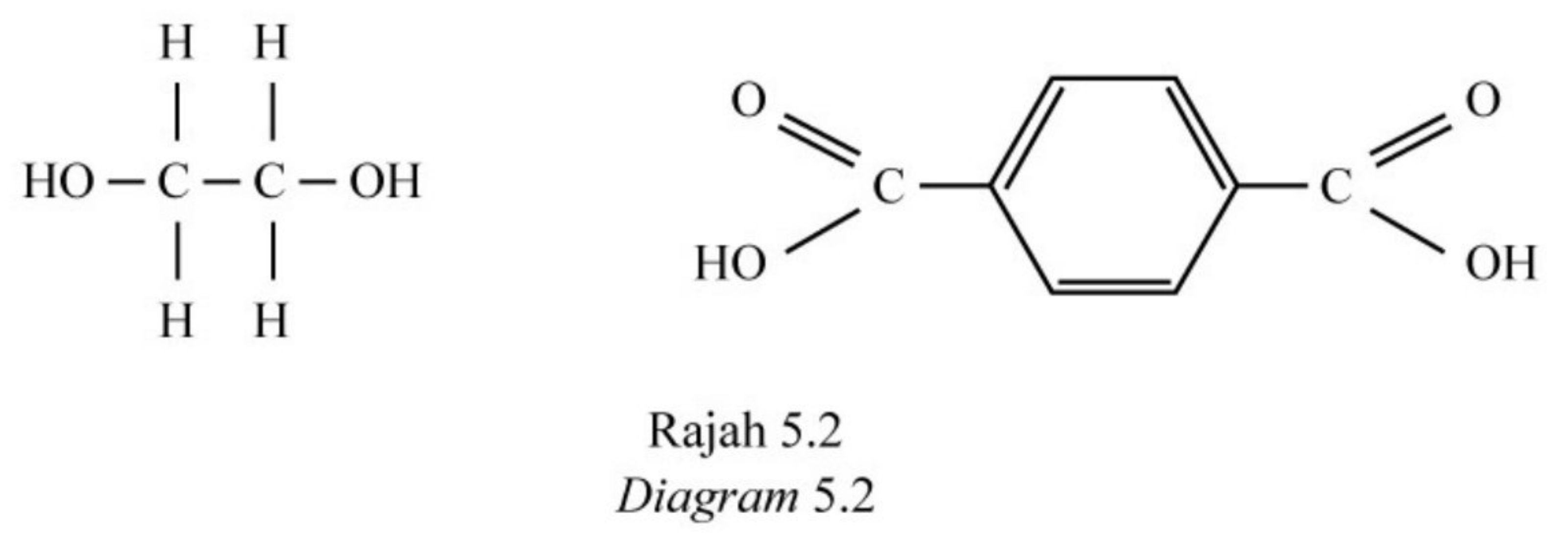
- (b)(ii)
Draw the structural formula for terylene polymer.
[2]
Diagram 6 shows various types of cosmetics found in the market.
Medium9 marks- (a)(i)
State the meaning of cosmetics.
[1] - (a)(ii)
State two basic ingredients in cosmetics production.
[2] - (b)(i)
Some of the commercialized cosmetics contain banned chemicals that can cause harm to consumers. State two effects of the use of banned chemicals substance to consumers.
[2] - (b)(ii)
Suggest one method to prevent the situation in 6(b)(i) from happening.
[1] - (c)(i)
Table 6 shows three types of chemical compounds used as food additives: X benzoic acid (chilli sauces); Y monosodium glutamate (instant noodles); Z ascorbic acid (margarine). Explain how benzoic acid acts as food additive X.
[1]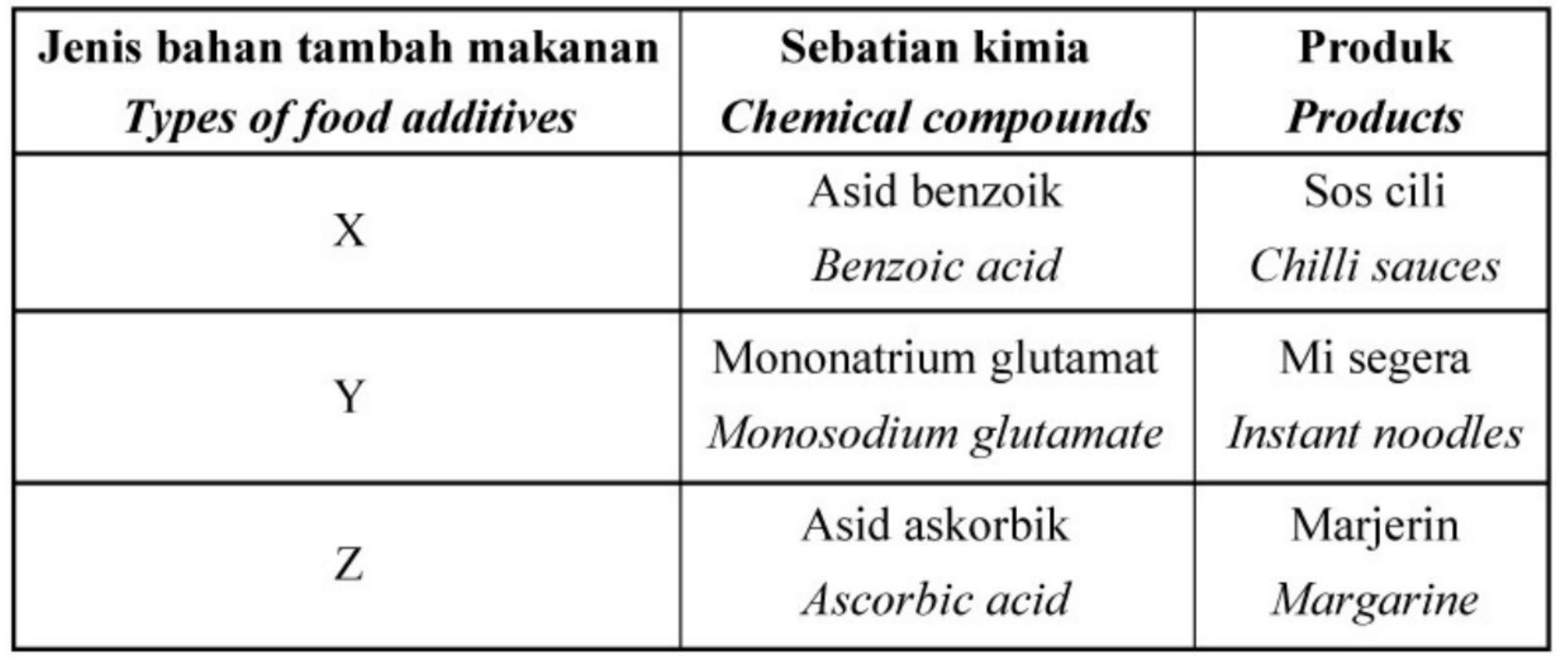
- (c)(ii)
What is the side effect of monosodium glutamate on human health?
[1] - (c)(iii)
What is the function of food additive Z?
[1]
Combustion of ethanol in air is represented by the equation: C₂H₅OH + 3O₂ → 2CO₂ + 3H₂O, ΔH = –1 376 kJ mol⁻¹.
Medium10 marks- (a)
Draw a labelled diagram showing the set-up of apparatus to determine the heat of combustion of ethanol in a laboratory.
[2] - (b)(i)
Amin carried out an experiment to determine the heat of combustion of ethanol. He found that 1.15 g of ethanol is used to increase the temperature of 200 cm³ of water from 28.0 °C to 62.0 °C. Calculate the heat released from the combustion of ethanol. [Specific heat capacity of solution = 4.2 J g⁻¹ °C⁻¹, density of solution = 1 g cm⁻³]
[1] - (b)(ii)
Calculate the number of moles of ethanol used. [Relative atomic mass: H = 1, C = 12, O = 16]
[1] - (b)(iii)
Calculate the heat of combustion of ethanol.
[1] - (b)(iv)
Why is the value of heat of combustion obtained in laboratory experiment is lower than the theoretical value?
[1] - (c)(i)
Diagram 7 shows two different fuels that can easily obtained in petrol station (diesel and gasoline). The chemical equations show the complete combustion of gasoline, C₈H₁₈: 2C₈H₁₈ + 25O₂ → 16CO₂ + 18H₂O and diesel, C₁₂H₂₃: 4C₁₂H₂₃ + 71O₂ → 48CO₂ + 46H₂O. Compare the value of heat of combustion of gasoline and diesel.
[1]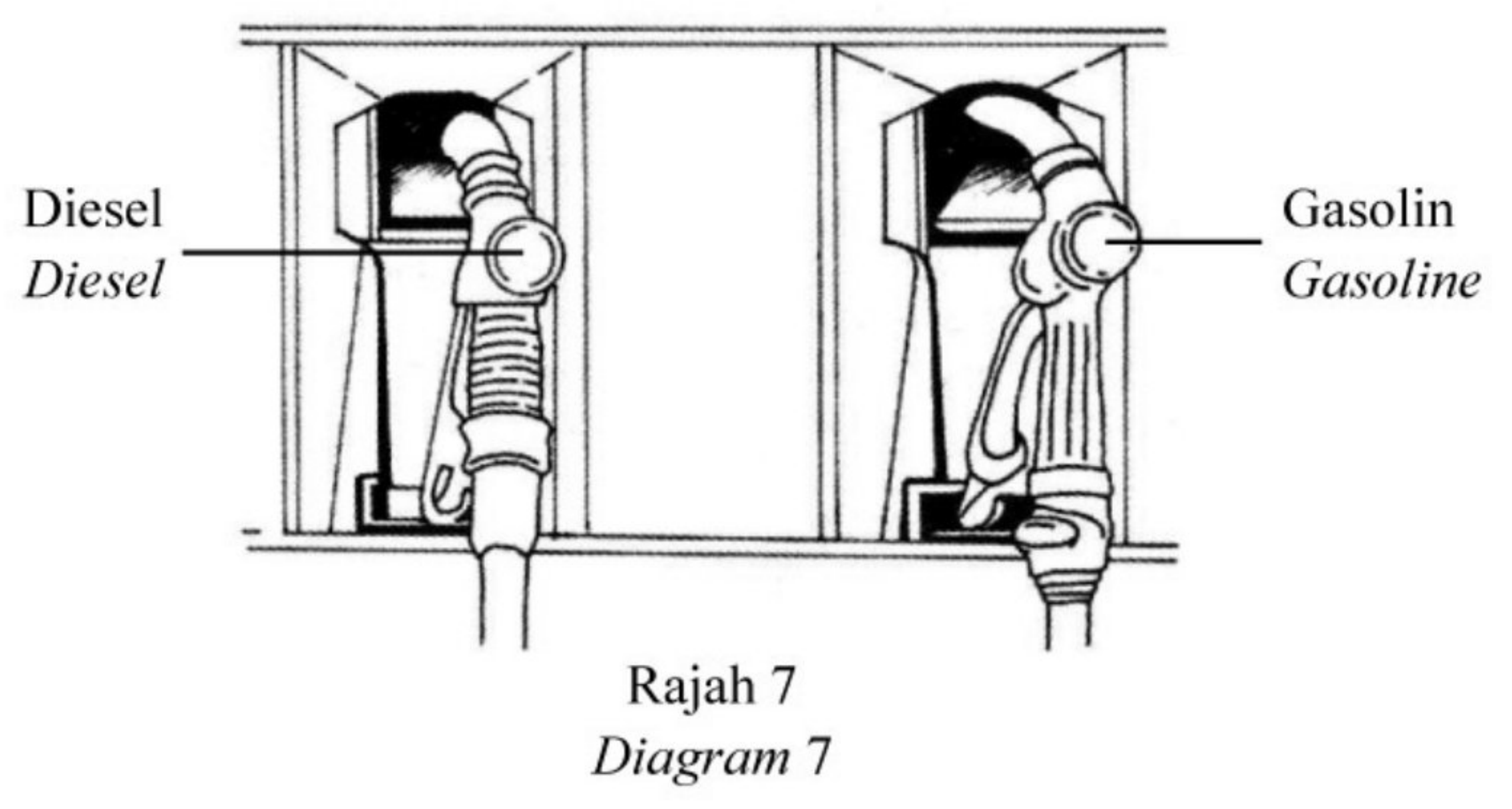
- (c)(ii)
Explain your answer in 7(c)(i).
[3]
Table 8 shows the apparatus set-up and observation of two sets of experiment. Set I: carbon electrodes in HCl in solvent X, the bulb does not light up. Set II: carbon electrodes in HCl in solvent Y, the bulb lights up.
Medium10 marks- (a)(i)
Based on Table 8, suggest solvent Y.
[1]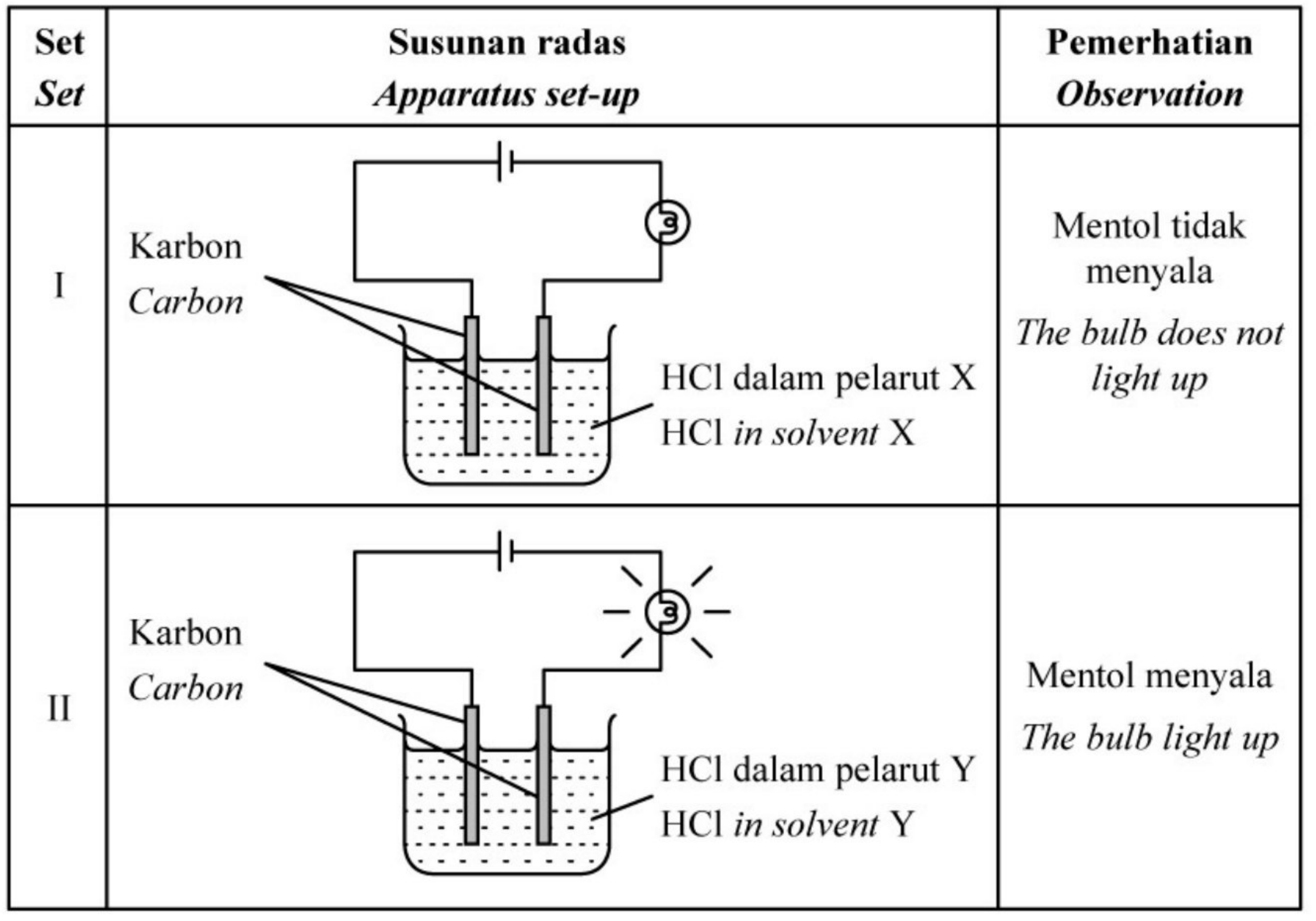
- (a)(ii)
Based on Table 8, explain why the bulb in Set II lights up.
[1] - (b)(i)
Diagram 8 shows titration method carry out by a student (burette with sulphuric acid, conical flask with potassium hydroxide solution + phenolphthalein). Write a balanced chemical equation for the neutralisation reaction.
[2]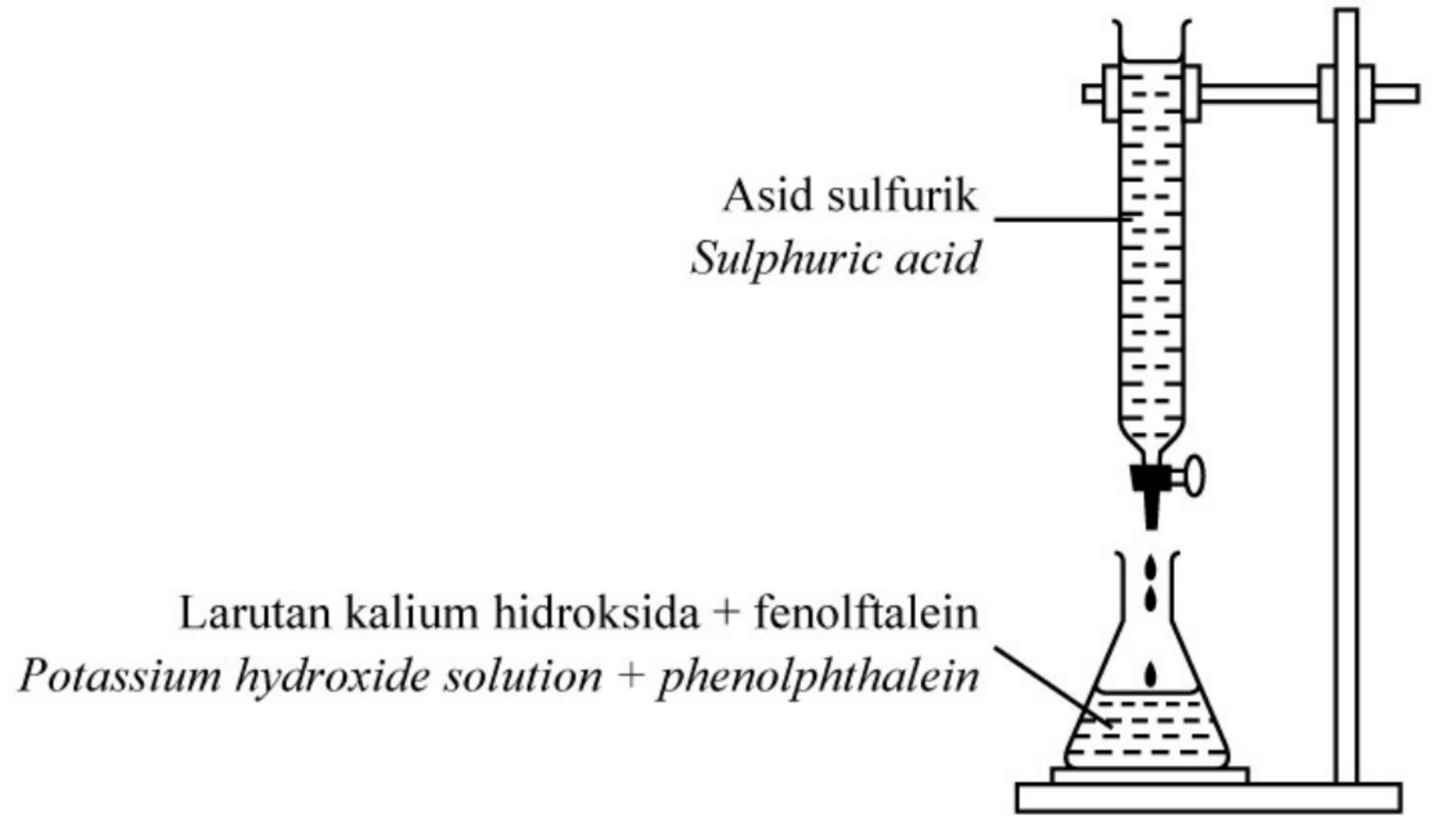
- (b)(ii)
25 cm³ of sulphuric acid neutralises 50 cm³ of 0.1 mol dm⁻³ potassium hydroxide solution. Calculate the molarity of sulphuric acid.
[3] - (b)(iii)
Describe chemical test to verify the presence of anion in the product of the neutralisation reaction.
[3]
Section B
Question 9 is in Section B (answer one question: Q9 or Q10).
Medium20 marks- (a)
Diagram 9 shows two situation of grilling meat (Situation A: a whole thick piece of meat; Situation B: thin slices of meat). Based on Diagram 9, in which situation meat will cook faster? State the factor that affect the rate of cooking meat.
[2]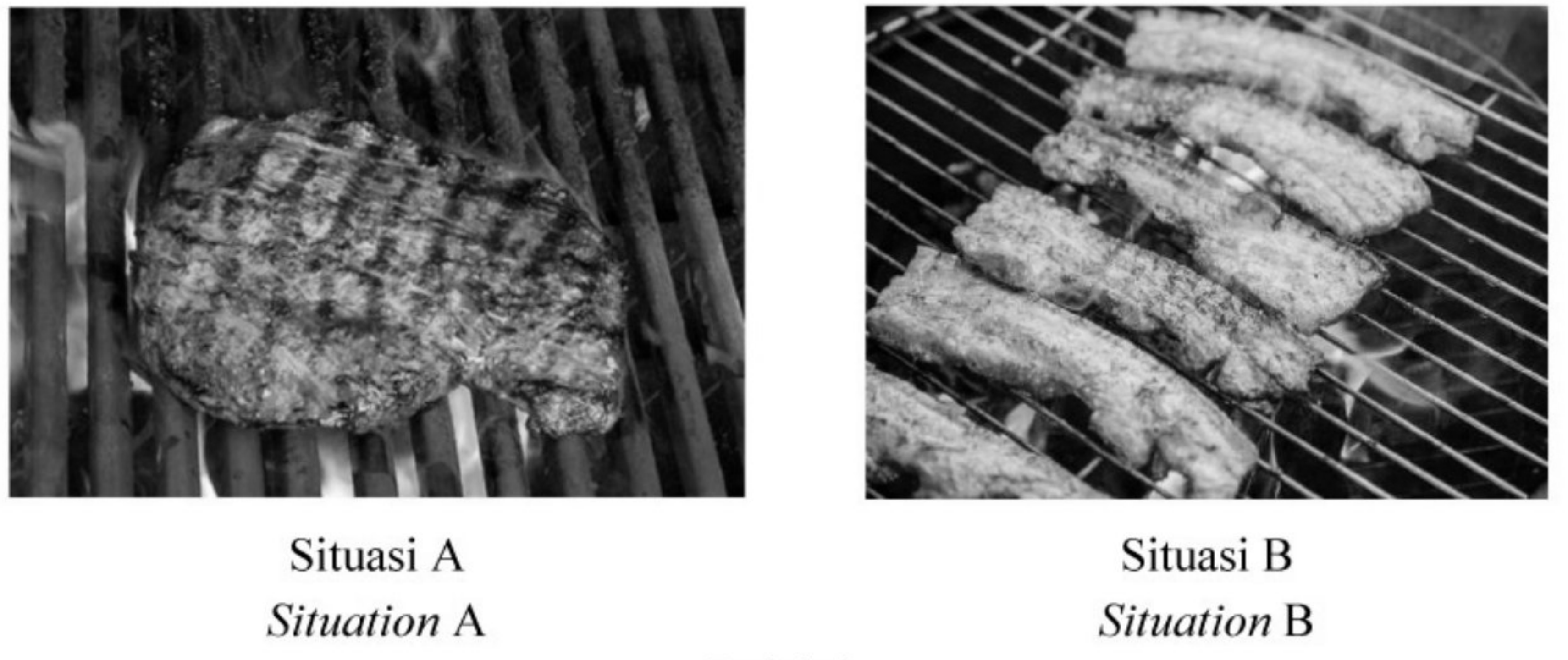
- (b)(i)
A group of students carried out experiments to investigate the factor affecting the rate of reaction between calcium carbonate and hydrochloric acid. Table 9 shows the information of the reactants and time taken to collect 50 cm³ of gas Y: Set I excess calcium carbonate powder and 50 cm³ of 1.0 mol dm⁻³ hydrochloric acid, 25 s; Set II excess calcium carbonate powder and 50 cm³ of 0.5 mol dm⁻³ hydrochloric acid, 50 s. State the meaning of rate of reaction.
[1]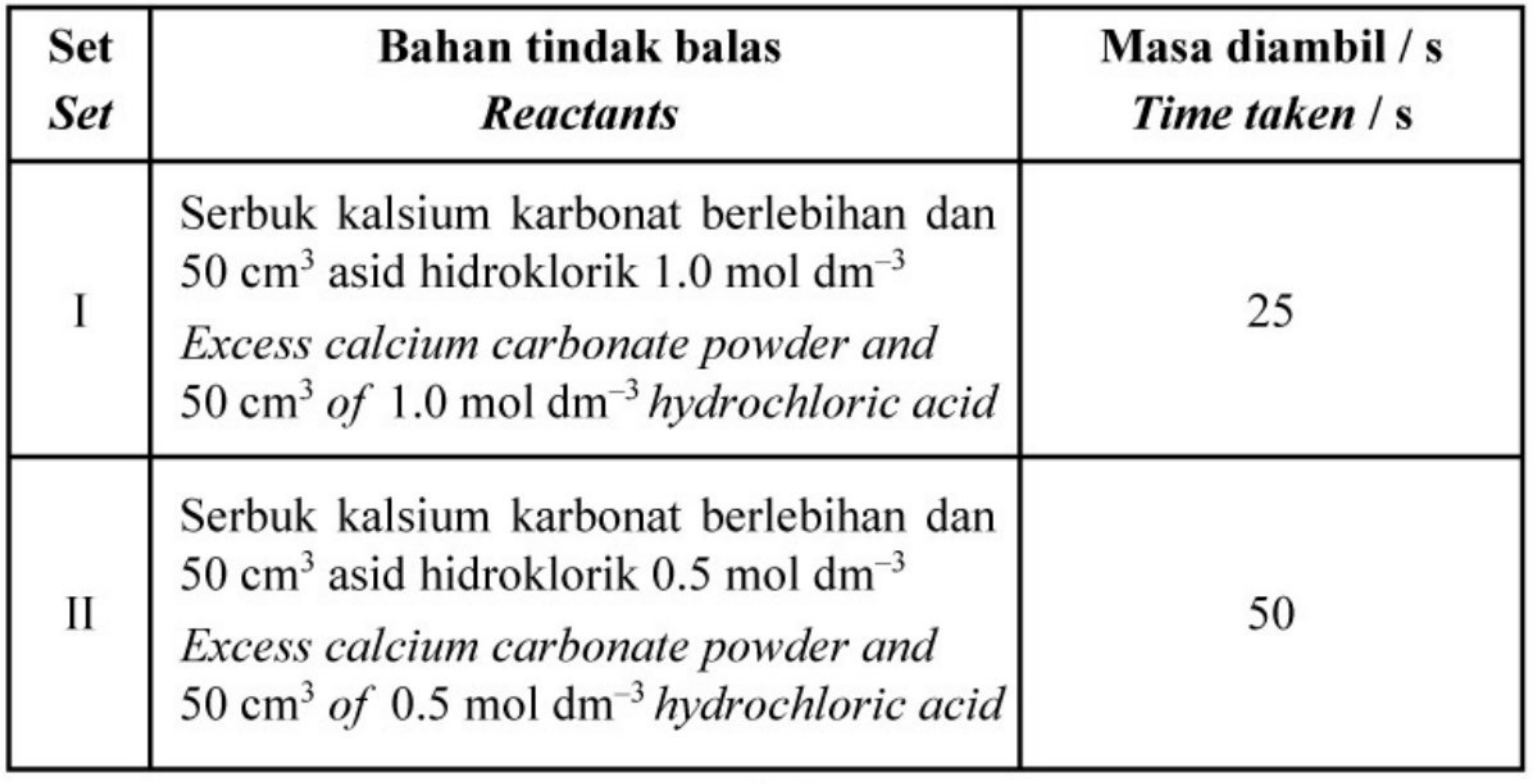
- (b)(ii)
Write chemical equation for the reaction between calcium carbonate and hydrochloric acid. Name the gas Y produced. Calculate the maximum volume of gas Y produced in experiment Set I. [1 mol of gas occupies 24 dm³ at room condition]
[6] - (b)(iii)
Calculate the average rate of reaction for experiment Set I and experiment Set II.
[2] - (b)(iv)
By using the collision theory, explain the difference in the rate of reaction between experiment Set I and experiment Set II.
[5] - (b)(v)
The group of students wants to repeat the experiment Set I by increasing the temperature of hydrochloric acid. Explain how the action can affect the rate of reaction.
[4]
Question 10 is in Section B (answer one question: Q9 or Q10). Diagram 10.1 shows a structural formula of butene (CH₂=CH–CH₂–CH₃).
Medium20 marks- (a)(i)
State the meaning of isomer.
[1]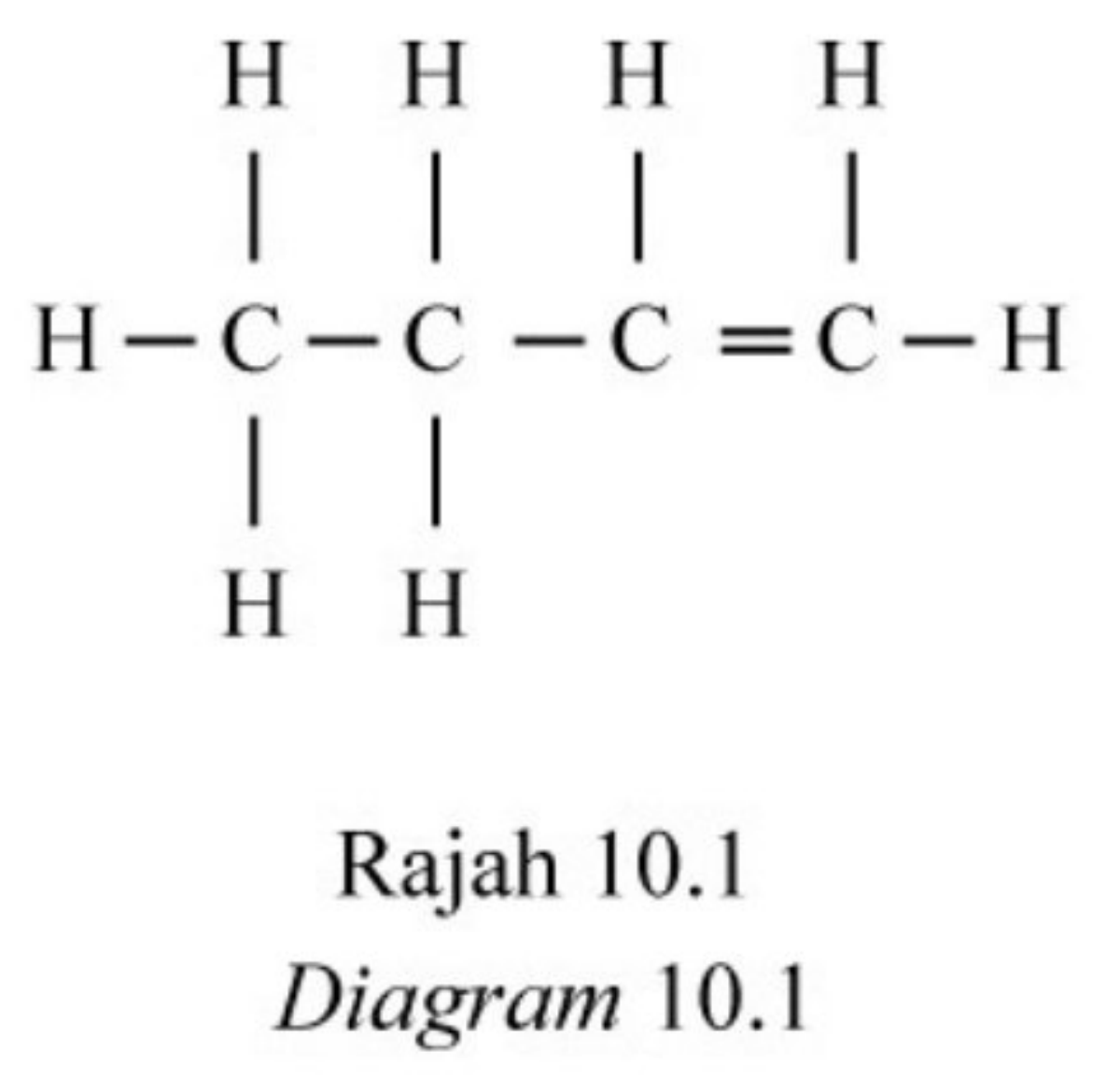
- (a)(ii)
Draw the structural formulae for another two isomers of butene. Name each isomer according to the IUPAC nomenclature.
[4] - (a)(iii)
Write the balanced chemical equation for the combustion of butene in excess oxygen. If 1 200 cm³ butene gas is use, calculate the volume of oxygen gas needed for the combustion. [1 mol of gas occupies 24 dm³ at room condition]
[5] - (b)
Diagram 10.2 shows a flow chart for the conversion of propan-1-ol (C₃H₇OH) to a few organic compounds: Process I: propan-1-ol → Compound P (C₃H₆); Process II: P → Compound Q (C₃H₈); Process III: propan-1-ol → Compound R (C₂H₅COOH); Process IV: propan-1-ol and R → Compound S. State the name for Process I, Process II, Process III and Process IV. Identify the homologous series for Compound P, Compound Q, Compound R and Compound S. Draw the structural formula for Compound P and Compound S.
[10]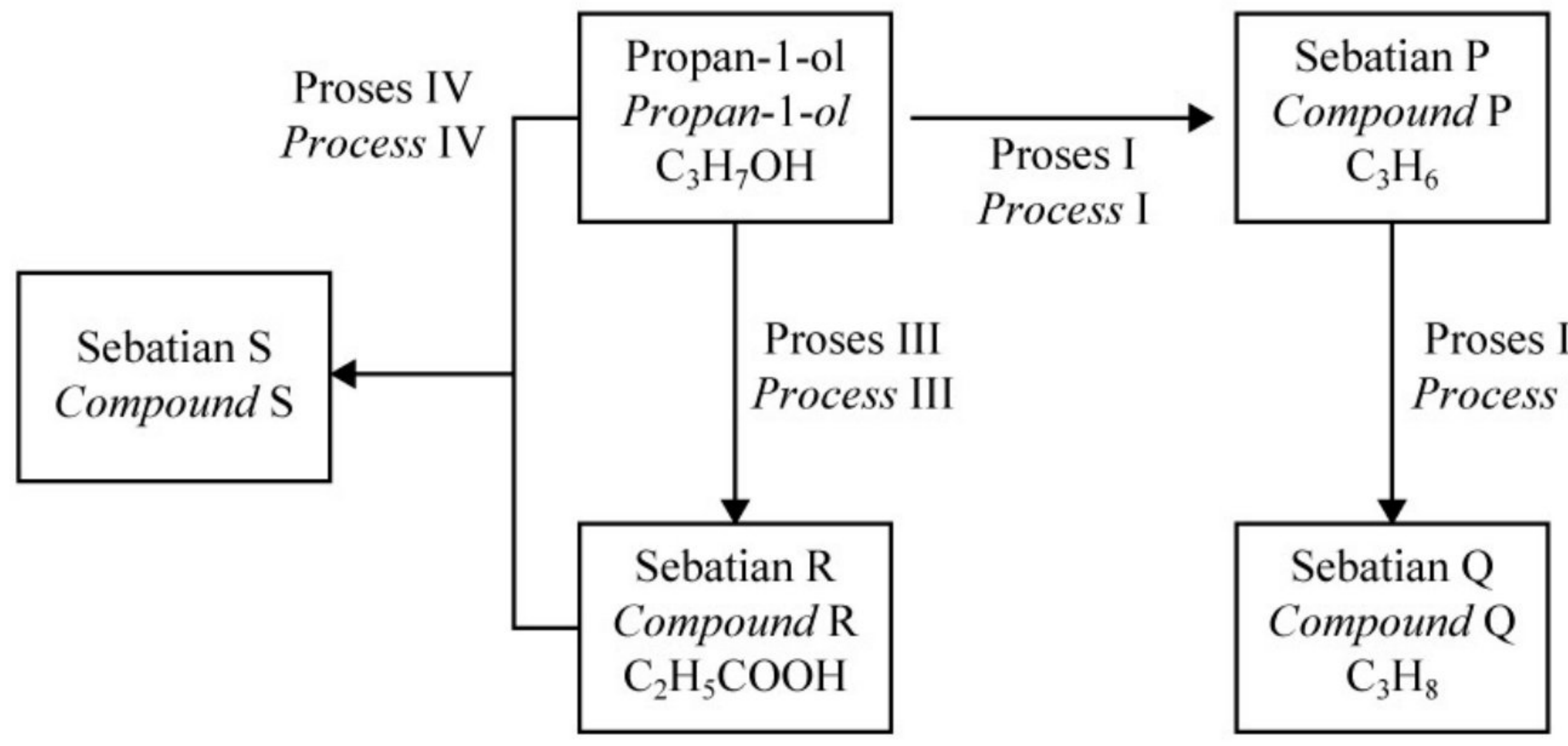
Section C
Question 11 is Section C (compulsory).
Hard20 marks- (a)(i)
Diagram 11.1 shows the set-up of apparatus to investigate the redox reaction between iron(II) sulphate solution and acidified potassium manganate(VII) solution through the transfer of electrons at a distance (U-tube with dilute sulphuric acid, carbon electrodes X in iron(II) sulphate and Y in acidified potassium manganate(VII), galvanometer G). Based on Diagram 11.1, state the meaning of redox reaction.
[1]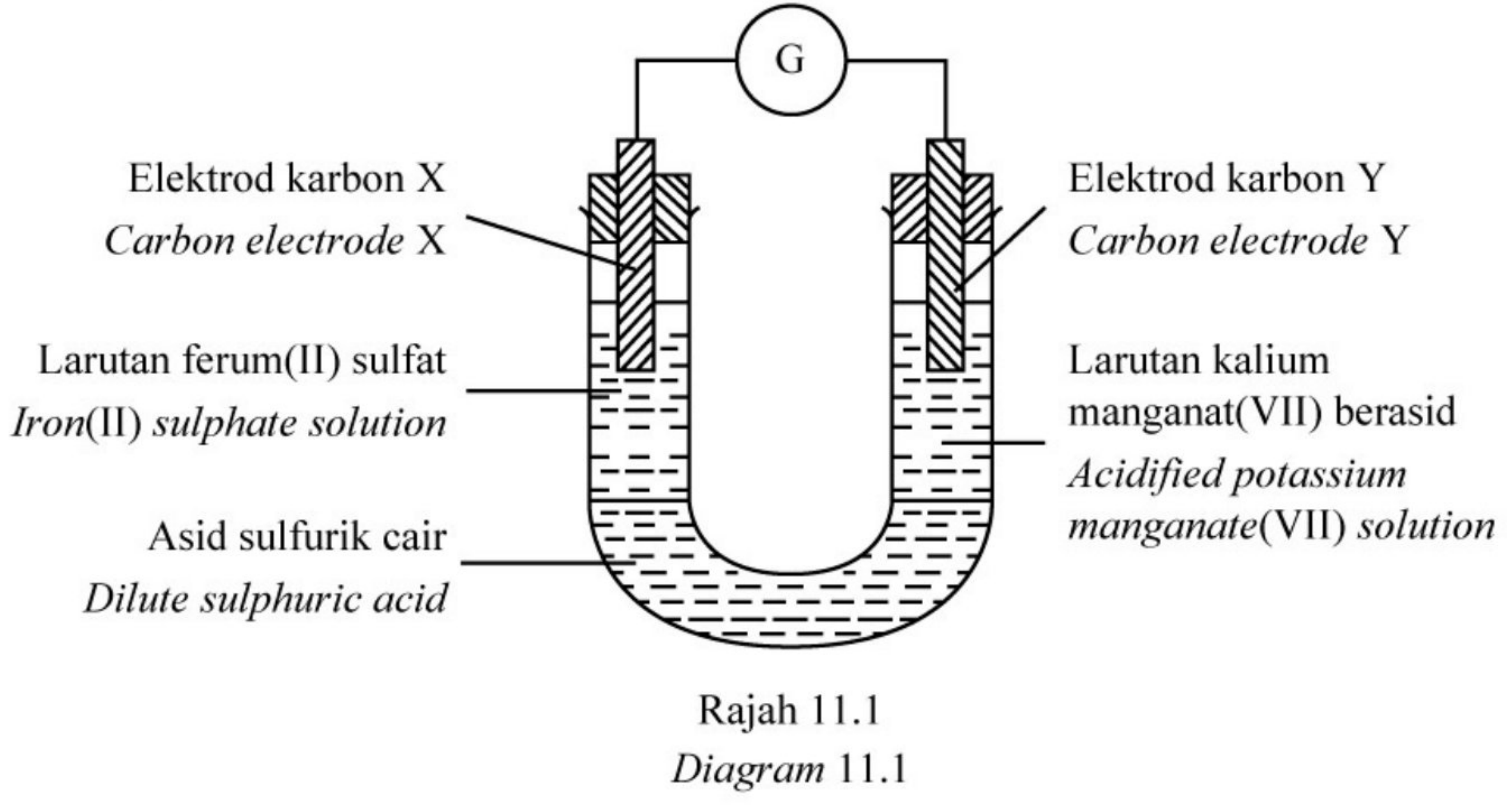
- (a)(ii)
State the function of iron(II) sulphate solution and acidified potassium manganate(VII) solution. Write the half equation for the reaction occurs at carbon electrode Y.
[4] - (b)
Diagram 11.2 shows the apparatus set-up for the electrolysis of 1.0 mol dm⁻³ sodium chloride solution by using carbon electrodes (carbon electrode X gives a colourless gas; carbon electrode Y gives a greenish yellow gas). Based on Diagram 11.2, state the factor that affect the products formed at carbon electrode X and carbon electrode Y. Explain the reactions occur at carbon electrode X and carbon electrode Y. Your explanation must include: ions that attracted to electrodes; ions that are selectively discharged and the reason ions are selectively discharged at electrodes; half equations for the reaction occurs at electrodes.
[10]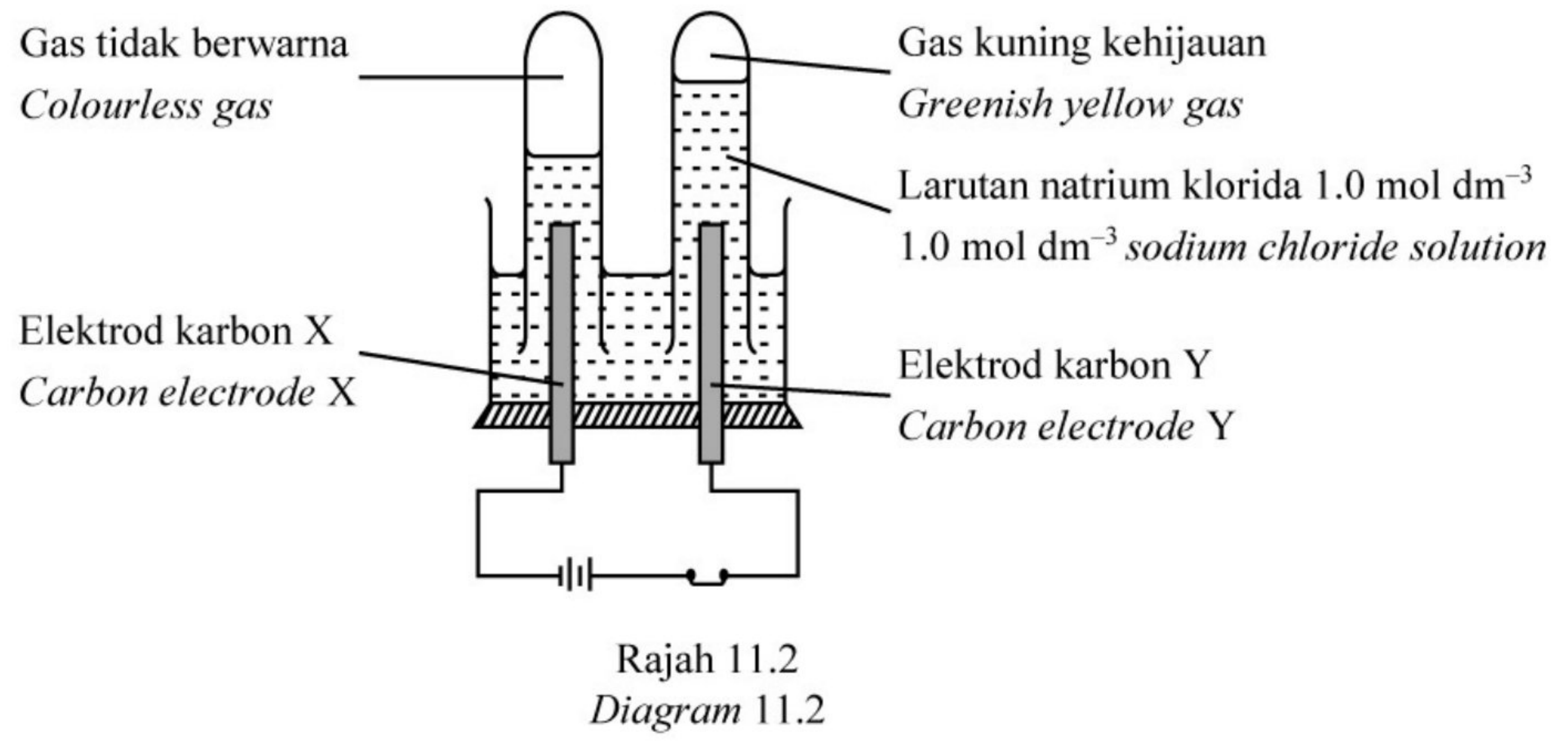
- (c)
Diagram 11.3 shows the stair handrail made from iron in school that look rusty. In conjunction of Co-curricular Week, Chemistry Society members have been assigned to improve the condition of the stair handrail. Suggest and explain way to solve the task so that the stair handrail looks like new again.
[5]