Write your answer on paper. Then open the answer to check it.
Section A
Diagram 1 shows the electron arrangement for a compound (an Na⁺ ion and an F⁻ ion, each in square brackets with their electrons).
Medium5 marks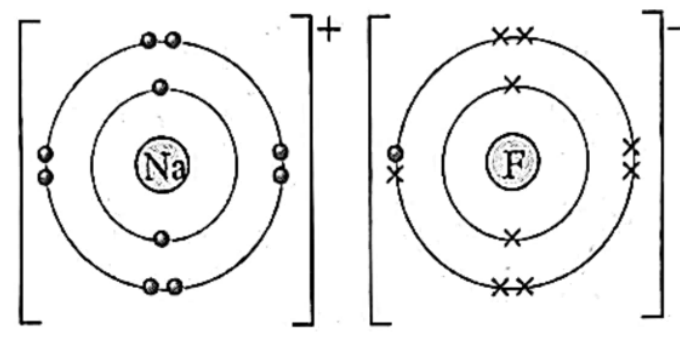
- (a)(i)
State the name of element represented by the symbol Na.
[1] - (a)(ii)
Element in 1(a)(i) is located in Group 1. What is the other name for Group 1?
[1] - (b)
Name the force of attraction in the compound that causes the melting and boiling point of the compound is high.
[1] - (c)
What is the type of bond in this compound?
[1] - (d)
State the name of the compound.
[1]
(a) The conclusion on the effectiveness of cleaning agents in hard water: 'Cleansing action of detergent is more effective than soap'. (b) Diagram 2 shows a graphene sheet.
Medium5 marks- (a)(i)
What is the meaning of soap?
[1] - (a)(ii)
What is the general formula for soap?
[1] - (a)(iii)
Other than hard water, state another type of water that can decrease the effectiveness of soap.
[1] - (b)(i)
Graphene is a material used in the field of nanotechnology. What is the meaning of nanotechnology?
[1] - (b)(ii)
State the reason why graphene is used in water filters.
[1]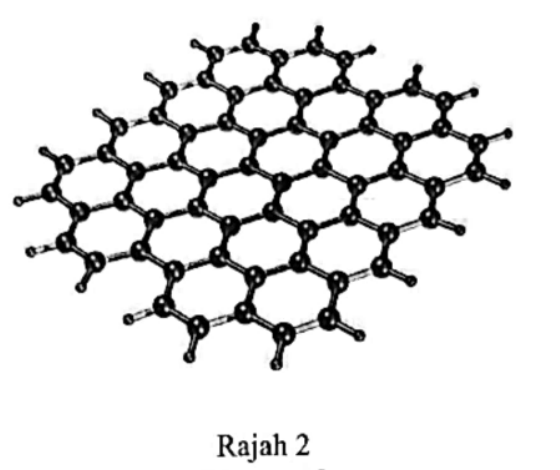
Table 3 shows the number of protons and the number of neutrons in atoms K, L and M: K (11 protons, 12 neutrons); L (11 protons, 13 neutrons); M (12 protons, 12 neutrons).
Medium6 marks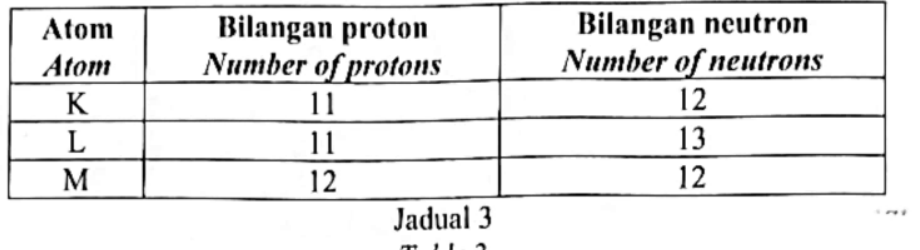
- (a)
State three subatomic particles in an atom.
[1] - (b)
State the group of element L in the Periodic Table of Element.
[1] - (c)
Draw the electron arrangement for ion K.
[2] - (d)
Element M exists naturally in the form of three isotopes, 79.0% ²⁴M, 10.0% ²⁵M and 11.0% ²⁶M. Calculate the relative atomic mass of M.
[2]
Diagram 4.1 shows part of the Periodic Table of Elements (Fe and Ni marked in the transition element block). Diagram 4.2 shows a process in industry: palm oil → margarine with Ni at 180 °C.
Medium7 marks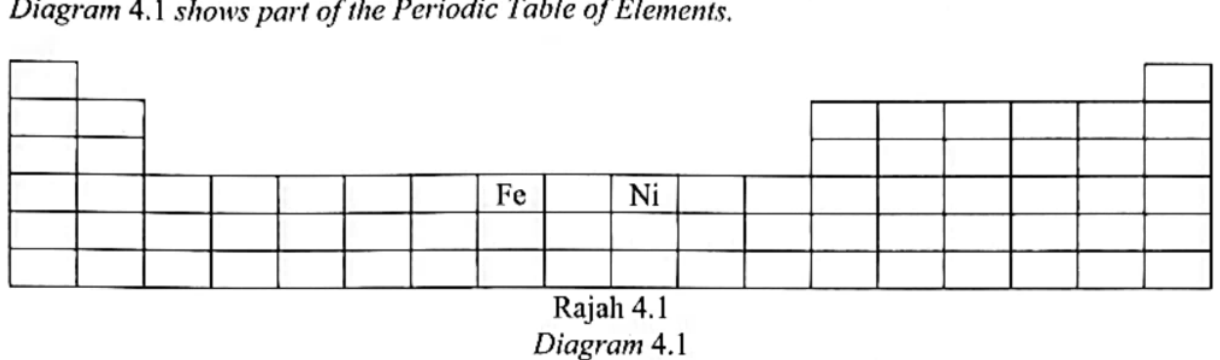
- (a)
What are transition elements?
[1] - (b)
What is the function of nickel in the process?
[1]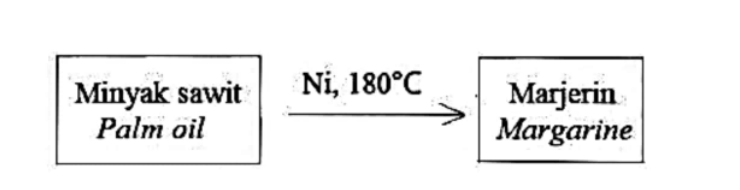
- (c)(i)
Iron can react with chlorine gas to form a salt. What is the colour of the salt?
[1] - (c)(ii)
Write the chemical equation for this reaction.
[2] - (c)(iii)
0.1 mol of iron reacted with chlorine gas. Calculate the mass of salt formed. [Relative atomic mass: Cl = 35.5; Fe = 56]
[2]
Diagram 5 shows two methods to determine the empirical formula of a compound. Method I: heating a chemical substance in a crucible with a lid. Method II: dry hydrogen gas (from zinc granules and 1.0 mol dm⁻³ hydrochloric acid) passed over heated copper oxide in a glass tube, with a hydrogen flame at the end.
Medium8 marks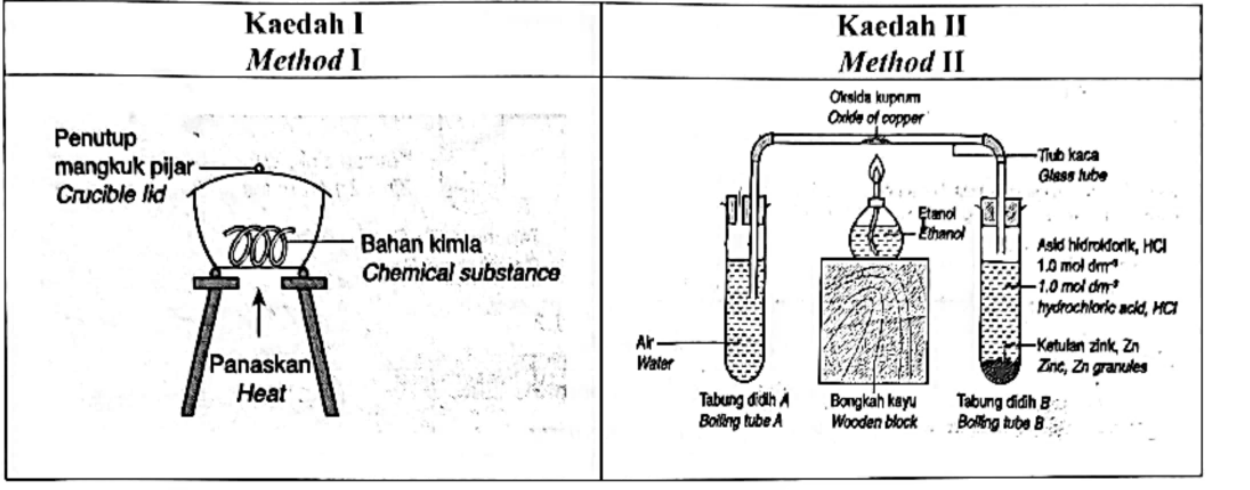
- (a)
What is meant with empirical formula?
[1] - (b)
Q is below hydrogen in the reactivity series. Which method is suitable to be used to determine the empirical formula of metal oxide Q?
[1] - (c)
Based on Method II, calculate the empirical formula of oxide of copper using: mass of glass tube = 34.22 g; glass tube + oxide of copper before heating = 42.25 g; glass tube + oxide of copper after heating = 40.64 g. [Relative atomic mass: O = 16; Cu = 64]
[3]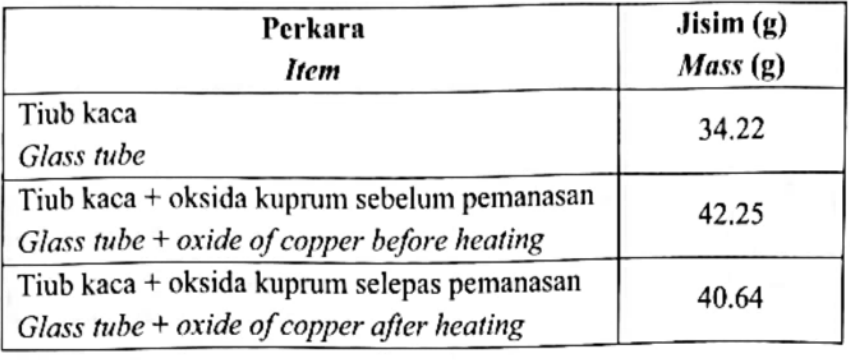
- (d)
State the number of formula units in 0.01 mol of copper oxide. [Avogadro Constant, N_A = 6.02 × 10²³ mol⁻¹]
[1] - (e)
Compare Method I and Method II in determining the empirical formula of a substance.
[2]
Diagram 6.1 shows the arrangement of atoms in alloy X (iron atoms with a few smaller carbon atoms) and the structural formula of polymer Y: [–CH₂–CH=C(CH₃)–CH₂–]n.
Medium9 marks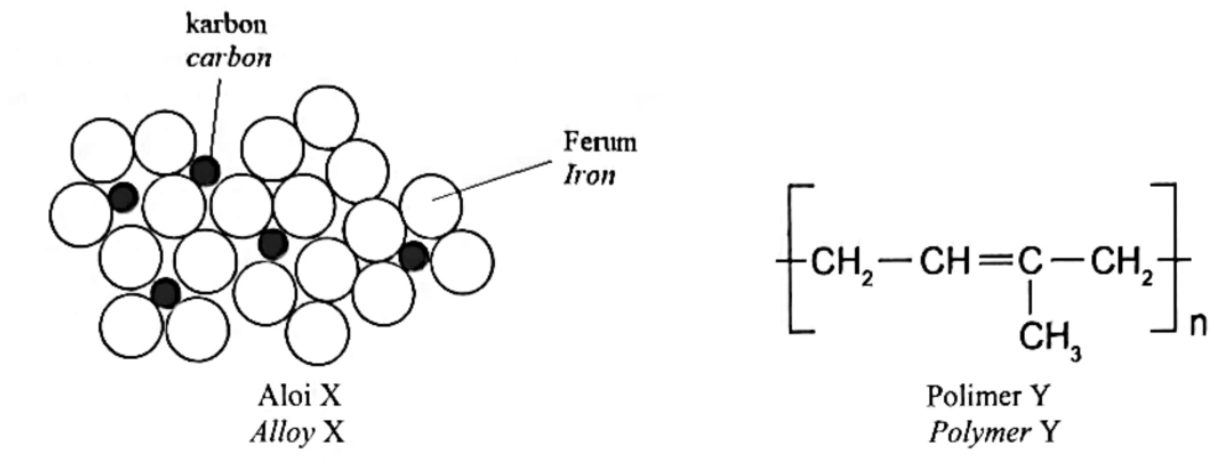
- (a)
State the meaning of alloy.
[1] - (b)
State the name of alloy X.
[1] - (c)
Draw the monomer of rubber Y.
[1] - (d)
Substance containing polymer Y exists in liquid form. But when left for several hours, the substance turns to solid. What should be done so that the substance can remain in liquid form? Give your reason.
[3] - (e)
Diagram 6.2 shows two substances that can be found in daily life (pure metal wire and an alloy trumpet). Compare and contrast the two substances.
[3]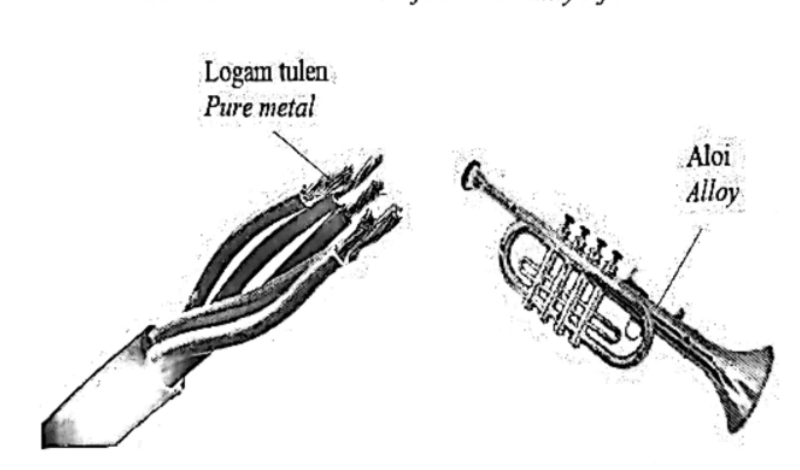
Diagram 7.1 shows the apparatus set-up to study heat of displacement: magnesium powder is added to 50 cm³ of 0.1 mol dm⁻³ copper(II) sulphate solution in a polystyrene cup with a lid and stirred; a brown solid forms.
Medium10 marks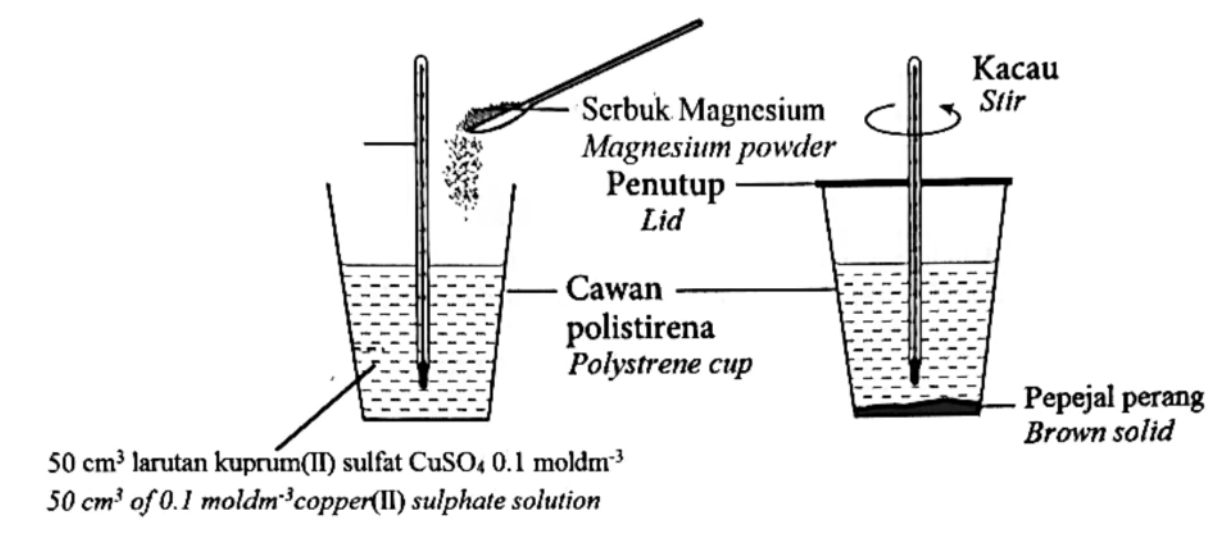
- (a)
What is the meaning of heat of displacement?
[1] - (b)
Name the brown solid formed.
[1] - (c)(i)
Table 7: initial temperature of copper(II) sulphate = 28 °C; highest temperature of the mixture solution = 50 °C. Calculate the number of mole of the brown solid formed.
[1]
- (c)(ii)
Determine the heat of displacement for this reaction. [Specific heat capacity of solution = 4.2 J g⁻¹ °C⁻¹, Density of solution = 1.0 g cm⁻³]
[2] - (d)
A student replaced the magnesium metal with metal X and found that the heat of displacement of the reaction decreases. Suggest metal X and explain your answer.
[3] - (e)
Diagram 7.2 shows a first aid tool X wrapped around a sprained foot. In your opinion, can the reactants in Diagram 7.1 be used in first aid tool X to treat the injury? Justify your answer.
[2]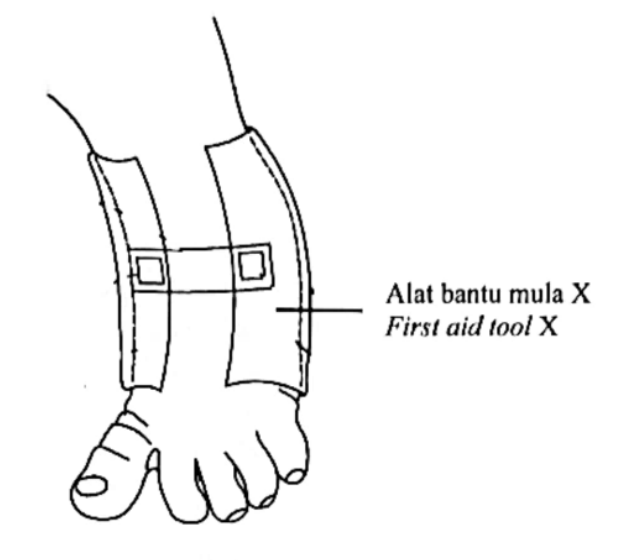
Diagram 8 shows the flow chart for the reactions involving compound P (but-2-ene, CH₃–CH=CH–CH₃). Reaction I: P + [O] + H₂O → compound Q. Reaction II: P → carbon dioxide + water. Reaction III: P + hydrogen, H₂ → compound R.
Medium10 marks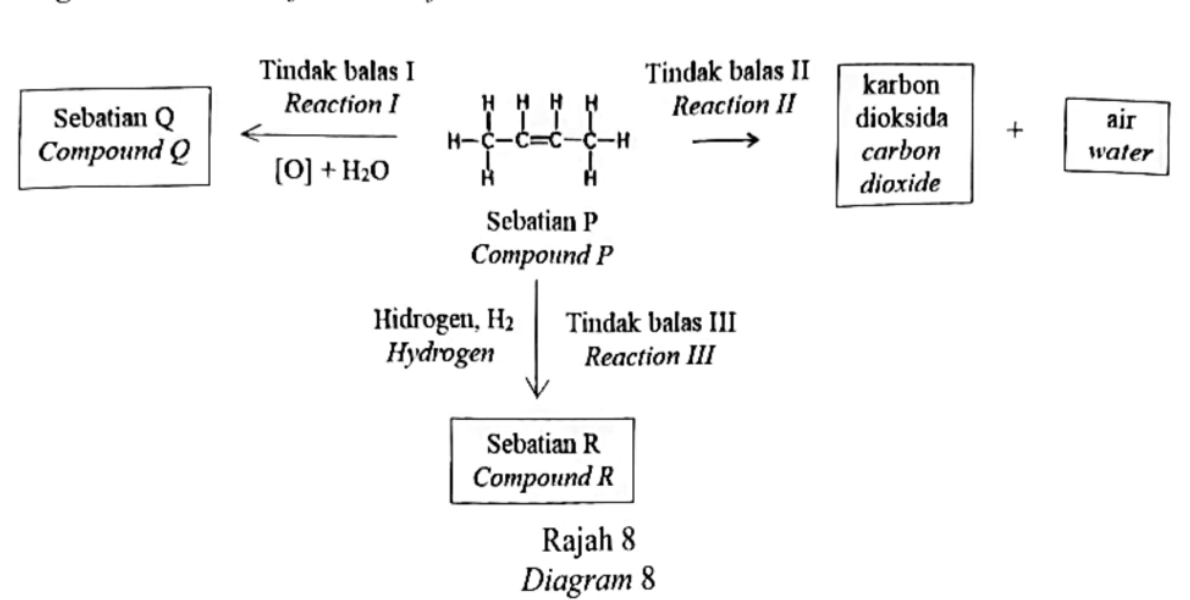
- (a)(i)
State the name of the compound P.
[1] - (a)(ii)
Name one reagent that can be used in the Reaction I.
[1] - (b)
In Reaction II, 14 g of compound P is burnt completely in air to produce carbon dioxide and water: C₄H₈ + 6O₂ → 4CO₂ + 4H₂O. Calculate the volume of carbon dioxide gas released in this reaction at room temperature. [Relative atomic mass: H = 1, C = 12, O = 16] [Molar volume of gas at room temperature = 24 dm³ mol⁻¹]
[3] - (c)
Compound P undergoes Reaction III to form compound R. Compare and contrast compounds P and R.
[2] - (d)
Describe briefly how compounds P and R can be identified in the laboratory.
[3]
Section B
Diagram 9 shows the conversation between Siti and her mother about rate of reaction: 'Mum, why meat is cut into small pieces to cook?' - 'Siti, meat cut into small pieces will take a shorter time to cook compared to bigger size.'
Medium20 marks- (a)
State the meaning of rate of reaction. Give the factor that affect the time taken for the meat to cook and explain your answer.
[4]
- (b)(i)
A student carried out three experiments to investigate the effects of the factors affecting the rate of reaction (Table 10: Exp I: 5 cm³ of 2.0 mol dm⁻³ HCl + zinc, 30 °C, 50 s; Exp II: same, 40 °C, 30 s; Exp III: same with copper(II) sulphate solution added, 40 °C, 10 s). Write the chemical equation for the reaction in Experiment I. Calculate the mass of salt produced. [Relative atomic mass: Cl = 35.5, Zn = 65]
[6]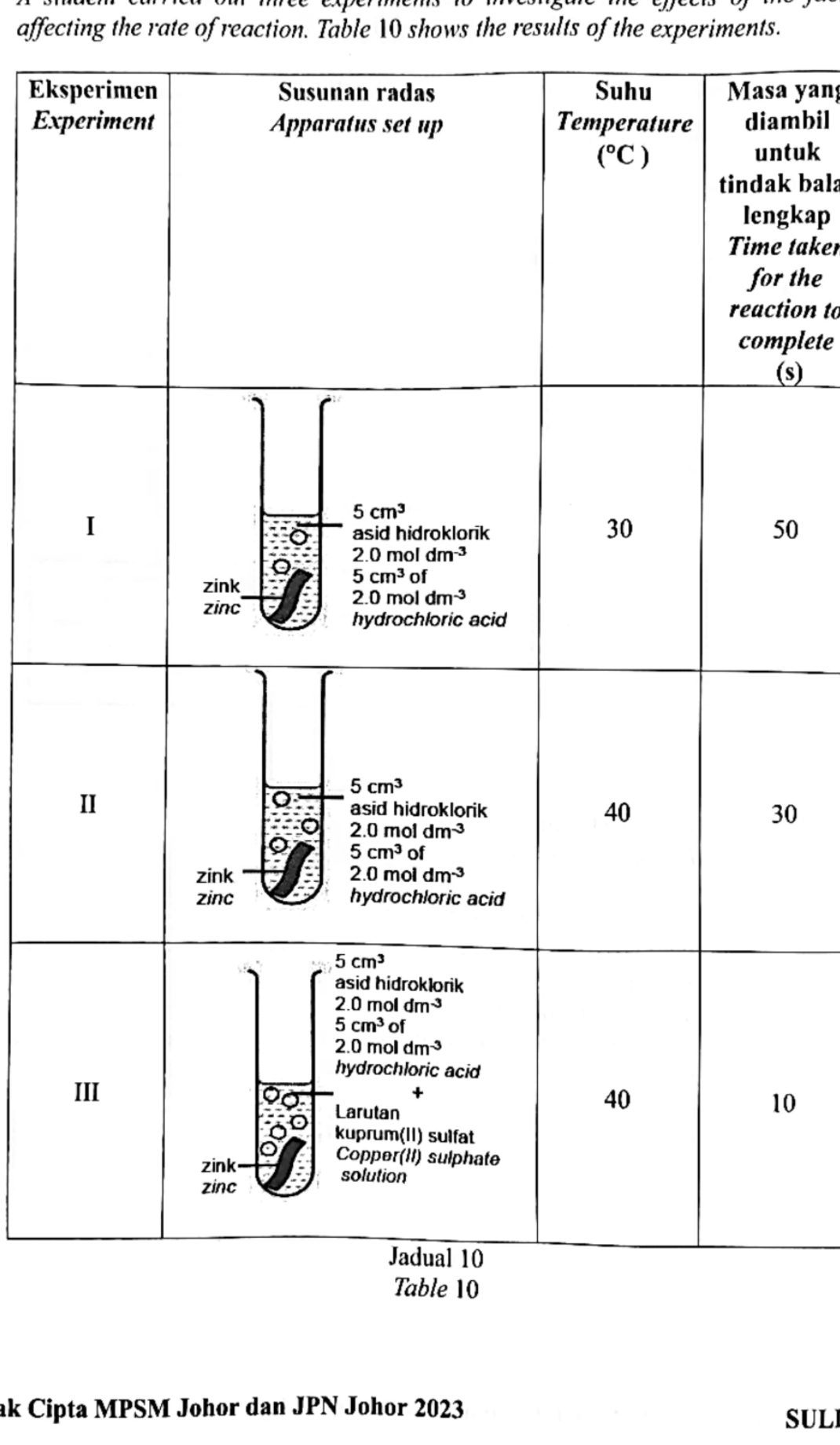
- (b)(ii)
Compare the rates of reaction between (i) Experiment I and Experiment II; (ii) Experiment II and Experiment III. Explain, with the reference to the collision theory, why there are differences in the rates of reaction in the experiments.
[10]
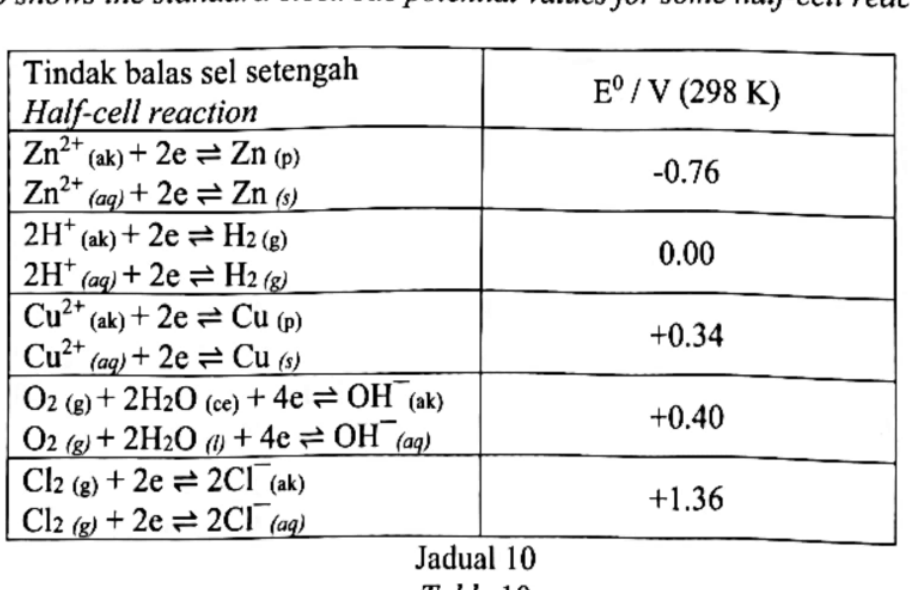
Diagram 10 shows the apparatus set-up for Cell I (1.0 mol dm⁻³ hydrochloric acid with carbon electrodes P and Q, connected to Cell II) and Cell II (zinc in 1.0 mol dm⁻³ zinc chloride solution inside a porous pot, copper in 1.0 mol dm⁻³ copper(II) chloride solution). Table 10 shows standard electrode potentials: Zn²⁺ + 2e⁻ ⇌ Zn, −0.76 V; 2H⁺ + 2e⁻ ⇌ H₂, 0.00 V; Cu²⁺ + 2e⁻ ⇌ Cu, +0.34 V; O₂ + 2H₂O + 4e⁻ ⇌ 4OH⁻, +0.40 V; Cl₂ + 2e⁻ ⇌ 2Cl⁻, +1.36 V.
Hard20 marks- (a)(i)
In Cell I, state the changes of energy that occur. Identify the electrode that acts as the anode and give reason for your answer.
[3]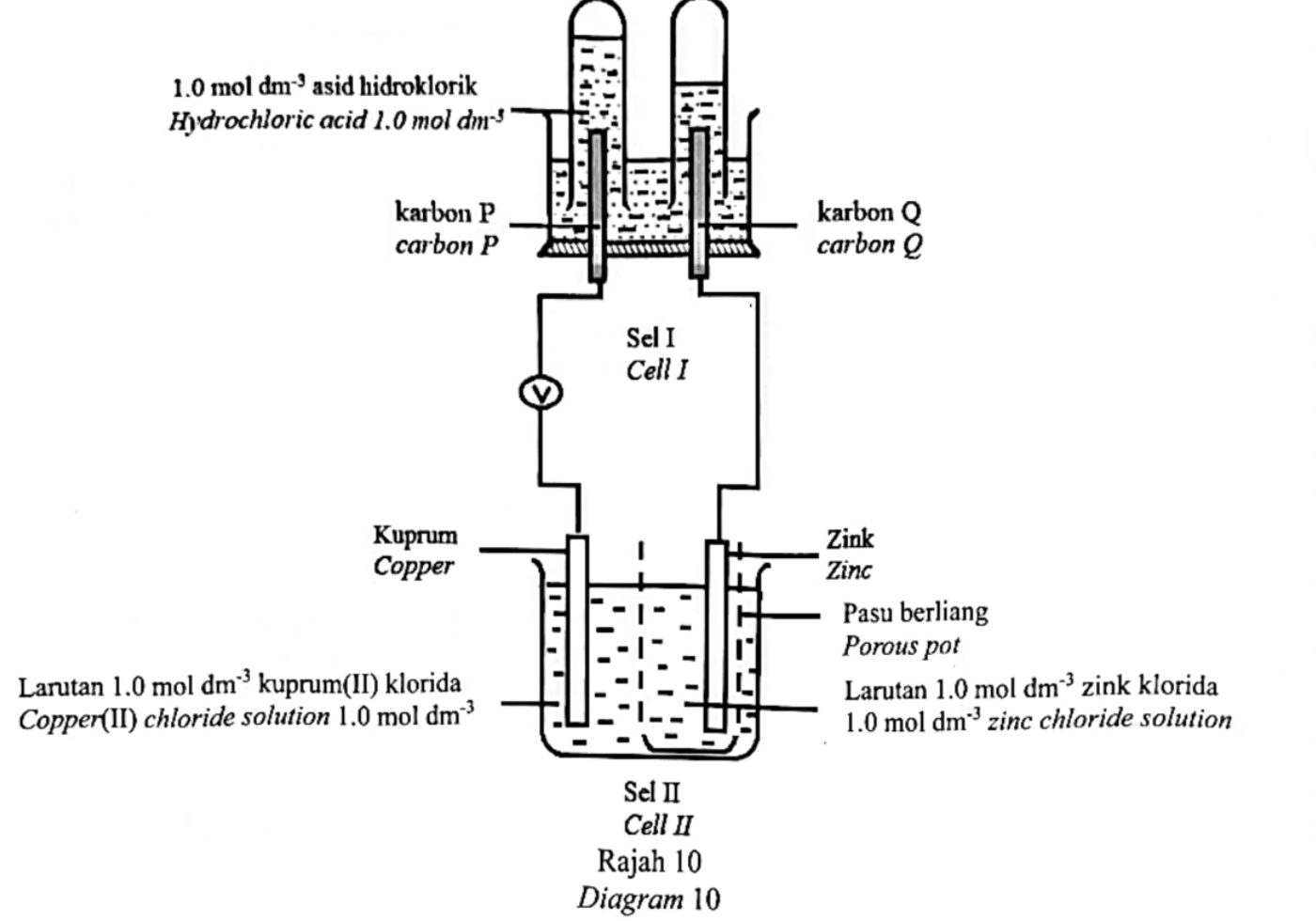
- (a)(ii)
Write the half equations at anode and cathode. Explain the differences in the observations at anode and cathode.
[10] - (b)(i)
In Cell II, state the function of the porous pot.
[1] - (b)(ii)
Write the cell notation and calculate the cell voltage, E°cell for this chemical cell.
[4] - (b)(iii)
Predict the value of the cell voltage if the zinc plate is replaced with a magnesium ribbon. Explain your answer. Write the overall ionic equation for this cell.
[2]
Section C
Table 11 shows the pH values for the solution of alkali P (pH 8) and alkali Q (pH 13) with the same concentration. Diagram 11 shows a titration method (burette, conical flask, tile) used to study the neutralisation reaction.
Medium20 marks- (a)
Explain why the pH values for alkali P and alkali Q are different.
[5]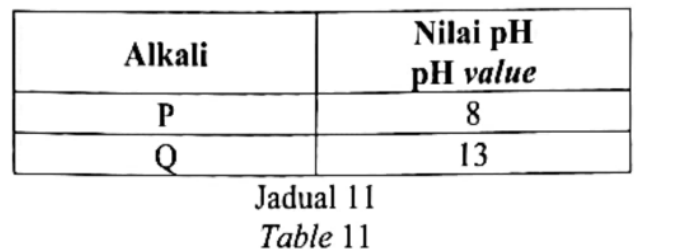
- (b)(i)
What is meant by neutralisation reaction?
[1]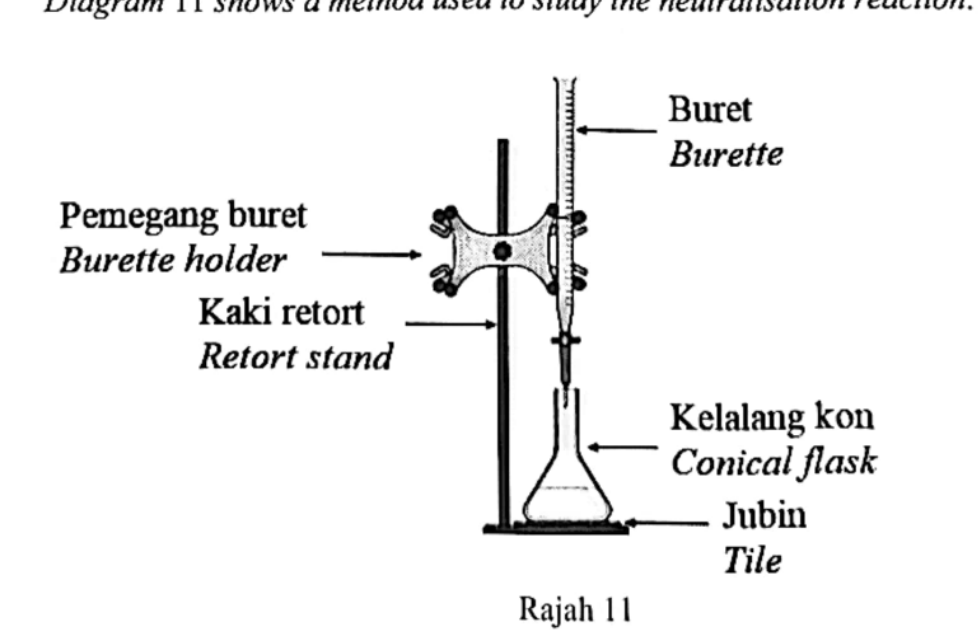
- (b)(ii)
In this reaction, 25.0 cm³ sodium hydroxide solution 1.0 mol dm⁻³ was neutralised by 20.0 cm³ sulphuric acid. Write the chemical equation for this reaction and calculate the concentration (in mol dm⁻³) for the sulphuric acid.
[4] - (c)
In a reaction, a green colour salt X is heated strongly. A black solid formed. A colourless gas produced and turns lime water cloudy. Name salt X and the black solid.
[2] - (d)
Calcium sulphate salt is used widely in the construction field. It is also known as the plaster of Paris. Suggest the chemicals that you can use to prepare calcium sulphate salt in the laboratory. Next, explain the method that is used to prepare this salt.
[8]