Which of the following statement is true about chemistry?
Easy
Which substance is an element?
Easy
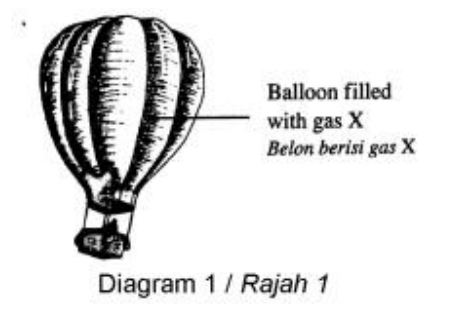
Diagram 1 shows an air balloon filled with gas X. In which group is gas X located in the periodic table?
Easy
Which statement best explains the formation of covalent bond?
Easy
Which of the following is a natural polymer?
I Starch
II Nylon
III Protein
IV Polyethene
Easy
What is the homologous series for fat?
Medium
Which of the following is a fast reaction?
Easy
Which of the following statements explains the meaning of relative atomic mass?
Easy
A redox reaction is a chemical reaction that involves oxidation and reduction occurring at the same time. Which of the following occurs in a reduction reaction?
Easy
Chemical reactions involve changes of heat energy, either heat released or heat absorbed. Which of the following statements explains the change of heat correctly?
Medium
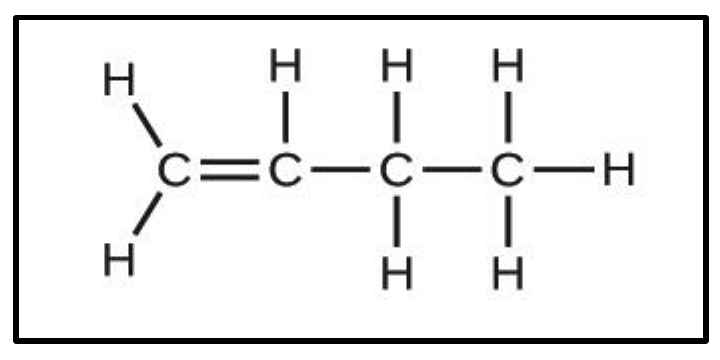
Diagram 2 shows the structural formula of a hydrocarbon. What is its name?
Medium
Silica is used to make all kinds of glass. Which of the following types of glass is made of silica only?
Easy
Which of the following shows the correct pair of acid and its basicity?
A Phosphoric acid - Diprotic acid
B Ethanoic acid - Monoprotic acid
C Sulphuric acid - Triprotic acid
D Carbonic acid - Monoprotic acid
Medium
Which subatomic particle was discovered by James Chadwick?
Easy
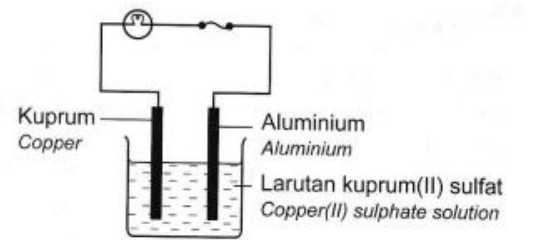
Diagram 3 shows a simple chemical cell (copper and aluminium electrodes in copper(II) sulphate solution).
Given: Al³⁺ + 3e⁻ → Al; E° = -1.66 V
Cu²⁺ + 2e⁻ → Cu; E° = +0.34 V
What is the voltage of the cell?
Medium
The following equation shows a reaction to obtain a soluble chloride salt: HCl + X → Chloride salt + H₂O. What is substance X?
Medium
Which of the following are true about ceramics?
I A mixture of two or more elements with a metal as the main element
II A solid consisting of inorganic and non-metallic substances
III Produced through heating at a high temperature
IV Most ceramics are made up of metal compounds, non-metal compounds or metalloid compounds
Medium
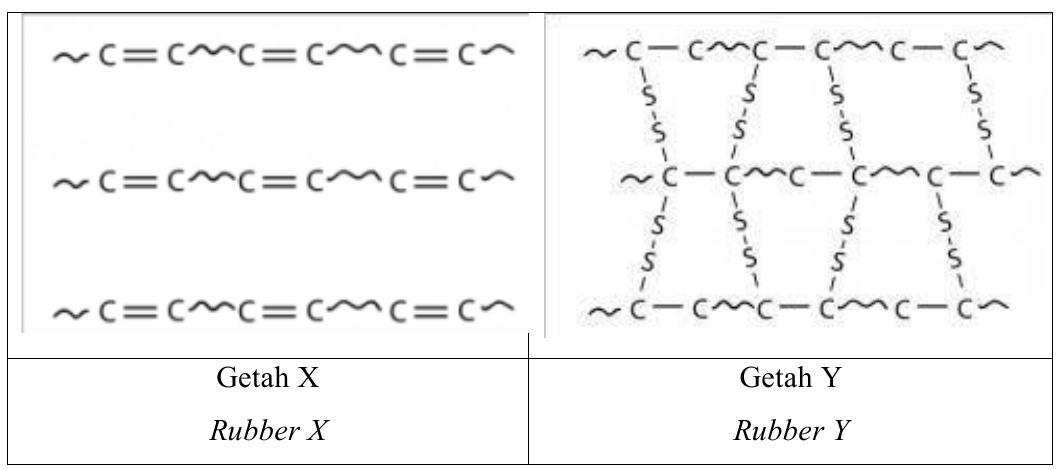
Diagram 4 shows the structural formulae of two different types of rubber, X and Y. Which of the following statements is true?
Medium
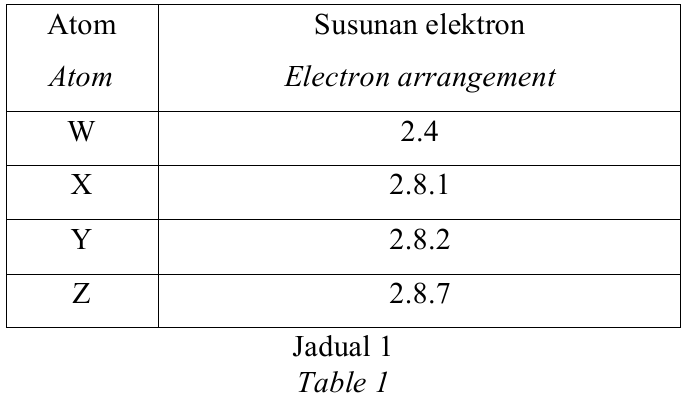
Table 1 shows the electron arrangements of atoms W, X, Y and Z (W 2.4; X 2.8.1; Y 2.8.2; Z 2.8.7). Which of the following pairs of atoms form a compound by sharing electrons?
Medium
Element T is located below chlorine in the Periodic Table of Elements. Which of the following is correct about T?
Medium
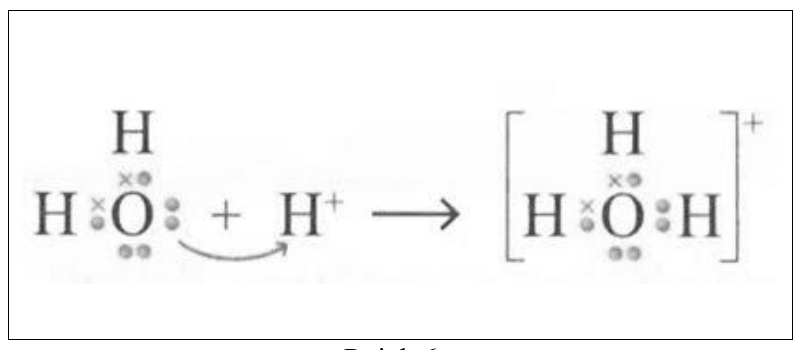
Diagram 6 shows the formation of a type of bond in an ion. What is the type of the bond?
Easy
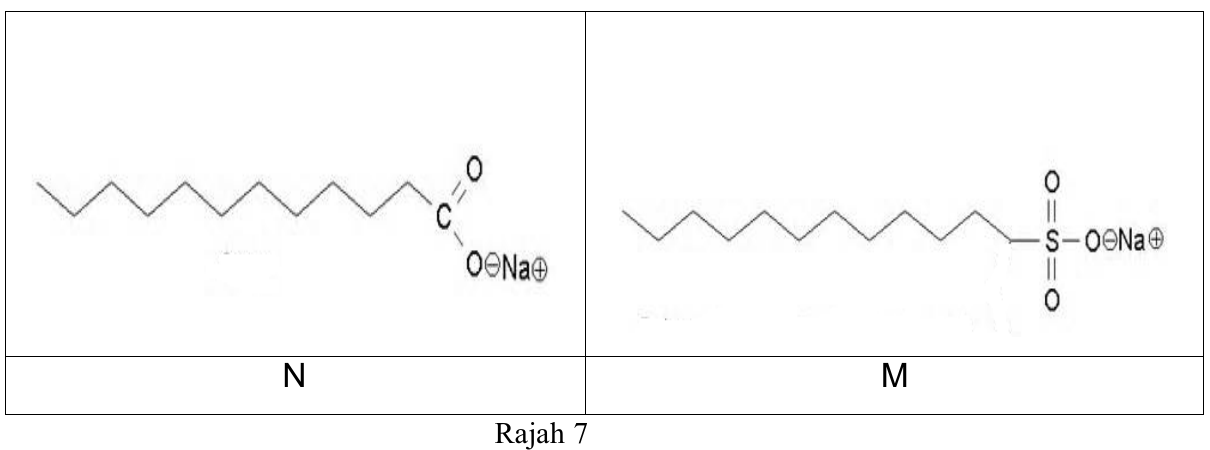
Diagram 7 shows the structural formulae of two cleaning agents, N (RCOO⁻Na⁺, a soap) and M (RSO₃⁻Na⁺, a detergent). Which of the following statements is correct about cleaning agents M and N?
Medium
Which of the following is the correct formula of an ion?
Easy
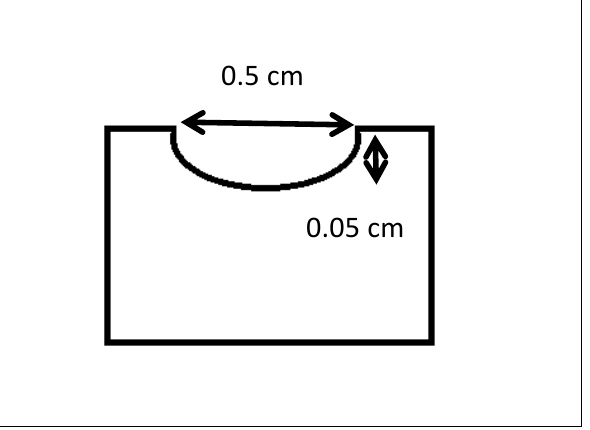
An experiment compares the hardness of copper and bronze blocks. Diagram 8 shows the dent made when a weight is dropped onto the bronze block (width 0.5 cm, depth 0.05 cm). Which is the result when the same weight is dropped onto the copper block?
Medium
Which of the following substances is suitable to be used as an electrolyte?
Medium
The number of carbon atoms increases going down the group. Which of the following is correct about the properties of the members?
I Becomes more reactive
II Relative molecular mass increases
III Electrical conductivity increases
IV Melting and boiling points increase
Medium
Table 2 shows the heat of combustion of three alcohols: CH₃OH -710, C₂H₅OH -1370, C₄H₉OH -2670 kJ mol⁻¹. Which statement explains the increase in the heat of combustion?
Medium
Hydrocarbons are organic compounds that contain only hydrogen and carbon. Which of the following is a source of hydrocarbons?
Easy
Diagram 9 shows examples of fast and slow chemical reactions. What are the units commonly used to measure rate of reaction?
Easy
Which of the following are the physical characteristics of salt crystals?
I Uneven surface, curved sides and no corners
II Different crystals have the same geometric shape
III A fixed angle between two adjacent surfaces
IV The same crystals of different sizes still have the same geometric shape
Medium
Ahmad found an impure iron strip. Which electrolyte, anode and cathode are correct to obtain a pure iron strip through electrolysis?
A Iron(II) sulphate solution; impure iron; pure iron
B Iron(II) sulphate solution; pure iron; impure iron
C Iron(II) hydroxide; impure iron; pure iron
D Iron(II) hydroxide; pure iron; impure iron
Medium
Excess zinc powder is added to 25 cm³ of 0.1 mol dm⁻³ hydrochloric acid, HCl. The maximum volume of hydrogen gas, H₂, released is obtained after 120 seconds. What is the average rate of reaction in cm³ s⁻¹? [Molar volume of gas at STP = 22.4 dm³ mol⁻¹]
Medium
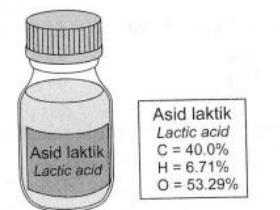
Diagram 10 shows the percentage by mass of elements in lactic acid (C = 40.0%, H = 6.71%, O = 53.29%). What is the molecular formula of lactic acid if its molar mass is 90 g mol⁻¹? [Relative atomic mass: H = 1, C = 12, O = 16]
Medium
Which of the following compounds is formed through the sharing of electrons?
Medium
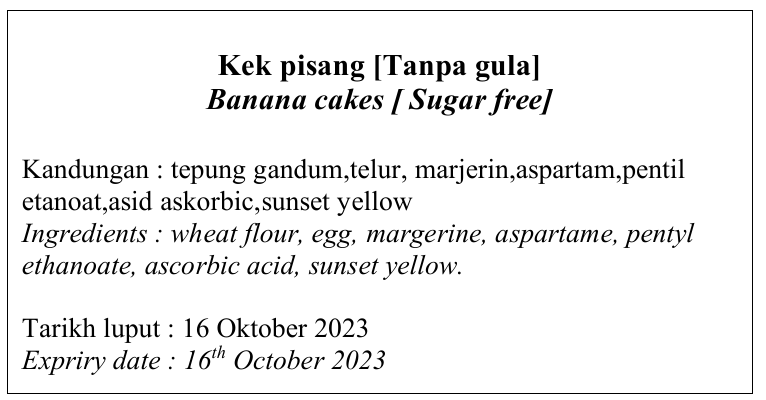
Diagram 11 shows the label on a box of sugar-free banana cake (ingredients: wheat flour, egg, margarine, aspartame, pentyl ethanoate, ascorbic acid, sunset yellow). Which ingredient ensures the cake does not turn rancid?
Medium
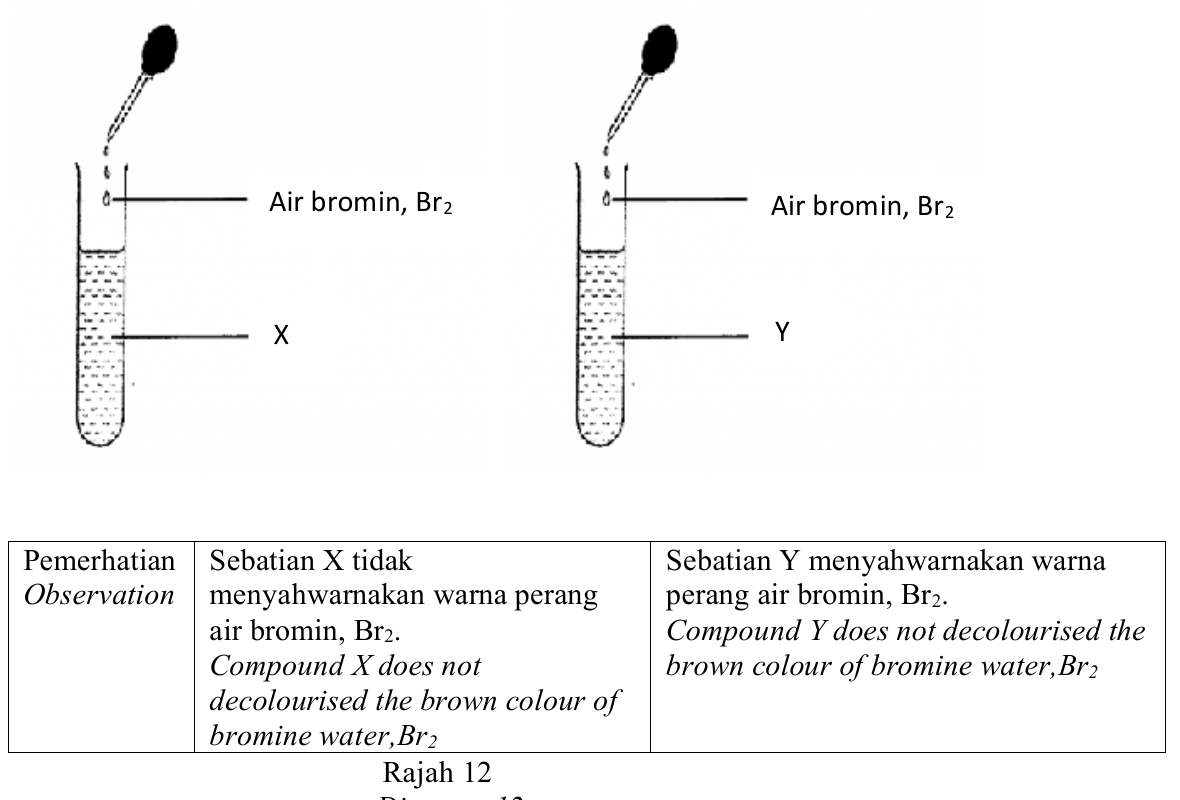
Diagram 12 shows an experiment in a dark room to differentiate two hydrocarbons, X and Y, using bromine water. Compound X does not decolourise the brown colour of bromine water; compound Y decolourises it. Which of the following compounds are X and Y?
A X: CH₃COOH, Y: C₂H₅COOH
B X: C₂H₆, Y: C₂H₄
C X: C₃H₆, Y: C₃H₈
D X: C₂H₅OH, Y: C₃H₇OH
Medium
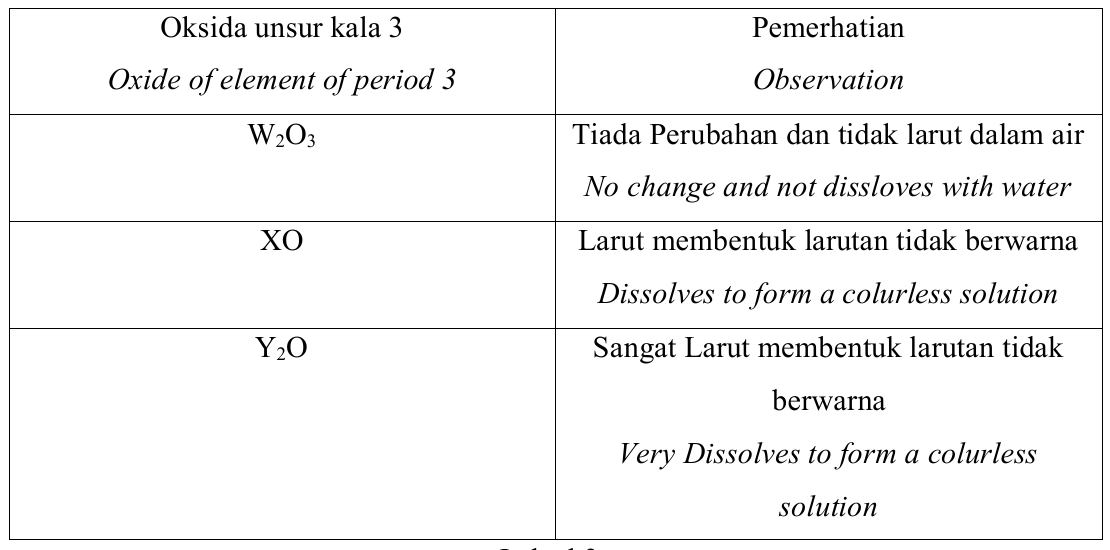
Table 3 shows the observations when oxides of period 3 elements are added to water: W₂O₃ no change, insoluble; XO dissolves to form a colourless solution; Y₂O very soluble, colourless solution. What is the correct arrangement in decreasing proton number of the elements?
Medium
The cell notation for a voltaic cell with magnesium and copper electrodes is Mg | Mg²⁺ || Cu²⁺ | Cu. Mg²⁺ + 2e⁻ ⇌ Mg, E° = -2.38 V; Cu²⁺ + 2e⁻ ⇌ Cu, E° = +0.34 V. What is the cell voltage?
Medium
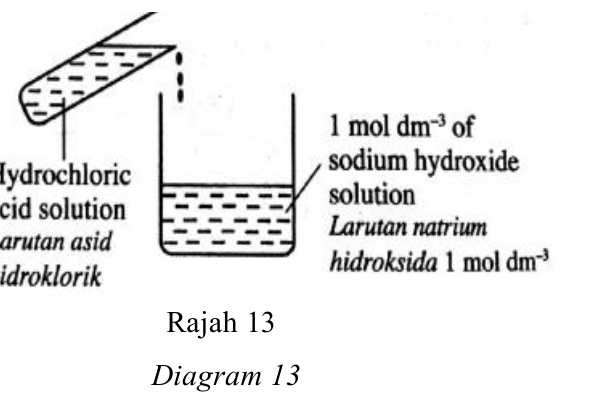
Diagram 13 shows the neutralisation of 1 mol dm⁻³ sodium hydroxide solution with hydrochloric acid. What is the volume of the alkali needed to produce 1.4625 g of salt? [Relative atomic mass: Na = 23, Cl = 35.5, H = 1, O = 16]
Medium
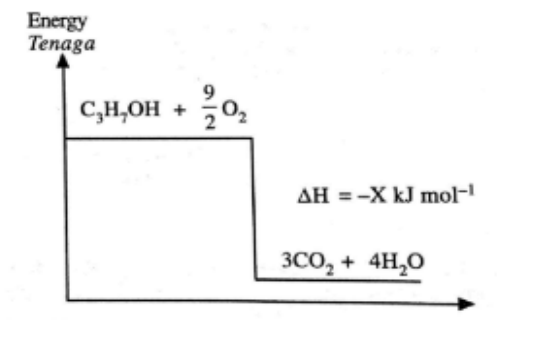
Diagram 14 shows the energy level diagram for the combustion of propan-1-ol (C₃H₇OH + 9/2 O₂ → 3CO₂ + 4H₂O, ΔH = -X kJ mol⁻¹). Which of the following statements is correct about the reaction?