Diagram 1 shows the elements in period 3 of the periodic table of elements (Na 11, 23; Mg 12, 24; Al 13, 27; Si 14, 28; P 15, 31; S 16, 32; Cl 17, 35.5; Ar 18, 40). Why does the size of the atoms decrease from sodium to argon in the period?
Medium
Which of the following pairs of physical properties of sodium chloride is true? (Solubility in water; Electrical conductivity when molten)
Medium
Which of the following is a synthetic polymer? I Polyethene; II Cellulose; III Polystyrene; IV Protein
Easy
What is the process that changes unsaturated fats to saturated fats?
Easy
Which of the following is a slow reaction?
Easy
1 mole of sodium and 1 mole of neon have [Relative atomic mass: Ne = 20; Na = 23]
Medium
The following is the reaction between iron metal and chlorine gas: 2Fe(s) + 3Cl₂(g) → 2FeCl₃(s). What is the change of oxidation number of iron in this reaction?
Medium
Which reaction is an endothermic reaction?
Easy
Diagram 2 shows the conversion of propene into propanol through process X in the presence of catalyst Y (Propene → Propanol). What are process X and catalyst Y?
Medium
Alloy X is made by mixing iron with carbon, chromium and nickel. What is alloy X?
Easy
The steps in the preparation of a standard solution through dilution are: P Calculate the volume of the solution to be diluted; Q Add distilled water until it reaches the calibration mark; R Use a pipette to draw up the needed volume of the stock solution; S Transfer the solution into a volumetric flask. Which sequence shows the correct steps?
Medium
Atom Z contains 13 protons, 14 neutrons and 13 electrons. What is the nucleon number of atom Z?
Easy
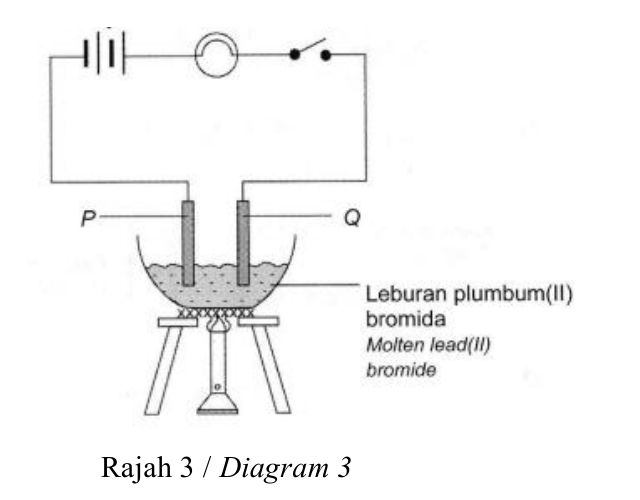
Diagram 3 shows the apparatus set-up of an electrolytic cell containing molten lead(II) bromide. Which process and product occur at electrode P?
Medium
Observations when salt Y is heated: gas released turns lime water chalky; residue is black. What are the gas and residue?
Medium
Which of the following properties are true for both glass and ceramics? I Hard but brittle; II Contain silica; III Waterproof; IV Good electrical insulators
Medium
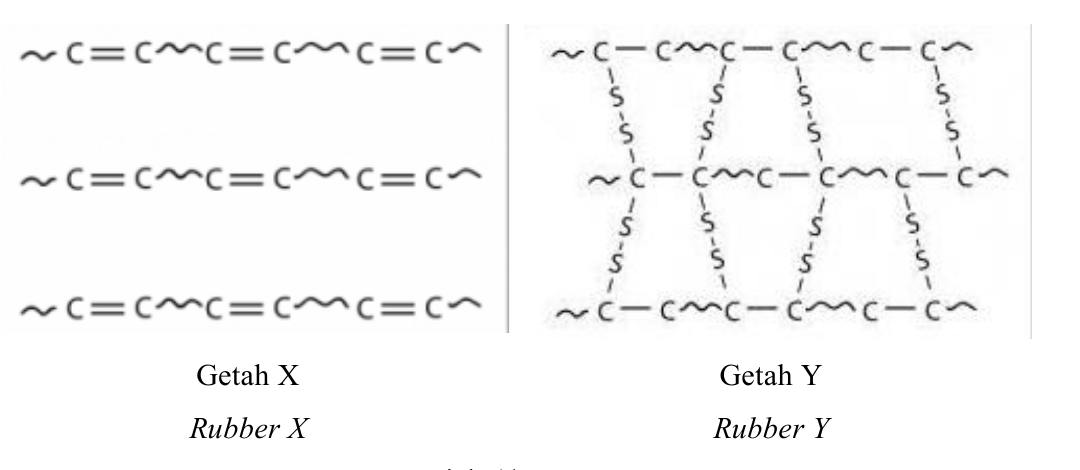
Diagram 4 shows two types of rubber, X (parallel chains) and Y (chains joined by sulphur cross-links). Which statement best explains why rubber Y is more elastic than rubber X?
Medium
Table 1 shows the electron arrangements of element X (2.8.1) and element Y (2.6). Which is correct about the compound formed from the reaction between X and Y?
Medium
Element T is located in the same period as manganese, Mn in the Periodic Table of Elements. Which is a special characteristic of element T?
Easy
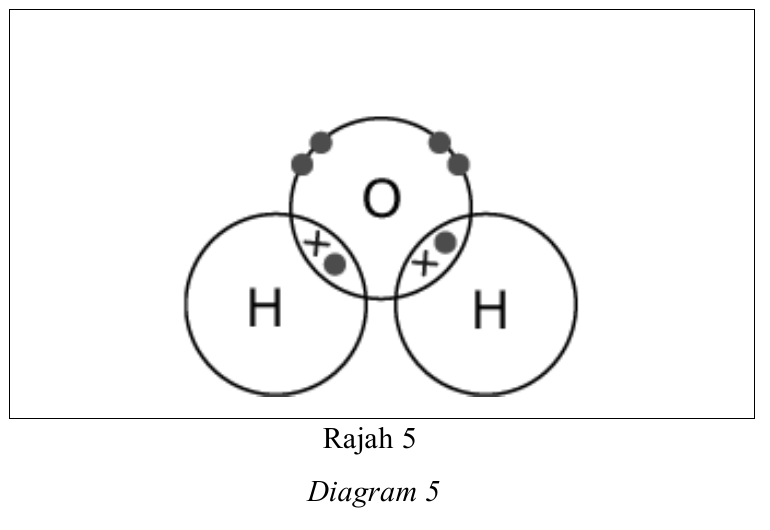
Diagram 5 shows the formation of a type of bond in a water molecule (O shares electrons with two H atoms). What is the type of the bond?
Easy
Table 2 shows types of medicines and examples: Analgesics - Q; Antihistamines - P; Psychotic drugs - R. Which represents P, Q and R?
Medium
Which of the following substances contains 1.204 × 10²⁴ atoms?
Medium
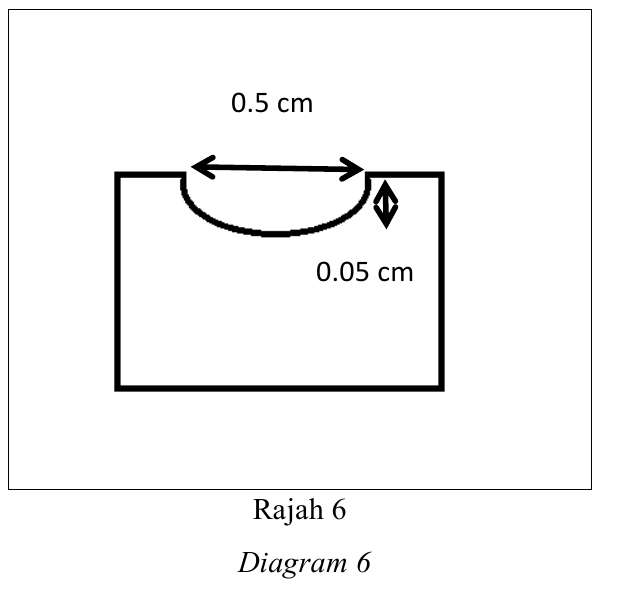
An experiment compares the hardness of copper and bronze blocks. Diagram 6 shows the result when a weight is dropped onto the bronze block (dent 0.5 cm wide, 0.05 cm deep). Which is the result when the same weight is dropped onto the copper block?
Medium
Which of the following is a property of an electrolyte?
Medium
Which of the following describe the physical properties of ethanol? I Not soluble in water; II Low density; III Not an electrolyte; IV Exists as gas at room temperature
Medium
Ahmad found an impure iron strip. Which is correct to obtain a pure iron strip through electrolysis? (Electrolyte; Anode; Cathode)
Medium
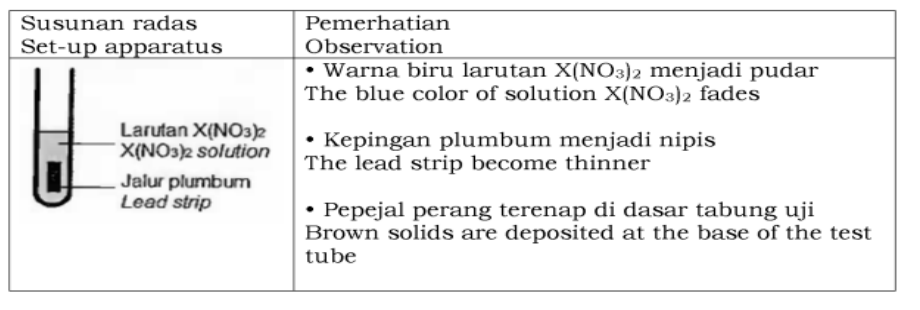
Table 3 shows a lead strip in X(NO₃)₂ solution. Observations: the blue colour of the solution fades; the lead strip becomes thinner; brown solid is deposited at the base of the test tube. Which are the equations for the oxidation and reduction processes?
Medium
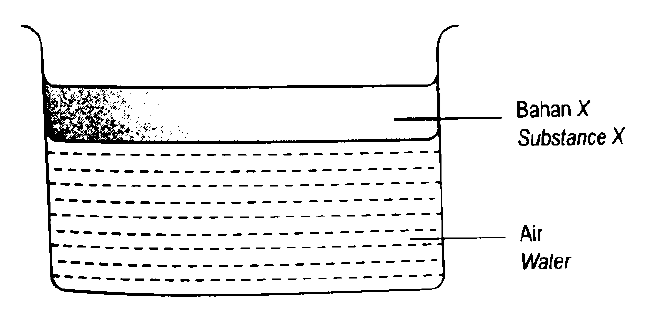
Diagram 7 shows a beaker containing two layers of substance: substance X on top, water below. What is substance X?
Medium
Which statements correctly describe a strong acid? I Has a high pH value; II Ionises completely in water; III Has a high concentration of hydrogen ions; IV Exists as molecules in water
Medium
Which nail will rust the fastest? Each test tube holds agar + potassium hexacyanoferrate(III) + phenolphthalein solutions with an iron nail coiled with a different metal.
Medium
Two sets of experiments study a factor affecting the rate of reaction. Set I: 20 cm³ of 0.5 mol dm⁻³ sulphuric acid + excess zinc powder. Set II: 20 cm³ of 0.5 mol dm⁻³ sulphuric acid + excess zinc granules. Which graph (volume of hydrogen gas against time) shows the correct curves for Set I and Set II?
Medium
Mg + 2HCl → MgCl₂ + H₂. What is the volume of hydrogen gas produced when 5.5 g magnesium reacts with hydrochloric acid at room conditions? [Relative atomic mass: Mg = 24, H = 1; Molar volume of gas at room conditions = 24 dm³ mol⁻¹]
Medium
Which compound is correctly matched with its type of bond? A Oxygen - Ionic; B Ammonium - Covalent; C Sodium oxide - Covalent; D Sulphur trioxide - Ionic
Medium
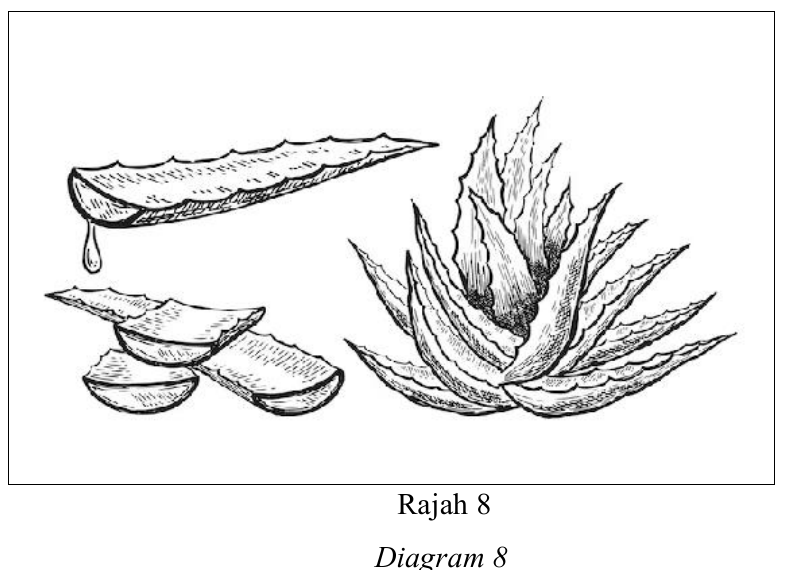
Diagram 8 shows a type of plant (aloe vera) that can be found around the housing area. What is the function of the plant as a traditional medicine?
Easy
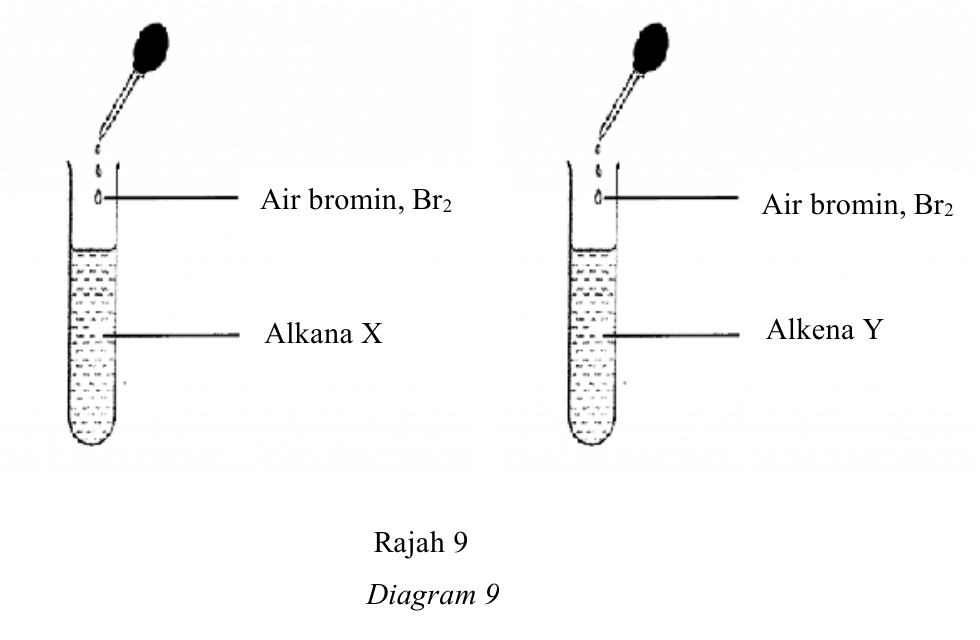
Diagram 9 shows an experiment in a dark room to differentiate two hydrocarbons, alkane X and alkene Y, each with bromine water added. Which are the observations?
Medium
Table 4 shows observations for group 1 elements with oxygen: X burns very vigorously with a purple flame; Y burns slowly with a red flame; Z burns vigorously with a yellow flame. What is the correct descending order of reactivity with oxygen?
Medium
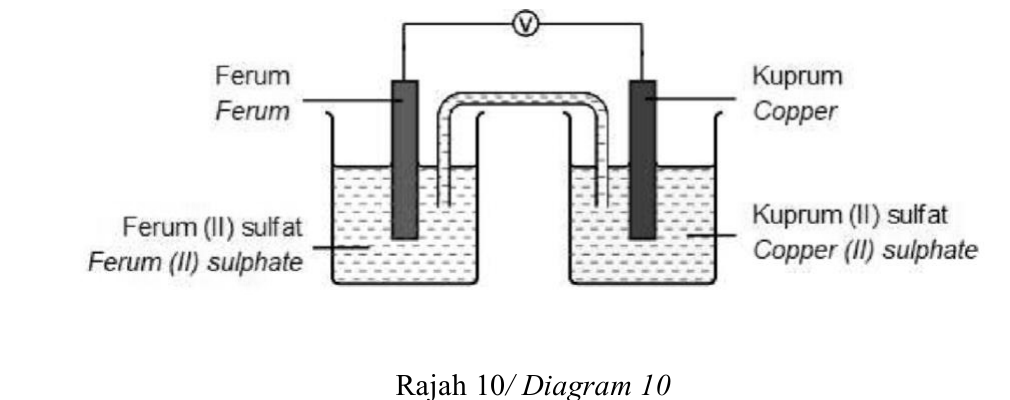
Diagram 10 shows a voltaic cell with iron in iron(II) sulphate solution and copper in copper(II) sulphate solution. Calculate the E° value if the half-cell values are: Fe²⁺(aq) + 2e⁻ ⇌ Fe(s), E° = -0.44 V; Cu²⁺(aq) + 2e⁻ ⇌ Cu(s), E° = +0.34 V.
Medium
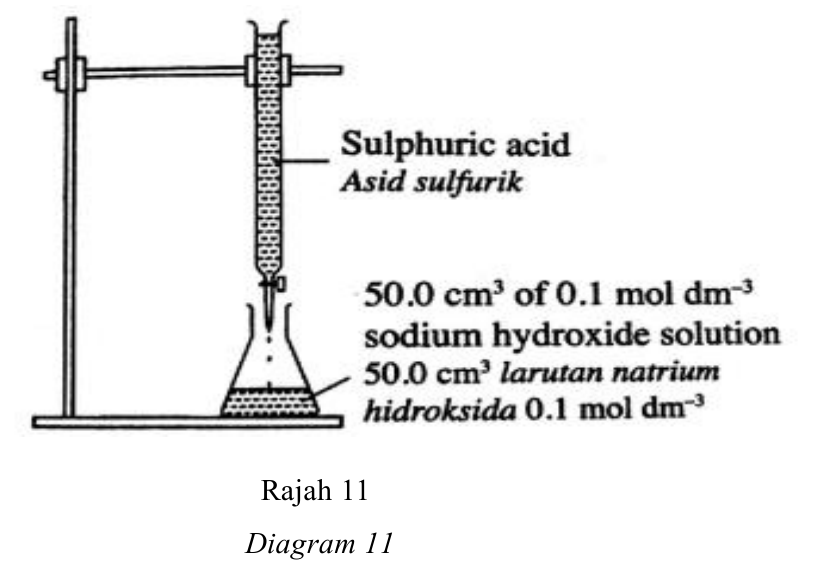
Diagram 11 shows the apparatus for neutralisation between a strong acid and a strong alkali. 25.0 cm³ of sulphuric acid neutralises 50.0 cm³ of 0.1 mol dm⁻³ sodium hydroxide solution. What is the molarity of the sulphuric acid?
Medium
CH₃OH(l) + 3/2 O₂(g) → CO₂(g) + 2H₂O(l), ΔH = -726 kJ mol⁻¹. Which energy level diagram represents the reaction?