Write your answer on paper. Then open the answer to check it.
Section A
Ceramics can be classified into two groups, traditional ceramics and advanced ceramics. Diagram 1 shows an example of traditional handcraft ceramics (a pottery vase) used as a souvenir.
Medium5 marks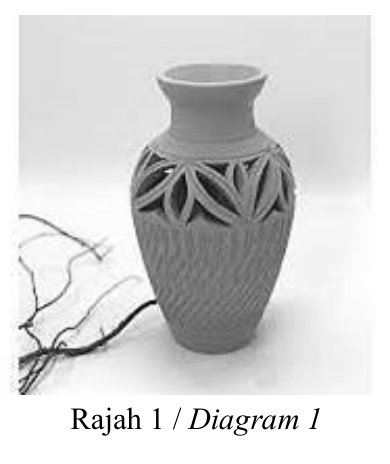
- (a)(i)
What is the main material to make this ceramic?
[1] - (a)(ii)
Give one characteristic of the ceramic above.
[1] - (a)(iii)
One of the main ingredients in making this ceramic is white. What ingredient should be added to produce green pottery?
[1] - (b)(i)
Silicon carbide is an advanced ceramic with a diamond-like structure and hardness. Can silicon carbide be used to make drinking glasses?
[1] - (b)(ii)
Give an example of an advanced ceramic material that uses silicon carbide.
[1]
Table 2 shows the number of protons, electrons and neutrons in particles P, Q, R, S and T. (Particle: protons, electrons, neutrons) P: 5, 5, 6; Q: 8, 8, 10; R: 8, 10, 8; S: 17, 18, 18; T: 19, 18, 20.
Medium5 marks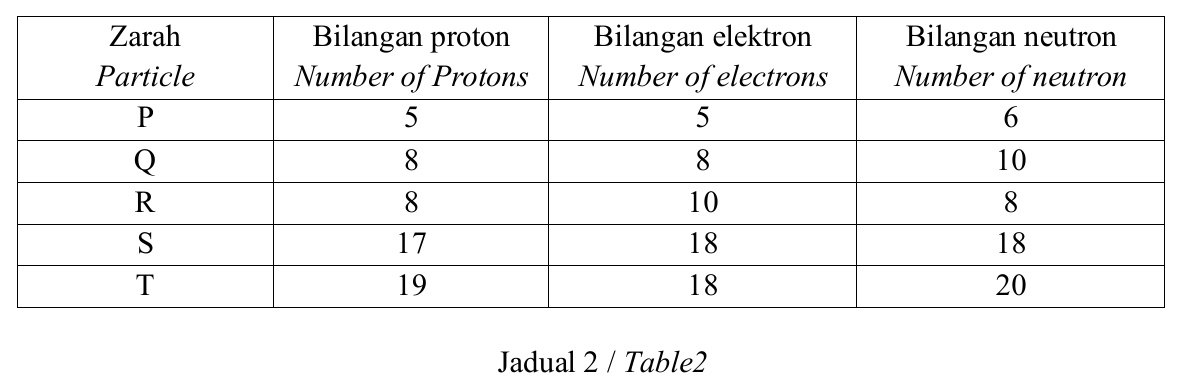
- (a)
Write the electron arrangement of particle P.
[1] - (b)
State one particle that exists as an anion.
[1] - (c)
What is the nucleon number of particle S?
[1] - (d)
Based on the table, state which pair of particles shows isotope properties. Explain.
[2]
Diagram 3.1 shows a dried strawberry product. Diagram 3.2 shows a packaging method that uses nanotechnology.
Medium6 marks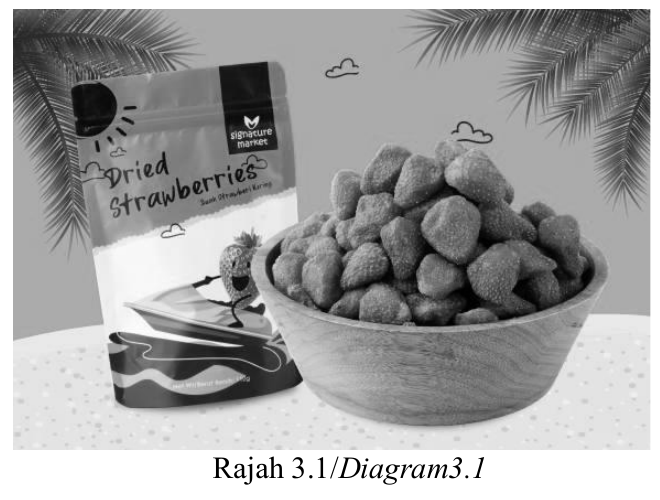
- (a)(i)
Substance X needs to be added to ensure that the dried strawberries can be stored for a long time. Suggest a type of food additive suitable for Substance X.
[1] - (a)(ii)
State a Substance X.
[1] - (a)(iii)
State the side effect of using Substance X excessively.
[1] - (b)(i)
What is the meaning of nanotechnology?
[1]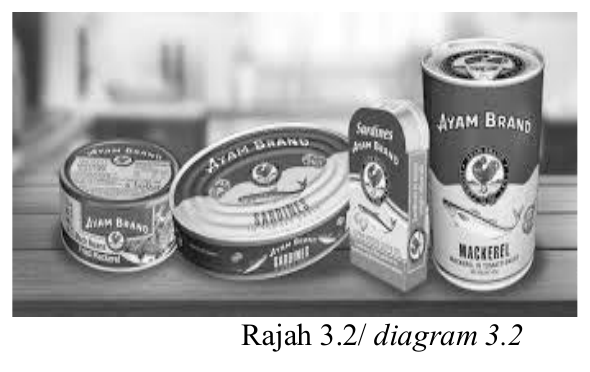
- (b)(ii)
Diamond, graphite and graphene are allotropes of carbon that are the main focus of nanotechnology. State 2 physical properties of graphene.
[2]
Diagram 4 shows the set-up of the apparatus to determine the empirical formula of an oxide of magnesium (magnesium ribbon heated in a crucible with lid).
Medium7 marks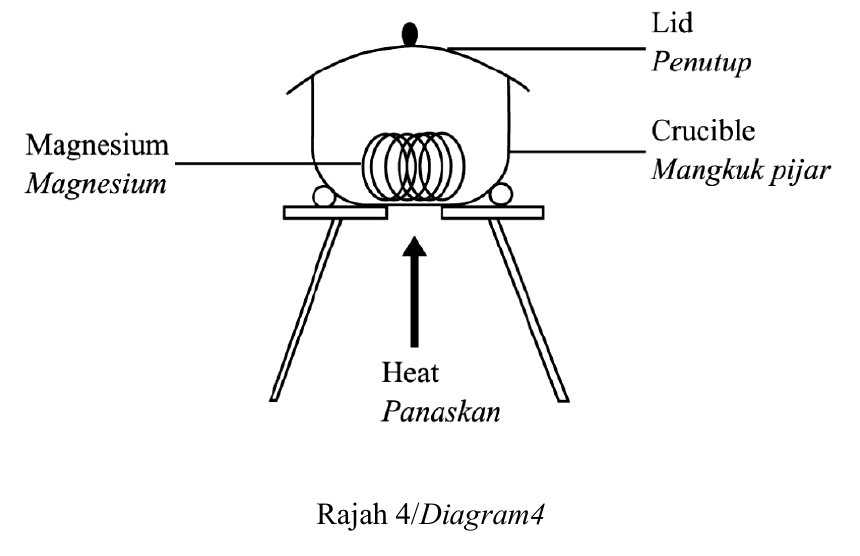
- (a)
What is the meaning of empirical formula?
[1] - (b)
When carrying out this experiment, why does the crucible lid need to be opened once in a while?
[1] - (c)
How can you determine that the reaction between magnesium and oxygen is complete?
[1] - (d)(i)
Table 4: mass of crucible + lid = 44.0 g; mass of crucible + lid + magnesium ribbon = 46.4 g; mass of crucible + lid + magnesium oxide = 48.0 g. Calculate the empirical formula of magnesium oxide. [Relative atomic mass: Mg = 24; O = 16]
[4]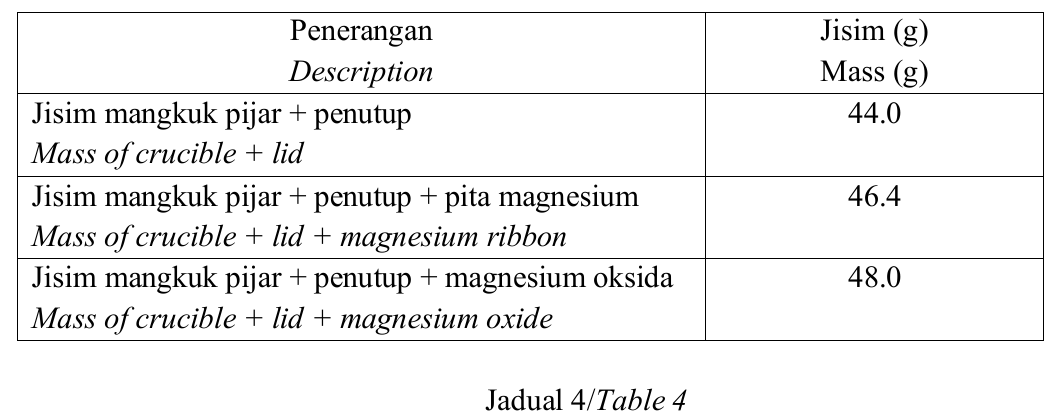
Diagram 5.1 shows the ionisation of acids HA and HB in water (0.1 mol dm⁻³ each). Both are monoprotic. The pH meter reads 1.0 for HA in Beaker R and 4.0 for HB in Beaker S.
Medium8 marks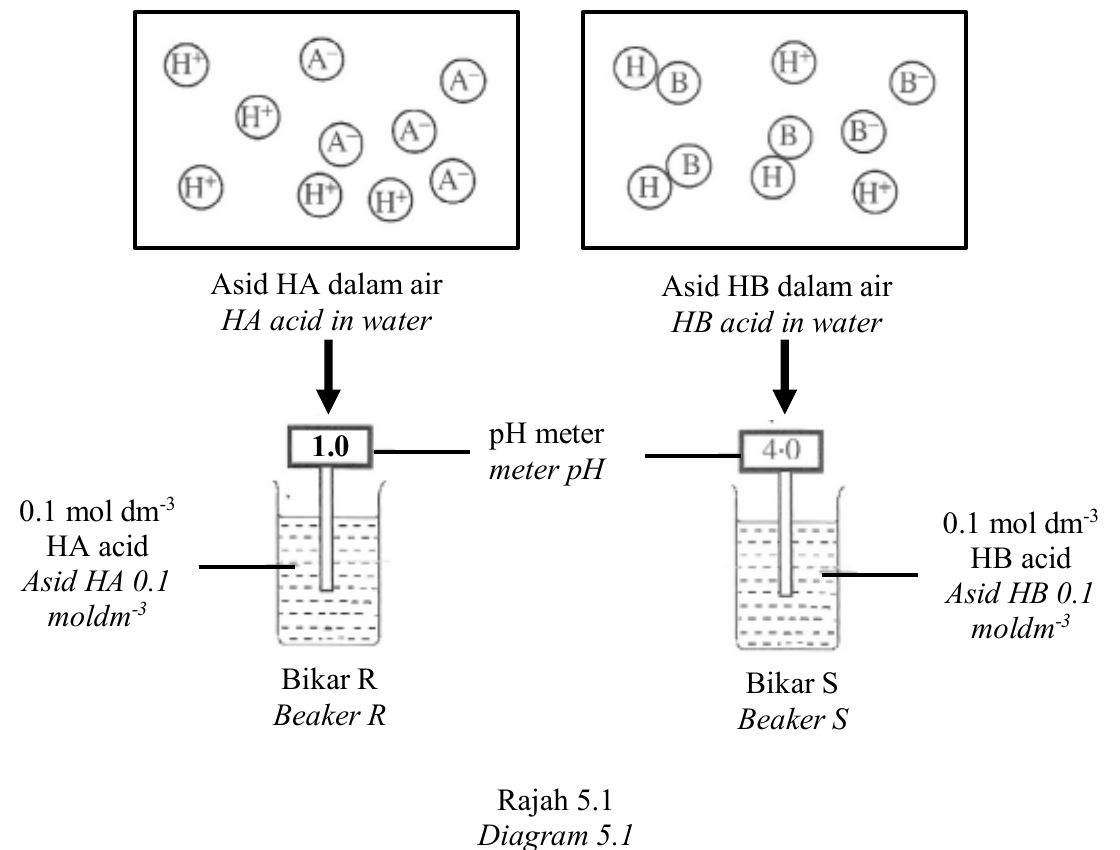
- (a)(i)
Based on Diagram 5.1, identify the type of acid in Beaker S. Explain your answer.
[2] - (b)(i)
50 cm³ of 0.1 mol dm⁻³ acid HA in Beaker R is pipetted into a 200 cm³ volumetric flask and distilled water is added to the graduation mark. Calculate the concentration of HA acid prepared in the volumetric flask.
[2] - (c)(i)
Diagram 5.2 shows a series of reactions involving salt P: heating salt P gives solid Q (yellow when hot, white when cold) and colourless gas Y; salt P + nitric acid gives aqueous solution R + colourless gas Y + water. State the name of gas Y. (Labelled (b)(i) in the paper.)
[1]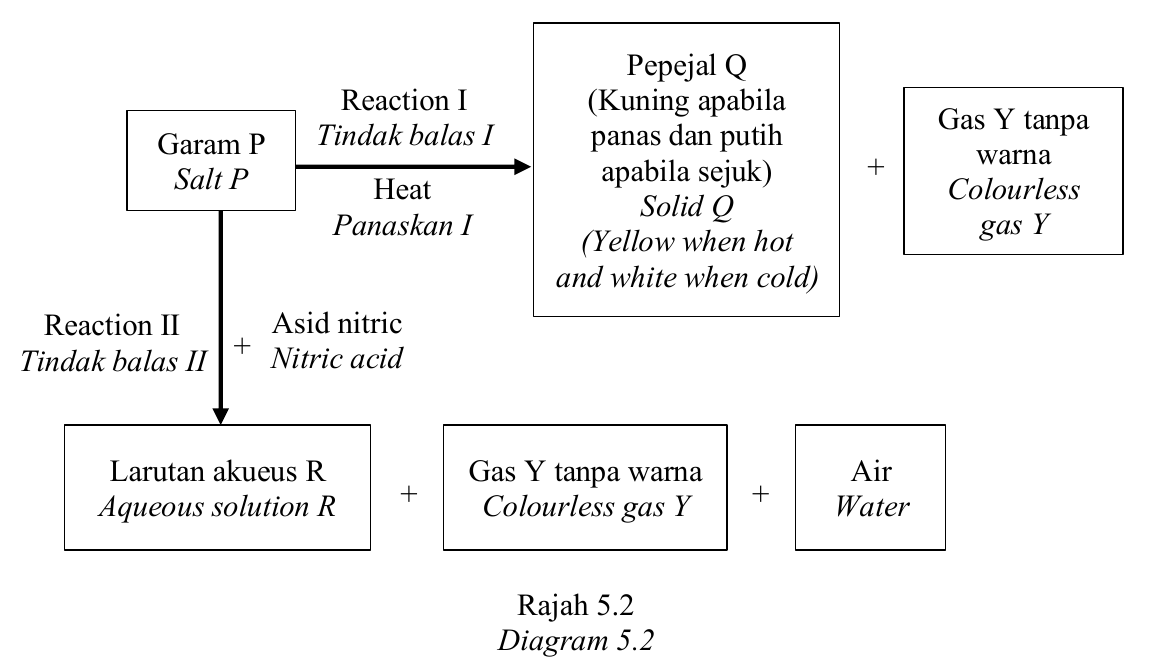
- (c)(ii)
Determine aqueous solution R. (Labelled (b)(ii) in the paper.)
[1] - (c)(iii)
Describe a confirmatory test to verify the cation in (c)(ii). (Labelled (b)(iii) in the paper.)
[2]
Diagram 6 shows several chemical properties of propene: propene to propane (Process I), propene burnt to give CO₂ + water, and propene to propanol (Process II).
Medium9 marks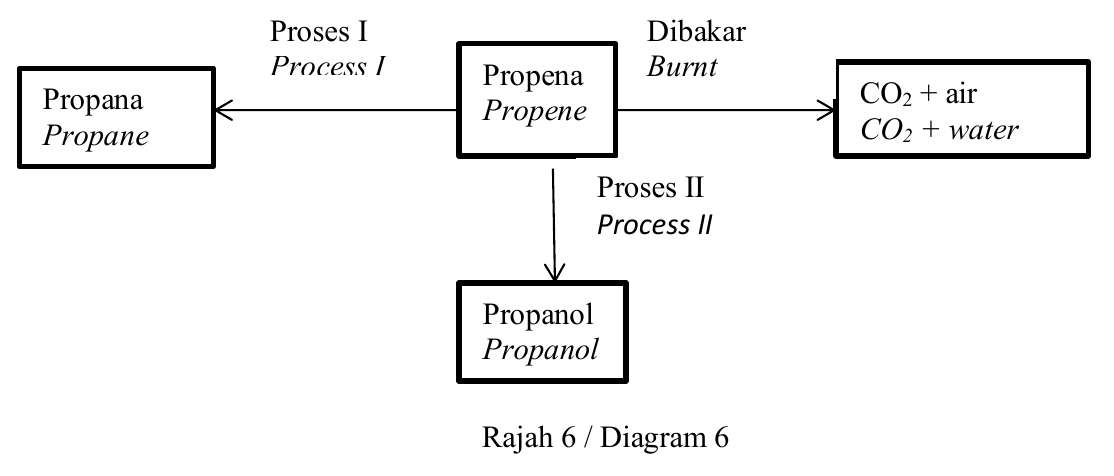
- (a)(i)
Propene can be converted into propane through process I. What is process I?
[1] - (a)(ii)
State one condition required in this conversion.
[1] - (b)(i)
200 cm³ of propene gas is burnt completely in air to produce carbon dioxide gas and water. Write a balanced chemical equation for the combustion.
[2] - (b)(ii)
Determine the number of carbon dioxide molecules produced. [1 mol of gas occupies 24 000 cm³ at room temperature; Avogadro constant = 6.02 × 10²³ mol⁻¹]
[2] - (c)
Describe briefly a chemical test to differentiate between propene and propane.
[3]
Diagram 7.1 shows the apparatus set-up to investigate redox reactions: a magnesium strip placed in copper(II) sulphate solution.
Medium10 marks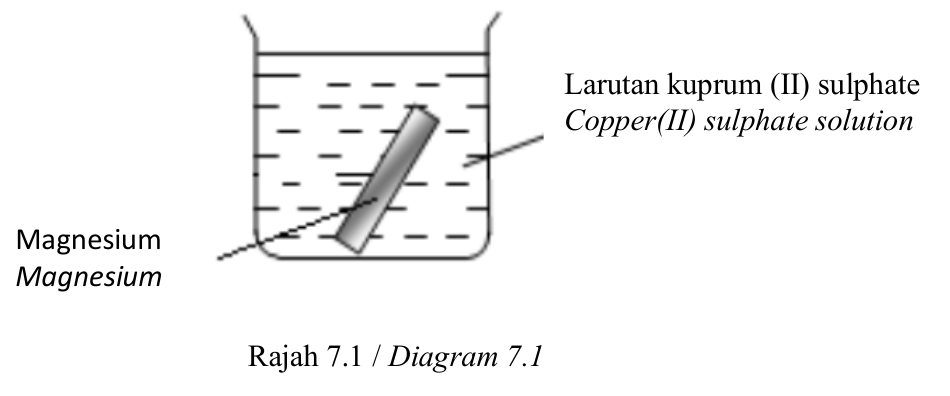
- (a)(i)
What is meant by redox reaction?
[1] - (a)(ii)
State the change in oxidation number for magnesium.
[1] - (a)(iii)
Write the half equations for oxidation and reduction.
[2] - (a)(iv)
Write the cell notation for the cell above.
[1] - (b)(i)
A piece of blue litmus paper soaked in concentrated sodium chloride solution is placed on a glass slide with two carbon electrodes R and S connected to a battery (Diagram 7.2). Table 7: at R the blue litmus paper turns red and then is bleached; at S the colour is unchanged. State the ion selectively discharged at electrode R.
[1]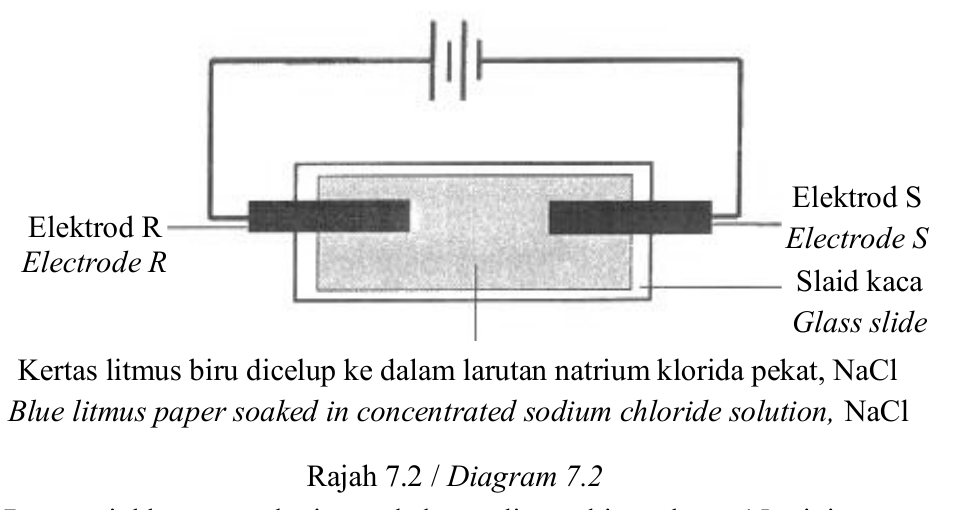
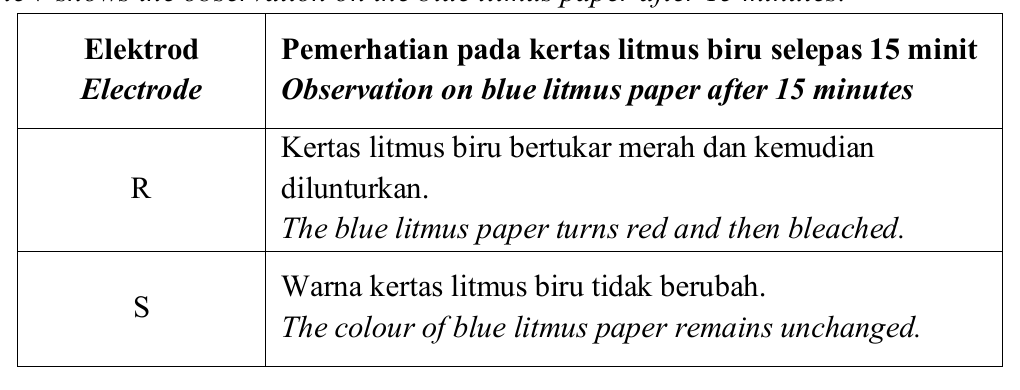
- (b)(ii)
State the reason the ion is selectively discharged at electrode R.
[1] - (b)(iii)
Write the half equation at electrode R.
[1] - (c)
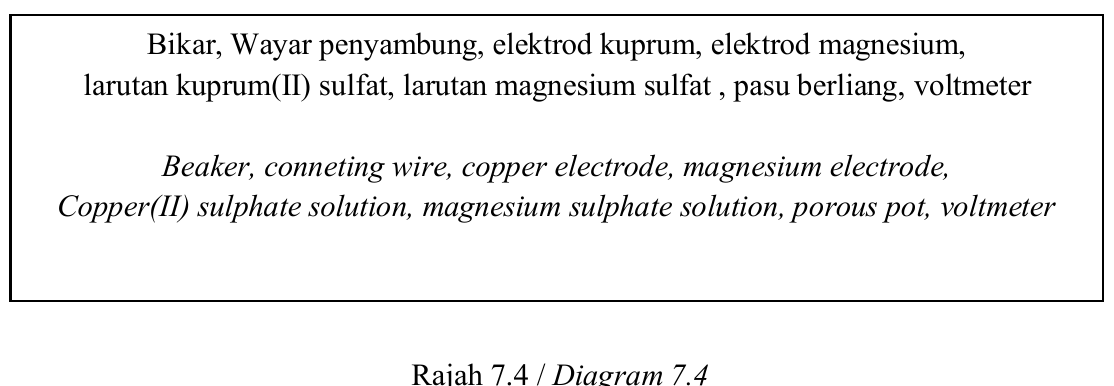
Diagram 7.3 shows Ali's experiment on electron transfer at a distance (iron(II) sulphate solution with electrode X, bromine water with electrode Y, sulphuric acid in a U-tube, galvanometer). Ali then modifies it to build a voltaic cell using the list in Diagram 7.4 (beaker, connecting wire, copper electrode, magnesium electrode, copper(II) sulphate solution, magnesium sulphate solution, porous pot, voltmeter). Draw the apparatus set-up of the voltaic cell.
[2]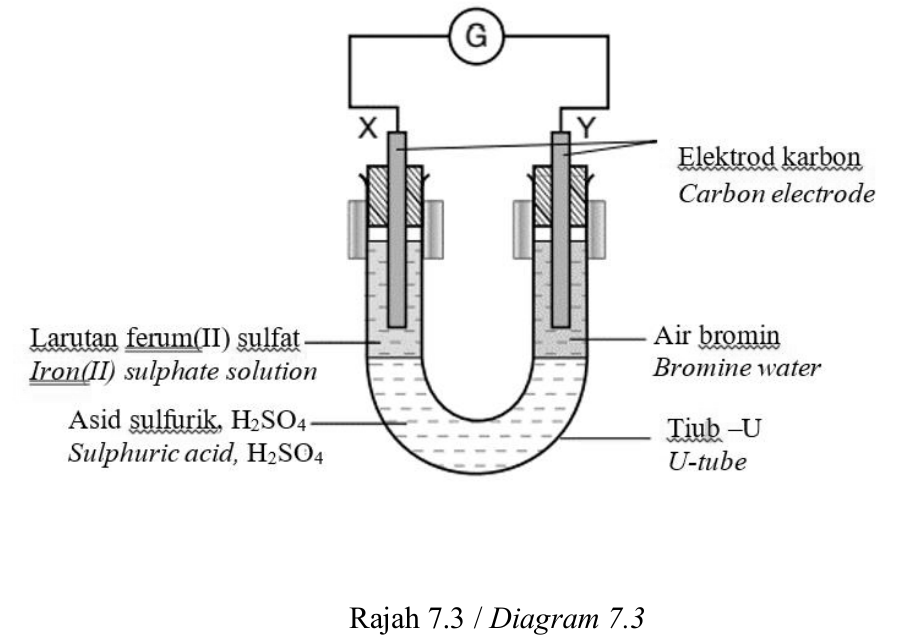
Three experiments I, II and III investigate factors affecting the rate of reaction. Table 8: I: excess zinc powder + 50.0 cm³ of 0.5 mol dm⁻³ hydrochloric acid; II: excess zinc powder + 100.0 cm³ of 0.25 mol dm⁻³ sulphuric acid (as printed, 50.0 cm³ in English); III: excess zinc powder + 50.0 cm³ of 0.5 mol dm⁻³ sulphuric acid.
Medium10 marks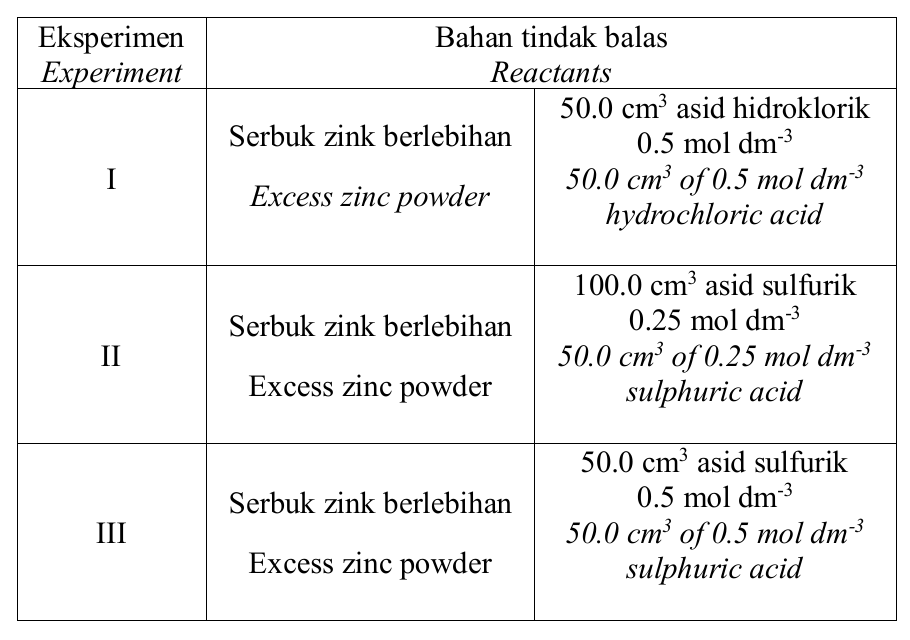
- (a)
Based on the experiments above, give a factor that affects the rate of reaction.
[1] - (b)(i)
Refer to Experiment I. Write a balanced chemical equation for the reaction.
[1] - (b)(ii)
Calculate the total volume of hydrogen gas released in Experiment I. [Molar gas volume at room conditions is 24 dm³]
[3] - (c)
Diagram 8.1 shows the results (volume of hydrogen gas against time) for Experiments I, II and III. Based on the graph, explain why the total volume of hydrogen gas in Experiment III is double that of Experiment I.
[2]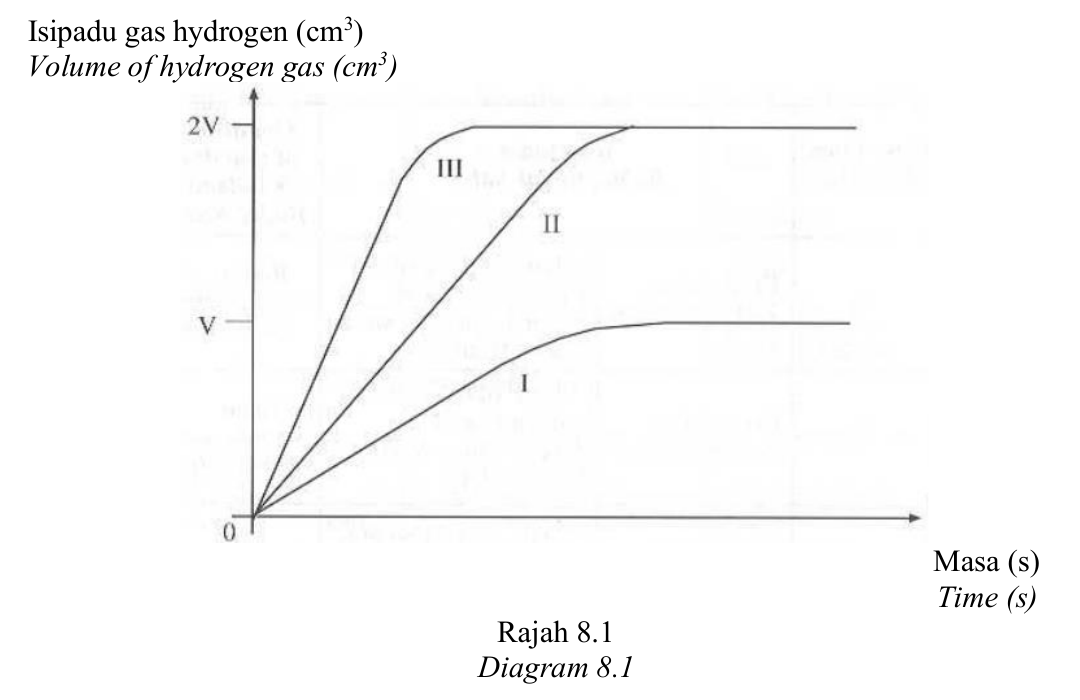
- (d)
Diagram 8.2: two pupils say that hand sanitiser with 70% to 75% alcohol is the most effective against Covid-19, while hand sanitiser with 85% alcohol is used only by frontliners, on their gloves. Justify the different alcohol percentages used by citizens and frontliners.
[3]
Section B
Diagram 9.1 shows an experiment to determine the heat of precipitation of salt R: 50 cm³ of 0.5 mol dm⁻³ sodium sulphate solution (29.0 °C) is mixed with 50 cm³ of 0.5 mol dm⁻³ lead(II) nitrate solution (29.0 °C) in a glass cup; the highest temperature after stirring is 31.5 °C and salt R is formed. Answer any one of Questions 9 and 10.
Hard20 marks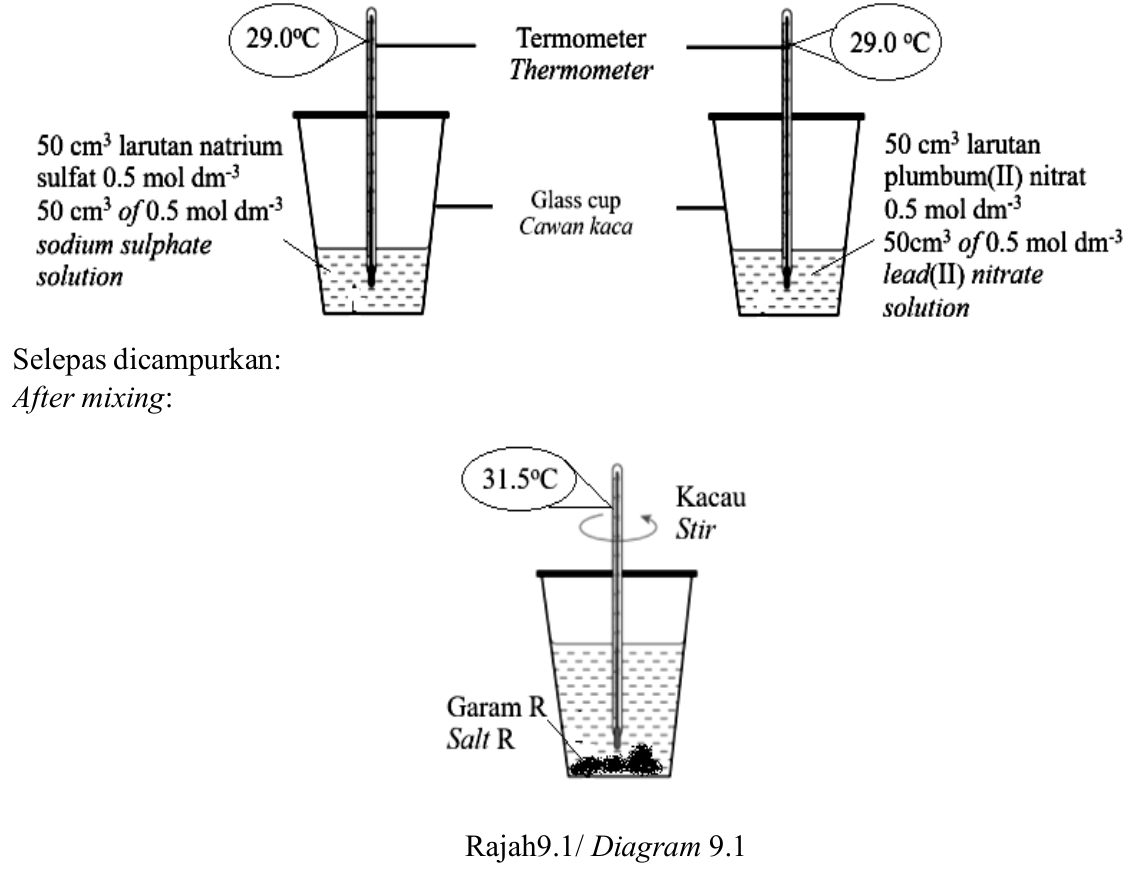
- (a)(i)
State the definition of heat of precipitation and the type of reaction that occurs.
[2] - (a)(ii)
Calculate the temperature change of the reaction and then determine the heat of precipitation of salt R. [Specific heat capacity of solution, c = 4.2 J g⁻¹ °C⁻¹; density of solution = 1 g cm⁻³]
[5] - (a)(iii)
The value of heat of precipitation obtained is lower than its theoretical value. Suggest one step to overcome the problem and give the reason.
[2] - (b)(i)
Diagram 9.2 shows particles produced when alkali X (Na⁺ and OH⁻ ions) and alkali Y (NH₄⁺, OH⁻ ions and NH₃ molecules) are added to water. Both alkalis were used to determine the heat of neutralisation by adding 25 cm³ of each to 25 cm³ of 1.0 mol dm⁻³ hydrochloric acid. Name alkali X and alkali Y and state one precaution step in the experiment.
[3]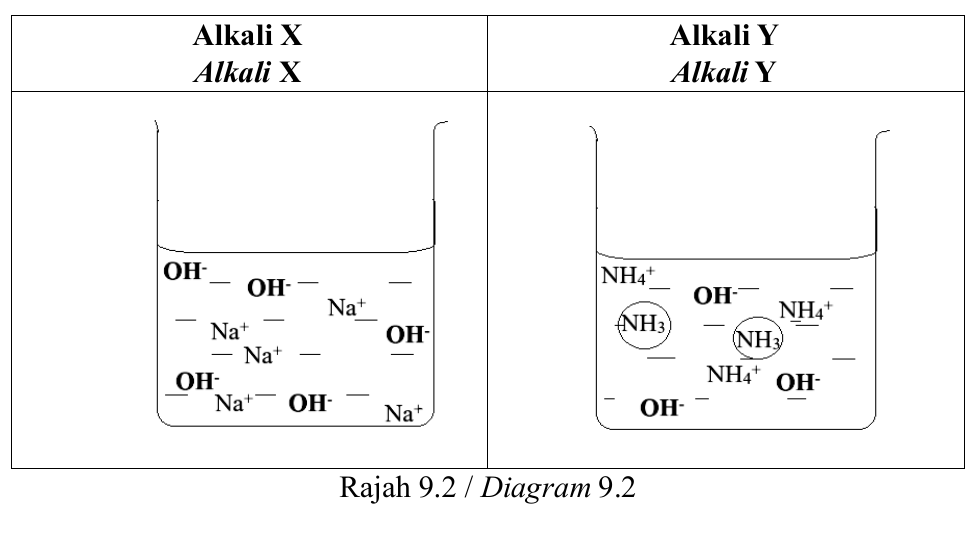
- (b)(ii)
Table 9: hydrochloric acid + alkali X, temperature rise 6.5 °C; hydrochloric acid + alkali Y, temperature rise 6.0 °C. Compare and contrast both neutralisation reactions in terms of change in temperature, heat energy transfer, value of heat of neutralisation and the explanation of the difference in heat of neutralisation.
[6]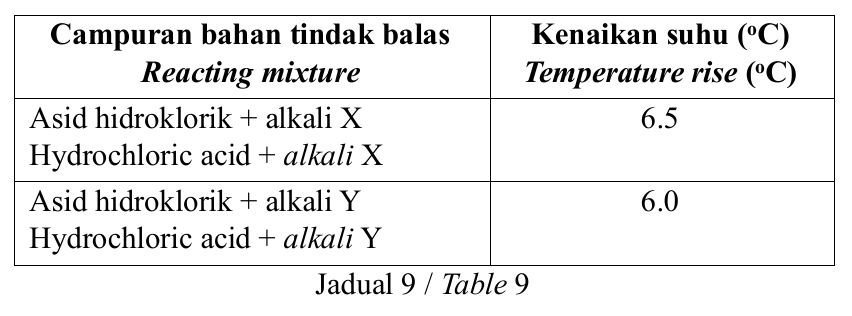
- (b)(iii)
Draw the energy level diagram for the reaction between alkali X and hydrochloric acid.
[2]
Diagram 10.1 shows part of the Periodic Table of Elements with elements V, W (group 1, W in period 3, V in period 4), X (group 6), Y (group 17, period 3) and Z (group 18). Answer any one of Questions 9 and 10.
Medium20 marks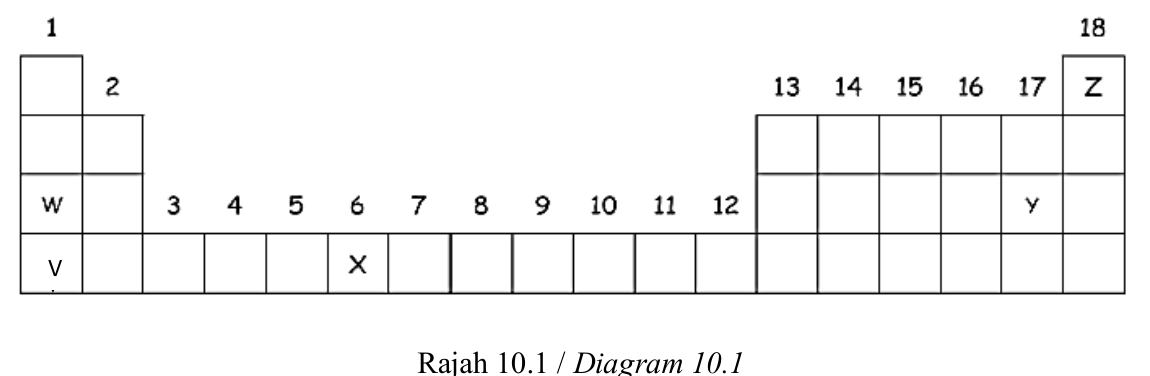
- (a)(i)
State an element that exists as a diatomic molecule and give a use of this element in everyday life.
[2] - (a)(ii)
Write the electron arrangement for element W. Explain why elements V and W are in the same group.
[2] - (b)
Ethanol is the main ingredient in the production of acetone. Diagram 10.2 shows a woman removing her nail varnish with acetone. Explain why acetone is used to strip nail varnish. Can water replace acetone to remove nail varnish? Give your reasons.
[6]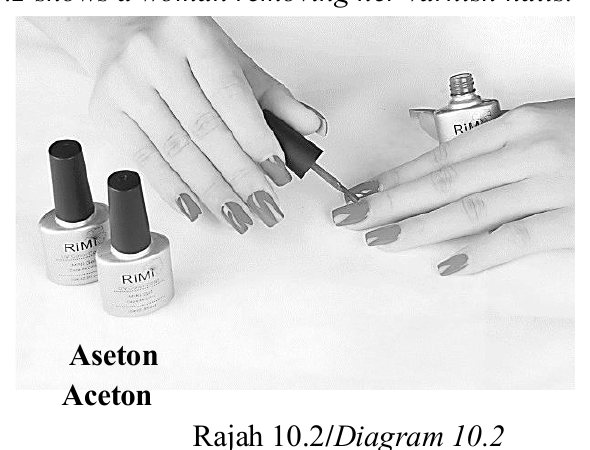
- (c)
Diagrams 10.3(a) and 10.3(b) show two chemicals that can conduct electricity in certain physical conditions: aluminium foil and lead(II) bromide. Name the type of bond and explain the electrical conductivity of the two chemicals.
[10]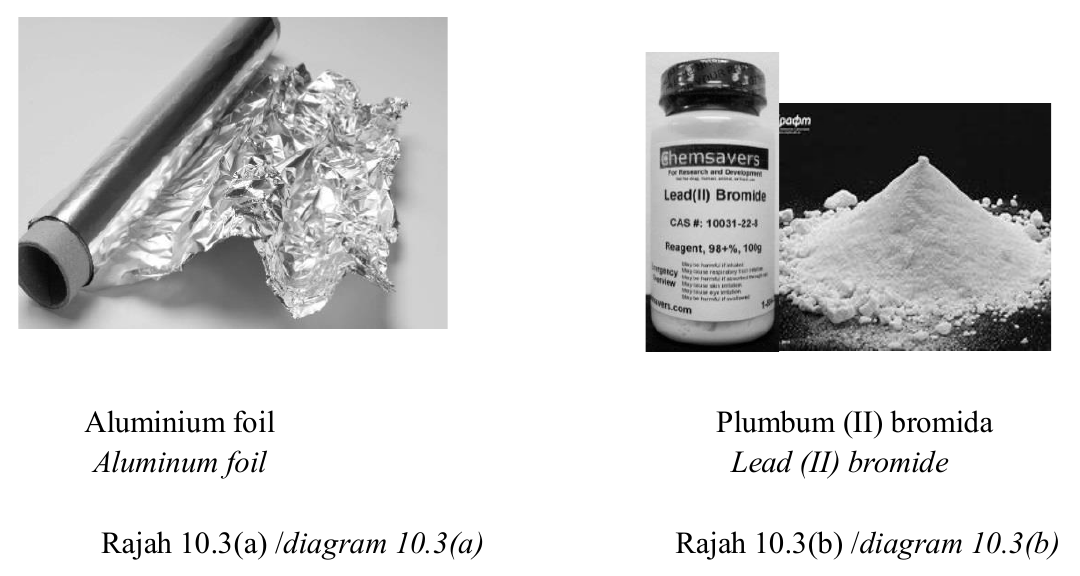
Section C
Aminah is a gastric patient. Diagram 11.1 shows the medication she takes, which contains bases (aluminium hydroxide and magnesium hydroxide antacid tablets). This question must be answered.
Medium20 marks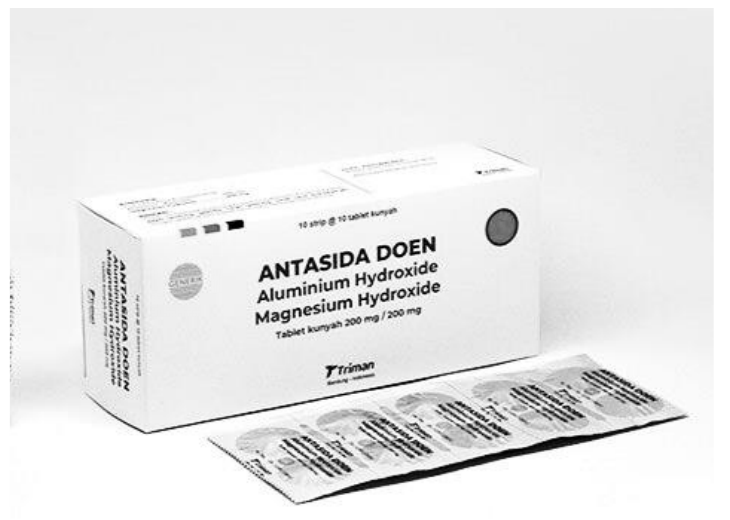
- (a)(i)
State the meaning of alkali. How can the medicine in Diagram 11.1 help Aminah to treat her gastric pain?
[2] - (a)(ii)
Natural rubber is a natural polymer; isoprene is its monomer. Diagram 11.1 (latex) shows the natural change in latex after 1 day (from liquid latex to coagulated rubber). Latex can remain liquid when substance X is added. Name substance X and explain how coagulation of latex is prevented.
[6]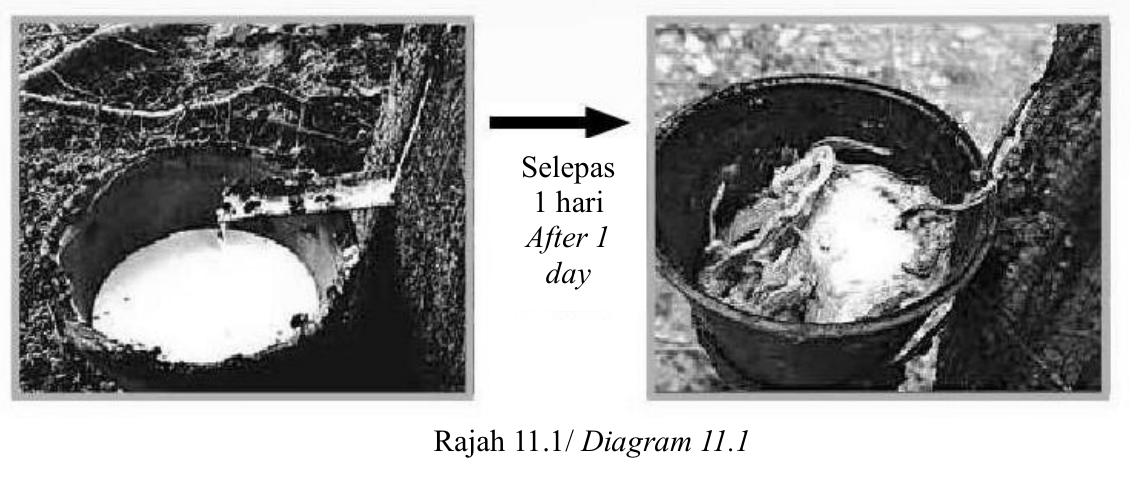
- (b)(i)
Diagram 11.2 shows the apparatus for neutralisation by titration: sulphuric acid in the burette and 50.0 cm³ of 2.0 mol dm⁻³ sodium hydroxide solution with phenolphthalein indicator in the conical flask. Write a balanced chemical equation for the reaction between sulphuric acid and the hydroxide solution (potassium hydroxide in the Malay text, sodium hydroxide in the English text).
[2]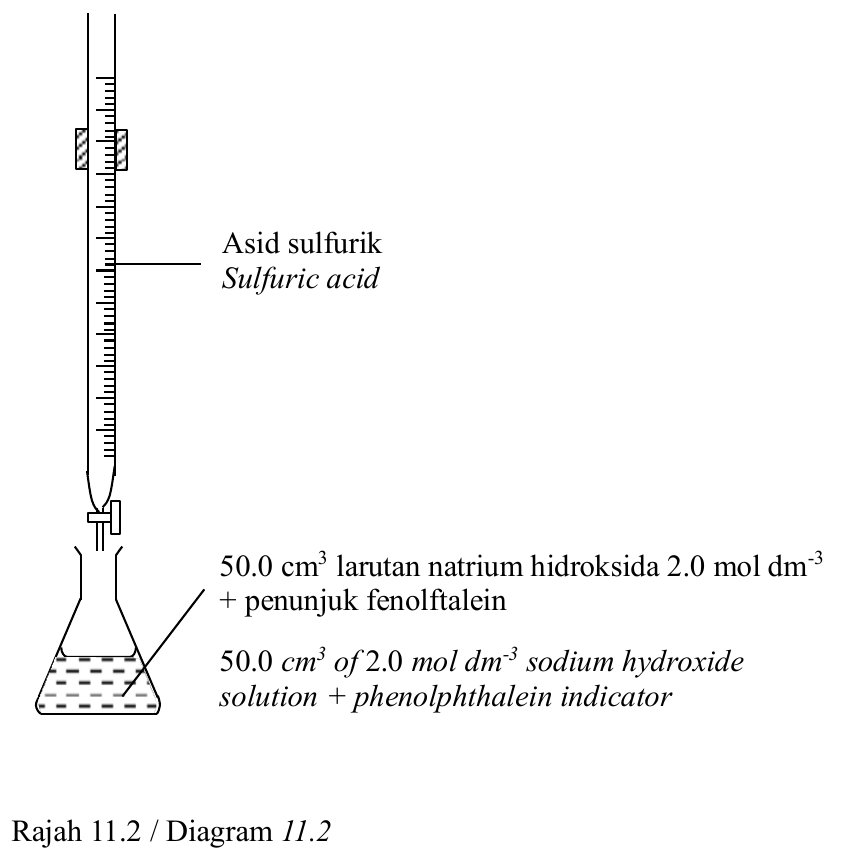
- (b)(ii)
The concentration of hydroxide ions is given as 0.05 mol dm⁻³. Calculate the pH of the sodium hydroxide solution.
[2] - (c)
Diagram 11.3 is an article: in metal mining, sulphuric acid is used to leach copper(II) oxide minerals and copper is extracted from copper(II) sulphate; excess sulphuric acid must be treated before it is discharged as factory waste. Using your knowledge of the chemical properties of acids, suggest a chemical substance to treat the waste, describe one experiment to neutralise the acid in the waste, and state the observation and the ionic equation.
[8]