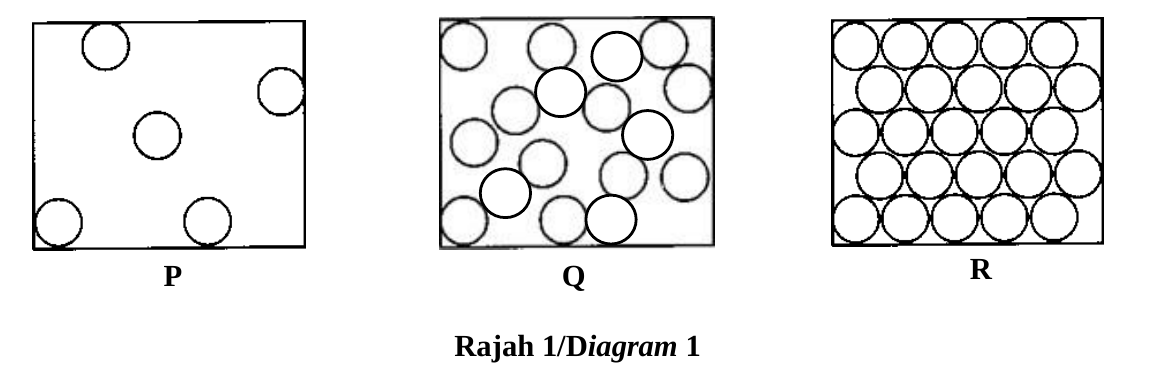
Diagram 1 shows the arrangement of particles in three states of matter at room temperature (P: widely spaced particles, gas; Q: particles close but disordered, liquid; R: particles packed in order, solid). What are substances P, Q and R at room temperature?
Easy
Which of the following is a monoatomic gas?
Easy
Chemical formula of copper(I) oxide is
Medium
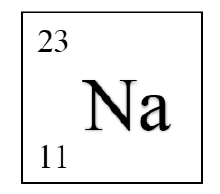
Diagram shows the standard representation of sodium atom (nucleon number 23, proton number 11). What is the number of valence electron of the atom?
Medium
Which of the following are the similarities of isotopes of elements?
I Number of neutrons
II Number of protons
III Physical properties
IV Chemical properties
Medium
Which of the following statements is correct about the changes in properties of elements across Period 3 in the Periodic Table of Element?
Medium
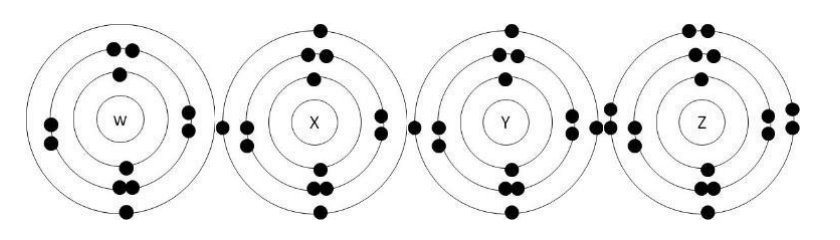
Diagram 7 shows the electron arrangements of atoms W, X, Y and Z. W, X, Y and Z are not the actual symbols of the elements. Which pair of elements forms a compound that is insoluble in water?
Medium
Which of the following pair of physical properties is correct about magnesium chloride? (Solubility in water; Electrical conductivity in molten state)
Medium
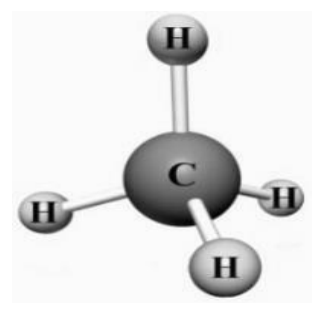
Diagram 9 shows the atom model of a compound (one carbon atom bonded to four hydrogen atoms). Which of the following is the property of the compound?
Medium
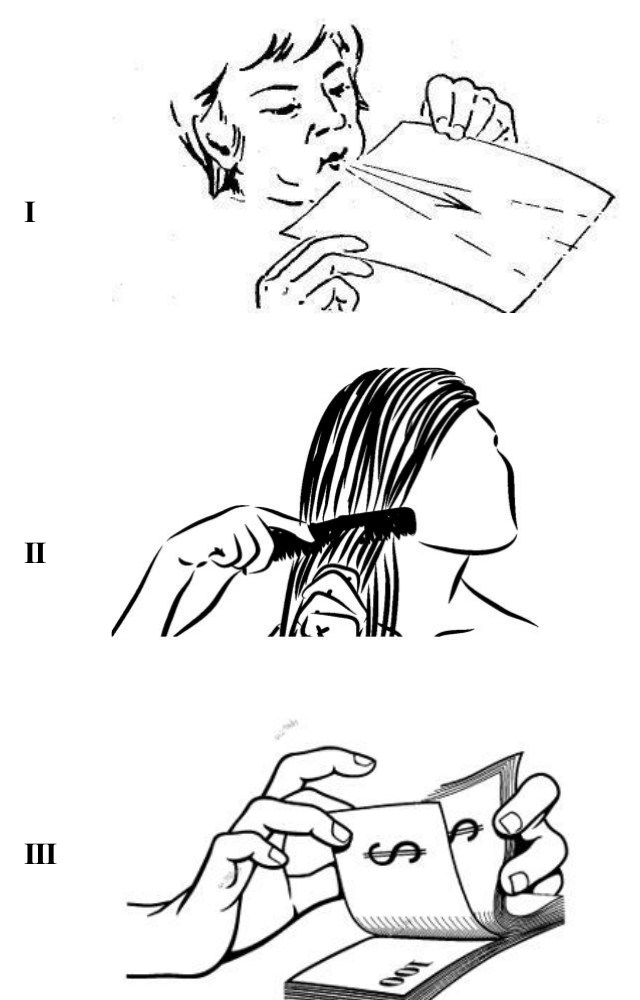
Which of the following activities involve formation of hydrogen bond?
I Blowing air over a sheet of paper
II Combing hair
III Flipping through banknotes (pictures in Diagram)
Medium
Which of the following is the electron arrangement diagram for the formation of ionic compound?
Medium
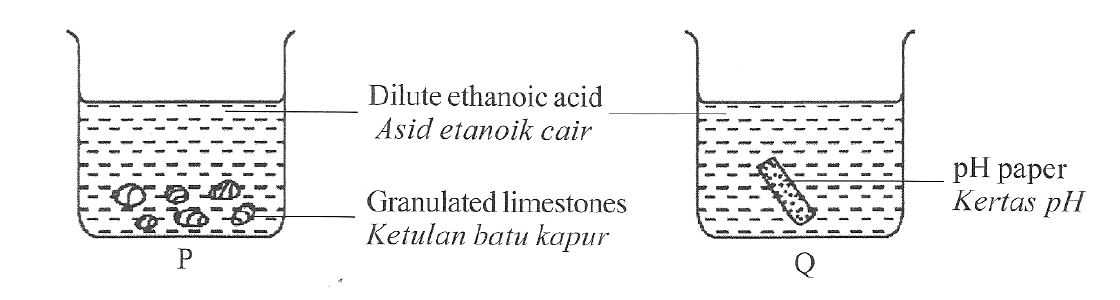
Diagram 12 shows two beakers, P and Q that contain granulated limestones, CaCO3 and pH paper respectively in dilute ethanoic acid. Which observation is correct?
Medium
Which acid contains the highest number of hydrogen ions?
Medium
Which cation forms scum with soap?
Easy
Which of the following explains the meaning of effective collision?
Easy
The following equation represents the reaction between calcium carbonate and hydrochloric acid [equation not shown in text layer: CaCO3 + 2HCl → CaCl2 + H2O + CO2]. Which of the following factors can increase the rate of this reaction?
Easy
Which of the following is correct about soap?
I The hydrophobic part of soap dissolves in grease
II Soap form scum in soft water
III Soap is prepared through the hydrolysis of fats in alkaline conditions
IV Soap reduces the ability of water to wet the surface of cloth
Medium
The standard electrode potential, E0 for half-cell equations are given below.
Zn2+(aq) + 2e ⇌ Zn(s) E0 = –0.76 V
Fe3+(aq) + e ⇌ Fe2+(aq) E0 = +0.77 V
What can be deduced from the given information?
Medium
What are the products formed when ethanol burns completely in excess air?
Medium
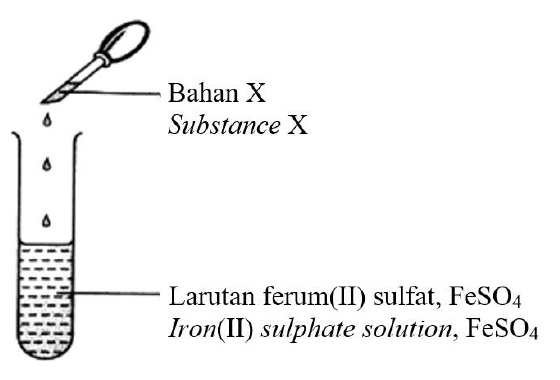
Diagram 20 shows an apparatus set-up of an experiment to study the conversion of iron(II) ion, Fe2+ to iron(III) ion, Fe3+. Substance X is added dropwise to iron(II) sulphate solution, FeSO4. Which substance can be used as substance X?
Medium
The following equation shows the conversion of butanol to butene: C4H9OH → C4H8 + H2O (heat). What is process X?
Easy
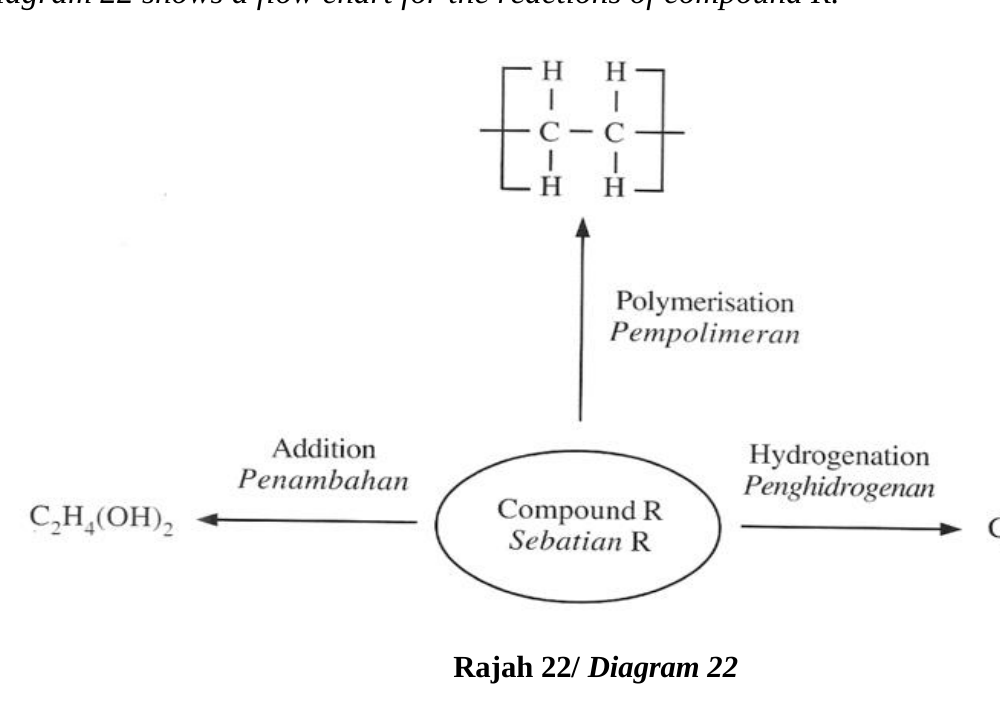
Diagram 22 shows a flow chart for the reactions of compound R: polymerisation gives poly(ethene) (–CH2–CH2–)n, addition gives C2H4(OH)2, hydrogenation gives C2H6. What is the general formula of R?
Medium
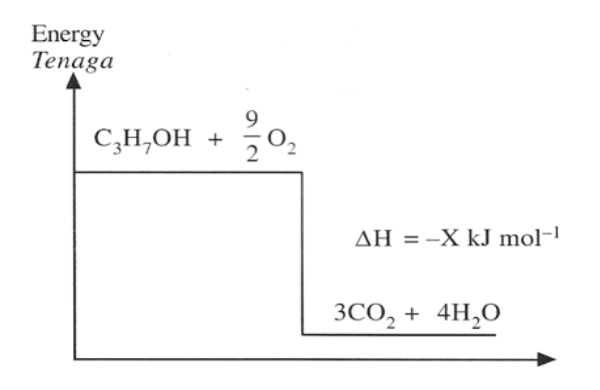
Diagram 23 shows the energy level diagram for the combustion of propan-1-ol (reactants C3H7OH + 9/2 O2 above products 3CO2 + 4H2O, ΔH = –X kJ mol–1). Which statement is correct?
Medium
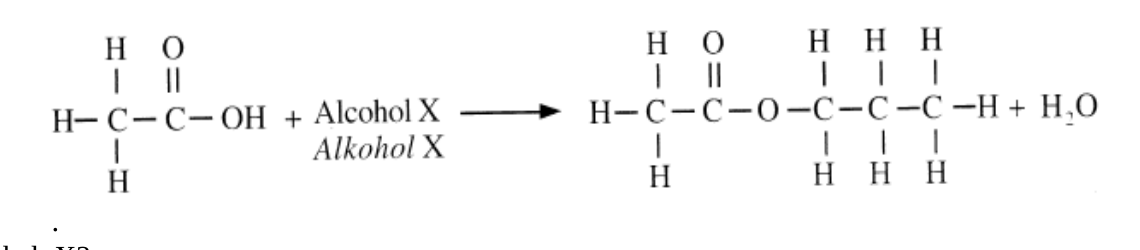
The equation represents an esterification reaction: ethanoic acid + alcohol X → ester (propyl ethanoate) + H2O. What is X?
Medium
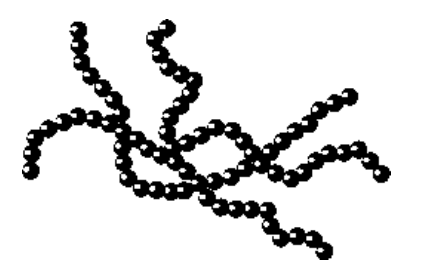
Diagram 25 shows the structure of polymer Q. Which of the following is a property of polymer Q?
Medium
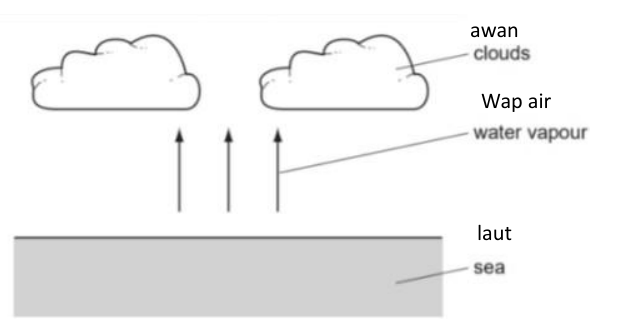
Diagram 26 shows the formation of clouds when water vapour evaporates from the sea. What is the heat energy change and the type of reaction that occur when water evaporates?
Medium
Plaster of paris consists of a fine white powder of calcium sulphate hemihydrate, (CaSO4)2.H2O. What is the molar mass of calcium sulphate hemihydrate? [Relative atomic mass: Ca = 40; S = 32; O = 16; H = 1]
Medium
Which compound is an unsaturated hydrocarbon?
Medium
Diagram 29 shows the structure of a polymer (repeating unit –CH2–CH(CH3)–). Which of the following is the monomer of the polymer?
Medium
In order to produce a glass that is more resistant to heat and chemicals, substance X is added to soda lime glass in the manufacturing process. What is X?
Easy
0.40 g X metal reacts with fluorine to produce 0.78 g of X fluoride. What is the empirical formula of the X fluoride? [Relative atomic mass: F = 19; X = 40]
Medium
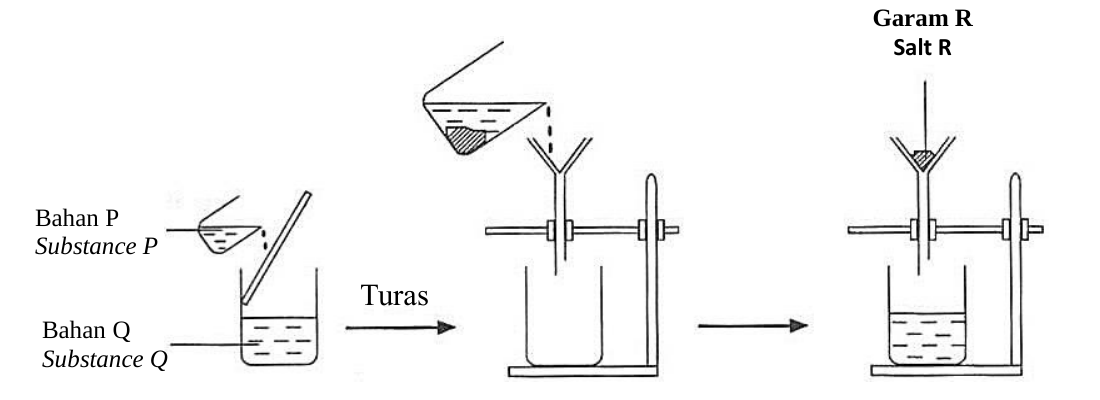
Diagram 32 shows the apparatus set-up to prepare a salt: substance P is poured into substance Q, the mixture is filtered, and salt R is the residue on the filter paper. Which of the following is correct?
Medium
During the movement control order (MCO), Ahmad felt abdominal pain and needed to drink a 'barium meal' made of barium sulphate salt before an X-ray. Which of the following solutions are suitable to verify the presence of anion in that salt?
I Hydrochloric acid
II Sulphuric acid
III Barium chloride solution
IV Sodium sulphate solution
Medium
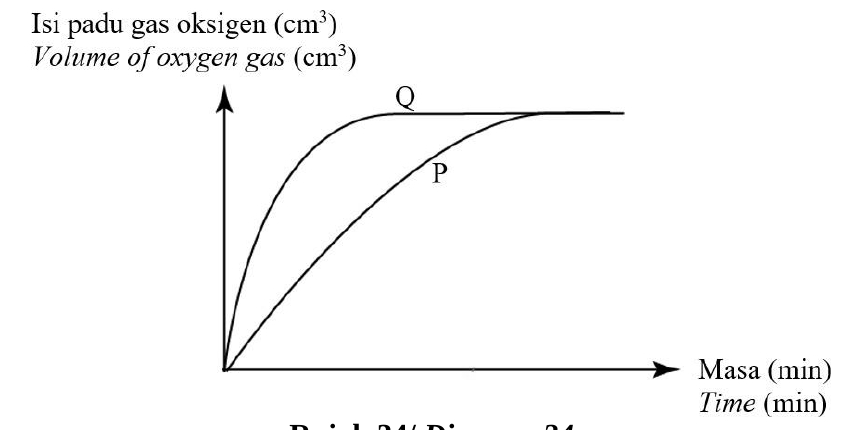
Diagram 34 shows curve P and Q obtained for decomposition of hydrogen peroxide solution in the presence of a catalyst. Curve P is obtained by using 50 cm3 of 1.0 mol dm–3 hydrogen peroxide at 21 °C. Which of the following would obtain curve Q?
Medium
A student wants to prepare hydrogen gas through the reaction between magnesium ribbon and hydrochloric acid. Which steps must be taken to shorten the time to collect the gas?
I Adding water to hydrochloric acid
II Using a larger conical flask for the solution
III Replacing magnesium ribbon with magnesium powder
IV Adding a few drops of copper(II) sulphate solution to the mixture of the reactants
Medium
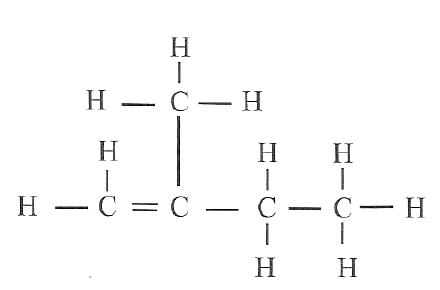
Diagram 36 shows the structural formula of an organic compound. What is the IUPAC name of the organic compound?
Medium
The following equation represents the oxidation reaction between ethanol and acidified potassium dichromate(VI).
3C2H5OH + 2K2Cr2O7 + 8H2SO4 → 3CH3COOH + 2Cr2(SO4)3 + 2K2SO4 + 11H2O
What is the change in the oxidation number of chromium?
Medium
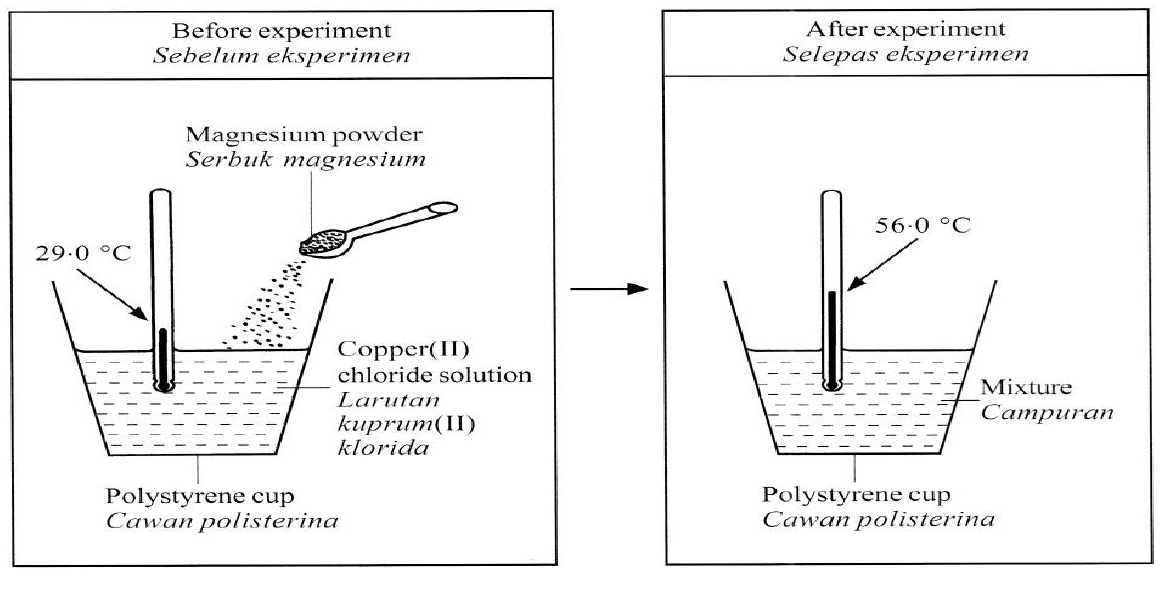
Diagram 38 shows the thermometer readings (29.0 °C before, 56.0 °C after) when excess magnesium powder is added into 50 cm3 of 0.5 mol dm-3 copper(II) nitrate solution in a polystyrene cup. What is the heat of displacement for the reaction? [Specific heat capacity = 4.2 J g-1 °C-1; Density of water = 1.0 g cm-3]
Medium
Which half equations show that the reactant acts as a reducing agent?
I Mg → Mg2+ + 2e
II Cu2+ + 2e → Cu
III 2Cl- → Cl2 + 2e
IV 2H+ + 2e → H2
Medium
Table 40 shows the total volume of oxygen gas collected at 30 second intervals during the decomposition of hydrogen peroxide.
Time (s): 0, 30, 60, 90, 120
Volume of gas (cm3): 0.00, 11.00, 20.00, 24.00, 24.00
Calculate the average rate of reaction for the reaction.