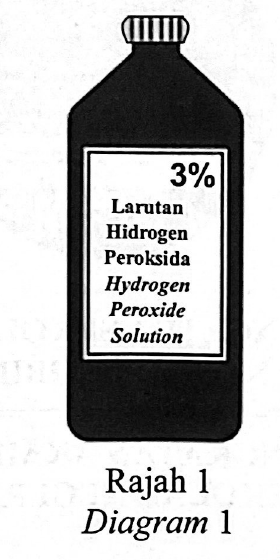
Diagram 1 shows the way to store a solution (3% hydrogen peroxide solution in a dark bottle). Which of the following properties is the reason why the solution is stored in a dark bottle?
Medium
Which substance is an element?
Easy
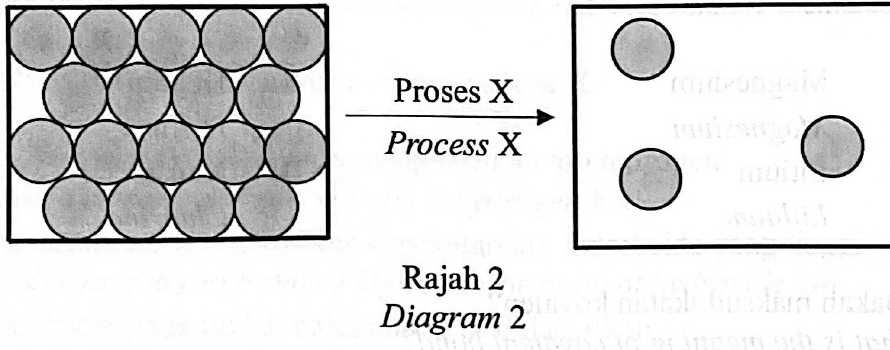
Diagram 2 shows the particles arrangement for the change of state of matter (solid to gas, process X). Which of the following substances will undergo process X?
Medium
What is the unit for Avogadro's constant?
Easy
Which of the following cation's charge is matched correctly?
Easy
Which of the following elements is located in Group 17 of the Periodic Table of Elements?
Easy
What is the meaning of covalent bond?
Easy
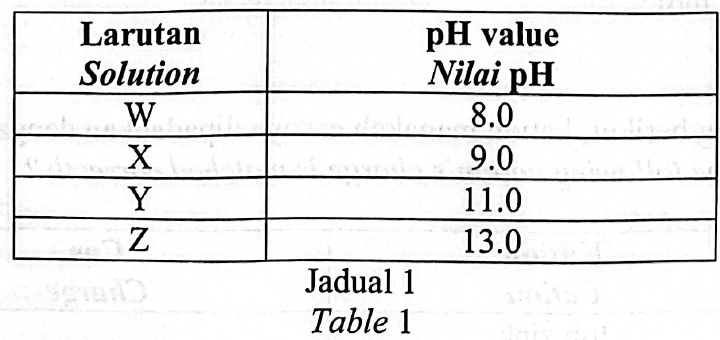
Table 1 shows the pH values of four alkaline solutions: W = 8.0, X = 9.0, Y = 11.0, Z = 13.0. Which solution has the highest concentration of hydroxide ions?
Medium
In an experiment, damp blue litmus paper turns red when inserted into a test tube containing gas X. Which of the following statements is correct about X?
Medium
Which of the following is the correct method to calculate the rate of reaction at third seconds? (Graphs of volume of gas (cm³) against time (s).)
Medium
Which of the following shows the correct pairing of alloy and its main element?
Easy
Which of the following processes occur in a reduction process? I Accepting of oxygen; II Loss of electron; III Accepting of hydrogen; IV Decreasing of oxidation number
Medium
Metal X has the following properties: less reactive than iron; does not react with iron(III) oxide. Which metal oxide can react with metal X?
Medium
Which of the following statements is correct about unsaturated hydrocarbon?
Easy
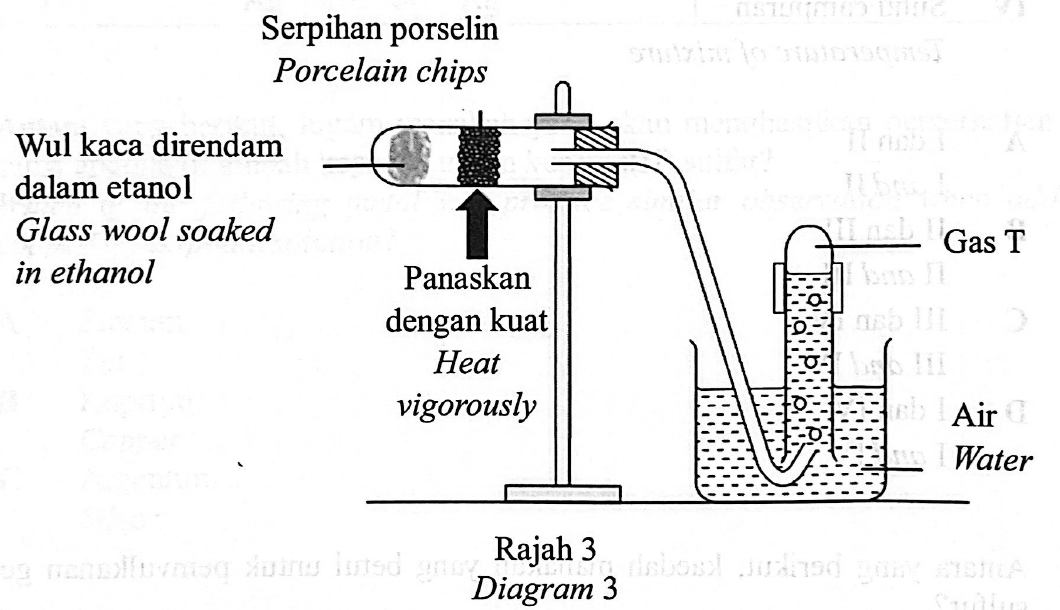
Diagram 3 shows the apparatus set-up for a reaction to produce gas T (glass wool soaked in ethanol heated, porcelain chips heated vigorously, gas collected over water). Which of the following statements is correct about gas T?
Medium
The following thermochemical equation shows a chemical reaction: N₂ + O₂ → 2NO, ΔH = +Y kJ mol⁻¹. Which of the following aspects have a bigger value? I The heat energy released during the formation of bond in products; II The heat energy absorbed to break the bonds in the reactants; III The total energy content of the products; IV Temperature of mixture
Medium
Which of the following methods is correct for vulcanisation of rubber without sulphur?
Easy
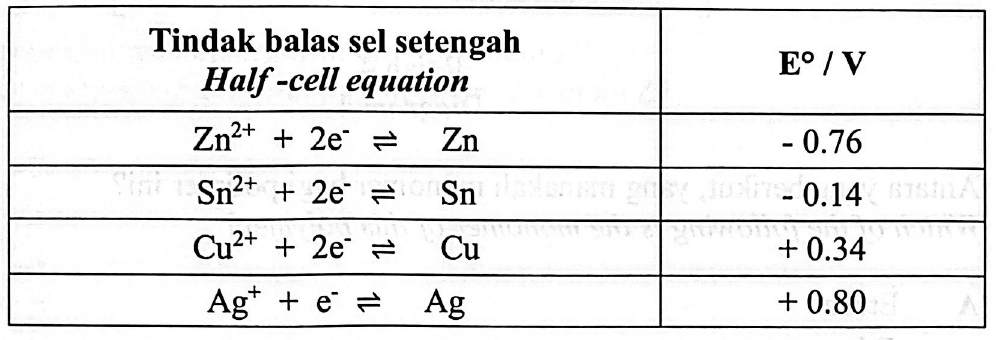
A student adds a piece of zinc into a beaker containing copper(II) sulphate solution. He touches the beaker and feels warm. Given a part of the standard electrode potential, E°: Zn²⁺ + 2e⁻ ⇌ Zn, -0.76 V; Sn²⁺ + 2e⁻ ⇌ Sn, -0.14 V; Cu²⁺ + 2e⁻ ⇌ Cu, +0.34 V; Ag⁺ + e⁻ ⇌ Ag, +0.80 V. Which of the following metal will produce similar observation when added to copper(II) sulphate solution?
Medium
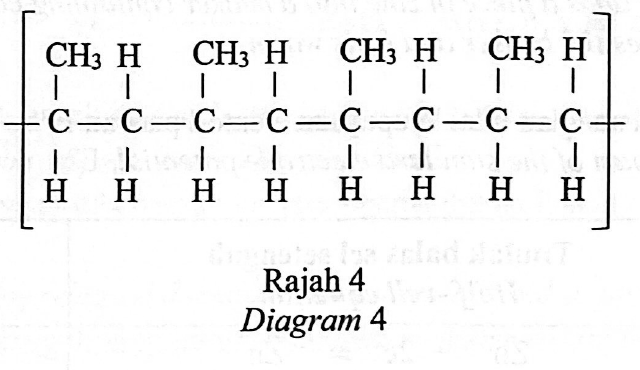
Diagram 4 shows the molecular structure of a polymer (repeating unit -CH(CH₃)-CH₂-). Which of the following is the monomer of this polymer?
Medium
What is the meaning of nanotechnology?
Easy
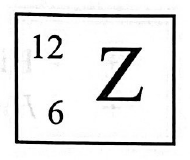
Diagram 5 shows the standard representation for atom Z (carbon-12: nucleon number 12, proton number 6). What is the number of valence electrons for atom Z?
Easy
Atom Q has an electron arrangement of 2.8.4. Which of the following represents the positions of element Q in the Periodic Table of Elements? (Group, Period)
Medium
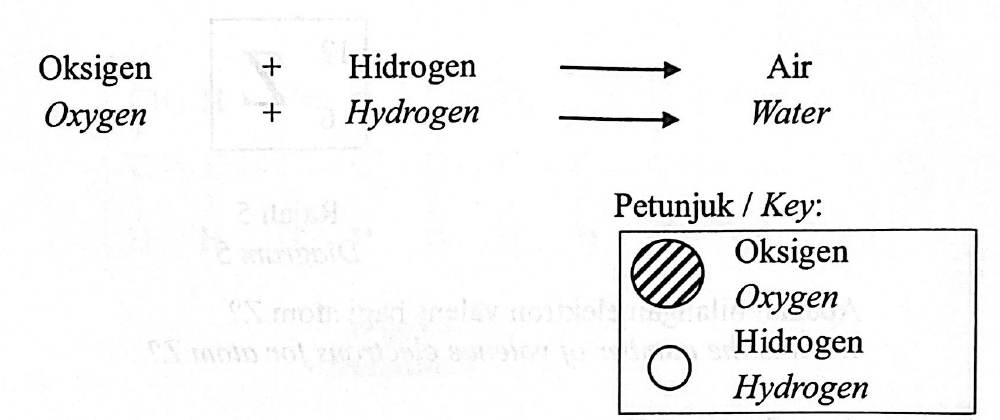
The following equation shows a chemical reaction: Oxygen + Hydrogen → Water (key: shaded circle = oxygen atom, open circle = hydrogen atom). Which of the following arrangement of particles is correct to represent the reaction?
Medium
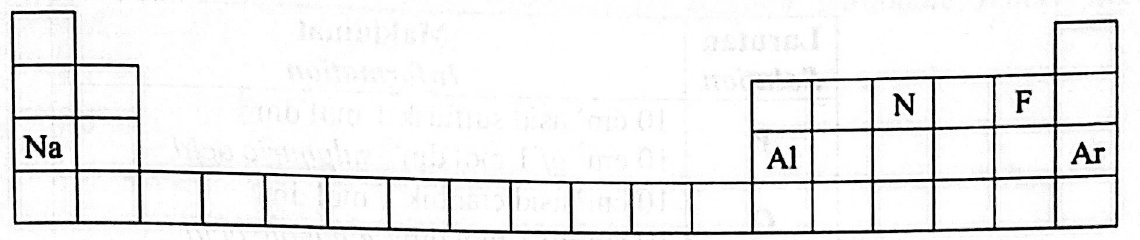
Diagram 6 shows a part of Periodic Table of Elements (Na, Al, N, F, Ar marked). Which of the following arrangements shows the correct ascending order of atomic size?
Medium
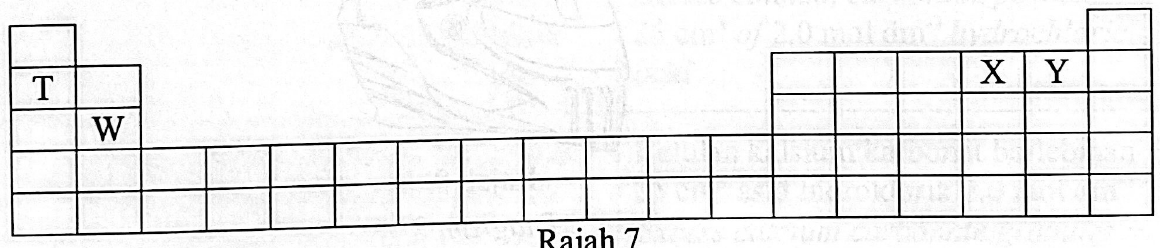
Diagram 7 shows the positions of elements T, W, X and Y in the Periodic Table of Element. T, W, X and Y are not the actual symbol of the elements. Which of the following pairs of elements react to form an ionic compound? I T, W; II X, Y; III T, Y; IV W, X
Medium
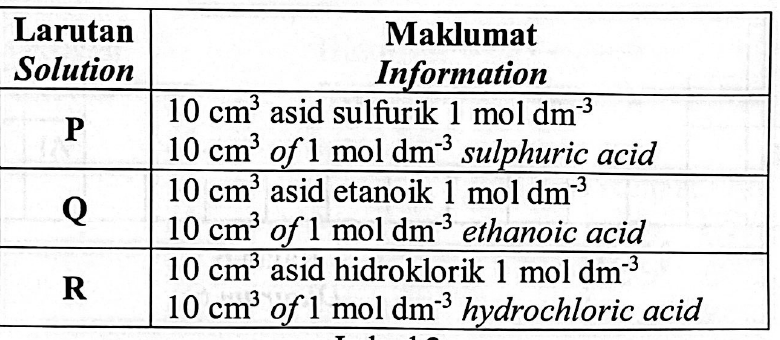
Table 2 shows information about three solutions P, Q and R: P = 10 cm³ of 1 mol dm⁻³ sulphuric acid; Q = 10 cm³ of 1 mol dm⁻³ ethanoic acid; R = 10 cm³ of 1 mol dm⁻³ hydrochloric acid. Which of the following shows the correct arrangement in ascending order of concentration of hydrogen ions of the solutions?
Medium
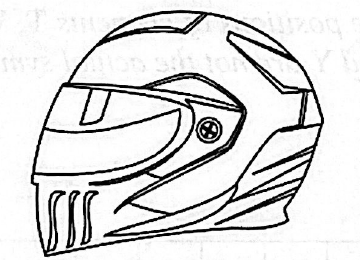
Diagram 8 shows a product made from composite substances (a helmet). Which of the following properties are correct about the strengthening substances used? I High stretching strength; II High compression strength (printed in BM as 'Kekuatan mampatan rendah' and in English as 'High compression strength'); III Hard; IV Low heat conductivity
Medium
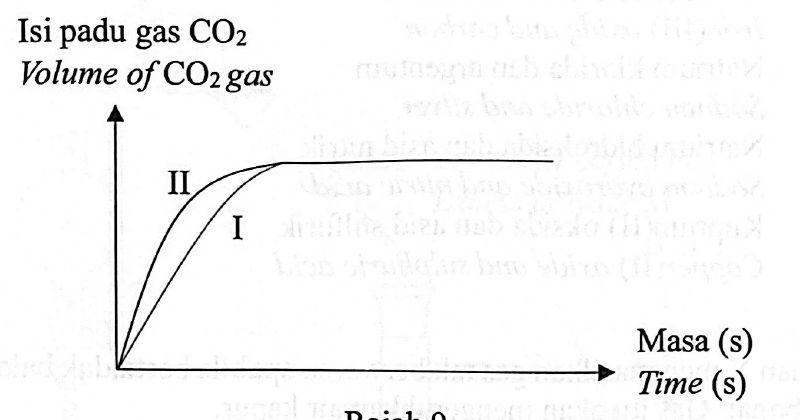
Diagram 9 shows the curves obtained when calcium carbonate reacts with hydrochloric acid (volume of CO₂ gas against time; curve II steeper than curve I, same final volume). Which of the following conditions of the reactants produce curve I and curve II?
Medium
Which of the following reactants will produce a redox reaction?
Medium
Substance Y produces a colourless gas when reacted with zinc carbonate powder. The gas turns lime water chalky. What is the molecular formula of Y?
Medium
What is the mass of magnesium needed to react with excess nitric acid to produce 448 cm³ of hydrogen gas at standard temperature and pressure? [Relative atomic mass: Mg = 24; Molar volume = 22.4 dm³ at STP]
Medium
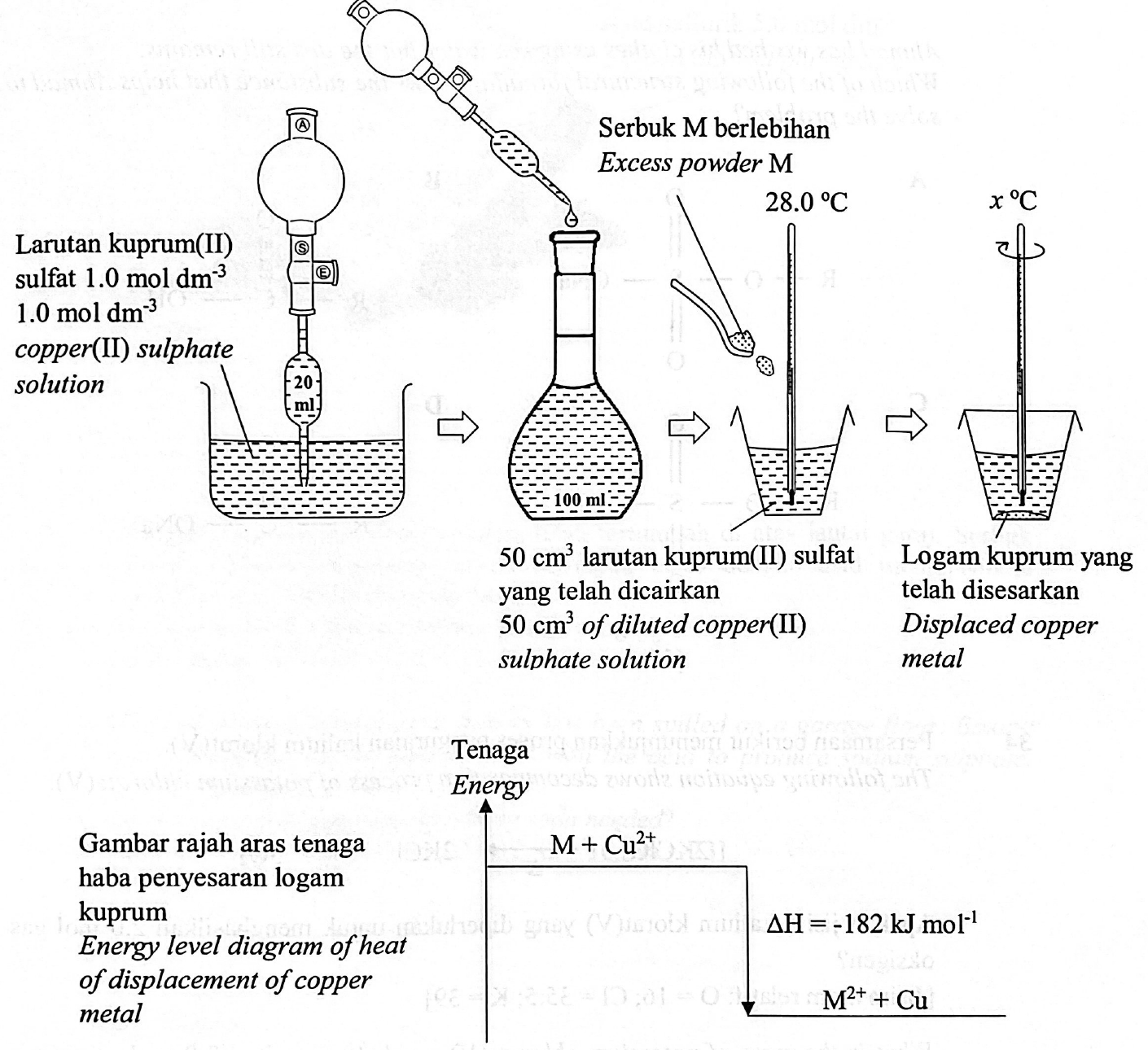
Diagram 10 shows the steps to determine the heat of displacement of copper metal from its salt solution by metal M with its energy level diagram (20 mL of 1.0 mol dm⁻³ copper(II) sulphate solution diluted to 100 mL; 50 cm³ of the diluted solution at 28.0 °C; excess powder M added; final temperature x °C; ΔH = -182 kJ mol⁻¹). What is the value of x? [Specific heat capacity of water, c = 4.2 J g⁻¹ °C⁻¹]
Medium
Ahmad has washed his clothes using sea water but the dirt still remains. Which of the following structural formulae shows the substance that helps Ahmad to solve the problem?
Medium
The following equation shows decomposition process of potassium chlorate(V): 2KClO₃ → 2KCl + 3O₂. What is the mass of potassium chlorate(V) needed to produce 2.0 mol of oxygen gas? [Relative atomic mass: O = 16; Cl = 35.5; K = 39]
Medium
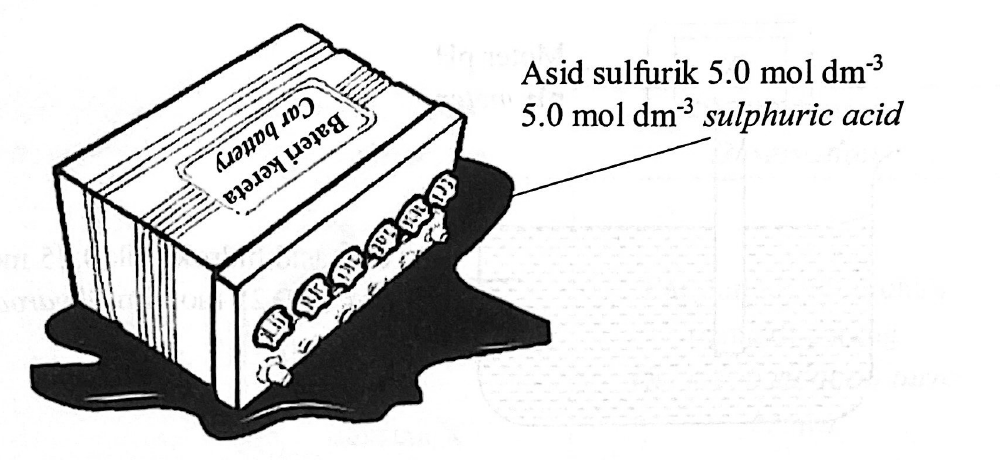
Diagram 11 shows the condition of a car battery on a garage floor (sulphuric acid 5.0 mol dm⁻³). 500 cm³ of acid from the car battery has been spilled on a garage floor. Baking soda, NaHCO₃ can be used to react with the acid to produce sodium sulphate, carbon dioxide and water. What is the minimum mass of baking soda needed? [Relative atomic mass: H = 1, C = 12, O = 16, Na = 23]
Medium
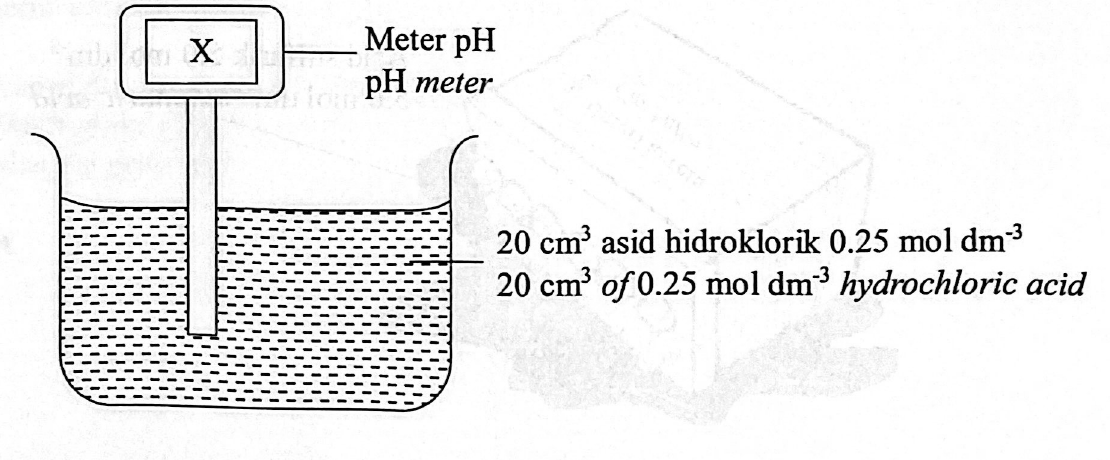
Diagram 12 shows an apparatus set-up to measure the pH value of an acid (20 cm³ of 0.25 mol dm⁻³ hydrochloric acid, pH meter reading X). What is the value of X?
Medium
Excess zinc powder reacts with hydrochloric acid to produce hydrogen gas. Time taken for the complete reaction between 100 cm³ of 0.5 mol dm⁻³ hydrochloric acid and zinc powder is 2 minutes 30 seconds. What is the rate of reaction? [1 mol of gas occupies 24 dm³ in room conditions]
Medium
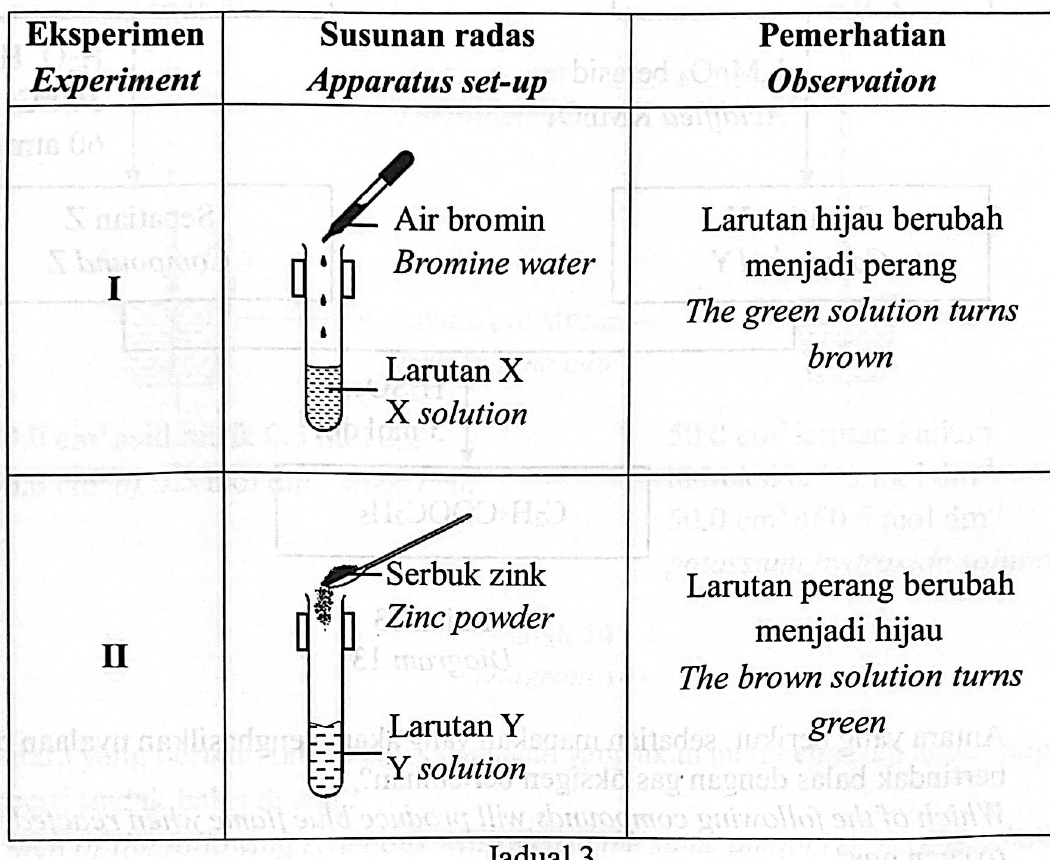
Table 3 shows the observations for two experiments carried out by a student. Experiment I: bromine water added to X solution; the green solution turns brown. Experiment II: zinc powder added to Y solution; the brown solution turns green. Which of the following is the correct observation if X and Y are tested with potassium hexacyanoferrate(III) solution?
Medium
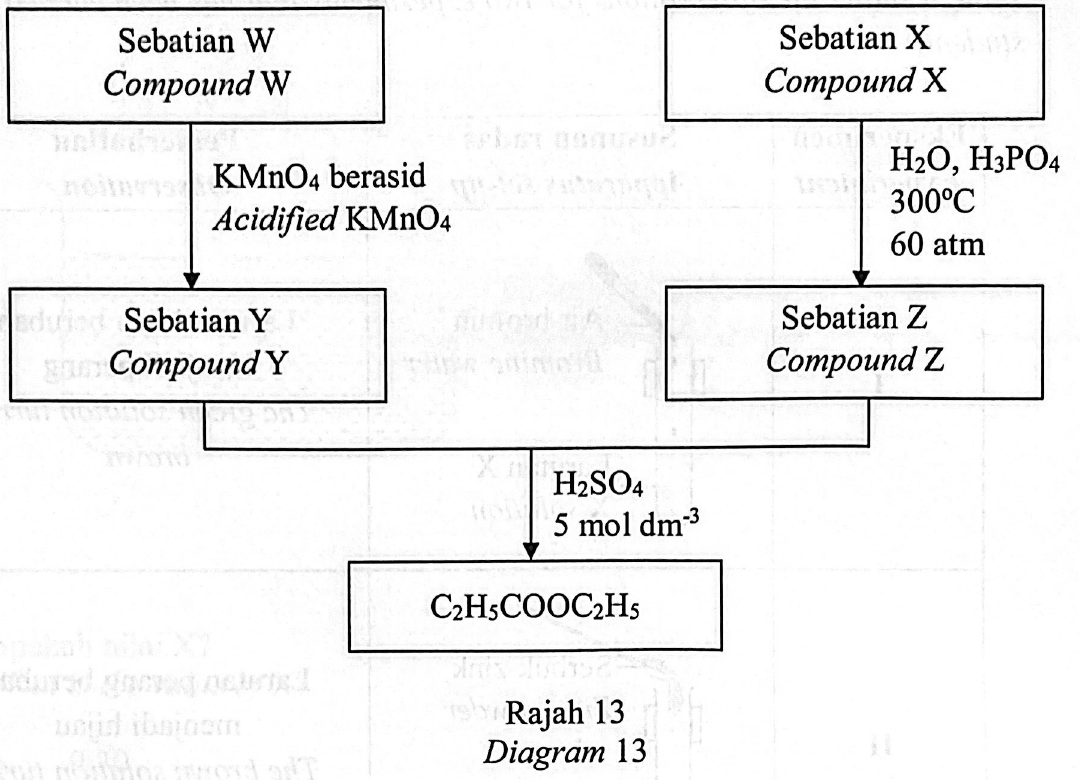
Diagram 14 shows a series of reactions for carbon compound W, X, Y and Z (W with acidified KMnO₄ gives Y; X with H₂O, H₃PO₄, 300 °C, 60 atm gives Z; Y + Z with 5 mol dm⁻³ H₂SO₄ gives C₂H₅COOC₂H₅). Which of the following compounds will produce blue flame when reacted with excess oxygen gas? I W; II X; III Y; IV Z
Medium
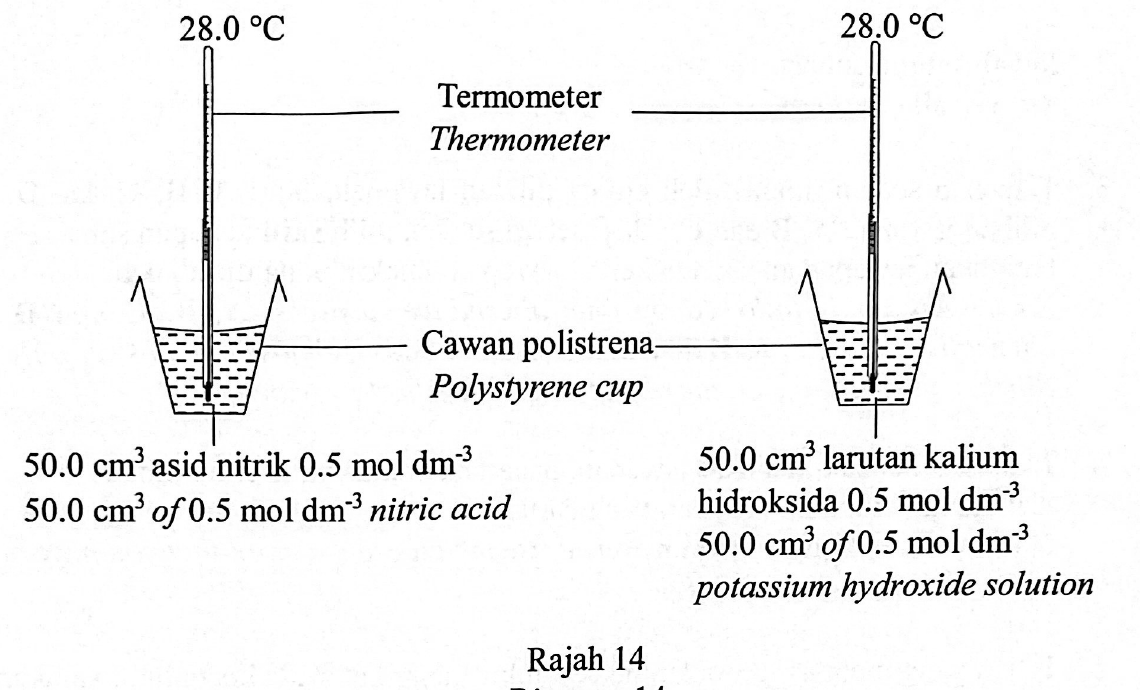
Diagram 15 shows the apparatus set-up prepared by a student to investigate the heat of neutralisation (50.0 cm³ of 0.5 mol dm⁻³ nitric acid with 50.0 cm³ of 0.5 mol dm⁻³ potassium hydroxide solution, both at 28.0 °C). Which of the following reactions will release the same amount of heat as above reaction?