Which of the following substances exist as molecules?
Easy
The statement shows the properties of elements in the Periodic Table of Elements: act as a catalyst; able to form coloured ions; has more than one oxidation number; forms complex ions. Which Group of element is suitable for the above characteristics?
Medium
Silicon dioxide, SiO₂ is a covalent compound with a giant molecular structure. Which of the following is a property of silicon dioxide, SiO₂?
Medium
Which of the following substances is acidic?
Easy
Limestone is an insoluble salt. Which of the following salts is in the same type as limestone?
Easy
Which statement best explains the meaning of effective collision?
Easy
The alloying process helps to alter the properties of a pure metal to make it harder and stronger because in this process the foreign atoms that are mixed with the pure metals make
Medium
Which of the following are oxidising agents? I Potassium iodide; II Iron(II) sulphate; III Iron(III) chloride; IV Acidified hydrogen peroxide
Medium
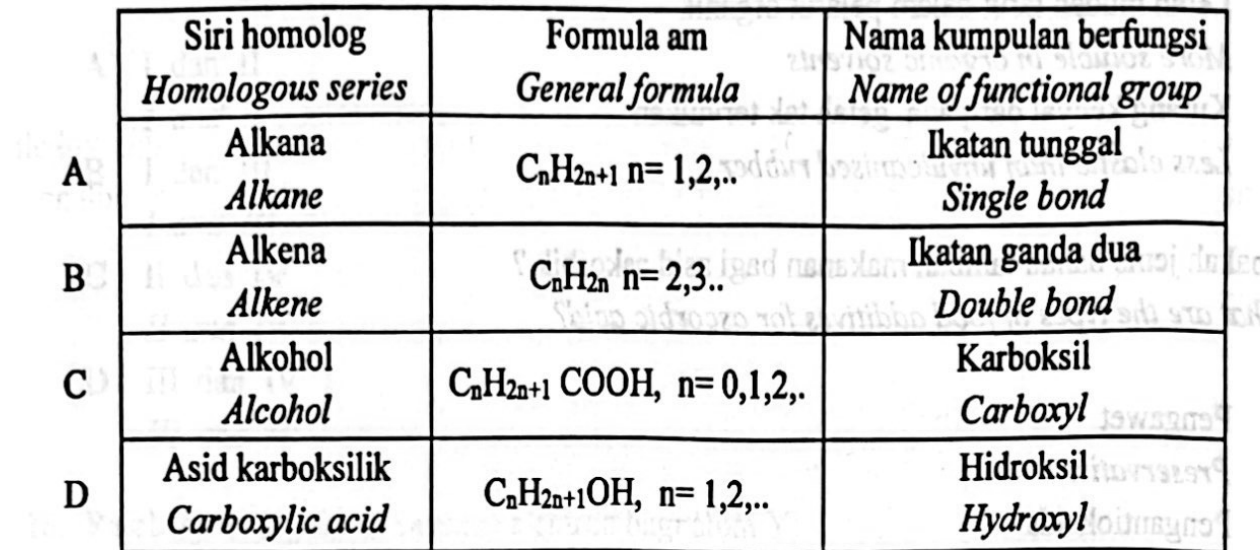
Which of the following is the correct match? (table of homologous series, general formula and name of functional group)
Medium
The following information shows the properties of element X: soft metal; dissolves in water and produces hydroxide solution X. Which of the following Group is the element X located in the Periodic Table of Elements?
Easy
Students use rubber gloves made of vulcanised rubber when conducting experiments in the laboratory. What is the characteristic of vulcanised rubber that makes it suitable for use in the manufacture of these gloves?
Medium
What are the types of food additives for ascorbic acid?
Easy
Silica is used to make all types of glass. Which type of glass is made up of only silica?
Easy
Which of the following are characteristics of the homologous series of alkenes? I Saturated hydrocarbon compounds; II Produces more sooty flame; III Single covalent bond in a molecule; IV The percentage of carbon by mass per molecule is higher
Medium
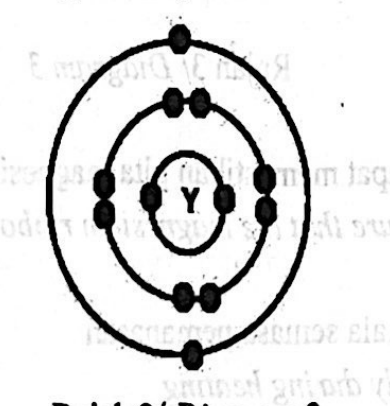
Diagram 2 shows the electron arrangement of atom Y (2.8.2). The number of neutrons of atom Y is 12. What is the standard representation for atom Y?
Medium
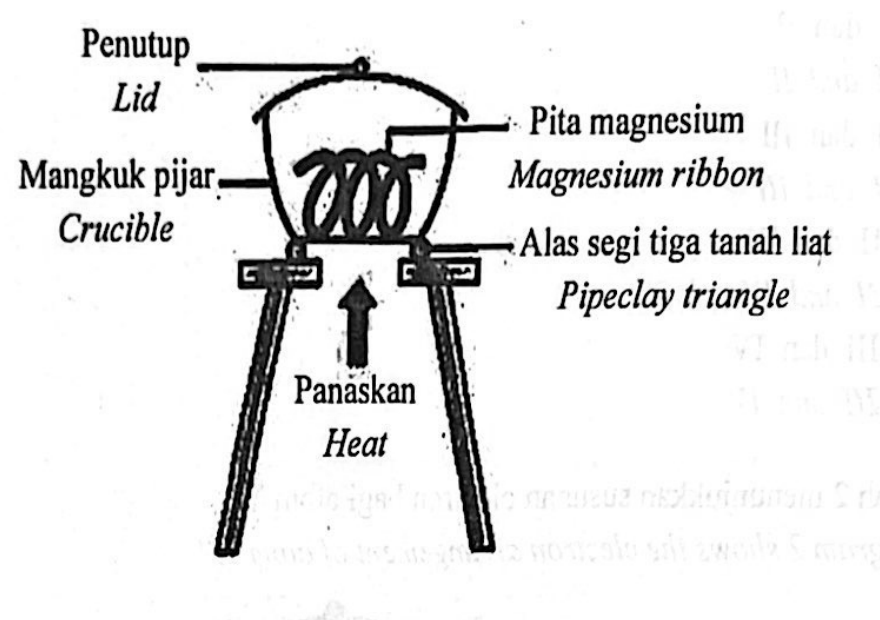
Diagram 3 shows an experiment carried out by a student to determine the empirical formula of magnesium oxide. How can the student make sure that the magnesium ribbon burns completely?
Medium
Which chemical equation is correct?
Medium
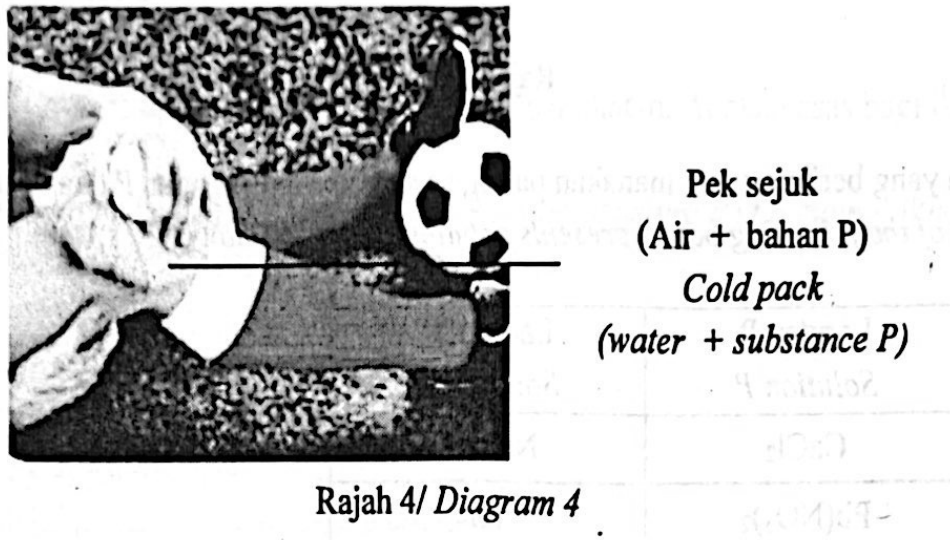
Diagram 4 shows treatment for a football player who suffered injury on his leg. A cold pack (water + substance P) is used. What is substance P?
Easy
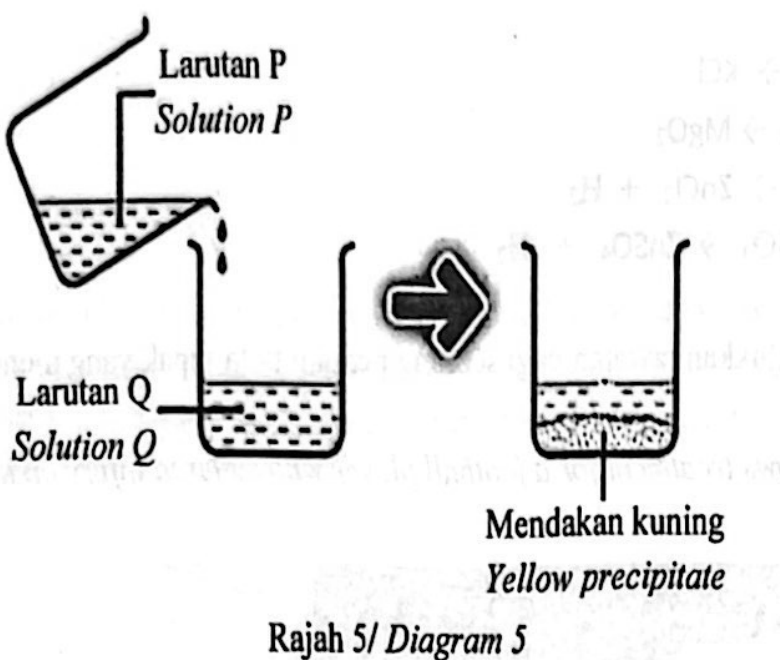
Diagram 5 shows a yellow precipitate formed when solution P and solution Q are mixed. Which of the following best represents solution P and solution Q?
Medium
What is meant by rate of reaction based on the reaction between magnesium ribbon and 50 cm³ of 0.5 mol dm⁻³ nitric acid?
Medium
Fe³⁺ ion solution can be converted to Fe²⁺ ion by adding zinc powder. Which substance can be used to replace zinc powder in this reaction?
Medium
Properties of metal can be explained in terms of metallic structure and bonding. What is the basis of metallic bond?
Medium
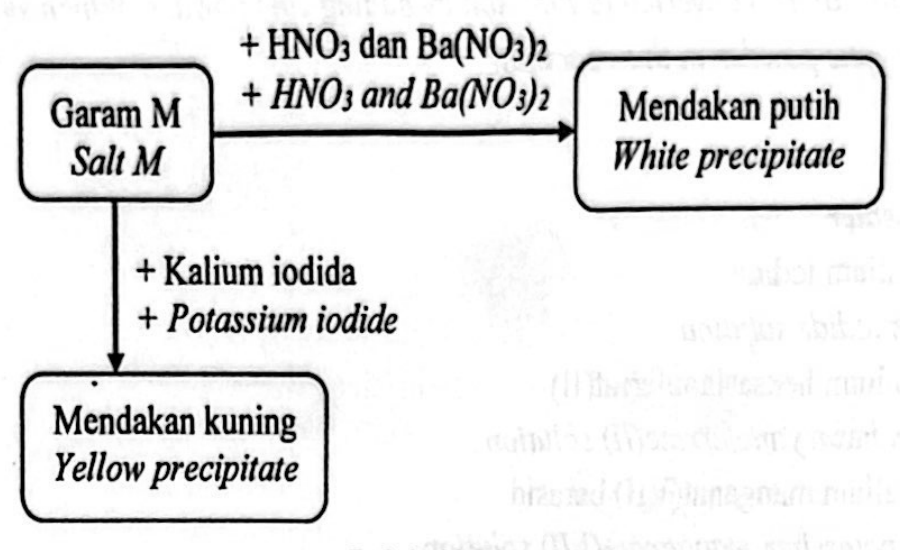
Diagram 6 shows a series of reactions involving salt M: salt M + HNO₃ and Ba(NO₃)₂ gives a white precipitate; salt M + potassium iodide gives a yellow precipitate. What are the cation and anion present in salt M?
Medium
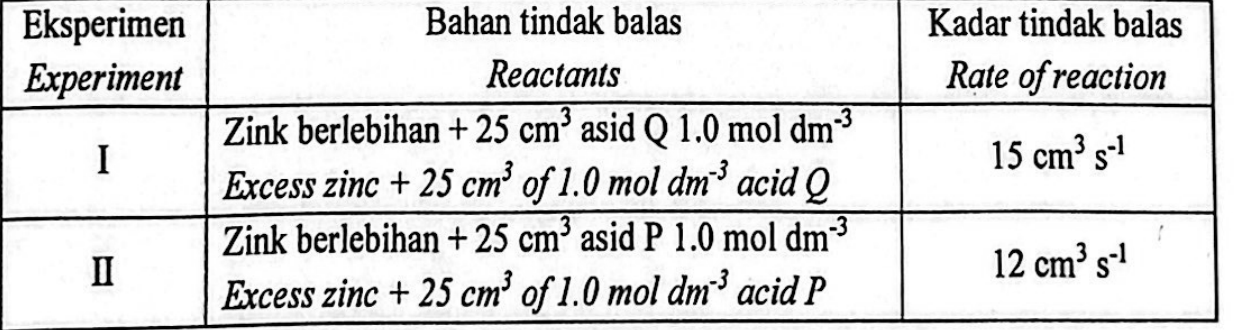
Table 1 shows two experiments: Experiment I, excess zinc + 25 cm³ of 1.0 mol dm⁻³ acid Q, rate of reaction 15 cm³ s⁻¹; Experiment II, excess zinc + 25 cm³ of 1.0 mol dm⁻³ acid P, rate of reaction 12 cm³ s⁻¹. Based on Table 1, which of the following explains the difference in the rate of reaction for the two experiments?
Medium
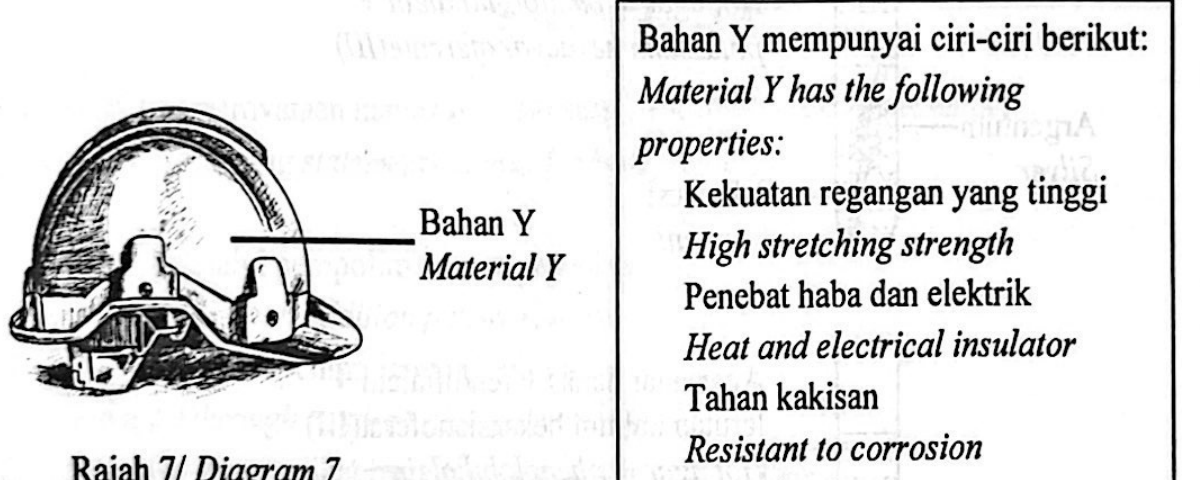
Diagram 7 shows a safety helmet made of material Y. Material Y has: high stretching strength; heat and electrical insulator; resistant to corrosion; durable. Which of the following is material Y?
Medium
Which iron nail does not corrode? Each iron nail is coiled with a metal and placed in hot agar + phenolphthalein + potassium hexacyanoferrate(III) solution. The metals are: A lead, B silver, C copper, D magnesium.
Medium
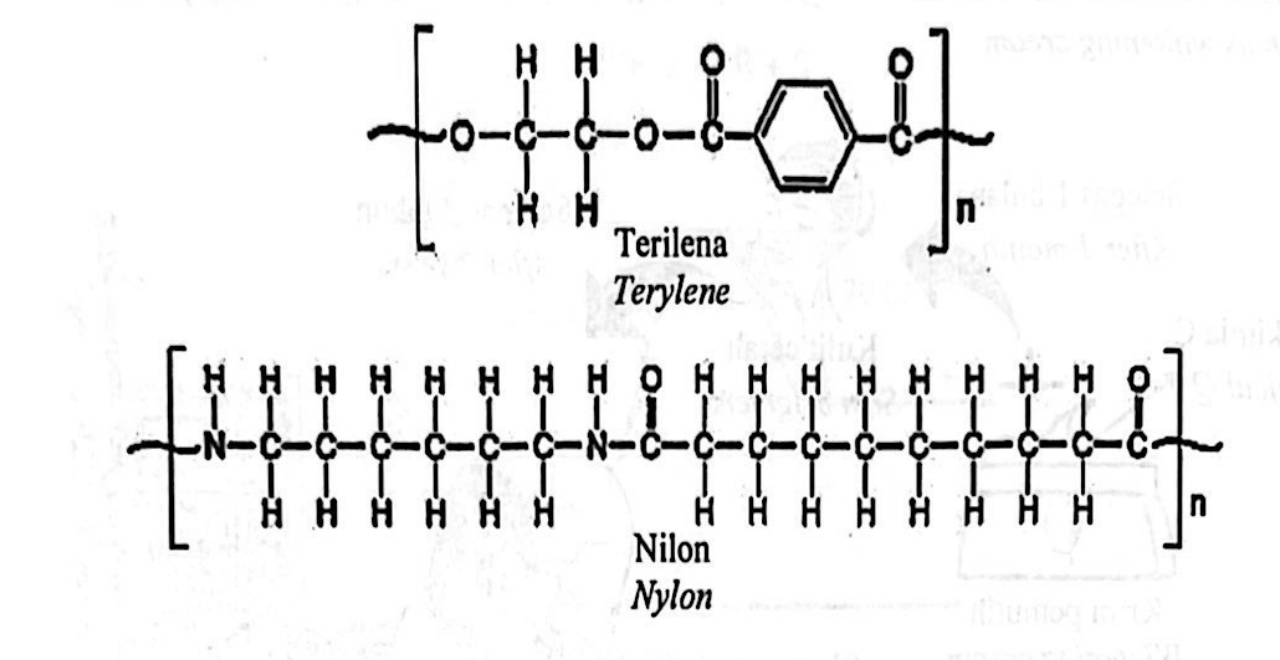
Diagram 8 shows two structures of synthetic polymers (Terylene and Nylon). Which of the following statements is true for both polymers? I Produced through addition polymerisation; II Produced through condensation polymerisation; III The monomers involved consist of two functional groups; IV The monomers involved consist of unsaturated hydrocarbon
Medium
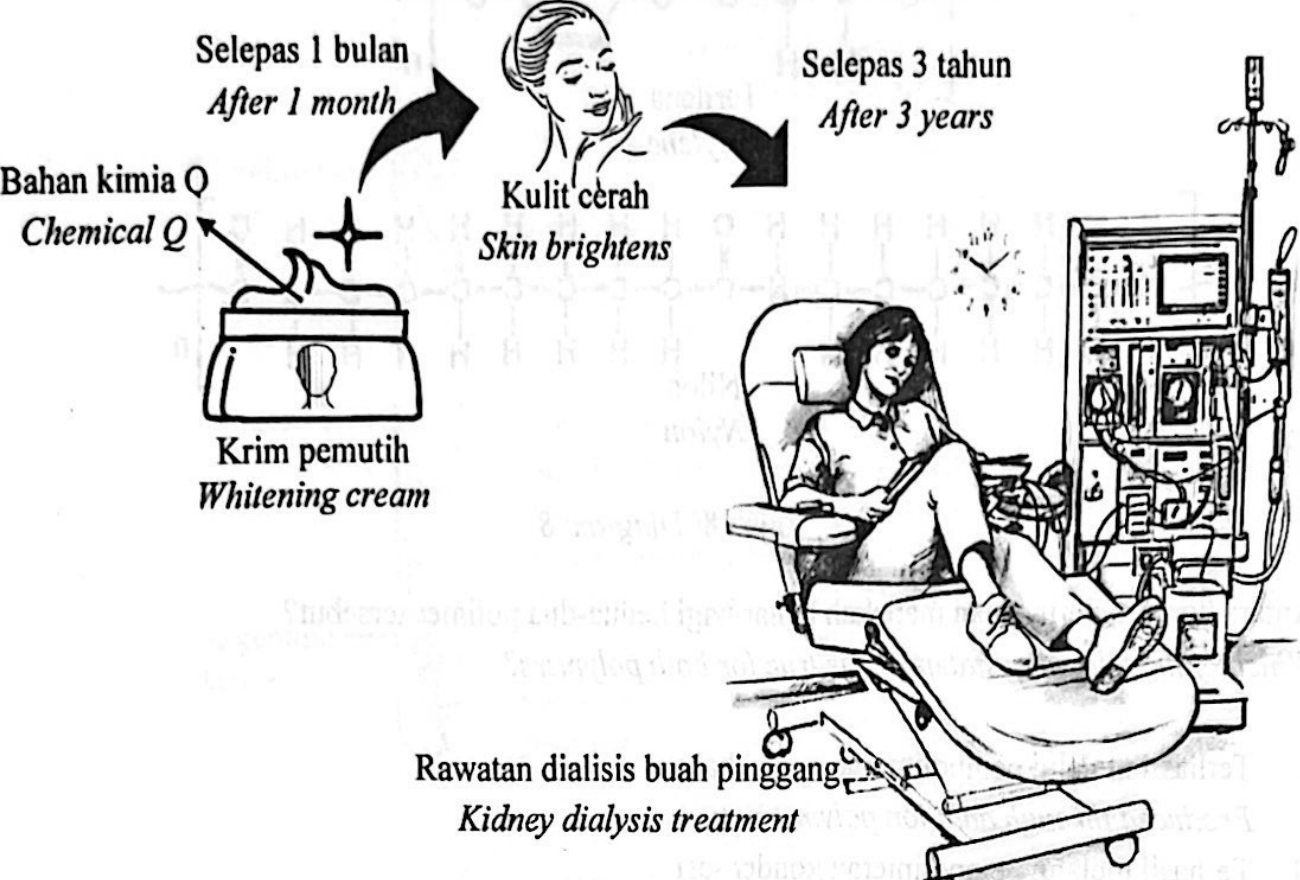
Diagram 9 shows the main adverse effects of using harmful chemical Q in beauty products such as whitening cream (skin brightens after 1 month; kidney dialysis treatment after 3 years). What is the chemical Q found in the whitening cream?
Easy
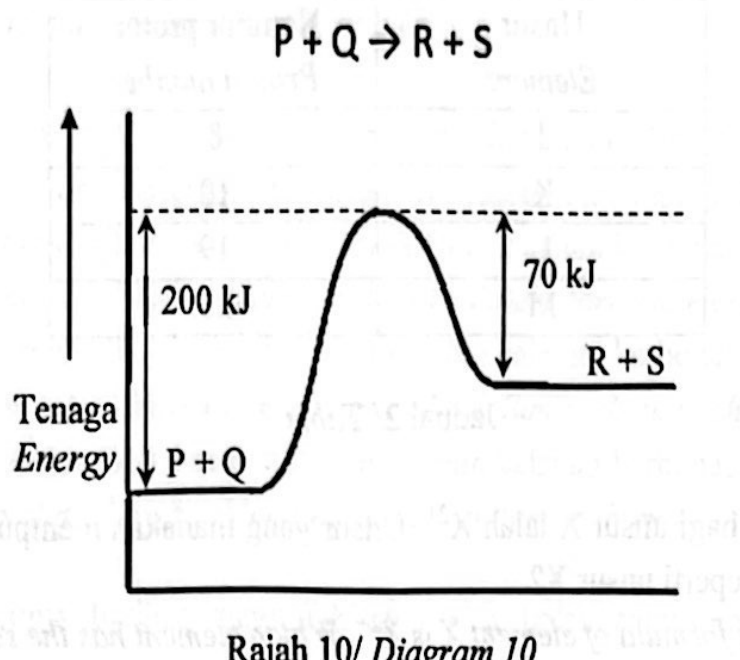
Diagram 10 shows the energy level diagram of the reaction P + Q → R + S (P + Q lower than R + S; 200 kJ from P + Q to the peak; 70 kJ from the peak line down to R + S). Which of the following statements is true?
Medium
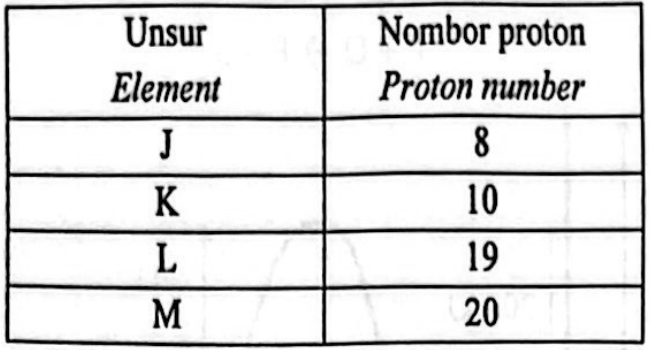
Table 2 shows the proton number of four elements: J = 8, K = 10, L = 19, M = 20. Given that the ionic formula of element X is X²⁺, which element has the same number of valence electrons as element X?
Medium
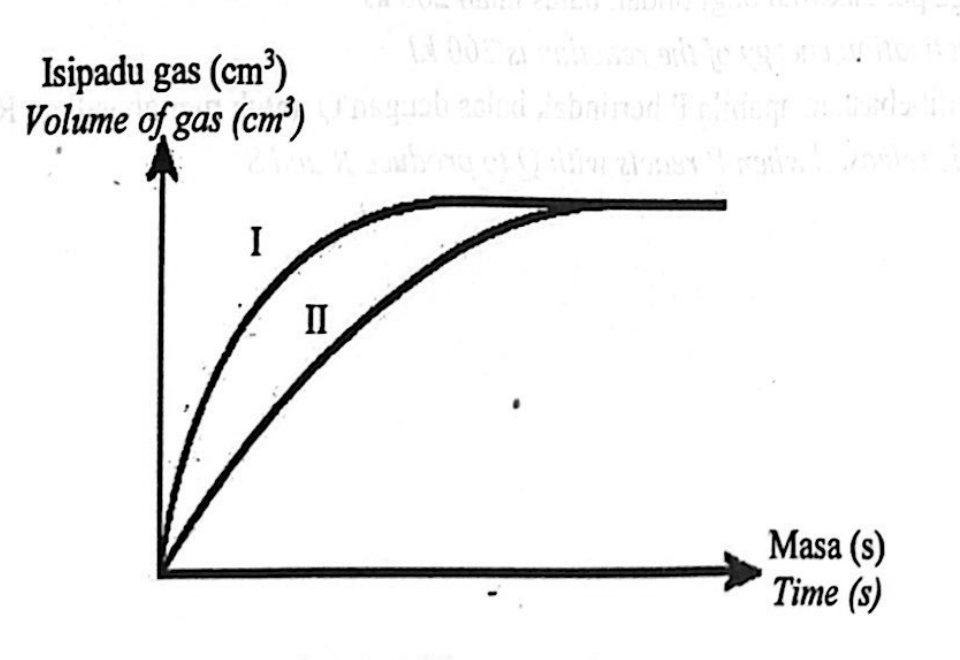
Diagram 11 shows a graph of volume of gas against time (Curve I and Curve II reach the same final volume; Curve I is steeper). Curve I produced when 50 cm³ of 1.0 mol dm⁻³ hydrochloric acid reacts with CaCO₃ powder. Which of the following reactants will produce Curve II?
Medium
The thermochemical equation Mg + CuSO₄ → MgSO₄ + Cu; ΔH = -630 kJ mol⁻¹ shows the reaction between magnesium and copper(II) sulphate solution. Calculate the temperature change when 100 cm³ of 0.1 mol dm⁻³ copper(II) sulphate solution reacts with excess magnesium powder. [Specific heat capacity of solution = 4.2 J g⁻¹ °C⁻¹]
Medium
9.75 g of element X reacts with 63.5 g of element Y to form a compound with chemical formula XY₂. What is the relative atomic mass of element X? [Given that the relative atomic mass of Y = 127]
Medium
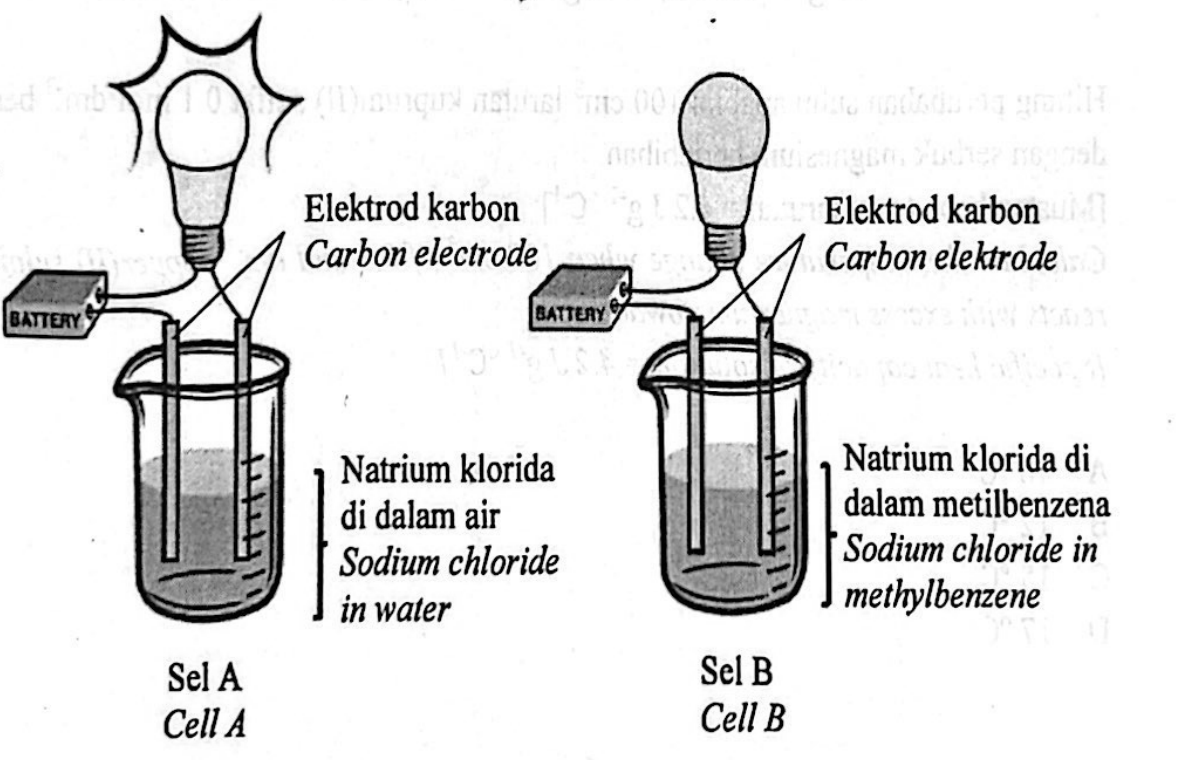
Two experiments study the solubility of sodium chloride in water and methylbenzene. Diagram 12 shows the apparatus set-up to show electrical conductivity of the solutions produced (Cell A: sodium chloride in water; Cell B: sodium chloride in methylbenzene). After 20 minutes, only the bulb in cell A lights up. Which of the following is the inference for the experiment?
Medium
What is the volume of distilled water that needed to be added to 5.7 g of magnesium chloride to obtain a solution with concentration of 0.3 mol dm⁻³? [Relative atomic mass: Mg = 24, Cl = 35.5]
Medium
Which of the following solutions produce chlorine gas at the anode and hydrogen gas at the cathode when electricity is passed through it? I 0.1 mol dm⁻³ sulphuric acid; II 0.1 mol dm⁻³ hydrochloric acid; III 0.5 mol dm⁻³ sodium chloride solution; IV 0.5 mol dm⁻³ potassium nitrate solution
Medium
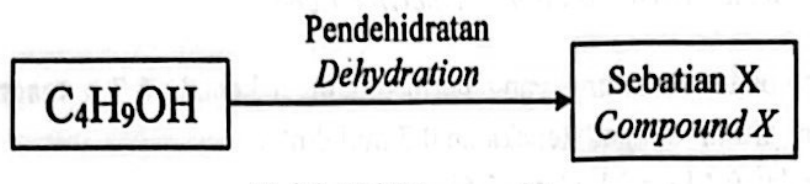
Diagram 13 shows a conversion of butanol: C₄H₉OH undergoes dehydration to form compound X. Which of the following is the isomer of compound X? I But-1-ene; II 2-methylpropane; III 2-methylprop-1-ene; IV 2,2-dimethylbutane
Medium
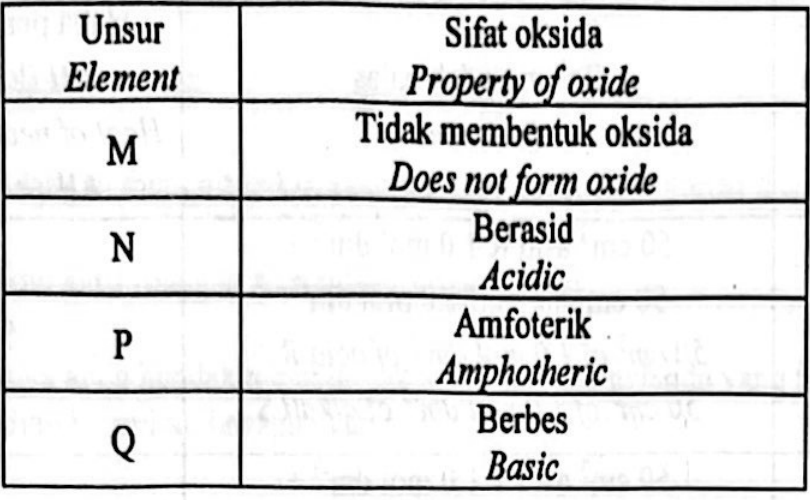
Table 3 shows the property of oxide of elements M, N, P and Q: M does not form oxide; N acidic; P amphoteric; Q basic. Which of the following is the correct position of elements M, N, P and Q in the Periodic Table of Elements?
Medium
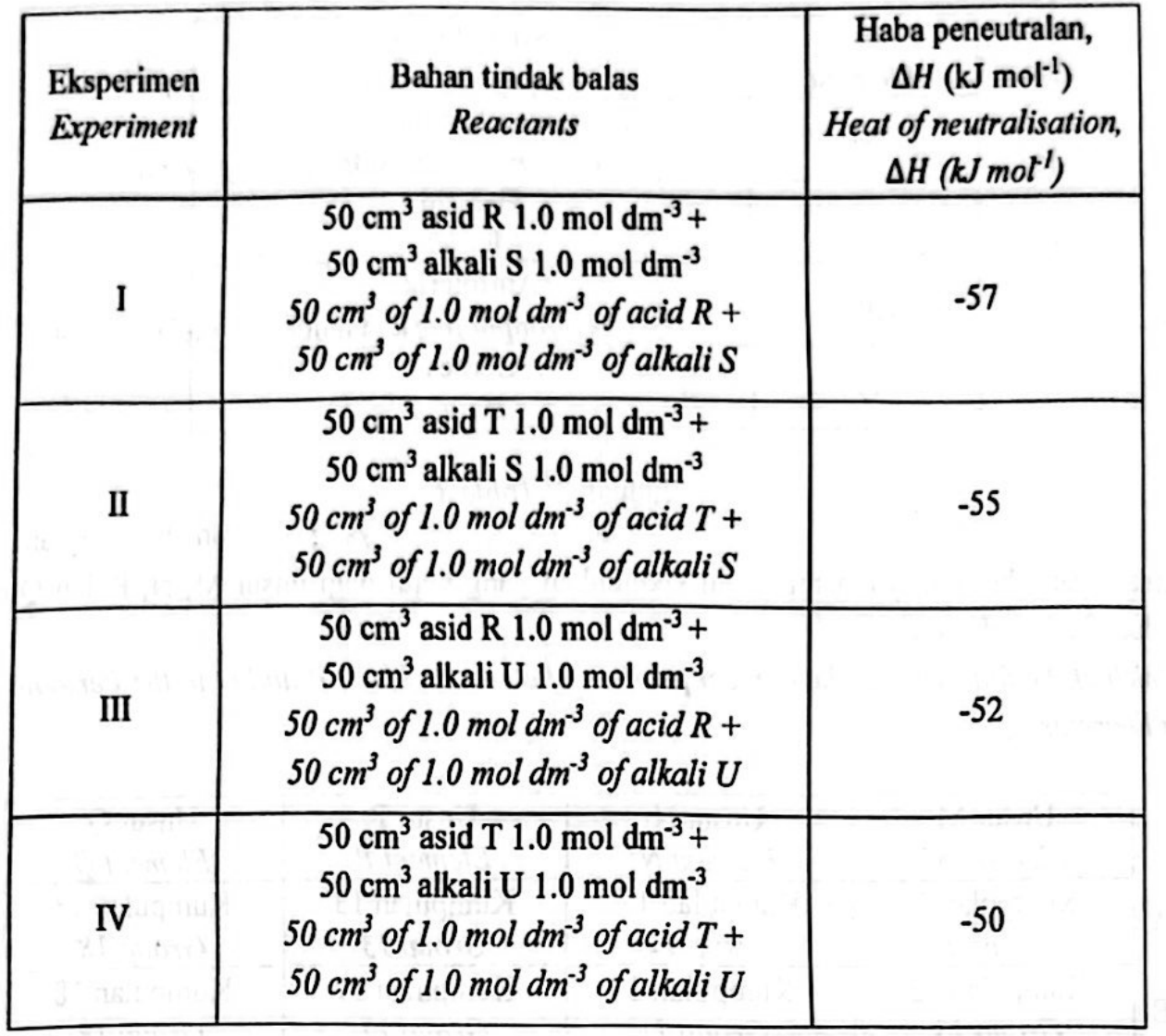
Table 4 shows the heat of neutralisation of various neutralisation reactions: I acid R + alkali S, -57 kJ mol⁻¹; II acid T + alkali S, -55; III acid R + alkali U, -52; IV acid T + alkali U, -50 (all 50 cm³ of 1.0 mol dm⁻³). Which of the following is the correct acid and alkali used for the four experiments?