Write your answer on paper. Then open the answer to check it.
Section A
Table 1 shows the proton number and nucleon number of atoms X, Y and Z: X (11, 24); Y (6, 12); Z (6, 14).
Medium5 marks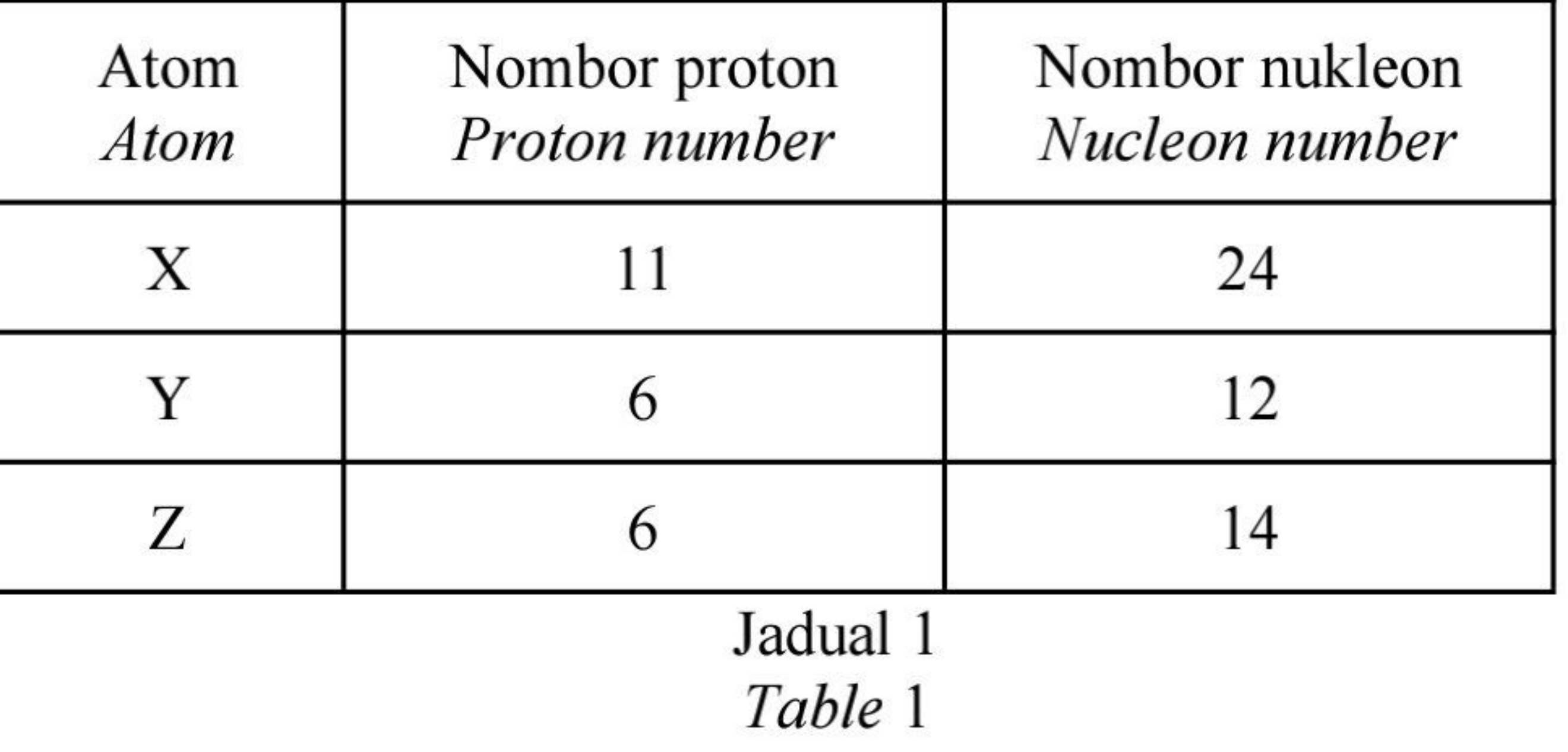
- (a)(i)
What is meant by atom?
[1] - (a)(ii)
Name the negatively charged subatomic particles.
[1] - (a)(iii)
Give one use of isotope sodium-24 in daily life.
[1] - (b)
By referring to Table 1, state the atoms that have the same chemical properties. Explain.
[2]
Diagram 1 shows the Pyramids of Giza which are made up from ceramics. According to the analysis of historians, this pyramid was built between 2560 and 2580 before century.
Medium5 marks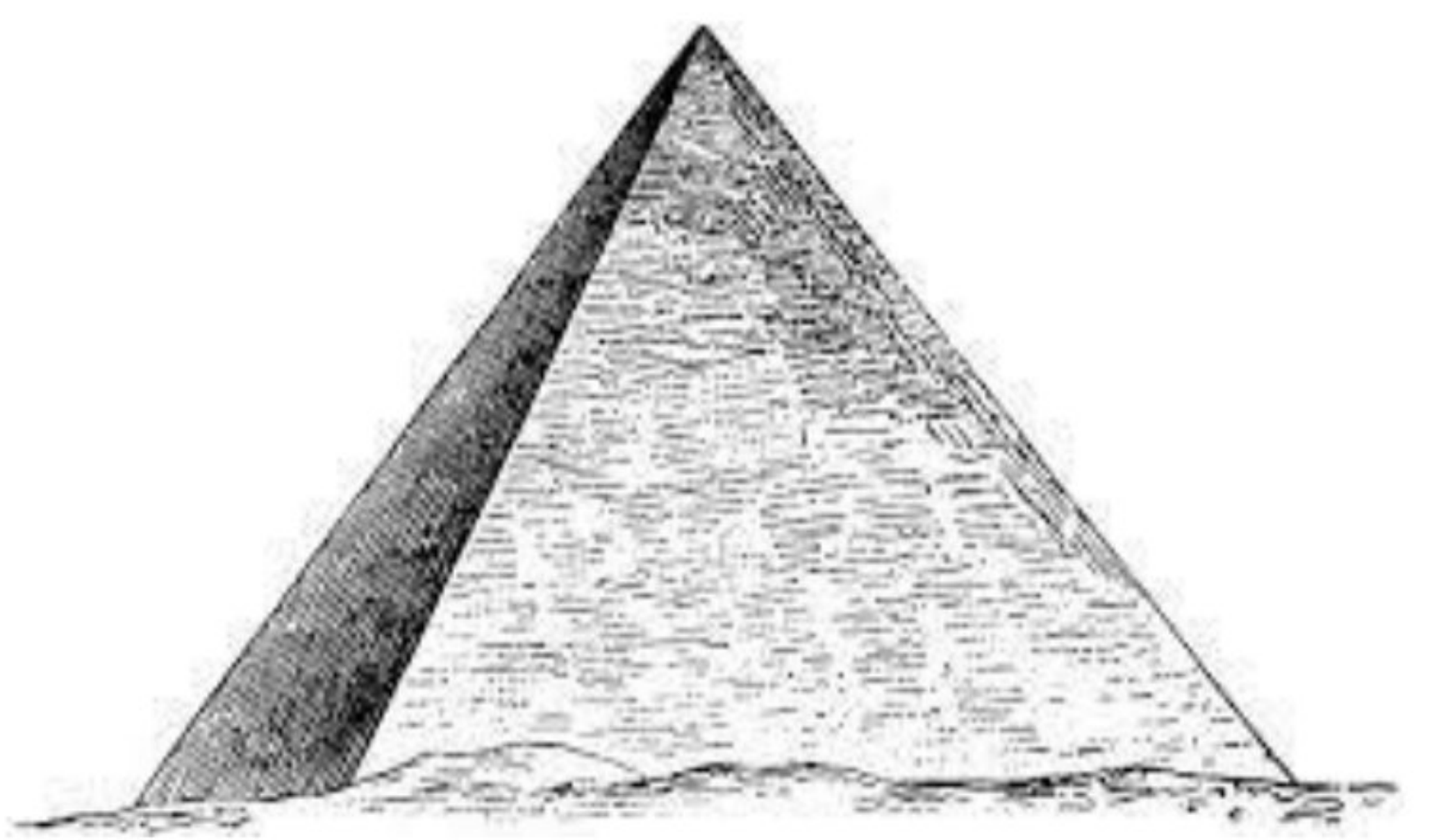
- (a)(i)
State the meaning of ceramic.
[1] - (a)(ii)
State one characteristic of ceramics that allowed the pyramid sturdy until now.
[1] - (b)
Table 2 shows three types of composite materials K, L and M and their components: K - glass, copper(I) chloride and silver chloride; L - yttrium(III) carbonate, barium carbonate, copper(II) carbonate and oxygen; M - concrete and steel. Based on Table 2, identify the composite material K, L and M.
[3]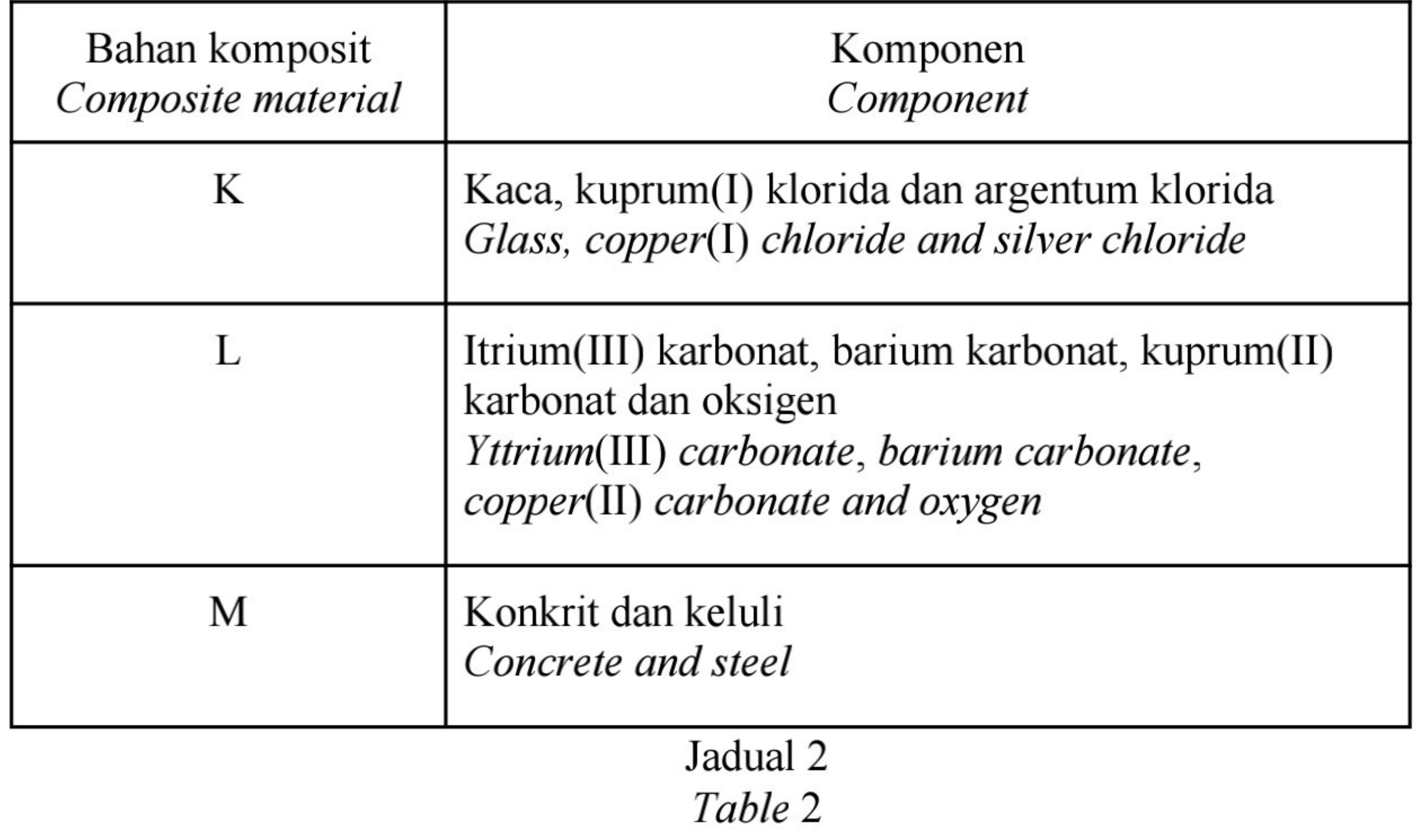
Diagram 2 shows the process of vulcanization of natural rubber to vulcanized rubber (natural rubber heated with sulphur forms vulcanized rubber with sulphur cross-links between polymer chains).
Medium6 marks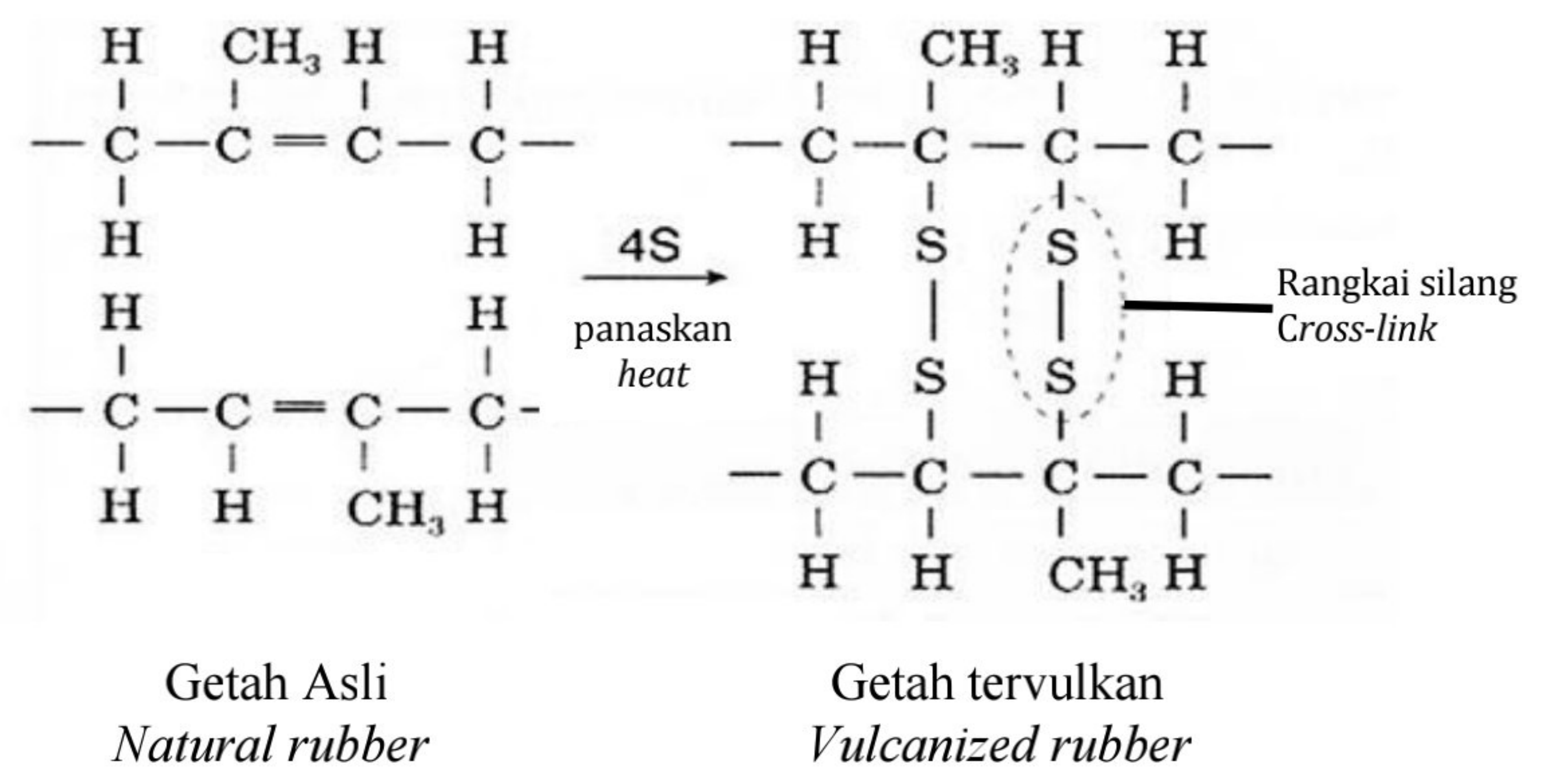
- (a)
State the meaning of rubber vulcanisation.
[1] - (b)(i)
The polymer for natural rubber is polyisoprene. What is the name of the monomer for polyisoprene?
[1] - (b)(ii)
Explain the process of vulcanization of rubber.
[2] - (c)(i)
State one property of vulcanized rubber.
[1] - (c)(ii)
Give one example of the use of vulcanized rubber.
[1]
Diagram 3 shows the apparatus set-up to determine the empirical formula of magnesium oxide (magnesium ribbon coil in a crucible with a cover, heated).
Medium7 marks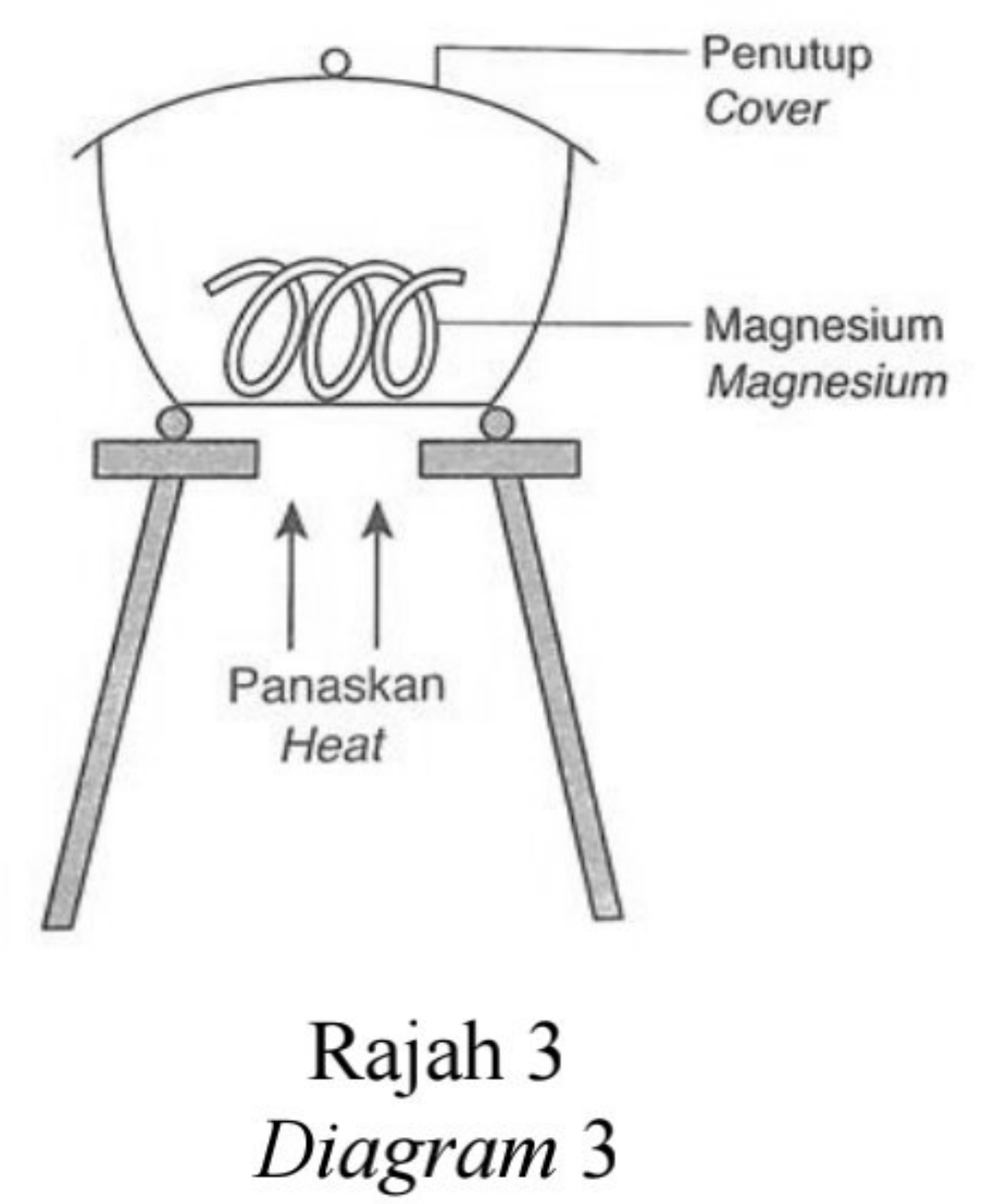
- (a)
Why is the magnesium ribbon clean with sandpaper before heating?
[1] - (b)(i)
White fumes are produced. Name the white fumes.
[1] - (b)(ii)
During heating, the lid is opened occasionally. Explain why.
[1] - (c)(i)
Table 3: crucible + lid 26.6 g; crucible + lid + magnesium ribbon 27.2 g; crucible + lid + magnesium oxide 27.6 g. Calculate the mass of magnesium and the mass of oxygen that have reacted.
[1]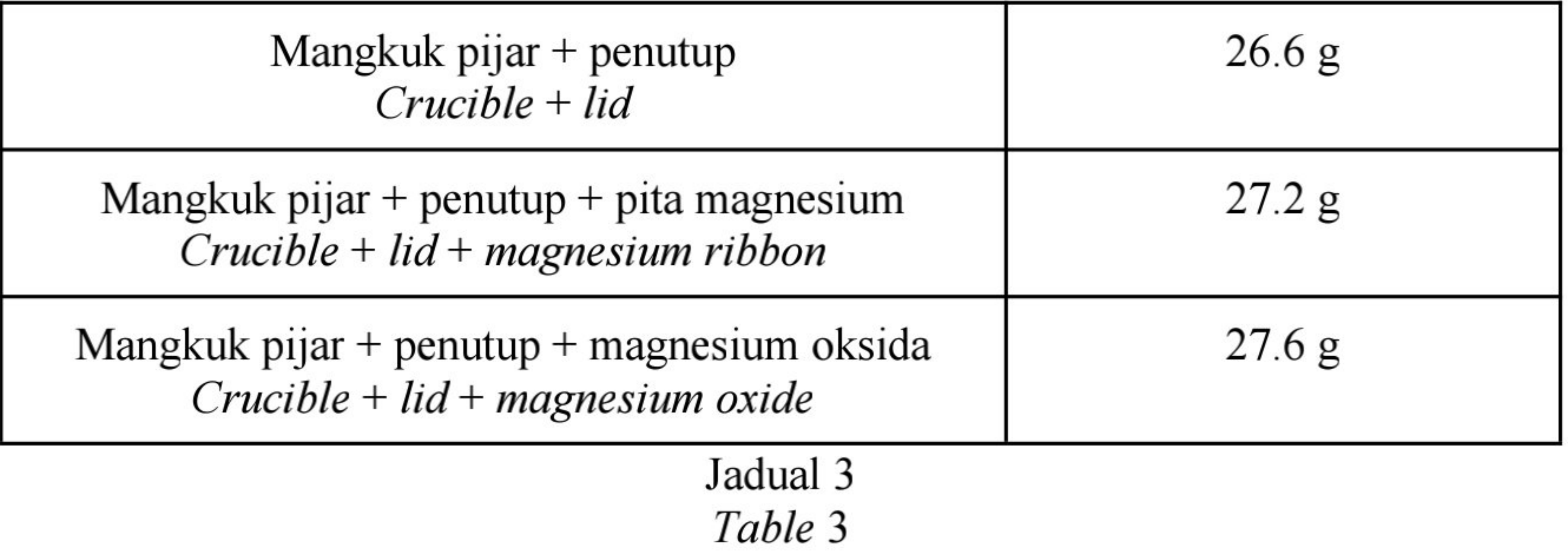
- (c)(ii)
Calculate the mole ratio of magnesium atom to oxygen atom. [Relative atomic mass: O = 16; Mg = 24]
[2] - (c)(iii)
Determine the empirical formula of magnesium oxide.
[1]
The following equation shows how soap can be prepared: Palm oil + Concentrated alkali → Material X + Soap.
Medium8 marks- (a)(i)
What is the name of the above reaction?
[1] - (a)(ii)
The soap produced is potassium palmitate. What alkali should be used?
[1] - (b)(i)
Diagram 4 shows part of the washing action of detergent particles on grease stain shirt. Based on the Diagram 4, explain the washing action of detergent particles on greasy stains.
[3]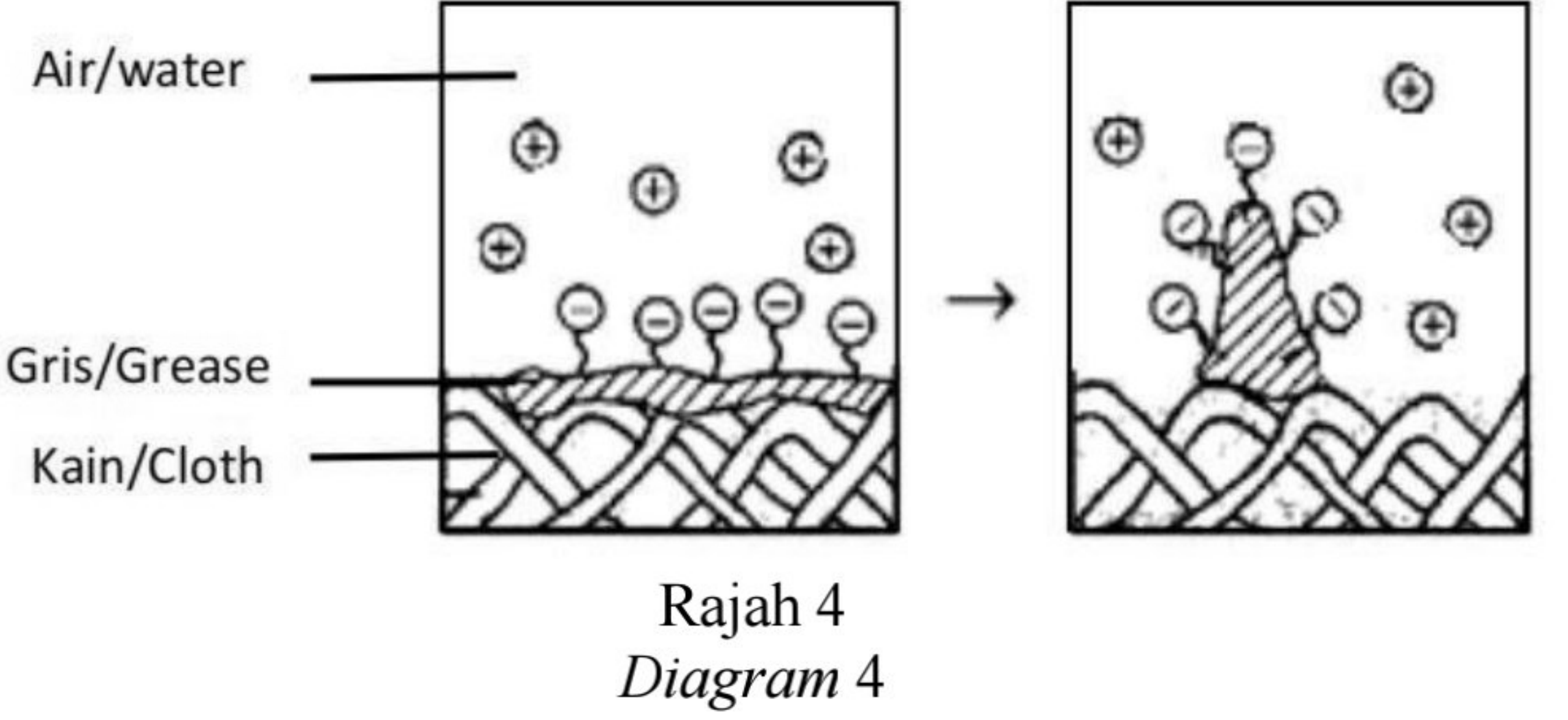
- (b)(ii)
You are given two separate beakers, A and B containing soap solution or detergent solution. With the use of the following materials (magnesium nitrate solution, boiling tubes, rubber stopper), describe briefly how you can distinguish between soap and detergent.
[3]
Diagram 5 shows the Periodic Table of Elements (groups 1, 2, 13-18; B and D in Group 1, with D below B; E in Group 13; C in Group 16; F in Group 17; A in Group 18).
Medium9 marks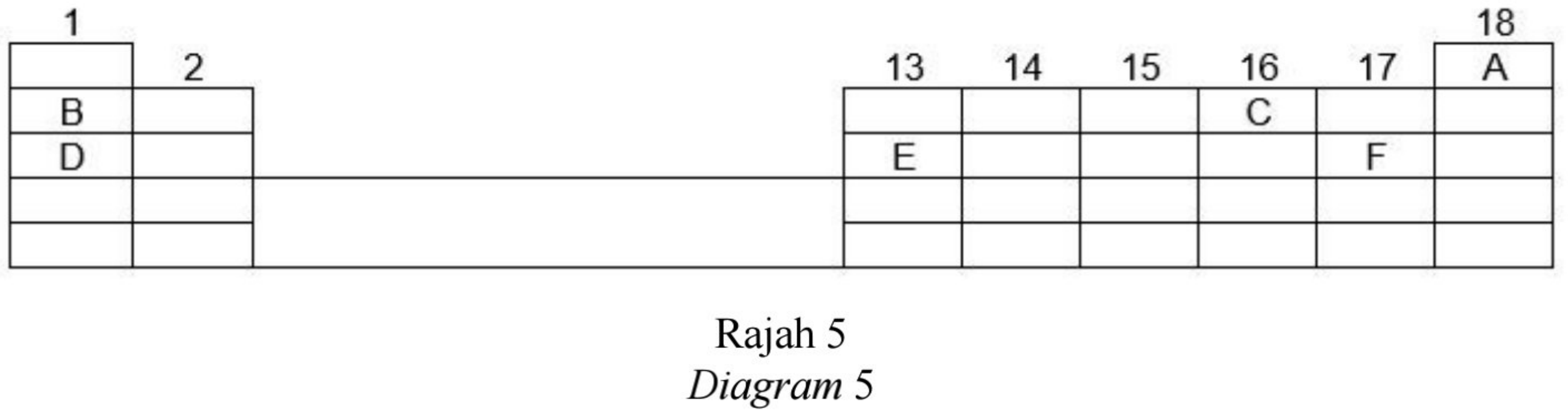
- (a)
State the other name of Group 17.
[1] - (b)
Which elements exist as monoatomic gas in room temperature. Give a reason for your answer.
[2] - (c)(i)
Elements D and F react to form a compound. Write a chemical reaction for the reaction.
[2] - (c)(ii)
If 0.1 mol of element D reacts with element F, calculate the mass of compound formed at (c)(i). [Relative atomic mass: D = 23; F = 35]
[2] - (d)
Element G located lower in Group 1 in the Periodic Table compared to elements B and D. Predict the reactivity of element G toward water. Explain.
[2]
Diagram 6 shows the apparatus set up to purify the impure silver. Cell P: zinc and silver electrodes (zinc in nitric acid, silver in 50 cm³ of 1.0 mol dm⁻³ silver nitrate) separated by a porous pot, connected to Cell Q: pure silver and impure silver electrodes in 50 cm³ of 1.0 mol dm⁻³ silver nitrate solution.
Medium10 marks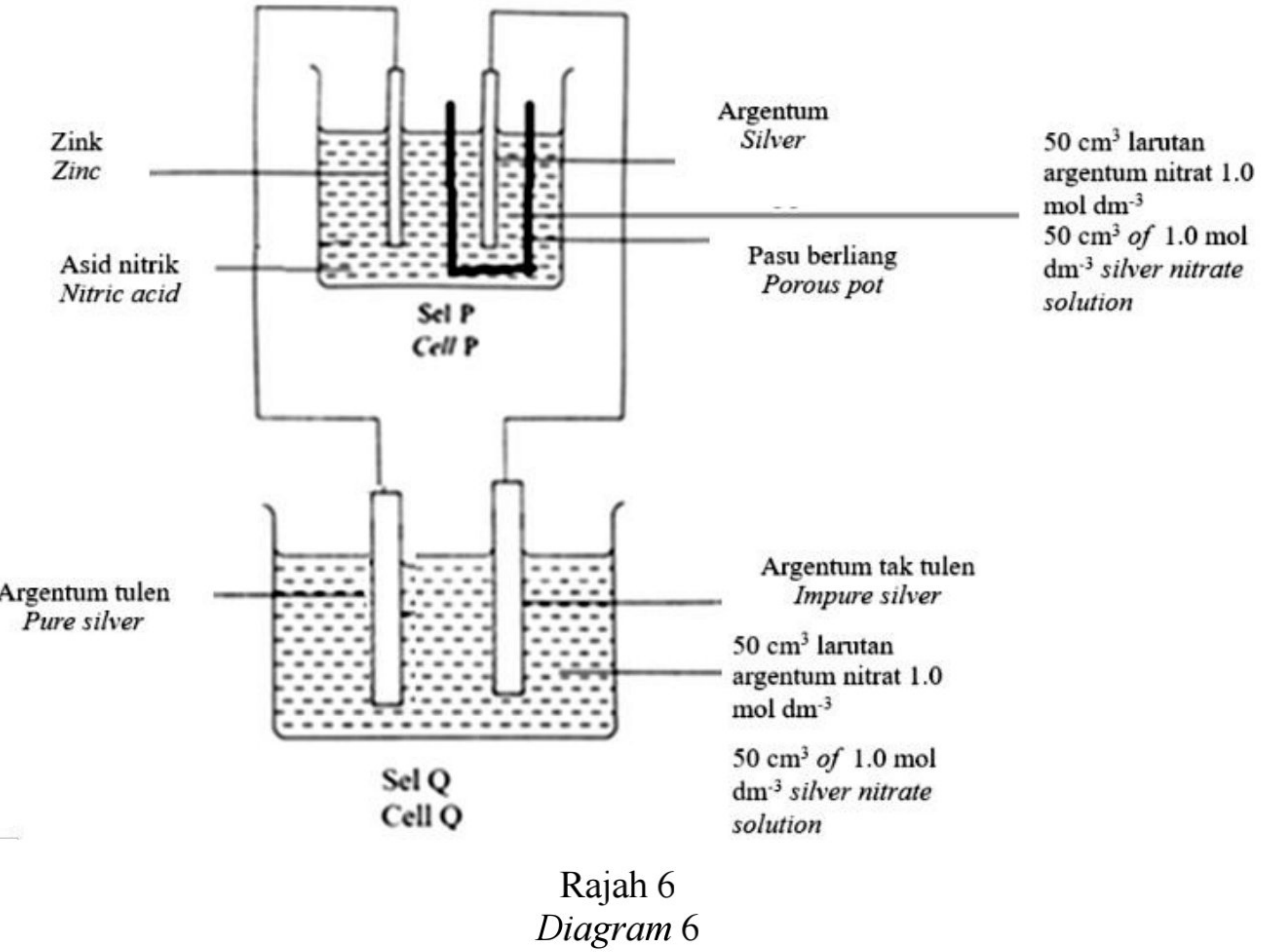
- (a)
What is the function of a porous pot?
[1] - (b)
State the anode and cathode of Cell Q.
[2] - (c)
State the observations at the cathode of Cell P.
[1] - (d)
Calculate the maximum mass of silver deposited at cell P during purifying. [Relative atomic mass: Ag = 108]
[3] - (e)
Ahmad wants to increase the value of current in Cell P. What should Ahmad do? Explain. The E° values for half cells are: Zn²⁺/Zn -0.76 V; Mg²⁺/Mg -2.38 V; 2H⁺/H₂ +0.00 V; Cu²⁺/Cu +0.34 V; Ag⁺/Ag +0.80 V; O₂, H₂O/OH⁻ +0.40 V; S₂O₈²⁻/SO₄²⁻ +2.01 V; Fe²⁺/Fe -0.44 V.
[3]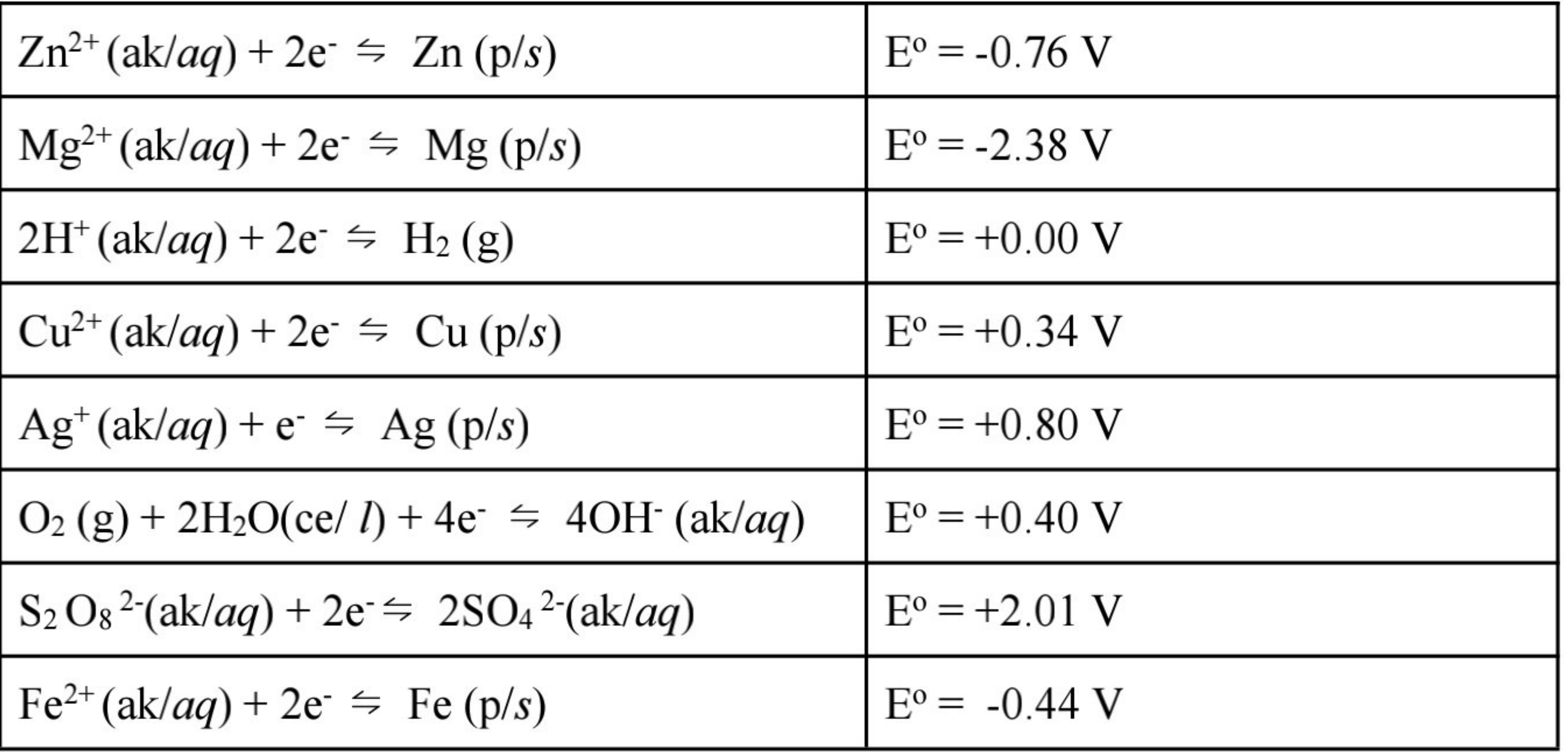
Diagram 7 shows two experiments carried out to study one factor that affects the rate of reaction between zinc and hydrochloric acid. Experiment I: 50 cm³ of 1.0 mol dm⁻³ hydrochloric acid with excess zinc granules, gas collected in a burette over water. Experiment II: 50 cm³ of 1.0 mol dm⁻³ hydrochloric acid + copper(II) sulphate solution with excess zinc granules.
Medium10 marks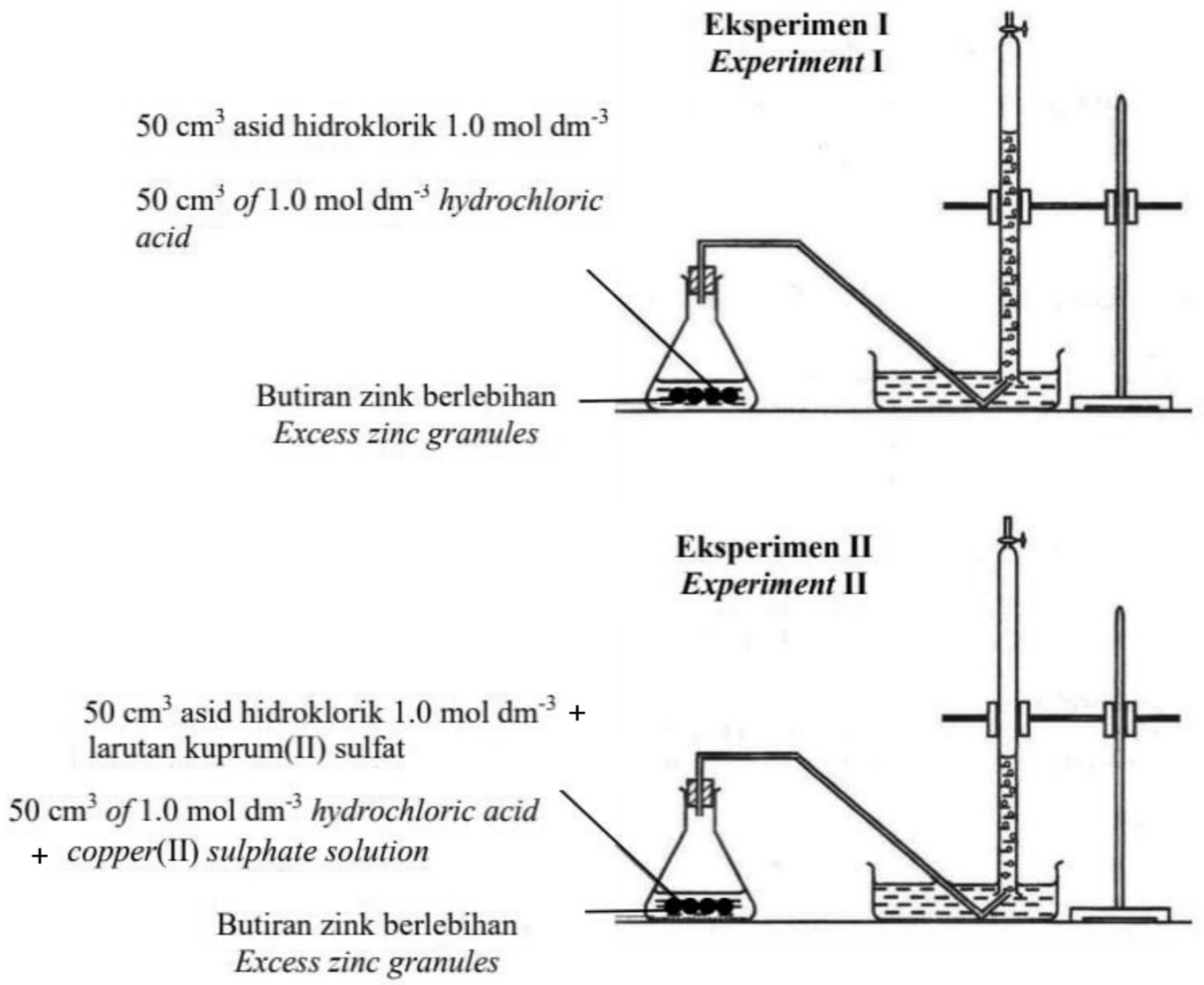
- (a)
Based on Diagram 7, state the factor that affects the rate of reaction.
[1] - (b)
How to determine the rate of reaction in the experiment?
[1] - (c)
Calculate the volume of hydrogen gas released in Experiment I. [Molar volume of gas at room temperature = 24 dm³ mol⁻¹]
[3] - (d)
Compare the rate of reaction in Experiment I and Experiment II based on Collision Theory.
[3] - (e)
Marisa wants to produce double the total volume of hydrogen gas in Experiment II. State the substance needs to be changed by Marisa. Explain.
[2]
Section B
Answer any one question from Section B.
Medium20 marks- (a)
Plaster made of calcium sulphate is suitable to be used to treat a fractured leg. Give a reason. State the name of the reaction for the preparation of calcium sulphate. Suggest two solutions needed to prepare the calcium sulphate salt.
[4] - (b)
Diagram 8 shows Method I (hydrochloric acid titrated into sodium hydroxide + phenolphthalein) and Method II (potassium iodide solution added to lead(II) nitrate solution) in the preparation of a salt. Explain the difference between method I and method II in terms of observations, name of reaction and name of the salt produced.
[6]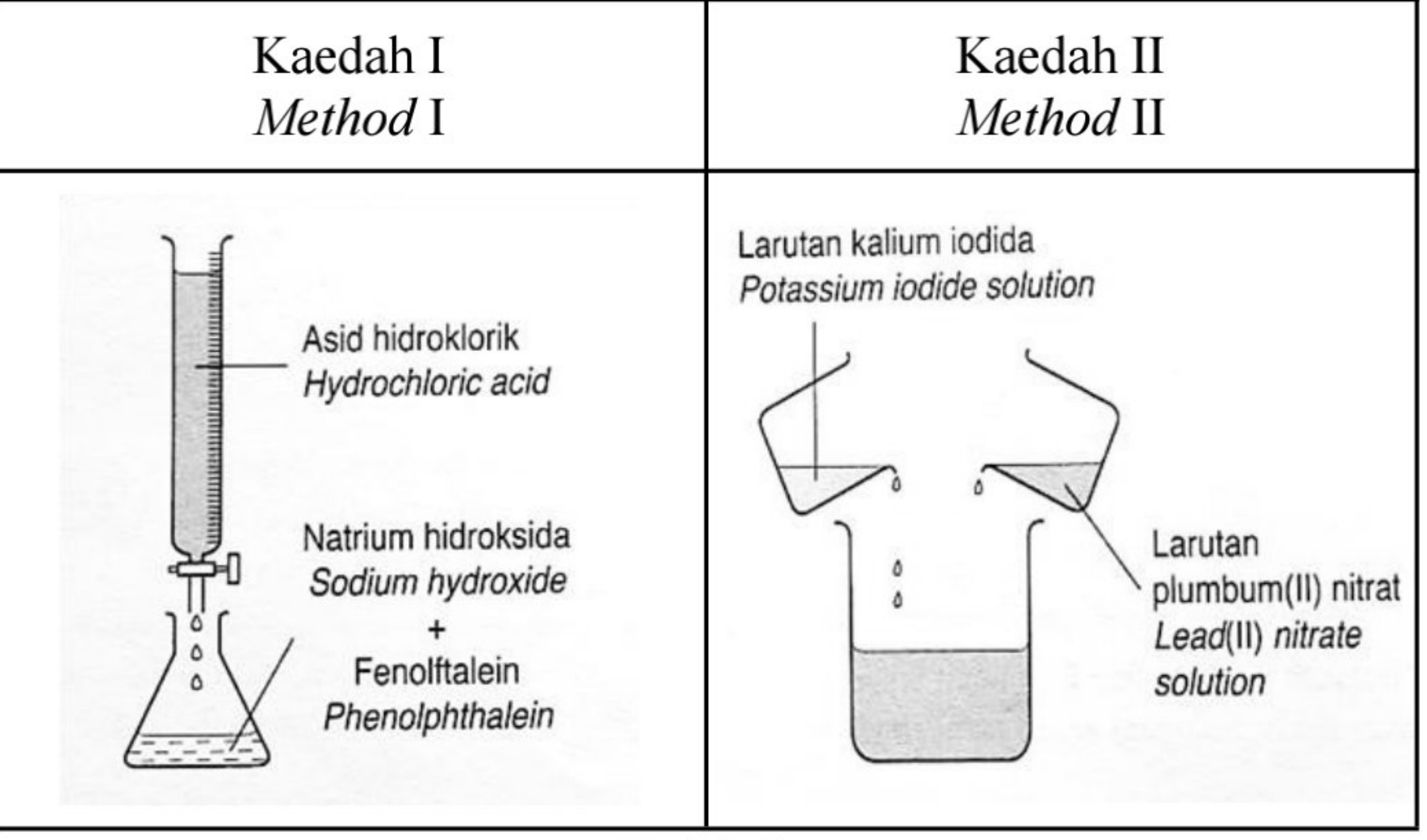
- (c)
Table 4: alkali A, concentration 0.5 mol dm⁻³, pH 11.0; alkali B, concentration 0.5 mol dm⁻³, pH 14.0. Suggest an example of alkali A and alkali B. Explain why the pH values of alkali A and alkali B are different.
[6]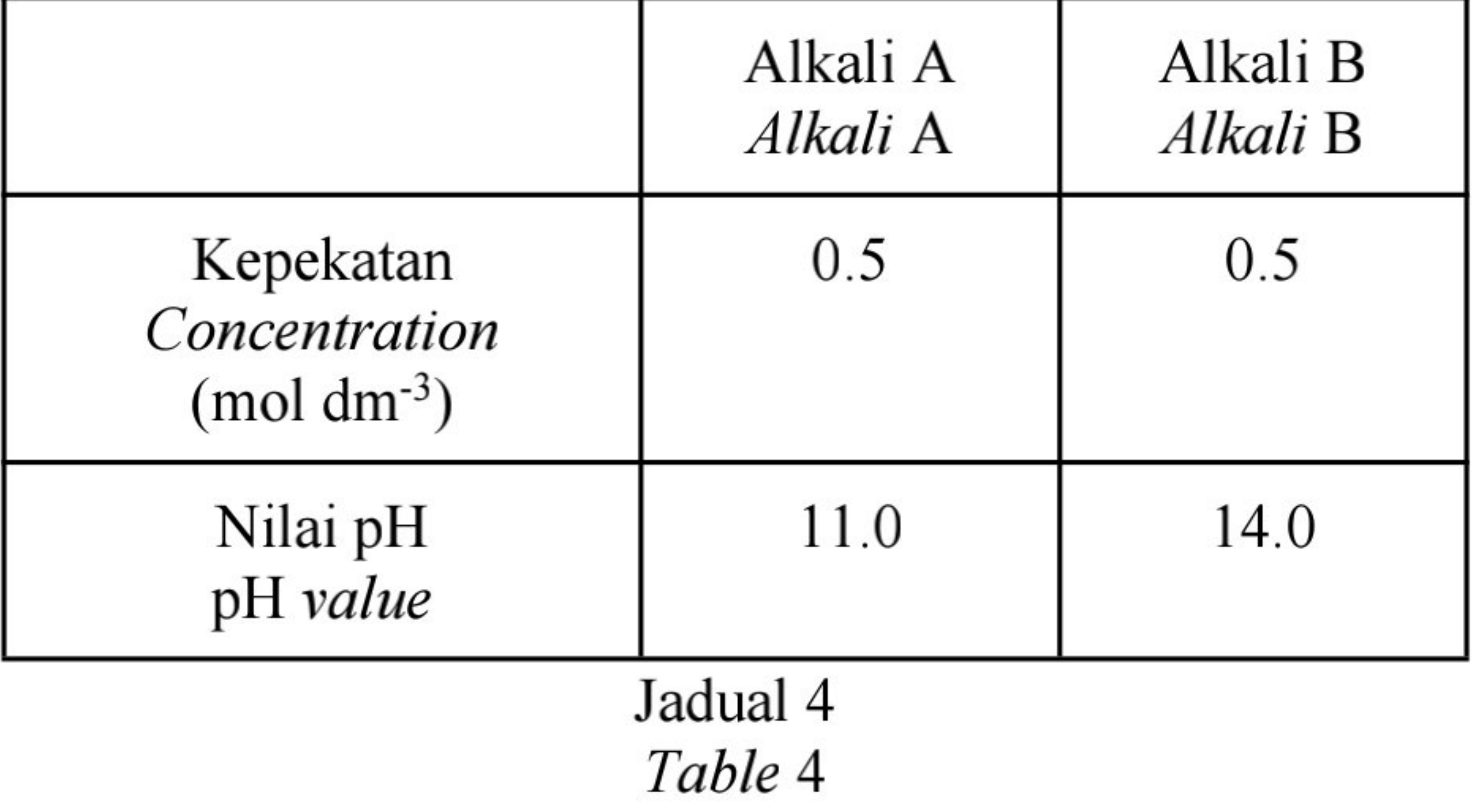
- (d)
Lead(II) nitrate is used in the manufacture of matches and special explosives. Describe the reaction that occurs when lead(II) nitrate is heated strongly. Write the balanced chemical equation of the reaction.
[4]
Diagram 9.1 shows a structural formula of butene: H₂C(H)-CH... drawn as CH₃-CH₂-CH=CH₂ with all hydrogen atoms shown.
Medium20 marks- (a)(i)
Name the homologous series for butene.
[1]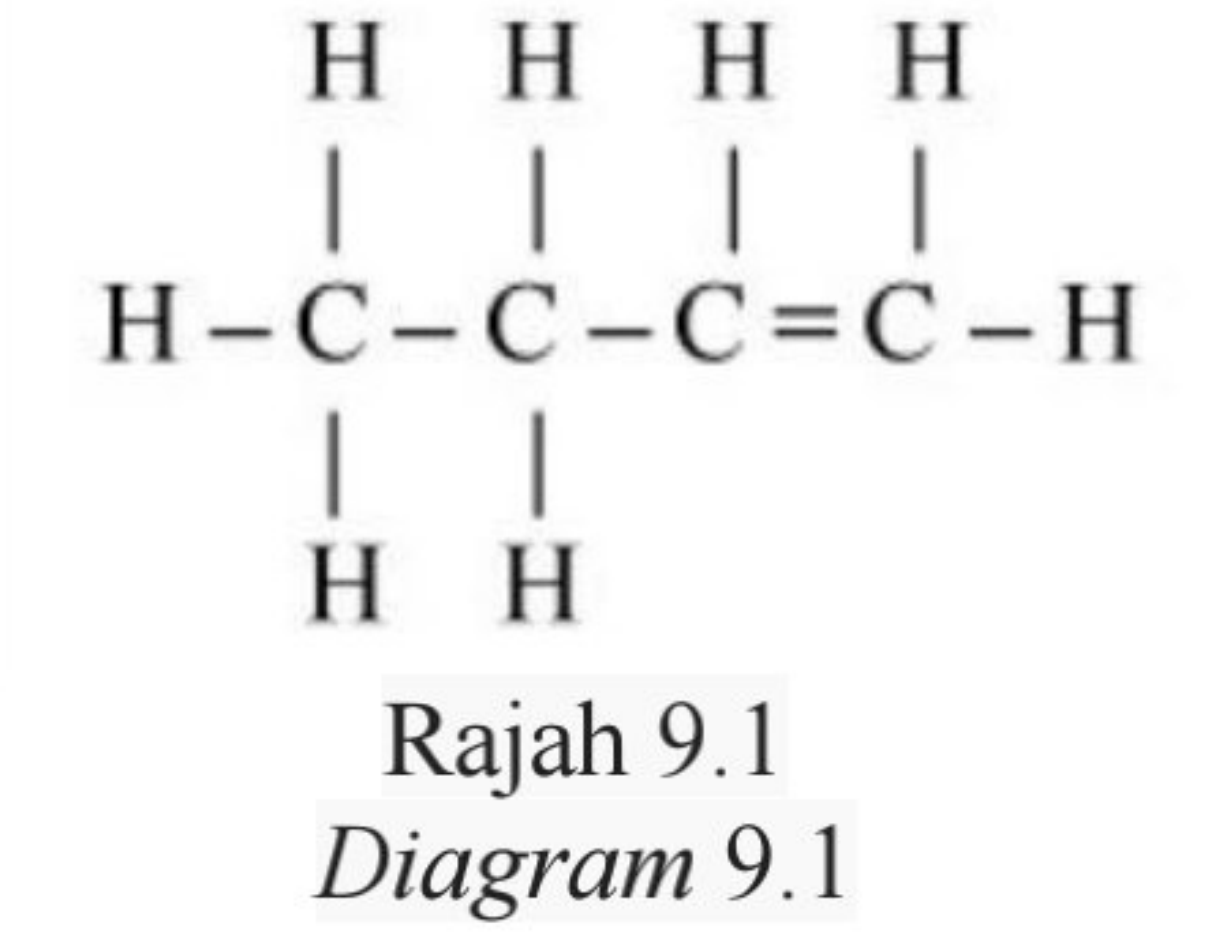
- (a)(ii)
What is meant by isomers?
[1] - (a)(iii)
Draw the structural formula of another isomer of butene and name the isomer according to the IUPAC nomenclature.
[2] - (b)(i)
Diagram 9.2 shows the conversions of several organic compounds: Compound X → (Reaction I) → ethanoic acid → (Reaction III) → ethyl ethanoate; Compound X → (Reaction II) → ethene. State the name, homologous series, molecular formula and functional group of compound X.
[4]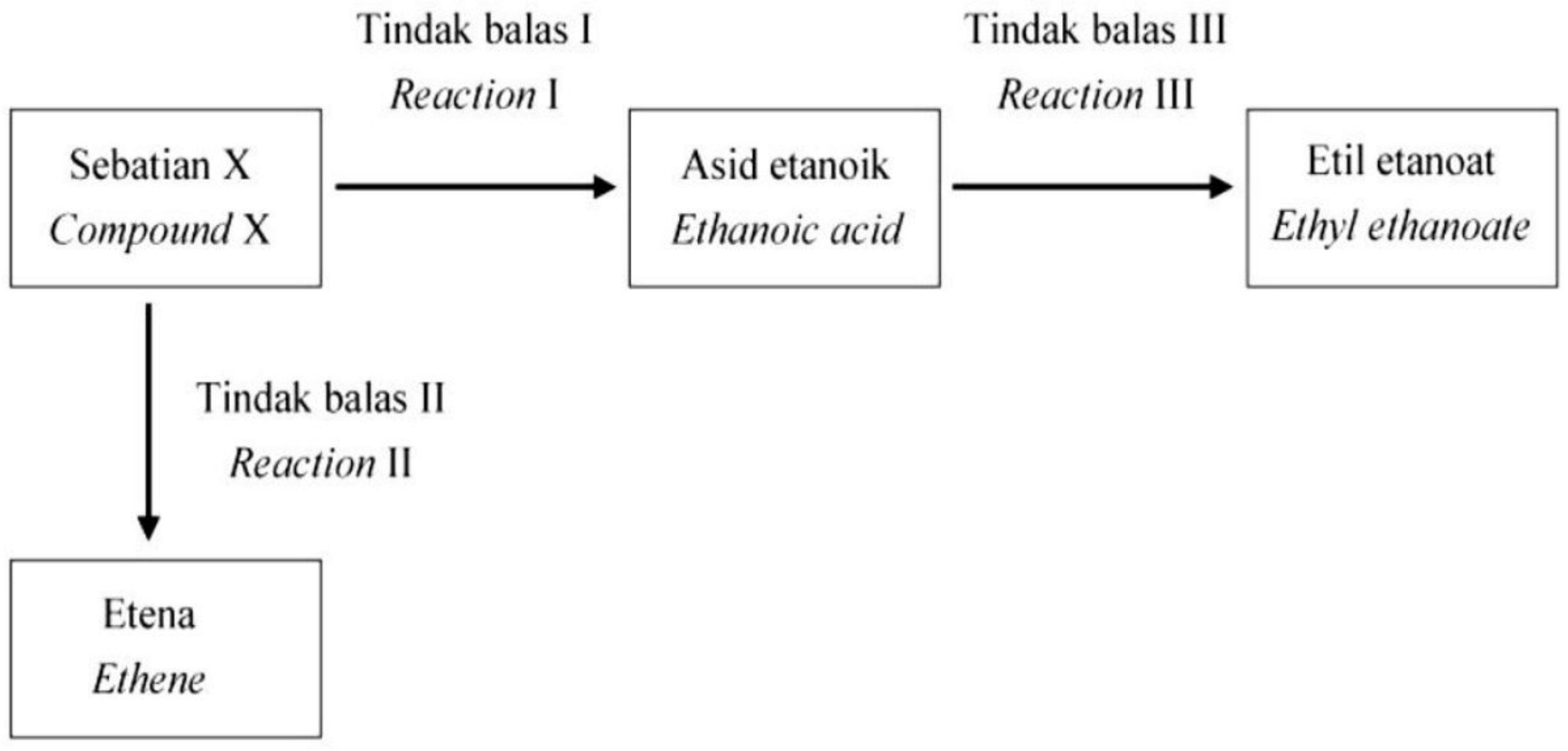
- (b)(ii)
State the name of Reaction I, Reaction II and Reaction III.
[3] - (b)(iii)
Write chemical equations for Reaction I and Reaction II.
[4] - (c)
Ethene burns completely in oxygen producing carbon dioxide gas and water. Write a balanced chemical equation and calculate the volume of carbon dioxide gas produced when 1.12 g of ethene burns completely. [Relative atomic masses: C = 12, H = 1; 1 mole of any gas occupies 24 dm³ mol⁻¹ at room conditions]
[5]
Section C
Diagram 10.1 shows an energy level diagram for a reaction: reactants (2H₂ + O₂) at a higher level, products (2H₂O) at a lower level; bonds broken = 1 358 kJ/mol; bonds formed = 1 836 kJ/mol; ΔH shown.
Medium20 marks- (a)
State the meaning of exothermic reaction.
[1] - (b)(i)
Based on the Diagram 10.1, state type of reaction and explain.
[2]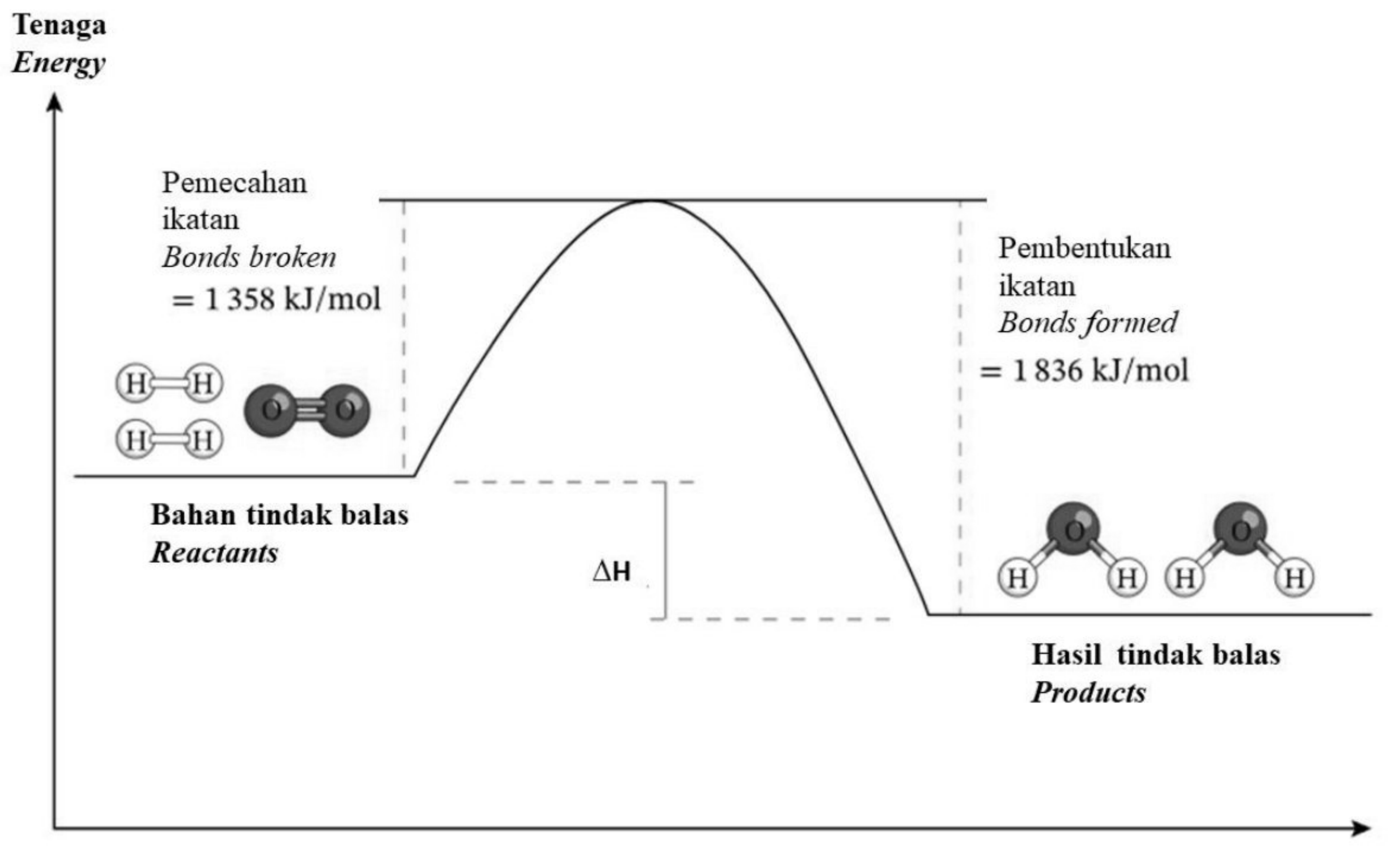
- (b)(ii)
Write the chemical equation of the reaction involved.
[2] - (b)(iii)
Calculate heat of reaction, ΔH.
[2] - (c)
Table 5 shows the heat of neutralisation of potassium hydroxide and two types of acids, acid X and acid Y. Set I: 50 cm³ 0.1 mol dm⁻³ potassium hydroxide and 50 cm³ 0.1 mol dm⁻³ acid X, heat of neutralisation -57.2 kJ mol⁻¹. Set II: 50 cm³ 0.1 mol dm⁻³ potassium hydroxide and 50 cm³ 0.1 mol dm⁻³ acid Y, -55.8 kJ mol⁻¹. Suggest acid X and acid Y. Explain why there is a difference in heat of neutralisation between set I and set II.
[6]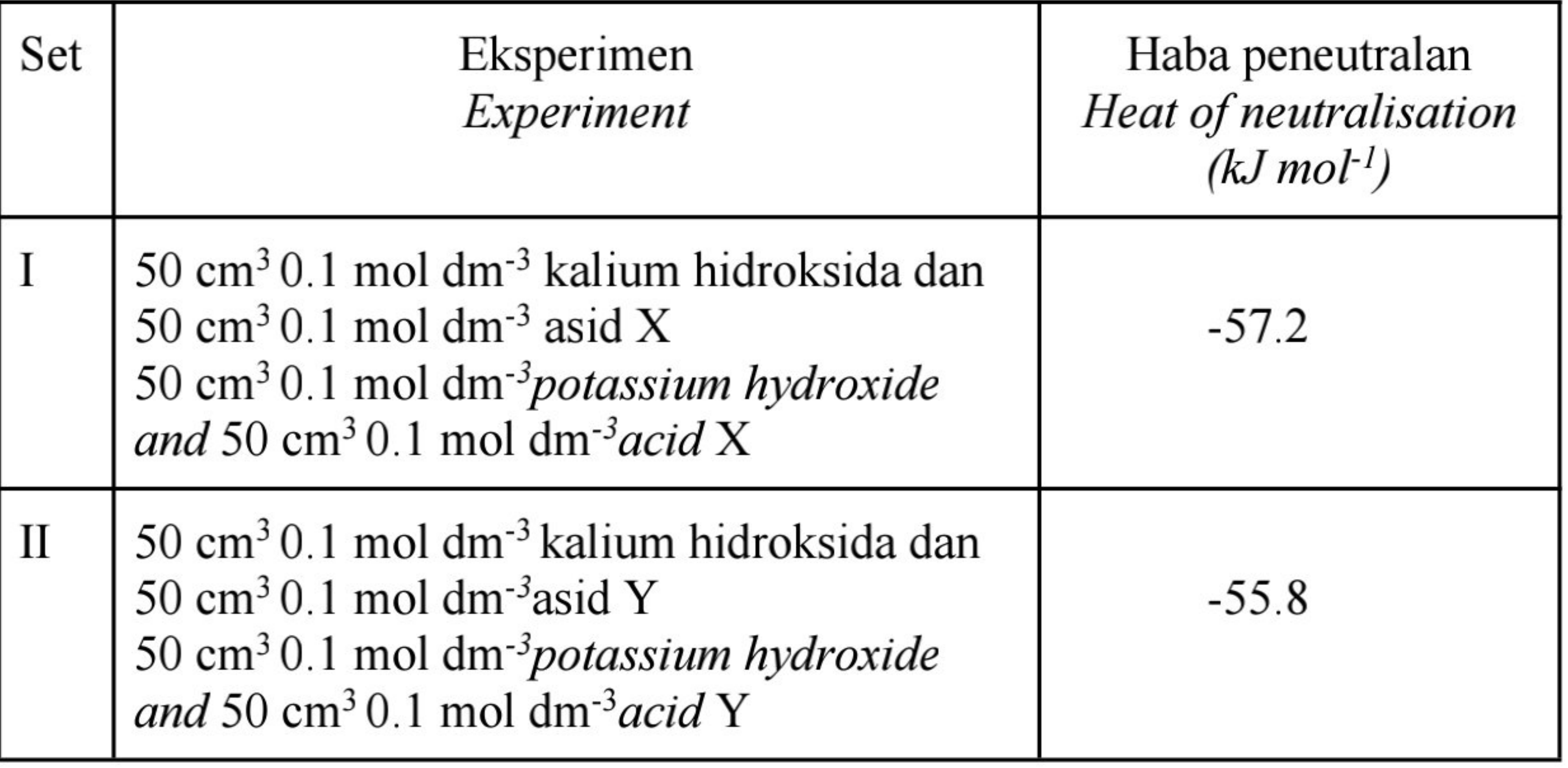
- (d)(i)
Diagram 10.2 shows a self-heating pack of biryani rice carried by Ekhwan during hill climbing. Justify uses of a self-heating pack.
[2]
- (d)(ii)
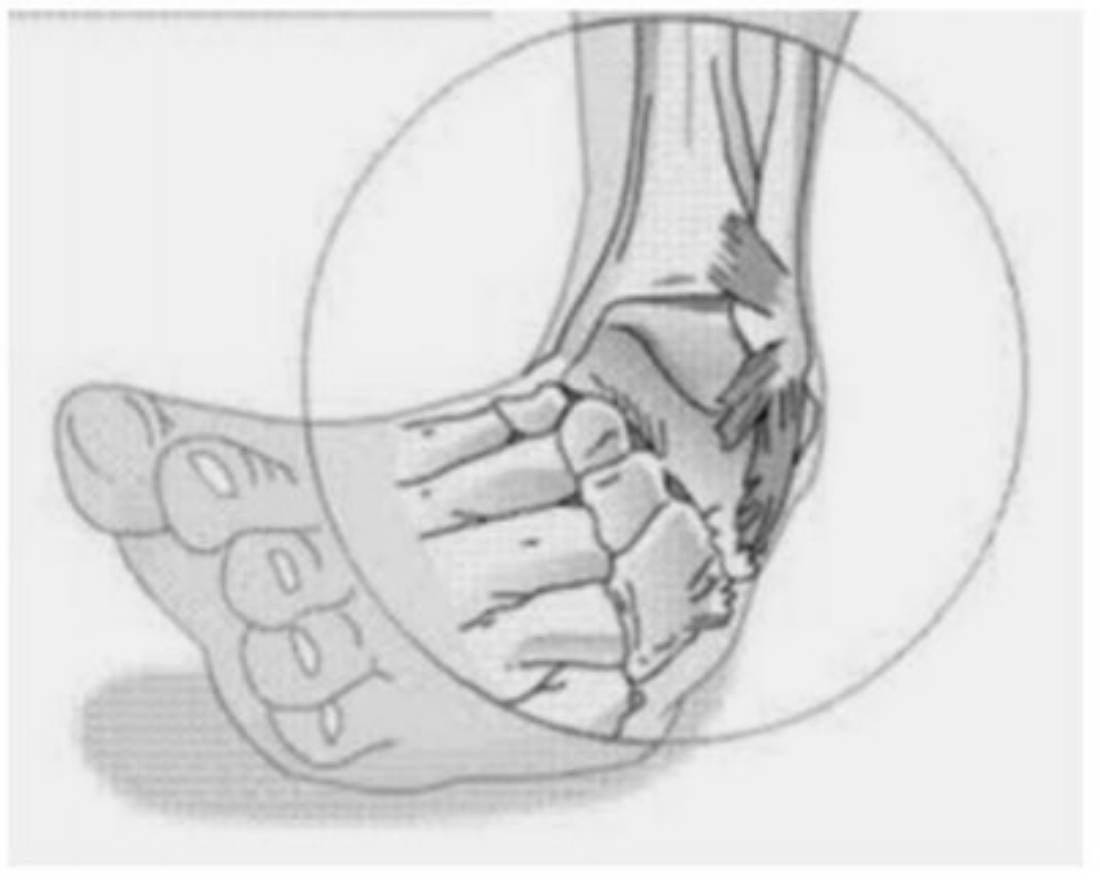
Ekhwan sprained his leg and his leg was swollen (Diagram 10.3). He needs a cooling pack. As a chemistry student, provide the appropriate materials in house and methods to prepare a cooling pack. Explain the function of the cooling pack.
[5]