Which of the following substance consists of ions?
Easy
Diagram 1 shows the standard representation of aluminium atom: ²⁷₁₃Al (nucleon number 27, proton number 13). What is the number of valence electrons of the atom?
Medium
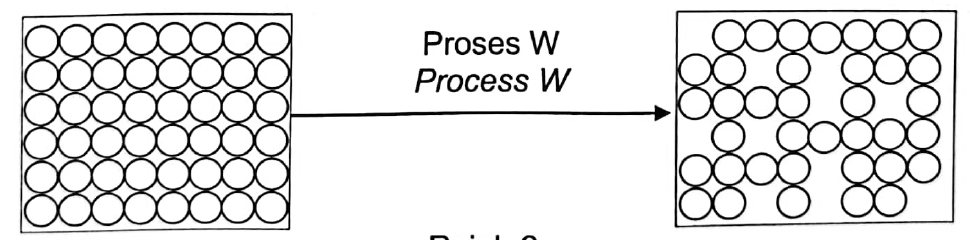
Diagram 2 shows the particles arrangement for the change of state of matter. Which of the following is process W? (Particles change from closely packed, orderly arrangement to a loosely arranged form.)
Easy
The following chemical equation represents a reaction: NaHCO₃ + HCl → NaCl + H₂O + CO₂. What are the reactants in this equation?
Easy
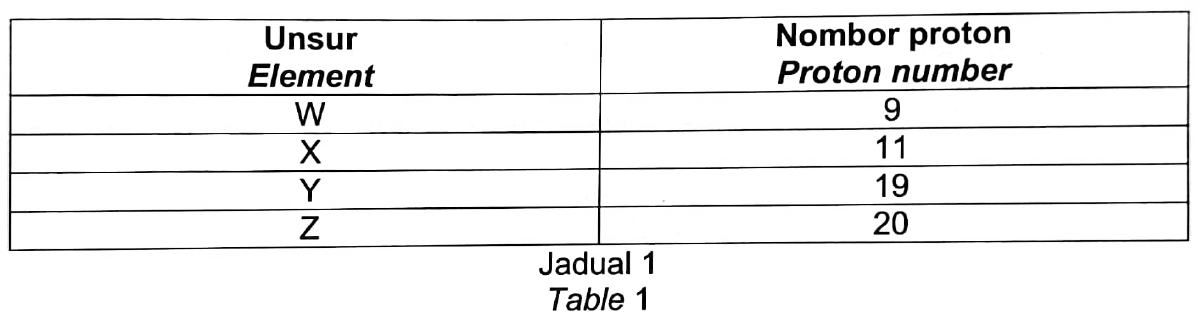
Table 1 shows elements with their respective proton number (W = 9, X = 11, Y = 19, Z = 20). Which pair of elements has the same chemical properties?
Medium
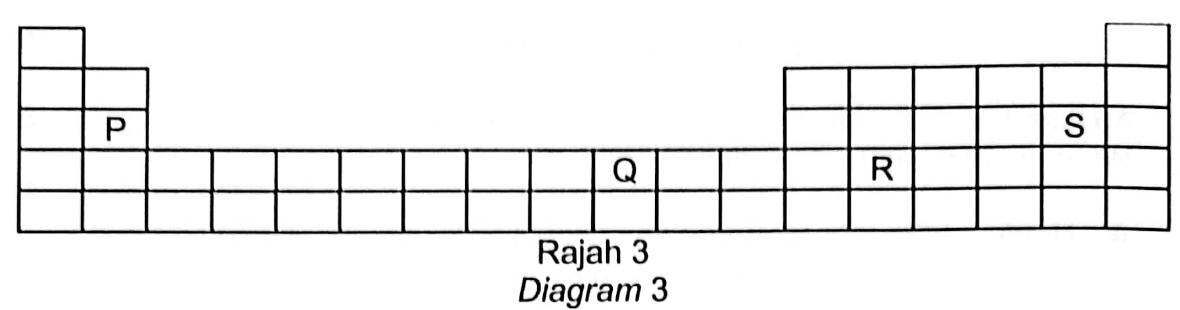
Diagram 3 shows four elements (P, Q, R, S) in the Periodic Table of Elements. Which of the following element can be used as a catalyst in a chemical reaction?
Medium
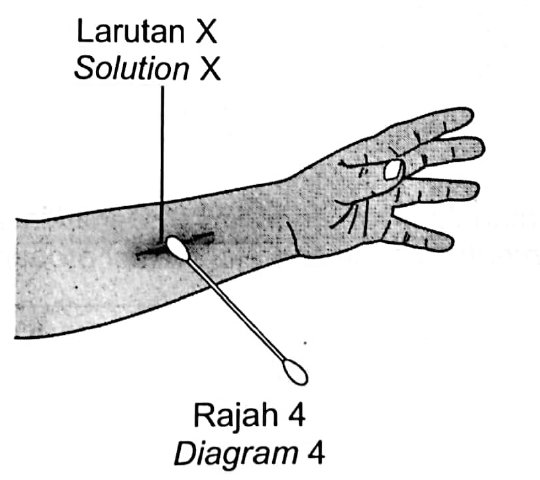
Diagram 4 shows a student applying solution X to his wound to kill bacteria. Which of the following Group 17 element is the most suitable to be used to make solution X?
Medium
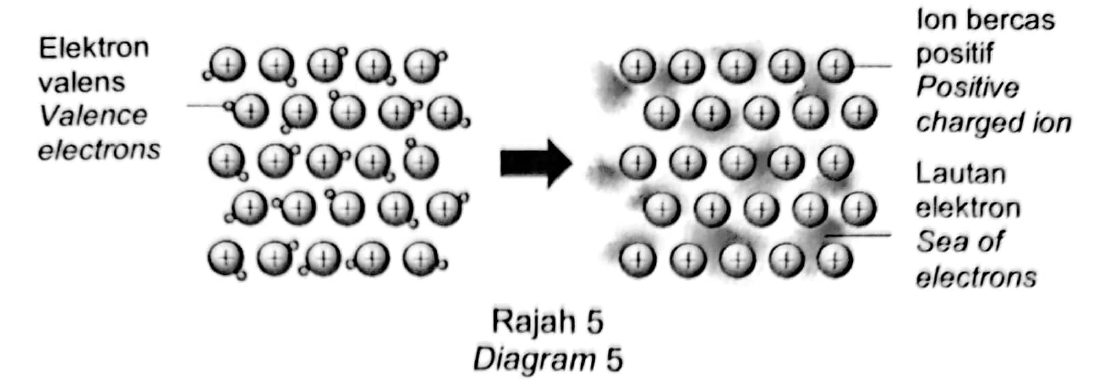
Diagram 5 shows a type of bond (positive charged ions in a sea of electrons; valence electrons shown). What is the name of the bond?
Easy
Which of the following statement about the formation of a dative bond is correct?
Medium
Which of the following is a soluble salt?
Easy
What is the main component in bronze?
Easy
Laboratory glass wares are a type of borosilicate glass. Which of the following materials is used to produce laboratory glass wares? I Boron oxide; II Calcium carbonate; III Lead(II) oxide; IV Sodium carbonate
Medium
Which of the following substance is an oxidising agent?
Easy
What is the meaning of a reducing agent?
Easy
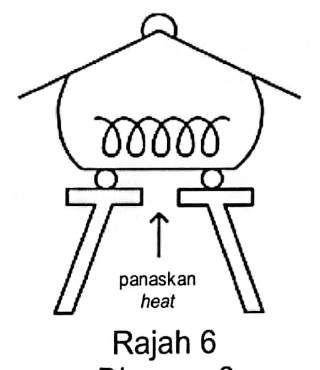
Diagram 6 shows the apparatus set-up to determine the empirical formula of a metal oxide (a crucible with lid heated strongly). Which of the following metal can this method be used to determine its oxide's empirical formula?
Medium
Which of the following is true about polyethene?
Easy
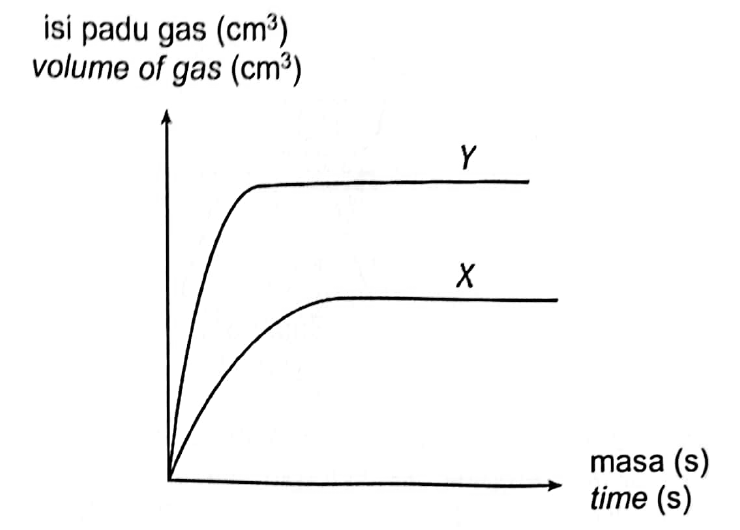
Diagram 7 shows a graph of volume of gas against time for the reaction between zinc and hydrochloric acid. Curve X is obtained when excess zinc granules react with 25 cm³ of 1 mol dm⁻³ of hydrochloric acid at room temperature. Which of the following should be done to produce curve Y (higher final volume of gas, higher initial rate)?
Medium
Why ceramic is suitable to be used as engine components in jet plane?
Easy
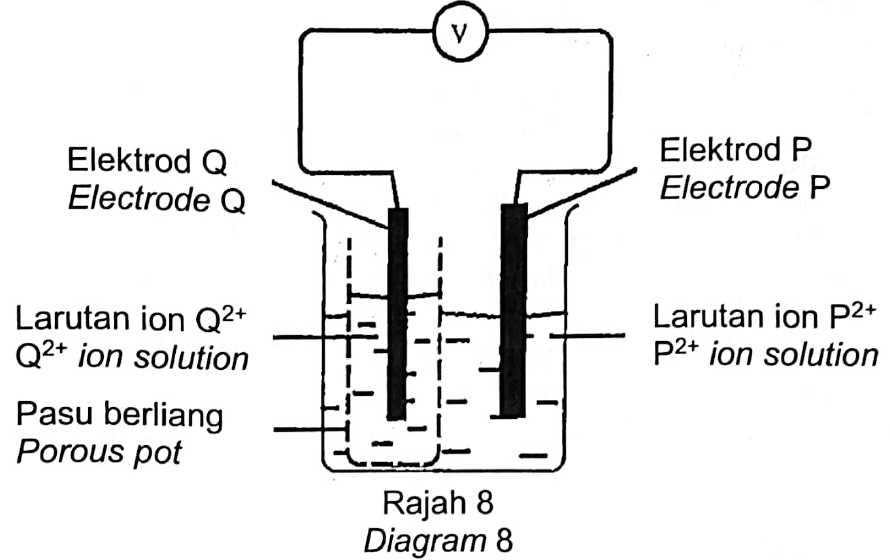
Diagram 8 shows the apparatus set-up of a chemical cell (electrode Q in Q²⁺ ion solution and electrode P in P²⁺ ion solution, separated by a porous pot, connected to a voltmeter). Electron moves from electrode P to electrode Q through the connecting wires. Which of the following statements is correct about the chemical cell?
Medium
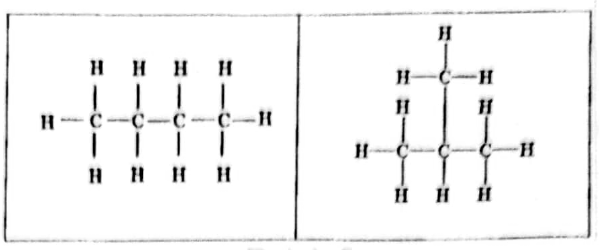
Diagram 9 shows the structural formulae of two hydrocarbon compounds (butane and 2-methylpropane). Which of the following statements is correct about both compounds?
Medium
The molecular formula of a substance is CH₃COOCH₂CH₂CH₂CH₃. What is the functional group of the substance?
Medium
Reaction X changes butene to butane. What is X?
Medium
The information below is about carbon compound X that exists as a liquid in the chemical laboratory of SMK Skudai: Can react with acidic potassium dichromate(VI) solution. What is X?
Medium
The following is a thermochemical equation for a reaction: AgNO₃(aq) + KCl(aq) → AgCl(s) + KNO₃(aq), ΔH = −65.5 kJ mol⁻¹. Which of the following is correct about the equation?
Medium
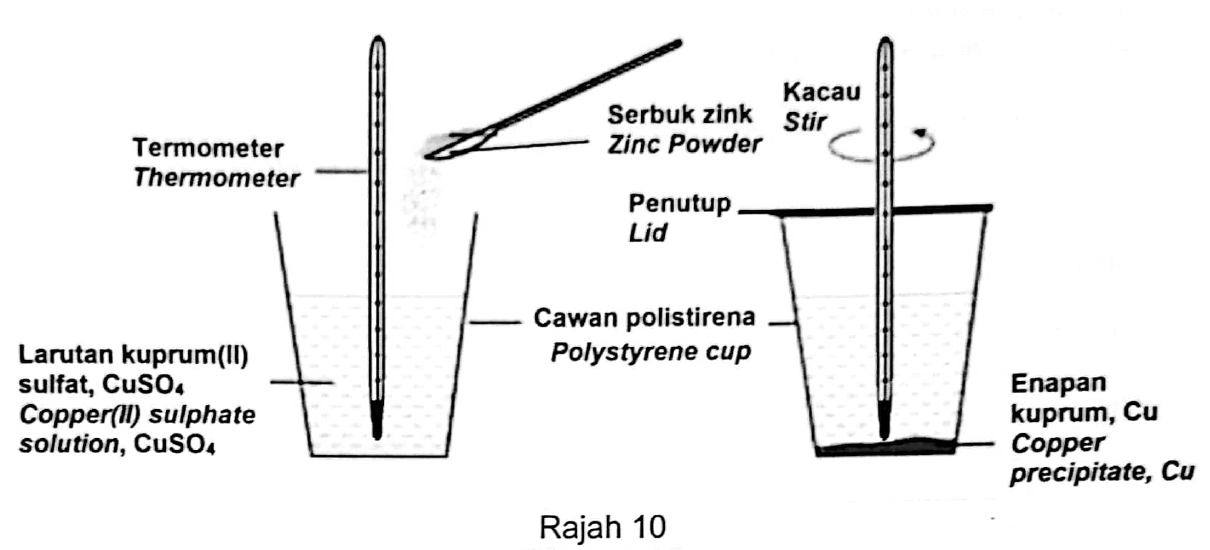
Diagram 10 shows a chemical reaction (zinc powder added to copper(II) sulphate solution in a polystyrene cup with thermometer, giving copper precipitate). Which of the following statements is true about the reaction?
Medium
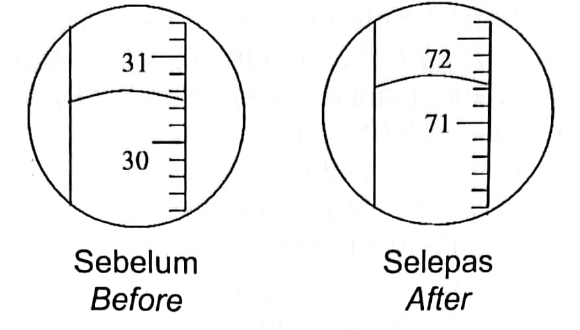
Diagram 11 shows the thermometer reading of a reaction (before and after). Which of the following reactions represents this change in temperature?
Medium
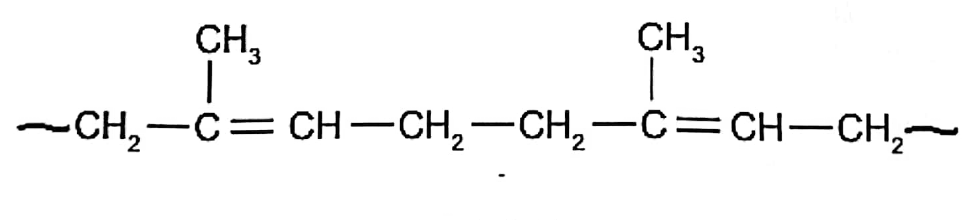
Diagram 12 shows the polymer found in latex (repeating unit –CH₂–C(CH₃)=CH–CH₂–). Which of the following is the monomer of the polymer?
Medium
Which of the following is correct about detergent? I The hydrophobic part of detergent dissolves in oil; II Detergent does not form scum in hard water; III Detergent is prepared through the hydrolysis of fats in alkaline conditions; IV Detergent reduces the ability of water to wet the surface of cloth
Medium
The joint of a student's leg is swollen and painful. What medicine is suitable to be given to the student?
Easy
The equations show the reaction between stearate ions, CH₃(CH₂)₁₆COO⁻ and alkyl sulphate ions, ROSO₃⁻ with calcium ions, Ca²⁺ in hard water: 2CH₃(CH₂)₁₆COO⁻(aq) + Ca²⁺(aq) → [CH₃(CH₂)₁₆COO]₂Ca(s); 2ROSO₃⁻Na⁺(aq) + Ca²⁺(aq) → (ROSO₃⁻)₂Ca²⁺(aq) + 2Na⁺(aq). R represents the hydrocarbon long chain. What is the effect of the addition of calcium ion on the concentration of stearate ion or alkyl sulphate ion?
Medium
Diagram 13 shows a waste disposal site producing 18 dm³ of methane gas, CH₄ from the activity of microorganisms. What is the mass of methane gas produced? [Relative atomic mass: H = 1; C = 12; Molar volume of gas at room temperature = 24 dm³ mol⁻¹]
Medium
What is the number of atoms in 0.5 mol of ammonia gas, NH₃? [Avogadro constant = 6.02 × 10²³ mol⁻¹]
Medium
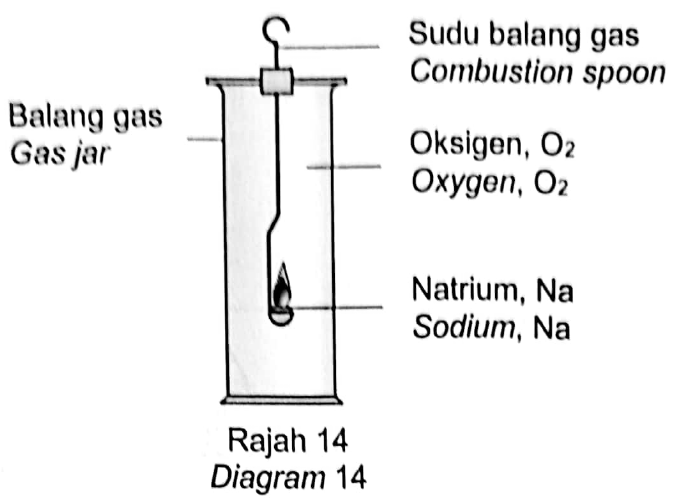
Diagram 14 shows an experiment conducted by a student in the laboratory (sodium burning in a gas jar of oxygen, O₂). Which chemical equation represents the reaction that happens in the gas jar?
Medium
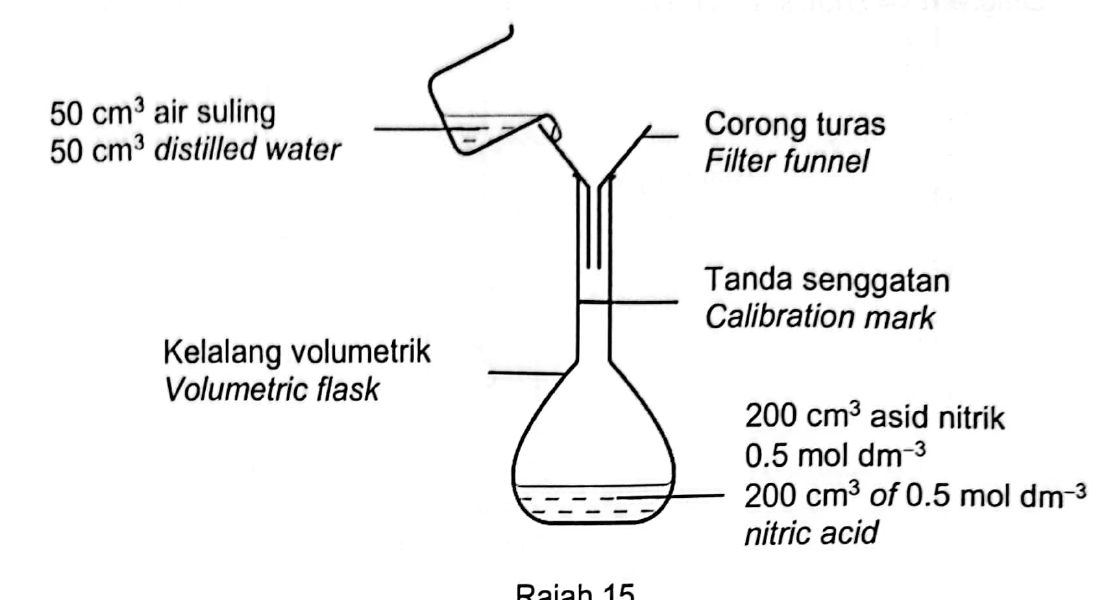
Diagram 15 shows a step taken by a student in the laboratory: 50 cm³ distilled water is added to 200 cm³ of 0.5 mol dm⁻³ nitric acid in a volumetric flask. What is the final pH value?
Medium
0.2 mol dm⁻³ sodium hydroxide solution reacts completely with 0.49 g sulphuric acid to produce sodium sulphate solution and water. What is the volume of sodium hydroxide solution needed in the neutralisation reaction? [Relative atomic mass: Na = 23; O = 16; H = 1; S = 32]
Medium
23.4 g of zinc powder reacts completely with hydrochloric acid solution in 2 minutes. What is the average rate of reaction in mol s⁻¹? [Relative atomic mass: Zn = 65]
Medium
What is the oxidation number of chlorine in the following molecules and ions? (Cl₂, Cl₂O₇, ClO⁻, ClO₃⁻)
Medium
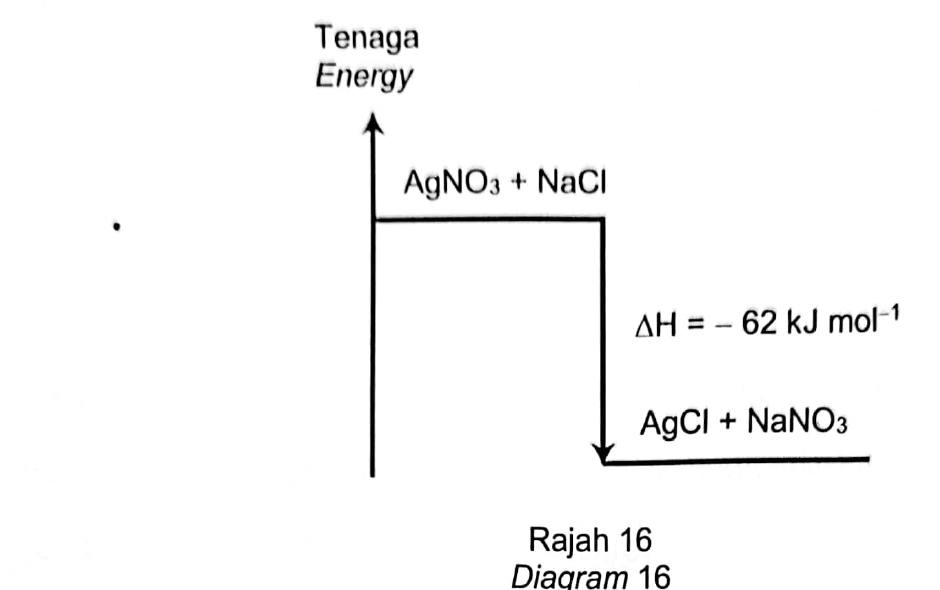
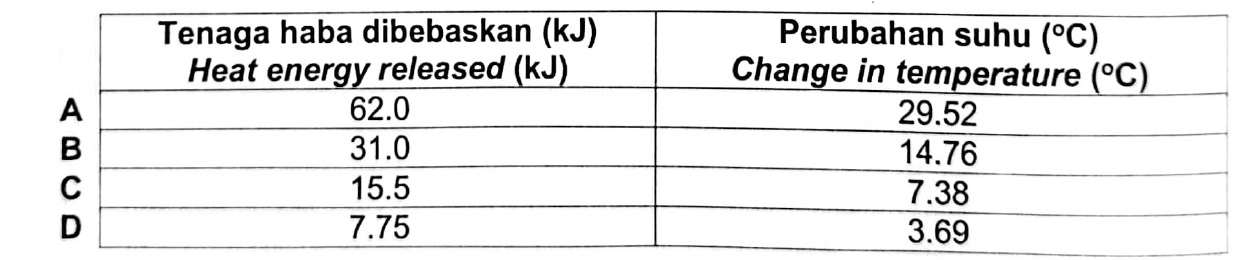
Diagram 16 shows the energy level diagram to determine the heat of precipitation of silver chloride (AgNO₃ + NaCl → AgCl + NaNO₃, ΔH = −62 kJ mol⁻¹). What is the heat energy released and the change in temperature of the mixture when 250 cm³ of 1 mol dm⁻³ silver nitrate solution is added into 250 cm³ of 1 mol dm⁻³ sodium chloride solution in polystyrene cup? [Specific heat capacity of water = 4.2 J g⁻¹ °C⁻¹; density of water = 1.0 g cm⁻³]
Medium
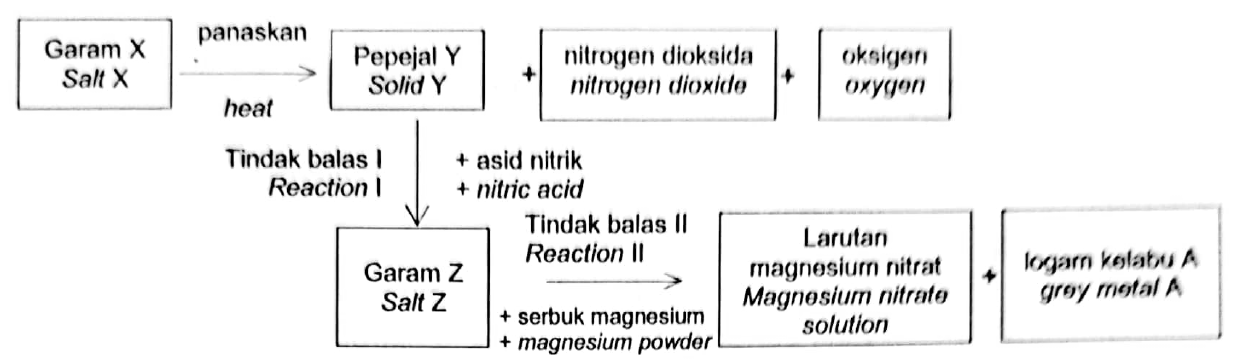
Diagram 17 shows a flow chart for several reactions involving salt X: salt X is heated to give solid Y + nitrogen dioxide + oxygen; solid Y + nitric acid (Reaction I) gives salt Z; salt Z + magnesium powder (Reaction II) gives magnesium nitrate solution + grey metal A. When salt X is heated, solid Y which is yellow in colour when cold is produced. Which of the following statements is true about the flow chart?
Medium
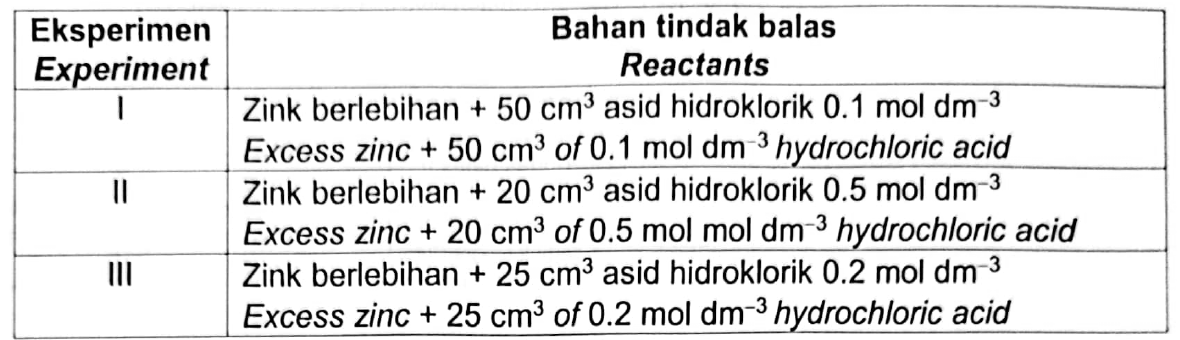
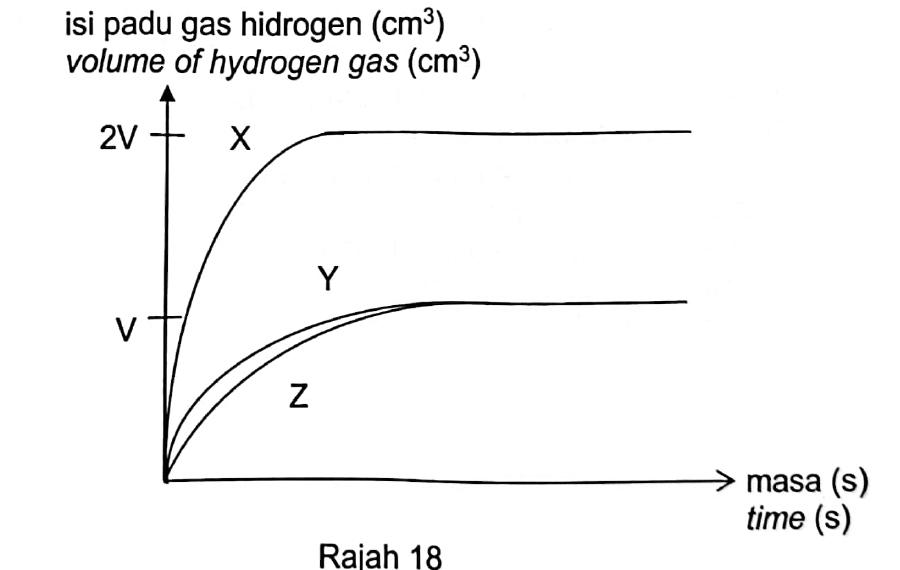
Table 2 shows the reaction between excess zinc powder and hydrochloric acid of different concentrations: I 50 cm³ of 0.1 mol dm⁻³; II 20 cm³ of 0.5 mol dm⁻³; III 25 cm³ of 0.2 mol dm⁻³. Diagram 18 represents the results (curves X, Y, Z of volume of hydrogen gas against time; X reaches 2V, Y and Z reach V). Which of the curves accurately represents the results of the three experiments?