Write your answer on paper. Then open the answer to check it.
Section A
Diagram 1 shows a medal made of bronze.
Medium5 marks
- (a)
Name the element added to copper to form bronze.
[1] - (b)
Draw the arrangement of atoms in bronze.
[2] - (c)
Why is bronze more suitable for making medals compared to copper?
[1] - (d)
Name one other alloy of copper.
[1]
Diagram 2 shows the heating curve on ice (temperature against time: A at -20 °C rising to B at 0 °C, constant from B to C, then rising to D at 70 °C).
Medium5 marks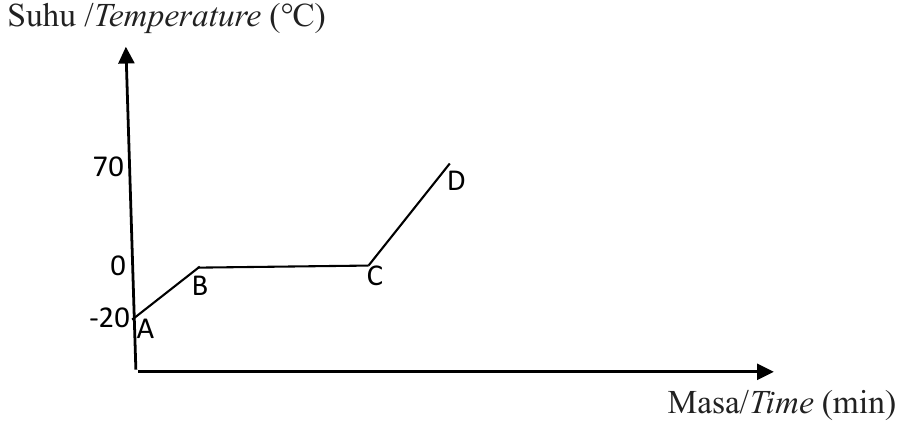
- (a)
State the type of particles in ice.
[1] - (b)
What is the meaning of melting point?
[1] - (c)
State the physical state of ice during the melting process.
[1] - (d)
Why does the temperature remain constant between B and C even if the heating continues?
[2]
Diagram 3 shows the structure of graphene used in an industry. Graphene is an important material in the field of nanoscience and nanotechnology due to its 0.1 nm in size.
Medium6 marks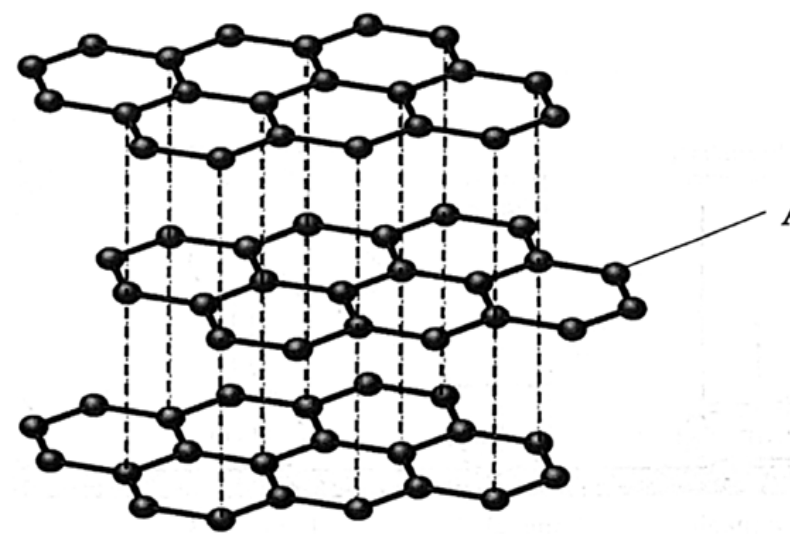
- (a)
What is the meaning of nanotechnology?
[1] - (b)
Name one field that uses graphene.
[1] - (c)
State one physical property of graphene.
[1] - (d)
What is the special characteristic of graphene that makes it suitable for the production of sensors?
[1] - (e)
Based on Diagram 3, name atom X and the type of bond formed.
[2]
Diagram 4 shows two methods used to determine the empirical formula of metal oxide X and metal oxide Y. Method I: metal X heated in a crucible with lid. Method II: hydrogen gas (from zinc and hydrochloric acid) passed over heated metal oxide Y in a glass tube.
Medium7 marks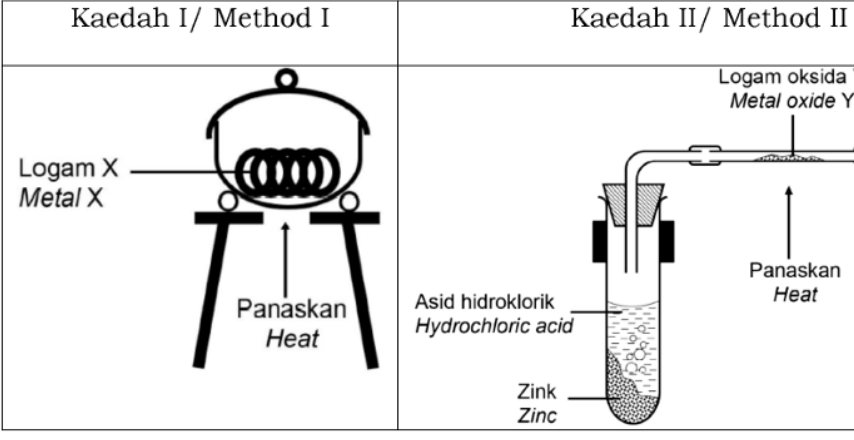
- (a)
What is meant by empirical formula?
[1] - (b)
Based on Diagram 4, suggest which method is suitable to determine the empirical formula for (i) magnesium oxide, (ii) lead oxide.
[2] - (c)(i)
Table 1 shows the information from an experiment using Method II. Glass tube: 4.128 g; glass tube + oxide of metal Y: 4.318 g; glass tube + metal Y: 4.280 g. Determine the empirical formula for oxide Y. [Relative atomic mass: O = 16, Y = 64]
[3]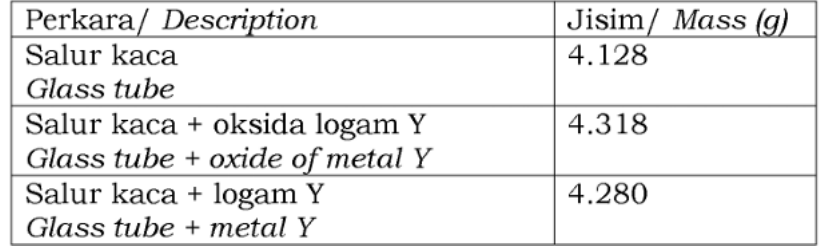
- (c)(ii)
Hydrogen gas is flowed for 10 seconds before heating is started. Explain why.
[1]
Question on the acidic properties of oxalic acid, acid A and treatment of a bee sting.
Medium8 marks- (a)(i)
Diagram 5: Experiment I: oxalic acid in water, blue litmus paper turns red. Experiment II: oxalic acid in propanone, no change. State the meaning of acid.
[1]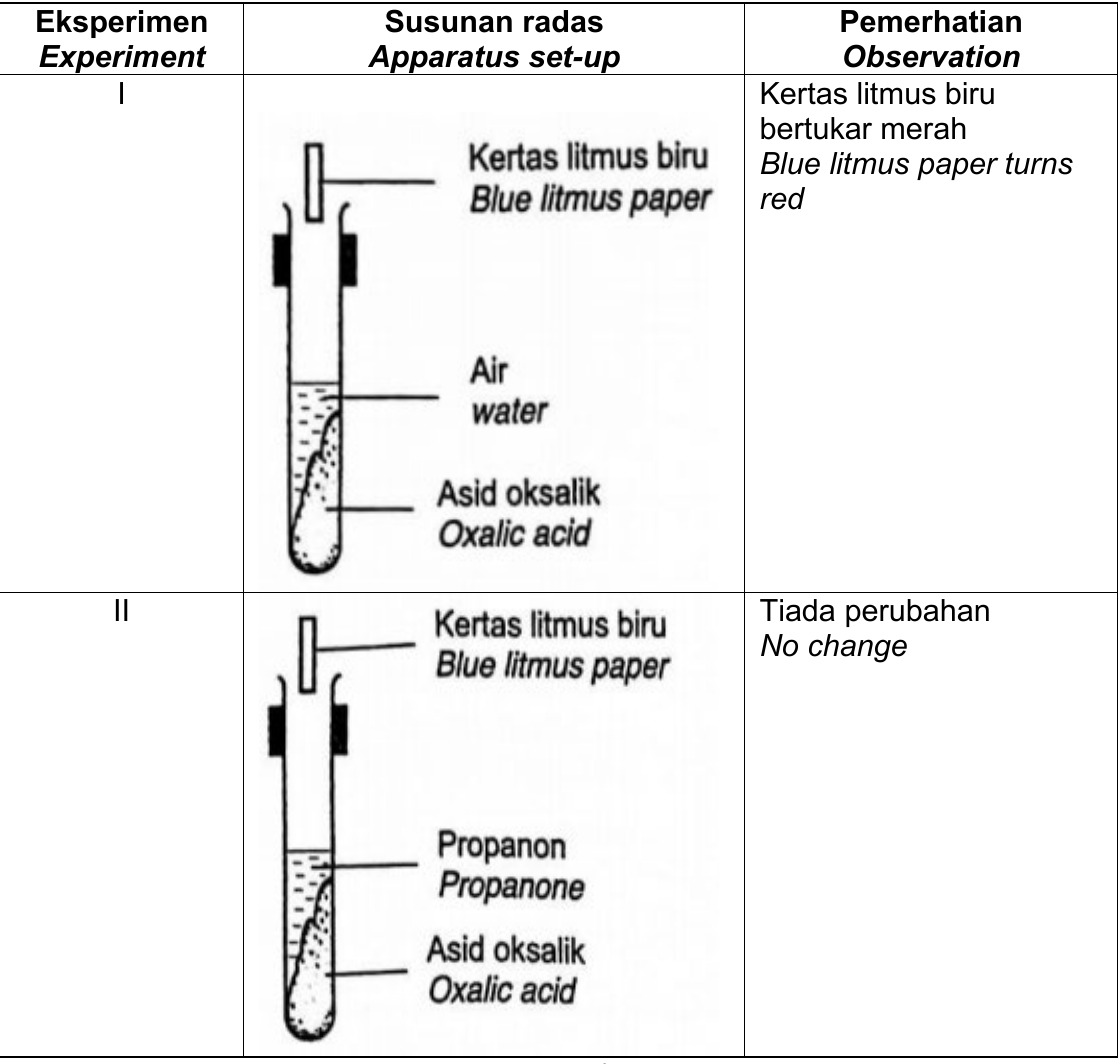
- (a)(ii)
Explain the differences in the observation between Experiment I and Experiment II.
[1] - (b)(i)
Acid A is a monoprotic acid with pH 1. Suggest acid A.
[1] - (b)(ii)
25 cm³ of acid A completely neutralises 50 cm³ of 0.5 mol dm⁻³ sodium hydroxide solution. Using the acid named in 5(b)(i), write a balanced chemical equation for the neutralisation. Next, determine the concentration of acid A.
[3] - (c)
Diagram 5.1 shows Sarah stung by a bee on her arm at home. Suggest a material at home that can be used for initial treatment. Justify the use of the material.
[2]
Question on two hydrocarbons X and Y, sootiness of flames and preparation of an ester.
Medium9 marks- (a)(i)
Diagram 6.1 shows structural formulae of two hydrocarbons: X = butane (CH3CH2CH2CH3, all single bonds), Y = C4H8 with a C=C at the end of a 4-carbon chain. State the meaning of isomer.
[1]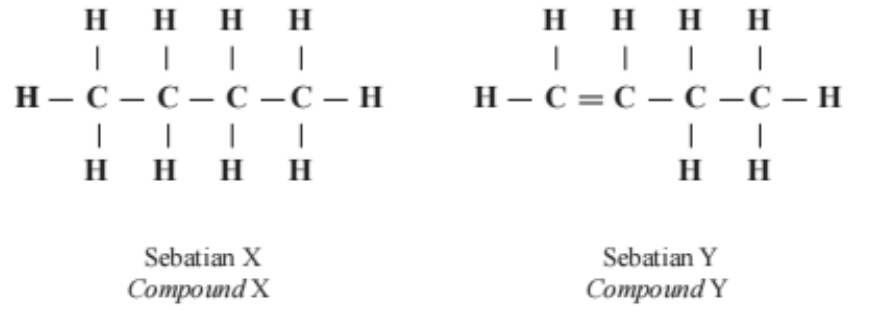
- (a)(ii)
State the names of compound X and compound Y using IUPAC nomenclature.
[2] - (a)(iii)
Draw the structural formula for another isomer of compound X.
[1] - (b)(i)
Hydrocarbons X and Y produce soot when burnt. Compare the sootiness of the flame during combustion of hydrocarbon X and Y in excess oxygen gas.
[1] - (b)(ii)
Explain why there is a difference in the sootiness of the flame of hydrocarbon X and Y. [Relative atomic mass: C = 12, H = 1]
[2] - (c)(i)
Diagram 6.2 shows preparation of a pear-flavoured ester from alcohol Q and compound R using concentrated sulphuric acid as catalyst (the ester drawn is propyl ethanoate). Write a chemical equation for the esterification reaction between alcohol Q and compound R.
[1]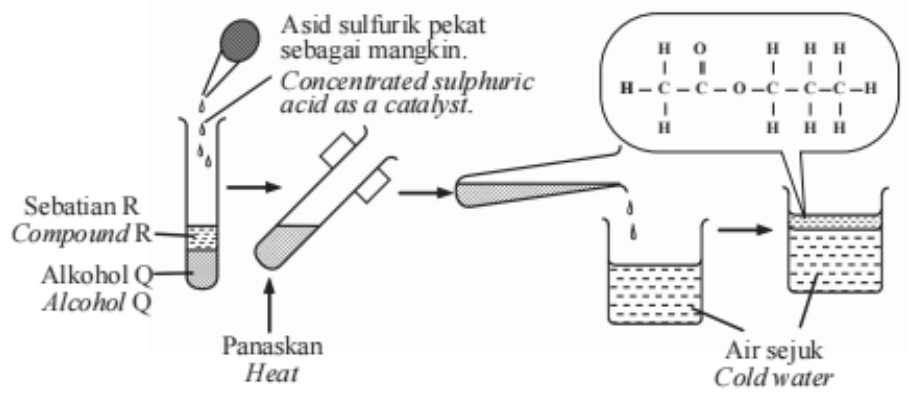
- (c)(ii)
Justify the usage of ester in candy.
[1]
Diagram 7 shows the combination between a chemical cell (Cell II: magnesium rod in contact with copper rod in 1 mol dm⁻³ copper(II) sulphate solution) and an electrolytic cell (Cell I: carbon rods in 1 mol dm⁻³ sodium chloride solution).
Medium10 marks- (a)
What is the meaning of electrolysis?
[1]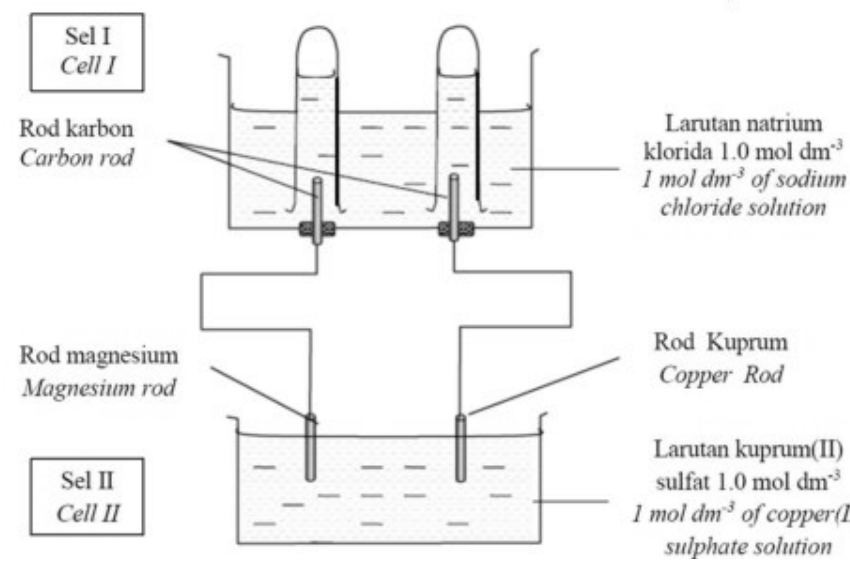
- (b)(i)
Referring to Cell I, state all the ions present in the sodium chloride solution.
[1] - (b)(ii)
Referring to Cell I, state the observation at the anode.
[1] - (c)(i)
Referring to Cell II and standard electrode potentials (Mg²⁺ + 2e⁻ ⇌ Mg, E° = -2.38 V; Cu²⁺ + 2e⁻ ⇌ Cu, E° = +0.34 V), identify the negative terminal.
[1] - (c)(ii)
Identify the positive terminal of the cell.
[1] - (d)(i)
Modify Cell II in Diagram 7 so that it can function as a Daniell cell. You are supplied with additional materials: 1.0 mol dm⁻³ magnesium sulphate solution and 1.0 mol dm⁻³ sulphuric acid, along with other appropriate apparatus.
[2] - (d)(ii)
Write the cell notation and calculate the cell voltage for the Daniell cell in (d)(i).
[3]
Table 2 shows the conditions of reactants and the time taken to collect 40 cm³ of gas: Experiment I: excess zinc granules + 25 cm³ of 0.2 mol dm⁻³ HCl, 90 s. Experiment II: excess zinc powder + 25 cm³ of 0.2 mol dm⁻³ HCl, 55 s. Experiment III: excess zinc powder + 25 cm³ of 0.2 mol dm⁻³ HCl + copper(II) sulphate solution, 30 s.
Medium10 marks- (a)
State the meaning of rate of reaction for this experiment.
[1]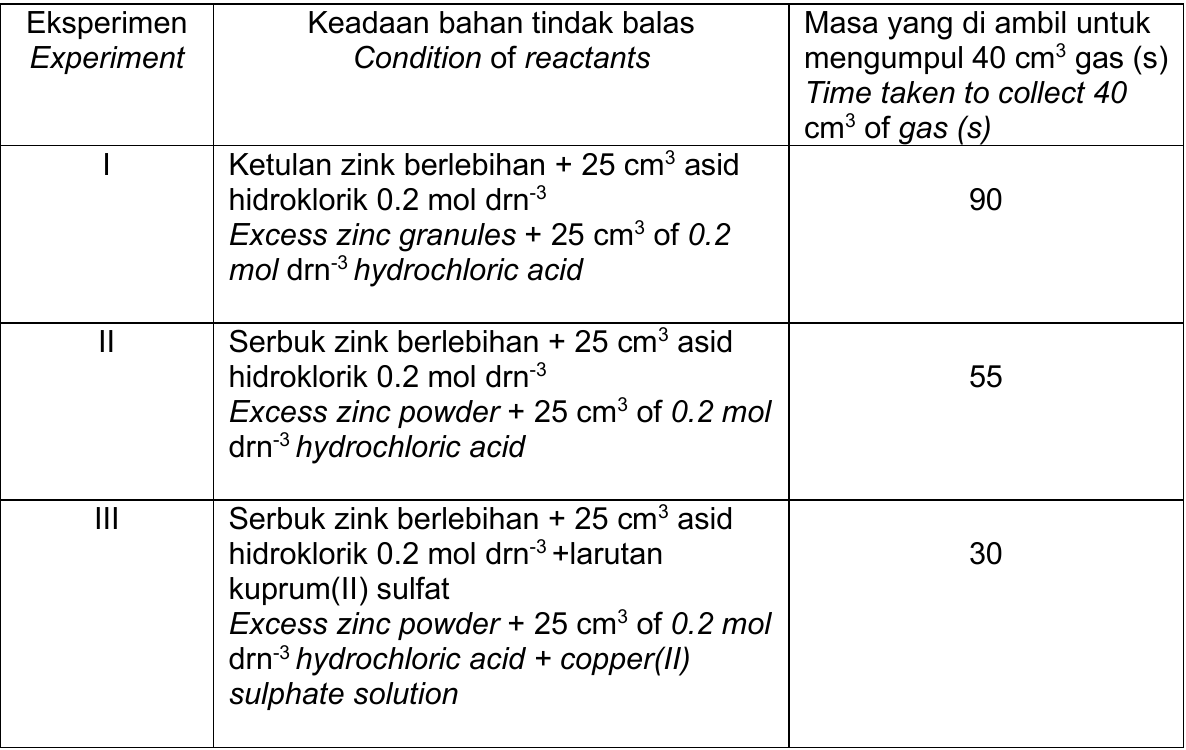
- (b)(i)
Which experiment shows the highest rate of reaction?
[1] - (b)(ii)
Calculate the average rate of reaction in (b)(i).
[1] - (c)
State the factor that influences the rate of reaction for experiment III.
[1] - (d)
Write the chemical equation for the reaction between zinc and hydrochloric acid.
[2] - (e)
Compare the rate of reaction for experiment I and experiment II. By using collision theory, explain your answer.
[4]
Section B
Diagram 8 shows energy level diagrams for two sets of precipitation reactions. Set I: 2NaCl + Pb(NO3)2 → PbCl2 + 2NaNO3, ΔH = -x kJ mol⁻¹ (products lower in energy). Set II: K2CO3 + MgCl2 → MgCO3 + 2KCl, ΔH = +23.1 kJ mol⁻¹ (products higher in energy).
Medium20 marks- (a)(i)
Based on Diagram 8, which reaction releases heat energy to the surroundings during the reaction? Explain.
[2]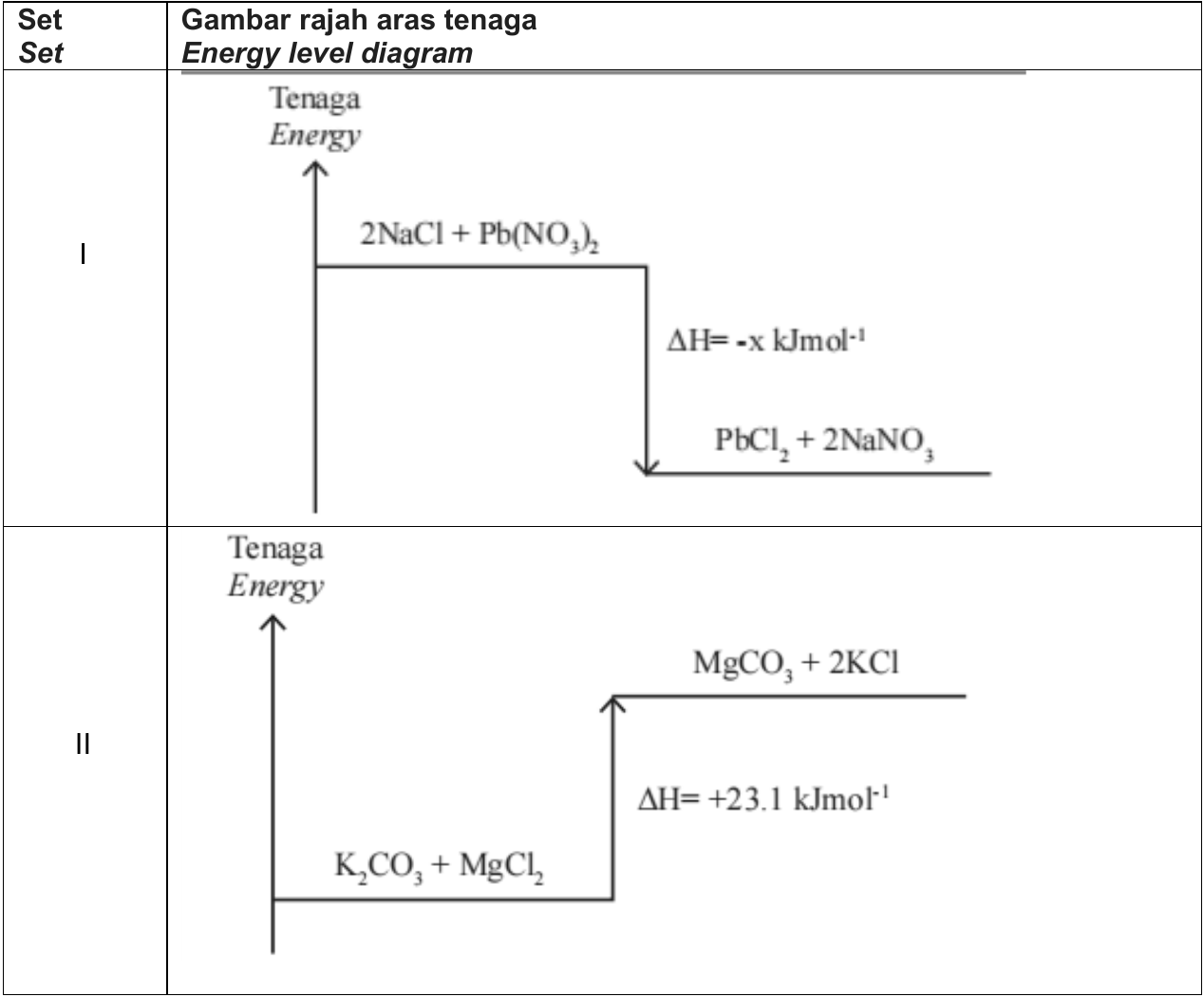
- (a)(ii)
In Set I, 50 cm³ of 1.0 mol dm⁻³ sodium chloride solution is added to 50 cm³ of 1.0 mol dm⁻³ lead(II) nitrate solution and the temperature increases by 3.5 °C. Determine which reactant is in excess. Calculate the value of x. [Density of water = 1.0 g cm⁻³, specific heat capacity of water, c = 4.2 J g⁻¹ °C⁻¹]
[5] - (a)(iii)
Ahmad conducted the Set II experiment by adding 50 cm³ of 1.0 mol dm⁻³ potassium carbonate solution to 50 cm³ of 1.0 mol dm⁻³ magnesium chloride solution. The heat of precipitation he obtained is not the same as in Diagram 8. State the meaning of heat of precipitation and explain why the heat values of precipitation are different. Write a thermochemical equation for the reaction. State the colour of the precipitate formed.
[5] - (b)(i)
Table 3: Set I: excess magnesium powder + 50 cm³ of 0.5 mol dm⁻³ copper(II) nitrate solution. Set II: excess iron powder + 50 cm³ of 0.5 mol dm⁻³ copper(II) nitrate solution. State two observations from Set I.
[2] - (b)(ii)
Compare the heat of displacement of Set I and Set II. Explain.
[2] - (b)(iii)
Diagram 9 shows the colour change of the solution in Set II after the reaction is complete: blue solution at the start, green solution when the reaction is complete, brown solution after 1 hour. Explain the colour change of the solution.
[4]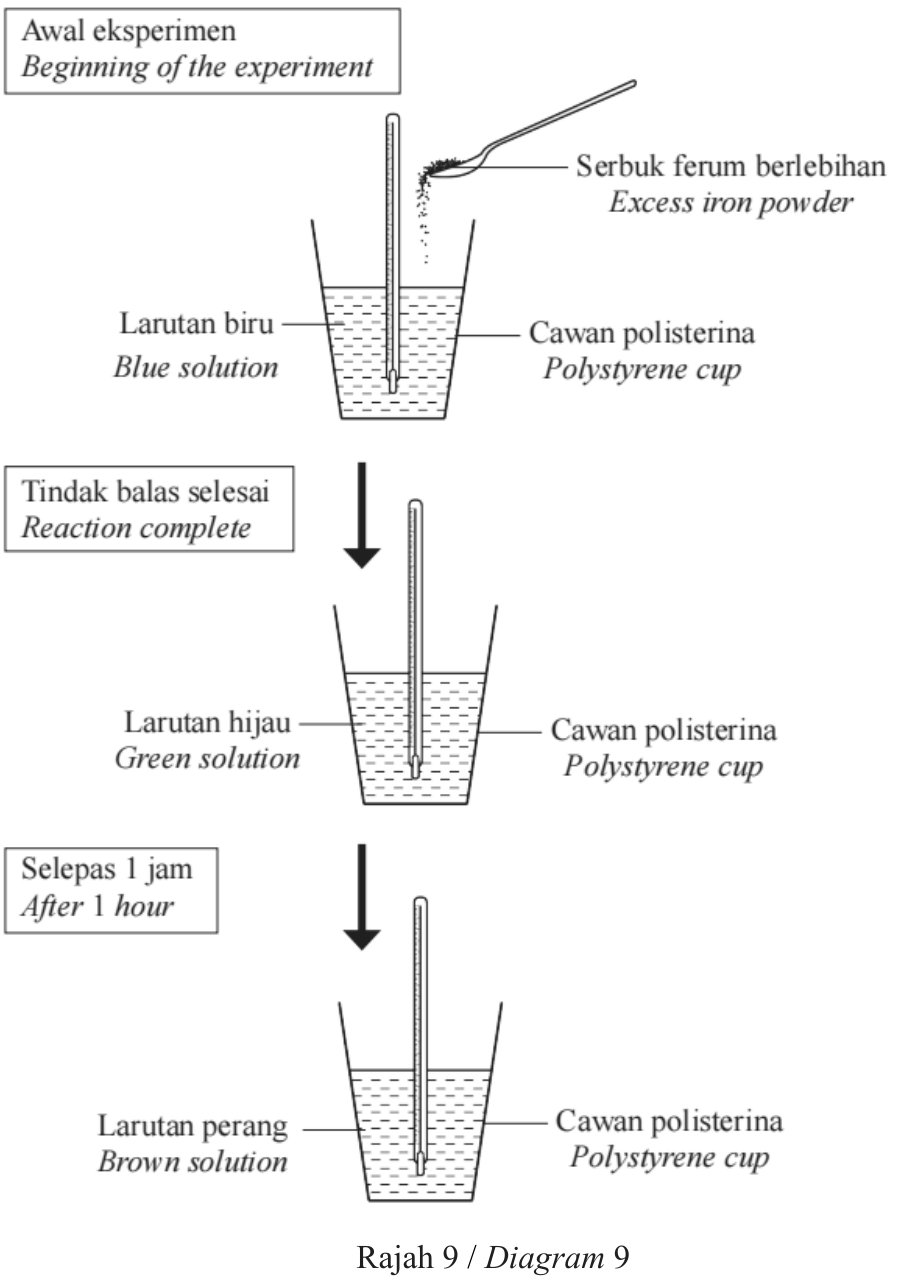
Diagram 10.1 shows the electron arrangement of atoms of elements X and Y in the same group (X: 2.8.1, Y: 2.8.8.1). Diagram 10.2 shows the electron arrangement of compound A (R, P, R) and compound B (Q+, R2-, Q+).
Medium20 marks- (a)(i)
State the meaning of valence electron and state the group where element X and element Y are located in the Periodic Table.
[2]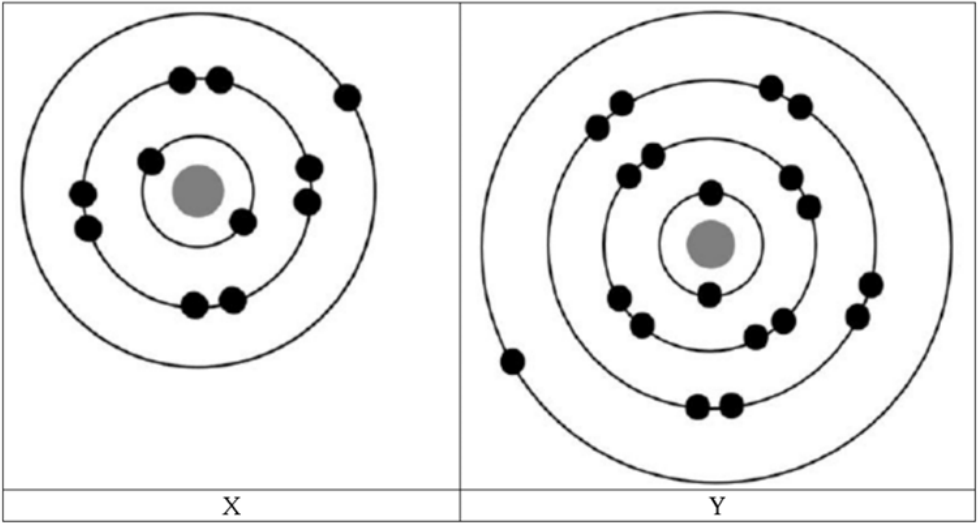
- (a)(ii)
Write the chemical equation for the reaction between element X and oxygen gas. Calculate the mass of product obtained if 1200 cm³ of oxygen gas is used. [Relative atomic mass: O = 16, X = 23; molar volume of gas at room condition = 24 dm³ mol⁻¹]
[5] - (a)(iii)
Elements X and Y show the same chemical properties but with different reactivity. Compare the reactivity of element X and element Y. Explain your answer.
[3] - (b)(i)
What is the meaning of cation?
[1]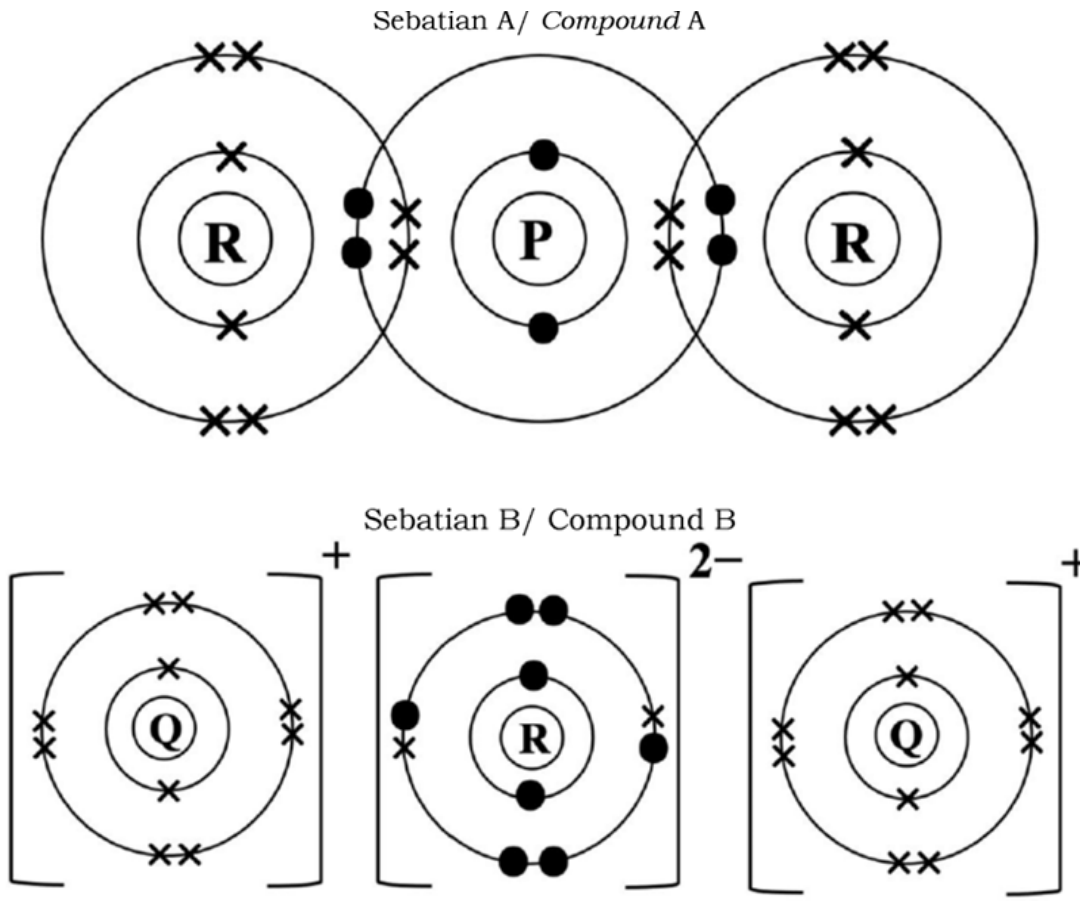
- (b)(ii)
Element R reacts with element P to form compound A, while compound B is formed when R reacts with element Q. Determine the type of bond formed in compound A and compound B. Explain the formation of one of the compounds, either compound A or compound B.
[7] - (b)(iii)
The melting point of compound B is higher than compound A. Explain why.
[2]
Section C
Question on toothpaste, preparation and dilution of sodium hydroxide solution, strength of acids and mine water analysis.
Hard20 marks- (a)(i)
What is the meaning of neutralisation?
[1]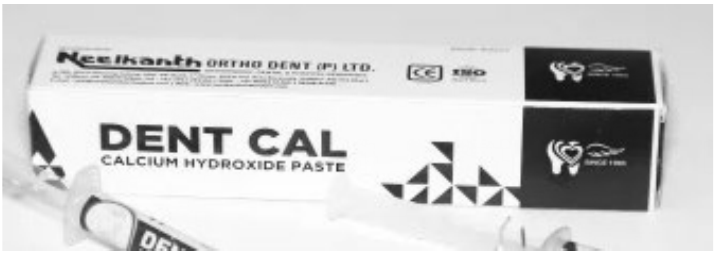
- (a)(ii)
Diagram 11.1 shows toothpaste (calcium hydroxide paste) used to take care of dental health. How can the toothpaste help to take care of dental health?
[2] - (b)
A sample of solid sodium hydroxide, NaOH is dissolved in distilled water to prepare 100 cm³ of 0.5 mol dm⁻³ solution with pH 13.7. Calculate the mass of sodium hydroxide dissolved. The solution is then diluted to produce a new solution of concentration 0.1 mol dm⁻³ with pH 13. Calculate the volume of distilled water that needs to be added. [Relative atomic mass: H = 1, O = 16, Na = 23]
[4]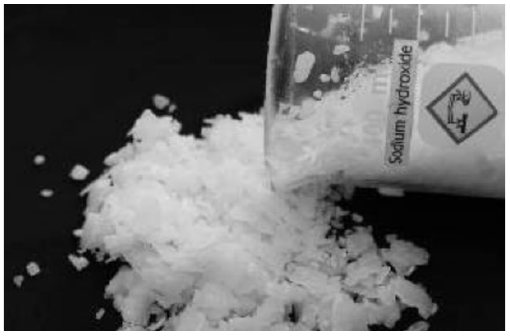
- (c)
Three pieces of 3 cm magnesium ribbon were placed in three different acids of concentration 1.0 mol dm⁻³. Table 4 shows the results: acid P, time to complete 11.0 min (few bubbles); acid Q, 3.0 min; acid R, 1.5 min (most bubbles). In your opinion, why are there differences in the observations? Give suitable examples of acids P and R.
[5]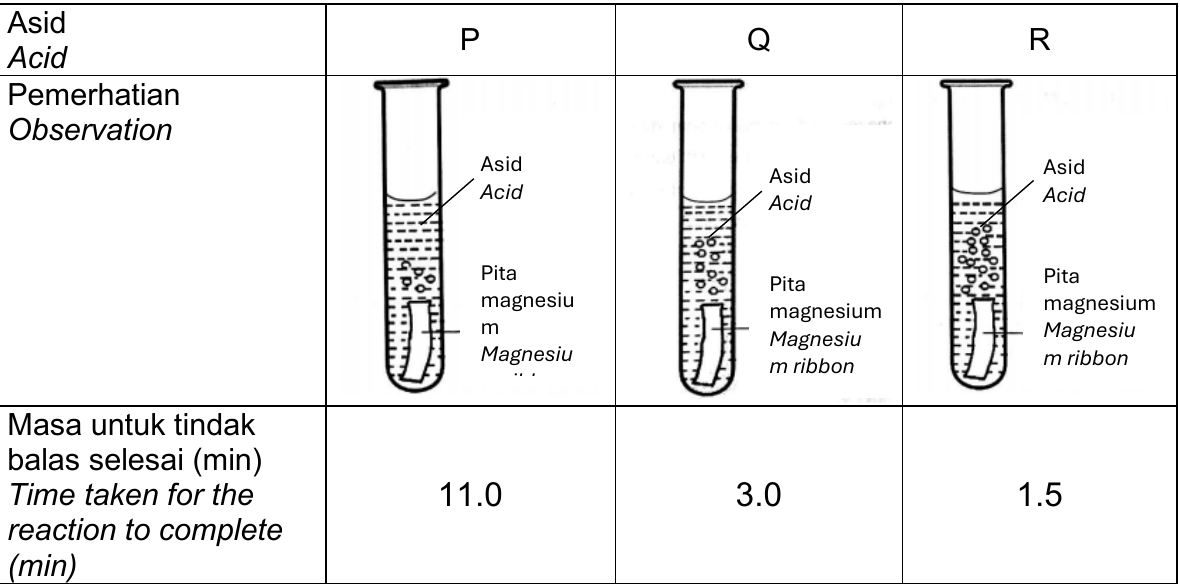
- (d)
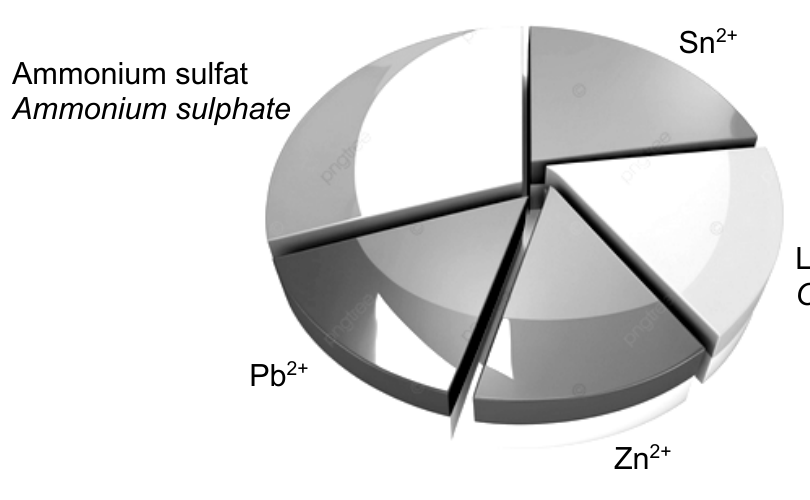
Diagram 11.3 shows a pie chart of the minerals in the water of tin mine T (ammonium sulphate, Sn²⁺, Pb²⁺, Zn²⁺, others). T is a tin mine that has stopped operating, near an agricultural area. The mine water smells pungent and is unsafe to drink because it contains heavy metals and fertiliser from agricultural areas through leaching, and sediment is formed. In your opinion, why does the water smell pungent and what is the name of the substance in the sediment? How would you prove that the water contains the ions that form the compound in the sediment and the substance that causes the pungent smell?
[8]