The following information is about an atomic structure model by a scientist: Discovered neutral particles, that are neutrons, in the nucleus. Neutrons contribute almost half of the mass of an atom. Who is the scientist?
Easy
Which chemical formula is correctly named according to the IUPAC nomenclature system? A: MgO - Magnesium oxide; B: SO3 - Sulphur oxide; C: CO - Carbon dioxide; D: Fe2O3 - Iron oxide.
Medium
Which of the following Group 1 elements has the smallest atomic size?
Easy
What is the meaning of metallic bond?
Easy
Which of the following is a process which occurs during tooth brushing?
Easy
The chemical substance with low concentration of hydroxide ion is
Medium
How can temperature increase the rate of reaction?
Medium
A superconductor is an example of an alloy used in electrical transportation such as the Maglev train. What is the property of superconductors?
Easy
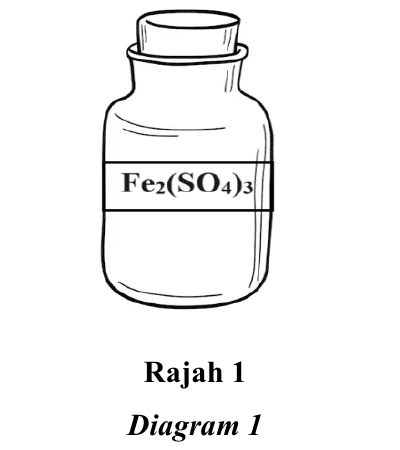
Diagram 1 shows the chemical formula of a substance, Fe2(SO4)3. What is the name of the substance?
Easy
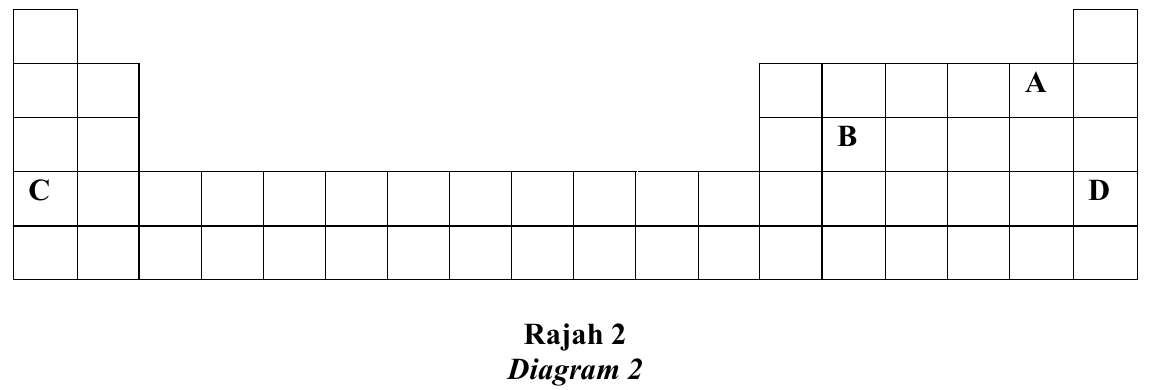
Diagram 2 shows elements A, B, C and D in the Periodic Table of Elements. The letters used are not the actual symbols of the elements. Which of the following should be kept in paraffin oil?
Easy
Which of the following can be used in advertising board light?
Easy
Which compound is correctly matched with its type of bond? A: Oxygen - Ionic; B: Ammonia - Covalent; C: Sodium oxide - Covalent; D: Sulphur trioxide - Ionic.
Medium
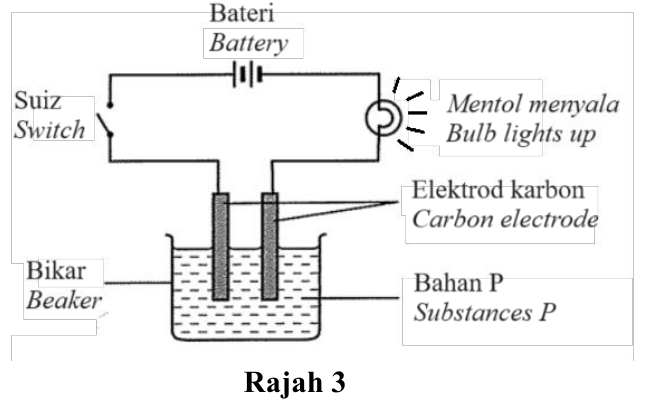
Diagram 3 shows an electrolytic cell with carbon electrodes in substance P; the bulb lights up. Which of the following is substance P?
Medium
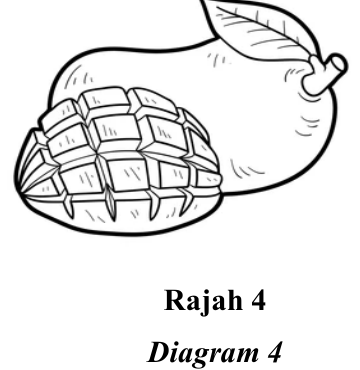
Diagram 4 shows a fruit that contains compound R which has a fruity smell. What is the homologous series of compound R?
Medium
Which of the following absorbs heat from the surroundings?
Medium
In the construction industry, PVC pipes are preferred over steel pipes. Which of the following supports the statement?
Medium
Which of the following are the basic cosmetics ingredients?
Easy
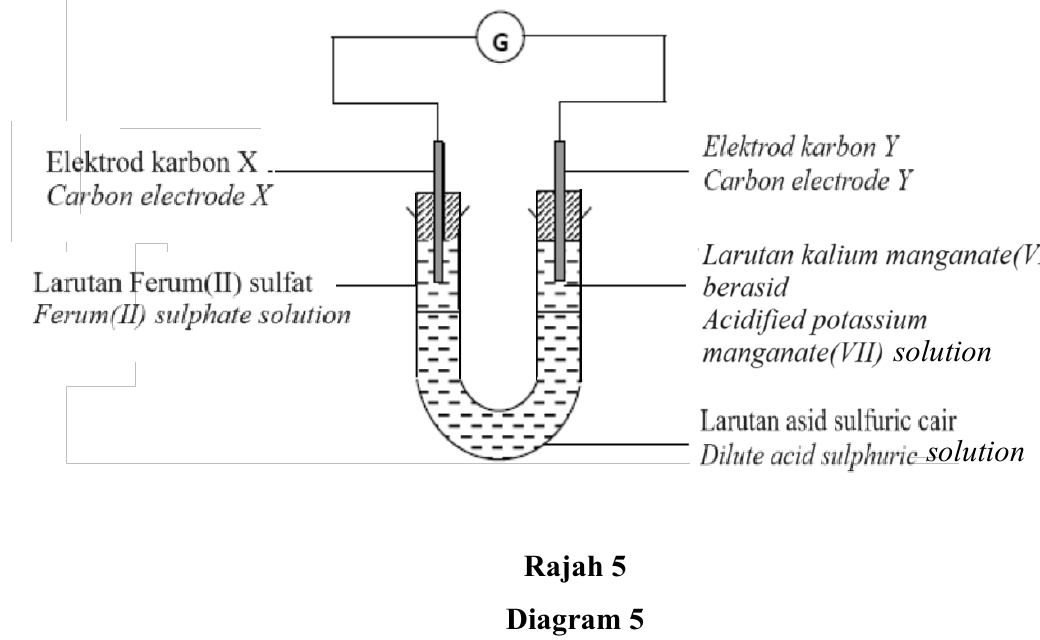
Diagram 5 shows the apparatus set up to study oxidation and reduction in terms of electron transfer at a distance (Fe2+ solution with carbon electrode X, acidified KMnO4 solution with carbon electrode Y, dilute sulphuric acid). Which ion undergoes oxidation?
Medium
The natural smell of an apple is due to the presence of ethyl pentanoate. Which of the following is a property of ethyl pentanoate?
Medium
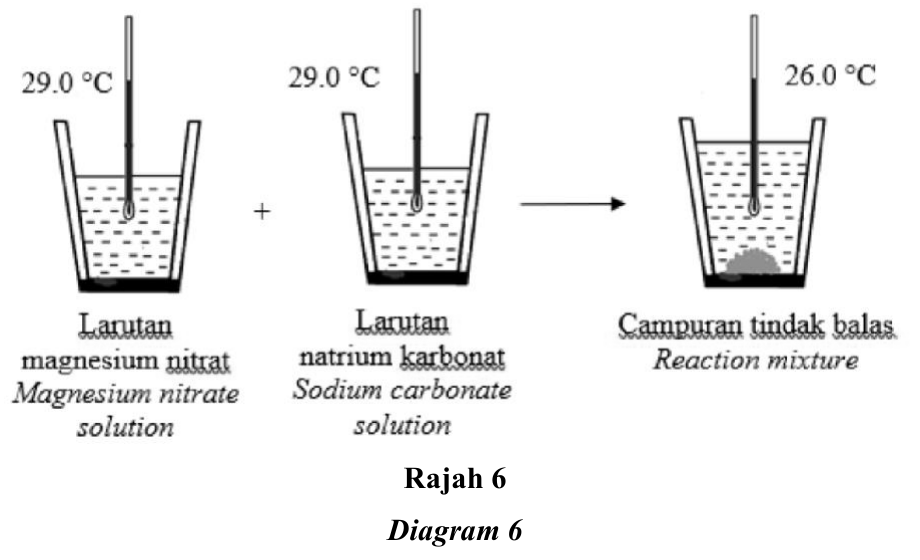
Diagram 6 shows the apparatus set-up to determine the heat of reaction (magnesium nitrate solution 29.0 C + sodium carbonate solution 29.0 C gives reaction mixture 26.0 C). Which of the following statements is true? I Bond formation occurs. II The temperature decreases during the reaction. III The value of ΔH for the reaction is negative. IV The total energy content of the products is higher than the total energy content of the reactants.
Medium
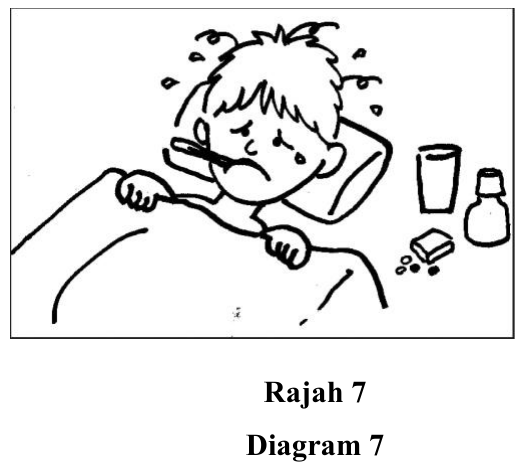
Diagram 7 shows a patient (with a thermometer in the mouth, i.e. fever). Which medicine can be prescribed to the patient? I Aspirin II Penicillin III Paracetamol IV Antihistamines
Easy
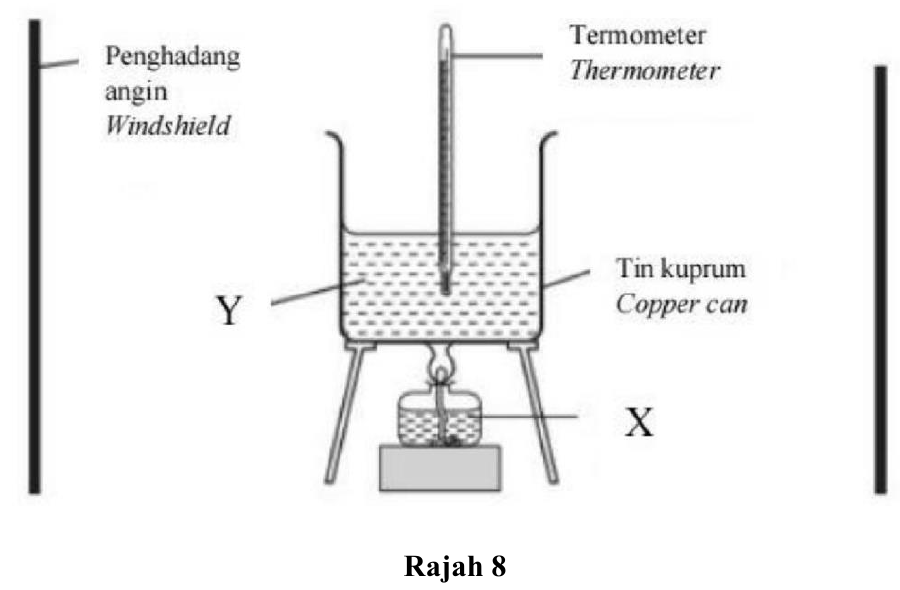
Diagram 8 shows the experiment set-up to determine the heat of combustion of ethanol, C2H5OH (a copper can Y with thermometer above a spirit lamp X, with windshield). What is appropriate for X and Y?
Medium
Natural rubber is soft and less resistant to oxidation and heat. A student dipped a natural rubber sheet in a beaker containing an organic solvent and compound X for a few minutes. The rubber sheet was then removed and dried. It became more elastic and more resistant to heat and oxidation. What is compound X?
Easy
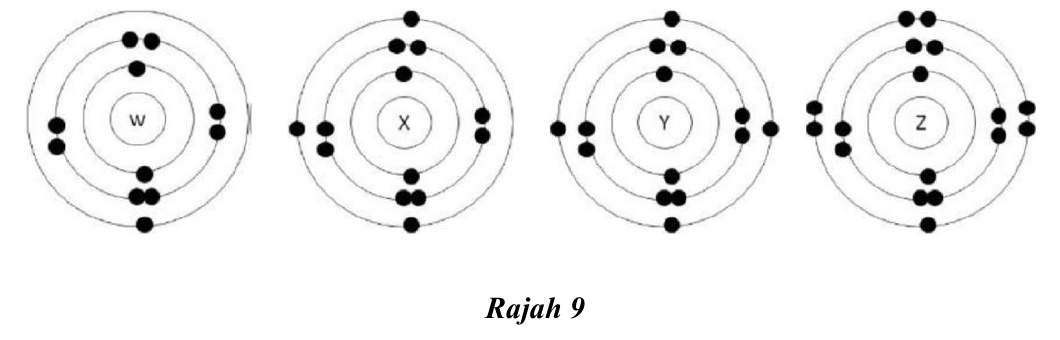
Diagram 9 shows the electron arrangements of atoms W, X, Y and Z. The letters used are not the actual symbols of the elements. Which pair of the elements forms a compound that is insoluble in water?
Medium
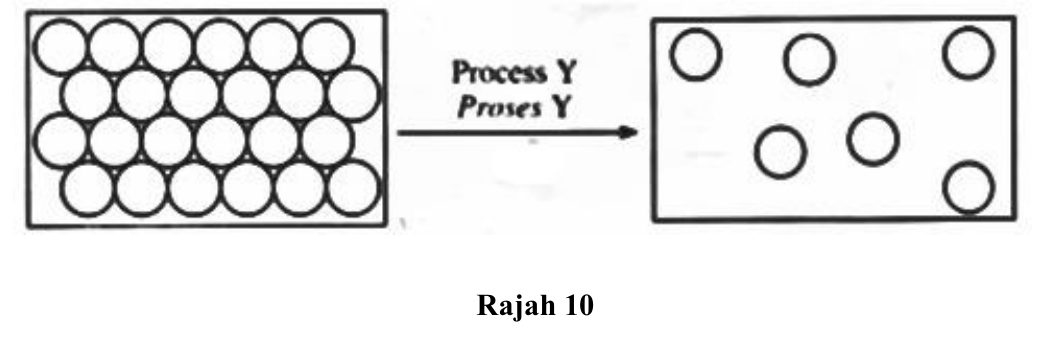
Diagram 10 shows an interconversion of the state of matter (particles closely packed in a regular arrangement change to particles far apart, by process Y). Which of the following statements explains process Y? I Kinetic energy of particles increases II Kinetic energy of particles decreases III Force of attraction between particles increases IV Force of attraction between particles decreases
Medium
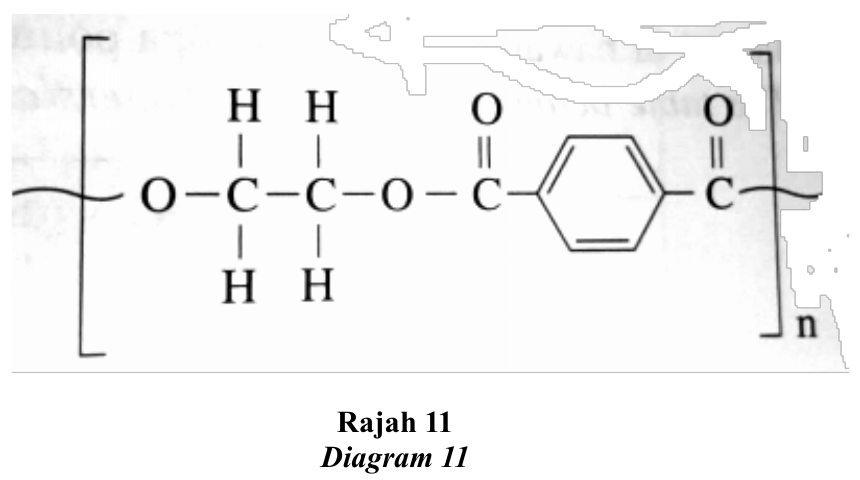
Diagram 11 shows the structural formula of terylene. What molecule is removed so that the larger polymer molecules will form?
Medium
Table 1 shows the property of oxide of elements P, Q and R, located in the same period: P - Acidic; Q - Basic; R - Amphoteric. Arrange the three elements based on increasing proton number.
Medium
Which of the following shows the ionization of ammonia in water?
Medium
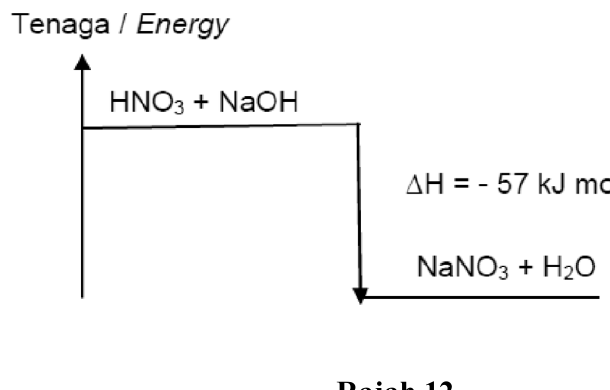
Diagram 12 shows the energy level diagram of a reaction: HNO3 + NaOH → NaNO3 + H2O, ΔH = -57 kJ mol-1. Which of the following acids is suitable to replace nitric acid, HNO3, to obtain the same heat change?
Medium
Boron consists of two isotopes, 11B and yB. Relative atomic mass of boron = 10.81. Percentage of natural abundance of Boron-11 = 80.0 %. Percentage of natural abundance of Boron-y = 20.0 %. Based on the information given, what is the value of y?
Medium
A sample of methane gas, CH4, occupied 9.84 dm3 at room conditions. What is the mass of the methane gas? [RAM: C=12, H=1; molar volume: 24 dm3 mol-1 at room conditions]
Medium
Table 2 shows the number of moles of atoms of each element in a hydrocarbon: C 0.4 mol, H 1.0 mol. What is the empirical formula of the hydrocarbon?
Medium
Which particles combine to form a dative bond? I Chloride ion II Hydrogen ion III Water molecule IV Ammonia molecule
Medium
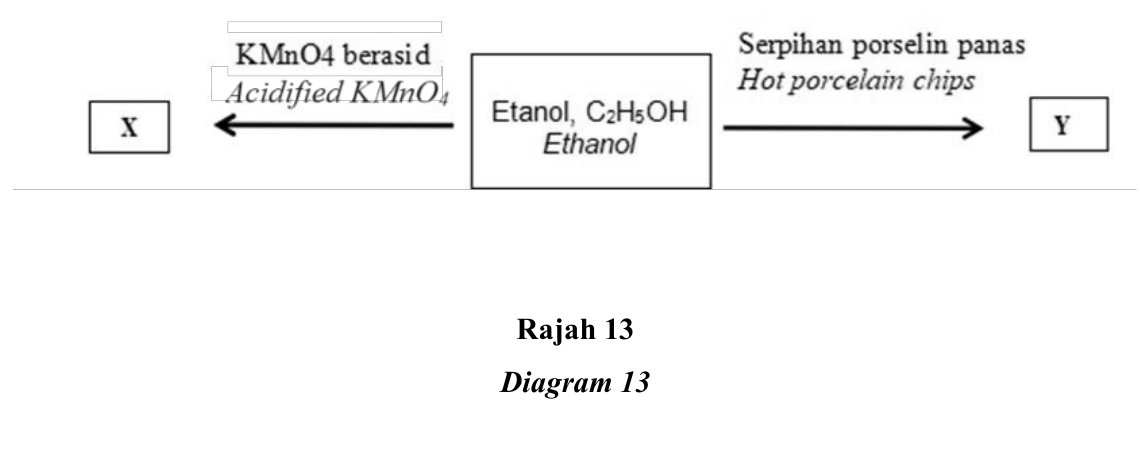
Diagram 13 shows the chemical reactions of ethanol: with acidified KMnO4 it forms X; with hot porcelain chips it forms Y. Which of the following are compounds X and Y?
Medium
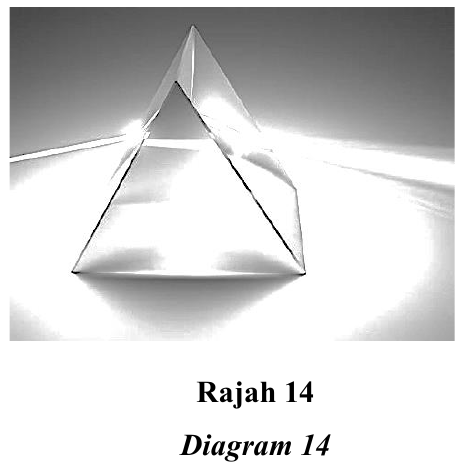
Diagram 14 shows the use of glass X (a prism). Why is glass X suitable to be used?
Medium
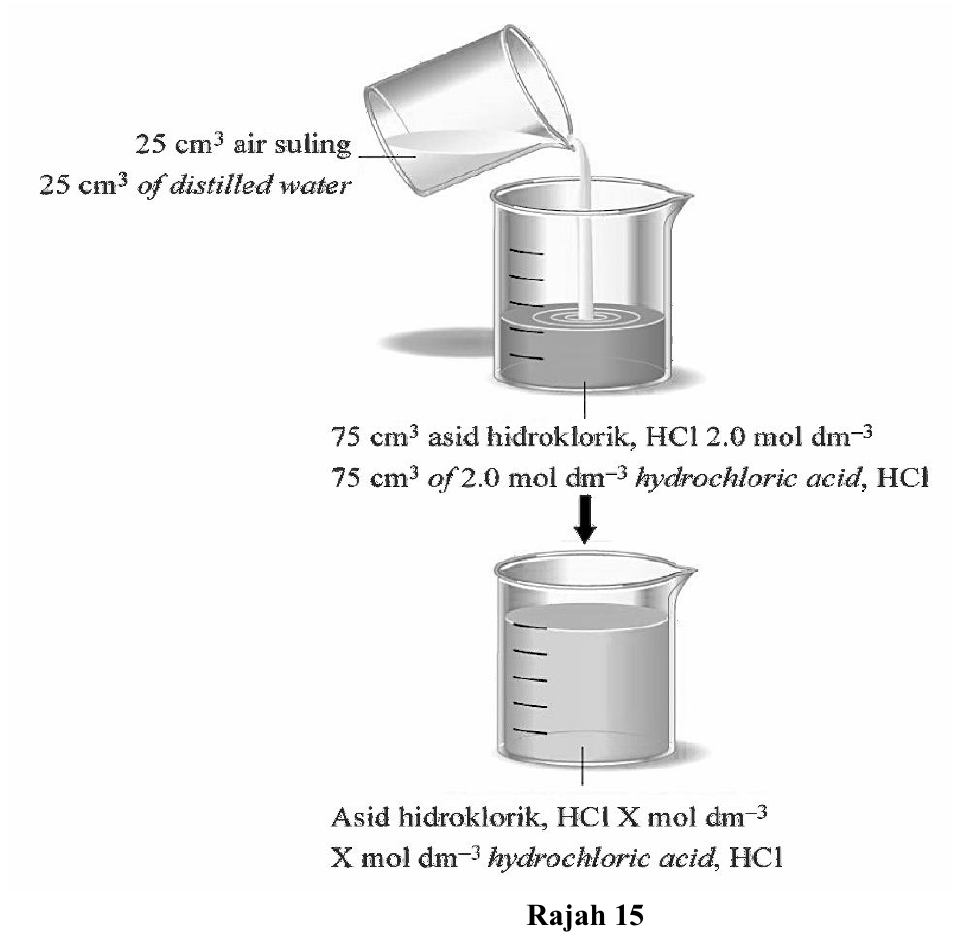
Diagram 15 shows 75 cm3 of 2.0 mol dm-3 hydrochloric acid diluted to X mol dm-3 when 25 cm3 of distilled water is added. What is the volume of the dilute hydrochloric acid that should be used to neutralise 25 cm3 of 3.0 mol dm-3 sodium hydroxide?
Medium
The thermochemical equation HNO3 + KOH → KNO3 + H2O, ΔH = -57.3 kJ mol-1 represents the neutralisation of 25 cm3 nitric acid with 25 cm3 potassium hydroxide solution of the same molarity. The temperature of the mixture rises by 7 C. [Specific heat capacity of solution = 4.2 J g-1 C-1; density of solution = 1 g cm-3] What is the molarity of both solutions?
Medium
A group of students investigated factors that affect the rate of reaction. Excess magnesium carbonate granules were added to 40 cm3 of 0.1 mol dm-3 nitric acid in a conical flask. The gas released is collected in a burette. If the experiment is repeated with different acids, which acid condition will increase the rate of reaction and double the volume of gas released? [Molar volume = 24 dm3 mol-1 at room conditions]
Medium
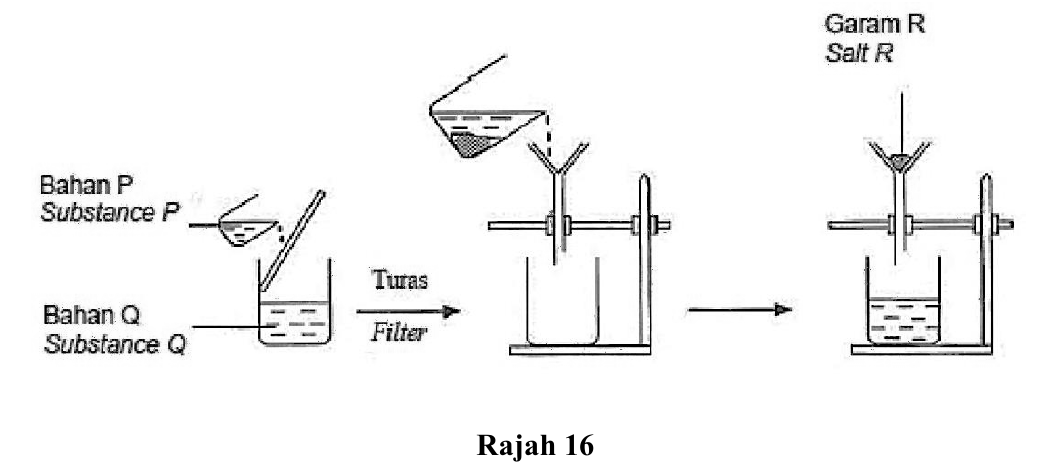
Diagram 16 shows the apparatus set-up to prepare a salt (substance P added to substance Q, filtered; salt R is in the residue on the filter paper). Which of the following is correct?
Medium
A student inserted a copper wire into magnesium nitrate solution. No change occurred. Given: Mg2+ + 2e- ⇌ Mg, E° = -2.38 V; Cu2+ + 2e- ⇌ Cu, E° = +0.34 V. Which statement explains this observation?