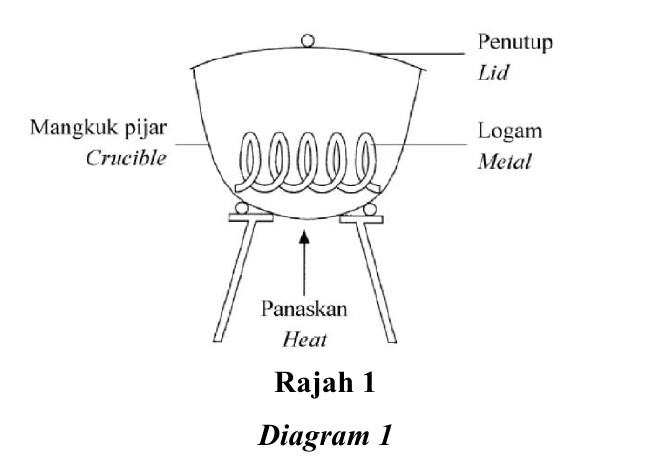
Diagram 1 shows the apparatus set-up to determine the empirical formula of metal oxide. Which statement explains why the crucible needs to be covered by its lid when the metal starts to burn?
Medium
Which of the following can form diatomic molecule?
Easy
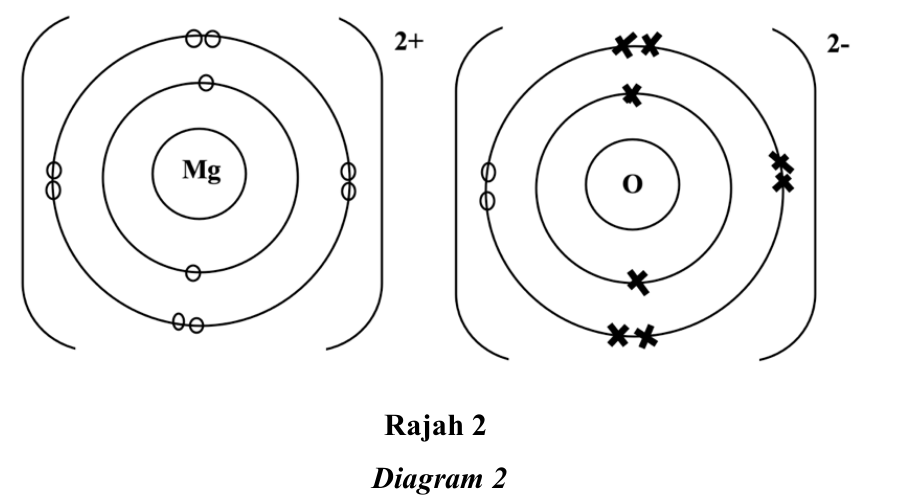
Diagram 2 shows the electron arrangement of magnesium oxide compound. Which of the following are the properties of the compound?
I Conducts electricity in molten state
II Exists as liquid at room temperature
III Has high melting point
IV Dissolve in organic solvent
Medium
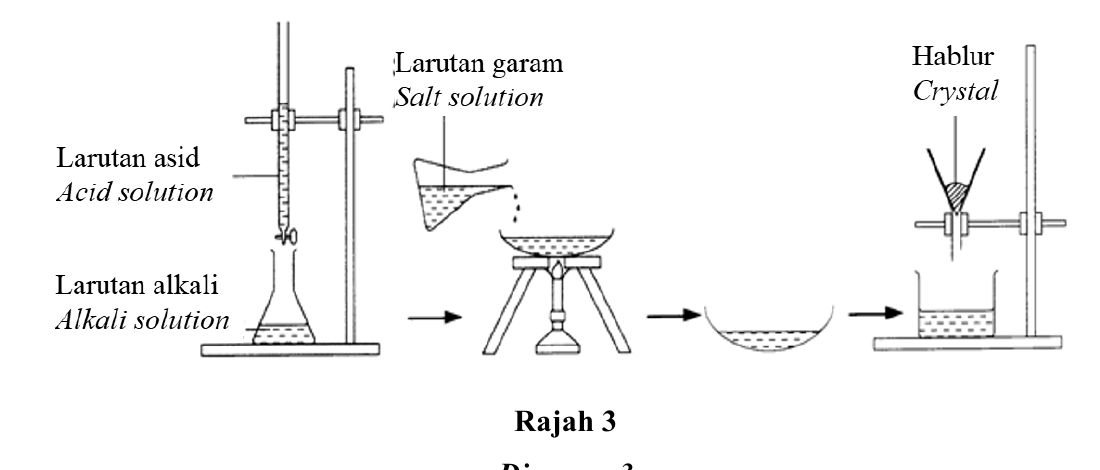
Diagram 3 shows the apparatus set-up for the preparation of a soluble salt. Which salt is prepared through this method?
Medium
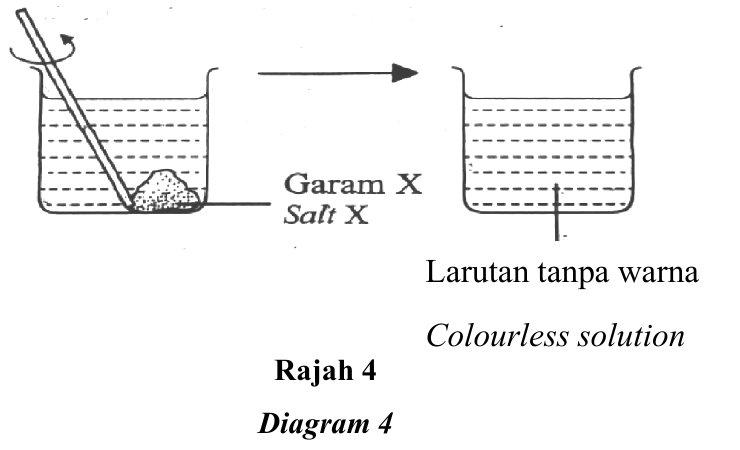
Diagram 4 shows salt X is added to water and gives a colourless solution. What is salt X?
Medium
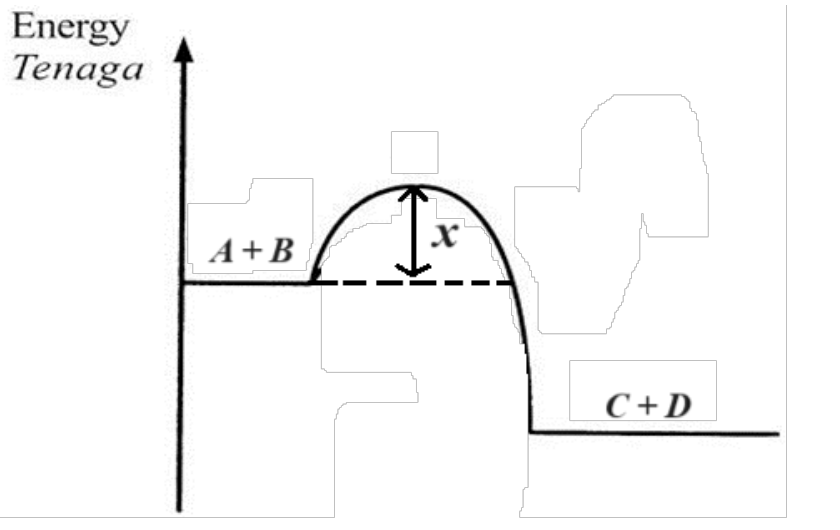
Diagram 5 shows the energy profile diagram of a reaction (A + B to C + D). What is represented by X in Diagram 5?
Medium
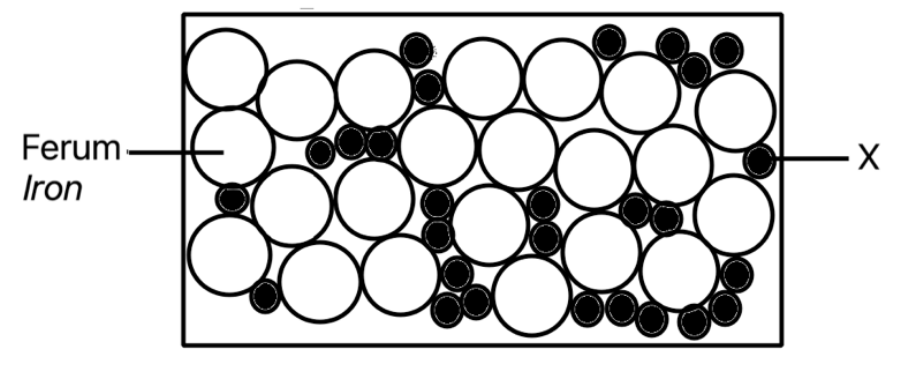
Diagram 6 shows the arrangement of atoms in steel. What is X?
Easy
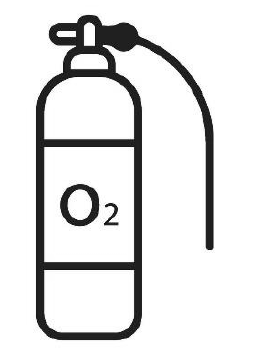
Based on Diagram 7, what is meant by molar volume?
Medium
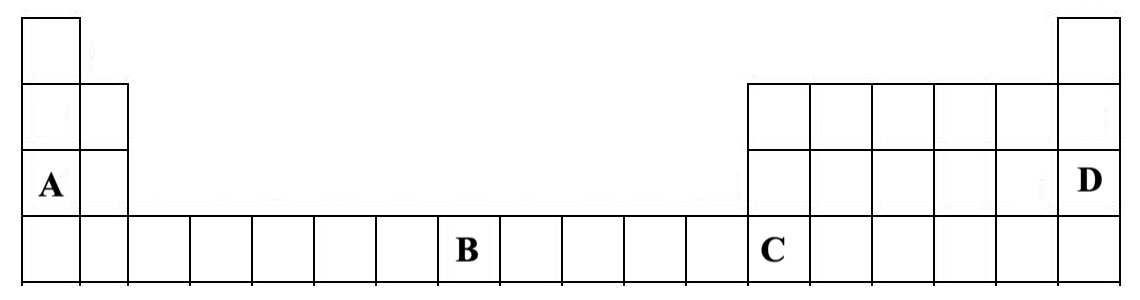
The following information describes the characteristics of an element.
- Ions in aqueous solutions are in green or brown
- Used as catalyst in the Haber Process
- Has two oxidation numbers which is +2 and +3
Which of the following is the position of the element?
Medium
Which pair is correctly matched?
Medium
"Ethanol is a covalent compound which dissolves in water". Which of the following explains the above statement?
I Covalent bond in ethanol molecule is broken.
II Dative bond and ionic bond in ethanol molecules are very strong.
III Ethanol molecule forms hydrogen bond with water molecules.
IV Hydrogen bond between hydrogen atom and oxygen atom formed because oxygen atom has high electronegativity.
Medium
Which of the following is an oxidising agent?
Medium
The information below are the properties of liquid Z.
- Colourless
- Clean fuel
- Very soluble in water
- Used as disinfectant in medical field
- Reacts with acidified potassium manganate(VII) solution produces colourless liquid with sour smell
What is the functional group of liquid Z?
Medium
Which of the following particles absorb heat energy from the surroundings when dissolve in water?
Medium
When substance R is added to latex, the coagulation process is delayed. What is substance R?
Easy
A baby vomited the milk consumed on her clothings. Which additive in the detergent helps to remove the dirt?
Easy
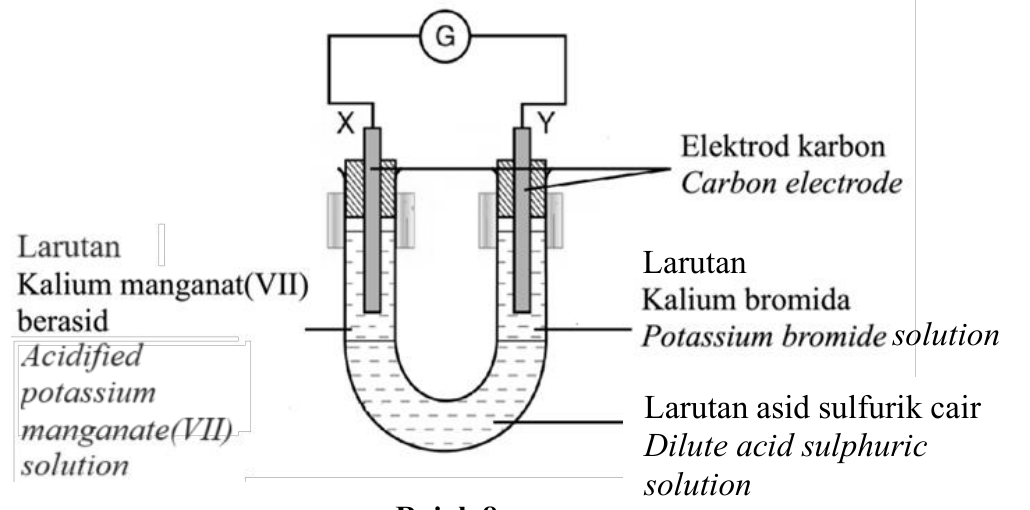
Diagram 8 shows the set-up of apparatus for the reaction which involves the transfer of electrons at a distance (acidified potassium manganate(VII) solution at electrode X, potassium bromide solution at electrode Y, dilute sulphuric acid in between). Which statement is correct about the reaction?
Medium
Which compound is an unsaturated hydrocarbon?
Medium
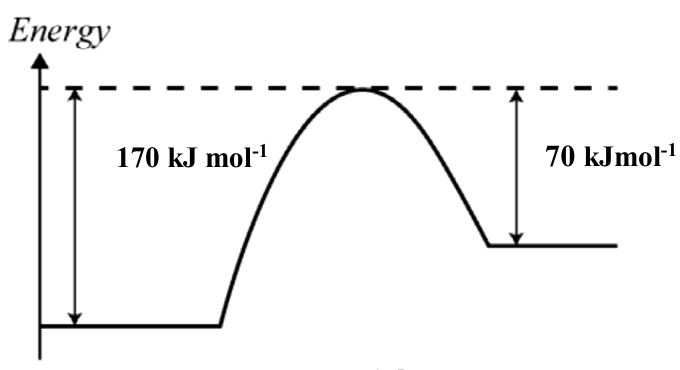
Diagram 9 shows the energy profile diagram for the reaction between P and Q: P + Q → R + S, ΔH = X kJ mol⁻¹. The activation energy is 170 kJ mol⁻¹ and the products are 70 kJ mol⁻¹ below the peak. What is the value of X?
Medium
Diagram 10 shows a treatment cosmetic. Mrs. M used it and had rashes and irritation on her face. After a few months, she had kidney failure. What is the chemical in the cosmetic that resulted in this effect?
Easy
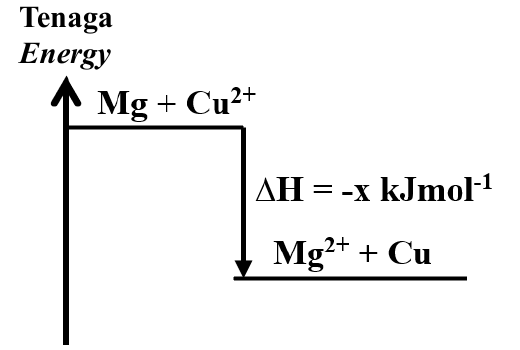
Diagram 11 shows an energy level diagram for the displacement reaction Mg + Cu²⁺ → Mg²⁺ + Cu, ΔH = -x kJ mol⁻¹. Which statement can be deduced from the diagram?
Medium
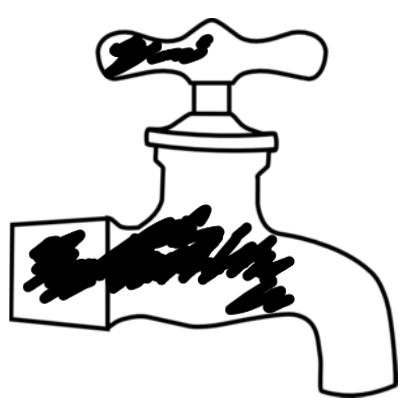
Diagram 12 shows a rusted iron tap. Which of the following polymer can be used to replace iron to avoid corrosion?
Easy
Which statement is correct about giant covalent molecule?
Medium
Table 1 shows the proton number of four elements: J = 8, K = 10, L = 12, M = 19, N = 20. Given that the ionic formula of element X is X²⁺. Which element has the same number of valence electron as element X?
Medium
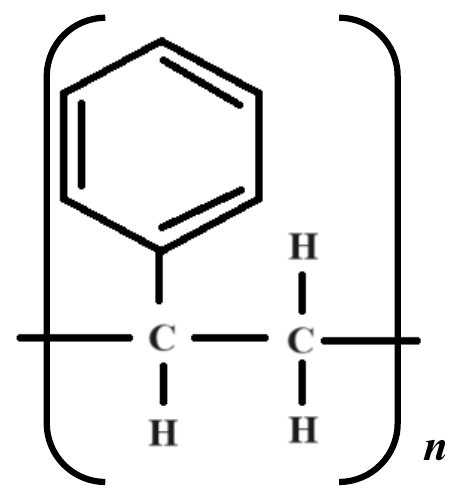
Diagram 13 shows a structural formula of polymer X. Which of the following is correct about the polymerisation reaction of polymer X?
Medium
Atoms of element P are located in Period 4 and have one valence electron. Which of the following is the number of protons for atom P?
Medium
Table 2 shows the pH value of four acid solutions: P = 5, Q = 3, R = 2, S = 1. Which acidic solution has the highest concentration of hydrogen ions?
Medium
Which of the following is true about endothermic reaction and exothermic reaction? (A: endothermic releases heat energy; exothermic absorbs heat energy. B: endothermic - surrounding temperature increases; exothermic - surrounding temperature decreases. C: endothermic - total energy of reactants higher than products; exothermic - lower. D: endothermic - heat absorbed during bond breaking is more than heat released during bond formation; exothermic - heat absorbed during bond breaking is less than heat released during bond formation.)
Medium
Boron consists of two isotopes: isotope ¹¹B and isotope ʸB. Relative atomic mass of boron = 10.81; natural abundance of Boron-11 = 80.0 %; natural abundance of Boron-y = 20.0 %. What is the value of y?
Medium
9.75 g of element X reacts with 63.5 g of element Y to form a compound. What is the empirical formula of the compound formed? [Relative atomic mass: X = 39, Y = 127]
Medium
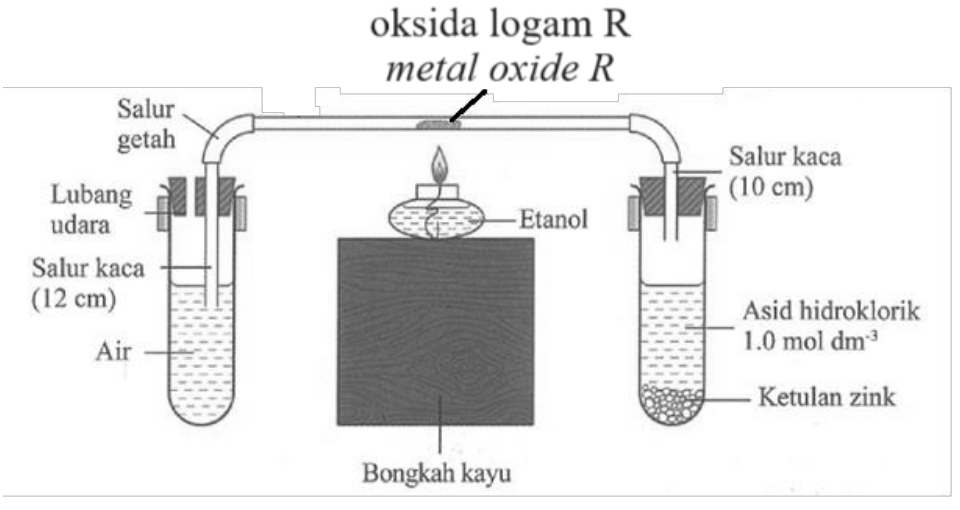
Diagram 14 shows the set-up of the apparatus used to determine the empirical formula of metal oxide R (hydrogen from zinc and hydrochloric acid passes over heated metal oxide R). Determine the balanced chemical equation for this reaction.
Medium
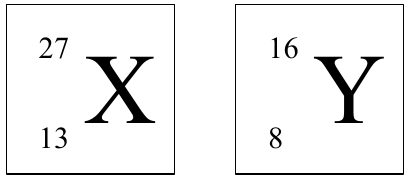
Diagram 15 shows the standard representation of element X (²⁷₁₃X) and element Y (¹⁶₈Y). Element X combines with element Y to form a compound. What is the relative formula mass of the compound formed?
Medium
Which of the following is the structural formula of 4-methylpent-2-ene?
Medium
Table 16 shows the properties of two types of glass. Glass P (not easily break with sudden temperature change): silicon dioxide, sodium carbonate, calcium carbonate, aluminium oxide, substance X. Glass Q (high refractive index): silicon dioxide, sodium carbonate, substance Y. What is substance X and Y?
Medium
Siti carried out three chemical tests to identify cation P in the solution. Table 3: excess ammonia solution - no precipitate form; excess sodium hydroxide - no precipitate form; Nessler reagent - brown precipitate form. What is cation P?
Medium
50 cm³ of 1.0 mol dm⁻³ potassium chloride solution is mixed into a polystyrene cup which contains 50 cm³ of 1.0 mol dm⁻³ silver nitrate solution. The heat of precipitation for the reaction is -51 kJ mol⁻¹. What is the maximum temperature of the mixture if the average initial temperature of the solution is 29.0 °C? [Specific heat capacity of solutions = 4.2 J g⁻¹ °C⁻¹]
Medium
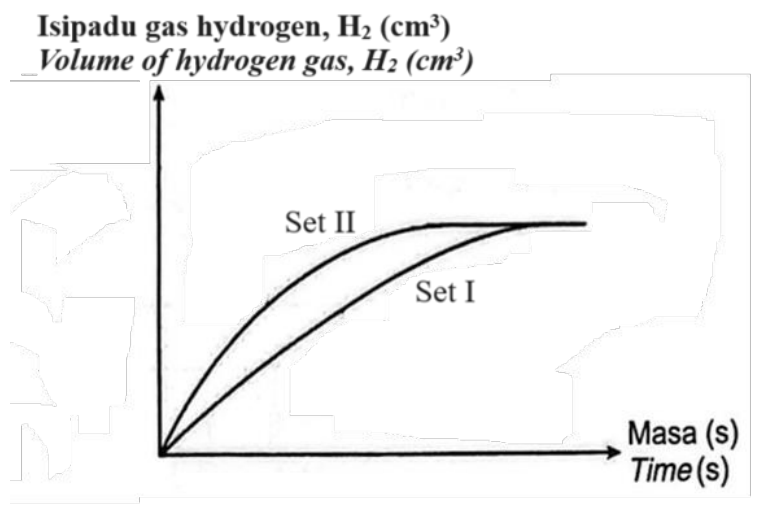
Diagram 17 shows the graph of gas volume against time for two experiments, I and II. In experiment set I, 5.0 g of zinc lumps react with 25.00 cm³ of ethanoic acid at room temperature and pressure. What changes should be made to the reactants in experiment set II?
Medium
Soil at Farm P is polluted by monoprotic acid X. The acid is titrated with 25 cm³ of 0.001 mol dm⁻³ calcium hydroxide solution with three drops of phenolphthalein. Table 4: volume of acid X (cm³) 49.50, 49.60, 49.70 - phenolphthalein pink; 49.80, 49.90 - colourless. What is the pH value of acid X?
Hard
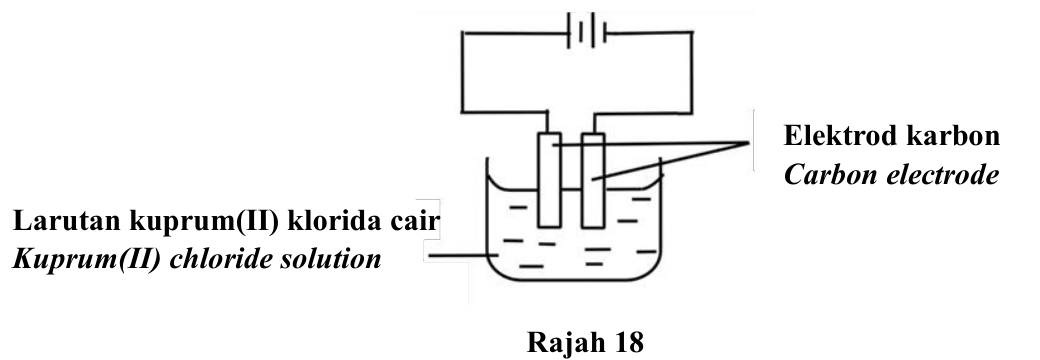
Diagram 18 shows an experiment on electrolysis (carbon electrodes, dilute copper(II) chloride solution). Given E° values: 2H⁺ + 2e ⇌ H2 0.00 V; Cu²⁺ + 2e ⇌ Cu +0.34 V; O2 + 2H2O + 4e ⇌ 4OH⁻ +0.40 V; Cl2 + 2e ⇌ 2Cl⁻ +1.36 V; Na⁺ + e ⇌ Na -2.71 V; S2O8²⁻ + 2e ⇌ 2SO4²⁻ +2.01 V. Which of the following will give same observations at anode and cathode?