Write your answer on paper. Then open the answer to check it.
Section A
Diagram 1 shows the electron arrangement of two different types of compounds. Compound A consists of two M+ ions and one N2- ion. Compound B is formed from one atom P sharing electrons with two atoms Q.
Medium5 marks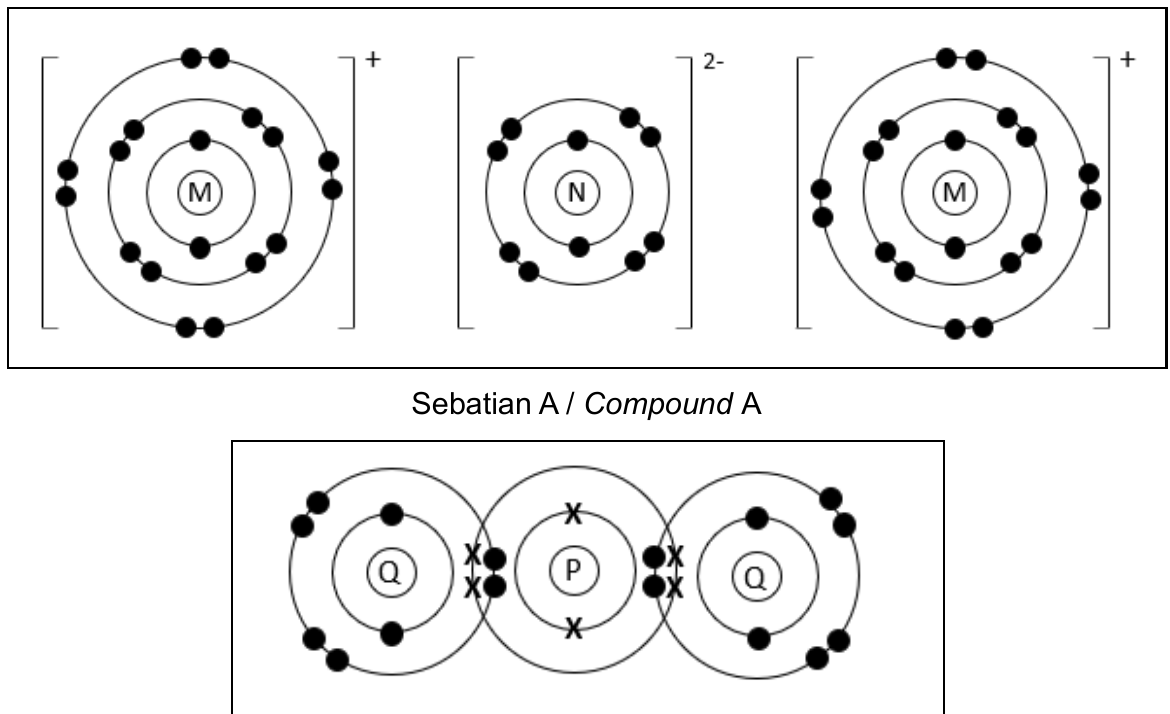
- (a)
What is the purpose of an atom donating electron?
[1] - (b)(i)
Write the chemical formula of compound A.
[1] - (b)(ii)
State the type of bond formed in compound B.
[1] - (b)(iii)
Write the electron arrangement of atom Q.
[1] - (b)(iv)
Which compound is soluble in organic solvent?
[1]
Diagram 2 shows the structural formula of caffeine.
Medium5 marks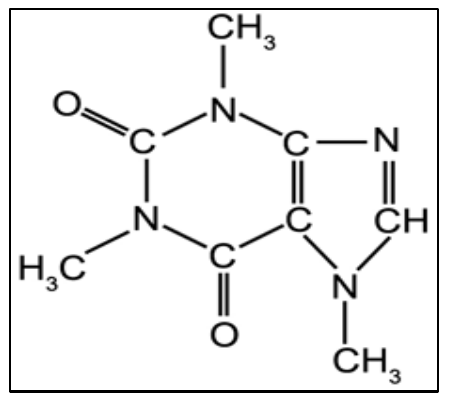
- (a)
What is the meaning of molecular formula?
[1] - (b)(i)
Based on Diagram 2, name all the elements present in caffeine.
[1] - (b)(ii)
Based on Diagram 2, write the molecular formula and empirical formula of caffeine.
[2] - (c)
State the type of particle exist in caffeine.
[1]
Table 3.1 shows the number of protons and neutrons of atoms R, S and T: R (12 protons, 13 neutrons), S (14, 15), T (14, 16).
Medium6 marks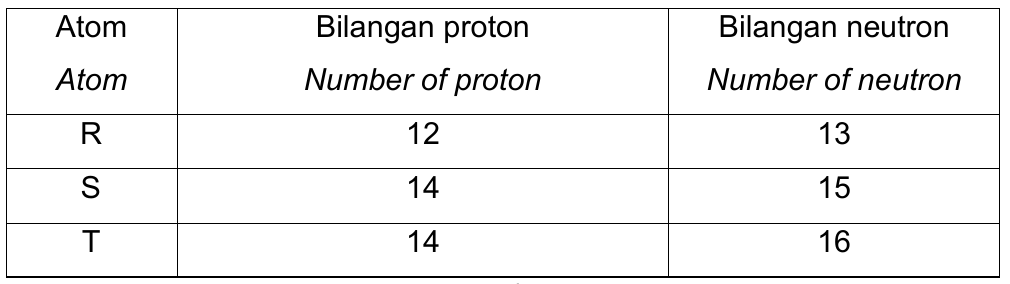
- (a)
State three subatomic particles in an atom.
[1] - (b)(i)
Based on Table 3.1, why are atoms S and T have the same chemical properties?
[1] - (b)(ii)
Draw the electron arrangement of ion R.
[2] - (c)
Table 3.2 shows information about chlorine (relative atomic mass Cl = 35.5): Cl-35 natural abundance 75%, Cl-y 25%. Calculate the nucleon number of Cl-y isotope.
[2]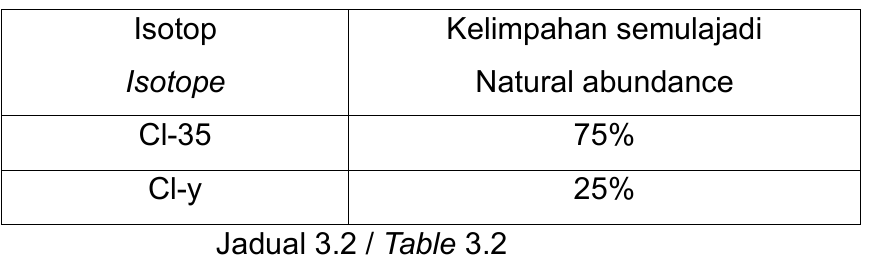
Diagram 4 shows the standard representation of the atoms of elements X (23/11) and Y (39/19). The letters used are not the actual symbols of the elements.
Medium7 marks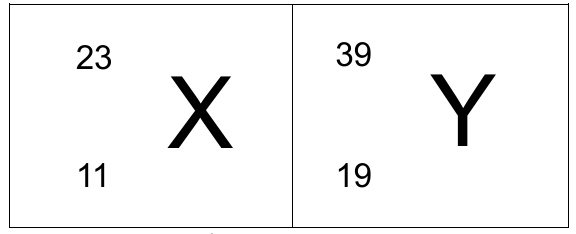
- (a)
State how the elements are arranged in the Periodic Table of Elements.
[1] - (b)(i)
Identify the group of elements X and Y in the Periodic Table of Elements.
[1] - (b)(ii)
Give a reason for the answer in 4(b)(i).
[1] - (c)(i)
0.2 mol of element Y is placed in a conical flask containing water and the liberated gas is collected. Write a chemical equation to show the reaction.
[2] - (c)(ii)
Calculate the maximum volume of gas liberated. [Molar volume: 24 dm3 mol-1 at room conditions]
[2]
Two sets of experiment investigate the factor that affects the rate of reaction. Table 5 shows the time taken to collect 40 cm3 of hydrogen gas: Set I excess zinc powder + 25 cm3 of 0.2 mol dm-3 HX acid, 90 s; Set II excess zinc powder + 25 cm3 of 0.2 mol dm-3 H2Y acid, 40 s.
Medium8 marks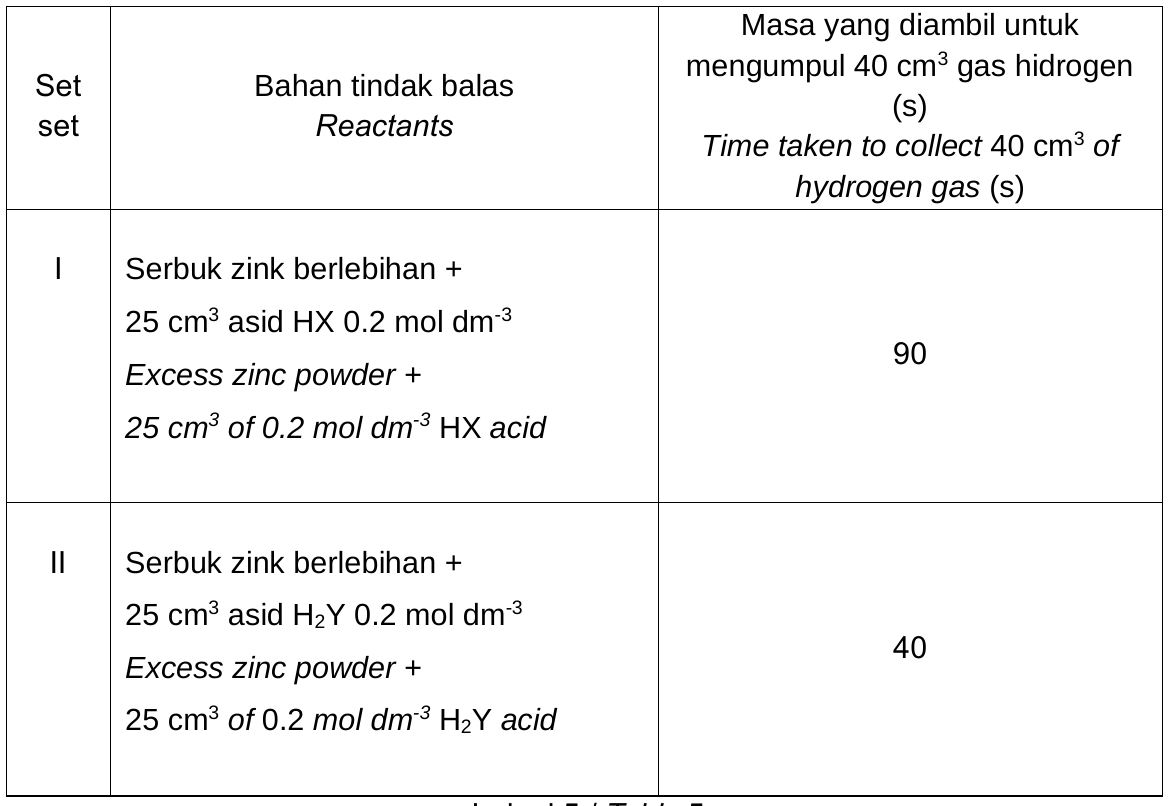
- (a)
State another measurable change besides volume of gas to determine the rate of reaction in this experiment.
[1] - (b)
Diagram 5 shows graph of volume of hydrogen gas against time for Set II. Sketch and label the curve of Set I on the same axes in Diagram 5 when the reaction is completed.
[1]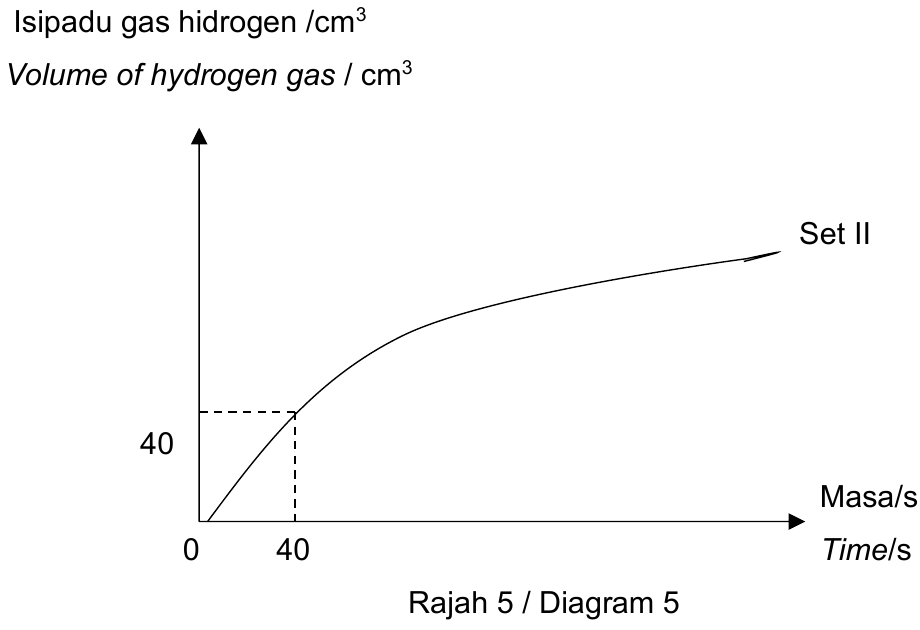
- (c)(i)
Write an ionic equation of this experiment.
[2] - (c)(ii)
Calculate the average rate of reaction to collect 40 cm3 of gas in Set I and Set II.
[2] - (c)(iii)
Compare the rate of reaction of Set I and Set II. Explain.
[2]
Table 6 shows information about carbon compounds X, Y and Z when they react with acidified KMnO4 solution and sodium carbonate powder: X (4 carbon atoms, alkene, decolourises KMnO4, no reaction with Na2CO3); Y (3 carbon atoms, carboxylic acid, no reaction with KMnO4, reacts with Na2CO3); Z (6 carbon atoms, alcohol, decolourises KMnO4, no reaction with Na2CO3).
Medium9 marks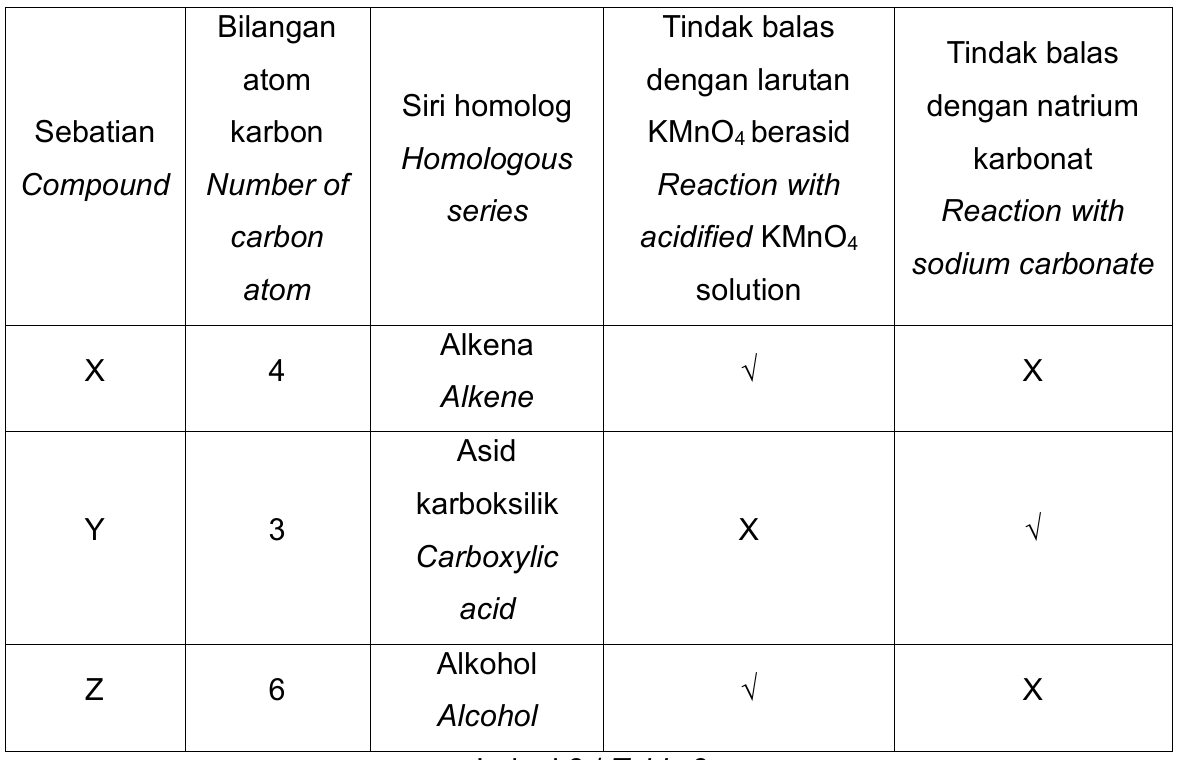
- (a)
What is the general formula of alkene?
[1] - (b)
Based on Table 6, name compound Z.
[1] - (c)(i)
0.5 mol compound Y reacts with excess sodium carbonate powder to form sodium propanoate, water and carbon dioxide gas. Write chemical equation for this reaction.
[2] - (c)(ii)
Determine number of molecules of carbon dioxide gas produced. [Avogadro constant: 6.02 x 10^23 mol-1]
[2] - (d)
State the observation for the reactions of compounds X and Z toward acidified potassium manganate(VII) solution and compare the reaction occurred in compounds X and Z.
[3]
Diagram 7 shows a U-tube containing iron(II) sulphate, FeSO4 solution and acidified potassium dichromate(VI), K2Cr2O7 solution, separated by sulphuric acid, with carbon electrodes A and B connected to a galvanometer.
Hard10 marks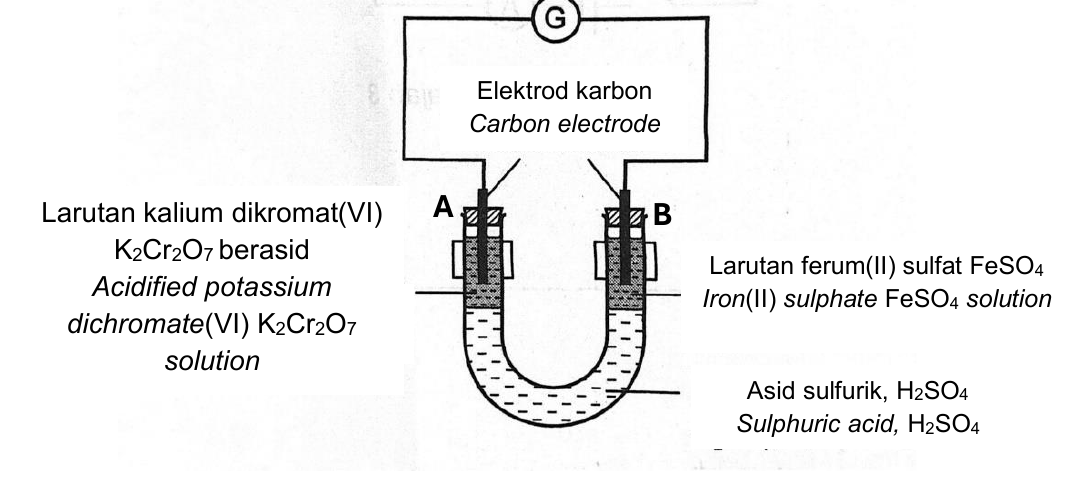
- (a)(i)
Identify anode and cathode.
[2] - (a)(ii)
Write a half equation to support your answer in 7(a)(i).
[3] - (b)
Identify the reducing agent and suggest another substance that can replace the reducing agent.
[2] - (c)
Mark the direction of electron flow on Diagram 7.
[1] - (d)
Student is asked to carry out the same experiment without using U-tube. Draw the apparatus set-up for the experiment by using suitable apparatus.
[2]
Polymer can be classified as natural polymer and synthetic polymer. Diagram 8.1 shows the structural formula of a polymer (repeating unit with H, Cl on one carbon and H, H on the next).
Medium10 marks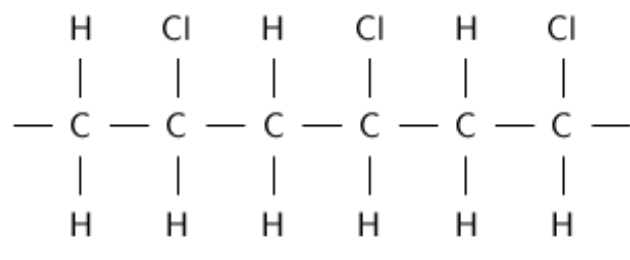
- (a)(i)
Based on diagram 8.1, state the type of the polymer.
[1] - (a)(ii)
Draw the structural formula of the monomer for the polymer in Diagram 8.1.
[1] - (a)(iii)
Write chemical equation for the formation of polymer in Diagram 8.1.
[2] - (a)(iv)
State one example of object made from the same material as in Diagram 8.1.
[1] - (b)
Table 8.1 shows the results of experiments on latex: material P added, latex coagulates very quickly; material Q added, no change. Suggest material P and Q.
[2]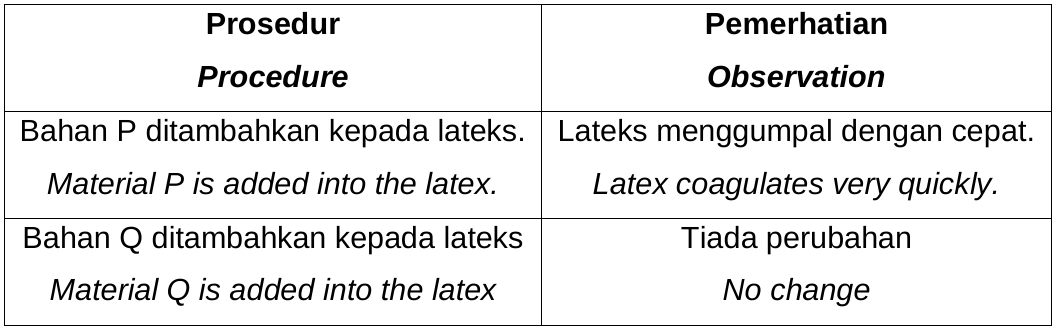
- (c)
Table 8.2 shows two types of drinking straw: S made from cellulose, T made from petroleum fraction. As a nature lover, which straw is your choice in daily life usage? Justify your answer.
[3]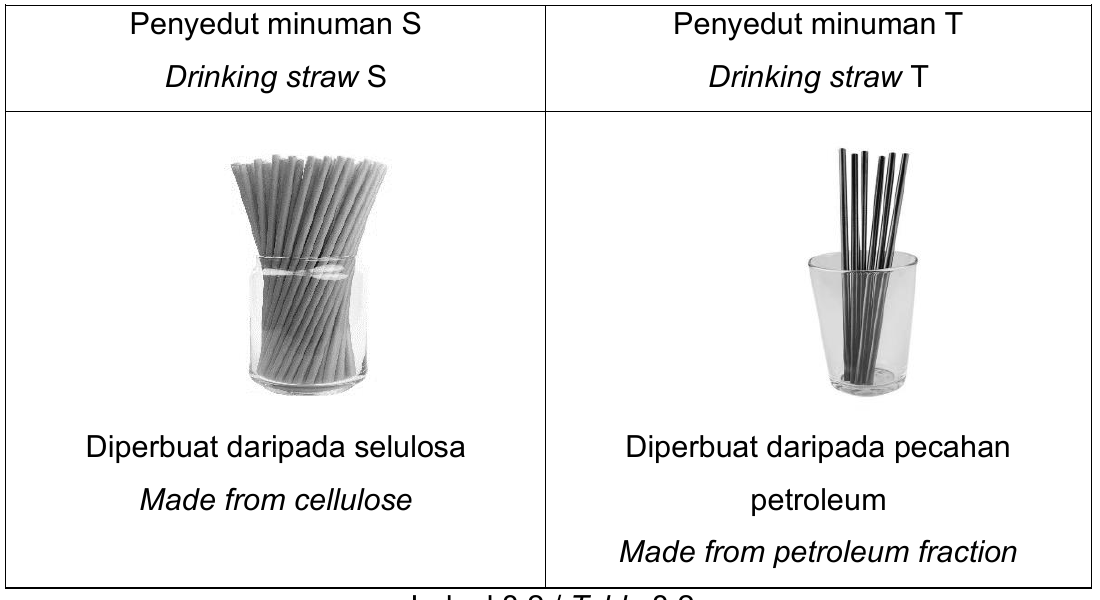
Section B
Diagram 9 shows two sets of apparatus used to study the heat of displacement of copper from copper(II) sulphate solution. In each set, 100 cm3 of 0.5 mol dm-3 copper(II) sulphate solution in a polystyrene cup is mixed with excess metal powder: Set I zinc powder, initial temperature 28 °C, highest temperature 34 °C; Set II metal W powder, initial temperature 28 °C, highest temperature 48 °C. A deposit is formed in each set.
Hard20 marks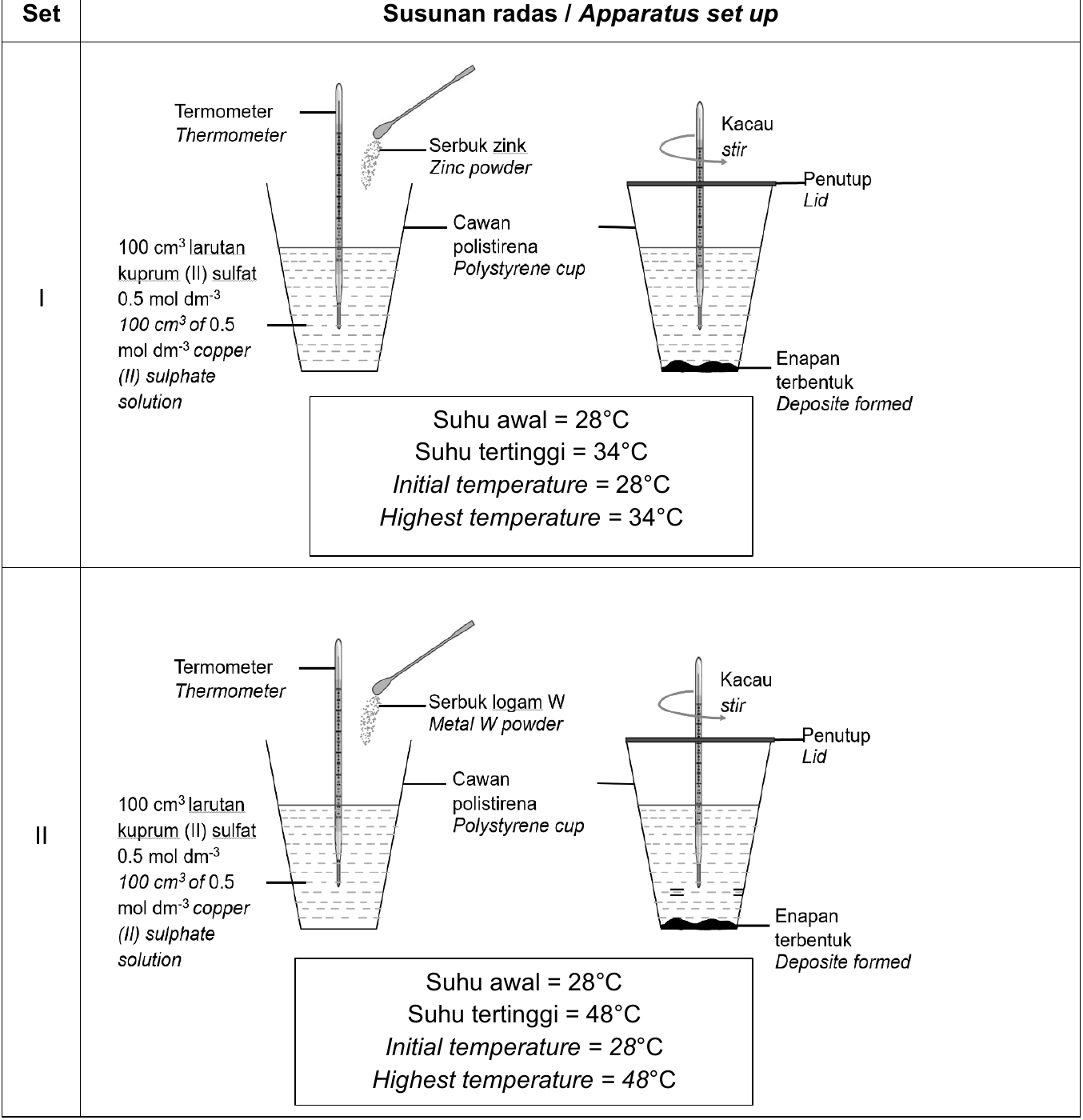
- (a)(i)
State the meaning of heat of displacement.
[1] - (a)(ii)
Based on temperature change, state the type of reaction of Set I.
[1] - (a)(iii)
Suggest the metal W for Set II and state the colour of the resulting deposit.
[2] - (a)(iv)
Calculate the heat of displacement for Set I and Set II. [Specific heat capacity of solution, c = 4.2 J g-1 °C-1]
[6] - (b)(i)
Table 9 shows the heat of precipitation: Set I, 25 cm3 of 0.5 mol dm-3 barium chloride + 25 cm3 of 0.5 mol dm-3 zinc sulphate, -42.0 kJ mol-1; Set II, 25 cm3 of 0.5 mol dm-3 potassium carbonate + 25 cm3 of 0.5 mol dm-3 magnesium chloride, +23.1 kJ mol-1. Explain the difference in heat of precipitation for Set I and Set II. Your explanation must include change in temperature, total energy content, and heat energy change during bond breaking and bond formation. Write the thermochemical equation for Set I and draw the energy level diagram of Set II.
[7]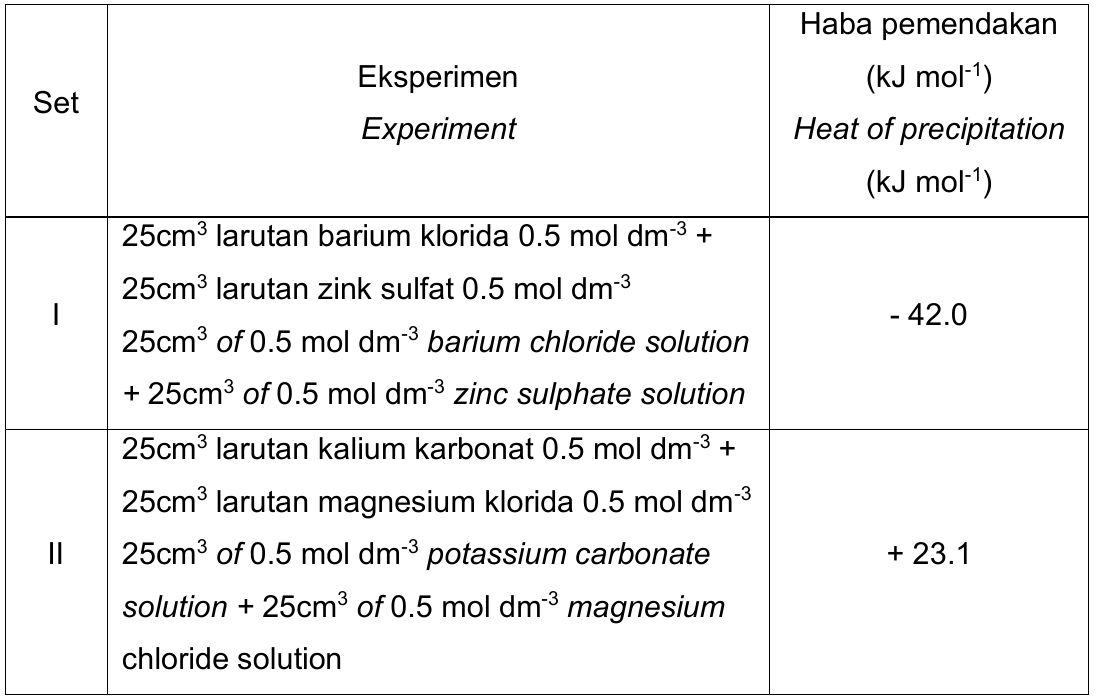
- (b)(ii)
The value of the heat of precipitation during the experiment is lower than the theoretical value. Why does this happen and what can be done to reduce this problem?
[3]
Question 10 covers ceramics (Diagram 10.1), atomic arrangement of two materials A and B (Diagram 10.2), a conversation about a snack (Diagram 10.3) and cleaning agents in hard water (Diagram 10.4).
Medium20 marks- (a)(i)
Diagram 10.1 shows an example of the use of ceramics: Product A (a decorated pot) and Product B (a brake disc). Give a basic property of ceramics to produce Product A. State the type of ceramic for Product B.
[2]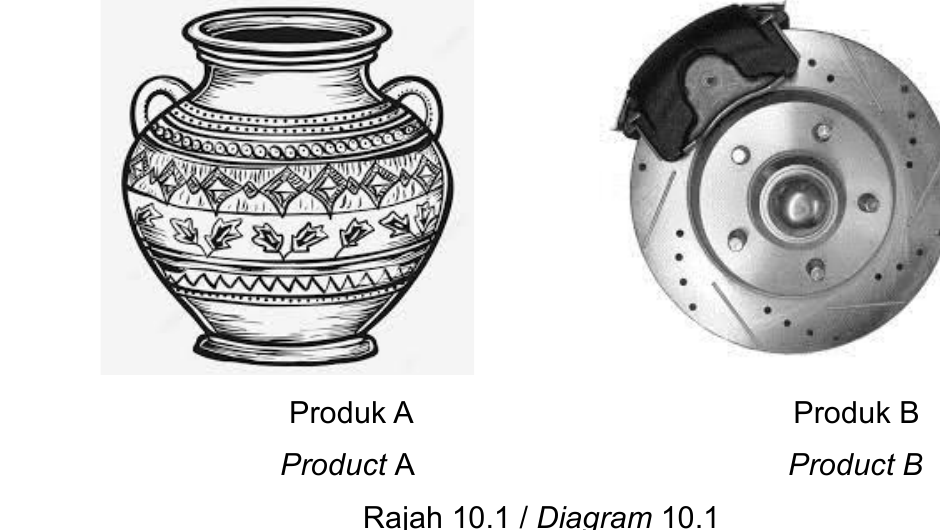
- (a)(ii)
Ceramics are widely used in medical field. Give an example and its use.
[2] - (b)
Diagram 10.2 shows the arrangement of atoms in materials A (all same-sized atoms in layers) and B (with a few smaller black atoms X among larger atoms). Material B is more suitable than material A to make body of car. State the name of material B and atom X. Based on atomic arrangement, explain why material B is more suitable to make body of car.
[5]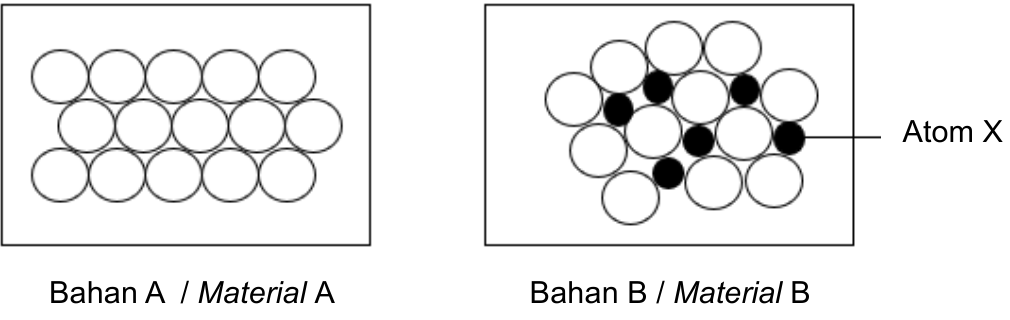
- (c)
Diagram 10.3 shows a conversation: Aileen asks to pack a snack for grandma during umrah; her mother says the snack contains sugar, oil, wheat flour, lecithin, cocoa powder and milk. State the meaning of food additives. State one type of food additive in the snack and its function. If grandma has diabetes, what other ingredient can be used to replace sugar? Explain your answer.
[5]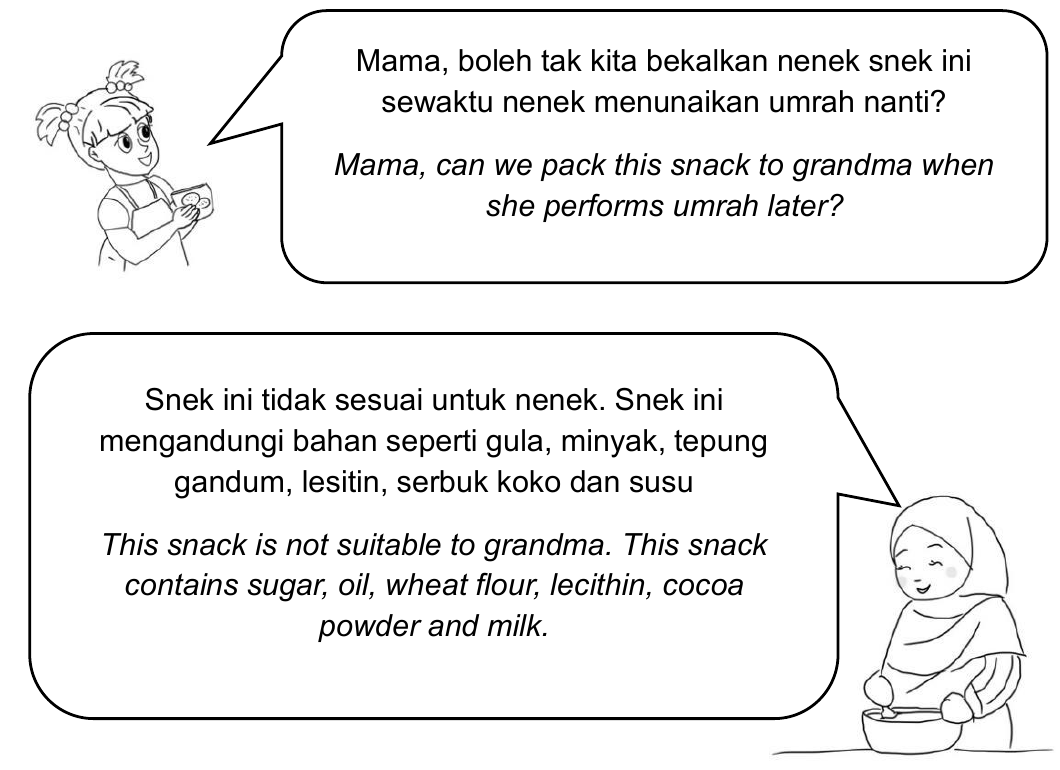
- (d)
Diagram 10.4 shows the observations when using different cleaning agents: Set I, agent Y in hard water, grease stain remains; Set II, agent Z in hard water, grease removed; Set III, agent Z + additive X in hard water, blood stain removed. Identify substance X, Y and Z. Explain the differences in observations between Set I and Set II.
[6]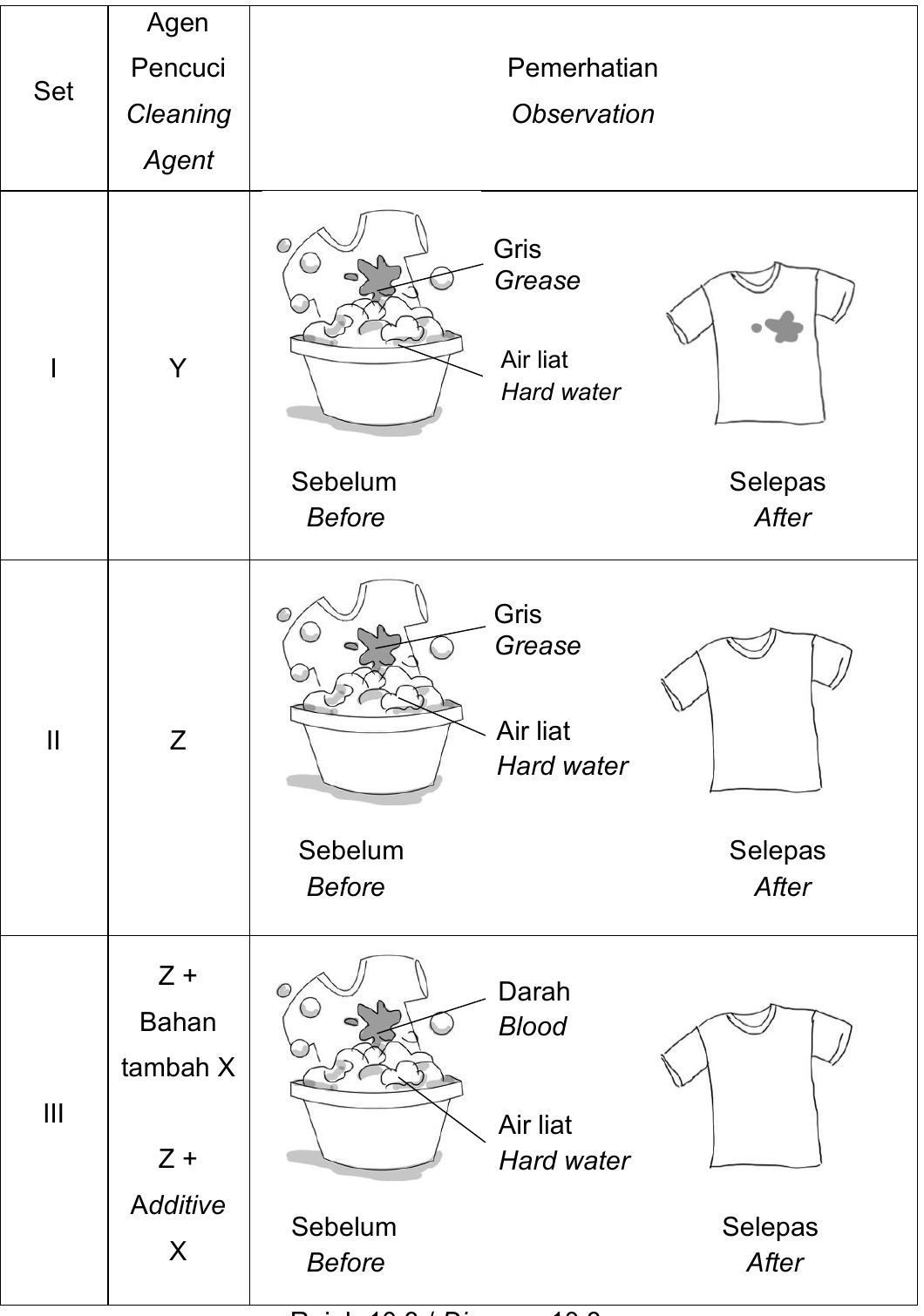
Section C
Question 11 covers standard solution and dilution, identification of salts from a flow chart, and the preparation of ammonium nitrate fertiliser.
Hard20 marks- (a)
Diagram 11.1 shows the important apparatus (volumetric flask) used in preparing standard solution. State the meaning of standard solution. State two parameters that have to be measured accurately when preparing the standard solution by using the apparatus above.
[3]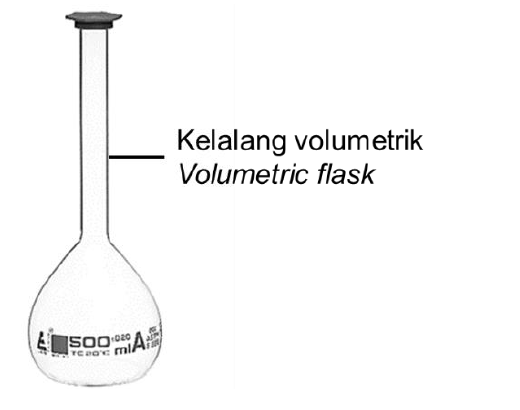
- (b)
A student wants to prepare 100 cm3 of 0.5 mol dm-3 standard solution of sodium carbonate, Na2CO3. Calculate the mass of Na2CO3 needed. The standard solution is then used to prepare a dilute solution by dilution. Determine the volume of distilled water needed to add to 50 cm3 of that standard solution so that 0.2 mol dm-3 Na2CO3 solution is produced. [Relative atomic mass: Na = 23, O = 16, C = 12]
[4] - (c)
Diagram 11.2 shows a flow chart to prepare yellow precipitate V from white solid R: heating R gives solid S (brown when hot, yellow when cold) and gas T; solid S + nitric acid gives salt U; salt U + potassium iodide gives yellow precipitate V + KNO3. Gas T turns limewater chalky. Identify white solid R, solid S, gas T, salt U and yellow precipitate V.
[5]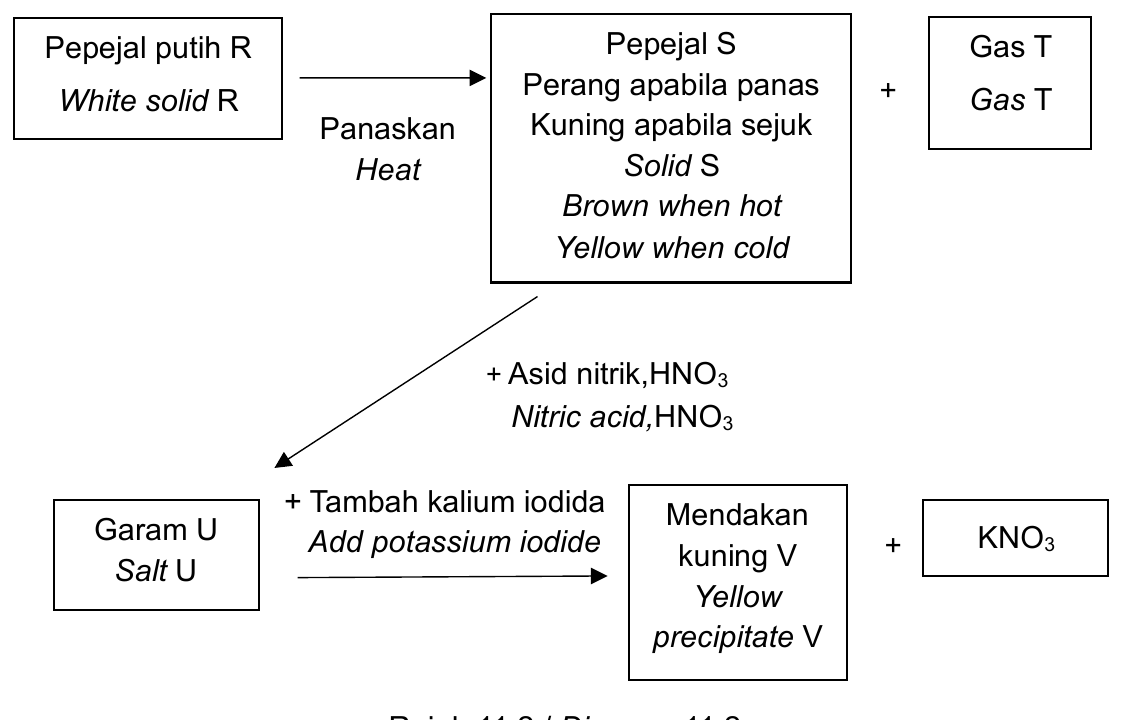
- (d)
Farid found that the maize plants in his field were infertile. The agricultural officer recommends ammonium nitrate fertiliser. You are required to prepare ammonium nitrate fertiliser in the laboratory. By using suitable materials and apparatus, plan an experiment to prepare the fertiliser.
[8]