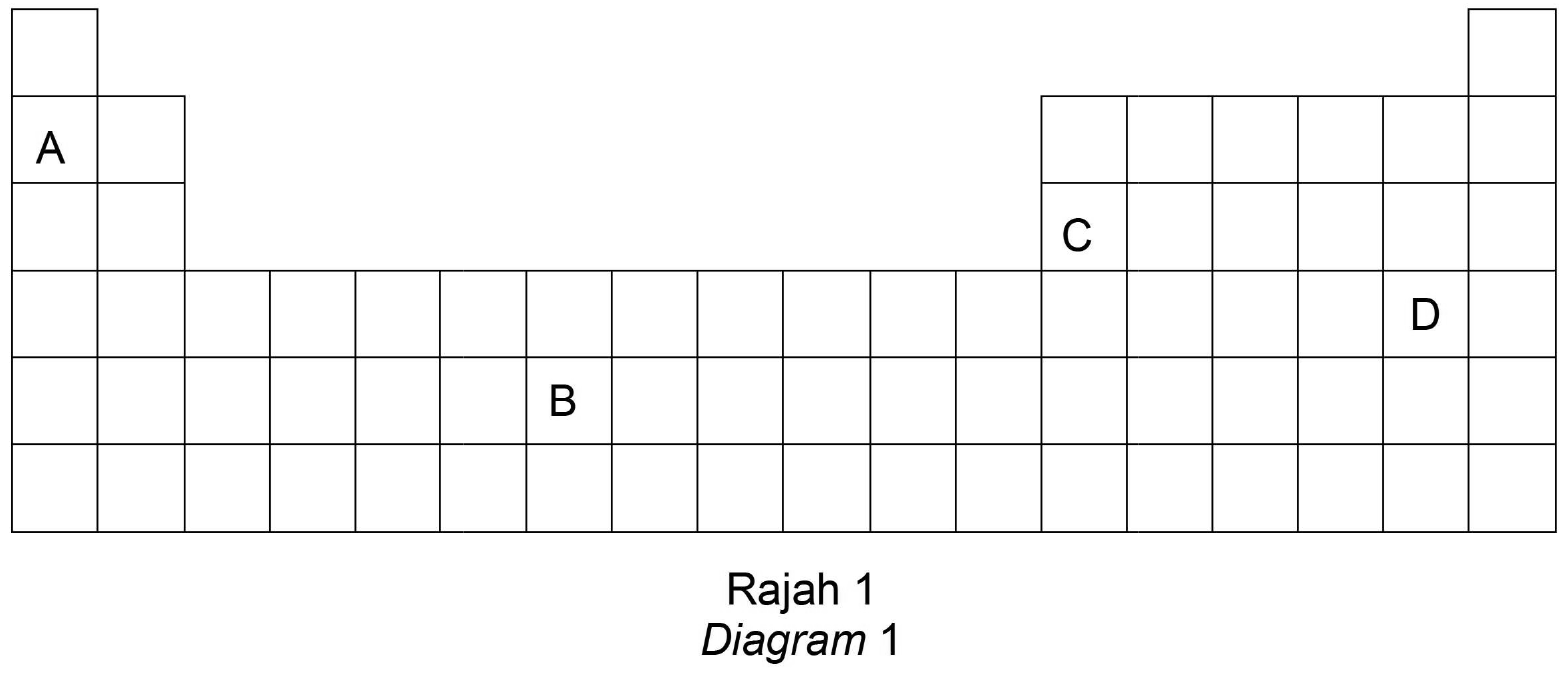
Diagram 1 shows part of the Periodic Table of Elements. Which letter indicates the position of a non-metallic element?
Medium
Which of the following has a high pH value?
Easy
What substance is produced when hydrocarbon burns in excess oxygen?
Easy
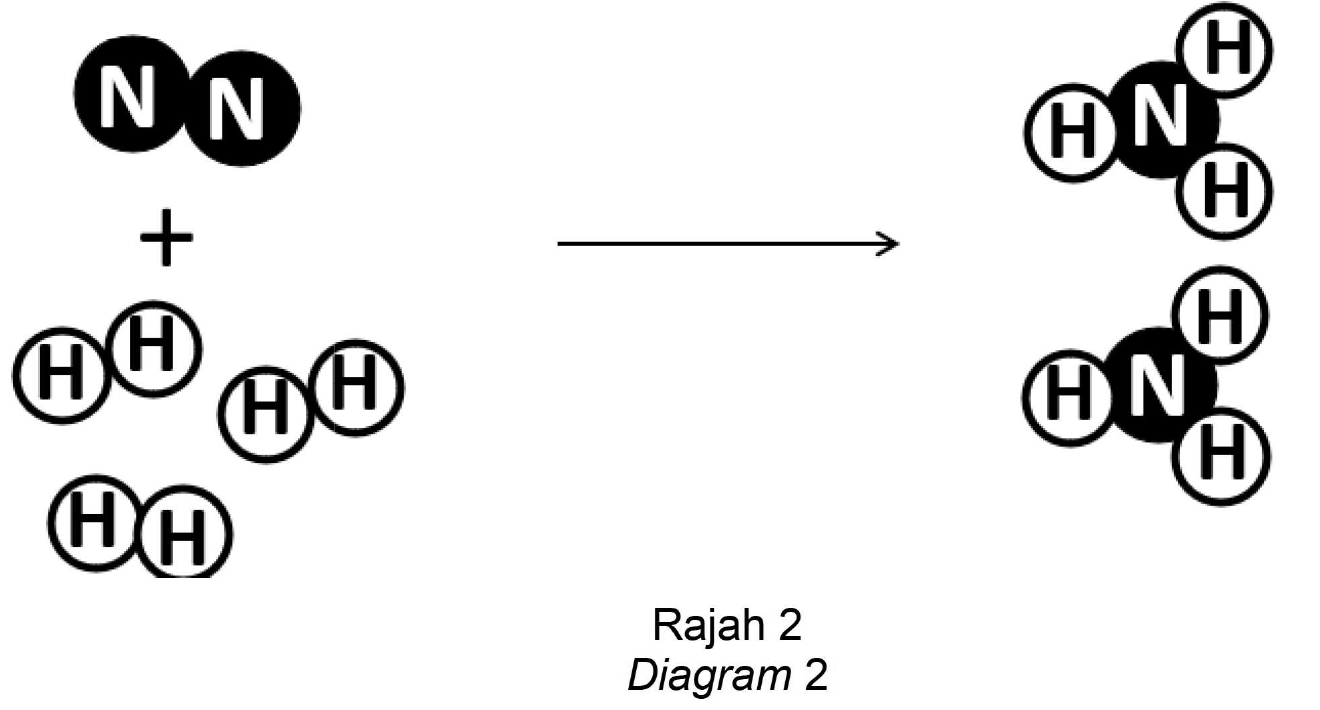
Diagram 2 shows the chemical equation model for the reaction between hydrogen and ammonia. What type of particles are found in the product of the reaction?
Medium
The following is a chemical equation for a reaction carried out in the laboratory.
Palmitic acid + sodium hydroxide -> Sodium palmitate + Glycerol
What is the name of this reaction?
Medium
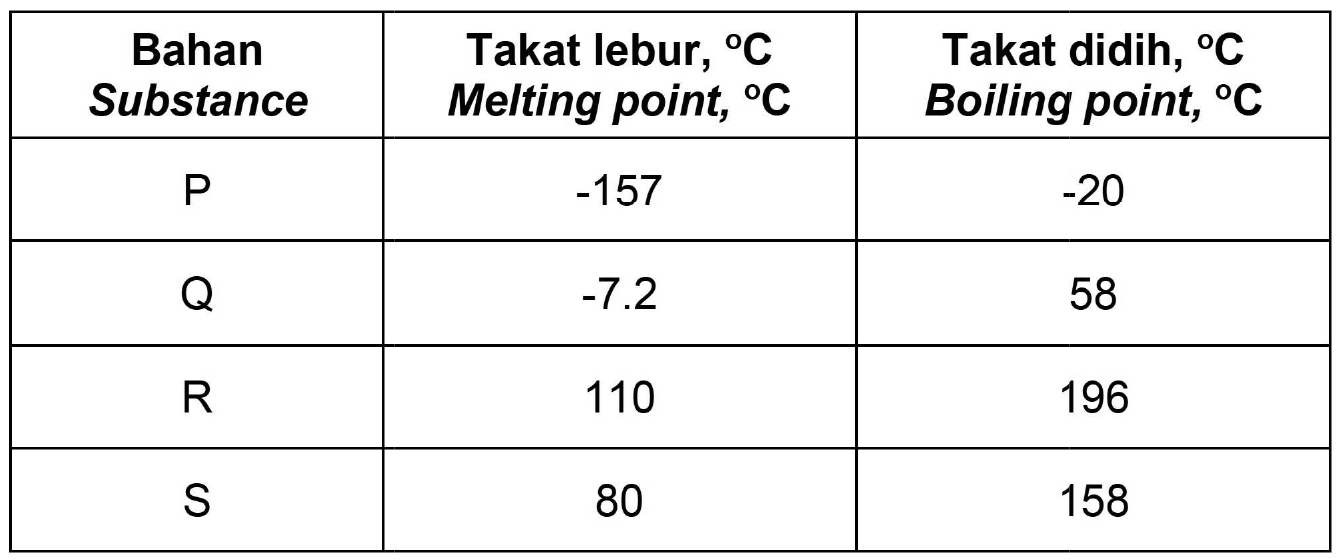
Which of the following substance is a bromine?
Substance / Melting point (°C) / Boiling point (°C): P -157 / -20; Q -7.2 / 58; R 110 / 196; S 80 / 158. Options A-D are P, Q, R, S respectively.
Medium
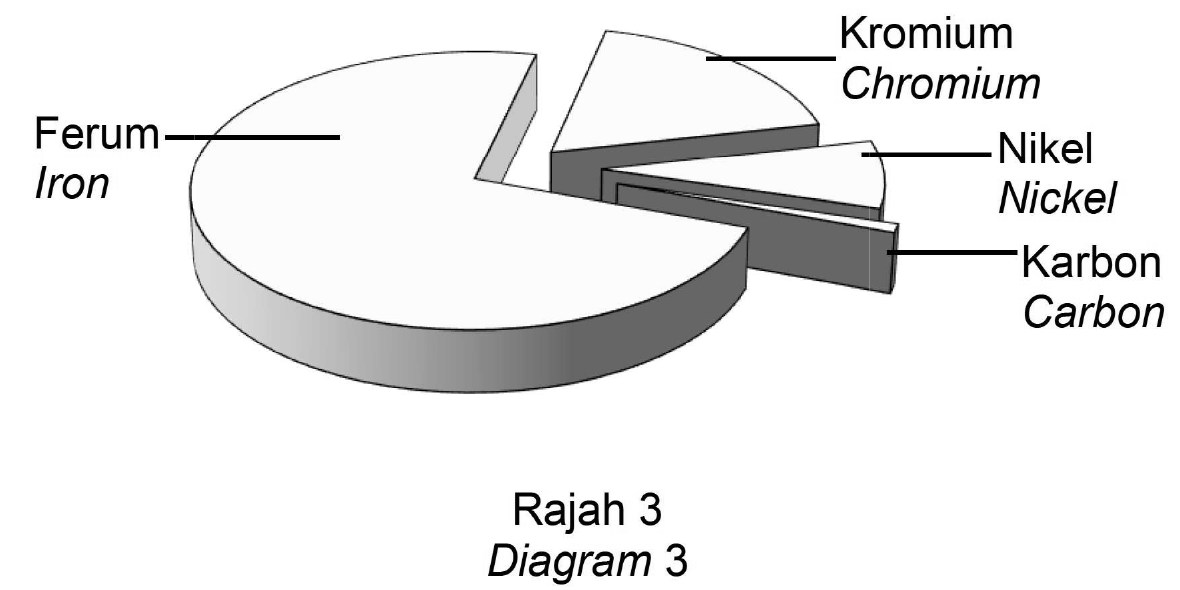
Diagram 3 shows the composition of the elements found in an alloy P (pie chart: iron, chromium, nickel, carbon). What is the use of the alloy P shown in Diagram 3?
Medium
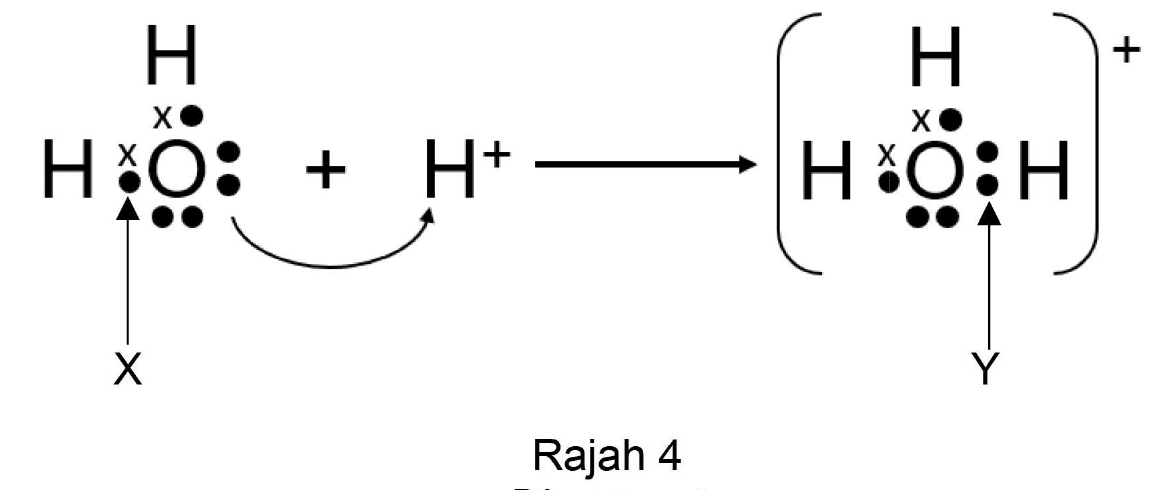
Diagram 4 shows how a chemical bond is formed (H2O + H+ -> H3O+, with bond X in the water molecule and bond Y the new bond). What type of bond is shown in Diagram 4?
Medium
Diagram 5 shows the chemical equation for the conversion of unsaturated fat to saturated fat (triglyceride with C=C bonds + X, with substance Y over the arrow, gives the saturated triglyceride). What is the name of the reaction, substance X and substance Y?
Medium
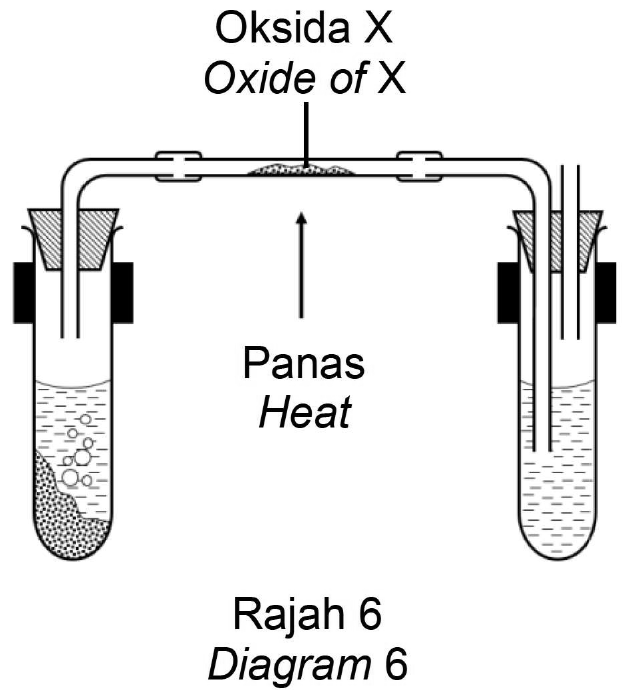
Diagram 6 shows the arrangement of the apparatus used to find the empirical formula for a metal oxide of X (oxide of X heated in a tube with hydrogen/gas flow). Which of the following is possible for oxide X?
I. Zinc oxide
II. Magnesium oxide
III. Copper(II) oxide
IV. Lead(II) oxide
Medium
Which hydrocarbon has 5 carbon atoms in its molecule?
I. 2-methylpentane
II. 3-methylbut-1-ene
III. 3-methylpent-1-ene
IV. 2,2-dimethylpropane
Medium
Which atom is the most electronegative?
A. 23/11 P B. 35/17 Q C. 24/12 X D. 40/18 Y (nucleon number / proton number)
Medium
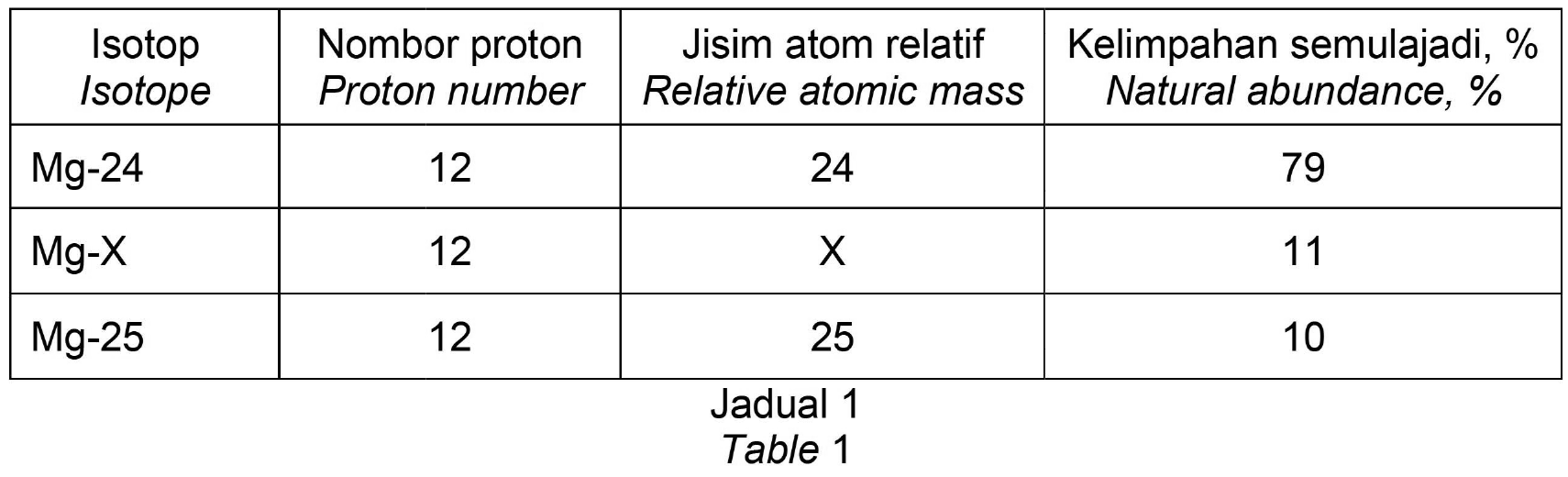
Table 1 shows information for isotopes of magnesium atoms: Mg-24 (proton no. 12, relative atomic mass 24, abundance 79%); Mg-X (12, X, 11%); Mg-25 (12, 25, 10%). What is value of X? [Relative atomic mass Mg=24]
Medium
Which of the following is a redox reaction?
Medium
Which of the following correctly shows the type of polymer and its characteristics?
Medium
Which of the following is an unsaturated hydrocarbon?
Medium
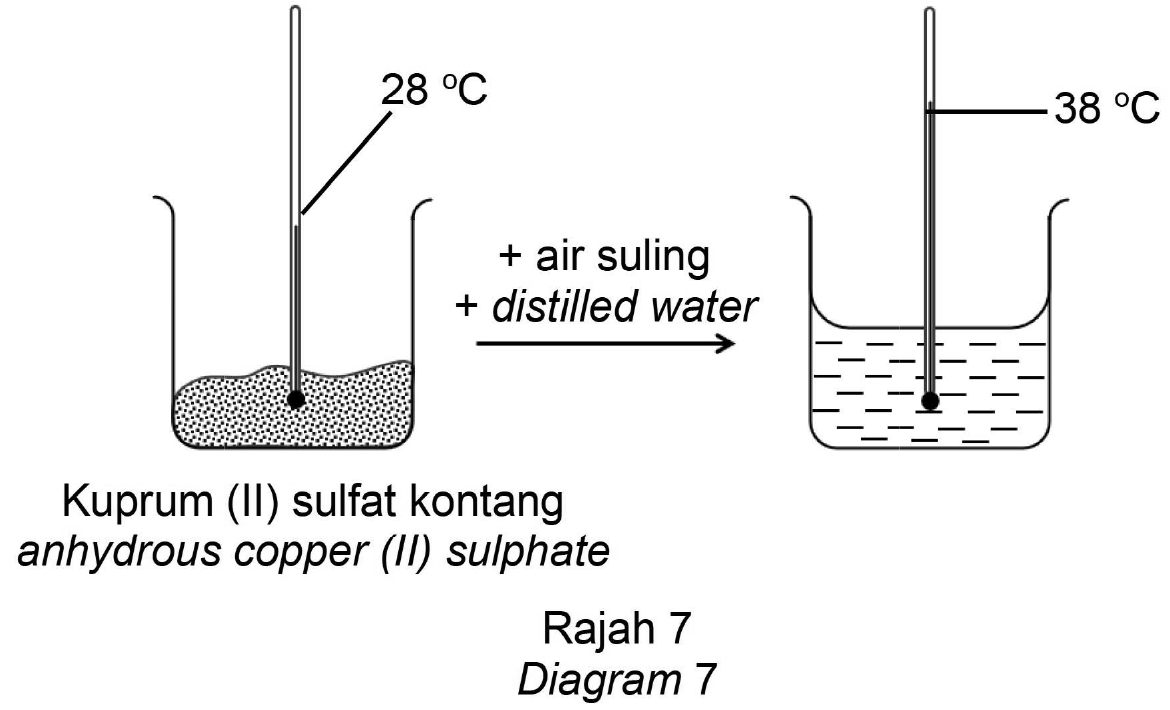
Diagram 7 shows the change in temperature when anhydrous copper(II) sulphate powder is dissolved in distilled water (28 °C to 38 °C). What type of reaction takes place in Diagram 7?
Easy
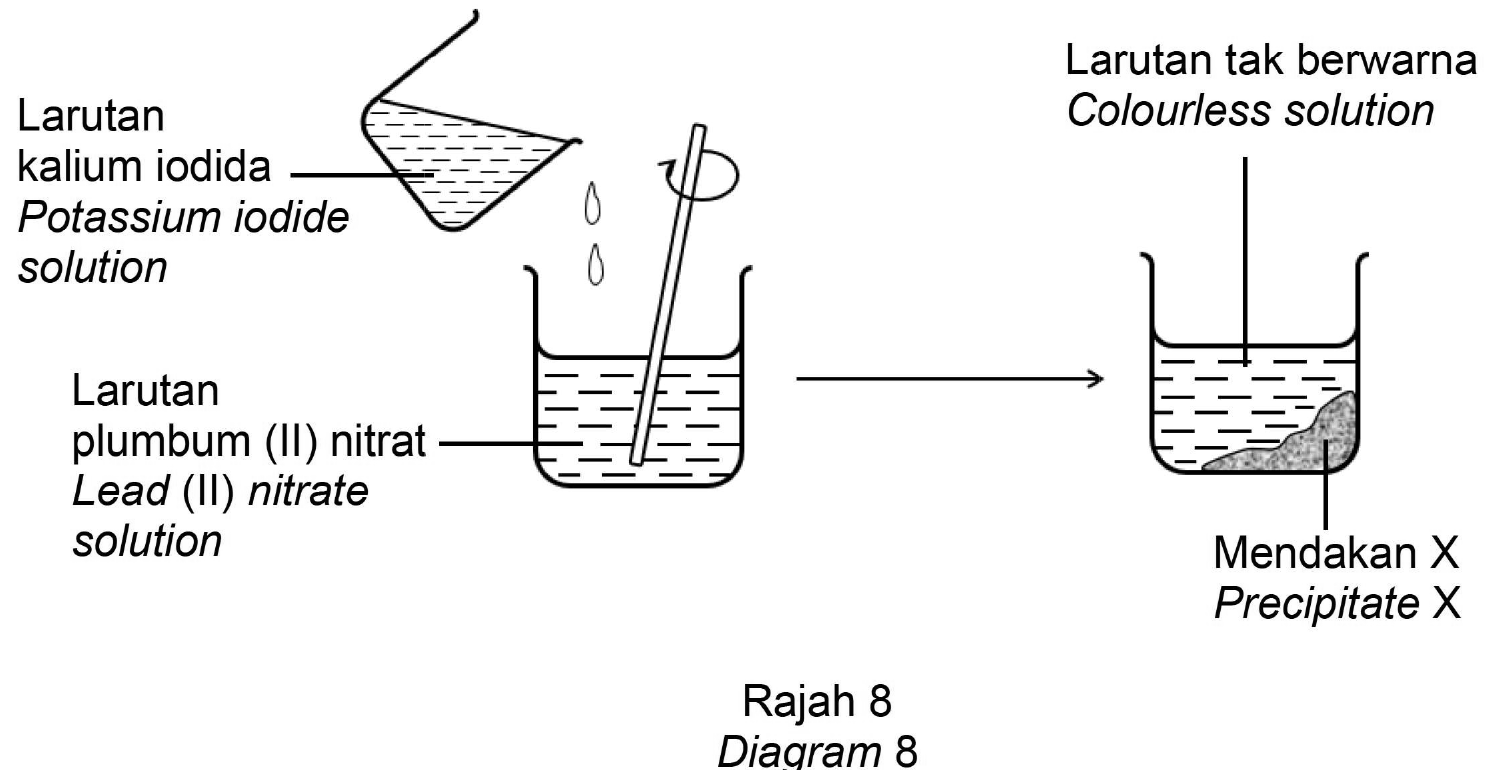
Diagram 8 shows the observation of an experiment carried out by a student in the laboratory (potassium iodide solution added to lead(II) nitrate solution gives colourless solution and precipitate X). What is the colour of precipitate X?
Easy
The following equations represent redox reactions.
Reaction I: I2O5 + 5CO -> 5CO2 + I2
Reaction II: SO2 + 2H2S -> 3S + 2H2O
What is the reducing agent for each reaction?
Medium
Which chemical formula is correctly named according to the IUPAC nomenclature system?
Medium
Which of the following reactions produce artificial food flavours?
I. C3H7OH + 2[O] -> C2H5COOH + H2O
II. C2H5OH + C3H6O2 -> C2H5COOC2H5 + H2O
III. CH3COOH + NaOH -> CH3COONa + H2O
IV. C2H5COOH + C3H7OH -> C2H5COOC3H7 + H2O
Medium
What is the function of steel in reinforced concrete?
Medium
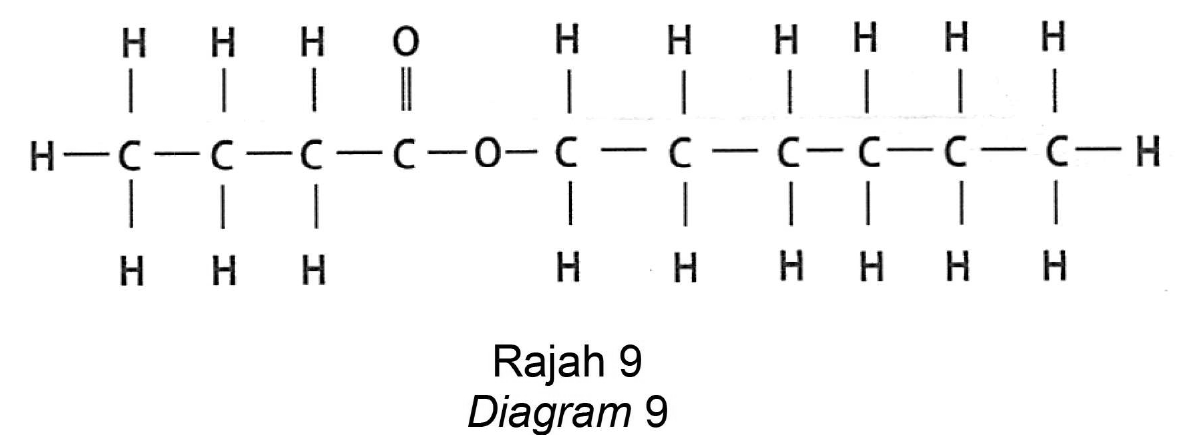
Diagram 9 shows the structural formula of compound X (an ester: CH3CH2CH2COO-C6H13 drawn in full). What is the relative molecular mass for the empirical formula of the compound X? [Relative atomic mass: H=1, C=12, O=16]
Medium
Which of the following explains why the pH of 1.0 mol dm⁻³ of ethanoic acid is higher than 1.0 mol dm⁻³ of hydrochloric acid?
Medium
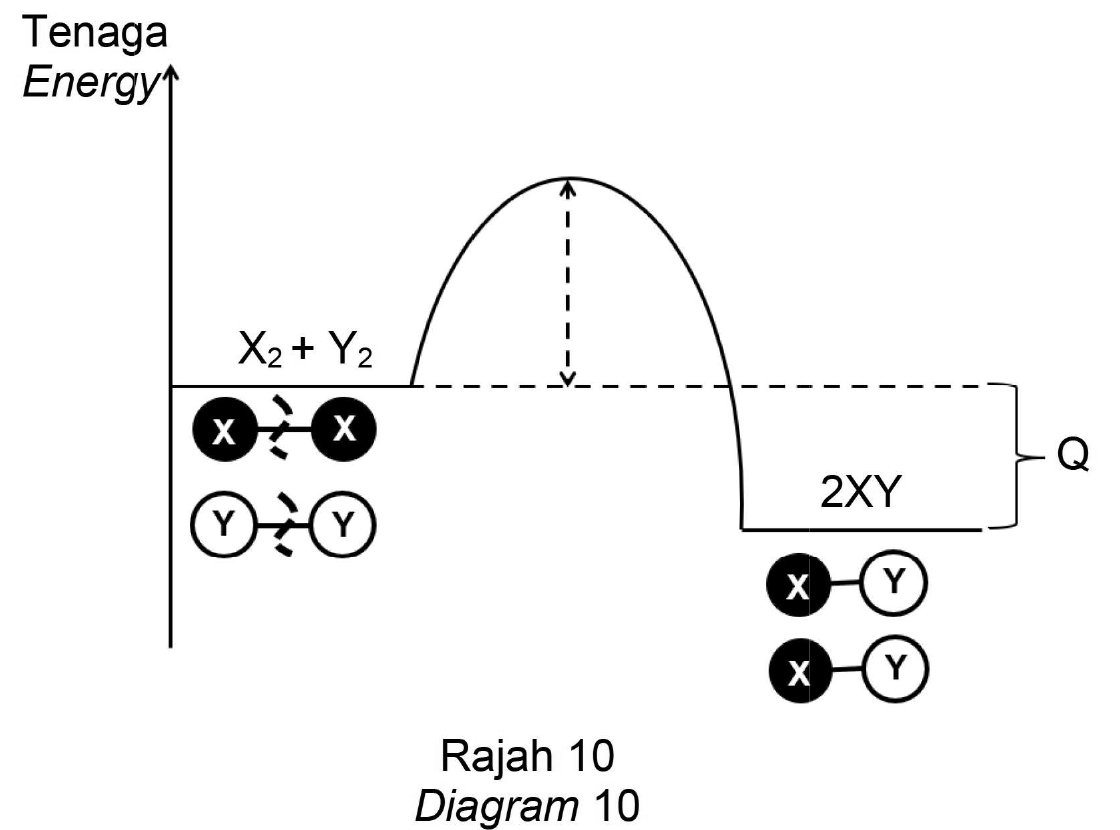
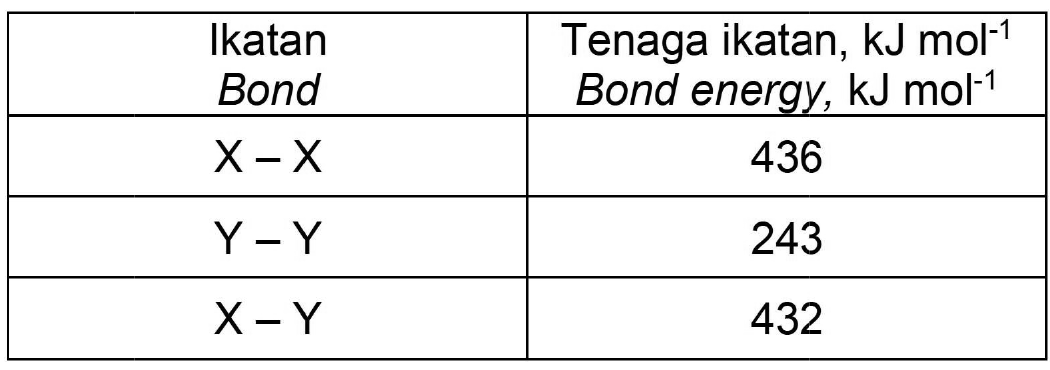
Diagram 10 shows a diagram of bond breaking and formation in a chemical reaction (X2 + Y2 -> 2XY, energy released Q). Bond energies: X-X 436 kJ mol⁻¹; Y-Y 243 kJ mol⁻¹; X-Y 432 kJ mol⁻¹. What is the value of Q?
Medium
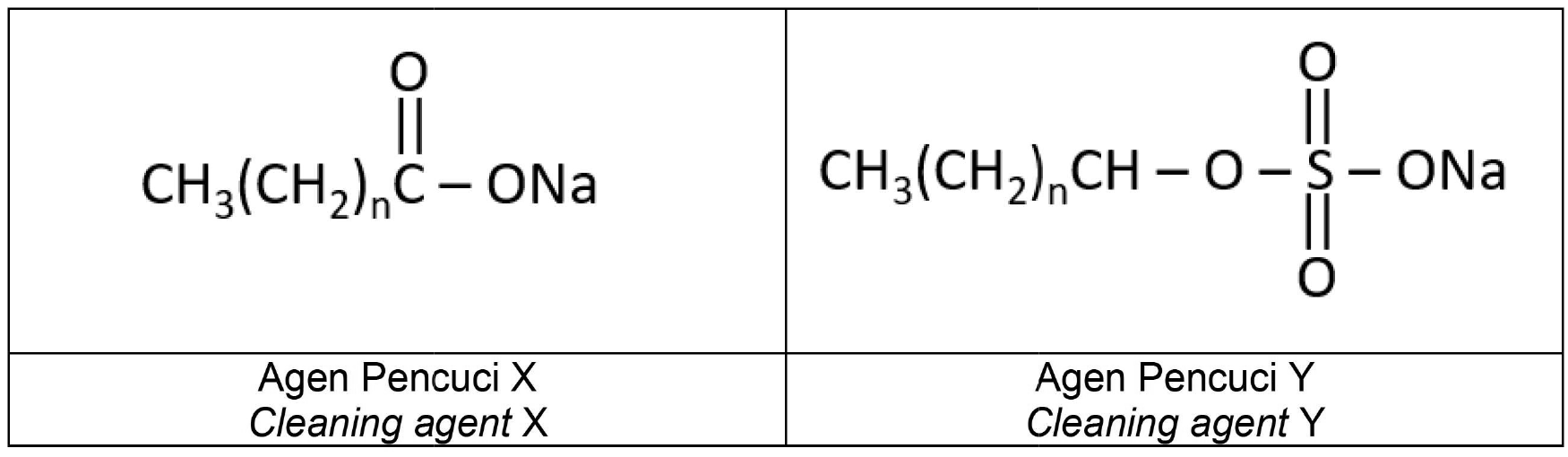
Diagram 11 shows the structural formula of two cleaning agents X (CH3(CH2)nCOONa) and Y (CH3(CH2)nCH-O-SO2-ONa type). Which of the following is true about cleaning agent X or cleaning agent Y?
Medium
The following are the chemical formulas for compounds X oxide and X chloride: XO and XCl3. In which group is element X in the Periodic Table of Elements?
Medium
Which of the following can form hydrogen bonds with water?
Medium
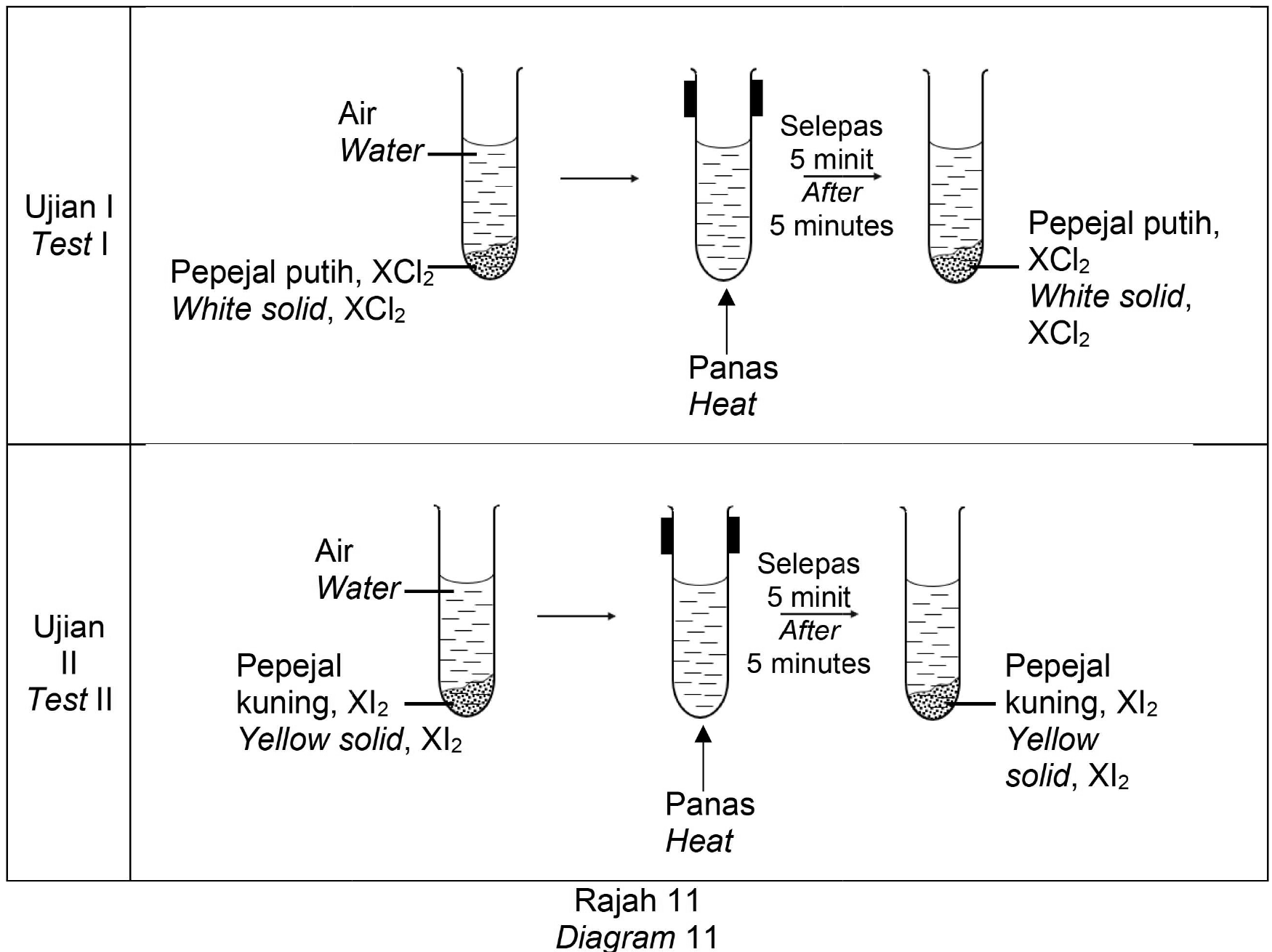
Diagram 11 shows two tests carried out on two different types of salt (Test I: white solid XCl2 in water, heated; Test II: yellow solid XI2 in water, heated; the solid remains after 5 minutes in both). What is X?
Medium
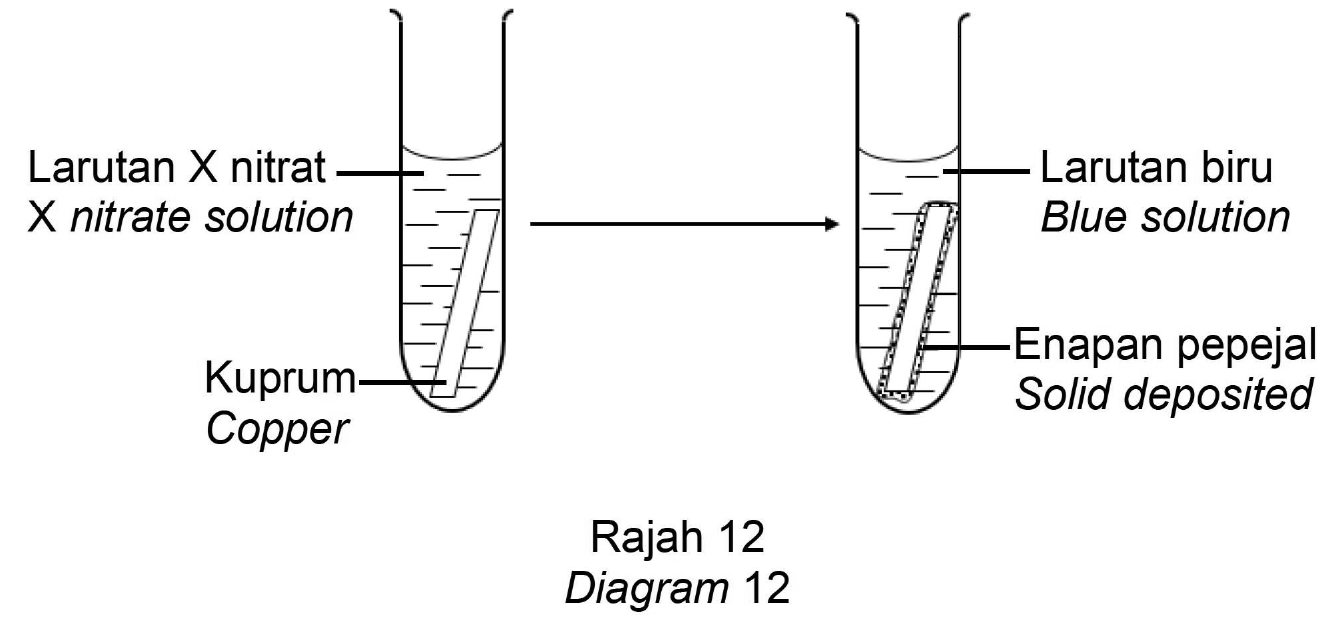
Diagram 12 shows the observation for the reaction of displacement reaction (copper placed in X nitrate solution gives blue solution and solid deposited). Which statement best describes the observation?
Medium
In a reaction, effective collisions between the reacting particles must occur for the reaction to occur. What conditions are necessary for effective collision to occur?
I. The right amount of reactants
II. Correct collision orientation
III. Small size of reactant
IV. Produces energy beyond the activation energy
Medium
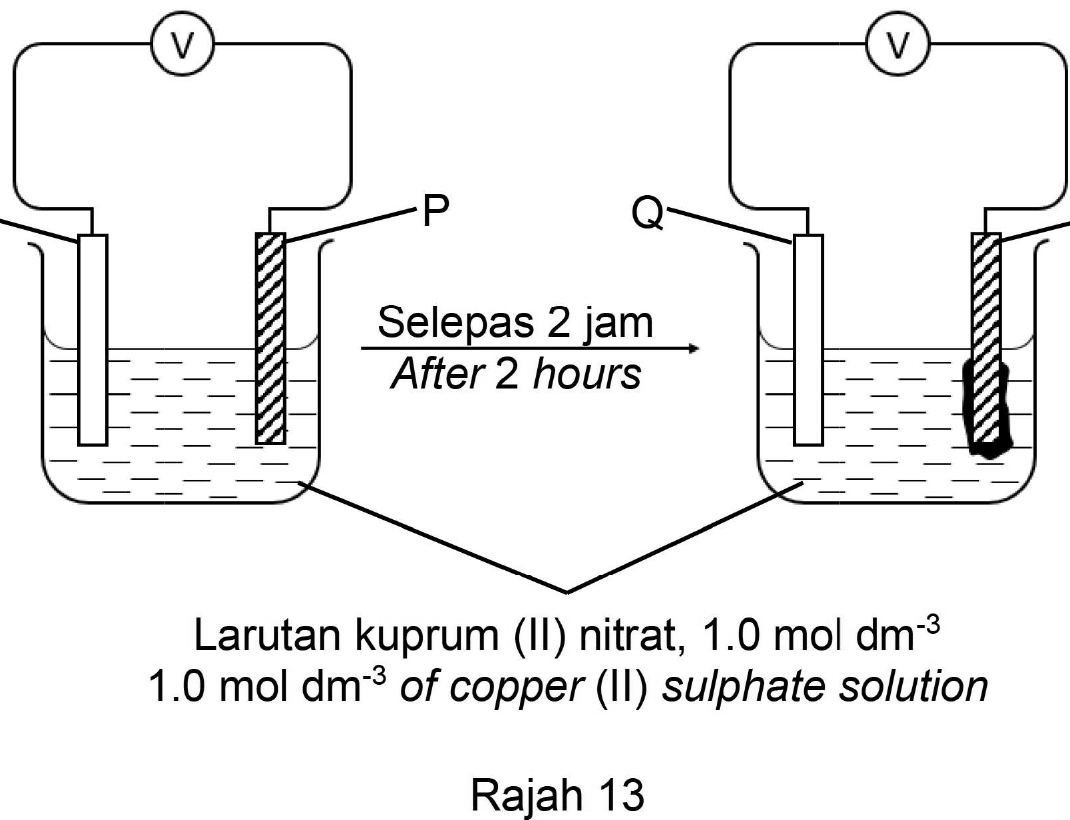
Diagram 13 shows the changes that occur in a simple chemical cell (electrodes P and Q in copper(II) sulphate solution 1.0 mol dm⁻³; after 2 hours P is coated with a black deposit). Which statement is true about the changes in Diagram 13?
Medium
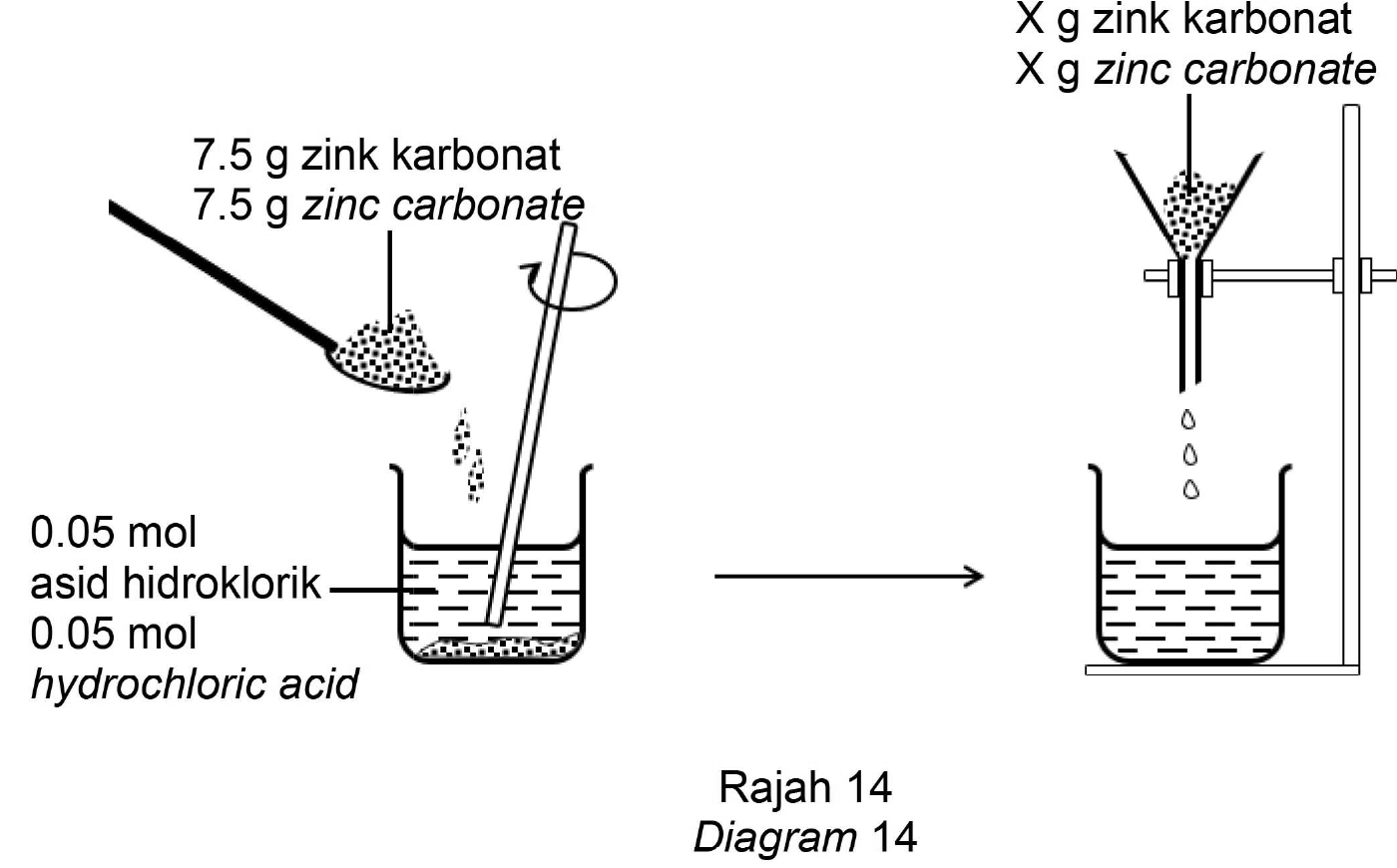
Diagram 14 shows the steps for the preparation of dissolved salt (7.5 g zinc carbonate added to 0.05 mol hydrochloric acid, stirred, then X g of unreacted zinc carbonate filtered). What is the value of X? [Relative atomic mass: C=12, O=16, Zn=65]
Medium
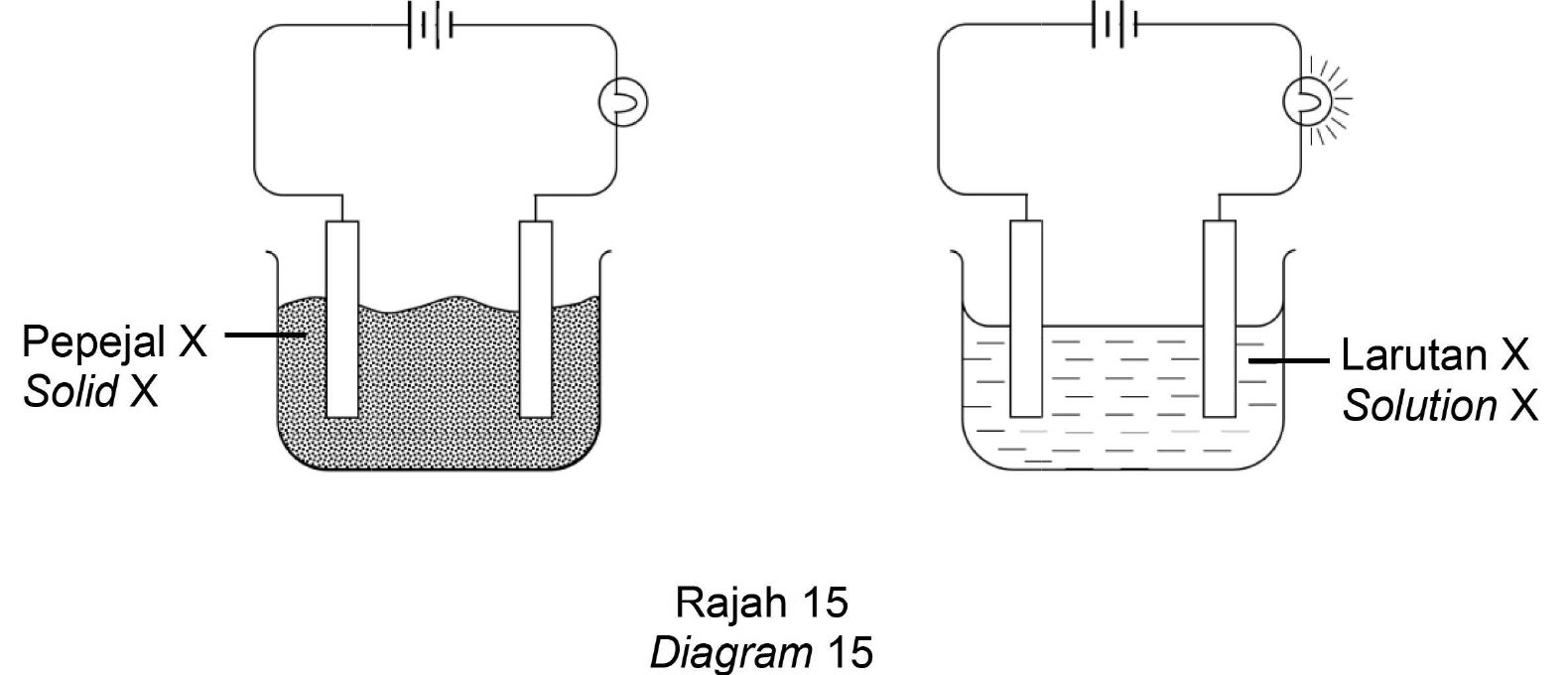
Diagram 15 shows the observations of two experiments carried out on compound X (solid X: bulb does not light; solution X: bulb lights). Which of the following can explain the situation in Diagram 15?
Medium
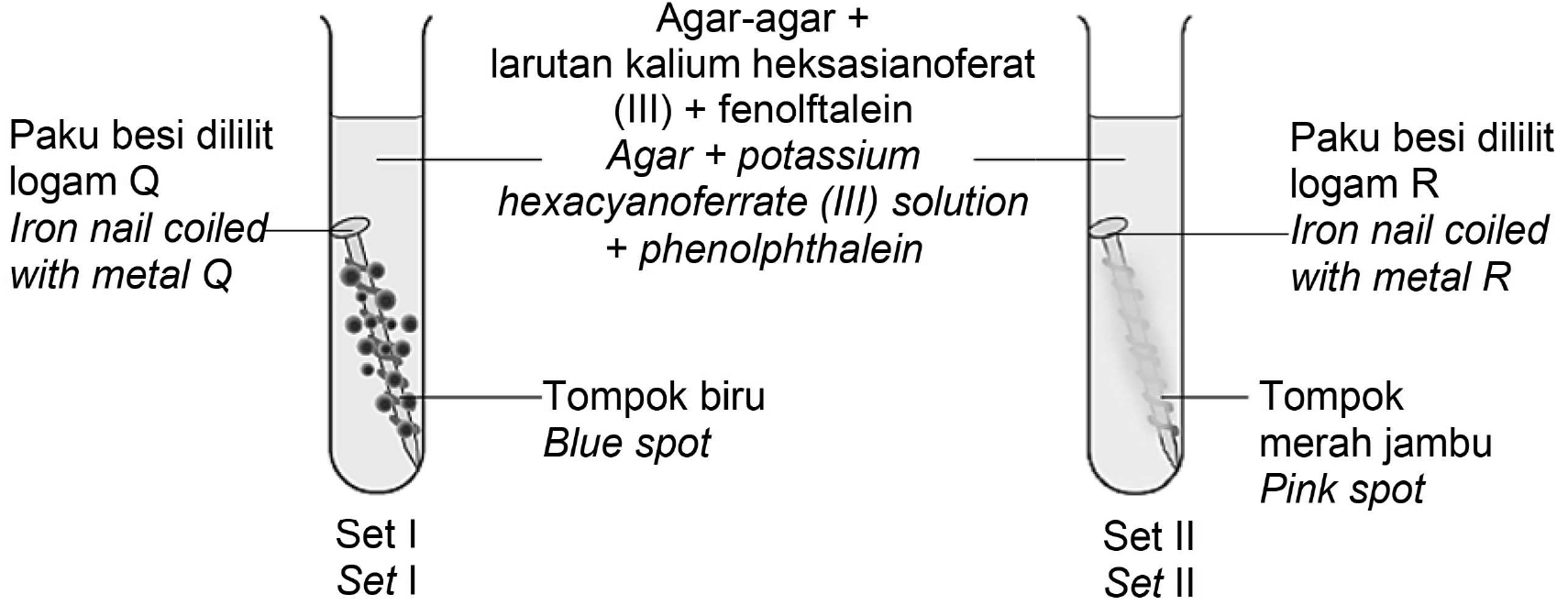
Diagram 16 shows the observation of an experiment to study the effect of metal Q and metal R on the corrosion of iron (Set I: iron nail coiled with Q gives blue spots; Set II: iron nail coiled with R gives pink spots). What are Q metals and R metals?
Medium
Which of the following carbon compounds will produce the most soot when burned in air? [Relative atomic mass: H=1, C=12, O=16]
Medium
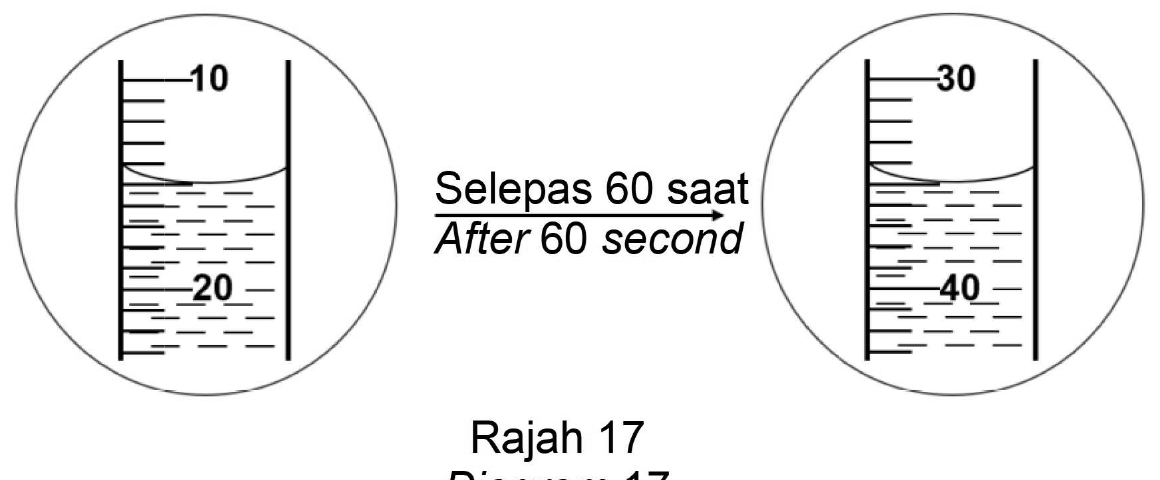
Diagram 17 shows the burette readings used to collect gas X in a reaction (initial reading near 15 cm³, final reading near 34 cm³ after 60 seconds). Based on Diagram 17, what is the average rate of reaction for the reaction?
Medium
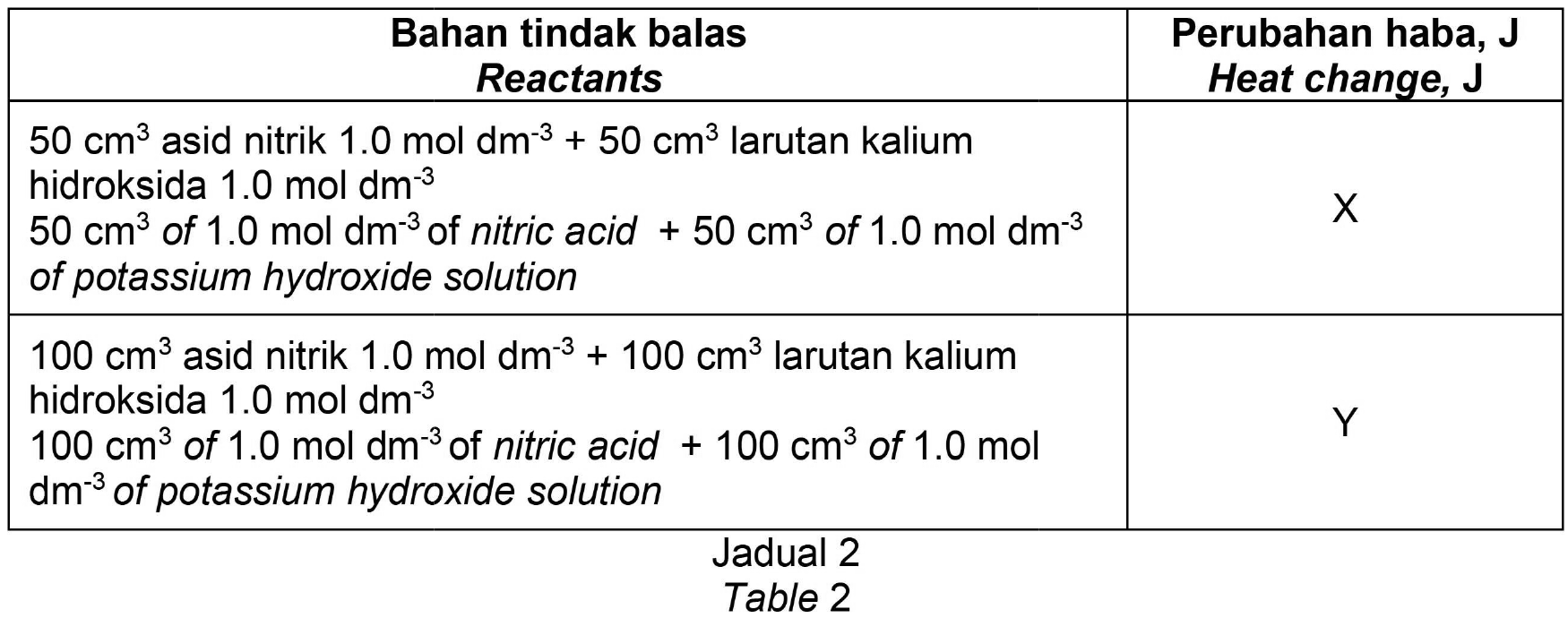
Table 2 shows the heat changes for two neutralisation reactions: 50 cm³ of 1.0 mol dm⁻³ nitric acid + 50 cm³ of 1.0 mol dm⁻³ potassium hydroxide solution gives heat change X; 100 cm³ of 1.0 mol dm⁻³ nitric acid + 100 cm³ of 1.0 mol dm⁻³ potassium hydroxide solution gives heat change Y. Which is true about X and Y?
Medium
Which of the following chemical equations is correct for the decomposition of lead(II) nitrate when heated strongly?
Medium
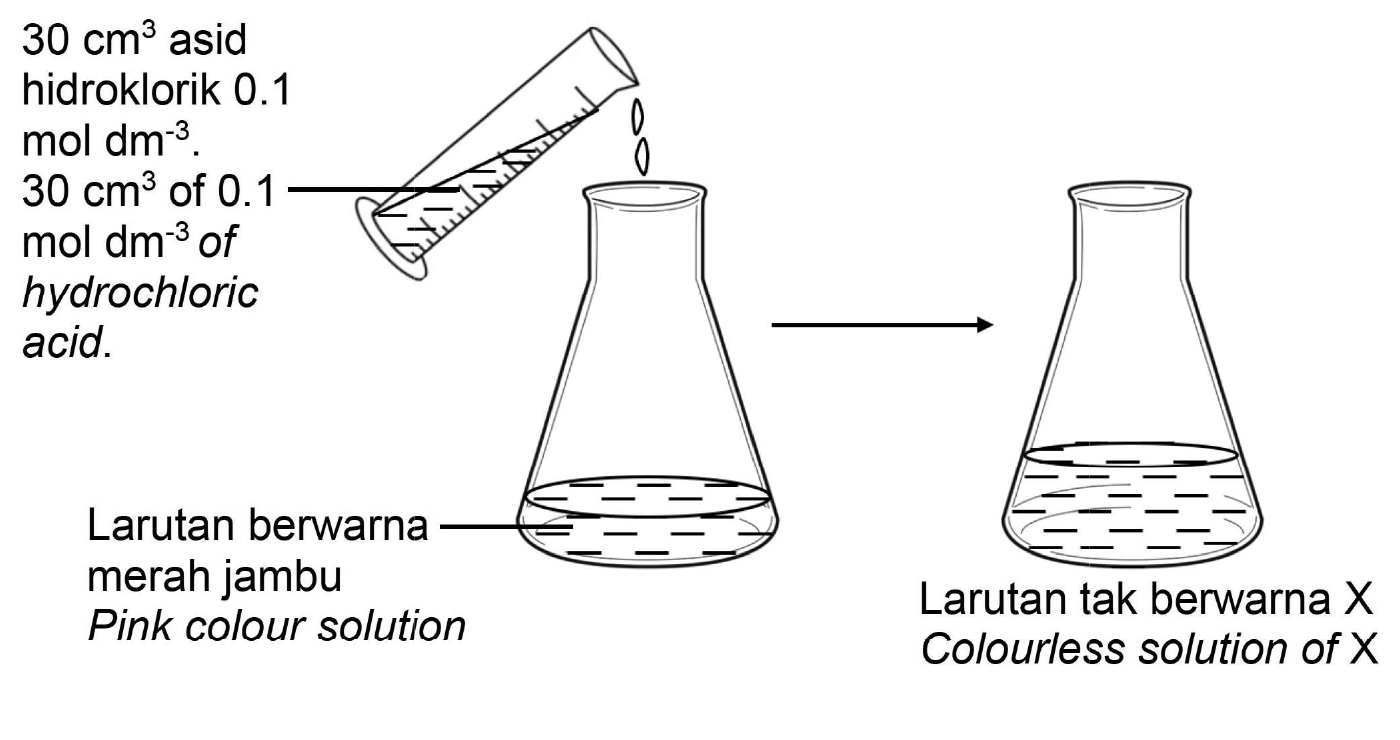
Diagram 18 shows the observation when hydrochloric acid is added to 25 cm³ of 0.1 mol dm⁻³ sodium hydroxide solution which is dripped with phenolphthalein indicator (30 cm³ of 0.1 mol dm⁻³ hydrochloric acid added; pink solution becomes colourless solution X). What is the pH value of colourless solution of X?