Write your answer on paper. Then open the answer to check it.
Section A
Diagram 1 shows the formation of chemical bonds for ammonium ions, NH4+.
Medium5 marks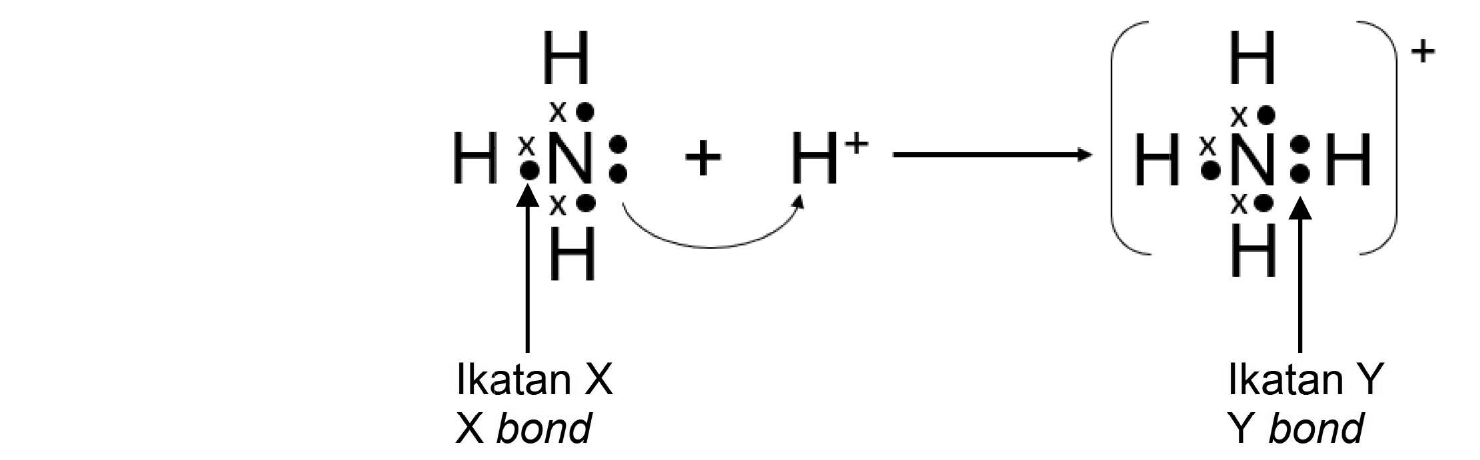
- (a)
Name X bond and Y bond.
[2] - (b)
How many valence electrons does a nitrogen atom have?
[1] - (c)
Explain how X bonds and Y bonds differ in terms of electron sharing.
[2]
Diagram 2 shows the formation of dew drops formed on the leaves in the morning.
Medium5 marks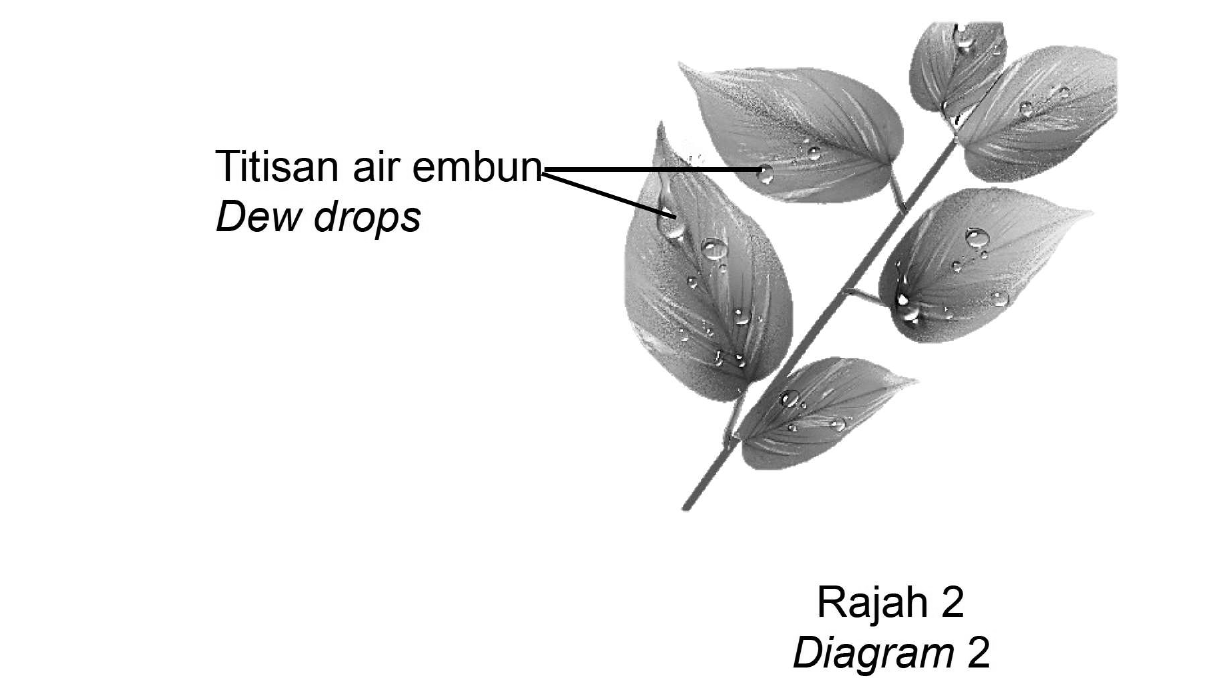
- (a)
Name the process that change during the formation of water droplets on the leaves.
[1] - (b)(i)
What types of particles are found in water?
[1] - (b)(ii)
Draw the arrangement of water particles before they turn into water droplets.
[1] - (c)
If the water is heated to a temperature of 100 °C, what changes will happen to the water particles in terms of kinetic energy and the movement of the particles in the water.
[2]
Diagram 3 shows the changes that occur during the activity of determining the empirical formula for magnesium metal oxide (magnesium heated in a crucible gives a white powder).
Medium6 marks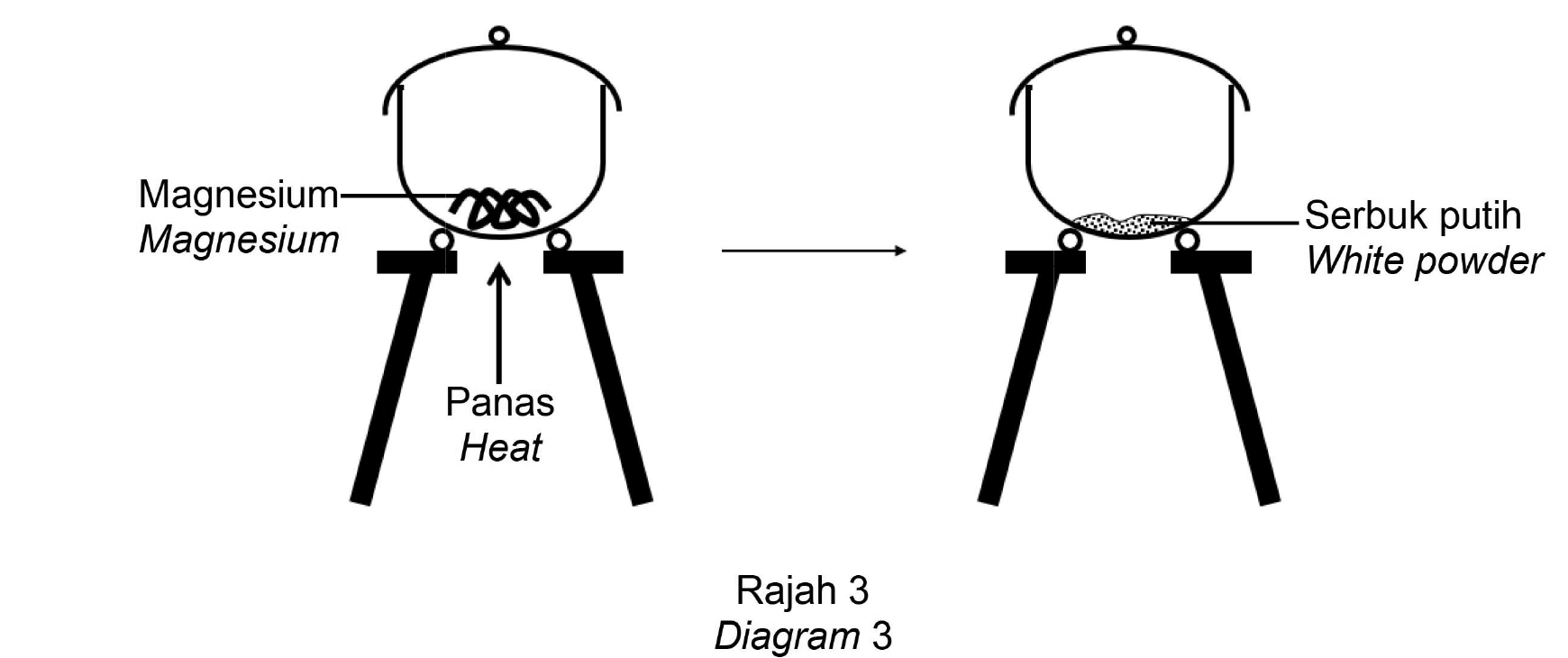
- (a)
Write the chemical formula for the white powder.
[1] - (b)(i)
Write the chemical equation for the reaction shown in Diagram 3.
[2] - (b)(ii)
State two information qualitatively and quantitatively that can be obtained from the chemical equation in (b)(i).
[2] - (c)
Determine the number of moles of white powder that would be produced if 0.5 moles of oxygen were used to ensure complete combustion.
[1]
Diagram 4 shows the observation when a P solution with concentration 1.0 mol dm-3 is dripped with a few drops of phenolphthalein indicator (colourless solution P turns pink).
Medium7 marks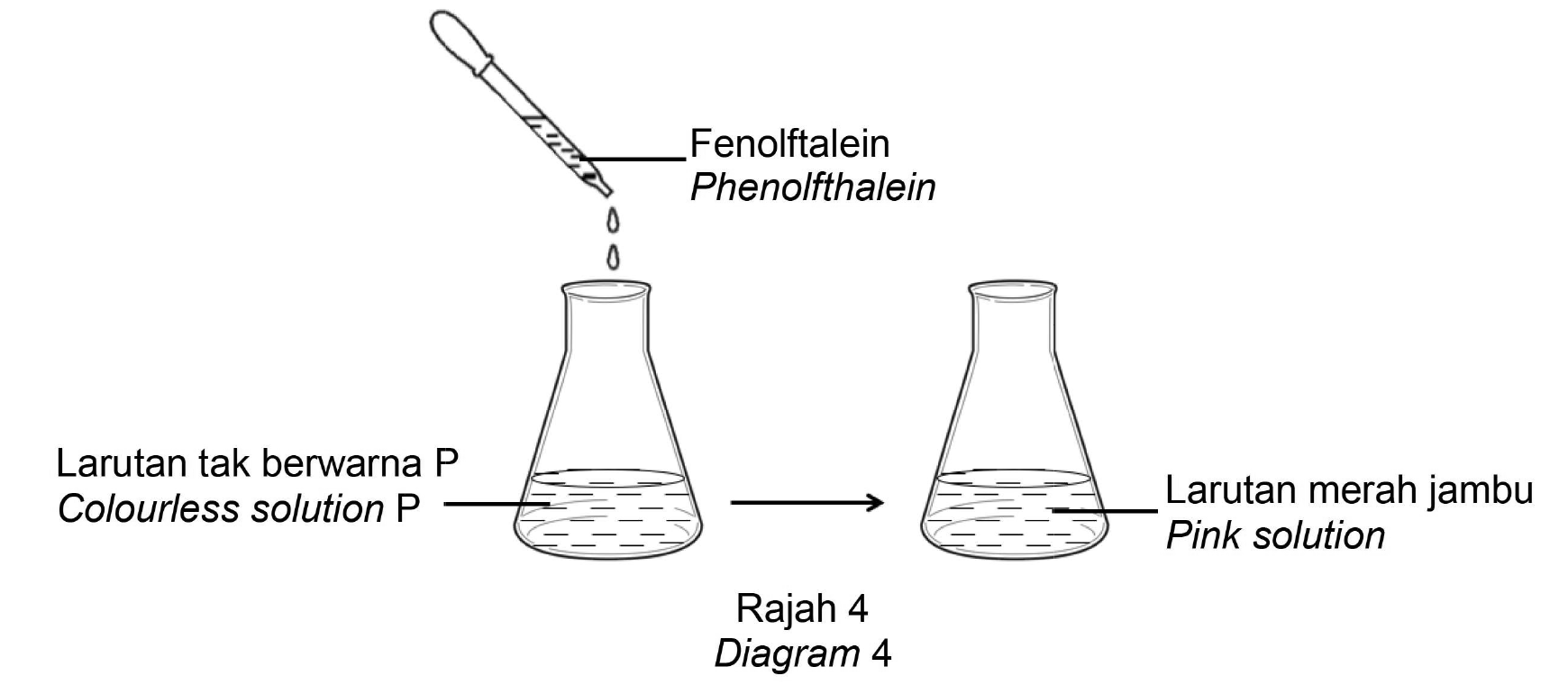
- (a)(i)
Based on Diagram 4, state the function of phenolphthalein?
[1] - (a)(ii)
Name the ion that causes phenolphthalein to turn pink.
[1] - (b)(i)
State the range of pH value.
[1] - (b)(ii)
Determine the pH value for solution P.
[2] - (c)
Suggest a method to convert the pink solution in Diagram 4 back to a colourless solution. Explain your answer.
[2]
Diagram 5 shows the observation of the oxide reaction of elements found in Period 3 of the Periodic Table of Elements (X oxide, Y oxide and Z oxide with 1 mol dm-3 NaOH and 1 mol dm-3 HCl: X oxide dissolves in both giving a colourless solution; Y oxide does not dissolve in HCl but dissolves in NaOH; Z oxide dissolves in HCl giving a coloured solution but does not dissolve in NaOH).
Medium8 marks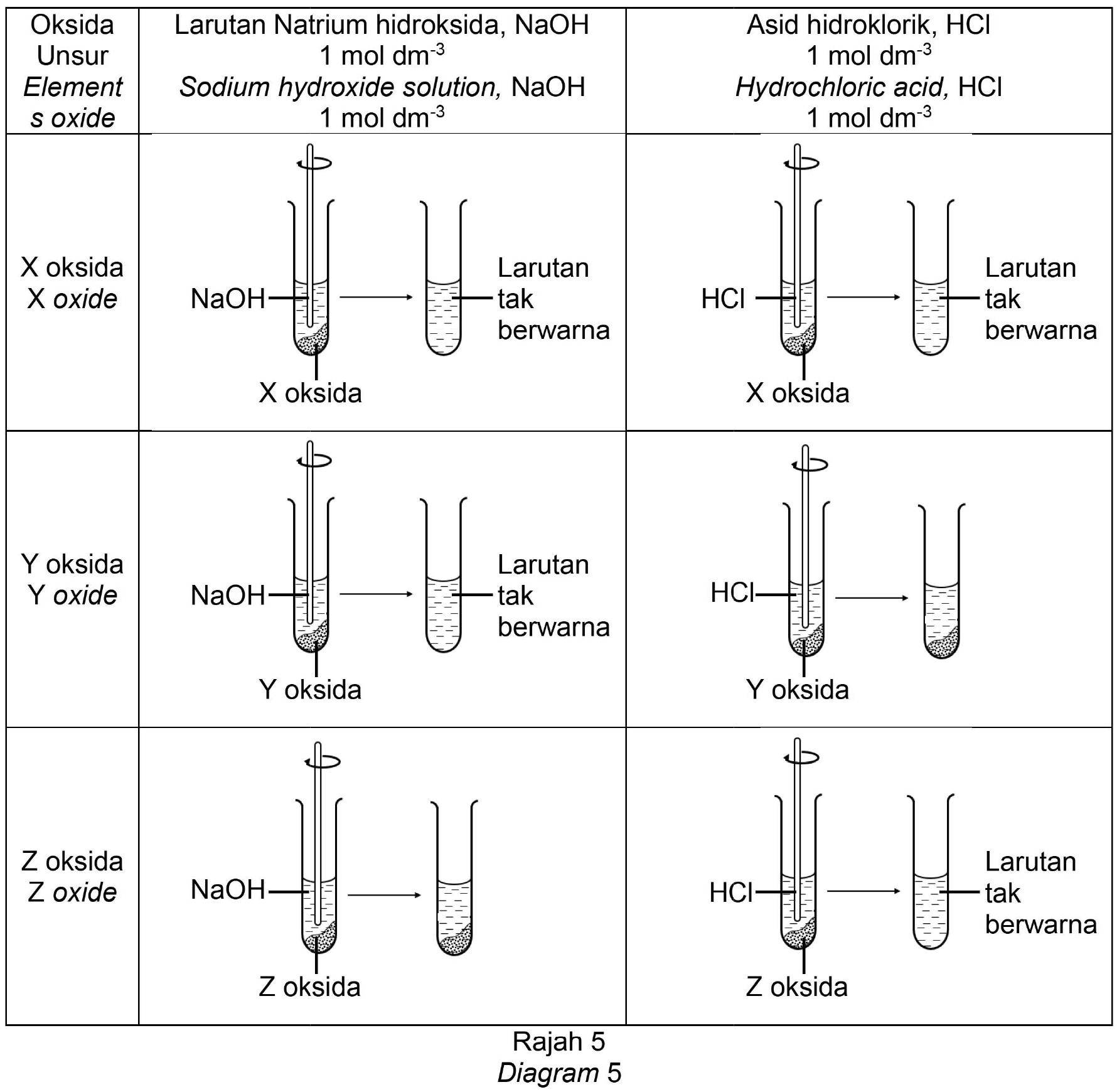
- (a)
Why are these elements placed in Period 3?
[1] - (b)
Based on Diagram 5, which oxide of elements that shows: acidic property; alkali property; amphoteric property.
[3] - (c)(i)
The chemical formula for Z oxide is ZO. Using the given formula, write the chemical equation for the reaction between Z oxide and hydrochloric acid as shown in Diagram 5.
[2] - (c)(ii)
Calculate the minimum volume of hydrochloric acid needed to ensure that all 0.005 mol of Z oxide is completely dissolved.
[2]
Rubber is a natural polymer. The apparatus arrangement shown in Diagram 6.1 was used for the rubber elasticity test (rubber strip A and rubber strip B each with a 1 kg weight). The test results are recorded in Table 6.2. Rubber A has sulphur cross-links between chains; rubber B is unvulcanised polyisoprene. Length of the rubber band: A 12.0 cm, B 12.0 cm. Length of rubber band + weight 1 kg: A 15.5 cm, B 16.5 cm. Length of the band after the weight is released: A 12.0 cm, B 15.0 cm.
Medium9 marks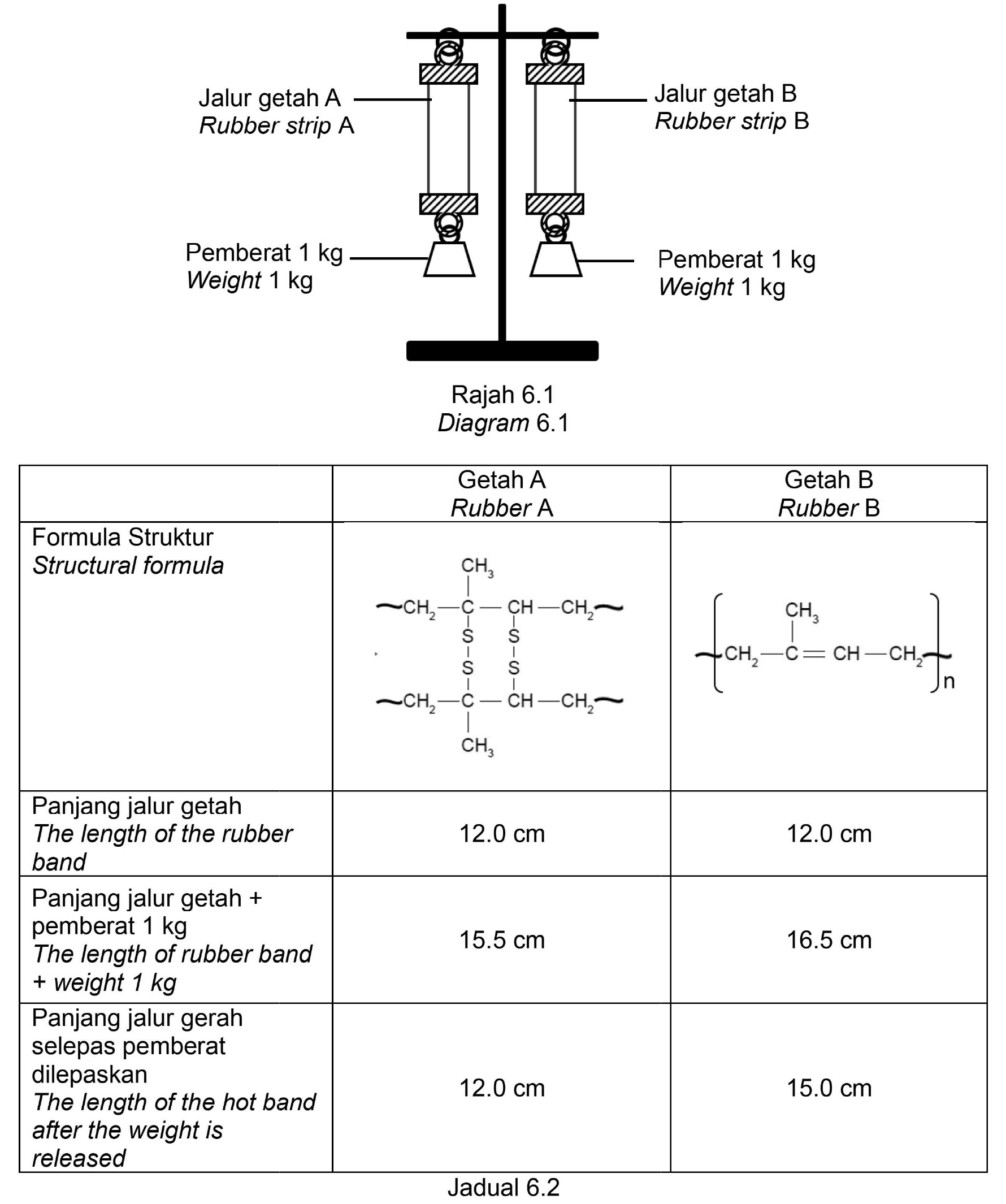
- (a)
What is meant by polymer?
[1] - (b)
Name the monomer of natural rubber.
[1] - (c)
Based on Diagram 6.1 and Table 6.2, compare the elasticity of rubber A and rubber B. Explain your answer.
[3] - (d)
The use of rubber has been widely commercialized including the production of synthetic rubber, especially in the production of vehicle tires. But the unsustainable disposal of tires from natural and synthetic rubber will cause environmental pollution. State two methods and explain how they can reduce the problem.
[4]
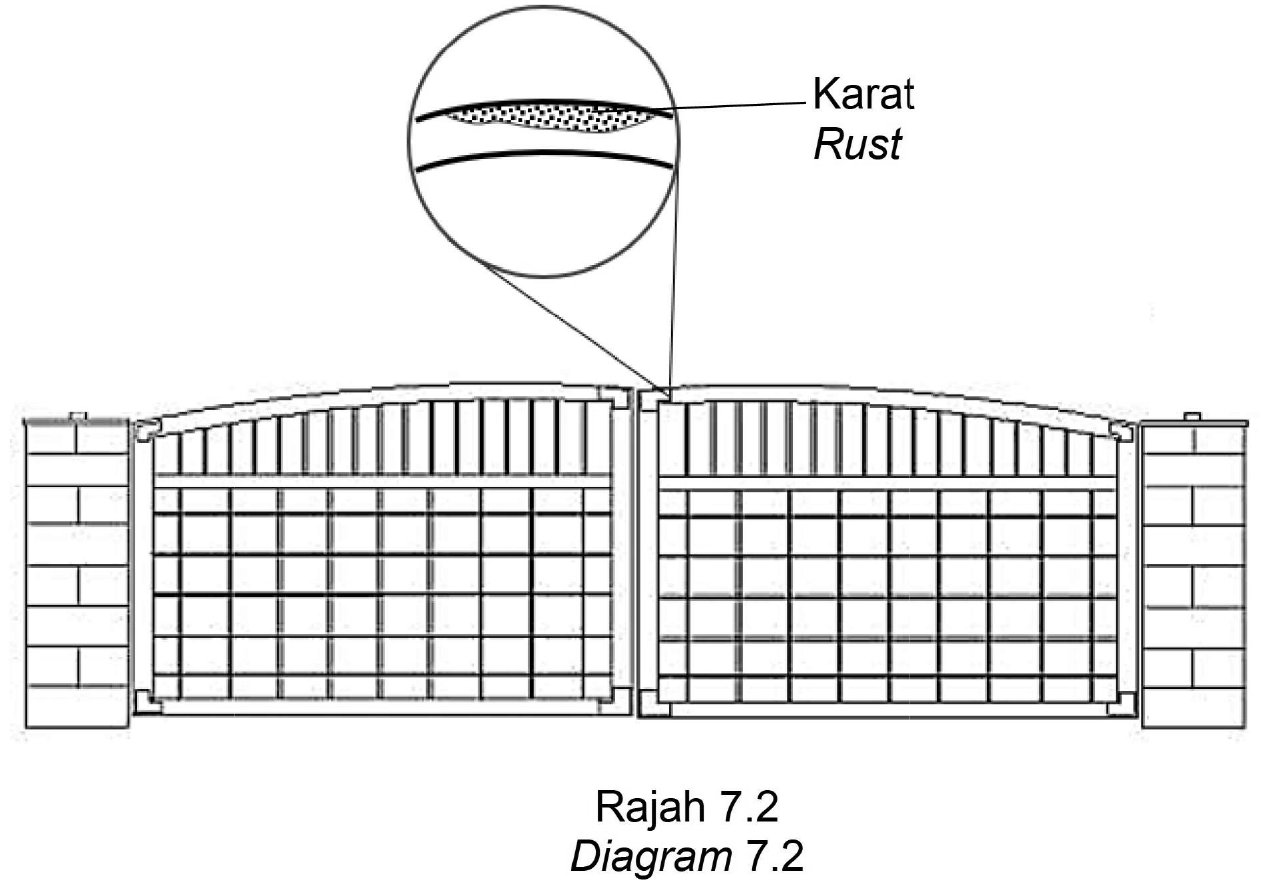
Diagram 7.1 shows information for two different reactions to study redox reactions. Set I: copper(II) sulphate solution with metal M; blue solution turns colourless, brown deposits on metal strip M. Set II: silver nitrate solution with metal N; colourless solution turns to blue. Diagram 7.2 shows rust formed on a gate close to the beach.
Medium10 marks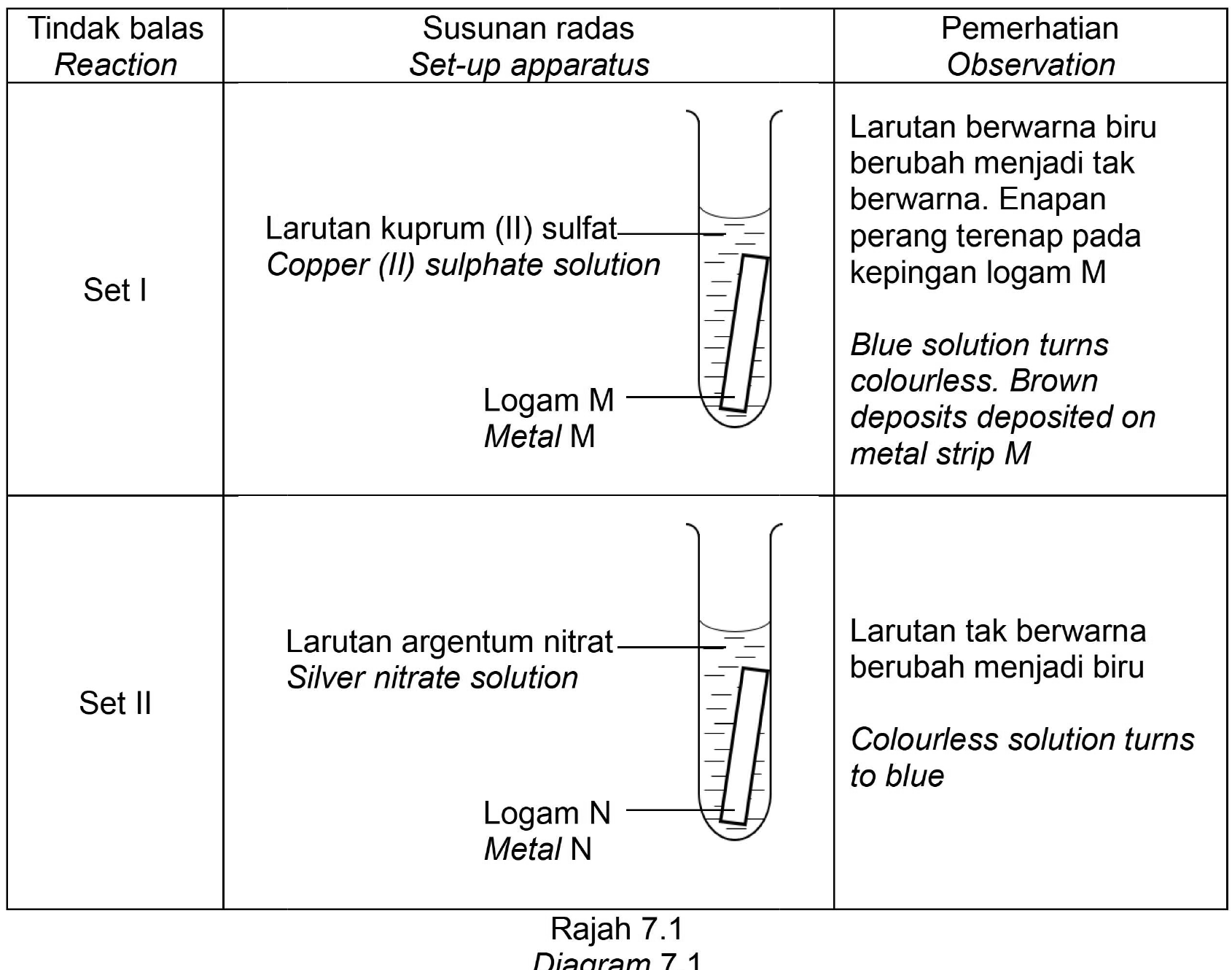
- (a)(i)
What does redox reaction mean?
[1] - (a)(ii)
Based on Diagram 7.1, suggest a name for metal M and metal N.
[2] - (a)(iii)
Write the half equation for the reduction reaction of Set I and Set II.
[2] - (a)(iv)
If 10 cm3 of a 1.0 mol dm-3 copper(II) sulphate solution were used in Set I, calculate the mass of the brown precipitate that resulted at the end of the reaction. [Relative atomic mass: Cu=64]
[3] - (b)
Mr. Ali found that the gate of his house rusted easily because his house was close to the beach. Mr. Ali has the option of repainting his rusted fence or replacing it with alloy. As a chemistry student help Mr. Ali made a choice and justified that choice.
[2]
Diagram 8 shows structural formula for carbon compounds P, Q and R (P: butane; Q: but-2-ene, H3C-CH=CH-CH3; R: butan-1-ol, CH3CH2CH2CH2OH).
Medium10 marks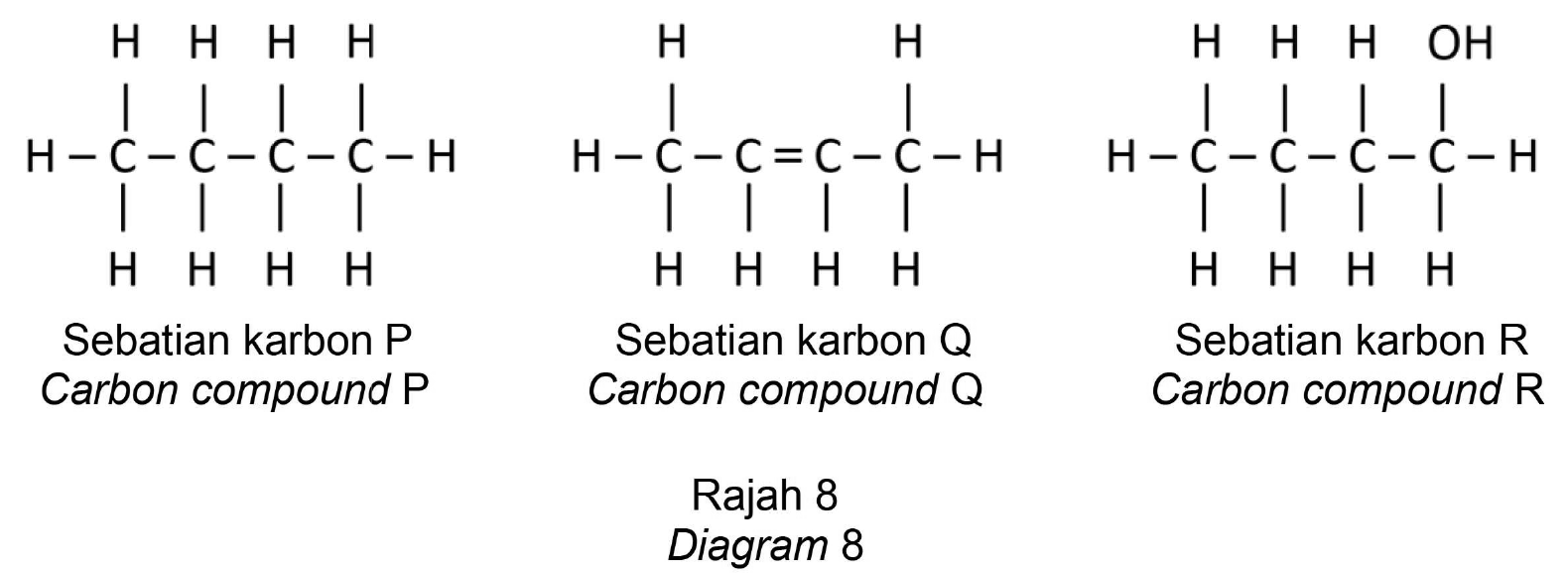
- (a)
What is meant by carbon compound?
[1] - (b)
Name the compound Q and R according to the IUPAC naming system.
[2] - (c)(i)
Carbon compounds R can burn completely in excess oxygen and produce no soot. Write the chemical equation for the combustion reaction of compound R.
[2] - (c)(ii)
Determine the volume of oxygen required to ensure complete combustion of 0.1 mol of compound R. [Molar volume of gas at room condition = 24 dm3 mol-1]
[2] - (d)
Carbon compounds P and Q can be used as fuel for cooking at home. In your opinion, which carbon compound is more suitable to be used as fuel for cooking at home. Justify your answer.
[3]
Section B
Table 9.1 shows the reactants used to study the factors that affect the rate of reaction. Set I: 50 cm3 of 1.0 mol dm-3 hydrochloric acid + excess zinc powder. Set II: 50 cm3 of 1.0 mol dm-3 hydrochloric acid + excess zinc powder + copper(II) sulphate solution. Graph 9.2 shows some of the results (volume of hydrogen gas, cm3, against time, s): Exp I reaches 50 cm3 at 70 s; Exp II reaches 50 cm3 at 30 s.
Medium20 marks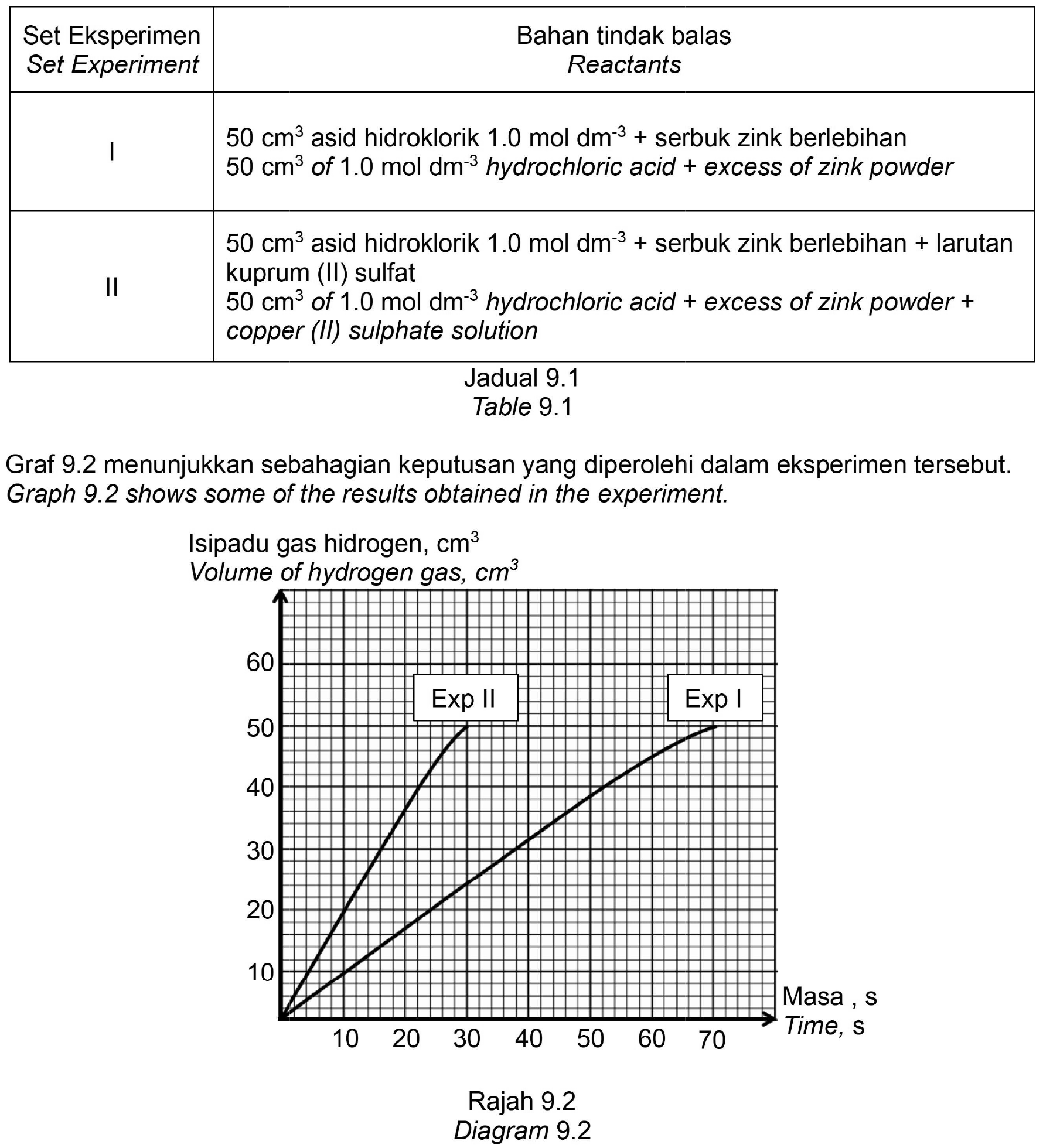
- (a)(i)
What is meant by rate of reaction?
[1] - (a)(ii)
In a reaction, effective collisions between the reacting particles must occur for the reaction to occur. State two conditions necessary for effective collision to occur.
[2] - (a)(iii)
Draw the energy profile for the reaction. Show the activation energy for experiment Set I labeled Ea and the activation energy for experiment Set II labeled Eb on the same energy profile.
[3] - (b)(i)
Calculate the average rate of reaction for experiment Set I and Set II.
[2] - (b)(ii)
Compare the reaction rates in Set I and Set II experiments. Explain your answer based on collision theory.
[5] - (c)(i)
Experiment Set I was repeated by replacing hydrochloric acid with sulphuric acid at the same volume and concentration. Write the chemical equation for the reaction in (c) and calculate the volume of hydrogen gas that may be liberated in the reaction. [Molar volume of gas at room temperature = 24 dm3 mol-1]
[5] - (c)(ii)
Compare the rate of reaction between the experiment in (c) with the Set I experiment. Explain your answer.
[2]
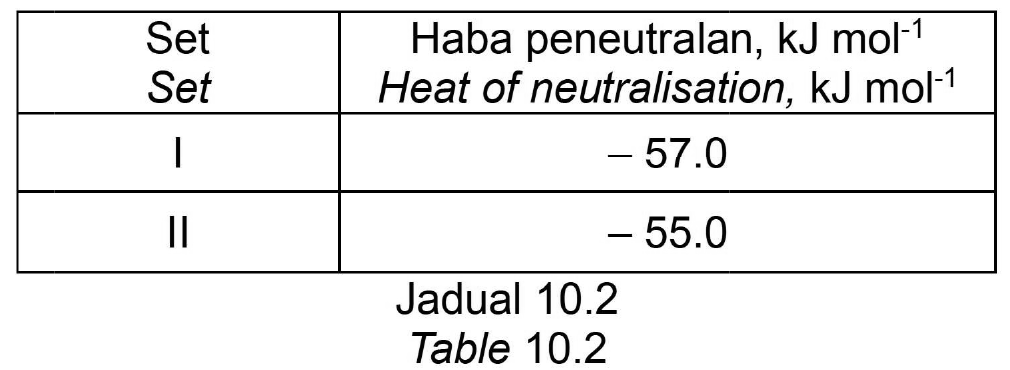
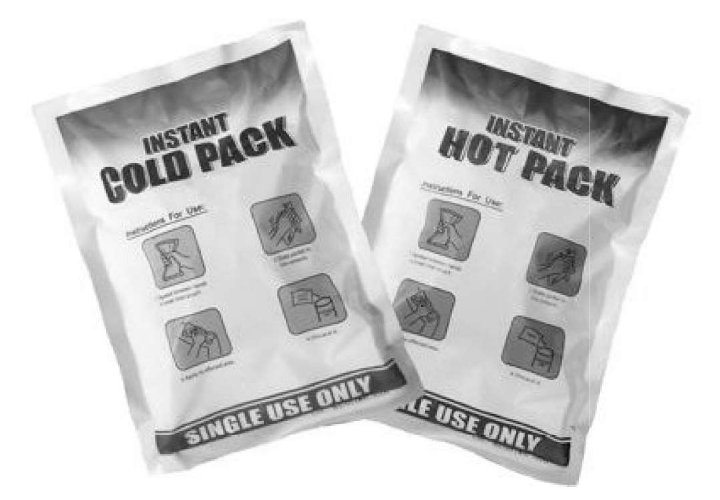
Diagram 10.1 shows observations for neutralisation reactions carried out using two different acids. Acid P and acid Q are monoprotic acids. Set I: 50 cm3 of 1.0 mol dm-3 acid P (28 °C) + 50 cm3 of 1.0 mol dm-3 NaOH solution gives X °C. Set II: 50 cm3 of 1.0 mol dm-3 acid Q (28 °C) + 50 cm3 of 1.0 mol dm-3 NaOH solution. Table 10.2: heat of neutralisation Set I 57.0 kJ mol-1; Set II -55.0 kJ mol-1 (as printed). Diagram 10.3 shows a cold pack and a hot pack that apply the thermochemistry concept in daily life.
Hard20 marks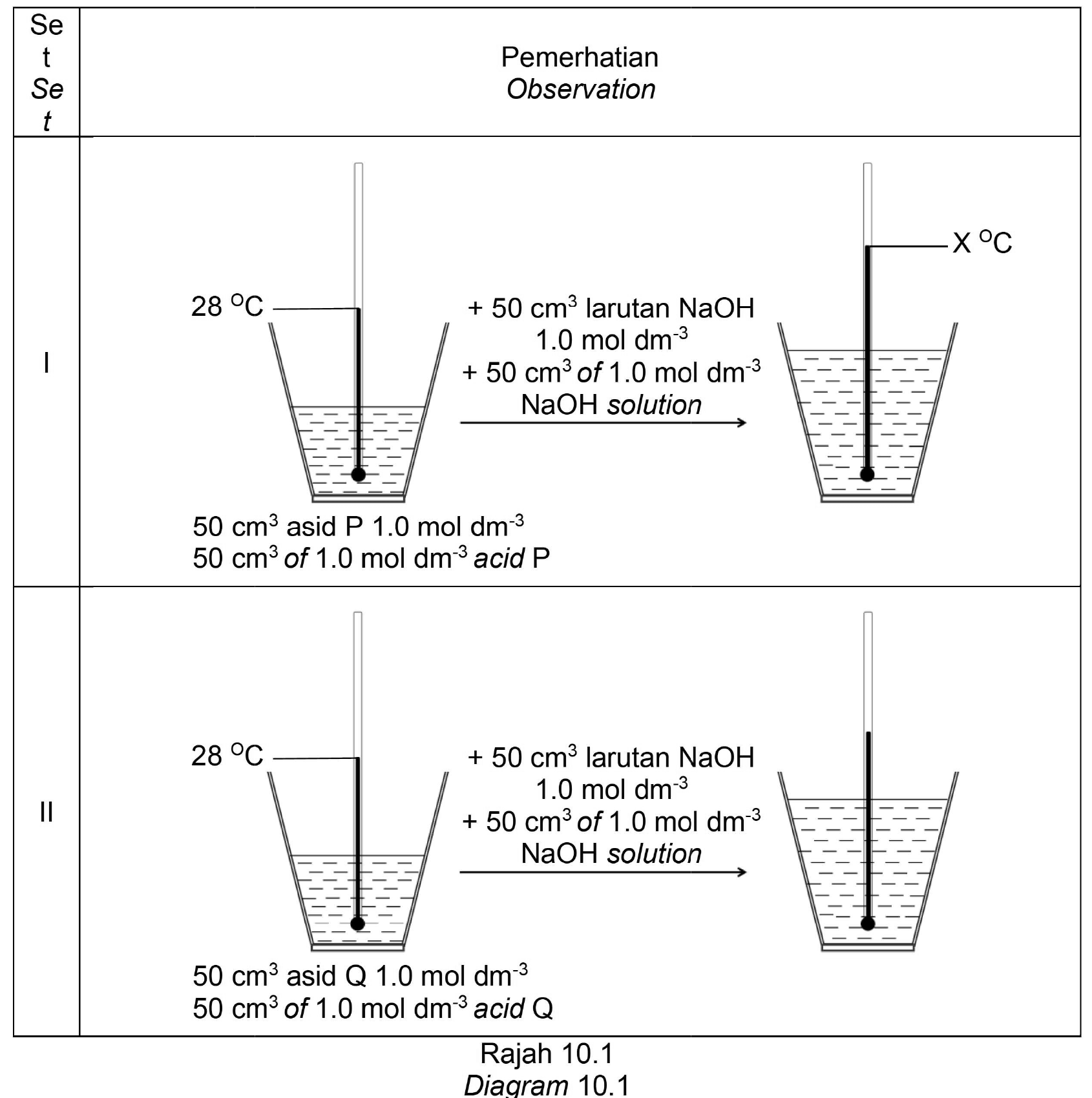
- (a)(i)
What is meant by heat of neutralisation?
[1] - (a)(ii)
Suggest the appropriate acid name for acid P and acid Q. Write the chemical equation for the reaction that occurs in Set I and Set II.
[6] - (a)(iii)
Determine the X value that is shown in Diagram 10.1. X value is the maximum temperature reached in the reaction. [Specific heat capacity of water = 4.2 J g-1 °C-1]
[4] - (a)(iv)
Explain why there is a difference in the value of the heat of reaction in the two sets of experiments carried out.
[3] - (b)(i)
State the type of reaction that occurs in cold packs and hot packs.
[2] - (b)(ii)
Compare the reactions that occur in cold pack and hot pack in terms of: heat change; temperature change; the total energy content of reactant and products; heat change during the breaking and formation of bonds.
[4]
Section C
Diagram 11.1 shows the gold medal and its composition (mass of gold medal 529 g; gold 6 g, iron 18 g, silver 505 g). This gold medal was made as a gift to the winners of the Olympic Games in Paris.
Medium20 marks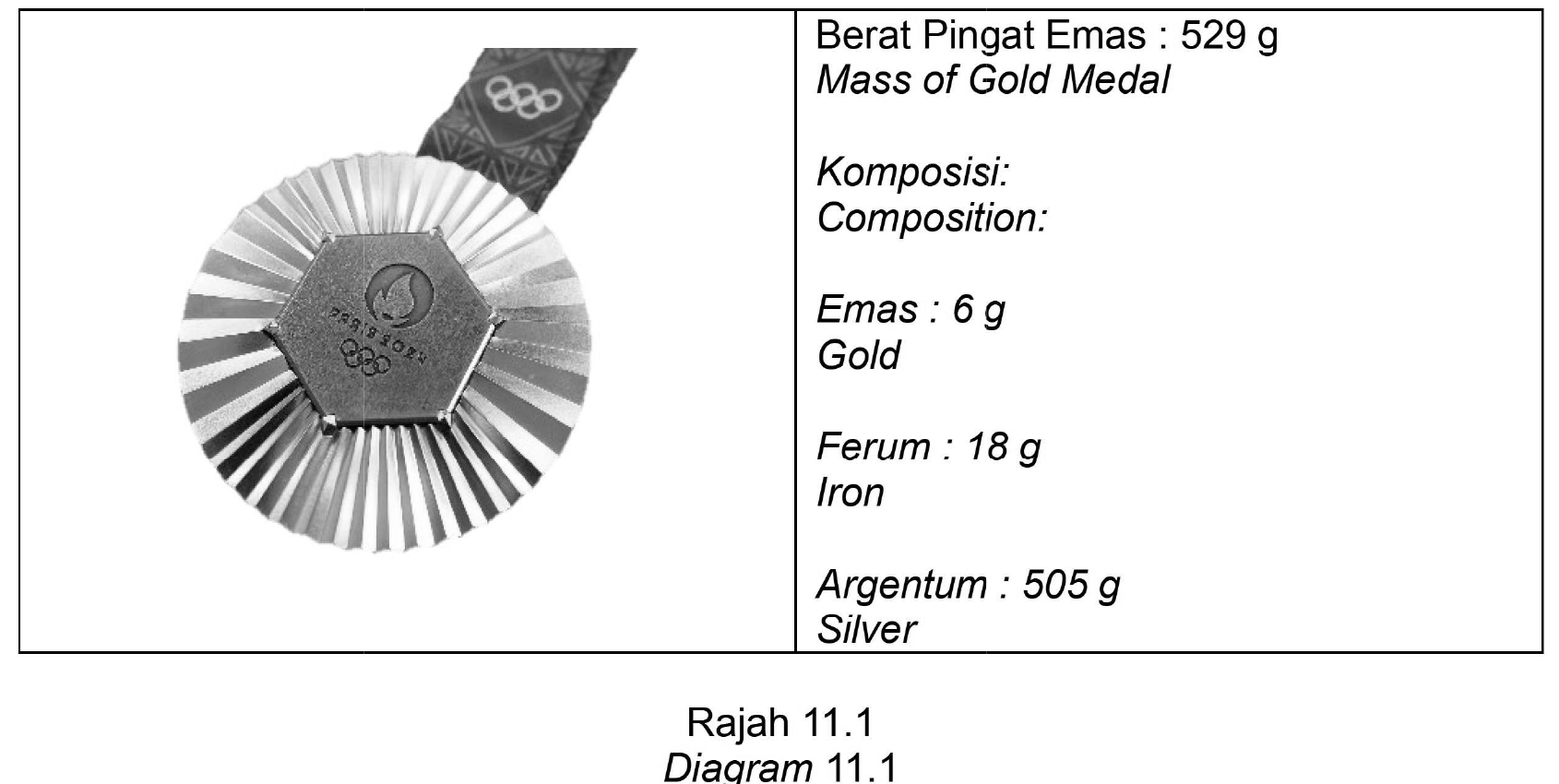

- (a)(i)
What is the appropriate term to describe a substance that consists of a combination of two or more elements such as gold medal in Diagram 11.1
[1] - (a)(ii)
Based on Figure 11.1, explain why gold medals are made from a mixture of other elements along with gold.
[4] - (b)
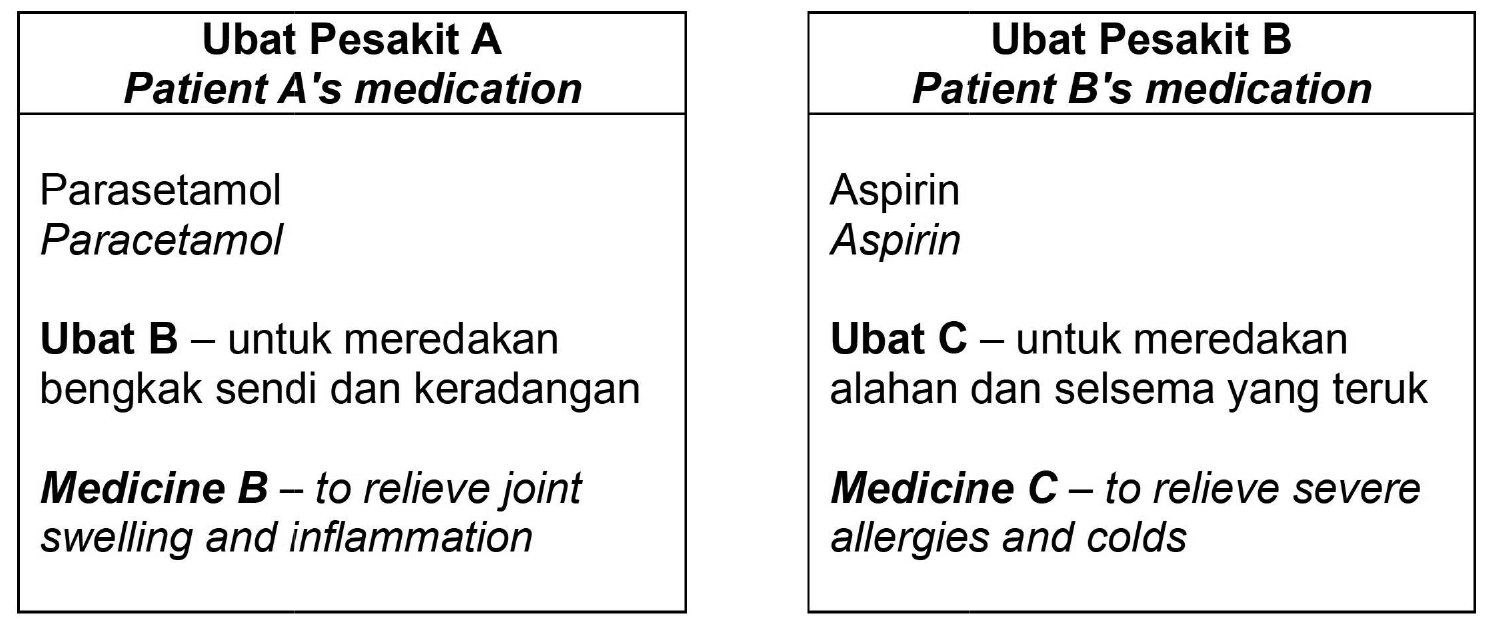
Based on the list of medicine in Diagram 11.3 (Patient A: paracetamol and medicine B to relieve joint swelling and inflammation; Patient B: aspirin and medicine C to relieve severe allergies and colds), name the types of drugs B and C and contrast paracetamol and aspirin.
[4] - (c)
What kind of cosmetics are advertised in the poster (Diagram 11.4) and explain how moisturizers created with nanotechnology can have a better effect on the skin.
[2] - (d)(i)
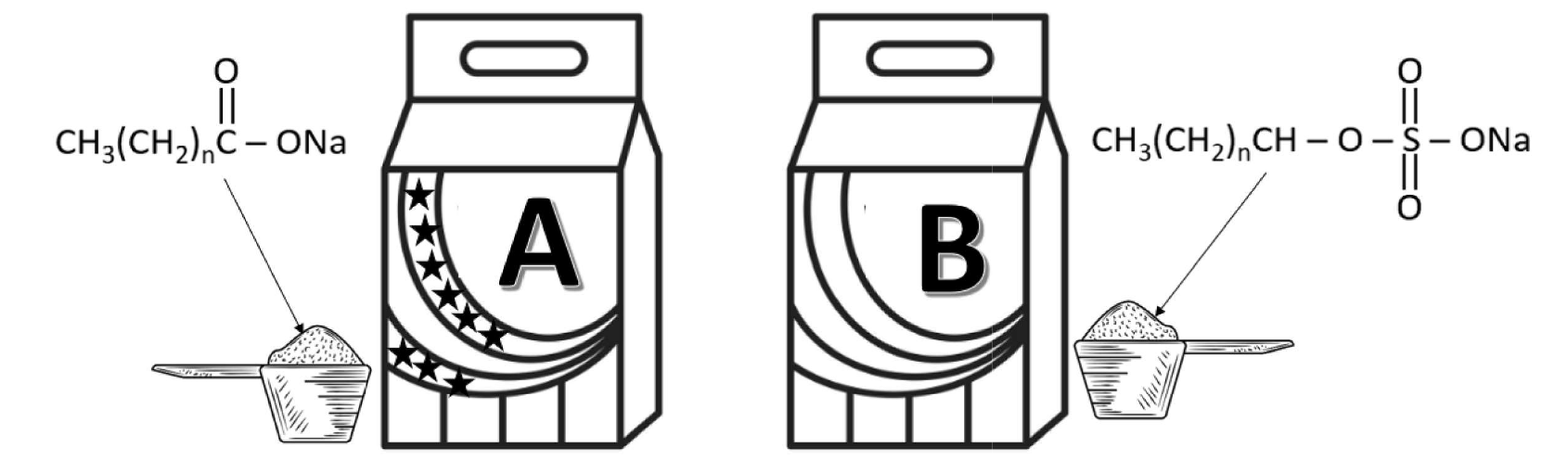
Diagram 11.5 shows two washing powders and their structural formulas that are commonly used in everyday life (A: CH3(CH2)nCOONa; B: CH3(CH2)nCH-O-SO2-ONa). Identify the type of washing powder.
[2] - (d)(ii)
Using magnesium nitrate solution reagents, describe a chemical test to differentiate washing powder A and washing powder B. State the steps of the test and tabulate the results of the test. [Corrected paper: the words 'and distilled water' are cancelled; 7 marks]
[7]